

A Level Biology Resources
Hundreds of free A level biology revision resources. Including quizzes, exam tips & guidance, explanations, past paper exam questions, revision strategies, and more. All focused on things that really help.
📢 NEW! PAGE FOR INCOMING YEAR 12 STUDENTS - everything you need in one place
🔎 Looking for a topic?
Search topics like microscopes or proteins using the category links or search box below
❤️Popular resource collections:
• Exam Questions by Topic - self-marking, multiple-choice quiz collection
• Biological Molecules - exam questions, explanations, self-marking quizzes
• How to Revise - evidence-based, practical revision tips
• Exam Technique - tips to do your best on the day
📘Resource collections by specification:
• AQA A level Biology resources
• OCR A A level Biology resources
• CIE A level Biology resources
🤓Or browse the gallery collections below
All resources are from the A-level Biology Tutor blog


Can an AI act as a teacher/tutor? Can it act as as a GOOD teacher/tutor?? Well … maybe, if you’re smart about it. Here’s my thinking and suggested prompt.

Can an AI help you revise topics you’ve already learned once? Yes - but only if you can stop it from telling you everything before you’ve had a chance to think. This is how I designed a prompt to achieve that.

Every year students spend months on the personal statement. But for most medical schools there is little or no point. Most schools do not use personal statements to decide who gets an interview, and some don’t even read them.
This doesn’t mean personal statements don’t matter at all - three schools score the for shortlisting. It just means it’s worth checking your chosen schools’ requirements before spending a lot of time on them.

Never just open up the AI and ask it a question without any context. You need to be smarter about this. Think about what you’re trying to achieve.

Use this free tool to check yourself against the entry criteria of all 41 UK Medical Schools. Find out which are worth your UCAS choices.
Every year I watch capable students throw away one or two of their four medicine choices on schools that were never going to interview them. Not because their grades were weak, but because nobody had told them that Imperial ignores GCSEs entirely, or that Birmingham weights them at almost half the decision, or that a UCAT score which comfortably clears one school's bar falls below another's published floor.

If you were disappointed by your Year-12 exam results, you’re not alone. Many A-level Biology students have a bit of a shock at this point, but you still have the opportunity to turn things around.
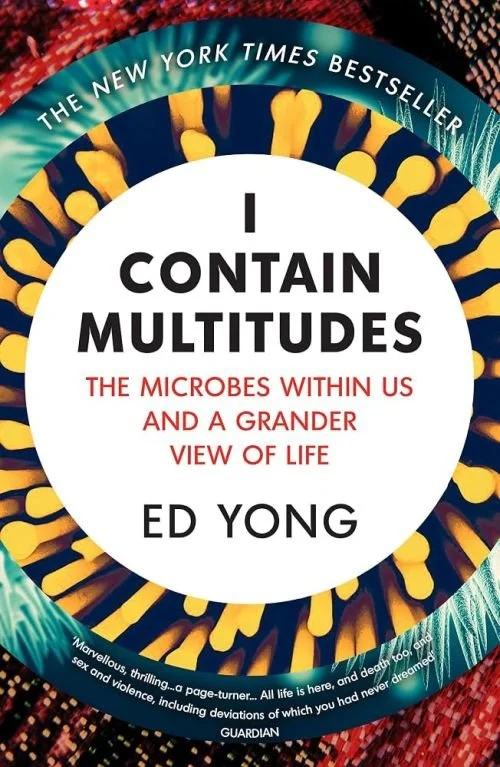
Reading pop-science books is enjoyable and also supports your studies. Here are eight books that I recommend, all of which are written to be interesting and entertaining for non-specialists. They bring biology to life and will change the way you think about these topics forever.
Why do some students excel while others struggle? There are factors far beyond the idea that ‘they are smarter’. Learn how to approach A-level Biology like a top-grade student and boost your grades.

We provide a wide selection of self-marking, multiple-choice quizzes by topic for OCR A and CIE. But how can you use them to best effect?
Here’s a quick guide.

Notes are really important. There’s a lot of chatter online about the best methods for taking notes, but there are also a lot of harmful myths.

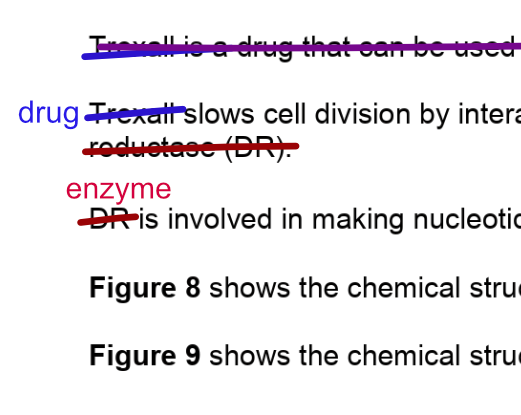
Make the question simpler for yourself. Hide everything that isn’t on the spec. You will need these words later when writing the answer out, but you do NOT need them getting in the way while you work out what the question is really about.

What can you best do over the summer to help transition to A level Biology? (It's probably not what you're thinking.)

A simple but effective trick to boost your learning and revision. You just need a little buddy.
You need to know some maths for A level Biology, including to work out whether an experiment can be said to have shown an effect or not. Master this early on and it will not help you with exam questions, but also make it easier for you to learn the bits of the course that are explained using these statistical methods.
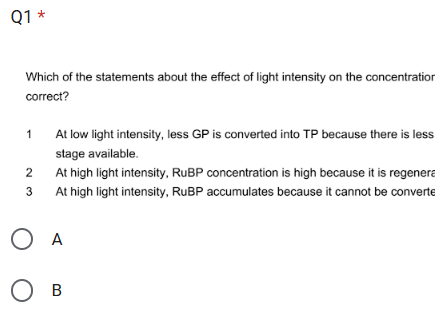
Self-marking multiple choice quiz for Photosynthesis. Using OCR A past paper exam questions.
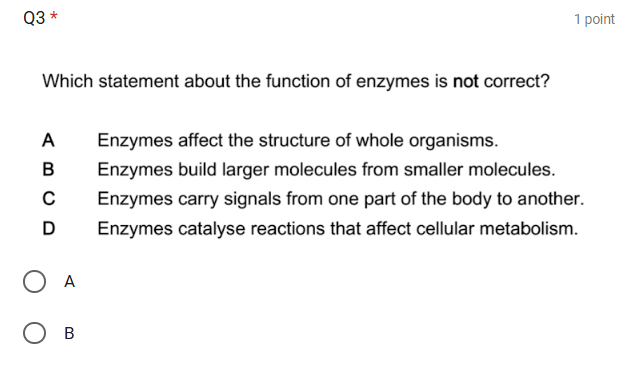
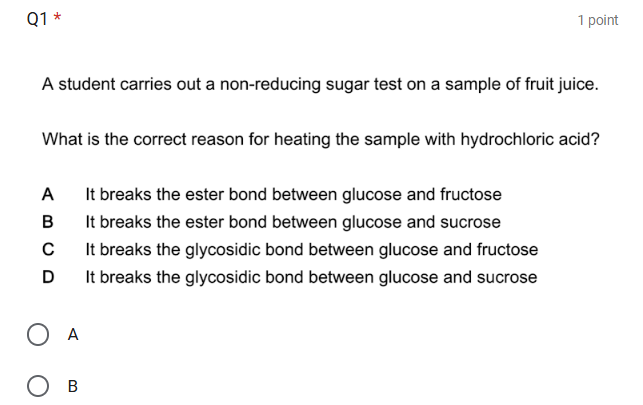
Self-marking multiple choice quiz for Food Tests and Chromatography. Using OCR A past paper exam questions.
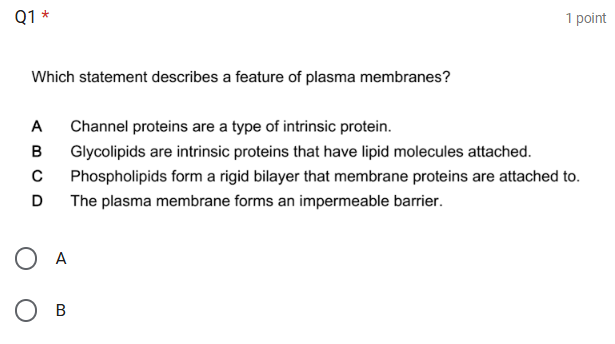
Self-marking multiple choice quiz for Phospholipids, Lipids, and Cholesterol. Using OCR A past paper exam questions.
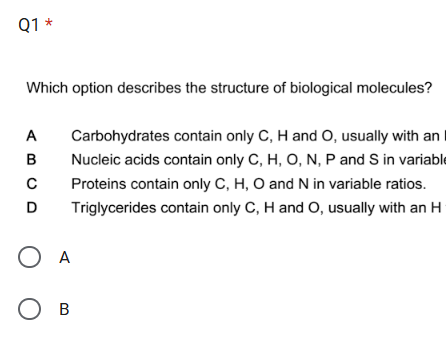
Self-marking multiple choice quiz for Carbohydrates, Ions and Elements. Using OCR A past paper exam questions.
Weekly Group Masterclasses for OCR A Y13
Raise your exam grade with question focused masterclasses from a highly experienced A level Biology teacher.
Every week we go through a different topic from the specification and look at how to apply the content to OCR A exam questions. I show how to understand commonly occurring questions and how to answer them.
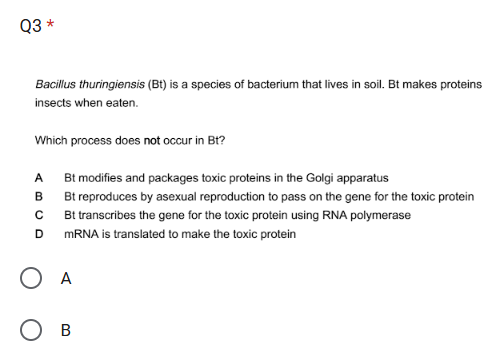
Self-marking multiple choice quiz for Cell Ultrastructure, Ions, and Elements. Using OCR A past paper exam questions.
Weekly Group classes - for AQA Y13 A level BIology
Raise your exam grade with question focused masterclasses from a highly experienced A level Biology teacher.
Every week we go through a different topic from the specification and look at how to apply the content to exam questions. I show how to understand commonly occurring questions and how to answer them.
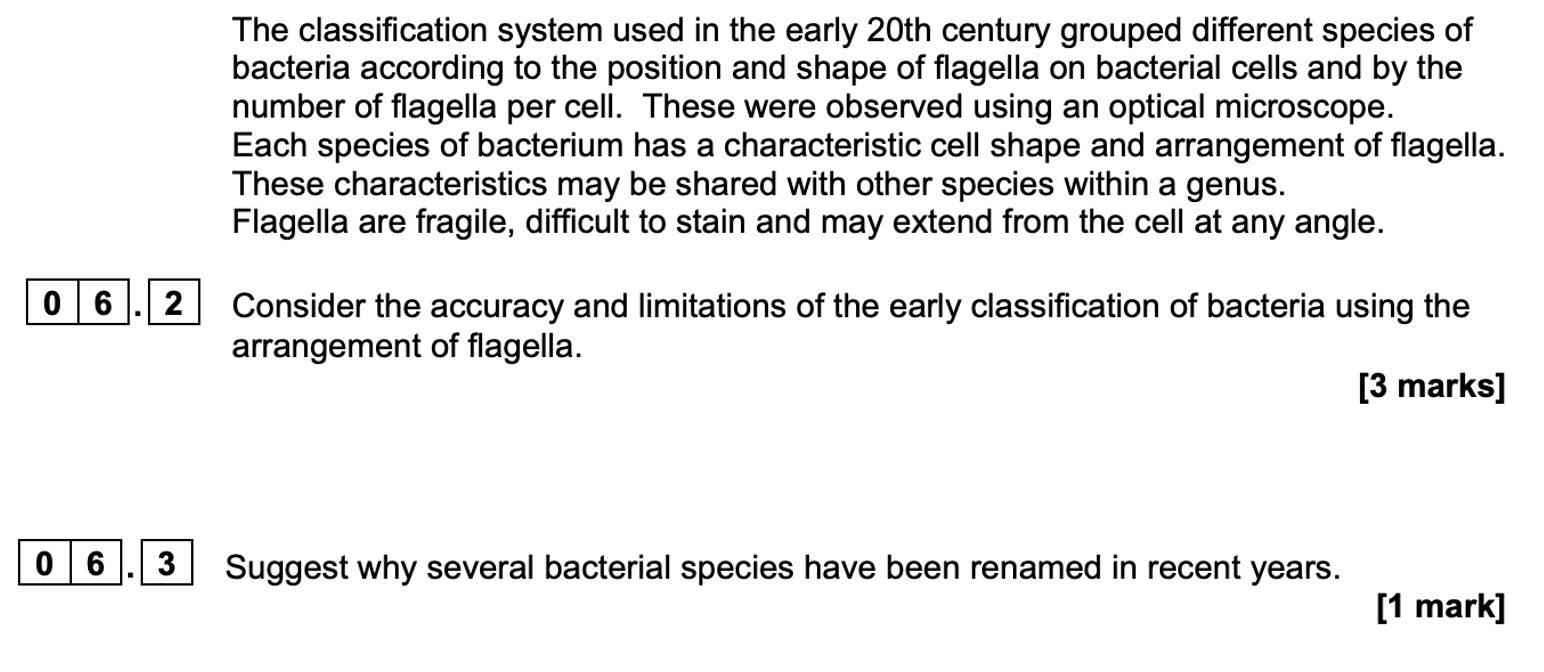
Example 2: Q3 Paper 2 2023
This next question is more complex, and there are two ‘suggest’ questions.
But first - I always recommend you don’t read the actual questions until you’ve looked at the background information, graph etc. Doing this will help you avoid getting overwhelmed and jumping to mistaken conclusions (which is very common in exam situations!).
So let’s keep the questions for later. First make sense of this:
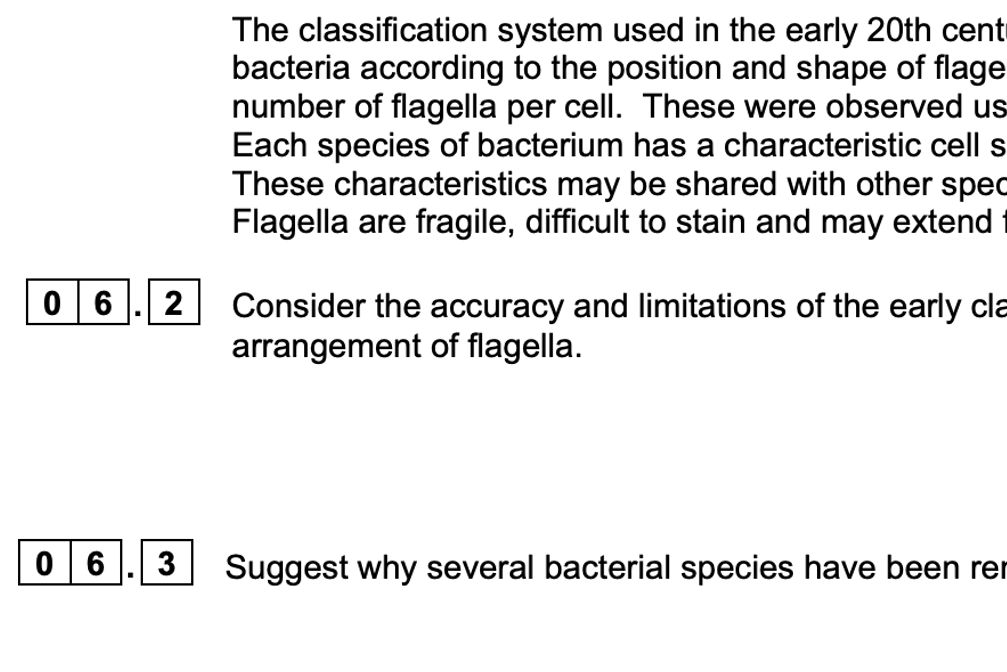
Command words are important! Step by step guide to how to approach and answer “Suggest” questions for top marks in AQA A level Biology.
Weekly Group classes - for OCR A Y12
Raise your exam grade with question focused masterclasses from a highly experienced A level Biology teacher.
Every week we go through a different topic from the specification and look at how to apply the content to exam questions. I show how to understand commonly occurring questions and how to answer them.
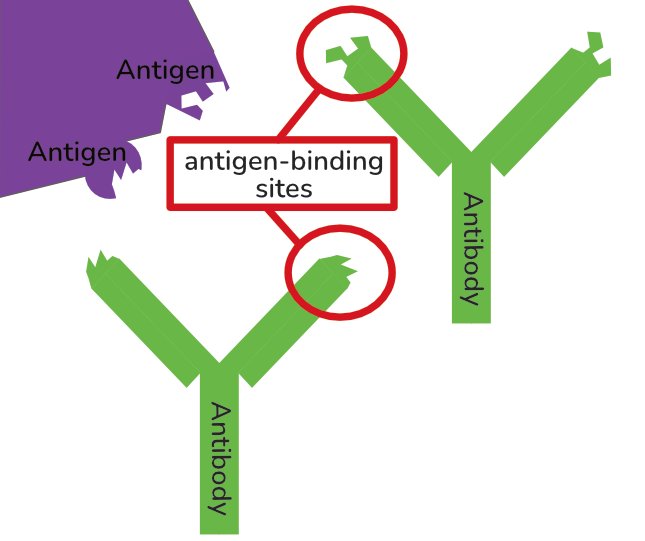
Monoclonal antibodies are a relatively new treatment type, with huge importance for treating migraine, cancer, autoimmune diseases, and many other conditions.
So how do they work?
What is an Antibody? What is an Antigen?
Weekly Group classes - for AQA Y12 A level Biology
Raise your exam grade with question focused masterclasses from a highly experienced A level Biology teacher.
Every week we go through a different topic from the specification and look at how to apply the content to exam questions. I show how to understand commonly occurring questions and how to answer them.

Self-marking multiple choice quiz for Food Tests and Chromatography. Using OCR A past paper exam questions.
Self-marking multiple choice quiz for Phospholipids, Lipids, and Cholesterol. Using OCR A past paper exam questions.
Self marking quiz for revision of OCR A Level Biology A Biological Diversity H420/02 - June 2024
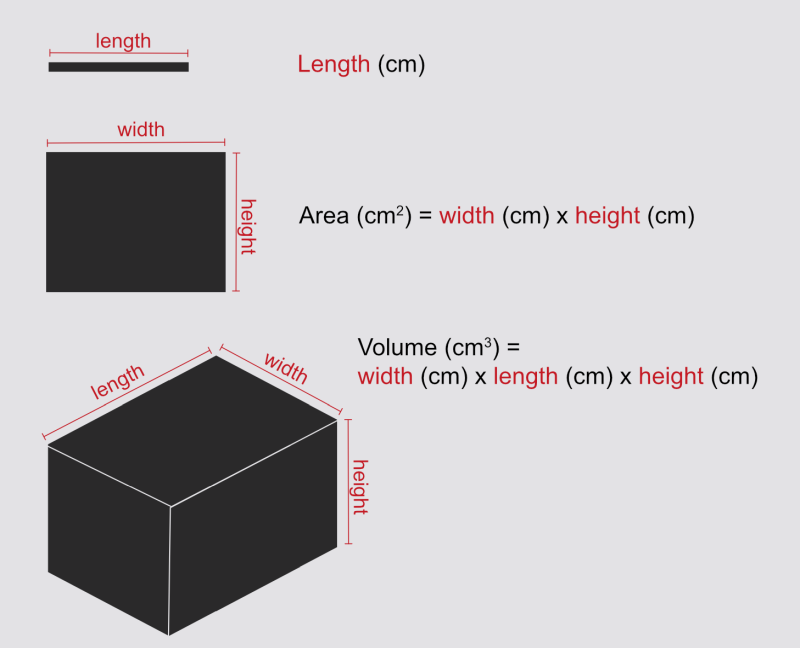
Surface area to volume ratio (SA:V) is vital for understanding a wide range of topics including transport across cell membranes, gas exchange, digestion, heat exchange, and mass transport. SA:V explains why the inner membrane of a mitochondrion is folded, why elephants have big ears, and why jellyfish don’t need blood vessels.

This article is for anyone who is totally confused by mitosis, or who hasn’t yet started the topic.
Mitosis is part of cell division. It explains how multicellular organisms grow and is vital for understanding the challenging topic of autosomal linkage. Mitosis is also similar to the first half of meiosis; learning mitosis first will make meiosis much easier to understand.
Remember that for A level biology, you always need to understand why, as well as how. So, get a strong grip of the fundamental concept of mitosis before you try to memorise the details. Understanding the purpose of mitosis will also make it a lot easier to remember the individual stages of the process.


Practising recall and doing questions is so important for long term retention of information. Try this self marked quiz. OCR A Enzymes


A-level Biology Questions by topic : Spirometer and Lung Volume Questions - powerpoints and Videos
- if you use then like and share

A-level Biology Questions by topic: Magnification Calculations and Graticules - how to do magnification questions
If you use then like and share


A brief exercise using coral reef photographs and a fish identification chart to calculate a Simpsons Index of Biodiversity.
Please like and share

A level Biology Questions by topic - Kidney Questions with markschemes, useful for OCR, AQA, Eduqas
Here are lots of good questions on the kidney. I expect the kidney to appear frequently in the new style papers as they are very synoptic, give opportunities to require calculation and get students to analyse and explain data.
if you use then please like and share
⬇️ More browsable collections below …
🔎 Search by category or keyword:
• AQA • Biological Molecules • CIE • CIE Quiz • Carbohydrates • Cells • Classification • DNA • Eduqas • Enzymes • Exam Tips • Exam Questions • Gas Exchange • Genetics • Heart • How to Revise • Immunity • Key Concept • Kidney • Maths • Microscopes • Misconceptions • Nuffield • OCR • OCR Biological Diversity • OCR Biological Processes • OCR Breadth in Biology • OCR Quiz • Online Quiz • Photosynthesis • Plant Transport • Practical • Pre-U • Proteins • Resource List • Respiration •
🔎 Search by category or keyword:
- AQA
- Biological Molecules
- CIE
- CIE Quiz
- Carbohydrates
- Cells
- Classification
- DNA
- Eduqas
- Enzymes
- Exam Questions
- Exam Tips
- Gas Exchange
- Genetics
- Heart
- Immunity
- Insights
- Key Concept
- Kidney
- Maths
- Med/Dental school
- Microscopes
- Misconceptions
- Nuffield
- OCR
- OCR Biological Diversity
- OCR Biological Processes
- OCR Breadth in Biology
- OCR Quiz
- Online Quiz
- Photosynthesis
- Plant Transport
- Practical
- Pre-U
- Proteins
- Resource List
- Respiration
- Revision Tips
- Starting A Level Biology
- Synoptic
- Tables and Graphs
⬇️ Browse the resource collections; scroll right for more:
Self-marking multiple choice quiz for Food Tests and Chromatography. Using OCR A past paper exam questions.
Self-marking multiple choice quiz for Phospholipids, Lipids, and Cholesterol. Using OCR A past paper exam questions.
Self-marking multiple choice quiz for Carbohydrates, Ions and Elements. Using OCR A past paper exam questions.

Many topics in A level biology relate to how the human body gains and loses atoms. But have you ever stepped back and thought of how these processes all fit together? Having a wide overview can help make sense of individual topics.


What does it mean if a molecule is polar or charged? How does it change their behaviour? You’ll get confused in a number of topics if you can’t get this concept straight in your mind, and it’s too easy to lose exam marks by using the wrong term. Make life easier by learning this now.


3.1.5 - Nucleic Acids Structure and Replication
Can you
Draw the formation and hydrolysis of a phosphodiester bond
Name the parts of a nucleotide
Explain the similarities and differences between RNA and DNA
Explain why DNA is a good molecule for storing information ?
Can you describe semi-conservative replication ?
Practising recall and doing questions is so important for long term retention of information. Try this self marked quiz. OCR A Enzymes

Practising recall and doing questions is so important for long term retention of information. Try this self marked quiz. OCR A Biochemistry.

Enzymes - Questions (and answers) - for A-level Biology - With Videos and Powerpoints to help recap the theory.
If you use then please like and share

Practising recall and doing questions is so important for long term retention of information. Try this self marked quiz. OCR A Biochemistry.

Practising recall and doing questions is so important for long term retention of information. Try this self marked quiz. OCR A DNA and Protein Synthesis

Multiple choice questions on enzymes, all past paper questions, a good way to assess your understanding

Protein Synthesis - exam questions a quiz and powerpoints, videos and animations, please like and share
Enzymes - Questions (and answers) - for A-level Biology - With Videos and Powerpoints to help recap the theory.
If you use then please like and share
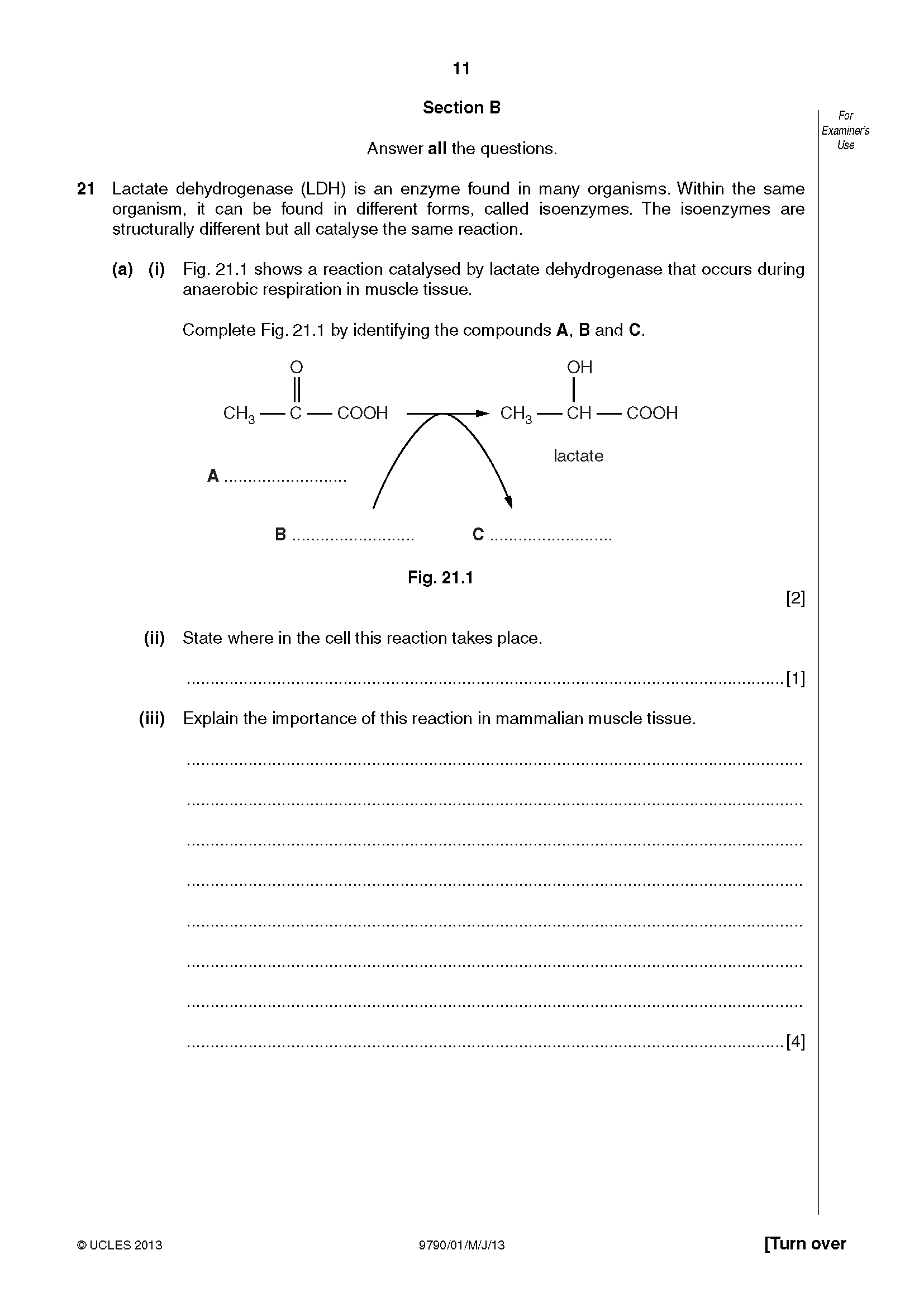
This is an outstanding synoptic question from a Pre-U Biology Paper. Covers Protein Synthesis, Enzymes, Heart Disease, Respiration ....

From an Old OCR Unifying concepts paper. ....
Don't panic, the question is not about DNA vaccines or plasmids.
The question is about differences between protein and DNA structure, protein synthesis, post translational modification of protein, clonal selection, mutation of pathogens. All of which are on the specification.

Enzymes have an active site - Substrates don't.
The substrate is a complementary shape to the active site NOT the "same shape"
Enzymes reduce the activation energy for a reaction to occur
Anabolism is making, Catabolism is breaking
Please like and share
Self marking quiz for revision of OCR A Level Biology A Biological Diversity H420/02 - June 2024

Self marking quiz for revision of OCR A Level Biology A Biological Diversity H420/02 - June 2023

Self marking quiz for revision of OCR A Level Biology A Biological Diversity H420/02 - June 2022

Self marking quiz for revision of OCR A Level Biology A Biological Diversity H420/02 - Nov 2021


OCR A Biological diversity (H420/02) June 2018 - Multiple Choice Questions as self marking quiz

OCR released the OCR A June 2017 H420 papers. I combined the Biological DIversity 420/02 paper with the markscheme to make it easier to follow and interpret.
Self-marking multiple choice quiz for Photosynthesis. Using OCR A past paper exam questions.

As part of the fortnightly group tuition sessions running Mondays at 7.15pm for Alevel Biology - AQA and OCR A I am trying out these notes templates. Tonight we are covering Transpiration and the Light Dependent reactions

Recent research shows the effectiveness of self explanation
Try using these cards with a partner to revise respiration and photosynthesis
Print onto card. Cut out, place face down in a pack.
Pick up a card
Explain the concept with a whiteboard or paper.
Use all of the words on each card.
Then look up the concept in a textbook and correct your mistakes.
Work your way through the pack.

Powerpoints and notes, a pack of long data analysis exam questions and a test on photosynthesis
Tips for Photosynthesis
LDR - occurs on the thylakoid membranes. Limiting factor is light intensity
Phosphorylates ADP (through chemiosmosis) - creates the Hydrogen ion gradient by the flow of electrons along the ETC in the thylakoid membrane. The flow of electrons is driven by the capturing of light by a range of different pigments which channel the energy to a chl a molecule at the reaction centre of the photosystem - which then loses an electron.
Reduces NADP with an electron from splitting water (photolysis) at PSII.
Light Independent Reaction (reduction of carbon dioxide) - occurs in the stroma (the cytoplasm of the chloroplast).
Limited by speed and quantity of RUBISCO enzyme (kinetic energy - temperature) and substrate concentration (Carbon dioxide)
Needs the products of the LDR - ATP and NADPH
NADPH and ATP are used to regenerate RUBP
Each time the Calvin cycle turns, a single Carbon is reduced. 3 turns - one extra Triose Phosphate. 6 turns - 2 extra TP = 1 extra glucose.
TP is the source of all of the carbon in all plants (and hence in all heterotrophes) - Amino acids, DNA, RNA, phospholipids etc

Understanding Photosynthesis - Tips, Videos, PowerPoints and Pack of Exam Questions with Markscheme
if you use then like and share

Photosynthesis, Enzymes, Pigments, Leaf Buoyancy and more experimental design.
Think about how starch is made and what it is made from ......
Please like and share


Try this, a terrific exercise to link Photosynthesis and Respiration. Excellent end of term revision.
Please like and share
Self-marking multiple choice quiz for Food Tests and Chromatography. Using OCR A past paper exam questions.
Self-marking multiple choice quiz for Phospholipids, Lipids, and Cholesterol. Using OCR A past paper exam questions.
Self-marking multiple choice quiz for Carbohydrates, Ions and Elements. Using OCR A past paper exam questions.
Self-marking multiple choice quiz for Cell Ultrastructure, Ions, and Elements. Using OCR A past paper exam questions.
Self marking quiz for revision of OCR A Level Biology A Biological Diversity H420/02 - June 2024
Self marking quiz for revision of OCR A Level Biology A Biological Processes H420 01 - June 2024


CIE Tissue Fluid and structure and function of blood vessels - 20 Multiple Choice Questions

CIE 9700 A level Biology Infectious Diseases - Pathogens and Transmission, 20 Multiple Choice Questions

CIE A level Biology 9700 Carriage of Oxygen and Carbon Dioxide - 20 Multiple Choice Questions


CIE 9700 A level Biology - Replication and Division of nuclei and cells 5.1 - 20 Multiple Choice Questions


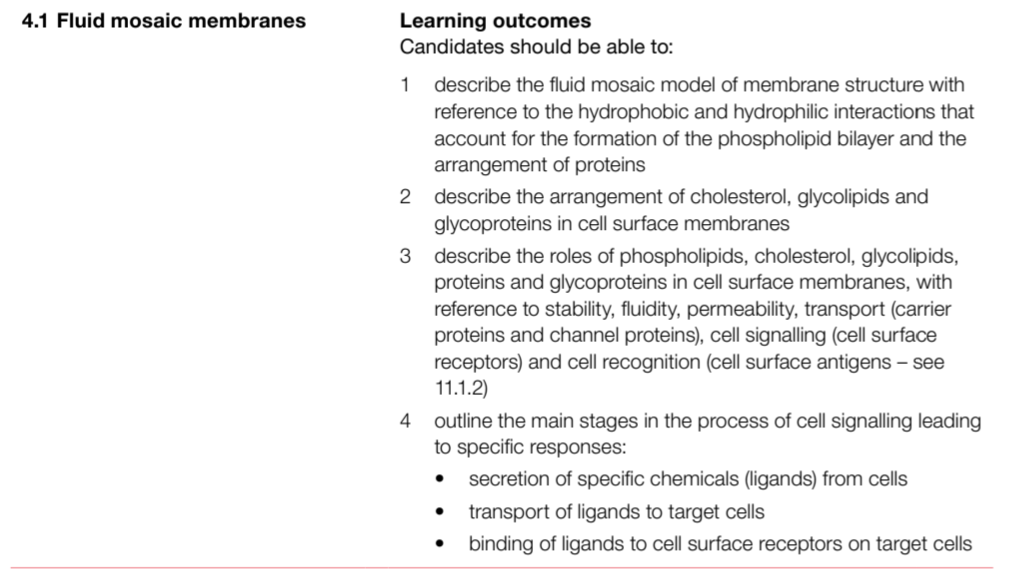

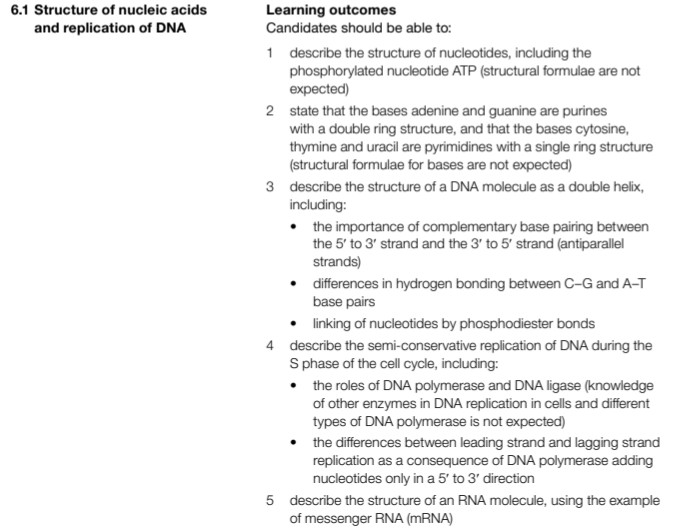
20 Self marking Multiple choice questions for CIE A level Biology 9700 - Nucleic acids 6.1
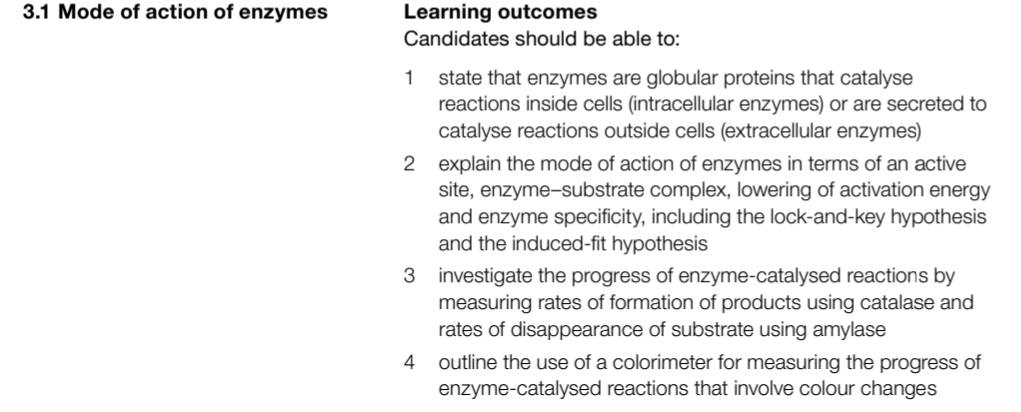
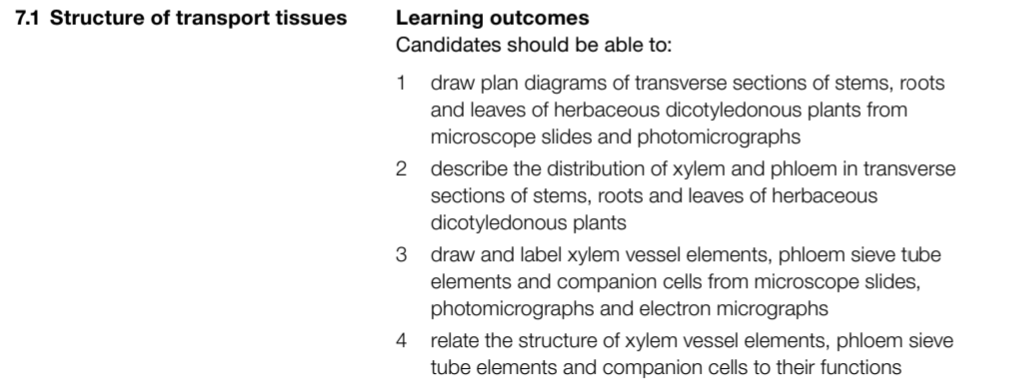
20 Self marking Multiple choice questions for CIE A level Biology 9700 - Plant transport 7.1/7.2
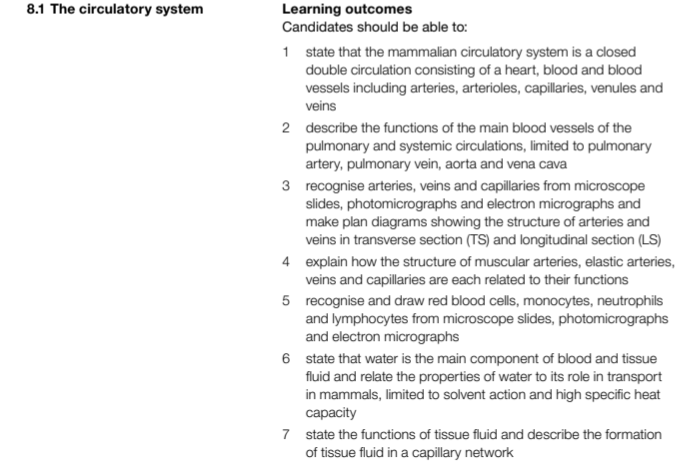
CIE A level Biology 9700- Transport in Mammals 8.1 , 20 self marking multiple choice questions

Self marking quiz for revision of OCR A Level Biology A Biological Diversity H420/02 - June 2023
Self marking quiz for revision of OCR A Level Biology A Biological Processes H420 01 - June 2023
As part of the fortnightly group tuition sessions running Mondays at 7.15pm for Alevel Biology - AQA and OCR A I am trying out these notes templates. Tonight we are covering Transpiration and the Light Dependent reactions


Powerpoints, videos and animations, a self marking quiz on lipids and carbohydrates.
Some tips
Number the carbons and understand when and how a 1,4 glycosidic bond forms.
Why it matters that you can form a 6,1 bond in order to branch a polysaccharide.
Why does it matter that polysaccharides are insoluble and mono and di-saccharides are soluble.
What is the consequence of Beta glucose forming cellulose
Which molecules have a 5 carbon sugar in mammals ?
Can you explain why fatty acids are non-polar and what is the consequence for the formation of cell membranes


Resources for learning the immune system. Powerpoints, animations, videos, self marking test and some rare immune sytem questions.
Multiple choice questions on enzymes, all past paper questions, a good way to assess your understanding


Oxygen is the final electron acceptor. It oxidises the final carrier in the ETC on the inner mitochondrial membrane and is reduced to water.
Hydrogen ions flow from the inter membrane space into the matrix via ATP synthase, this electrochemical gradient phosphorylates ADP.
Hydrogen ions are pumped from the matrix into the inter membrane space, using the energy from the electrons flowing along the ETC. The electrons come from the oxidation of food, transferred by coenzymes NAD and FAD.
Glycolysis occurs in the cytoplasm. Link and Krebs in the matrix. Link and Krebs produce carbon dioxide by the removal of a carboxyl group.
Fermentation is just glycolysis with a different way of regenerating NAD (from NADH) by the reduction of pyruvate (or ethanal).
Substrate level phosphorylation is the direct addition of phosphate to ADP, occurs in glycolysis (4 ATP) and Krebs (once per turn), chemiosmosis is H ions flowing through ATP synthase.
Cristae give a larger surface area for oxidative phosphorylation
Powerpoints and notes, a pack of long data analysis exam questions and a test on photosynthesis
Tips for Photosynthesis
LDR - occurs on the thylakoid membranes. Limiting factor is light intensity
Phosphorylates ADP (through chemiosmosis) - creates the Hydrogen ion gradient by the flow of electrons along the ETC in the thylakoid membrane. The flow of electrons is driven by the capturing of light by a range of different pigments which channel the energy to a chl a molecule at the reaction centre of the photosystem - which then loses an electron.
Reduces NADP with an electron from splitting water (photolysis) at PSII.
Light Independent Reaction (reduction of carbon dioxide) - occurs in the stroma (the cytoplasm of the chloroplast).
Limited by speed and quantity of RUBISCO enzyme (kinetic energy - temperature) and substrate concentration (Carbon dioxide)
Needs the products of the LDR - ATP and NADPH
NADPH and ATP are used to regenerate RUBP
Each time the Calvin cycle turns, a single Carbon is reduced. 3 turns - one extra Triose Phosphate. 6 turns - 2 extra TP = 1 extra glucose.
TP is the source of all of the carbon in all plants (and hence in all heterotrophes) - Amino acids, DNA, RNA, phospholipids etc

Cell membranes, osmosis, diffusion , active transport, - lots of experimental and application questions
Protein Synthesis - exam questions a quiz and powerpoints, videos and animations, please like and share


Plant reproduction - videos questions and resources
If you use then please like and share

Homeostasis - Glucose and Temperature - for AQA and OCR
Question Pack, Videos, Powerpoints
- if you use then like or share
A-level Biology Questions by topic : Spirometer and Lung Volume Questions - powerpoints and Videos
- if you use then like and share

A-level Biology Questions on Kidney Dialysis and Transplants - useful powerpoints/animations and videos
If you use then like and share
Enzymes - Questions (and answers) - for A-level Biology - With Videos and Powerpoints to help recap the theory.
If you use then please like and share

A-level Biology questions by topic with markschemes on Evolution, Biodiversity and Classification. Video and PowerPoint to help you recap the theory. For OCR A Biology and other specifications.
if you use then please like or share

A guide to aerobic and anaerobic respiration for A level Biology with plenty of exam questions on respiration with markschemes, for AQA, OCR, Edexcel
- if you use then please like or share

Lots of Haemoglobin Oxygen Dissociation Curve/ Bohr Shift Questions and Markschemes, suitable for OCR A, AQA - and a brief guide to Understanding them.
The key to understanding dissociation curves is firstly to understand the concept of partial pressure and what would make it change. And to understand cooperative binding.
- if you use then life and share
Frequently students fail to learn the vocabulary of Biology. To get a top grade it is essential to know what the words mean in a Biological context (niche, chromosome, chromatid...), and have the confidence to use those words in an exam answer.

You need to know some maths for A level Biology, including to work out whether an experiment can be said to have shown an effect or not. Master this early on and it will not help you with exam questions, but also make it easier for you to learn the bits of the course that are explained using these statistical methods.
Surface area to volume ratio (SA:V) is vital for understanding a wide range of topics including transport across cell membranes, gas exchange, digestion, heat exchange, and mass transport. SA:V explains why the inner membrane of a mitochondrion is folded, why elephants have big ears, and why jellyfish don’t need blood vessels.
Many topics in A level biology relate to how the human body gains and loses atoms. But have you ever stepped back and thought of how these processes all fit together? Having a wide overview can help make sense of individual topics.

A variable is any value that does/might change during an experiment. Variables can include things like pH, temperature, colour, or the concentration of substances. The amount of time that has passed is a variable, as are rates of reaction.


Outstanding synoptic question on muscles and contraction. Excellent practise
- if you use then please like and share
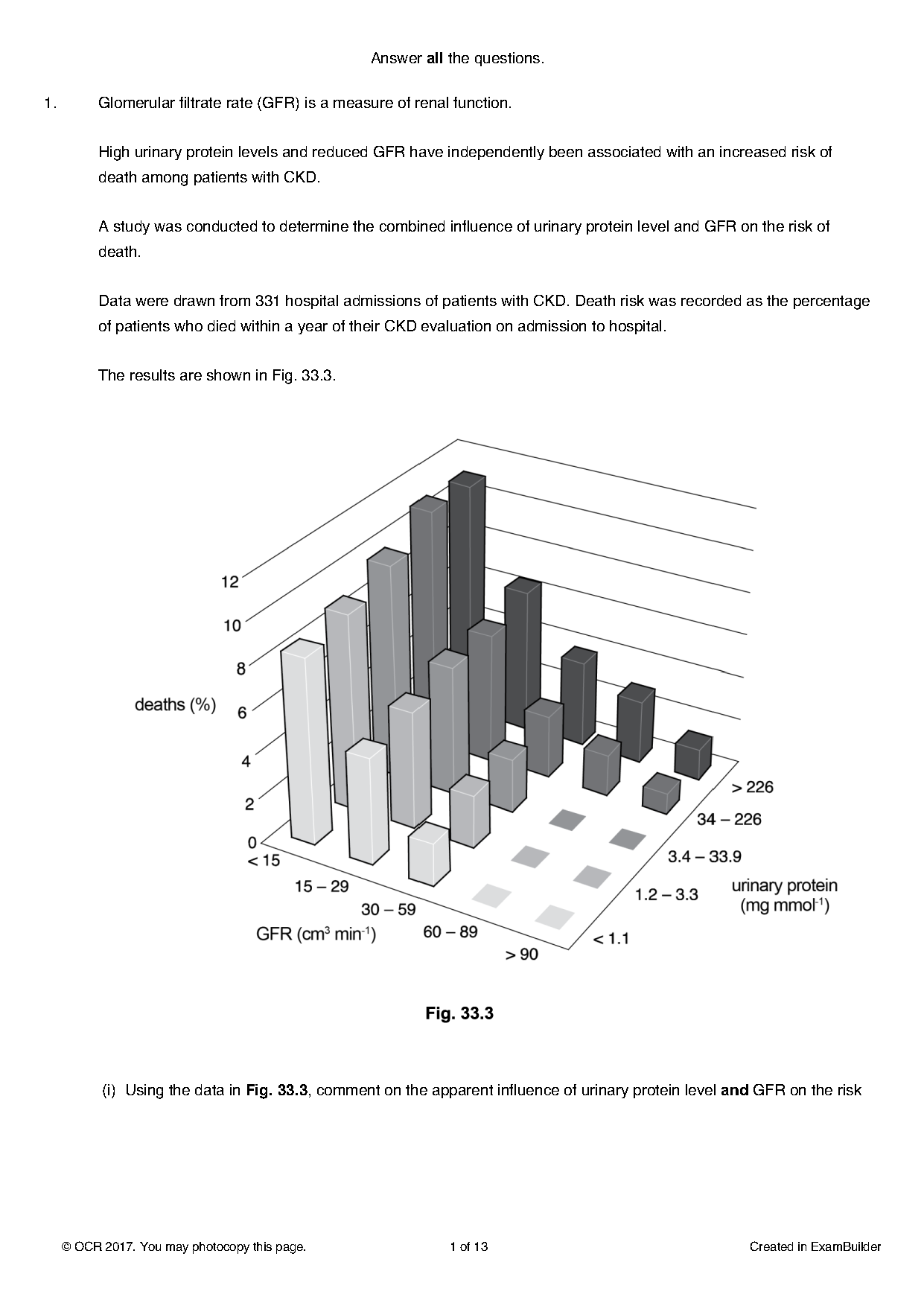
Good practice if you are struggling with data analysis questions
Pack of challenging past paper questions with lots of Data Analysis and application - A-level Biology past paper questions - good for OCR and AQA specifications

This is an outstanding synoptic question from a Pre-U Biology Paper. Covers Protein Synthesis, Enzymes, Heart Disease, Respiration ....


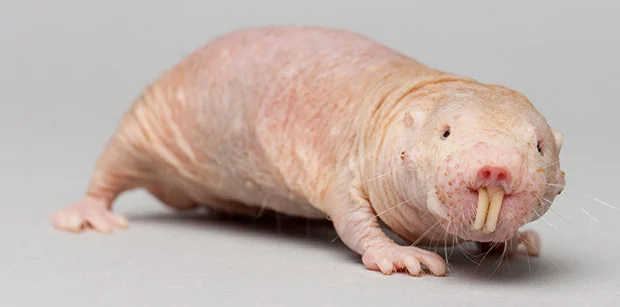

Photosynthesis, Enzymes, Pigments, Leaf Buoyancy and more experimental design.
Think about how starch is made and what it is made from ......
Please like and share

One from the OCR Unifying concepts paper, combines respiration and photosynthesis.
(a) think photolysis and Oxygen accepting electrons ...
(b) is about phosphorylation and diffusion gradients
(c) is about the nature of passive transport and using proteins
(d) is about endosymbionts and prokaryotes
Please like and share
From an Old OCR Unifying concepts paper. ....
Don't panic, the question is not about DNA vaccines or plasmids.
The question is about differences between protein and DNA structure, protein synthesis, post translational modification of protein, clonal selection, mutation of pathogens. All of which are on the specification.

The OCR spec is now partly examined through some terrific multiple choice questions. This is a assessment format that is unusual to many students. Here are 9 questions from an Old paper that will stimulate some thought.
Please like and share

Dont panic, the question is not about the Cuckoopint flowers that you have never heard of, its about aerobic respiration, mitochondria, oxygen consumption - all of which are topics that you are familiar with.
Please like and share

The only prior A-level knowledge you need to answer the question is that lactate is produced when ATP is made from anaerobic respiration.
Please like and share

The new linear A level has synoptic questions that will test knowledge and understanding from both years in the same question. Often with looking at experimental data.
Make the question simpler for yourself. Hide everything that isn’t on the spec. You will need these words later when writing the answer out, but you do NOT need them getting in the way while you work out what the question is really about.
Command words are important! Step by step guide to how to approach and answer “Suggest” questions for top marks in AQA A level Biology.

Past paper essay titles and topic areas for A level Biology paper 3, with tips and guidance for how to select the best topic areas for your essay.


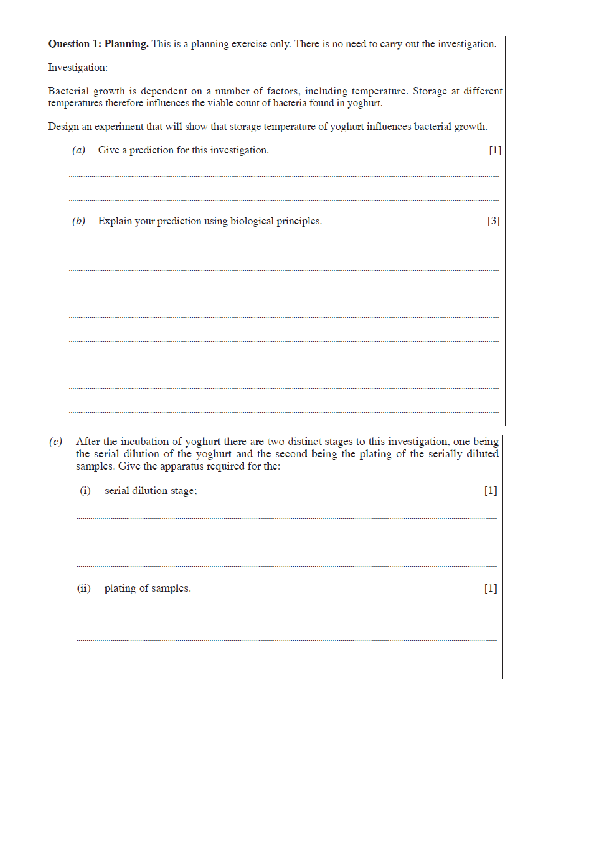
How to improve your answers to questions about practicals in A-level Biology exam questions.
Please like and share


Questions by topic for A-level Biology - Genes, Genetics and Genetics Engineering, for OCR A, AQA and Eduqas
if you use then please like or share

How to understand and answer Hardy-Weinberg Questions - A-level Biology. Remember to look out for questions where they give you a dominant phenotype frequency -for instance Huntingdons disease, where the frequency of the sufferers is 1 in 100000 - therefore q squared (recessive allele phenotype) is 99999 in 100000.
if you use - then like and share

Terrific exam question - combining autosomal linkage and Chi-Squared. Give it a go if you have ambition.....


Students find autosomal linkage a challenge ... I suspect this is because they mentally disconnect Meiosis from gamete formation.
Please like and share
Many topics in A level biology relate to how the human body gains and loses atoms. But have you ever stepped back and thought of how these processes all fit together? Having a wide overview can help make sense of individual topics.
Recent research shows the effectiveness of self explanation
Try using these cards with a partner to revise respiration and photosynthesis
Print onto card. Cut out, place face down in a pack.
Pick up a card
Explain the concept with a whiteboard or paper.
Use all of the words on each card.
Then look up the concept in a textbook and correct your mistakes.
Work your way through the pack.
Oxygen is the final electron acceptor. It oxidises the final carrier in the ETC on the inner mitochondrial membrane and is reduced to water.
Hydrogen ions flow from the inter membrane space into the matrix via ATP synthase, this electrochemical gradient phosphorylates ADP.
Hydrogen ions are pumped from the matrix into the inter membrane space, using the energy from the electrons flowing along the ETC. The electrons come from the oxidation of food, transferred by coenzymes NAD and FAD.
Glycolysis occurs in the cytoplasm. Link and Krebs in the matrix. Link and Krebs produce carbon dioxide by the removal of a carboxyl group.
Fermentation is just glycolysis with a different way of regenerating NAD (from NADH) by the reduction of pyruvate (or ethanal).
Substrate level phosphorylation is the direct addition of phosphate to ADP, occurs in glycolysis (4 ATP) and Krebs (once per turn), chemiosmosis is H ions flowing through ATP synthase.
Cristae give a larger surface area for oxidative phosphorylation
This is an outstanding synoptic question from a Pre-U Biology Paper. Covers Protein Synthesis, Enzymes, Heart Disease, Respiration ....

A level Biology Questions by Topic with Markschemes - Aerobic respiration and Anaerobic Respiration
Please like and share
Try this, a terrific exercise to link Photosynthesis and Respiration. Excellent end of term revision.
Please like and share

I have made a series of 9 short (5-7 mins) video tutorials to try to help students understand glycolysis, link reaction, krebs cycle, anaerobic respiration, oxidative phosphorylation, chemiosmosis and the use of other respiratory substrates. I hope you find them of use.
Please like and share

Another from the past.
Terrific question about DNA, diffusion, ATP production and fireflies going out in a blaze of glory....
Please like and share
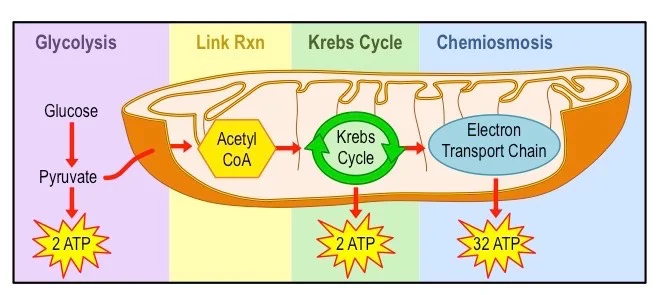
Teaching aerobic respiration is a difficult topic, traditionally, teachers begin with glycolysis, then link reaction and krebs cycle and then the electron transport chain, I would argue that there is a better way to teach this.
Please like and share
A variable is any value that does/might change during an experiment. Variables can include things like pH, temperature, colour, or the concentration of substances. The amount of time that has passed is a variable, as are rates of reaction.

Can you spot the problems with these A level Biology exam question answers? These bloopers come up a lot - check you’re not going to make the same mistakes.

There is plenty of excellent guidance on how to plot graphs and draw tables in the OCR practical booklet ..... pdf
please like and share
Enzymes have an active site - Substrates don't.
The substrate is a complementary shape to the active site NOT the "same shape"
Enzymes reduce the activation energy for a reaction to occur
Anabolism is making, Catabolism is breaking
Please like and share
Teaching aerobic respiration is a difficult topic, traditionally, teachers begin with glycolysis, then link reaction and krebs cycle and then the electron transport chain, I would argue that there is a better way to teach this.
Please like and share
Can an AI help you revise topics you’ve already learned once? Yes - but only if you can stop it from telling you everything before you’ve had a chance to think. This is how I designed a prompt to achieve that.
Never just open up the AI and ask it a question without any context. You need to be smarter about this. Think about what you’re trying to achieve.
If you were disappointed by your Year-12 exam results, you’re not alone. Many A-level Biology students have a bit of a shock at this point, but you still have the opportunity to turn things around.
Reading pop-science books is enjoyable and also supports your studies. Here are eight books that I recommend, all of which are written to be interesting and entertaining for non-specialists. They bring biology to life and will change the way you think about these topics forever.
Make the question simpler for yourself. Hide everything that isn’t on the spec. You will need these words later when writing the answer out, but you do NOT need them getting in the way while you work out what the question is really about.
You need to know some maths for A level Biology, including to work out whether an experiment can be said to have shown an effect or not. Master this early on and it will not help you with exam questions, but also make it easier for you to learn the bits of the course that are explained using these statistical methods.
Weekly Group classes - for AQA Y13 A level BIology
Raise your exam grade with question focused masterclasses from a highly experienced A level Biology teacher.
Every week we go through a different topic from the specification and look at how to apply the content to exam questions. I show how to understand commonly occurring questions and how to answer them.
Example 2: Q3 Paper 2 2023
This next question is more complex, and there are two ‘suggest’ questions.
But first - I always recommend you don’t read the actual questions until you’ve looked at the background information, graph etc. Doing this will help you avoid getting overwhelmed and jumping to mistaken conclusions (which is very common in exam situations!).
So let’s keep the questions for later. First make sense of this:
Command words are important! Step by step guide to how to approach and answer “Suggest” questions for top marks in AQA A level Biology.
Monoclonal antibodies are a relatively new treatment type, with huge importance for treating migraine, cancer, autoimmune diseases, and many other conditions.
So how do they work?
What is an Antibody? What is an Antigen?
Weekly Group classes - for AQA Y12 A level Biology
Raise your exam grade with question focused masterclasses from a highly experienced A level Biology teacher.
Every week we go through a different topic from the specification and look at how to apply the content to exam questions. I show how to understand commonly occurring questions and how to answer them.
Past paper essay titles and topic areas for A level Biology paper 3, with tips and guidance for how to select the best topic areas for your essay.

More past paper essay titles for A level Biology paper 3, with lists of appropriate topic areas for each

Mastering AQA A Level Biology Section 3.4.3: Genetic Diversity via Mutation and Meiosis - Common Questions & Mark Scheme Insights
Prior Knowledge Essential for This Topic
Before tackling meiosis and genetic diversity questions, ensure you're confident with:
Surface area to volume ratio (SA:V) is vital for understanding a wide range of topics including transport across cell membranes, gas exchange, digestion, heat exchange, and mass transport. SA:V explains why the inner membrane of a mitochondrion is folded, why elephants have big ears, and why jellyfish don’t need blood vessels.

After analyzing past papers and mark schemes for AQA specification section 3.4.2 (DNA and Protein Synthesis), I've identified the question types that consistently challenge students. Understanding these patterns and the specific language that mark schemes reward is essential for maximizing your exam performance. Let me guide you through four of the most frequently tested question types with real AQA examples.
Many topics in A level biology relate to how the human body gains and loses atoms. But have you ever stepped back and thought of how these processes all fit together? Having a wide overview can help make sense of individual topics.

Immunity is a complex topic. This article overviews the basic concepts and vocabulary to give you a foundation before you start looking at the details. When you are studying, break this topic up into chunks so that you’re not overwhelmed by the amount of information.
A variable is any value that does/might change during an experiment. Variables can include things like pH, temperature, colour, or the concentration of substances. The amount of time that has passed is a variable, as are rates of reaction.
Can you spot the problems with these A level Biology exam question answers? These bloopers come up a lot - check you’re not going to make the same mistakes.
What does it mean if a molecule is polar or charged? How does it change their behaviour? You’ll get confused in a number of topics if you can’t get this concept straight in your mind, and it’s too easy to lose exam marks by using the wrong term. Make life easier by learning this now.
3.1.5 - Nucleic Acids Structure and Replication
Can you
Draw the formation and hydrolysis of a phosphodiester bond
Name the parts of a nucleotide
Explain the similarities and differences between RNA and DNA
Explain why DNA is a good molecule for storing information ?
Can you describe semi-conservative replication ?
As part of the fortnightly group tuition sessions running Mondays at 7.15pm for Alevel Biology - AQA and OCR A I am trying out these notes templates. Tonight we are covering Transpiration and the Light Dependent reactions
You need to know some maths for A level Biology, including to work out whether an experiment can be said to have shown an effect or not. Master this early on and it will not help you with exam questions, but also make it easier for you to learn the bits of the course that are explained using these statistical methods.
Self-marking multiple choice quiz for Photosynthesis. Using OCR A past paper exam questions.
Self-marking multiple choice quiz for Food Tests and Chromatography. Using OCR A past paper exam questions.
Self-marking multiple choice quiz for Phospholipids, Lipids, and Cholesterol. Using OCR A past paper exam questions.
Self-marking multiple choice quiz for Carbohydrates, Ions and Elements. Using OCR A past paper exam questions.
Weekly Group Masterclasses for OCR A Y13
Raise your exam grade with question focused masterclasses from a highly experienced A level Biology teacher.
Every week we go through a different topic from the specification and look at how to apply the content to OCR A exam questions. I show how to understand commonly occurring questions and how to answer them.
Weekly Group classes - for OCR A Y12
Raise your exam grade with question focused masterclasses from a highly experienced A level Biology teacher.
Every week we go through a different topic from the specification and look at how to apply the content to exam questions. I show how to understand commonly occurring questions and how to answer them.
Monoclonal antibodies are a relatively new treatment type, with huge importance for treating migraine, cancer, autoimmune diseases, and many other conditions.
So how do they work?
What is an Antibody? What is an Antigen?
Self marking quiz for revision of OCR A Level Biology A Biological Diversity H420/02 - June 2024
Self marking quiz for revision of OCR A Level Biology A Biological Processes H420 01 - June 2024

Mastering Resting Potential, Action Potential and Propagation: Common OCR A Level Biology Questions Answered

OCR A Level Biology: Mastering Biodiversity and Simpson's Index (Section 4.2.1 a-d)
Prior Knowledge to Recap
Before diving into biodiversity questions, ensure you understand these foundational concepts:
The three levels of biodiversity: genetic diversity (variation within species), species diversity (number and abundance of species), and habitat/ecosystem diversity (range of different habitats)
Species richness vs species evenness: richness is the total number of different species present, whilst evenness refers to how similar the abundance of each species is

Mastering Neuronal Communication: Common OCR A Level Biology Questions Answered
Prior Knowledge to Recap
Before diving into neuronal communication, make sure you're confident with these key concepts:

Mastering Microscopy and Cell Structure: Common OCR A Level Biology Questions Answered
Prior Knowledge to Recap
Before diving into microscopy and cell structure, make sure you're confident with these key concepts:
• Basic cell structure – understanding the difference between prokaryotic and eukaryotic cells, and being able to identify major organelles like the nucleus, mitochondria, and chloroplasts
• Units of measurement – being confident with converting between millimetres (mm), micrometres (μm), and nanometres (nm) is essential for magnification calculations (1mm = 1000μm, 1μm = 1000nm)

OCR A Level Biology: Mastering Photosynthesis - The Calvin Cycle and Limiting Factors (Section 5.2.1 e, f, g)
Prior Knowledge to Recap
Before diving into these photosynthesis questions, ensure you understand these foundational concepts:
The two stages of photosynthesis: the light-dependent stage (in thylakoid membranes) produces ATP and reduced NADP, whilst the light-independent stage (Calvin cycle in the stroma) uses these products to fix CO₂
The Calvin cycle pathway: CO₂ combines with RuBP (catalysed by RuBisCO) to form GP, which is reduced to TP using ATP and reduced NADP, with most TP recycled to regenerate RuBP

Mastering OCR A Level Biology Section 5.2.1: Photosynthesis - Common Questions & Mark Scheme Insights
After analysing extensive OCR past papers for specification section 5.2.1 a-d (Photosynthesis), I've identified the question patterns that consistently challenge students. Understanding how mark schemes assess pigment knowledge, chloroplast structure, chromatography calculations, and the relationship between photosynthesis and respiration is crucial for exam success. Let me guide you through five of the most frequently tested question types with real OCR examples.

Mastering OCR A Level Biology Section 2.1.1: Cell Structure and Organelles (g-h) - Common Questions & Mark Scheme Insights
After extensive analysis of OCR past papers for specification section 2.1.1 (Cell Structure - g-h), I've identified the question patterns that consistently challenge students. Understanding how mark schemes assess organelle functions, protein synthesis pathways, and cytoskeleton roles is crucial for exam success. Let me guide you through five of the most frequently tested question types with real OCR examples.

Mastering OCR A Level Biology Section 5.1.1: Communication, Homeostasis and Thermoregulation - Common Questions & Mark Scheme Insights
Having analyzed extensive OCR past papers for specification section 5.1.1 (Communication and Homeostasis), I've identified the question patterns that consistently challenge students. Understanding how mark schemes assess terminology, comparative statements, and explanation depth is essential for maximizing marks. Let me guide you through five of the most frequently tested question types with real OCR examples.
Self marking quiz for revision of OCR A Level Biology A Biological Diversity H420/02 - June 2023
Self marking quiz for revision of OCR A Level Biology A Biological Processes H420 01 - June 2023


Self marking quiz for revision of OCR A Level Biology A Biological Processes H420 01 - June 2022
Self marking quiz for revision of OCR A Level Biology A Biological Diversity H420/02 - June 2022
Self marking quiz for revision of OCR A Level Biology A Biological Diversity H420/02 - Nov 2021

Self marking quiz for revision of OCR A Level Biology A Biological Processes H420 01 - Nov 2021


Practising recall and doing questions is so important for long term retention of information. Try this self marked quiz. OCR A Cell Membranes
Can an AI help you revise topics you’ve already learned once? Yes - but only if you can stop it from telling you everything before you’ve had a chance to think. This is how I designed a prompt to achieve that.
Never just open up the AI and ask it a question without any context. You need to be smarter about this. Think about what you’re trying to achieve.
If you were disappointed by your Year-12 exam results, you’re not alone. Many A-level Biology students have a bit of a shock at this point, but you still have the opportunity to turn things around.
Reading pop-science books is enjoyable and also supports your studies. Here are eight books that I recommend, all of which are written to be interesting and entertaining for non-specialists. They bring biology to life and will change the way you think about these topics forever.
We provide a wide selection of self-marking, multiple-choice quizzes by topic for OCR A and CIE. But how can you use them to best effect?
Here’s a quick guide.
You need to know some maths for A level Biology, including to work out whether an experiment can be said to have shown an effect or not. Master this early on and it will not help you with exam questions, but also make it easier for you to learn the bits of the course that are explained using these statistical methods.
Surface area to volume ratio (SA:V) is vital for understanding a wide range of topics including transport across cell membranes, gas exchange, digestion, heat exchange, and mass transport. SA:V explains why the inner membrane of a mitochondrion is folded, why elephants have big ears, and why jellyfish don’t need blood vessels.
CIE Tissue Fluid and structure and function of blood vessels - 20 Multiple Choice Questions
CIE 9700 A level Biology Infectious Diseases - Pathogens and Transmission, 20 Multiple Choice Questions
CIE A level Biology 9700 Carriage of Oxygen and Carbon Dioxide - 20 Multiple Choice Questions

CIE 9700 A level Biology - Replication and Division of nuclei and cells 5.1 - 20 Multiple Choice Questions
20 Self marking Multiple choice questions for CIE A level Biology 9700 - Nucleic acids 6.1
20 Self marking Multiple choice questions for CIE A level Biology 9700 - Plant transport 7.1/7.2
CIE A level Biology 9700- Transport in Mammals 8.1 , 20 self marking multiple choice questions
Also check out the past paper archive , which has past papers from AQA, OCR, Edexcel, and Eduqas/WJEC exams.
Most students revise by copying out textbooks that they didn't understand when they were taught the concepts. There are better ways of learning and revising.
Here is one way of revising Biological Molecules, print these on card then cut out and go through with a friend - then try making your own.
Please like and share