Exam Technique - Simplify the Question
To be brutally honest, most students who get stuck on exam questions do so because they don’t understand the content deeply enough. There is no magical exam technique that can make up for that.
However, there are certainly some things you can do to make exams easier.
Here’s a great exam tip for anyone who gets overwhelmed when they see a question like the one below:
Overwhelming scary question:
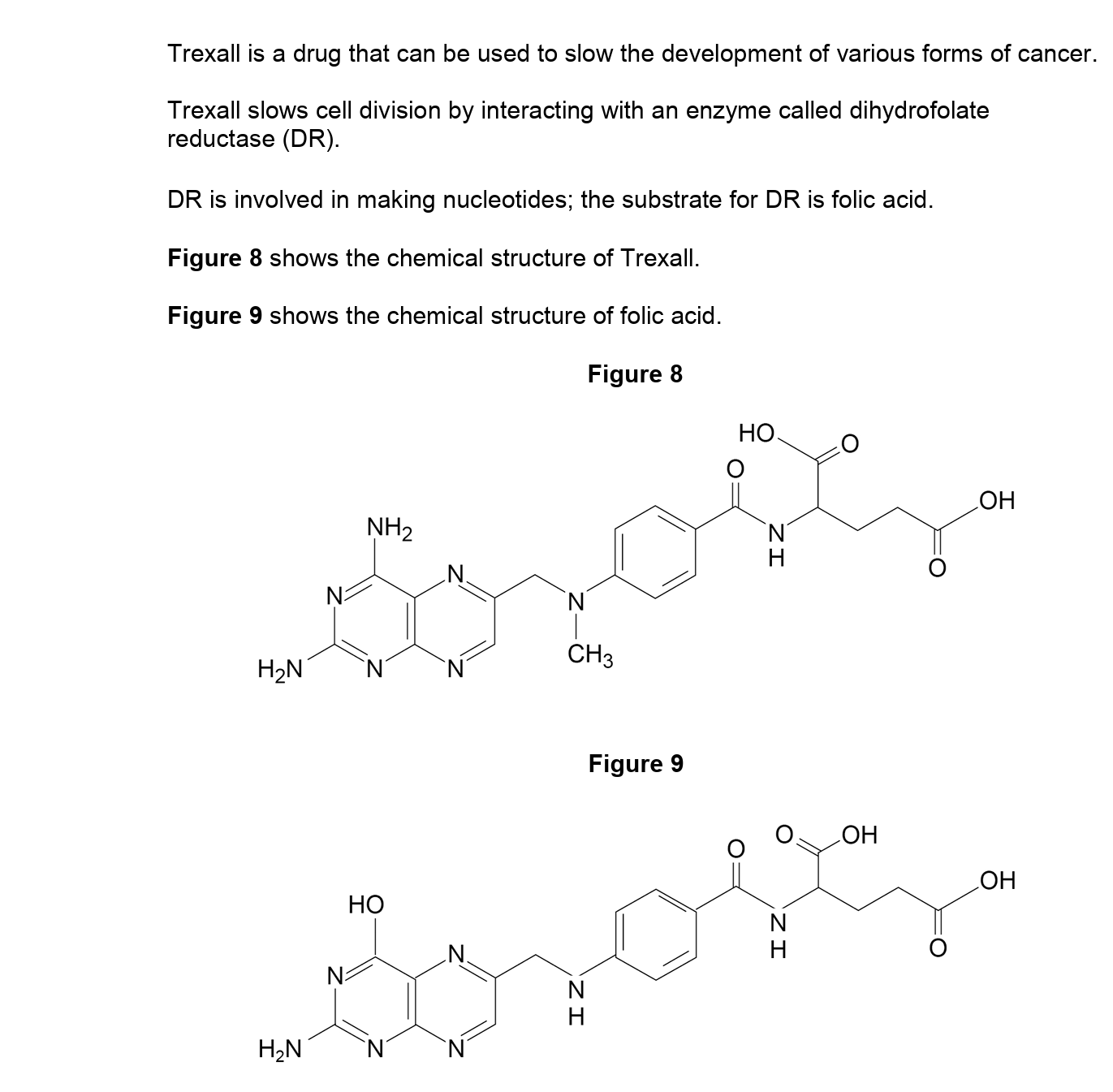

What is Dihydrofolate Reductase?? That’s not on the spec! 😩😭
Don’t panic if you don’t recognise words in a question - if it’s not on the spec, you are not being tested on your knowledge about it.
That means that this question is not about dihydrofolate reductase, nor about Trexall
So what is it about?
Look for the familiar words and concepts. Focus on those, not on the weird jargon names of the example organisms/molecules/drugs that you have never seen before. They are just examples, the important thing are the general concepts.
Make the Question Simpler
Let’s get rid of everything that isn’t on the spec. We will need these words later when writing the answer out, but we do NOT need them while we work out what the question is really about.
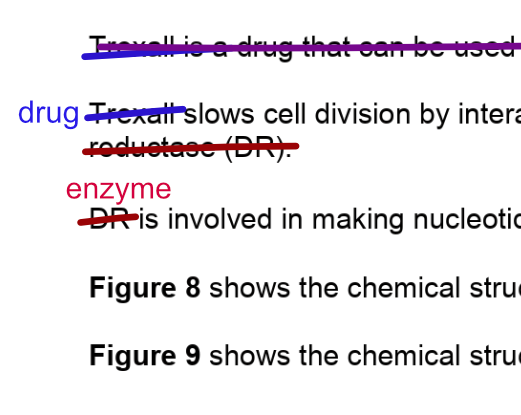
First, let’s replace “Trexall” with “Drug”. Trexall isn’t on the spec so it’s just an example of a drug. The name isn’t important.
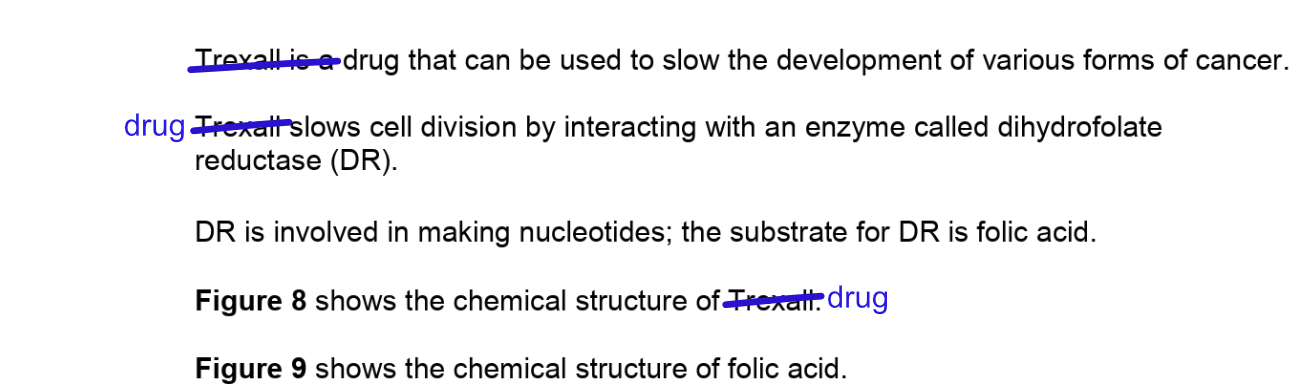
Do the same for the enzyme. You don’t need to remember that DR = dihydrofolate reductase while you’re working out the general, on-spec concept of the question. If you stick all that in your brain you’ll have less capacity for thinking about the important things.
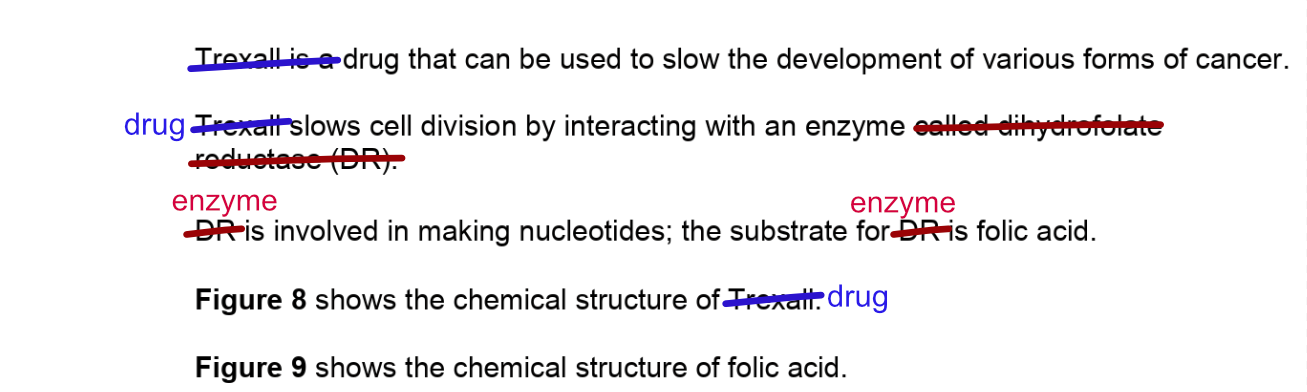
And then the same for the substrate (Folic Acid is not on the spec, the concept of substrates is).
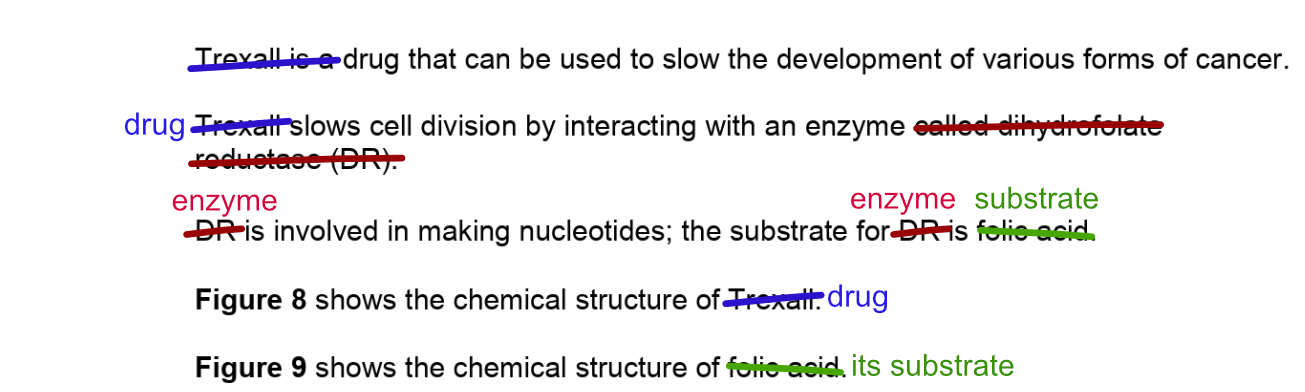
In summary: cross out the names of things that are not on the spec, and repace with generic words.
Hm, that sentence “the substrate for enzyme is substrate” is a bit pointless. So we can cut all that.
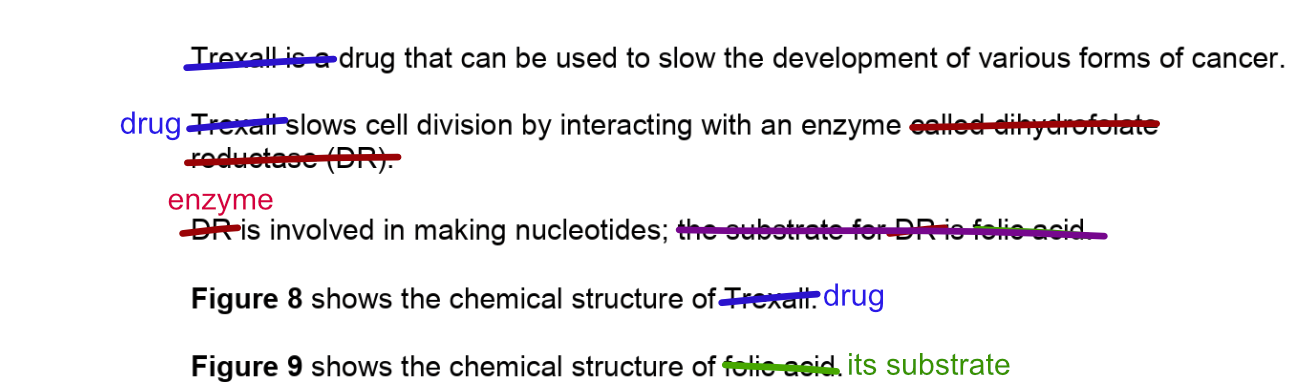
This is hopefully looking a little bit less overwhelming now.
The other thing we can do is to directly label the figures, so you don’t have to look up and down to remember which is which. This is for any type of figure - if it’s a graph, you would label the axes.
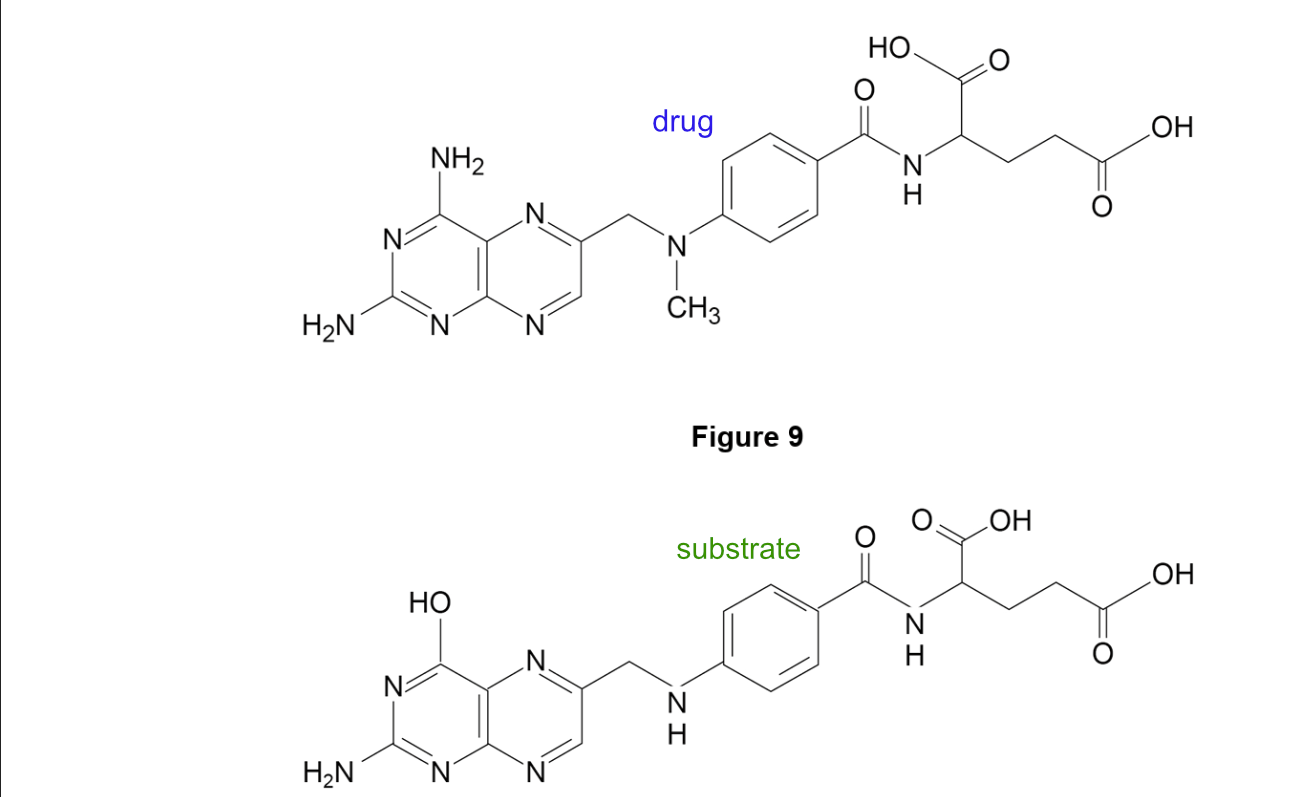
That helps a bit, but those molecular structures are still pretty scary stuff.
But remember: these molecules are not on the spec - so they are just examples. Two molecules, either of which might have had pretty much any structure.
What is the very first, most obvious and basic thing that you noticed about them when you looked at them together?
The Question Itself

Interesting, nothing about cancer in the question. We know that cancer involves fast-dividing cells, so a drug that slows cell division might help, but it doesn’t want you to talk about cancer (for this question at least). So that top sentence in the background info isn’t actually required either.
Also notice that it the question says “use the information provided” - this is a clue that everything you need is in the background information. They were never expecting you to already know anything about Trexall or dihydrofolate reductase.
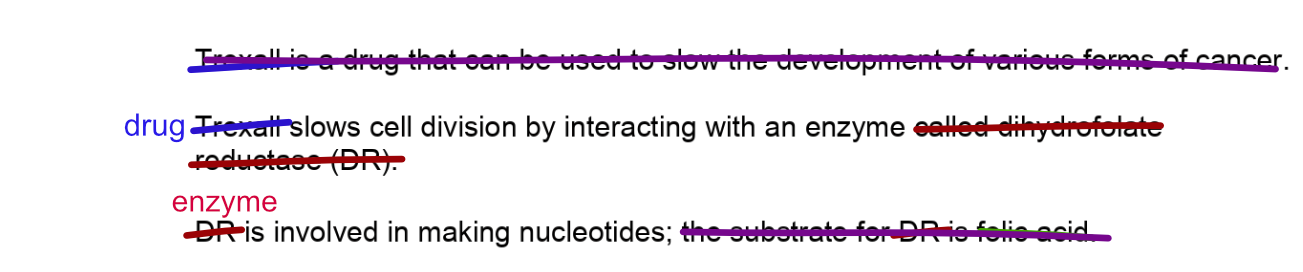
The question has been simplified down to this:
▪ A drug slows cell division by interacting with an enzyme
▪ The enzyme is involved in making nucleotides
▪ The drug and the enzyme substrate look very similar
Suggest how the drug slows cell division
Can you work out the answer now? Give it a go before reading on.
Working Out the Answer
There are two important things you need to realise - firstly the mechanism of action of the drug, and secondly why its action slows cell division. Both of these rely on you knowing concepts from the spec.
1. The Mechanism of Action of the Drug
What have you learned about different ways in which drugs might work? How might a drug interact with an enzyme? How might a drug with a structure very similar to the substrate interact with an enzyme? How might that affect the enzyme?
2. Why does this Action Slow Cell Division?
The enzyme is involved in making nucleotides. Nucleotides are on the spec. What are they used for in the cell? How is this connected to cell division?
Writing Out the Answer
When you write out your answer, it’s really important to remember to reverse the simplification process and use the correct names of the drug, enzyme, and substrate!
Give it a go now if you haven’t already - write out the answer you would give. Then scroll down to check it against the answers & markscheme. Don’t jump ahead; practicing writing answers to exam questions is really important for learning. I promise nobody will see if you mess it up.
Answer & Markscheme
There are many ways to explain the answer to get the marks, here’s just one example:
Trexall has a molecular structure very similar to folic acid, which is the substrate of the enzyme DR. This suggests that Trexall acts as a competitive inhibitor by binding the enzyme’s active site. This action prevents folic acid from binding, reducing the number of enzyme-substrate complexes. As the enzyme is involved in nucleotide synthesis, Trexall slows the rate of that process. Nucleotides are required for DNA replication, which is required for cell division. Trexall slows cell division by reducing the number that are available to a point where their availability is a limiting factor.
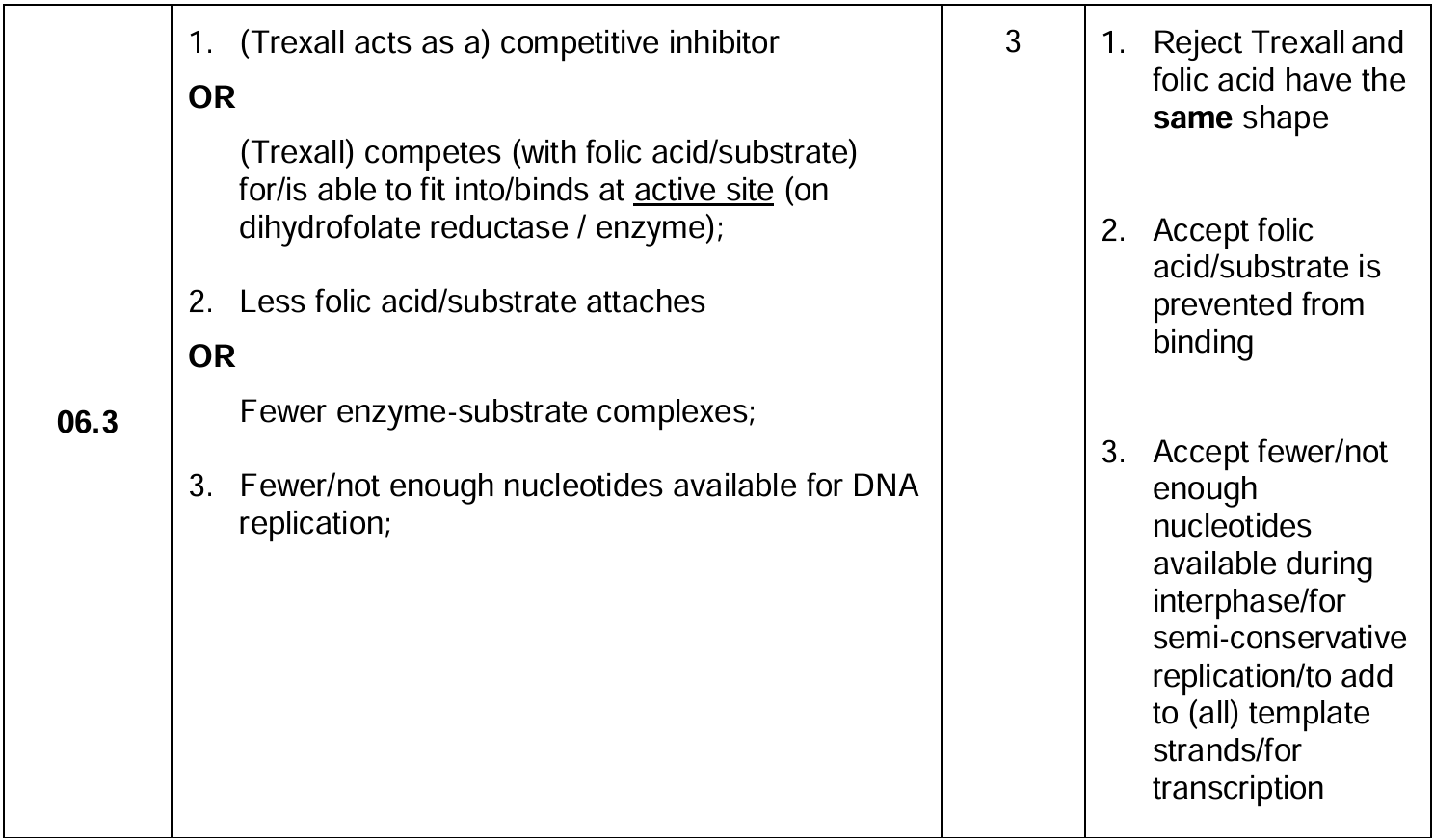
Can you see where the marks came from? And did you get all three?
Top tip: there’s no point in trying to remember answers to exam questions - the questions in your exam will be different! Instead, focus on noticing things like the level of technical language and detail that are required, and how these compared to your answer.
A Quick Recap to Finish..
If you feel overwhelmed by the amount of information in an exam question, you can simplify the question by removing specific names of things that are not on the spec - which you are not being examined on - and replacing these by the general concepts that you are being examined on. Just remember to use specific language in your actual written answer.
The full Exam Tip collection:
Give yourself a moment to think about the previous post before surging forward - maybe go make some tea. But here is more food for thought.