Overview: Gaining and Losing Atoms from the Human Body
Many topics in A level biology relate to how the human body gains and loses atoms. But have you ever stepped back and thought of how these processes all fit together? Having a wide overview can help make sense of individual topics.
Atoms in, atoms out
Your body is an atom-organising machine, with biochemical processes moving atoms between different molecules and locations. Your body takes new atoms in from the environment, and it releases atoms back into the environment.
A surprisingly large amount of mass is exchanged with the environment every day. About 98% of the atoms in your body are replaced each year - a startling thought. This article is focussed on the processes that result in the biggest mass changes.
Atoms gained and lost by the body usually exist as part of molecules.
Taking atoms/molecules into the tissues from the environment = absorption
Sending useful atoms/molecules out into the environment (or bloodstream) = secretion
Sending waste atoms/molecules out into the environment = excretion
Most of the mass we exchange with the environment is in the form of water. Remember that water is a important substrate/product in many metabolic and catabolic biochemical reactions; it’s not just a solvent.
Keeping it under control
Our bodies must control what molecules can (and cannot) get in from (and out to) the environment. Most of our bodies are covered with skin for this reason - skin acts as a barrier between us and our environment. We have specialised organs that manage absorption: the lungs and the gut. These organs both create spaces where molecules from the outside environment are put for absorption to take place in a controlled way. We also have specialised organs that control what substances leave our bodies.
Quick check: remember that molecules don’t count as being inside our bodies until they have been absorbed into our tissues. Just breathing or swallowing something isn’t enough. For example, the gut is a tube that goes from mouth to anus. It goes through our bodies, but the space inside the gut (the lumen, where the food is digested) is not part of our bodies any more than the hole in a doughnut is part of the doughnut. Imagine passing a tiny pebble through the hole in a doughnut; the pebble doesn’t go into the doughnut, just through it; it’s the same with us. Similarly if you swallowed the pebble it would pass through your gut but not be absorbed through the gut wall into your body.
Absorption - gaining body mass
The most common atoms we gain from the molecules we absorb are: carbon (C), oxygen (O), hydrogen (H) and nitrogen (N). This makes sense as these are the atoms most frequently found in biological molecules. We get these from:
The gut
absorption from the gut varies a lot, especially depending on what you eat and drink. These are rough averages:
About 7 litres of water per day (O, H) from fluids that were secreted higher up the gut
About 2-3 litres of water per day (O, H) from food and drink
Maybe something like 500 g total of other food molecules, comprised of:
carbohydrates (C, O, H)
fats (C, O, H)
proteins (C, O, H, N, S)
much smaller masses of other ions and molecules, with all the atoms we need to live
A lot of the water we ingest (eat/drink) comes from our food - you don’t need to drink litres of water every day. Any food that isn’t hard, dry and crunchy will contain water. Consider: a healthy diet includes a lot of plant and animal cells, and cells are about 70-80% water; a piece of steak contains a lot more water than protein, even after cooking.
The lungs
absorb gas from the air:
Something like 750 g per day of oxygen, as the molecular gas O2 (O)
Just look at that daily body mass increase we get just from absorbing oxygen gas!! You take in more mass from the air than from carbohydrates, fats and proteins combined. And it’ll be even higher if you excercise. It’s kinda wild tbh. This oxygen is required for respiration and ends up in water molecules (not in CO2!).
How do we use this stuff?
Although I’ve been talking about atoms, we nearly always absorb molecules. Even Oxygen is absorbed as the molecular gas O2.
And this is really important - having ready-made molecules is vital. Unlike plants, we can’t make glucose through photosynthesis, nor synthesise the amino group of amino acids from scratch*. So we need to absorb these molecules ready-made.
Some of these absorbed molecules are immediately useful (eg glucose for respiration, amino acids for protein synthesis), while many provide really useful starting places for biochemical processes that synthesise other useful molecules, often making use of the absorbed molecules’ ready-made carbon backbones.
Excretion - losing body mass
Excretion is the deliberate loss from the body of waste products from metabolism. It’s about getting rid of unneeded/dangerous waste. This is part of homeostasis.
We excrete the same sort of mix of atoms as we absorb, but in different molecular forms, which are no longer useful to us and/or which may be unhealthy for us to retain in our bodies. We can lose kilograms of mass this way, every day.
Again there are specialised organs/processes for this, the main ones being:
The lungs
Excrete something like 730 g per day of carbon dioxide, a waste product of cellular respiration (C, O)
This comprises 530 grams of carbon atoms and 200 grams of oxygen atoms
This is the main way we lose carbon atoms from our bodies!
Important: these oxygen atoms are not the same ones that were absorbed by the lungs (those ones became water)
The liver
Excretes somewhere around 900 g per day of bile fluids into the gut lumen.
Bile fluids are mostly water (H, O), which can be reabsorbed.
Contains a small mass (mg) of broken-down haem proteins (C, O, H, N), bile salts, and other substances that need to be excreted.
Also contains a very small mass of substances to aid digestion (but these are being secreted, not excreted).
Note: the liver breaks down unwanted proteins to form urea … but it does not excrete urea! The urea it produces is released into the blood to be excreted by the kidney. (Fun question: why doesn’t the liver just excrete this urea directly into the gut?)
The kidney
Excretes about 25 g per day of urea (C, O, H, N), which must be dissolved in water for excretion.
Excretes excess water, in volumes that can vary from zero to litres per day (H, O).
Excretes excess salts, averaging somewhere around 5 g per day.
The skin
Excretes a highly variable volume of sweat, depending on conditions.
Sweat is almost entirely water (H, O) but contains a very small mass of excreted salts, minerals and other substances.
A small amount of urea is also excreted in sweat (C, O, H, N).
You might be surprised not to see faeces listed here. Some things are excreted into the gut and become part of our faeces, but only in small amounts. Most of the bulk of our faeces is undigested food and bacteria that live in our gut - things that were never inside our bodies in the first place, are not products of our metabolism, and so which don’t count as excretions (no matter what everyday language might suggest). In scientific language, the loss of faeces from the body is egestion (compare with ingestion for eating).
Warning: remember all these numbers will vary wildly between different people and under different conditions. For example: if you exercise then you will excrete more carbon dioxide, and if you eat a lot of protein you will excrete more urea. The numbers given here are just to give you a very rough idea of the relative amounts involved.
What about secretions?
While excretion is the release of waste, secretion is the release of useful molecules (into the blood or external environment). Secretions that are sent into the external environment (including into the gut lumen) may be lost if not reabsorbed.
The gut receives about 6 litres per day of liquid secretions, but much of the water is reabsorbed
On a normal day, you might secrete about half a litre of sweat
These secretions are largely water. They do contain other things, like digestive enzymes and salts, but the total mass is of these are small compared to the excretions described above and so they aren’t so important for the big-picture story we’re telling here.
Water gain and loss
Remember water is not just a solvent, it’s a common substrate and product of biochemical processes. And we don’t only get it from absorption through our gut.
About 300 ml of water per day is produced as a product of metabolism (from respiration, as mentioned above).
It’s worth mentioning that we also lose quite a lot of water just because of the way our bodies work. But this is not considered excretion. Again all these figures vary a lot depending on the individual and their level of activity:
About 300 grams of water per day is lost through unavoidable evaporation from the wet surfaces of our lungs
About 300 grams of water per day is lost by evaporation from the skin (this is not sweat, it’s just evaporation)
About 500 grams of water per day is lost because it is required to dissolve urea for excretion (this is a bit different from the kidney’s ability to also excrete excess water in addition to this.
Finally, be aware that some water that enters our gut is never absorbed at all. This is important to keep the gut contents nice and squidgy so they can be pushed along to the anus to be egested. About 200 grams of water per day is lost in this way
* you might be confused by me saying this as people do talk about amino acid synthesis in humans. However, when we synthesise them we do so by using the amino group from an existing amino acid, usually glutamate. We can’t make the amino group ourselves, we can only swap it from molecules that have been synthesised by plants.
“Could you explain this to someone else ? ” Photosynthesis and Respiration - Revision and understanding through self explanation
Recent research shows the effectiveness of self explanation
Try using these cards with a partner to revise respiration and photosynthesis
Print onto card. Cut out, place face down in a pack.
Pick up a card
Explain the concept with a whiteboard or paper.
Use all of the words on each card.
Then look up the concept in a textbook and correct your mistakes.
Work your way through the pack.
Recent research shows the effectiveness of self explanation ie could you explain this to someone else
Try using these cards with a partner to revise respiration and photosynthesis
Print onto card. Cut out, place face down in a pack.
Pick up a card
Explain the concept with a whiteboard or paper.
Use all of the words on each card.
Then look up the concept in a textbook and correct your mistakes.
Work your way through the pack.
Please like and share (and click on a advert to help with the hosting costs !)
Respiration - Test your understanding, tips, resources and a quiz
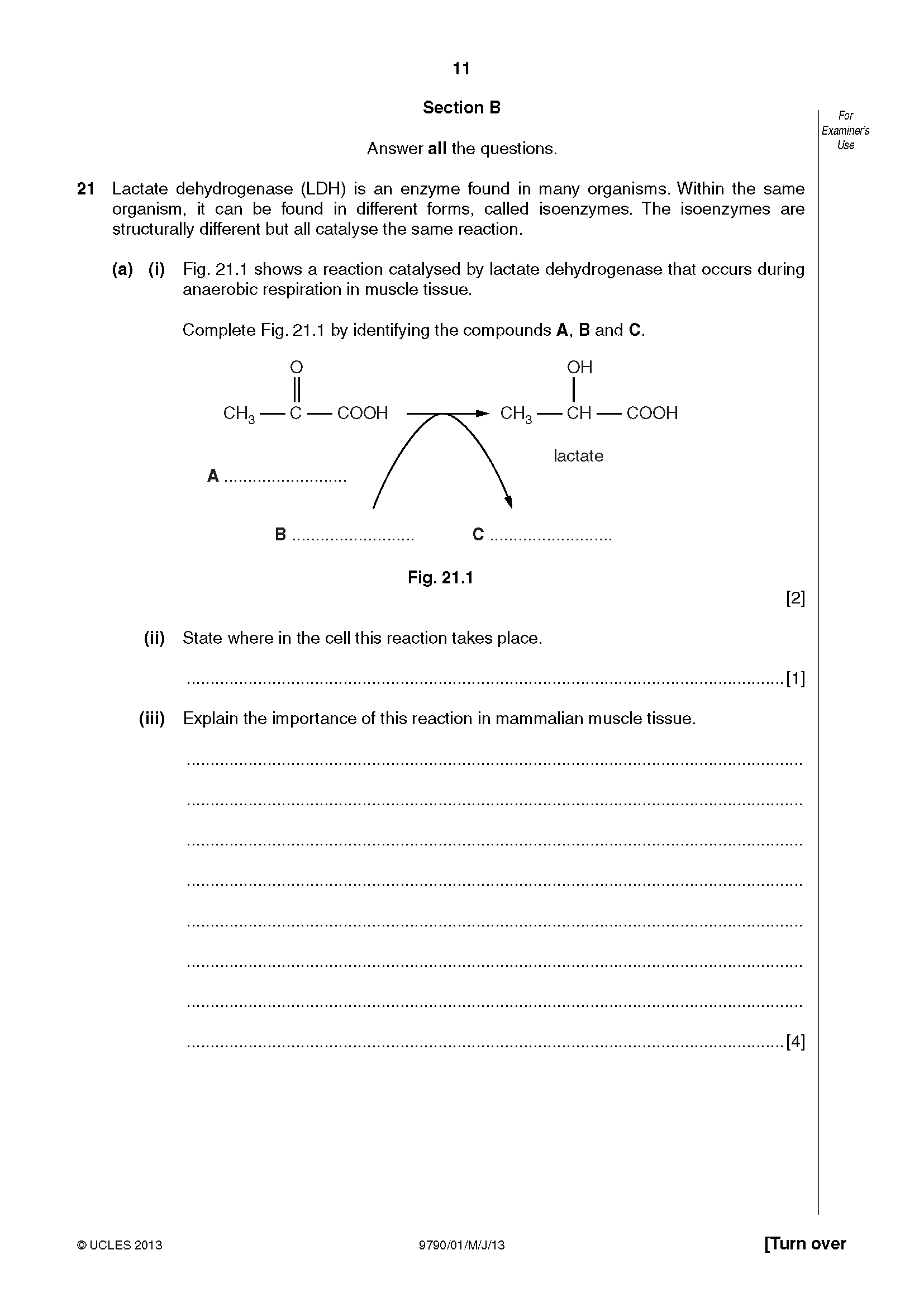
Oxygen is the final electron acceptor. It oxidises the final carrier in the ETC on the inner mitochondrial membrane and is reduced to water.
Hydrogen ions flow from the inter membrane space into the matrix via ATP synthase, this electrochemical gradient phosphorylates ADP.
Hydrogen ions are pumped from the matrix into the inter membrane space, using the energy from the electrons flowing along the ETC. The electrons come from the oxidation of food, transferred by coenzymes NAD and FAD.
Glycolysis occurs in the cytoplasm. Link and Krebs in the matrix. Link and Krebs produce carbon dioxide by the removal of a carboxyl group.
Fermentation is just glycolysis with a different way of regenerating NAD (from NADH) by the reduction of pyruvate (or ethanal).
Substrate level phosphorylation is the direct addition of phosphate to ADP, occurs in glycolysis (4 ATP) and Krebs (once per turn), chemiosmosis is H ions flowing through ATP synthase.
Cristae give a larger surface area for oxidative phosphorylation
Tips
Oxygen is the final electron acceptor. It oxidises the final carrier in the ETC on the inner mitochondrial membrane and is reduced to water.
Hydrogen ions flow from the inter membrane space into the matrix via ATP synthase, this electrochemical gradient phosphorylates ADP.
Hydrogen ions are pumped from the matrix into the inter membrane space, using the energy from the electrons flowing along the ETC. The electrons come from the oxidation of food, transferred by coenzymes NAD and FAD.
Glycolysis occurs in the cytoplasm. Link and Krebs in the matrix. Link and Krebs produce carbon dioxide by the removal of a carboxyl group.
Fermentation is just glycolysis with a different way of regenerating NAD (from NADH) by the reduction of pyruvate (or ethanal).
Substrate level phosphorylation is the direct addition of phosphate to ADP, occurs in glycolysis (4 ATP) and Krebs (once per turn), chemiosmosis is H ions flowing through ATP synthase.
Cristae give a larger surface area for oxidative phosphorylation
Please like and share (and click on a advert to help with the hosting costs !)
Respiration and Enzymes/Protein structure ... Hard Synoptic A-level Biology Question
This is an outstanding synoptic question from a Pre-U Biology Paper. Covers Protein Synthesis, Enzymes, Heart Disease, Respiration ....
A level Biology Questions by Topic with Markschemes - Aerobic and Anaerobic
A level Biology Questions by Topic with Markschemes - Aerobic respiration and Anaerobic Respiration
Please like and share
Please like and share (and click on a advert to help with the hosting costs !)
Linking Photosynthesis and Respiration - a wonderful synoptic exercise for A-level Biology
Try this, a terrific exercise to link Photosynthesis and Respiration. Excellent end of term revision.
Please like and share
Uploaded a set of new Respiration Tutorials to my Youtube Channel - A-level Biology
I have made a series of 9 short (5-7 mins) video tutorials to try to help students understand glycolysis, link reaction, krebs cycle, anaerobic respiration, oxidative phosphorylation, chemiosmosis and the use of other respiratory substrates. I hope you find them of use.
Please like and share
I have made a series of 9 short (5-7 mins) video tutorials to try to help students understand glycolysis, link reaction, krebs cycle, anaerobic respiration, oxidative phosphorylation, chemiosmosis and the use of other respiratory substrates. I hope you find them of use.
Here is the link to the playlist. Please subscribe and like and watch each one all the way through !
Splat and Flash..... ATP and Fireflies - #OCR Synoptic Biology A-level
Another from the past.
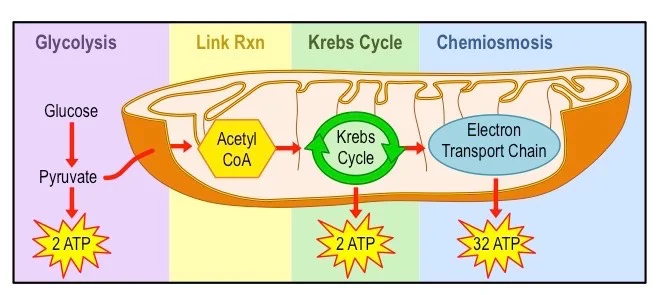
Terrific question about DNA, diffusion, ATP production and fireflies going out in a blaze of glory....
Please like and share
Another from the past.
Terrific question about DNA, diffusion, ATP production and fireflies going out in a blaze of glory....
Here is a pdf copy of the question - and of the markscheme.
Additionally, below are images with the markscheme answers edited in
A different approach to teaching (aerobic) respiration - A-level Biology
Teaching aerobic respiration is a difficult topic, traditionally, teachers begin with glycolysis, then link reaction and krebs cycle and then the electron transport chain, I would argue that there is a better way to teach this.
Please like and share
Teaching aerobic respiration is a difficult topic, traditionally, teachers begin with glycolysis, then link reaction and krebs cycle and then the electron transport chain, I would argue that there is a better way to teach this.
I begin by teaching the structure of adenosine triphosphate, the need for ATP, and the concept of ATP as a currency that connects the source of the energy (which is the food) to where the energy currency is being consumed, in specific processes such as protein synthesis, DNA synthesis and the movement of ions against a concentration gradient.
I focus on the transient nature of the ATP and the disparity between the 5g in the body compared the 80kg turned over per day.
Then discuss the processes which are used to produce the ATP - substrate level phosphorylation and chemiosmosis.
After an explanation of chemiosmosis, I then lead on to the flow of electrons through the electron transport chain (and therefore the creation of the proton gradient between inter membrane space and matrix) which focuses on the electron on the last carrier and that it has to be accepted by oxygen to produce water.
Then you look at where the electron has come from.
I start with the production of the electron from the breakdown of pyruvate to acetyl and the acceptance of the electron by NAD, (at the same time pyruvate is decarboxylated). I repeatedly emphasize regeneration of NAD when the electron is passed from NADH to the electron transport chain.
Then you move on to the krebs cycle.
When teaching the Krebs cycle initially focus on the number of carbons and the decarboxylation and the dehydrogenation avoid discussions of the names of the intermediates and just keep the students focused on the big picture, which is the production of a reduced carriers (NAD and FAD).
Use the production of ATP/GTP directly in krebs cycle as an opportunity to recap about substrate level phosphorylation (with an eye on teaching glycolysis later)
Always keep emphasizing the fate of the reduced carriers that the electrons end up on the electron transport chain and then ultimately joining with oxygen to produce water (and this regenerates the electron carriers)
After teaching Link reaction and Krebs cycle, discuss other potential respiratory substrates - amino acids and fats - and where they might enter the Krebs cycle and Link reaction.
Finally look at glycolysis, emphasise that only glucose enters glycolysis and that the products do not include carbon dioxide and that oxygen is not consumed.
Emphasize the production of reduced NAD and then use that as a point to discuss as to how the NAD could be regenerated in the absence of oxygen and emphasize that anaerobic respiration is just glycolysis with an alternate way of getting rid of the reduced NAD.
Give it a go and see how you get on !

