


Key Concept: Averages, Range, and Standard Deviation, with A level Biology Past-Paper Questions
You need to know some maths for A level Biology, including to work out whether an experiment can be said to have shown an effect or not. Master this early on and it will not help you with exam questions, but also make it easier for you to learn the bits of the course that are explained using these statistical methods.
Key Concept: Surface Area to Volume ratio (SA:V)
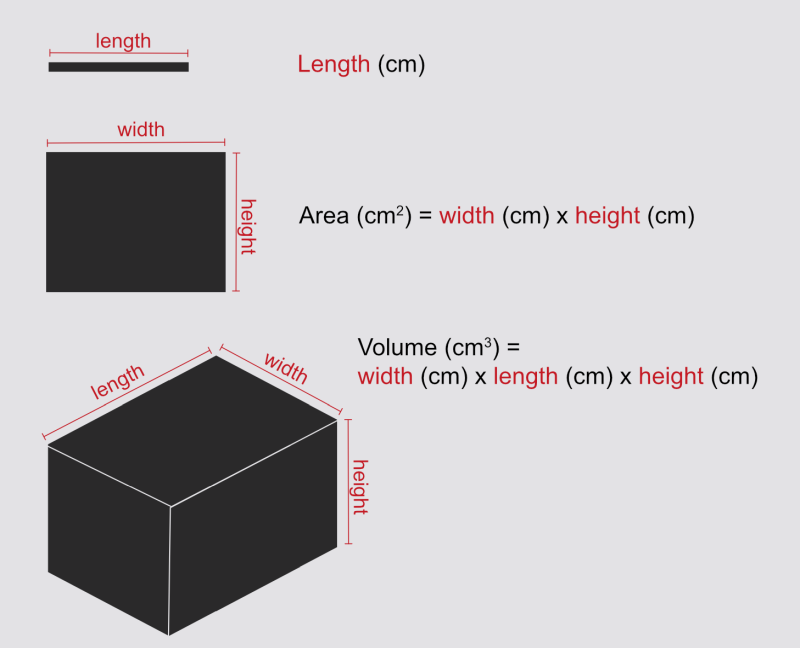
Surface area to volume ratio (SA:V) is vital for understanding a wide range of topics including transport across cell membranes, gas exchange, digestion, heat exchange, and mass transport. SA:V explains why the inner membrane of a mitochondrion is folded, why elephants have big ears, and why jellyfish don’t need blood vessels.

Key Concept: Independent and Dependent Variables
A variable is any value that does/might change during an experiment. Variables can include things like pH, temperature, colour, or the concentration of substances. The amount of time that has passed is a variable, as are rates of reaction.

Key Concept: Polar and Charged Molecules
What does it mean if a molecule is polar or charged? How does it change their behaviour? You’ll get confused in a number of topics if you can’t get this concept straight in your mind, and it’s too easy to lose exam marks by using the wrong term. Make life easier by learning this now.