Another "Suggest" AQA exam question walk through

Here is another example of a “Suggest” question from a past paper.

Find the main “Suggest” article and first example question here

Example 2: Q3 Paper 2 2023

This next question is more complex, and there are two ‘suggest’ questions.

But first - I always recommend you don’t read the actual questions until you’ve looked at the background information, graph etc. Doing this will help you avoid getting overwhelmed and jumping to mistaken conclusions (which is very common in exam situations!).

So let’s keep the questions for later. First make sense of this:
1. Don’t panic!

This question is going to challenge your working memory by throwing lots of information at you all at once. Tackle it bit by bit to make sense of what’s going on.

2. Use your knowledge to make sense of the background information:

There are tomatoes, a “mycorrhizal species’, and different water conditions.

  • You know that mycorrhizae are fungi (3.5.4)

  • You know that plants need the correct amount of water in order to grow (GCSE)

  • You can understand the experiment – including identifying the independent, dependent, and controlled variables. (8.3)

  • You can understand the data – what is the graph is showing? (6.4)

Top tip: Write “IV” and “DV” on the paper to identify the Independent and Dependent variables.

Water availability = IV
Whether mycorrhizae were added to the soil = IV
The mean mass of tomatoes = DV

…. What is the graph showing? 

·       The pair of bars on the left of the graph compare the yield of tomatoes from plants grown in conditions of water shortage.

o   The bar on the far left is for plants grown in soil that did not have mycorrhize added. The other is for plants in soil that did have mycorrhizae added.

o   The results show a significant difference between the yield of tomatoes for these two groups of plants. The plants with mycorrhizae yielded more tomatos.

·       The pair of bars on the right compare plants that did not experience water shortage.

o   Again, the bar on the left is without mycorrhizae, and that on the right is with mycorrhizae.

o   The results show no significant difference between the yield of tomatoes from these two groups of plants.

Got that? Ok now you’re ready to look at the questions. How would you approach these?


3. Answer questions in order:

The first part of the question (not shown) is about phosphorous cycles, so you will already be thinking about content from 3.5.4 (Nutrient Cycles).

4. Check the Command Word:

‘Suggest’.

5. Understand the question:

These questions are quite straightforward.

6. Think about relevant information from the spec

  • You know that mycorrhizae facilitate the uptake of water and inorganic ions by plants. (3.5.4)

  • You know that there are a variety of living organisms in soil, and that these are in competition (3.7.4)

  • ou have identified the fertiliser concentration as a controlled variable (8.3)

7. How many marks are there available?

Each question has two reasons for two marks; one mark per reason. Make them good ones!

8. So, what are your answers?

There are a variety of different ways to get the marks, allowing you to play to your strengths. Give it a go before looking at the makr scheme below.

..

..

..

..

..

..

..

..

..


Q3 Paper 2 2023 Q3.3 – mark scheme

Did you get the marks?

Paper 2 2023 Q3.3 – example answers

Good answer examples, which would win marks:

✅ to ensure that there are no other fungi growing in the soil

✅ to remove any seeds in the soil so that other plants don’t grow and consume the nutrients and water

✅ to ensure that there are no pathogens in the soil that can infect the tomato plants

Poor answers that would not get the mark – can you identify where they’ve gone wrong?

❌ To remove harmful bacteria

❌ To kill everything living in the soil so it doesn’t interfere with the experiment

❌ to make sure that conditions are ideal for growing tomato plants


Q3 Paper 2 2023 Q3.4 - markscheme

Paper 2 2023 Q3.4 – example answers

Good answer examples, which would win marks:

✅ The investigation is on the effect of water shortage so the concentration of fertiliser should be a control variable

✅  The concentration of fertiliser will affect the growth of the plant so the recommended amount should be used to get the best crop

✅  Fertilisers can affect the water potential of the soil which may impact how water is absorbed by the roots


Poor answers that would not get the mark – can you identify where they’ve gone wrong?

❌ Without fertiliser the tomatoes won’t grow

❌ So that the soil doesn’t affect the size of the tomatoes

❌ So that the tomatoes can be compare

Article by Natalie Vlachakis (an ex-teacher who also worked for AQA) & Jenny Shipway

Monoclonal Antibodies in the Immune Response (AQA/OCR, ELISA for AQA)

A guest blog from Dr Jenny Shipway, who studied biochemistry at university and now works in science communication and education training.

Every month, I stab myself in the thigh with an injection pen. It can be painful, but it’s well worthwhile - the pens inject monoclonal antibodies that travel freely in my bloodstream until they reach my head. There, they bind a protein that would otherwise give me migraines. This is the first type of treatment ever designed specifically for migraines. And it’s really, really effective.

Monoclonal antibodies are a relatively new treatment type, with huge importance for treating migraine, cancer, autoimmune diseases, and many other conditions.

So how do they work?

What is an Antibody? What is an Antigen?

Before you can understand what monoclonal antibodies are, you need a good understanding of antibodies in general. I won’t go through everything here so read this article if you’re not already confident.

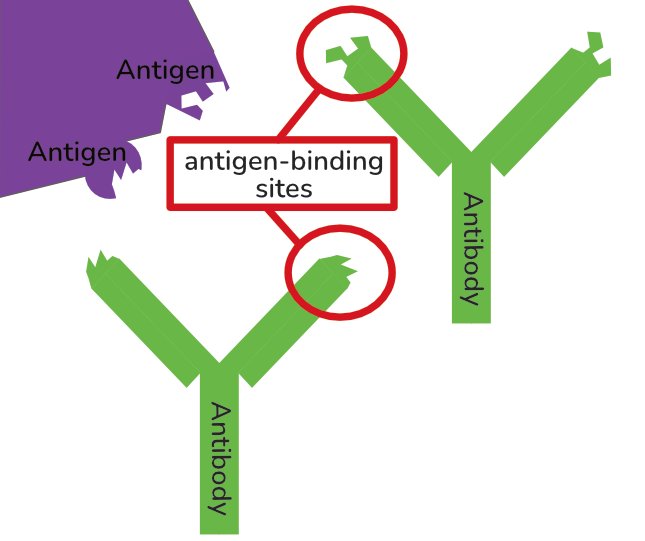
To summarise as a recap: antibodies are small protein molecules with variable antigen-binding sites. They bind molecules that don’t belong in the body to flag these up to the immune system. Eg they might bind to a viral surface protein, or a bacterial polysaccharide. The thing that they bind is called an “antigen”.

Monoclonal Antibodies

Mono = one (e.g. monomer, monosaccharide, monoxide)
Clone = an identical copy of a cell/organism with the same DNA, created from one original cell/organism (e.g. clonal selection; clonal expansion; Attack of the Clones)
Antibody = a protein molecule that binds antigens, mediating an immune response

Monoclonal antibodies are identical antibodies, made by B-lymphocytes cloned from one single starter cell.

Why inject Monoclonal Antibodies

Normally, antibodies are synthesised and released in the body by B-lymphocytes. But this requires two things: firstly that the immune system is aware of a threat, and secondly that there is a T-lymphocyte with DNA that encodes the required antibody.

The T-lymphocyte is necessary as it’s involved in sparking off B-lymphocyte replication and antibody production. But also the T-lymphocyte provides a check that it’s safe to use the antibody.

In my case, my body isn’t aware that it would be helpful to make antibodies to that pesky migraine-provoking protein. And I almost certainly don’t have any T-lymphocytes that would give the OK to produce such an antibody. At least, I shouldn’t do. Any such T-lymphocytes should have been destroyed early in my life, along with all other T-lymphocytes that were capable of producing antibodies against my own body. So I need to get the antibodies from somewhere else.

Designer Antigen-Binding Sites

In the lab, you can make any antibody you want. You just need the right B-lymphocyte.

There are a few different ways to tinker with the genetic code of a B-lymphocyte to achieve this. You don’t need to know the details. But what you do need to understand is that inside the B-Lymphoctyle, the scientist needs to ensure that the section of its DNA that codes for the antibody’s antigen-binding site has a sequence that …

  • … will be translated during protein synthesis into a chain of amino acids which ….

  • … contains a particular sequence of amino acids (primary structure) so that …

  • … the chain folds its backbone (secondary structure) in a way that allows …

  • … the whole thing to fold up upon itself (tertiary structure) so that it …

  • … presents a binding site with a specific shape and chemical properties that …

  • … will bind the antigen that they want it to bind.

This one cell can then be cloned. This produces many many identical, cloned cells with that exact same DNA, capable of producing identical antibodies with identical binding sites. Remember mono = one. This is where the “monoclonal” comes from.

Make big vats of these monoclonal cells and you can get them to pump out huge numbers of your chosen antibody to be collected and purified to use as you wish. These are monoclonal antibodies. Each antibody molecule is identical because the cells are all identical clones with the same DNA sequence.

The monoclonal antibodies in my injection pens were made like this in a lab. They have an antigen-binding site that is able to bind a protein called CGRP. By doing so, they prevent the CGRP from binding to its natural receptor, including in a particular set of neurons in my head. Which prevents my migraines.

But monoclonal antibodies can do a lot more than this - they are highly versitile due to their small size and specific binding …

Weaponising Antibodies as Therapeutics

Why stop just with changing the binding site?

Monoclonal antibodies specifically bind to your target, encumbering it and provoking a natural immune response. But why not go further? Why not get the antibody to deliver a powerful weapon directly to its target?

A big problem with injected/ingested drugs is that they get everywhere. If you inject a chemotherapy drug, it travels through the bloodstream without any map or guidance system. It reaches every part of the body. Cancer drugs usually target fast-dividing cells, but this means that as well as damaging the cancer, they get into your hair follicles where they kill healthy cells so that your hair falls out. They get into cells in your gut and kills them, making you feel sick and suffer gastrointestinal problems.

But what if you attached the drug to a monoclonal antibody that only binds the target cancer cells? It will still travel around the body in the blood, but will stop at the cancer and have much greater impact there.

Monoclonal antibodies are used in cancer therapies not only to provoke a normal immune response, but also to deliver cancer drugs, or stick cell-killing radioactive substances onto individual cancer cells. Being able to target the cancer in this way reduces unpleasant side-effects and so broadens the range of drugs that can be used.

Monoclonal Antibodies in Diagnostics

Monoclonal antibodies are useful tools outside the body too.

Until the 1950’s or so, pregnancy tests were carried out using live frogs. They would inject the woman’s urine, and if she was pregnant then her hormones would cause the frog to produce eggs just over a week later. Happily for frogs, we do things a bit differently now. (You don’t need to know about the frogs, although you may now never forget that mental image. You’re welcome.)

The modern pee-on-a-stick pregnancy test is a Lateral Flow Device. They work in very much the same way as Covid tests. You add body fluids, which soak their way along an absorbant strip, and if a certain molecule is present (eg a particular pregnancy hormone, or viral coat proteins) then a visible line appears. How do they detect the molecule of interest? By using monoclonal antibodies that will specifically bind to it. Similar tests can also be used to detect prostate cancer or HIV.

ELISA tests (for AQA)

ELISA tests work in a similar way, biochemically speaking. There are different versions but here’s the one it’s most important to know about. ELISA tests can be confusing because different types of antibodies play different roles in the process.

Direct ELISA test - a test to detect antibodies in the blood

If you are infected with a pathogen, your body will react by producing antibodies that are able to bind antigens associated with that pathogen. By detecting these antibodies, you can be diagnonised as being infected.

Here is how the test works, step by step:

1. An antigen from the pathogen (eg a viral coat protein) is covalently bonded to the well surface.
2. Blood plasma is put into the well. If antibodies for this antigen are present in the blood, they will bind to the antigen.
3. The blood plasma is washed out of the well, leaving behind any antibodies bound to the antigen.

If there are antibodies in the well, then you know the person has had an immune response to the pathogen. But how can you tell if antibodies are there or not? They’re such tiny proteins.

A totally different type of antibody is used for the next step. It’s a monoclonal antibody made in the lab, but it’s also a very unusual one. It is an unnatural, designed tool created purely for use in biochemical assays. These antibodies have some very special properties:
• Their antigen-binding sites specifically bind to the constant region of natural antibodies. This means that for these monoclonal antibodies, other antibodies are antigens! (Yes this is confusing, but it’s a good way to check you really understand what ‘antigen’ means.)
• Their constant region is covalently bonded to an enzyme. The presence of the enzyme means that they can’t bind each others’ constant regions - so they are not antigens to themselves. They only bind other types of antibody.

Imagine the chaos in your body if your B-cells released antibodies that could bind to other antibodies’ constant regions! They would be hugely damaging to your immune system. However, these little guys are very useful tools in the lab.

5. These special monoclonal antibodies, with linked enzyme, are added to the well.
• If there ARE (natural) antibodies bound to the antigen in the well, the monoclonal antibodies will bind to their constant region.
• If there are NO (natural) antibodies, the monoclonal antibodies will remain freely floating in the solvent.

6. The well is washed out again.

The monoclonal antibodies, with their linked enzyme, will only remain in the well IF there were (natural) antibodies in the blood sample. Otherwise they would have been washed away in step 6. If there is enzyme in the well, there must have been antibodies in the blood.

But how do we know if there is enzyme in the well..?! This bit is easy, because of the clever choice of enzyme: The enzyme is one that takes a colourless substrate to form a coloured product.

7. Add the substrate, and see what happens! If colour appears, you know the enzyme is present. And the enzyme if present, its monoclonal antibody must be bound to a natural antibody that could bind the antigen from the pathogen.

AQA Exam Question Example - ELISA tests

This exam question requires you to understand both ELISA tests and the immune response. Can you make sense of it?


Key Concept: Surface Area to Volume ratio (SA:V)

Some concepts turn up again and again in A-level biology. Taking a little time to ensure you really understand these key concepts from the start can save a lot of effort overall.

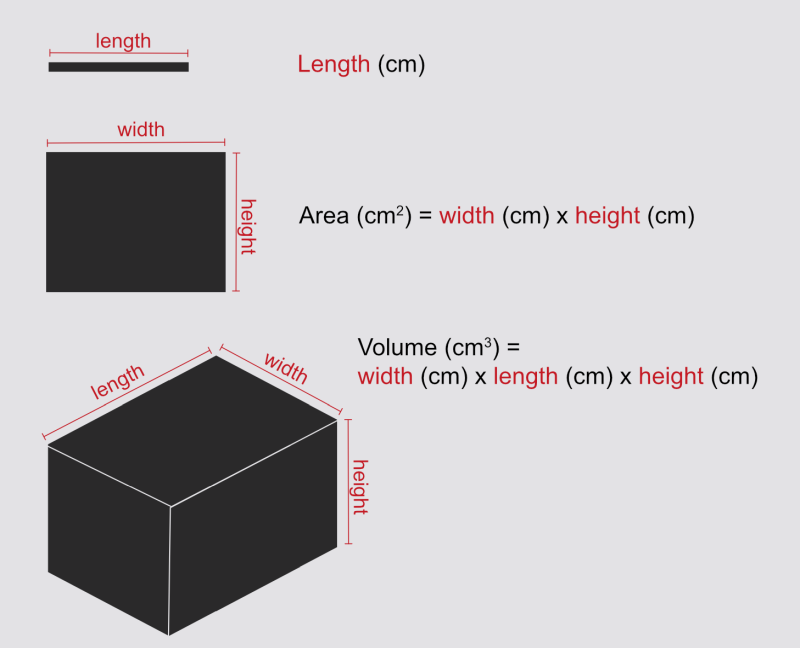
Surface area to volume ratio (SA:V) is vital for understanding a wide range of topics including transport across cell membranes, gas exchange, digestion, heat exchange, and mass transport. SA:V explains why the inner membrane of a mitochondrion is folded, why elephants have big ears, and why jellyfish don’t need blood vessels.

Read more

Mastering AQA A Level Biology Section 3.4.2: DNA and Protein Synthesis - Common Questions & Mark Scheme Insights

After analyzing past papers and mark schemes for AQA specification section 3.4.2 (DNA and Protein Synthesis), I've identified the question types that consistently challenge students. Understanding these patterns and the specific language that mark schemes reward is essential for maximizing your exam performance. Let me guide you through four of the most frequently tested question types with real AQA examples.

Read more

AQA - Possible essays - as forecast by AI.....

How I suggested some the POSSIBLE 2025 AQA A-Level Biology Essay Titles

One of the most challenging aspects of A-Level Biology Paper 3 is preparing for the 25-mark synoptic essay. With so many potential topics across the full specification, students often feel overwhelmed. That’s why I’ve taken a systematic approach to identify four high-probability essay titles that could appear in the 2025 exam.

Here’s how I did it:

1. Analysing Past Essay Titles

I reviewed a complete set of past essay questions and their mark schemes, identifying which themes have come up repeatedly and which have been underused in recent cycles. This helped rule out repeats and spot patterns in the kinds of synoptic themes the exam board favours.

2. Cross-Referencing the AQA Specification

Using the official AQA Biology specification, I matched every past title to its relevant topic codes. I then looked for specification areas that:

  • Are heavily weighted in content but haven't been examined recently

  • Offer rich synoptic potential (e.g. enzymes, feedback, biological molecules)

  • Align with the mark scheme’s focus on integration and application

3. Designing Original Titles

To avoid duplicating previous questions, I crafted entirely new titles that:

  • Require a synoptic approach using at least four topics

  • Encourage explanation, analysis, and application across biological scales

  • Are rooted in specification content but phrased in fresh and exam-appropriate language

How to Approach A level Biology Graph and Table Questions: Tips and Exam Question Pack

Get top marks when analysing figures, tables and images by avoiding common mistakes that students make

This article contains key vocabulary, a strategy for how to approach questions for success, a multichoice quiz with answers, and a big pack of past paper exam questions

Don’t panic, it’s only a graph

The single best exam tip for graphs and tables exam questions is to start by looking at the graph or chart itself. DO NOT LOOK AT THE QUESTIONS FIRST! This single thing will help you avoid the most common mistakes that students make.

But you also need to know what you’re doing. Which means you’ll need to be confident with these terms:


Background Knowledge / Vocabulary:

  • Independent Variable: The variable that you purposefully set to different values during the experiment

  • Dependent Variable: The variable that you measure during the experiment, which is unknown until it is measured

  • Replicate: Experimental data is often replicated - the same data point is recorded multiple times for the same conditions

  • Accuracy / Precision: Accuracy is how close the replicated values are to the correct value, and precision is how close they are to each other. If there is an unknown problem with the experiment, results can be very precise but have very low accuracy.

  • Range / Standard Deviation: The amount of variation in the data. A large range or standard deviation means that the replicated data had a broad range of results. A small range or standard deviation means they were much more similar in value. Range / Standard deviation is therefore a measure of precision.

  • Trend: What is the general relationship between the dependent and independent variables? When the experimenter increased the independent variable, what happened to the dependent variable? What shape is the graph?

How to Approach the Question:


1. Look at the graph or chart first!

Too many students look at the question first, get confused or panicky about what it is asking, and form preconceptions about what data they need. This then means they are then unable to look at the data clearly, and miss the information they actually need. Looking at the graph or chart first both makes the data easier to understand, and makes it easier to work out what the question is asking.

Trust me, this is a major factor in student success. If you only take away one thing from this article, always look at the graph or chart first.

2. Don’t panic if it’s about something totally unfamiliar
Students can get very thrown if the question is about an organism or molecule that they have never heard of before (the exam boards do this a lot). This sudden panic makes it hard to think clearly.

Remember - if you have covered all the course material, even if the question is about something weird and new then all the information you need will be in the data. The things that look scary are just surface details. If the question was “Fred gave James two apples, how many apples does James have” you wouldn’t need to know who these people were to answer the question.

But don’t just dive in to the details of the data …

What’s going on here?

3. Understand the format
Don’t waste time looking at the actual dots or numbers until you understand how the data has been presented. Check every aspect methodically. It’s too easy to make assumptions based on previous graph/table formats you have seen - this one might be different!

  • Look at the headings / axis labels and units. What is the data showing?

  • Identify the independent variable and the dependent variable. If possible, it’s helpful to label them “IV” and “DV”.

  • What type of data is shown? Is it averages? Does it include a Range or Standard Deviation?

  • Graphs: Check the axis labels. Have they plotted rate or time, mass/volume or concentration? Often students assume enzyme graphs have rate on the y axis - but sometimes they don’t!

  • Tables: Check: is the Independent Variable in the first column? Is the data in each row consistent?

4. Look at the data
Now you understand its context, look at the actual dots or lines or numbers. Check:

  • Does the Range overwhelm differences in values: Do the range bars or standard deviation bars overlap? If they do, then there is significant overlap between the populations of replicated results that were used to calculated the average values.

  • Unspecified Ranges: If there are replicates but no range bars or standard deviation has been calculated, how broad does the range look when you compare the replicated data values to their mean?

  • Trends: What trends can you observe? Then think about what principle of biology is being shown by the the trends.

Now think about what it all actually means:

  • Values: How would you explain the highest value, the lowest value, the point at which the line crosses the x axis,

  • Range: How would you explain the largest range? How would you change the method to reduce the spread in the data?

5. Ok - NOW look at the actual questions
Try to see past the detail. How does this data/question relate to things you have studied?

Your working memory can easily get overloaded with details, making it hard to think. If the examiners have introduced a new organism, its name won’t be important. What might be important is the environment in which it lives, or its interactions with other organisms. You know what data you have, and what the questions are, so pick out what actually matters here. Is this a question about enyme reaction rates? Or about surface area to volume ratio?

This is why it’s useful to look at the data first - you will be able to look at it with a clear eye, making it easier to pick out how it’s relevant to the material you have studied.

6. Give the required information
Avoid the common mistakes that lose students marks:

  • If they say you should use the data, you must either quote it, or show how you have used in in a calculation

  • Refer to the axis/data labels wherever possible. Don’t say “the graph goes up”, do say “the saturation of haemoglobin increases”


A-Level Biology Past Paper Graphs and Charts Exam Questions:

Got all that? Ok! Here are some questions for you to practice.

And remember - don’t read the questions until after you have made sense of the graph or chart.

If this post has been helpful, please like ❤️ below and share with your friends. 

This article was written by Dr Jenny Shipway with guidance and editing from Tom. Tom has over 26 years experience specialising in A level Biology teaching and tuition, and has helped many students achieve top grades in the subject.

Transport in Animals: Haemoglobin, Oxygen Dissociation Curves, and the Bohr Effect

Haemoglobin, Oxygen Dissociation Curves, and the Bohr Effect

Red blood cells stuffed full of haemoglobin. Their bright red colour tells us their haemoglobin is in the form of oxyhaemoglobin, with bound oxygen.

This article includes an explanation of the topic followed by a short multiple-choice quiz with answers, and a collection of past-paper A-level exam questions for you to try.

Single-celled organisms absorb oxygen directly from their surroundings for use in aerobic respiration. But animals have cells buried deep within their bodies, far from the outside world. For this reason, the ability to transport essential substances like oxygen, and to remove waste products like carbon dioxide, is crucial for all animals.

This A-level Biology topic is challenging, but it’s really important to build an understanding of the mechanisms behind these processes. You’ll need to understand exchange and transport, and get to grips with the role of haemoglobin in transporting oxygen and carbon dioxide. And you really will need to understand it properly - as with most A-level topics, memorisation is not enough.

The really clever bit about oxygen transport in animals is the way that cooperative binding affects haemoglobin’s oxygen dissociation curve. Master that and you’ll be well on your way to getting full marks in this topic.

Vocabulary (for reference, don’t worry if you don’t know all these yet!):

  1. Partial Pressure: The pressure exerted by one particular gas in a mixture.

  2. Haemoglobin: A protein found in red blood cells. Able to bind oxygen, carbon dioxide, and other ligands.

  3. Oxyhaemoglobin: Haemoglobin bound to oxygen, as occurs during oxygen transport.

  4. Carbaminohemoglobin: Haemoglobin bound to carbon dioxide, as occurs during carbon dioxide transport. Yes it has a funny name! Be careful not to confuse it with carboxyhaemoglobin, which is hemoglobin bound with carbon monoxide.

  5. Haemoglobinic Acid: Haemoglobin bound to a proton, as occurs during carbon dioxide transport.

  6. Cooperative Binding: The phenomenon where the first oxygen molecule to bind to one of haemoglobin’s binding sites increases the affinity of the remaining binding sites for oxygen. And the first to release makes it easier for the others to release.

  7. Carbonic Anhydrase: An enzyme that catalyses the reversible conversion of carbon dioxide and water into carbonic acid.

  8. HCO3–: The bicarbonate ion, one of the ways in which carbon dioxide is transported in the blood.

  9. Chloride Shift: The movement of chloride ions into red blood cells as bicarbonate ions move out, maintaining electrical neutrality during the transport of carbon dioxide.

  10. Oxygen Dissociation Curve: A curve on a graph that shows how saturated with oxygen haemoglobin is at different partial pressures of oxygen. It curves because of the effect of cooperative binding. The position of the curve is affected by pH.


Partial Pressure:

None of this will make any sense if you don’t understand what partial pressure is, so that’s a good place to start. Partial pressure is the pressure exerted by one particular gas in a mixture. You can increase the partial pressure of oxygen molecules (O2) in air by either having greater overall air pressure, or by a larger proportion of the air being oxygen.

The percentage of Oxygen in the air is the same on Everest as at sea level.

  • When you ascend Everest, the percentage of oxygen in the air does not fall, but the air pressure does. And so the partial pressure of oxygen in your alveoli falls.

  • When you re-breathe the same air, the air pressure does not fall, but the percentage of oxygen in the air does. And so the partial pressure of oxygen in your alveoli falls.

Gases still have partial pressures when they are in solution. The partial pressure of carbon dioxide is really high in an unopened can of coke. And the partial pressure of oxygen in your body fluids must be carefully regulated if your cells are to survive.

Remember that oxygen is the final electron acceptor in oxidative phosphorylation on the inner mitochondrial membrane, where it becomes water (H2O). Respiration therefore removes oxygen molecules (O2) from the body, lowering its partial pressure. The harder a tissue works, the more ATP will be produced from aerobic respiration, and the more oxygen atoms will be moved from O2 into H2O.

Respiration therefore lowers the partial pressure of oxygen (O2) in the tissues. Especially in energy-hungry tissues like muscle.

The partial pressure of carbon dioxide (CO2) also changes in the body. Respiration produces carbon dioxide by decarboxylation of pyruvate in the link reaction and citrate (etc) in Krebs cycle. As the partial pressure of oxygen falls, that of carbon dioxide increases. It’s not the same oxygen atom (remember the one from O2 ended up in H20), but the two processes are closely connected.

Respiration therefore increases the partial pressure of carbon dioxide in the tissues. Especially in energy-hungry tissues like muscle.

This is why animals need a system to support gas transport - it is necessary to move oxygen in to the tissues from the outside world, and to move carbon dioxide out of the tissues to excrete it out of the body.

Haemoglobin’s role:

Haemoglobin plays a pivotal role in transporting oxygen and carbon dioxide in the bloodstream. Haemoglobin is a protein containing four polypeptide chains, each of which provides a binding site that can bind reversibly with oxygen or protons (and some other things too). The timing of its binding and release of its ligands depends on various factors:

Haemoglobin - there are four polypeptide chains, here two are shown in green, and two in red (apologies to anyone who is colour-blind, I didn’t make this graphic). Each polypeptide chain is folded to create a subunit of the protein, and each subunit provides a binding site which can bind one Oxygen molecule.

  • Oxygen Binding: When oxygen levels are high, haemoglobin binds with oxygen molecules, forming oxyhaemoglobin. This happens in the lungs, where blood is brought close to the surface of the alveoli. Oxyhaemoglobin is bright red; this is what gives blood its red colour.

  • Cooperative Binding: When the first oxygen molecule binds, haemoglobin changes shape in a way that increases the affinity of its remaining binding sites for oxygen. This results in a rapid increase in oxygen saturation once the first oxygen molecule binds to haemoglobin. There is a similar effect on release of oxygen - releasing one oxygen makes it easier for the others to be released.

  • Carbon Dioxide Binding: Haemoglobin binds a small percentage of the carbon dioxide produced by the body tissues to help transport it back to the lungs. Haemoglobin bound to carbon dioxide is called carbaminohemoglobin, and is a dark maroon colour. It is not blue!


Carbon Dioxide transport:

About 30% of the carbon dioxide produced by body tissues gets directly bound by haemoglobin for transport. A lot more - about 70% - travels in the blood plasma. This is possible because of the action of the enzyme Carbonic Anhydrase.

  • Carbonic Anhydrase: Inside the red blood cell, the enzyme carbonic anhydrase catalyses the reversible conversion of carbon dioxide and water into carbonic acid. This acid then dissociates into bicarbonate ions (HCO3-) and protons (H+).

  • Haemoglobinic Acid: The positively-charged protons from the dissociated carbonic acid bind to the haemoglobin to form haemoglobinic acid. This keeps these positive charges inside the red blood cell.

  • Chloride Shift: In contrast, the negatively-charged bicarbonate ions are free to diffuse out of the red blood cell into the blood plasma. To maintain electrical neutrality, chloride ions (Cl-) diffuse into the red blood cell. This is known as the chloride shift.


Cooperative Binding and the Oxygen Dissociation Curve:

The much-feared oxygen dissociation curve. The really interesting thing is that it is not a straight line. You need to know why not, and why this is crucial for oxygen delivery to the body tissues.

The Oxygen Dissociation Curve is a graph plotting the partial pressure of oxygen (how much oxygen there is in the environment) against how saturated the haemoglobin is with oxygen.

The graph is always drawn with the partial pressure of oxygen on the X-axis, showing low oxygen to the left, and high oxygen to the right. Oxygen binding is plotted against the Y-axis, with the curve plotted higher at partial pressures where the haemoglobin is more saturated with oxygen.

Take a little while to work out exactly what the graph is showing, as it can be a bit confusing at first.

As you might expect, when there is more oxygen around, more oxygen gets bound. But it’s not quite as simple as that.

The sigmoid shape of the oxygen dissociation curve shows why haemoglobin is so ideally suited to its role in oxygen transport. The shape of the curve is explained by haemoglobin’s remarkable property of cooperative binding.

Haemoglobin has four tertiary domains, each with its own binding site. So it can carry four oxygen molecules. The really clever bit is that when the first oxygen molecule binds, this causes a change of shape in the protein that increases the affinity of the other three binding sites for oxygen. This increased affinity increases their chances of binding oxygen too. This all has the effect that once just one oxygen has bound, the haemoglobin’s binding sites are quickly saturated. And the opposite happens when oxygen dissociates - the dissociation of the first oxygen reduces the affinity of the other binding sites.

The way in which one binding event encourages others is called Cooperative Binding. This ‘all or nothing’ tendency affects the shape of haemoglobin’s oxygen dissociation curve by squashing it down at the bottom and up at the top, creating its famous sigmoid shape.

The sigmoid shape of the oxygen dissociation curve is crucial for efficient oxygen delivery to tissues. At low oxygen concentrations (e.g., in tissues with high metabolic activity), haemoglobin exhibits low affinity for oxygen, allowing it to release oxygen to respiring cells. Conversely, at high oxygen concentrations (e.g., in the lungs), haemoglobin exhibits high affinity for oxygen, facilitating its uptake from the lungs.

The Bohr Effect: Carbon Dioxide and the Oxygen Dissociation Curve

Notice that the right-shifted, red curve is lower than the blue one. This tells us that at high CO2, haemoglobin has LESS affinity for oxygen. (The colours don’t mean anything.)

Haemoglobin’s oxygen dissociation curve isn’t fixed in place. It can move to different positions depending on the pH.

The pH in the red blood cell is affected by the partial pressure of carbon dioxide (remember how it behaves during transport?). High levels of carbon dioxide indicate that the body is active and needs more oxygen.

Active muscles also produce lactic acid through anaerobic respiration, which further reduces the pH.

A low (acidic) pH has the effect of moving the oxygen dissociation curve to the right. This means that any any given partial pressure of oxygen, this high-CO2, right-shifted curve is lower than before.

It’s not enormously intuitive, but you can see this clearly if you draw a line vertically up through the graph at a chosen partial pressure of oxygen. Look at where it meets each curve. It will hit the right-shifted curve before it hits the original curve, because the right-shifted, high-CO2 curve will have lower oxygen saturation at this (or any) patial pressure.

That means that at any partial pressure of oxygen, the high-CO2 haemoglobin has a lower affinity for oxygen than before, and is more likely to release its oxygen into the tissues.

Reducing haemoglobin’s affinity for oxygen at high partial pressures of carbon dioxide helps it release oxygen in the active tissues that need it most.

Fetal Haemoglobin and Myoglobin

Haemoglobin sometimes needs to pass its oxygen to other, similar oxygen-binding molecules. It needs to pass it to myoglobin for oxygen storage in muscles, and to fetal haemoglobin to pass oxygen to the growing foetus.

These similar-but-different molecules have their own oxygen dissociation curves. If oxygen is to be passed to them, they must have a higher affinity for oxygen than normal haemoglobin. And this is what is seen. When you look at their curves, they are left-shifted with respect to haemoglobin. Draw a line up from any chosen partial pressure of oxygen, and it will hit the curve for normal haemoglobin first, because the fetal haemoglobin or myoglobin will have higher oxygen saturation.

This means that at any partial pressure of oxygen, they have a higher affinity for oxygen, and are able to bind oxygen that has been released by the normal haemoglobin.

Multiple Choice Questions (answers below):

  1. What is the primary function of haemoglobin in the bloodstream?
    a) Transporting nutrients
    b) Transporting oxygen
    c) Transporting waste products
    d) Transporting hormones

  2. Which enzyme catalyzes the reversible conversion of carbon dioxide and water into carbonic acid?
    a) Carbon dioxide synthase
    b) Carbonic anhydrase
    c) Haemoglobinase
    d) Bicarbonate dehydrogenase

  3. Which acid is formed when haemoglobin binds with a proton?
    a) Carbonic acid
    b) Haemoglobinic acid
    c) Hydrochloric acid
    d) Sulfuric acid

  4. Which ions move into red blood cells when bicarbonate ions diffuse out?
    a) Sodium
    b) Potassium
    c) Chloride
    d) Hydrogen

  5. What effect does an increase in carbon dioxide concentration have on the oxygen dissociation curve?
    a) It shifts the curve to the left
    b) It shifts the curve to the right
    c) It has no effect on the curve
    d) It decreases the steepness of the curve

Multiple Choice: answers

1. Answer: b) Transporting oxygen
2. Answer: b) Carbonic anhydrase
3. Answer: b) Haemoglobinic acid
4. Answer: c) Chloride
5. Answer: b) It shifts the curve to the right

How did you do?

These questions were just a quick test to see if you can remember some of the key points. If you struggled a bit then go back and review the content. But also check that you really understand what’s going on with this topic. The exam board will intentionally phrase the questions to make it as difficult as possible for anyone to answer by having just memorised key facts.

When you’re ready, try some real exam questions:


If this post has been helpful, please like ❤️ below and share with your friends. 

This article was written by Dr Jenny Shipway in collaboration with Tom

Exploring Biological Molecules: Amino Acids, Protein Structure, and Function

Coronavirus Spike Protein

Proteins: Practical Polymers

Protein molecules are the workhorses of biological systems - they fulfill a dizzying number of functions. They can function as enzymes, signalling molecules, structural elements, and many more roles besides.

This is only possible because of their highly diverse structures, which are created by interactions between the R groups of different amino acid residues in their polypeptide chains.

Key Terms:

Before we get into the intricacies of protein structure, let's define some key terms:

  1. Amino Acid: The basic building block of proteins, consisting of a central carbon atom bonded to an amino group, a carboxyl group, a hydrogen atom, and a side chain (R group). The side chain is the bit that varies between different amino acids.

  2. Peptide Bond: The covalent bond formed between the amino group of one amino acid and the carboxyl group of another amino acid during protein synthesis.

  3. Residue: The amino acid after it has been joined to a chain by (a) peptide bond(s).

  4. Protein / Peptide / Polymer: A peptide is a short chain of amino acids linked by peptide bonds. Because it is made from linking similar submits together, it is an example of a polymer. A polypeptide is a long peptide chain. A protein is a very long polypeptide, often with hundreds of amino acid residues.

  5. Levels of Protein Structure: The hierarchical organisation of protein molecules, including primary, secondary, tertiary, and quaternary structures.

  6. Electrostatic Interactions: Polar and charged groups can form electrostatic interactions with water molecules and each other. These are very important for protein structure, binding, and function.

  7. Hydrogen Bond: A weak electrostatic attraction between a hydrogen atom bonded to an electronegative atom (e.g., oxygen or nitrogen) and another electronegative atom. Protein secondary structures are stabilised by hydrogen bonds.

  8. Ionic Bonds: Electrostatic interactions between charged groups. Important for protein tertiary structures, binding and function.

  9. Hydrophobic Interactions: Non-polar groups can’t form electrostatic interactions with water. Avoiding water leads them to interact with each other. These interactions are important for protein tertiary structures, binding, and for locating proteins within membranes.

  10. Disulfide Bonds: Covalent bonds formed between the sulfur atoms of two cysteine residues within a protein molecule. These are important for protein tertiary and quaternary structures.

The amino acid Asparagine. The amino group is shown sticking up at the top. The carboxyl group is to the right, and the R group (CH2-CO-NH2) is sticking out to the left.

General Structure of an Amino Acid:

Amino acids are organic compounds composed of a central carbon atom (the alpha carbon) bonded to four groups: an amino group (NH2), a carboxyl group (COOH), a hydrogen atom (H), and a side chain known as the R group.

The R group varies among different amino acids. R groups can be hydrophobic, polar, or charged. The size, shape and potential for electrostatic and covalent interactions determine how each amino acid residue interacts with its environment.


Synthesis and Breakdown of Polypeptides:

During protein synthesis, amino acids are linked together through peptide bonds to form peptides and proteins.

Peptide bonds are formed through a condensation reaction between the amino group of one amino acid and the carboxyl group of another amino acid, resulting in the release of a water molecule.

Conversely, hydrolysis breaks peptide bonds by adding a water molecule, separating the amino acids.


Levels of Protein Structure:

Proteins exhibit four levels of structural organisation:

Lipocaine protein. Its secondary structures of alpha helix (yellow) and beta sheet (blue) are packed together to form a tertiary structure.

  • Primary Structure: The linear sequence of amino acid residues in a polypeptide chain. The primary structure can be written down as a simple sequence of letters where each letter codes for a type of amino acid.

  • Secondary Structure: Repeated patterns of folding involving the polypeptide backbone. The most common types of secondary structure are alpha helices and beta sheets. Secondary structures do not directly involve R groups; they are stabilised by hydrogen bonding beween atoms of the polypeptide backbone.

  • Tertiary Structure: The overall three-dimensional shape of a single polypeptide chain. This usually involves packing elements of secondary structure together to form the overall structure. Tertiary structure is determined by interactions between amino acid side chains. These often include hydrophobic interactions, and can also include hydrogen bonding, disulfide bonds, and ionic bonds.

  • Quaternary Structure: Arrangement of multiple polypeptide chains (subunits) in a protein complex, stabilized by the same types of interactions as tertiary structure.


Structure and Function of Globular Proteins:

Many proteins are compact, roughly-spherical proteins with hydrophilic surfaces and hydrophobic interiors. These are known as globular proteins. Examples of globular proteins include enzymes, transport proteins, and regulatory proteins.

  • Haemoglobin: A conjugated protein with a quaternary structure of four globular protein subunits. Each subunit contains a heme prosthetic group, responsible for oxygen transport in red blood cells.

  • Amylase: The enzyme in saliva that catalyses the breakdown of starch. This protein has one chain with three tertiary domains.

  • Insulin: A peptide hormone consisting of two polypeptide chains connected by disulfide bonds. Insuling regulates blood sugar levels by promoting glucose uptake by cells. Insulin is synthesised as a single chain, and cut into two chains during processing.


Summary:

  • Amino acids are the basic building blocks of proteins.

  • They are composed of a central carbon atom bonded to an amino group, a carboxyl group, a hydrogen atom, and an R group (side chain).

  • Peptide bonds form between amino acids during protein synthesis, linking them together to form peptides and polypeptides.

  • Proteins exhibit four levels of structural organisation: primary, secondary, tertiary, and quaternary structures.

  • Protein struture is crucial for their function.

  • Many proteins are globular proteins, with hydrophobic interiors and hydrophilic exteriors.

  • Proteins can fulfill many functions, from structural roles to acting as enzymes, signalling molecules or membrane channels. And many other things besides.


So what type of molecule is made from amino acids and acts as a biological catalyst? Yes it’s a protein.


If this post has been helpful, please like ❤️ below and share with your friends. 

How to Revise A Level Biology: Learn the Language

A guest blog from Dr Jenny Shipway, who studied biochemistry at university and now works in science communication and education training.

The Language of Science

Words, Words, Words

One of the reasons I love biology is the wonderful language that comes with it. But learning so much new vocabulary can be a real challenge. And yes you’re going to need to learn it - both to understand the exam questions, and to communicate your answers clearly.

It helps - a lot - to use scientific language as much as possible from the very start of your studies. It might feel awkward, but fight the urge to slide into everyday speech for comfort, or to fudge the syllables of complex words. Consciously use scientific language so that it becomes a habit. And whenever possible, speak words out loud - the muscle memory will help you remember them. Using scientific language will require you to properly organise your thoughts, so being able to do this is also a great check that you really do understand a concept.

And it’s not just about remembering scientific words (although I have some tips for that below) - you will also need to know the words the examiners will use to describe what you have to do to get full marks.

Command Words

These are the words that will communicate what you need to do in exam questions. Fully understanding them will ensure you focus your efforts on the right things. However much accurate and interesting information you write down, if it’s not what the examiner was looking for then you won’t get the marks.

When you read an exam question, look out for words like these:

  • Evaluate: judge using available evidence

  • Show: provide structured evidence to reach a conclusion

  • Deduce: draw conclusions from the evidence provided

Find a list of useful command words here

Scientific Vocabulary

Communication is a core concept of science, and that communication has to be as clear as possible. There are a lot of scientific words that can help you achieve this clarity. But only if you use them correctly.

For example:

  • Accuracy / Precision: in academia, accuracy and precision are very different things. Accuracy is how close the values are to the correct value, and precision is how close they are to each other.

  • Repeatable / Reproducible: in science, “repeatable” means the experiment has been repeated by the same experimenter using the same equipment, and the same results were obtained. “Reproducable” means the same results are still obtained when the experiment is run by a different person, or using different equipment/techniques.

FInd a list of useful scientific vocabulary here

Jargon

Some molecules and processes have really complicated names. But they are not just random letters - they have coded meaning. When you see a new word, or need to remember one, look at it carefully and see how it breaks down. Most long biological words are constructed from coded fragments stuck together.

For example, “carbonic anhydrase” is “carbon” + “ic” + “an” + “hydr” + “ase”. What does this molecule do? Look below if you’re stuck.

Important prefixes and suffixes:

  • a- / an- : prefix meaning “not”. As seen in words like abiotic, anhydrase, and asexual. The “an” version is used when it goes in front of a vowel or h.

  • bio- : prefix meaning it’s about something living. As seen in words like biology, biochemical, biotechnology, biotic, and biomass.

  • cardi[o]- : prefix meaning it’s about the heart. As seen in cardiovascular, cardiopulmonary, cardiac.

  • cyto- : prefix meaning it’s about cells. As seen in cytoplasm, [endo/exo]cytosis, cytokinesis, cytokines.

  • endo- / exo- : prefixes meaning “inside / outside”. As seen in endoskeleton vs. exoskeleton; endotherm vs. exotherm; endocytosis vs. exocytosis; and endocrine vs. exocrine.

  • extra- : prefix meaning “outside / beyond”. As seen in extracellular, extraordinary.

  • glyco- : prefix meaning it’s something to do with glucose. As seen in glycolysis, glycosidic, glycogen, glycolipid and more.

  • hetero- / homo- : prefixes meaning “different / the same”. As seen in heterotrophic, homologous.

  • hydr : prefix relating to hydrogen or water. As seen in carbohydrate, hydrostatic, and carbonic anhydrase.

  • hyper- / hypo- : prefixes meaning “over / under”. As seen in hyperglycemia, hypothalamus and many more words.


  • -ase : suffix often use for enzyme names. As seen in amylase, polymerase, helicase, ligase, lactase and many more.

  • -in : suffix often used for protein names, no matter their function. As seen in actin, myosin, insulin, and opsonin. But keep your wits about you: not all “-in”s are proteins, for example penicillin is not.

  • -ic : suffix meaning “relating to”. As seen in abiotic, polymorphic, metabolic, antibiotic, genetic and many more.

  • -ose : suffix often used in the names of sugars. As seen in glucose, fructose and ribose. Complex carbohydrates sometimes use it - cellolose does, but starch and glycogen do not.

  • -some : suffix meaning “body” (ie a lump of stuff). These names are often given to things that have been spotted by use of a microscope. As seen in ribosome and chromosome. Also very often used for spheres of cell membrane: eg lysosome, acrosome and phagosome.


  • mono- : means one. As seen in monomer; monosaccheride, mononucleotide, monogenic,

  • di- : means two. As seen in dimer; dipeptide, dihydrogen oxide (water!), and many other words. But of course other words just happen to start “di-” and so you have to look at the rest of the word to be sure.

  • tri- : means three. As seen in trimer, adenosine triphosphate (ATP) and others.

    [there are other ones for higher numbers, but they are used less often]

  • poly- : prefix meaning many. A polymer is something made of repeated units stuck together (one unit is a monomer, two are a dimer, etc). As seen in polypeptide, polysaccharide, and polynucleotide. Also in words like polymorphic.


There are huge numbers of these word fragments - this list just contains some of the most important for A level Biology. Try to spot them as you go along - this will make it easier to remember the names of new process and molecules by relating them to their function. And maybe consider building up a bank of flashcards to help get them really stuck in your memory. If you can master these, learning new scientific jargon will be a lot easier.

Most importantly, make sure you’re not skipping over the middle bits of these words! Can you spell them from start to end? This will be a lot easier if you think about their entire structure, rather than just the beginning and end. Remember you won’t get the mark if you mess up the middle.

This is one of the reasons that speaking these words out loud helps - your brain might lie to you that you remember the middle bit, but speaking it out loud (without looking at the spelling!) is a great check for this.


If this post has been helpful, please like ❤️ below and share with your friends.