DNA Tom Whitburn DNA Tom Whitburn

Mastering AQA A Level Biology Section 3.4.1: DNA, Genes and Chromosomes - Common Questions & Mark Scheme Insights

I've noticed that certain types of questions in AQA specification section 3.4.1 (DNA, Genes and Chromosomes) consistently challenge students. Understanding these patterns and knowing how to approach them can significantly boost your exam performance. Let me walk you through four of the most commonly asked question types, using actual AQA examples, and show you exactly how to earn those crucial marks.

AQA A Level Biology Section 3.4.1: DNA, Genes and Chromosomes - Questions & Mark Scheme Insights

I've noticed that certain types of questions in AQA specification section 3.4.1 (DNA, Genes and Chromosomes) consistently challenge students. Understanding these patterns and knowing how to approach them can significantly boost your exam performance. Let me walk you through four of the most commonly asked question types, using actual AQA examples, and show you exactly how to earn those crucial marks.

Question Type 1: DNA Structure and Location Comparison

Why this question type is common: Examiners love testing whether you can distinguish between DNA in different cellular locations. This tests both your knowledge of DNA structure and your understanding of cell biology.

How to approach it:

  • Is circular: Only prokaryotic cells and chloroplasts (and mitochrondria) have circular DNA

  • Contains four different types of nucleotide: This is universal - ALL DNA contains A, T, G, C

  • Is associated with histones: Only nuclear DNA is packaged with histone proteins

Mark scheme insight: You must be precise. The mark scheme awards marks for each row correctly completed. Many students lose marks by forgetting that chloroplast DNA shares characteristics with prokaryotic DNA (both are circular and not associated with histones).

Question Type 2: Protein Structure and Genetic Code Definitions

Why this question type is common: These are fundamental concepts that underpin everything else in molecular biology. Examiners use these to test whether you truly understand the basics before moving to more complex applications.

How to tackle the definitions:

Primary structure (2 marks):

  • "Sequence/order of amino acids" (1 mark)

  • "Joined by peptide bonds" (1 mark)

Genetic code terms (3 marks):

  • Universal: "The same codon/triplet always codes for the same amino acid"

  • Non-overlapping: "Each base is only part of one triplet/codon" OR "Adjacent codons/triplets do not overlap"

  • Degenerate: "More than one codon/triplet codes for each amino acid"

Mark scheme insight: Be specific with terminology. The mark scheme accepts "triplet" or "codon" but you must be consistent. Avoid vague language - "some amino acids have multiple codons" won't earn the degenerate mark.

Question Type 3: Transcription Process

Why this question type is common: Transcription is a core process, and this question format tests whether you can describe a complex process step-by-step while following specific constraints (note the exclusions).

Step-by-step approach (3 marks available):

  1. "(Free RNA) nucleotides form complementary base pairs with the exposed DNA bases"

  2. "Phosphodiester bonds form"

  3. "By (action of) RNA polymerase"

Key points the mark scheme rewards:

  • Complementary base pairing (accept A-U, G-C combinations)

  • Formation of phosphodiester bonds (accept "linkages" for bonds)

  • Role of RNA polymerase enzyme

Mark scheme insight: Notice what's excluded - don't mention DNA helicase or splicing even if you know about them. Stick to what's asked. The mark scheme specifically looks for these three key steps in the transcription process.

Question Type 4: Gene Mutations and Their Effects

Why this question type is common: This question tests understanding of mutations at multiple levels - from molecular changes to phenotypic effects. It requires students to think about the relationship between genotype and phenotype, making it ideal for assessing deeper understanding.

How to structure your answer (4 marks available):

Definition of gene mutation (2 marks):

  • "Change in the base/nucleotide sequence of chromosomes/DNA" (1 mark)

  • "Results in the formation of new allele" (1 mark)

No effect on individual (choose from these explanations):

  • "Genetic code is degenerate so amino acid sequence may not change"

  • "Mutation is in an intron so amino acid sequence may not change"

  • "Does change amino acid but no effect on tertiary structure"

  • "New allele is recessive so does not influence phenotype"

Positive effect on individual:

  • "Results in change in polypeptide that positively changes the properties of the protein"

  • "May result in increased reproductive success OR increased survival chances"

Mark scheme insight: The mark scheme requires at least one mark from each section (definition, no effect, positive effect) for full marks. Notice that you have multiple pathways to explain "no effect" - choose the one you're most confident explaining. The mark scheme accepts "polypeptide," "amino acid sequence," or "protein" interchangeably.

General Tips for Section 3.4.1 Success

  1. Learn the mark scheme language: Notice how mark schemes use specific terminology. Practice using phrases like "complementary base pairing" and "phosphodiester bonds" in your answers.

  2. Show calculations clearly: For any mathematical questions, write out each step. Partial marks are available even with incorrect final answers.

  3. Read exclusions carefully: Questions often tell you what NOT to include. Follow these instructions precisely.

  4. Use specific examples: When describing processes, specify the bases by name (A, T, G, C, U) rather than just saying "bases."

  5. Structure your longer answers: For multi-mark questions, aim for one clear point per mark available.

Remember, examiners are looking for precise biological terminology and clear, logical explanations. Practice with past papers, but more importantly, understand the underlying biology so you can adapt your knowledge to any question format.

The key to success in section 3.4.1 is connecting the molecular details (DNA structure, base pairing) with the bigger biological processes (transcription, inheritance patterns). Master these connections, and you'll find even the trickiest questions become manageable.

Good luck with your studies!

Read More
Cells, DNA Jenny Shipway Cells, DNA Jenny Shipway

Introduction to Mitosis (with Cell Division and the Cell Cycle)

This article is for anyone who is totally confused by mitosis, or who hasn’t yet started the topic.

Mitosis is part of cell division. It explains how multicellular organisms grow and is vital for understanding the challenging topic of autosomal linkage. Mitosis is also similar to the first half of meiosis; learning mitosis first will make meiosis much easier to understand.

Remember that for A level biology, you always need to understand why, as well as how. So, get a strong grip of the fundamental concept of mitosis before you try to memorise the details. Understanding the purpose of mitosis will also make it a lot easier to remember the individual stages of the process.

This article is for anyone who is confused by mitosis, or who hasn’t yet started the topic.


Mitosis is part of cell division. It is key to understanding how multicellular organisms develop from a single cell. Mitosis is also similar to the second half of meiosis; learning mitosis first will make meiosis much easier to understand.

Remember that for A level biology, you always need to understand why, as well as how. So, get a strong grip of the fundamental concept of mitosis before you try to memorise the details. Understanding the purpose of mitosis will also make it a lot easier to remember the individual stages of the process.

Being a Cell

Most of the time, cells hang out just being cells. Doing cell stuff. In the cell cycle, this is called G1 phase. It’s just the normal state of a cell.

The other phases (S, G2, M) only happen when a cell is preparing to divide, and actually dividing. Some cell types will do this more often than others.

Dividing cells, Kuan-Chung Su, London Research Institute, Cancer Research UK. Source: Wellcome Collection. This Image is licensed under CC BY 4.0. DNA is shown in red. Read it like a cartoon strip, starting in the middle and spiraling out. The central image is of the mother cell, and the final image shows the separated daughter cells.

Mitosis is a part of Cell Division

Cells come from cells. New cells are created when existing cells divide into two by cell division.

The cell that is going to divide is called the “mother cell”, and the two resulting cells are called “daughter cells”.

But - this is not like a mother birthing two daughters to send out into the world. As these daughters arrive, the mother cell ceases to exist. Because it has become the daughter cells.

Mitosis is just one part of the cell division process (alternatively meiosis can be used instead, but most cells only do mitosis).

In cell division with mitosis, the daughter cells are both genetically identical to the mother cell.


How to Divide a Cell: why DNA matters

So, what does a cell need to be able to divide in two? If you divide a human in two you get … a mess. Cells are much easier to split in half.

For a start, most intracellular molecules and organelles have multiple copies. For example, human cells contain thousands of mitochondria. These can be shared out between the two daughter cells. And large organelles like the endoplasmic reticulum can be divided easily enough because their membranes are fluid. But there’s a big problem …

The mother cell has only one copy of the organism’s DNA.

Before it can divide to form two identical daughter cells, the mother cell will need to synthesise the extra DNA required to provide two identical sets (one for each daughter cell), and then separate the two sets of DNA ready for cell division. This DNA synthesis step is S phase in the cell cycle. It is followed by G2 phase where the cell prepares itself for mitosis.

Mitosis is the process of separating the two sets of DNA. Mitosis and the process of actually splitting the cell into two both happen during M phase.

Vocabulary check

  • Cell division is the process by which a cell divides in two, creating two separate cells.

  • The Cell Cycle describes different phases of a cell’s activity. All except G1 are related to cell division.

    • G1 phase = normal cell stuff

    • S phase = replication of DNA ready for cell division

    • G2 phase = preparation for M phase

    • M phase = organisation of the DNA into two different sets, and cytokinesis (the splitting of the cell into two)

  • Mitosis is the process by which a cell separates its DNA into two identical sets before and during cell division.

  • Meiosis is an alternative process to mitosis, used to make gametes (sperm, eggs, pollen). Meiosis is not discussed in this article.

What is a Chromosome

The very long DNA molecules inside cells are not just big messy tangles - they are organised with the help of proteins. These include proteins called histones. Sections of a DNA molecule that are not in use are coiled around histones to organise it into neat packages. Together, one molecule of DNA plus the proteins that help organise its structure is called a chromosome.

When a cell is doing its normal cell behaviours, just doing its job, it will be actively using its DNA as a template to make RNA. For this reason, large parts of its DNA will be uncoiled and exposed within the nucleus. A light microscope can’t see the DNA when it’s like this because the DNA molecule is extremely thin. And if you could see it, it’d look pretty messy.

But during cell division, the DNA is packaged up very neatly and densely. During this time, the chromosome can be seen as a dark body. In fact, this is where the word comes from (“chromo” - dark, “some”= body).

Just like cotton thread, DNA is much easier to see when it’s neatly organised for transport/storage, than when it is uncoiled and exposed for use. (Note: DNA does not coil around a single spool like thread does, it has a more complex but similarly dense structure.)

Normally, a human cell contains two sets of chromosomes. The DNA code in one set comes from the biological mother of the person, and that in the other set comes from the biological father. The two sets are very similar, but have small differences due to them having different versions of genes.

What do Chromosomes look like (top tip: don’t think of an X)

One normal chromosome, with its DNA neatly packaged up so we can see it. Notice that it’s not an X shape!

A chromosome is one molecule of DNA with the proteins that help manage its structure. Its structure varies a lot depending on how tightly it is package. When a chromosome is packaged up very densely, it looks like a long sausage shape - see the picture to the right. You can imagine this structure as the equivalent of a spool of thread as shown above (although the DNA is rolled up in a different structure from the thread).

But wait - if you google an image of a chromosome, you see images of a blobby X shape!

OK so yes, that’s a chromosome too, but they only look like that at one specific time during mitosis, after DNA replication! That image of an X-shape is NOT a good place to start your understanding! It’s a bit like looking at a woman half-way through giving birth and saying “that’s what a human looks like”.

Sister Chromatids

Chromosomes only look like X-shapes after the chromosome’s DNA has been replicated but before it separates.

The Chromosome on the left is a double stranded molecule of DNA. The chromosome on the right has been replicated and now has twice as much DNA as before. Each sister chromatid is a double stranded molecule of DNA.

Confusingly it’s still called “a” chromosome at this point, but it now has twice as much DNA and comprises two identical “sister chromatids”. The chromatids are joined together at their centromeres, creating the classic X shape (see diagram to right).

During cell division, the sister chromatids will separate and move to the two separate cells. After cell division has finished, they will just be called chromosomes.

To be clear, these are not the pairs of slightly-different chromosomes where one carries code from each parent. These sister chromatids are identical copies of the code from just one parent. There will be another pair of sister chromatids carrying the code from the other parent.


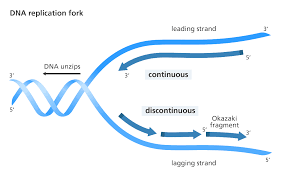
Semi-conservative Replication

The original chromosome, on the left, has two strands. These are separated and used to template new strands. This means that both of the sister chromatids have one of the original strands of DNA, now pair-bonded to a new strand that has been freshly synthesised using it as a template.

An important note:

Neither of the sister chromatids is “the original one”. The original DNA has separated into two strands, and each of the sister chromatids contains one of these original strands, now pair-bonded to a freshly synthesised complementary strand.

This is called semi-convervative replication .

  • Semi = half

  • Conserve = preserve / save

Mitosis: ensuring each cell gets a full set of chromosomes

After DNA replication, the cell contains duplicated (X-shape) versions of each version of the cell’s 46 chromosomes. This doubling gives it all the DNA it needs to split itself into two cells, each with a full set of DNA.

Mitosis is the process by which the cell organises the DNA to ensure each daughter cell gets a complete set, including both versions of each of the different chromosomes.

Ok, now you know what it’s all about, what it’s trying to achieve, and what is going on with the chromosomes, you’re ready to go on to look at the diagrams showing the individual steps of mitotis.


If you found this article helpful, please click the ❤️ below.

Next: See this fantastic blog post which includes loads of mitosis resources including video explanations of the full process and A level biology exam questions.


This article was written by Jenny Shipway, with guidance from Tom.

Read More
AQA, DNA, Biological Molecules Tom Whitburn AQA, DNA, Biological Molecules Tom Whitburn

AQA 3.1 biological molecules - 20 good practice questions on Nucleic Acids

3.1.5 - Nucleic Acids Structure and Replication

Can you

  • Draw the formation and hydrolysis of a phosphodiester bond

  • Name the parts of a nucleotide

  • Explain the similarities and differences between RNA and DNA

  • Explain why DNA is a good molecule for storing information ?

  • Can you describe semi-conservative replication ?

3.1.5 - Nucleic Acids Structure and Replication , Transcription and Translation

Can you

  • Draw the formation and hydrolysis of a phosphodiester bond

  • Name the parts of a nucleotide

  • Explain the similarities and differences between RNA and DNA

  • Explain why DNA is a good molecule for storing information ?

  • Can you describe semi-conservative replication ?

  • Can you define non-overlapping, universal and degenerate ?

    If you found it useful then please ❤️ (at the bottom of the page) and share, you can follow me on instagram - alevelbiologytutor

    Y13 & Y12 OCR A and AQA small group weekly class information

Read More
OCR, Online Quiz, DNA, Proteins, OCR Quiz by Topic, OCR Quiz Tom Whitburn OCR, Online Quiz, DNA, Proteins, OCR Quiz by Topic, OCR Quiz Tom Whitburn

Multiple Choice Quiz - OCR A DNA and Protein Synthesis

Practising recall and doing questions is so important for long term retention of information. Try this self marked quiz. OCR A DNA and Protein Synthesis
Practising recall is so important for retention and learning. Try this quiz without books first !

Try this quiz - if you found it useful then please ❤️

Read More
Exam questions, DNA Tom Whitburn Exam questions, DNA Tom Whitburn

DNA structure and replication - Resources, guides and exam questions

Nucleotide structure and DNA replication, useful resources, animations, powerpoints and exam questions. Meselson and Stahl experiments….

Please like and share (and click on a advert to help with the hosting costs !)

Read More
Exam questions, Resource List, Proteins, OCR, DNA Tom Whitburn Exam questions, Resource List, Proteins, OCR, DNA Tom Whitburn

Protein Synthesis - Resources, Questions and a Quiz

Protein Synthesis - exam questions a quiz and powerpoints, videos and animations, please like and share
Videos, powerpoints, animation and notes for understanding protein synthesis in A level Biology. A pack of questions and an automarked quiz.

Please like and share.

Tips for Understanding Protein Synthesis

DO

  • Distinguish between Triplet, Codon, Anticodon

  • Know what RNA polymerase does

  • Understand how tRNA achieves translation

  • Mention ATP and what it is used for

  • remember that rRNA is made in the nucleolus

  • Refer to START and STOP codons

DONT

  • Say DNA is turned into mRNA

  • Say Thymine becomes Uracil

  • Say Amino acids are “joined together”

Here are lots of other excellent resources to help you improve

You could join other motivated U6th students in the group tutor sessions - twice a month

If you found this resource useful then please like and share with others.

Read More
Exam questions, DNA Tom Whitburn Exam questions, DNA Tom Whitburn

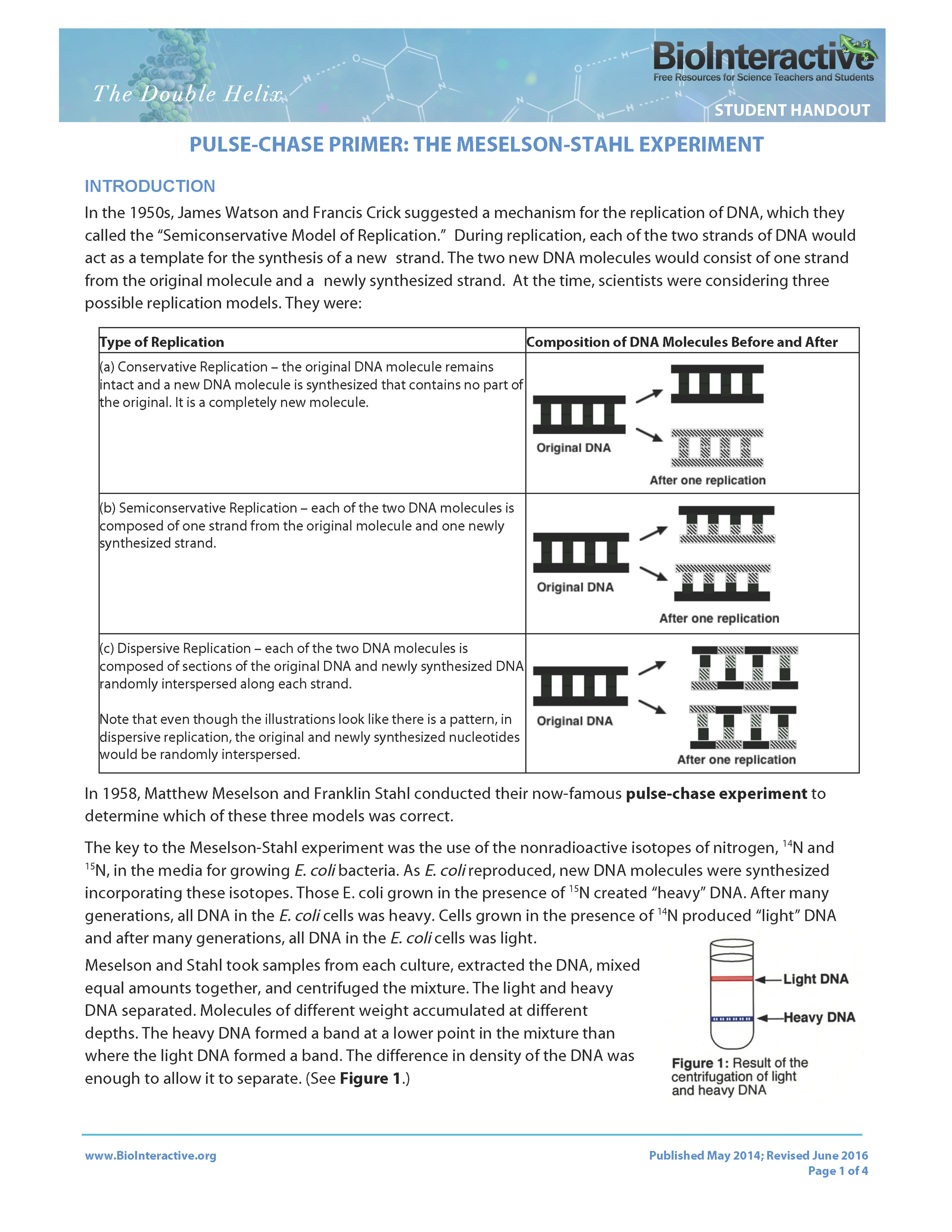
Understanding "Meselson and Stahl" with an Excellent resource from #HHMI - A-level Biology

Seems to be a huge challenge for some students

Try using this animation and this one and an excellent set of interviews

Please like and share

Seems to be a huge challenge for some students

Try using this animation and this one and an excellent set of interviews

Outstanding interactive worksheet (images below) from BioInteractive - HHMI - original pdf for students and the teacher support pdf

Here are a set of relevant DNA questions with markscheme and examiners comments

Read More
Exam questions, Respiration, DNA Tom Whitburn Exam questions, Respiration, DNA Tom Whitburn

Splat and Flash..... ATP and Fireflies - #OCR Synoptic Biology A-level

Another from the past.

Terrific question about DNA, diffusion, ATP production and fireflies going out in a blaze of glory....

Please like and share

Another from the past.

Terrific question about DNA, diffusion, ATP production and fireflies going out in a blaze of glory....

Here is a pdf copy of the question - and of the markscheme.

Additionally, below are images with the markscheme answers edited in

firefly2_Page_2.png
Read More
Exam questions, Nuffield, Synoptic, Eduqas, OCR, Proteins, DNA Tom Whitburn Exam questions, Nuffield, Synoptic, Eduqas, OCR, Proteins, DNA Tom Whitburn

Vaccines, Plasmids and Monkeys... More Synoptic Questions - A-level Biology #ocr #eduqas

From an Old OCR Unifying concepts paper. ....

Don't panic, the question is not about DNA vaccines or plasmids. 

The question is about differences between protein and DNA structure,  protein synthesis, post translational modification of protein,  clonal selection, mutation of pathogens. All of which are on the specification.

From an Old OCR Unifying concepts paper. ....

Don't panic, the question is not about DNA vaccines or plasmids. 

The question is about differences between protein and DNA structure,  protein synthesis, post translational modification of protein,  clonal selection, mutation of pathogens. All of which are on the specification.

Read the scaffolding of the question with great care

Pdf of question and answers 

Read More