

Eight Inspiring Books for A-level Biology Students
Here are eight books I recommend to boost your Biology, presented in no particular order. They are all well-known and likely to be found in your library.
Non-academic books about biology can broaden your knowledge and build anchor points for A-level learning. They can also give context to topics that might otherwise feel a bit dry. These pop-sci books are for a general audience, so they are written to be accessible and entertaining.
Which will you pick?
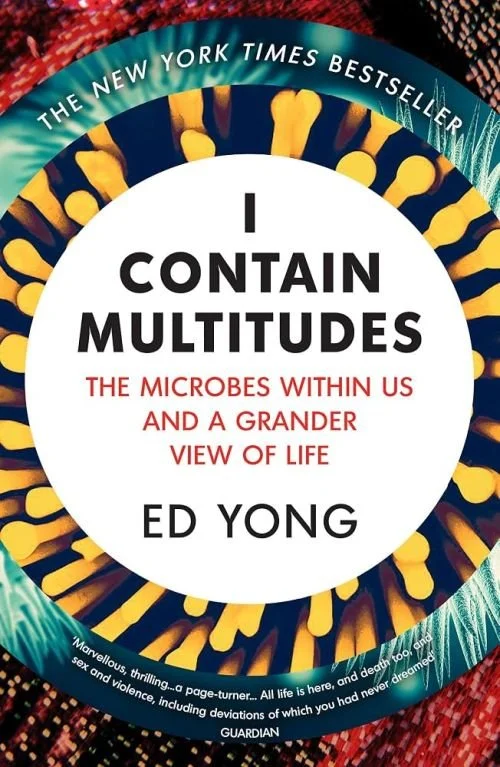
Book 1:
I Contain Multitudes
Ed Yong
Your body is teeming with tens of trillions of microbes. It's an entire world, a colony full of life. They sculpt our organs, protect us from diseases, guide our behaviour, and bombard us with their genes. They also hold the key to understanding all life on earth.
In I Contain Multitudes, Ed Yong opens our eyes and invites us to marvel at ourselves and other animals in a new light, less as individuals and more as thriving ecosystems.
You'll never think about your mind, body or preferences in the same way again.
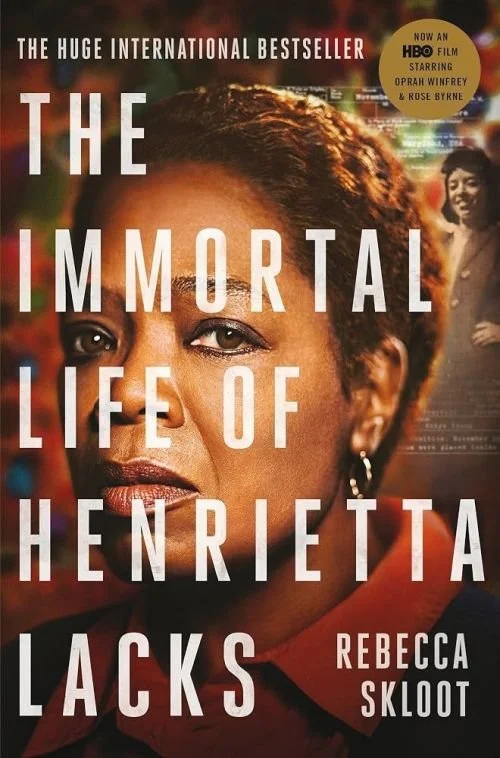
Book 2:
The Immortal Life of Henrietta Lacks
Rebecca Skloot
A real story of medical ethics. Henrietta Lacks’ cells were taken without consent, replicated in laboratories, and used in research. They are still used today.
Balancing the beauty and drama of scientific discovery with dark questions about who owns the stuff our bodies are made of, The Immortal Life of Henrietta Lacks is an extraordinary journey in search of the soul and story of a real woman, whose cells live on today in all four corners of the world.
The story is so compelling that they made it into a film, but the book is a lot better for you as it contains more biology.
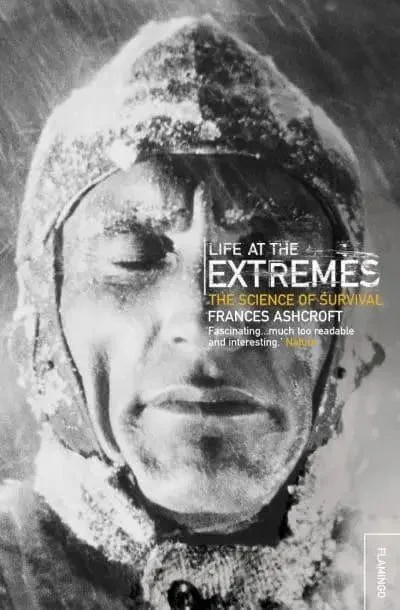
Book 4:
Life at the Extemes
Frances Ashcroft
How do people survive extremes of heat, cold, depth, speed and altitude? This book explores the limits of human survival and the physiological adaptations which enable us to exist under extreme conditions.
What causes mountain sickness? Why is it possible to reach the top of Everest without supplementary oxygen, yet be killed if a plane depressurises suddenly at the same altitude. Why are astronauts unable to stand without fainting when they return to Earth? Why do human divers get the bends but sperm whales don’t? Why don’t penguins get frostbite?
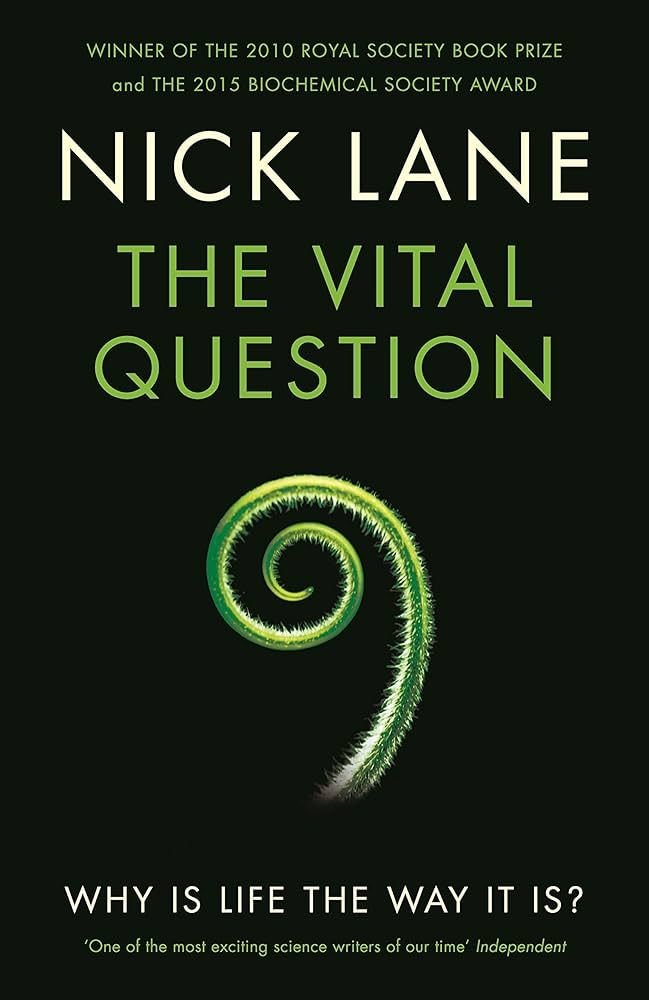
Book 3:
The Vital Question
Nick Lane
Why is life the way it is? Bacteria evolved into complex life just once in four billion years of life on earth-and all complex life shares many strange properties, from sex to ageing and death.
If life evolved on other planets, would it be the same or completely different?
In The Vital Question, Nick Lane radically reframes evolutionary history, putting forward a cogent solution to conundrums that have troubled scientists for decades. The answer, he argues, lies in energy: how all life on Earth lives off a voltage with the strength of a bolt of lightning.
In unravelling these scientific enigmas, making sense of life's quirks, Lane's explanation provides a solution to life's vital questions: why are we as we are, and why are we here at all?
Book 5:
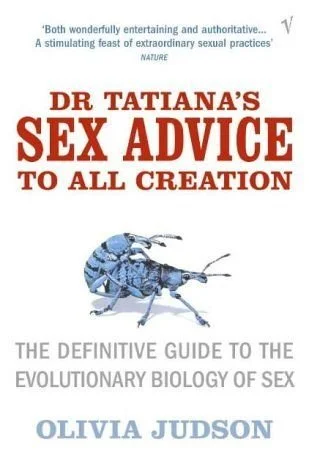
Dr Tatiana’s Sex Advice to All Creation
Olivia Judson
A very funny, quirky and well-researched book, which entertainingly presents the huge variety of sexual behaviours and differences across the animal world.
The book takes as its starting point all creatures great and small worried about their bizarre sex lives, and the letters they write to the wise Dr Tatiana, the only agony aunt in all creation with a prodigious knowledge of both natural history and evolutionary biology.
Book 6:
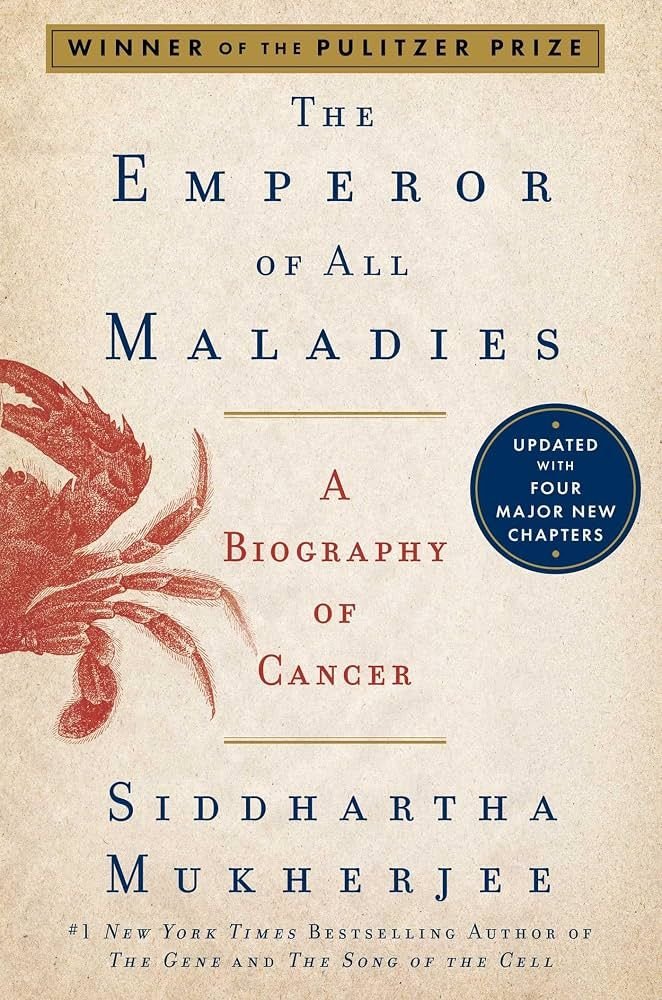
The Emperor of all Maladies
Siddhartha Mukherjee
The author examines cancer with a cellular biologist’s precision, a historian’s perspective, and a biographer’s passion.
The story of cancer is a story of human ingenuity, resilience and perseverance, but also of hubris, arrogance and misperception, all leveraged against a disease that, just three decades ago, was thought to be easily vanquished in an all-out ‘war against cancer’. Mukherjee recounts centuries of discoveries, setbacks, victories and deaths, told through the eyes of predecessors and peers, training their wits against an infinitely resourceful adversary.
From the Persian Queen Atossa, whose Greek slave cut off her malignant breast, to the nineteeth-century recipient of primitive radiation and chemotherapy and Mukherjee’s own leukemia patient, Carla, the book is about the people who have soldiered through toxic, bruising, and draining regimes to survive and to increase the store of human knowledge.
Book 7:
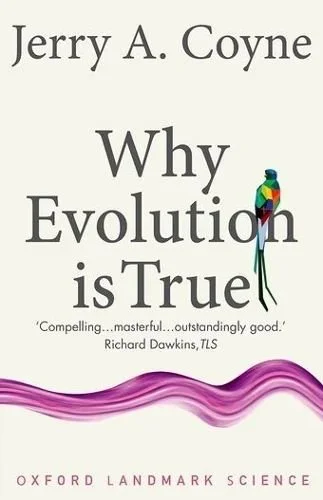
Why Evolution is True
Jerry A. Coyne
An exploration of the evidence we have for evolution (the book was written in 2009).
The presented evidence is vast, varied, and magnificent, and drawn from many disparate fields of science. Modern discoveries are now revealing evolution in action - from the actual observation of a species splitting into two, to new fossil discoveries, to the deciphering of the evidence stored in our genome.
Why Evolution is True weaves together the many threads of modern work in genetics, palaeontology, geology, molecular biology, anatomy, and development to demonstrate the 'indelible stamp' of the processes first proposed by Darwin. It is a crisp, lucid, and accessible statement that will leave no one with an open mind in any doubt about the truth of evolution.
Book 8:
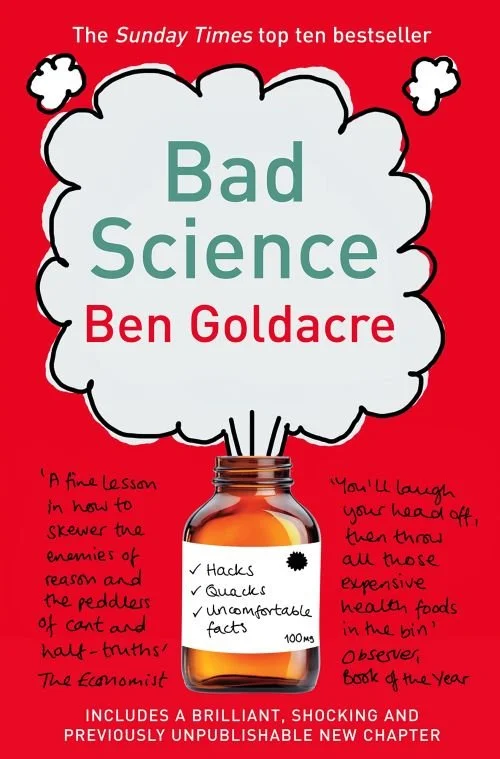
Bad Science
Ben Goldacre
A wise and witty book which lifts the lid on quack doctors, flaky statistics, scaremongering journalists and evil pharmaceutical corporations.
Ben Goldacre has been exposing dodgy medical data in his popular Guardian column since 2003. Here he takes on the MMR hoax and misleading cosmetics ads, acupuncture and homeopathy, vitamins and mankind's vexed relationship with all manner of 'toxins'.
Along the way he performs a successful detox on a Barbie doll, sees his dead cat become a certified nutritionist and probes the supposed medical qualifications of 'Dr' Gillian McKeith.