

Booking now: OCR A Y12 A level Biology Weds 5.15pm from Sept 2026 to June 2027
Weekly Group classes - for OCR A Y12
Raise your exam grade with question focused masterclasses from a highly experienced A level Biology teacher.
Every week we go through a different topic from the specification and look at how to apply the content to exam questions. I show how to understand commonly occurring questions and how to answer them.
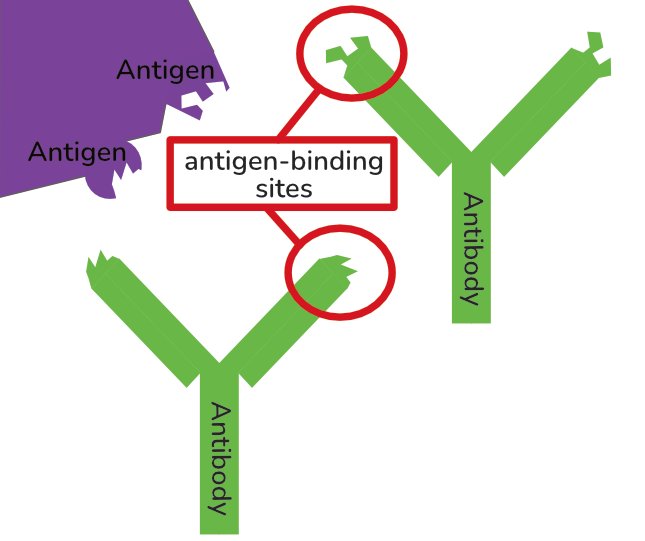
Monoclonal Antibodies in the Immune Response (AQA/OCR, ELISA for AQA)
Monoclonal antibodies are a relatively new treatment type, with huge importance for treating migraine, cancer, autoimmune diseases, and many other conditions.
So how do they work?
What is an Antibody? What is an Antigen?
Booking now: AQA Y12 A level Biology Group class - from Sept 2026 to June 2027
Weekly Group classes - for AQA Y12 A level Biology
Raise your exam grade with question focused masterclasses from a highly experienced A level Biology teacher.
Every week we go through a different topic from the specification and look at how to apply the content to exam questions. I show how to understand commonly occurring questions and how to answer them.

AQA Paper 3 Extended Essay: Tips, Mark Scheme and Past Paper Titles - Updated for 2026
How to answer the AQA A-level Biology Extended Essay, including past paper essay titles

Example AQA Paper 3 Extended Essay
This is an example essay published by AQA as guidance. It scored 18/25 which is a good level for most students to be aiming at. Could you write at this standard? Can you see where they could have done better? Did they need to write so much to get these marks?

AQA Paper 3 Extended Essay: picking topic areas, past paper titles, and examiners’ guidance
Past paper essay titles and topic areas for A level Biology paper 3, with tips and guidance for how to select the best topic areas for your essay.

More AQA Paper 3 Extended Essay Titles
More past paper essay titles for A level Biology paper 3, with lists of appropriate topic areas for each
AS Level Biology OCR A H020/01 Breadth in biology - June 2024 Self Marking Quiz
Self marking quiz for revision of OCR A Breadth in Biology - June 2024
A Level Biology OCR A H420/02 Biological Diversity - June 2024 Self Marking Quiz
Self marking quiz for revision of OCR A Level Biology A Biological Diversity H420/02 - June 2024
A Level Biology OCR A H420/01 Biological Processes - June 2024 Self Marking Quiz
Self marking quiz for revision of OCR A Level Biology A Biological Processes H420 01 - June 2024

Mastering Carbohydrates: Your Complete Guide to OCR A Level Biology Specification 2.1.2 (d-g)
Mastering Carbohydrates: Your Complete Guide to OCR A Level Biology Specification 2.1.2 (d-g)
Essential Prior Knowledge to Recap
Before diving into these commonly tested topics, ensure you're confident with:
• Basic carbohydrate classification – understanding the terms monosaccharide, disaccharide and polysaccharide, and being able to distinguish between them • Condensation and hydrolysis reactions – knowing that condensation joins molecules together by removing water, whilst hydrolysis breaks bonds by adding water • The concept of monomers and polymers – recognising that large biological molecules are built from smaller repeating units • Chemical bonding basics – understanding covalent bonds and how atoms share electrons to form stable molecules • The relationship between structure and function – appreciating that the shape and properties of molecules determine their biological roles

Mastering Resting Potential, Action Potential and Propagation: Common OCR A Level Biology Questions Answered
Mastering Resting Potential, Action Potential and Propagation: Common OCR A Level Biology Questions Answered

CIE 11.2 Immunity -Monoclonal Antibodies - 20 Multiple Choice Questions
CIE 11.2 Immunity -Monoclonal Antibodies - 20 Multiple Choice Questions


OCR A Level Biology: Mastering Biodiversity and Simpson's Index (Section 4.2.1) (a-d)
OCR A Level Biology: Mastering Biodiversity and Simpson's Index (Section 4.2.1 a-d)
Prior Knowledge to Recap
Before diving into biodiversity questions, ensure you understand these foundational concepts:
The three levels of biodiversity: genetic diversity (variation within species), species diversity (number and abundance of species), and habitat/ecosystem diversity (range of different habitats)
Species richness vs species evenness: richness is the total number of different species present, whilst evenness refers to how similar the abundance of each species is

Mastering Neuronal Communication (OCR A 5.1.3 a-c): Common OCR A Level Biology Questions Answered
Mastering Neuronal Communication: Common OCR A Level Biology Questions Answered
Prior Knowledge to Recap
Before diving into neuronal communication, make sure you're confident with these key concepts:
Mastering Microscopy and Cell Structure: Common OCR A Level Biology Questions Answered
Mastering Microscopy and Cell Structure: Common OCR A Level Biology Questions Answered
Prior Knowledge to Recap
Before diving into microscopy and cell structure, make sure you're confident with these key concepts:
• Basic cell structure – understanding the difference between prokaryotic and eukaryotic cells, and being able to identify major organelles like the nucleus, mitochondria, and chloroplasts
• Units of measurement – being confident with converting between millimetres (mm), micrometres (μm), and nanometres (nm) is essential for magnification calculations (1mm = 1000μm, 1μm = 1000nm)

Mastering AQA A Level Biology Section 3.4.3: Genetic Diversity via Mutation and Meiosis - Common Questions & Mark Scheme Insights
Mastering AQA A Level Biology Section 3.4.3: Genetic Diversity via Mutation and Meiosis - Common Questions & Mark Scheme Insights
Prior Knowledge Essential for This Topic
Before tackling meiosis and genetic diversity questions, ensure you're confident with:
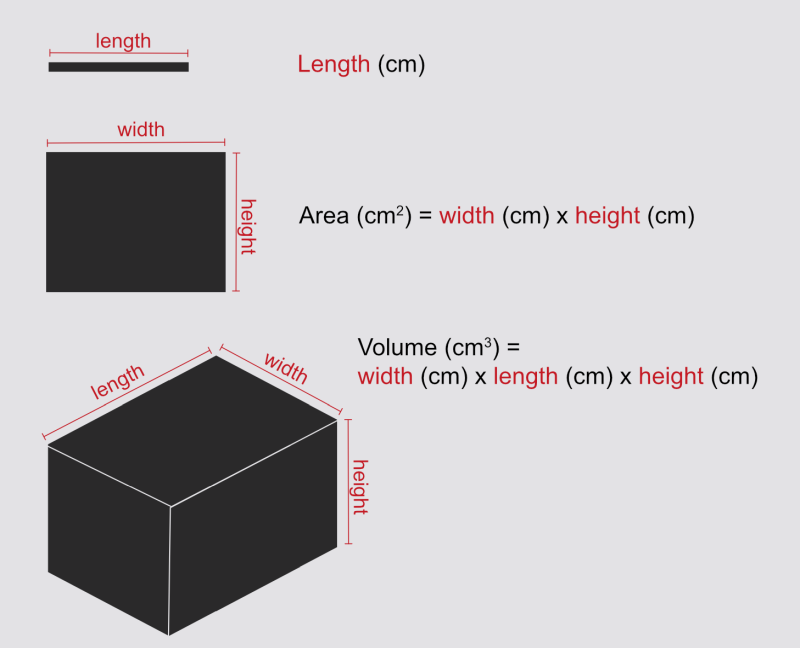
Key Concept: Surface Area to Volume ratio (SA:V)
Surface area to volume ratio (SA:V) is vital for understanding a wide range of topics including transport across cell membranes, gas exchange, digestion, heat exchange, and mass transport. SA:V explains why the inner membrane of a mitochondrion is folded, why elephants have big ears, and why jellyfish don’t need blood vessels.

OCR A Level Biology: Mastering Photosynthesis - The Calvin Cycle and Limiting Factors (Section 5.2.1 e, f, g)
OCR A Level Biology: Mastering Photosynthesis - The Calvin Cycle and Limiting Factors (Section 5.2.1 e, f, g)
Prior Knowledge to Recap
Before diving into these photosynthesis questions, ensure you understand these foundational concepts:
The two stages of photosynthesis: the light-dependent stage (in thylakoid membranes) produces ATP and reduced NADP, whilst the light-independent stage (Calvin cycle in the stroma) uses these products to fix CO₂
The Calvin cycle pathway: CO₂ combines with RuBP (catalysed by RuBisCO) to form GP, which is reduced to TP using ATP and reduced NADP, with most TP recycled to regenerate RuBP