


OCR A Level Biology: Mastering Biodiversity and Simpson's Index (Section 4.2.1) (a-d)
OCR A Level Biology: Mastering Biodiversity and Simpson's Index (Section 4.2.1 a-d)
Prior Knowledge to Recap
Before diving into biodiversity questions, ensure you understand these foundational concepts:
The three levels of biodiversity: genetic diversity (variation within species), species diversity (number and abundance of species), and habitat/ecosystem diversity (range of different habitats)
Species richness vs species evenness: richness is the total number of different species present, whilst evenness refers to how similar the abundance of each species is

Mastering Neuronal Communication (OCR A 5.1.3 a-c): Common OCR A Level Biology Questions Answered
Mastering Neuronal Communication: Common OCR A Level Biology Questions Answered
Prior Knowledge to Recap
Before diving into neuronal communication, make sure you're confident with these key concepts:
Mastering Microscopy and Cell Structure: Common OCR A Level Biology Questions Answered
Mastering Microscopy and Cell Structure: Common OCR A Level Biology Questions Answered
Prior Knowledge to Recap
Before diving into microscopy and cell structure, make sure you're confident with these key concepts:
• Basic cell structure – understanding the difference between prokaryotic and eukaryotic cells, and being able to identify major organelles like the nucleus, mitochondria, and chloroplasts
• Units of measurement – being confident with converting between millimetres (mm), micrometres (μm), and nanometres (nm) is essential for magnification calculations (1mm = 1000μm, 1μm = 1000nm)

Mastering AQA A Level Biology Section 3.4.3: Genetic Diversity via Mutation and Meiosis - Common Questions & Mark Scheme Insights
Mastering AQA A Level Biology Section 3.4.3: Genetic Diversity via Mutation and Meiosis - Common Questions & Mark Scheme Insights
Prior Knowledge Essential for This Topic
Before tackling meiosis and genetic diversity questions, ensure you're confident with:
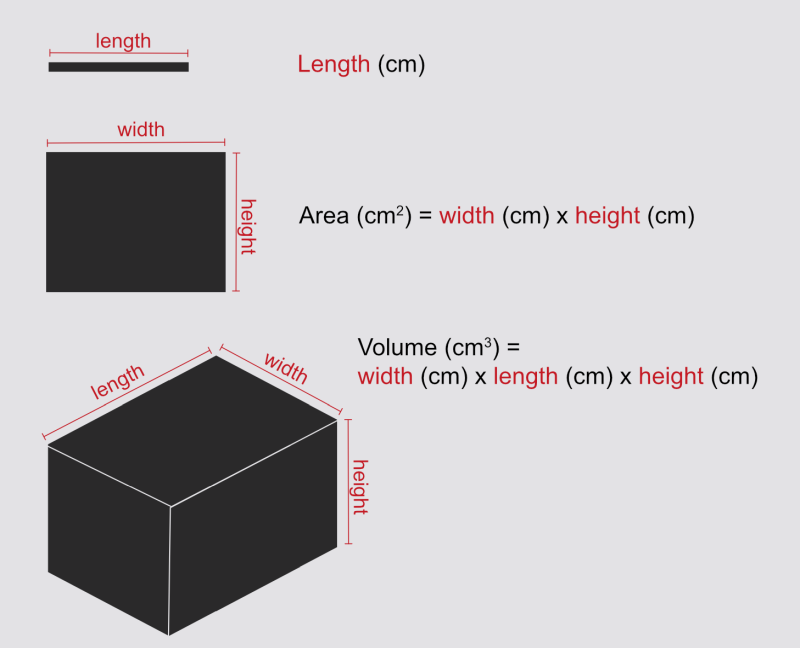
Key Concept: Surface Area to Volume ratio (SA:V)
Surface area to volume ratio (SA:V) is vital for understanding a wide range of topics including transport across cell membranes, gas exchange, digestion, heat exchange, and mass transport. SA:V explains why the inner membrane of a mitochondrion is folded, why elephants have big ears, and why jellyfish don’t need blood vessels.

OCR A Level Biology: Mastering Photosynthesis - The Calvin Cycle and Limiting Factors (Section 5.2.1 e, f, g)
OCR A Level Biology: Mastering Photosynthesis - The Calvin Cycle and Limiting Factors (Section 5.2.1 e, f, g)
Prior Knowledge to Recap
Before diving into these photosynthesis questions, ensure you understand these foundational concepts:
The two stages of photosynthesis: the light-dependent stage (in thylakoid membranes) produces ATP and reduced NADP, whilst the light-independent stage (Calvin cycle in the stroma) uses these products to fix CO₂
The Calvin cycle pathway: CO₂ combines with RuBP (catalysed by RuBisCO) to form GP, which is reduced to TP using ATP and reduced NADP, with most TP recycled to regenerate RuBP

CIE Lung Structure and Function
CIE A level Biology - Lung Structure and Function, 20 multiple choice questions

Mastering OCR A Level Biology Section 5.2.1 (a-d) : Photosynthesis - Common Questions & Mark Scheme Insights
Mastering OCR A Level Biology Section 5.2.1: Photosynthesis - Common Questions & Mark Scheme Insights
After analysing extensive OCR past papers for specification section 5.2.1 a-d (Photosynthesis), I've identified the question patterns that consistently challenge students. Understanding how mark schemes assess pigment knowledge, chloroplast structure, chromatography calculations, and the relationship between photosynthesis and respiration is crucial for exam success. Let me guide you through five of the most frequently tested question types with real OCR examples.

Mastering OCR A Level Biology Section 2.1.1: Cell Structure and Organelles - Common Questions & Mark Scheme Insights
Mastering OCR A Level Biology Section 2.1.1: Cell Structure and Organelles (g-h) - Common Questions & Mark Scheme Insights
After extensive analysis of OCR past papers for specification section 2.1.1 (Cell Structure - g-h), I've identified the question patterns that consistently challenge students. Understanding how mark schemes assess organelle functions, protein synthesis pathways, and cytoskeleton roles is crucial for exam success. Let me guide you through five of the most frequently tested question types with real OCR examples.

Mastering OCR A Level Biology Section 5.1.1: Communication, Homeostasis and Thermoregulation - Common Questions & Mark Scheme Insights
Mastering OCR A Level Biology Section 5.1.1: Communication, Homeostasis and Thermoregulation - Common Questions & Mark Scheme Insights
Having analyzed extensive OCR past papers for specification section 5.1.1 (Communication and Homeostasis), I've identified the question patterns that consistently challenge students. Understanding how mark schemes assess terminology, comparative statements, and explanation depth is essential for maximizing marks. Let me guide you through five of the most frequently tested question types with real OCR examples.


Mastering AQA A Level Biology Section 3.4.2: DNA and Protein Synthesis - Common Questions & Mark Scheme Insights
After analyzing past papers and mark schemes for AQA specification section 3.4.2 (DNA and Protein Synthesis), I've identified the question types that consistently challenge students. Understanding these patterns and the specific language that mark schemes reward is essential for maximizing your exam performance. Let me guide you through four of the most frequently tested question types with real AQA examples.

CIE Infectious Diseases - Antibiotics
CIE 9700 A level Biology 10.2 Infectious Diseases - Antibiotics

CIE Tissue Fluid and structure and function of blood vessels
CIE Tissue Fluid and structure and function of blood vessels - 20 Multiple Choice Questions

Mastering AQA A Level Biology Section 3.4.1: DNA, Genes and Chromosomes - Common Questions & Mark Scheme Insights
I've noticed that certain types of questions in AQA specification section 3.4.1 (DNA, Genes and Chromosomes) consistently challenge students. Understanding these patterns and knowing how to approach them can significantly boost your exam performance. Let me walk you through four of the most commonly asked question types, using actual AQA examples, and show you exactly how to earn those crucial marks.

Results Day 2025 - Feedback from Students
The Thursday in August when the A level results are published is my favourite morning of the year.
I get nervous and emotional and usually well-up at least once.
Students work far harder now than ever and think so carefully about how they revise and what they choose to do.
It is heartening to see them succeed in a subject that they found challenging
Here are some of the comments from students and parents.

CIE Infectious Diseases - Pathogens and Transmission
CIE 9700 A level Biology Infectious Diseases - Pathogens and Transmission, 20 Multiple Choice Questions

CIE Carriage of Oxygen and Carbon Dioxide
CIE A level Biology 9700 Carriage of Oxygen and Carbon Dioxide - 20 Multiple Choice Questions
