

Cell Structure and Organisation opens Topic 3, Voice of the Genome, of the Edexcel A level Biology A (Salters-Nuffield) specification. You need to know the ultrastructure of eukaryotic and prokaryotic cells, recognise organelles in electron micrographs, and understand how the rER and Golgi apparatus process and transport proteins, including extracellular enzymes. You also need to explain how cells are organised into tissues, organs and systems. This topic is examined on AS Paper 2 and on A level Papers 1, 2 and 3. Questions marked AS are from the AS papers (8BN0); the rest are from the A level papers (9BN0).
The examiners' reports reward precise names and complete sequences. Write rough endoplasmic reticulum, not just endoplasmic reticulum, and secretory vesicles, not just vesicles. For protein processing, start where the question starts: the protein is folded in the rER, modified in the Golgi apparatus (carbohydrate is added to make a glycoprotein), and vesicles fuse with the cell surface membrane. Answer structure questions with structures, not functions. Draw a mitochondrion with two membranes, keep a bacterium's circular DNA separate from its plasmids, and remember that an organ is made of different tissues.
Studying Edexcel SNAB and want more help? If you'd like to arrange one-to-one Edexcel tutoring, or to register your interest in an Edexcel group class, message Tom on WhatsApp using the link at the bottom of this page.
What you need from GCSE
Each question on this page assumes you're secure on these ideas. If any of them feels shaky, look it up before you start.
- Animal and plant cells have a nucleus, cytoplasm and a cell membrane; plant cells also have a cell wall, chloroplasts and a vacuole.
- Bacteria are prokaryotes: they have no nucleus, and their DNA is free in the cytoplasm, with small rings called plasmids.
- Proteins are made on ribosomes from the genetic code in DNA.
- Electron microscopes have a much higher magnification and resolution than light microscopes.
Key terms
These words come up in the questions and mark schemes. Examiners expect you to use them exactly.
- Ultrastructure: the fine detail of a cell, including its organelles, seen with an electron microscope.
- Rough endoplasmic reticulum (rER): flattened membrane sacs with ribosomes attached, where proteins are folded.
- Golgi apparatus: a stack of flattened membrane sacs where proteins are modified, for example by adding carbohydrate, and packaged into vesicles.
- Glycoprotein: a protein with carbohydrate attached.
- Exocytosis: release of substances from a cell when a vesicle fuses with the cell surface membrane.
- Membrane-bound organelle: an organelle surrounded by one or two membranes, such as the nucleus, mitochondria or Golgi apparatus; prokaryotes have none.
- Plasmid: a small ring of DNA in a prokaryotic cell, separate from the main circular DNA.
- Tissue: a group of similar cells working together for a particular function.
What these questions cover (Edexcel SNAB Topic 3: Voice of the Genome)
The questions test these statements from Topic 3 of the Pearson Edexcel A level Biology A (Salters-Nuffield) specification (9BN0).
- 3.2 Know the ultrastructure of eukaryotic cells, including nucleus, nucleolus, ribosomes, rough and smooth endoplasmic reticulum, mitochondria, centrioles, lysosomes, and Gol
- 3.3 Understand the role of the rough endoplasmic reticulum (rER) and the Golgi apparatus in protein transport within cells, including their role in the formation of extracell
- 3.4 Know the ultrastructure of prokaryotic cells, including cell wall, capsule, plasmid, flagellum, pili, ribosomes, mesosomes and circular DNA.
- 3.5 Be able to recognise the organelles in 3.2 from electron microscope (EM) images.
- 3.13 Understand how the cells of multicellular organisms are organised into tissues, tissues into organs and organs into systems.
How to use this page
Write your answer on paper before you open the mark scheme. Allow about 1.2 minutes per mark: the 20 questions are worth 49 marks, so about 59 minutes in total. Then mark your answer strictly against the mark scheme and read the examiners' tip underneath it. If you'd rather print the questions, download the PDF pack.
Eukaryotic cell ultrastructure (3.2)
Question 1
AS Paper 2 · June 2024 · Q2(a)(ii) · 1 mark
Name an organelle, other than the nucleus, that contains DNA.

Show the mark scheme

Tap an image to open it full size.
From the examiners' report: The most common wrong answer was plasmids. The answer is mitochondria (or chloroplasts).
Question 2
AS Paper 2 · June 2024 · Q2(a)(iii) · 2 marks
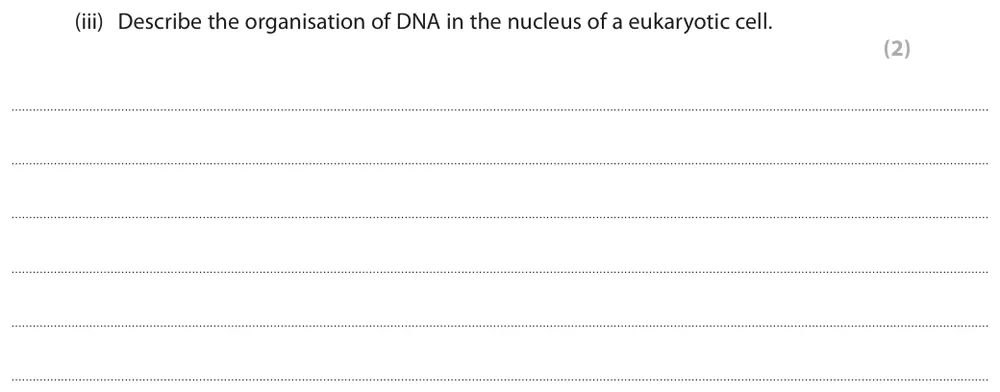
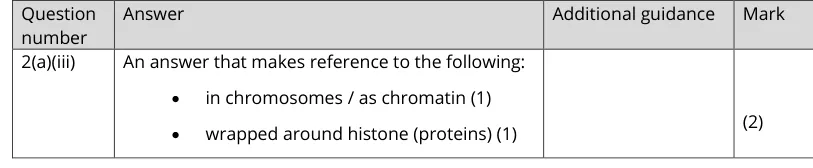
Describe how DNA is organised in the nucleus of a eukaryotic cell.
Show the mark scheme
Tap an image to open it full size.
From the examiners' report: Many described the double helix or nucleotide structure instead of how the DNA is organised. Say that DNA is in chromosomes (as chromatin), wrapped around histone proteins.
Question 3
AS Paper 2 · June 2024 · Q2(b)(i) · 3 marks
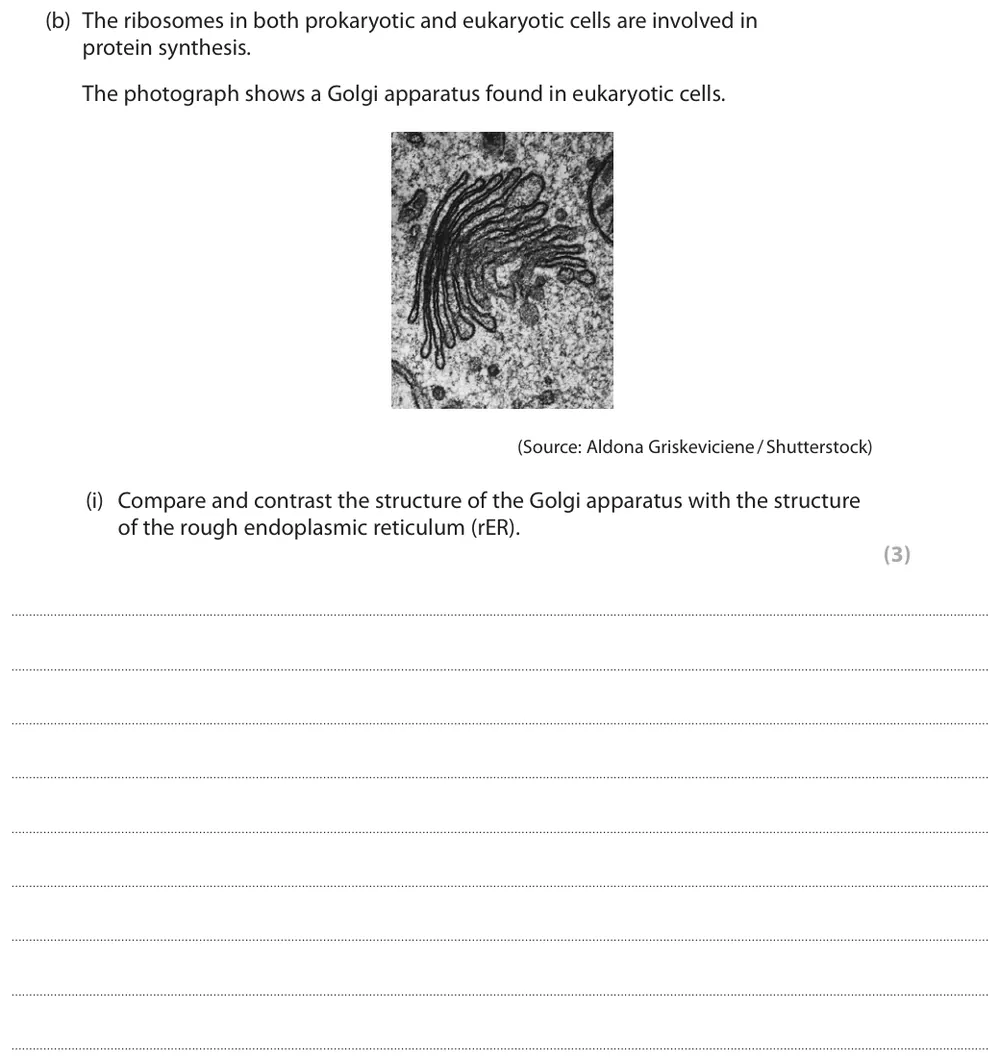
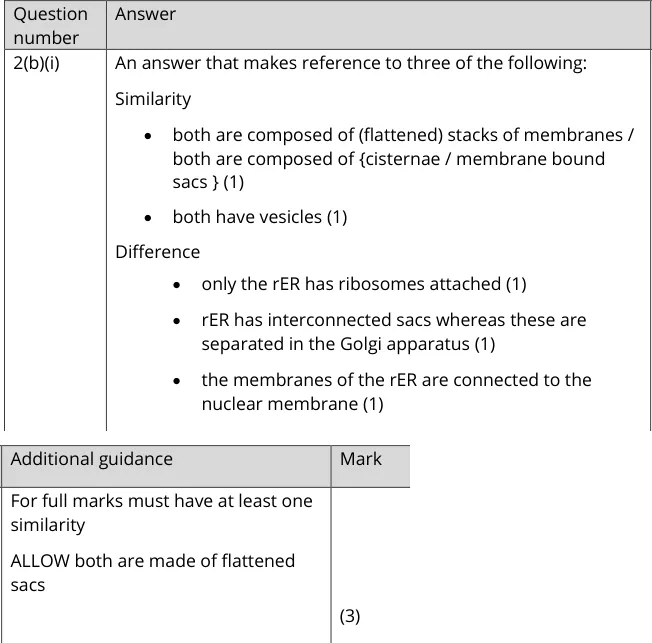
Compare and contrast the structure of the Golgi apparatus with the structure of the rER.
Show the mark scheme
Tap an image to open it full size.
From the examiners' report: Full marks need at least one similarity: both are made of flattened membrane-bound sacs and have vesicles. Only the rER has ribosomes, and only the rER is connected to the nuclear membrane. Some lost marks by writing about function instead of structure.
Question 4
A level Paper 1 · June 2022 · Q4(a) · 2 marks
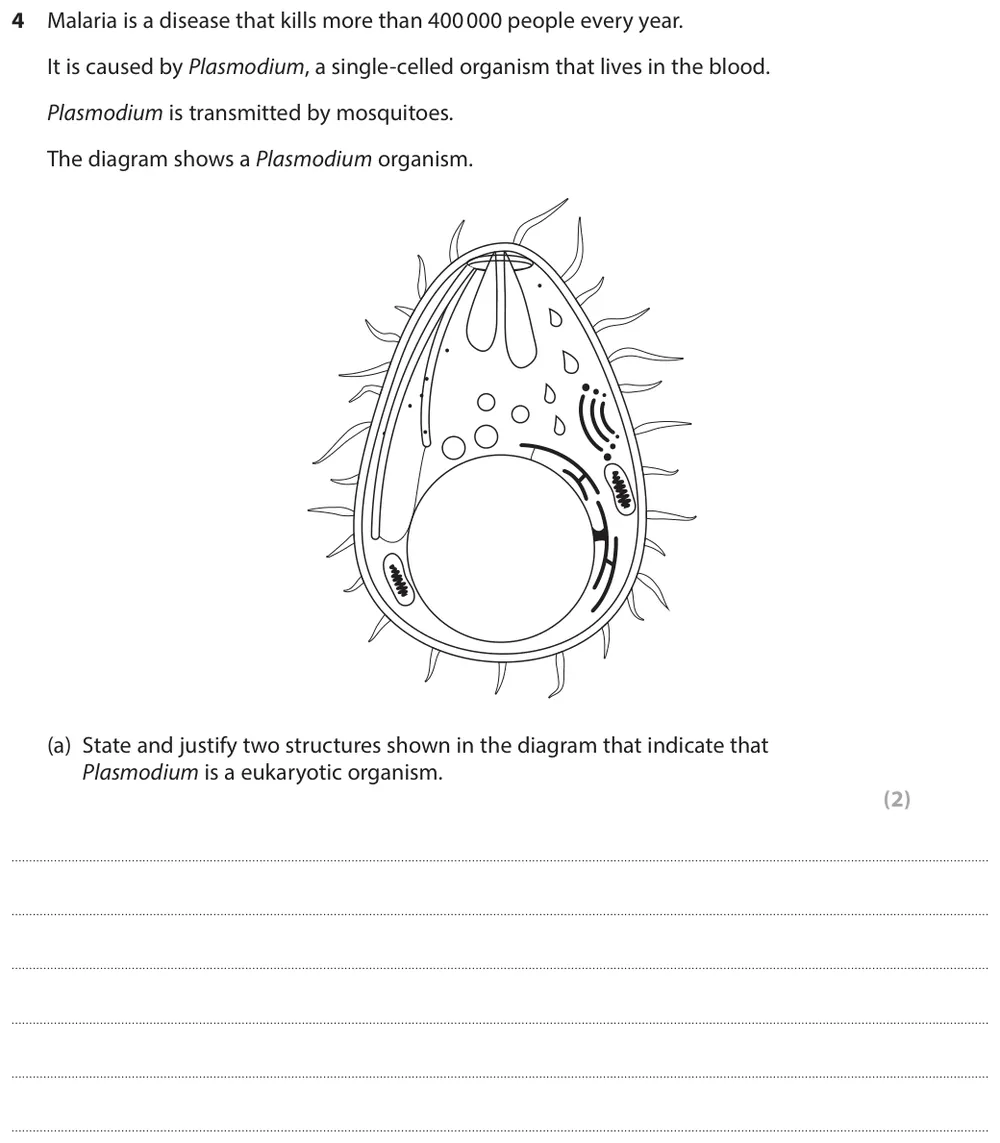
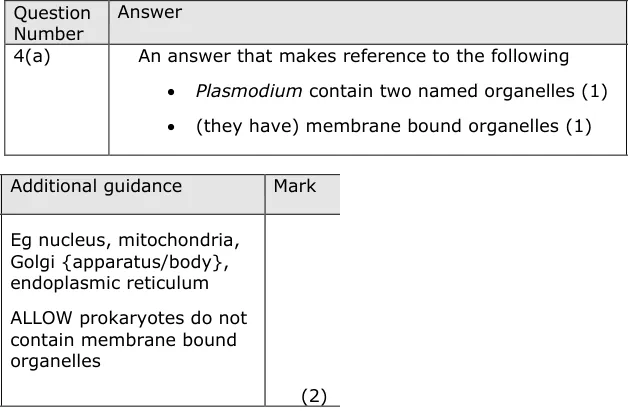
State and justify two structures in a diagram that show Plasmodium is eukaryotic.
Show the mark scheme
Tap an image to open it full size.
From the examiners' report: One mark was for naming two organelles you can see (for example the nucleus, mitochondria or Golgi apparatus), the other for justifying that they are membrane-bound organelles. 80S ribosomes gained nothing because they cannot be seen in the diagram.
Question 5
A level Paper 1 · June 2022 · Q6(a) · 2 marks
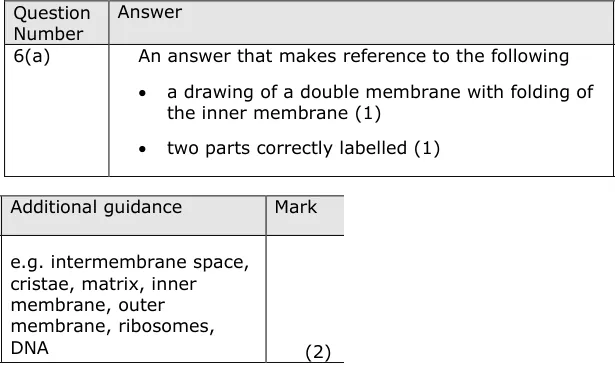
Draw and label a mitochondrion.

Show the mark scheme
Tap an image to open it full size.
From the examiners' report: This was answered less well than expected. The most common mistake was drawing three membranes. Draw a double membrane with the inner membrane folded, and label two parts correctly, such as cristae and matrix.
Question 6
AS Paper 2 · June 2018 · Q2(a) · 3 marks · Hard
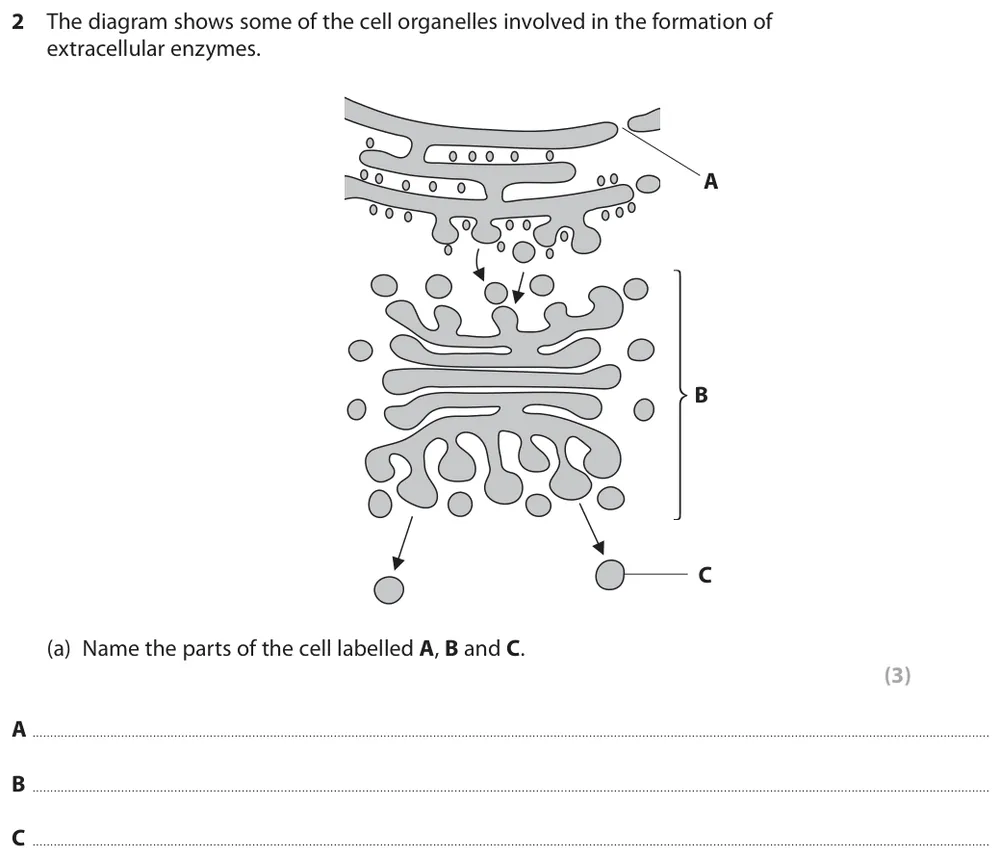
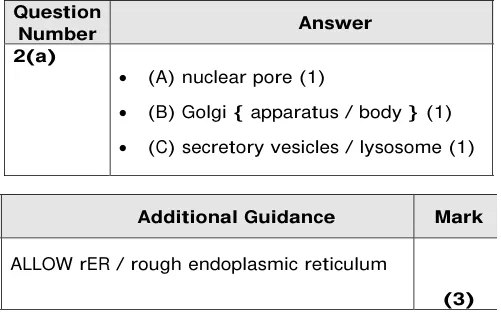
Name the parts labelled A, B and C on a diagram of organelles that make extracellular enzymes.
Show the mark scheme
Tap an image to open it full size.
From the examiners' report: Very few recognised A as a nuclear pore. Rough endoplasmic reticulum was allowed for A, but 'endoplasmic reticulum' without 'rough' was not. For C, 'vesicles' alone was not enough: be specific and say secretory vesicles.
The rER and Golgi apparatus in protein transport (3.3)
Question 7
AS Paper 2 · June 2018 · Q2(b) · 4 marks · Easy
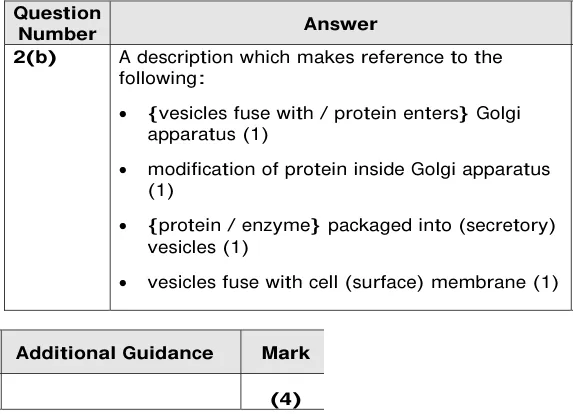
Describe the roles of parts B and C in the formation and transport of extracellular enzymes.
Show the mark scheme
Tap an image to open it full size.
From the examiners' report: Most scored 3 or 4. Some did not link structure to function. In a pathway question, think about the stages just before and after each one: proteins enter the Golgi apparatus, are modified, are packaged into vesicles, and the vesicles fuse with the cell surface membrane.
Question 8
AS Paper 2 · June 2016 · Q7(b) · 4 marks · Easy
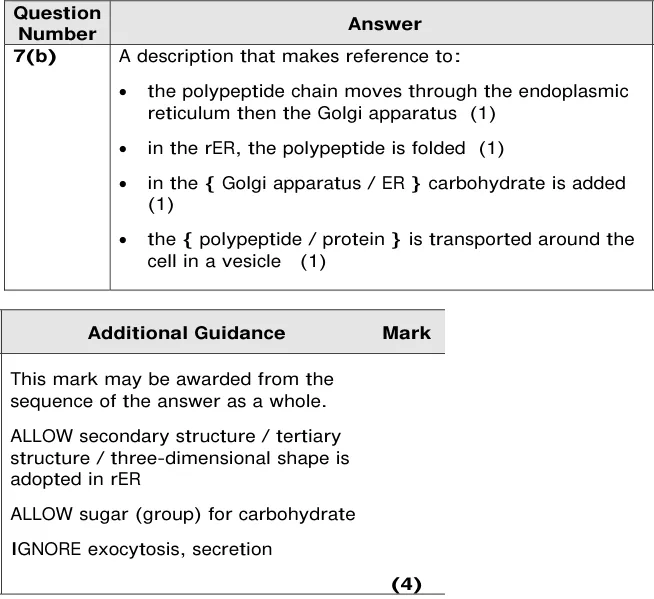
Describe how a polypeptide is processed to make an anti-freeze glycoprotein.
Show the mark scheme
Tap an image to open it full size.
From the examiners' report: The modal mark was 3 out of 4 because answers only said the protein is 'modified' in the Golgi apparatus. The question is about a glycoprotein, so say that carbohydrate is added.
Question 9
AS Paper 2 · June 2016 · Q2(c) · 2 marks
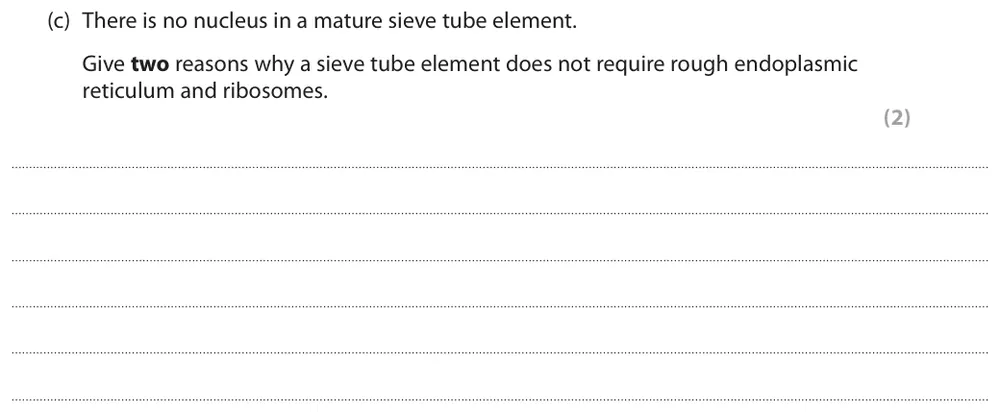
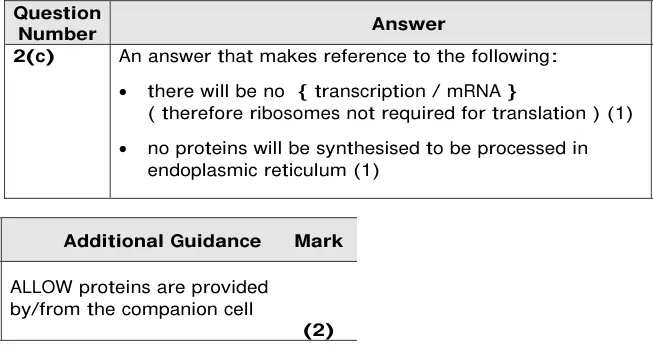
Give two reasons why a sieve tube element does not need rER and ribosomes.
Show the mark scheme
Tap an image to open it full size.
From the examiners' report: Most had the right idea but lacked detail. With no nucleus there is no transcription and no mRNA, so ribosomes are not needed for translation, and no proteins are made to be processed in the rER.
Question 10
A level Paper 1 · June 2018 · Q3(c)(ii) · 2 marks
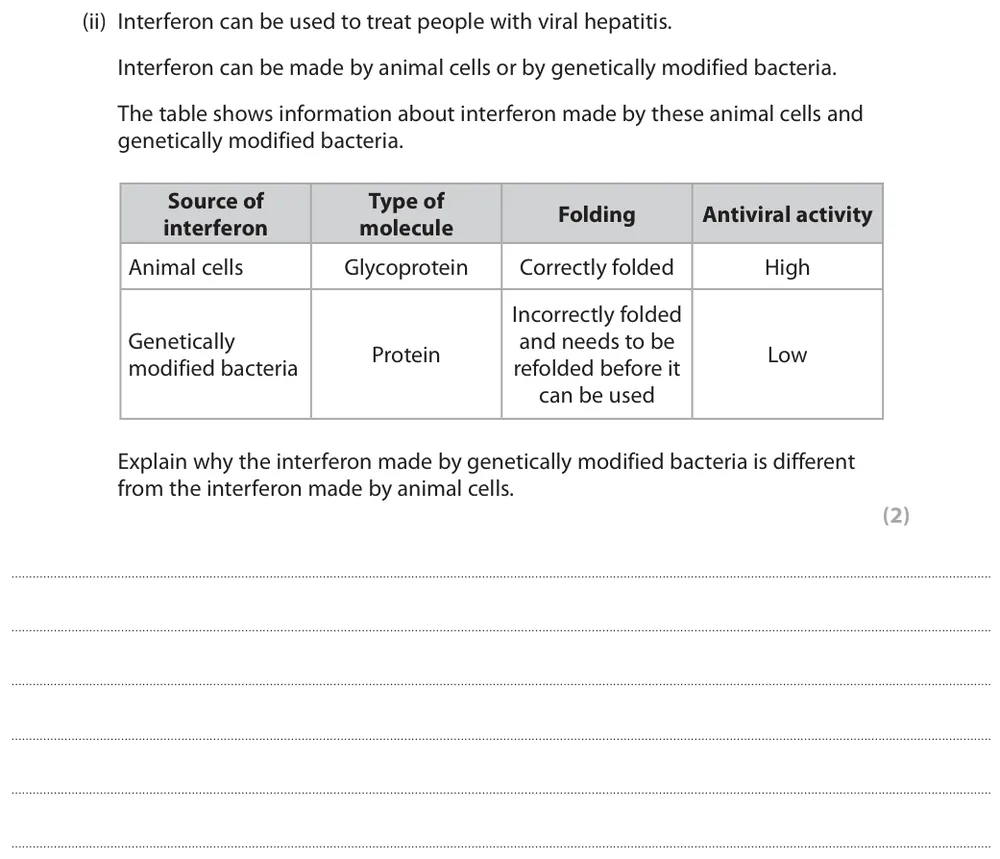
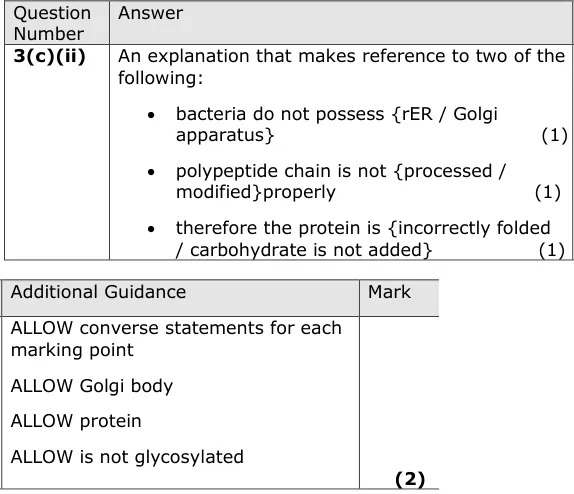
Explain why interferon made by genetically modified bacteria differs from interferon made by animal cells.
Show the mark scheme
Tap an image to open it full size.
From the examiners' report: Use the data (incorrect folding, no carbohydrate) and explain it: bacteria have no rER or Golgi apparatus, so the polypeptide is not processed properly. Different genetic codes gained nothing, and the carbohydrate in a glycoprotein is not glycogen.
Question 11
A level Paper 1 · October 2020 · Q1(b)(i) · 3 marks
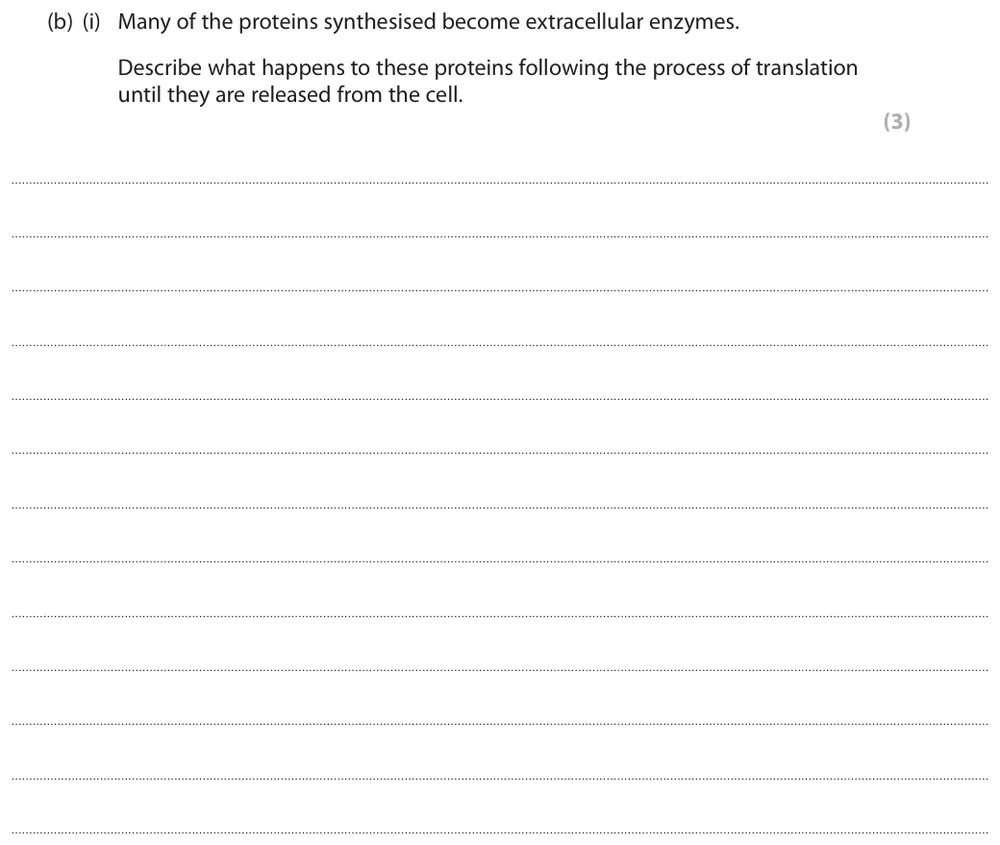
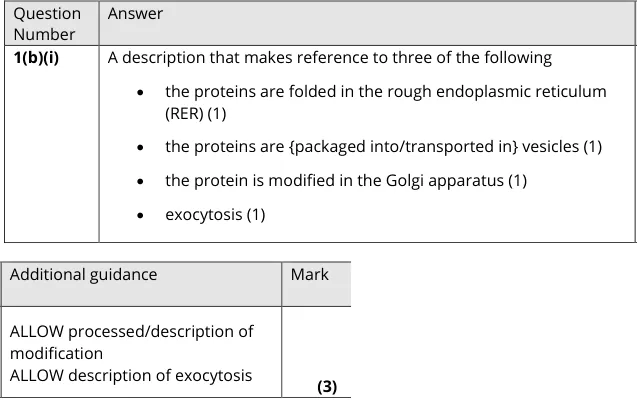
Describe what happens to proteins after translation until they are released from the cell.
Show the mark scheme
Tap an image to open it full size.
From the examiners' report: Many scored full marks. Some lost a mark by not saying rough endoplasmic reticulum.
Question 12
A level Paper 1 · June 2024 · Q4(b)(ii) · 3 marks
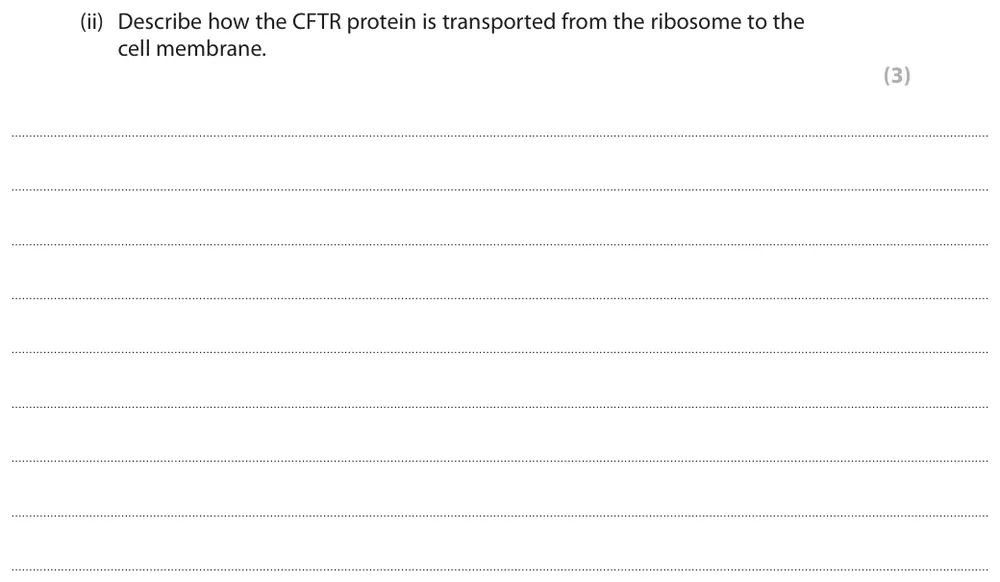
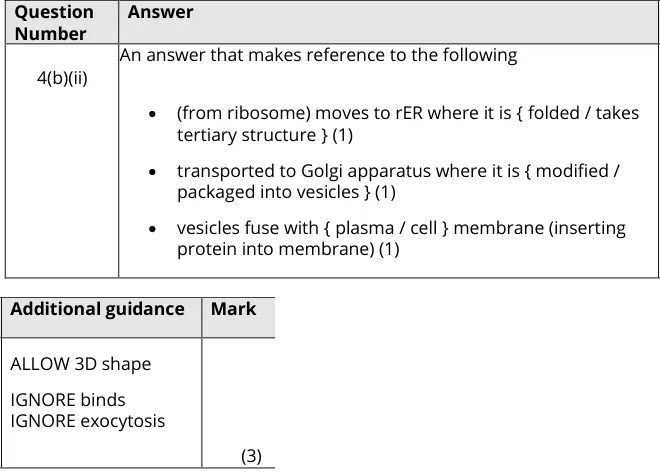
Describe how the CFTR protein is transported from the ribosome to the cell membrane.
Show the mark scheme
Tap an image to open it full size.
From the examiners' report: Start where the question starts: answers beginning at the rER were limited to two marks. The protein is folded (not modified) in the rER, modified in the Golgi apparatus, and the vesicle membrane fuses with the cell membrane. Exocytosis was ignored, as the protein stays in the membrane.
Question 13
A level Paper 2 · June 2025 · Q1(b) · 4 marks
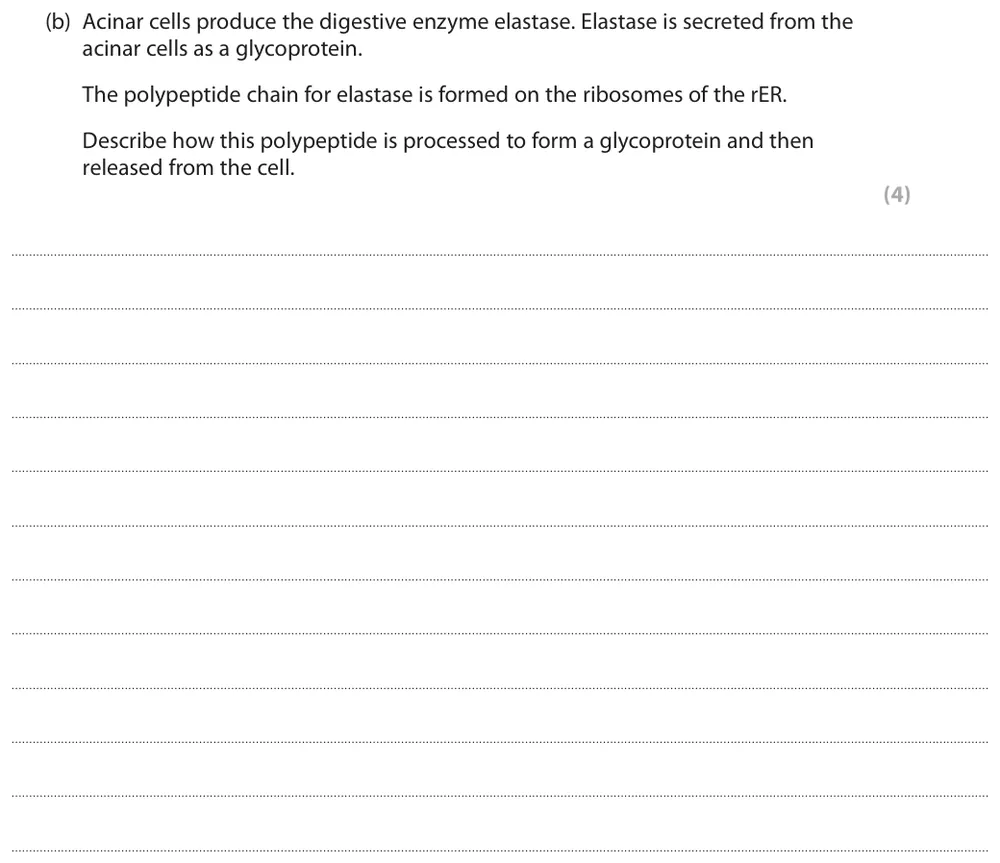
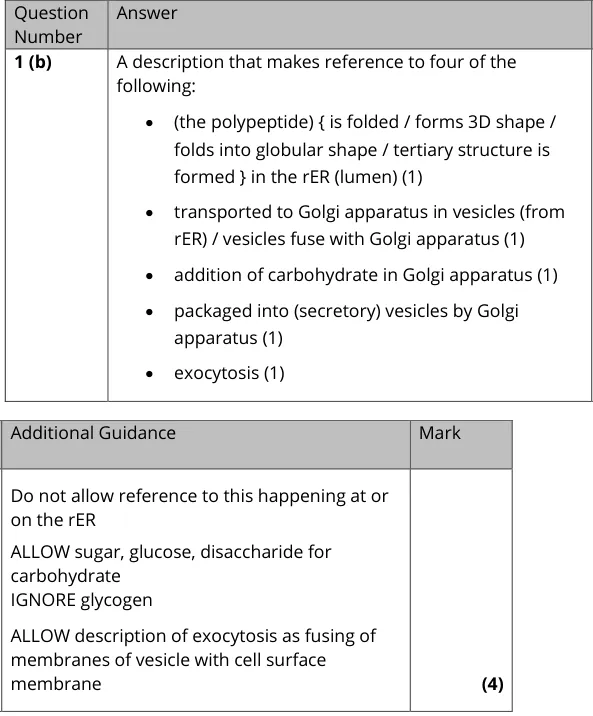
Describe how elastase is processed to form a glycoprotein and released from the cell.
Show the mark scheme
Tap an image to open it full size.
From the examiners' report: Answer in sequence and cover the whole process, including exocytosis. Say where each step happens: folding in the rER, carbohydrate added in the Golgi apparatus. Glycogen is the wrong carbohydrate, and starting with transcription was not needed.
Prokaryotic cell ultrastructure (3.4)
Question 14
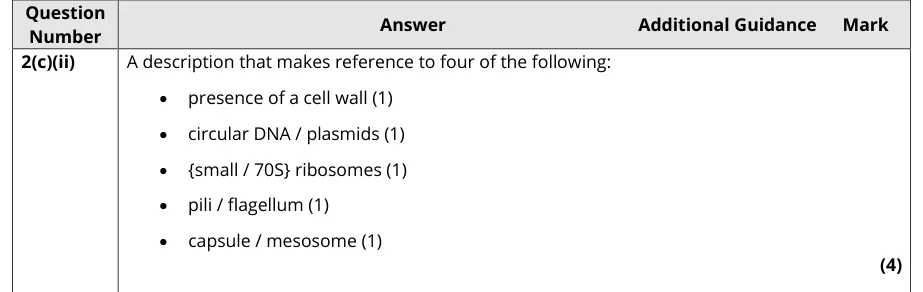
AS Paper 2 · June 2019 · Q2(c)(ii) · 4 marks
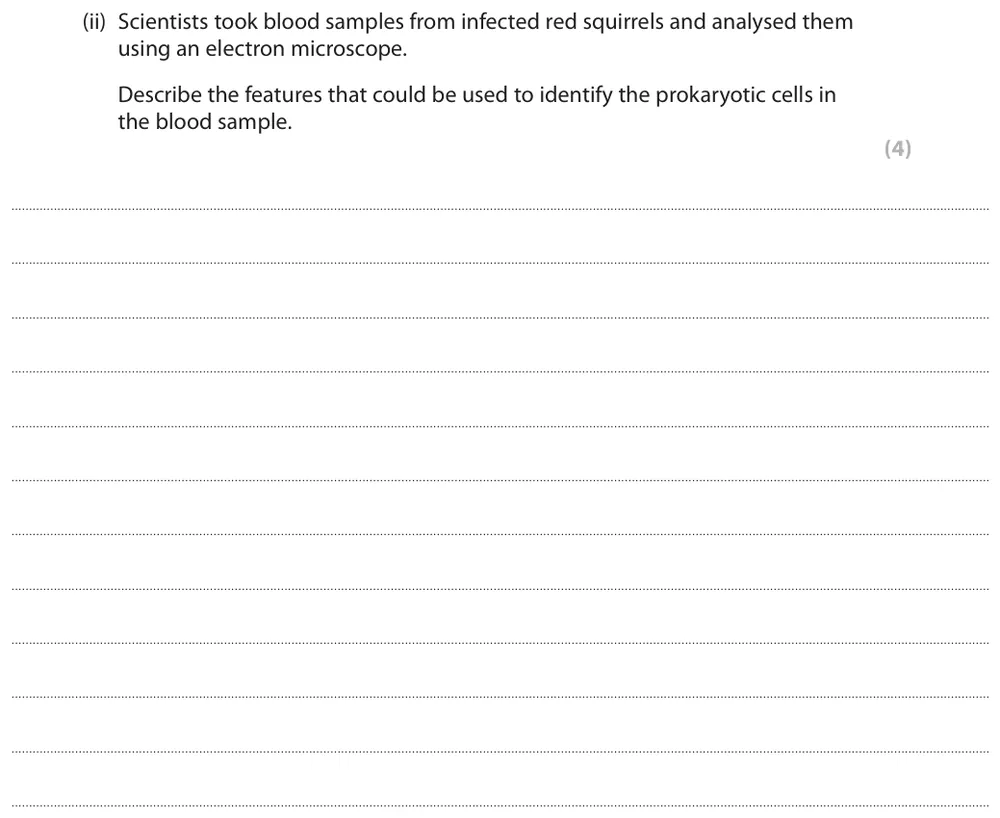
Describe the features that would identify prokaryotic cells in a blood sample seen with an electron microscope.
Show the mark scheme
Tap an image to open it full size.
From the examiners' report: Most gained several marks. Describe what would be seen, such as a cell wall, circular DNA or plasmids, 70S ribosomes, pili or a flagellum. Statements about what would not be seen gained no credit.
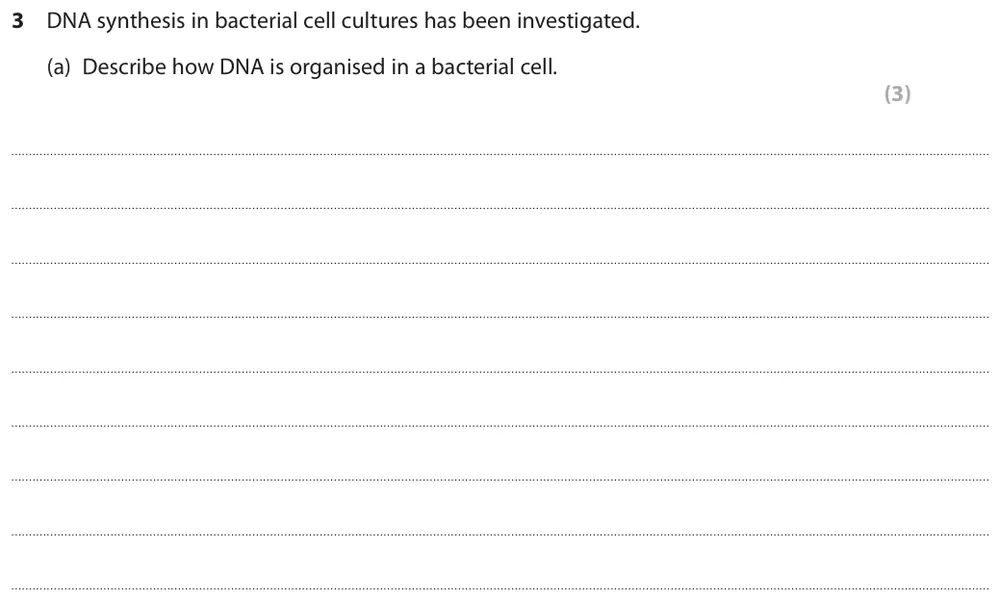
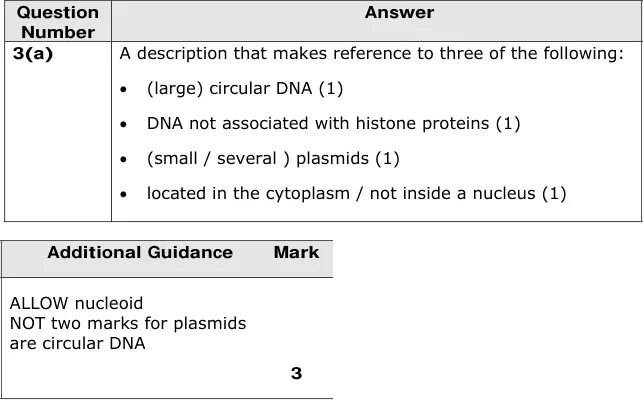
Question 15
A level Paper 1 · June 2017 · Q3(a) · 3 marks
Describe how DNA is organised in a bacterial cell.
Show the mark scheme
Tap an image to open it full size.
From the examiners' report: Make it clear that the large circular DNA is separate from the plasmids: 'plasmids made from circular DNA' scored only one mark. 'Loops and coils' were not accepted, and bacterial DNA is not single-stranded.
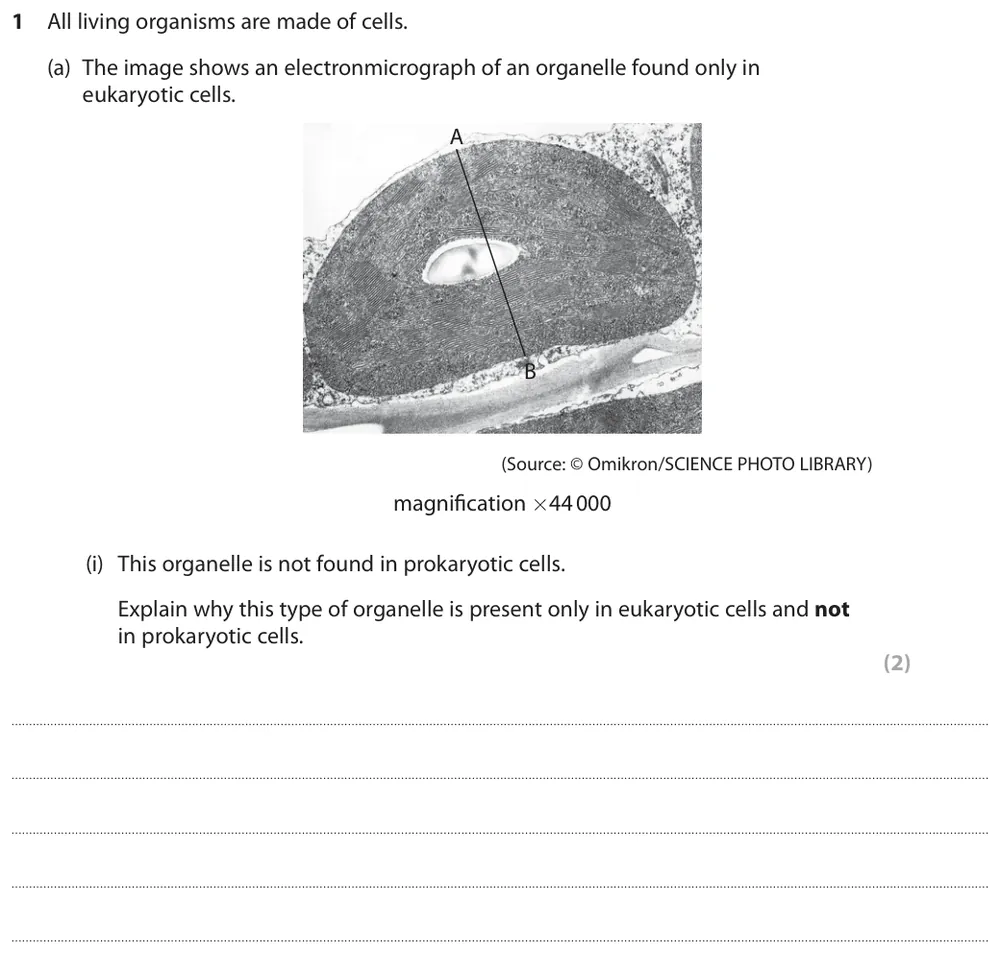
Question 16
AS Paper 2 · June 2025 · Q1(a)(i) · 2 marks · Hard
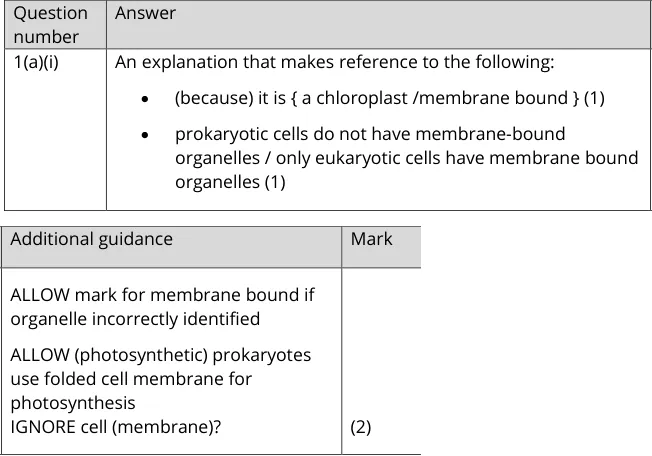
Explain why the organelle in an electron micrograph is found only in eukaryotic cells.
Show the mark scheme
Tap an image to open it full size.
From the examiners' report: Most did not recognise the chloroplast, and many who called it a nucleus lost both marks. Say it is a membrane-bound organelle, and that prokaryotic cells have no membrane-bound organelles.
Recognising organelles in electron micrographs (3.5)
Question 17
AS Paper 2 · November 2021 · Q1(a)(i) · 1 mark · Easy
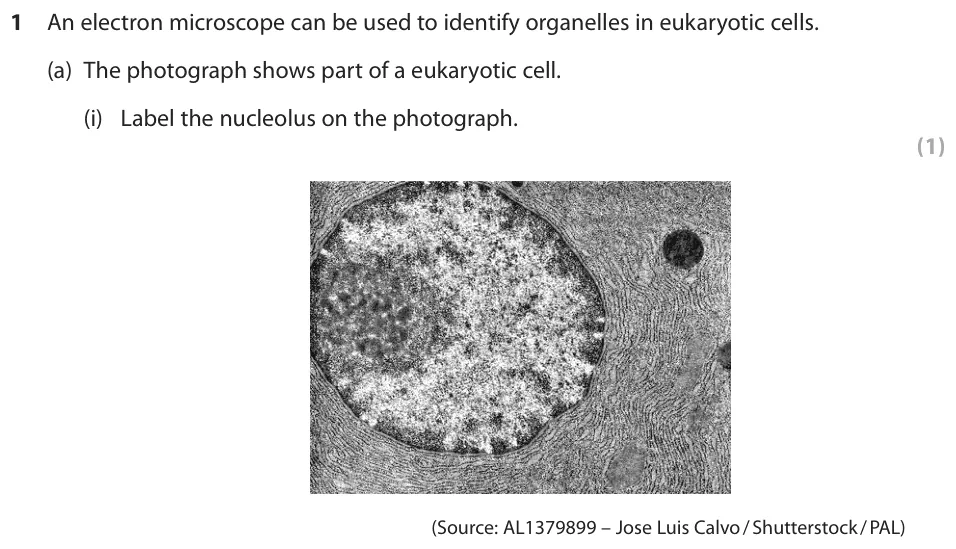
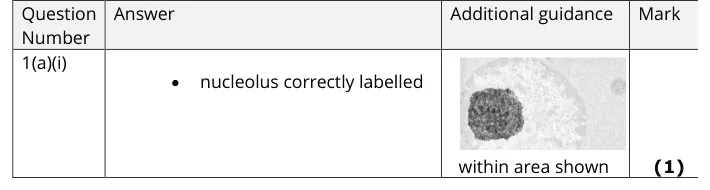
Label the nucleolus on an electron micrograph of a eukaryotic cell.
Show the mark scheme
Tap an image to open it full size.
From the examiners' report: Most were correct. A few labelled something outside the nucleus.
Tissues, organs and systems (3.13)
Question 18
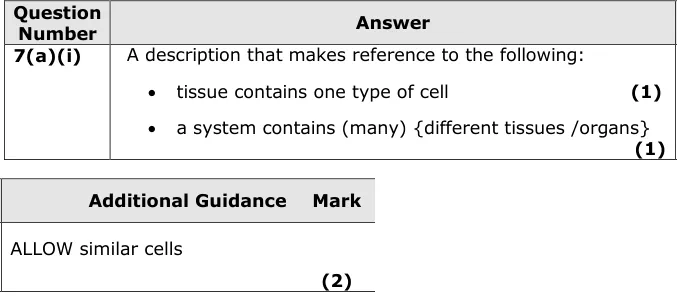
AS Paper 2 · June 2017 · Q7(a)(i) · 2 marks
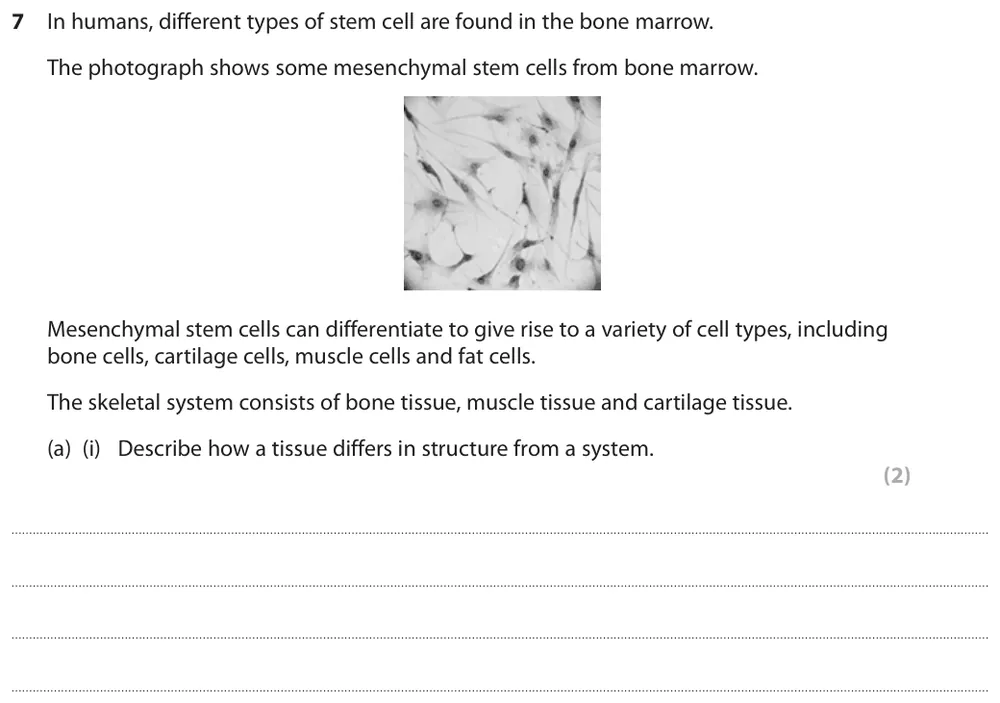
Describe how a tissue differs in structure from a system.
Show the mark scheme
Tap an image to open it full size.
From the examiners' report: Many wrote about function instead of structure: highlight the key word 'structure'. A tissue contains one type of cell; a system contains different tissues or organs.
Question 19
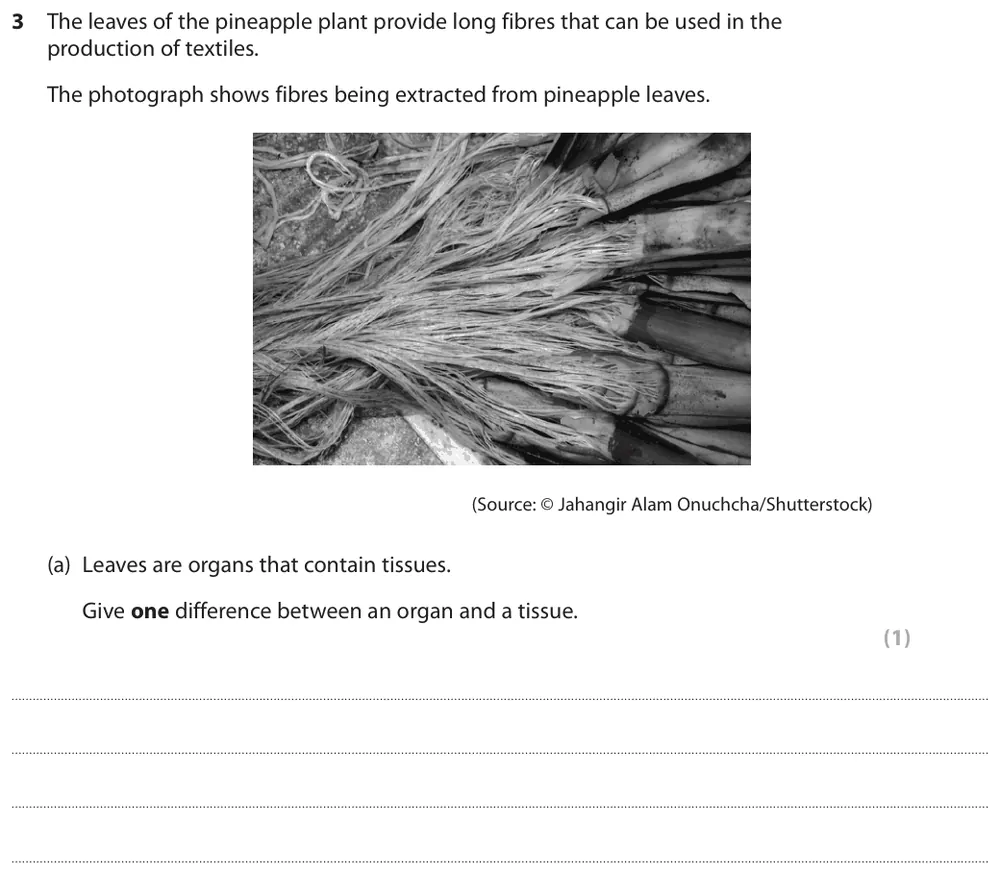
AS Paper 2 · June 2025 · Q3(a) · 1 mark · Hard
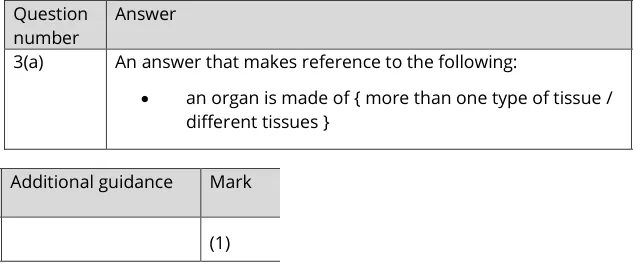
Give one difference between an organ and a tissue.
Show the mark scheme
Tap an image to open it full size.
From the examiners' report: Many simply said an organ is a group of tissues and lost the mark. Say an organ is made of different tissues (more than one type of tissue).
Question 20
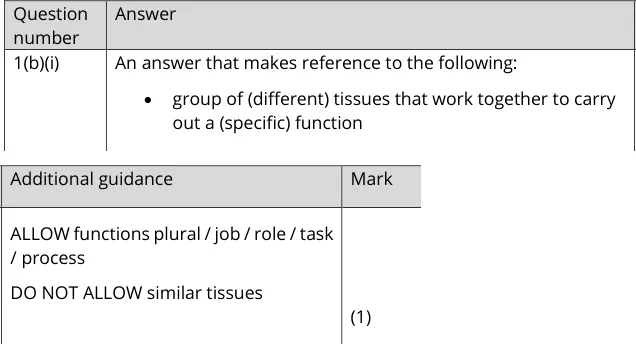
A level Paper 3 · June 2025 · Q1(b)(i) · 1 mark · Hard
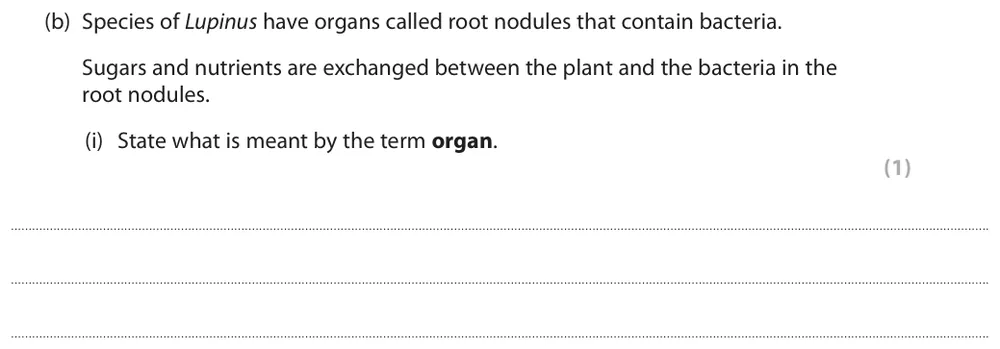
State what is meant by the term organ.
Show the mark scheme
Tap an image to open it full size.
From the examiners' report: Some gave the definition of a tissue (different cells working together), and 'similar tissues' was not credited. An organ is a group of different tissues working together to carry out a function.
Where students lose marks (from Pearson examiners' reports and mark schemes)
Each point below comes from the examiners' reports and mark schemes, and is followed by wording that gained marks.
Mitochondria, not plasmids, hold DNA outside the nucleus. The most common wrong answer for an organelle containing DNA was plasmids.
✔ Gains credit: 'Mitochondrion / mitochondria / chloroplast.'
Nuclear DNA is wound round histones, not just a double helix. Many described the double helix or nucleotides instead of how DNA is organised in the nucleus.
✔ Gains credit: 'In chromosomes, as chromatin, wrapped around histone proteins.'
Draw two mitochondrial membranes, not three. The most common mistake was drawing a mitochondrion with a triple membrane.
✔ Gains credit: 'A double membrane with folding of the inner membrane, with two parts correctly labelled, such as cristae and matrix.'
The Golgi adds carbohydrate to a glycoprotein. Answers said the protein is 'modified' in the Golgi apparatus without saying how.
✔ Gains credit: 'In the Golgi apparatus, carbohydrate is added.'
The rER folds proteins; the Golgi modifies them. Some started at the rER instead of the ribosome, or said the protein is modified in the rER.
✔ Gains credit: 'From the ribosome it moves to the rER, where it is folded; it is transported to the Golgi apparatus, where it is modified; vesicles fuse with the cell membrane.'
Bacterial circular DNA is separate from the plasmids. 'Bacteria contain plasmids made from circular DNA' scored only one mark, and some said bacterial DNA is single-stranded.
✔ Gains credit: 'Large circular DNA, not associated with histone proteins, in the cytoplasm, and small plasmids.'
A chloroplast is membrane-bound, so prokaryotes lack it. Many identified the chloroplast in the micrograph as a nucleus and lost both marks.
✔ Gains credit: 'It is a chloroplast (membrane-bound); prokaryotic cells do not have membrane-bound organelles.'
An organ needs different tissues, not just a group of them. Many simply said organs are a group of tissues.
✔ Gains credit: 'An organ is made of more than one type of tissue.'
Download the questions
Download the PDF pack (20 questions, mark schemes at the end)
Keep practising
- Gametes, Fertilisation and Linkage (Topic 3): Edexcel SNAB exam questions by topic
- Meiosis, Mitosis and Stem Cells (Topic 3): Edexcel SNAB exam questions by topic
- Gene Expression, Epigenetics and Phenotype (Topic 3): Edexcel SNAB exam questions by topic
- Topic 3 multiple-choice quiz (71 questions, marked as you tap)
- Edexcel SNAB A level Biology resources hub (every topic, practical and paper)
- Root Tip Squash and Mitosis (Core Practical 5): Edexcel SNAB A Level Biology Exam Questions
- Extended Response Questions (Topics 3 and 4): Edexcel SNAB A Level Biology Exam Questions
- Edexcel SNAB A level Biology past papers, mark schemes and examiners' reports
- Edexcel SNAB A level Biology grade boundaries
- Message Tom on WhatsApp about one-to-one Edexcel SNAB tutoring or an Edexcel group class
Questions, mark schemes and examiners' report extracts © Pearson Education Ltd.