

Atherosclerosis, Blood Clotting and CVD Treatment covers how cardiovascular disease develops and how it is treated, within Topic 1, Lifestyle, Health and Risk, of the Edexcel A level Biology A (Salters-Nuffield) specification. You need to describe the course of events that leads to atherosclerosis (endothelial dysfunction, inflammatory response, plaque formation and raised blood pressure), the blood-clotting process from thromboplastin to fibrin and its role in CVD, and the benefits and risks of antihypertensives, statins, anticoagulants and platelet inhibitors. This topic is examined on AS Paper 1 and on A level Papers 1, 2 and 3. Questions marked AS are from the AS papers (8BN0); the rest are from the A level papers (9BN0).
The examiners' reports keep asking for location and sequence. Say the endothelium of an artery is damaged, not a blood vessel and not the epithelium, and put the atheroma before the plaque. Explain why pressure rises: the lumen is narrowed. Name the coronary artery, the cardiac muscle and aerobic respiration rather than 'the heart' and 'respiration'. For clotting, start with collagen exposed by damage and keep thrombin before fibrin, then apply the cascade to the drug, toxin or mutation in the question instead of reciting it.
Studying Edexcel SNAB and want more help? If you'd like to arrange one-to-one Edexcel tutoring, or to register your interest in an Edexcel group class, message Tom on WhatsApp using the link at the bottom of this page.
What you need from GCSE
Each question on this page assumes you're secure on these ideas. If any of them feels shaky, look it up before you start.
- The coronary arteries supply the heart muscle with oxygenated blood.
- Fatty deposits can build up in arteries, narrowing them and reducing blood flow.
- Platelets help the blood to clot at a wound.
- Enzymes are biological catalysts that speed up reactions without being used up.
Key terms
These words come up in the questions and mark schemes. Examiners expect you to use them exactly.
- Endothelium: the single layer of cells lining the lumen of an artery; damage to it starts atherosclerosis.
- Inflammatory response: white blood cells move into the damaged artery wall, where cholesterol also builds up.
- Atheroma: a fatty deposit of cholesterol and white blood cells that forms in the artery wall.
- Plaque: a hardened atheroma, with calcium salts and fibrous tissue, that narrows the lumen.
- Thromboplastin: an enzyme released from platelets and damaged tissue that converts prothrombin to thrombin.
- Thrombin: an enzyme that converts soluble fibrinogen into insoluble fibrin.
- Fibrin: insoluble protein fibres that form a mesh, trapping platelets and red blood cells to make a clot.
- Antihypertensives: drugs that lower blood pressure, such as ACE inhibitors, calcium channel blockers, diuretics and beta-blockers.
What these questions cover (Edexcel SNAB Topic 1: Lifestyle, Health and Risk)
The questions test these statements from Topic 1 of the Pearson Edexcel A level Biology A (Salters-Nuffield) specification (9BN0).
- 1.5 Understand the course of events that leads to atherosclerosis (endothelial dysfunction, inflammatory response, plaque formation, raised blood pressure).
- 1.6 Understand the blood-clotting process (thromboplastin release, conversion of prothrombin to thrombin and fibrinogen to fibrin) and its role in cardiovascular disease (CVD
- 1.18 Know the benefits and risks of treatments for cardiovascular disease (CVD) (antihypertensives, statins, anticoagulants and platelet inhibitors).
How to use this page
Write your answer on paper before you open the mark scheme. Allow about 1.2 minutes per mark: the 20 questions are worth 61 marks, so about 73 minutes in total. Then mark your answer strictly against the mark scheme and read the examiners' tip underneath it. If you'd rather print the questions, download the PDF pack.
Atherosclerosis (1.5)
Question 1
AS Paper 1 · June 2016 · Q4(b) · 4 marks
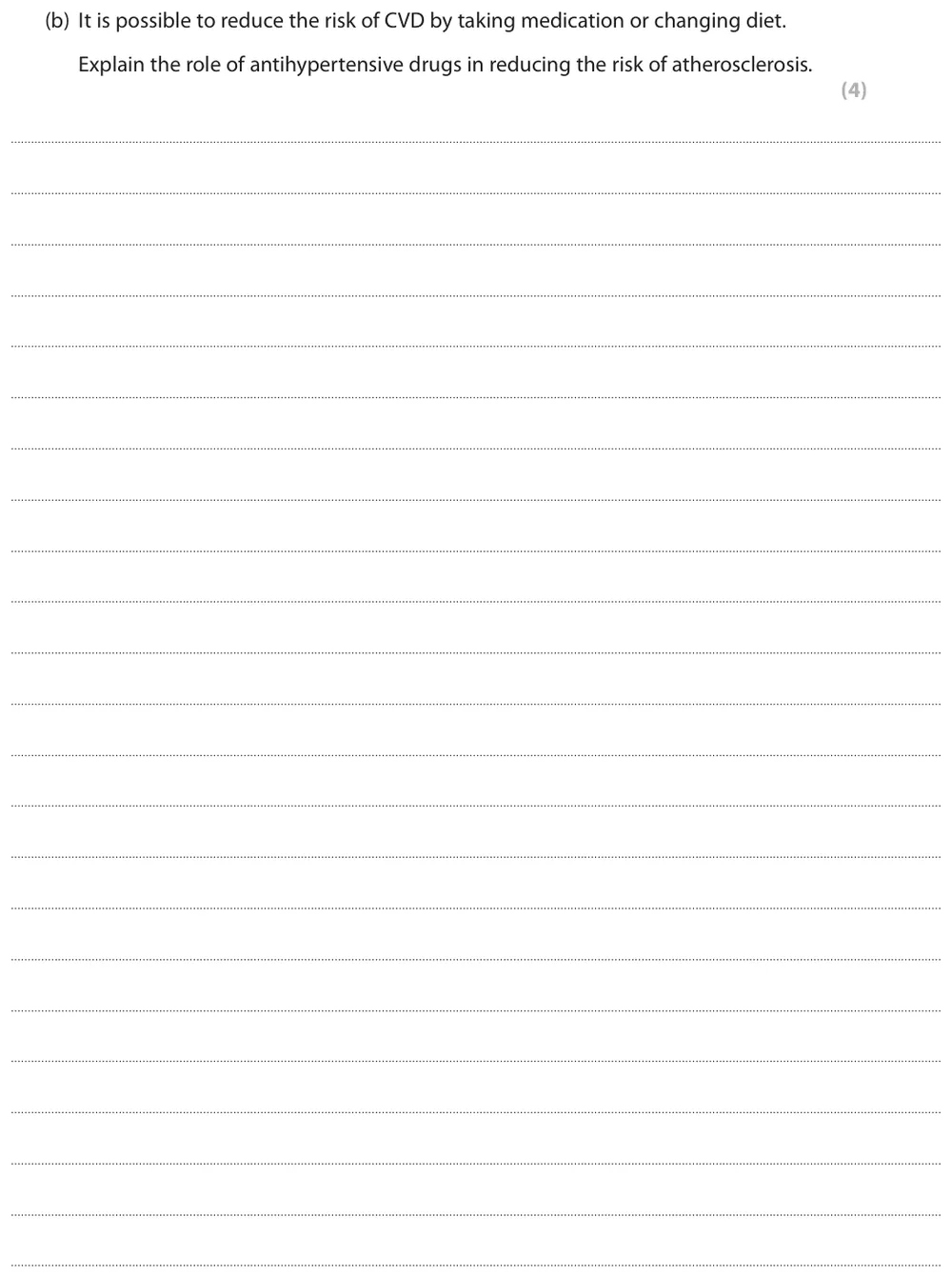
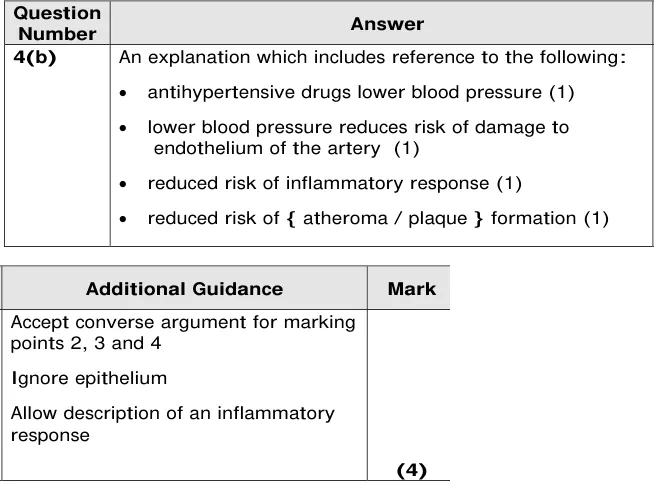
Explain the role of antihypertensive drugs in reducing the risk of atherosclerosis.
Show the mark scheme
Tap an image to open it full size.
From the examiners' report: Most said the drugs lower blood pressure, but many then explained how each drug works, which did not answer the question. Link lower blood pressure to less damage to the endothelium of the arteries, a reduced risk of an inflammatory response and of atheroma or plaque formation.
Question 2
AS Paper 1 · June 2017 · Q6(b)(i) · 3 marks · Easy
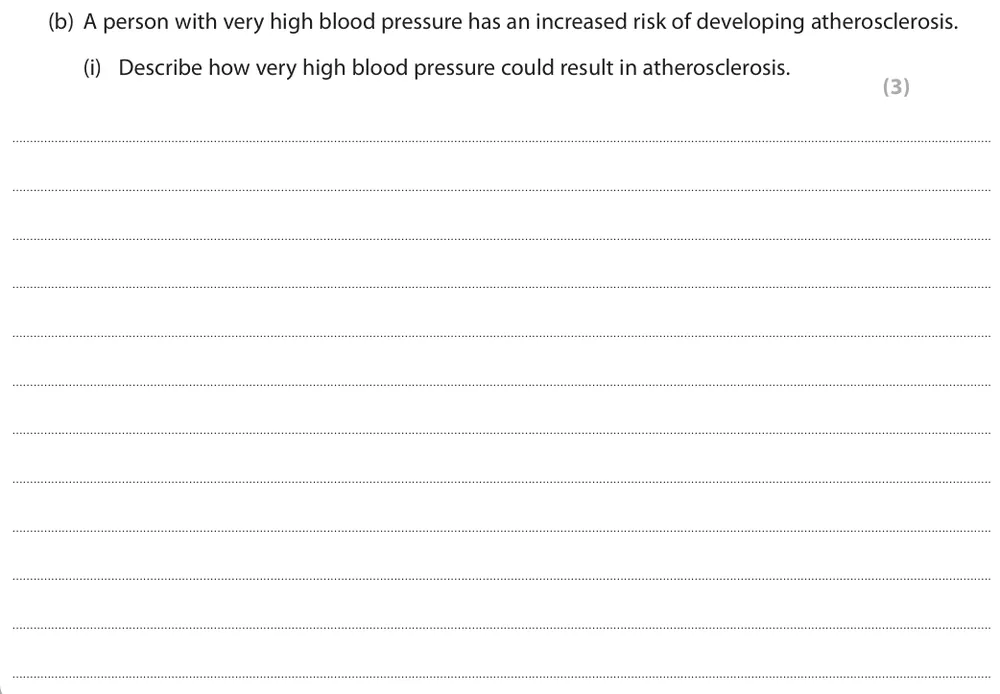
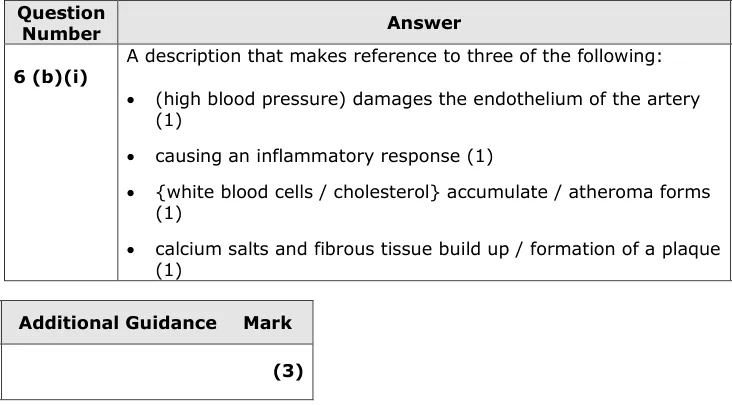
Describe how very high blood pressure could result in atherosclerosis.
Show the mark scheme
Tap an image to open it full size.
From the examiners' report: Very well answered. Marks were lost for writing capillaries or blood vessels instead of arteries, for confusing epithelium with endothelium, and for putting plaque formation before the atheroma.
Question 3
AS Paper 1 · June 2017 · Q6(b)(ii) · 2 marks
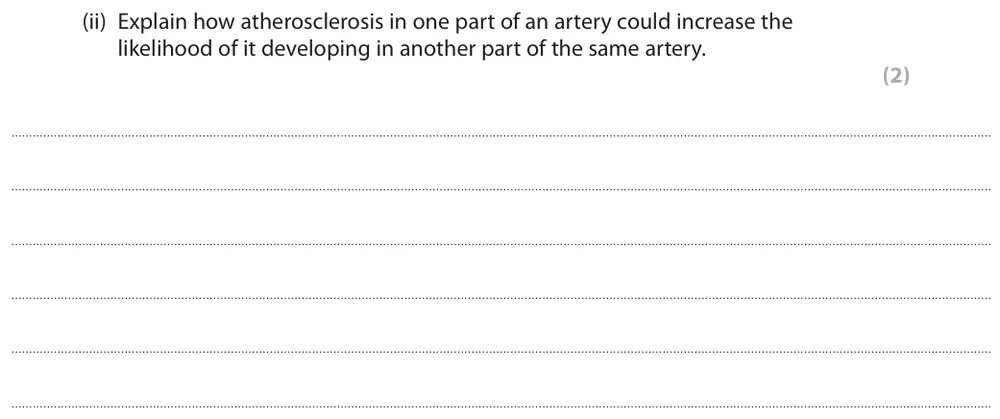
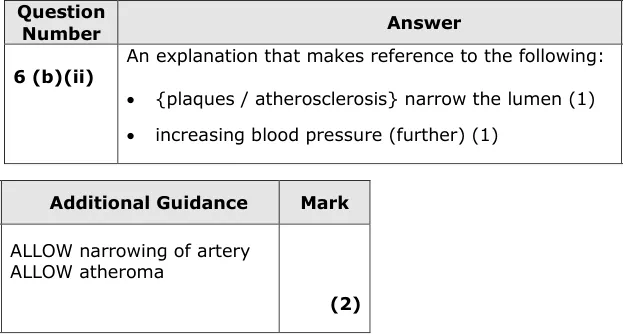
Explain how atherosclerosis in one part of an artery could make it more likely in another part.
Show the mark scheme
Tap an image to open it full size.
From the examiners' report: 'High blood pressure' was not enough, because pressure in an artery is already high. Explain why it rises: the plaque narrows the lumen, increasing blood pressure further.
Question 4
AS Paper 1 · June 2018 · Q7(a)(ii) · 5 marks · Easy
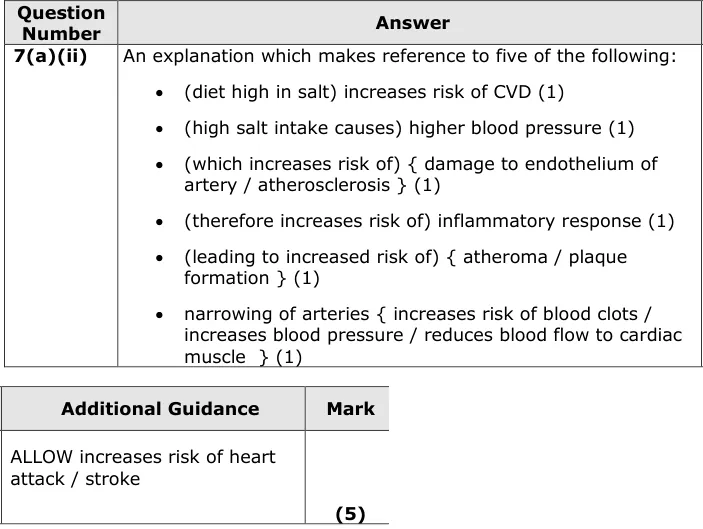
Explain the effect of a diet high in salt on the risk of developing CVD.

Show the mark scheme
Tap an image to open it full size.
From the examiners' report: Good answers started by saying the risk increases. They then linked salt to higher blood pressure, damage to the endothelium of an artery, an inflammatory response and atheroma or plaque formation.
Question 5
A level Paper 1 · June 2018 · Q1(b)(i) · 3 marks · Easy
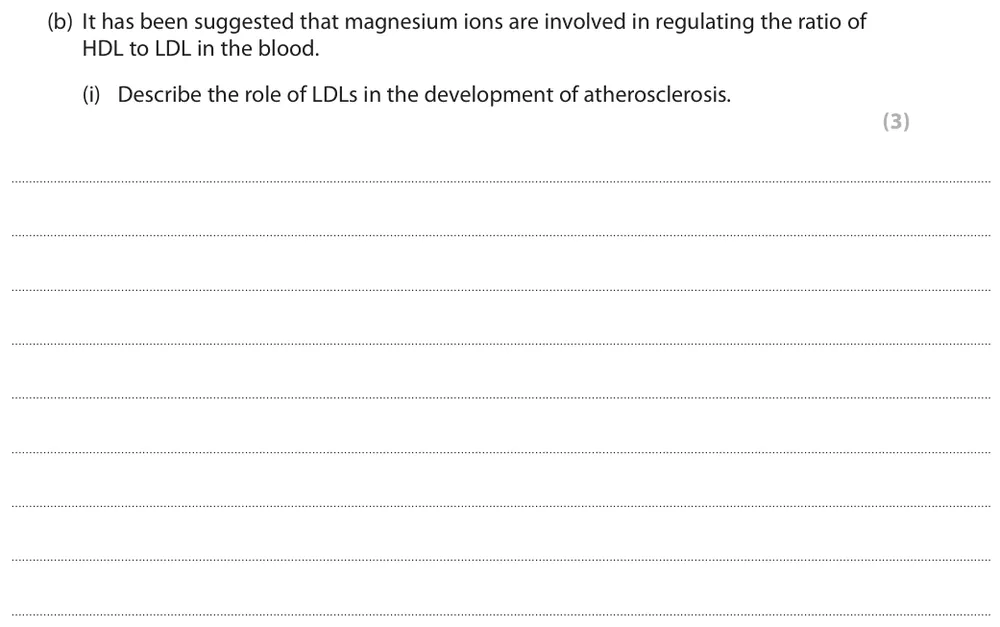
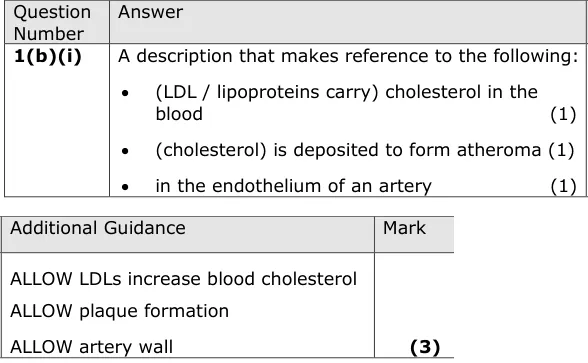
Describe the role of LDLs in the development of atherosclerosis.
Show the mark scheme
Tap an image to open it full size.
From the examiners' report: The most missed mark was the location: 'endothelium' or 'endothelium of blood vessels' was not enough, say the endothelium of an artery. Link LDLs to carrying cholesterol in the blood.
Question 6
A level Paper 3 · October 2020 · Q1(b)(i) · 2 marks
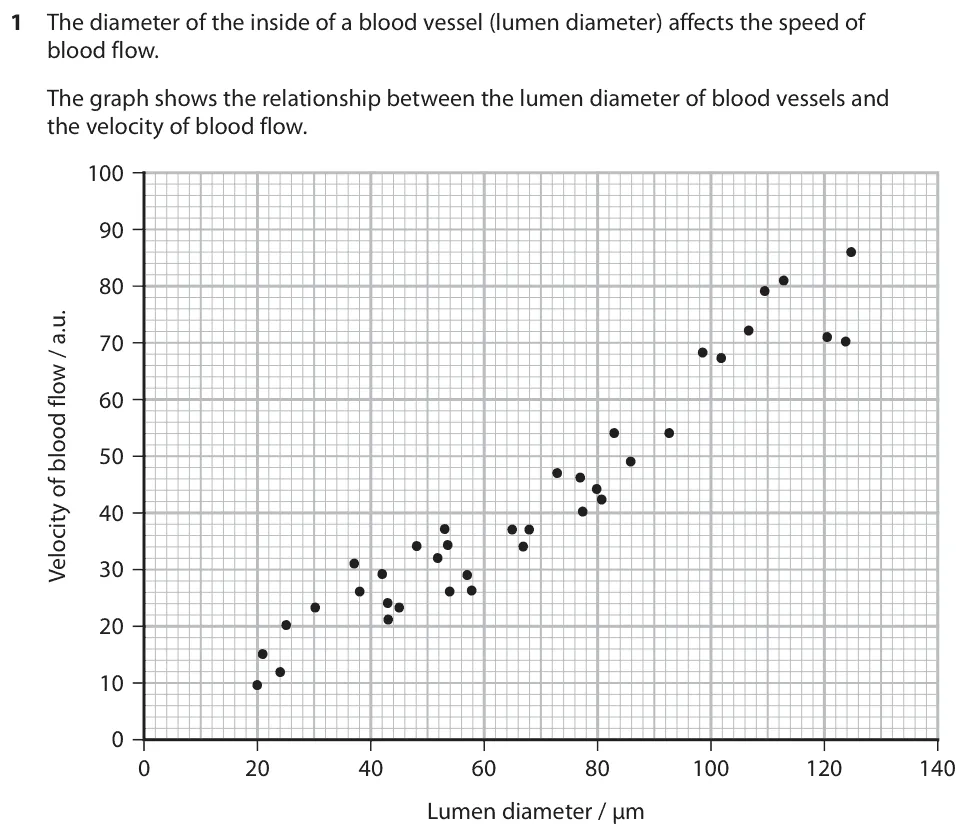
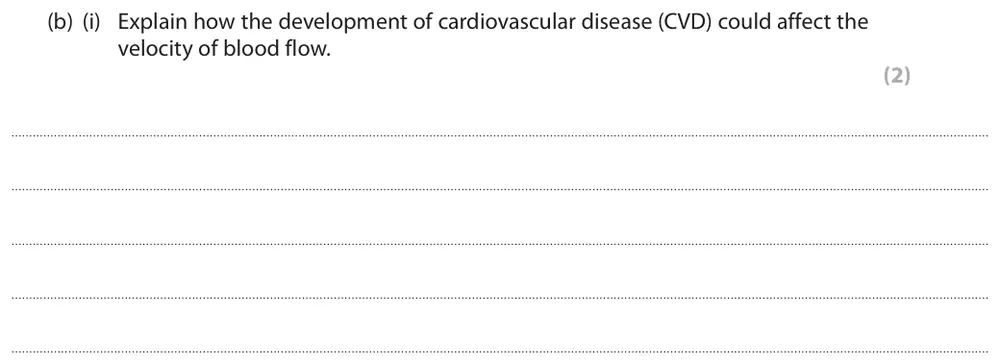
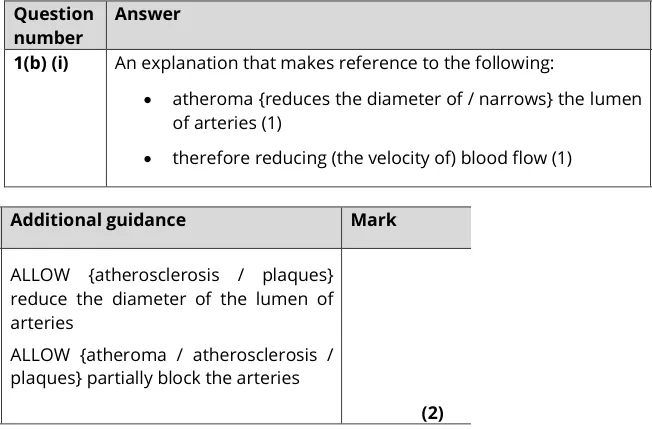
Explain how the development of CVD could affect the velocity of blood flow.
Information from earlier in this question:
Show the mark scheme
Tap an image to open it full size.
From the examiners' report: Many ignored the graph and said high blood pressure would increase blood velocity. Say atheromas narrow the lumen of arteries, reducing blood flow; 'blood vessels' and 'arteries constrict' were not credited.
Question 7
AS Paper 1 · June 2024 · Q7(d)(ii) · 4 marks
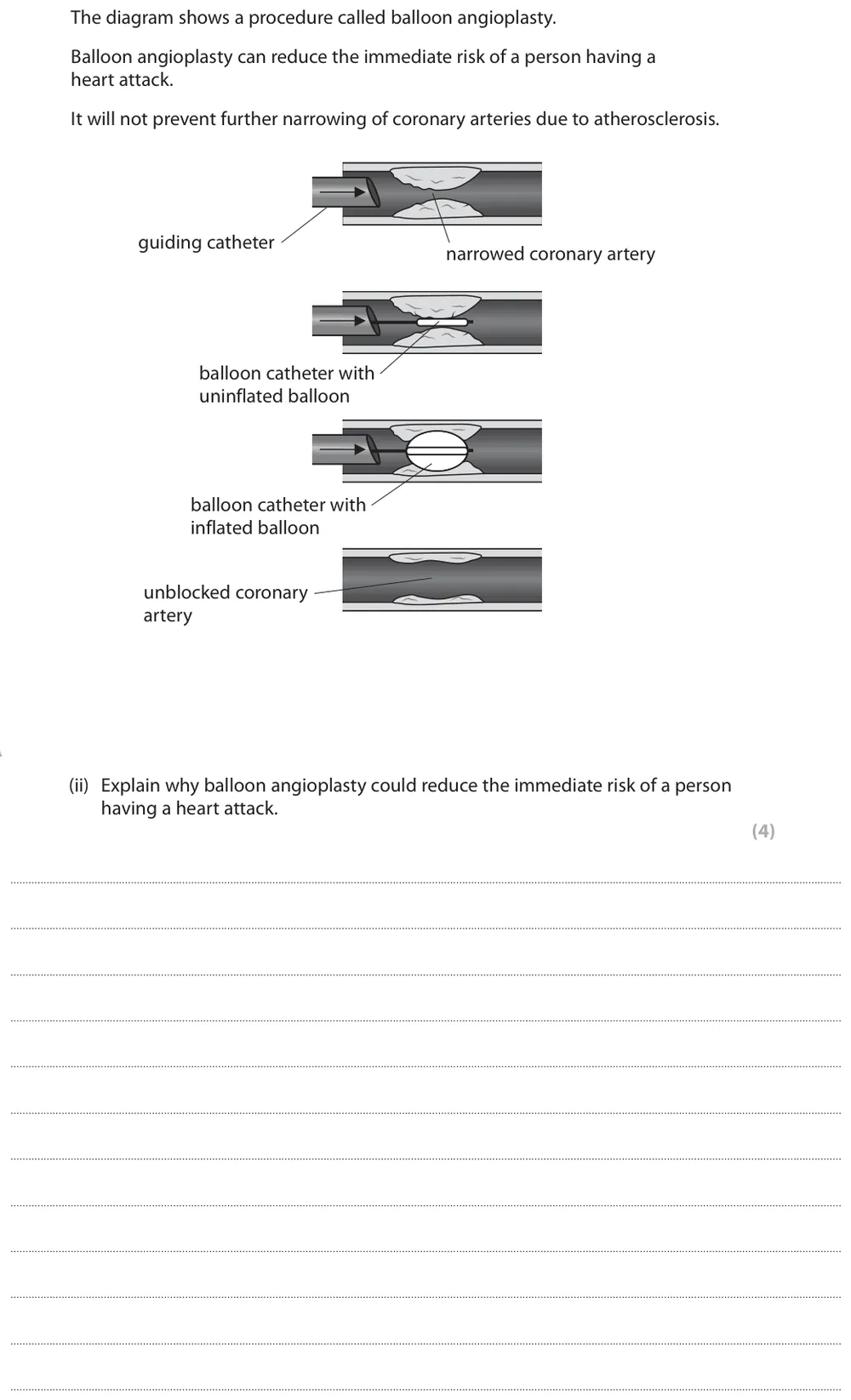
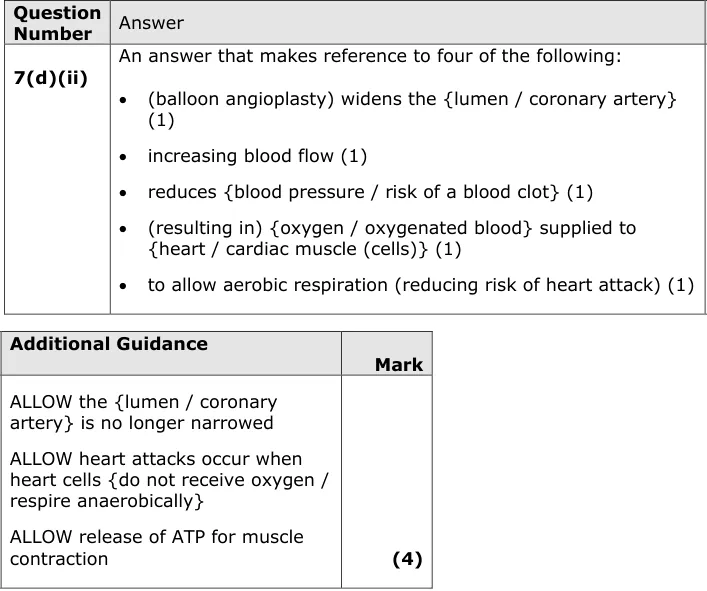
Explain why balloon angioplasty could reduce the immediate risk of a heart attack.
Information from earlier in this question:

Show the mark scheme
Tap an image to open it full size.
From the examiners' report: Say the lumen of the coronary artery is widened: 'arteries' alone was not enough, and 'unblocked' only repeats the diagram. Describe an increase in flow of oxygenated blood to cardiac muscle for aerobic respiration; 'respiration' unqualified did not score.
Question 8
AS Paper 1 · June 2025 · Q5(b)(i) · 2 marks · Easy
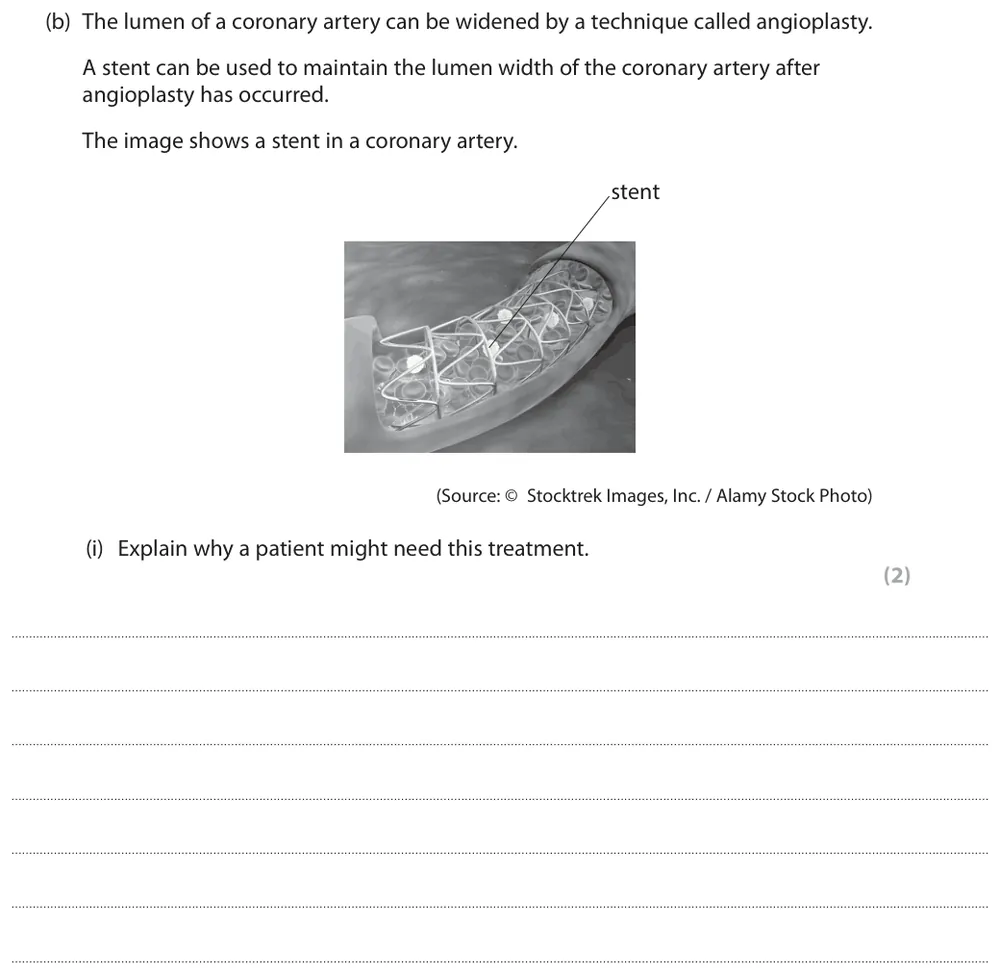
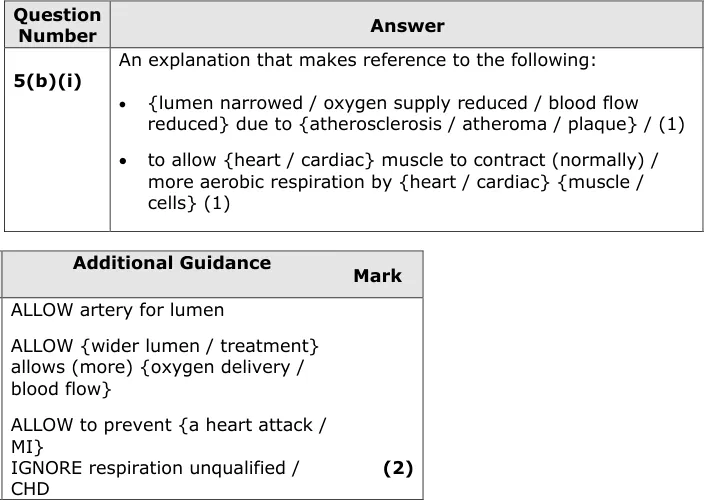
Explain why a patient might need angioplasty and a stent.
Show the mark scheme
Tap an image to open it full size.
From the examiners' report: Most explained that a lumen narrowed by atheroma needs widening. Fewer added that the extra oxygenated blood lets cardiac muscle respire aerobically and contract. A stroke was not credited, as the context was a coronary artery.
Blood clotting and its role in CVD (1.6)
Question 9
AS Paper 1 · June 2025 · Q5(b)(ii) · 4 marks
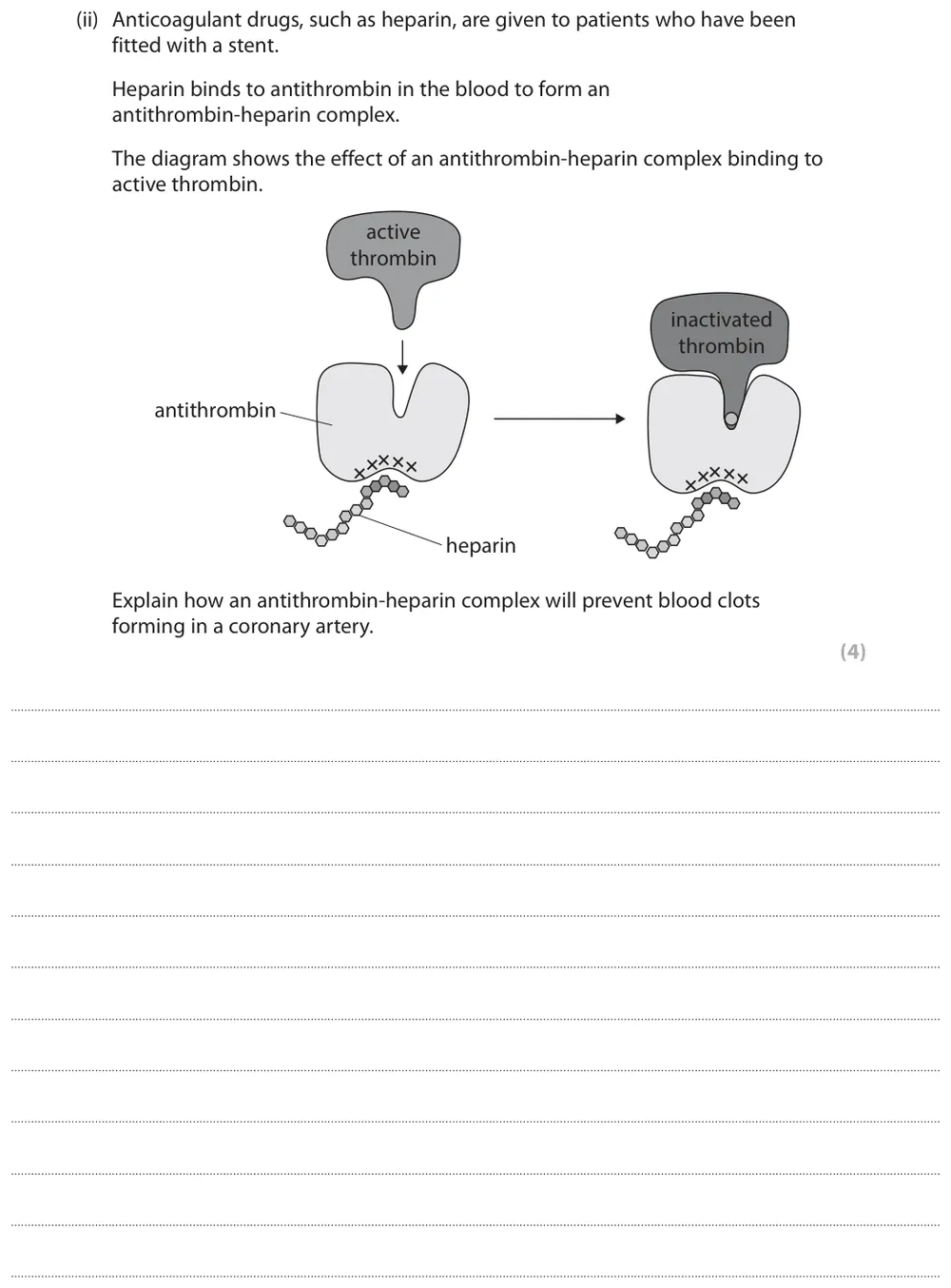
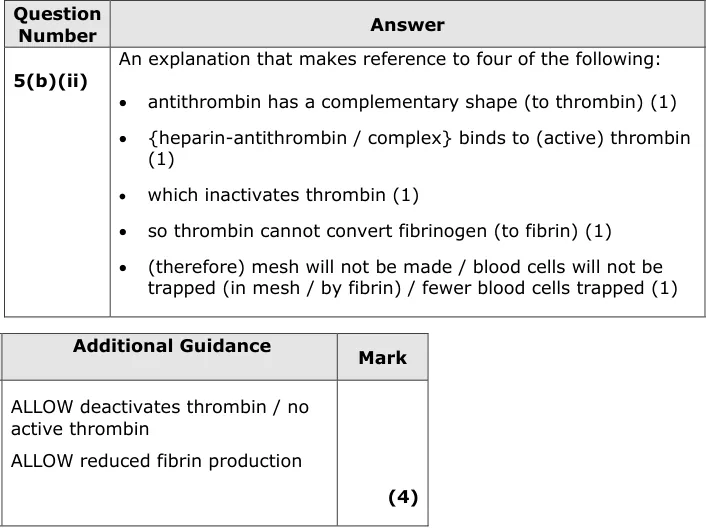
Explain how an antithrombin-heparin complex prevents blood clots forming in a coronary artery.
Show the mark scheme
Tap an image to open it full size.
From the examiners' report: Many described the whole clotting cascade without applying it. Use the diagram: the complex binds to and inactivates thrombin, so fibrinogen is not converted to fibrin and no mesh forms to trap blood cells.
Question 10
AS Paper 1 · June 2016 · Q2(b) · 5 marks
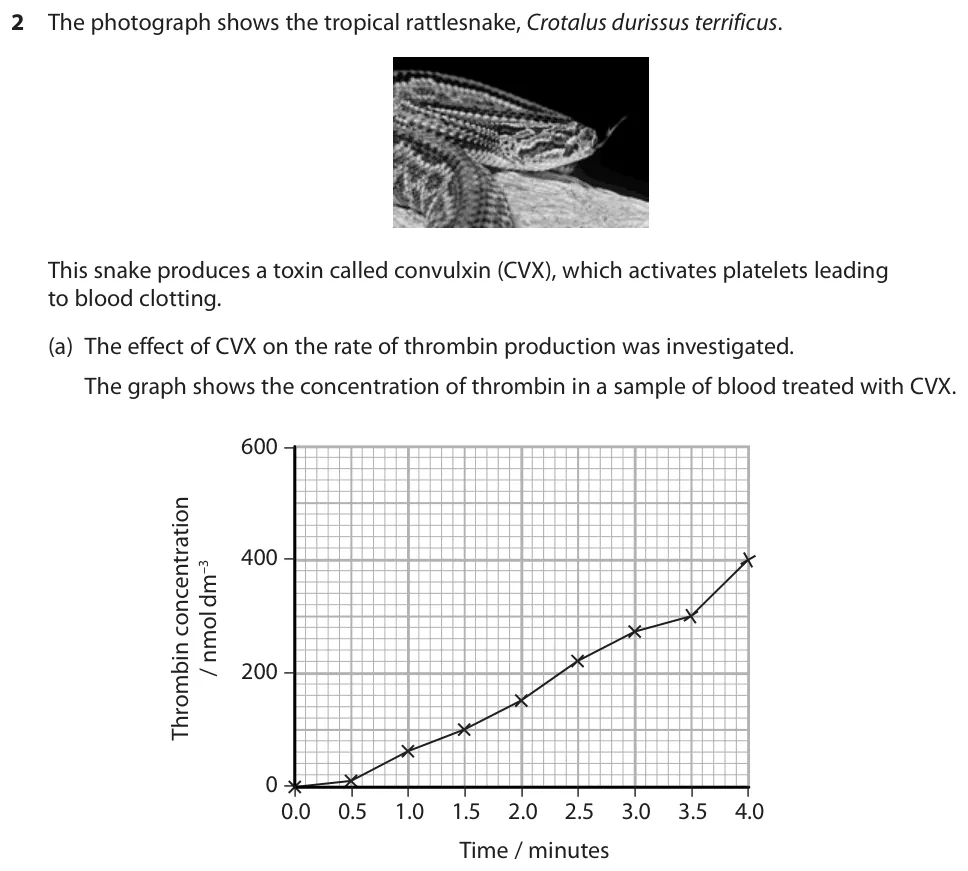
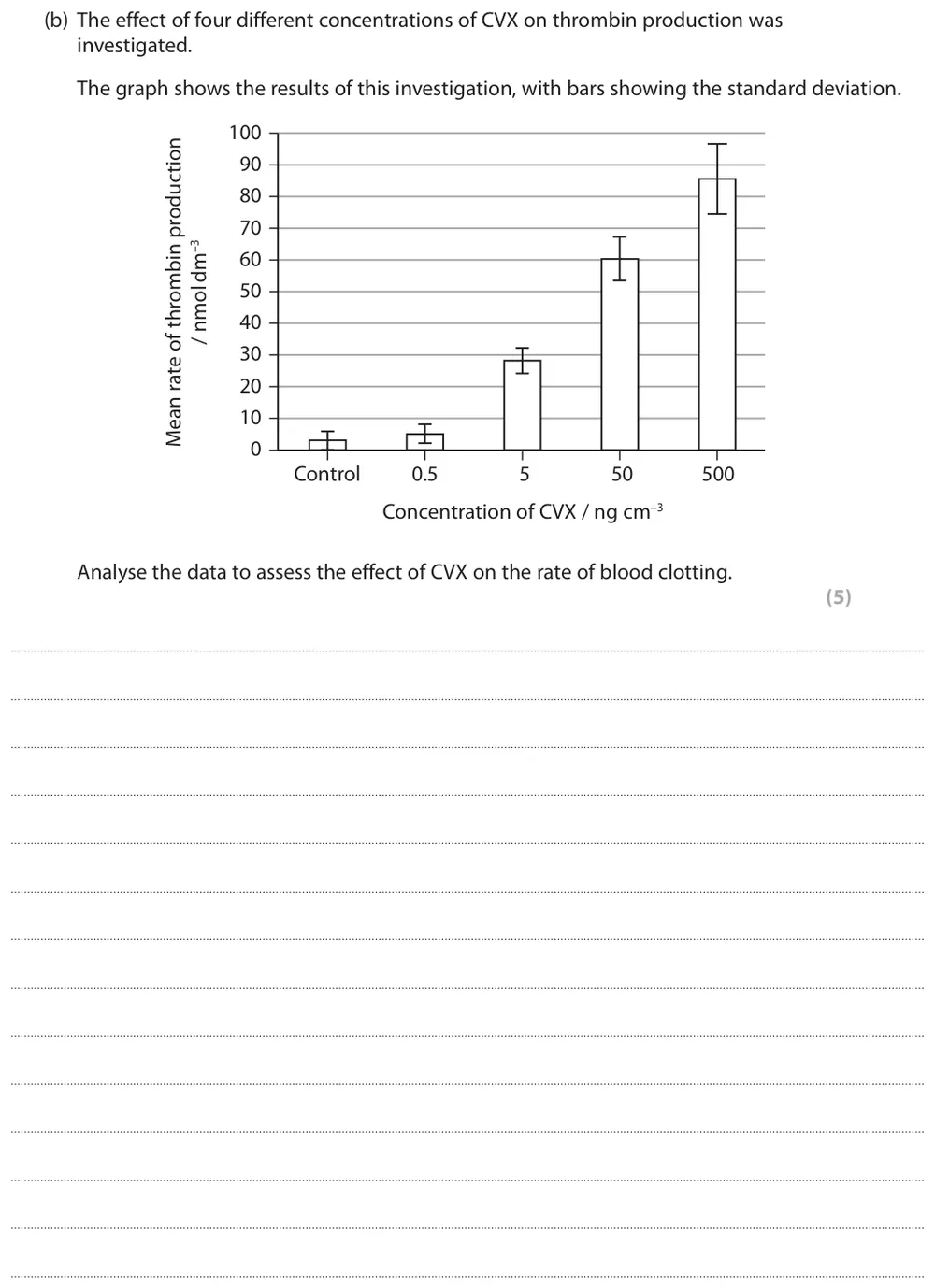
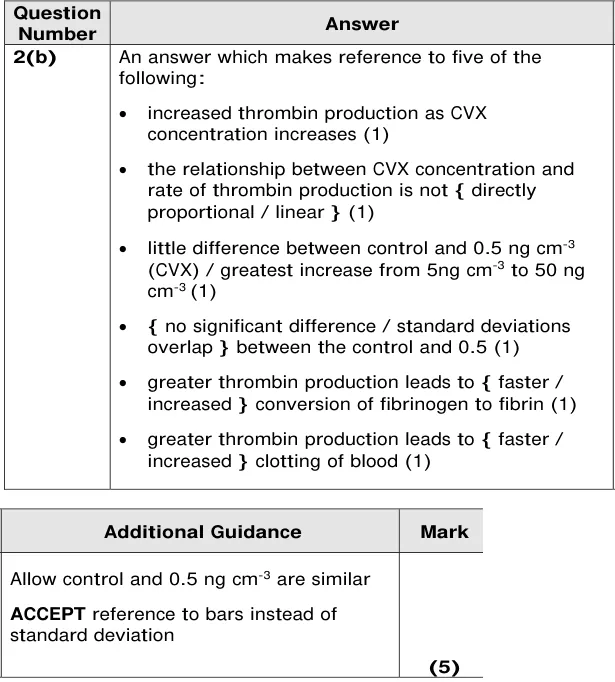
Analyse data on thrombin production to assess the effect of CVX on the rate of blood clotting.
Information from earlier in this question:
Show the mark scheme
Tap an image to open it full size.
From the examiners' report: Nearly all spotted that thrombin production rises with CVX concentration, and many used the overlapping standard deviation bars. Few linked more thrombin to faster conversion of fibrinogen to fibrin and faster clotting, which is what the question asks.
Question 11
AS Paper 1 · June 2019 · Q8(b) · 4 marks
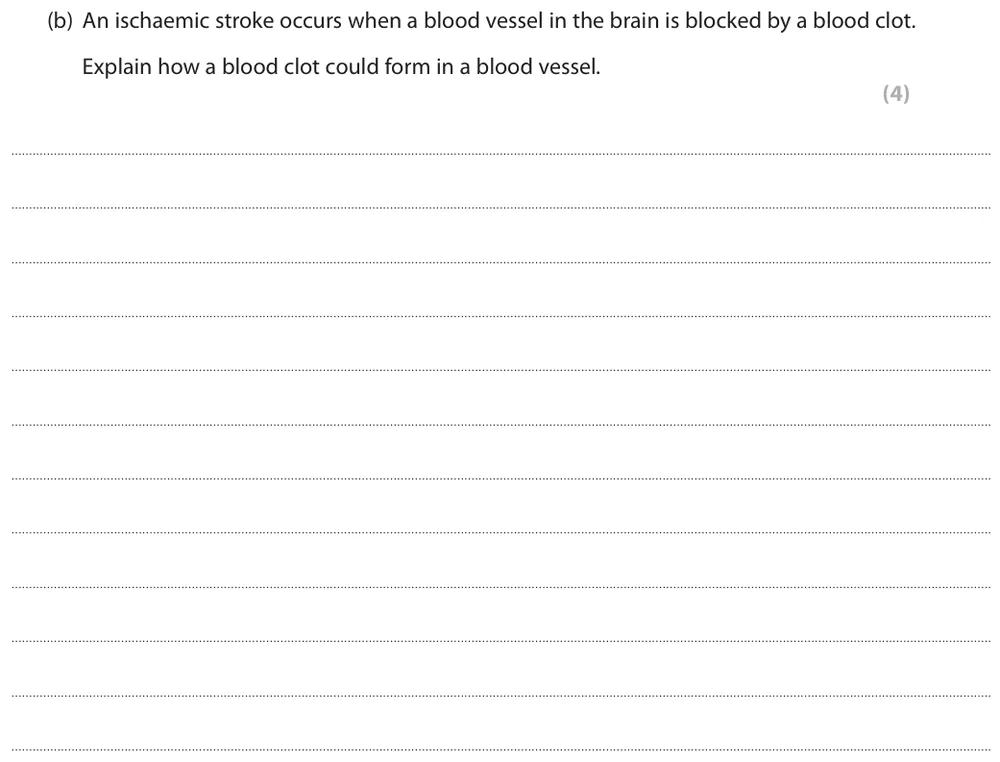
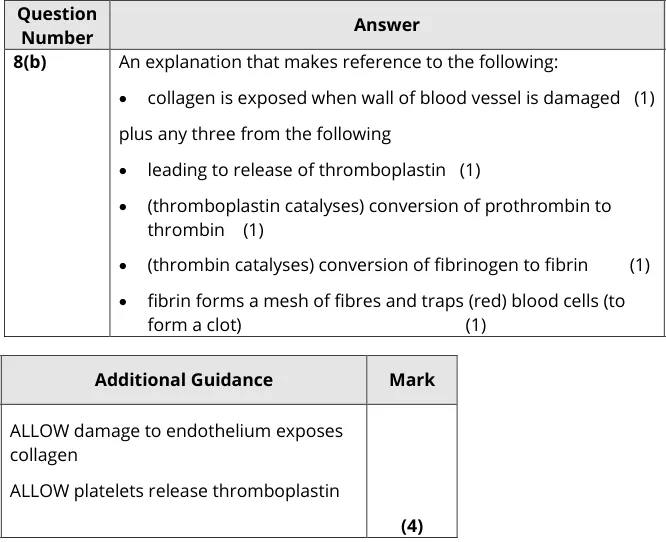
Explain how a blood clot could form in a blood vessel.
Show the mark scheme
Tap an image to open it full size.
From the examiners' report: The cascade was well known. The most common missing mark was the first step: collagen is exposed when the wall of the blood vessel is damaged.
Question 12
A level Paper 1 · June 2019 · Q8(a)(i) · 3 marks
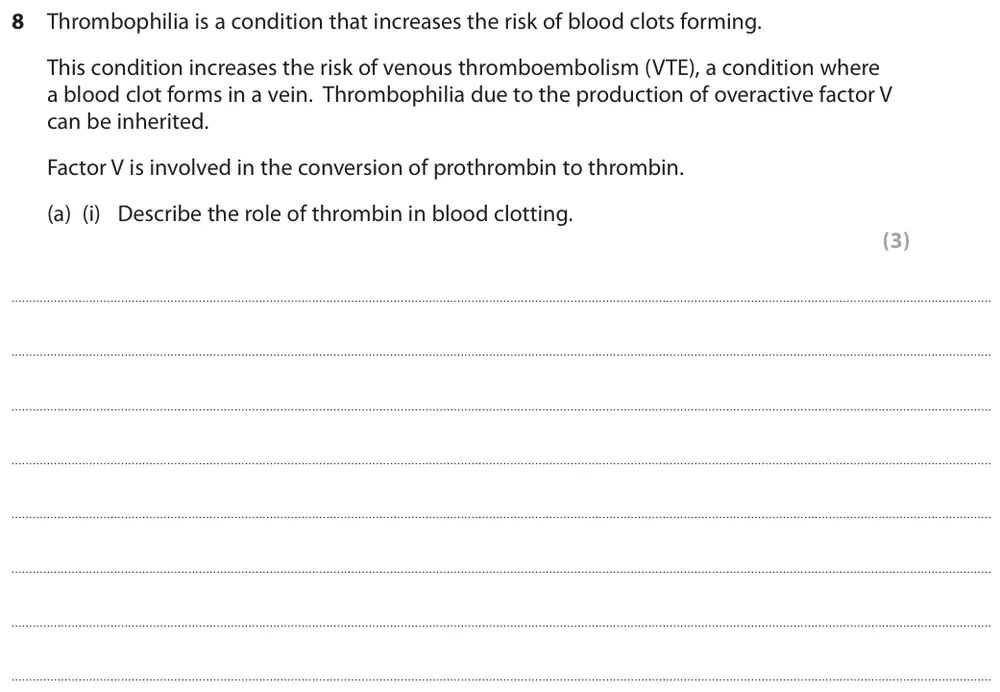
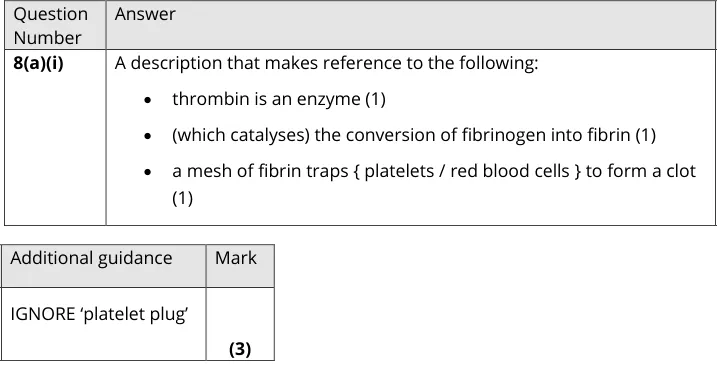
Describe the role of thrombin in blood clotting.
Show the mark scheme
Tap an image to open it full size.
From the examiners' report: Generally well answered, but not everyone stated that thrombin is an enzyme that catalyses the conversion of fibrinogen into fibrin.
Question 13
A level Paper 1 · June 2019 · Q8(a)(ii) · 3 marks
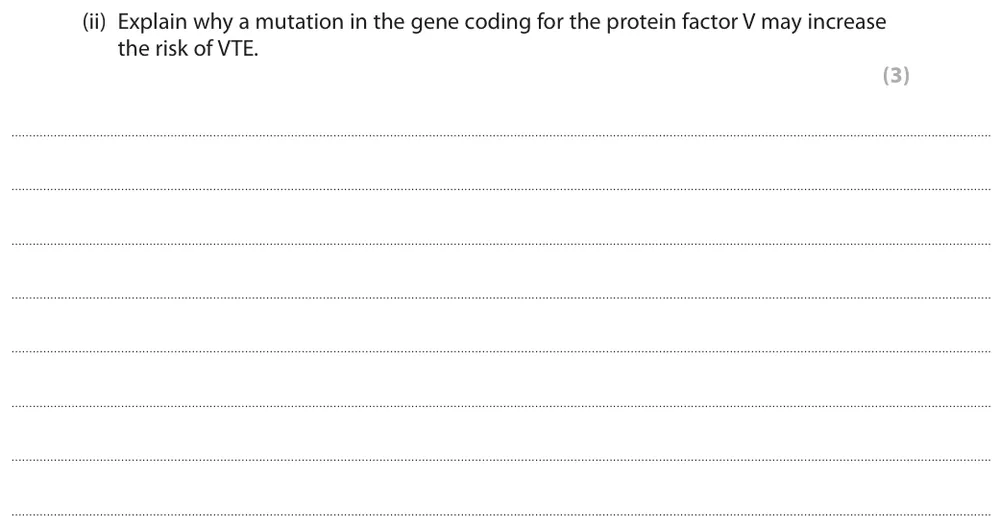
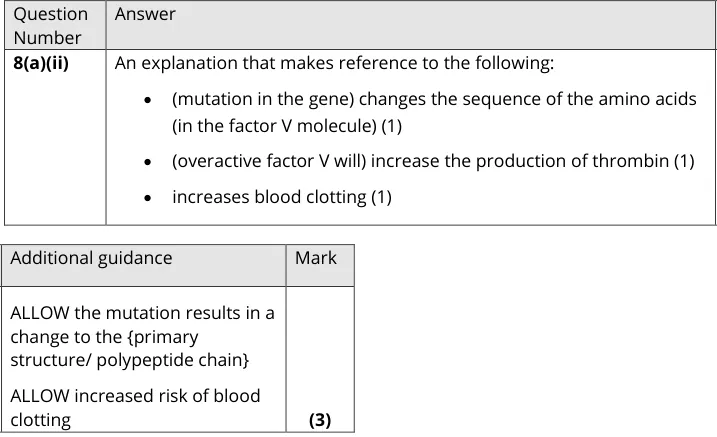
Explain why a mutation in the factor V gene may increase the risk of VTE.
Show the mark scheme
Tap an image to open it full size.
From the examiners' report: Some described only the change in DNA bases. Go on to the change in the amino acid sequence of factor V, then link overactive factor V to more thrombin and more clotting; few made the thrombin link.
Question 14
A level Paper 2 · June 2018 · Q9(a) · 3 marks · Hard
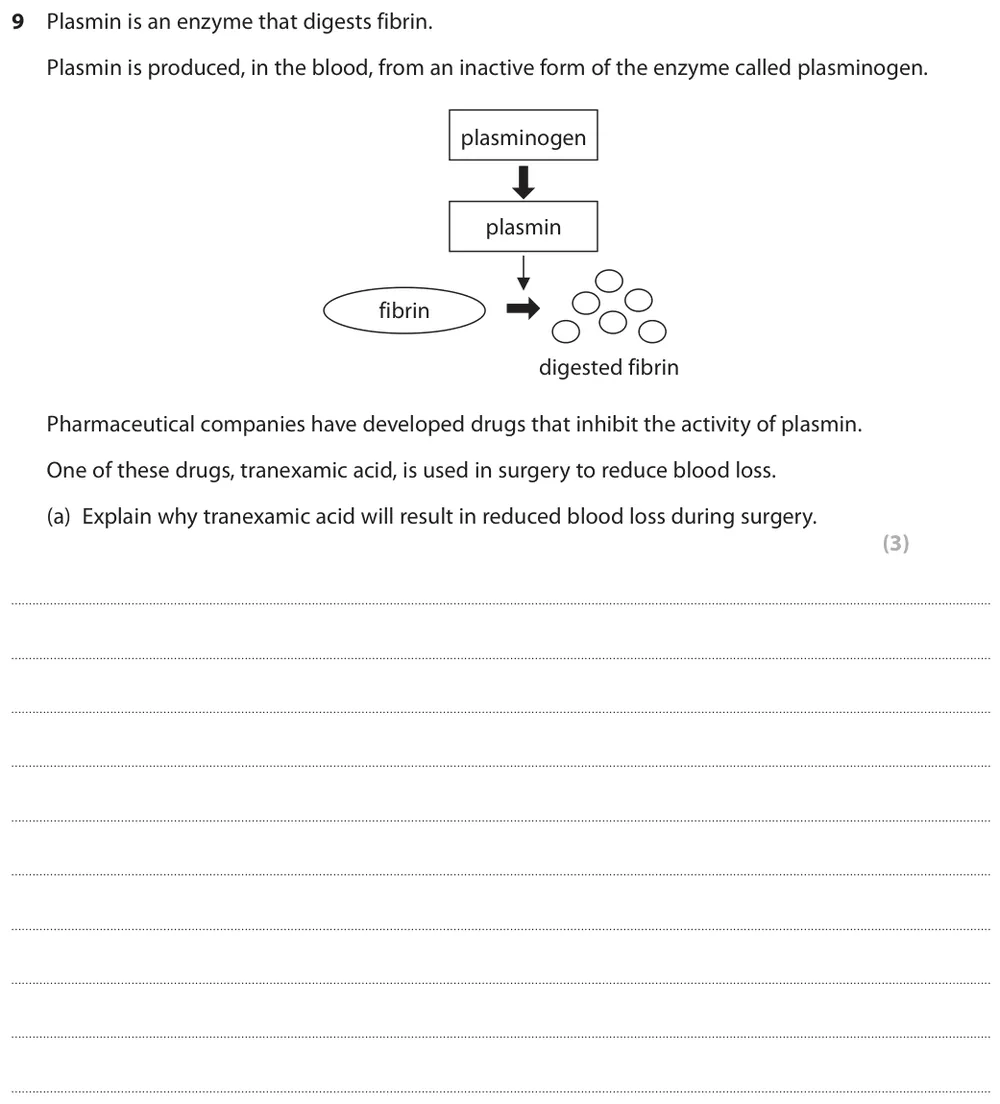
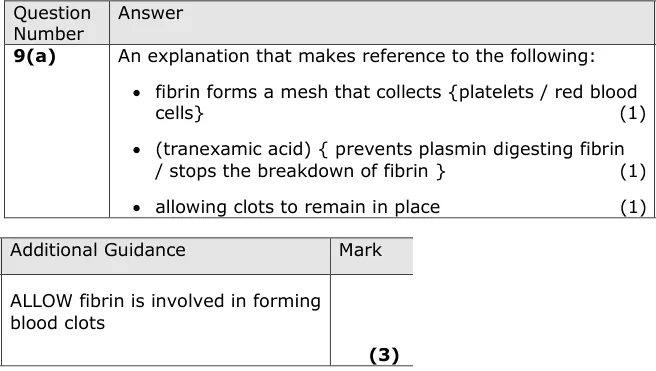
Explain why tranexamic acid, a plasmin inhibitor, reduces blood loss during surgery.
Show the mark scheme
Tap an image to open it full size.
From the examiners' report: Many described fibrin's role and the drug stopping fibrin breakdown, but very few said this lets clots stay in place. 'Allows clots to form' is not the same thing.
Question 15
A level Paper 2 · June 2023 · Q5(c) · 3 marks
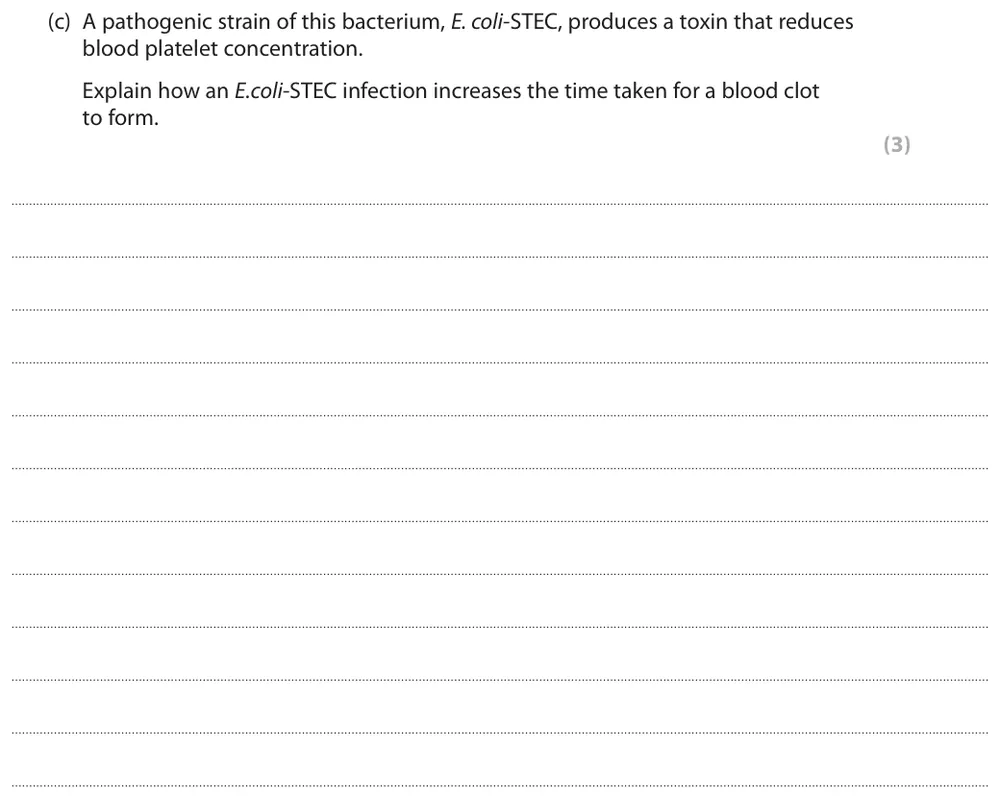
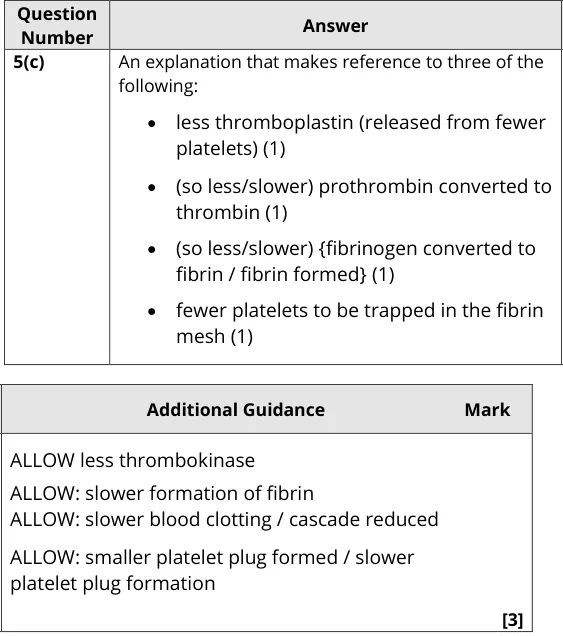
Explain how a toxin that lowers platelet concentration increases the time taken for a clot to form.
Show the mark scheme
Tap an image to open it full size.
From the examiners' report: A sizeable minority gave a general account of clotting. Start from fewer platelets and follow the cascade in order: less thromboplastin, so slower conversion of prothrombin to thrombin and of fibrinogen to fibrin.
Question 16
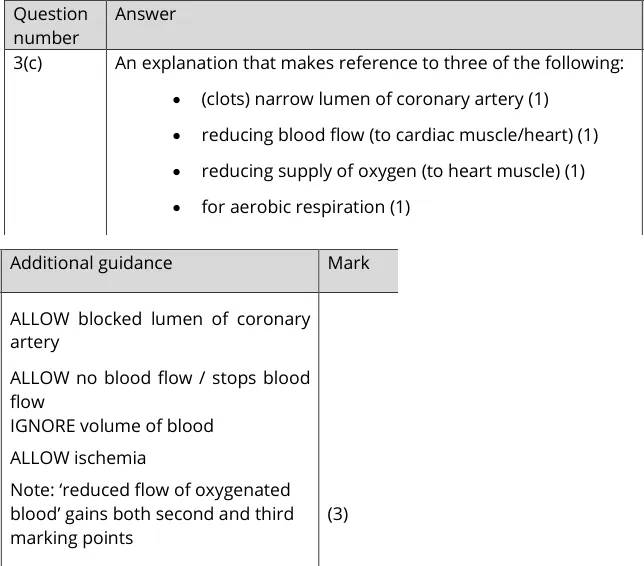
A level Paper 3 · June 2025 · Q3(c) · 3 marks · Easy
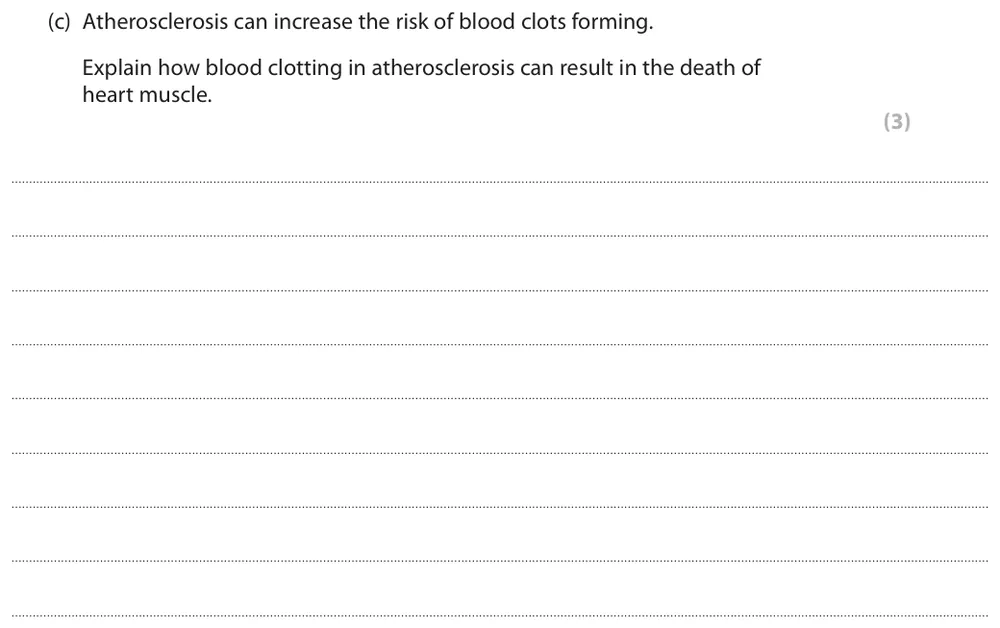
Explain how blood clotting in atherosclerosis can result in the death of heart muscle.
Show the mark scheme
Tap an image to open it full size.
From the examiners' report: Most scored full marks. Some described how the clot forms instead of its effect. Mention the lumen of the coronary artery, and say the oxygen is needed for aerobic respiration.
Benefits and risks of CVD treatments (1.18)
Question 17
AS Paper 1 · June 2018 · Q7(c) · 2 marks
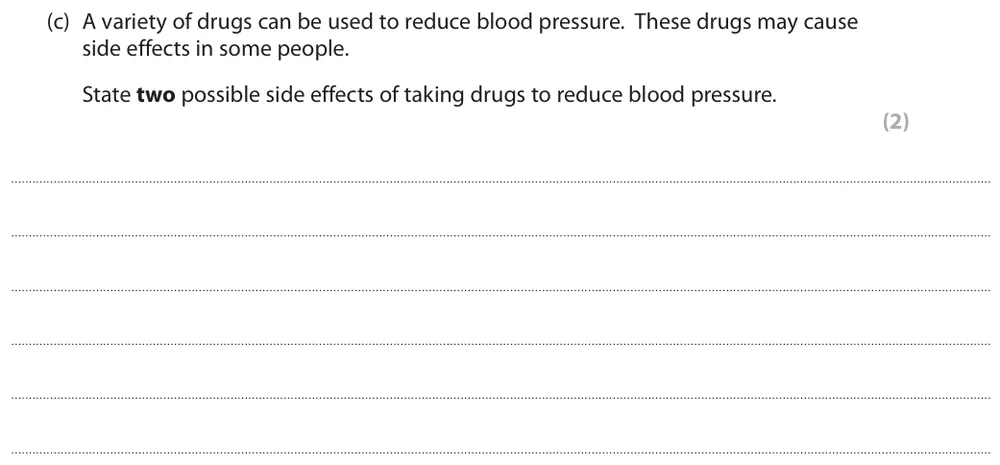
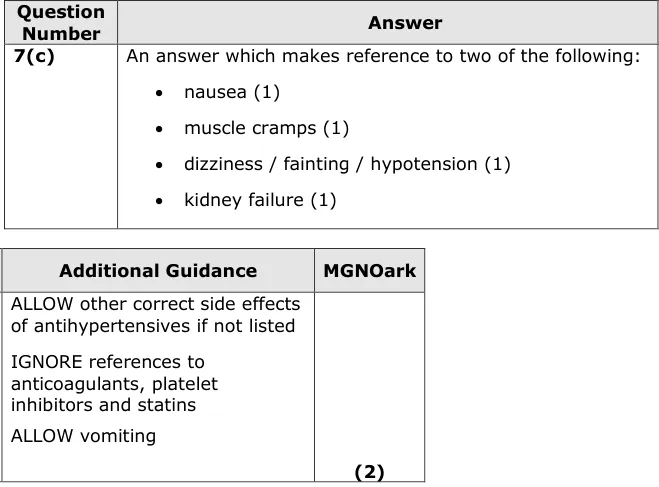
State two possible side effects of drugs that reduce blood pressure.
Show the mark scheme
Tap an image to open it full size.
From the examiners' report: These drugs are antihypertensives, so side effects of anticoagulants, platelet inhibitors and statins did not count. Give two, as asked; nausea and dizziness were the commonest correct answers.
Question 18
AS Paper 1 · June 2019 · Q8(c)(i) · 1 mark
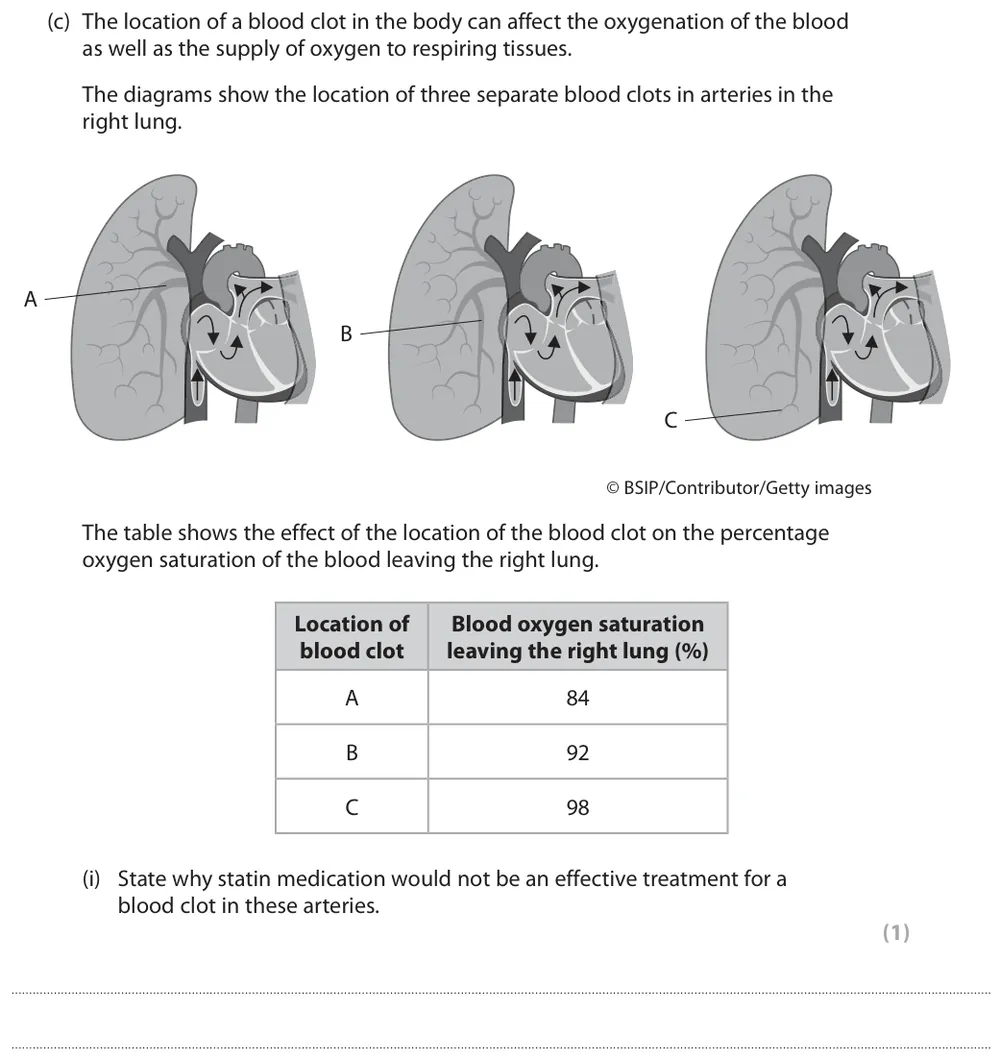
State why statins would not be an effective treatment for a blood clot in the lung arteries.
Show the mark scheme

Tap an image to open it full size.
From the examiners' report: Most said statins lower LDL or do not break down clots. 'Statins lower blood pressure' and 'statins cannot reach the clot' did not score.
Question 19
AS Paper 1 · June 2023 · Q5(c) · 3 marks
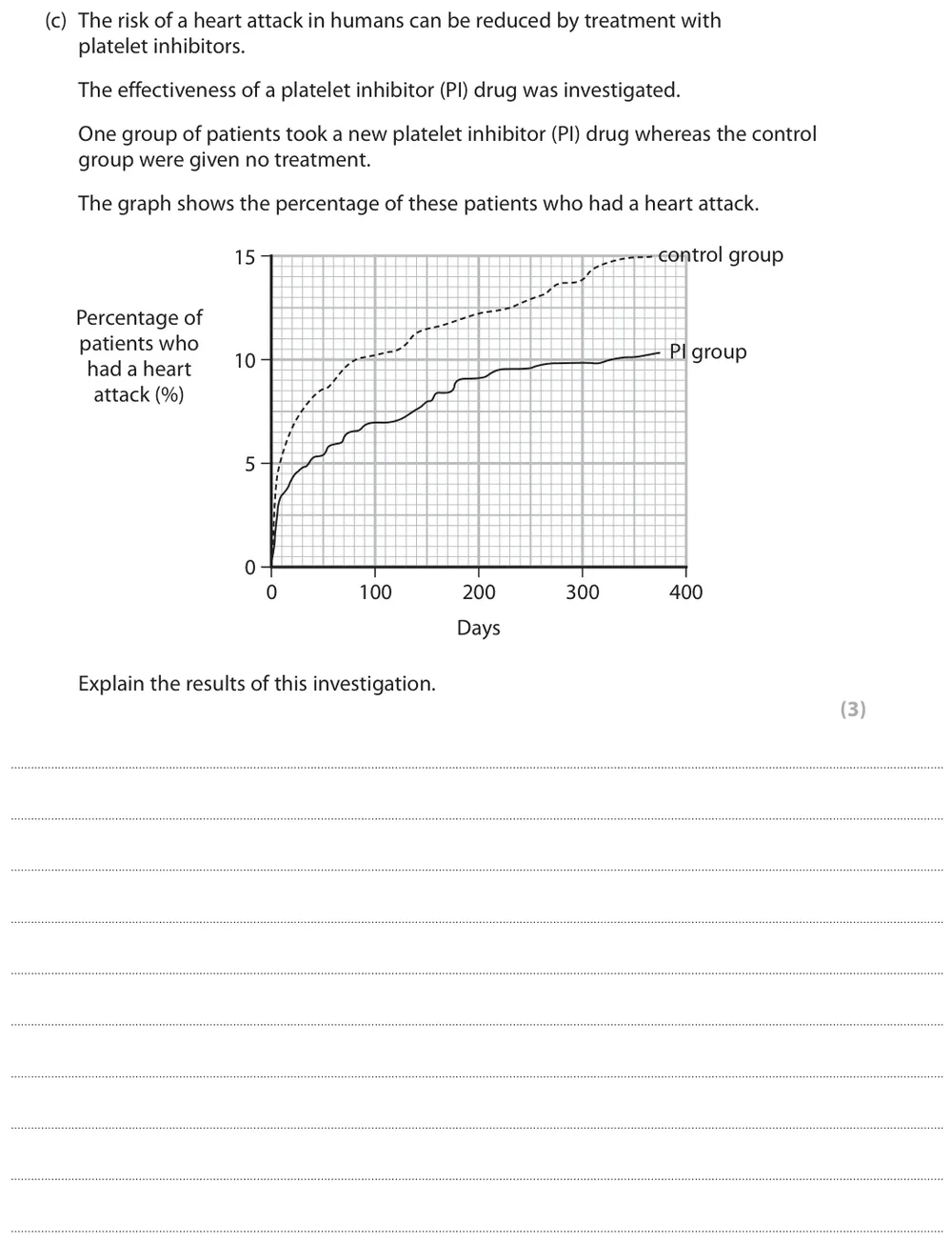
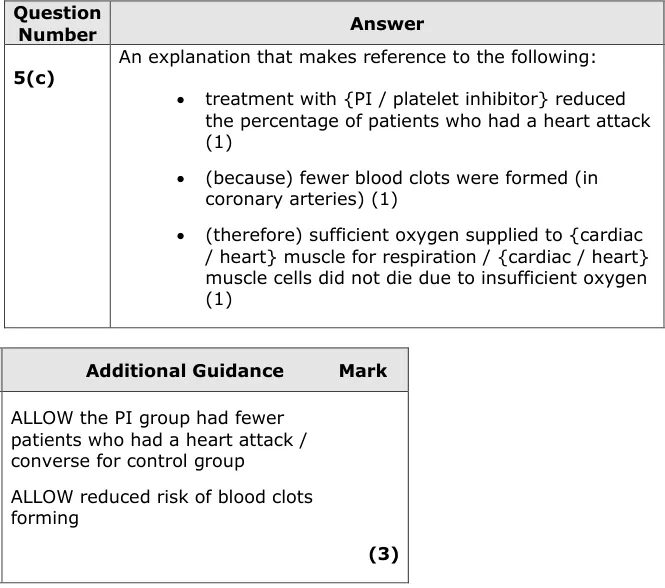
Explain the results of a trial of a platelet inhibitor drug.
Show the mark scheme
Tap an image to open it full size.
From the examiners' report: Nearly all said fewer patients in the PI group had a heart attack, and most linked this to fewer blood clots. The best answers explained the link: enough oxygen reaches the cardiac muscle for respiration.
Question 20
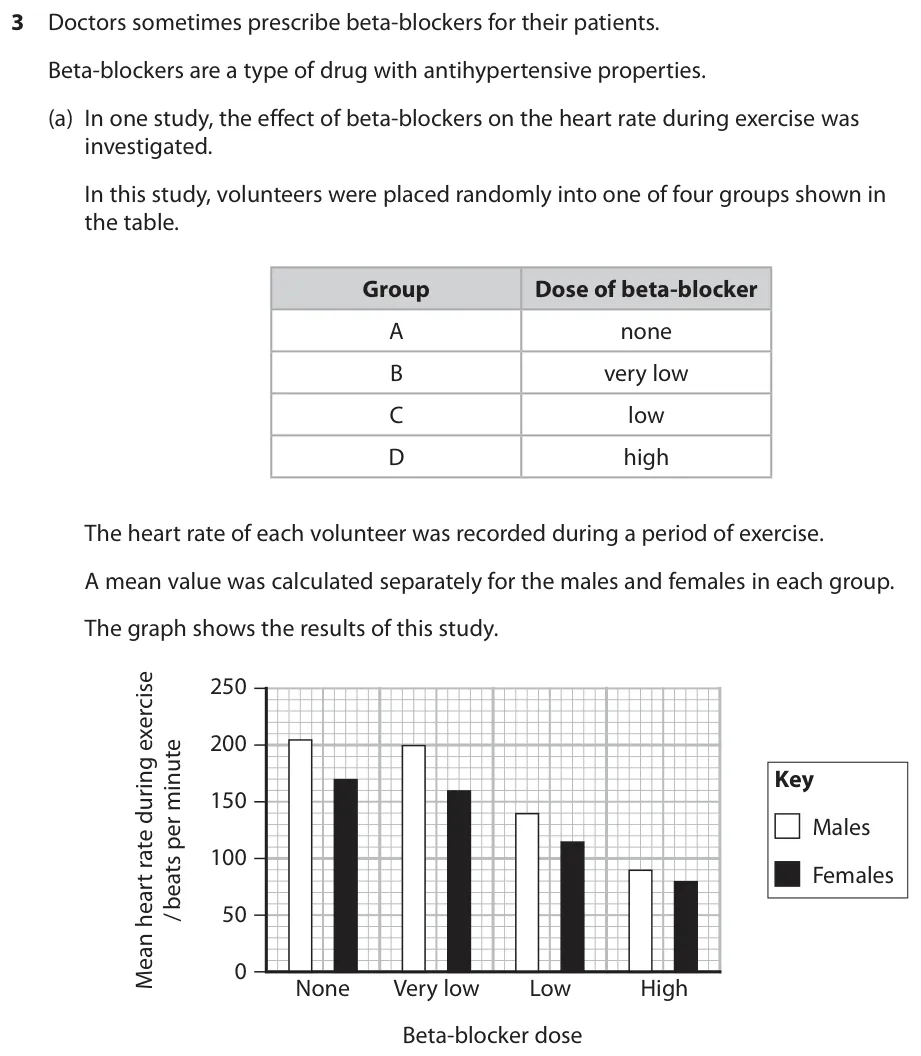
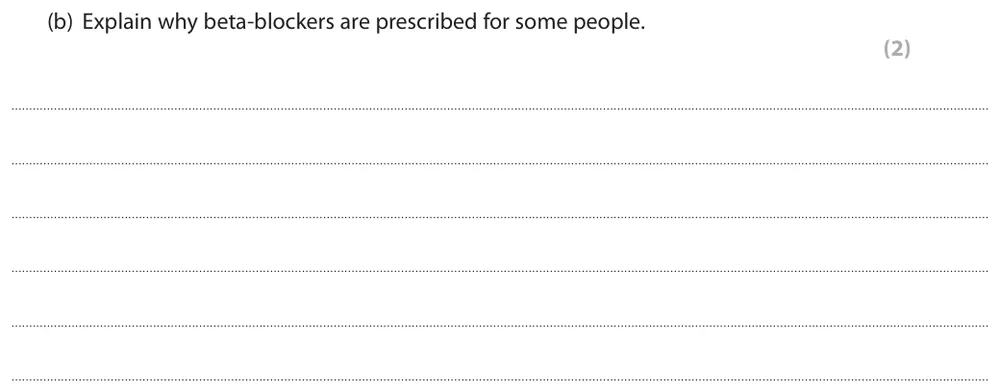
A level Paper 3 · November 2021 · Q3(b) · 2 marks
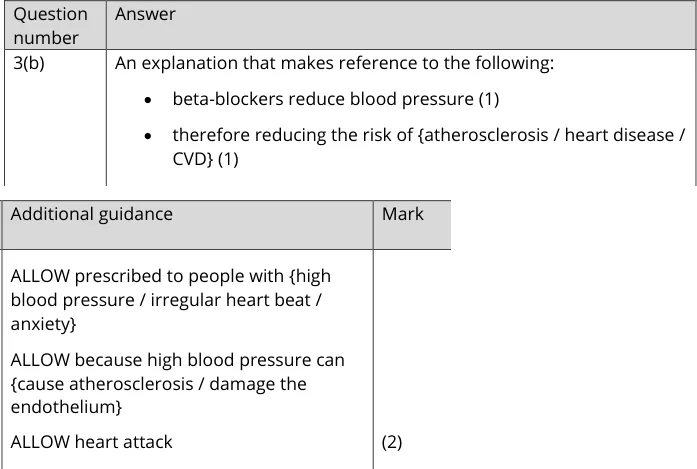
Explain why beta-blockers are prescribed for some people.
Information from earlier in this question:
Show the mark scheme
Tap an image to open it full size.
Where students lose marks (from Pearson examiners' reports and mark schemes)
Each point below comes from the examiners' reports and mark schemes, and is followed by wording that gained marks.
Endothelium of an artery, not a blood vessel. Many wrote 'endothelium' without linking it to an artery, or confused it with the epithelium.
✔ Gains credit: 'LDLs carry cholesterol in the blood; the cholesterol is deposited to form an atheroma in the endothelium of an artery.'
Say why the pressure goes up. Around a fifth just wrote 'high blood pressure', which was not enough because pressure in an artery is already high.
✔ Gains credit: 'Plaques narrow the lumen, increasing blood pressure further.'
Narrowed lumen, not constricted artery. Many said CVD makes blood flow faster because of high blood pressure, or that atheroma makes arteries constrict.
✔ Gains credit: 'Atheroma reduces the diameter of the lumen of arteries, therefore reducing the velocity of blood flow.'
More blood flow, and aerobic respiration. Some wrote that blood can flow, not that flow increases, and others wrote 'respiration' unqualified.
✔ Gains credit: 'Balloon angioplasty widens the lumen of the coronary artery, increasing blood flow, so oxygenated blood is supplied to cardiac muscle to allow aerobic respiration.'
Clotting starts with exposed collagen. The most common error was leaving out the first step of the cascade.
✔ Gains credit: 'Collagen is exposed when the wall of the blood vessel is damaged, leading to release of thromboplastin.'
Thrombin is an enzyme. Not all students stated that thrombin is an enzyme.
✔ Gains credit: 'Thrombin is an enzyme which catalyses the conversion of fibrinogen into fibrin; a mesh of fibrin traps platelets and red blood cells to form a clot.'
The clot stays in place. Very few saw that stopping fibrin breakdown keeps clots in place; 'allows clots to form' was not credited.
✔ Gains credit: 'Tranexamic acid stops the breakdown of fibrin, allowing clots to remain in place.'
Side effects of the drug named. Many gave side effects of anticoagulants, platelet inhibitors or statins, or listed more than the two asked for.
✔ Gains credit: 'Nausea; dizziness or fainting.'
Download the questions
Download the PDF pack (20 questions, mark schemes at the end)
Keep practising
- Heart and Circulation (Topic 1): Edexcel SNAB exam questions by topic
- Risk, Diet and Health Data (Topic 1): Edexcel SNAB exam questions by topic
- Carbohydrates and Lipids (Topic 1): Edexcel SNAB exam questions by topic
- Topic 1 multiple-choice quiz (50 questions, marked as you tap)
- Edexcel SNAB A level Biology resources hub (every topic, practical and paper)
- Caffeine and Daphnia Heart Rate (Core Practical 1): Edexcel SNAB A Level Biology Exam Questions
- Vitamin C and Membrane Permeability (Core Practicals 2 and 3): Edexcel SNAB A Level Biology Exam Questions
- Extended Response Questions (Topics 1 and 2): Edexcel SNAB A Level Biology Exam Questions
- Edexcel SNAB A level Biology past papers, mark schemes and examiners' reports
- Edexcel SNAB A level Biology grade boundaries
- Message Tom on WhatsApp about one-to-one Edexcel SNAB tutoring or an Edexcel group class
Questions, mark schemes and examiners' report extracts © Pearson Education Ltd.