

Respiration is the other half of Energy for Life. You need glycolysis and substrate-level phosphorylation, the link reaction and Krebs cycle, the roles of NAD and FAD in the electron transport chain, ATP yields, anaerobic respiration in animals and yeast, and how fats and proteins are used as respiratory substrates. Every question on this page is from the A level papers, mostly Component 1, with synoptic questions from Components 2 and 3.
The recall parts are usually well done. Marks are lost when you have to apply the pathways: why reduced FAD gives fewer ATP than reduced NAD, why isolated mitochondria need pyruvate rather than glucose, or why a respirometer reading doesn't change. The examiners' reports also ask you to use the diagram you're given when counting ATP, and to say why anaerobic respiration matters, such as regenerating NAD so glycolysis can continue.
I don't teach the Eduqas specification myself, so for one-to-one help I recommend Sam. He teaches Eduqas A level Biology at a top-rated sixth form college and is very popular with his students. You can ask about lessons with Sam on WhatsApp using the link at the bottom of this page.
What you need from GCSE and Year 12
Each question on this page assumes you're secure on these ideas. If any of them feels shaky, look it up before you start.
- Aerobic respiration: glucose + oxygen → carbon dioxide + water, releasing energy.
- Anaerobic respiration in muscles makes lactic acid; in yeast it makes ethanol and carbon dioxide.
- Aerobic respiration releases much more energy per glucose than anaerobic respiration.
- ATP is made by chemiosmosis when protons flow through ATP synthetase (topic 1.1).
Key terms
These words come up in the questions and mark schemes. Examiners expect you to use them exactly.
- Glycolysis: the splitting of glucose into two pyruvate in the cytoplasm, with a net gain of 2 ATP.
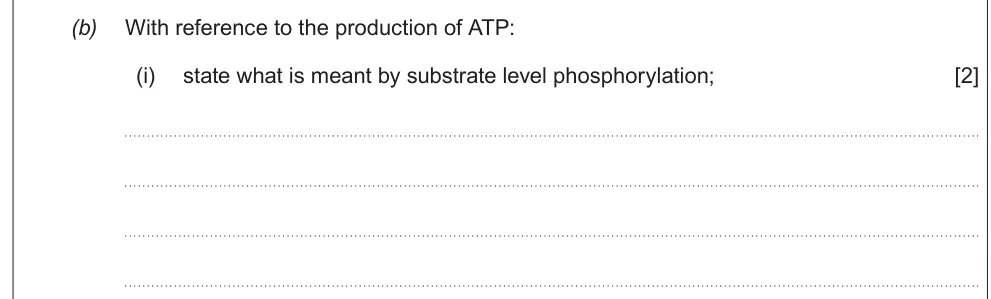
- Substrate-level phosphorylation: making ATP directly from a reaction, transferring a phosphate to ADP.
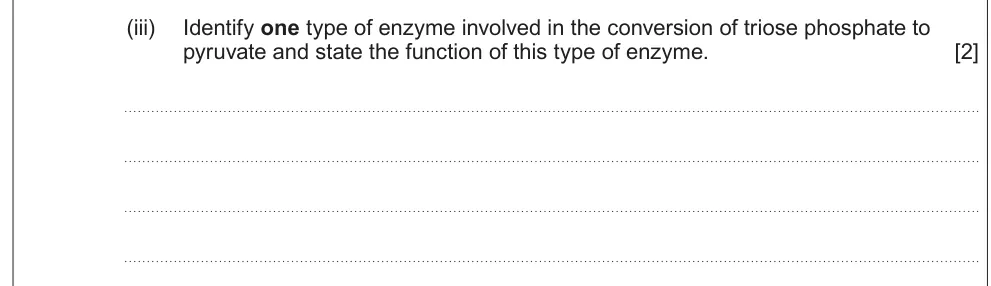
- Dehydrogenase: an enzyme that removes hydrogen from a substrate, oxidising it and reducing NAD or FAD.
- Link reaction: pyruvate is decarboxylated and dehydrogenated to acetyl CoA in the matrix.
- Krebs cycle: the cycle in the matrix that releases CO₂ and makes reduced NAD, reduced FAD and ATP.
- Oxidative phosphorylation: making ATP using energy from electrons passing along the electron transport chain.
- Deamination: removal of the amino group from an amino acid, in the liver.
- Respiratory quotient: volume of CO₂ released ÷ volume of O₂ taken in; 1.0 for glucose.
What these questions cover (Eduqas 1.3)
The questions test these statements from Component 1 (Energy for Life) of the Eduqas A level Biology specification (A400). Component 1 content is examined in A level Component 1.
- (b) glycolysis as a source of triose phosphate, pyruvate, ATP and reduced NAD and resulting in the formation of acetyl Coenzyme A (the names of intermediates are not required
- (c) the Krebs cycle as a means of liberating energy from carbon-carbon bonds to produce ATP and reduced NAD with release of carbon dioxide
- (d) the role of reduced NAD and FAD as a sources of electrons and protons for the electron transport system
- (e) the energy budget of the breakdown of glucose under aerobic and anaerobic conditions
- (f) how lipids and amino acids are used in respiration
How to use this page
Write your answer on paper before you open the mark scheme. Allow about 1.2 minutes per mark: the 20 questions are worth 43 marks, so about 52 minutes in total. Then mark your answer strictly against the mark scheme and read the examiners' tip underneath it. If you'd rather print the questions, download the PDF pack.
Glycolysis
Question 1
A level Component 1 · Autumn 2020 · Q3(b)(i) · 2 marks
State what is meant by substrate-level phosphorylation.
Show the mark scheme

Tap an image to open it full size.
From the examiners' report: Most students couldn't explain this term: the energy comes directly from a reaction that breaks down a substrate, and is used to join ADP and Pi.
Question 2
A level Component 1 · June 2023 · Q3(b)(i) · 1 mark
Name the process by which ATP is made directly in glycolysis.

Show the mark scheme

Tap an image to open it full size.
Question 3
A level Component 1 · June 2023 · Q3(b)(iii) · 2 marks
Name the type of enzyme that converts triose phosphate to pyruvate, and its function.
Show the mark scheme

Tap an image to open it full size.
From the examiners' report: The report reminds you that oxidising XH to X means removing hydrogen: a dehydrogenase removes hydrogen and oxidises triose phosphate.
Question 4
A level Component 1 · June 2023 · Q3(b)(iv) · 1 mark
Describe what happens to pyruvate in animal cells under anaerobic conditions.

Show the mark scheme

Tap an image to open it full size.
Question 5
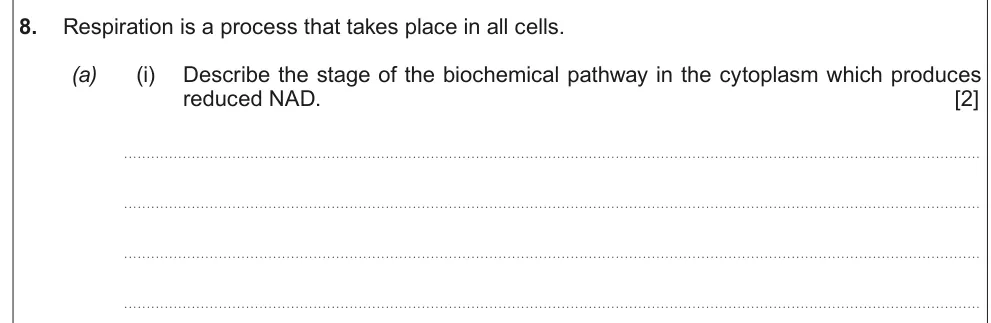
A level Component 1 · June 2017 · Q8(a)(i) · 2 marks
Name the stage in the cytoplasm that produces reduced NAD.
Show the mark scheme

Tap an image to open it full size.
From the examiners' report: The recall was good: glycolysis is generally well learned. The link reaction and Krebs cycle happen in the mitochondria, not the cytoplasm.
Question 6
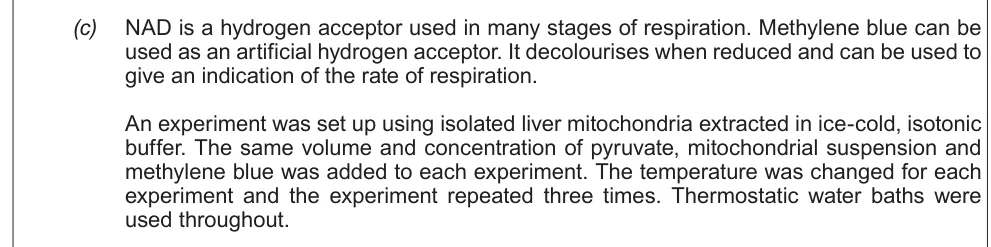
A level Component 1 · June 2019 · Q4(c)(ii) · 2 marks
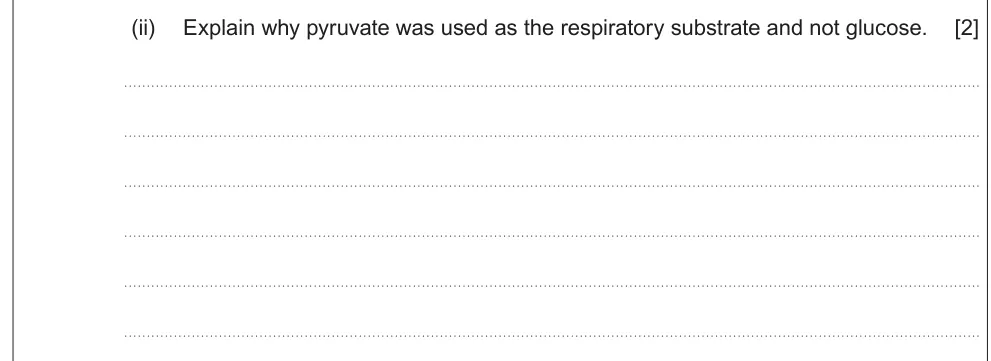
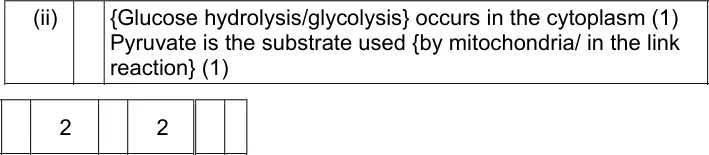
Explain why pyruvate, not glucose, was the substrate for isolated mitochondria.
Information from earlier in this question:
Show the mark scheme
Tap an image to open it full size.
From the examiners' report: Many answered why glucose wasn't used instead. Only the best said isolated mitochondria have no cytoplasm, so no glycolysis enzymes, and pyruvate is the substrate for the link reaction.
The electron transport chain
Question 7
A level Component 1 · June 2022 · Q2(a)(iii) · 4 marks
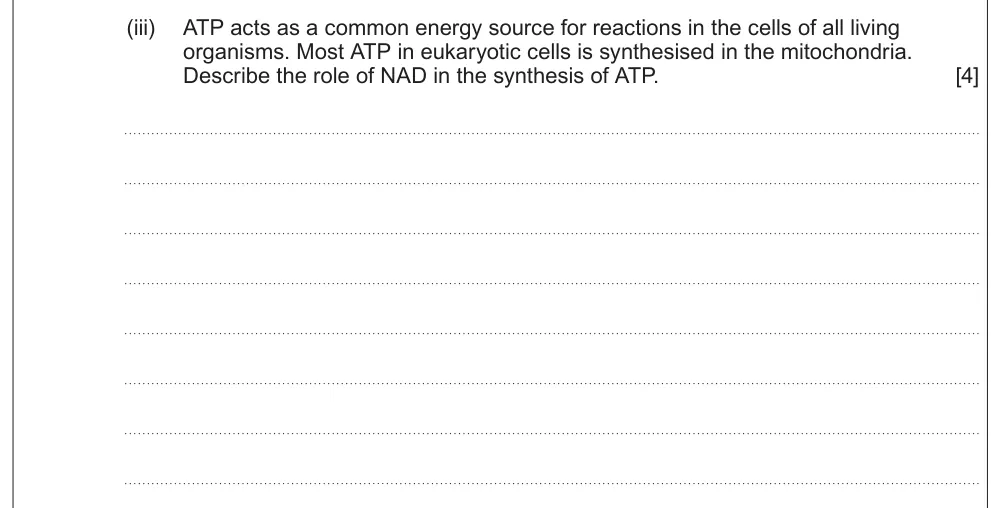
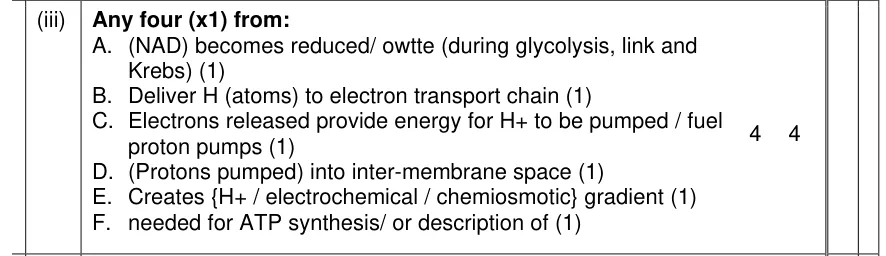
Describe the role of NAD in making ATP.
Show the mark scheme
Tap an image to open it full size.
From the examiners' report: There were many excellent, clear answers: reduced NAD delivers hydrogen to the chain, the electrons power proton pumps, and a proton gradient drives ATP synthase.
Question 8
A level Component 1 · June 2017 · Q8(a)(ii) · 2 marks
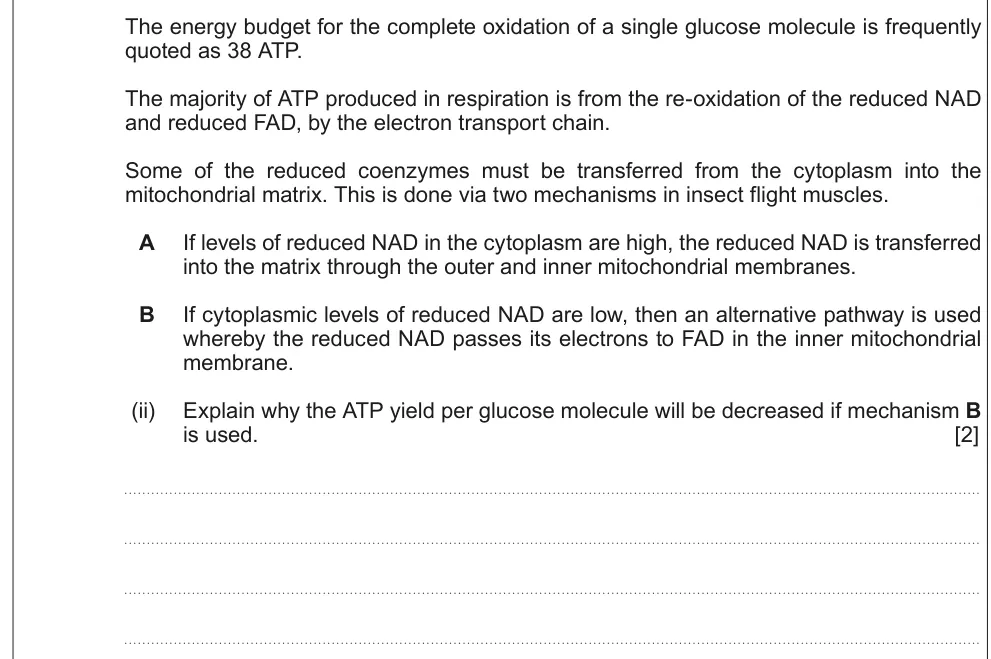
Explain why using reduced FAD lowers the ATP yield per glucose.
Show the mark scheme

Tap an image to open it full size.
From the examiners' report: Less well done. Many couldn't explain the difference: reduced FAD passes electrons in at the second proton pump, so only 2 ATP are made rather than 3.
Question 9
A level Component 1 · June 2017 · Q8(a)(iii) · 2 marks
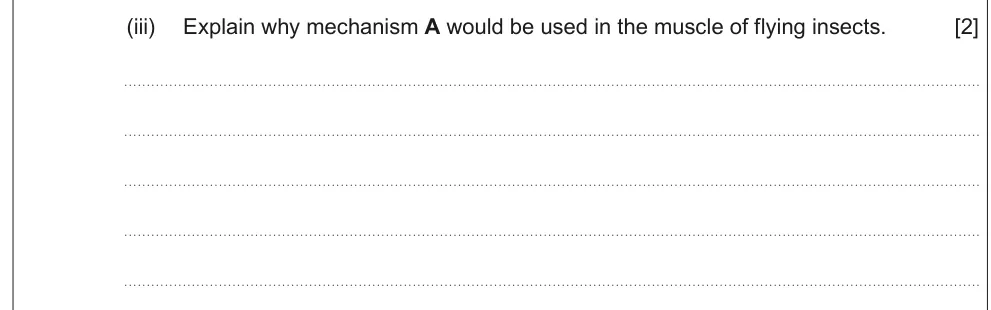
Explain why flight muscle uses the mechanism with the higher yield.
Show the mark scheme

Tap an image to open it full size.
From the examiners' report: Apply the chain to the example: flight muscle needs a lot of ATP, so it uses the route giving 3 ATP per reduced NAD. Many didn't even try to work it out.
Question 10
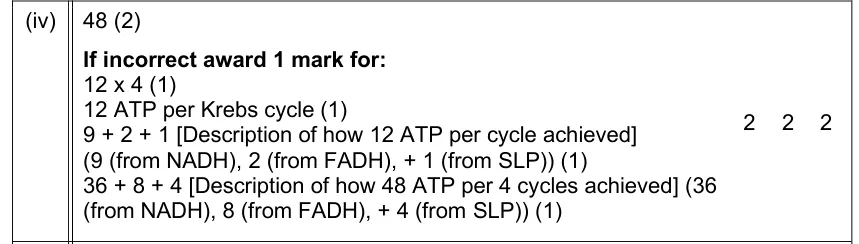
A level Component 1 · June 2025 · Q5(a)(iv) · 2 marks
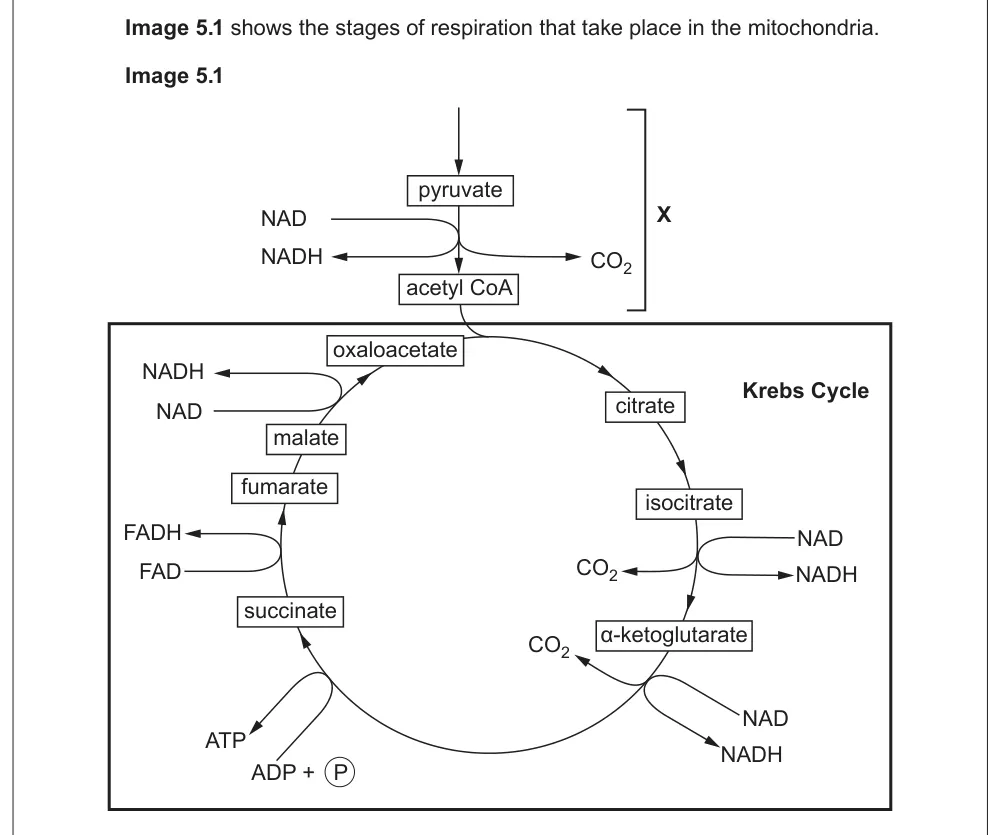
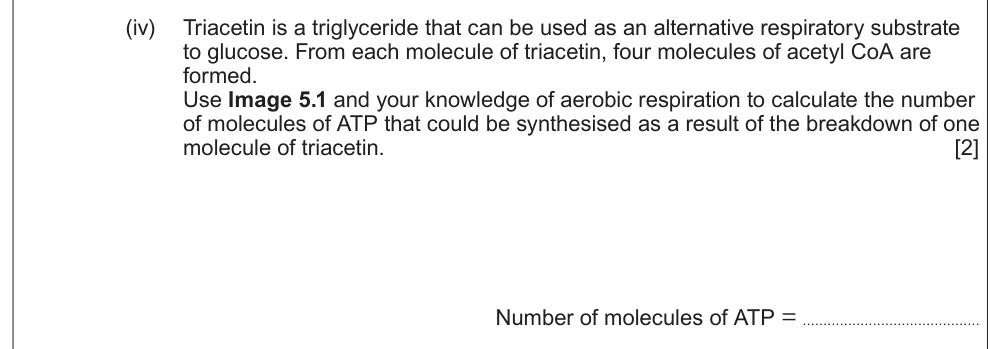
Calculate the ATP yield from a molecule of triacetin.
Information from earlier in this question:
Show the mark scheme
Tap an image to open it full size.
From the examiners' report: This was one of the hardest parts. Use the Krebs cycle diagram you are given: 12 ATP per turn × 4 turns = 48.
Question 11
A level Component 1 · June 2022 · Q4(a)(ii) · 1 mark · Hard
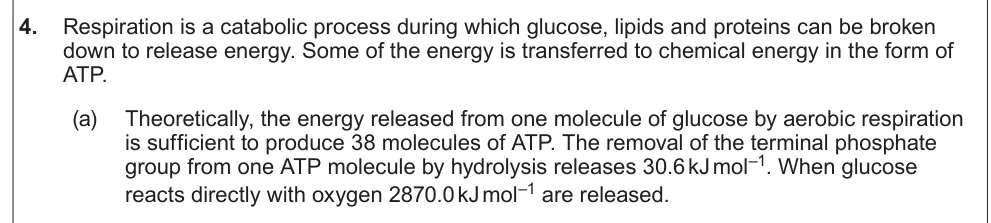
State what happens to energy not used to make ATP.
Information from earlier in this question:

Show the mark scheme

Tap an image to open it full size.
From the examiners' report: Students correctly said it is lost as heat.
Question 12
A level Component 3 · June 2019 · Q6(c)(i) · 2 marks
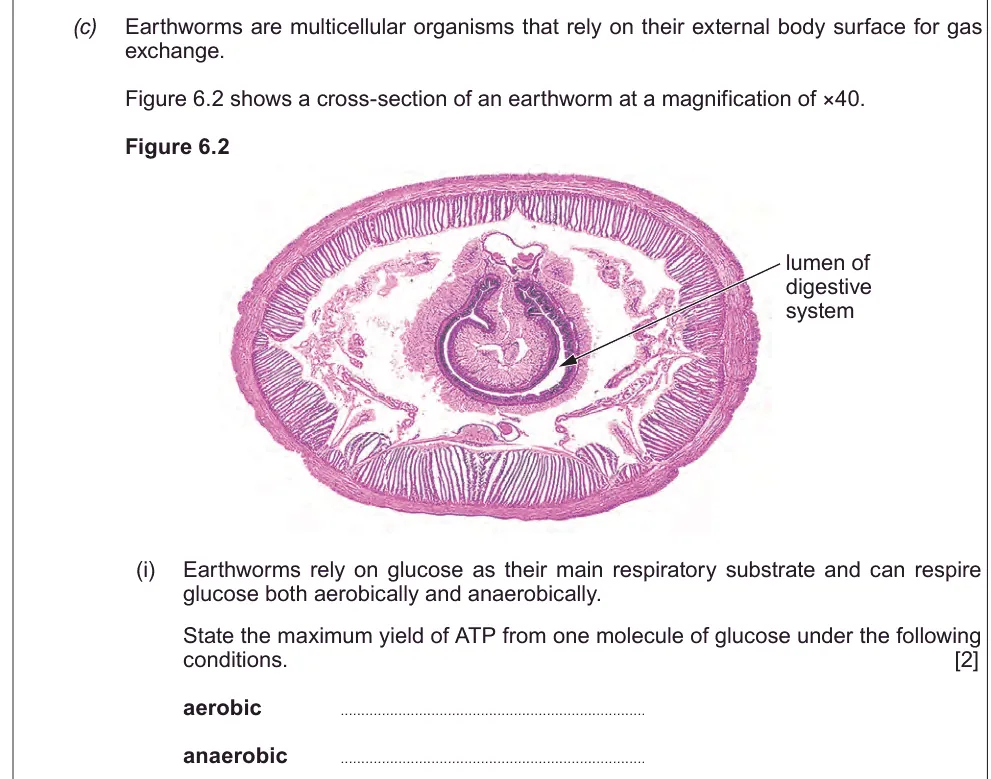
State the ATP yield from aerobic and anaerobic respiration.
Show the mark scheme

Tap an image to open it full size.
From the examiners' report: Recalling the yields was harder than expected: about 38 (32–38 accepted) aerobic and 2 anaerobic.
Investigating respiration
Question 13
A level Component 1 · Autumn 2020 · Q6(b) · 2 marks
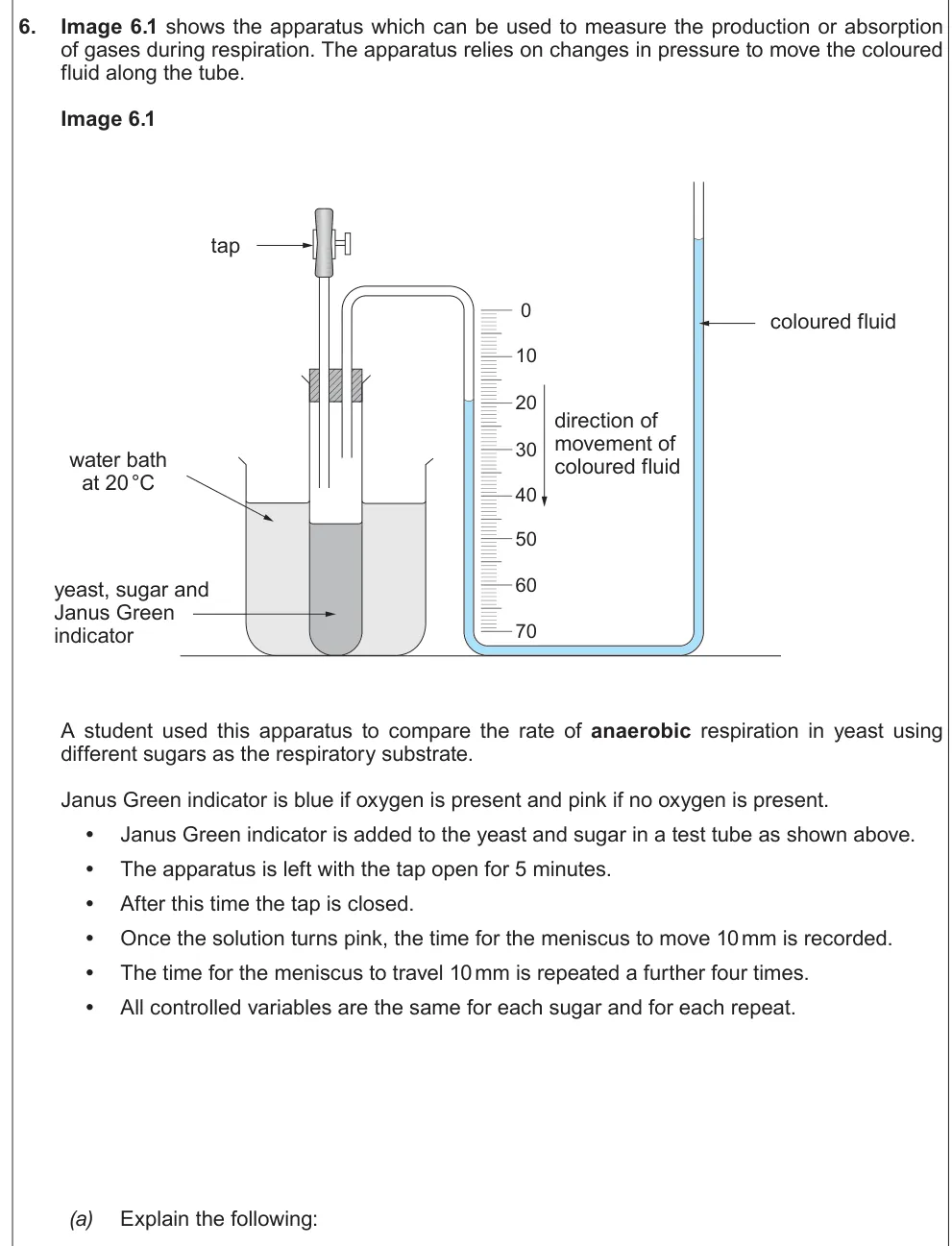
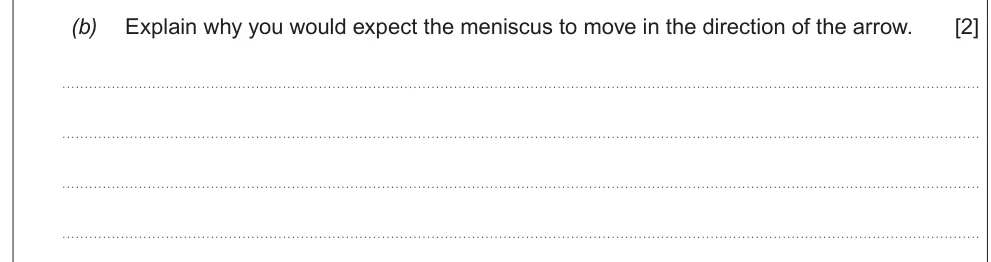
Explain why a respirometer meniscus moves in the direction shown.
Information from earlier in this question:
Show the mark scheme

Tap an image to open it full size.
From the examiners' report: Most students correctly said CO₂ levels go up and the pressure increases.
Question 14
A level Component 1 · Autumn 2020 · Q6(f) · 2 marks · Hard
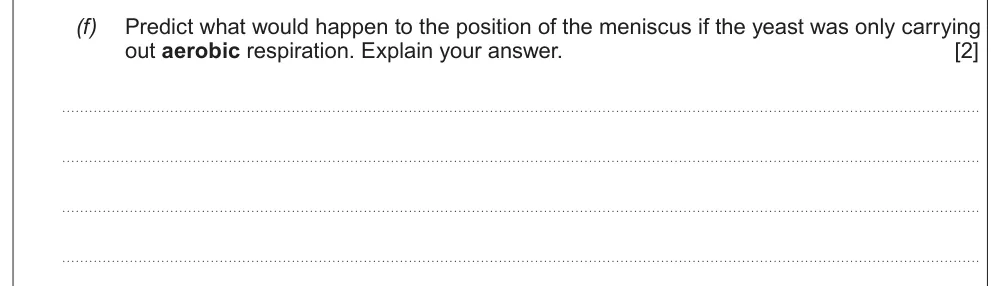
Predict the meniscus movement if yeast respired only aerobically.
Show the mark scheme

Tap an image to open it full size.
From the examiners' report: A correct answer was rare. Aerobic respiration uses as much oxygen as it releases CO₂, so there is no change in gas volume and the meniscus doesn't move.
Anaerobic respiration
Question 15
A level Component 1 · Autumn 2021 · Q6(a)(ii) · 3 marks
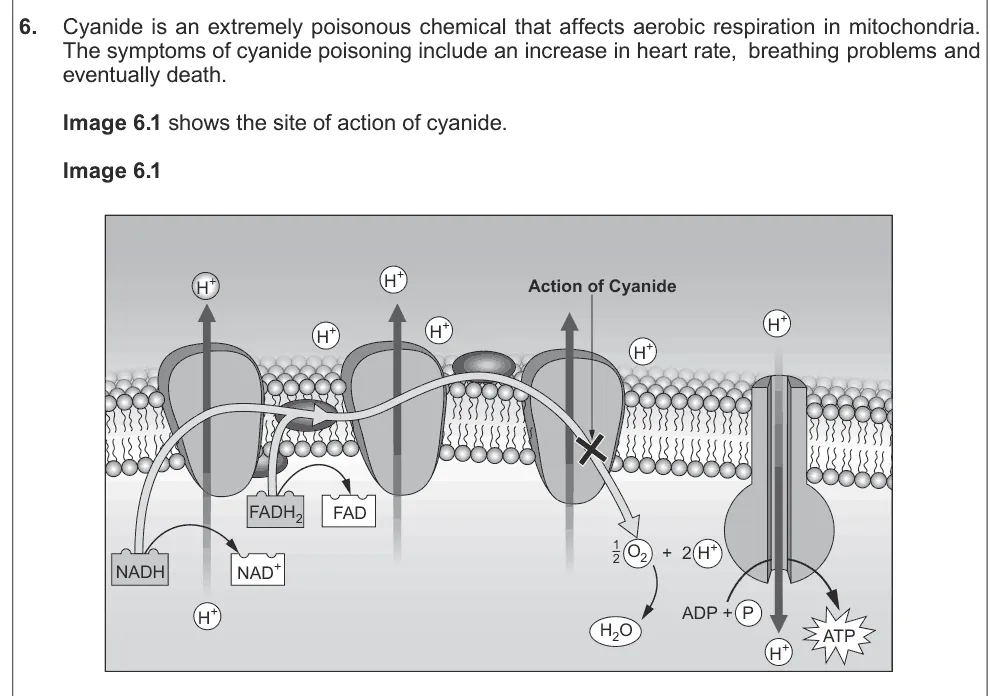
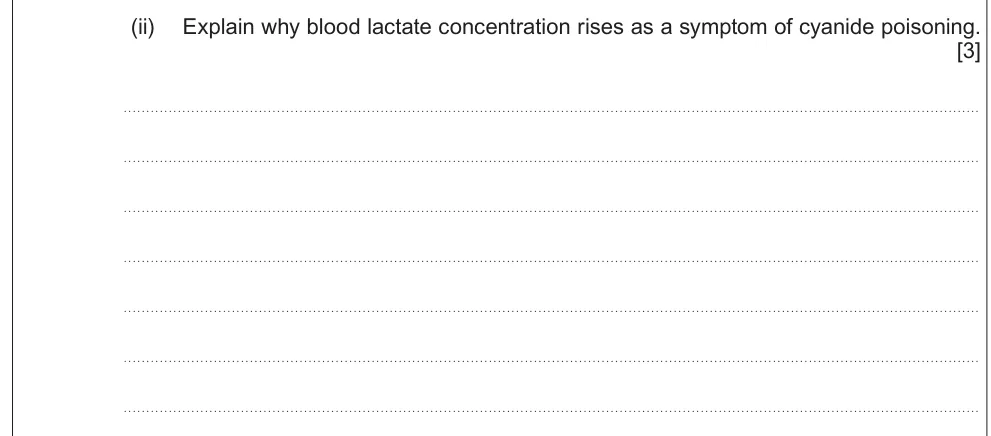
Explain why blood lactate rises in cyanide poisoning.
Information from earlier in this question:
Show the mark scheme

Tap an image to open it full size.
From the examiners' report: Knowledge of anaerobic respiration was poor. Pyruvate is reduced to lactate to regenerate NAD, so glycolysis can carry on making ATP.
Question 16
A level Component 1 · June 2024 · Q3(a)(iii)I · 2 marks
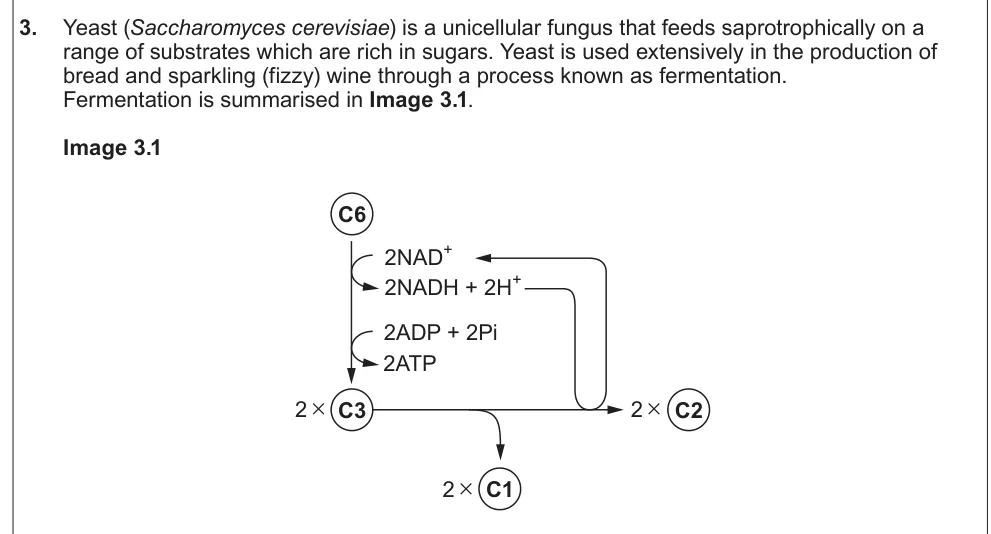
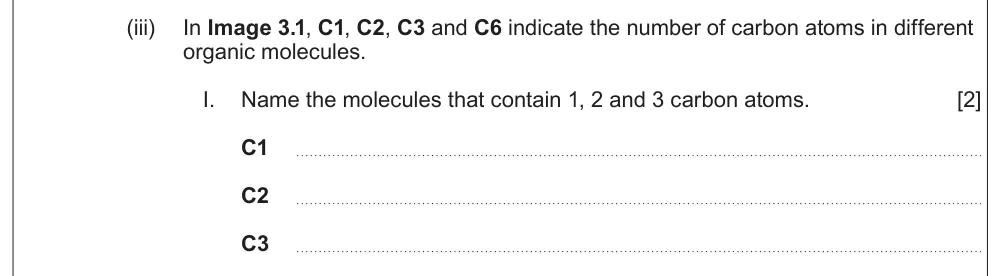
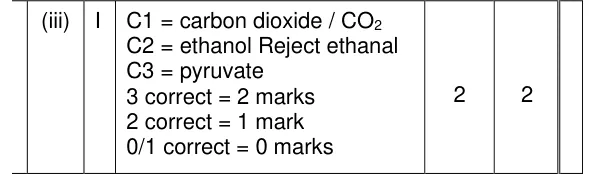
Name the molecules with 1, 2 and 3 carbon atoms in a diagram of fermentation.
Information from earlier in this question:
Show the mark scheme
Tap an image to open it full size.
From the examiners' report: A surprising number couldn't name them: carbon dioxide, ethanol and pyruvate. Ethanal is rejected.
Question 17
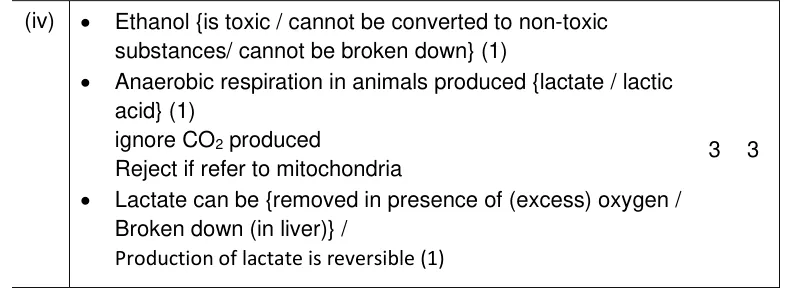
A level Component 1 · June 2024 · Q3(a)(iv) · 3 marks
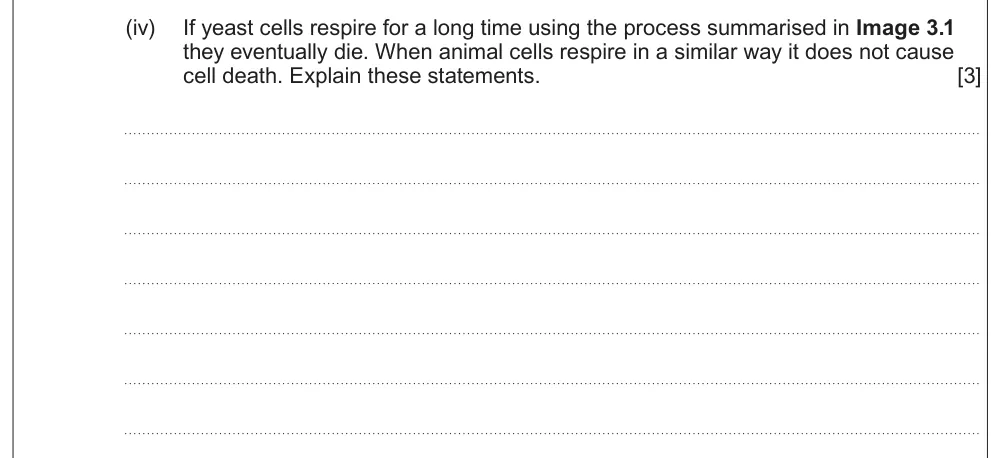
Explain why ethanol kills yeast cells but lactate doesn't kill animal cells.
Show the mark scheme
Tap an image to open it full size.
Question 18
A level Component 2 · June 2019 · Q6(b) · 3 marks
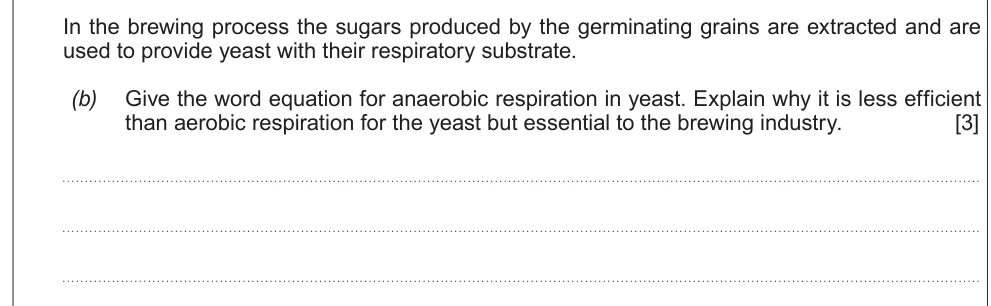
Explain why fermentation is less efficient for yeast but essential to brewing.
Show the mark scheme

Tap an image to open it full size.
From the examiners' report: One of the least well answered parts. Give the word equation, say less ATP is released, and say why it matters: ethanol is the product brewers need.
Other respiratory substrates
Question 19
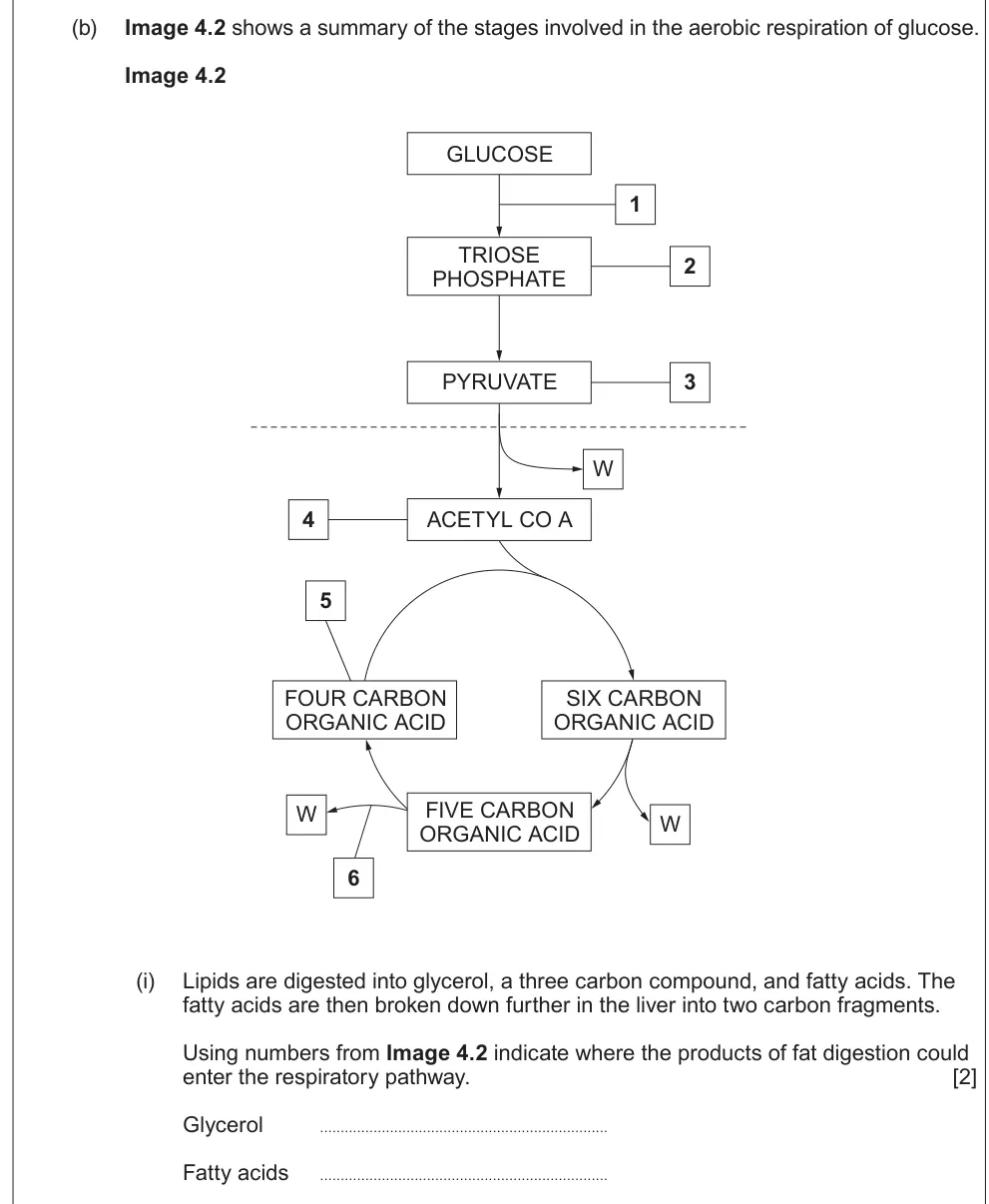
A level Component 1 · June 2022 · Q4(b)(i) · 2 marks
Identify where the products of fat digestion enter the respiratory pathway.
Show the mark scheme

Tap an image to open it full size.
From the examiners' report: Most students identified where glycerol and fatty acids enter.
Question 20
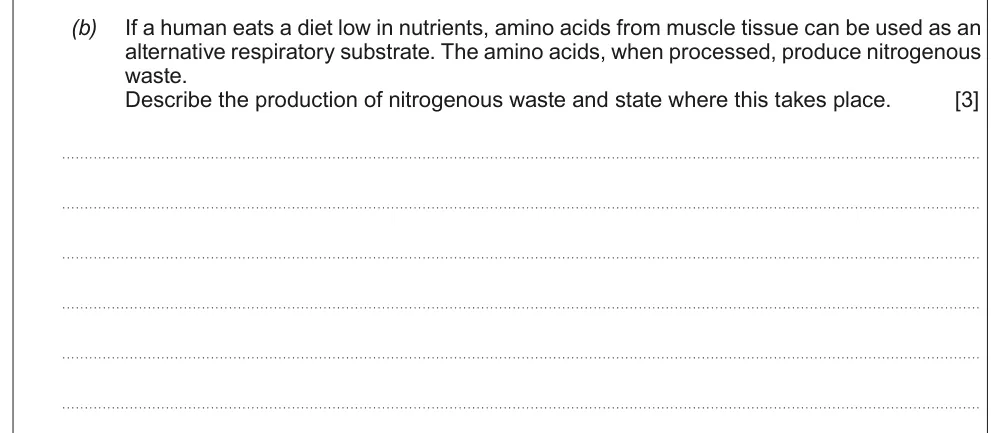
A level Component 1 · June 2017 · Q8(b) · 3 marks
Describe how nitrogenous waste is produced and where.
Show the mark scheme

Tap an image to open it full size.
From the examiners' report: Amino acid metabolism is generally well learned: deamination, then the amino group is combined with CO₂ to make urea, in the liver.
Where students lose marks (from Eduqas examiners' reports and mark schemes)
Each point below is followed by wording that gained marks.
Define the term exactly: Most students couldn't explain substrate-level phosphorylation.
✔ Gains credit: "Energy is derived directly from a reaction / break down of substrate" "to combine ADP and Pi".
Answer the question asked: Many explained why glucose wasn't used instead of why pyruvate was.
✔ Gains credit: "Pyruvate is the substrate used by mitochondria / in the link reaction".
FAD skips a pump: Many couldn't explain why the two routes give different ATP yields.
✔ Gains credit: Reduced FAD "only uses two proton pumps" so "only 2 ATP are produced".
Use the diagram you're given: Students didn't use the Krebs cycle diagram, so used the wrong numbers.
✔ Gains credit: "12 ATP per Krebs cycle" × 4 = "48".
Equal gas volumes, no movement: Very few saw that aerobic respiration uses as much O₂ as the CO₂ it releases.
✔ Gains credit: "Equal volumes of carbon dioxide produced as oxygen used / no net change in volume".
Lactate regenerates NAD: Knowledge of anaerobic respiration was poor.
✔ Gains credit: "H given to pyruvate to make lactate" "so that NAD regenerated".
Say why it matters: The mark most often lost was the importance of fermentation to brewing.
✔ Gains credit: "Alcohol / ethanol is needed for beer / alcoholic drinks".
Download the questions
Download the PDF pack (20 questions, mark schemes at the end)
Keep practising
- Importance of ATP (1.1): Eduqas A Level Biology exam questions by topic
- Photosynthesis (1.2): Eduqas A Level Biology exam questions by topic
- Microbiology (1.4): Eduqas A Level Biology exam questions by topic
- Populations and Ecosystems (1.5): Eduqas A Level Biology exam questions by topic
- Human Impact on the Environment (1.6): Eduqas A Level Biology exam questions by topic
- Eduqas A level Biology past papers, mark schemes and examiners' reports
- Eduqas A level Biology grade boundaries
- Ask about Eduqas A level Biology lessons with Sam on WhatsApp
Questions, mark schemes and examiners' report extracts © WJEC CBAC Ltd (Eduqas).