

Human impact on the environment is the last topic of Component 1. It covers why species become endangered, conserving gene pools in the wild and in captivity, the conflict between farming or fishing and conservation, sustainability, decisions based on sound science, and planetary boundaries. Every question on this page is from the A level papers, mostly Component 1, with a few synoptic questions from Components 2 and 3.
These questions are usually set in an unfamiliar context: beavers, red kites, cod, avocado plantations, apple orchards. The examiners' reports say the answers are often in the stem, but marks are lost through vague wording and through not applying the idea to the organism in the question. Use correct terms, give detail, and link climate change to the specific effect described.
I don't teach the Eduqas specification myself, so for one-to-one help I recommend Sam. He teaches Eduqas A level Biology at a top-rated sixth form college and is very popular with his students. You can ask about lessons with Sam on WhatsApp using the link at the bottom of this page.
What you need from GCSE and Year 12
Each question on this page assumes you're secure on these ideas. If any of them feels shaky, look it up before you start.
- Biodiversity is the variety of species, genes and habitats in an area.
- Habitat loss, pollution, hunting and introduced species reduce biodiversity.
- Burning fossil fuels and deforestation raise carbon dioxide levels and contribute to climate change.
- Populations grow when birth and immigration exceed death and emigration.
Key terms
These words come up in the questions and mark schemes. Examiners expect you to use them exactly.
- Endangered species: a species at serious risk of extinction.
- Gene pool: all the alleles in a population; conserving it keeps genetic diversity.
- SSSI: a Site of Special Scientific Interest, protected from development or other damage.
- Reintroduction: releasing a species back into an area where it once lived.
- Fishing quota: a legal limit on the mass of fish that can be caught.
- Sustainability: meeting today's needs without reducing resources for the future.
- Planetary boundary: a safe limit for a global process; crossing it risks irreversible or abrupt environmental change.
What these questions cover (Eduqas 1.6)
The questions test these statements from Component 1 (Energy for Life) of the Eduqas A level Biology specification (A400). Component 1 content is examined in A level Component 1.
- (a) the reasons for species becoming endangered and causes of extinction
- (b) how gene pools are conserved in the wild and in captivity
- (c) the issues in agricultural exploitation - conflicts between production and conservation and possible means to resolve such conflicts as illustrated by deforestation and o
- (e) the need for political decision making to be informed by knowledge based on sound scientific principles
- (f) the concept of planetary boundaries
How to use this page
Write your answer on paper before you open the mark scheme. Allow about 1.2 minutes per mark: the 18 questions are worth 37 marks, so about 44 minutes in total. Then mark your answer strictly against the mark scheme and read the examiners' tip underneath it. If you'd rather print the questions, download the PDF pack.
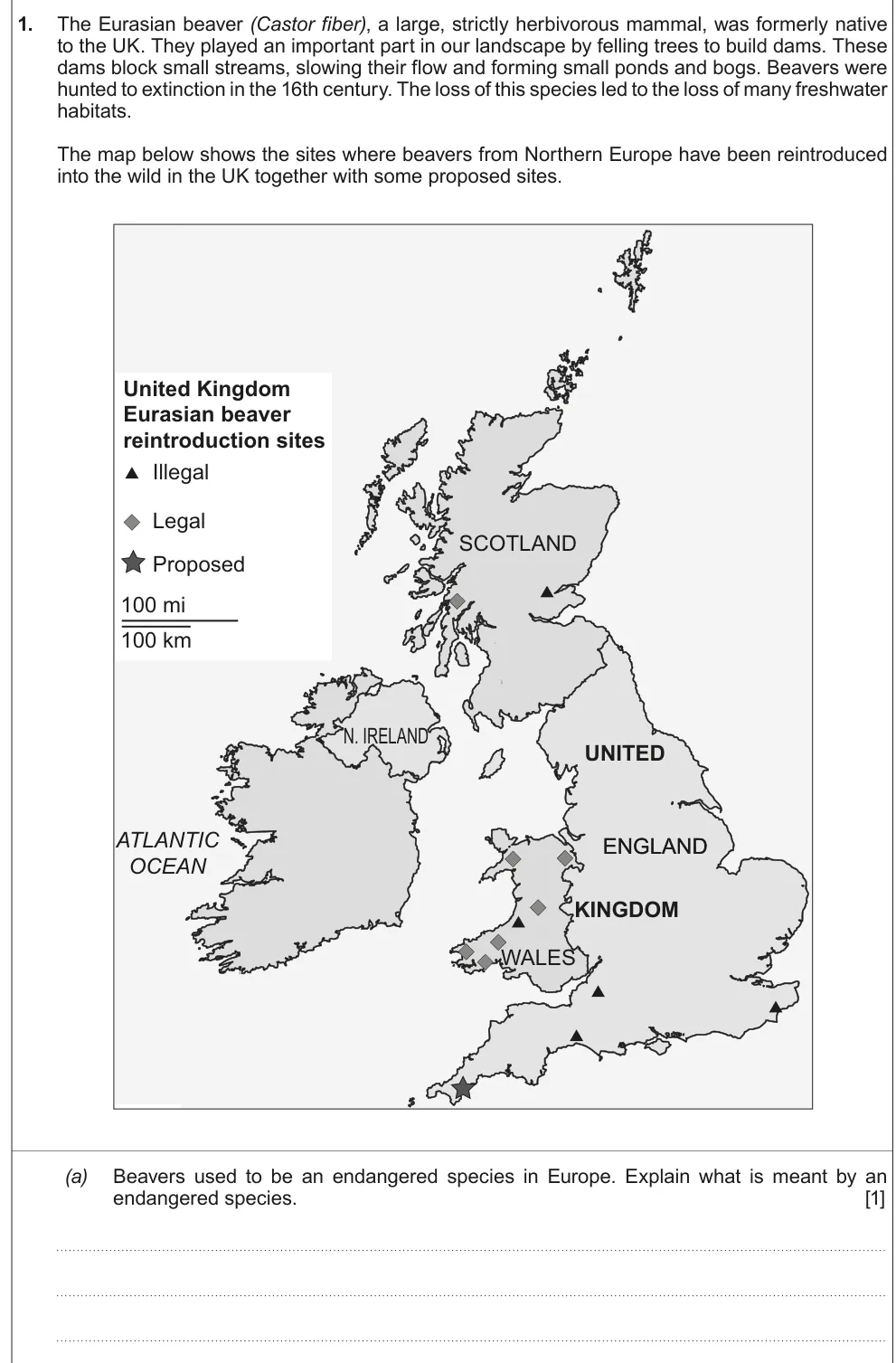
Endangered species
Question 1
A level Component 1 · June 2017 · Q1(a) · 1 mark
Explain what is meant by an endangered species.
Show the mark scheme

Tap an image to open it full size.
From the examiners' report: Many scored well here: a species seriously at risk of extinction.
Question 2
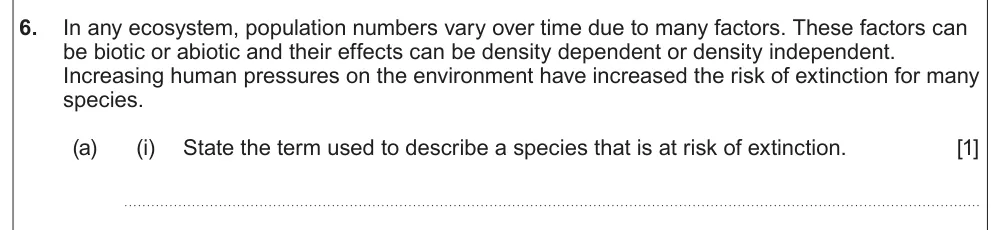
A level Component 1 · June 2025 · Q6(a)(i) · 1 mark
State the term for a species at risk of extinction.
Show the mark scheme

Tap an image to open it full size.
From the examiners' report: The term endangered was well remembered.
Question 3
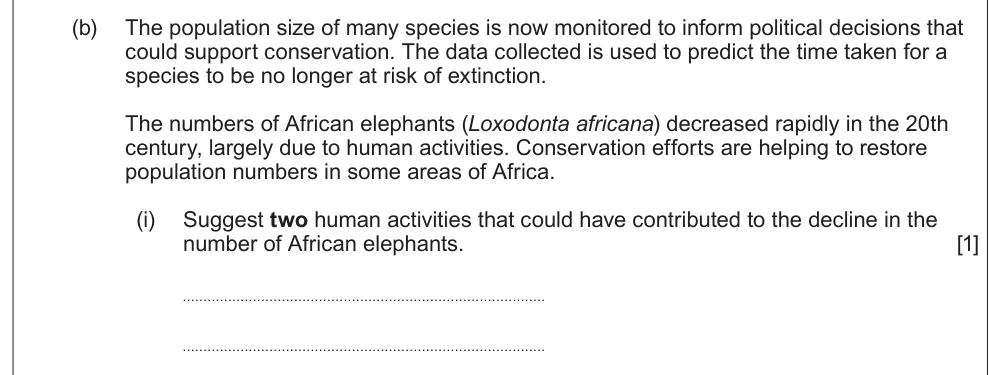
A level Component 1 · June 2025 · Q6(b)(i) · 1 mark
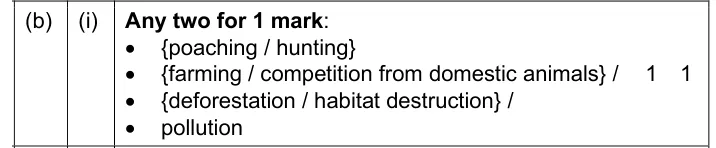
Give two causes of a species becoming endangered.
Show the mark scheme
Tap an image to open it full size.
From the examiners' report: The causes of extinction were well remembered: poaching, habitat destruction, competition from farming and pollution.
Conservation
Question 4
A level Component 1 · June 2017 · Q1(b) · 2 marks
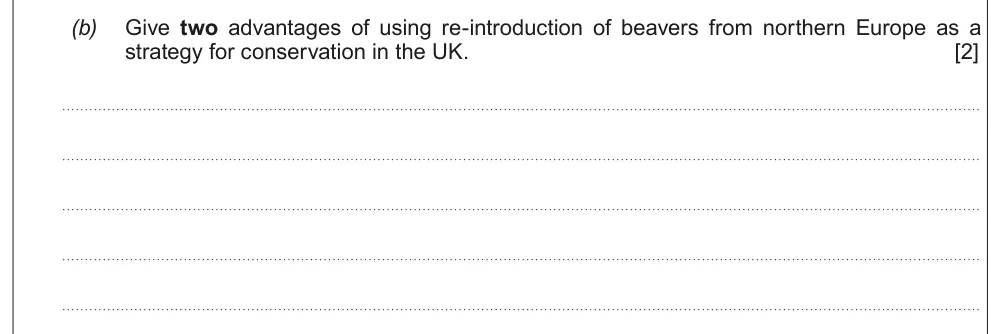
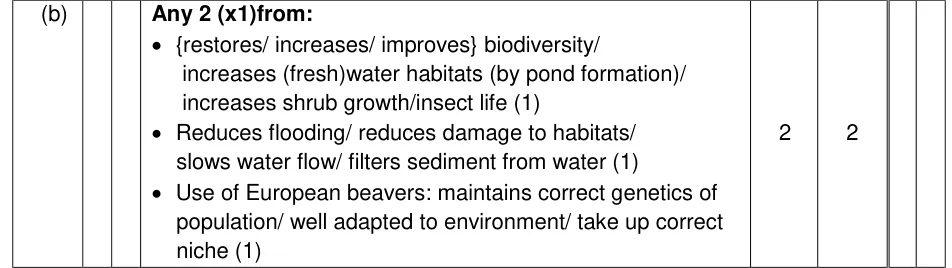
Suggest benefits of reintroducing beavers to the UK.
Show the mark scheme
Tap an image to open it full size.
From the examiners' report: Most of the answers are in the stem. A common error was writing only about biodiversity and missing the effect of slowing the flow of streams, such as less flooding.
Question 5
A level Component 1 · June 2017 · Q1(c) · 2 marks
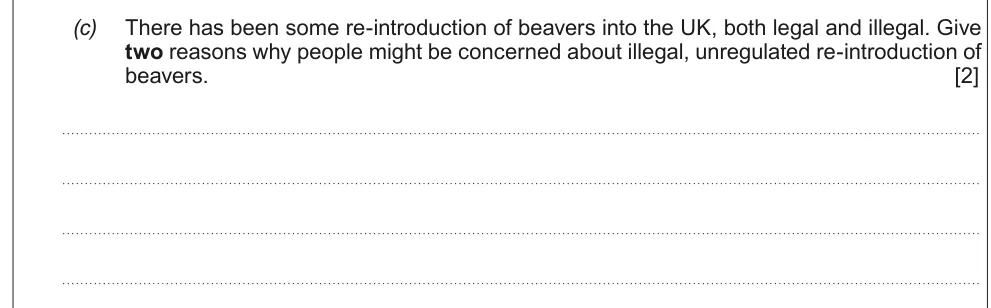
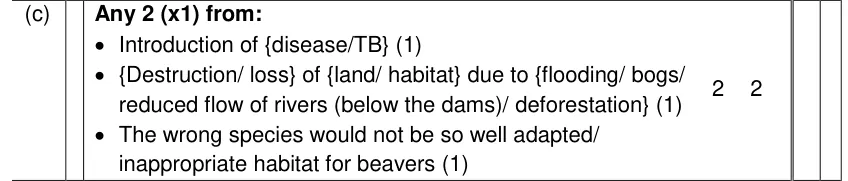
Suggest why people might worry about illegal reintroduction of beavers.
Show the mark scheme
Tap an image to open it full size.
From the examiners' report: Think beyond biodiversity: disease, the genetic status of the animals, flooding of land and the effect on landowners.
Question 6
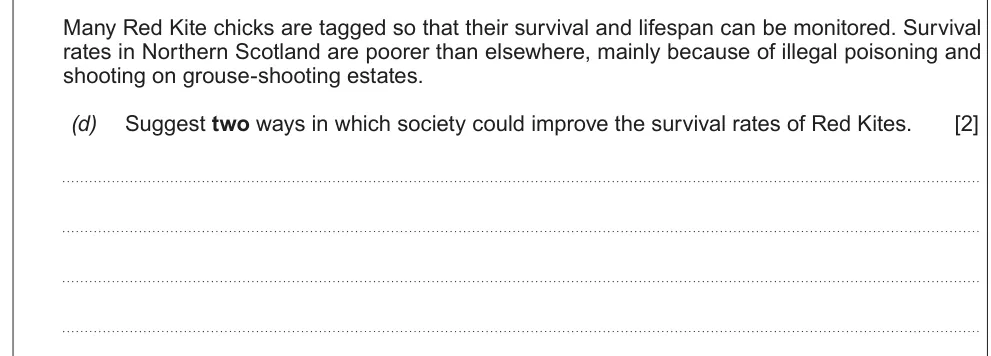
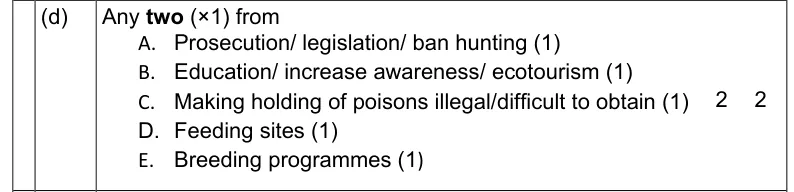
A level Component 1 · June 2019 · Q6(d) · 2 marks
Suggest two ways society could improve the survival of red kites.
Show the mark scheme
Tap an image to open it full size.
From the examiners' report: Largely well done: legislation against hunting or poisoning, education, feeding sites or breeding programmes.
Question 7
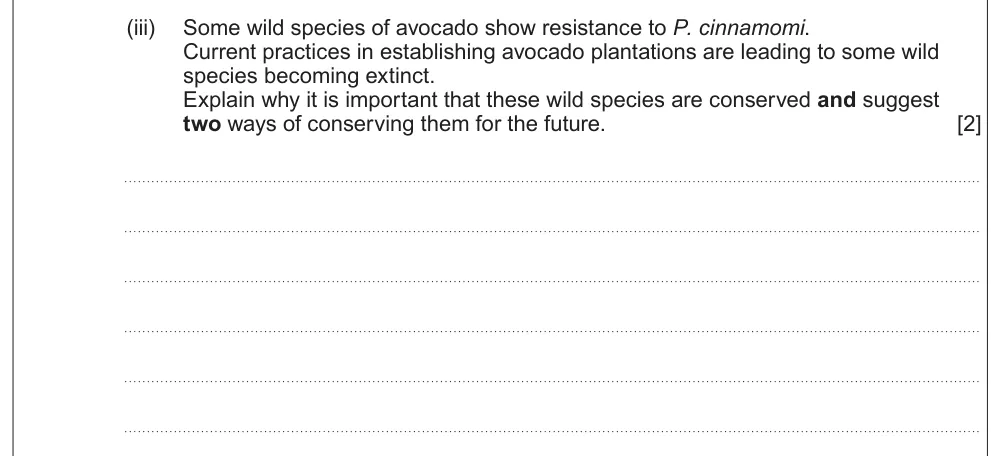
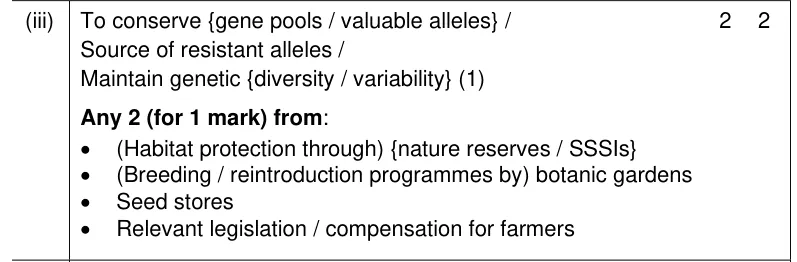
A level Component 1 · June 2024 · Q5(c)(iii) · 2 marks
Explain why wild species are conserved and suggest two ways of conserving them.
Show the mark scheme
Tap an image to open it full size.
From the examiners' report: Marks were lost through lack of detail. Say it conserves the gene pool or useful alleles, then name methods such as seed banks or nature reserves.
Question 8
A level Component 1 · Autumn 2021 · Q5(b)(i) · 2 marks
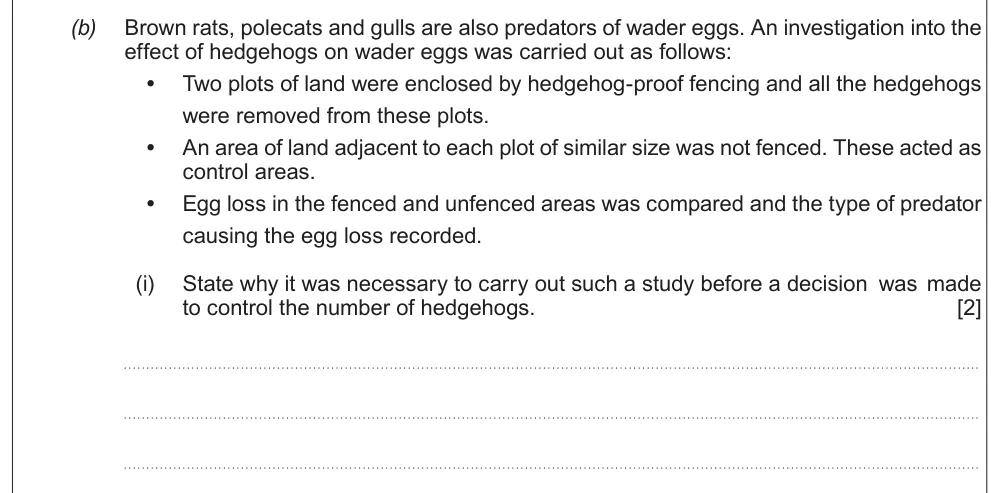
Explain why a study was needed before deciding to control hedgehogs.
Show the mark scheme

Tap an image to open it full size.
Farming, fishing and conservation
Question 9
A level Component 1 · June 2024 · Q5(a)(i) · 2 marks
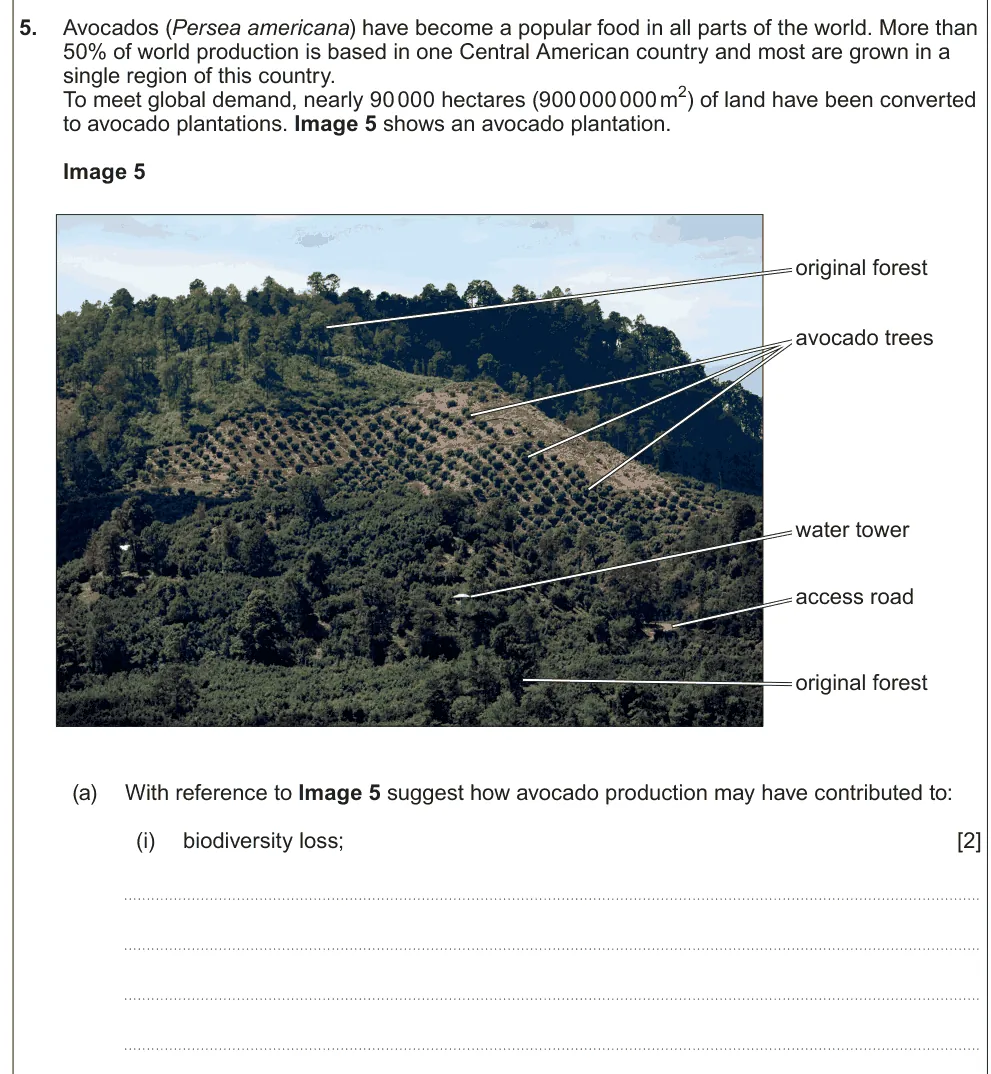
Suggest how avocado plantations may have contributed to biodiversity loss.
Show the mark scheme

Tap an image to open it full size.
From the examiners' report: Most students used the photograph well, but marks were lost through lack of detail: deforestation, then loss of habitats and niches in a monoculture.
Question 10
A level Component 1 · Autumn 2020 · Q4(b)(i) · 4 marks
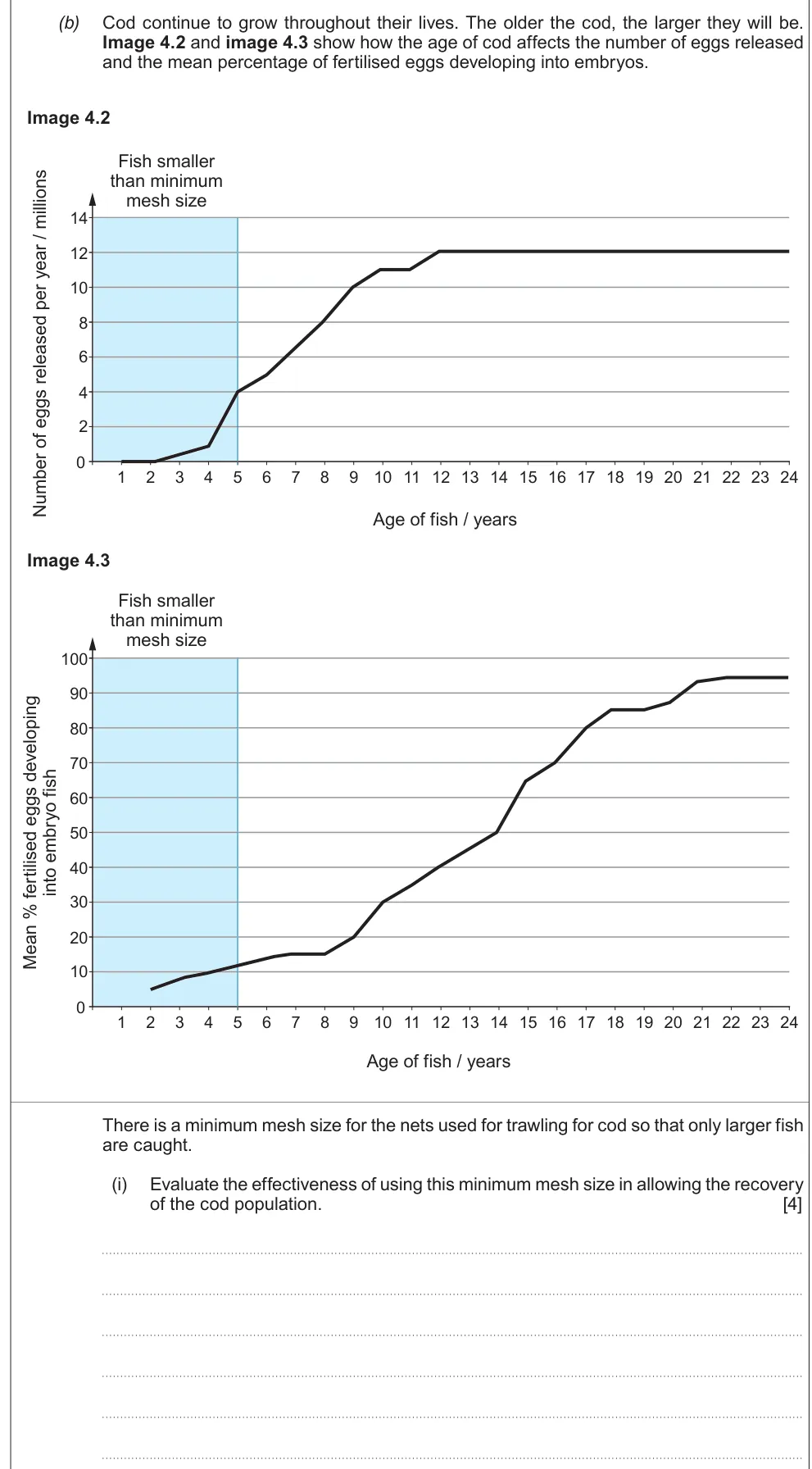
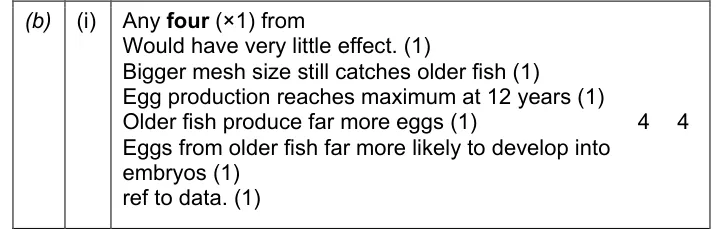
Use data to evaluate a minimum net mesh size for the recovery of cod.
Show the mark scheme
Tap an image to open it full size.
From the examiners' report: Some excellent answers, but many argued that removing mature fish would speed recovery by reducing competition. Older fish produce far more eggs, so a bigger mesh helps little.
Question 11
A level Component 1 · Autumn 2020 · Q4(b)(ii) · 1 mark
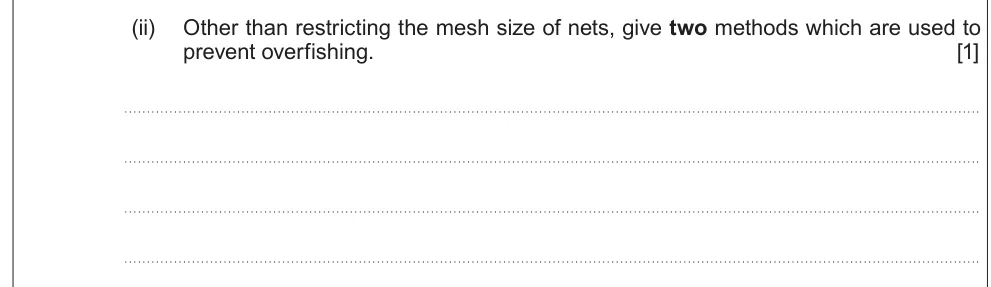
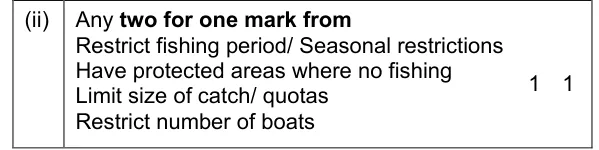
Give two other methods used to prevent overfishing.
Show the mark scheme
Tap an image to open it full size.
Question 12
A level Component 2 · June 2017 · Q5(b) · 1 mark · Hard
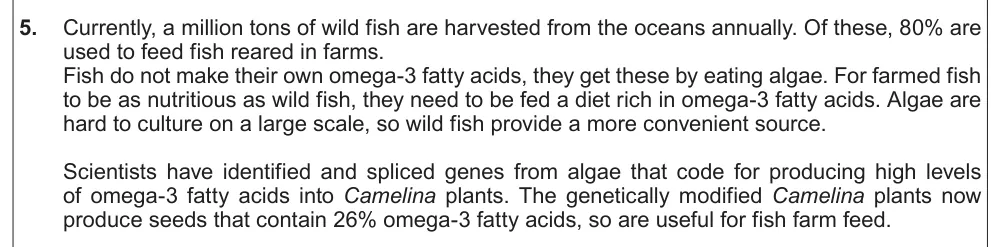
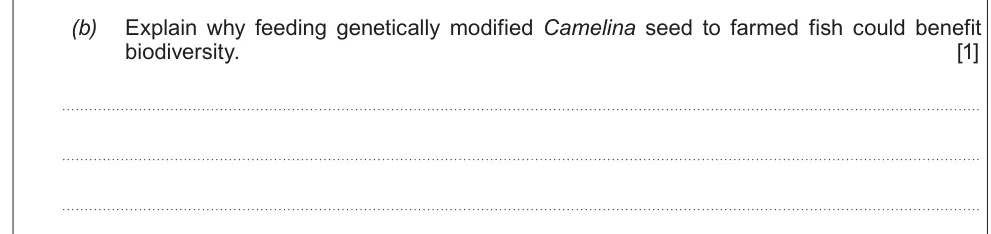
Suggest how feeding GM Camelina seed to farmed fish could benefit biodiversity.
Information from earlier in this question:
Show the mark scheme

Tap an image to open it full size.
From the examiners' report: Few students saw that fewer wild fish would be caught for fish feed. Better nutrition for farmed fish doesn't improve biodiversity directly.
Question 13
A level Component 1 · June 2018 · Q3(c) · 4 marks · Easy
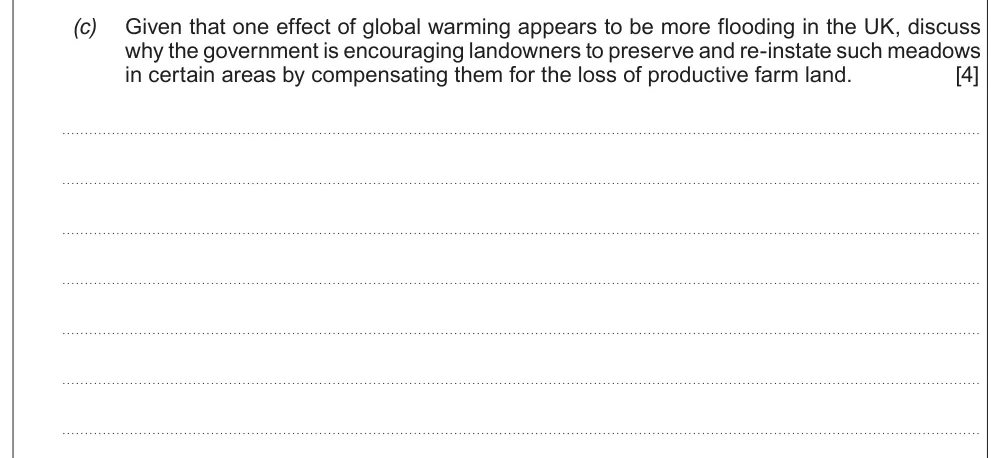
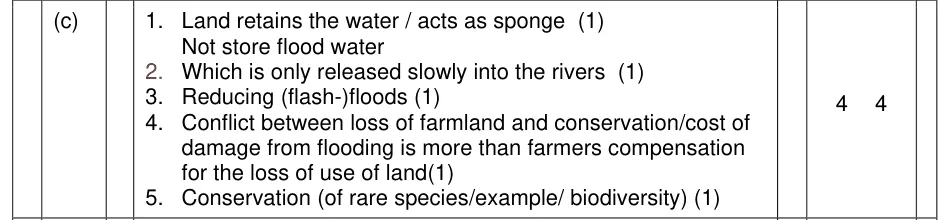
Explain why farmers are paid to keep wetland meadows in some areas.
Show the mark scheme
Tap an image to open it full size.
From the examiners' report: Routinely answered well by students who read the stem: the land holds water and releases it slowly, reducing floods, which costs more than the compensation.
Planetary boundaries
Question 14
A level Component 1 · June 2017 · Q3(a) · 2 marks
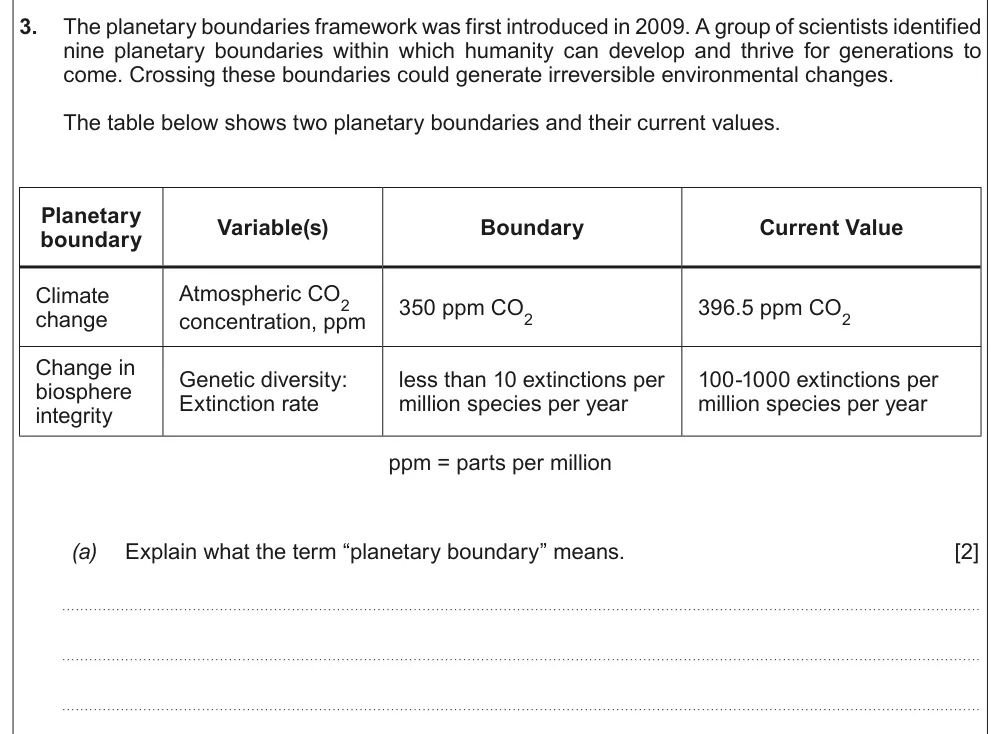
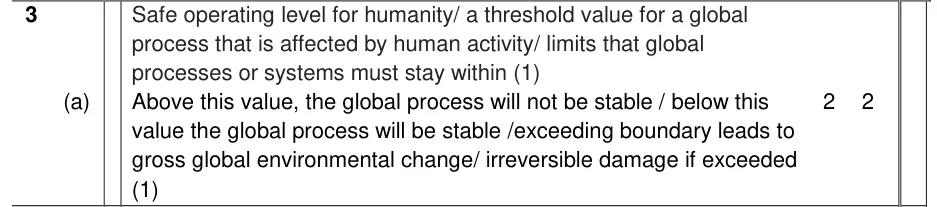
Explain what the term planetary boundary means.
Show the mark scheme
Tap an image to open it full size.
From the examiners' report: Many students gained good marks: a safe limit for a global process, beyond which it becomes unstable.
Question 15
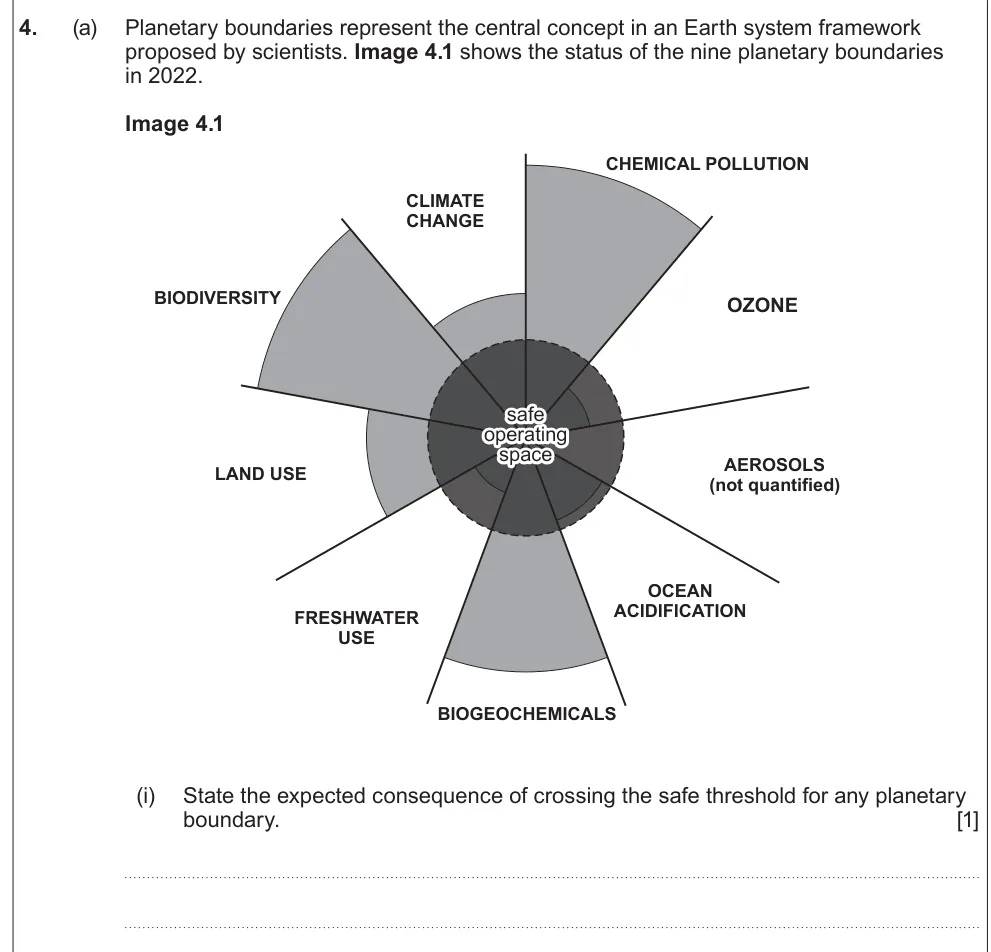
A level Component 1 · June 2025 · Q4(a)(i) · 1 mark
State the expected consequence of crossing a planetary boundary.
Show the mark scheme

Tap an image to open it full size.
From the examiners' report: Only about half the students could state it: a risk of irreversible or abrupt environmental change.
Question 16
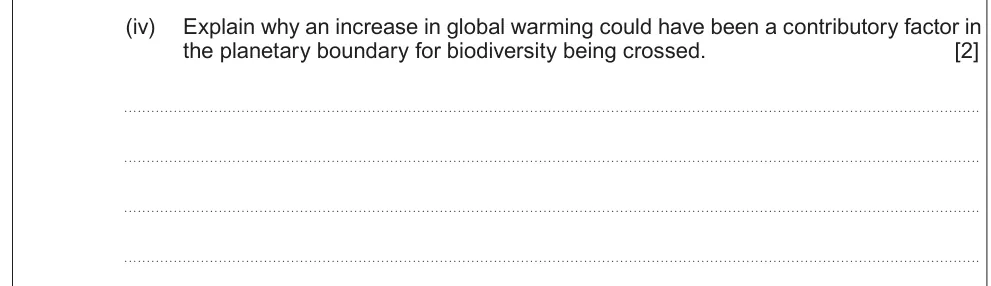
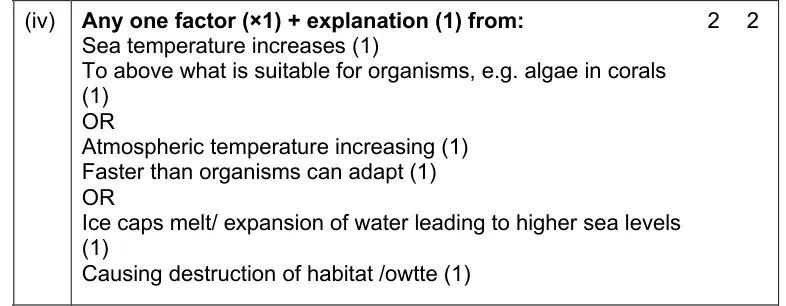
A level Component 1 · Autumn 2021 · Q7(a)(iv) · 2 marks
Suggest how climate change may have helped cross the biodiversity boundary.
Show the mark scheme
Tap an image to open it full size.
Question 17
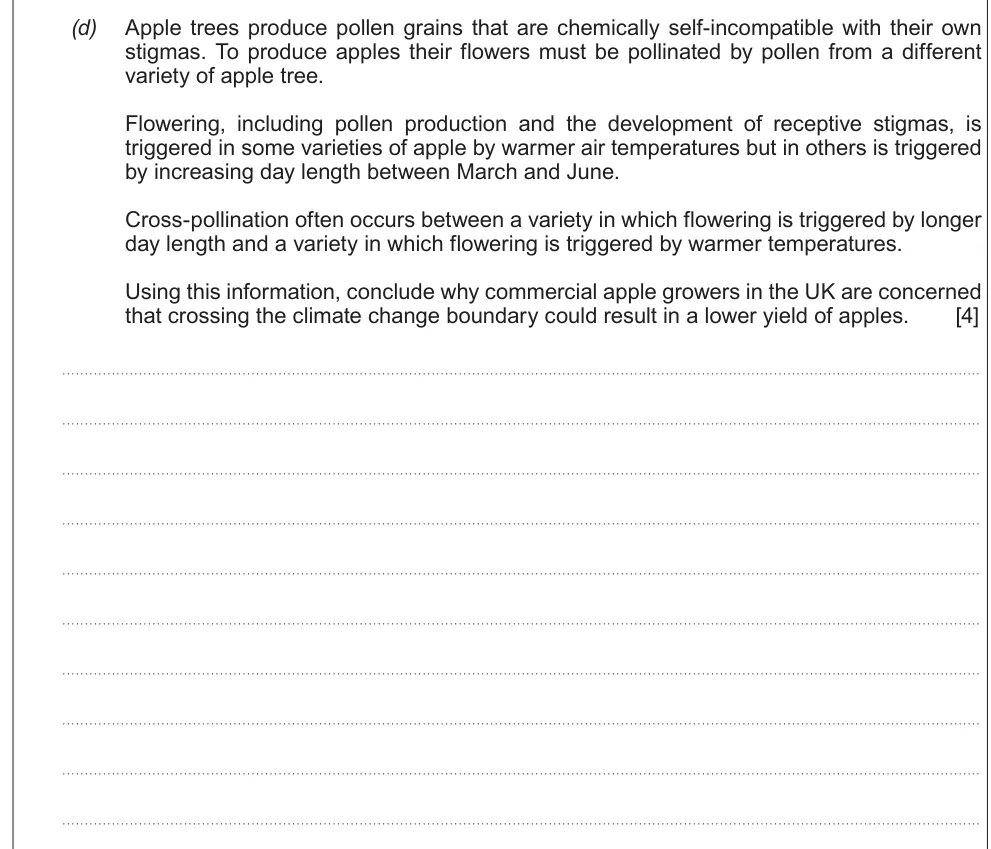
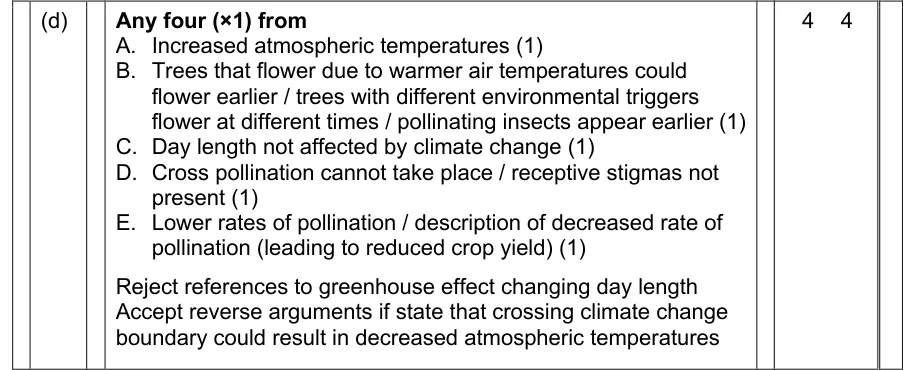
A level Component 2 · Autumn 2021 · Q3(d) · 4 marks
Explain how crossing the climate change boundary could lower apple yields.
Show the mark scheme
Tap an image to open it full size.
From the examiners' report: Most didn't link climate change to pollination. Warmer air can change flowering times while day length doesn't change, so cross-pollination may fail.
Question 18
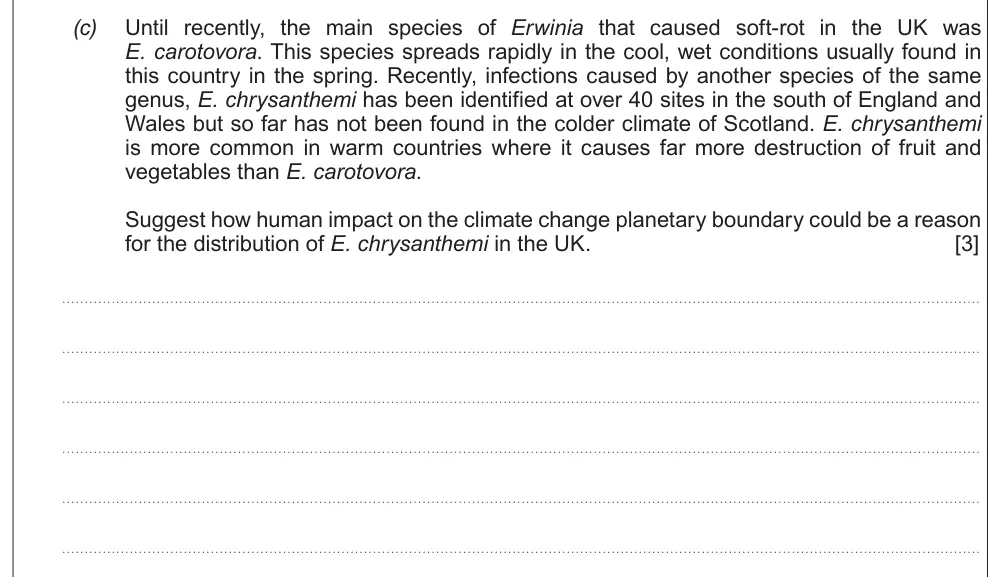
A level Component 3 · June 2018 · Q6(c) · 3 marks
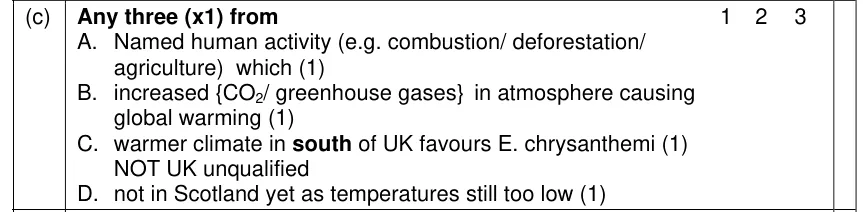
Suggest how the climate change boundary could explain where a plant disease is found in the UK.
Show the mark scheme
Tap an image to open it full size.
From the examiners' report: Most named human activities but didn't link them to the distribution given in the stem: warmer conditions in the south favour the bacterium.
Where students lose marks (from Eduqas examiners' reports and mark schemes)
Each point below is followed by wording that gained marks.
Look beyond biodiversity: Common errors were writing only about biodiversity and ignoring water flow and the wider effects of reintroduction.
✔ Gains credit: "Reduces flooding / slows water flow".
Give detail: Marks were lost through lack of detail on how the plantation affected wildlife.
✔ Gains credit: "Deforestation" leading to "loss of habitat / fewer ecological niches / monoculture".
Big fish matter most: Many argued that removing mature fish would speed recovery because competition would be less.
✔ Gains credit: "Older fish produce far more eggs".
Find the indirect link: Many answers implied better nutrition for farmed fish would directly improve biodiversity.
✔ Gains credit: "Less wild fish will be harvested (to feed farmed fish)".
Irreversible change: Only about half the students could state the consequence of crossing a boundary.
✔ Gains credit: "Irreversible / abrupt environmental change".
Temperature changes, day length doesn't: There was much confusion about the effect of crossing the climate change boundary.
✔ Gains credit: "Increased atmospheric temperatures" and "day length not affected by climate change".
Download the questions
Download the PDF pack (18 questions, mark schemes at the end)
Keep practising
- Importance of ATP (1.1): Eduqas A Level Biology exam questions by topic
- Microbiology (1.4): Eduqas A Level Biology exam questions by topic
- Eduqas A level Biology past papers, mark schemes and examiners' reports
- Eduqas A level Biology grade boundaries
- Ask about Eduqas A level Biology lessons with Sam on WhatsApp
Questions, mark schemes and examiners' report extracts © WJEC CBAC Ltd (Eduqas).