

Algebra (MS2 in the mathematical requirements of the specification) covers understanding the symbols in a formula, changing the subject of an equation, substituting values into an equation with the right units, solving equations and using logarithms for quantities that range over several orders of magnitude. In Eduqas biology papers the formula is nearly always printed in the question: Fick's law, the lever equation, cardiac output, generation time, an exponential growth equation, y = mx + c and the Hardy-Weinberg equations all appear here. Your job is to pick out the right values, convert the units, rearrange if you need to and present the answer as the question asks. Questions marked AS are from the AS papers (B400); the rest are from the A level papers (A400).
The examiners' reports say that most of these calculations are done well, and the marks that are lost go on the same few things. Convert units before you substitute: grams to milligrams, milliseconds to seconds, micrometres to millimetres. Follow the instruction on rounding, whether that is three significant figures or the nearest whole number. Think about what the answer means: a number of cells or bacteria has to be a whole number. If you cannot rearrange an equation you may gain nothing at all. And when you explain a log scale, saying that it makes the data easier to plot gains no credit.
I don't teach the Eduqas specification myself, so for one-to-one help I recommend Sam. He teaches Eduqas A level Biology at a top-rated sixth form college and is very popular with his students. You can ask about lessons with Sam on WhatsApp using the link at the bottom of this page.
What you need first
Each question on this page assumes you're secure on these ideas. If any of them feels shaky, look it up before you start.
- Whatever you do to one side of an equation you must do to the other: to undo a square, take the square root of both sides.
- Unit conversions: 1 g = 1000 mg, 1 s = 1000 ms, 1 mm = 1000 μm.
- Magnification = size of image ÷ actual size, with both sizes in the same unit.
- Each whole number on a log₁₀ scale is ten times the one before: log₁₀ of 1000 is 3.
Key terms
These words come up in the questions and mark schemes. Examiners expect you to use them exactly.
- Subject of an equation: the quantity on its own on one side of the equals sign; rearranging an equation changes which quantity this is.
- Substitution: replacing the symbols in a formula with their values, each in the unit the formula needs.
- Proportional (∝): two quantities are proportional when one changes by the same factor as the other; inversely proportional means one falls as the other rises.
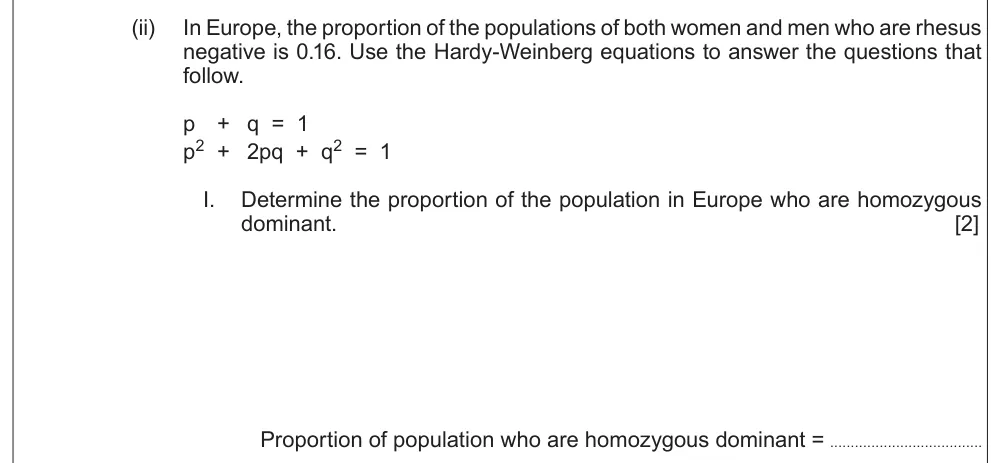
- Hardy-Weinberg equations: p + q = 1 and p² + 2pq + q² = 1, where p and q are the frequencies of the dominant and recessive alleles.
- y = mx + c: the equation of a straight line, where m is the gradient and c is the intercept on the y-axis.
- Logarithmic scale: a scale on which each equal step is a tenfold change, used for values that cover a very large range.
- Antilog: the reverse of taking a log: the antilog of a log₁₀ value x is 10ˣ, which gives back the actual number.
- Significant figures: the digits that carry meaning in a number, counted from the first non-zero digit.
What these questions cover
Every question on this page uses one of these mathematical skills, listed in the mathematical requirements of the Eduqas A level Biology specification (A400).
- MS2.1: Understand and use the symbols: =, <, <<, >>, >, ∝, ~
- MS2.2: Change the subject of an equation
- MS2.3: Substitute numerical values into algebraic equations using appropriate units for physical quantities
- MS2.4: Solve algebraic equations
- MS2.5: Use logarithms in relation to quantities that range over several orders of magnitude
How to use this page
Write your answer on paper before you open the mark scheme. Allow about 1.2 minutes per mark: the 20 questions are worth 41 marks, so about 49 minutes in total. Then mark your answer strictly against the mark scheme and read the examiners' tip underneath it. If you'd rather print the questions, download the PDF pack.
Reading a formula and solving an equation (MS2.1 and MS2.4)
Question 1
AS Component 1 · June 2025 · Q2(b)(iii) · 1 mark
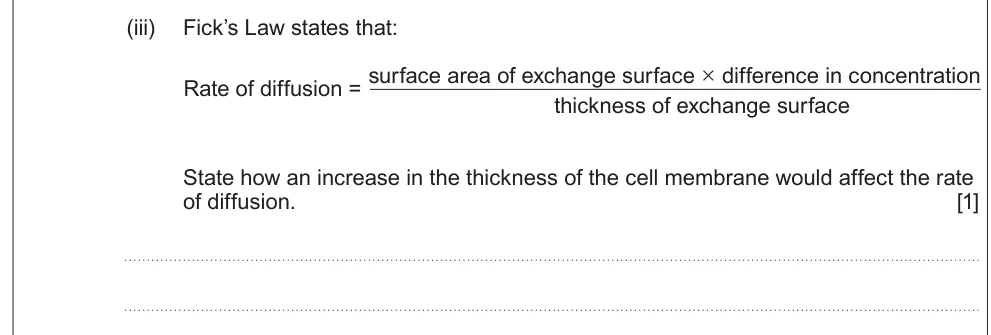
Use Fick's law to state how a thicker cell membrane would affect the rate of diffusion.
Show the mark scheme

Tap an image to open it full size.
Question 2
AS Component 1 · June 2019 · Q1(b)(iii) · 1 mark
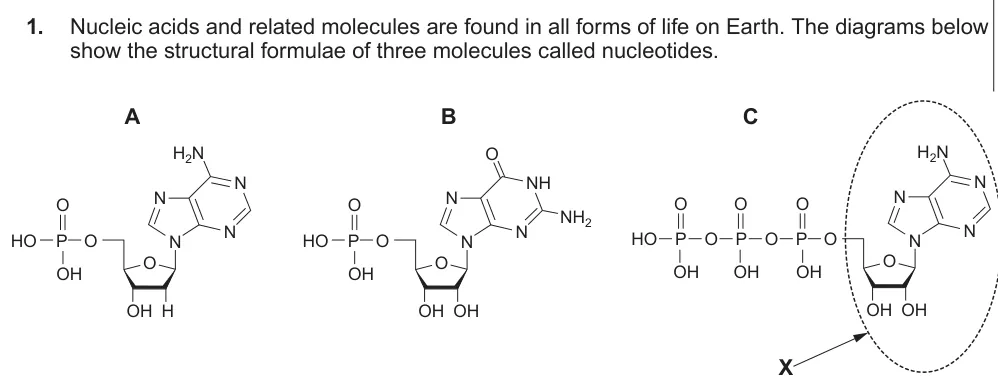
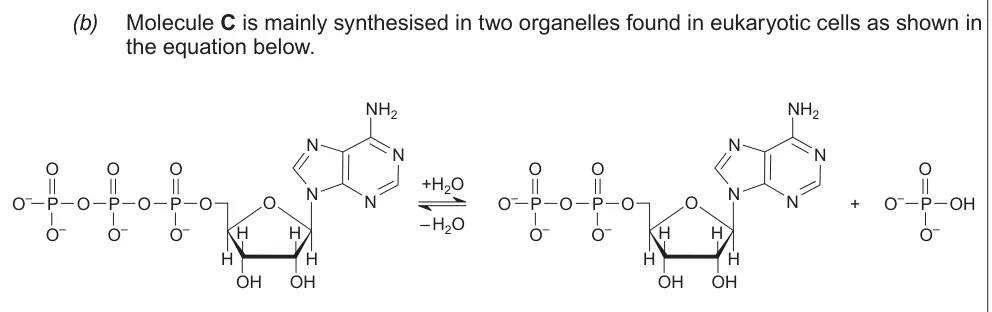
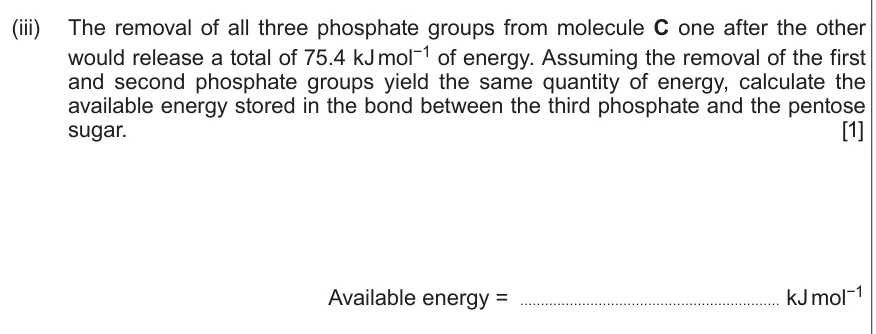
Calculate the energy stored in the bond between the third phosphate and the pentose sugar from the total energy released.
Information from earlier in this question:
Show the mark scheme

Tap an image to open it full size.
From the examiners' report: Many did this correctly. It needs you to recall the approximate energy released when each of the first and second phosphate groups is removed from ATP.
Changing the subject of an equation (MS2.2)
Question 3
AS Component 1 · June 2018 · Q4(d)(i) · 3 marks
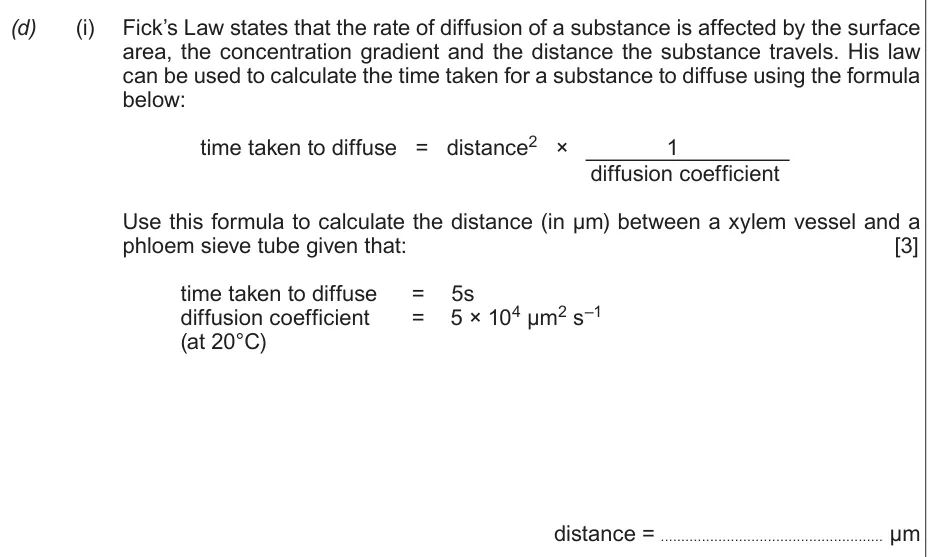
Rearrange a formula from Fick's law to calculate the distance between a xylem vessel and a phloem sieve tube.
Show the mark scheme

Tap an image to open it full size.
From the examiners' report: This part separated candidates by mathematical ability: those who could rearrange the equation gained all three marks and those who could not gained none.
Question 4
A level Component 3 · June 2018 · Q9(d)(iv) · 2 marks · Easy
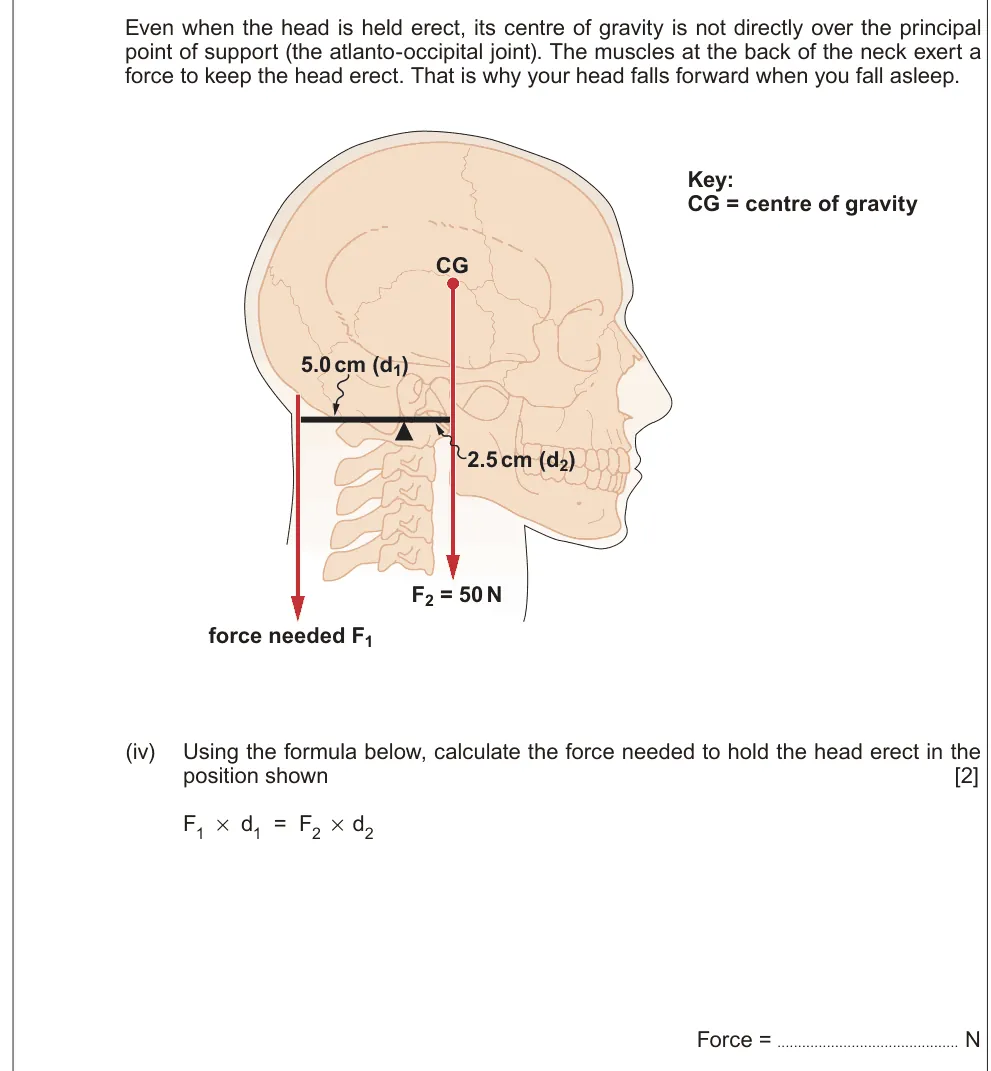
Use the lever equation to calculate the force the neck muscles need to hold the head erect.
Show the mark scheme

Tap an image to open it full size.
From the examiners' report: Most candidates rearranged the equation correctly to reach the answer.
Question 5
A level Component 1 · June 2025 · Q6(b)(ii) · 3 marks
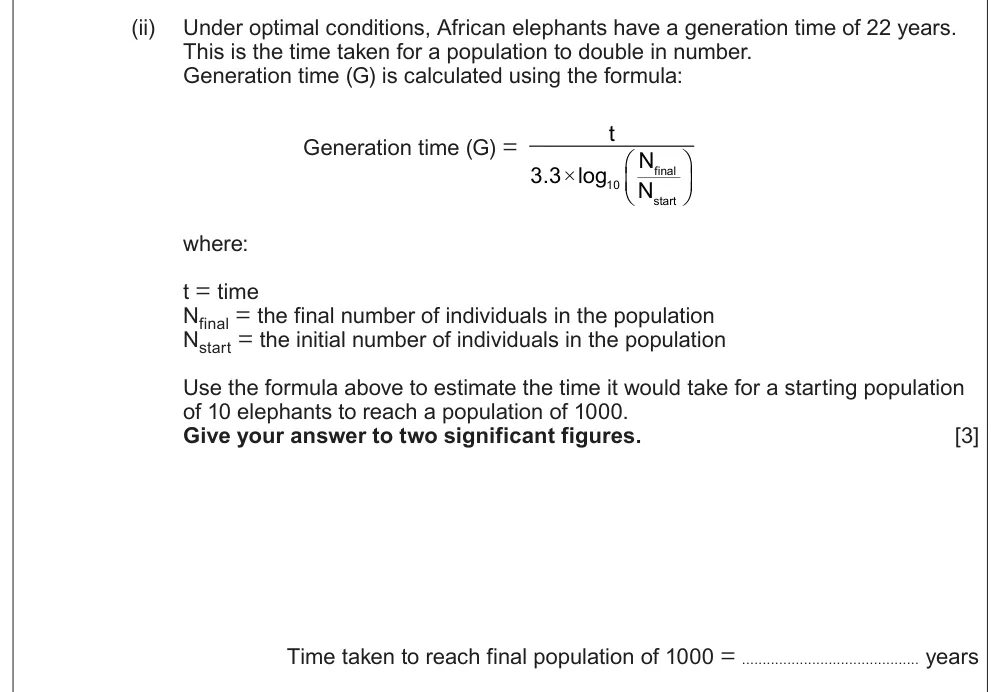
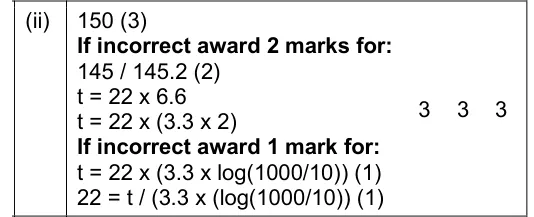
Use the generation time formula to estimate how long a population of elephants takes to reach 1000, to two significant figures.
Show the mark scheme
Tap an image to open it full size.
From the examiners' report: Calculating the time taken did not cause problems, even though the formula uses logarithms.
Question 6
AS Component 2 · June 2024 · Q5(c)(iii) · 2 marks
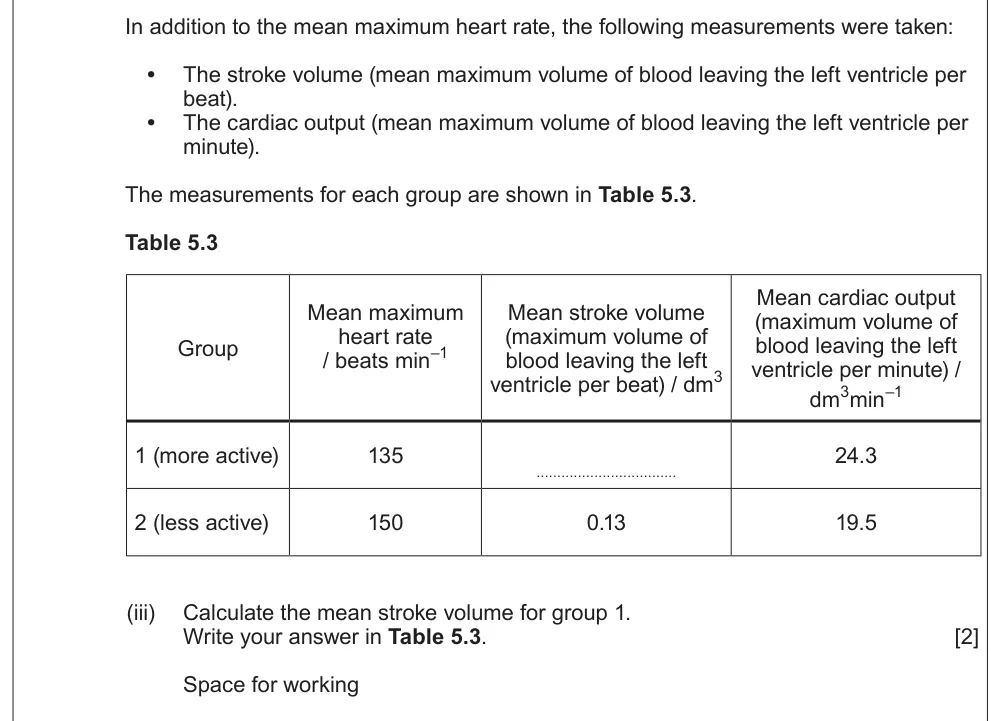
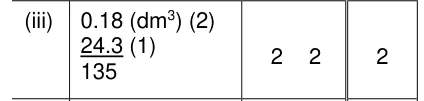
Calculate the mean stroke volume from the cardiac output and the heart rate in a table.
Show the mark scheme
Tap an image to open it full size.
From the examiners' report: Calculating the stroke volume caused few problems, and most answers gained both marks.
Question 7
AS Component 2 · June 2024 · Q4(b)(i) · 2 marks
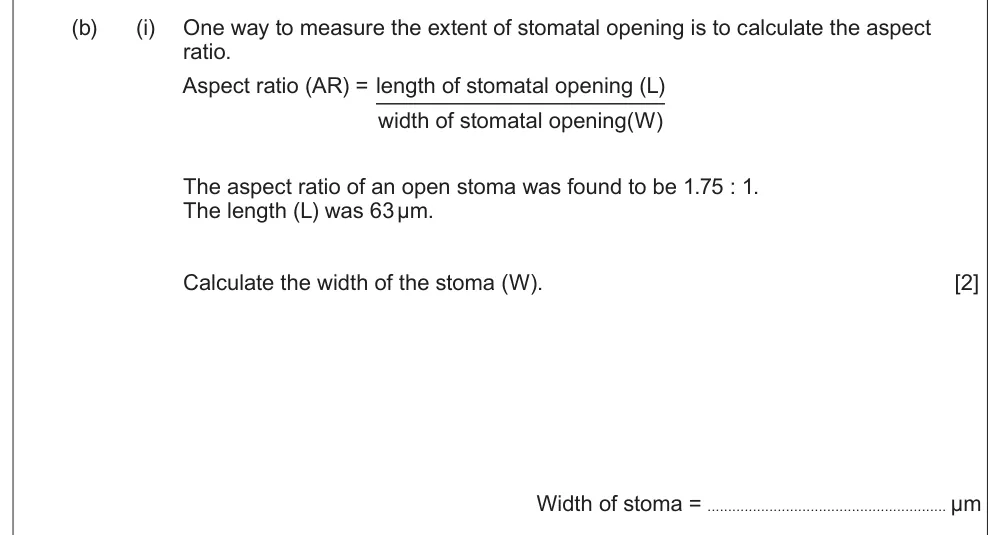
Use the aspect ratio of an open stoma and its length to calculate its width.
Show the mark scheme

Tap an image to open it full size.
From the examiners' report: The aspect ratio calculation caused few problems, and most candidates reached the correct answer.
Substituting values into a formula (MS2.3)
Question 8
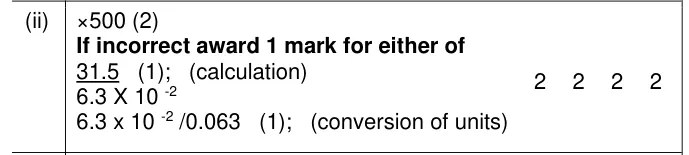
AS Component 2 · June 2024 · Q4(b)(ii) · 2 marks
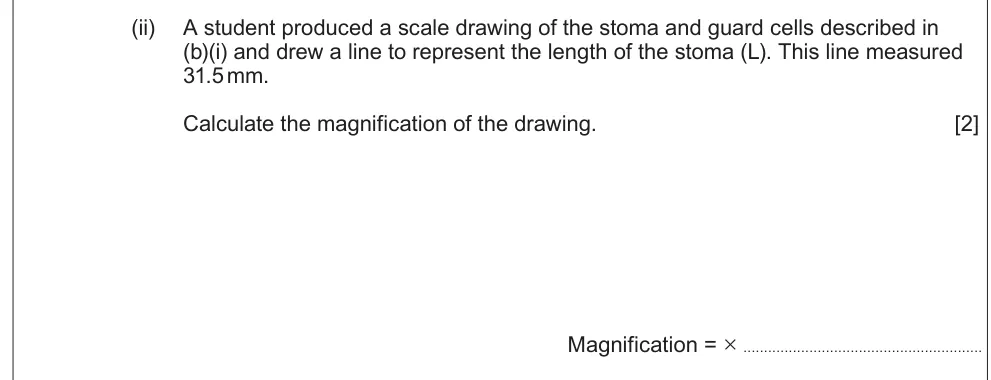
Calculate the magnification of a scale drawing from the length of a drawn line and the actual length of the stoma.
Show the mark scheme
Tap an image to open it full size.
From the examiners' report: Most calculated the magnification correctly. Errors in converting units gave some answers that were wrong by factors of 10 or 100.
Question 9
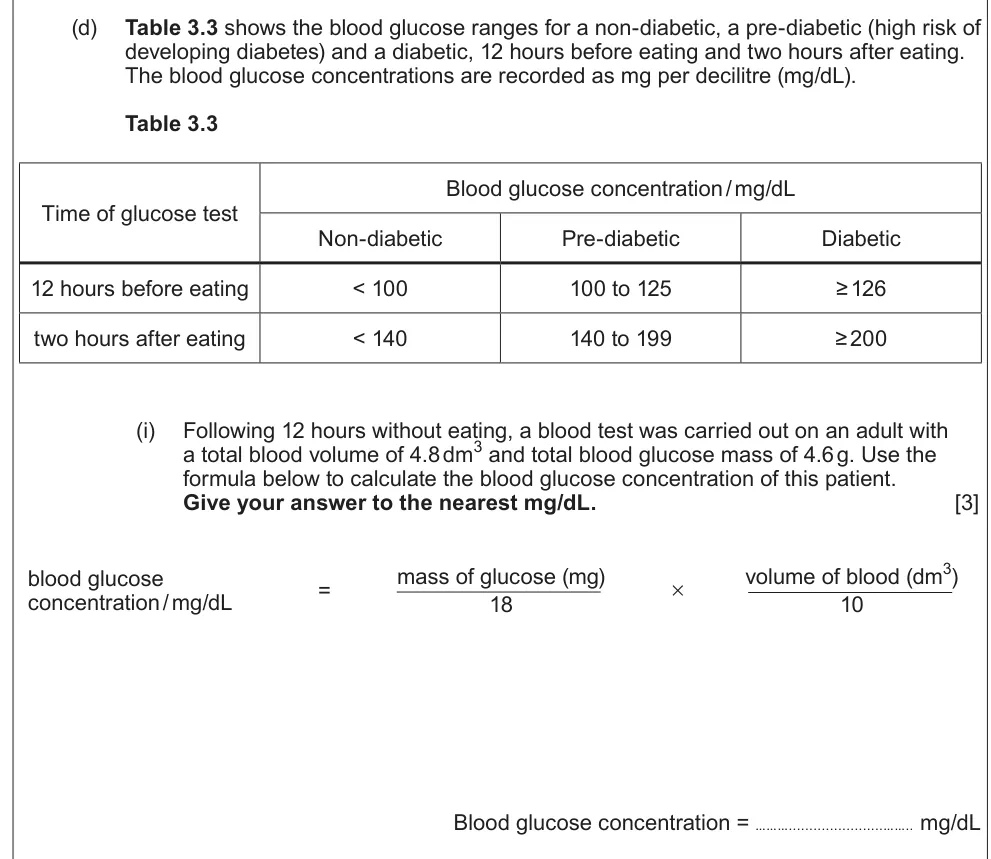
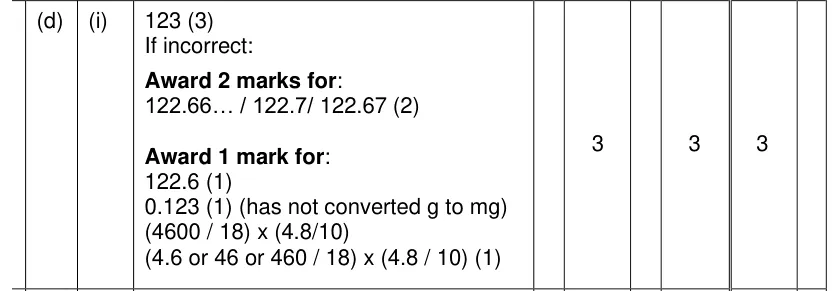
A level Component 1 · June 2023 · Q3(d)(i) · 3 marks
Use a formula to calculate a patient's blood glucose concentration to the nearest mg/dL.
Show the mark scheme
Tap an image to open it full size.
From the examiners' report: The main problems were not following the instruction in bold to give the answer to the nearest mg/dL and not knowing how to convert grams to milligrams.
Question 10
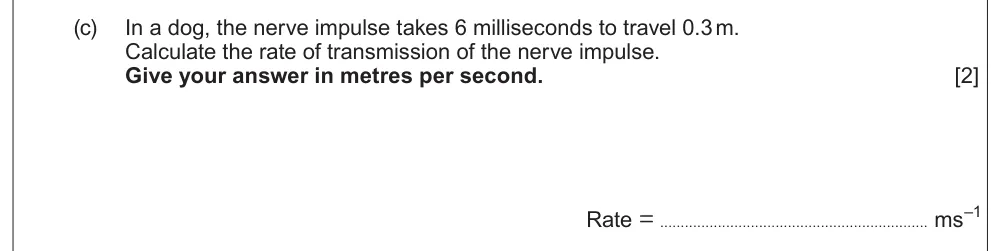
A level Component 3 · June 2024 · Q4(c) · 2 marks · Easy
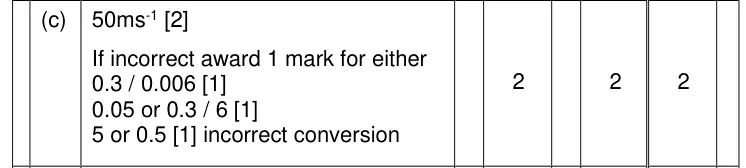
Calculate the rate of transmission of a nerve impulse in metres per second.
Show the mark scheme
Tap an image to open it full size.
From the examiners' report: Most calculated the rate correctly, but some conversion errors were seen.
Question 11
AS Component 2 · June 2023 · Q3(b)(i) · 3 marks
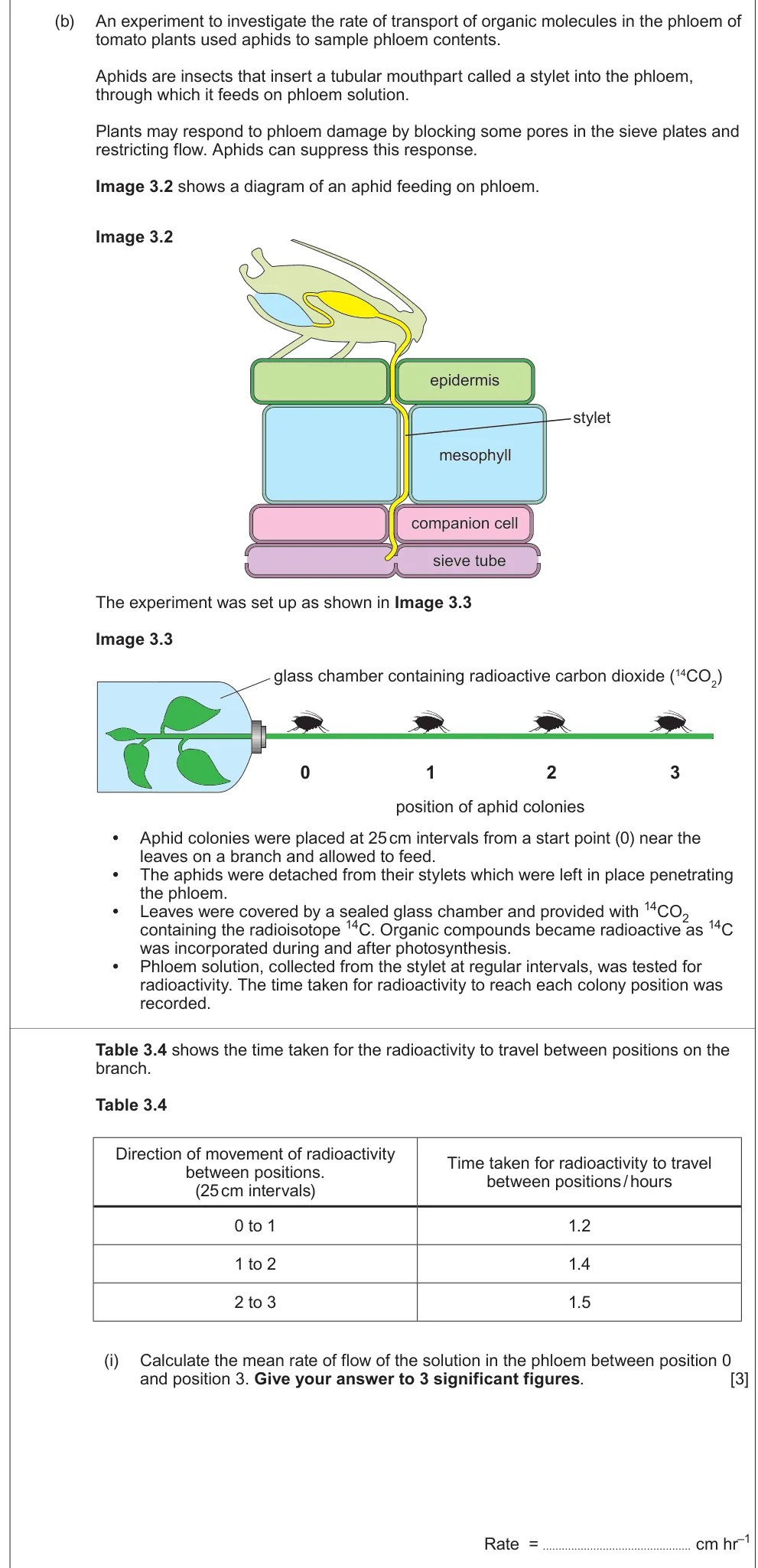
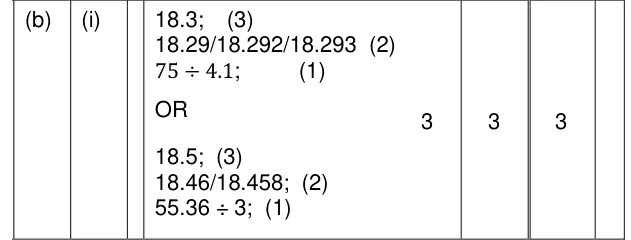
Calculate the mean rate of flow in the phloem from a table of times, to three significant figures.
Show the mark scheme
Tap an image to open it full size.
From the examiners' report: Candidates could calculate the rate from the data. Not using the correct number of significant figures was the most common error.
Question 12
A level Component 2 · June 2024 · Q6(c)(i) · 2 marks
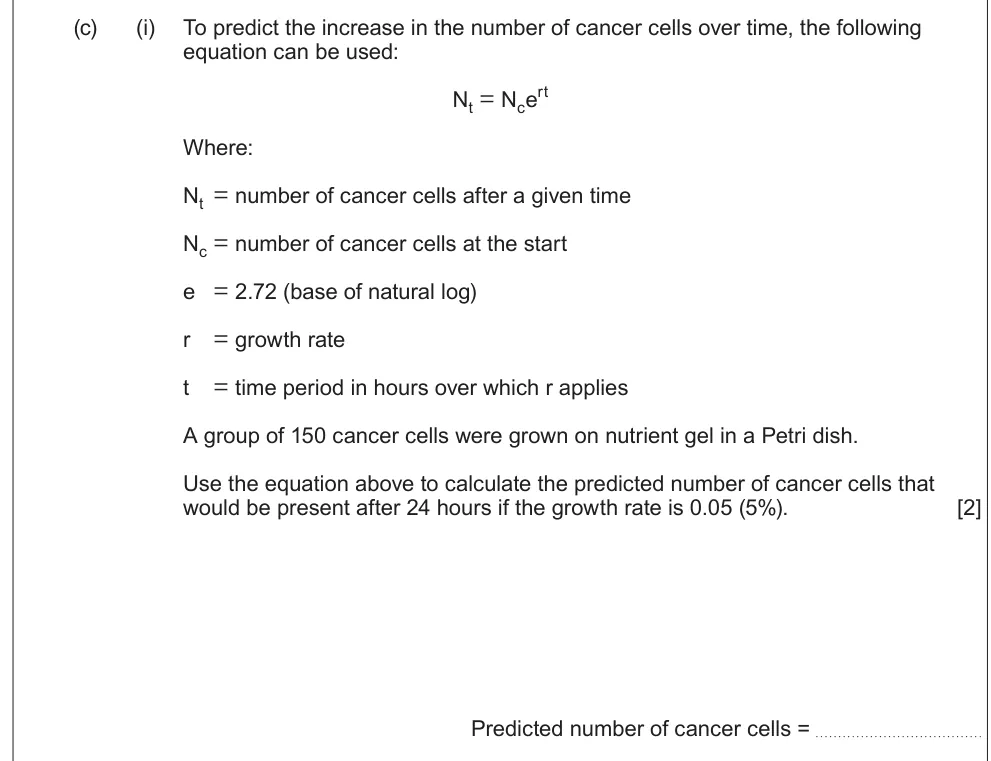
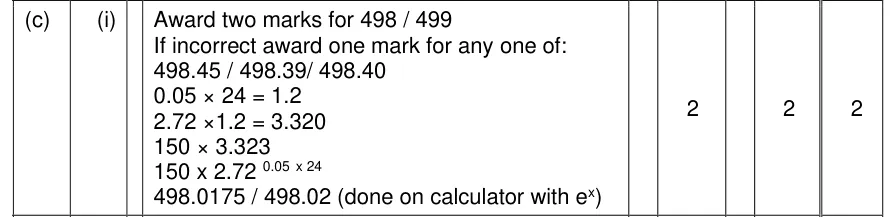
Use an exponential growth equation to predict the number of cancer cells after 24 hours.
Show the mark scheme
Tap an image to open it full size.
From the examiners' report: The calculation was done well, but a mark was often lost for giving a fraction of a cell.
Question 13
A level Component 3 · June 2023 · Q8(c)(ii) · 2 marks
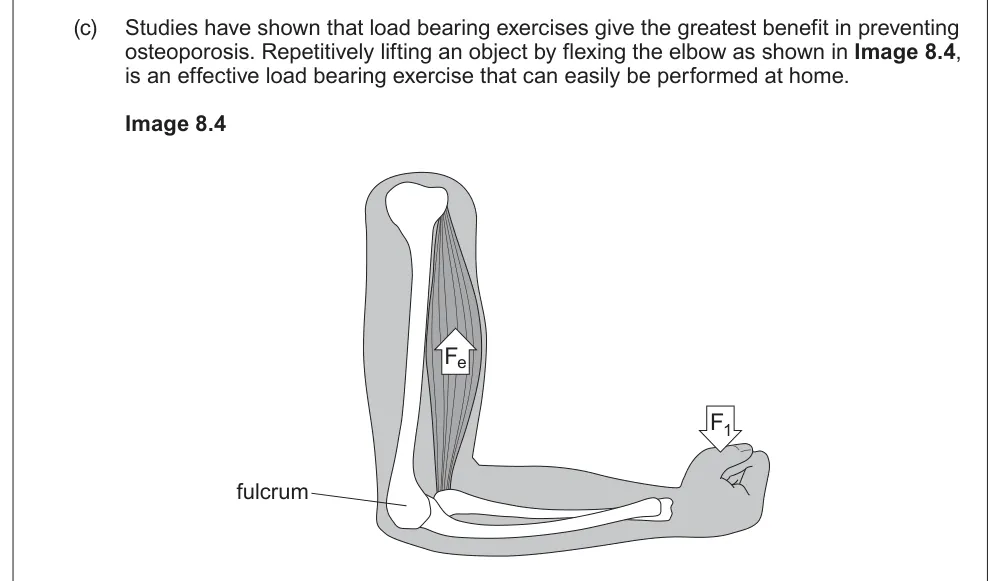
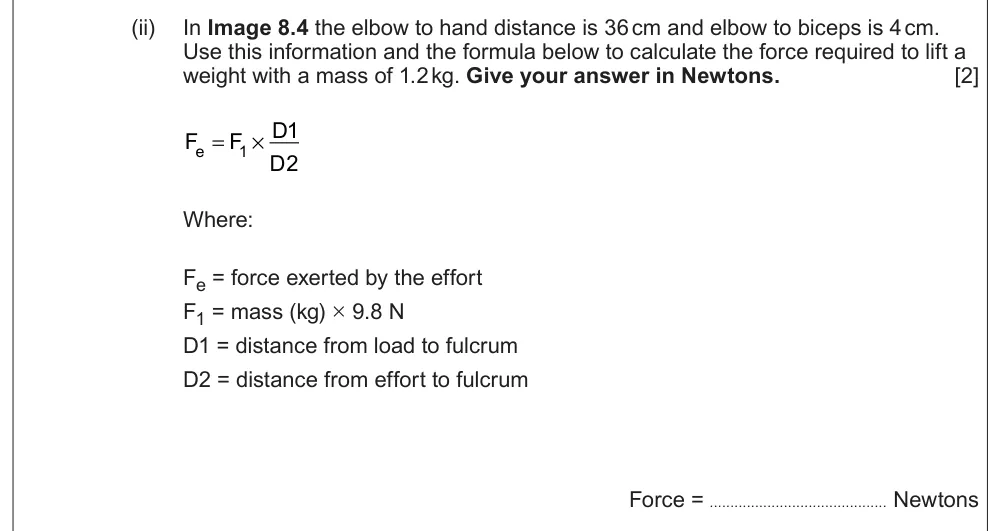
Use a lever formula to calculate the force the biceps needs to lift a 1.2 kg mass, in newtons.
Information from earlier in this question:
Show the mark scheme

Tap an image to open it full size.
From the examiners' report: Many candidates correctly calculated the force exerted during the exercise.
Question 14
A level Component 3 · June 2022 · Q3(c)(iii) · 2 marks
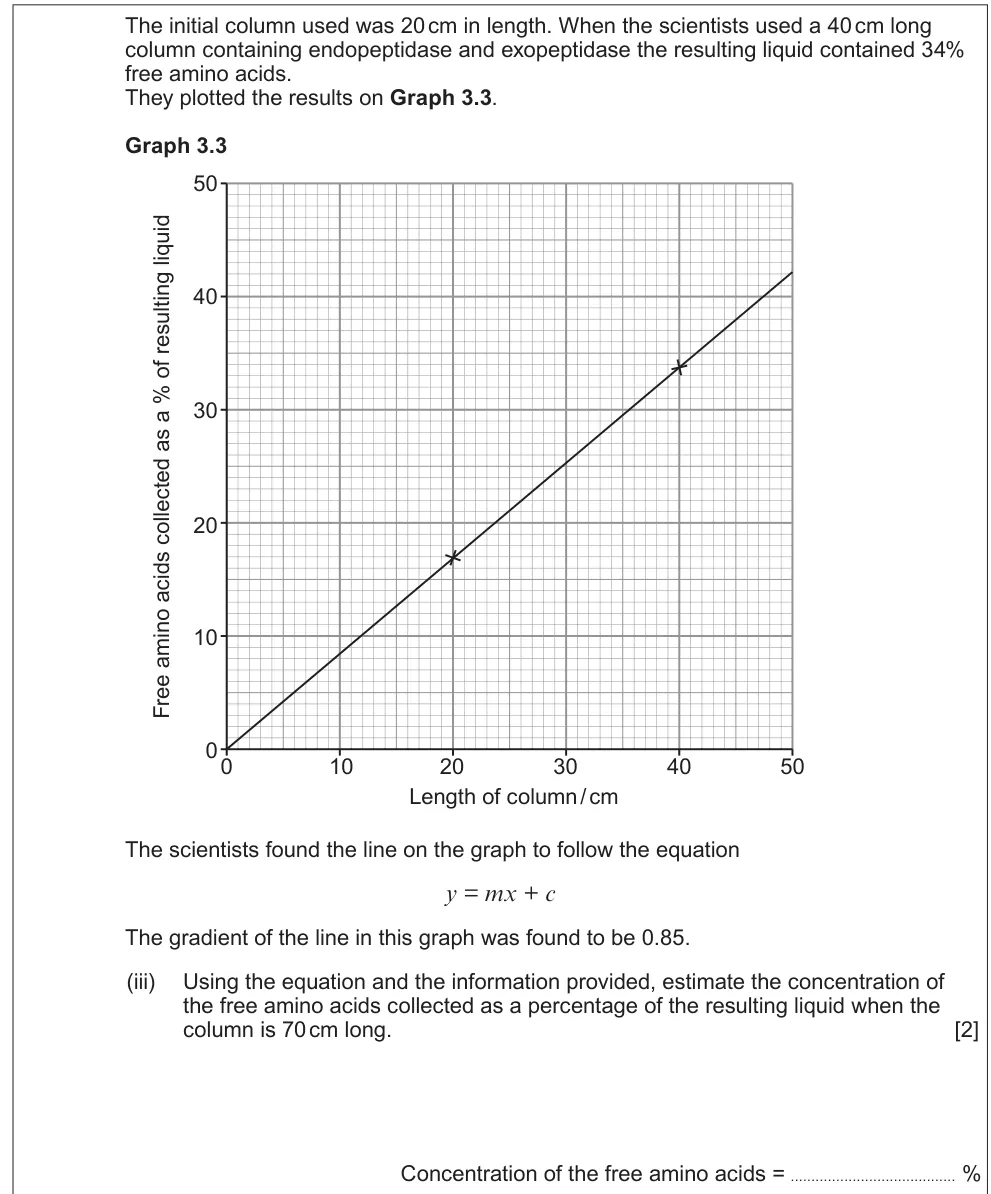
Use y = mx + c and the gradient of a line to estimate the percentage of free amino acids for a 70 cm column.
Show the mark scheme

Tap an image to open it full size.
From the examiners' report: The equation of a straight line is now well known, and candidates handled this calculation very well.
The Hardy-Weinberg equations (MS2.3)
Question 15
A level Component 2 · Autumn 2021 · Q4(b)(ii)I · 2 marks
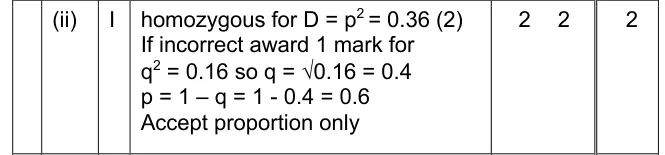
Use the Hardy-Weinberg equations to find the proportion of a population that is homozygous dominant.
Show the mark scheme
Tap an image to open it full size.
Question 16
A level Component 2 · Autumn 2021 · Q4(b)(ii)II · 1 mark
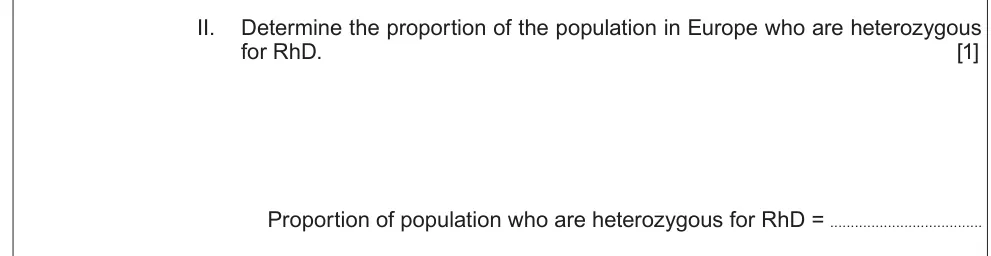
Find the proportion of the same population that is heterozygous.
Show the mark scheme

Tap an image to open it full size.
Logarithms and log scales (MS2.5)
Question 17
A level Component 1 · June 2017 · Q5(b) · 2 marks
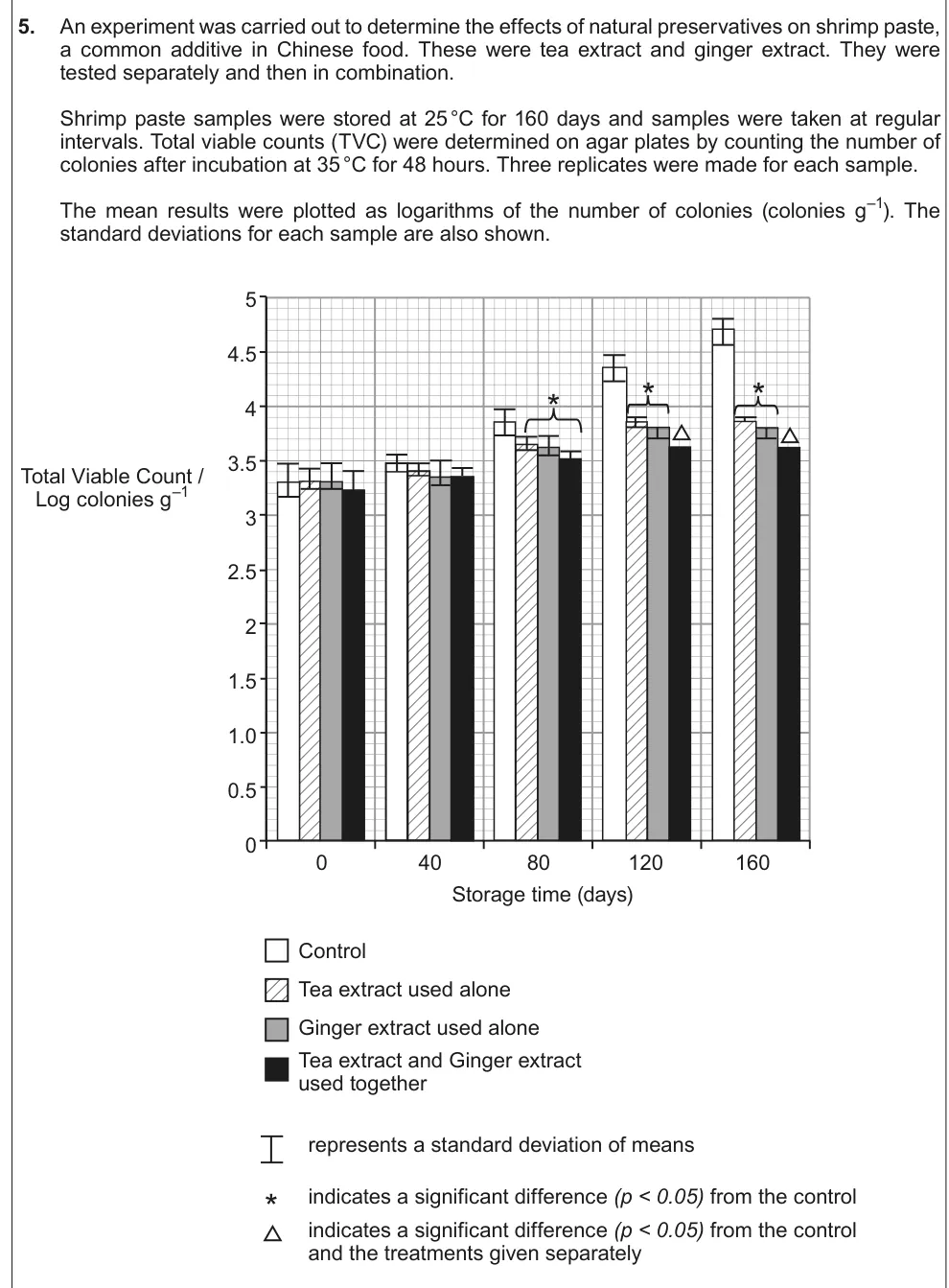
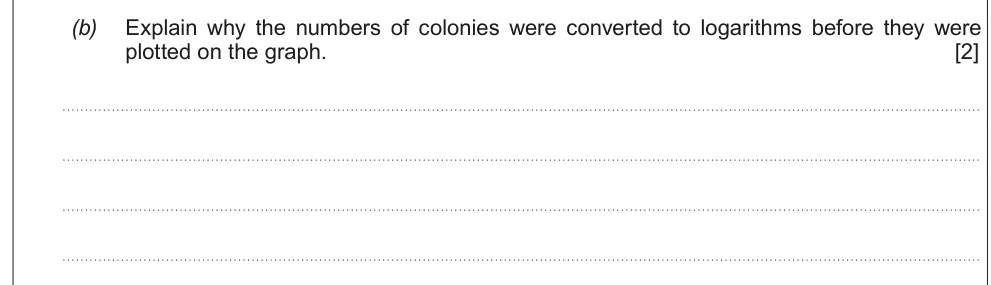
Explain why numbers of bacterial colonies were converted to logarithms before being plotted.
Information from earlier in this question:
Show the mark scheme

Tap an image to open it full size.
From the examiners' report: This was largely well done: most could give the reasoning behind the use of logarithms.
Question 18
A level Component 3 · Autumn 2021 · Q4(a)(i) · 1 mark
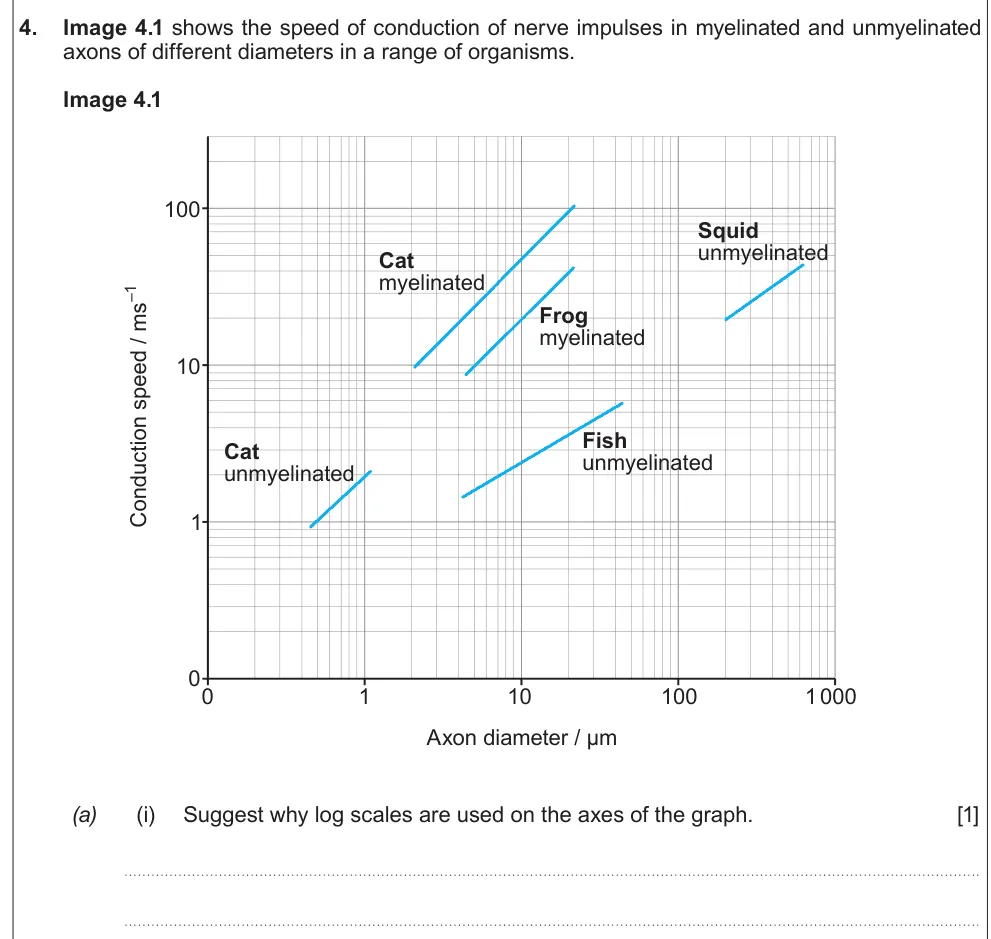
Suggest why log scales are used on both axes of a graph of conduction speed against axon diameter.
Show the mark scheme

Tap an image to open it full size.
From the examiners' report: No credit was given for saying that log scales make the data easier to plot.
Question 19
A level Component 3 · Autumn 2020 · Q8(e)(i) · 2 marks · Easy
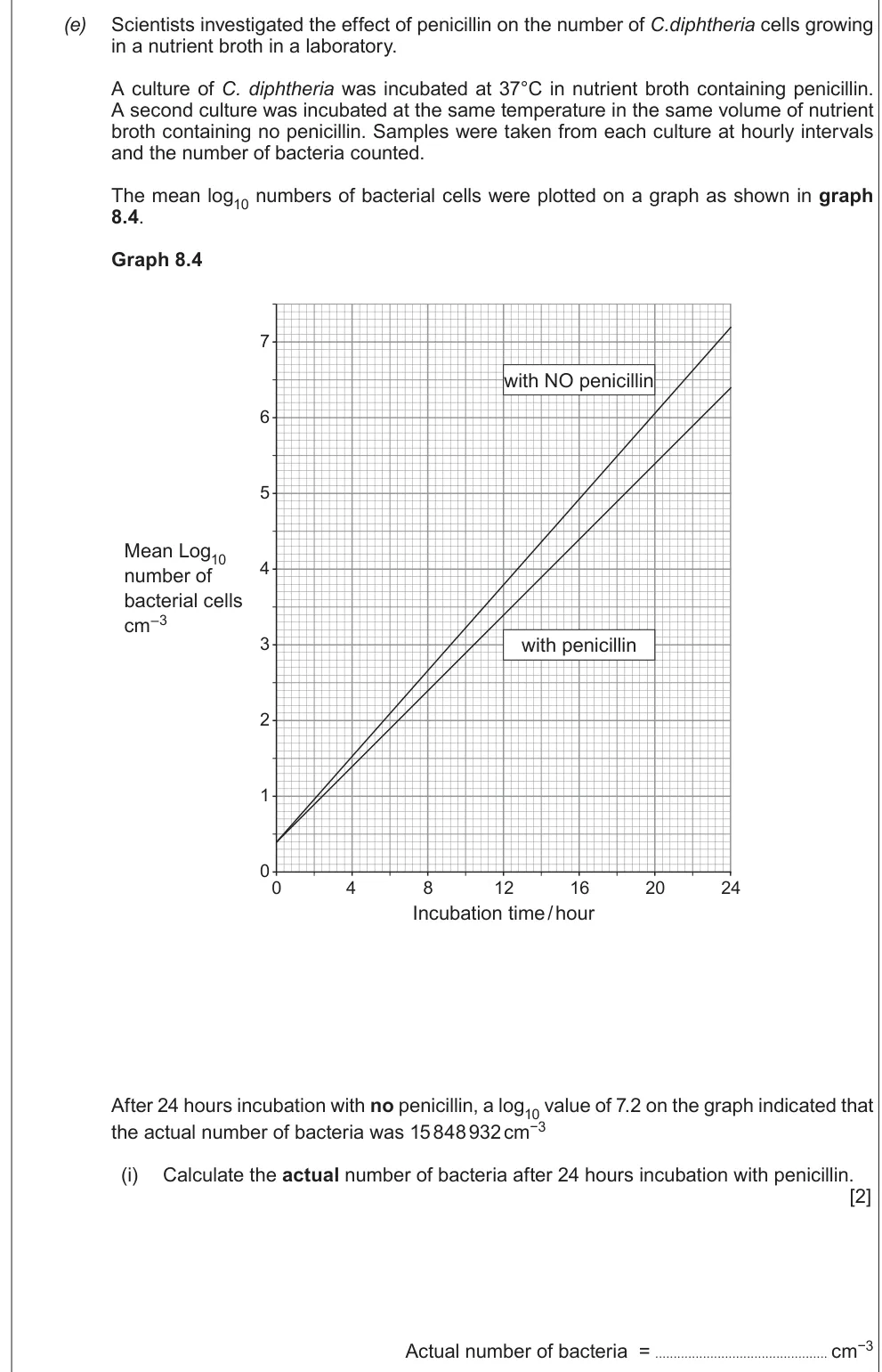
Read a log₁₀ value from a graph and convert it to the actual number of bacteria.
Show the mark scheme

Tap an image to open it full size.
From the examiners' report: Most read the correct log₁₀ value from the graph and found the antilog. Some did not round to a whole number, which is the logical step when the answer is a number of whole organisms.
Question 20
A level Component 1 · June 2022 · Q1(c)(i) · 3 marks · Hard
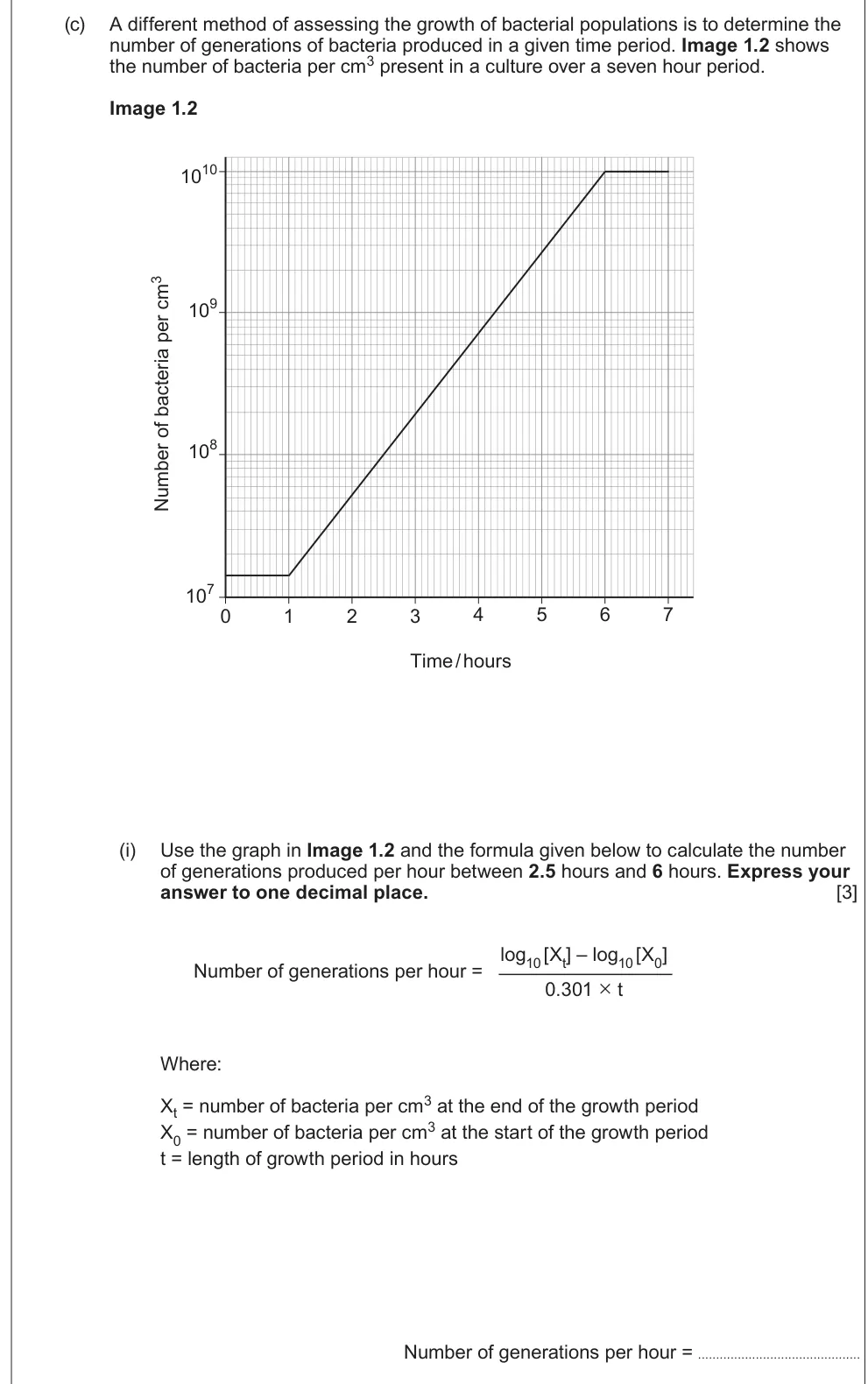
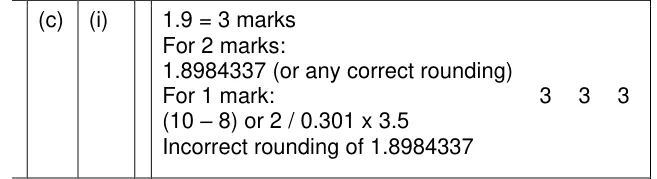
Use a graph with a log scale and a formula to calculate the number of generations of bacteria per hour, to one decimal place.
Show the mark scheme
Tap an image to open it full size.
From the examiners' report: Candidates did not find this calculation difficult.
Where students lose marks (from Eduqas examiners' reports and mark schemes)
Each point below is followed by wording that gained marks.
Rearrange before you substitute: Candidates who could not rearrange the equation to make distance the subject did not gain any marks.
✔ Gains credit: "distance² = 5 × 5 × 10⁴" for the rearrangement, then "distance = √250000".
Grams into milligrams first: Some did not know how to convert grams to milligrams, and some did not give the answer to the nearest mg/dL.
✔ Gains credit: "(4600 / 18) x (4.8/10)", with the answer given to the nearest whole number.
No fractions of a cell: The calculation was right, but a mark was often lost for giving a fraction of a cell.
✔ Gains credit: "0.05 × 24 = 1.2", then "150 × 3.323", rounded to a whole number of cells.
Round the antilog to whole bacteria: Some found the correct antilog but did not round it to a whole number.
✔ Gains credit: "Reading from graph" (6.4), then the "antilog of 6.4"; the mark scheme says "reject decimal place/s".
Easier to plot is not the reason: Answers said that log scales make the data easier to plot, which was not given credit.
✔ Gains credit: "Makes it easy to compare values that cover a large range" or "order of magnitude differences in values".
Micrometres and millimetres don't mix: Errors in converting units produced magnifications that were wrong by factors of 10 or 100.
✔ Gains credit: "31.5" divided by "0.063": the mark scheme gives a mark for the "conversion of units" (63 μm = 0.063 mm).
Three significant figures, not four or five: The rate was calculated correctly but not given to the correct number of significant figures, the most common error.
✔ Gains credit: "75 ÷ 4.1", then round to three significant figures: an answer left as "18.29" or "18.292" gains two marks, not three.
Milliseconds into seconds: Some conversion errors were seen when the time in milliseconds was used to give a rate in metres per second.
✔ Gains credit: "0.3 / 0.006"; "0.3 / 6" gains only one mark as an "incorrect conversion".
Download the questions
Download the PDF pack (20 questions, mark schemes at the end)
Keep practising
- Arithmetic (Maths Skills MS0): Eduqas A Level Biology Exam Questions
- Handling Data (Maths Skills MS1): Eduqas A Level Biology Exam Questions
- Graphs and Geometry (Maths Skills MS3 and MS4): Eduqas A Level Biology Exam Questions
- Variation and Evolution (2.6): Eduqas A Level Biology exam questions by topic
- Microbiology (1.4): Eduqas A Level Biology exam questions by topic
- Transport in Plants (3.2): Eduqas A Level Biology exam questions by topic
- Skeleton and Joints (Option B2 and B3): Eduqas A Level Biology exam questions by topic
- Eduqas A level Biology revision resources by topic
- Eduqas A level Biology past papers, mark schemes and examiners' reports
- Eduqas A level Biology grade boundaries
- Ask about Eduqas A level Biology lessons with Sam on WhatsApp
Questions, mark schemes and examiners' report extracts © WJEC CBAC Ltd (Eduqas).