

Sexual reproduction in humans covers the structure of the male and female reproductive systems (including the histology of the testis and ovary), spermatogenesis and oogenesis, fertilisation and implantation, the hormones that control the menstrual cycle, birth and lactation, and the role of the placenta. Every question on this page is from the A level Component 2 papers.
Labelling diagrams and naming hormones is usually done well. Marks are lost when you have to explain: why both mitosis and meiosis are needed to make sperm, why the cell released at ovulation is a secondary oocyte, how negative feedback works, and how the structure of the placenta speeds up exchange. The examiners' reports keep asking you to use the diagram or data you're given, and to say that a hormone affects the production or release of another hormone, not the hormone itself.
I don't teach the Eduqas specification myself, so for one-to-one help I recommend Sam. He teaches Eduqas A level Biology at a top-rated sixth form college and is very popular with his students. You can ask about lessons with Sam on WhatsApp using the link at the bottom of this page.
What you need from GCSE and Year 12
Each question on this page assumes you're secure on these ideas. If any of them feels shaky, look it up before you start.
- Sperm are made in the testes and eggs in the ovaries; both are gametes with half the chromosomes.
- FSH, LH, oestrogen and progesterone control the menstrual cycle.
- Fertilisation happens in the oviduct and the embryo implants in the uterus lining.
- The placenta exchanges substances between the mother's and the fetus's blood.
Key terms
These words come up in the questions and mark schemes. Examiners expect you to use them exactly.
- Spermatogenesis: making spermatozoa in the seminiferous tubules, by mitosis then meiosis.
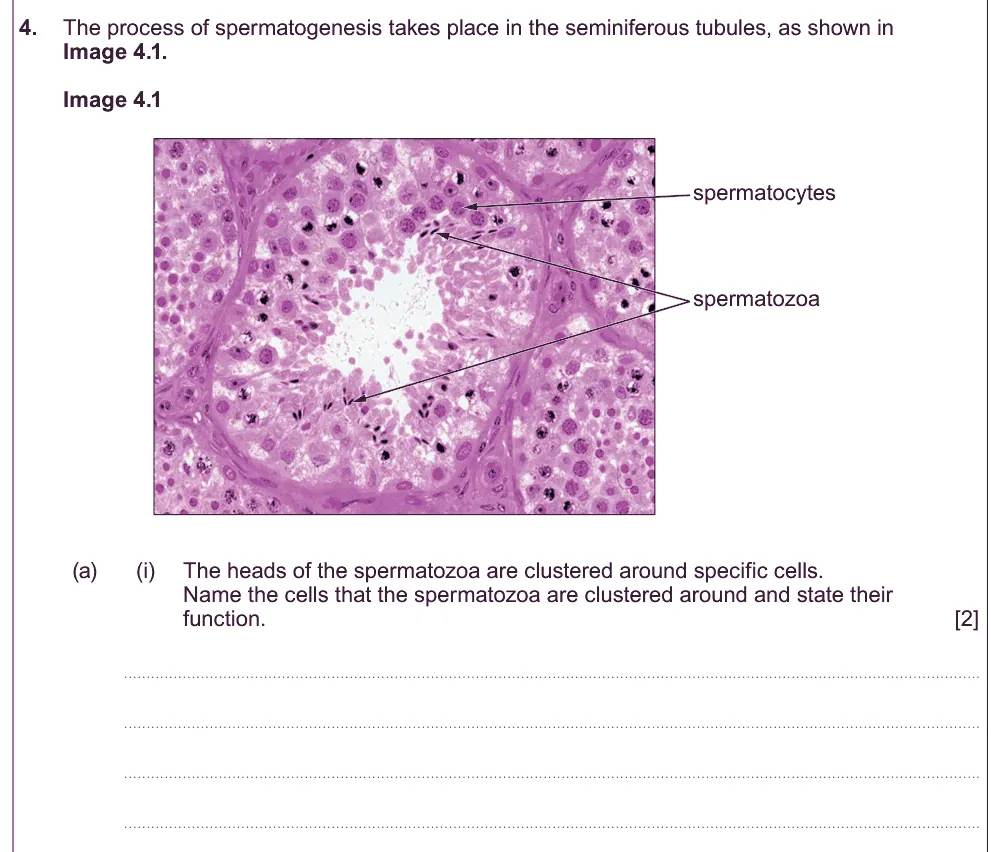
- Sertoli cell: a cell in the seminiferous tubule that nourishes and protects developing sperm.
- Oogenesis: making oocytes in the ovary; meiosis I begins before birth.
- Secondary oocyte: the cell released at ovulation, suspended in metaphase II until a sperm enters.
- Cortical reaction: release of cortical granules after fertilisation, which changes the zona pellucida to stop other sperm entering.
- Corpus luteum: the structure the Graafian follicle becomes after ovulation; it secretes progesterone.
- Negative feedback: a change causes effects that reverse it, such as oestrogen inhibiting FSH release.
- Chorionic villi: fetal projections in the placenta that give a large surface area for exchange.
What these questions cover (Eduqas 2.3)
The questions test these statements from Component 2 (Continuity of Life) of the Eduqas A level Biology specification (A400). Component 2 content is examined in A level Component 2.
- (a) the structure and function of the reproductive systems in humans, including the examination of histology of ovary and testis
- (b) the processes of spermatogenesis and oogenesis to produce spermatozoa and secondary oocytes
- (c) the endocrine control of reproduction in the female
- (d) the role of the placenta including hormonal control
How to use this page
Write your answer on paper before you open the mark scheme. Allow about 1.2 minutes per mark: the 23 questions are worth 52 marks, so about 62 minutes in total. Then mark your answer strictly against the mark scheme and read the examiners' tip underneath it. If you'd rather print the questions, download the PDF pack.
The reproductive systems
Question 1
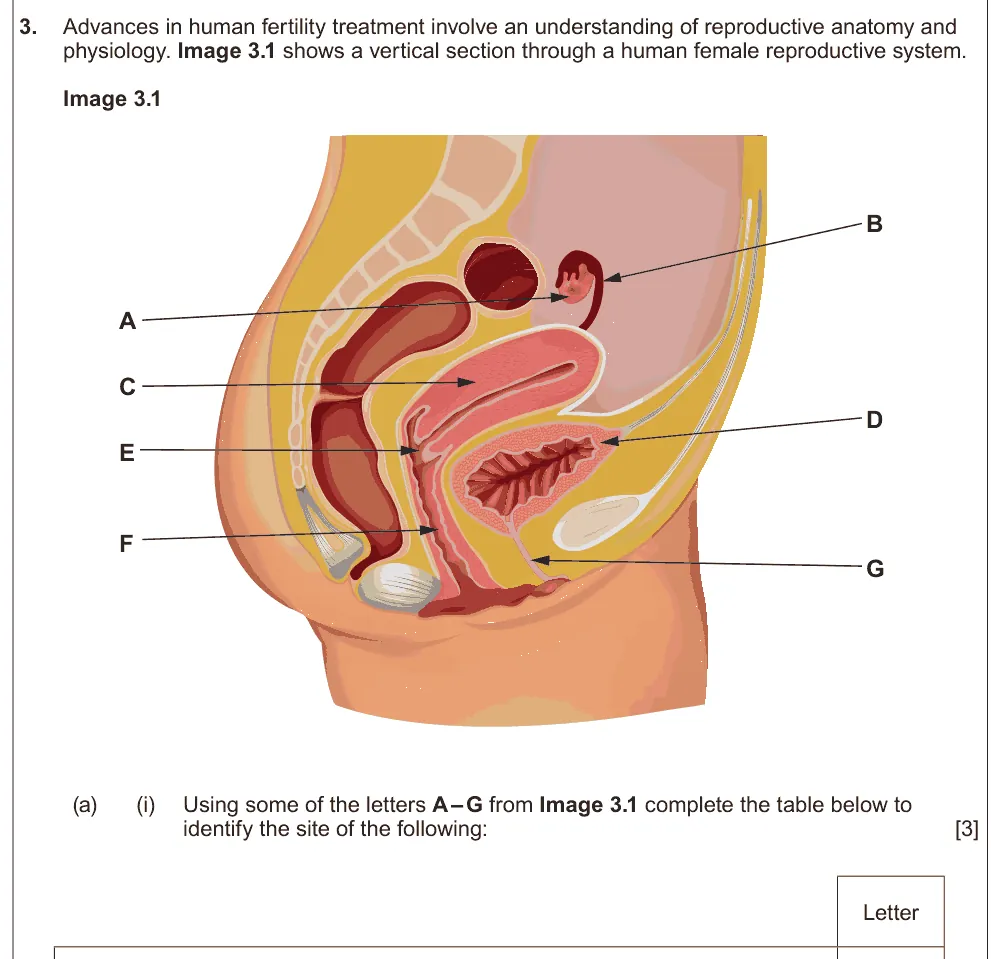
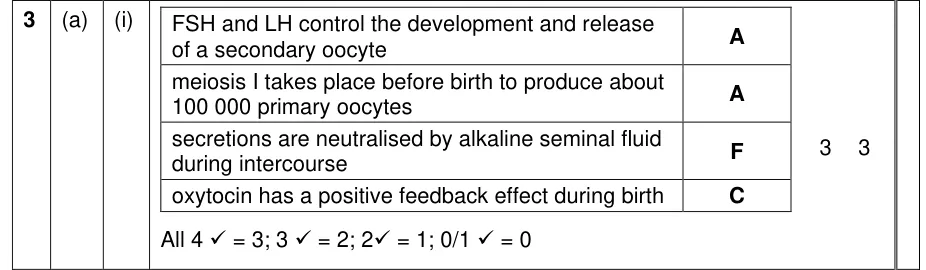
A level Component 2 · June 2022 · Q3(a)(i) · 3 marks
Identify sites in the female reproductive system from a vertical section.
Show the mark scheme
Tap an image to open it full size.
From the examiners' report: Many errors came from reading the vertical section. Trace each structure carefully before you choose a letter.
Question 2
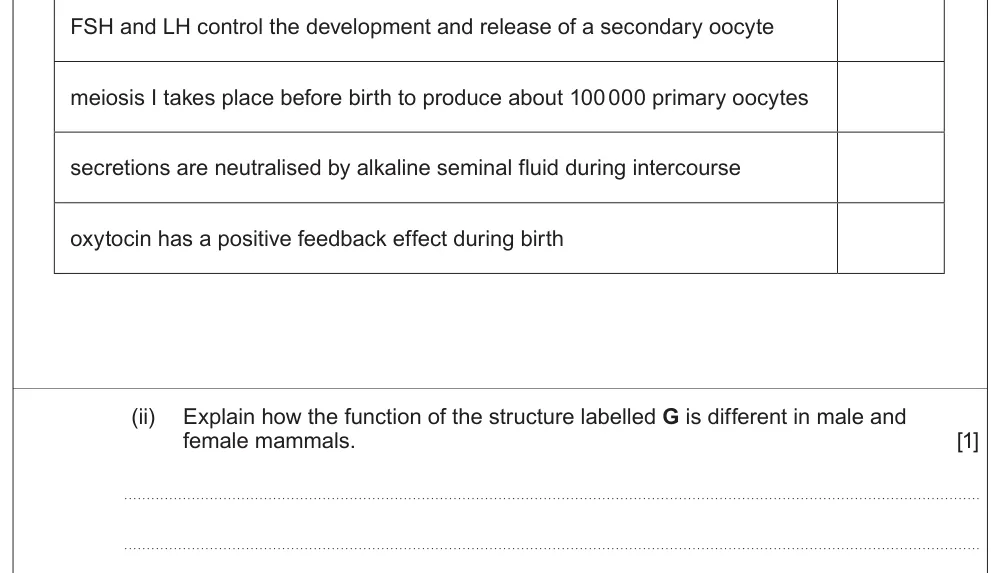
A level Component 2 · June 2022 · Q3(a)(ii) · 1 mark
Explain how the function of the urethra differs in male and female mammals.
Show the mark scheme

Tap an image to open it full size.
From the examiners' report: Many didn't know that in males the urethra carries urine and semen, but only urine in females.
Question 3
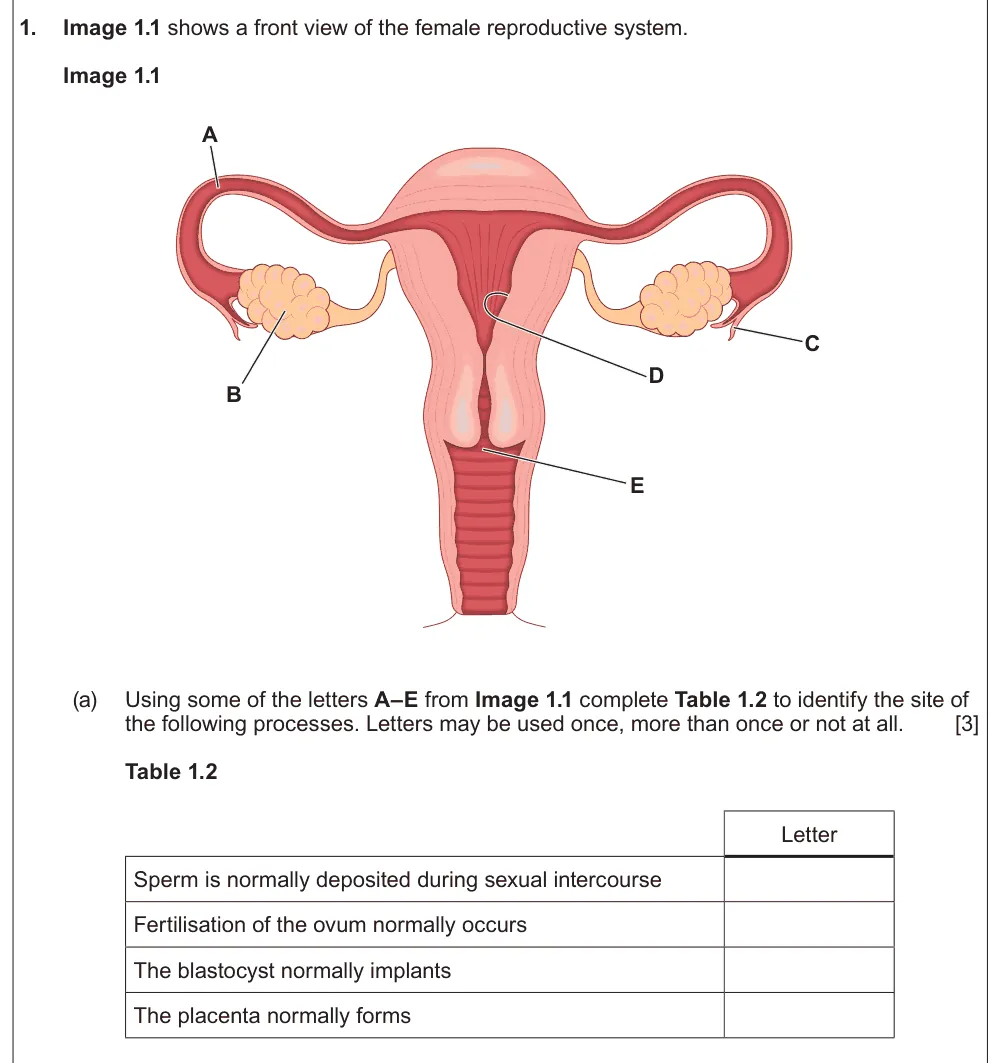
A level Component 2 · June 2025 · Q1(a) · 3 marks
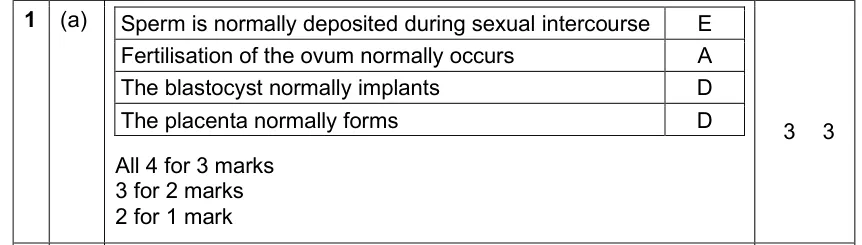
Identify where sperm is deposited, fertilisation occurs, the blastocyst implants and the placenta forms.
Show the mark scheme
Tap an image to open it full size.
From the examiners' report: A surprising number said the placenta forms in the ovary.
Question 4
A level Component 2 · June 2023 · Q4(a)(i) · 2 marks · Easy
Name the cells that spermatozoa cluster around in a seminiferous tubule and their function.
Show the mark scheme

Tap an image to open it full size.
Making gametes
Question 5
A level Component 2 · June 2023 · Q4(a)(ii) · 3 marks
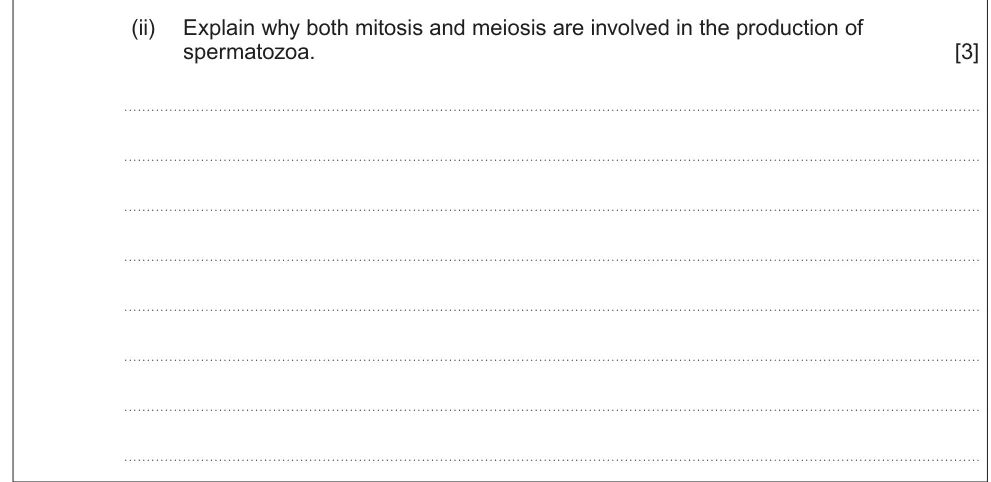
Explain why both mitosis and meiosis are involved in the production of spermatozoa.
Show the mark scheme
Tap an image to open it full size.
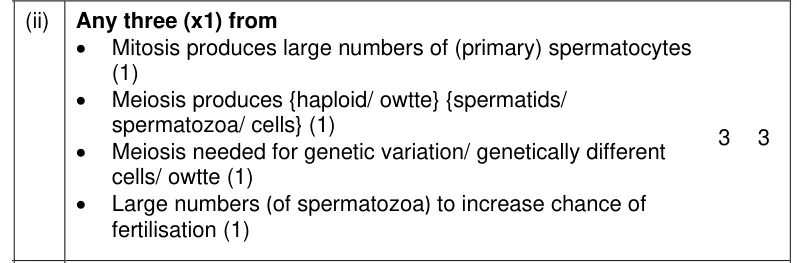
From the examiners' report: Many just described sperm production. Explain both: mitosis for large numbers, meiosis for haploid, genetically different cells.
Question 6
A level Component 2 · Autumn 2021 · Q3(b)(ii) · 3 marks
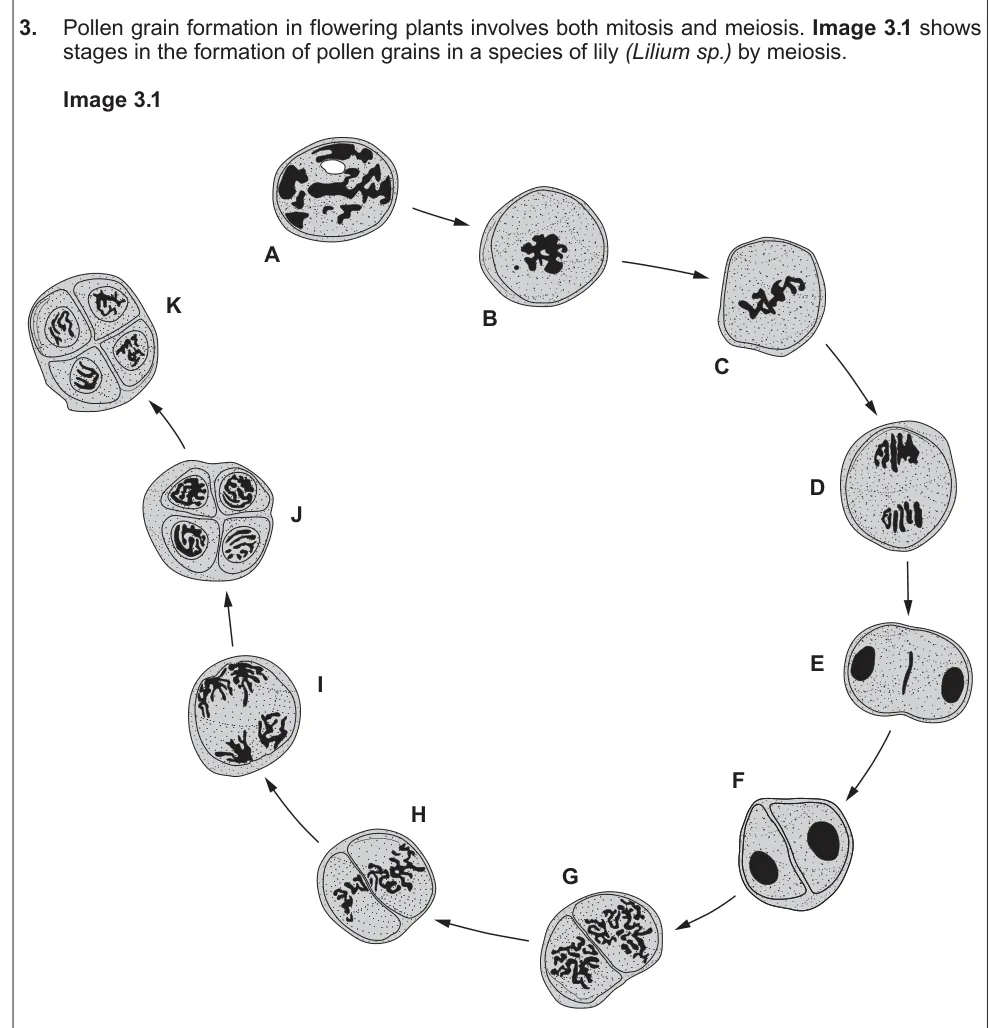
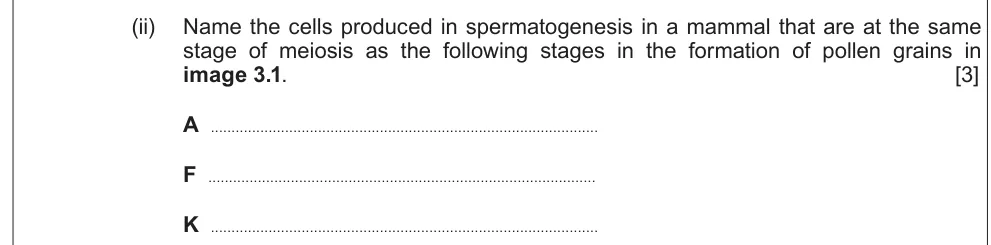
Name the equivalent cells A, F and K in spermatogenesis in mammals.
Information from earlier in this question:
Show the mark scheme

Tap an image to open it full size.
From the examiners' report: Linking the stages of meiosis to spermatogenesis caused problems.
Question 7
A level Component 2 · June 2022 · Q6(b)(iii) · 2 marks
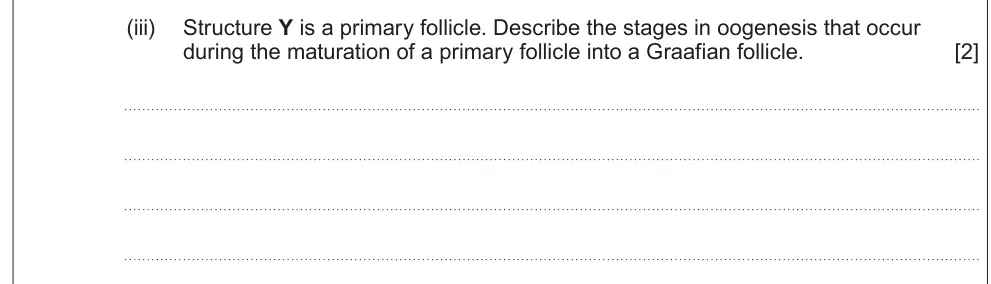
Describe the stages of oogenesis as a primary follicle matures into a Graafian follicle.
Show the mark scheme

Tap an image to open it full size.
From the examiners' report: There was much confusion between the primary oocyte and the primary follicle.
Question 8
A level Component 2 · June 2017 · Q6(a) · 2 marks · Easy
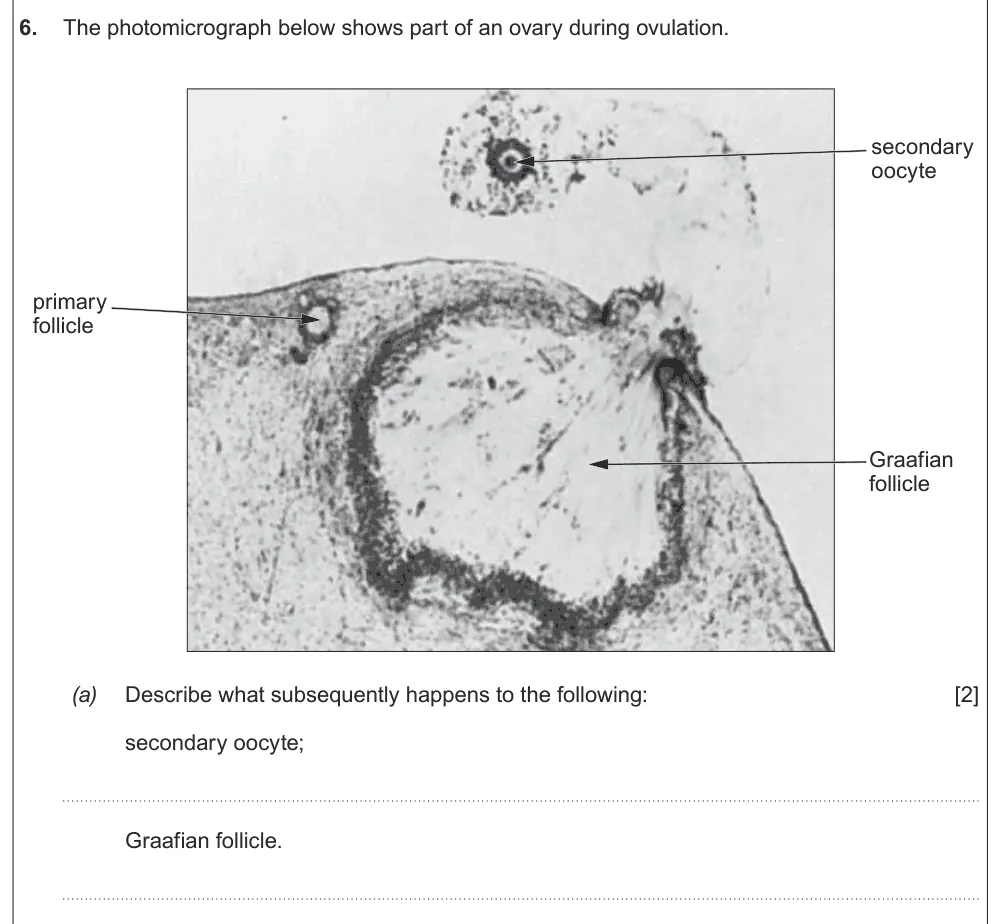
Describe what happens to the secondary oocyte and the Graafian follicle after ovulation.
Show the mark scheme

Tap an image to open it full size.
Hormonal control
Question 9
A level Component 2 · June 2017 · Q6(b)(i) · 4 marks
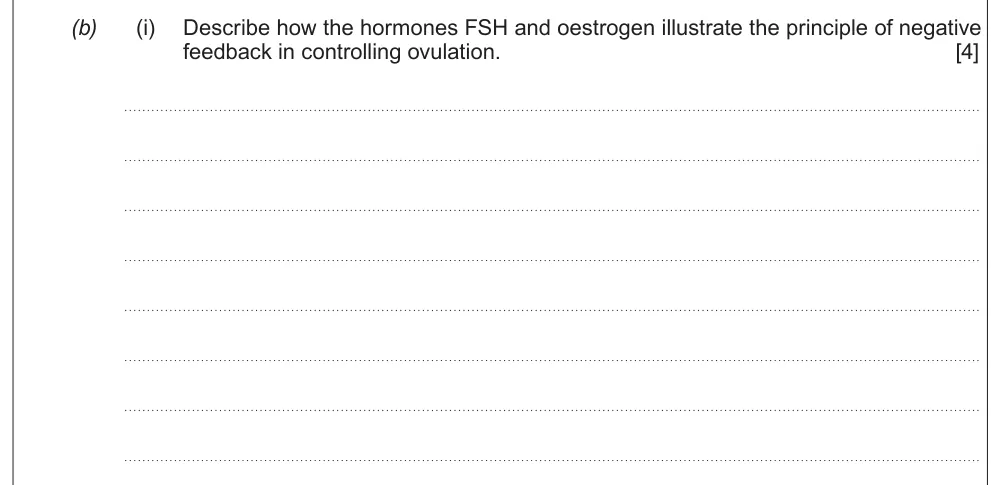
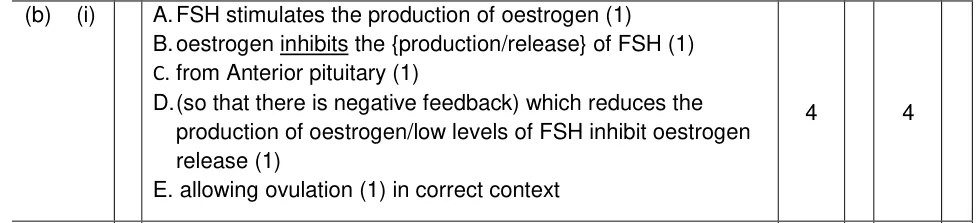
Describe how FSH and oestrogen illustrate negative feedback in controlling ovulation.
Show the mark scheme
Tap an image to open it full size.
From the examiners' report: Say a hormone affects the production or release of another hormone, not the hormone itself.
Question 10
A level Component 2 · June 2017 · Q6(b)(ii) · 3 marks
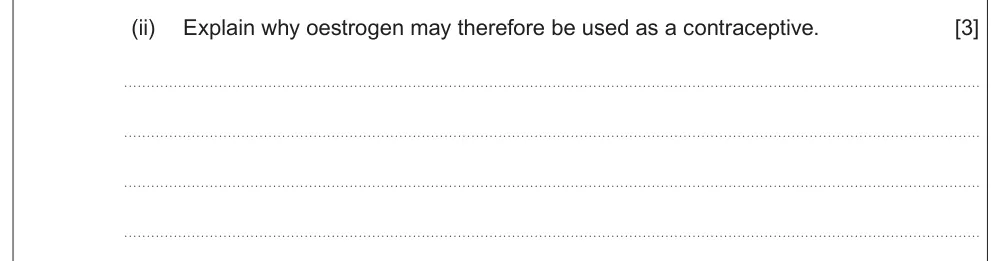
Explain why oestrogen may be used as a contraceptive.
Show the mark scheme

Tap an image to open it full size.
Question 11
A level Component 2 · Autumn 2020 · Q5(a)(ii) · 3 marks
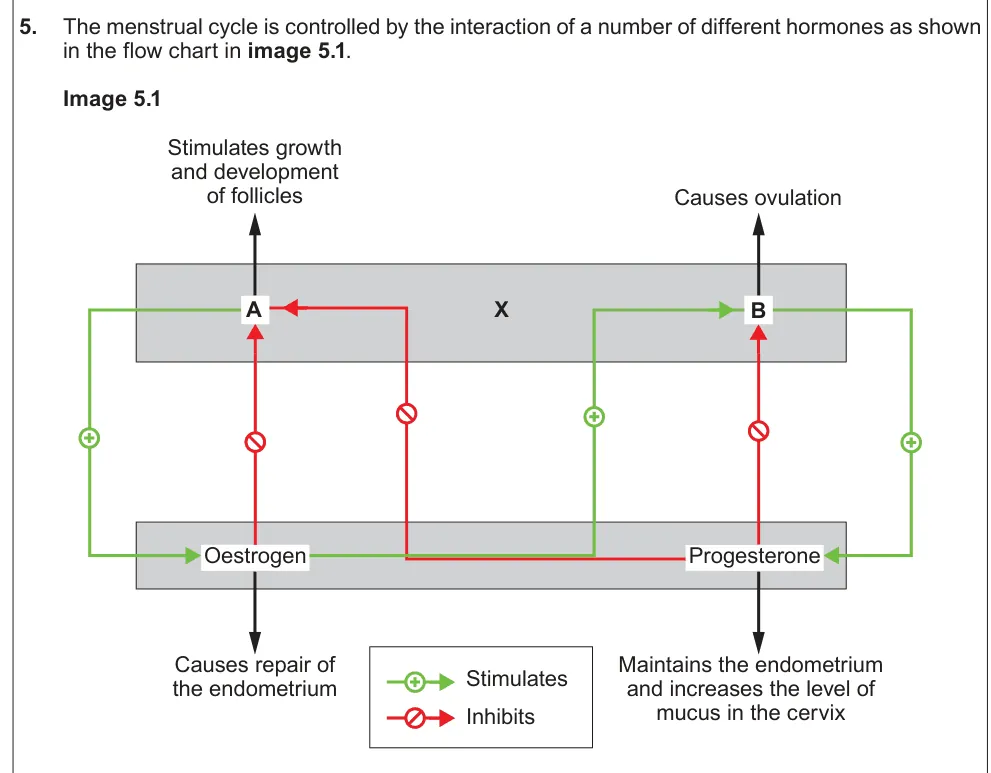
Conclude how oestrogen and progesterone in the combined pill reduce the chance of fertilisation.
Information from earlier in this question:
Show the mark scheme

Tap an image to open it full size.
From the examiners' report: Marks were lost by not using the information in the diagram.
Question 12
A level Component 2 · June 2025 · Q1(b)(i) · 2 marks
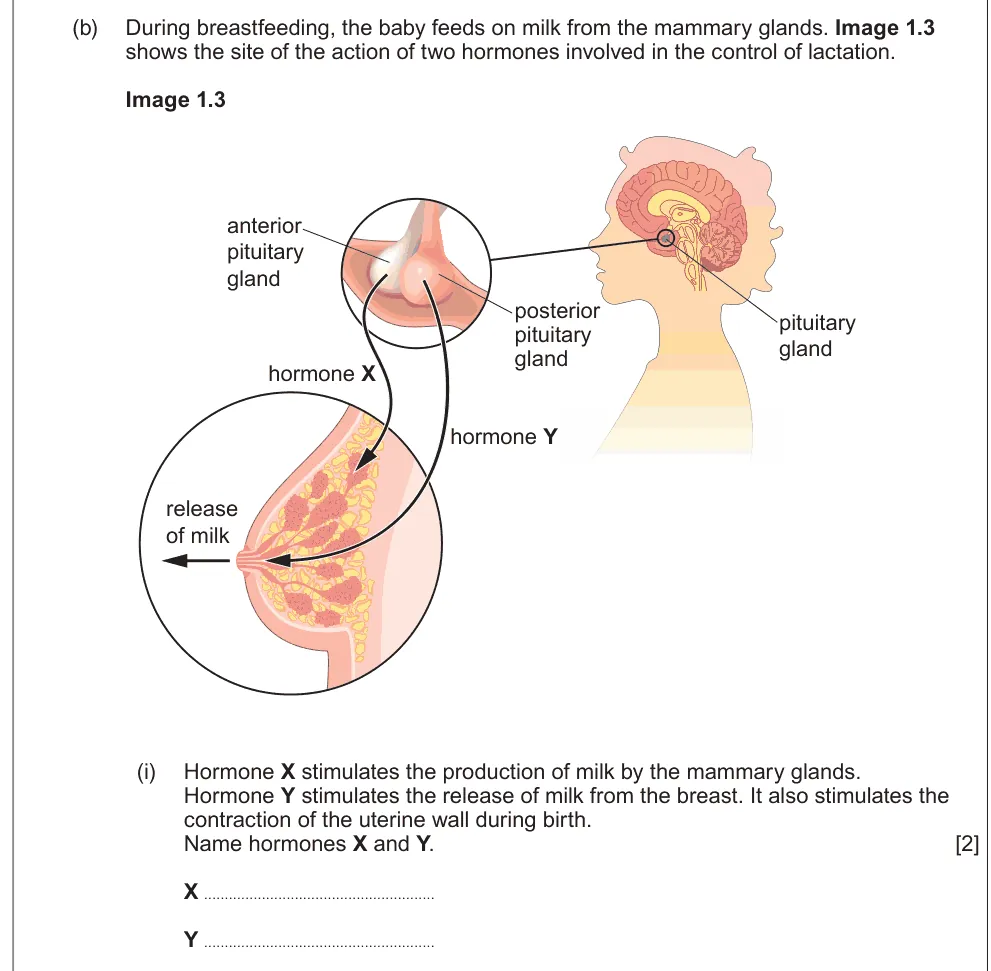
Name the hormones that stimulate milk production and milk release.
Show the mark scheme

Tap an image to open it full size.
From the examiners' report: Many wrote oestrogen and progesterone. These are prolactin and oxytocin.
Fertilisation
Question 13
A level Component 2 · June 2022 · Q3(b)(i) · 2 marks
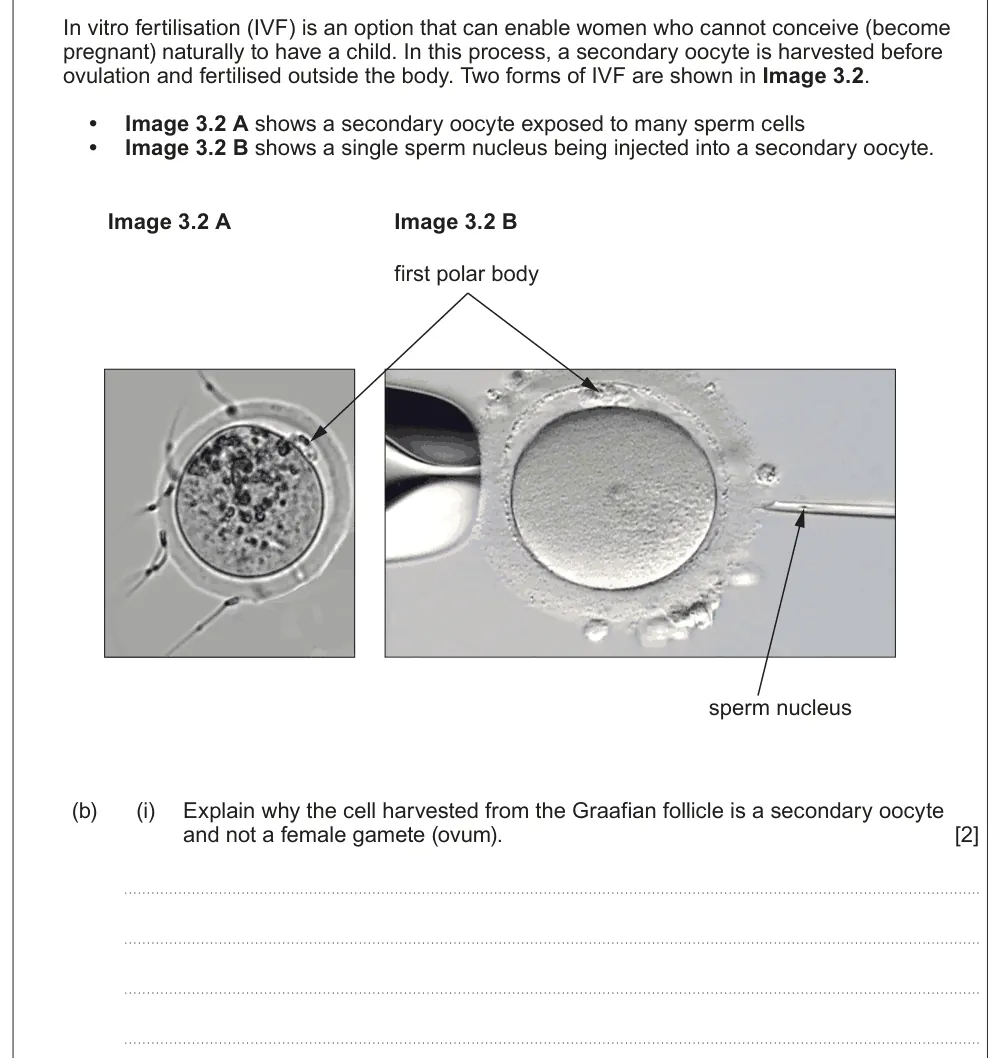
Explain why the cell harvested from a Graafian follicle is a secondary oocyte, not an ovum.
Show the mark scheme

Tap an image to open it full size.
From the examiners' report: There was much confusion over the stages of oogenesis: the oocyte only completes meiosis II when a sperm enters.
Question 14
A level Component 2 · June 2022 · Q3(b)(ii) · 2 marks
Describe how entry of more than one sperm nucleus into the oocyte is prevented.
Show the mark scheme

Tap an image to open it full size.
Question 15
A level Component 2 · June 2022 · Q3(b)(iv) · 2 marks
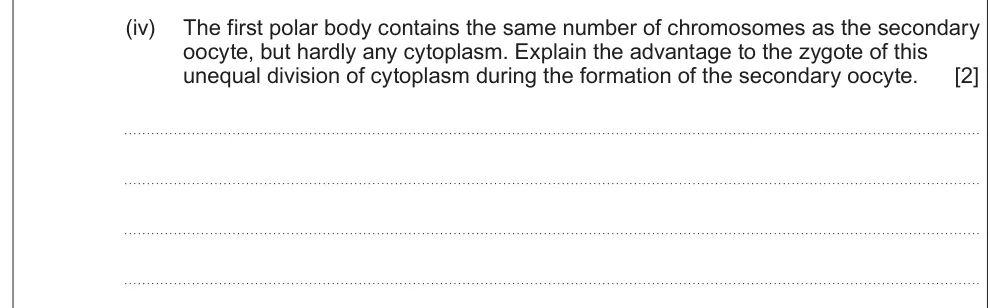
Explain the advantage to the zygote of the unequal division of cytoplasm in oogenesis.
Show the mark scheme

Tap an image to open it full size.
Question 16
A level Component 2 · June 2018 · Q2(c)(ii) · 2 marks
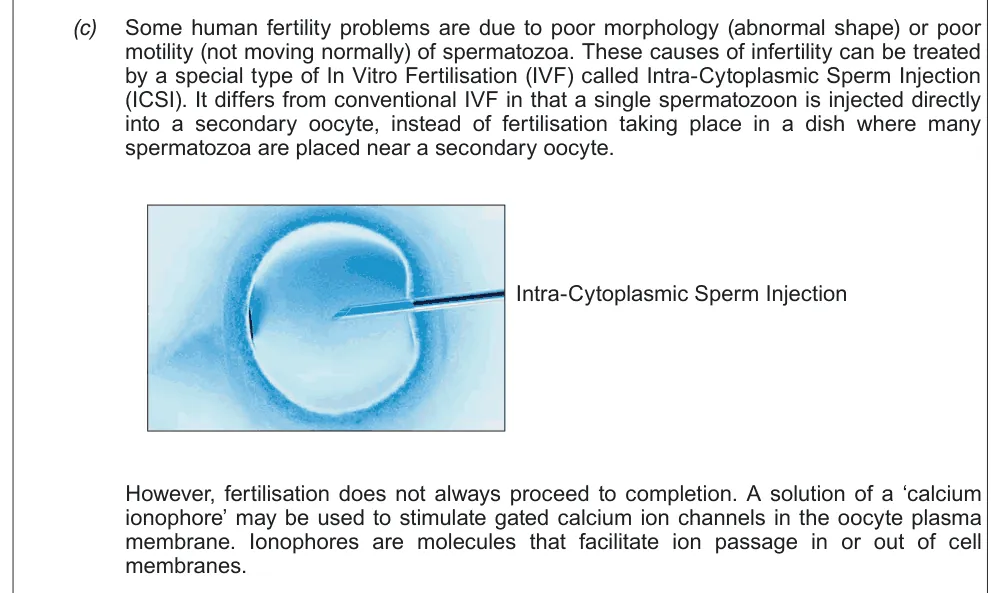
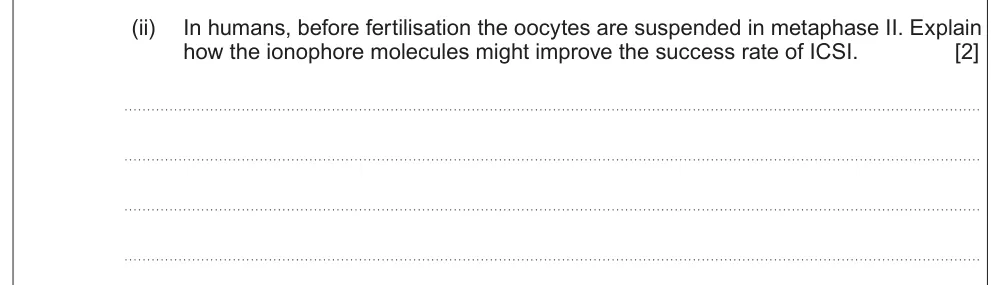
Explain how ionophore molecules might improve the success rate of ICSI.
Information from earlier in this question:
Show the mark scheme

Tap an image to open it full size.
From the examiners' report: Many wrote about preventing polyspermy, but the passage said no other sperm were present. Read the information carefully.
Question 17
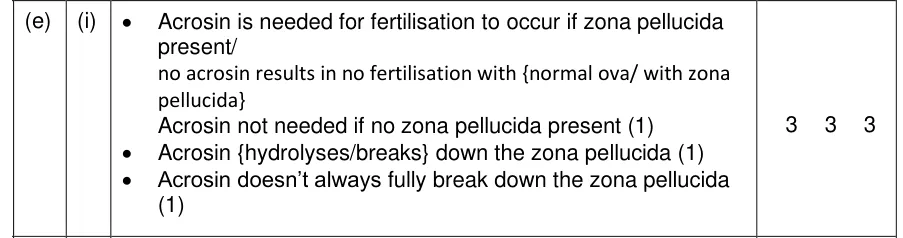
A level Component 2 · June 2023 · Q4(e)(i) · 3 marks
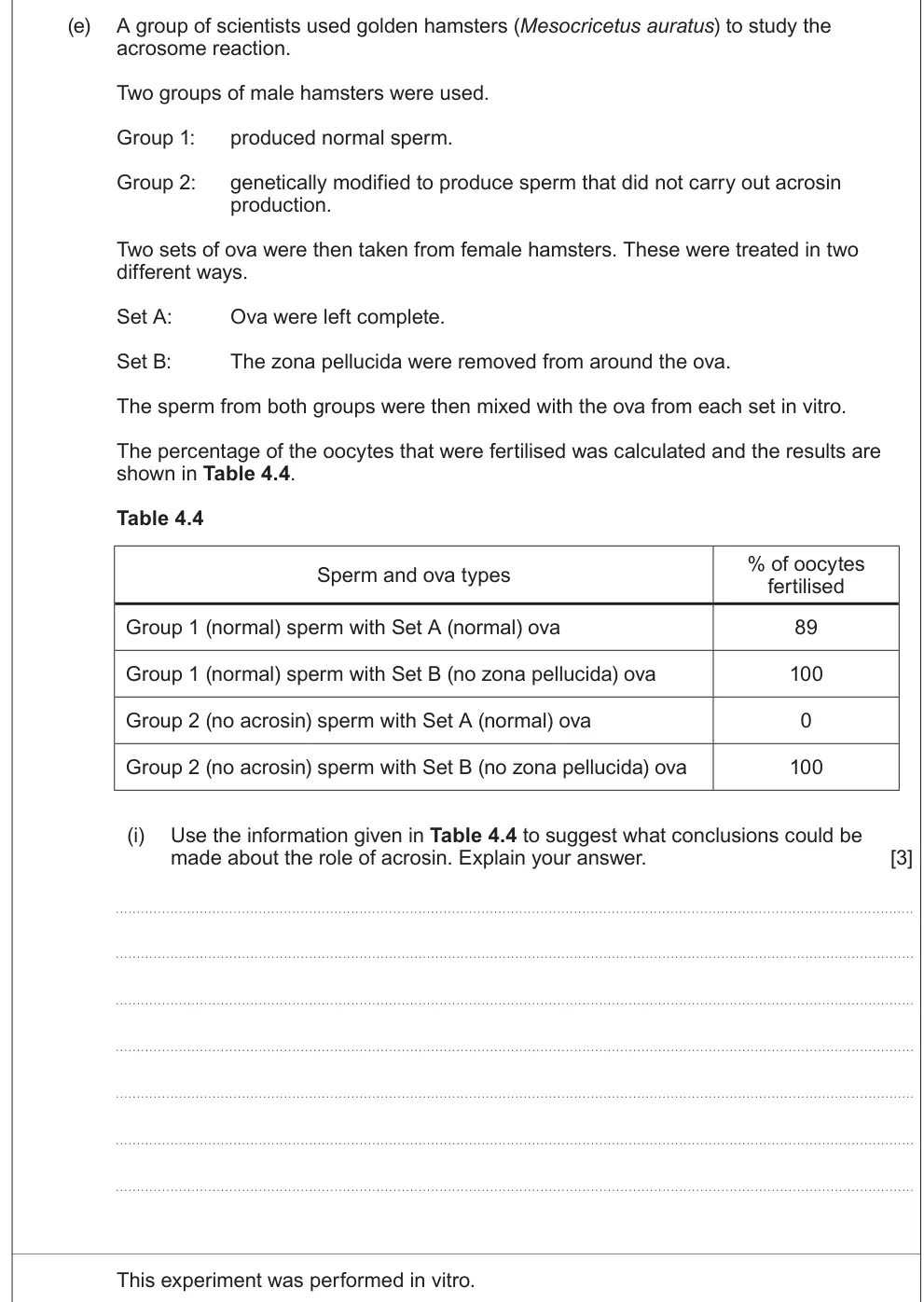
Use data on sperm and ova to conclude the role of acrosin.
Show the mark scheme
Tap an image to open it full size.
From the examiners' report: Describing the table didn't gain many marks: you also had to make conclusions.
The placenta, birth and lactation
Question 18
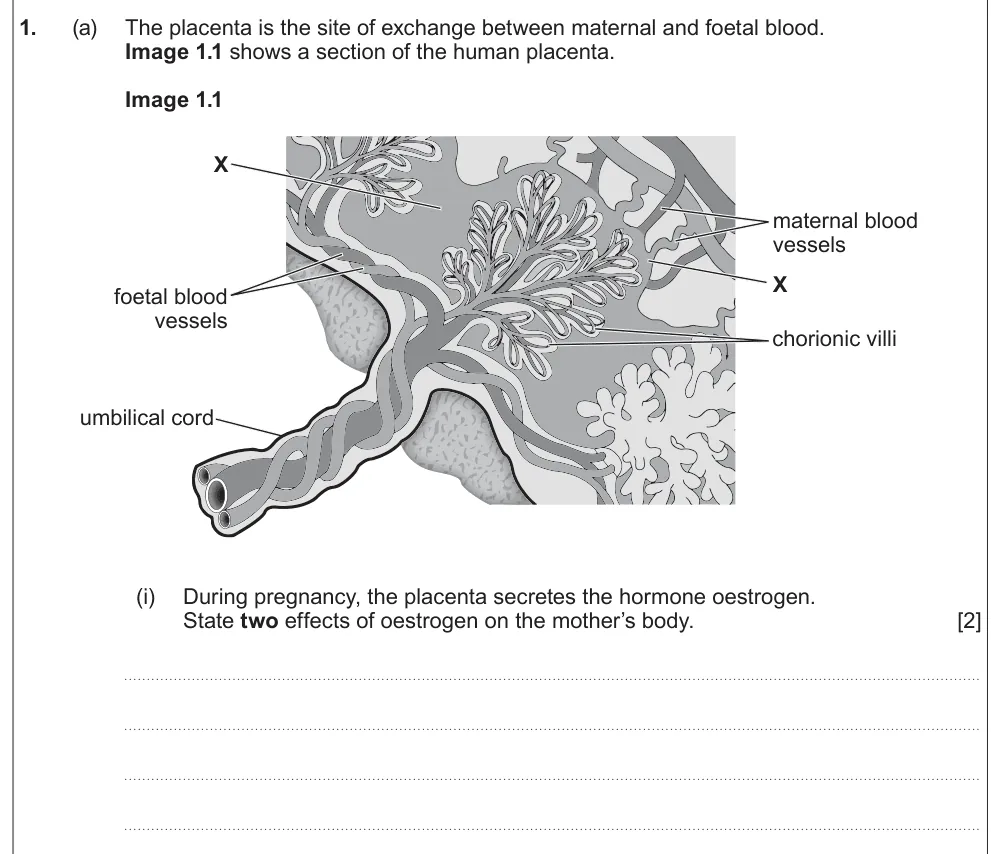
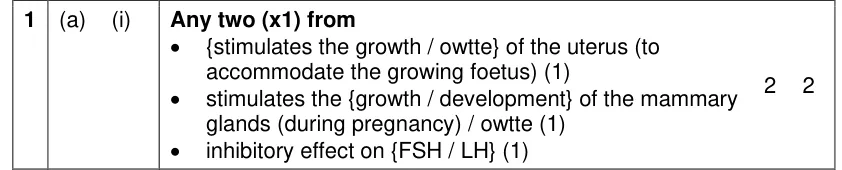
A level Component 2 · June 2024 · Q1(a)(i) · 2 marks
State two effects of placental oestrogen on the mother's body.
Show the mark scheme
Tap an image to open it full size.
Question 19
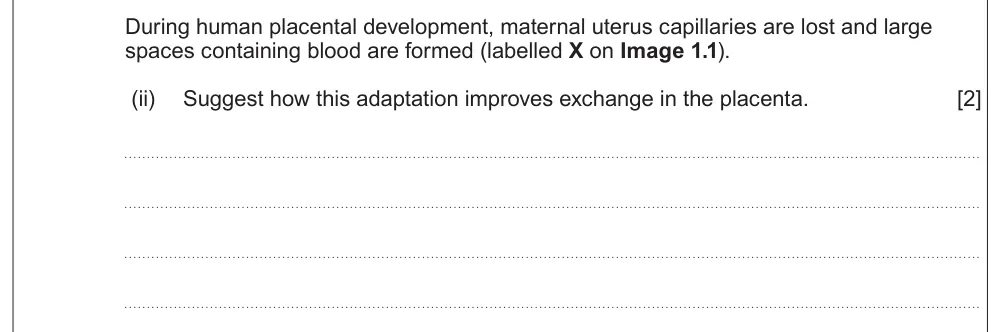
A level Component 2 · June 2024 · Q1(a)(ii) · 2 marks
Suggest how blood spaces in the placenta improve exchange.
Show the mark scheme

Tap an image to open it full size.
Question 20
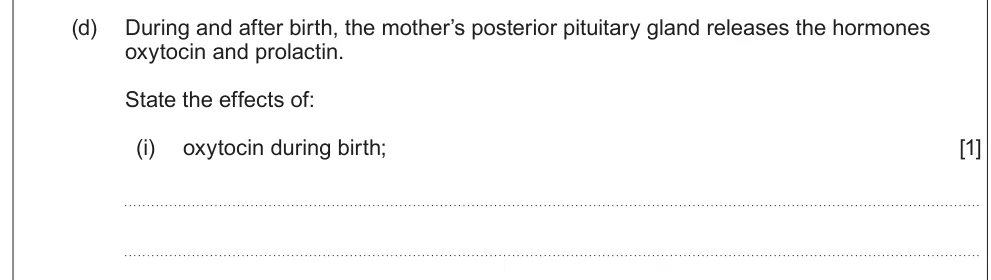
A level Component 2 · June 2024 · Q1(d)(i) · 1 mark
State the effect of oxytocin during birth.
Show the mark scheme

Tap an image to open it full size.
Question 21
A level Component 2 · June 2024 · Q1(d)(ii) · 1 mark
State the effect of prolactin after birth.

Show the mark scheme

Tap an image to open it full size.
From the examiners' report: Write milk production or lactation, not "lactate".
Question 22
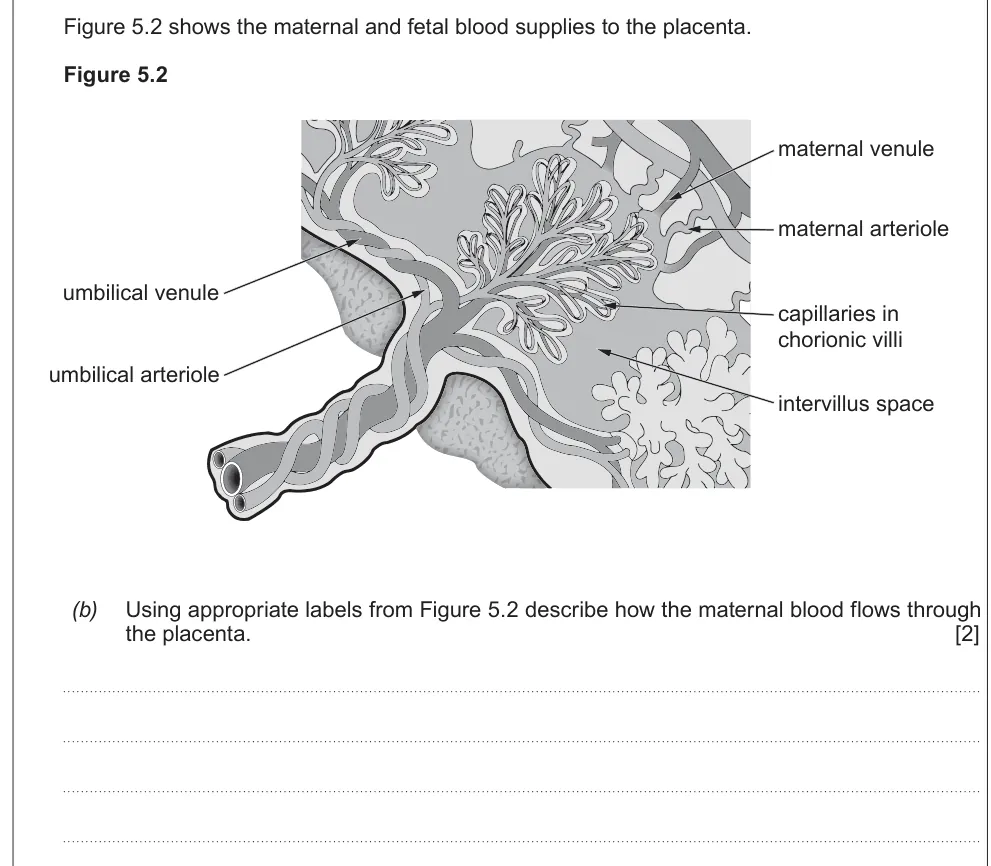
A level Component 2 · June 2019 · Q5(b) · 2 marks
Use labels from a diagram to describe how maternal blood flows through the placenta.
Show the mark scheme

Tap an image to open it full size.
From the examiners' report: Everything you need is in the figure, yet this part was answered worse than expected.
Question 23
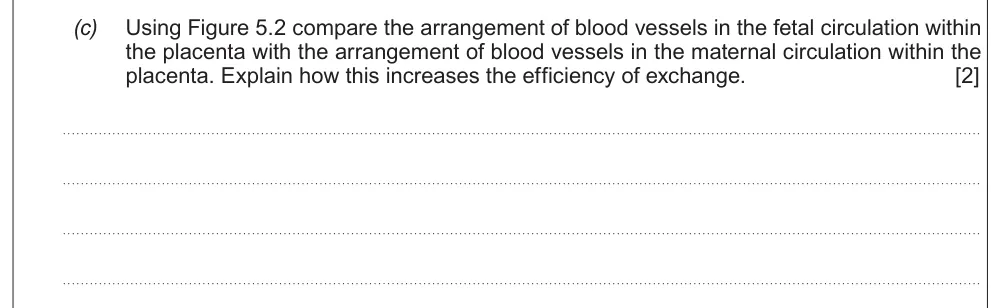
A level Component 2 · June 2019 · Q5(c) · 2 marks
Compare the fetal and maternal blood vessels in the placenta and explain the effect on exchange.
Show the mark scheme

Tap an image to open it full size.
From the examiners' report: This was the hardest item on the paper. Many described counter-current flow instead of using the figure.
Where students lose marks (from Eduqas examiners' reports and mark schemes)
Each point below is followed by wording that gained marks.
Explain both divisions: Many described sperm production instead of explaining why mitosis and meiosis are both needed.
✔ Gains credit: "Mitosis produces large numbers of spermatocytes" and "meiosis produces haploid spermatids".
Hormones act on release: Answers said one hormone acts on another hormone.
✔ Gains credit: "Oestrogen inhibits the production / release of FSH".
Secondary oocyte, not ovum: There was much confusion over the stages of oogenesis.
✔ Gains credit: "Has not completed meiosis / is suspended in metaphase II".
Use the figure, not a memorised answer: Many described counter-current flow.
✔ Gains credit: "No capillaries present between maternal arteriole and maternal venule" so a "shorter diffusion path".
Conclude, don't describe: Describing the data table didn't gain many marks.
✔ Gains credit: "Acrosin hydrolyses / breaks down the zona pellucida".
Milk, not lactate: References to production of lactate were seen.
✔ Gains credit: Prolactin "stimulates production of milk".
Download the questions
Download the PDF pack (23 questions, mark schemes at the end)
Keep practising
- Classification and Biodiversity (2.1): Eduqas A Level Biology exam questions by topic
- Cell Division (2.2): Eduqas A Level Biology exam questions by topic
- Sexual Reproduction in Plants (2.4): Eduqas A Level Biology exam questions by topic
- Inheritance (2.5): Eduqas A Level Biology exam questions by topic
- Variation and Evolution (2.6): Eduqas A Level Biology exam questions by topic
- Application of Reproduction and Genetics (2.7): Eduqas A Level Biology exam questions by topic
- Eduqas A level Biology past papers, mark schemes and examiners' reports
- Eduqas A level Biology grade boundaries
- Ask about Eduqas A level Biology lessons with Sam on WhatsApp
Questions, mark schemes and examiners' report extracts © WJEC CBAC Ltd (Eduqas).