

Application of reproduction and genetics is the gene technology topic. You need the Human Genome Project and the 100K Genome Project, the ethics of genetic screening, sequencing other genomes such as Anopheles and Plasmodium, PCR and gel electrophoresis for genetic fingerprinting, recombinant DNA and insulin, GM crops, gene therapy, genomics in healthcare, and stem cells. Every question on this page is from the A level Component 2 papers.
Naming PCR and the enzymes used to cut and splice genes is usually done well. Marks are lost on precise detail: a restriction endonuclease cuts at a specific base sequence, DNA fragments separate by length not weight, and Taq polymerase is itself a DNA polymerase. Ethical answers need to be specific: "it is wrong to play God", "unethical" or "privacy" alone gain nothing. Gene editing with CRISPR-Cas9 was the least well answered part of its paper.
I don't teach the Eduqas specification myself, so for one-to-one help I recommend Sam. He teaches Eduqas A level Biology at a top-rated sixth form college and is very popular with his students. You can ask about lessons with Sam on WhatsApp using the link at the bottom of this page.
What you need from GCSE and Year 12
Each question on this page assumes you're secure on these ideas. If any of them feels shaky, look it up before you start.
- DNA is a double helix of nucleotides; the base sequence carries the genetic code.
- Genetic engineering moves a gene from one organism into another.
- Some genetic disorders, such as cystic fibrosis, are caused by recessive alleles.
- Stem cells can divide and differentiate into many types of cell.
Key terms
These words come up in the questions and mark schemes. Examiners expect you to use them exactly.
- PCR: the polymerase chain reaction: repeated cycles of 95 °C, about 55 °C and 72 °C copy a DNA sequence many times.
- Primer: a short single strand of DNA that binds to the start of the target sequence.
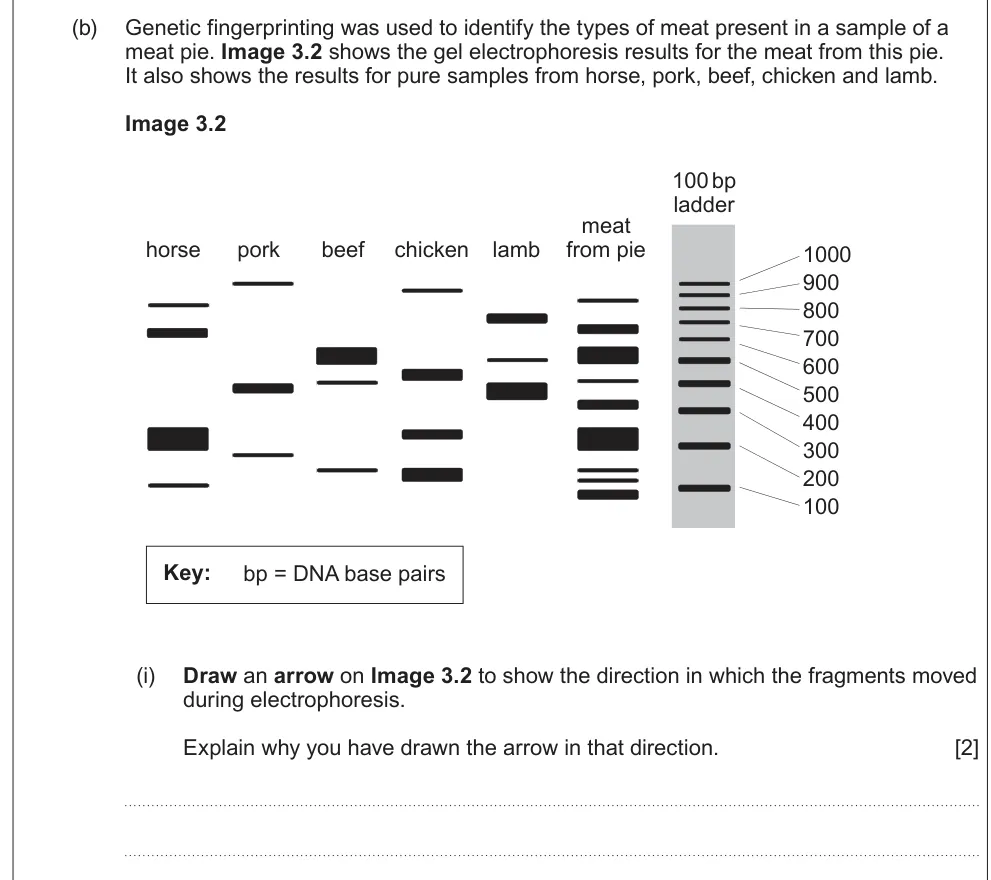
- Gel electrophoresis: separating DNA fragments by length in an electric field; shorter fragments move further.
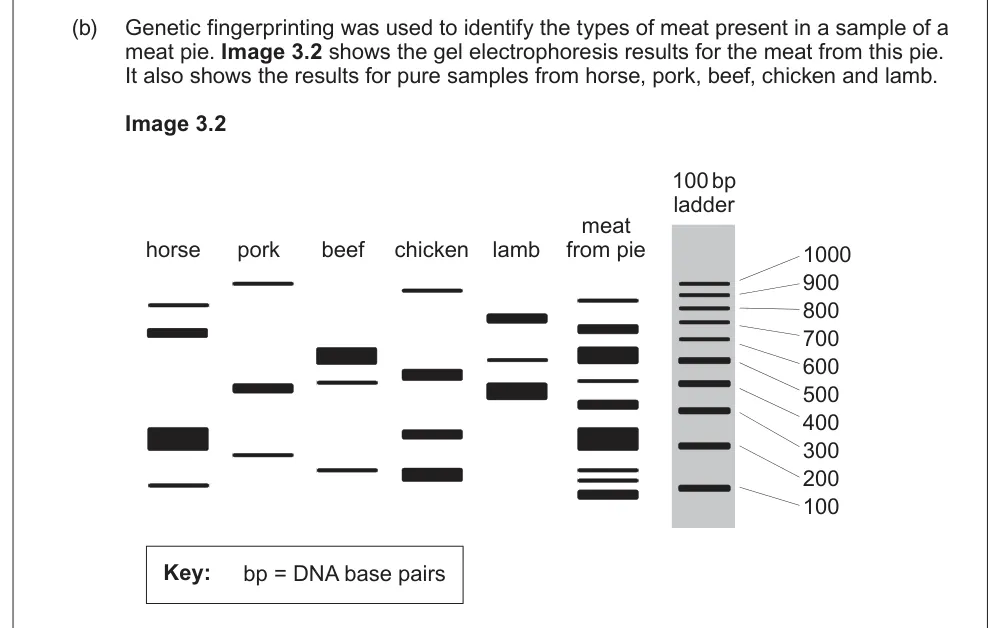
- DNA ladder: fragments of known length run alongside samples so their lengths can be estimated.
- Restriction endonuclease: an enzyme that cuts DNA at a specific base sequence, often leaving sticky ends.
- Ligase: an enzyme that joins DNA fragments by forming phosphodiester bonds.
- Reverse transcriptase: an enzyme that makes DNA from an mRNA template.
- Germ-line therapy: changing the genes in gametes or an embryo, so the change is inherited.
What these questions cover (Eduqas 2.7)
The questions test these statements from Component 2 (Continuity of Life) of the Eduqas A level Biology specification (A400). Component 2 content is examined in A level Component 2.
- (b) the ethical issues surrounding the use of this knowledge and its application to the screening of embryos for genetic disorders e.g. cystic fibrosis, Huntington's disease
- (c) how the genomes from other organisms have also been sequenced, including the mosquito, Anopheles gambiae and the Plasmodium parasite that it transmits and that better met
- (d) the use of PCR and electrophoresis to produce a genetic fingerprint
- (e) the formation of recombinant DNA by insertion of foreign DNA into bacterial plasmids and the cloning of the bacteria to produce useful molecules as illustrated by insulin
- (f) issues surrounding the use of gene technologies to produce genetically modified crops by inserting a gene from one organism into another to convey disease resistance e.g.
- (g) the advantages and disadvantages of using gene therapy for the treatment of disease as illustrated by muscular dystrophy
- (h) the use of genomics and its possible impact on healthcare of the future
- (i) the issues surrounding the use of stem cells for replacing damaged tissues and organs
How to use this page
Write your answer on paper before you open the mark scheme. Allow about 1.2 minutes per mark: the 23 questions are worth 49 marks, so about 59 minutes in total. Then mark your answer strictly against the mark scheme and read the examiners' tip underneath it. If you'd rather print the questions, download the PDF pack.
Genome projects and ethics
Question 1
A level Component 2 · June 2024 · Q2(a)(i) · 2 marks
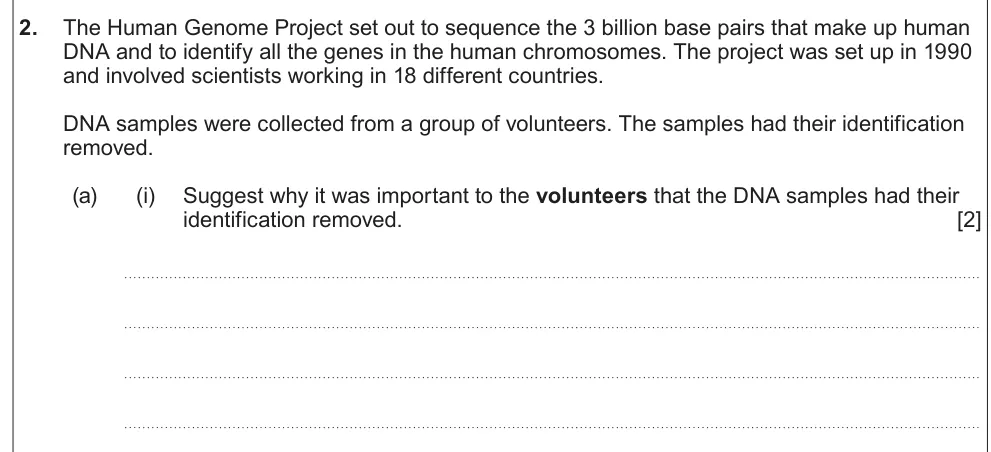
Suggest why it mattered that the Human Genome Project's DNA samples were anonymous.
Show the mark scheme

Tap an image to open it full size.
From the examiners' report: Vague answers about unethical practices and privacy gained no credit. Name the consequence: discrimination, such as being refused life insurance.
Question 2
A level Component 2 · June 2024 · Q2(a)(ii) · 2 marks
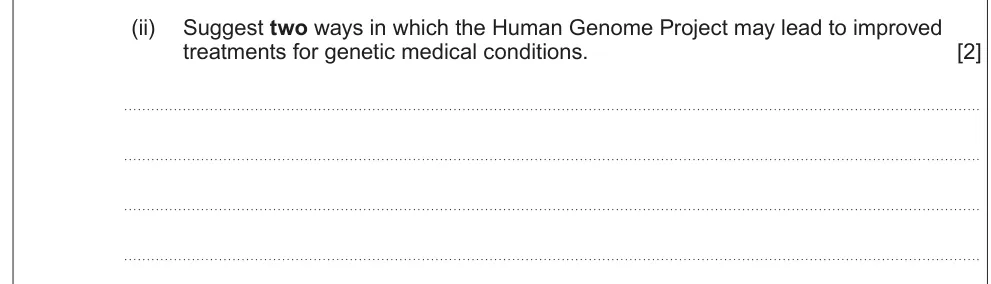
Suggest two ways the Human Genome Project may improve treatments for genetic conditions.
Show the mark scheme

Tap an image to open it full size.
Question 3
A level Component 2 · Autumn 2021 · Q4(b)(i) · 2 marks
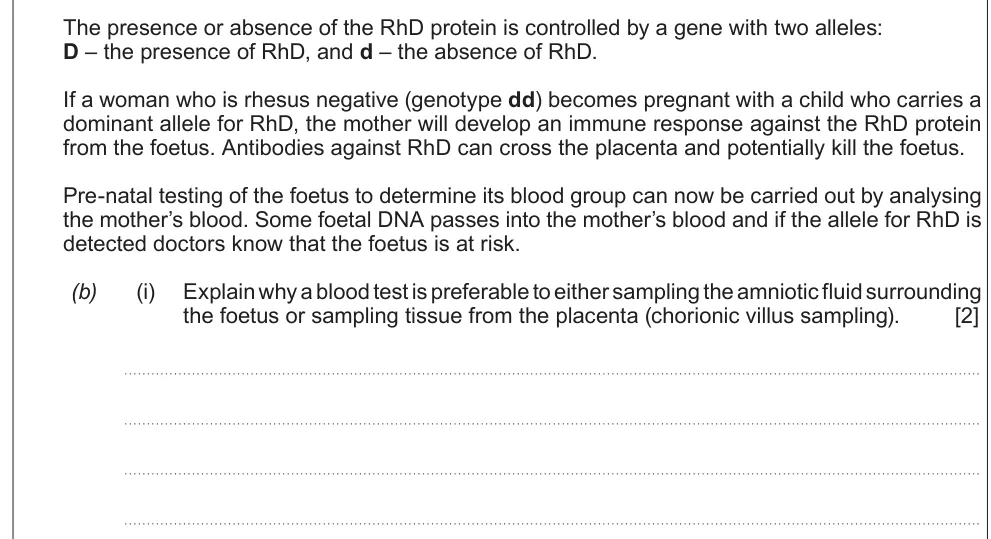
Explain why a maternal blood test is preferable to amniocentesis or chorionic villus sampling.
Show the mark scheme

Tap an image to open it full size.
Question 4
A level Component 2 · June 2019 · Q2(d) · 3 marks
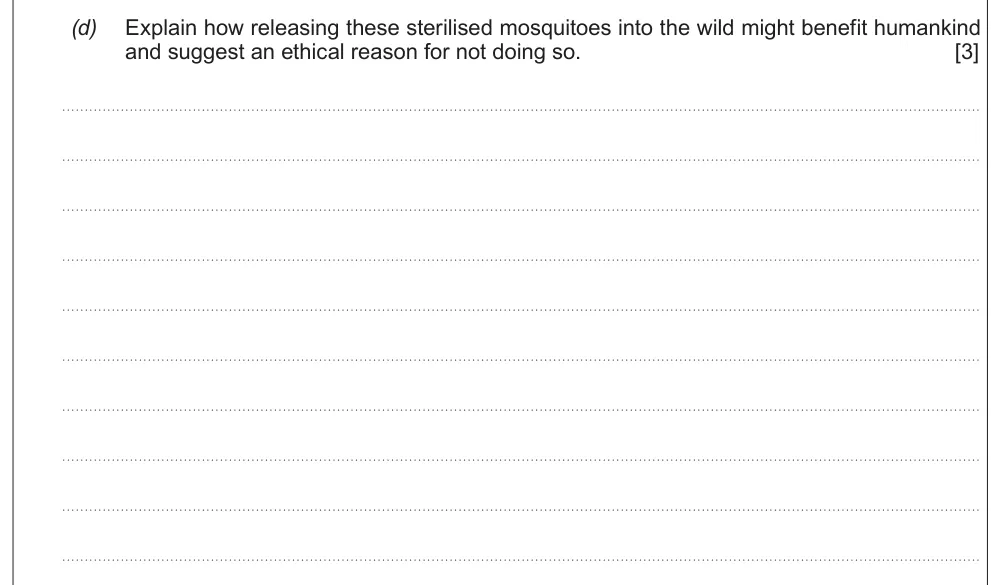
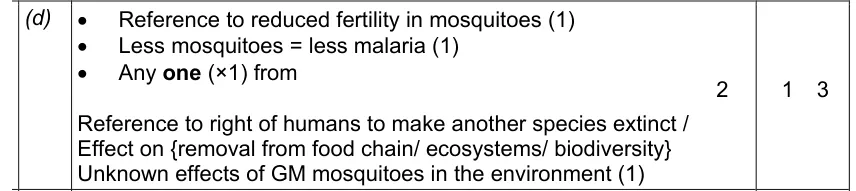
Explain how releasing sterilised mosquitoes might benefit humankind, and give an ethical reason against it.
Information from earlier in this question:

Show the mark scheme
Tap an image to open it full size.
From the examiners' report: The ethical elements were weak, often no more than "it is wrong to play God". Give a specific effect, such as on food chains or biodiversity.
PCR and electrophoresis
Question 5
A level Component 2 · Autumn 2020 · Q3(c) · 3 marks
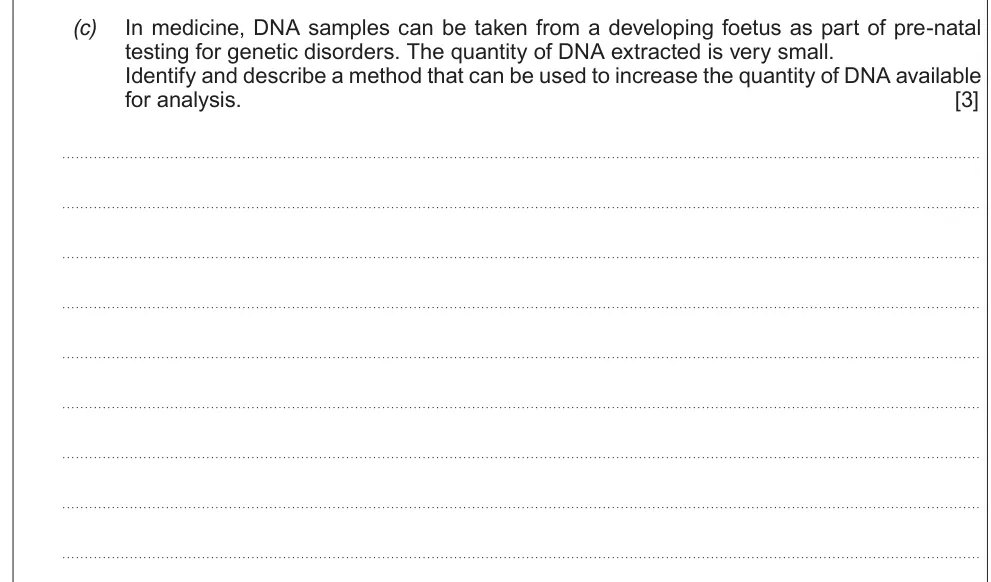
Identify and describe a method to increase the quantity of DNA for pre-natal testing.
Show the mark scheme

Tap an image to open it full size.
Question 6
A level Component 2 · June 2025 · Q3(a)(ii) · 4 marks · Easy
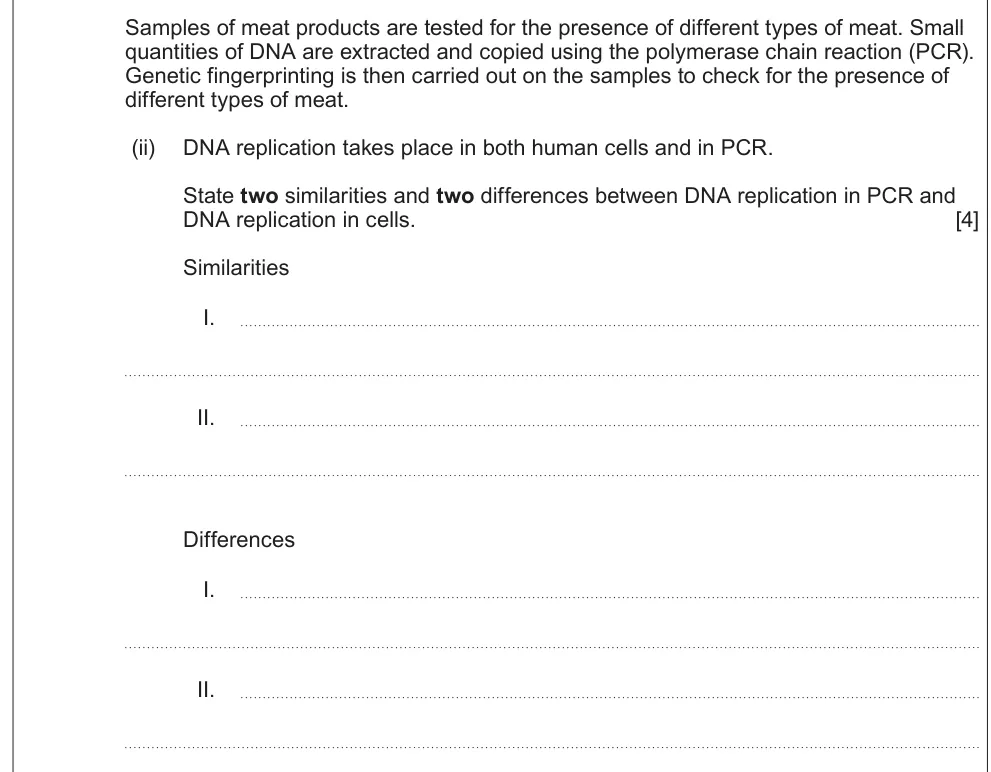
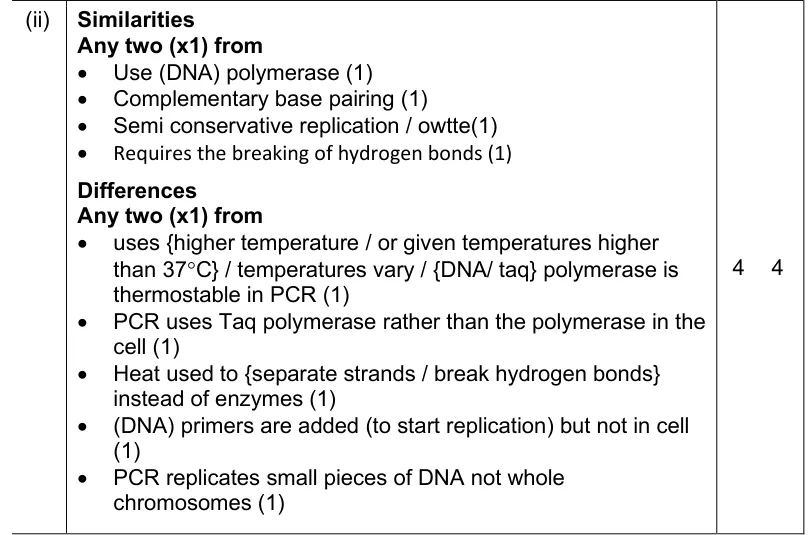
State two similarities and two differences between DNA replication in PCR and in cells.
Show the mark scheme
Tap an image to open it full size.
From the examiners' report: Taq polymerase is a DNA polymerase, so "Taq in PCR, DNA polymerase in cells" gained no mark. Contrast it with human DNA polymerase, or say that Taq is thermostable.
Question 7
A level Component 2 · June 2025 · Q3(a)(iv) · 1 mark
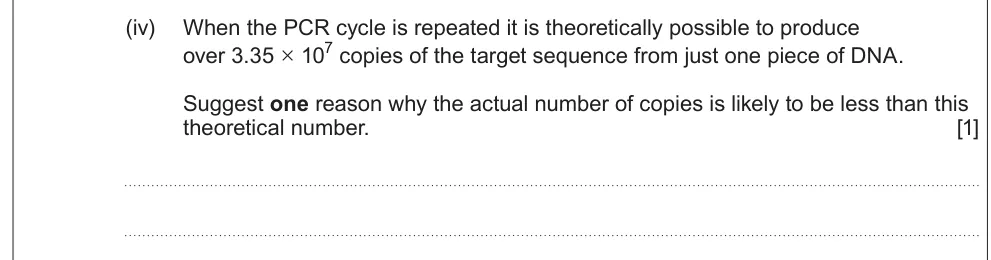
Suggest why PCR produces fewer copies than the theoretical number.
Show the mark scheme

Tap an image to open it full size.
Question 8
A level Component 2 · June 2025 · Q3(b)(i) · 2 marks
Show the direction DNA fragments moved in electrophoresis and explain why.
Show the mark scheme

Tap an image to open it full size.
Question 9
A level Component 2 · June 2025 · Q3(b)(ii) · 1 mark
Explain why a DNA ladder is run alongside fragments.

Show the mark scheme

Tap an image to open it full size.
Question 10
A level Component 2 · June 2025 · Q3(b)(iv) · 2 marks
Conclude what a DNA gel shows about the meat in a pie.
Information from earlier in this question:
Show the mark scheme

Tap an image to open it full size.
Question 11
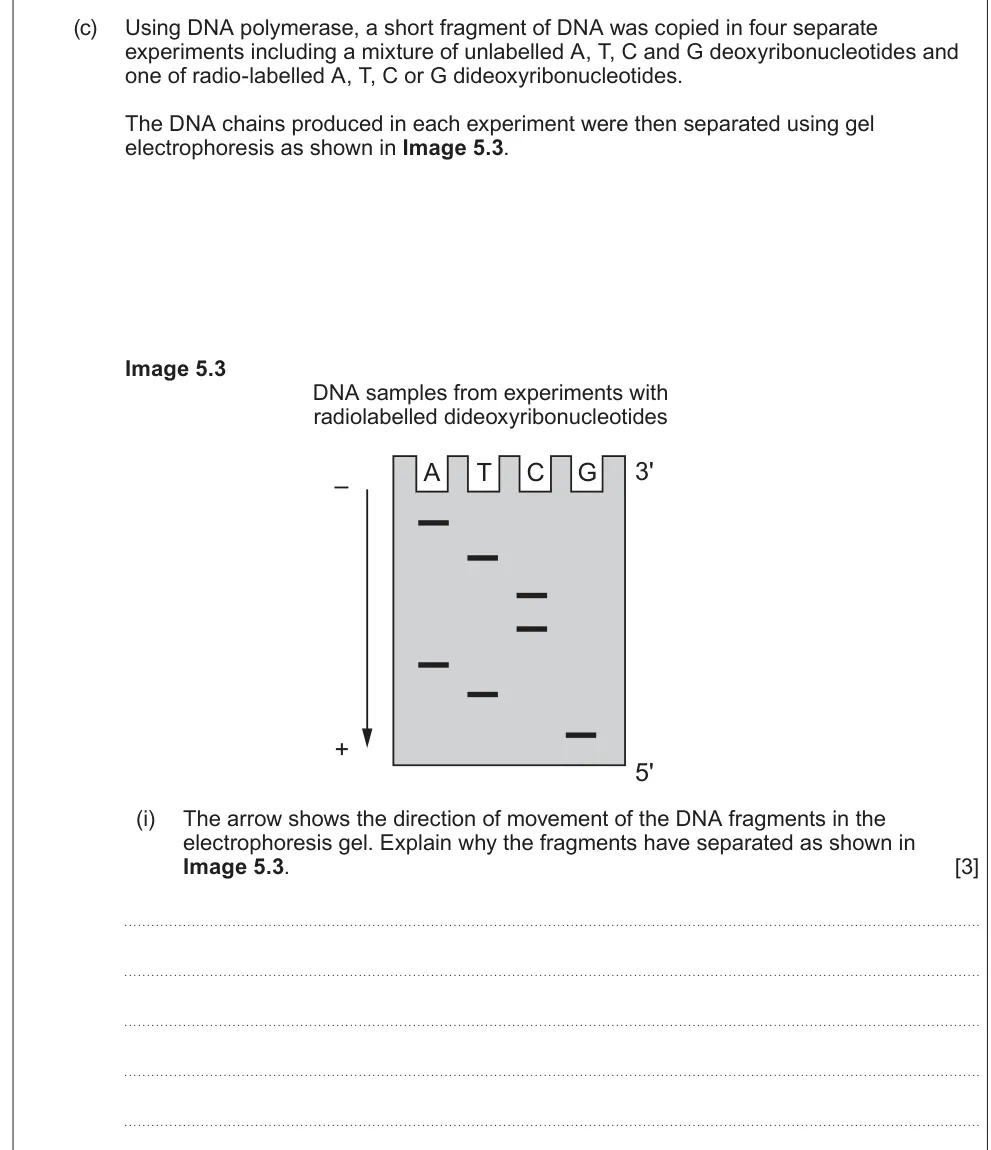
A level Component 2 · June 2022 · Q5(c)(i) · 3 marks · Easy
Explain why DNA fragments have separated as shown on a sequencing gel.
Show the mark scheme

Tap an image to open it full size.
From the examiners' report: Many wrote heavy and light fragments. Say longer and shorter.
Question 12
A level Component 2 · June 2022 · Q5(c)(iii) · 1 mark · Easy
State one medical advantage of next generation sequencing over Sanger sequencing.
Show the mark scheme

Tap an image to open it full size.
Recombinant DNA
Question 13
A level Component 2 · June 2017 · Q5(a) · 3 marks · Easy
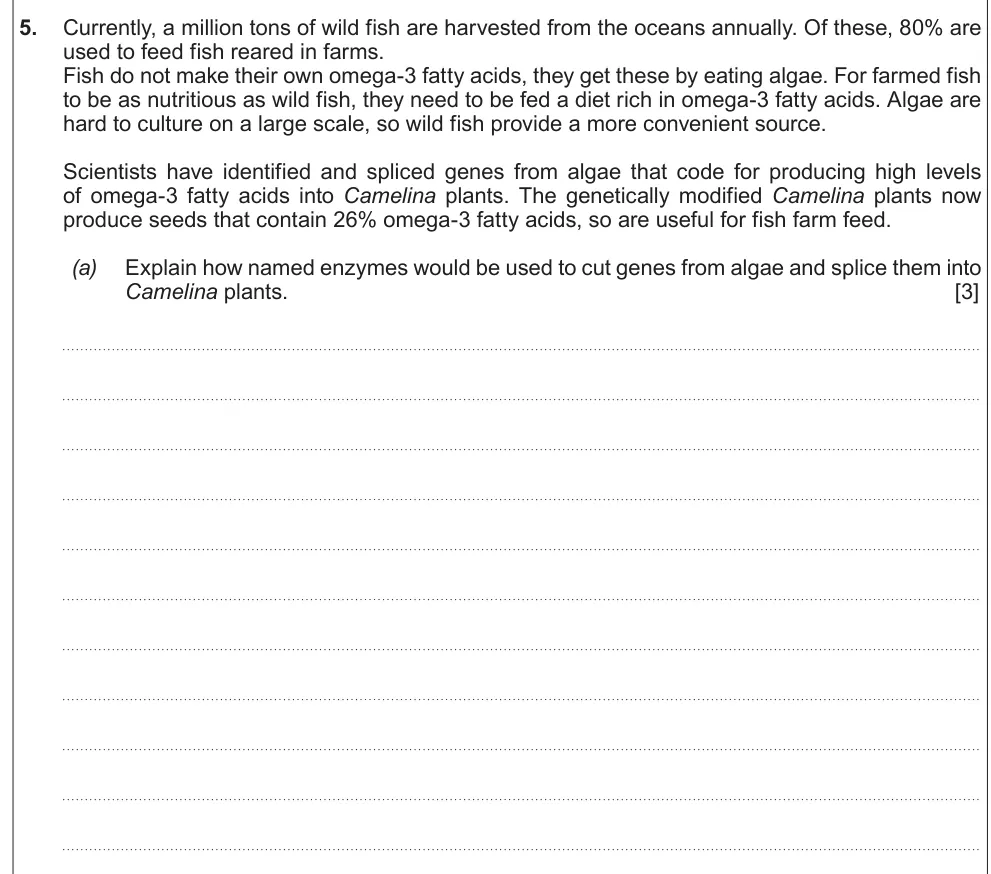
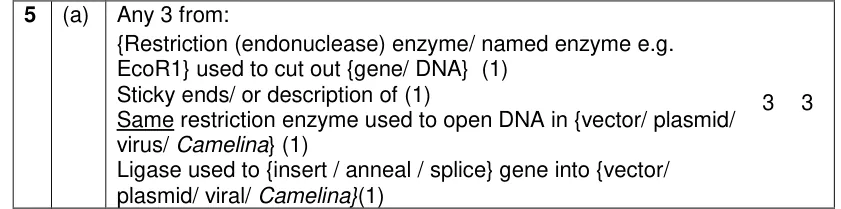
Explain how named enzymes would cut genes from algae and splice them into Camelina plants.
Show the mark scheme
Tap an image to open it full size.
Question 14
A level Component 2 · June 2019 · Q2(b) · 2 marks
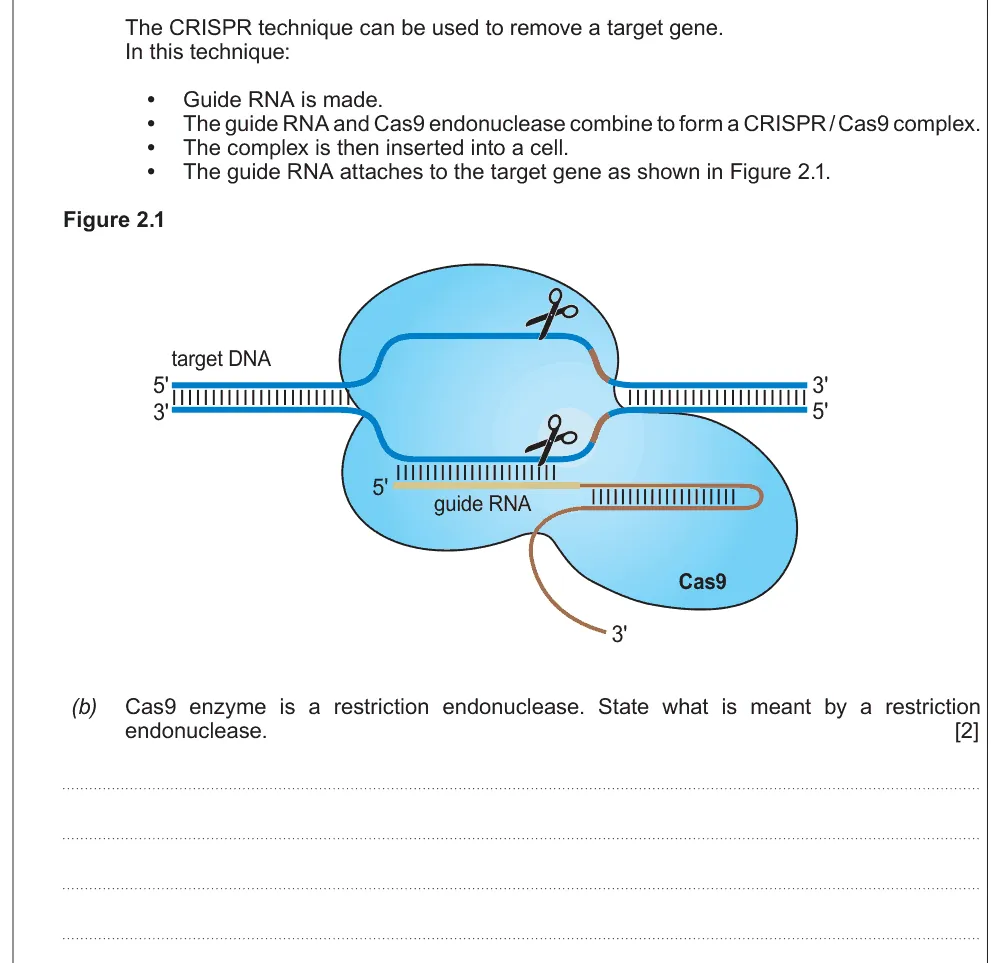
State what is meant by a restriction endonuclease.
Show the mark scheme

Tap an image to open it full size.
From the examiners' report: Many left out that it cuts at a specific base sequence and wrote vaguely about sticky ends.
Question 15
A level Component 2 · Autumn 2020 · Q4(c)(iv) · 3 marks · Hard
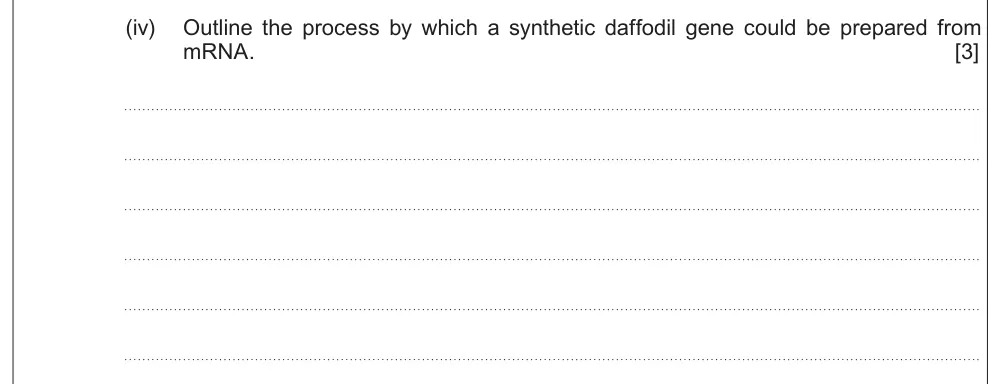
Outline how a synthetic gene could be prepared from mRNA.
Show the mark scheme

Tap an image to open it full size.
From the examiners' report: Few knew the details of making synthetic DNA. Name reverse transcriptase, then DNA polymerase to make double-stranded cDNA.
GM crops
Question 16
A level Component 2 · Autumn 2020 · Q4(d) · 2 marks
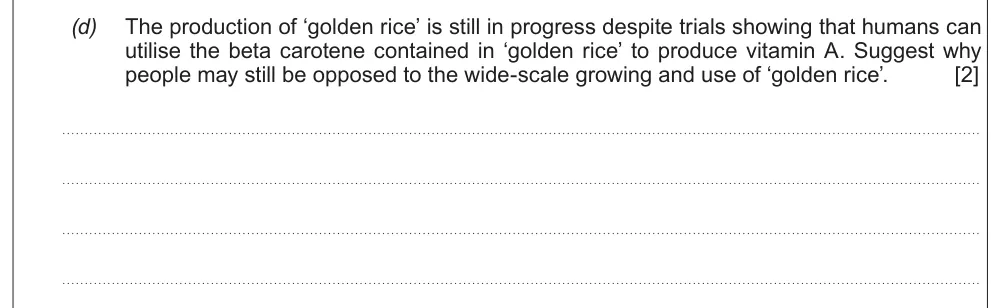
Suggest why people may still oppose growing and eating golden rice.
Show the mark scheme

Tap an image to open it full size.
Question 17
A level Component 2 · June 2025 · Q2(b)(v) · 2 marks
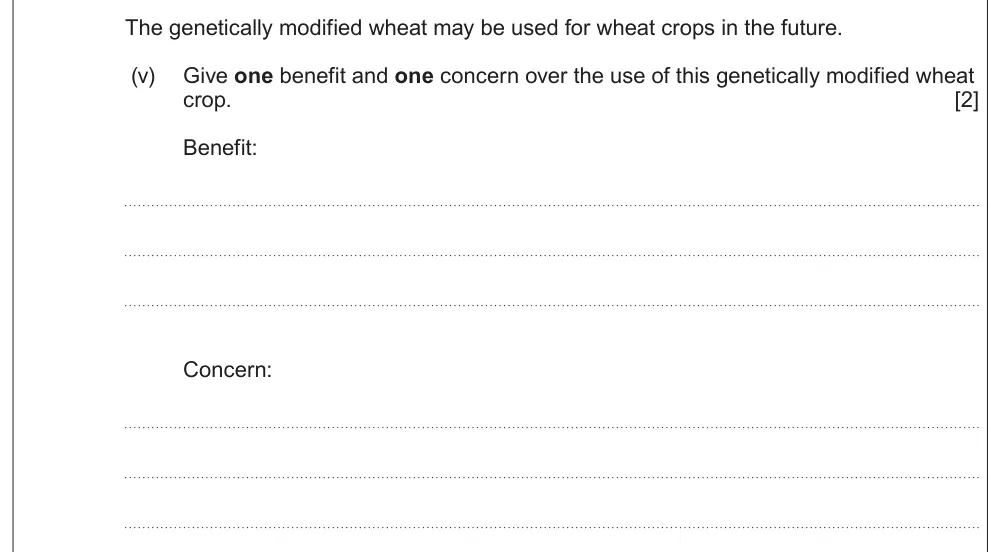
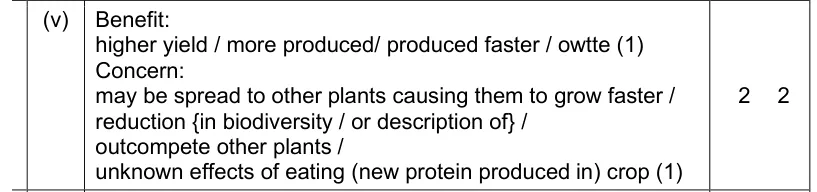
Give one benefit and one concern of using genetically modified wheat.
Show the mark scheme
Tap an image to open it full size.
Gene therapy
Question 18
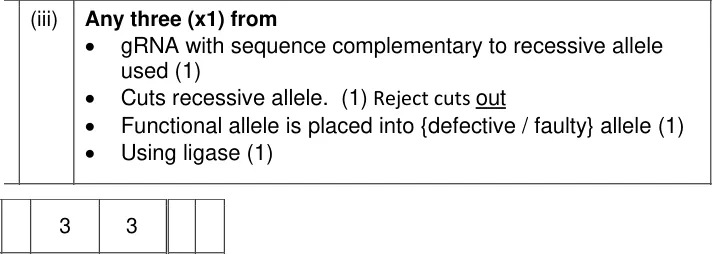
A level Component 2 · June 2023 · Q5(a)(iii) · 3 marks
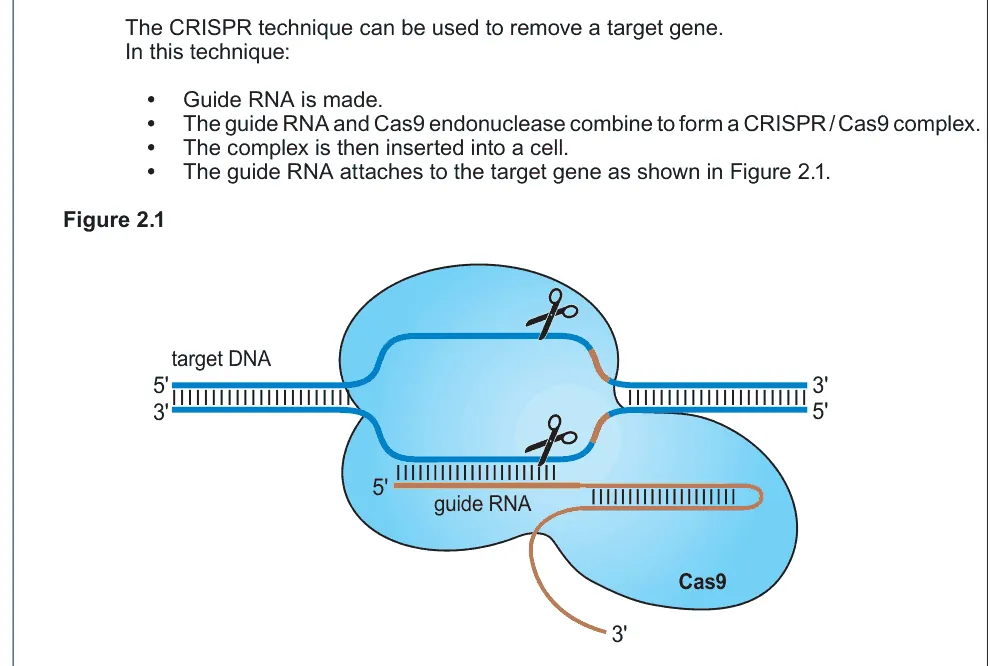
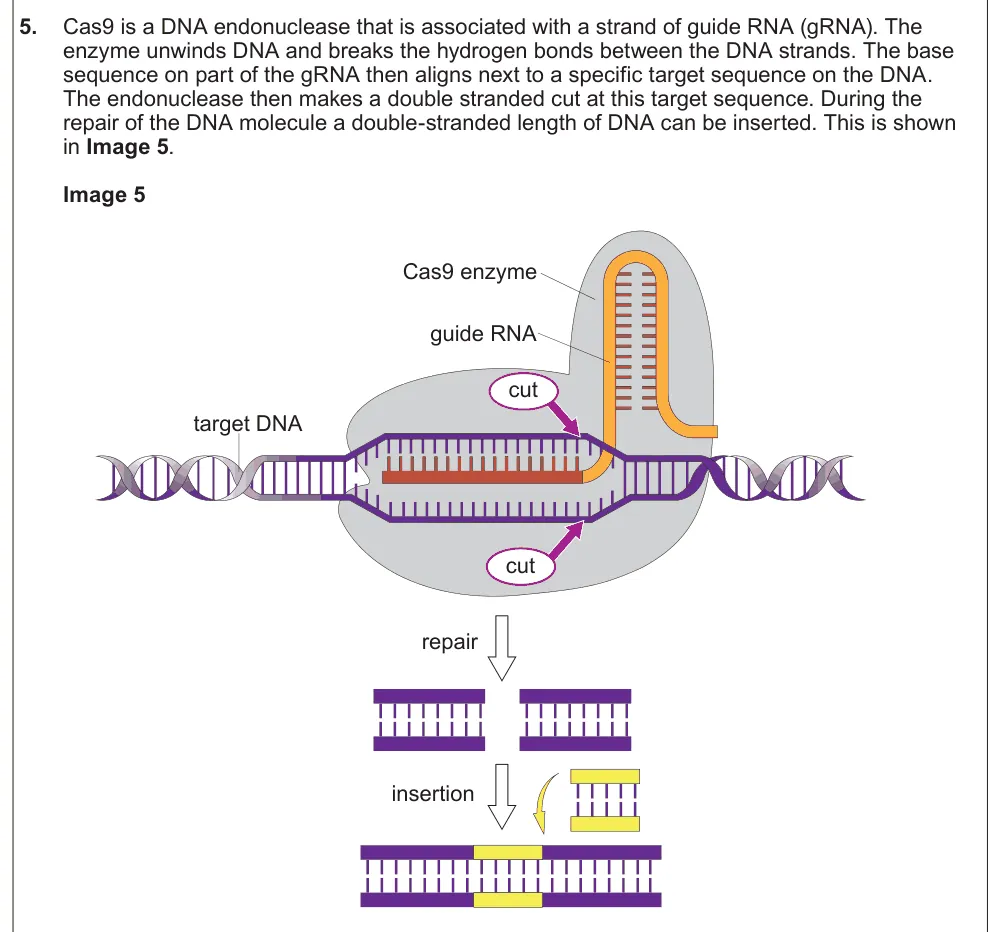
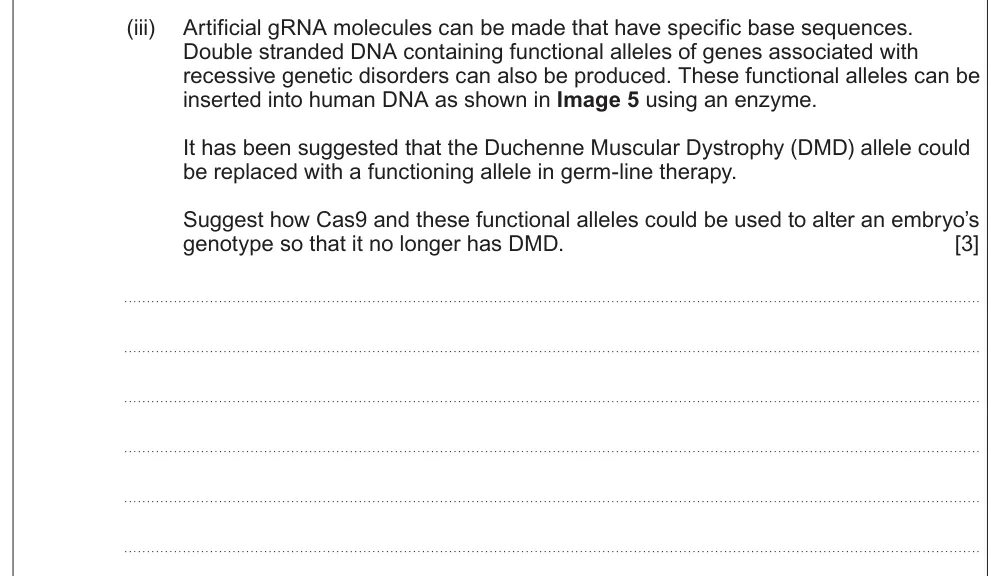
Suggest how Cas9 and functional alleles could be used to stop an embryo having DMD.
Information from earlier in this question:
Show the mark scheme
Tap an image to open it full size.
From the examiners' report: The least well answered question on the paper. Marks were for guide RNA complementary to the faulty allele and ligase to insert the functional allele.
Question 19
A level Component 2 · June 2023 · Q5(a)(iv) · 2 marks
Suggest two advantages of germ-line therapy.
Show the mark scheme

Tap an image to open it full size.
Question 20
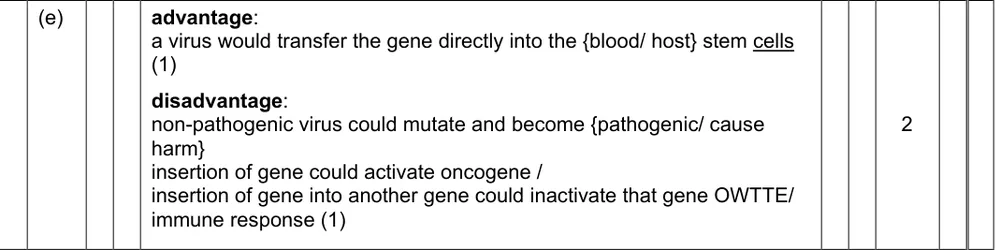
A level Component 2 · Autumn 2020 · Q3(e) · 2 marks
Suggest an advantage and a disadvantage of a non-pathogenic virus as a vector for the beta-globin gene.
Show the mark scheme
Tap an image to open it full size.
Question 21
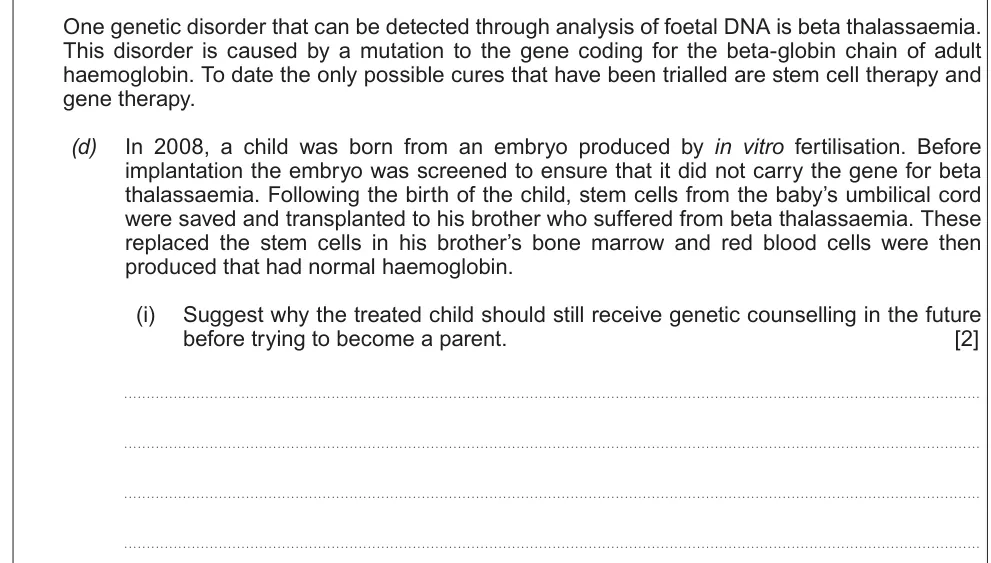
A level Component 2 · Autumn 2020 · Q3(d)(i) · 2 marks
Suggest why a child treated with stem cells should still have genetic counselling before becoming a parent.
Show the mark scheme

Tap an image to open it full size.
Stem cells
Question 22
A level Component 2 · Autumn 2020 · Q3(d)(ii) · 1 mark
Suggest why some oppose having one child specifically to treat a genetic disorder in another.

Show the mark scheme

Tap an image to open it full size.
Question 23
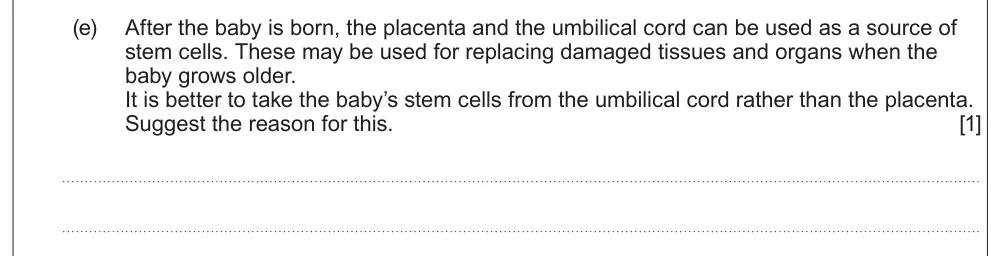
A level Component 2 · June 2024 · Q1(e) · 1 mark
Suggest why a baby's stem cells are better taken from the umbilical cord than the placenta.
Show the mark scheme

Tap an image to open it full size.
From the examiners' report: This relied on knowing that the placenta is made of cells from both the baby and the mother.
Where students lose marks (from Eduqas examiners' reports and mark schemes)
Each point below is followed by wording that gained marks.
Specific sequence: Many left out that the enzyme acts at a specific sequence.
✔ Gains credit: "It cuts DNA" "at a specific (base) sequence".
Length, not weight: Many talked about heavy and lighter fragments.
✔ Gains credit: "Smaller fragments move further / faster" "through the pores in the gel".
Taq is a DNA polymerase: "Taq polymerase" versus "DNA polymerase" did not gain a mark as a difference.
✔ Gains credit: "DNA / Taq polymerase is thermostable in PCR".
Make ethics specific: Answers amounted to "it is wrong to play God".
✔ Gains credit: "Effect on food chain / ecosystems / biodiversity".
Name the consequence: Vague answers about unethical practices and privacy gained nothing.
✔ Gains credit: "They will not be discriminated against / refused life insurance".
Explain the editing steps: This was the least well answered question on the paper.
✔ Gains credit: "gRNA with sequence complementary to recessive allele", "using ligase".
Download the questions
Download the PDF pack (23 questions, mark schemes at the end)
Keep practising
- Classification and Biodiversity (2.1): Eduqas A Level Biology exam questions by topic
- Cell Division (2.2): Eduqas A Level Biology exam questions by topic
- Sexual Reproduction in Humans (2.3): Eduqas A Level Biology exam questions by topic
- Sexual Reproduction in Plants (2.4): Eduqas A Level Biology exam questions by topic
- Inheritance (2.5): Eduqas A Level Biology exam questions by topic
- Variation and Evolution (2.6): Eduqas A Level Biology exam questions by topic
- Eduqas A level Biology past papers, mark schemes and examiners' reports
- Eduqas A level Biology grade boundaries
- Ask about Eduqas A level Biology lessons with Sam on WhatsApp
Questions, mark schemes and examiners' report extracts © WJEC CBAC Ltd (Eduqas).