

Muscles and Respiration opens Topic 7, Run for your Life, of the Edexcel A level Biology A (Salters-Nuffield) specification. You need to explain how muscles, tendons, ligaments and the skeleton interact to bring about movement, how skeletal muscle contracts by the sliding filament theory, and how respiration releases energy as ATP: glycolysis, the link reaction, the Krebs cycle and oxidative phosphorylation, with chemiosmosis and ATP synthase. The topic also covers what happens to lactate after anaerobic respiration, the structure of a muscle fibre, and the differences between fast and slow twitch fibres. This topic is examined on A level Papers 2 and 3. All questions are from the A level papers (9BN0).
The examiners' reports keep asking for precise language. Say that tropomyosin moves to expose the myosin binding sites on actin, that the myosin head changes shape, and that ATP is hydrolysed, not formed, when the head detaches. In respiration, give a reason for lactate production (not enough oxygen for aerobic respiration, rather than 'no oxygen'), keep enzymes and coenzymes apart, and give a direction when you describe protons moving across a membrane. When a question is set in an unfamiliar context, such as myosin moving a mitochondrion, answer in that context instead of describing a sarcomere.
Studying Edexcel SNAB and want more help? If you'd like to arrange one-to-one Edexcel tutoring, or to register your interest in an Edexcel group class, message Tom on WhatsApp using the link at the bottom of this page.
What you need from GCSE
Each question on this page assumes you're secure on these ideas. If any of them feels shaky, look it up before you start.
- Muscles can only pull: they contract and relax, and work in pairs to move bones at joints.
- Aerobic respiration: glucose + oxygen → carbon dioxide + water, releasing energy.
- Anaerobic respiration in muscles produces lactic acid and releases much less energy, leading to an oxygen debt.
- Mitochondria are the site of aerobic respiration.
Key terms
These words come up in the questions and mark schemes. Examiners expect you to use them exactly.
- Antagonistic pair: two muscles that pull in opposite directions, such as a flexor and an extensor; when one contracts, the other relaxes.
- Sarcomere: the contractile unit of a myofibril, between two Z lines; it shortens as actin slides over myosin.
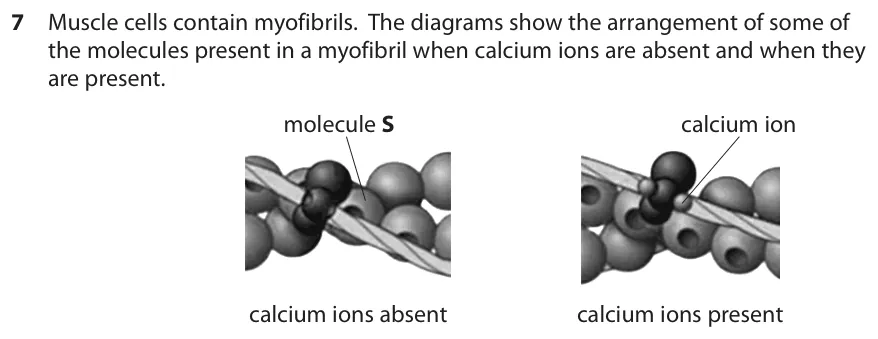
- Troponin and tropomyosin: proteins on the actin filament; calcium ions bind to troponin, which moves tropomyosin away from the myosin binding sites.
- Sarcoplasmic reticulum: the specialised endoplasmic reticulum of a muscle fibre that stores and releases calcium ions.
- Glycolysis: the breakdown of glucose to pyruvate in the cytoplasm, producing a small yield of ATP and reduced NAD.
- Chemiosmosis: the flow of protons down their gradient through ATP synthase, which generates ATP.
- Slow twitch fibre: a muscle fibre with many mitochondria and capillaries that contracts slowly and is slow to fatigue.
What these questions cover (Edexcel SNAB Topic 7: Run for your Life)
The questions test these statements from Topic 7 of the Pearson Edexcel A level Biology A (Salters-Nuffield) specification (9BN0).
- 7.1 Know the way in which muscles, tendons, the skeleton and ligaments interact to enable movement, including antagonistic muscle pairs, extensors and flexors.
- 7.2 Understand the process of contraction of skeletal muscle in terms of the sliding filament theory, including the role of actin, myosin, troponin, tropomyosin, calcium ions
- 7.3 i Understand the overall reaction of aerobic respiration as splitting of the respiratory substrate, to release carbon dioxide as a waste product and reuniting of hydrogen w
- 7.4 Understand the roles of glycolysis in aerobic and anaerobic respiration, including the phosphorylation of hexoses, the production of ATP, reduced coenzyme, pyruvate and l
- 7.5 Understand the role of the link reaction and the Krebs cycle in the complete oxidation of glucose and formation of carbon dioxide (CO2), ATP, reduced NAD and reduced FAD
- 7.6 Understand how ATP is synthesised by oxidative phosphorylation associated with the electron transport chain in mitochondria, including the role of chemiosmosis and ATP sy
- 7.7 Understand what happens to lactate after a period of anaerobic respiration in animals.
- 7.10 i Know the structure of a muscle fibre.
- 7.10 ii Understand the structural and physiological differences between fast and slow twitch muscle fibres.
How to use this page
Write your answer on paper before you open the mark scheme. Allow about 1.2 minutes per mark: the 20 questions are worth 58 marks, so about 70 minutes in total. Then mark your answer strictly against the mark scheme and read the examiners' tip underneath it. If you'd rather print the questions, download the PDF pack.
Muscles, tendons and movement (7.1)
Question 1
A level Paper 2 · June 2018 · Q3(c)(i) · 2 marks
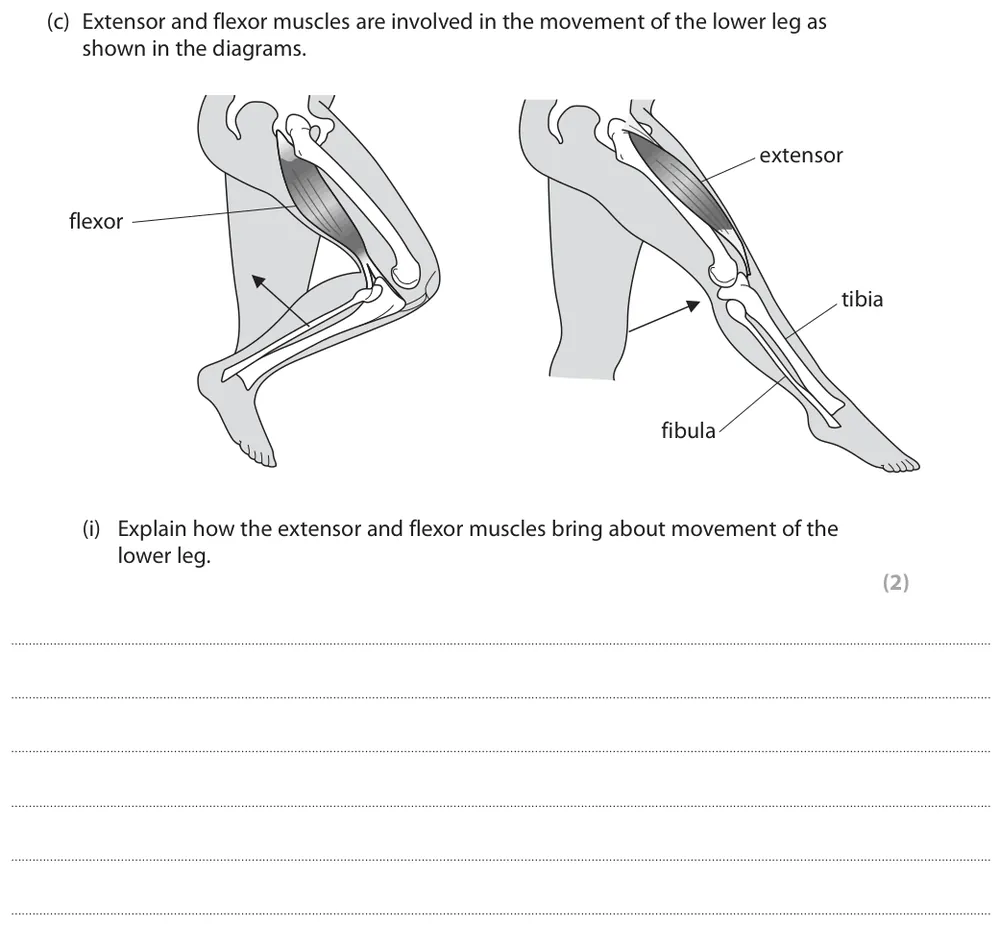
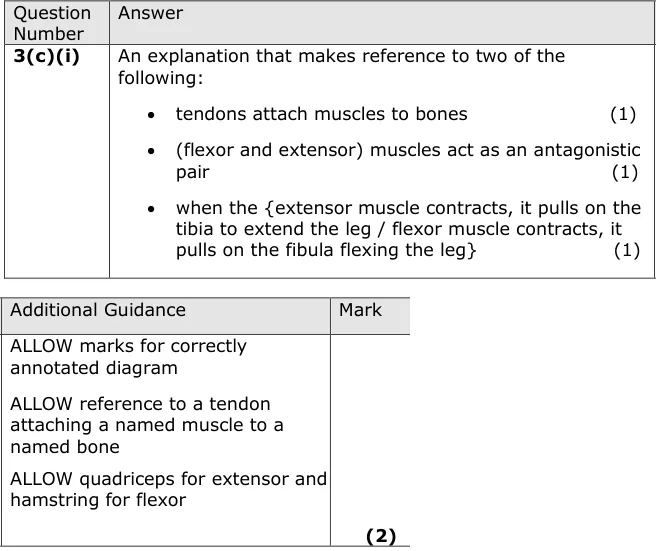
Explain how the extensor and flexor muscles bring about movement of the lower leg.
Show the mark scheme
Tap an image to open it full size.
From the examiners' report: Most gained one mark for saying the muscles act as an antagonistic pair. Few explained the role of tendons, and very few used the diagram to link the correct muscle to the correct bone and movement.
Question 2
A level Paper 2 · June 2018 · Q3(c)(ii) · 1 mark · Easy
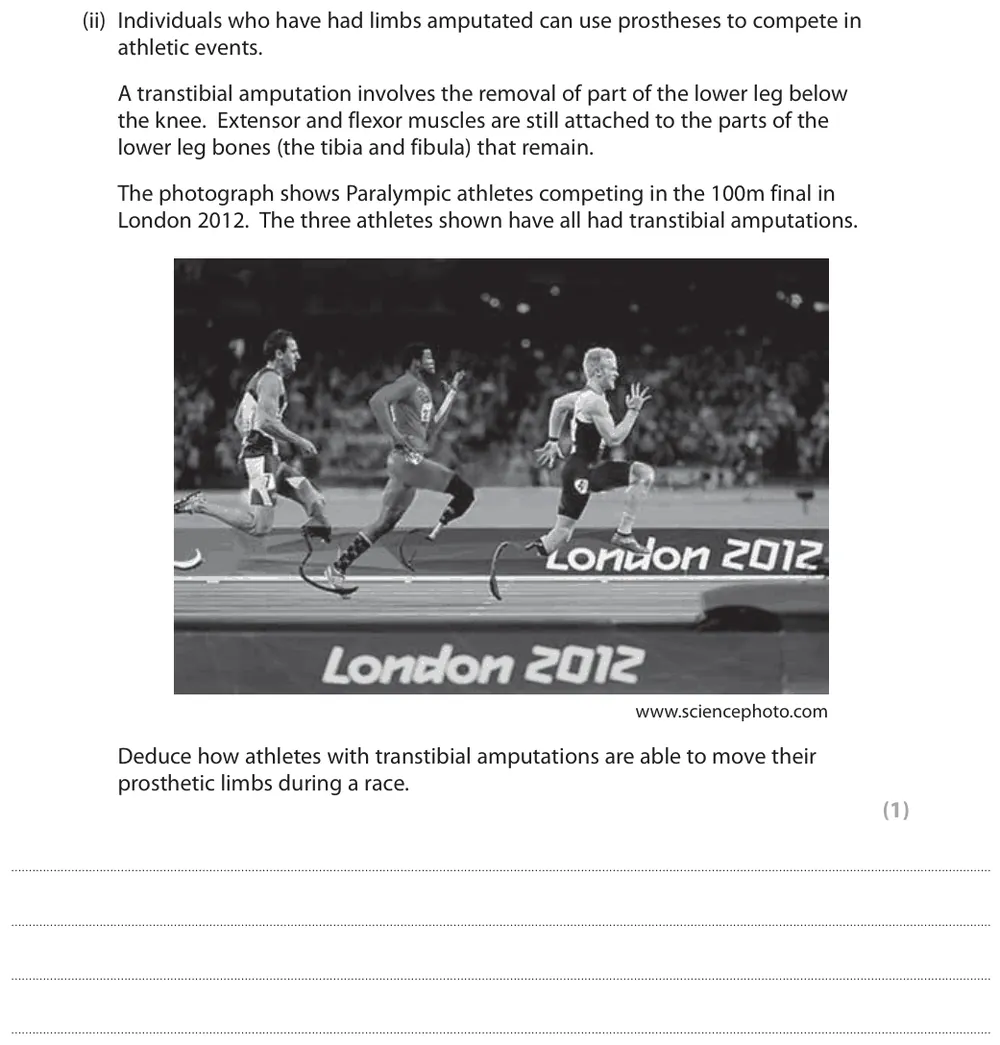
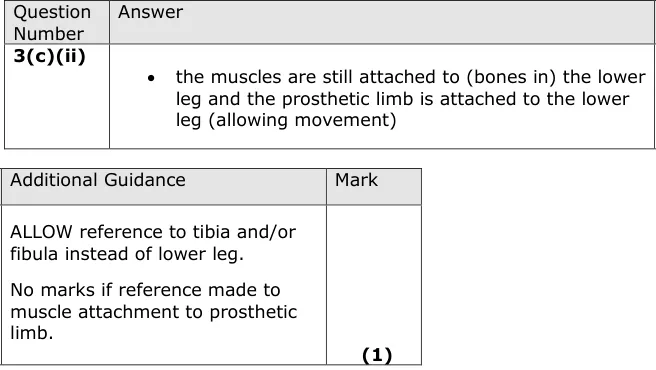
Deduce how athletes with transtibial amputations can move their prosthetic limbs.
Show the mark scheme
Tap an image to open it full size.
From the examiners' report: Many had the right idea but did not give both parts: the muscles are still attached to the lower leg bones, and the prosthesis is attached to the lower leg. Muscles and nerves are not connected to the prosthesis.
Muscle contraction and the sliding filament theory (7.2)
Question 3
A level Paper 2 · June 2017 · Q7(b)(i) · 2 marks
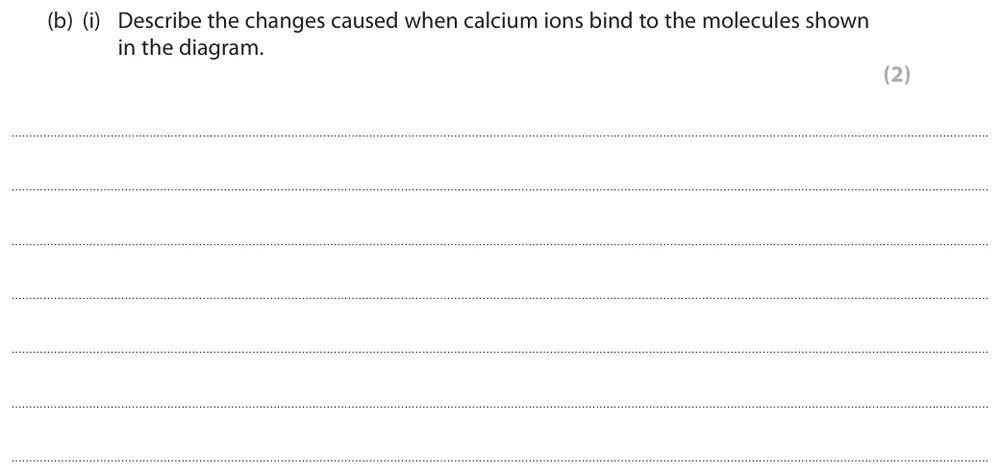
Describe the changes caused when calcium ions bind to the molecules shown in the diagram.
Information from earlier in this question:
Show the mark scheme

Tap an image to open it full size.
From the examiners' report: Tropomyosin moves (it does not just change shape), exposing the myosin binding sites on actin. They are not 'actin binding sites', and they are not on the tropomyosin.
Question 4
A level Paper 2 · June 2017 · Q7(b)(ii) · 4 marks · Easy
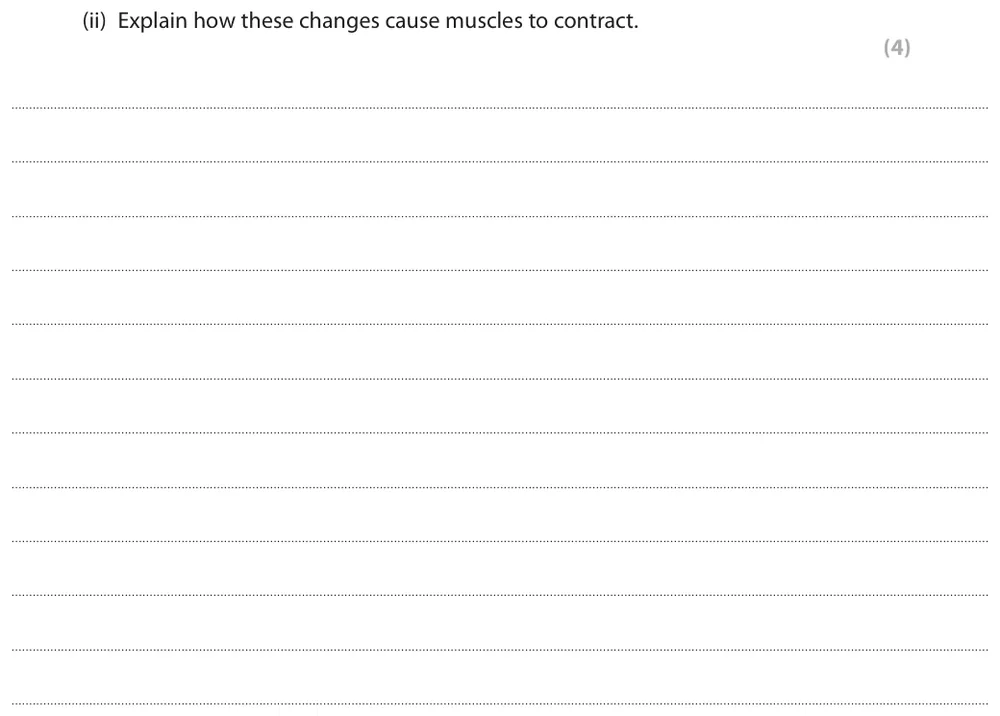
Explain how these changes cause muscles to contract.
Show the mark scheme
Tap an image to open it full size.
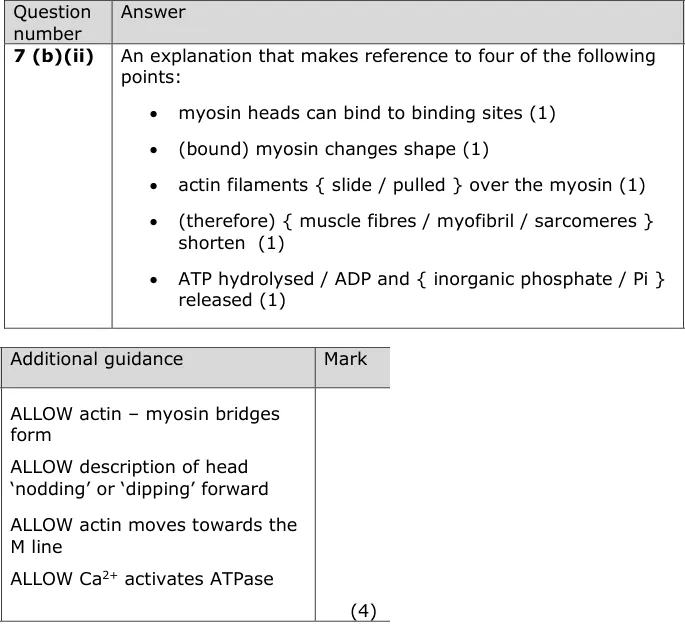
From the examiners' report: Say the myosin head changes shape, not just that it 'moves' or 'performs a power stroke'. ATP is hydrolysed, releasing ADP and Pi (write Pi, not P); it is not formed. Don't confuse actin and myosin.
Question 5
A level Paper 2 · June 2017 · Q7(c) · 3 marks · Hard
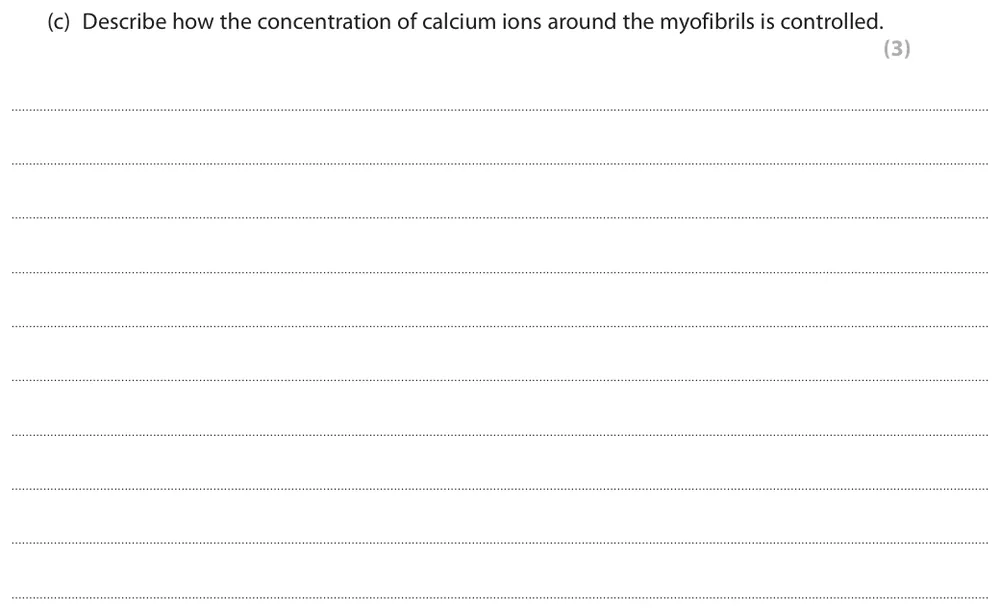
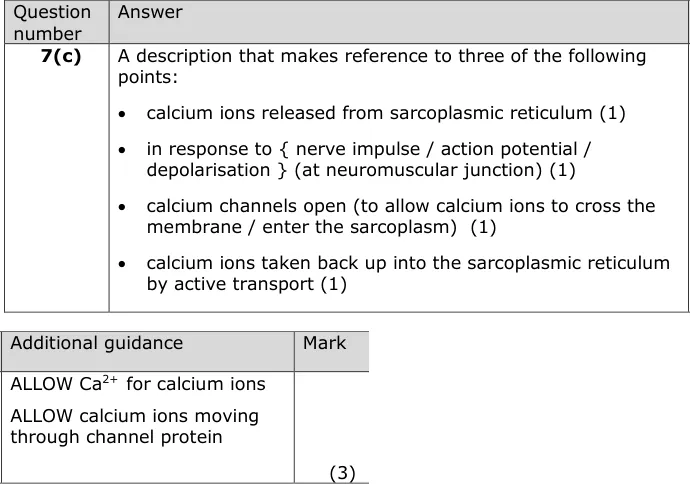
Describe how the concentration of calcium ions around the myofibrils is controlled.
Show the mark scheme
Tap an image to open it full size.
From the examiners' report: Most knew calcium ions are released from the sarcoplasmic reticulum after a nerve impulse; fewer mentioned calcium ion channels. Calcium ions return to the sarcoplasmic reticulum by active transport, not by diffusion.
Question 6
A level Paper 2 · June 2023 · Q8(b)(i) · 3 marks
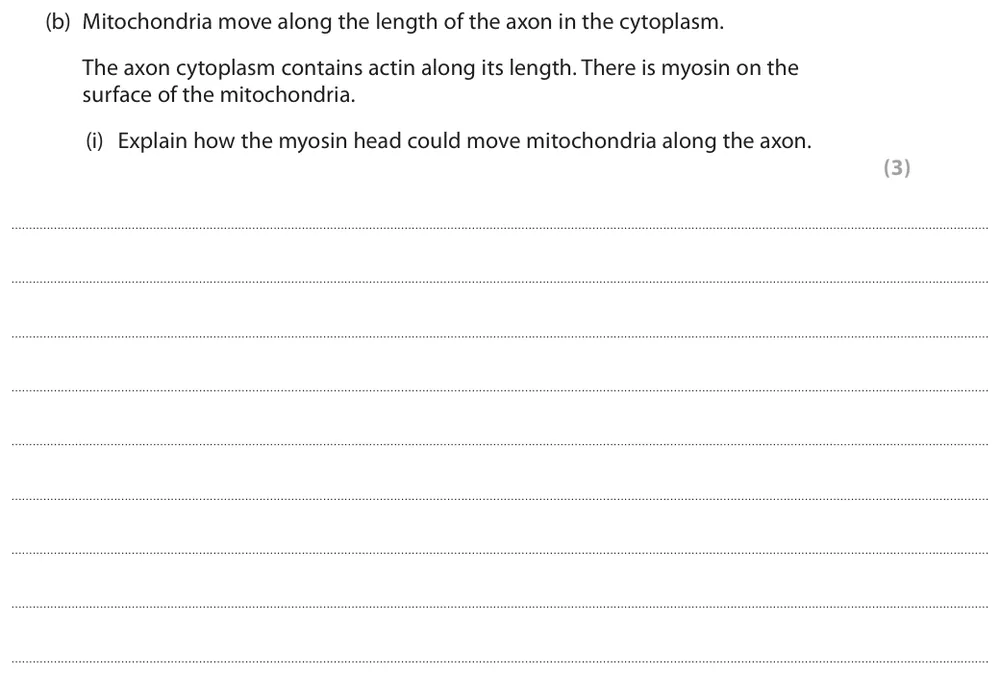
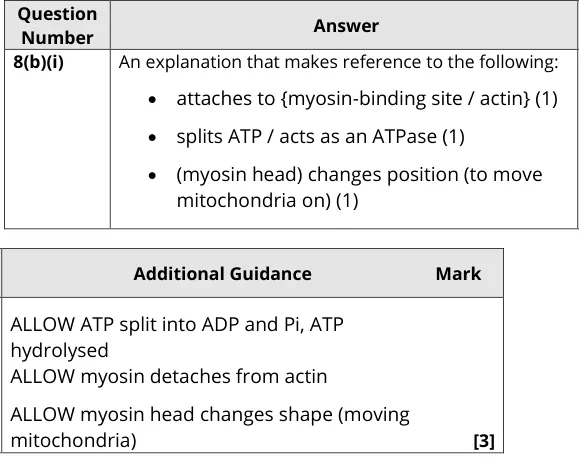
Explain how the myosin head could move mitochondria along an axon.
Show the mark scheme
Tap an image to open it full size.
From the examiners' report: Answer in the context given. Many described contraction in a sarcomere, which limited their marks: the myosin head attaches to actin, acts as an ATPase to split ATP, and changes position to move the mitochondrion.
Question 7
A level Paper 3 · June 2018 · Q5(b)(ii) · 4 marks
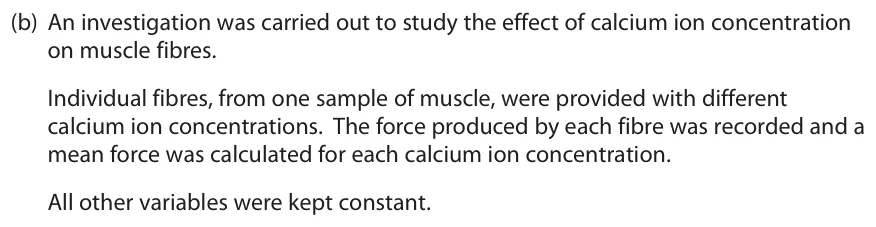
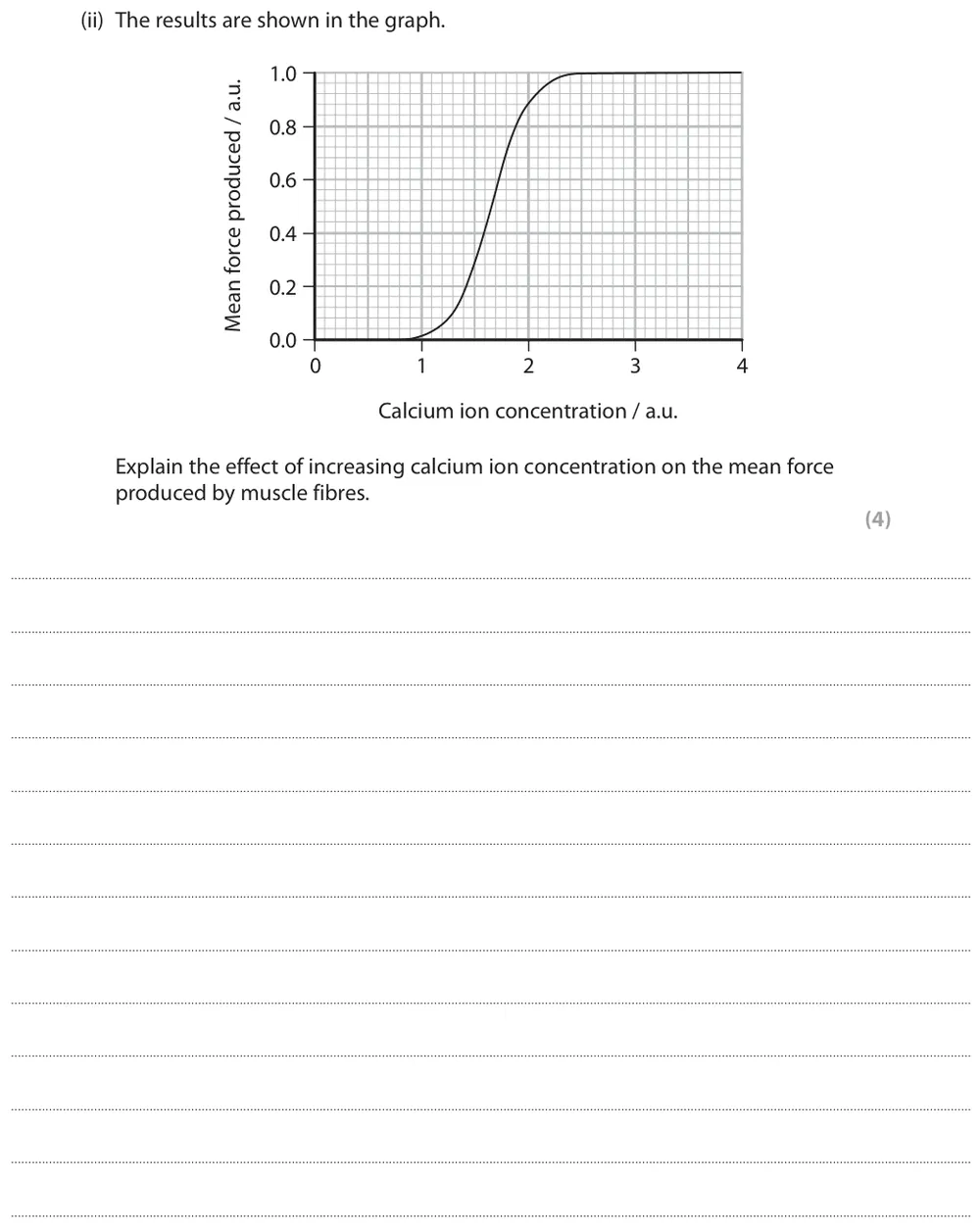
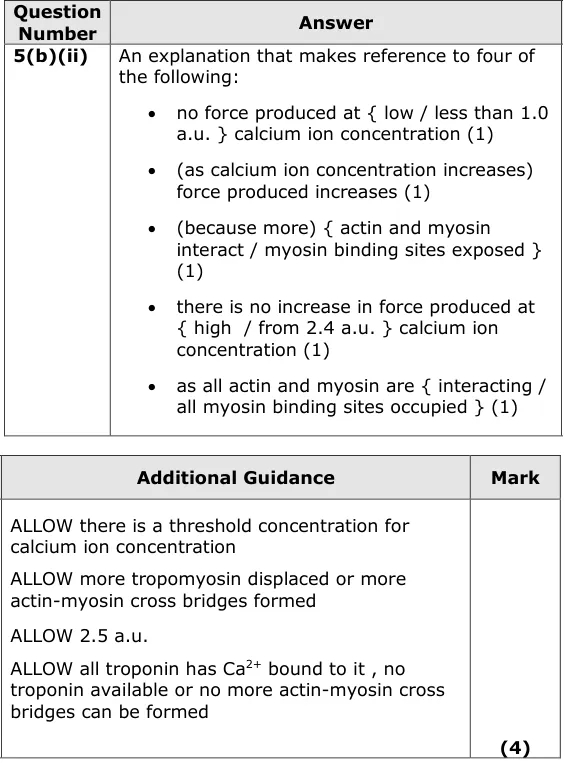
Explain the effect of increasing calcium ion concentration on the mean force produced by muscle fibres.
Information from earlier in this question:
Show the mark scheme
Tap an image to open it full size.
From the examiners' report: Many described the trend and the levelling off, but only a minority explained each part: more cross bridges form as more binding sites are exposed, and the force stops rising when all the actin and myosin are interacting.
Respiration releases energy (7.3 i)
Question 8
A level Paper 2 · June 2022 · Q7(a)(i) · 2 marks
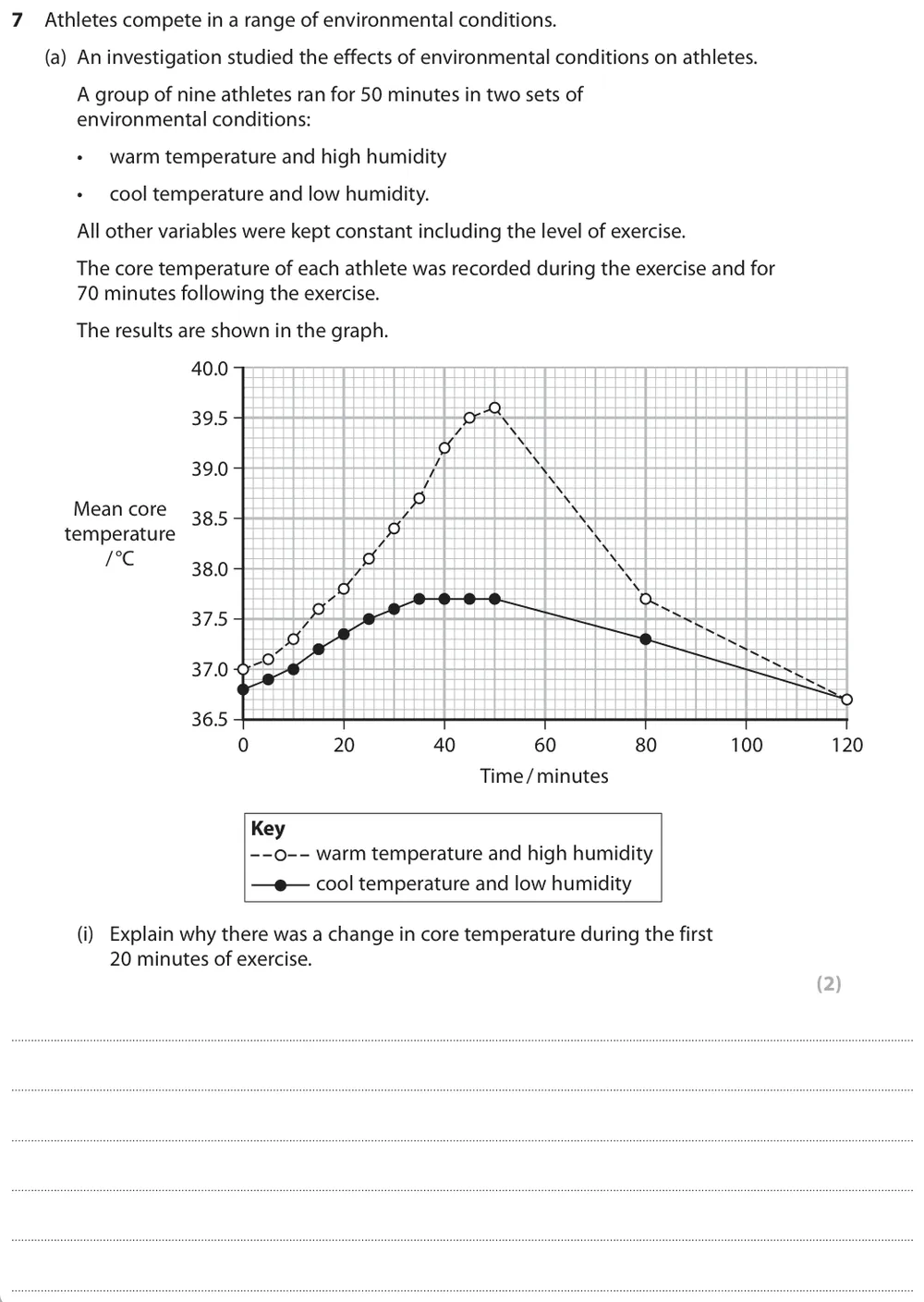
Explain why core temperature changed during the first 20 minutes of exercise.
Show the mark scheme

Tap an image to open it full size.
From the examiners' report: Many gained only one mark. Say heat is released by an increase in respiration, and make it clear the extra respiration is in the muscles.
Question 9
A level Paper 3 · June 2023 · Q1(b)(iii) · 2 marks
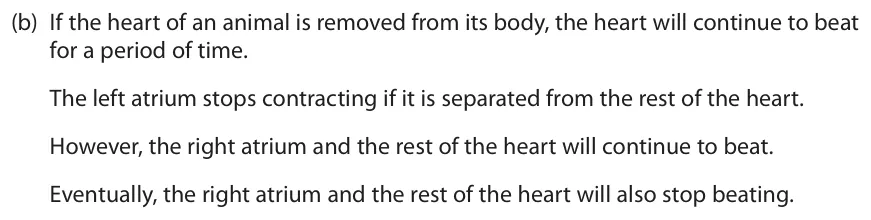
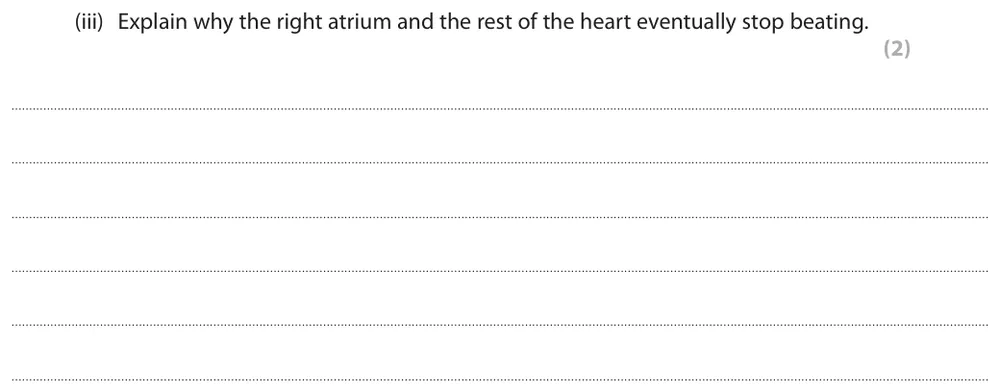
Explain why the right atrium and the rest of an isolated heart eventually stop beating.
Information from earlier in this question:
Show the mark scheme
Tap an image to open it full size.
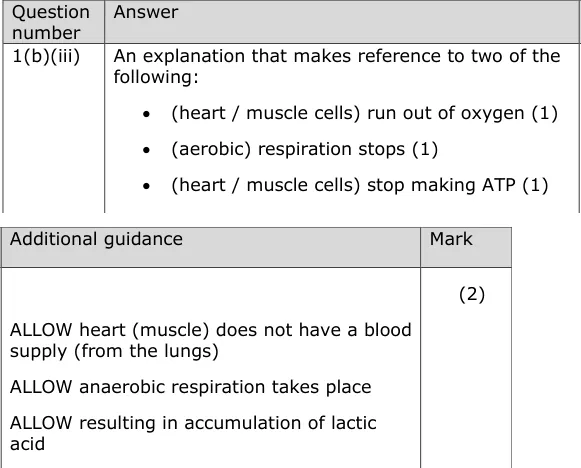
From the examiners' report: Lack of blood flow through the heart chambers was not accepted: the muscle cells run out of oxygen, so aerobic respiration stops. Finish the story: the cells can no longer make ATP.
Glycolysis and lactate (7.4)
Question 10
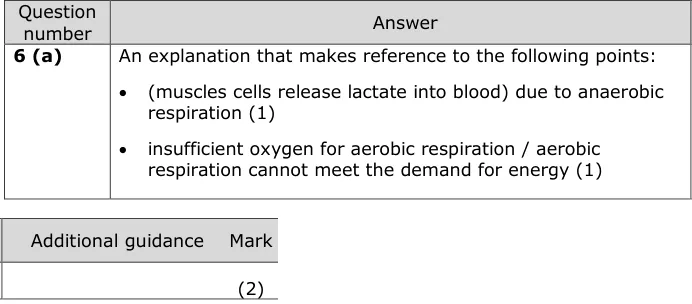
A level Paper 2 · June 2017 · Q6(a) · 2 marks
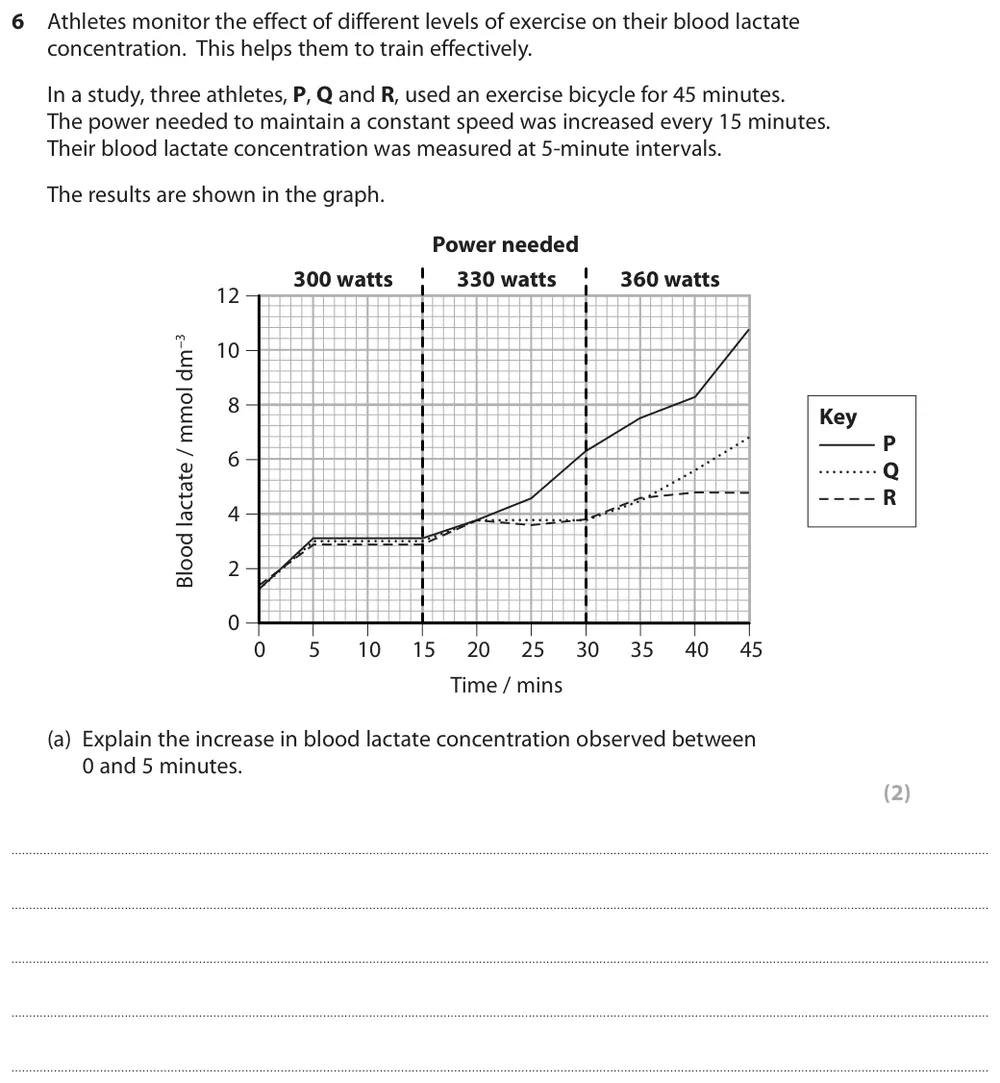
Explain the increase in blood lactate concentration between 0 and 5 minutes of exercise.
Show the mark scheme
Tap an image to open it full size.
From the examiners' report: Most linked lactate to anaerobic respiration but did not say why: there is not enough oxygen for aerobic respiration to meet the demand. Saying 'no oxygen' implies no aerobic respiration at all.
Question 11
A level Paper 2 · June 2019 · Q7(c)(ii) · 2 marks
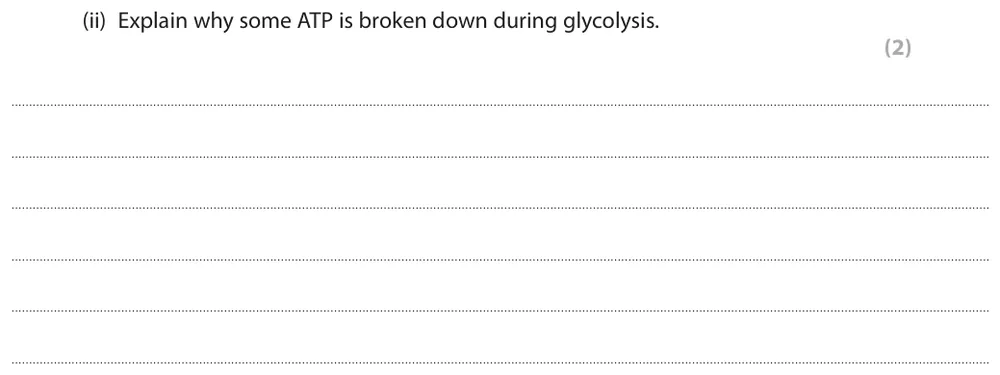
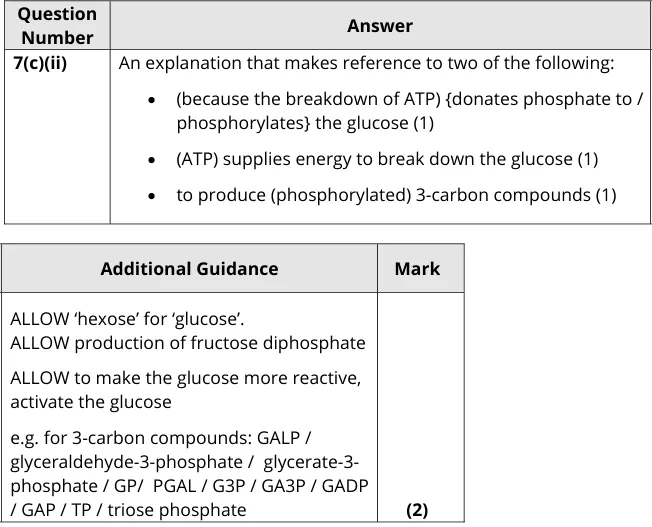
Explain why some ATP is broken down during glycolysis.
Show the mark scheme
Tap an image to open it full size.
From the examiners' report: Many answers gained no marks. Say that ATP phosphorylates glucose (makes it more reactive) and supplies the energy to split it into phosphorylated 3-carbon compounds.
Question 12
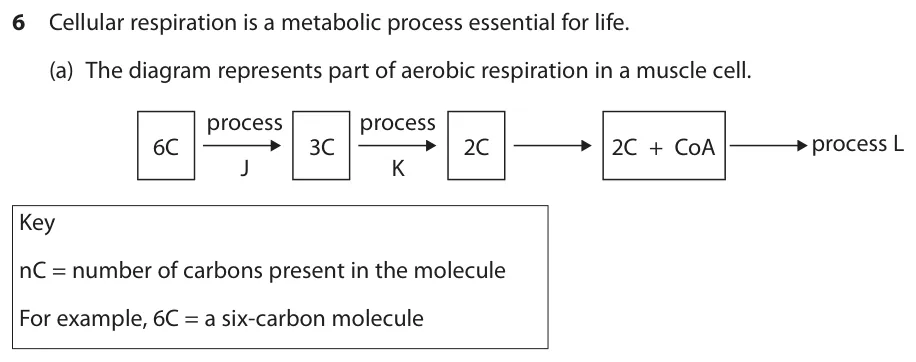
A level Paper 2 · June 2023 · Q6(a)(ii) · 2 marks
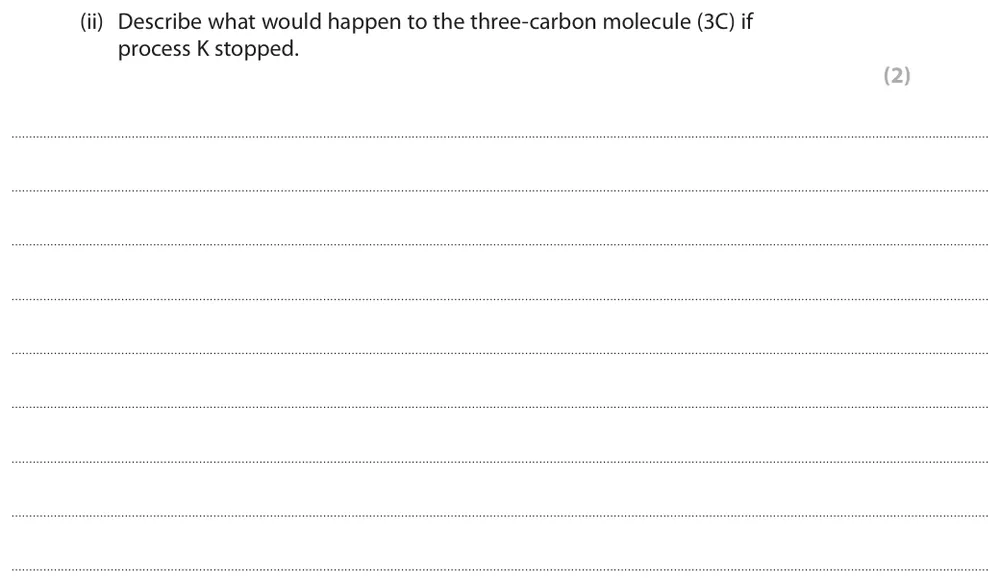
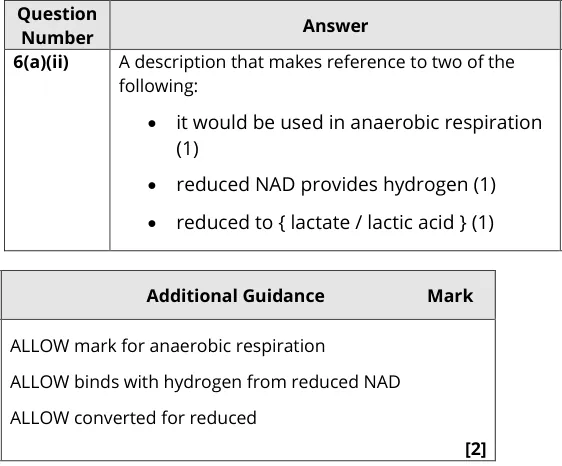
Describe what would happen to the three-carbon molecule if process K stopped.
Information from earlier in this question:
Show the mark scheme
Tap an image to open it full size.
From the examiners' report: Some described what would not happen to pyruvate instead of what would. Pyruvate is used in anaerobic respiration: reduced NAD provides hydrogen and pyruvate is reduced to lactate.
The link reaction and the Krebs cycle (7.5)
Question 13
A level Paper 2 · June 2025 · Q7(b) · 4 marks
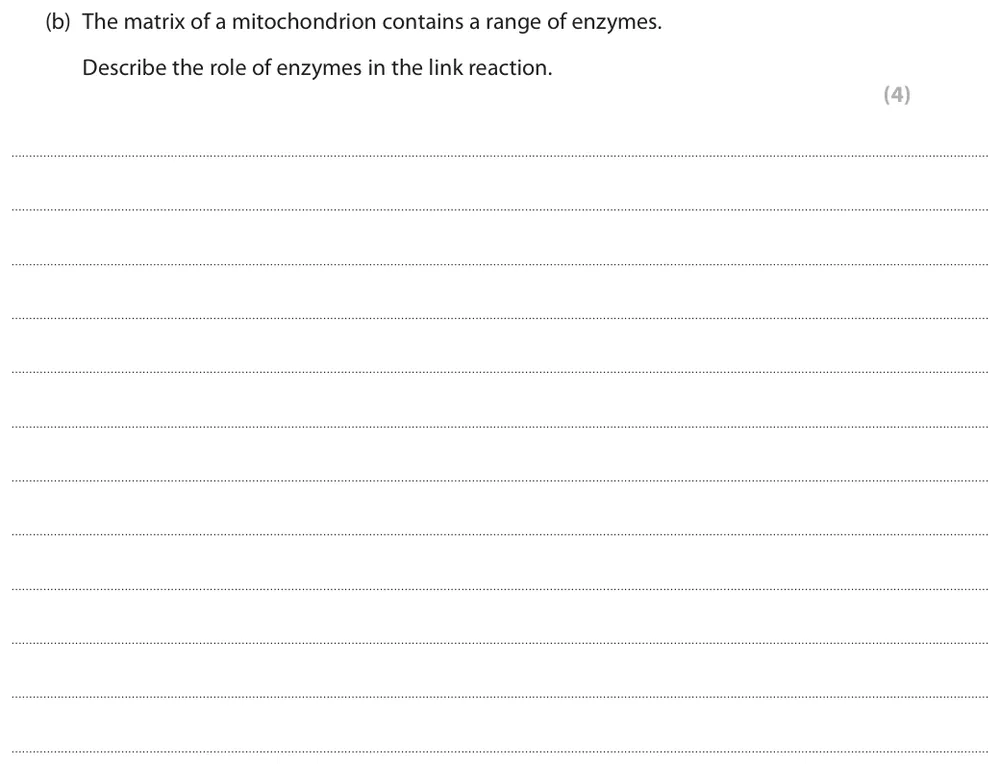
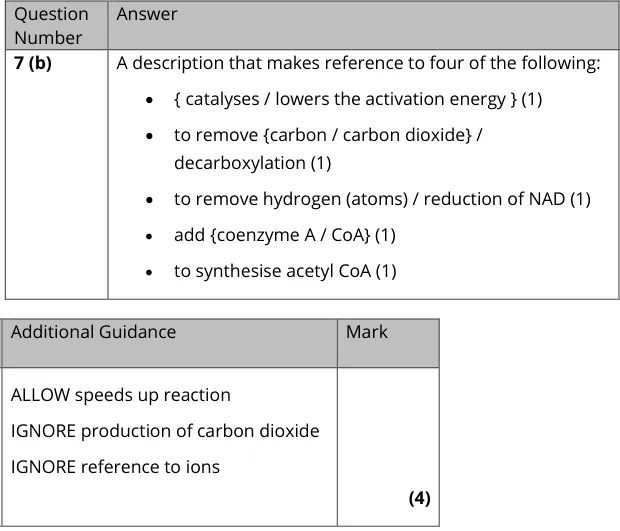
Describe the role of enzymes in the link reaction.
Show the mark scheme
Tap an image to open it full size.
From the examiners' report: Don't confuse enzymes with coenzymes. Enzymes catalyse the removal of carbon dioxide (decarboxylation) and of hydrogen (reducing NAD), and the addition of coenzyme A to make acetyl CoA.
Oxidative phosphorylation and chemiosmosis (7.6)
Question 14
A level Paper 2 · June 2019 · Q7(c)(iii) · 3 marks
Explain the role of the carrier molecules in the electron transport chain.
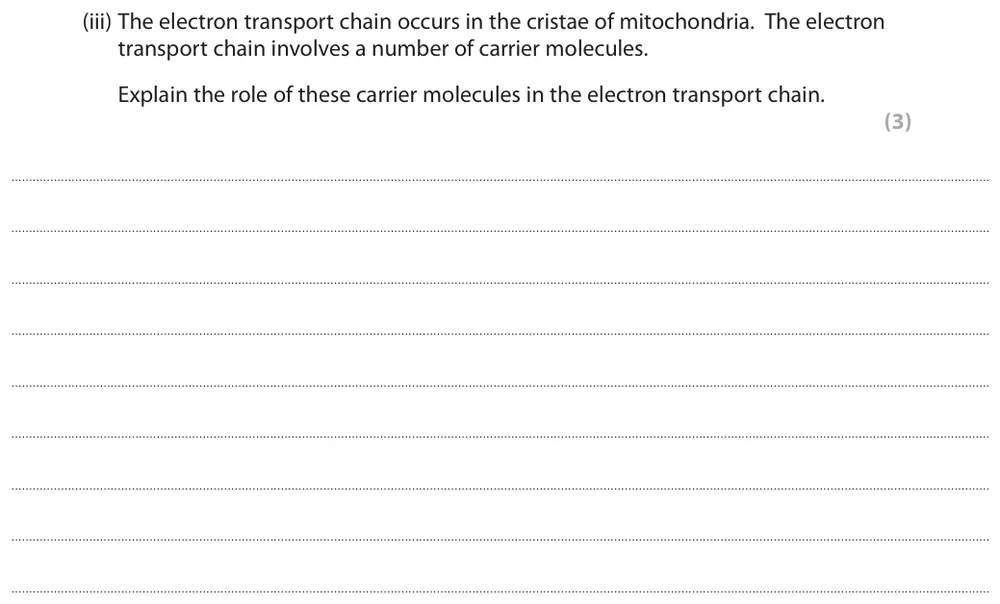
Show the mark scheme
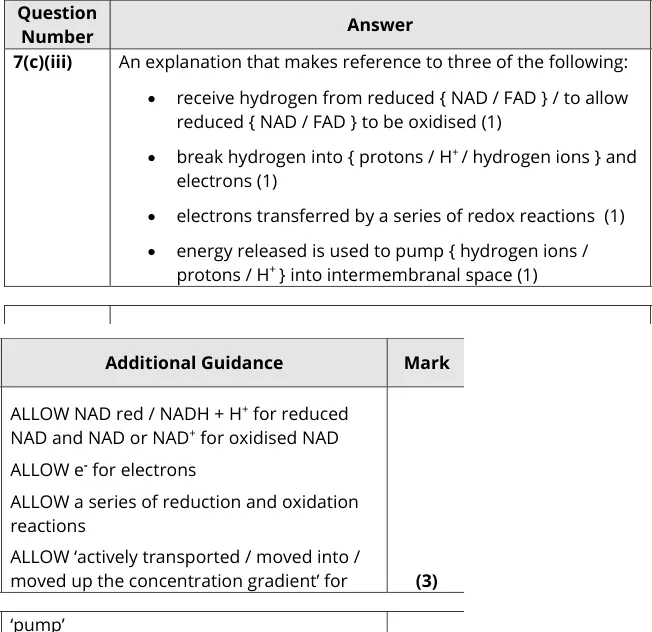
Tap an image to open it full size.
From the examiners' report: Only a minority gained all three marks. Be precise: carriers accept hydrogen from reduced NAD and FAD, electrons pass along a series of redox reactions, and the energy released pumps protons into the intermembrane space.
Question 15
A level Paper 2 · June 2025 · Q7(c) · 5 marks
Explain the role of proton pumps in aerobic respiration.
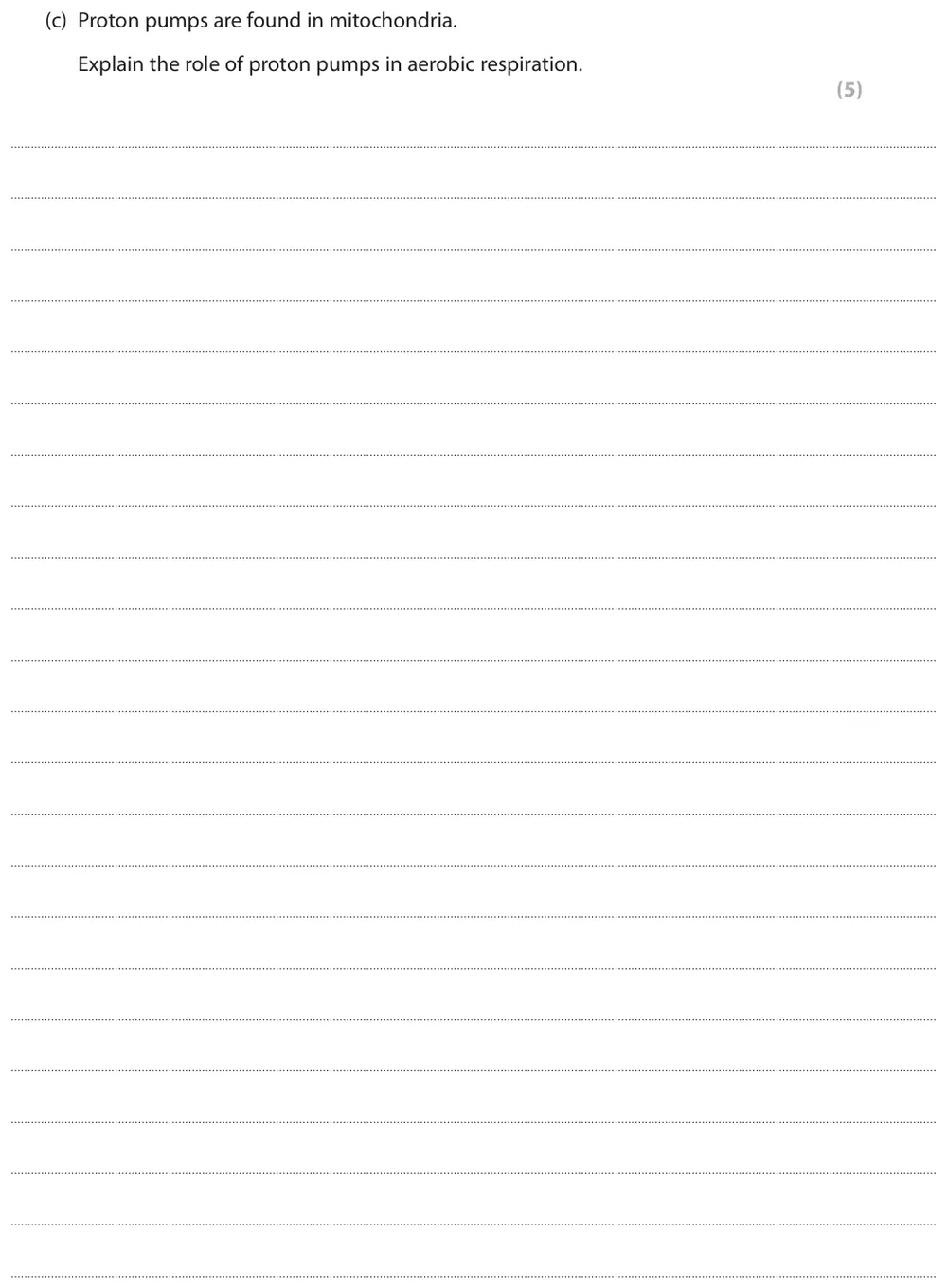
Show the mark scheme
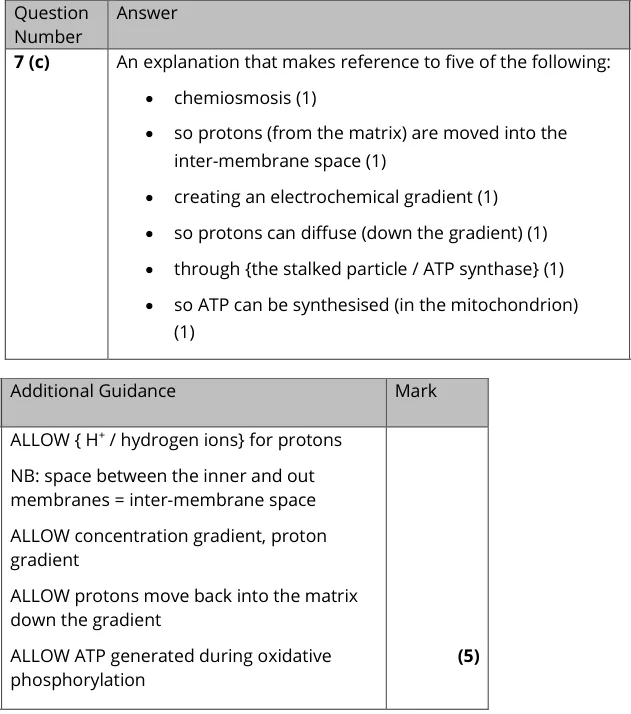
Tap an image to open it full size.
From the examiners' report: Focus on the pumps: protons are moved from the matrix into the intermembrane space, creating a gradient, and diffuse back through ATP synthase to make ATP. Details of electron transfer between carriers were ignored.
Question 16
A level Paper 2 · November 2021 · Q8(b)(ii) · 4 marks
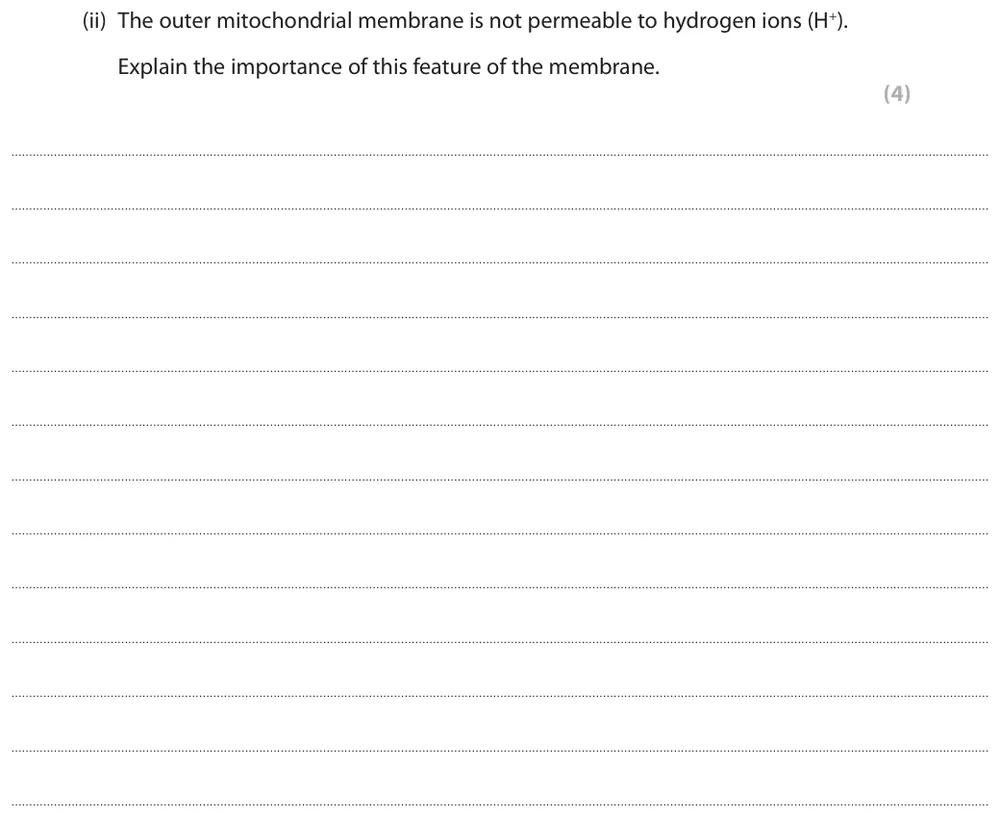
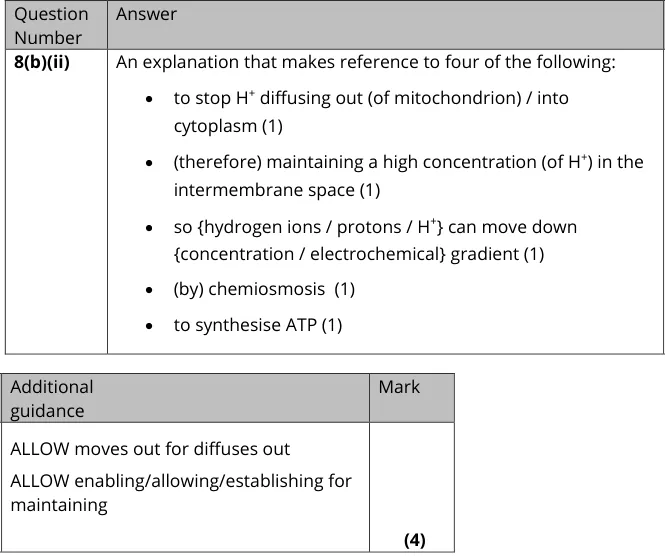
Explain why it matters that the outer mitochondrial membrane is not permeable to hydrogen ions.
Show the mark scheme
Tap an image to open it full size.
From the examiners' report: Answer the question, not a general account of aerobic respiration. The membrane stops H+ leaking out, keeping a high concentration in the intermembrane space so H+ can move down its gradient by chemiosmosis to make ATP.
What happens to lactate (7.7)
Question 17
A level Paper 2 · June 2019 · Q7(a)(ii) · 2 marks
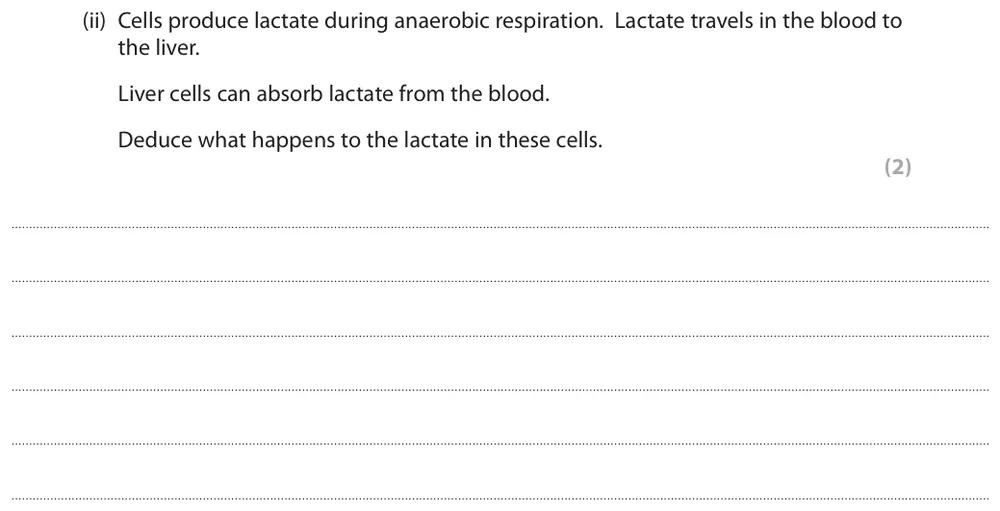
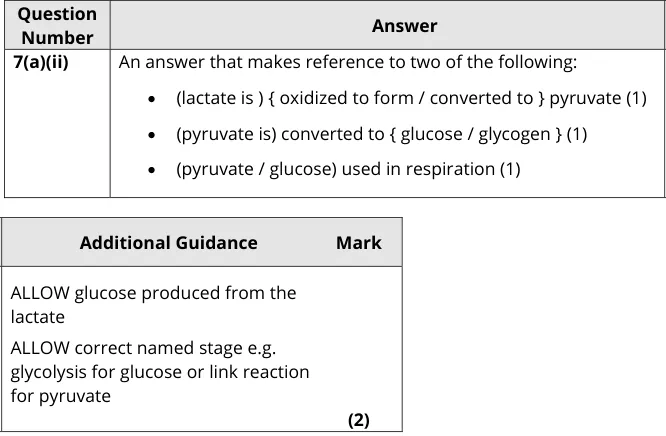
Deduce what happens to lactate in liver cells.
Show the mark scheme
Tap an image to open it full size.
Structure of a muscle fibre (7.10 i)
Question 18
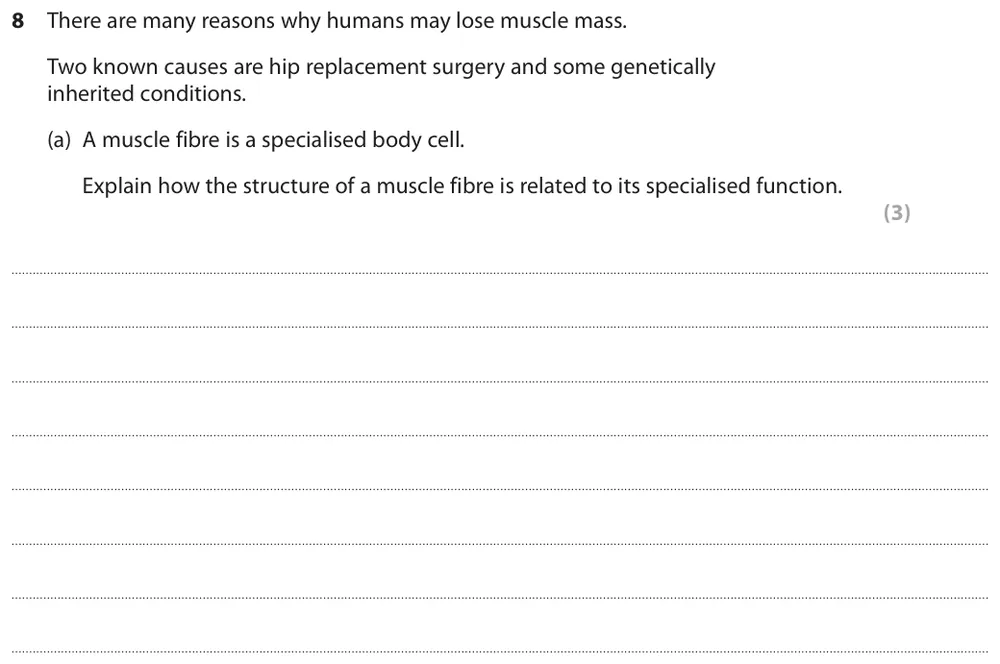
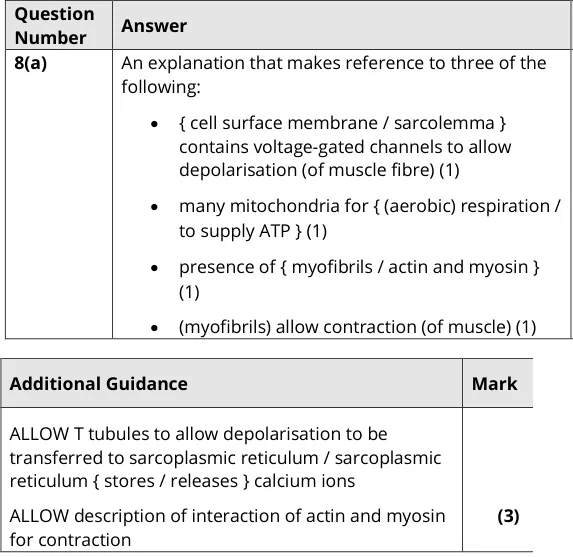
A level Paper 2 · October 2020 · Q8(a) · 3 marks
Explain how the structure of a muscle fibre is related to its function.
Show the mark scheme
Tap an image to open it full size.
From the examiners' report: Few considered the sarcolemma or the sarcoplasmic reticulum. Link each structure to its function, and put contraction in the context of myofibrils, or actin and myosin.
Fast and slow twitch muscle fibres (7.10 ii)
Question 19
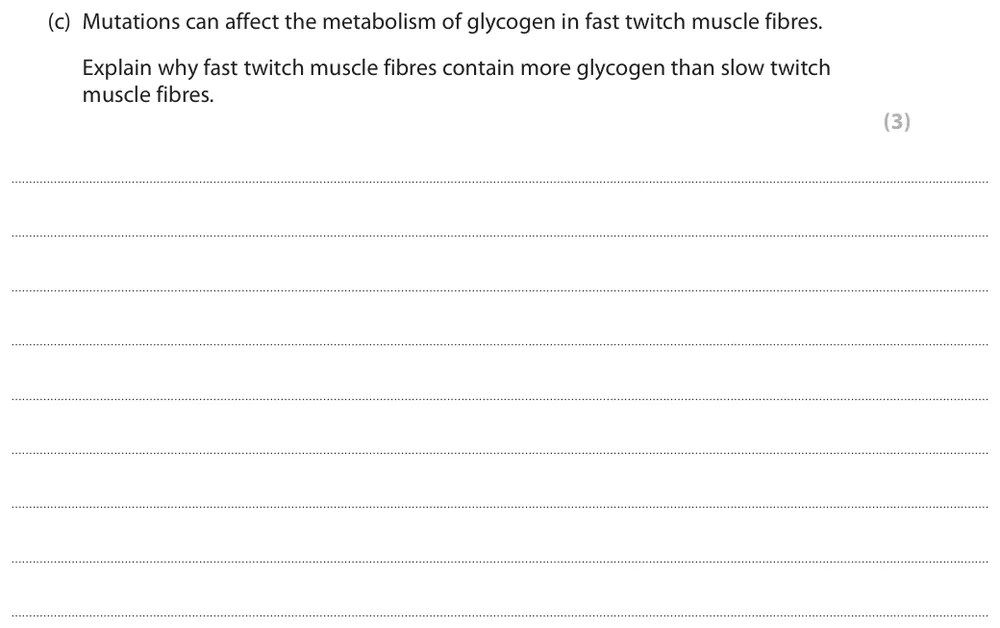
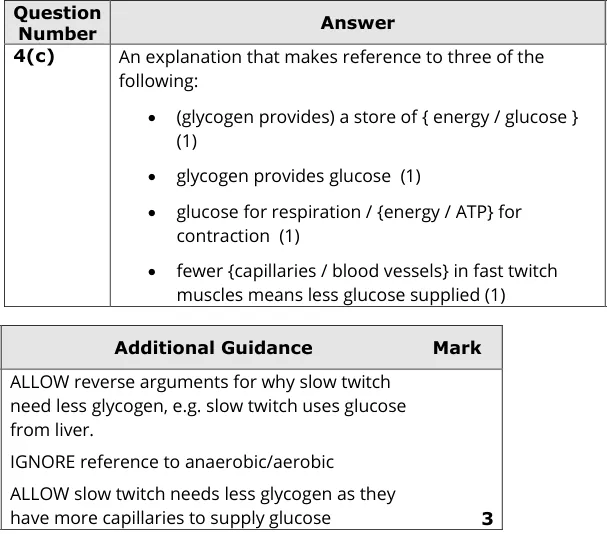
A level Paper 2 · June 2024 · Q4(c) · 3 marks
Explain why fast twitch muscle fibres contain more glycogen than slow twitch fibres.
Show the mark scheme
Tap an image to open it full size.
From the examiners' report: Most knew glycogen is a store of glucose for respiration, giving ATP for contraction. The final mark was rarely seen: fast twitch fibres have fewer capillaries, so less glucose is supplied by the blood.
Question 20
A level Paper 2 · June 2023 · Q7(a) · 5 marks
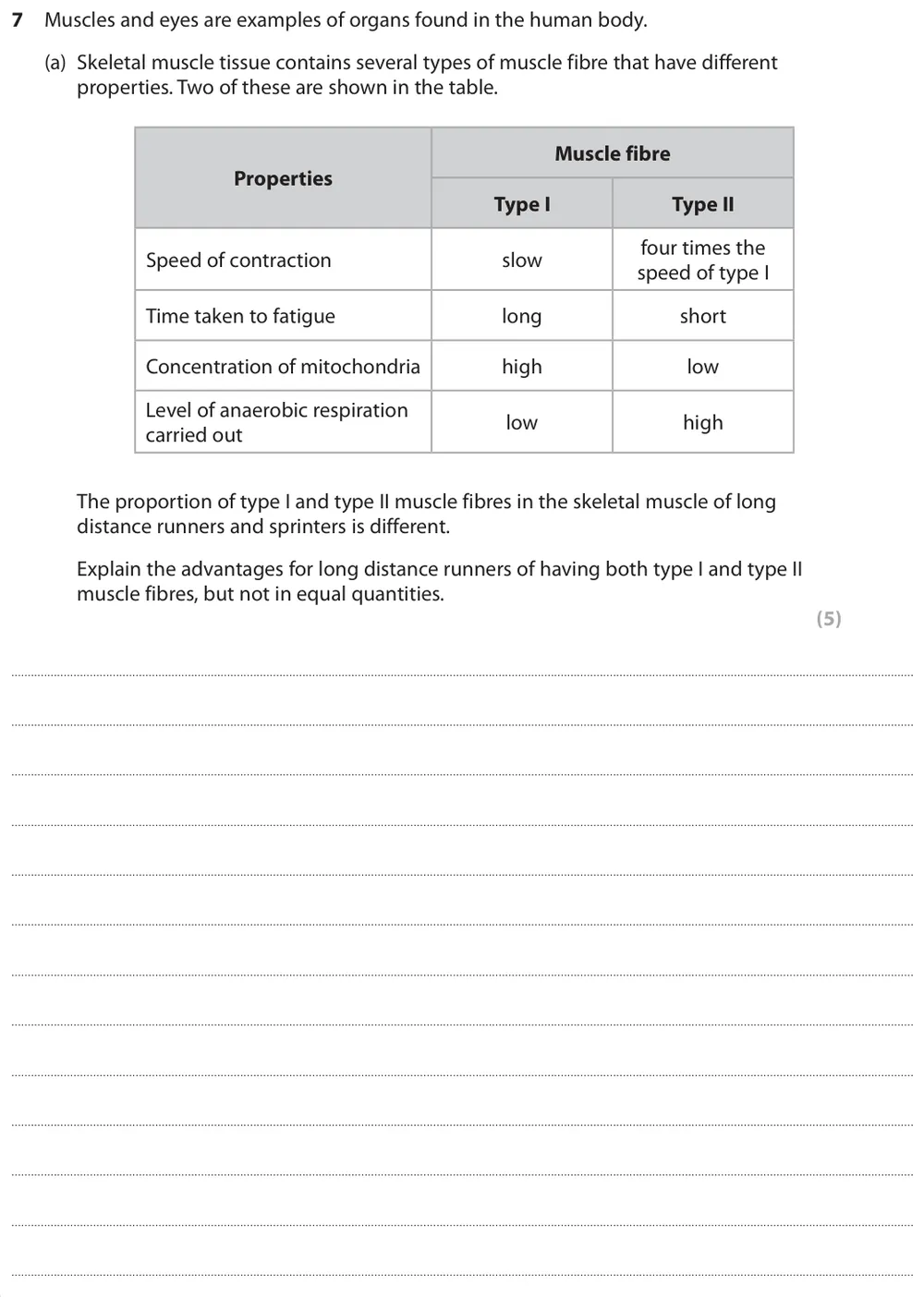
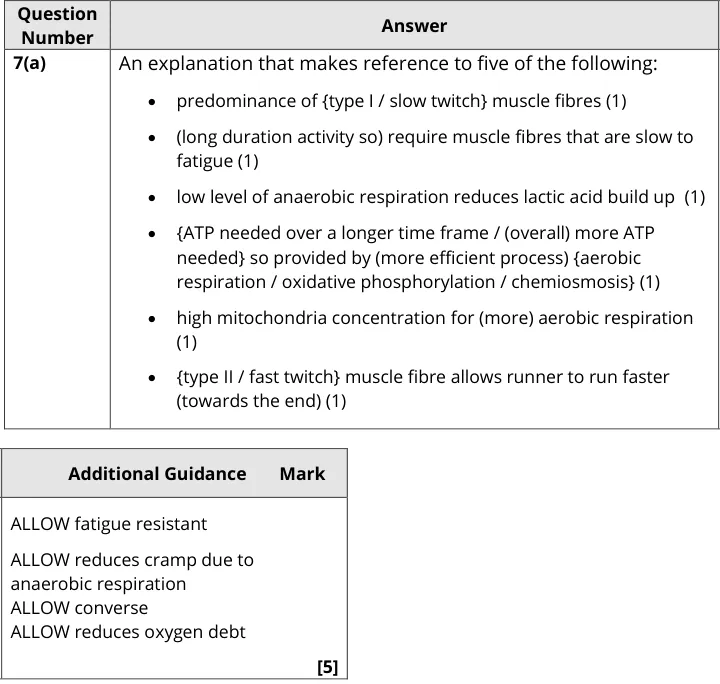
Explain the advantages for long distance runners of having both type I and type II muscle fibres in unequal amounts.
Show the mark scheme
Tap an image to open it full size.
From the examiners' report: Don't just repeat the table. Answer every part: most fibres are type I, which fatigue slowly and respire aerobically with many mitochondria, while some type II fibres let the runner go faster, for example near the end.
Where students lose marks (from Pearson examiners' reports and mark schemes)
Each point below comes from the examiners' reports and mark schemes, and is followed by wording that gained marks.
Tendons join muscle to bone. Few explained the role of tendons or linked each named muscle to its bone and movement.
✔ Gains credit: 'Tendons attach muscles to bones; when the extensor contracts it pulls on the tibia to extend the leg.'
Binding sites are on actin, for myosin. Answers called them 'actin binding sites', put them on tropomyosin, or said tropomyosin changes shape but does not move.
✔ Gains credit: 'Tropomyosin is moved, exposing the myosin binding sites on actin.'
ATP is split, not made, in contraction. A surprising number thought ATP was formed when the myosin head moves, or wrote P instead of Pi.
✔ Gains credit: 'ATP is hydrolysed, releasing ADP and inorganic phosphate (Pi).'
Calcium ions are pumped back. A significant minority said calcium ions diffuse back into the sarcoplasmic reticulum.
✔ Gains credit: 'Calcium ions are taken back up into the sarcoplasmic reticulum by active transport.'
Not enough oxygen, not 'no oxygen'. Many said there was 'no oxygen', implying no aerobic respiration at all.
✔ Gains credit: 'Lactate is produced by anaerobic respiration because there is insufficient oxygen for aerobic respiration to meet the demand for energy.'
Enzymes are not coenzymes. It was common to see enzymes and coenzymes confused when describing the link reaction.
✔ Gains credit: 'Enzymes catalyse decarboxylation, the removal of hydrogen to reduce NAD, and the addition of coenzyme A to make acetyl CoA.'
Keep H+ inside the intermembrane space. Many gave a general account of aerobic respiration instead of explaining why the membrane is impermeable to H+.
✔ Gains credit: 'It stops H+ diffusing out, maintaining a high concentration in the intermembrane space, so H+ can move down its gradient by chemiosmosis to synthesise ATP.'
Fewer capillaries, more glycogen. The final marking point, about blood supply, was only occasionally seen.
✔ Gains credit: 'Fast twitch fibres have fewer capillaries, so less glucose is supplied; glycogen provides glucose for respiration and ATP for contraction.'
Download the questions
Download the PDF pack (20 questions, mark schemes at the end)
Keep practising
- Heart, Ventilation and Homeostasis (Topic 7): Edexcel SNAB exam questions by topic
- Respiration, Spirometer Traces and Habituation (Core Practicals 16 to 18): Edexcel SNAB core practical questions
- Topic 7 multiple-choice quiz (25 questions, marked as you tap)
- Edexcel SNAB A level Biology resources hub (every topic, practical and paper)
- Extended Response Questions (Topics 5 to 8): Edexcel SNAB A Level Biology Exam Questions
- Edexcel SNAB A level Biology past papers, mark schemes and examiners' reports
- Edexcel SNAB A level Biology grade boundaries
- Message Tom on WhatsApp about one-to-one Edexcel SNAB tutoring or an Edexcel group class
Questions, mark schemes and examiners' report extracts © Pearson Education Ltd.