

Extended response questions are the asterisked 6- and 9-mark questions on the Edexcel A level Biology A (Salters-Nuffield) papers. They are not marked point by point. The mark schemes say answers are credited according to your deployment of knowledge and understanding in relation to the qualities and skills in a generic levels mark scheme, with indicative content that is not prescriptive. To reach the top level, an answer must show a well-developed and sustained line of scientific reasoning which is clear, coherent and logically structured. This page covers Topics 5 to 8: On the Wild Side; Immunity, Infection and Forensics; Run for your Life; and Grey Matter. The 6-mark questions come from Papers 1 and 2, and the 9-mark questions from Paper 3. All the questions here are from the A level papers (9BN0).
The examiners' reports give the same warnings year after year. Use all the information you are given: answers that use only one study or one source stay at level 1. Don't just describe or copy out the data; link it to your own biological knowledge. Answer every part of the question, and tie a practical method to the context instead of writing a generic one. For evaluate, assess and discuss questions, finish with a conclusion supported by the evidence.
Studying Edexcel SNAB and want more help? If you'd like to arrange one-to-one Edexcel tutoring, or to register your interest in an Edexcel group class, message Tom on WhatsApp using the link at the bottom of this page.
What you need first
Each question on this page assumes you're secure on these ideas. If any of them feels shaky, look it up before you start.
- Each command word asks for something different: evaluate and assess need a supported judgement, discuss needs all aspects explored, devise needs a workable method.
- A good investigation names the independent and dependent variables, controls other variables, includes repeats and a mean, and uses a suitable statistical test.
- The core practicals you have done (such as the Hill reaction, antibiotic discs on agar and the effect of temperature on enzyme activity) are often the basis of 'devise' questions.
- Data questions expect you to compare means and to comment on spread, such as error bars that do or do not overlap.
Key terms
These words come up in the questions and mark schemes. Examiners expect you to use them exactly.
- Indicative content: the list of points in the mark scheme that a good answer might include; it is not a checklist and you don't need all of it.
- Levels-based marking: the examiner first decides the level (1, 2 or 3) from the quality of the whole answer, then the mark within that level.
- Evaluate: review the information, then bring it together to form a conclusion, drawing on strengths, weaknesses and relevant data, and come to a supported judgement.
- Discuss: identify the issue or situation and explore all aspects of it to give a reasoned response.
- Devise: plan or invent a procedure from existing principles or ideas, such as a method based on a core practical.
- Zone of inhibition: the clear area around an antibiotic on an agar plate where bacteria have not grown.
- Q10: the temperature coefficient: the rate of reaction at T + 10 °C divided by the rate at T °C.
- Habituation: a reduced response to a repeated, harmless stimulus, caused by changes at the synapse.
What these questions cover
The questions test these statements of the Pearson Edexcel A level Biology A (Salters-Nuffield) specification (9BN0).
- 5.13 Understand the causes of anthropogenic climate change, including the role of greenhouse gases (carbon dioxide and methane) in the greenhouse effect.
- 5.16 Understand the effect of temperature on the rate of enzyme activity and its impact on plants, animals and microorganisms.
- 5.17 Understand how evolution (a change in the allele frequency) can come about through gene mutation and natural selection.
- 6.12 Understand how individuals may develop immunity (natural, artificial, active, passive).
- 6.14 Understand the difference between bacteriostatic and bactericidal antibiotics.
- 6.15 Know how an understanding of the contributory causes of hospital acquired infections have led to codes of practice regarding antibiotic prescription and hospital practice
- 7.6 Understand how ATP is synthesised by oxidative phosphorylation associated with the electron transport chain in mitochondria, including the role of chemiosmosis and ATP sy
- 7.7 Understand what happens to lactate after a period of anaerobic respiration in animals.
- 7.16 Understand how genes can be switched on and off by DNA transcription factors including hormones.
- 8.3 Understand how a nerve impulse (action potential) is conducted along an axon including changes in membrane permeability to sodium and potassium ions and the role of the m
- 8.13 Understand how animals, including humans, can learn by habituation.
- 8.18 Understand the risks and benefits associated with the use of genetically modified organisms.
How to use this page
Write your answer on paper before you open the mark scheme. Allow about 1.2 minutes per mark: the 12 questions are worth 81 marks, so about 97 minutes in total. Then mark your answer strictly against the mark scheme and read the examiners' tip underneath it. If you'd rather print the questions, download the PDF pack.
Topic 5: On the Wild Side
Question 1
A level Paper 1 · June 2019 · Q10(b) · 6 marks
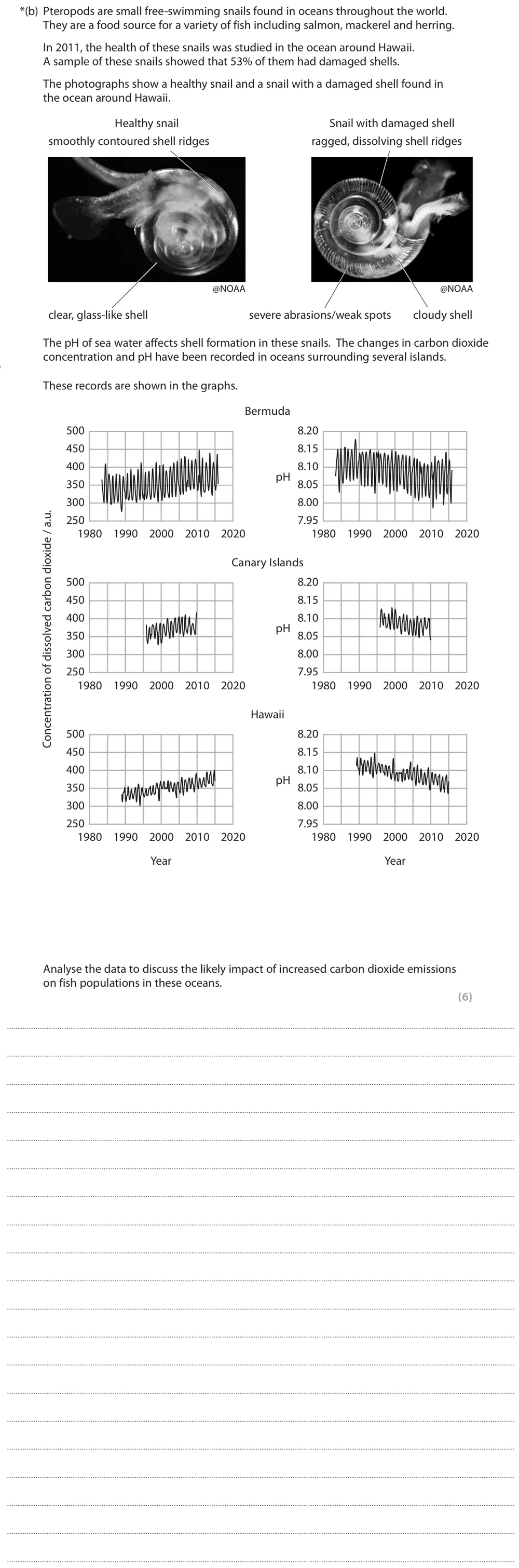
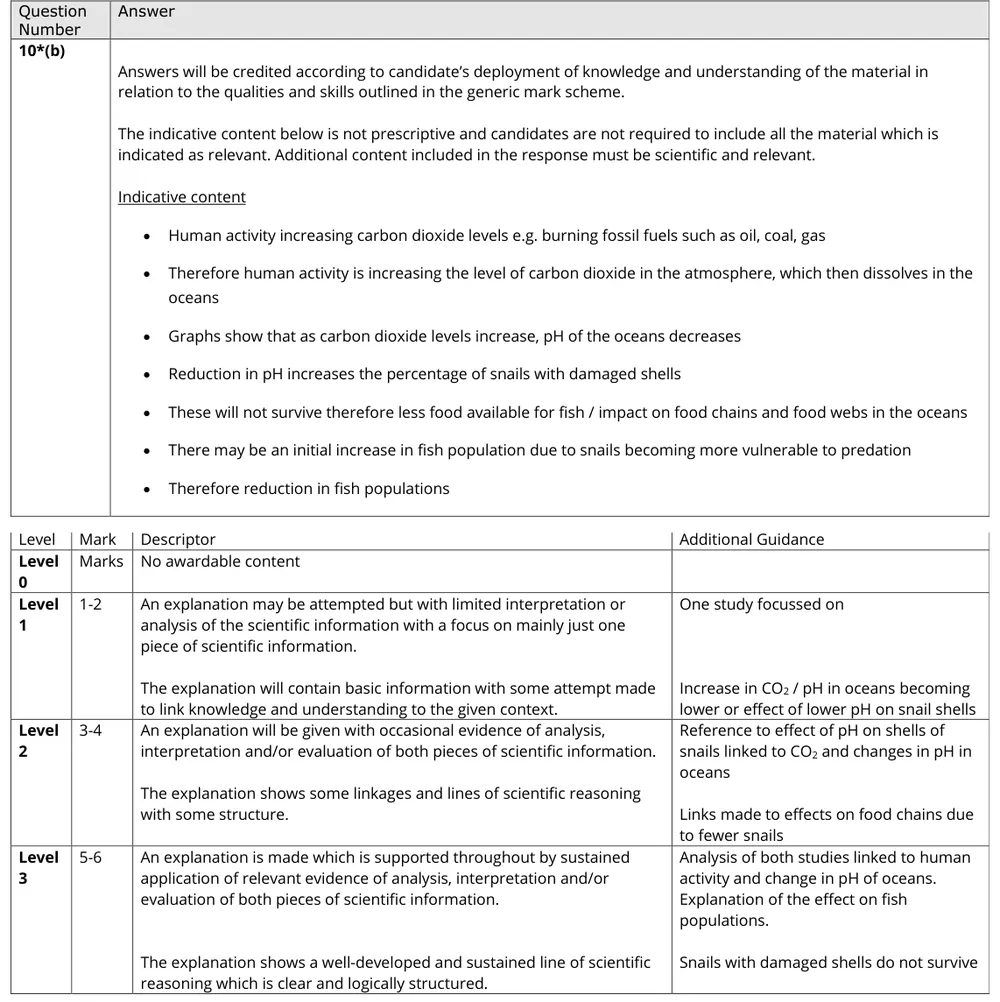
Analyse carbon dioxide and ocean pH data to discuss the likely impact of carbon dioxide emissions on fish populations.
Show the mark scheme
Tap an image to open it full size.
From the examiners' report: Answers that used only one study, or gave general comments without the data, stayed at level 1. Link the fall in pH to the damaged snail shells, then explain the effect on the food chain and on fish populations. Surprisingly few candidates linked these studies to human activities, and this cost full marks.
Question 2
A level Paper 1 · June 2025 · Q10(c) · 6 marks
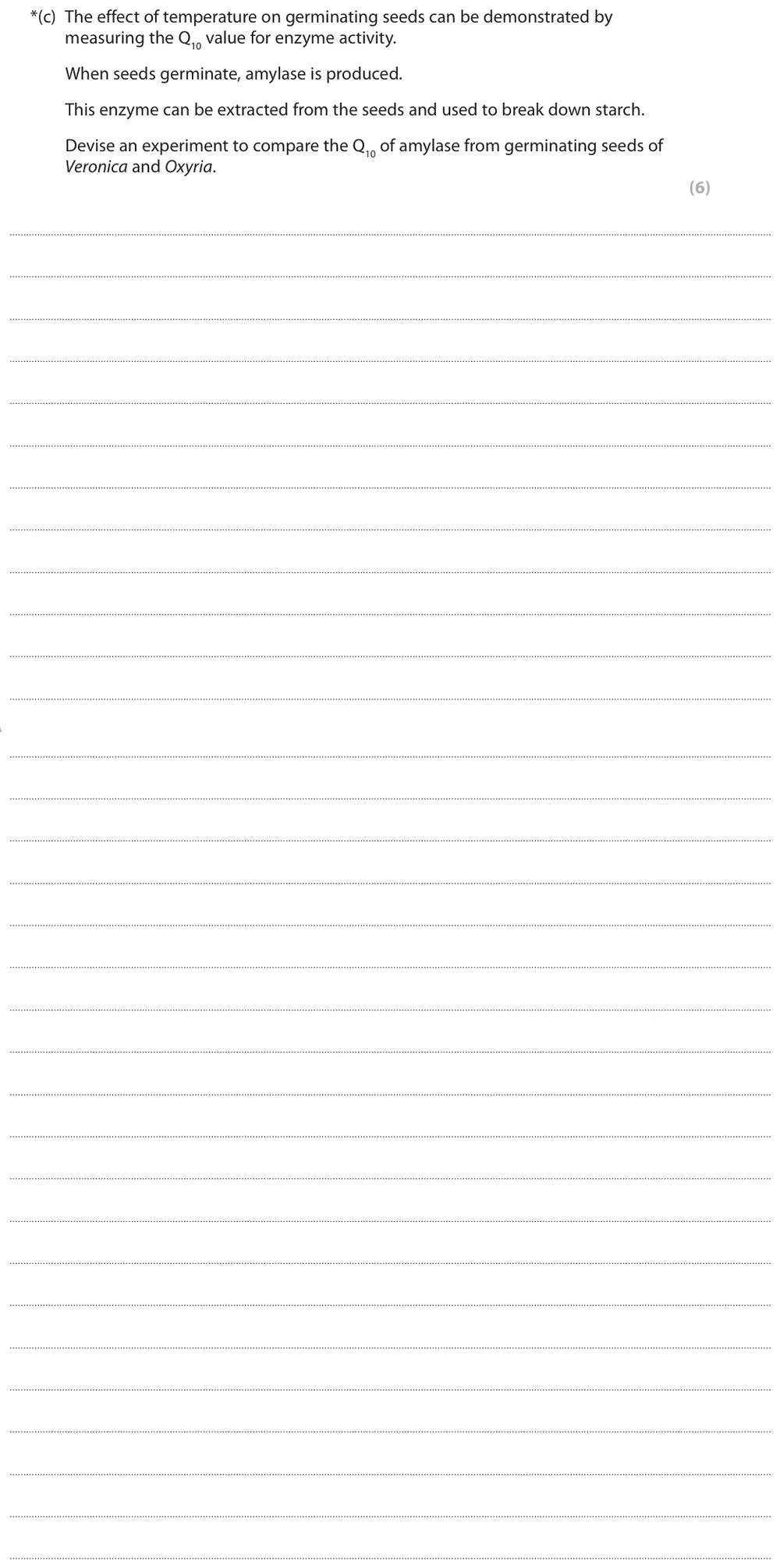
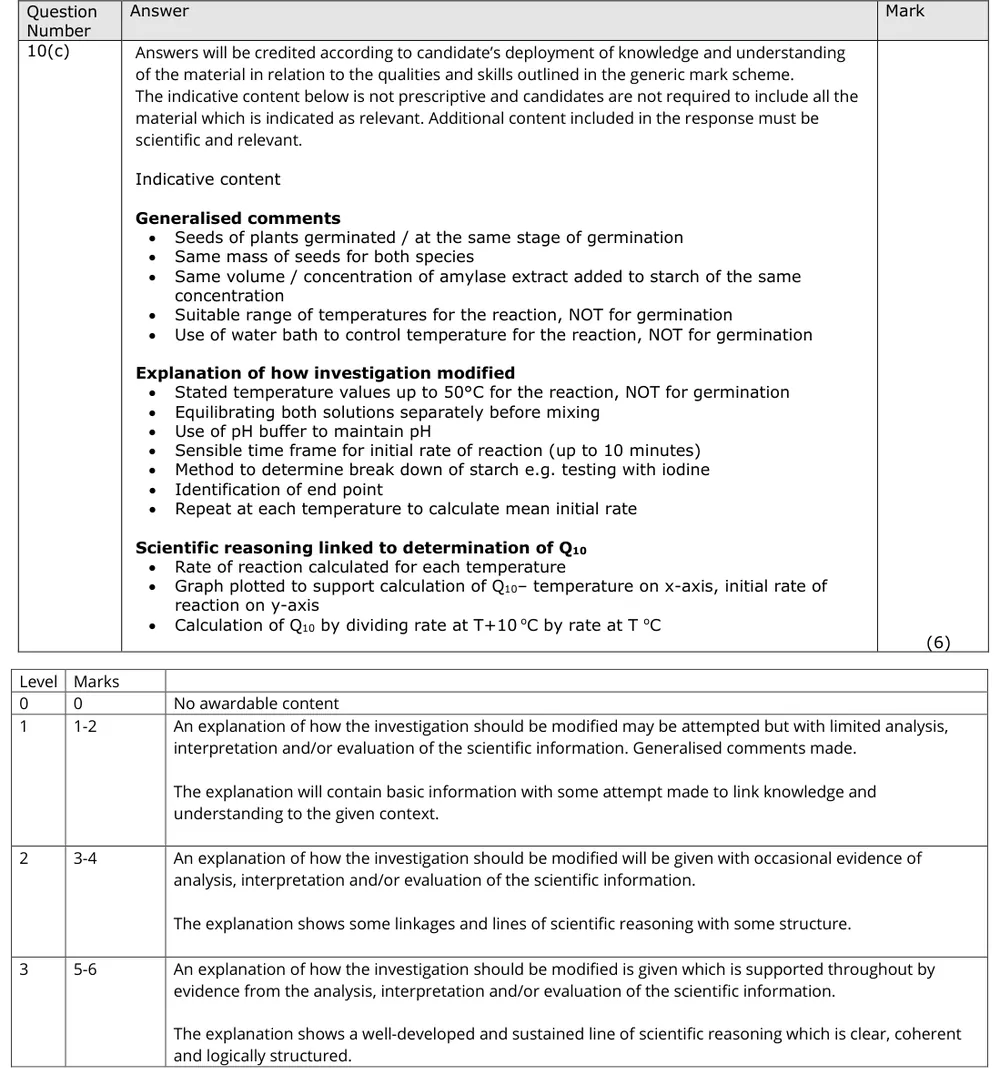
Devise an experiment to compare the Q10 of amylase from germinating seeds of two plant species.
Show the mark scheme
Tap an image to open it full size.
From the examiners' report: Most candidates did not draw on the practicals they had done. Measure the breakdown of starch with iodine at a range of reaction temperatures, find the initial rate at each and calculate Q10. Measuring gas, using DCPIP, Benedict's or hydrogen peroxide, or germinating the seeds at different temperatures, was not what the question asked.
Question 3
A level Paper 3 · June 2019 · Q7(b) · 9 marks
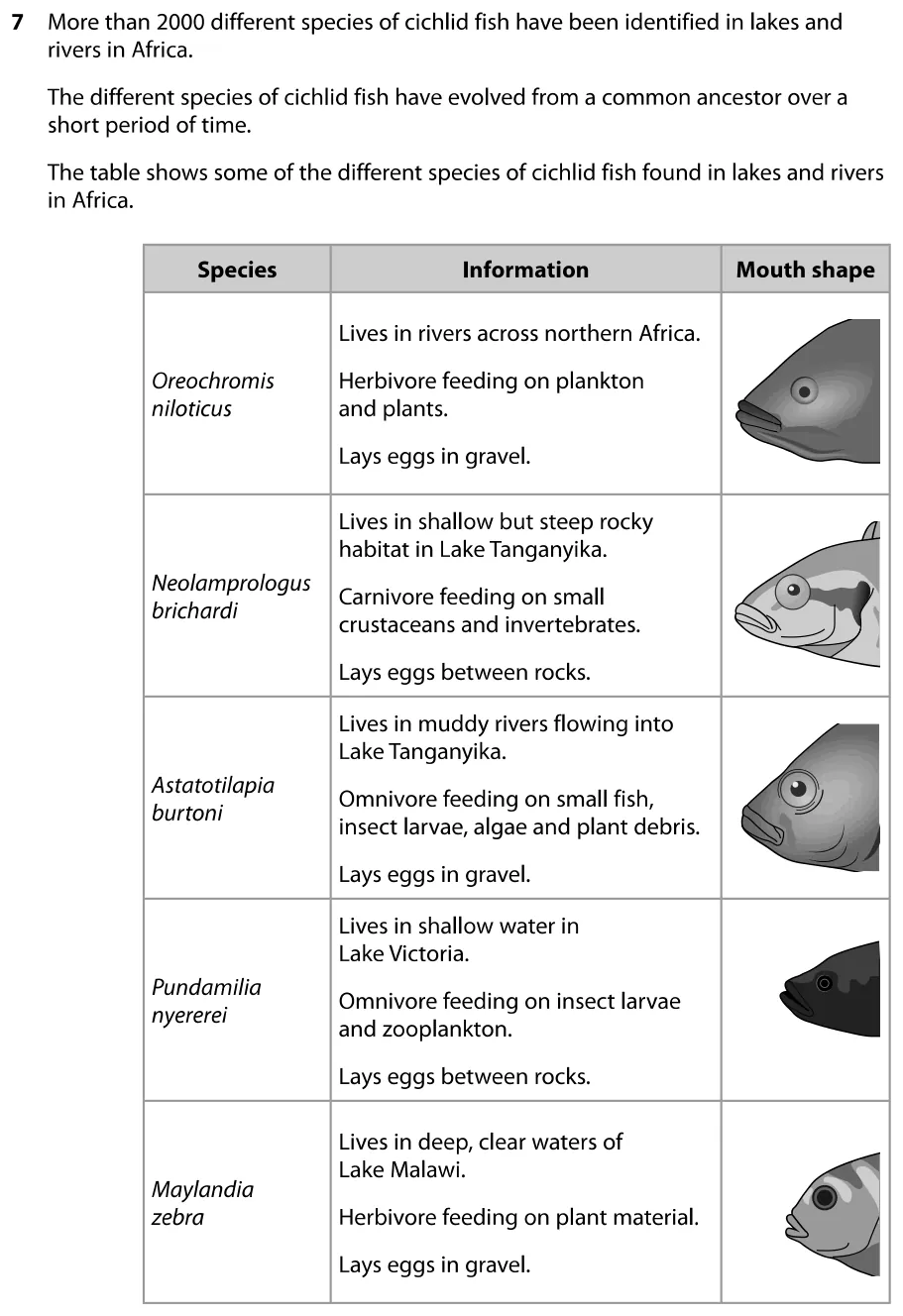
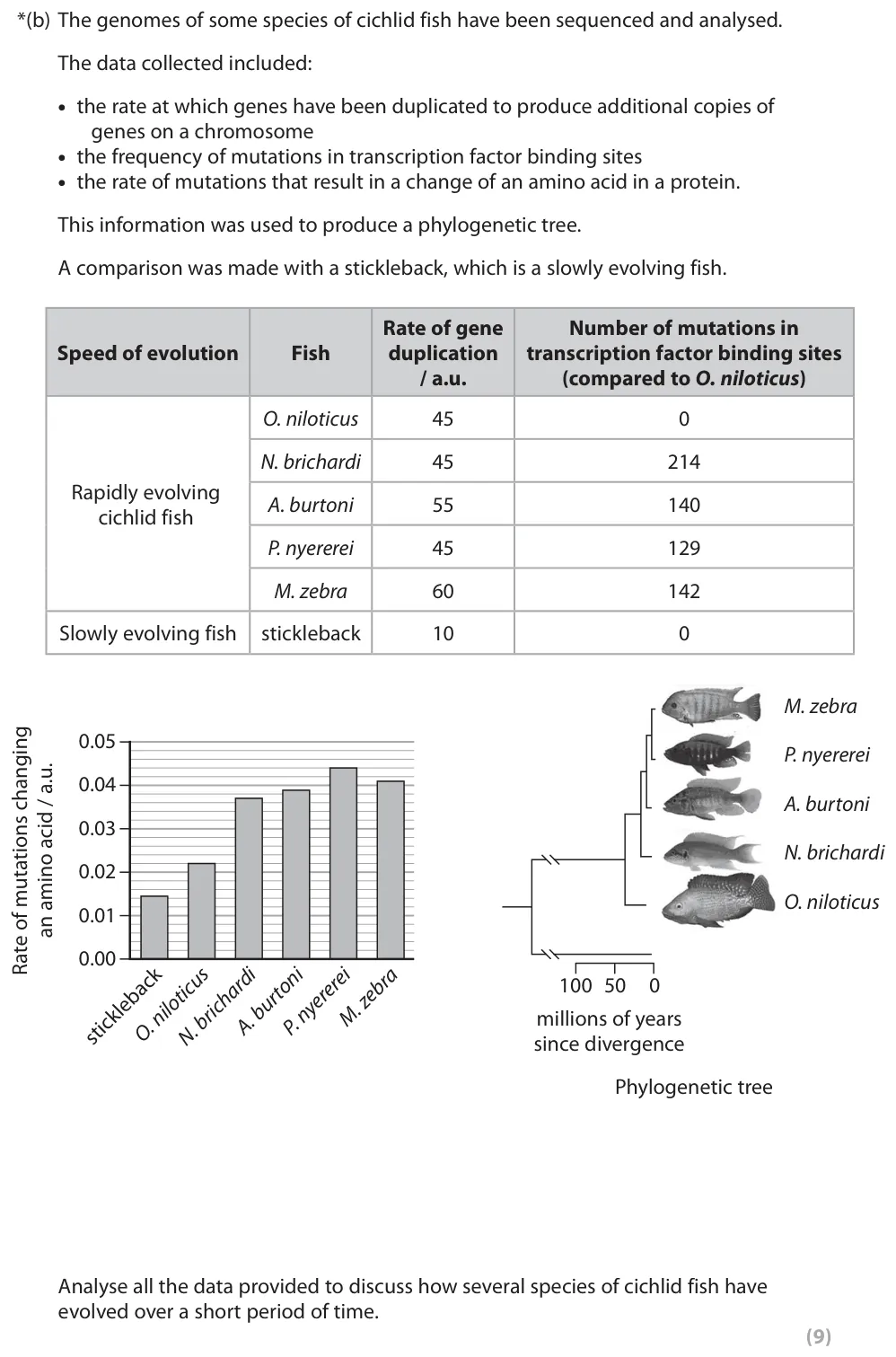
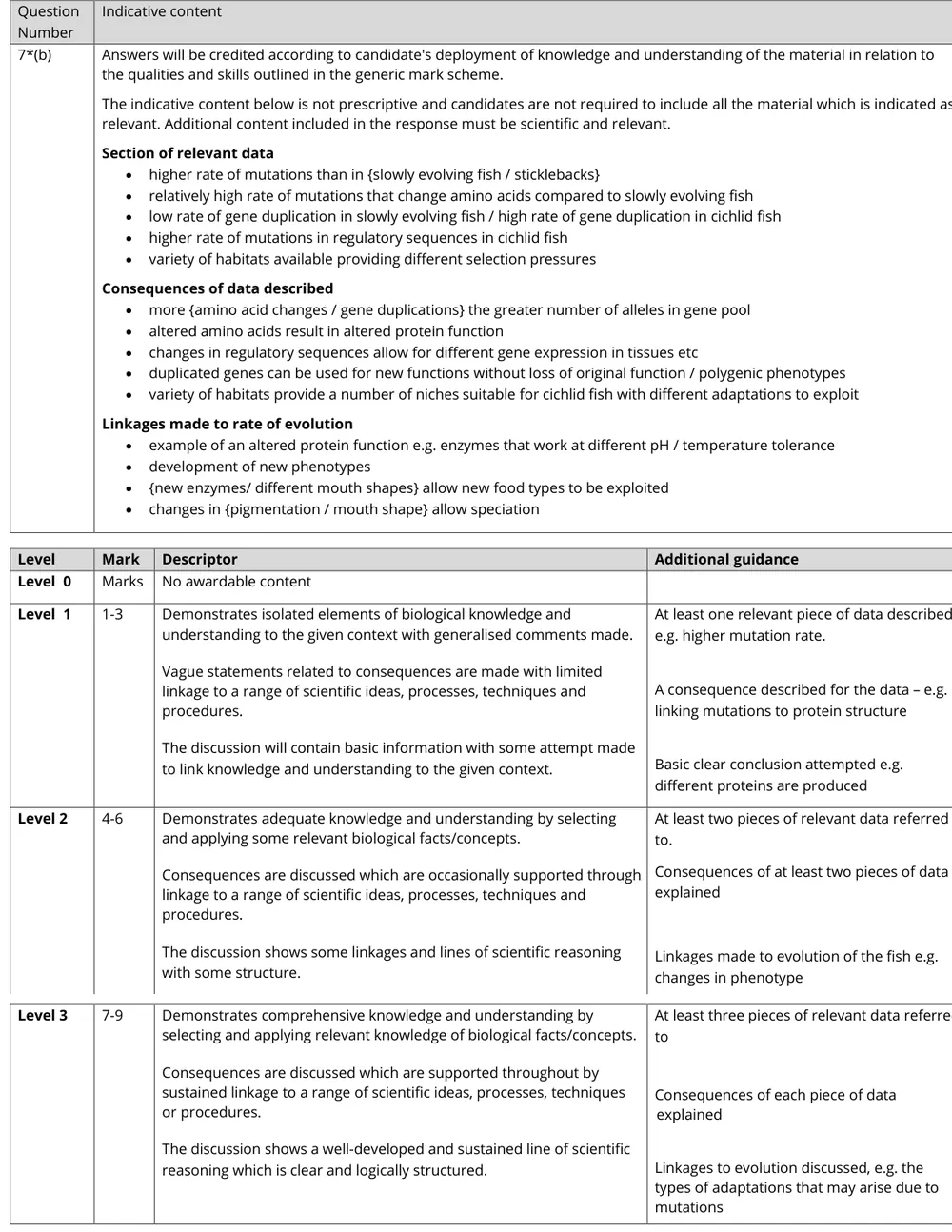
Analyse data on mutations and gene duplication to discuss how cichlid fish species have evolved over a short time.
Information from earlier in this question:
Show the mark scheme
Tap an image to open it full size.
From the examiners' report: Answers that only described the data were level 1. Level 2 needed the consequences of the data, and level 3 linked these to the processes involved in evolution. One answer with a good description of the data scored only 2 marks because it never said, for example, that high mutation rates give new alleles or a larger gene pool.
Topic 6: Immunity, Infection and Forensics
Question 4
A level Paper 1 · June 2023 · Q7(c) · 6 marks
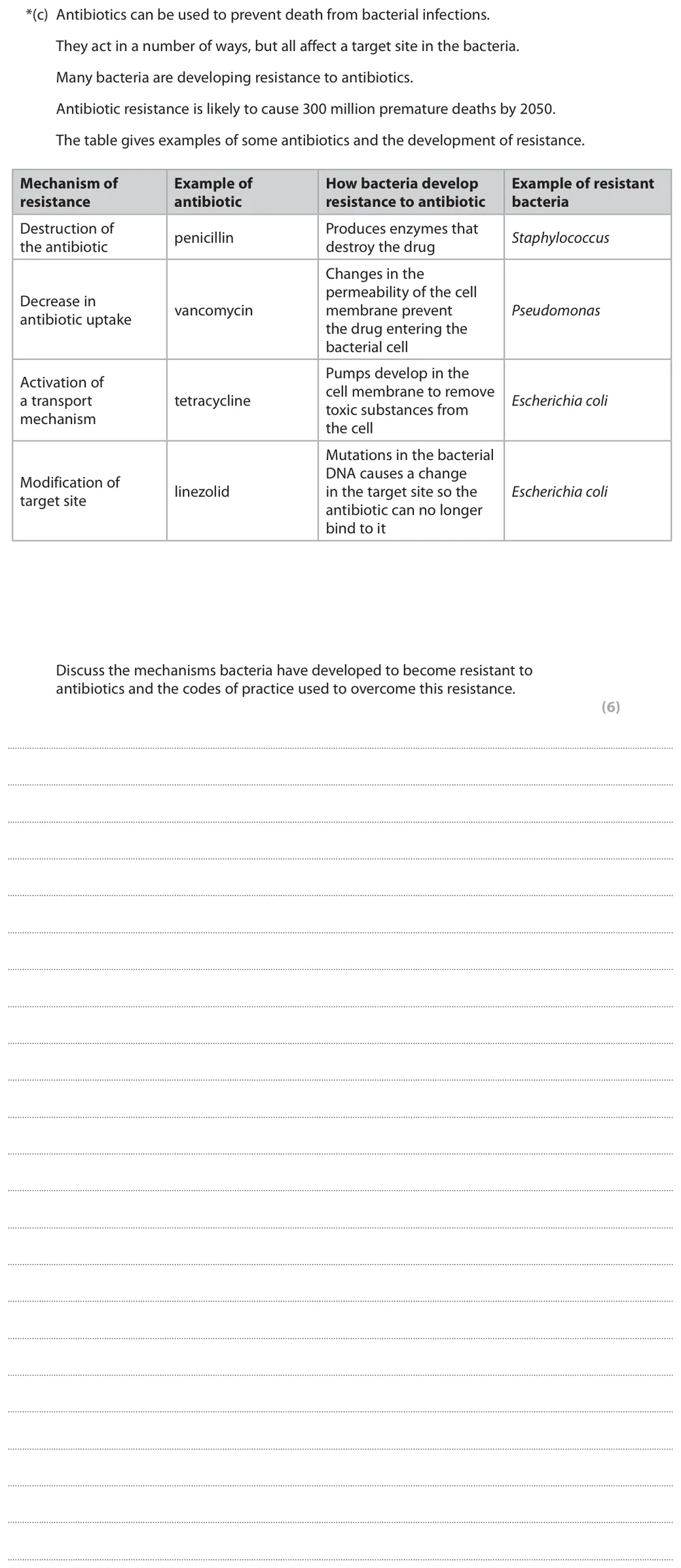
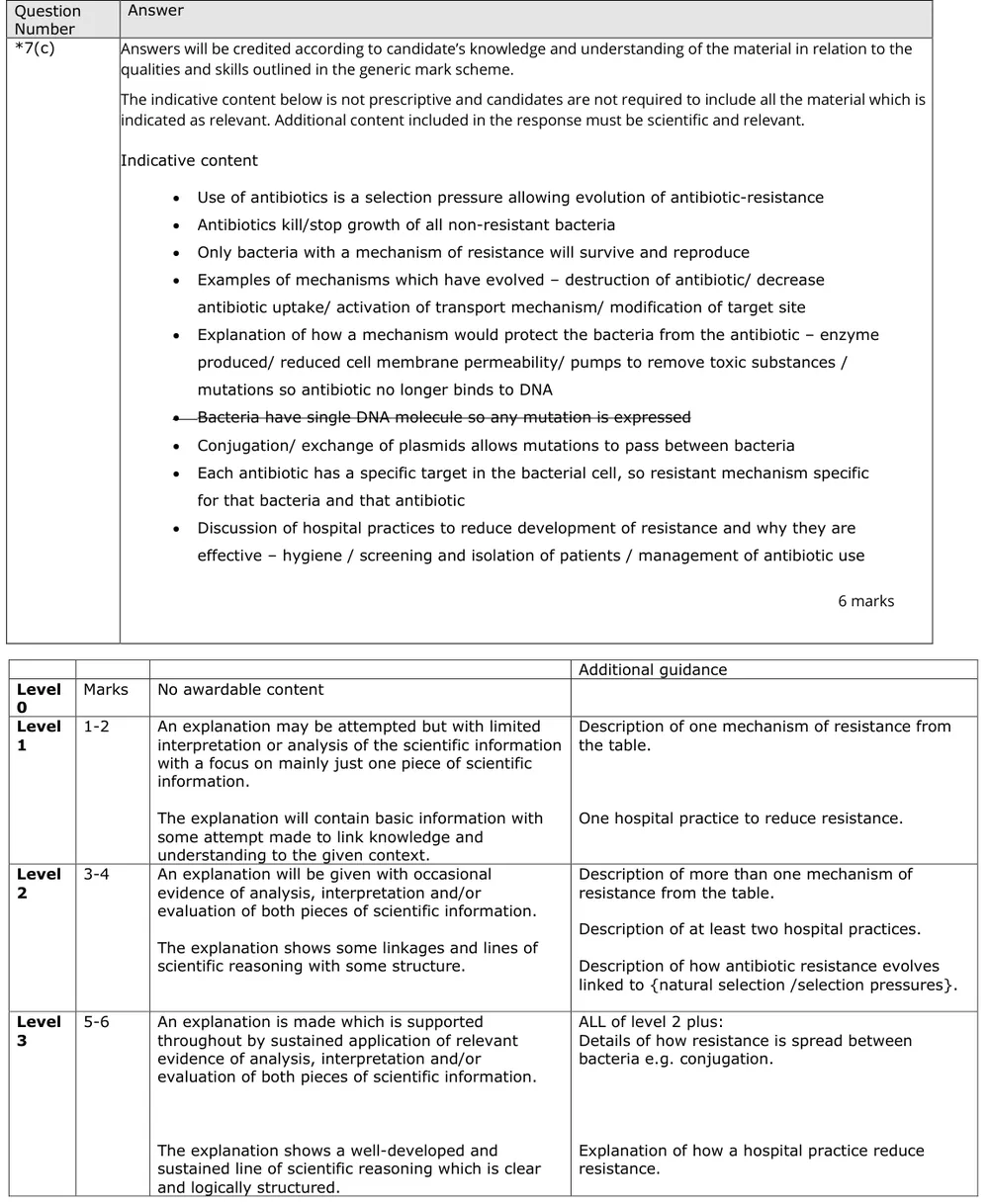
Discuss how bacteria become resistant to antibiotics and the codes of practice used to overcome this resistance.
Show the mark scheme
Tap an image to open it full size.
From the examiners' report: Both parts of the question had to be answered to move up the levels. Many candidates were limited to 3 marks because they described only one hospital practice. Some wrongly thought the drugs could be modified to overcome resistance, and some confused the action of antibiotics with the specific immune response.
Question 5
A level Paper 1 · June 2024 · Q9(c) · 6 marks
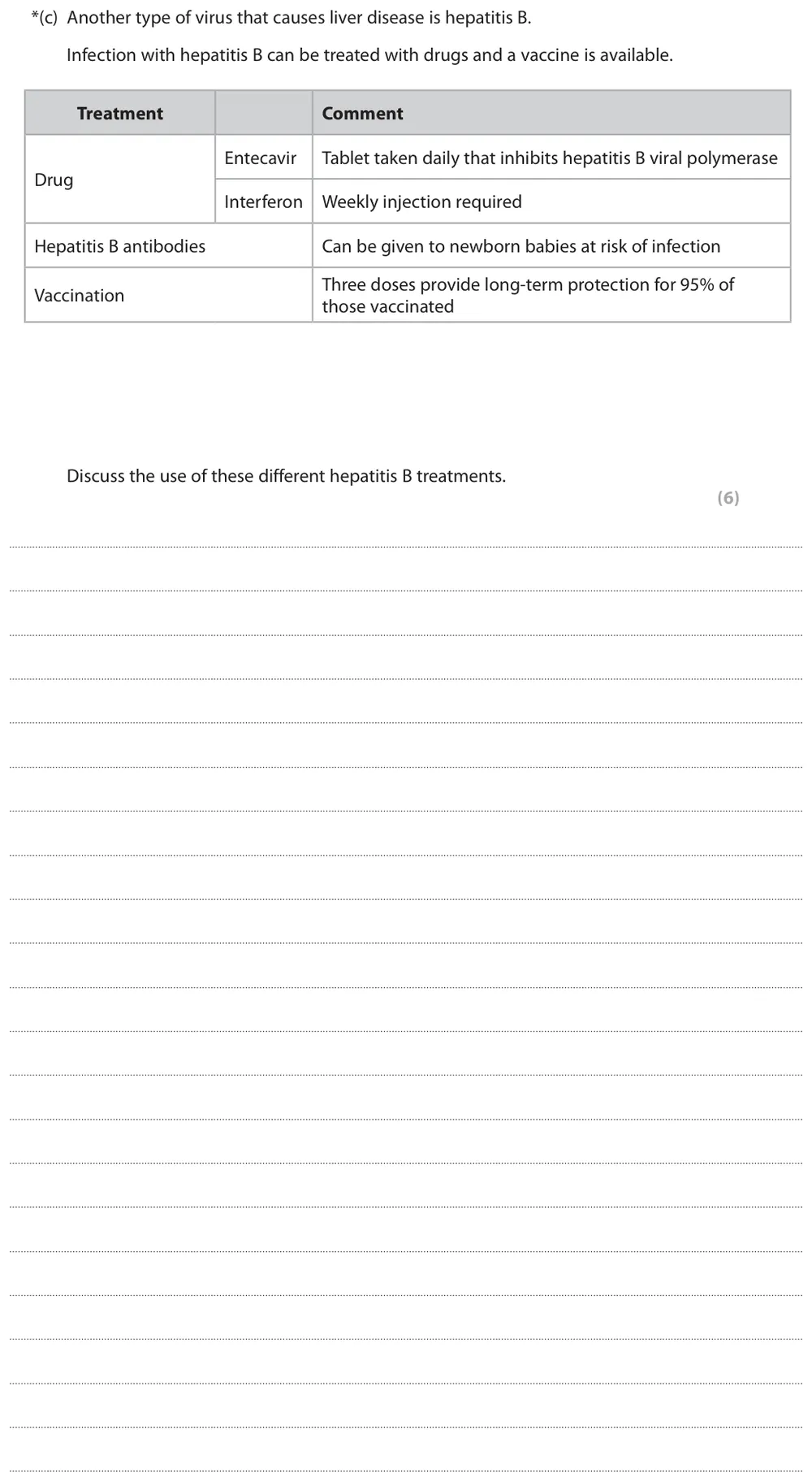
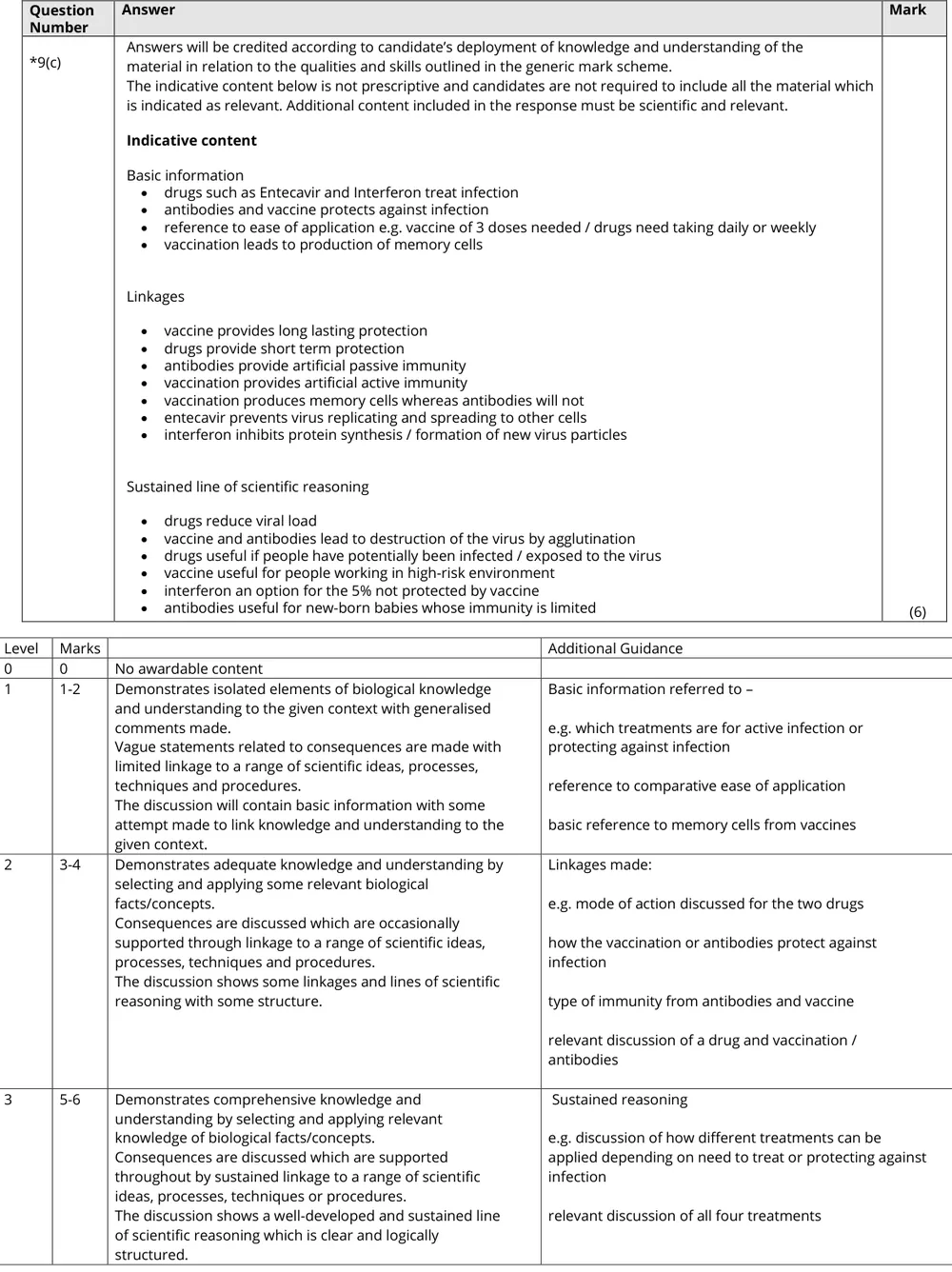
Discuss the use of drugs, antibodies and a vaccine to treat or prevent hepatitis B.
Show the mark scheme
Tap an image to open it full size.
From the examiners' report: Rewriting the information in the table is not credited; you must add your own knowledge to go beyond level 1. Many wrote at length about how the vaccine works and neglected the other treatments. A common misconception was that injected antibodies trigger an immune response and the production of memory cells.
Question 6
A level Paper 1 · June 2024 · Q10(b)(iii) · 6 marks
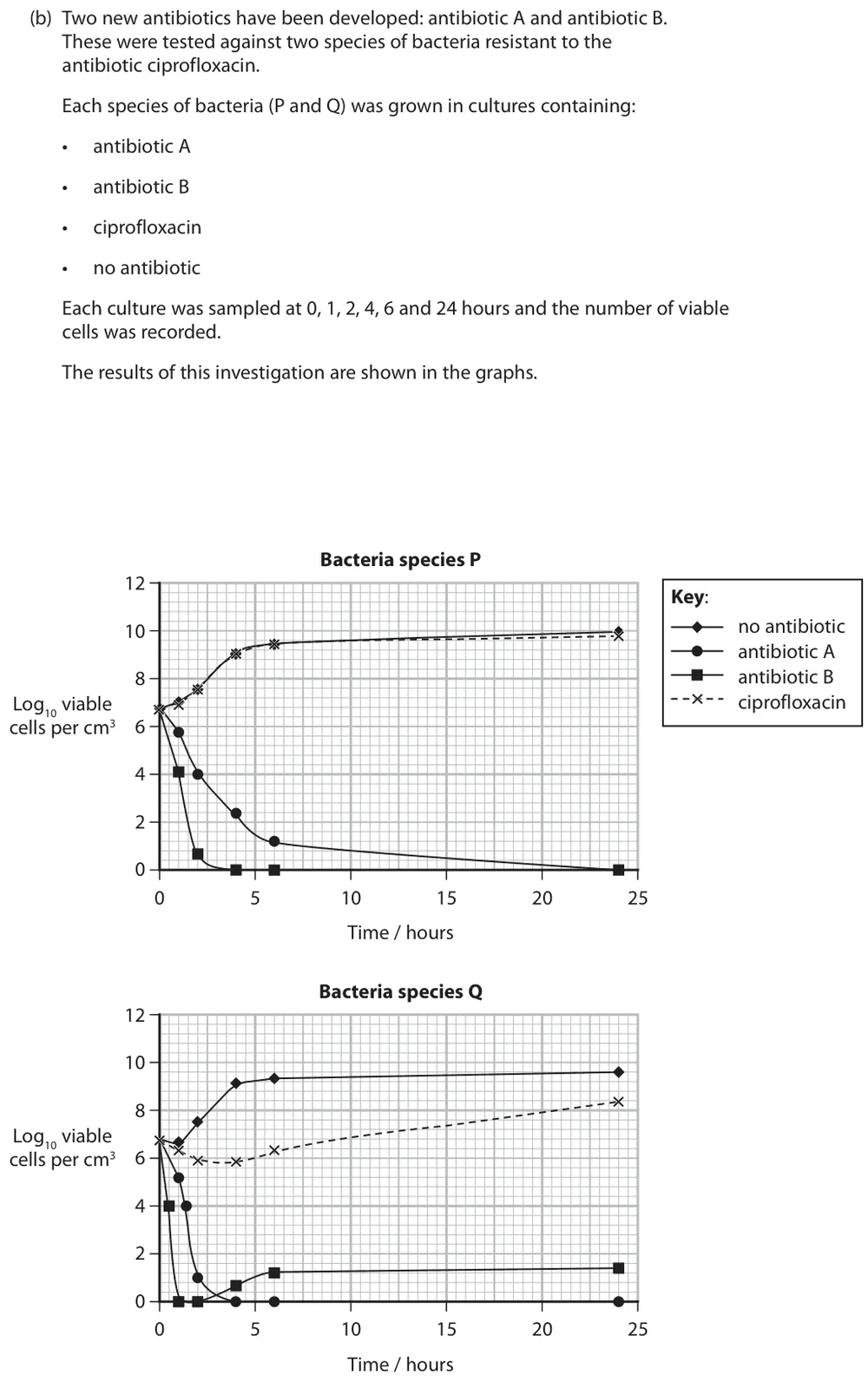
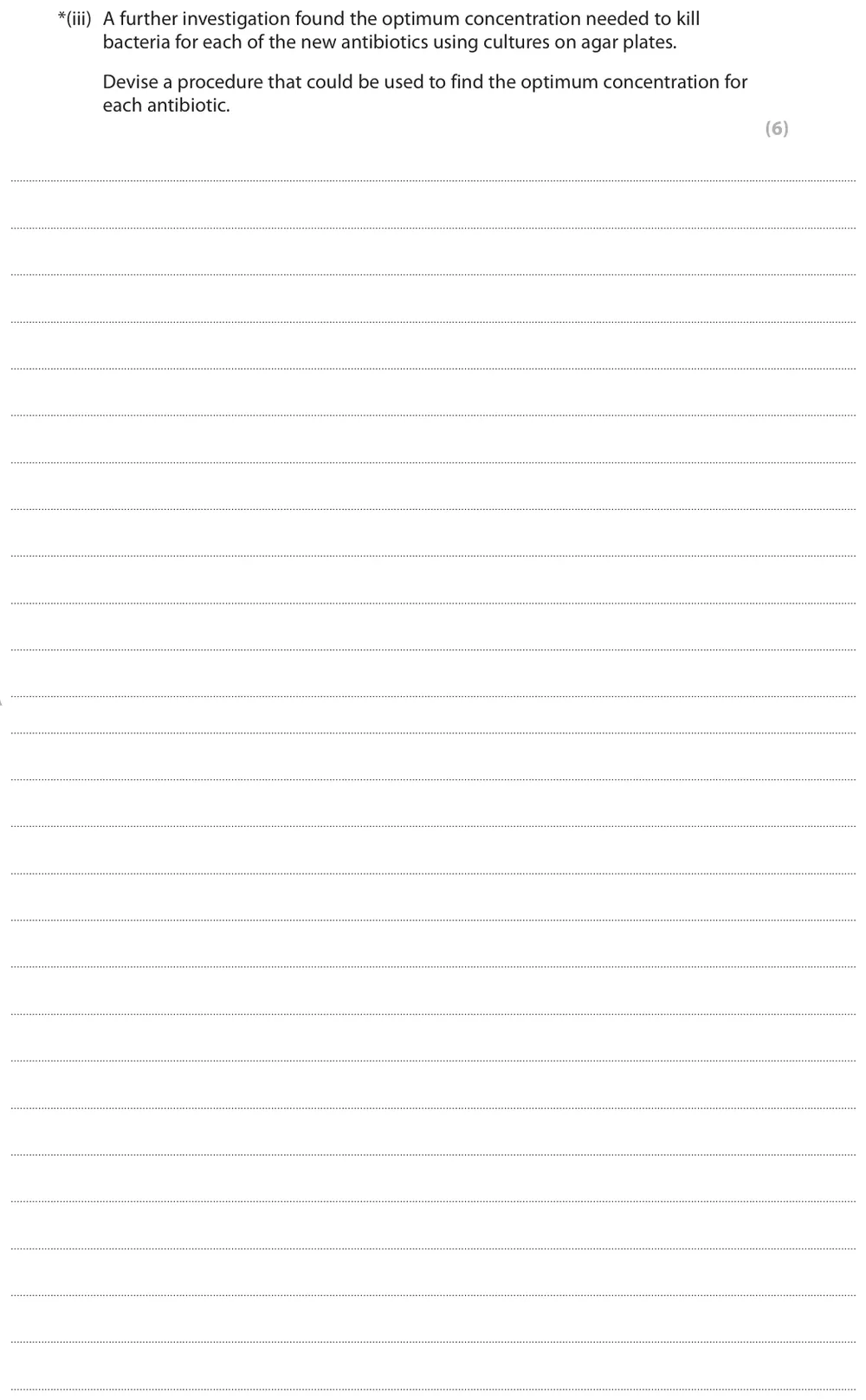
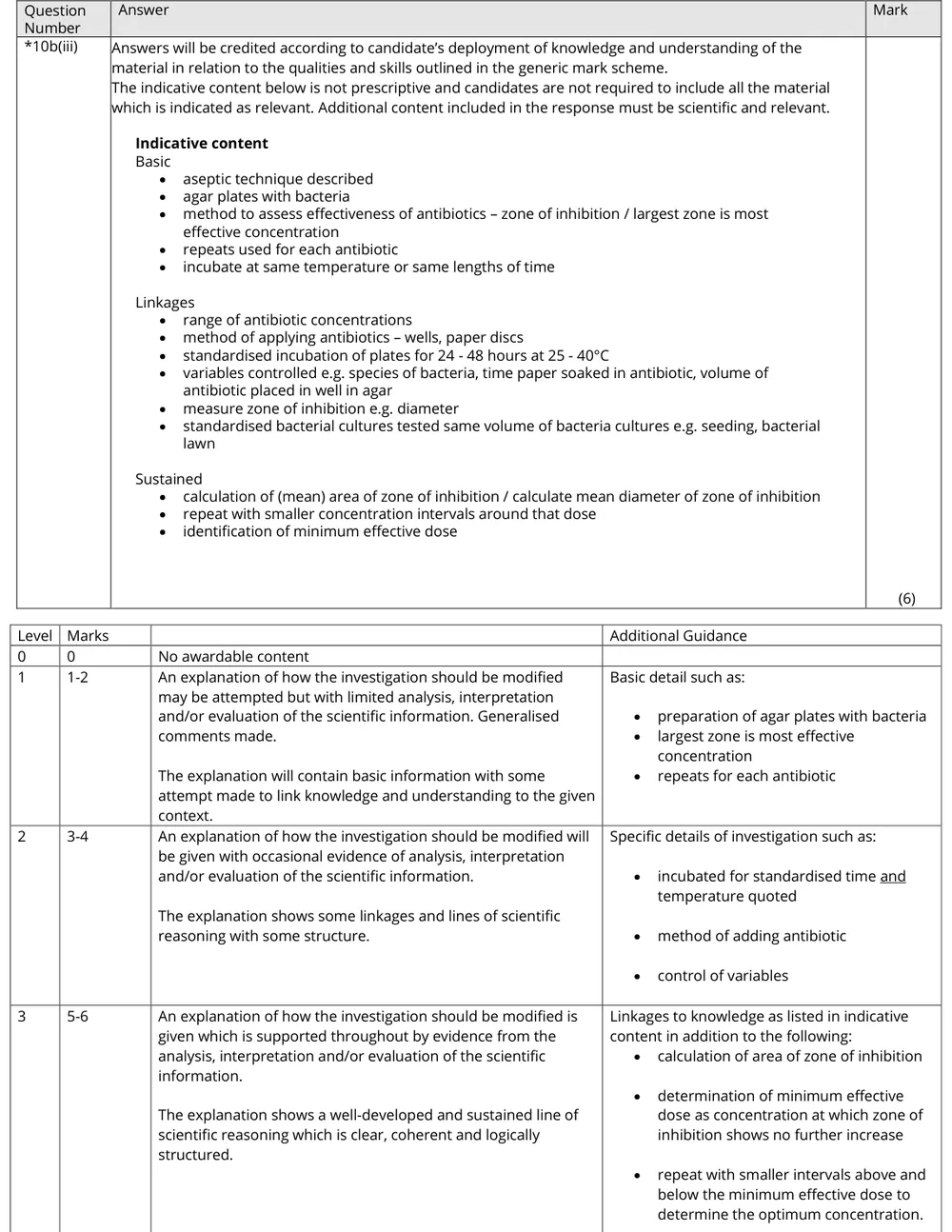
Devise a procedure to find the optimum concentration of two new antibiotics using bacterial cultures on agar plates.
Information from earlier in this question:
Show the mark scheme
Tap an image to open it full size.
From the examiners' report: Give a realistic incubation time and a temperature, not just one of them. Say that you measure the diameter of the zone of inhibition and calculate its area, and keep the volume of bacteria constant. Many said the optimum was the concentration with the largest zone, rather than the lowest concentration giving the largest zone.
Topic 7: Run for your Life
Question 7
A level Paper 2 · June 2019 · Q10(b) · 6 marks
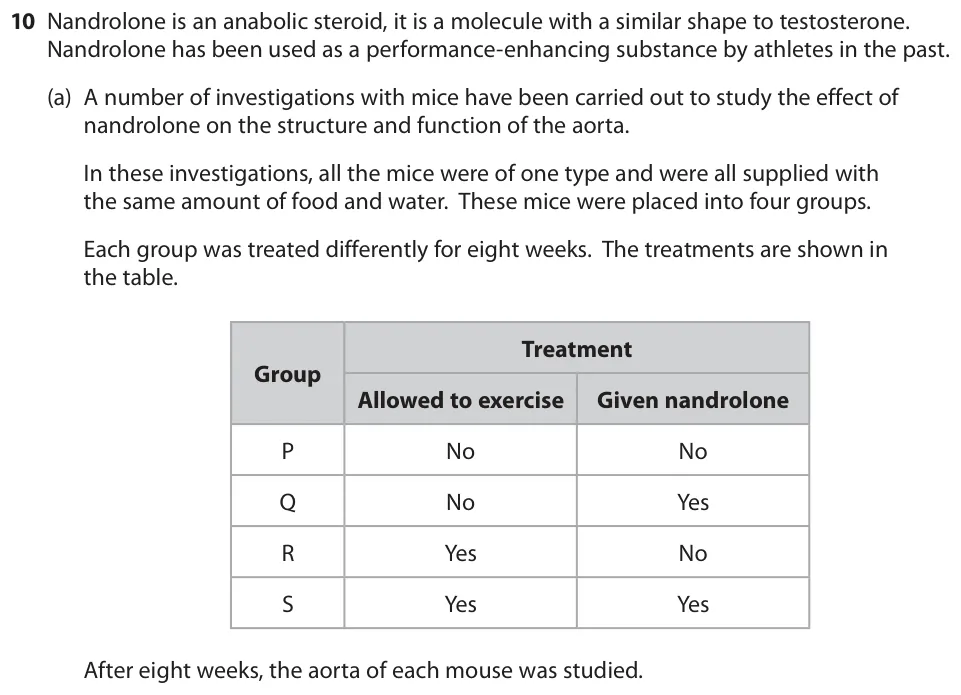
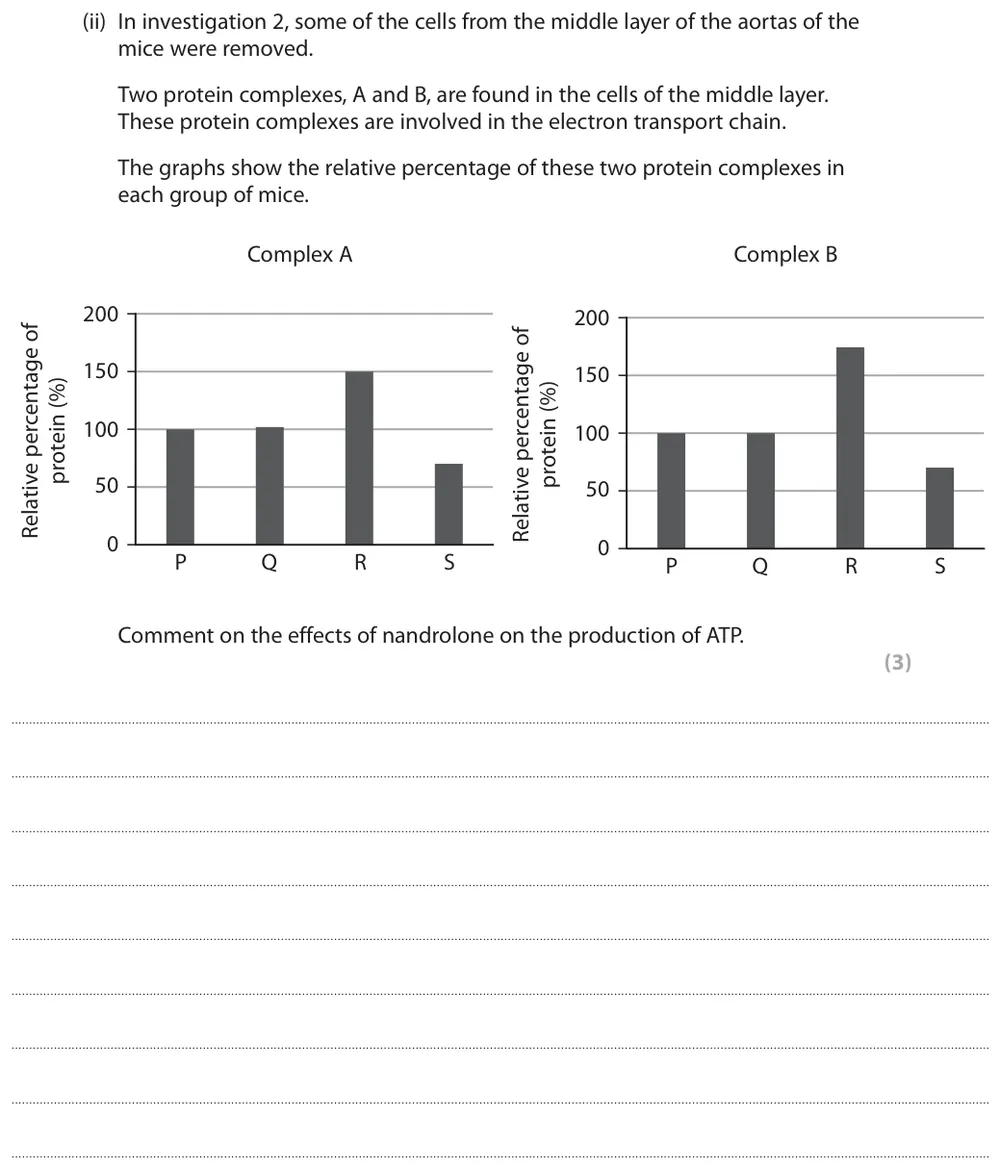
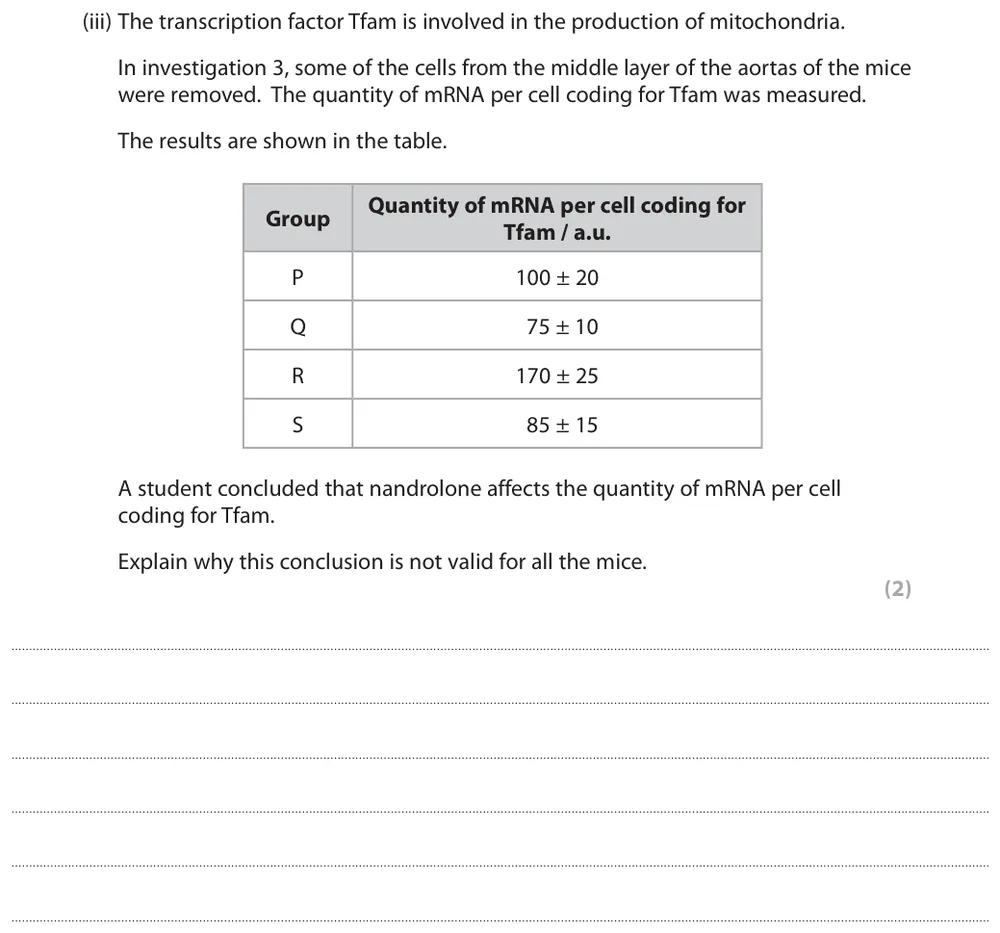
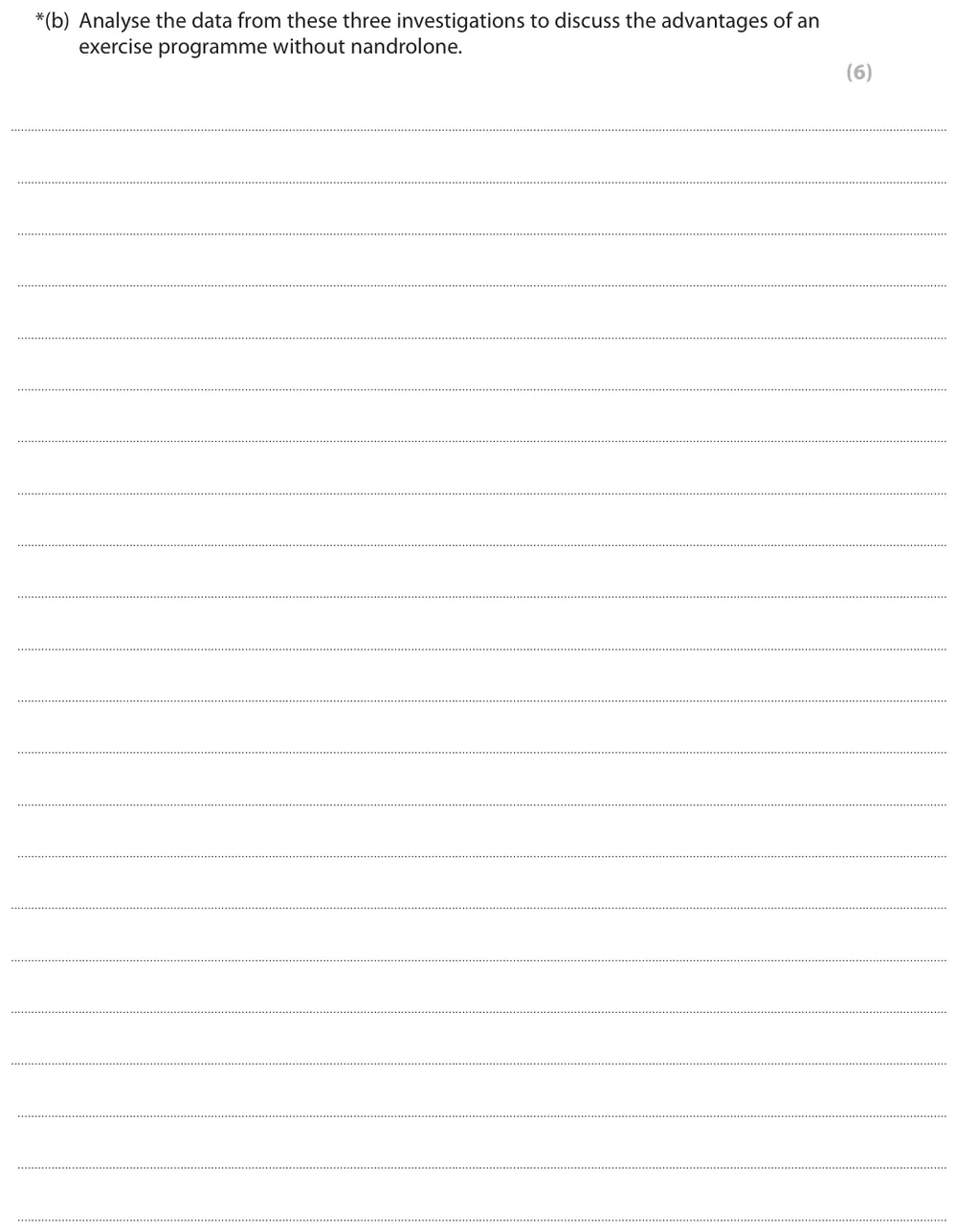
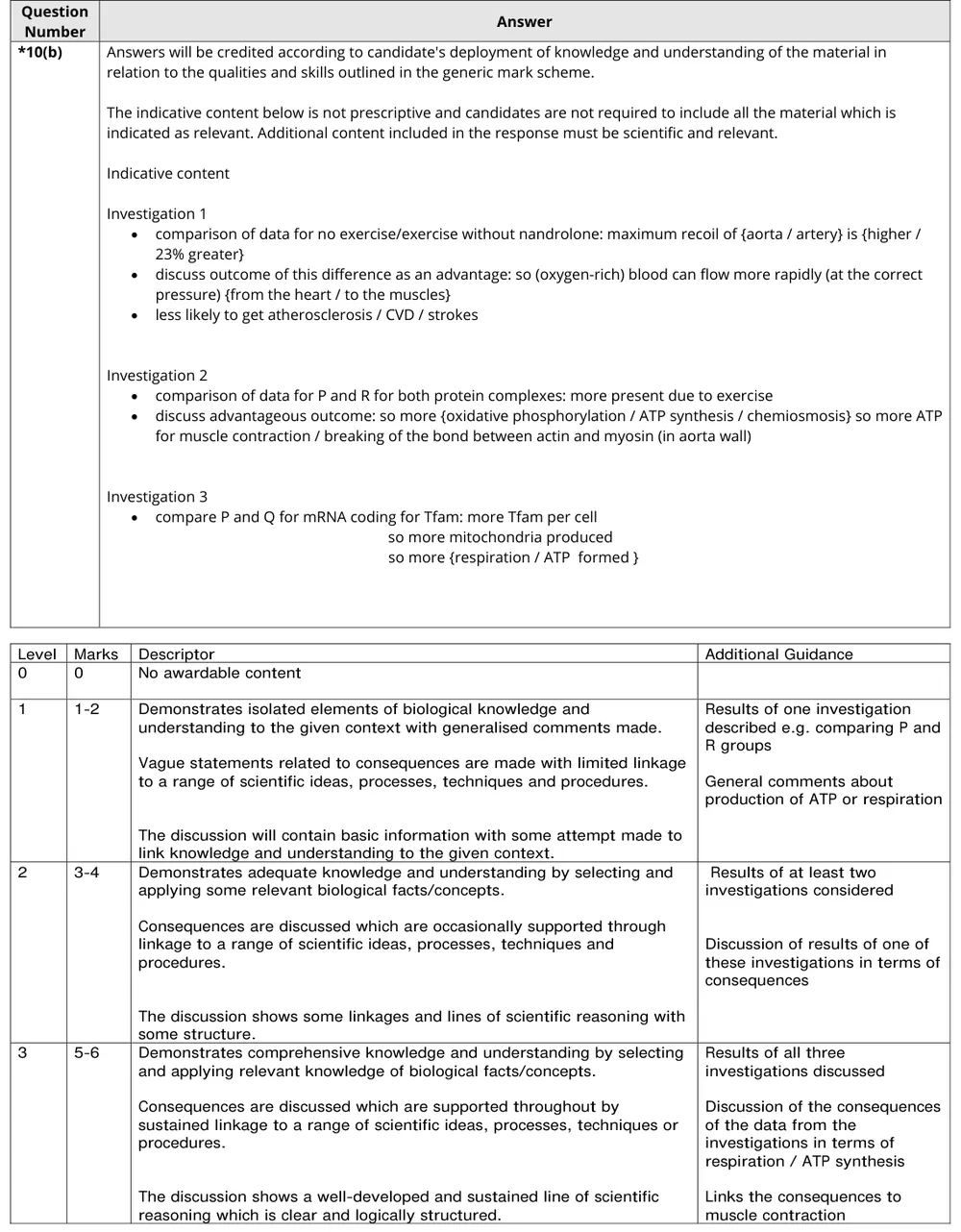
Analyse three investigations to discuss the advantages of an exercise programme without nandrolone.
Information from earlier in this question:
Show the mark scheme
Tap an image to open it full size.
From the examiners' report: Discuss all three investigations. One answer that dealt only with the elastic recoil of the aorta, without saying why this is an advantage (for example a reduced risk of atherosclerosis), gained only 1 mark.
Question 8
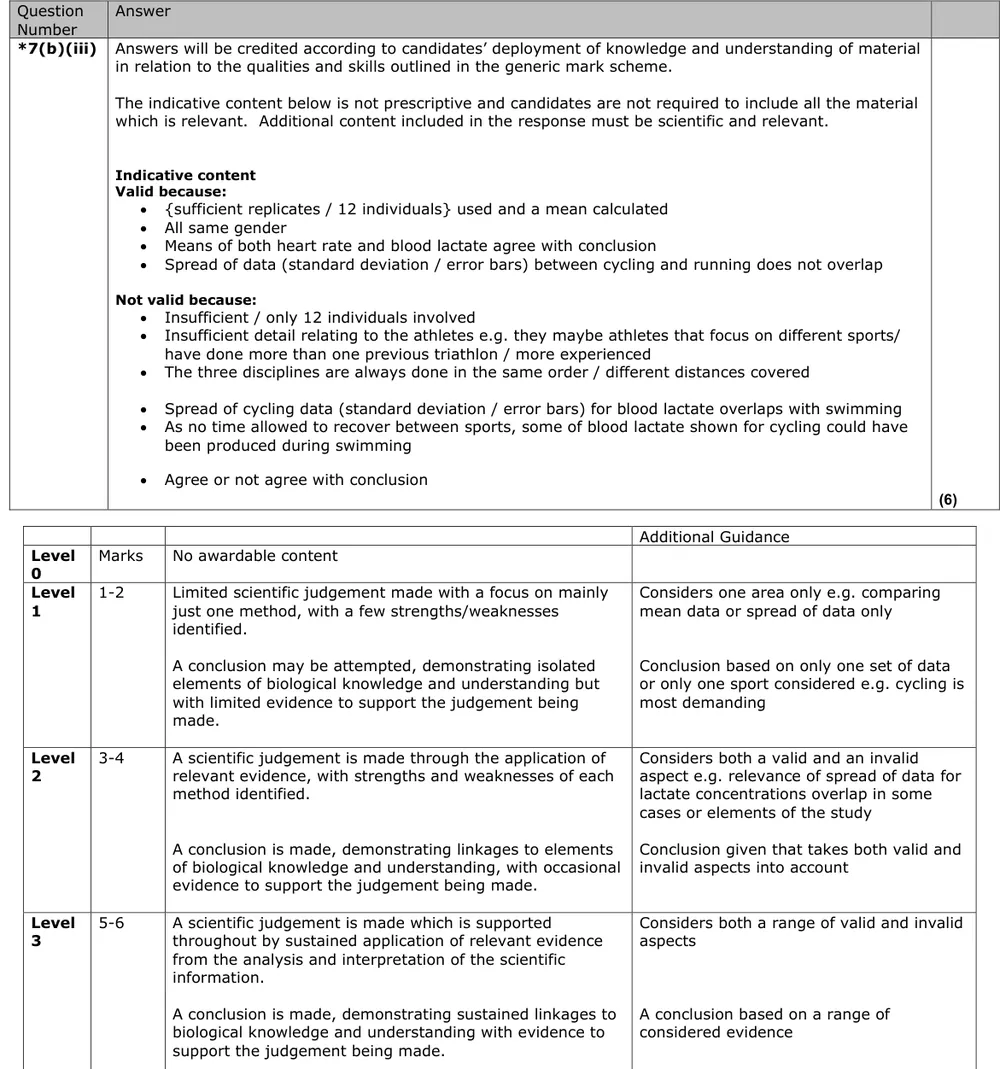
A level Paper 2 · November 2021 · Q7(b)(iii) · 6 marks
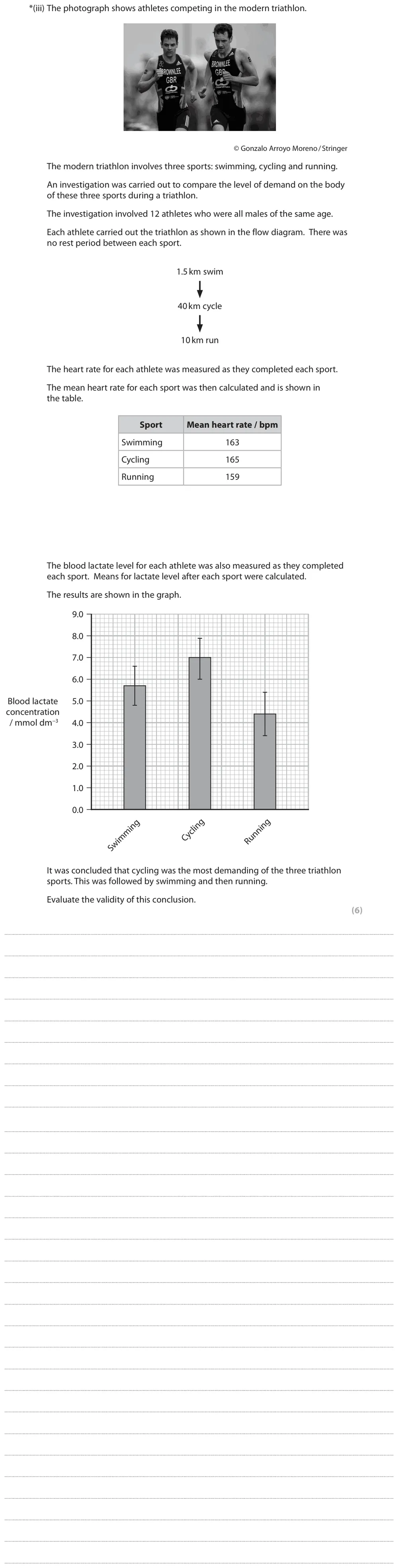
Evaluate the conclusion that cycling was the most demanding of the three triathlon sports.
Show the mark scheme
Tap an image to open it full size.
From the examiners' report: The best responses considered the mean heart rate and lactate data, the spread of the lactate data and the method of the investigation. One answer reached level 2 by pointing out that some of the lactate data overlapped.
Question 9
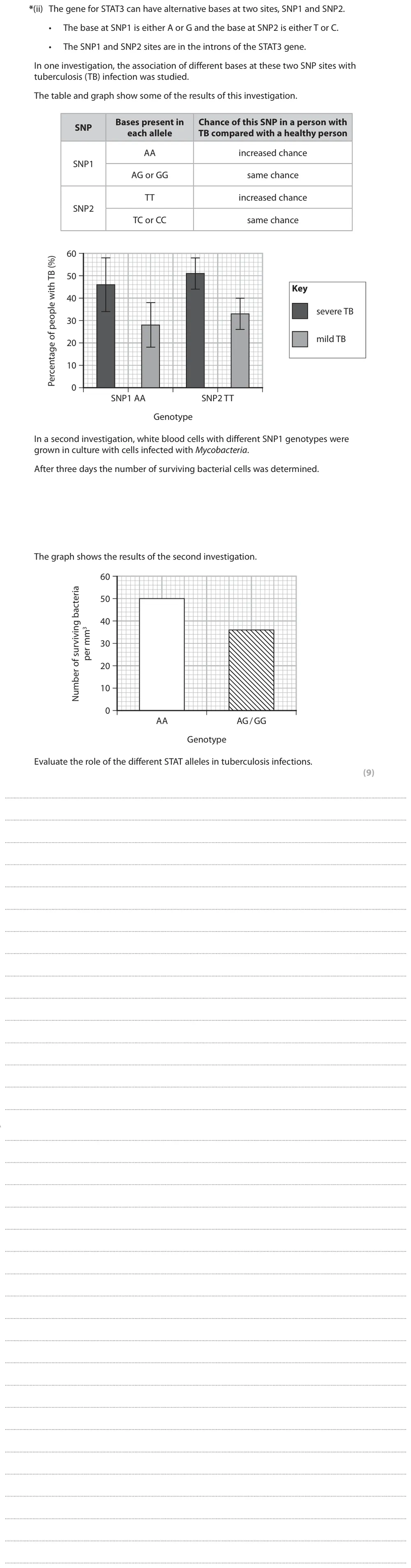
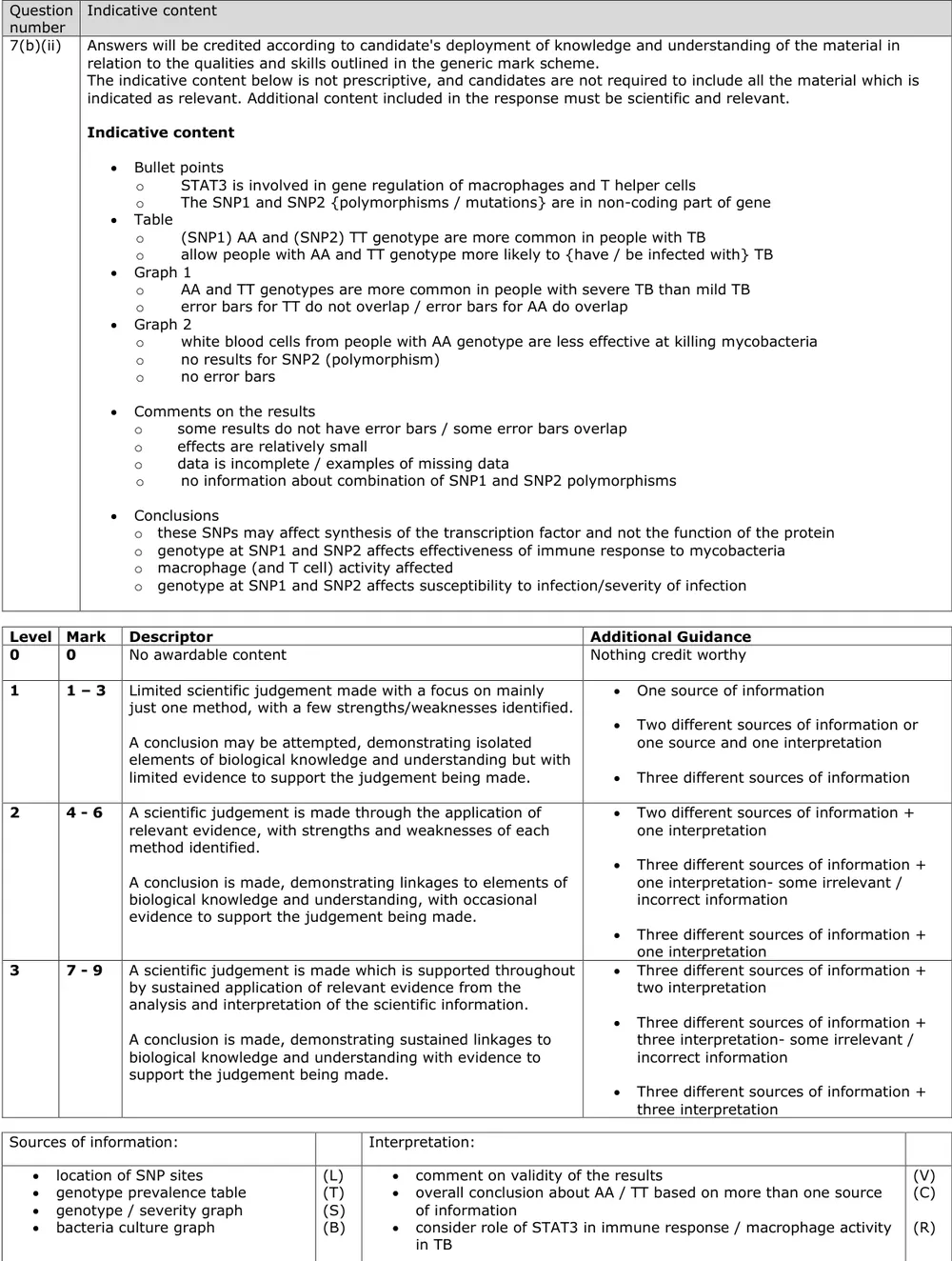
A level Paper 3 · June 2023 · Q7(b)(ii) · 9 marks
Evaluate the role of different STAT3 alleles in tuberculosis infections, using a table and two graphs.
Information from earlier in this question:

Show the mark scheme
Tap an image to open it full size.
From the examiners' report: Evaluate means review the information and bring it together into a conclusion. Weaker responses used only one or two of the sources; better ones addressed several sources, commented on the error bars and gave two or three substantial conclusions.
Topic 8: Grey Matter
Question 10
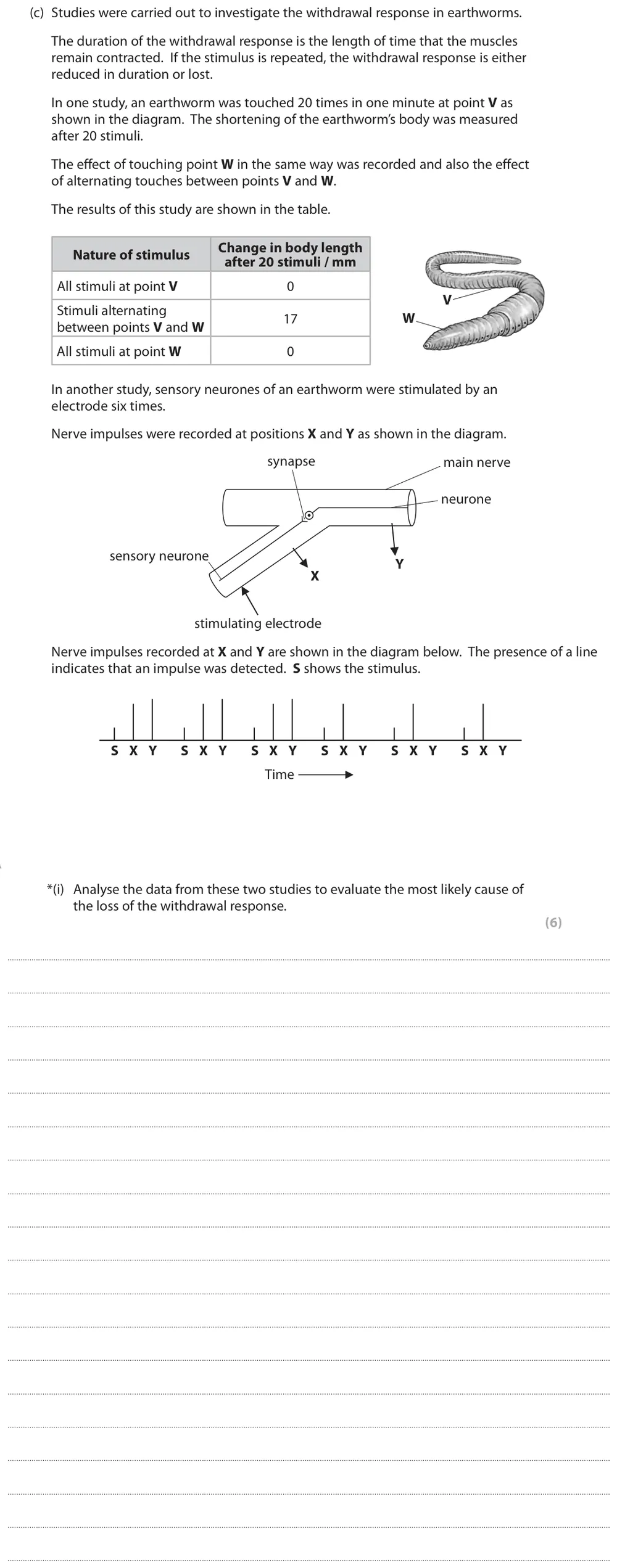
A level Paper 2 · June 2017 · Q8(c)(i) · 6 marks
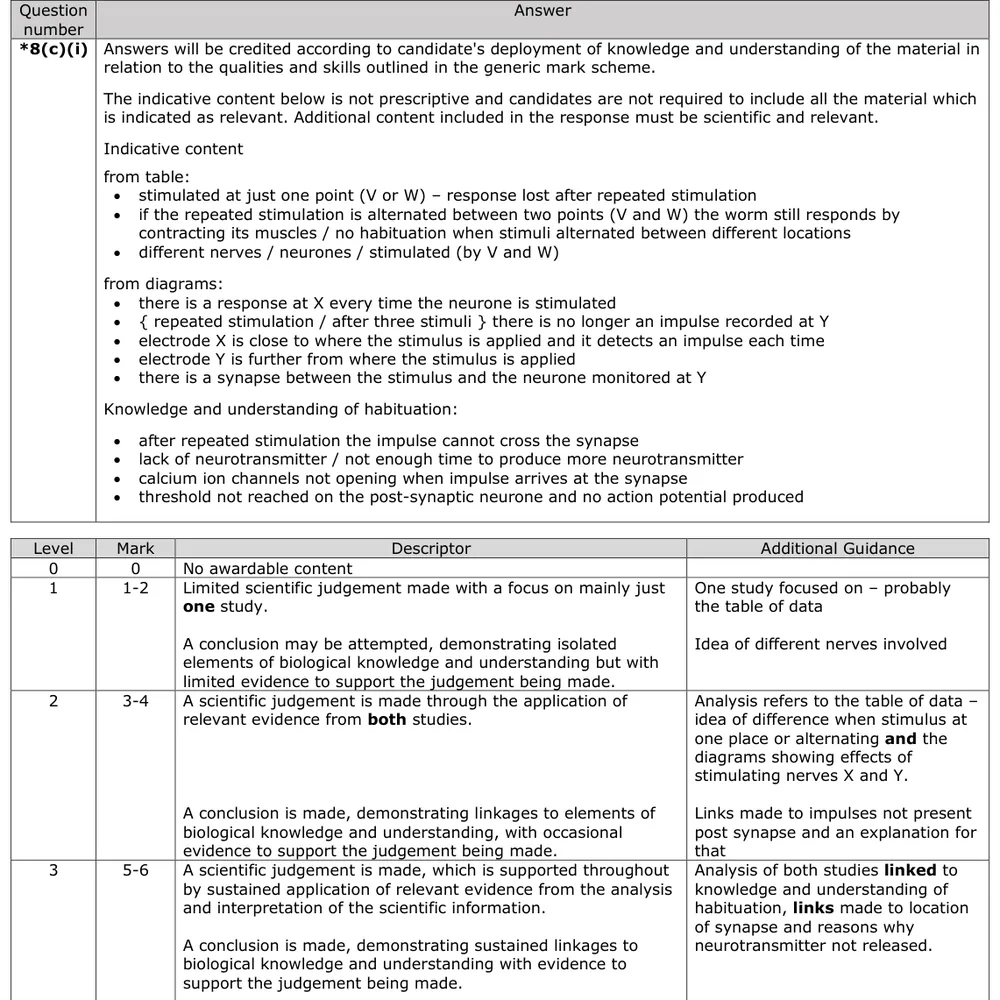
Analyse two earthworm studies to evaluate the most likely cause of the loss of the withdrawal response.
Show the mark scheme
Tap an image to open it full size.
From the examiners' report: Using both studies is what lifts an answer from level 1 to level 2. Good answers saw that alternating the stimuli between V and W stimulated different neurones, and explained habituation by less neurotransmitter being released at the synapse, not an inhibitory neurotransmitter. Don't say the worm 'ignores' the stimulus.
Question 11
A level Paper 2 · June 2017 · Q10(e) · 6 marks
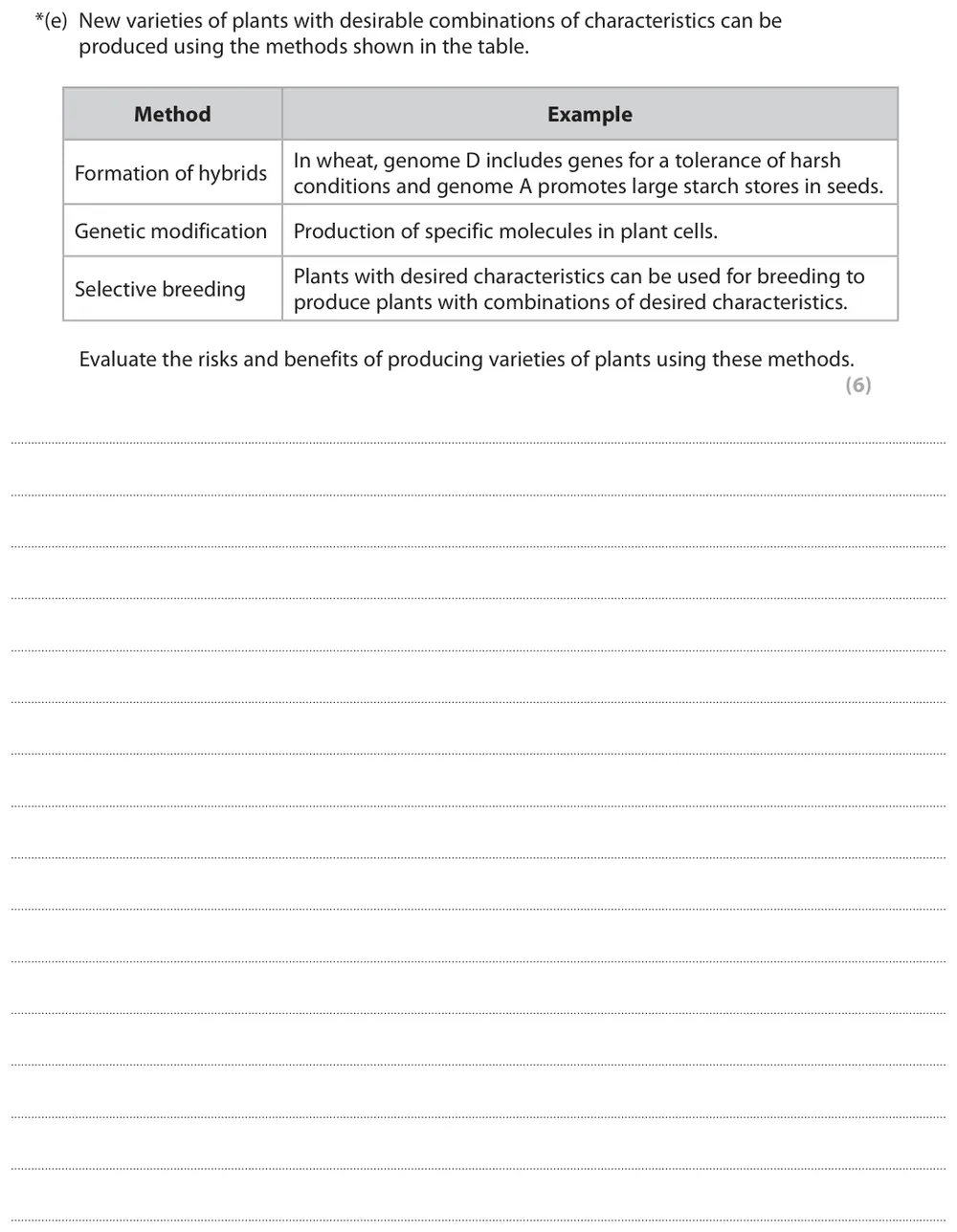
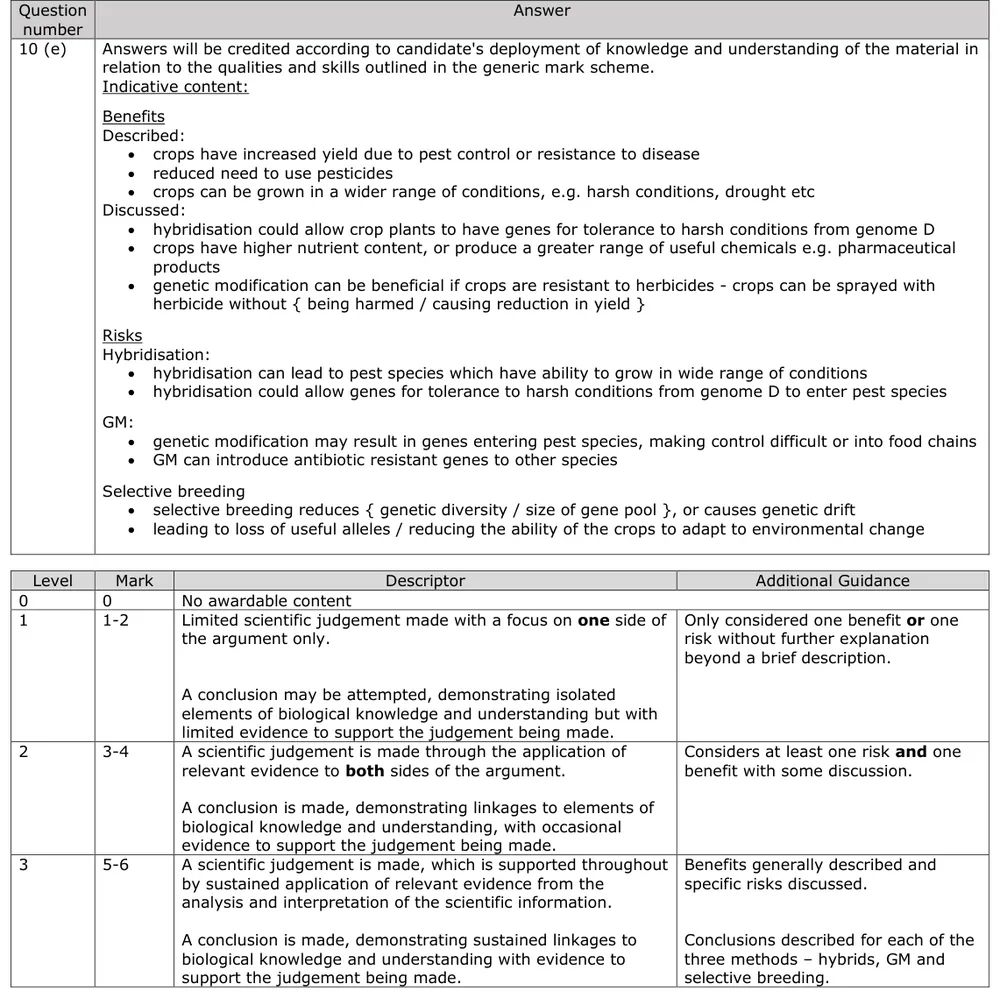
Evaluate the risks and benefits of producing plant varieties by hybridisation, genetic modification and selective breeding.
Show the mark scheme
Tap an image to open it full size.
From the examiners' report: Cost, infertility and 'unknown side-effects' are drawbacks or vague claims, not risks. Make clear which risk and benefit belongs to which method, don't just repeat the table, and draw a conclusion. Better answers described interbreeding or gene transfer instead of vague 'super weeds', the spread of antibiotic resistance genes, and loss of alleles through selective breeding.
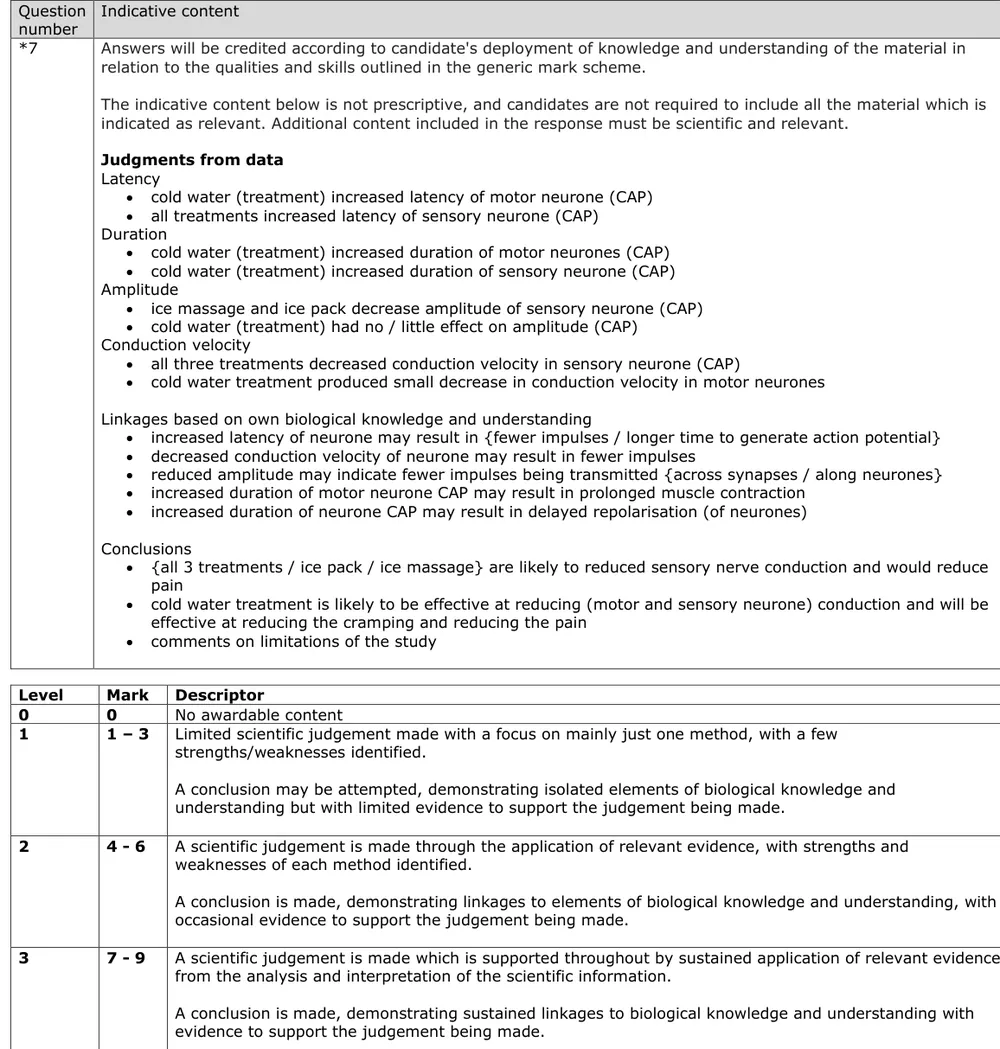
Question 12
A level Paper 3 · June 2024 · Q7 · 9 marks
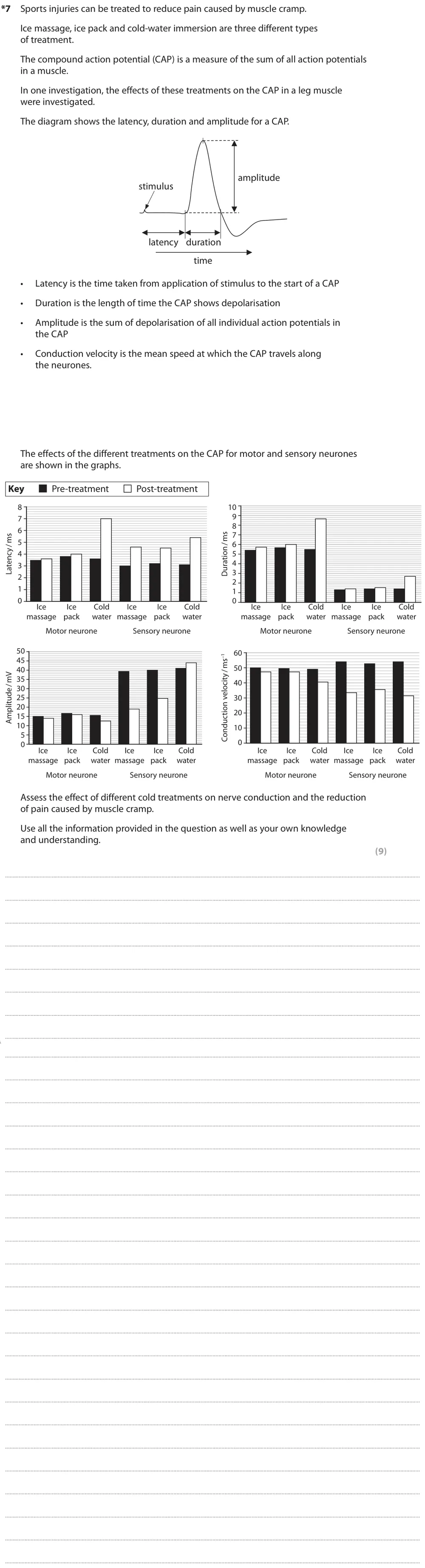
Assess the effect of three cold treatments on nerve conduction and on the pain of muscle cramp, using graphs of nerve data.
Show the mark scheme
Tap an image to open it full size.
From the examiners' report: Many candidates simply described the graphs, which kept them at level 1. Explain each judgement from the data with your own biological knowledge to reach level 2, and finish with a substantial conclusion for level 3; few did this.
Where students lose marks (from Pearson examiners' reports and mark schemes)
Each point below comes from the examiners' reports and mark schemes, and is followed by wording that gained marks.
Link carbon dioxide to human activity. Surprisingly few candidates linked the carbon dioxide and pH data to human activities, so even strong answers missed full marks.
✔ Gains credit: 'Human activity increasing carbon dioxide levels e.g. burning fossil fuels such as oil, coal, gas … which then dissolves in the oceans.'
Measure starch breakdown, not gas. Candidates measured gas in an upturned cylinder, used DCPIP or Benedict's reagent, or used hydrogen peroxide as the substrate.
✔ Gains credit: 'Method to determine break down of starch e.g. testing with iodine' and 'Calculation of Q10 by dividing rate at T+10 °C by rate at T °C.'
Two hospital practices, not one. Many were limited to 3 marks because they described only one hospital practice, linked to the use of antibiotics.
✔ Gains credit: 'Discussion of hospital practices to reduce development of resistance and why they are effective – hygiene / screening and isolation of patients / management of antibiotic use.'
Injected antibodies make no memory cells. Candidates said that giving hepatitis B antibodies leads to an immune response and the production of memory cells.
✔ Gains credit: 'Antibodies provide artificial passive immunity' and 'vaccination produces memory cells whereas antibodies will not.'
The optimum is the lowest effective concentration. Many called the optimum dose the one with the largest zone of inhibition, rather than the lowest concentration with the largest zone.
✔ Gains credit: 'Calculate mean diameter of zone of inhibition … repeat with smaller concentration intervals around that dose … identification of minimum effective dose.'
Neurotransmitter runs out; it is not inhibitory. A number of candidates referred to an inhibitory neurotransmitter at the synapse rather than depletion of neurotransmitter.
✔ Gains credit: 'After repeated stimulation the impulse cannot cross the synapse … lack of neurotransmitter / not enough time to produce more neurotransmitter.'
Cost is a drawback, not a risk. Many gave cost, infertility or expense as risks, which are disadvantages, not risks.
✔ Gains credit: 'Selective breeding reduces { genetic diversity / size of gene pool } … leading to loss of useful alleles' and 'genetic modification may result in genes entering pest species, making control difficult.'
Say why the change is an advantage. One answer described the greater elastic recoil of the aorta with exercise but gave no link to why this is an advantage, so it gained only 1 mark.
✔ Gains credit: 'Maximum recoil of aorta is higher … so (oxygen-rich) blood can flow more rapidly … less likely to get atherosclerosis / CVD / strokes.'
Download the questions
Download the PDF pack (12 questions, mark schemes at the end)
Keep practising
- Edexcel SNAB A level Biology revision resources by topic
- Extended Response Questions (Topics 1 and 2): Edexcel SNAB A Level Biology Exam Questions
- Extended Response Questions (Topics 3 and 4): Edexcel SNAB A Level Biology Exam Questions
- All Edexcel SNAB exam questions by topic
- Edexcel SNAB A level Biology past papers, mark schemes and examiners' reports
- Edexcel SNAB A level Biology grade boundaries
- Message Tom on WhatsApp about one-to-one Edexcel SNAB tutoring or an Edexcel group class
Questions, mark schemes and examiners' report extracts © Pearson Education Ltd.