

Forensics, DNA Profiling and PCR comes from Topic 6, Immunity, Infection and Forensics, of the Edexcel A level Biology A (Salters-Nuffield) specification. You need to know how the time of death of a mammal is estimated from body temperature, rigor mortis, decomposition, succession and forensic entomology; the role of microorganisms in decomposition and the recycling of carbon; how DNA profiling identifies individuals and shows genetic relationships; how PCR amplifies DNA; and how one gene can give rise to more than one protein through post-transcriptional changes to mRNA. These questions come from A level Papers 1 and 3. All questions are from the A level papers (9BN0).
The examiners' reports reward answers that follow the command word and the context. When asked to state changes after death, list the terms and keep to the time given. Decomposers break down organic material and respire, releasing carbon dioxide; link the carbon dioxide to their respiration. For DNA profiling, say how the bands are compared. For PCR, give the temperatures, say one cycle doubles the DNA, and explain that primers mark the section to be copied. For splicing, finish the story with a different sequence of amino acids.
Studying Edexcel SNAB and want more help? If you'd like to arrange one-to-one Edexcel tutoring, or to register your interest in an Edexcel group class, message Tom on WhatsApp using the link at the bottom of this page.
What you need from GCSE
Each question on this page assumes you're secure on these ideas. If any of them feels shaky, look it up before you start.
- After death, microorganisms decompose a body and return carbon dioxide to the air.
- DNA is made of two strands joined by hydrogen bonds between complementary bases.
- Genes code for proteins; the base sequence determines the sequence of amino acids.
- Enzymes work best at an optimum temperature and pH.
Key terms
These words come up in the questions and mark schemes. Examiners expect you to use them exactly.
- Algor mortis: the fall in body temperature after death.
- Rigor mortis: stiffening of the muscles after death.
- Autolysis: the breakdown of the body's cells by its own enzymes.
- Forensic entomology: using the insect species, and their life-cycle stages, on a body to estimate time of death.
- Gel electrophoresis: separating DNA fragments by size in a gel; the bands form a DNA profile.
- PCR: the polymerase chain reaction, which copies a section of DNA in repeated cycles of heating and cooling.
- Primer: a short single strand of DNA that binds to the start of the target sequence, giving DNA polymerase a place to begin.
- Alternative splicing: removing introns and joining exons in different combinations, so one gene gives more than one protein.
What these questions cover (Edexcel SNAB Topic 6: Immunity, Infection and Forensics)
The questions test these statements from Topic 6 of the Pearson Edexcel A level Biology A (Salters-Nuffield) specification (9BN0).
- 6.1 Understand how to determine the time of death of a mammal by examining the extent of decomposition, stage of succession, forensic entomology, body temperature and degree
- 6.2 Know the role of micro-organisms in the decomposition of organic matter and the recycling of carbon.
- 6.3 Know how DNA profiling is used for identification and determining genetic relationships between organisms (plants and animals).
- 6.4 Know how DNA can be amplified using the polymerase chain reaction (PCR).
- 6.10 Understand how one gene can give rise to more than one protein through post- transcriptional changes to messenger RNA (mRNA).
How to use this page
Write your answer on paper before you open the mark scheme. Allow about 1.2 minutes per mark: the 15 questions are worth 38 marks, so about 46 minutes in total. Then mark your answer strictly against the mark scheme and read the examiners' tip underneath it. If you'd rather print the questions, download the PDF pack.
Determining the time of death (6.1)
Question 1
A level Paper 1 · June 2019 · Q5(b) · 3 marks
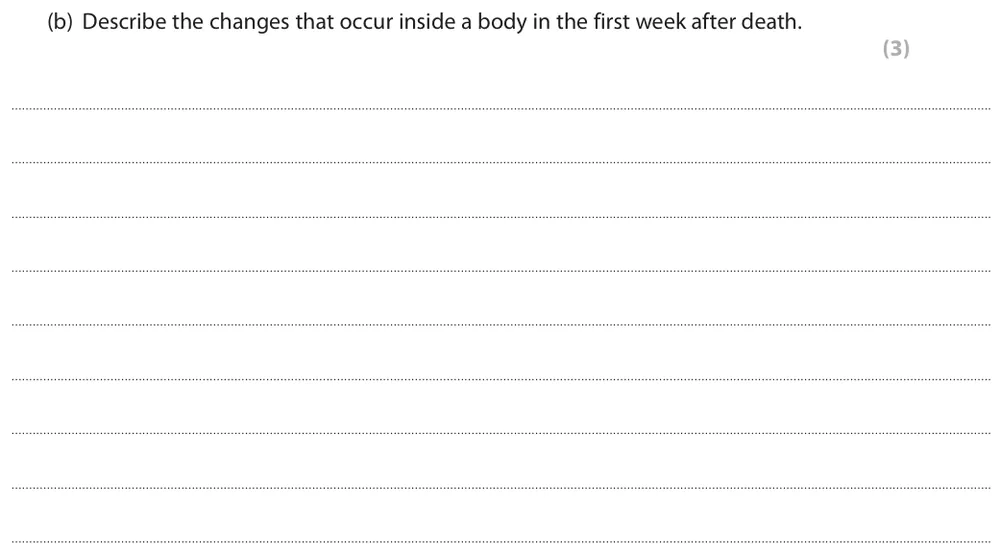
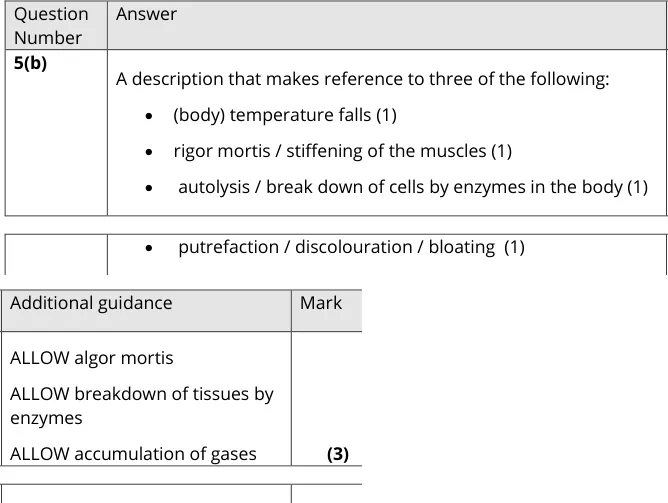
Describe the changes that occur inside a body in the first week after death.
Show the mark scheme
Tap an image to open it full size.
From the examiners' report: Stick to changes inside the body: temperature falls, rigor mortis, autolysis and putrefaction. Insect succession was not relevant.
Question 2
A level Paper 1 · June 2025 · Q1(a) · 3 marks
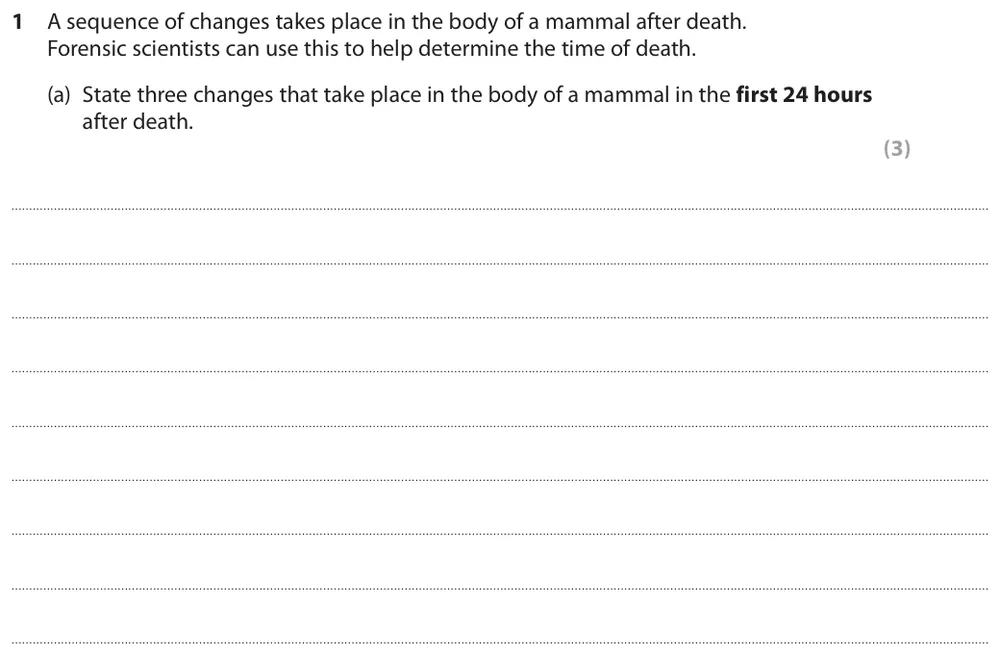
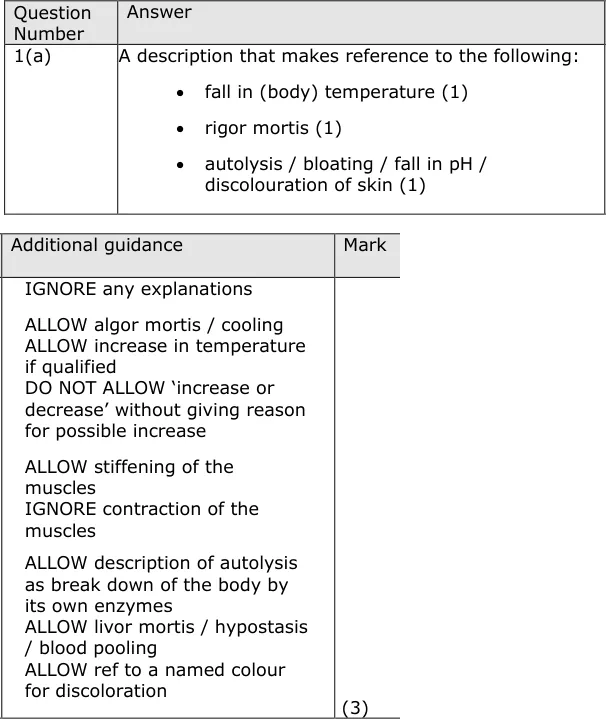
State three changes that take place in a mammal's body in the first 24 hours after death.
Show the mark scheme
Tap an image to open it full size.
From the examiners' report: 'State' means list: 'algor mortis' and 'rigor mortis' on their own would score, and explanations cost time for no credit. Keep to the first 24 hours, so insect succession does not count, and qualify any colour change.
Question 3
A level Paper 1 · June 2019 · Q5(c)(ii) · 3 marks
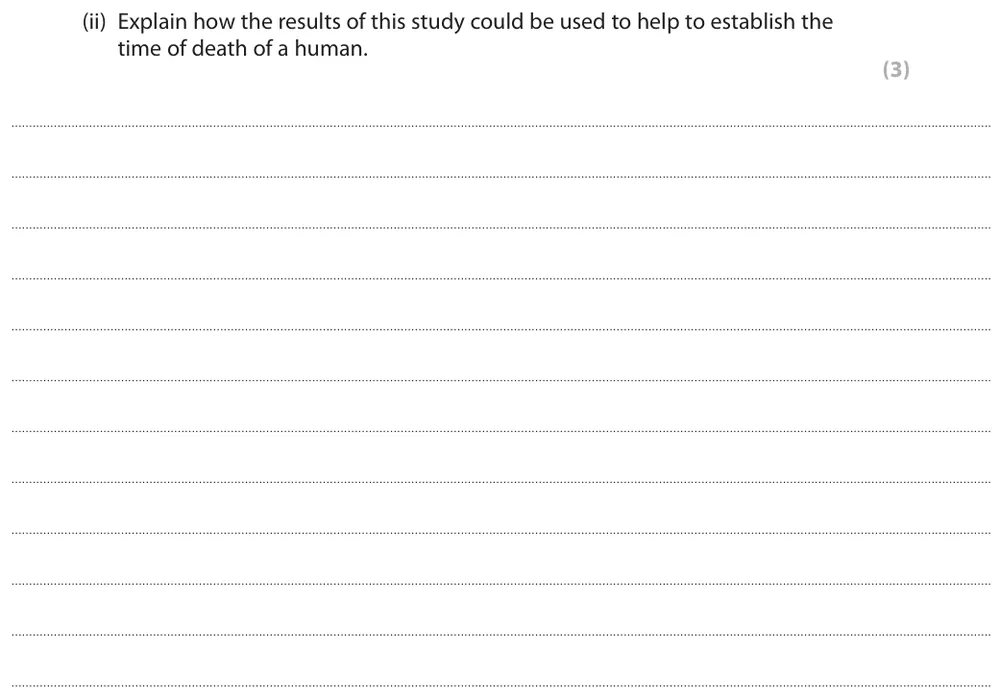
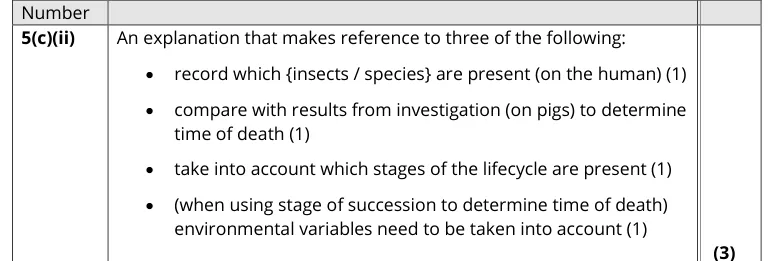
Explain how the results of a study on pigs could help establish the time of death of a human.
Information from earlier in this question:

Show the mark scheme
Tap an image to open it full size.
From the examiners' report: Use the pig study: record which insect species (and life-cycle stages) are on the human body and compare them with the pig results. Generic accounts of succession scored poorly.
Decomposition and the carbon cycle (6.2)
Question 4
A level Paper 1 · June 2018 · Q2(b) · 2 marks
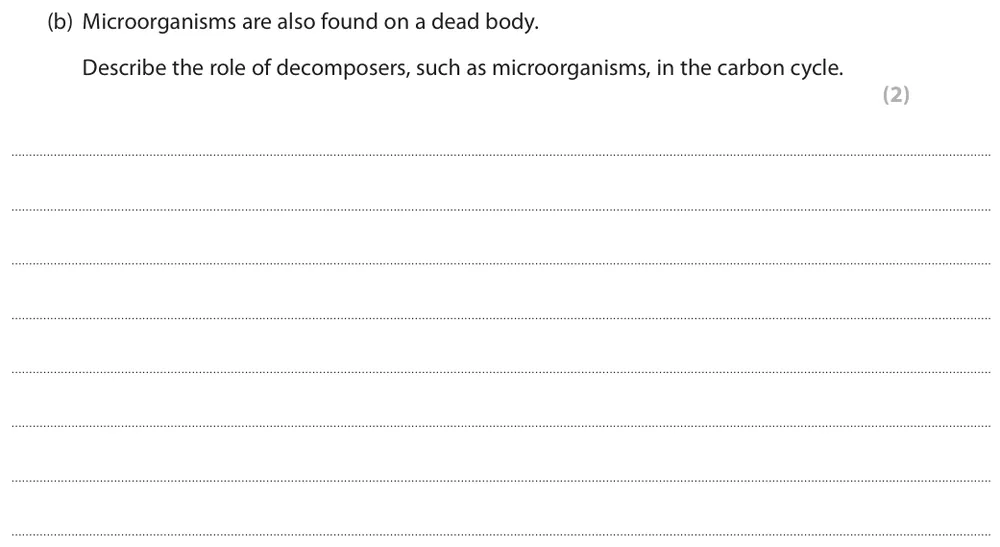
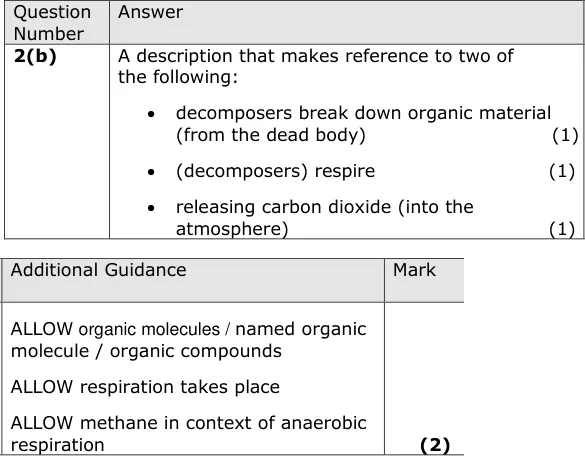
Describe the role of decomposers in the carbon cycle.
Show the mark scheme
Tap an image to open it full size.
From the examiners' report: Say decomposers break down organic material ('feed on' or 'ingest' was ignored), respire and release carbon dioxide. Methane only counts in the context of anaerobic respiration.
Question 5
A level Paper 1 · October 2020 · Q10(b)(ii) · 3 marks
Explain how microorganisms in the soil break down wheat stems.
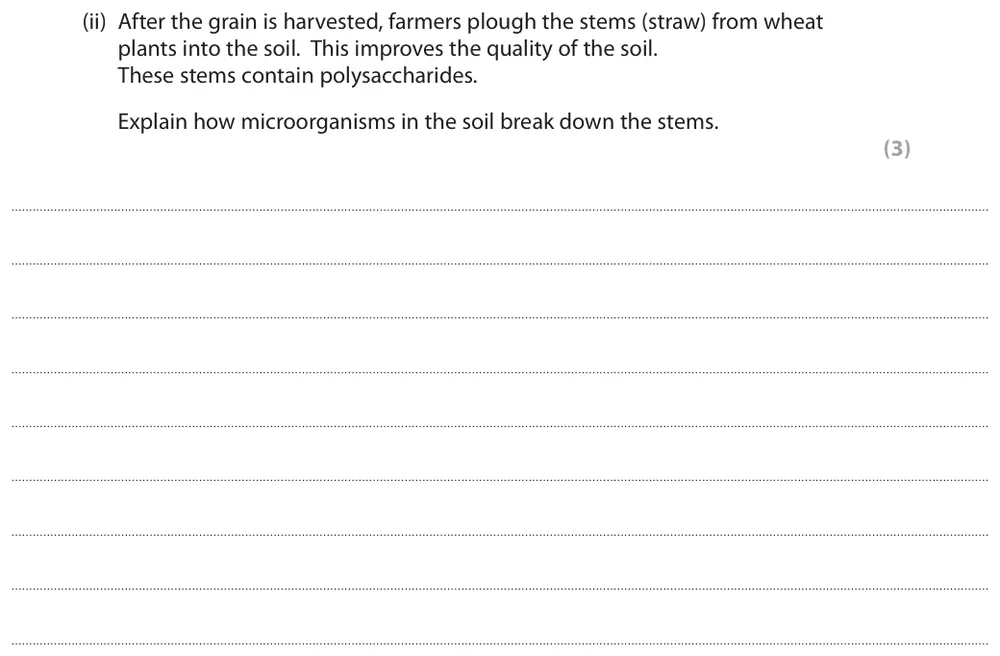
Show the mark scheme
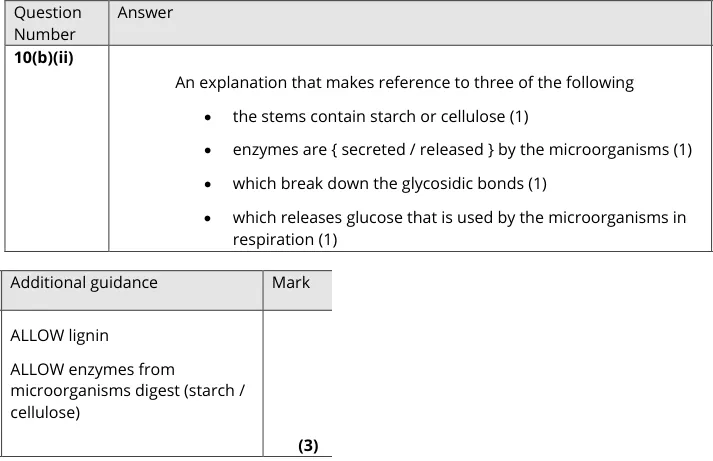
Tap an image to open it full size.
From the examiners' report: Give the detail: name the polysaccharide (cellulose or starch) and say the enzymes are secreted by the microorganisms. Generic answers did not score many marks.
Question 6
A level Paper 1 · June 2022 · Q3(a)(ii) · 3 marks
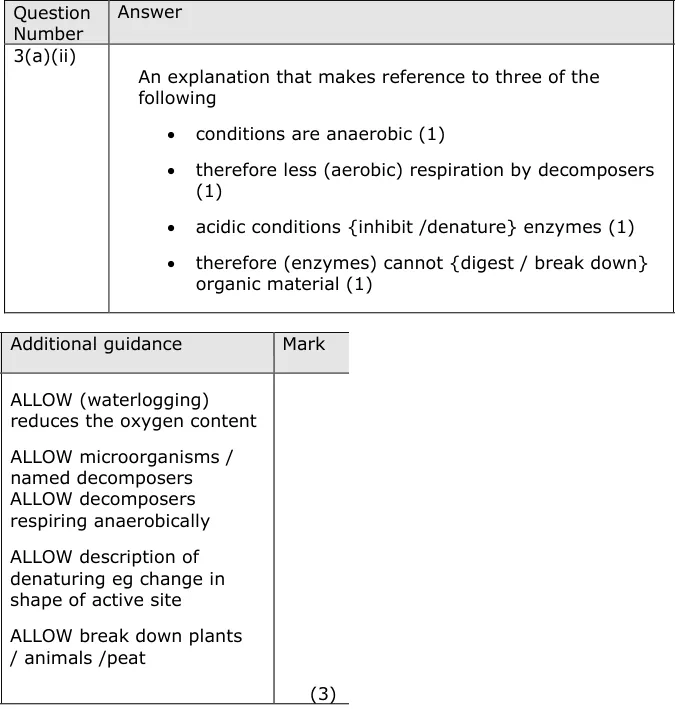
Explain why the conditions in peat bogs prevent decomposition.
Information from earlier in this question:
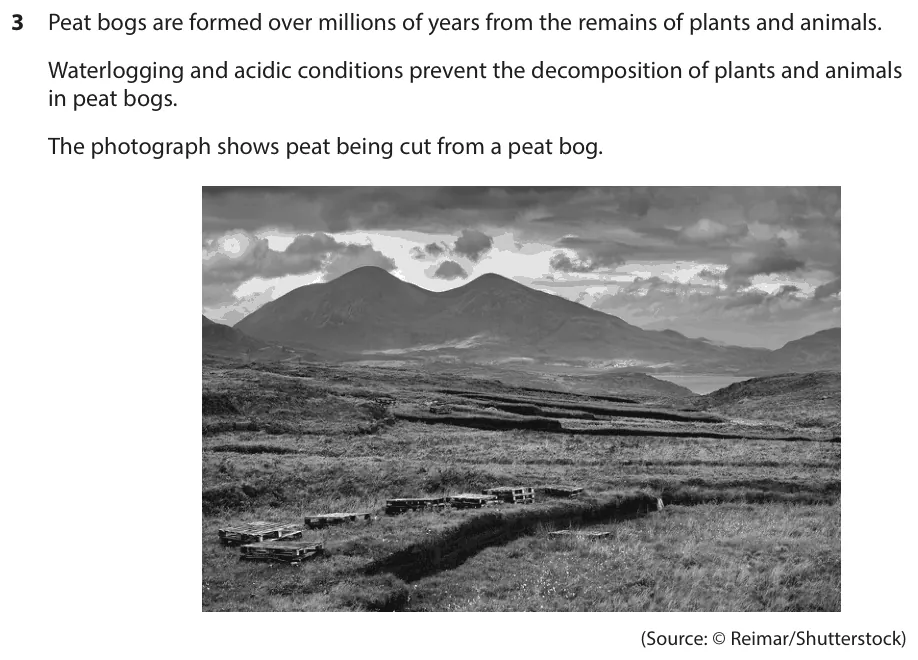
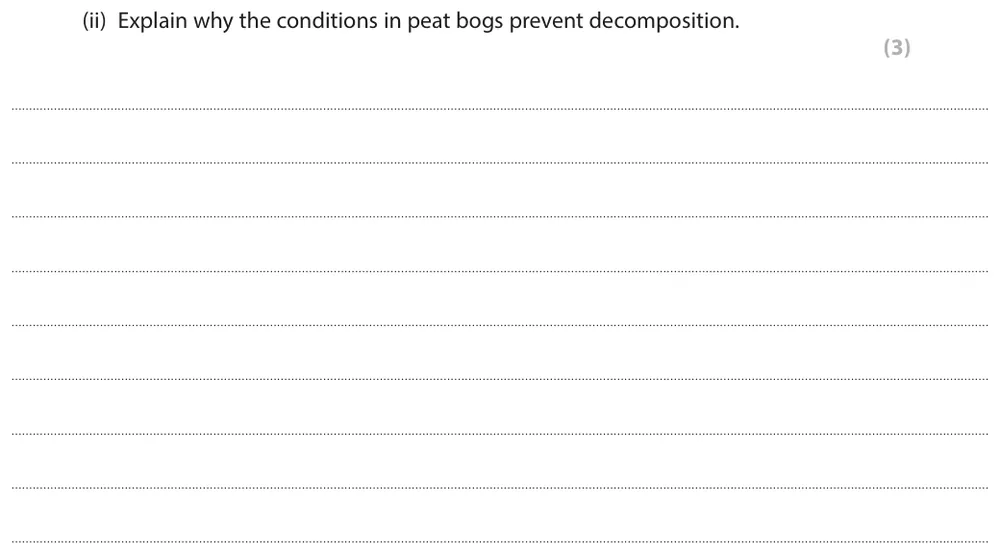
Show the mark scheme
Tap an image to open it full size.
From the examiners' report: Give both conditions and link each one: waterlogging makes it anaerobic, so decomposers respire less, and acidic conditions denature their enzymes, so organic material is not digested.
Question 7
A level Paper 1 · June 2025 · Q9(d) · 2 marks
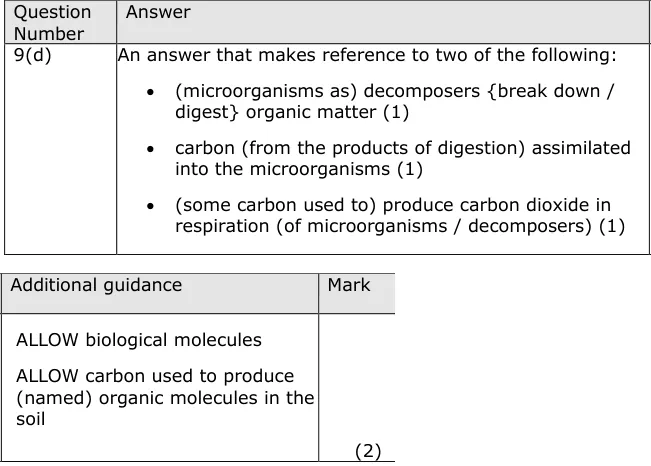
Discuss the role of microorganisms in carbon storage in forest soils.
Show the mark scheme
Tap an image to open it full size.
From the examiners' report: Link the release of carbon dioxide to the microorganisms' respiration. Say they decompose (not 'feed on') organic molecules and use the carbon to make their own molecules.
DNA profiling (6.3)
Question 8
A level Paper 1 · November 2021 · Q2(c) · 2 marks
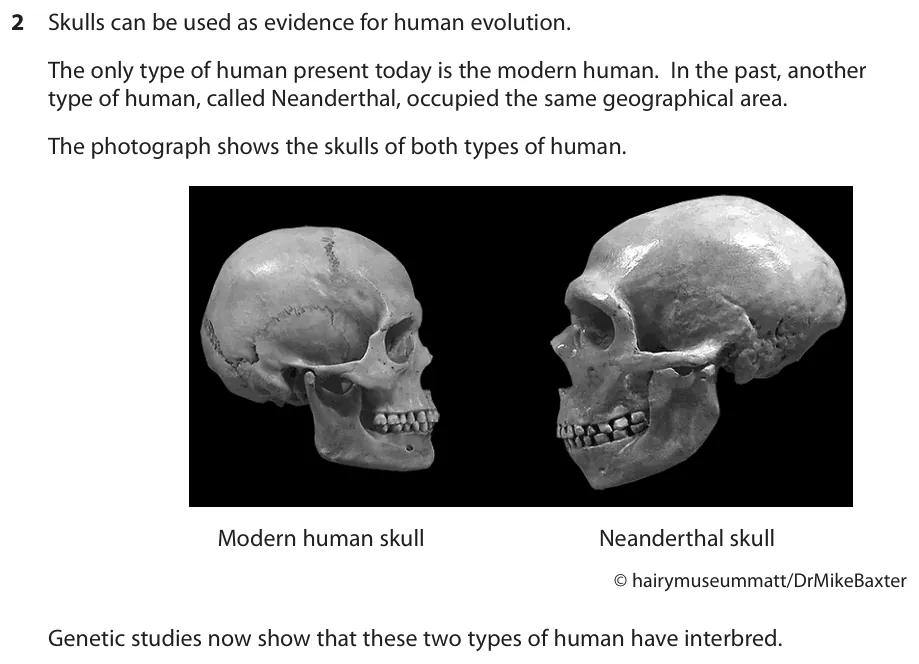
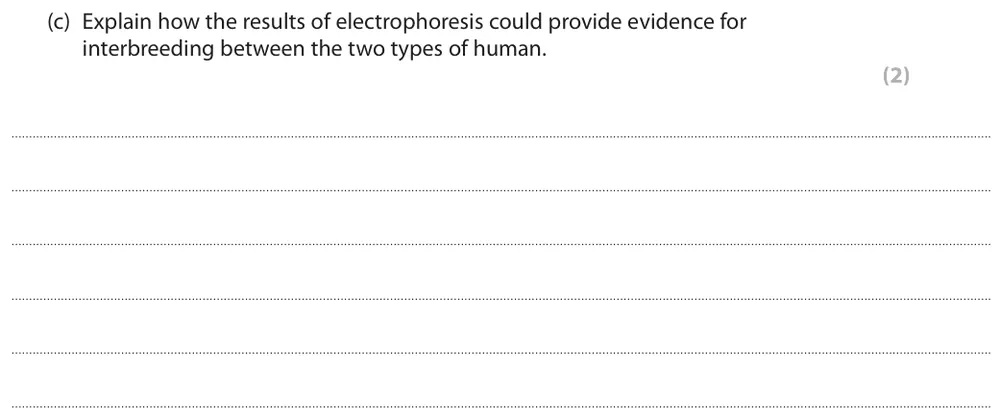
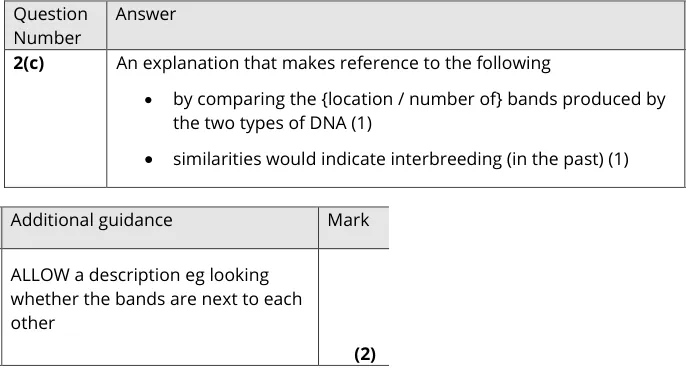
Explain how the results of electrophoresis could provide evidence for interbreeding between two types of human.
Information from earlier in this question:
Show the mark scheme
Tap an image to open it full size.
From the examiners' report: Say how the bands are compared (their location or number); similar bands are evidence of interbreeding. Writing about close relationships was not relevant here.
Amplifying DNA with PCR (6.4)
Question 9
A level Paper 3 · June 2018 · Q1(a)(i) · 3 marks
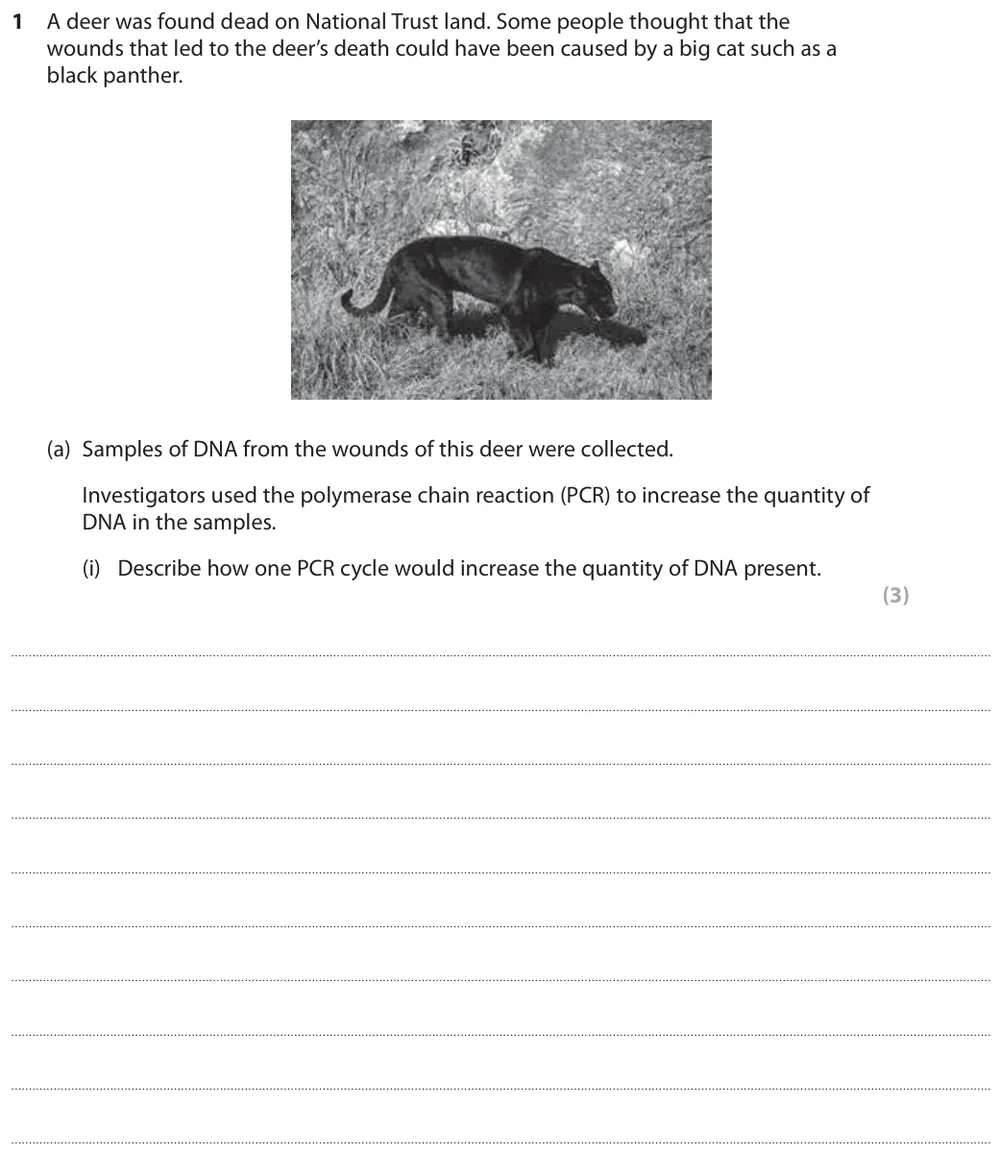
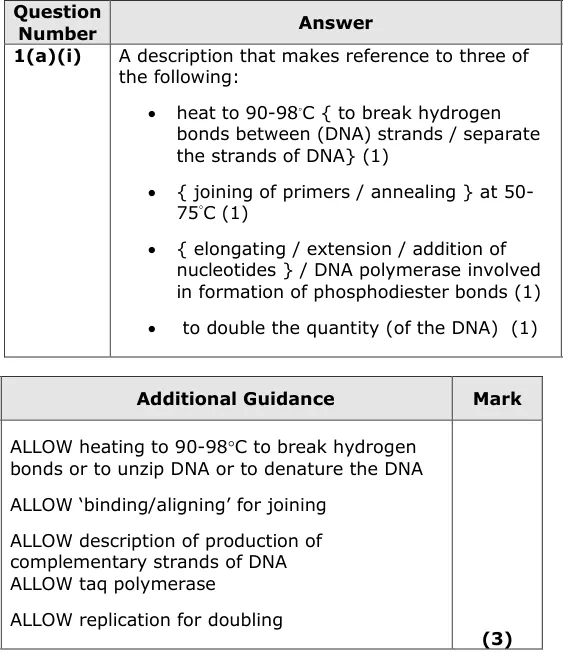
Describe how one PCR cycle would increase the quantity of DNA present.
Show the mark scheme
Tap an image to open it full size.
From the examiners' report: Read the question: it asks about one cycle, so say the DNA doubles. Give the temperatures for each stage (90–98 °C to break hydrogen bonds, 50–75 °C for primers to anneal) and say DNA polymerase extends the new strands.
Question 10
A level Paper 3 · October 2020 · Q5(b)(i) · 2 marks
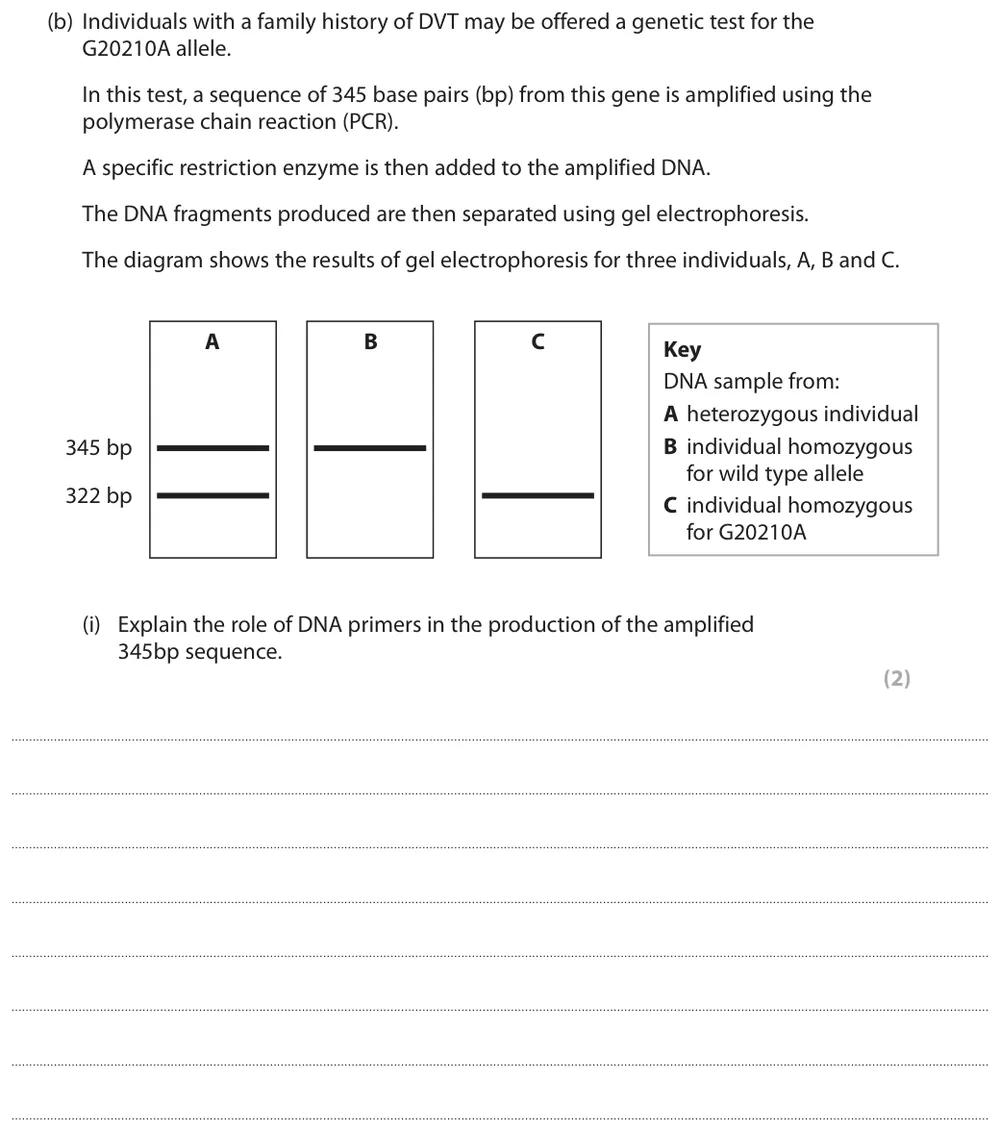
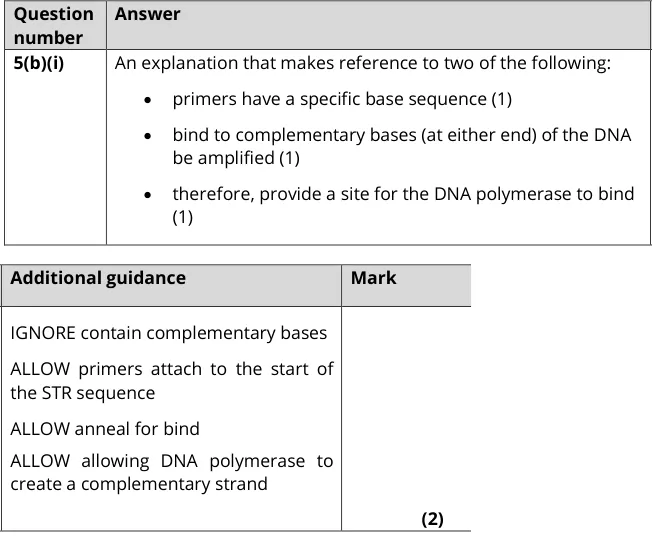
Explain the role of DNA primers in amplifying the 345 bp sequence.
Show the mark scheme
Tap an image to open it full size.
From the examiners' report: Most could not explain primers. Say they have a specific base sequence that binds to complementary bases at either end of the section to be amplified, providing a site for DNA polymerase to bind.
Question 11
A level Paper 3 · October 2020 · Q5(b)(ii) · 3 marks
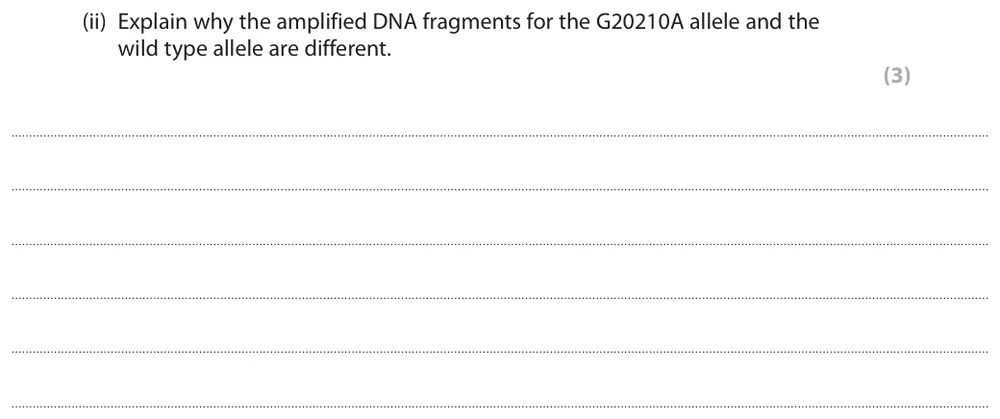
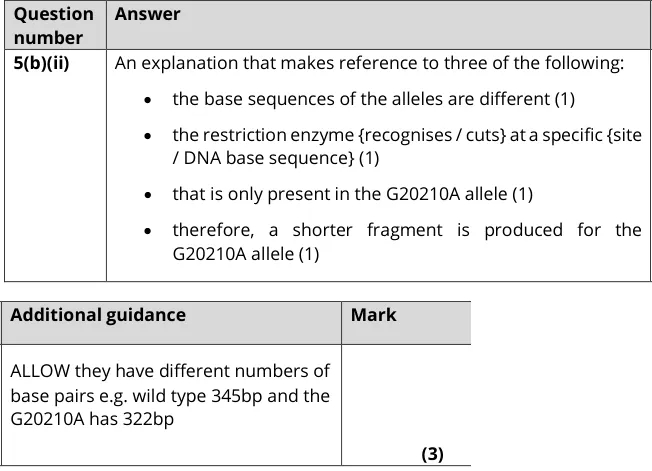
Explain why the amplified DNA fragments for the G20210A allele and the wild type allele are different.
Show the mark scheme
Tap an image to open it full size.
From the examiners' report: Don't stop at 'the base sequences are different': link this to the restriction enzyme's specific recognition site, present only in the G20210A allele, which gives a shorter fragment.
One gene, more than one protein (6.10)
Question 12
A level Paper 1 · October 2020 · Q4(c)(i) · 2 marks
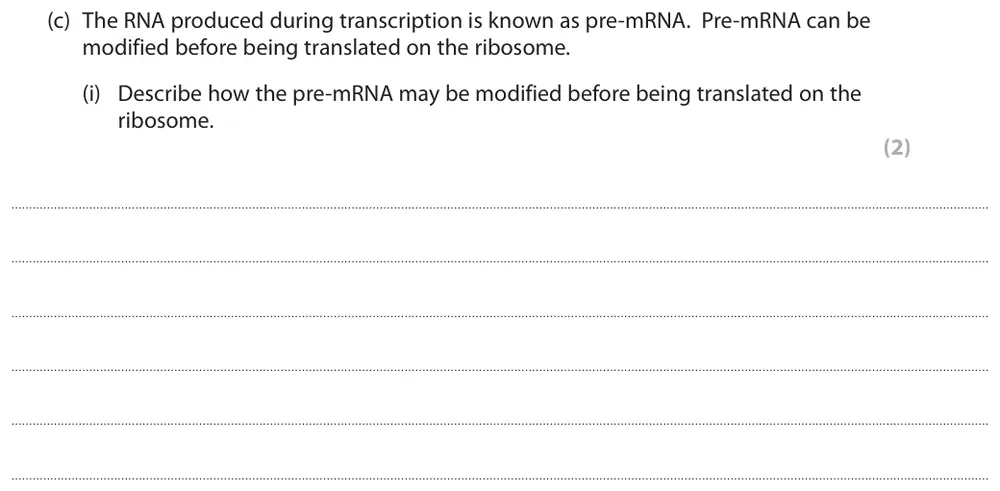
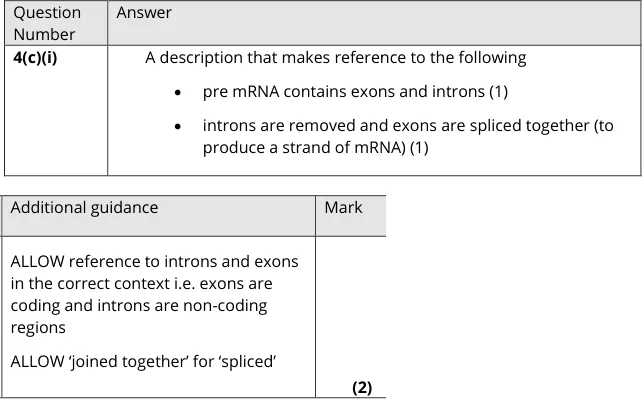
Describe how pre-mRNA may be modified before being translated on the ribosome.
Show the mark scheme
Tap an image to open it full size.
From the examiners' report: Many students were unfamiliar with this. Pre-mRNA contains exons (coding) and introns (non-coding); introns are removed and exons spliced together. The degenerate genetic code is not relevant.
Question 13
A level Paper 1 · October 2020 · Q4(c)(ii) · 2 marks
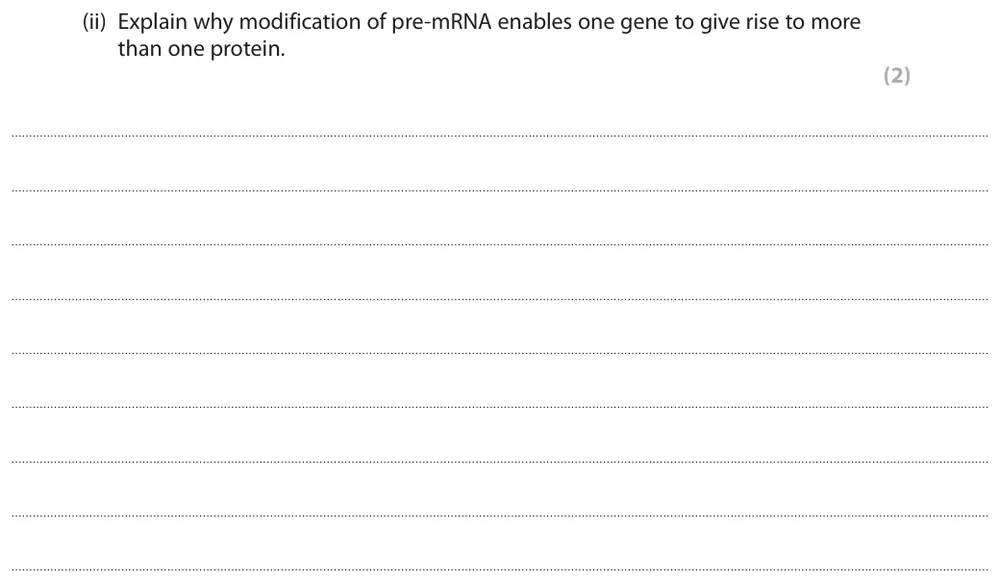
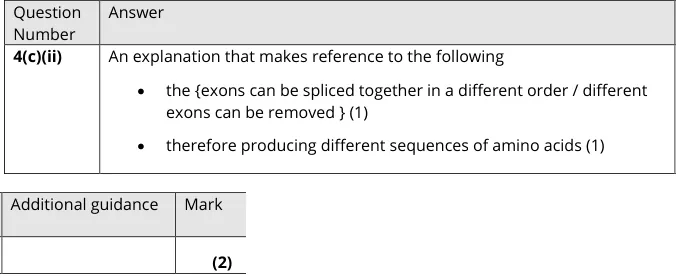
Explain why modification of pre-mRNA enables one gene to give rise to more than one protein.
Show the mark scheme
Tap an image to open it full size.
From the examiners' report: Explain how exons can be removed or joined in a different order, then finish the point: this gives a different sequence of amino acids.
Question 14
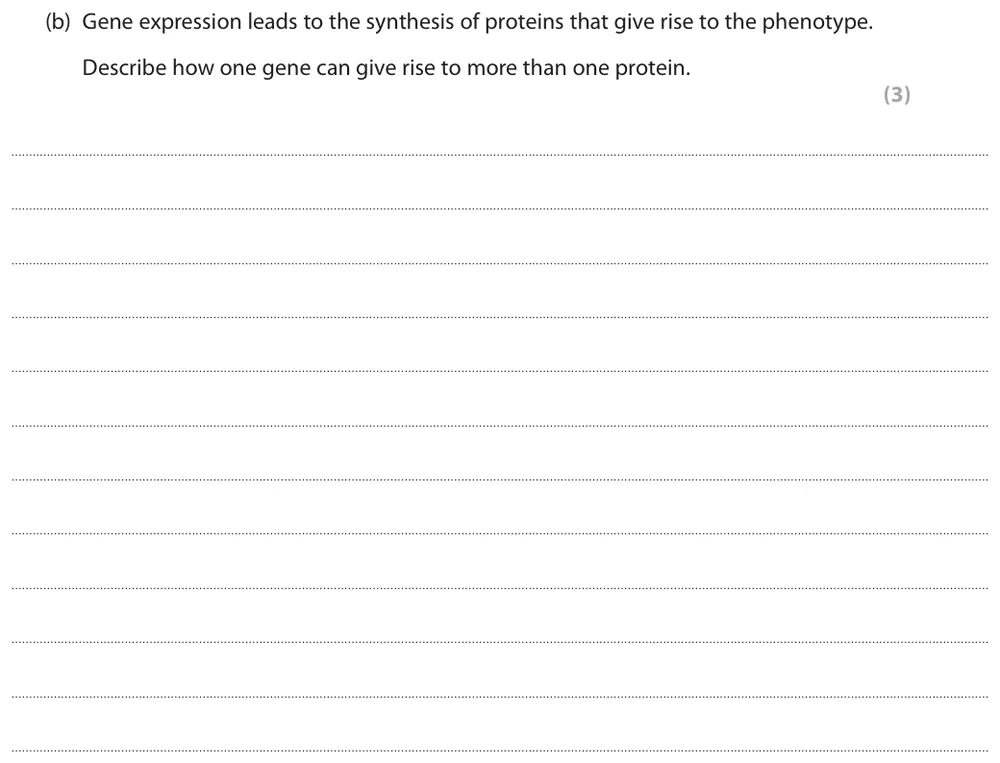
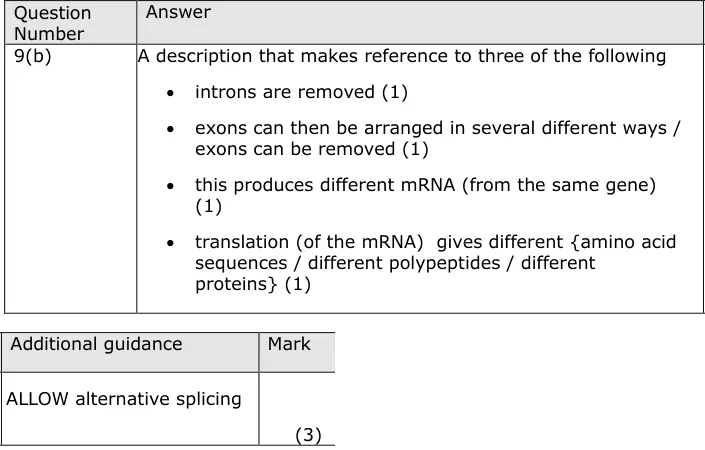
A level Paper 1 · June 2023 · Q9(b) · 3 marks
Describe how one gene can give rise to more than one protein.
Show the mark scheme
Tap an image to open it full size.
From the examiners' report: This is about modification of mRNA, not mutation or methylation of DNA. Introns are removed and exons arranged in different ways, giving different mRNA and different proteins.
Question 15
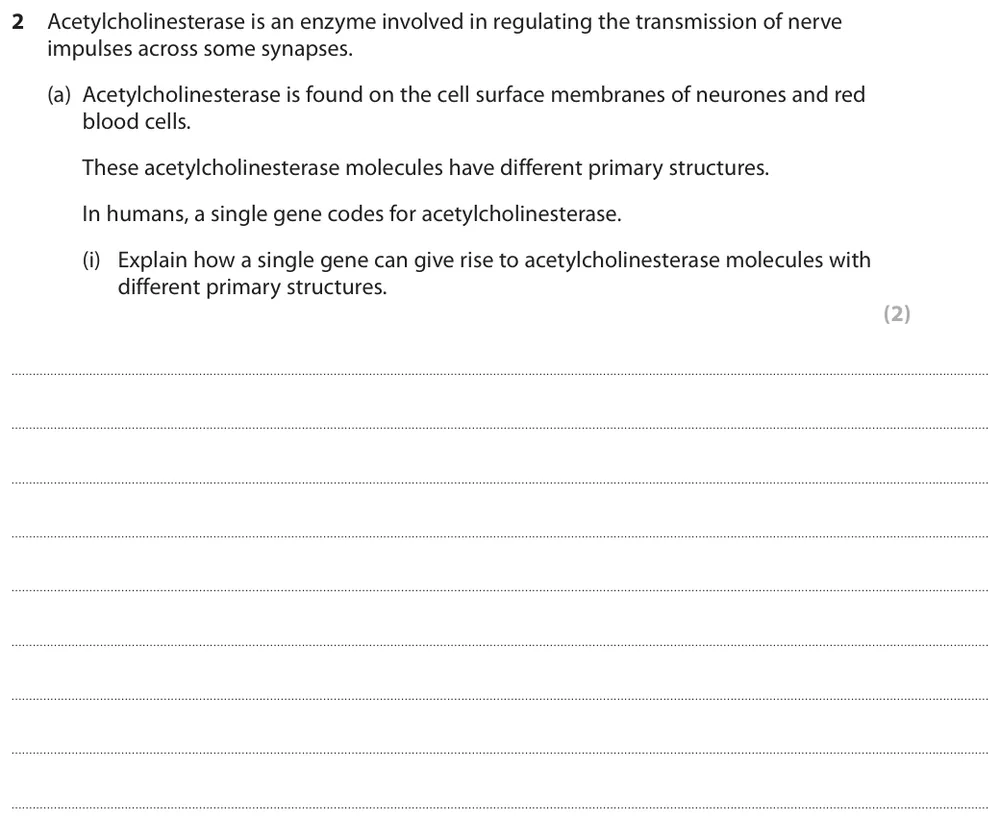
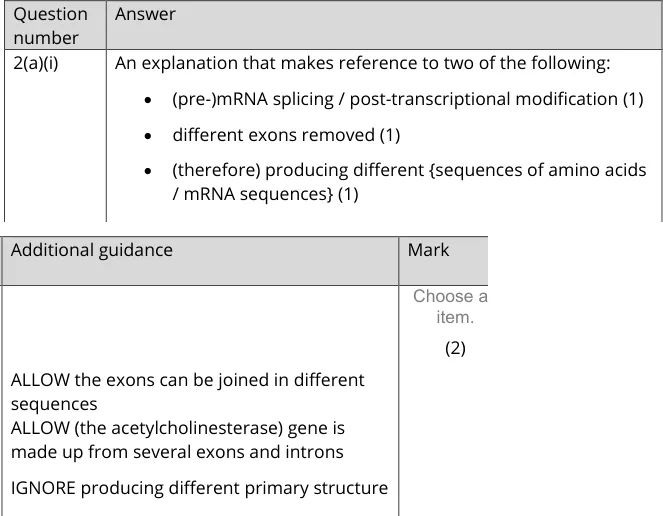
A level Paper 3 · November 2021 · Q2(a)(i) · 2 marks
Explain how a single gene can give rise to acetylcholinesterase molecules with different primary structures.
Show the mark scheme
Tap an image to open it full size.
From the examiners' report: Recognise post-transcriptional modification (splicing). Answers about the primary structure determining the 3D shape of a protein scored nothing.
Where students lose marks (from Pearson examiners' reports and mark schemes)
Each point below comes from the examiners' reports and mark schemes, and is followed by wording that gained marks.
After death, state the term and stop. Many gave detailed descriptions or explanations, or described insect succession beyond the first 24 hours.
✔ Gains credit: 'Fall in body temperature / algor mortis; rigor mortis; autolysis.'
Compare the human body with the pig data. Many answers were generic and made no reference to the study on pigs.
✔ Gains credit: 'Record which insect species are present on the human and compare with the results from the investigation on pigs to determine time of death.'
Decomposers break down organic material, not 'feed on' it. 'Feed on' or 'ingest' organic matter was ignored, and breaking down 'tissues' was not enough.
✔ Gains credit: 'Decomposers break down organic material, respire, releasing carbon dioxide into the atmosphere.'
Peat bogs are anaerobic and acidic. Only the better students gave both conditions and linked them to respiration and to digestion of organic material.
✔ Gains credit: 'Conditions are anaerobic, therefore less respiration by decomposers; acidic conditions denature enzymes, so organic material cannot be broken down.'
Soil carbon dioxide comes from microbial respiration. A large proportion referred to the release of carbon dioxide without linking it to the respiration of the microorganisms.
✔ Gains credit: 'Decomposers break down organic matter; carbon is assimilated into the microorganisms; some carbon produces carbon dioxide in respiration.'
One PCR cycle doubles the DNA. A sizeable portion did not say the quantity of DNA doubles in one cycle.
✔ Gains credit: 'Heat to 90–98 °C to break hydrogen bonds between strands; primers anneal at 50–75 °C; DNA polymerase adds nucleotides, doubling the quantity of DNA.'
Primers mark the section of DNA to copy. Many said primers bind to complementary bases without saying this identifies the part of the DNA to be amplified.
✔ Gains credit: 'Primers have a specific base sequence and bind to complementary bases at either end of the DNA to be amplified, providing a site for DNA polymerase to bind.'
Spliced exons give a new amino acid sequence. Not all went on to say the amino acid sequence would be different.
✔ Gains credit: 'The exons can be spliced together in a different order, therefore producing different sequences of amino acids.'
Download the questions
Download the PDF pack (15 questions, mark schemes at the end)
Keep practising
- Pathogens, Immunity and Antibiotics (Topic 6): Edexcel SNAB exam questions by topic
- Gel Electrophoresis and Antibiotics (Core Practicals 14 and 15): Edexcel SNAB core practical questions
- Topic 6 multiple-choice quiz (13 questions, marked as you tap)
- Edexcel SNAB A level Biology resources hub (every topic, practical and paper)
- Extended Response Questions (Topics 5 to 8): Edexcel SNAB A Level Biology Exam Questions
- Edexcel SNAB A level Biology past papers, mark schemes and examiners' reports
- Edexcel SNAB A level Biology grade boundaries
- Message Tom on WhatsApp about one-to-one Edexcel SNAB tutoring or an Edexcel group class
Questions, mark schemes and examiners' report extracts © Pearson Education Ltd.