

Drug Testing, Bacterial Growth and Conservation covers three statements from Topic 4, Biodiversity and Natural Resources, of the Edexcel A level Biology A (Salters-Nuffield) specification. You need to describe how drug testing developed from William Withering's digitalis soup to modern protocols with pre-clinical testing, three clinical phases, placebos and double blind trials. You also need to explain the conditions bacteria need to grow, and evaluate how seed banks and zoos conserve endangered species and their genetic diversity through research, captive breeding, reintroduction and education. This topic is examined on AS Paper 2 and on A level Papers 1 and 2. Questions marked AS are from the AS papers (8BN0); the rest are from the A level papers (9BN0).
The examiners' reports warn about answering the general case instead of the question. Look at which stage of a trial the question describes: healthy volunteers test safety and dose, not whether the drug works. For bacterial growth, explain each condition through enzymes, respiration or growth rather than just listing warmth and food. For seed banks, write cold, not cool, and say seeds are dried and cleaned. Zoos and seed banks conserve genetic diversity; they cannot increase it, and in the wild inbreeding can only be made less likely.
Studying Edexcel SNAB and want more help? If you'd like to arrange one-to-one Edexcel tutoring, or to register your interest in an Edexcel group class, message Tom on WhatsApp using the link at the bottom of this page.
What you need from GCSE
Each question on this page assumes you're secure on these ideas. If any of them feels shaky, look it up before you start.
- New medicines are tested for toxicity, efficacy and dose before they are used.
- A placebo is a dummy treatment with no active drug in it.
- Bacteria reproduce quickly when they have warmth, water and nutrients.
- Variation between individuals is partly caused by differences in their alleles.
Key terms
These words come up in the questions and mark schemes. Examiners expect you to use them exactly.
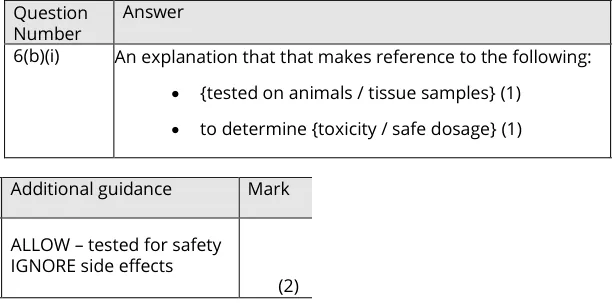
- Pre-clinical testing: testing a new drug on cells, tissues or animals before it is given to any human, to check its toxicity.
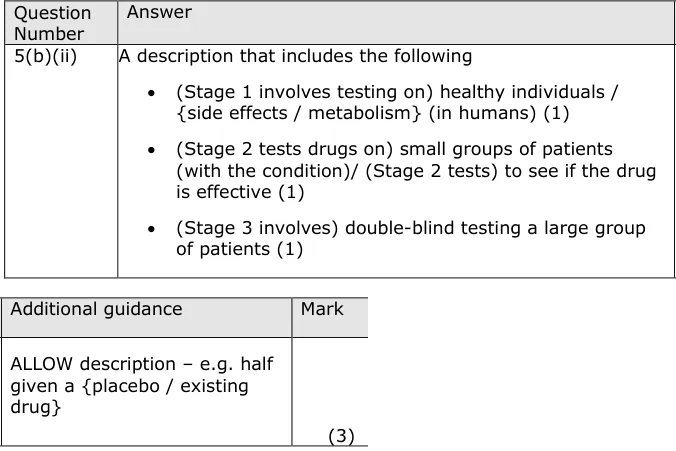
- Three-phased testing: Phase 1 tests safety and side effects on a small group of healthy volunteers; Phase 2 tests effectiveness and dose on a small group of patients; Phase 3 compares the drug with a placebo or existing drug in a large group of patients.
- Placebo: an inactive treatment given to a control group, so any difference in outcome can be put down to the drug itself.
- Double blind trial: a trial in which neither the patients nor the doctors know who has received the drug, which removes bias.
- Genetic diversity: the variety of alleles in the gene pool of a population.
- Inbreeding depression: reduced survival and fertility in offspring of closely related parents, caused by more homozygous harmful recessive alleles.
- Stud book: a record of the ancestry of every animal in a captive population, used to choose unrelated mates.
- Reintroduction programme: releasing captive-bred or relocated animals into a suitable, protected habitat where the species once lived.
What these questions cover (Edexcel SNAB Topic 4: Biodiversity and Natural Resources)
The questions test these statements from Topic 4 of the Pearson Edexcel A level Biology A (Salters-Nuffield) specification (9BN0).
- 4.13 Understand the development of drug testing from historic to contemporary protocols, including William Withering’s digitalis soup, double blind trials, placebo, three-phas
- 4.14 Understand the conditions required for bacterial growth.
- 4.16 Be able to evaluate the methods used by zoos and seed banks in the conservation of endangered species and their genetic diversity, including scientific research, captive
How to use this page
Write your answer on paper before you open the mark scheme. Allow about 1.2 minutes per mark: the 20 questions are worth 53 marks, so about 64 minutes in total. Then mark your answer strictly against the mark scheme and read the examiners' tip underneath it. If you'd rather print the questions, download the PDF pack.
Drug testing protocols (4.13)
Question 1
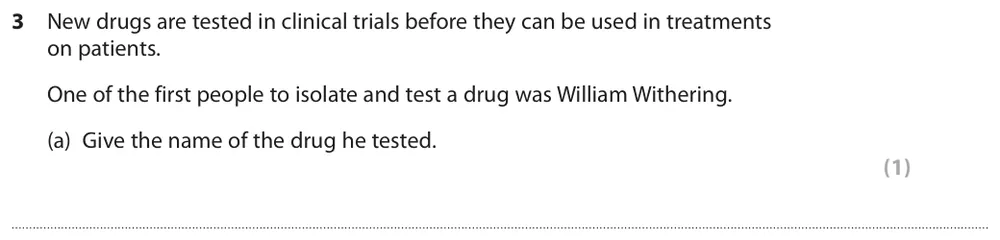
A level Paper 1 · June 2024 · Q3(a) · 1 mark · Hard
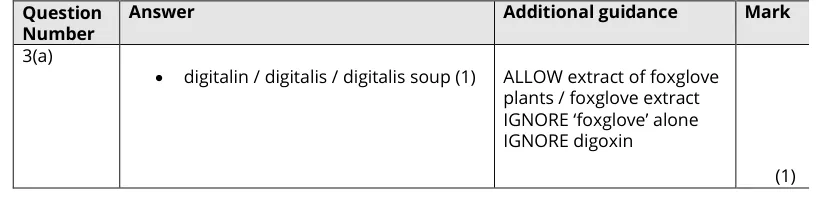
Give the name of the drug William Withering tested.
Show the mark scheme
Tap an image to open it full size.
From the examiners' report: Not well answered. Many named foxglove, which is the source plant, not the drug; others named the illness rather than the treatment.
Question 2
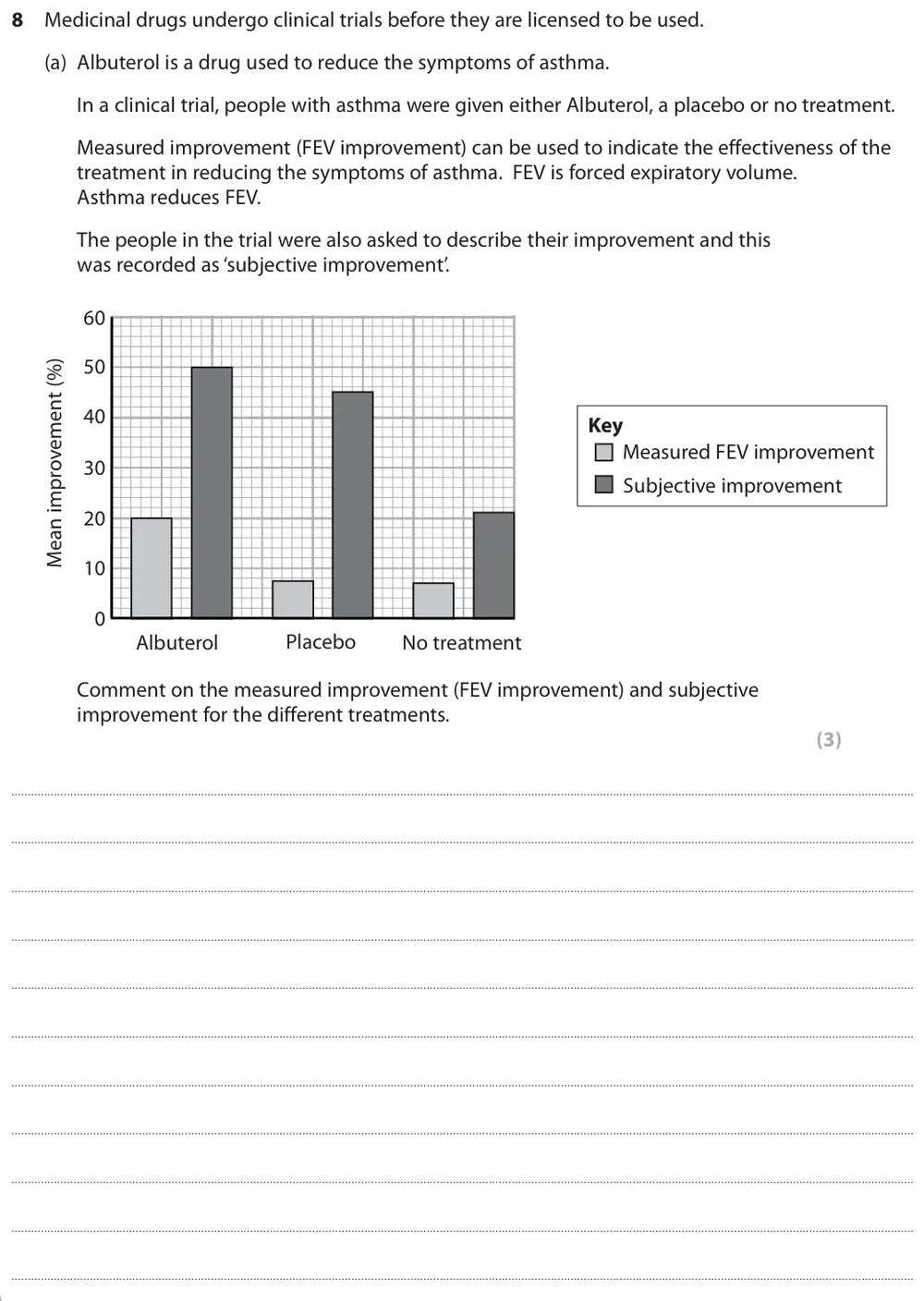
AS Paper 2 · June 2017 · Q8(a) · 3 marks
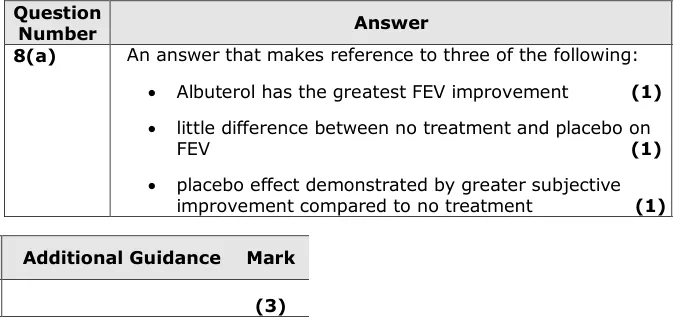
Comment on the measured and subjective improvement for albuterol, a placebo and no treatment.
Show the mark scheme
Tap an image to open it full size.
From the examiners' report: Many focused only on the difference between subjective and measured improvement. Fewer compared albuterol, the placebo and no treatment, which is where most marks were. Relate the data to the context.
Question 3
AS Paper 2 · June 2017 · Q8(b)(i) · 2 marks · Hard
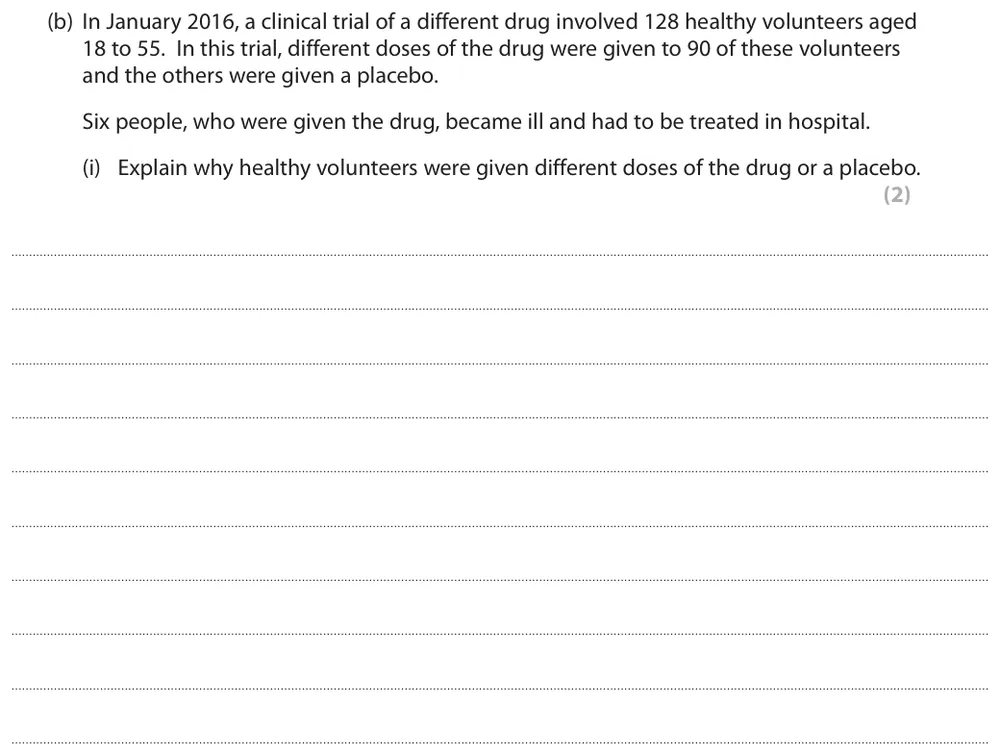
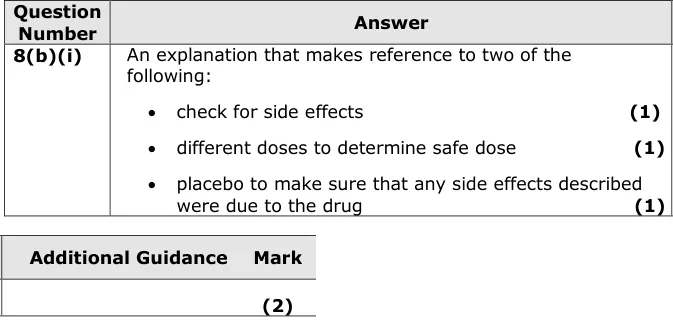
Explain why healthy volunteers were given different doses of a drug or a placebo.
Show the mark scheme
Tap an image to open it full size.
From the examiners' report: Few noticed the stage of the trial: these were healthy volunteers, so writing about how well the drug worked gained nothing. Be clear whether you are writing about the different doses or the placebo.
Question 4
AS Paper 2 · June 2017 · Q8(b)(iii) · 3 marks
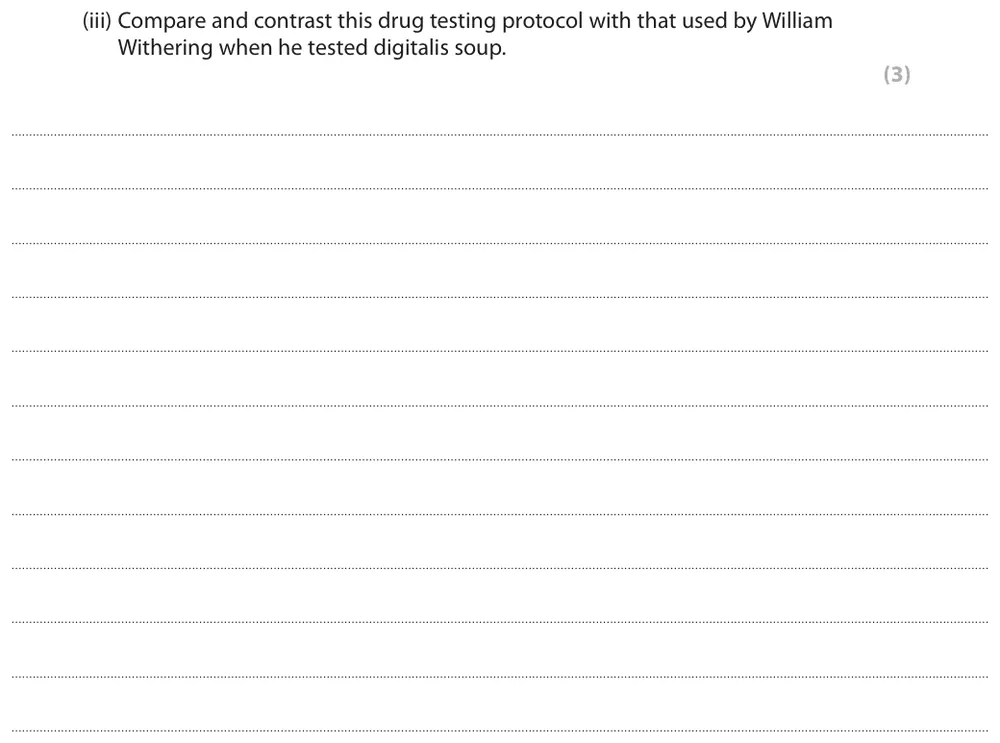
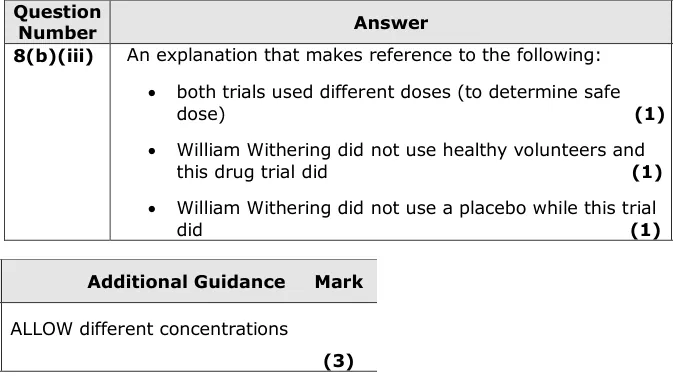
Compare and contrast this drug testing protocol with William Withering's testing of digitalis soup.
Show the mark scheme
Tap an image to open it full size.
From the examiners' report: The best answers started from the details of the modern trial and linked each one back to Withering, showing a similarity or a difference. Weaker answers wrote about Withering first and then hunted for parallels.
Question 5
A level Paper 1 · June 2023 · Q5(b)(ii) · 3 marks · Easy
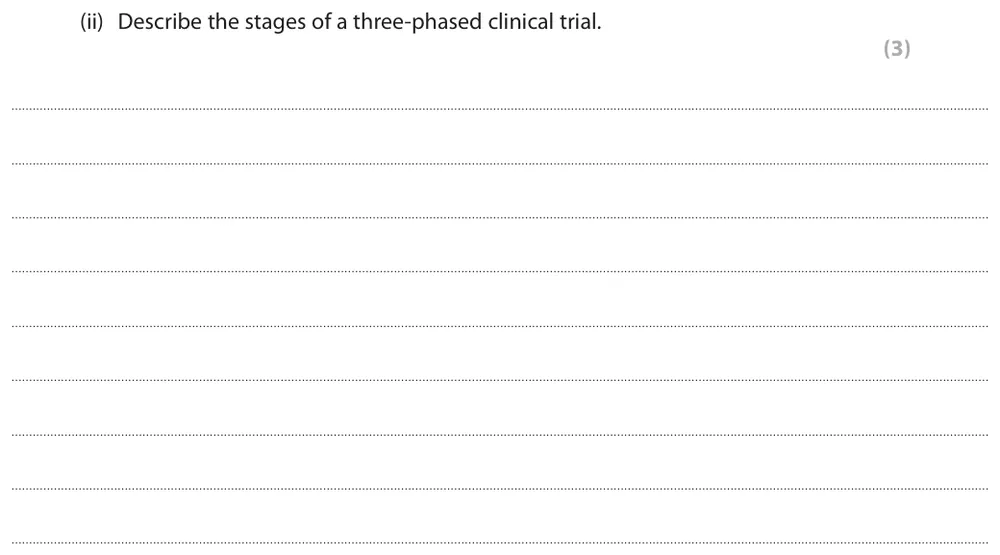
Describe the stages of a three-phased clinical trial.
Show the mark scheme
Tap an image to open it full size.
From the examiners' report: Most could describe Phase 1, but many were confused about Phases 2 and 3. Animal testing is pre-clinical, not one of the three clinical phases.
Question 6
AS Paper 2 · June 2023 · Q6(b)(i) · 2 marks
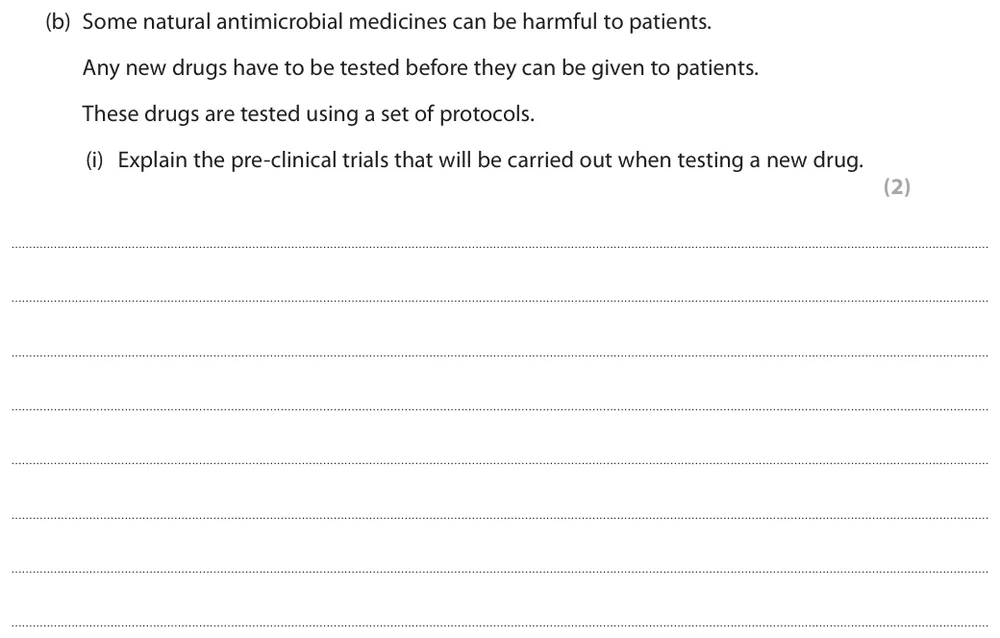
Explain the pre-clinical trials carried out when testing a new drug.
Show the mark scheme
Tap an image to open it full size.
From the examiners' report: Many did not know that pre-clinical trials come before any testing on humans. Good answers described tests on animals or tissues to find the toxicity. 'Safety' was credited but 'side effects' was not: side effects are found in healthy humans.
Question 7
AS Paper 2 · June 2023 · Q6(b)(ii) · 2 marks · Easy
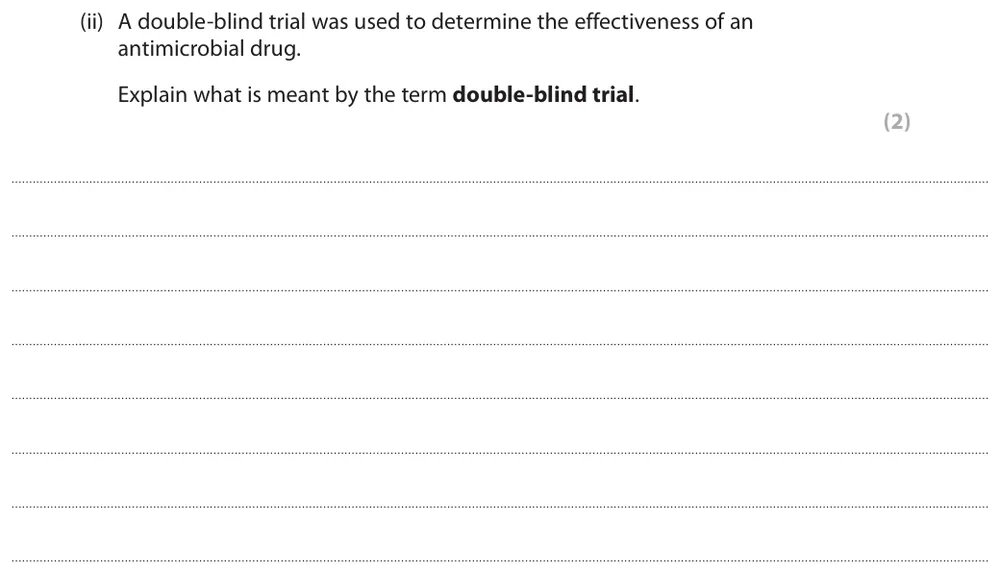
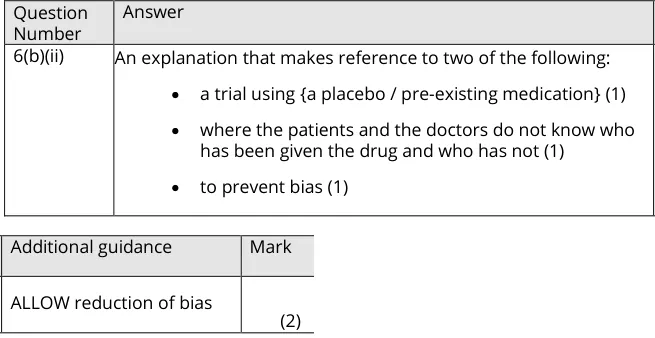
Explain what is meant by the term double-blind trial.
Show the mark scheme
Tap an image to open it full size.
From the examiners' report: Very well understood, with most gaining full marks: a placebo or existing drug is used, neither the patients nor the doctors know who has the drug, and this prevents bias.
Question 8
AS Paper 2 · November 2021 · Q3(b) · 4 marks · Hard
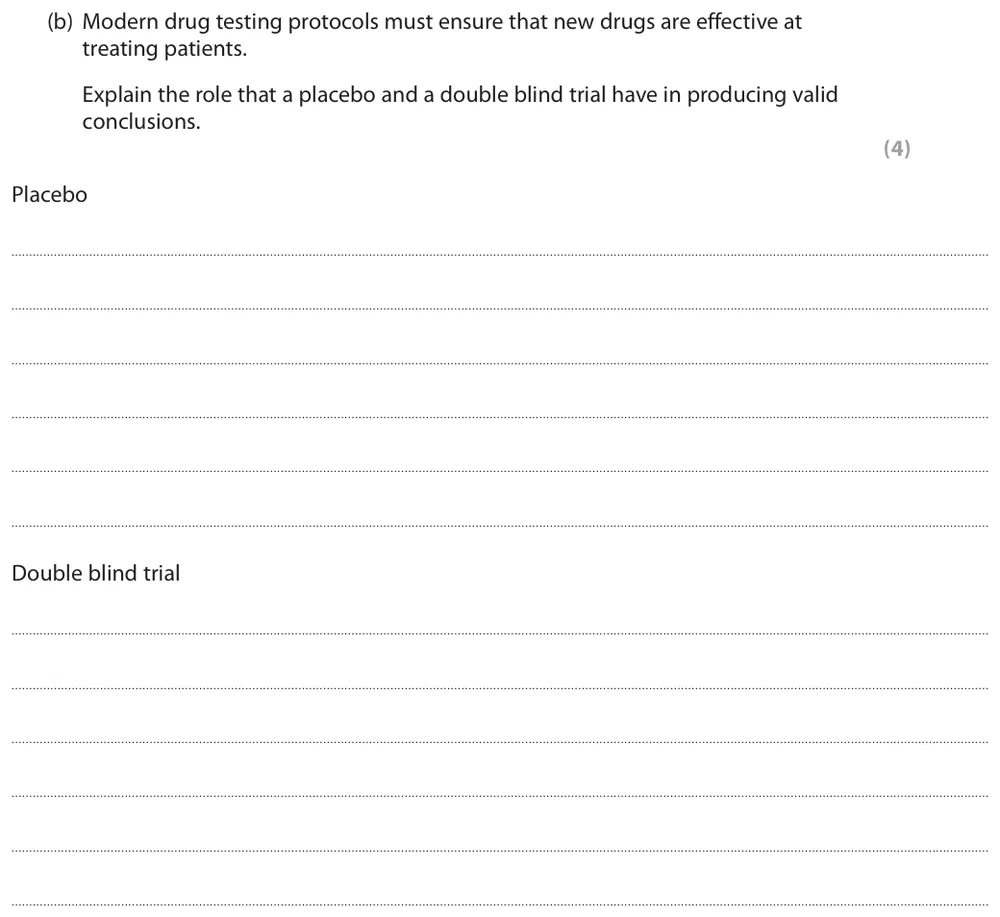
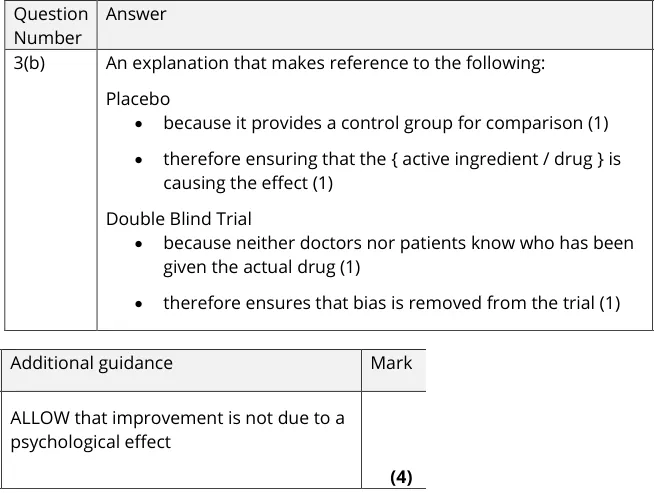
Explain the role of a placebo and a double blind trial in producing valid conclusions.
Show the mark scheme
Tap an image to open it full size.
From the examiners' report: Most recognised the terms, but some struggled to explain that the placebo group is a control group for comparison. Avoiding bias was more easily explained.
Question 9
A level Paper 1 · October 2020 · Q9(c)(i) · 3 marks
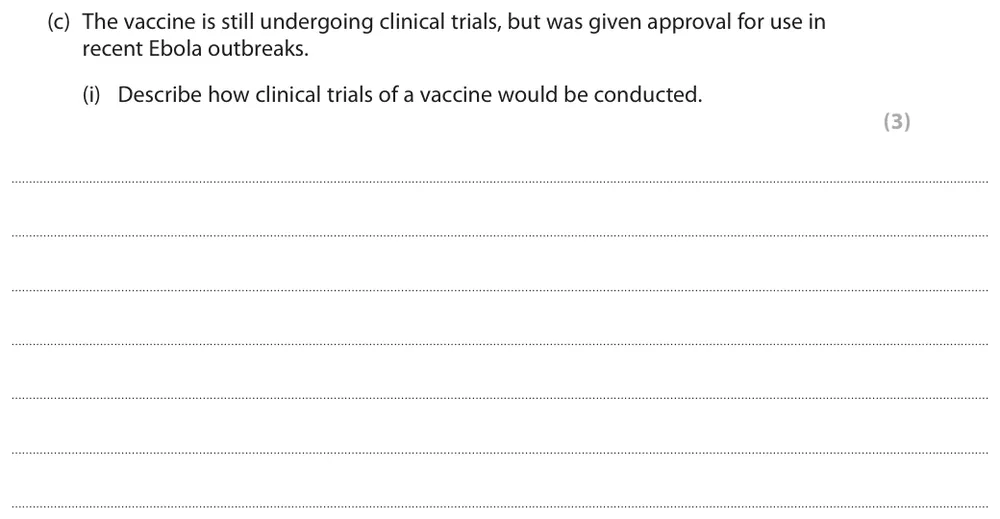
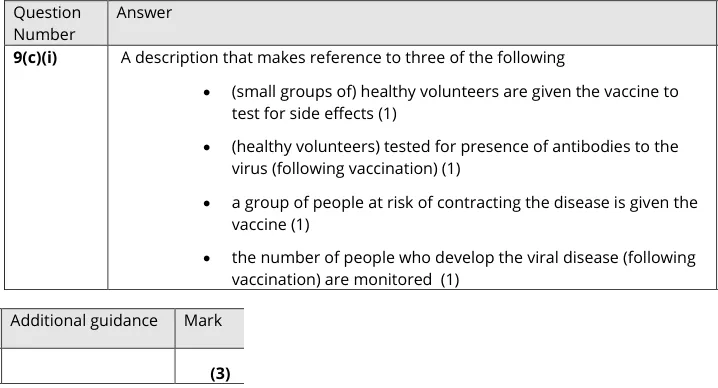
Describe how clinical trials of a vaccine would be conducted.
Show the mark scheme
Tap an image to open it full size.
From the examiners' report: Not a high-scoring question: many described drug trials rather than vaccine trials. Most knew the first stage uses healthy volunteers to test for side effects; then test for antibodies and give the vaccine to people at risk of the disease.
Conditions for bacterial growth (4.14)
Question 10
AS Paper 2 · June 2016 · Q4(b)(i) · 3 marks
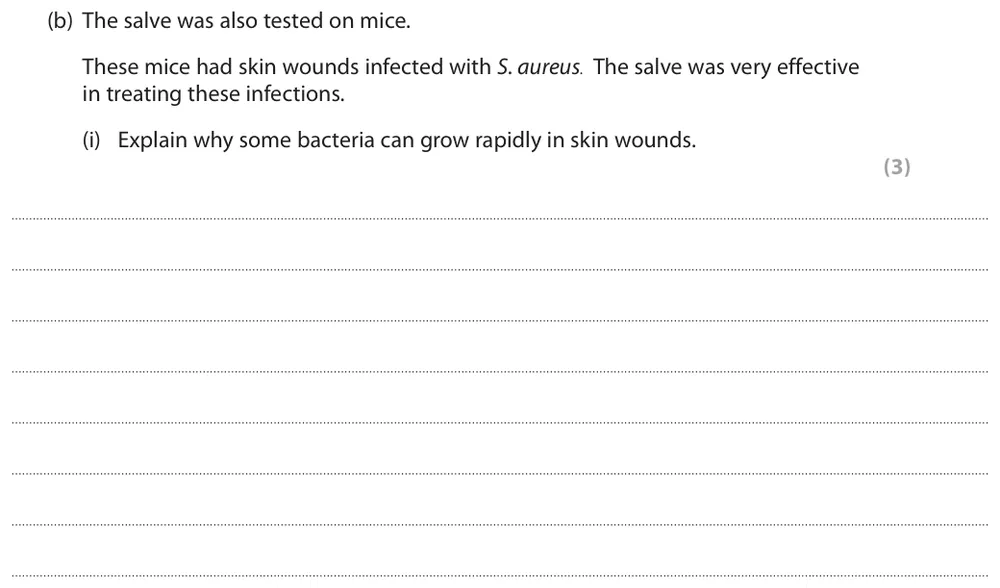
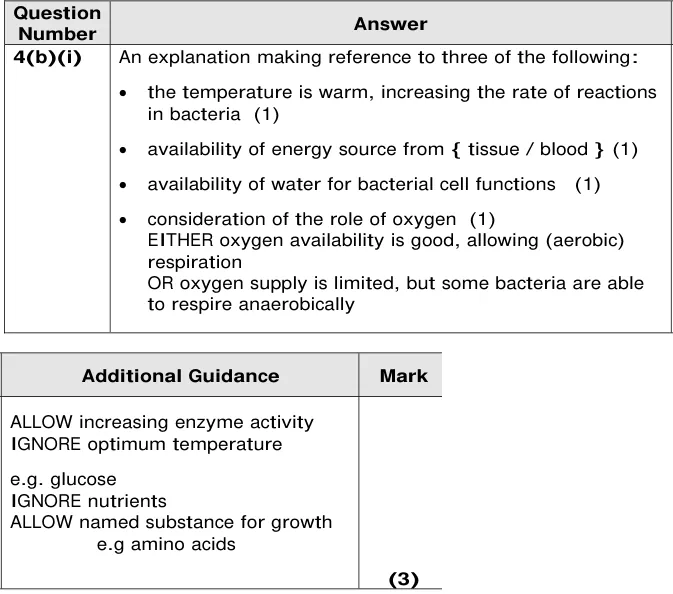
Explain why some bacteria can grow rapidly in skin wounds.
Show the mark scheme
Tap an image to open it full size.
From the examiners' report: The lowest-scoring question on the paper. Many listed warmth and oxygen but did not explain why they help bacteria grow. Give the biology: warmth increases the rate of enzyme activity, and glucose from the tissue is an energy source.
Question 11
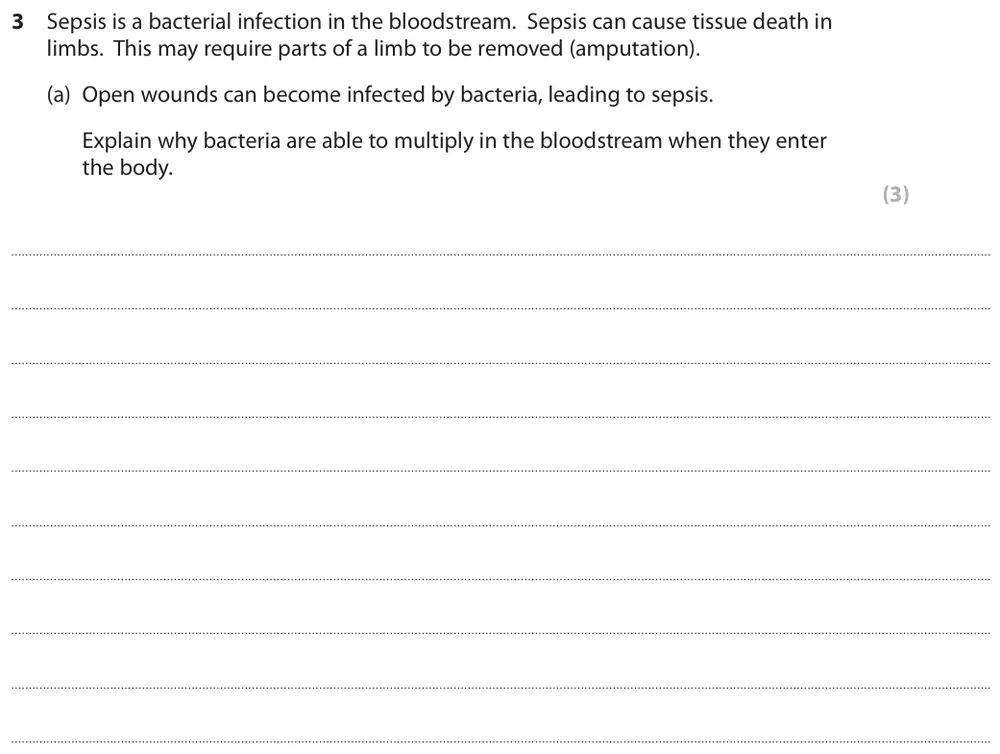
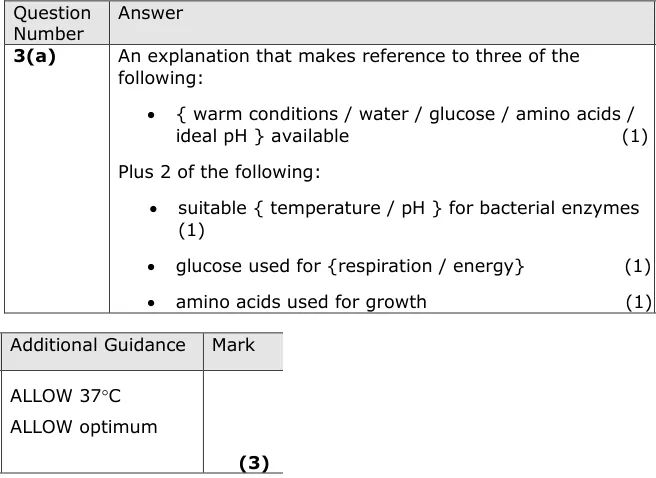
A level Paper 2 · June 2018 · Q3(a) · 3 marks
Explain why bacteria are able to multiply in the bloodstream.
Show the mark scheme
Tap an image to open it full size.
From the examiners' report: Many only stated that the blood is warm. Link each condition to the bacteria: a suitable temperature for bacterial enzymes, glucose for respiration, amino acids for growth. Descriptions of the immune system were not relevant.
Question 12
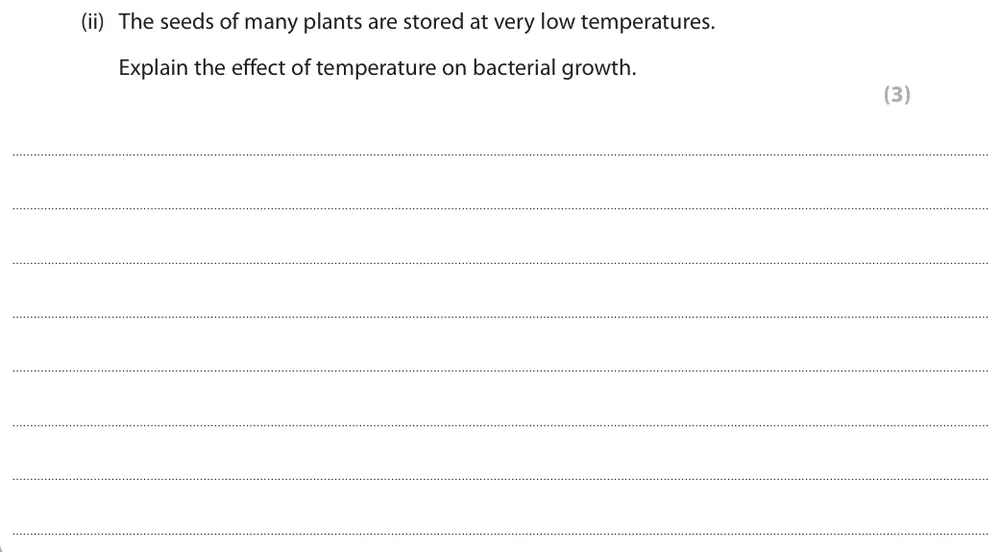
AS Paper 2 · June 2025 · Q8(a)(ii) · 3 marks
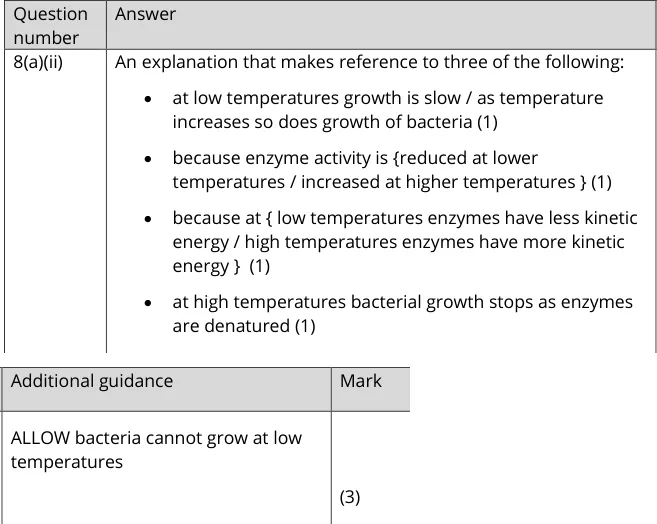
Explain the effect of temperature on bacterial growth.
Show the mark scheme
Tap an image to open it full size.
From the examiners' report: Many said only that growth increases with temperature. Few linked enzyme activity to kinetic energy. A surprising number said enzymes denature at low temperatures, and many wrote that bacteria denature or gain kinetic energy rather than their enzymes.
Seed banks (4.16)
Question 13
AS Paper 2 · June 2016 · Q6(a) · 2 marks · Hard
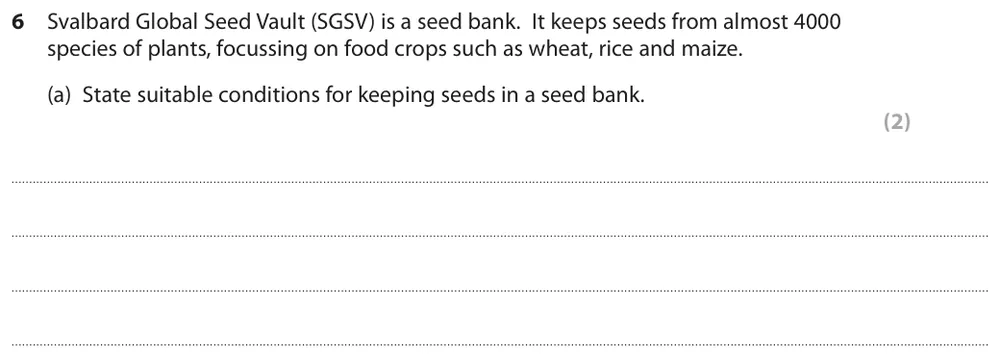
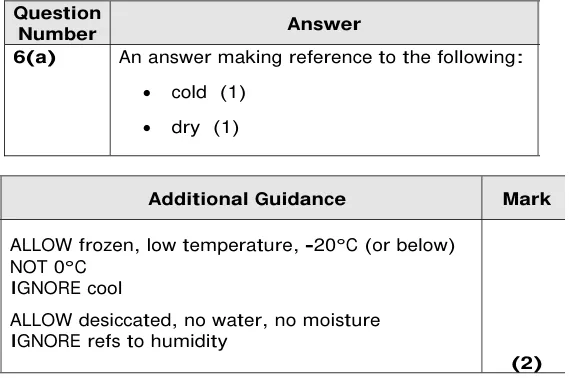
State suitable conditions for keeping seeds in a seed bank.
Show the mark scheme
Tap an image to open it full size.
From the examiners' report: Some gave conditions for germination instead. 'Cool and dry' scored only 1 mark: seeds must be kept cold (about -20 °C), not just cool.
Question 14
A level Paper 1 · June 2023 · Q5(a)(i) · 3 marks · Hard
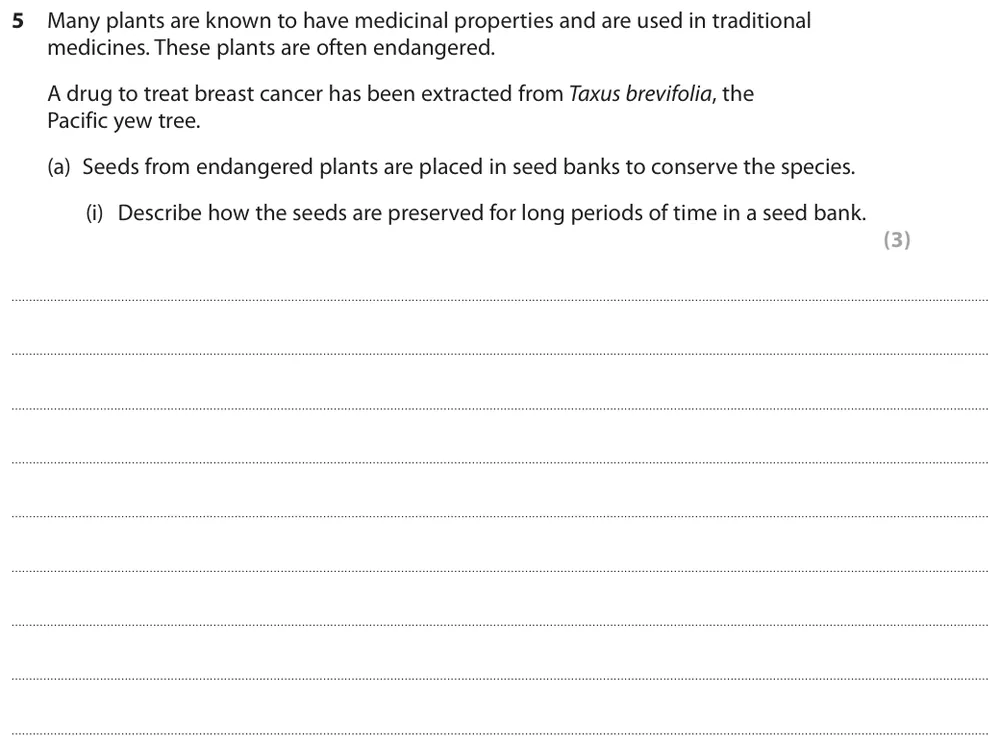
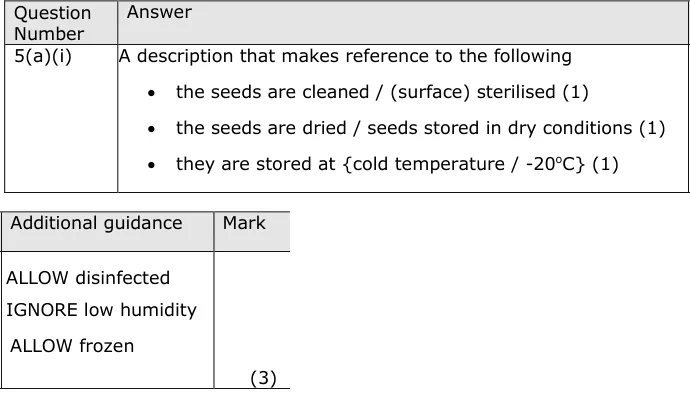
Describe how seeds are preserved for long periods of time in a seed bank.
Show the mark scheme
Tap an image to open it full size.
From the examiners' report: Most knew the seeds are dried and kept cold, though 'cool' lost a mark. Few mentioned cleaning or disinfecting the seeds. Germination testing is not part of preservation.
Question 15
A level Paper 1 · June 2023 · Q5(a)(ii) · 2 marks
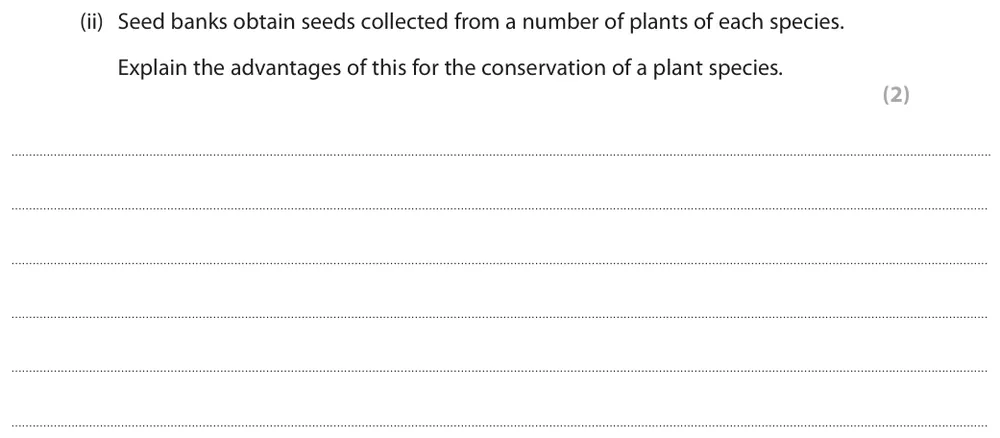
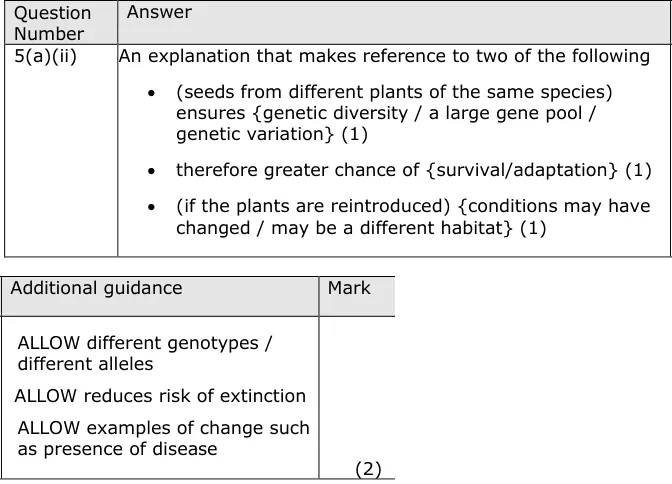
Explain the advantages of collecting seeds from a number of plants of each species.
Show the mark scheme
Tap an image to open it full size.
From the examiners' report: Many linked this to genetic diversity, and some went on to survival or adaptation. Some explained the advantages of seed banks in general, or of having a large number of seeds, which was not the question.
Question 16
AS Paper 2 · June 2016 · Q6(d) · 3 marks
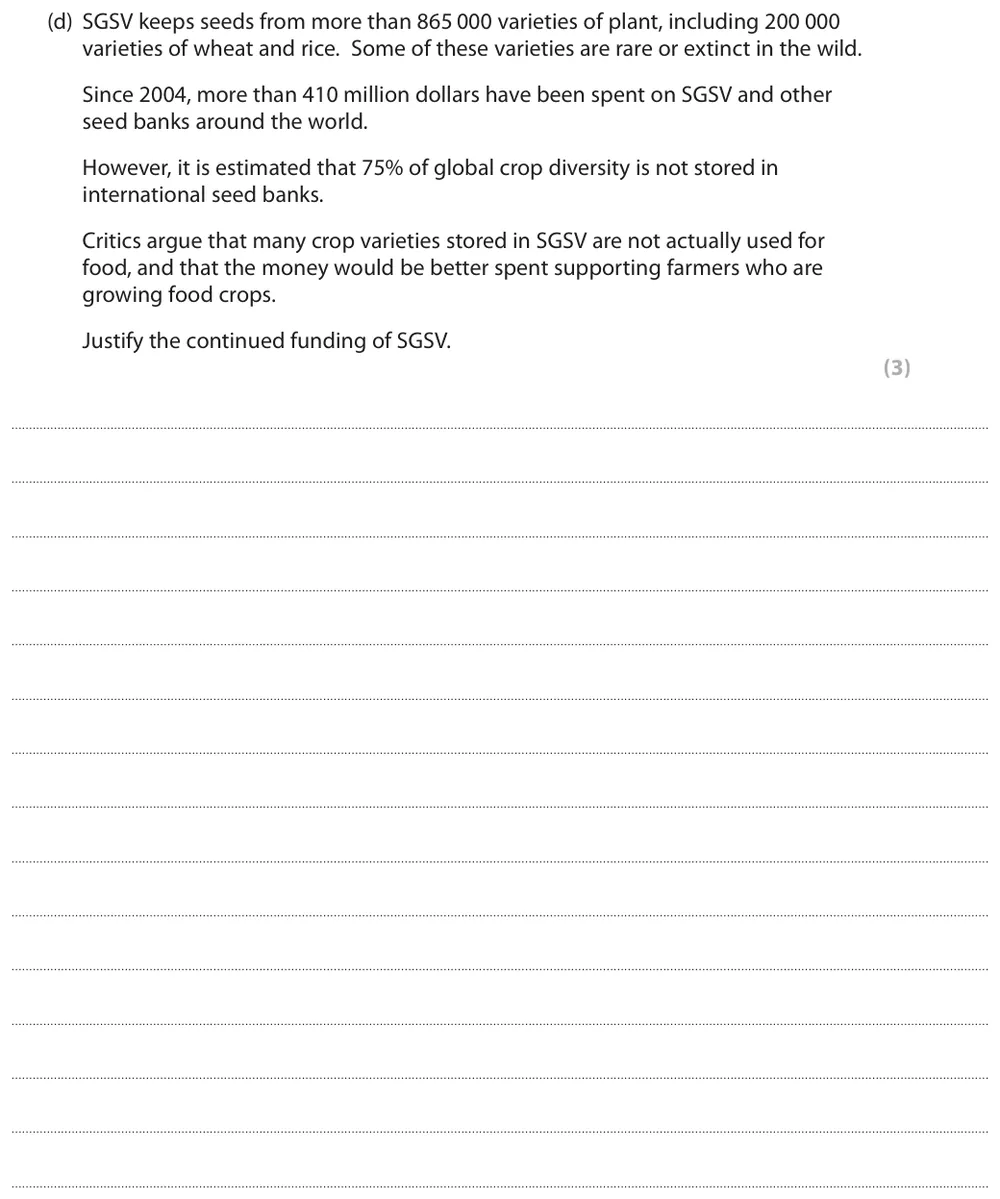
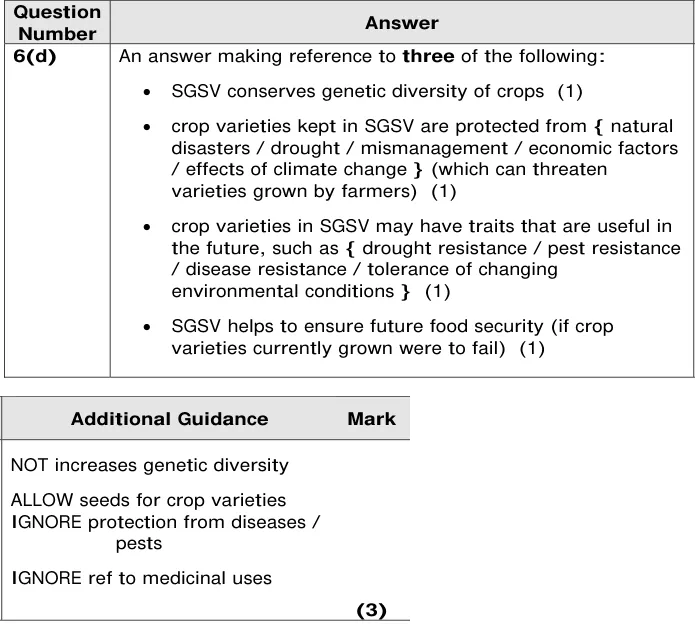
Justify the continued funding of a global seed vault that stores food crop varieties.
Show the mark scheme
Tap an image to open it full size.
From the examiners' report: Few mentioned genetic diversity, and some said the seed bank would increase it. Few saw that diversity is useful as selection pressures change. Remember these are food crops: future medicines were not credited, but food security was.
Zoos, captive breeding and reintroduction (4.16)
Question 17
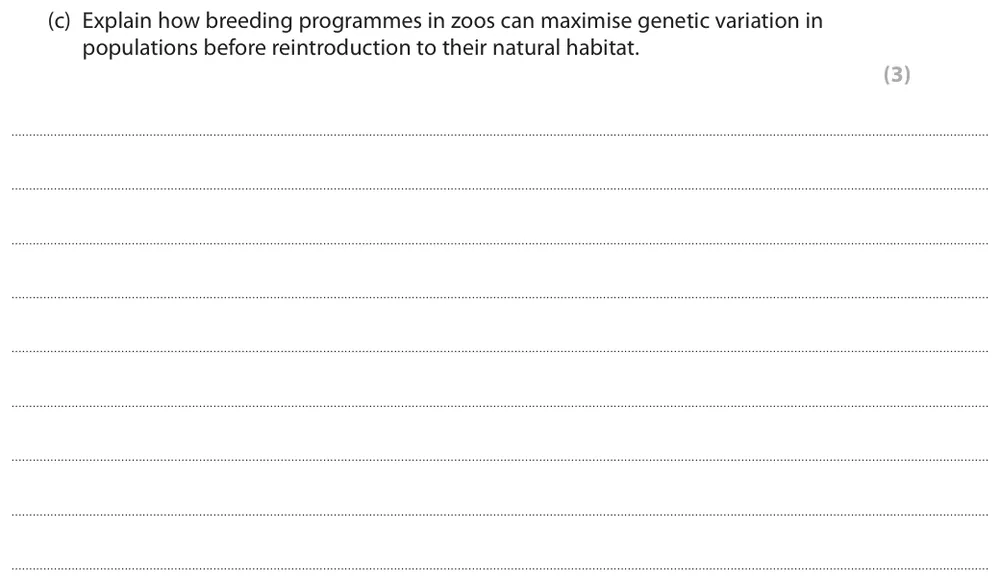
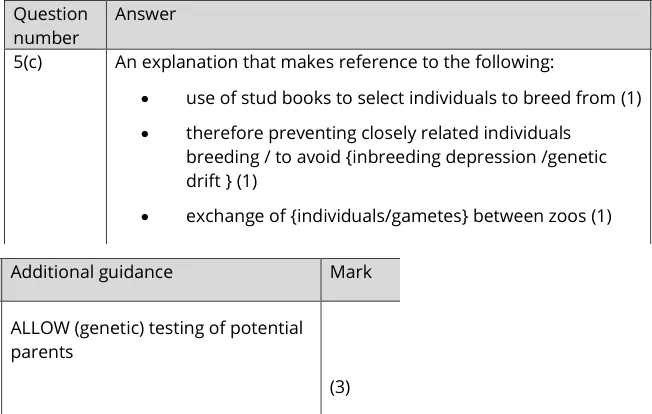
AS Paper 2 · June 2024 · Q5(c) · 3 marks
Explain how breeding programmes in zoos can maximise genetic variation before reintroduction.
Show the mark scheme
Tap an image to open it full size.
From the examiners' report: Most gained a mark for stud books or preventing inbreeding depression. Many scored full marks by also mentioning the exchange of animals or gametes between zoos.
Question 18
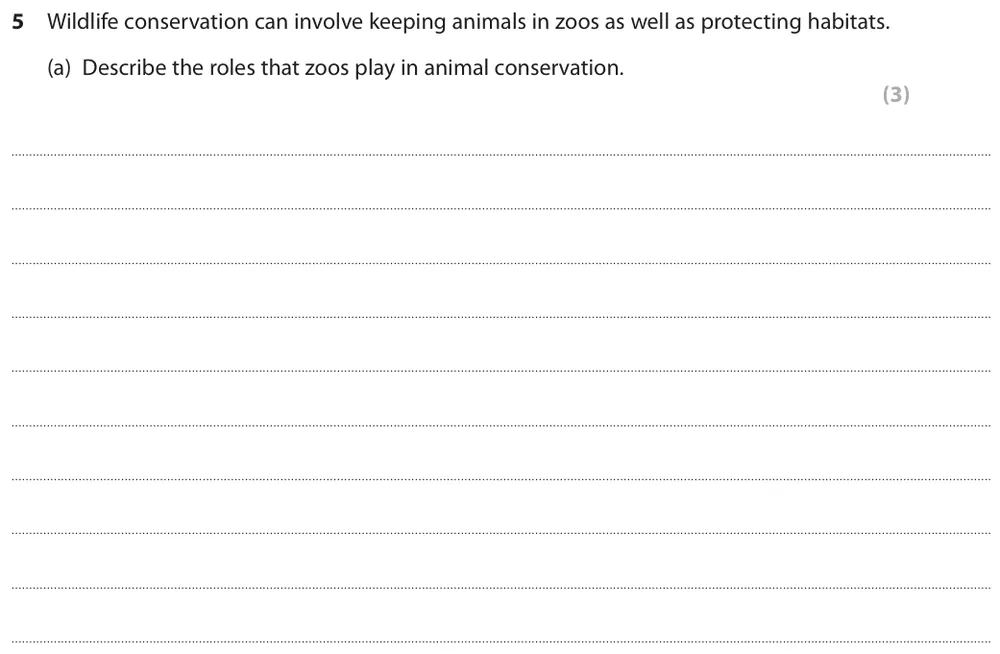
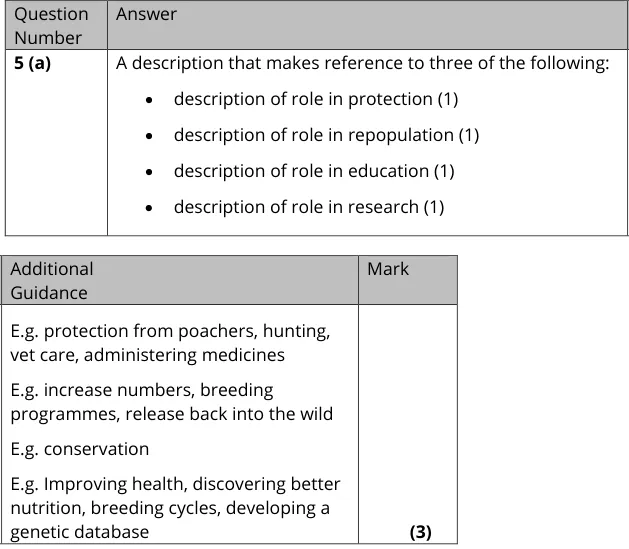
A level Paper 1 · November 2021 · Q5(a) · 3 marks · Hard
Describe the roles that zoos play in animal conservation.
Show the mark scheme
Tap an image to open it full size.
From the examiners' report: Most wrote at length about breeding programmes and gained one mark; few described other roles such as education and research. If you mention protection, say what the animals are protected from.
Question 19
A level Paper 1 · June 2025 · Q4(b)(i) · 3 marks · Hard
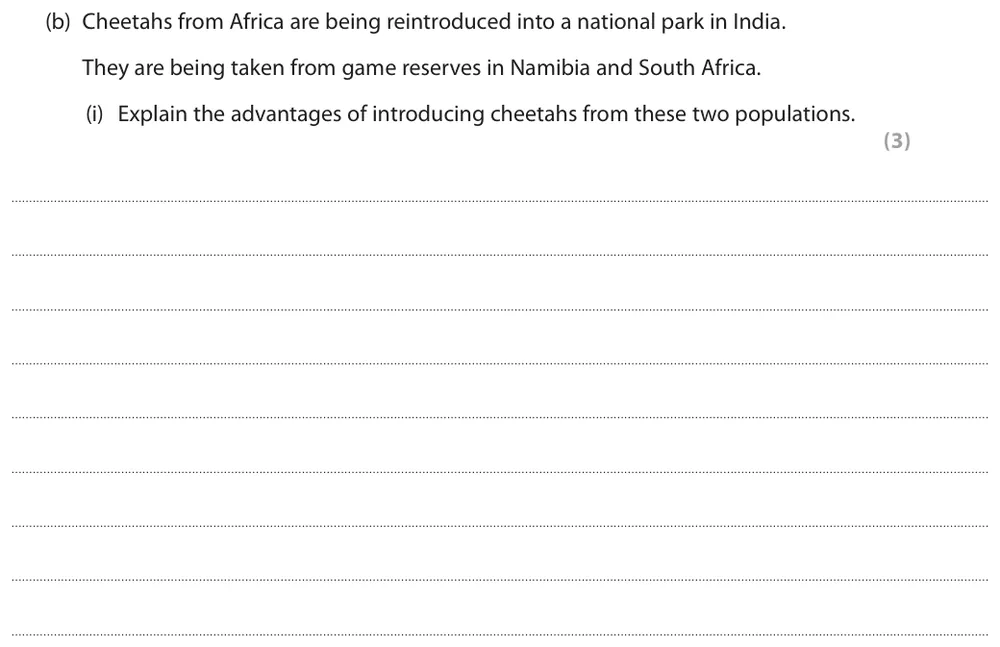
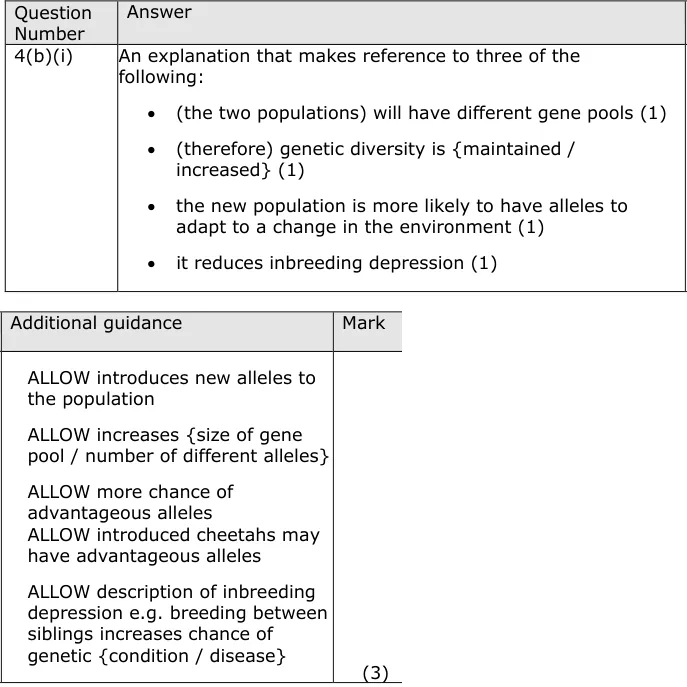
Explain the advantages of introducing cheetahs from two different wild populations.
Show the mark scheme
Tap an image to open it full size.
From the examiners' report: Most said genetic diversity would increase, but many used key terms that did not fit, such as stud books, which are not used for wild animals. In the wild, inbreeding depression can be reduced but not prevented.
Question 20
A level Paper 1 · June 2025 · Q4(b)(ii) · 2 marks · Hard
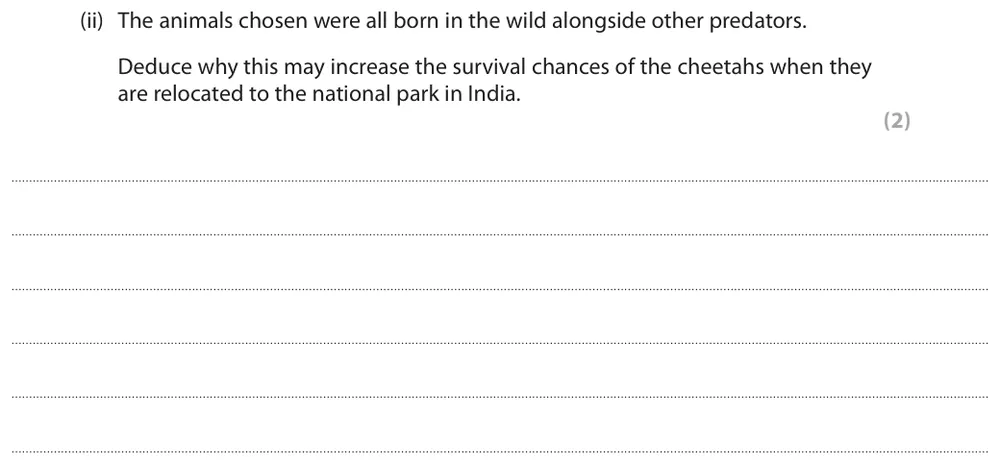
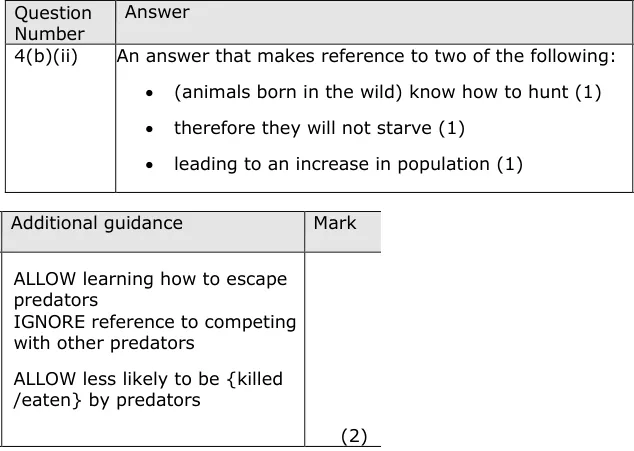
Deduce why animals born in the wild alongside predators may survive better when relocated.
Show the mark scheme
Tap an image to open it full size.
From the examiners' report: Answers about competition or general adaptations did not score. Say the animals know how to hunt, so they will not starve; repeating 'so they survive' from the question gains nothing.
Where students lose marks (from Pearson examiners' reports and mark schemes)
Each point below comes from the examiners' reports and mark schemes, and is followed by wording that gained marks.
Withering's drug was digitalis, not foxglove. Many named foxglove, which is the source plant, not the drug.
✔ Gains credit: 'Digitalis (digitalis soup), an extract of foxglove plants.'
Healthy volunteers test safety, not whether the drug works. Many wrote about the effectiveness of the drug although only healthy volunteers were used.
✔ Gains credit: 'To check for side effects; different doses to determine a safe dose; a placebo to make sure any side effects were due to the drug.'
Pre-clinical trials come before any human. Many seemed unaware that pre-clinical trials take place before a drug is tested on humans, or wrote 'side effects'.
✔ Gains credit: 'The drug is tested on animals or tissue samples to determine its toxicity and a safe dosage.'
A placebo group is the control group. Some recognised the term placebo but could not explain the idea of a control group.
✔ Gains credit: 'The placebo provides a control group for comparison, ensuring that the drug is causing the effect.'
Explain why each wound condition speeds bacterial growth. Many listed warm temperatures and oxygen in wounds without explaining how they help bacteria to grow.
✔ Gains credit: 'The temperature is warm, increasing the rate of enzyme activity in the bacteria; glucose from the tissue or blood is available as an energy source.'
Cold slows bacterial enzymes; heat denatures them. A surprising number said enzymes denature at low temperatures, or that the bacteria themselves denature or gain kinetic energy.
✔ Gains credit: 'At low temperatures enzymes have less kinetic energy, so enzyme activity and growth are slow; at high temperatures growth stops as enzymes are denatured.'
Seed banks are cold, not cool. 'Cool and dry' was a typical 1-mark answer; others gave conditions for germination.
✔ Gains credit: 'Cold (about -20 °C or below) and dry.'
Seed banks conserve genetic diversity; they can't increase it. Few referred to genetic diversity, and some suggested the seed bank would increase it.
✔ Gains credit: 'The seed vault conserves the genetic diversity of crops; stored varieties may have traits useful in the future, such as drought or pest resistance.'
Download the questions
Download the PDF pack (20 questions, mark schemes at the end)
Keep practising
- Antimicrobial Properties of Plants (Core Practical 9): Edexcel SNAB core practical questions
- Topic 4 multiple-choice quiz (63 questions, marked as you tap)
- Edexcel SNAB A level Biology resources hub (every topic, practical and paper)
- Plant Stems, Mineral Deficiencies and Fibre Strength (Core Practicals 6 to 8): Edexcel SNAB A Level Biology Exam Questions
- Extended Response Questions (Topics 3 and 4): Edexcel SNAB A Level Biology Exam Questions
- Edexcel SNAB A level Biology past papers, mark schemes and examiners' reports
- Edexcel SNAB A level Biology grade boundaries
- Message Tom on WhatsApp about one-to-one Edexcel SNAB tutoring or an Edexcel group class
Questions, mark schemes and examiners' report extracts © Pearson Education Ltd.