

Ecosystems, Succession and Productivity opens Topic 5, On the Wild Side, of the Edexcel A level Biology A (Salters-Nuffield) specification. You need to define ecosystem, community, population and habitat, explain how biotic and abiotic factors and niches control the numbers and distribution of organisms, and describe succession from colonisation to a climax community. You also need to calculate net primary productivity, explain how gross primary productivity, net primary productivity and plant respiration are related, and calculate the efficiency of energy transfer between trophic levels. Topic 5 is in the A level course only and is examined on A level Papers 1 and 3. All questions are from the A level papers (9BN0).
The examiners' reports point to definitions and data. An ecosystem includes the abiotic factors as well as the organisms, and a definition of succession is a change in species over time, not a list of its consequences. When you are given data on species or populations, use the command word: deduce and assess mean drawing conclusions and linking them to the question, not just describing the numbers. For productivity, learn NPP = GPP – R and what it means: respiration uses glucose that could have become biomass. Show your working and choose the right values in calculations.
Studying Edexcel SNAB and want more help? If you'd like to arrange one-to-one Edexcel tutoring, or to register your interest in an Edexcel group class, message Tom on WhatsApp using the link at the bottom of this page.
What you need from GCSE
Each question on this page assumes you're secure on these ideas. If any of them feels shaky, look it up before you start.
- Plants make glucose by photosynthesis; some of it is used in respiration and some becomes biomass.
- Food chains start with producers and pass energy to primary, secondary and tertiary consumers.
- Organisms compete for resources such as light, water, food and space.
- Biotic factors are living (such as predators and disease); abiotic factors are non-living (such as light, temperature and pH).
Key terms
These words come up in the questions and mark schemes. Examiners expect you to use them exactly.
- Ecosystem: all the organisms in an area together with the non-living (abiotic) components of their environment.
- Habitat: the place where a particular species or organism lives.
- Niche: the role of a species in its habitat, including how it uses resources and interacts with other organisms.
- Pioneer species: the first species to colonise bare ground or rock, such as lichens and algae.
- Climax community: the stable community reached at the end of succession.
- Gross primary productivity (GPP): the rate at which producers store energy as chemical energy in organic molecules by photosynthesis.
- Net primary productivity (NPP): the energy left as new plant biomass after respiration: NPP = GPP – R.
- Trophic level: the feeding level of an organism in a food chain, such as producer or primary consumer.
What these questions cover (Edexcel SNAB Topic 5: On the Wild Side)
The questions test these statements from Topic 5 of the Pearson Edexcel A level Biology A (Salters-Nuffield) specification (9BN0).
- 5.1 Understand the terms ecosystem, community, population and habitat.
- 5.2 Understand that the numbers and distribution of organisms in a habitat are controlled by biotic and abiotic factors.
- 5.3 Understand how the concept of niche accounts for distribution and abundance of organisms in a habitat.
- 5.4 Understand the stages of succession from colonisation to a climax community.
- 5.10 i Be able to calculate net primary productivity.
- 5.10 ii Understand the relationship between gross primary productivity, net primary productivity and plant respiration.
- 5.11 Know how to calculate the efficiency of biomass and energy transfers between trophic levels.
How to use this page
Write your answer on paper before you open the mark scheme. Allow about 1.2 minutes per mark: the 20 questions are worth 45 marks, so about 54 minutes in total. Then mark your answer strictly against the mark scheme and read the examiners' tip underneath it. If you'd rather print the questions, download the PDF pack.
Ecosystems, communities, populations and habitats (5.1)
Question 1
A level Paper 1 · November 2021 · Q5(b)(i) · 1 mark · Easy
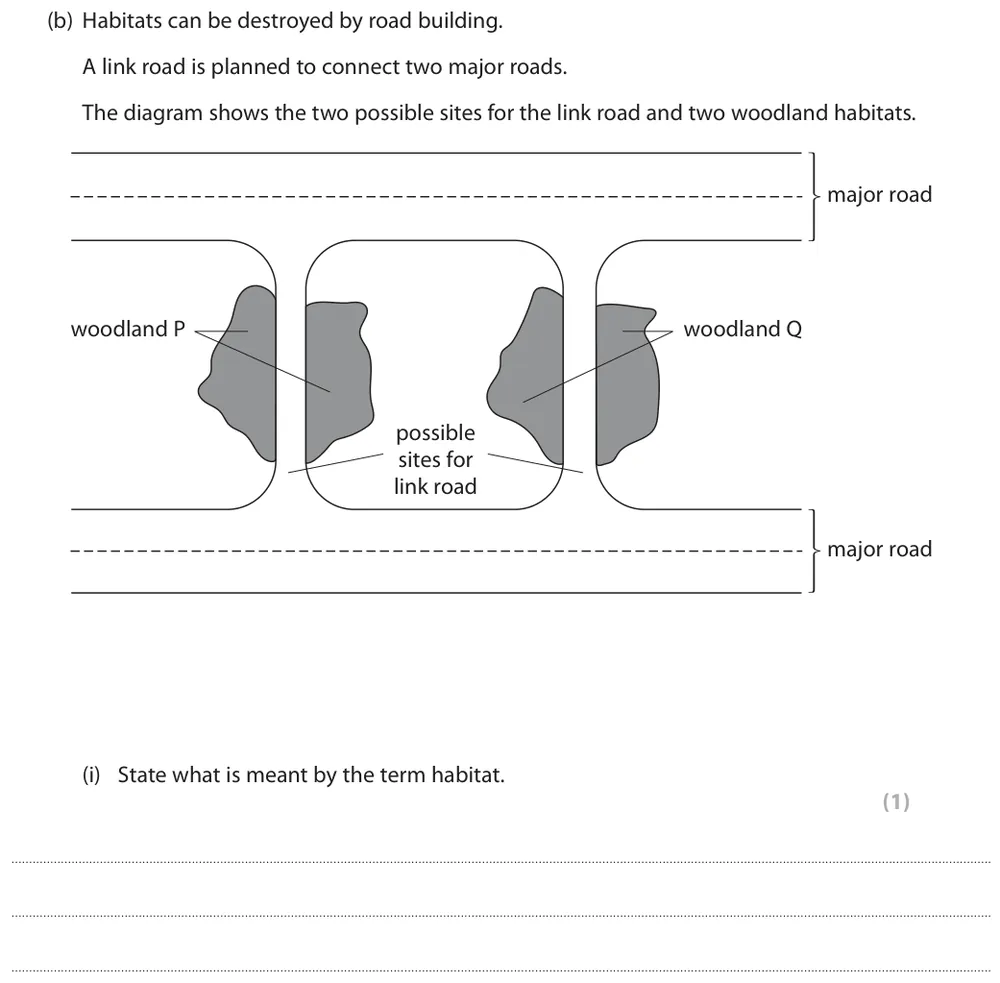
State what is meant by the term habitat.
Show the mark scheme

Tap an image to open it full size.
From the examiners' report: Most could define habitat, but some confused it with the environment. A habitat is the area inhabited by a particular species.
Question 2
A level Paper 3 · October 2020 · Q3(b)(i) · 1 mark · Hard
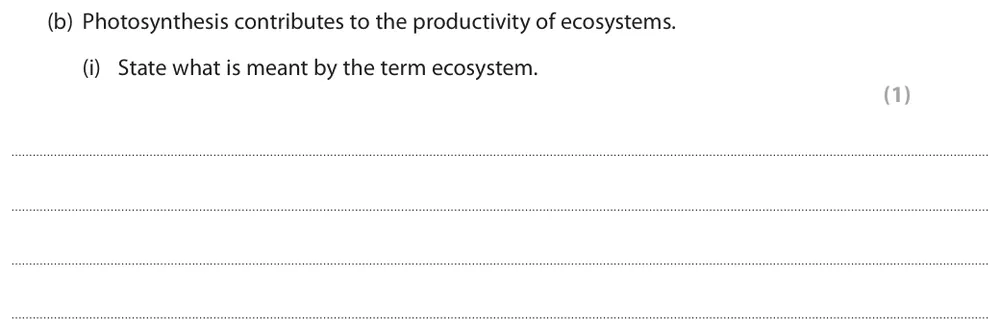
State what is meant by the term ecosystem.
Show the mark scheme

Tap an image to open it full size.
From the examiners' report: Many struggled, most often by forgetting that an ecosystem includes the abiotic factors as well as the organisms.
Biotic and abiotic factors (5.2)
Question 3
A level Paper 3 · November 2021 · Q5(a)(i) · 2 marks · Easy
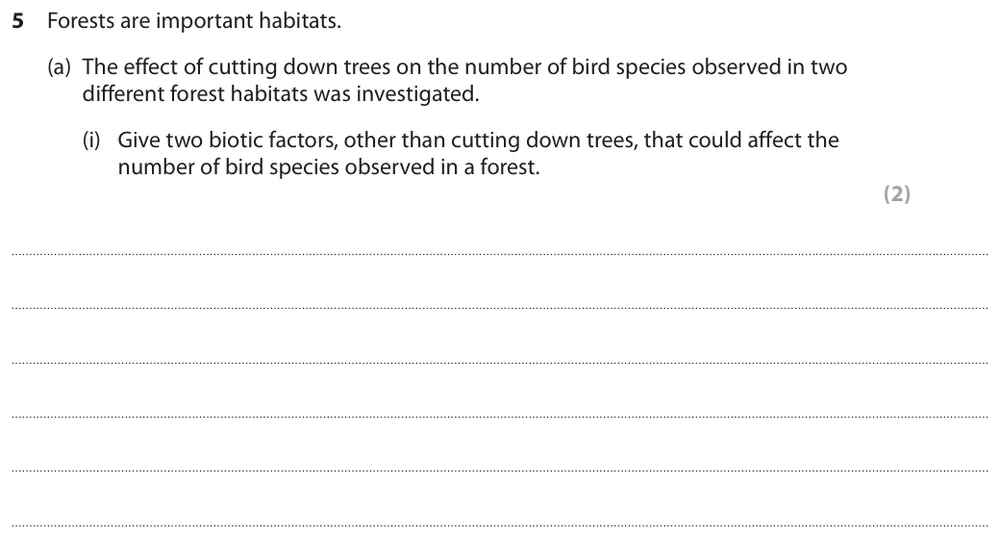
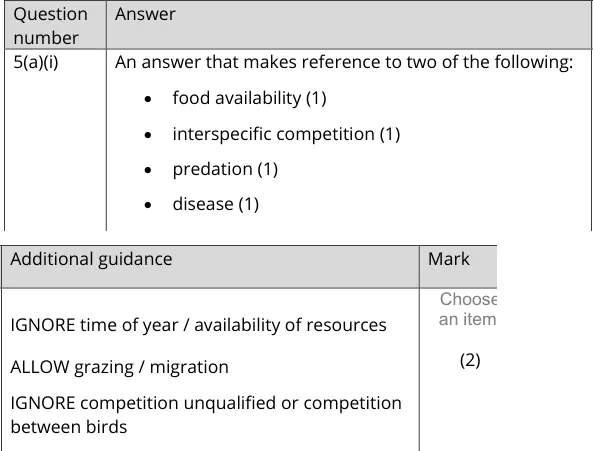
Give two biotic factors that could affect the number of bird species in a forest.
Show the mark scheme
Tap an image to open it full size.
From the examiners' report: Answered well by most. Some confused biotic and abiotic factors, and some gave one of each instead of two biotic factors.
Question 4
A level Paper 1 · October 2020 · Q7(c) · 4 marks
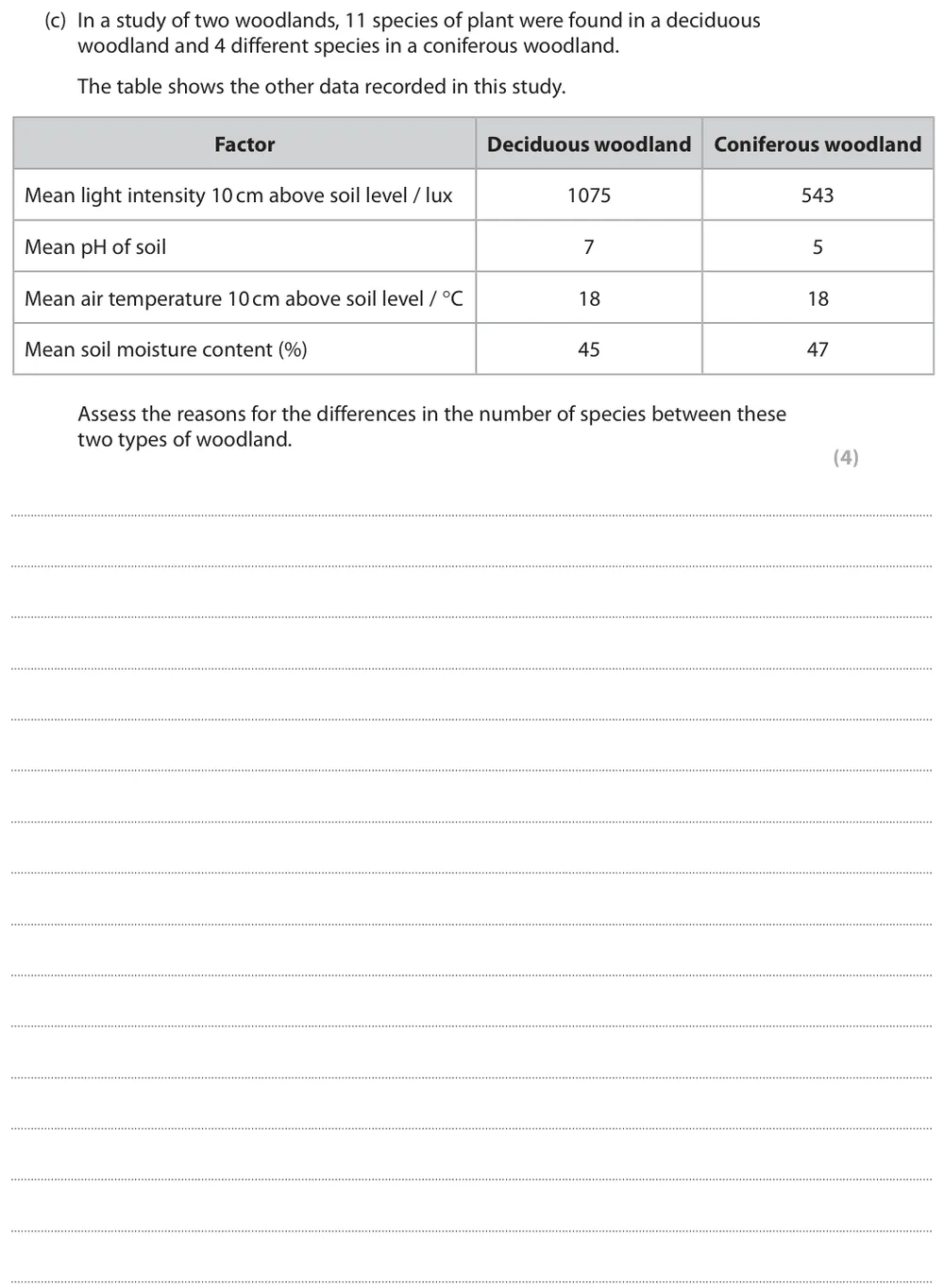
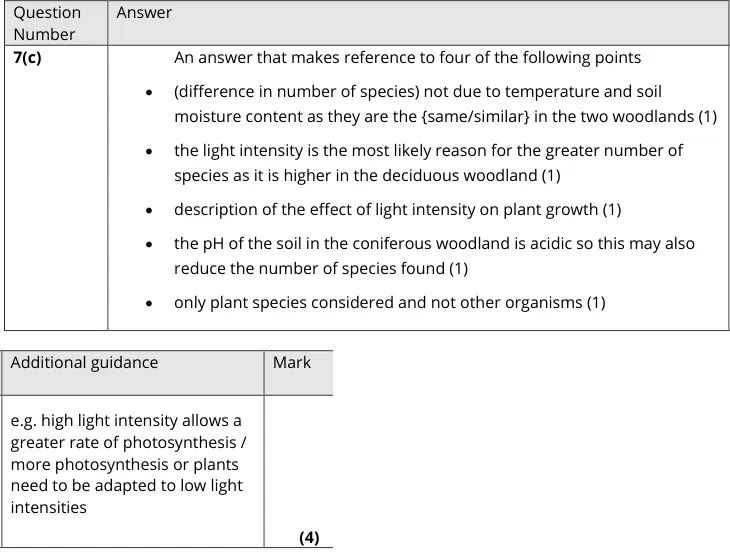
Assess the reasons for the differences in the number of species between two types of woodland.
Show the mark scheme
Tap an image to open it full size.
From the examiners' report: Most linked the higher light intensity to photosynthesis. The biggest problem was describing the differences without relating them to the number of species. Say pH 5 is acidic, and notice when a difference, such as soil moisture, is too small to matter.
Question 5
A level Paper 3 · June 2019 · Q4(a) · 4 marks · Easy
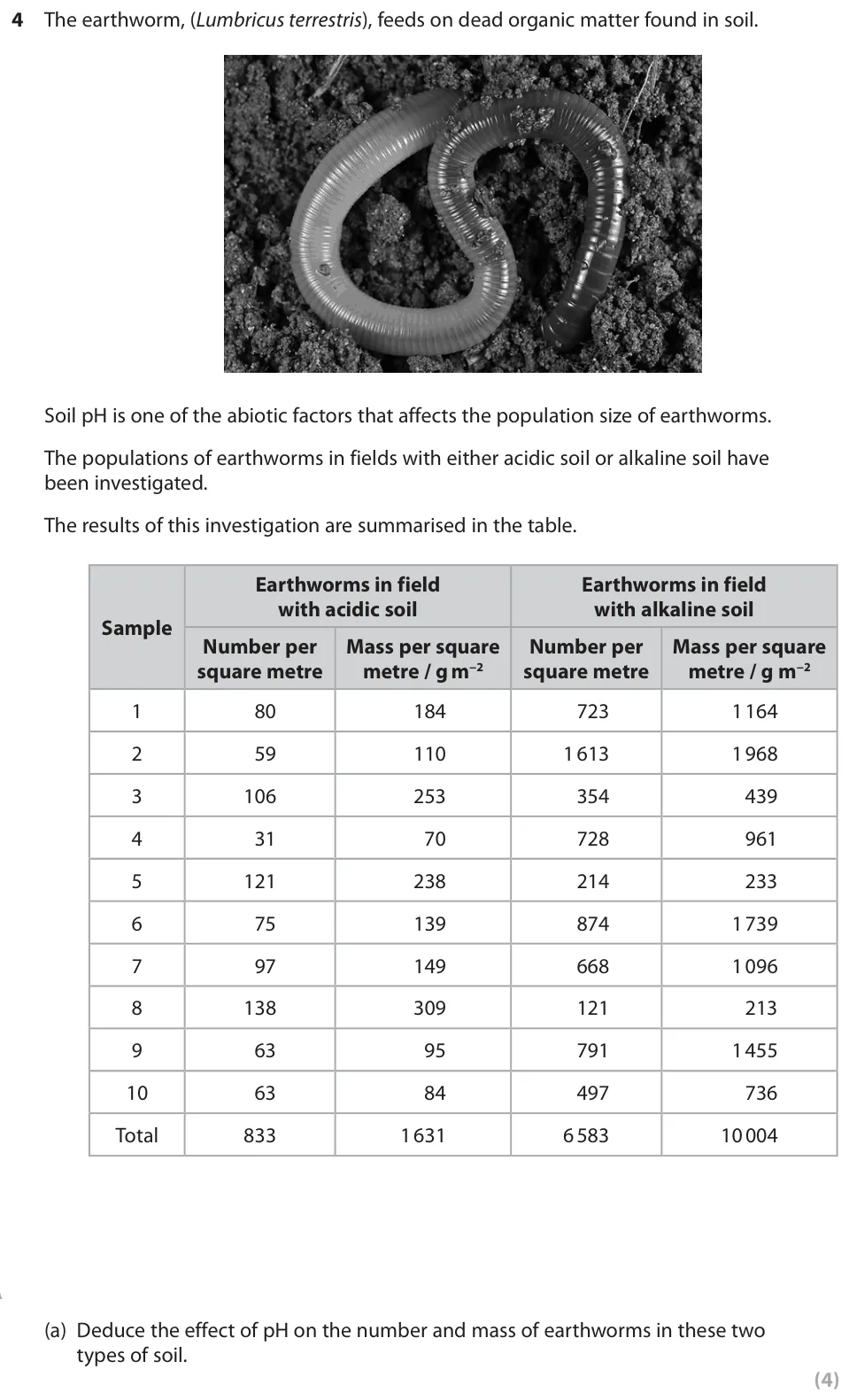
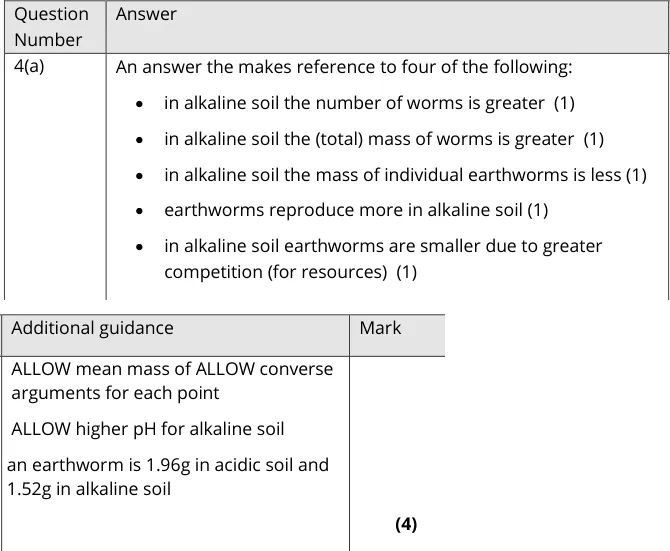
Deduce the effect of pH on the number and mass of earthworms in two types of soil.
Show the mark scheme
Tap an image to open it full size.
From the examiners' report: Most described the results and gained the first two marks. Few made deductions: more worms in alkaline soil suggests more reproduction, and a lower mean mass suggests more competition for resources. Deduce does not mean describe.
Niche, distribution and abundance (5.3)
Question 6
A level Paper 1 · June 2024 · Q7(a)(ii) · 2 marks
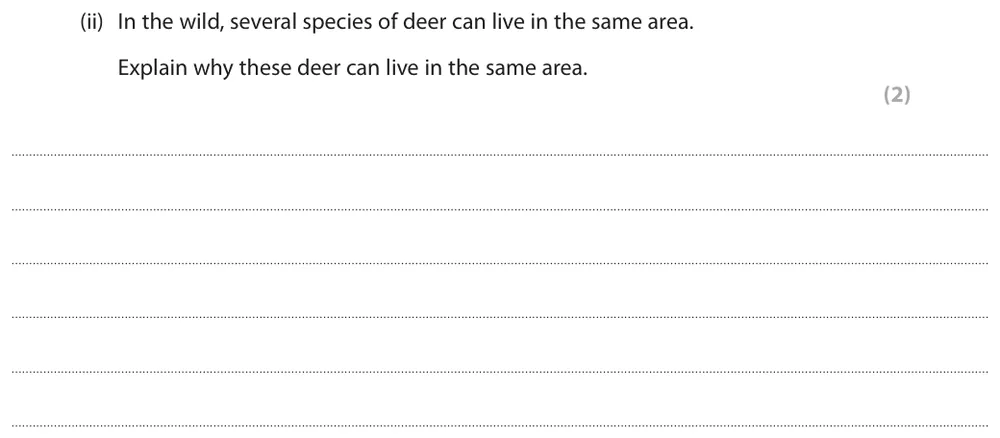
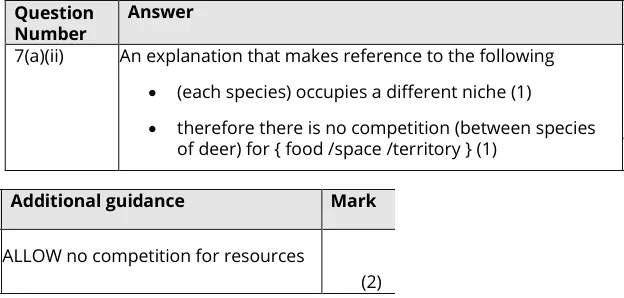
Explain why several species of deer can live in the same area.
Show the mark scheme
Tap an image to open it full size.
From the examiners' report: Most said each species has a different niche, so there is no competition. Say what they are not competing for, such as food or space. Common errors were saying the species share a niche or can interbreed.
Succession (5.4)
Question 7
A level Paper 3 · June 2024 · Q1(a) · 1 mark · Hard
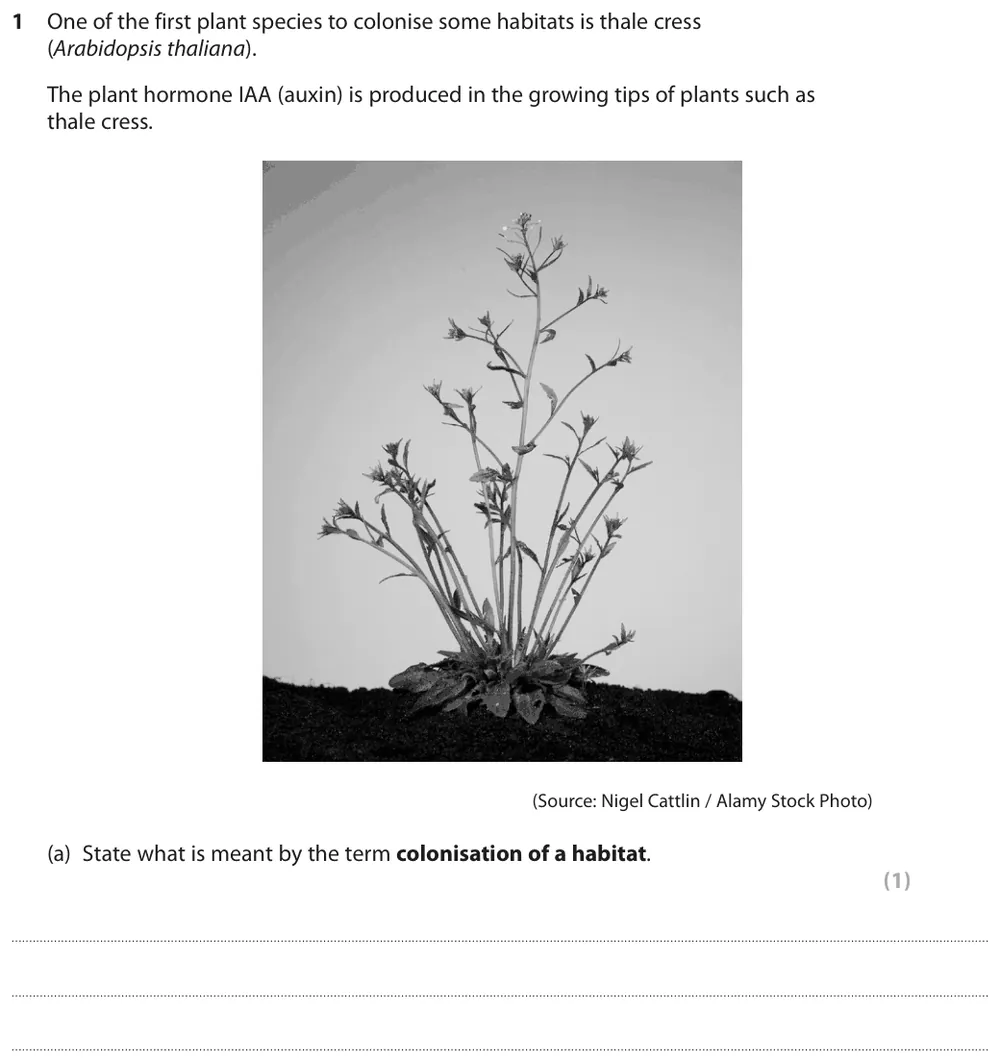
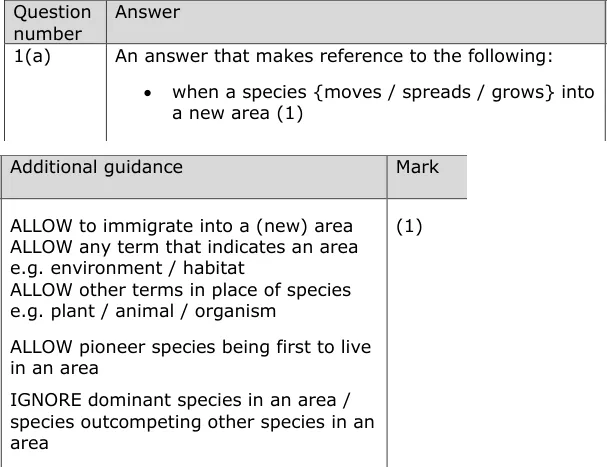
State what is meant by the term colonisation of a habitat.
Show the mark scheme
Tap an image to open it full size.
From the examiners' report: Many struggled and wrote about succession, pioneer species or climax species instead. Colonisation is a species moving or spreading into a new area. Read the question carefully.
Question 8
A level Paper 3 · June 2025 · Q1(a)(i) · 2 marks · Easy
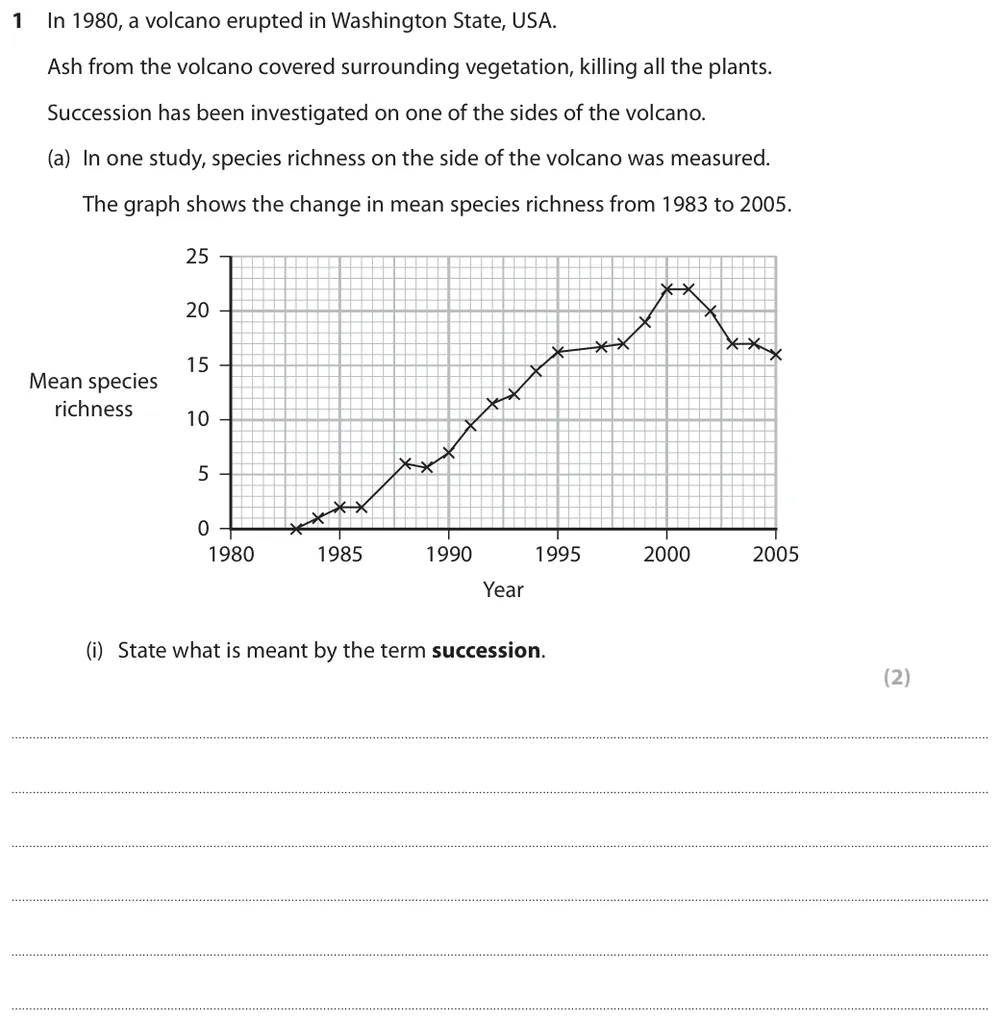
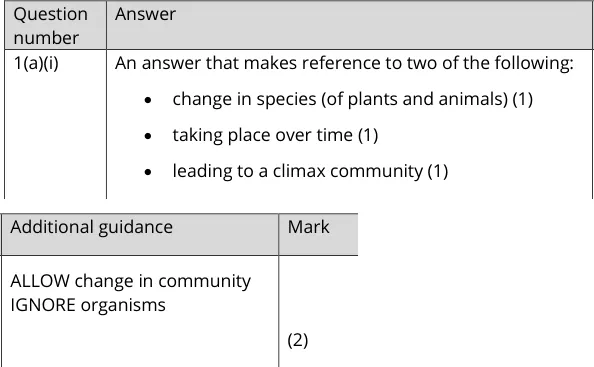
State what is meant by the term succession.
Show the mark scheme
Tap an image to open it full size.
From the examiners' report: Most gained both marks. Some described changes in biotic and abiotic factors, which are consequences of succession, not its definition; others did not say the species or community changes over time.
Question 9
A level Paper 1 · October 2020 · Q6(a) · 4 marks
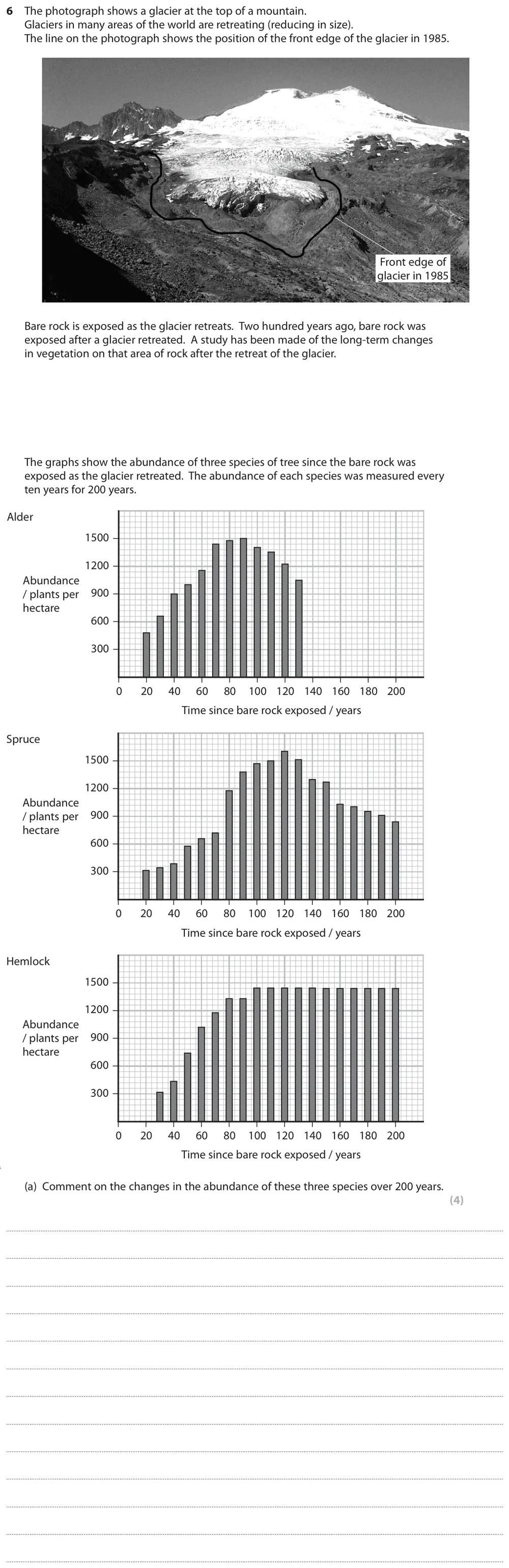
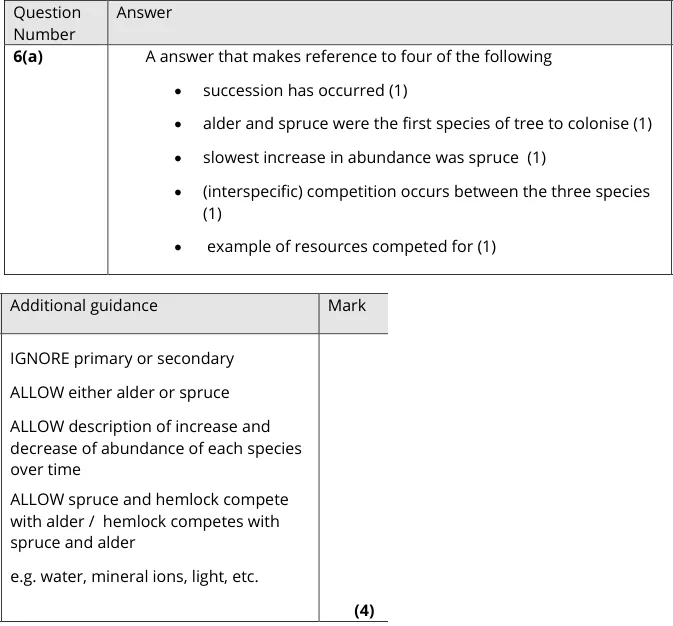
Comment on the changes in the abundance of three tree species over 200 years after bare rock was exposed.
Show the mark scheme
Tap an image to open it full size.
From the examiners' report: Many simply described each population. Few realised that interspecific competition was involved, and those who did often did not say which species competed or for what, such as light, water or mineral ions.
Question 10
A level Paper 1 · October 2020 · Q6(b) · 3 marks
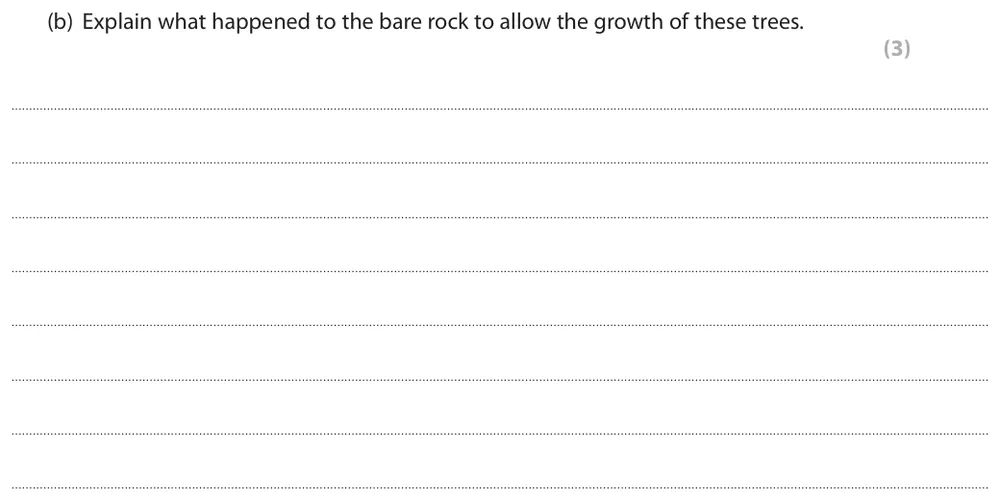
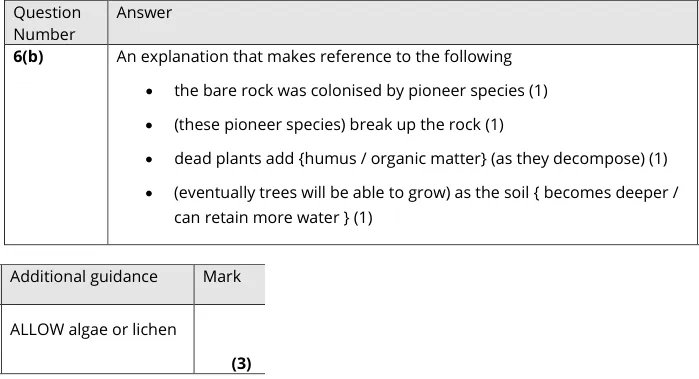
Explain what happened to the bare rock to allow the growth of these trees.
Show the mark scheme
Tap an image to open it full size.
From the examiners' report: Many gave a good account of soil formation. Common errors were describing 'a basic soil' without humus or organic matter, and saying the soil becomes richer rather than deeper or able to hold more water.
Gross and net primary productivity (5.10 i, 5.10 ii)
Question 11
A level Paper 1 · June 2018 · Q9(a)(ii) · 2 marks
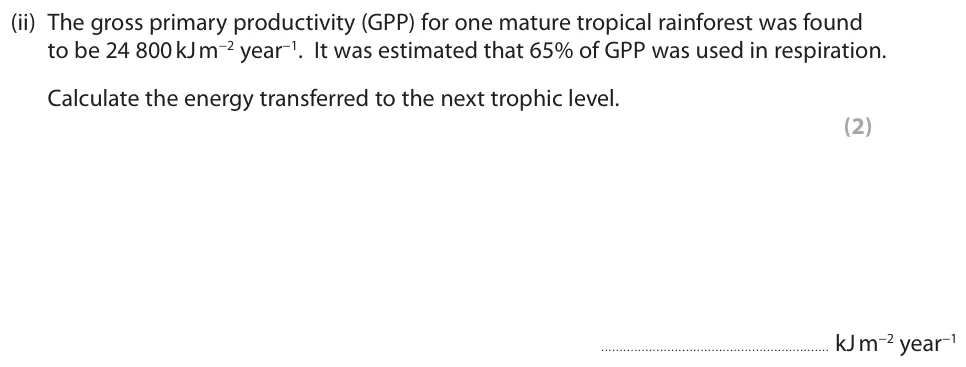
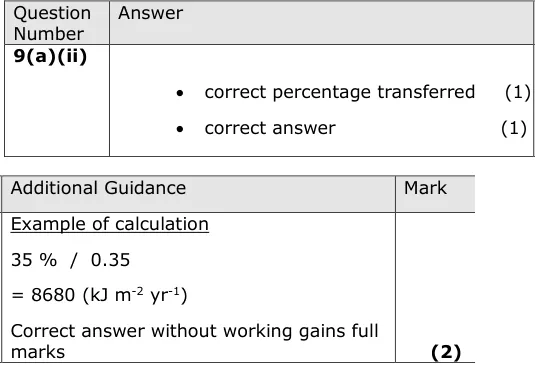
Calculate the energy transferred to the next trophic level from the GPP of a tropical rainforest.
Show the mark scheme
Tap an image to open it full size.
From the examiners' report: Straightforward for most. Identifying that 35% is transferred gained a mark even when the final answer was wrong, so always show your working.
Question 12
A level Paper 3 · October 2020 · Q3(b)(ii) · 2 marks
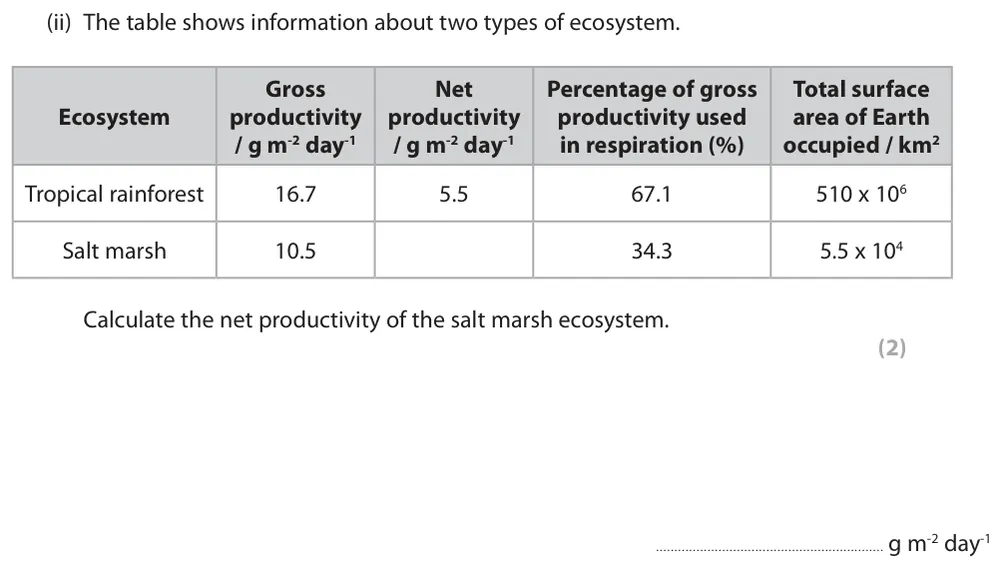
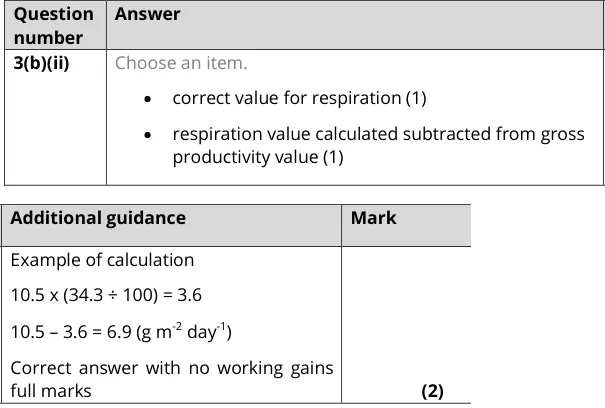
Calculate the net productivity of a salt marsh ecosystem.
Show the mark scheme
Tap an image to open it full size.
From the examiners' report: Most calculated this correctly: work out the respiration value from the percentage, then subtract it from the gross productivity.
Question 13
A level Paper 3 · June 2024 · Q4(b)(i) · 1 mark
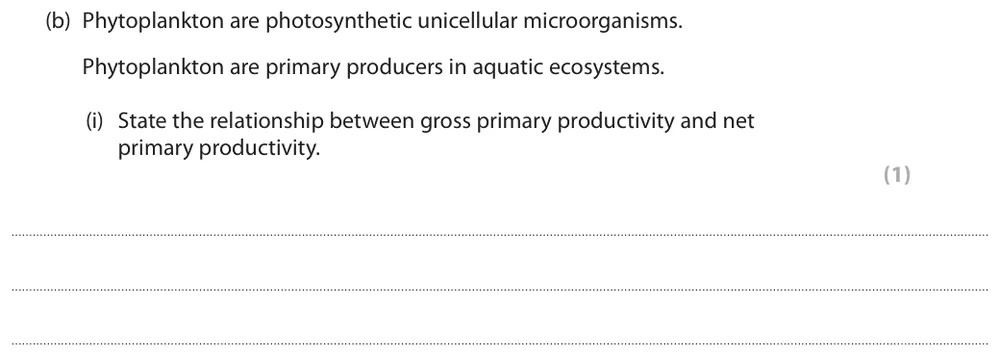
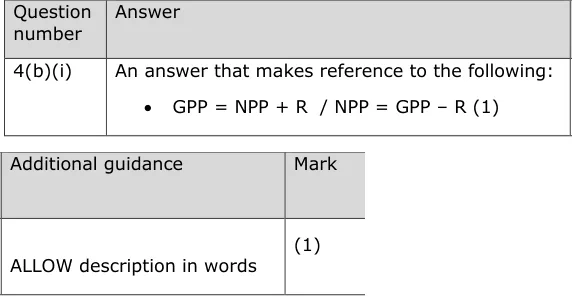
State the relationship between gross primary productivity and net primary productivity.
Show the mark scheme
Tap an image to open it full size.
From the examiners' report: Most were correct. Common errors were using the wrong sign or incomplete abbreviations such as GP for GPP. Understand what the equation means as well as recalling it.
Question 14
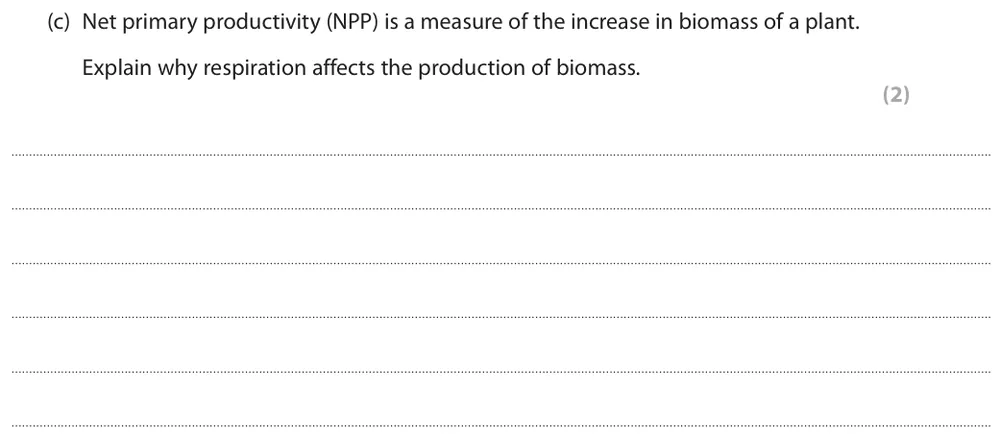
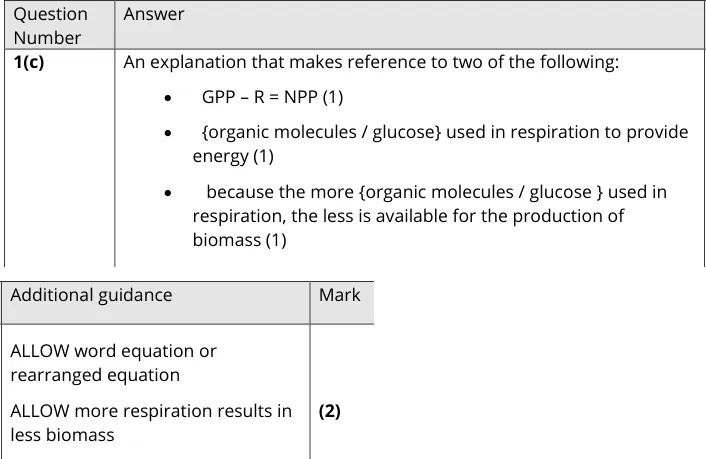
A level Paper 1 · November 2021 · Q1(c) · 2 marks
Explain why respiration affects the production of biomass.
Show the mark scheme
Tap an image to open it full size.
From the examiners' report: Most gave the equation linking GPP, NPP and respiration but were confused about its meaning. Glucose used in respiration is not available to become biomass. Many wrongly thought that respiration uses energy.
Question 15
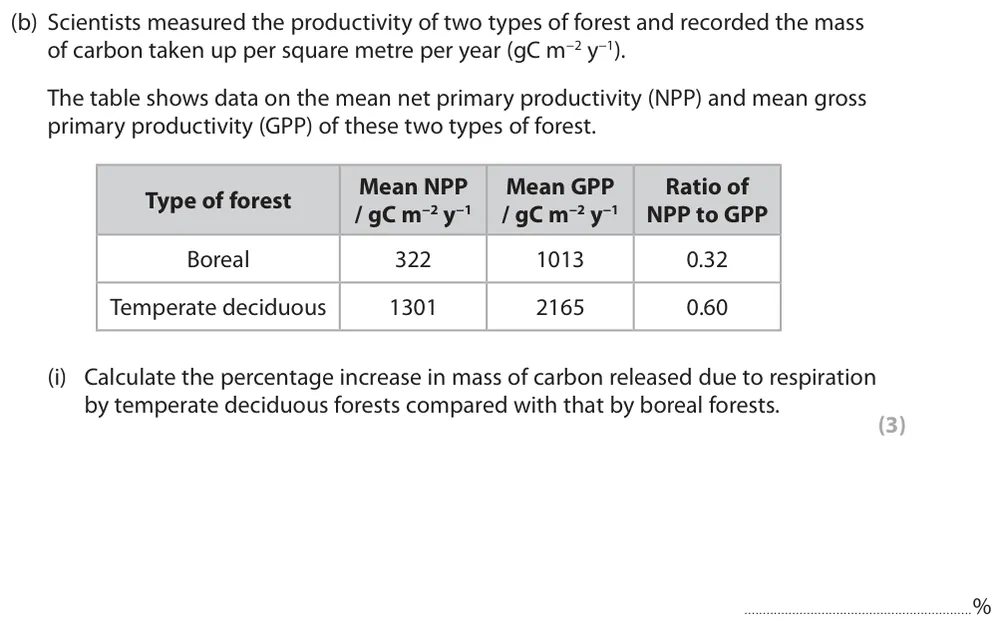
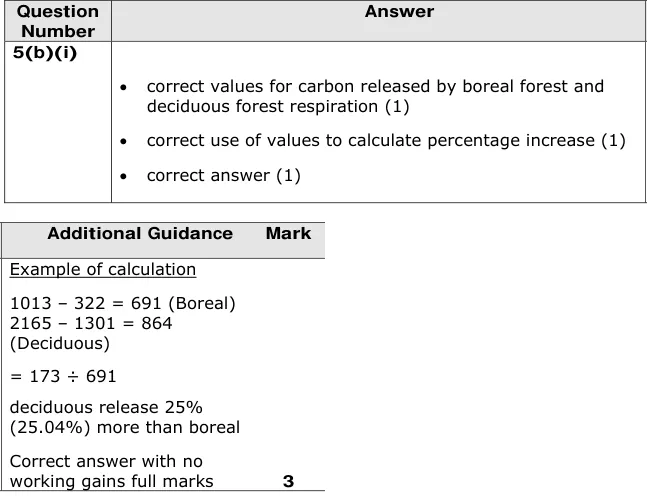
A level Paper 1 · June 2017 · Q5(b)(i) · 3 marks
Calculate the percentage increase in carbon released by respiration in temperate deciduous forests compared with boreal forests.
Show the mark scheme
Tap an image to open it full size.
From the examiners' report: Many worked out the respiration values (GPP – NPP) and then the percentage increase correctly. A number calculated a percentage decrease, and those who showed no working often scored nothing.
Question 16
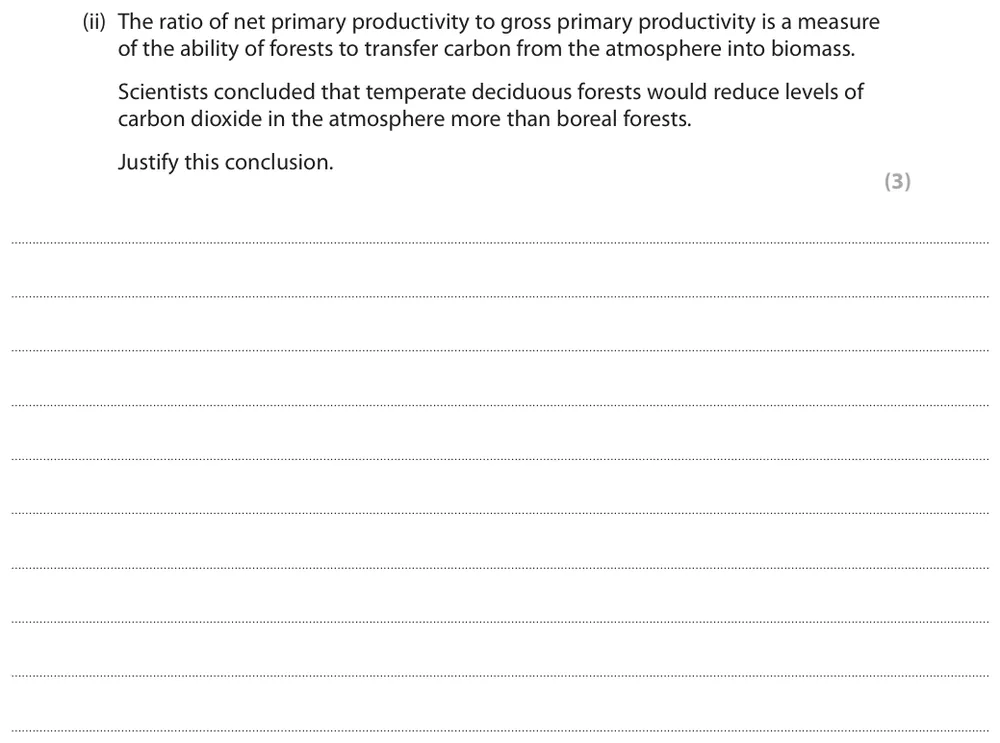
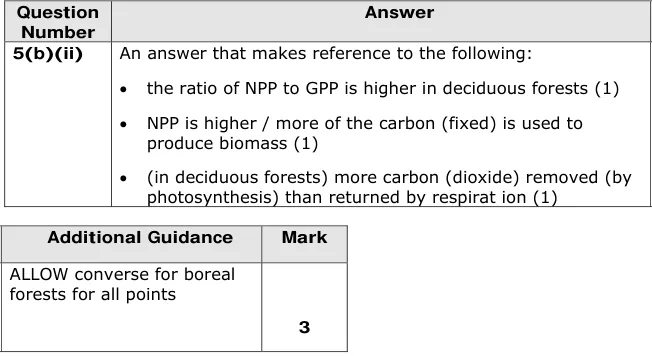
A level Paper 1 · June 2017 · Q5(b)(ii) · 3 marks · Hard
Justify the conclusion that temperate deciduous forests reduce atmospheric carbon dioxide more than boreal forests.
Show the mark scheme
Tap an image to open it full size.
From the examiners' report: Many gained two marks; few gained the third. Compare the NPP to GPP ratios rather than just quoting values, and say more carbon dioxide is removed by photosynthesis than is returned by respiration.
Question 17
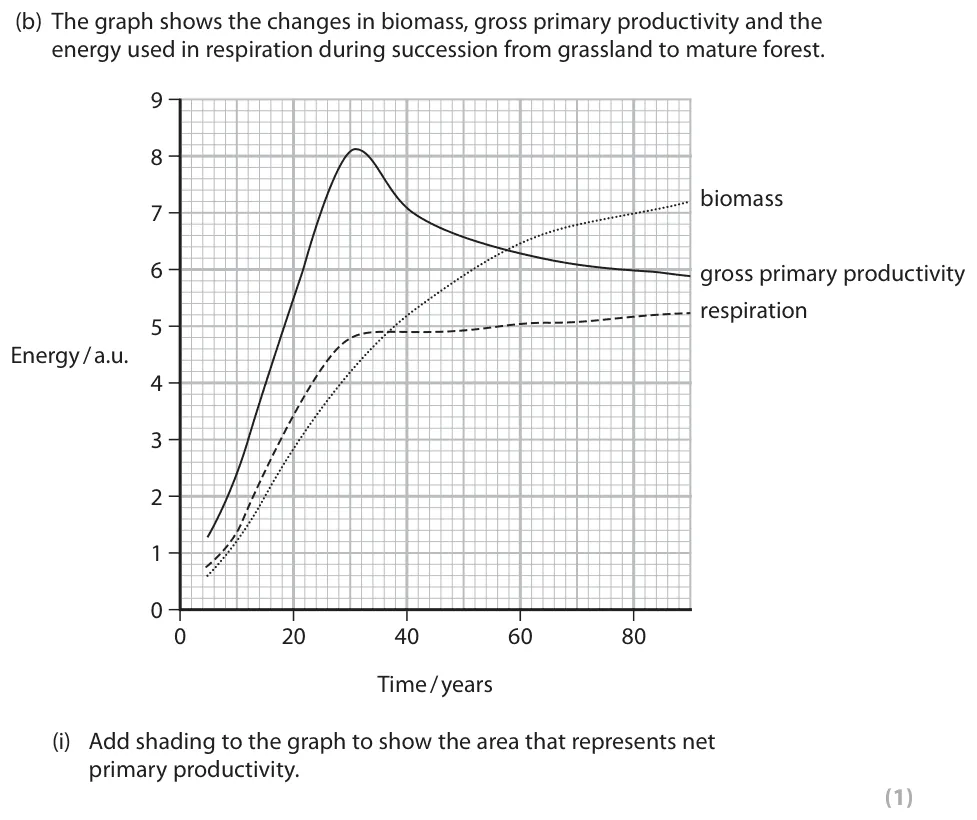
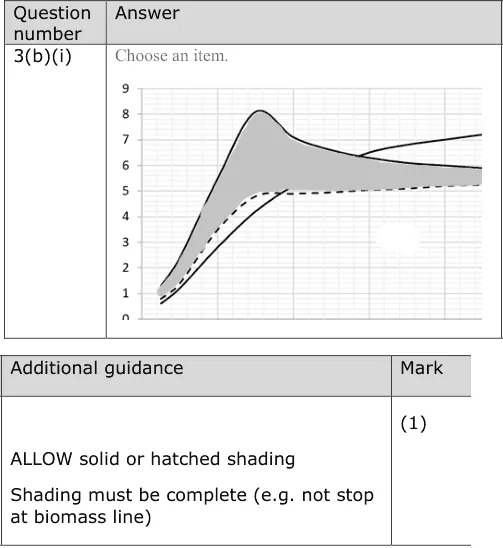
A level Paper 3 · June 2022 · Q3(b)(i) · 1 mark
Shade the area of a graph that represents net primary productivity during succession.
Show the mark scheme
Tap an image to open it full size.
From the examiners' report: A pleasing number gave the correct answer. The shading must cover the whole area between the GPP and respiration lines.
Question 18
A level Paper 3 · June 2022 · Q3(b)(iii) · 3 marks · Hard
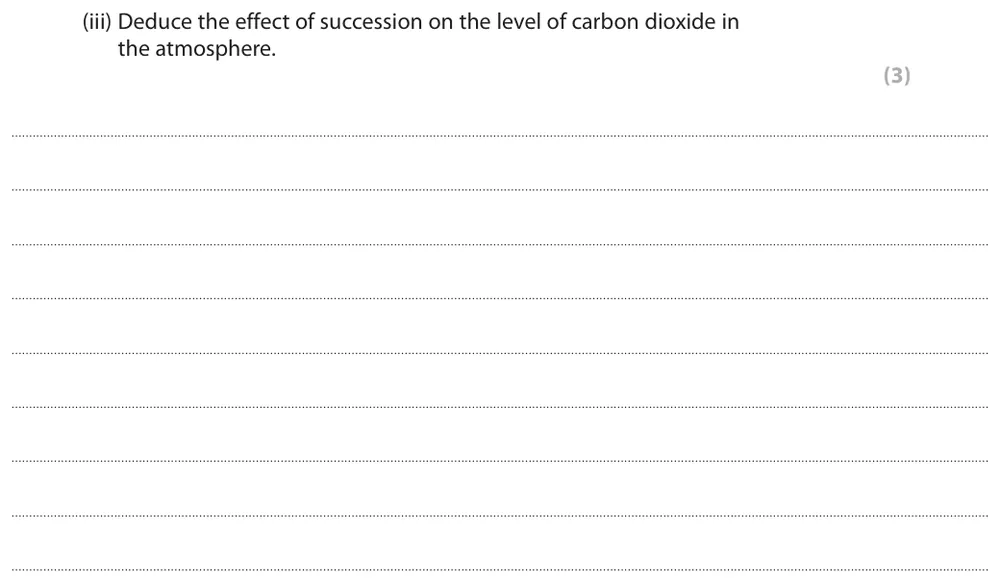
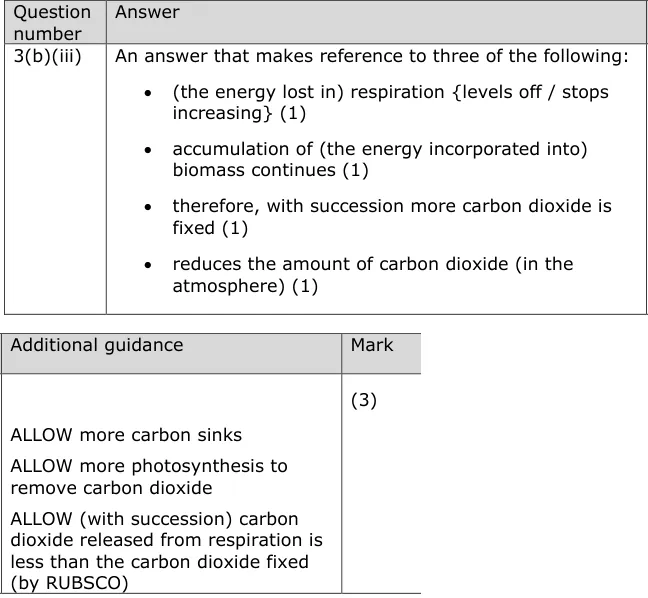
Deduce the effect of succession on the level of carbon dioxide in the atmosphere.
Show the mark scheme
Tap an image to open it full size.
From the examiners' report: Many wrote about the early stages of succession instead of its consequence. Few described the trends in the graph: respiration levels off while biomass keeps accumulating. State your conclusion and support it with evidence from the graph.
Efficiency of energy transfer (5.11)
Question 19
A level Paper 1 · June 2019 · Q2(a)(ii) · 1 mark
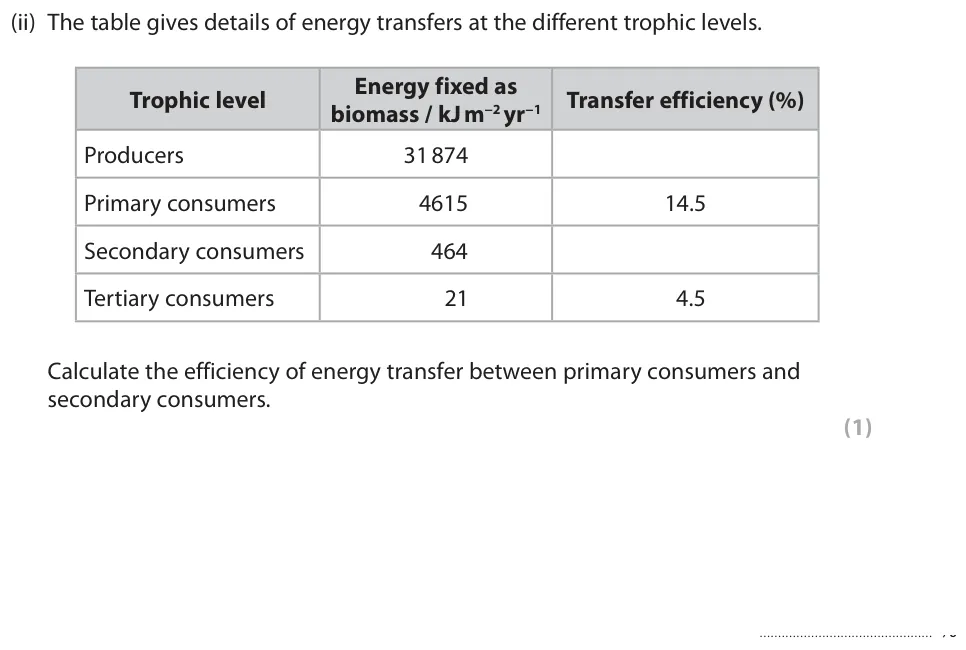
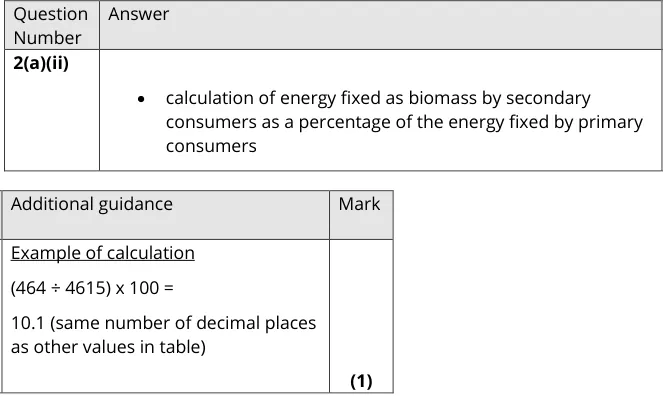
Calculate the efficiency of energy transfer between primary and secondary consumers.
Show the mark scheme
Tap an image to open it full size.
From the examiners' report: Select the correct values from the table. Give the answer to one decimal place, like the other values in the table: more decimal places than the data scored 0.
Question 20
A level Paper 3 · June 2024 · Q4(a) · 3 marks
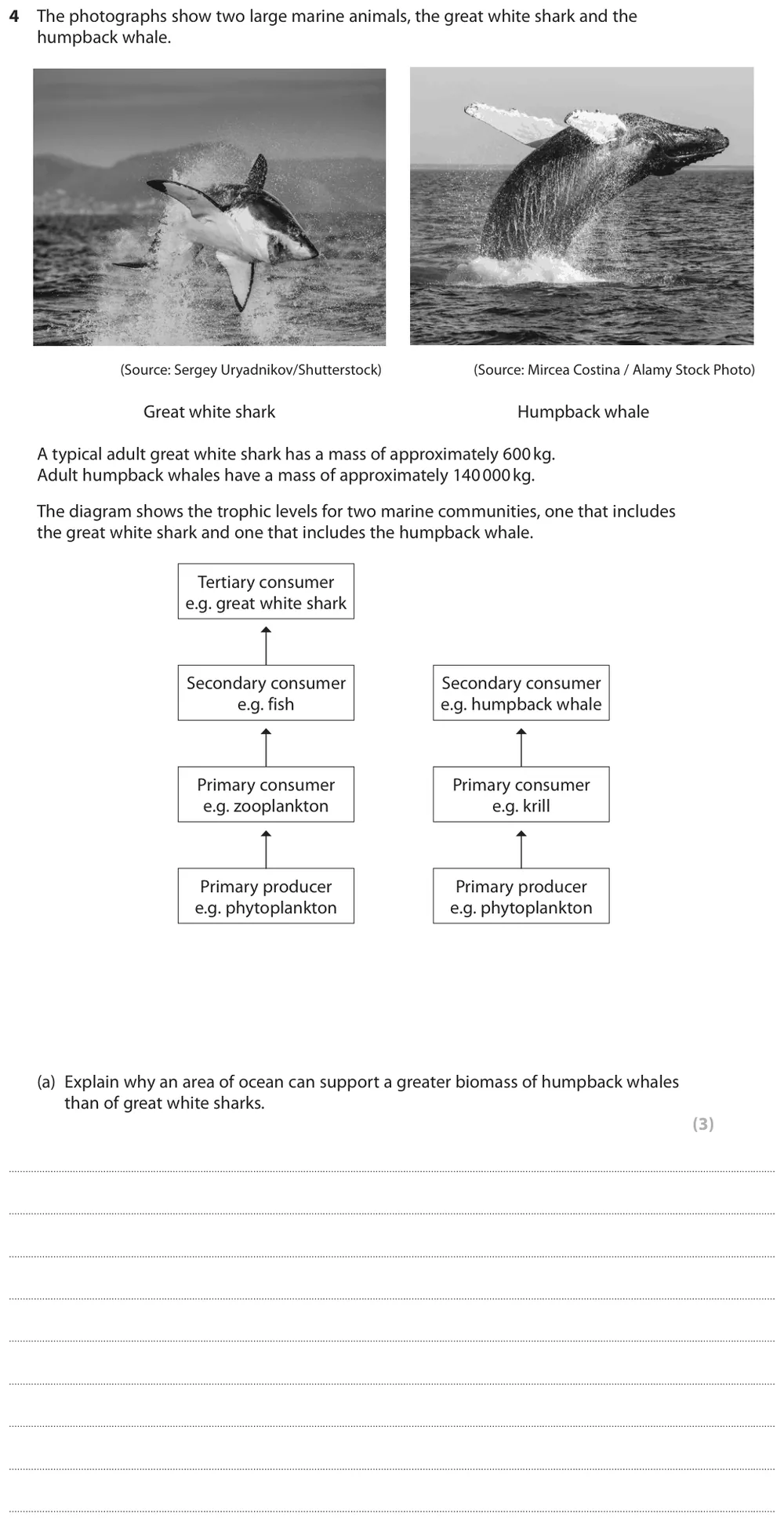
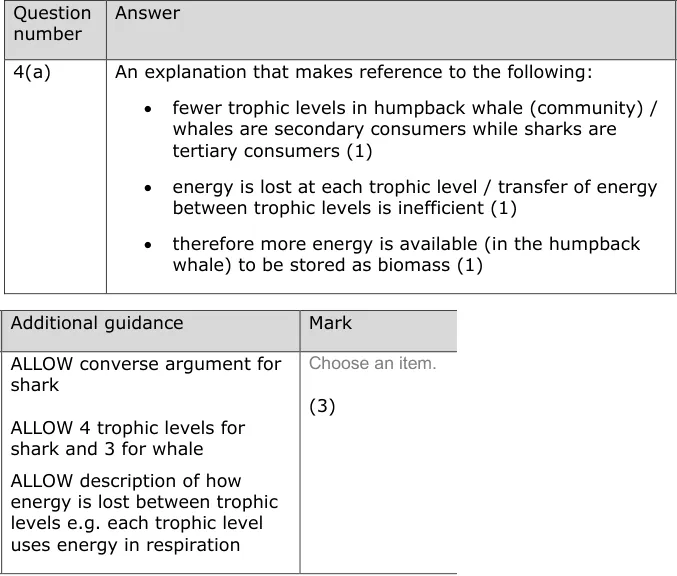
Explain why an area of ocean can support a greater biomass of humpback whales than of great white sharks.
Show the mark scheme
Tap an image to open it full size.
From the examiners' report: Many compared the number of trophic levels and described energy loss at each level. Fewer said there is more energy available to convert to whale biomass. Answers about transfer of biomass without energy did not gain the later marks.
Where students lose marks (from Pearson examiners' reports and mark schemes)
Each point below comes from the examiners' reports and mark schemes, and is followed by wording that gained marks.
An ecosystem includes the non-living parts. Most often, students forgot that an ecosystem includes abiotic factors as well as biotic factors.
✔ Gains credit: 'All the organisms and the non-living (abiotic) components of an area.'
Two biotic factors means two living factors. Some confused biotic and abiotic, or gave one example of each.
✔ Gains credit: 'Food availability; interspecific competition; predation; disease.'
Deduce from earthworm data, don't just describe it. Most described the results; few made deductions about reproduction and competition.
✔ Gains credit: 'Earthworms reproduce more in alkaline soil; they are smaller there due to greater competition for resources.'
Different niches: name the resource not competed for. 'No competition' was often left unqualified.
✔ Gains credit: 'Each species occupies a different niche, so there is no competition between the species for food or space.'
Soil becomes deeper, not richer. Many described 'a basic soil' without humus, or said the soil becomes richer over time.
✔ Gains credit: 'Pioneer species break up the rock; dead plants add humus as they decompose; the soil becomes deeper and can retain more water.'
Respiration uses glucose that could have been biomass. Many did not link glucose used in respiration to less biomass, and thought respiration uses energy.
✔ Gains credit: 'NPP = GPP – R: glucose is used in respiration to provide energy, so the more glucose used in respiration, the less is available for biomass.'
Percentage increase, not decrease, of respiration. A number calculated a percentage decrease, and some showed no working.
✔ Gains credit: 'Respiration = GPP – NPP: 1013 – 322 = 691 (boreal) and 2165 – 1301 = 864 (deciduous); 173 ÷ 691 × 100 = 25% more.'
Fewer trophic levels leave more energy for biomass. Some described the transfer of biomass without energy, or did not say more energy is available to convert to biomass.
✔ Gains credit: 'Whales are secondary consumers while sharks are tertiary consumers; energy is lost at each trophic level, so more energy is available to be stored as whale biomass.'
Download the questions
Download the PDF pack (20 questions, mark schemes at the end)
Keep practising
- Ecology, the Hill Reaction and Q10 (Core Practicals 10 to 12): Edexcel SNAB core practical questions
- Topic 5 multiple-choice quiz (23 questions, marked as you tap)
- Edexcel SNAB A level Biology resources hub (every topic, practical and paper)
- Extended Response Questions (Topics 5 to 8): Edexcel SNAB A Level Biology Exam Questions
- Edexcel SNAB A level Biology past papers, mark schemes and examiners' reports
- Edexcel SNAB A level Biology grade boundaries
- Message Tom on WhatsApp about one-to-one Edexcel SNAB tutoring or an Edexcel group class
Questions, mark schemes and examiners' report extracts © Pearson Education Ltd.