

Required practical 5 is a dissection of an animal or plant gas exchange system or mass transport system, or of an organ within one. In most schools that means a sheep or pig heart, a set of lungs, or a celery stalk cut to show the xylem. On the AQA papers it comes up as short questions: naming structures in a photograph of a dissection, the safety precautions for using and clearing away a scalpel, and how to improve a scientific drawing.
The examiners' reports show these marks are lost on detail, not on hard biology. Students mistake an atrioventricular valve for a semilunar valve, give general lab rules such as 'wear goggles' or 'be careful' instead of precautions for a dissection, forget to say what surface to cut on, and suggest colouring in or adding detail to a drawing. Answers have to be about this practical, not any practical.
Answer each question on paper before you open the mark scheme, and picture yourself at the bench doing the dissection. If you'd like help with this topic, my AQA masterclasses run online on Tuesdays at 5.15pm for Year 12 and on Wednesdays or Thursdays at 6.30pm for Year 13.
What you need from GCSE and Year 12
Each question on this page assumes you're secure on these GCSE and Year 12 ideas. If any of them feels shaky, revise it before you start.
- GCSE: the structure of the human heart, with four chambers, valves and the major blood vessels, and the structure of the lungs, trachea, bronchi and alveoli.
- GCSE: arteries have thick, muscular, elastic walls and a narrow lumen; veins have thinner walls and a wider lumen.
- GCSE: scientific drawings use single clear lines, no shading and labels with ruled label lines.
- Year 12 (AQA 3.3.4.1): the gross structure of the heart, the atrioventricular and semilunar valves and the structure of arteries and veins. See the Heart and circulation and Blood vessels and tissue fluid pages.
- Year 12 (AQA 3.3.2): gas exchange in fish gills, with filaments and lamellae, and in the human lungs. See the Gas exchange page.
Key terms
These words come up in the questions and mark schemes. Examiners expect you to use them exactly.
- Dissection: cutting open an organ or organism with instruments such as a scalpel or scissors to observe its internal structures.
- Scalpel: a very sharp dissecting knife; a sharp blade is safer than a blunt one because it needs less force.
- Risk assessment: a list of the hazards in a practical, with control measures specific to that practical to reduce each risk.
- Control measure: an action that reduces a risk, such as carrying a scalpel with the blade protected or cutting onto a hard surface.
- Atrioventricular valve: the valve between an atrium and a ventricle, held by tendons; the left one is also called the bicuspid or mitral valve.
- Semilunar valve: a valve at the base of the aorta or pulmonary artery; it has no tendons.
- Artery: a vessel with a thick, muscular, elastic wall and a narrow lumen relative to its size.
- Vein: a vessel with a thinner wall and a wider lumen than an artery.
- Scientific drawing: a drawing from observation using single, continuous lines, no shading or hatching, label lines that don't cross, and a scale.
- Random sample: a sample in which every individual or structure has an equal chance of being chosen; with a large sample size it gives a reliable mean.
What these questions cover (AQA required practical 5)
The questions come from the fifth required practical in the AQA AS and A-level Biology specification (7401/7402), and test these statements and practical skills:
- Required practical 5: Dissection of animal or plant gas exchange system or mass transport system or of organ within such a system (every question on this page; the dissections are of a heart, a slice of a mammalian organ, a celery stalk, a gas exchange system and fish gills)
- AT j safely use instruments for dissection of an animal organ, or plant organ
- AT e produce scientific drawing from observation with annotations
- AT h safely and ethically use organisms to measure: plant or animal responses, physiological functions (no available part asks you to measure a response or a physiological function during a dissection; the safety parts are listed under AT j)
- PS 2.1 Comment on experimental design and evaluate scientific methods
How to use this page
Write your answer on paper before you open the mark scheme. Allow about 1.3 minutes per mark: the 9 questions are worth 16 marks, so about 21 minutes in total. Then mark your answer strictly against the mark scheme and read the examiners' tip underneath it. If you'd rather print the questions, download the PDF pack.
Identifying structures in a dissection
Question 1
A level Paper 3 · June 2019 · Q03.1 · 1 mark · Medium
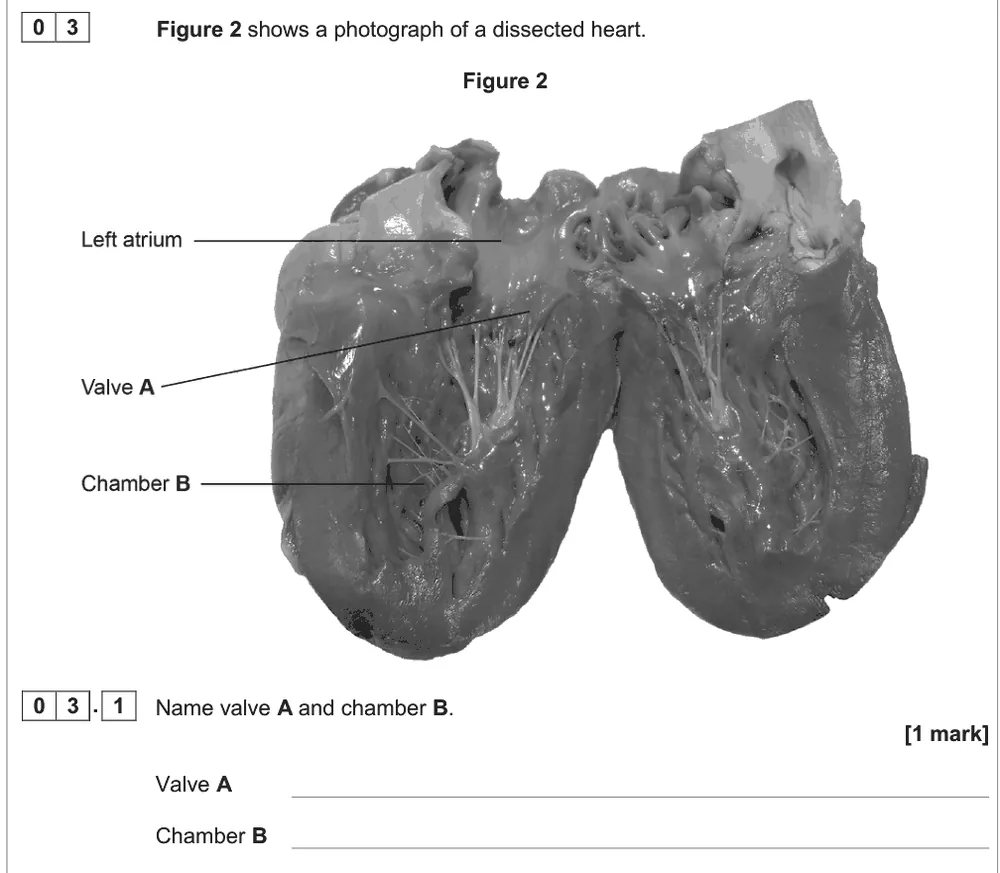
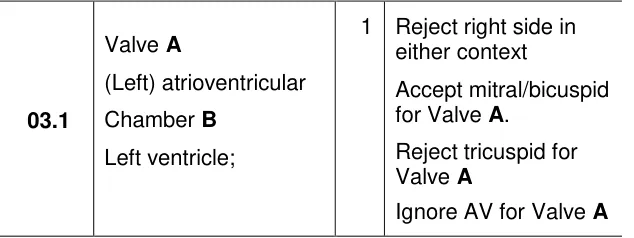
Name a valve and a chamber in a photograph of a dissected heart.
Show the mark scheme
Tap an image to open it full size.
From the examiners' report: About half got this. Most who didn't called valve A a semilunar valve. Look for the tendons: they hold the atrioventricular valves, and it lies below the left atrium.
Question 2
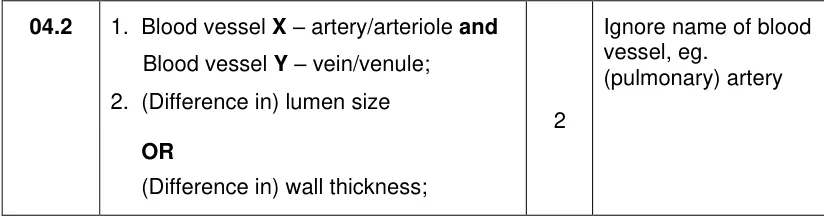
A level Paper 1 · November 2021 · Q04.2 · 2 marks
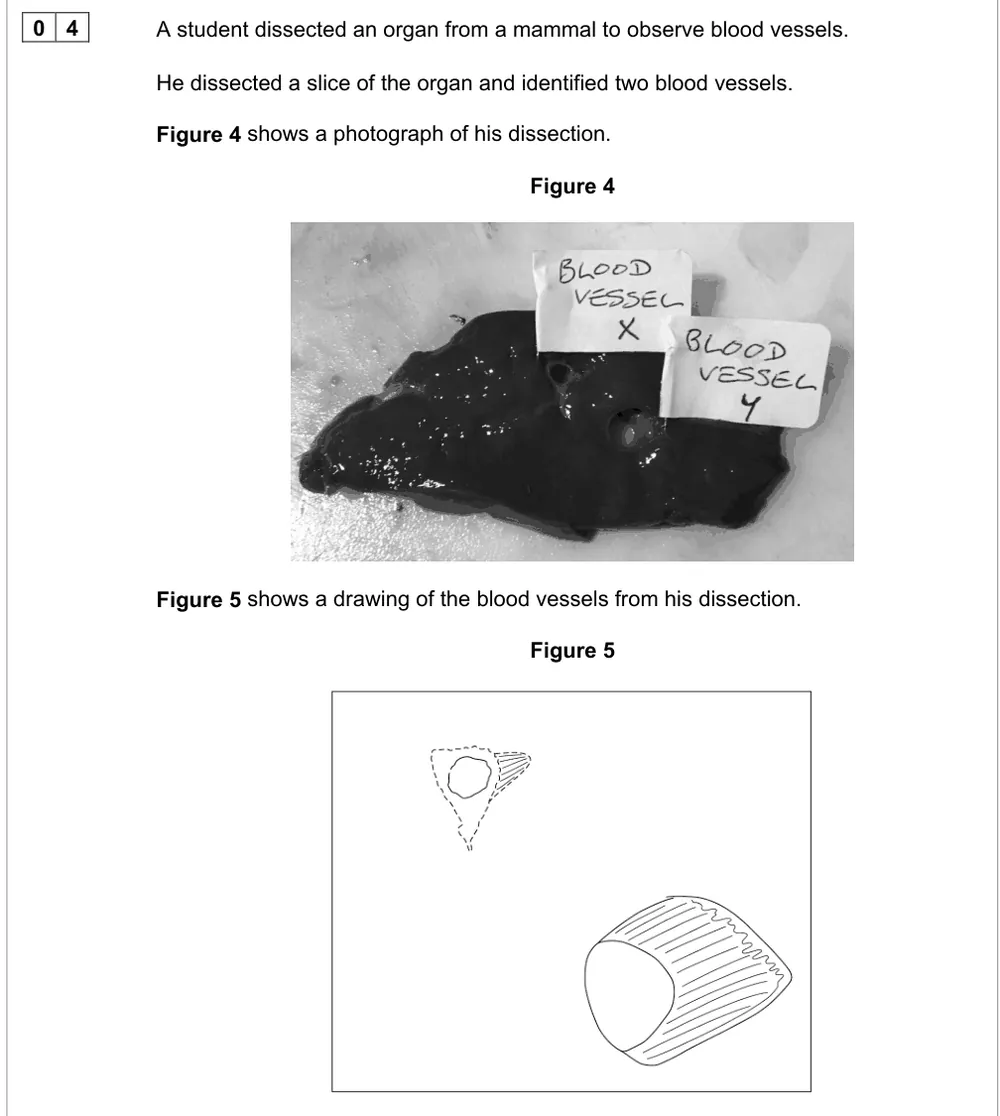
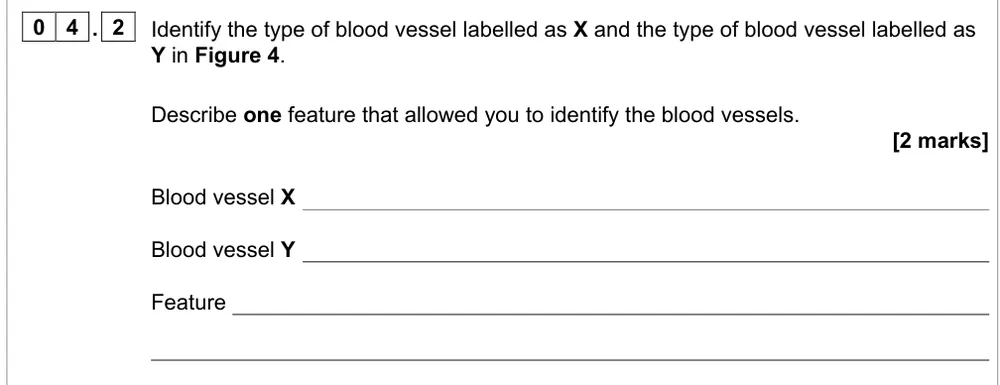
Identify an artery and a vein in a dissected organ and give a feature that shows which is which.
Information from earlier in this question:
Show the mark scheme
Tap an image to open it full size.
From the examiners' report: Most students identified the vessels correctly, though some found the photograph low in contrast. Compare the two: the artery has the thicker wall and narrower lumen.
Working safely
Question 3
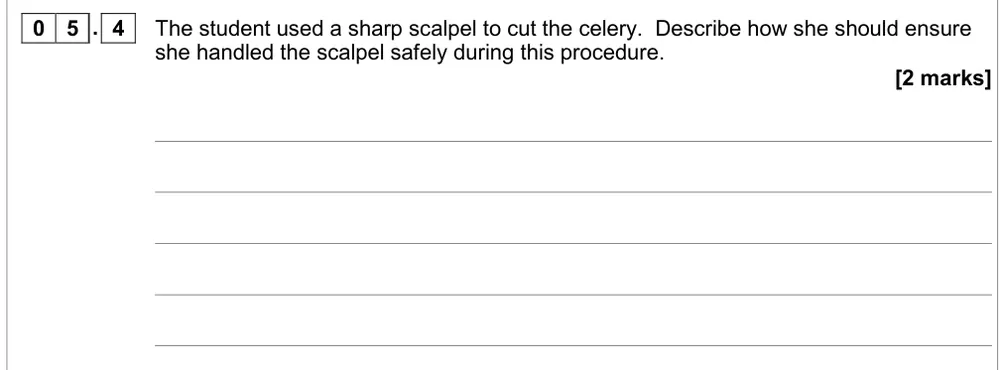
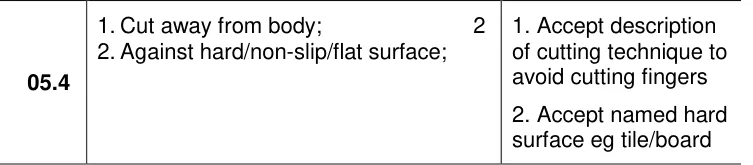
AS Paper 2 · June 2019 · Q05.4 · 2 marks · Easy
Describe how to handle a scalpel safely when cutting a celery stalk.
Show the mark scheme
Tap an image to open it full size.
From the examiners' report: Most got a mark for cutting away from themselves, but far fewer named a surface to cut onto. Carrying or storing the blade and wearing gloves didn't score.
Question 4
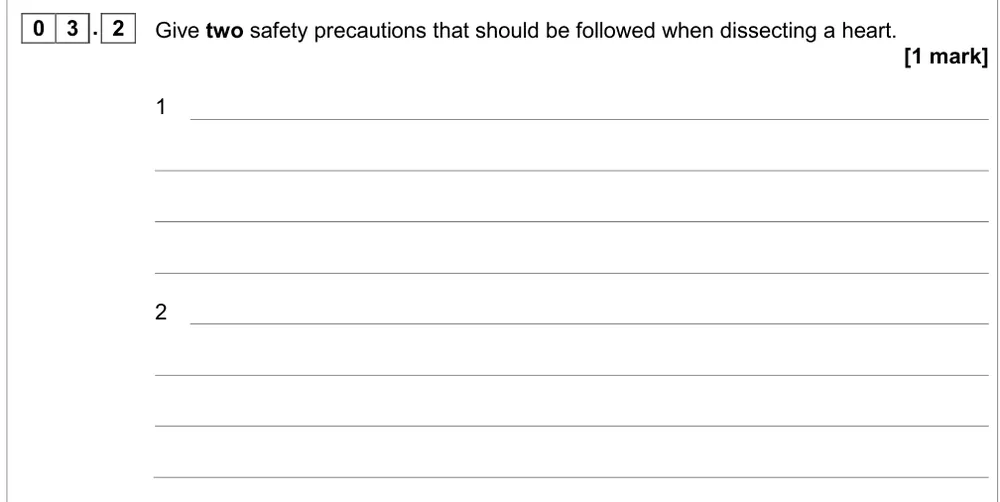
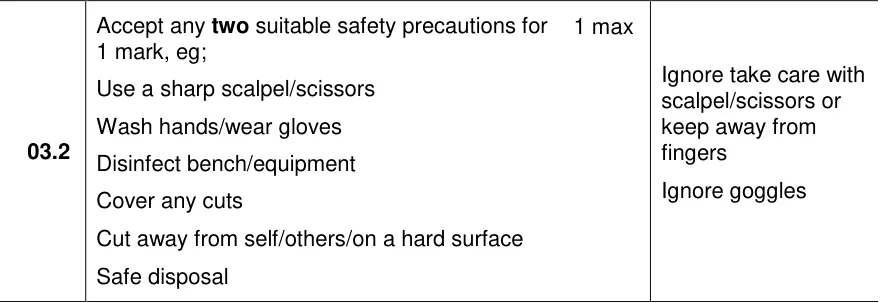
A level Paper 3 · June 2019 · Q03.2 · 1 mark · Medium
Give two safety precautions to follow when dissecting a heart.
Show the mark scheme
Tap an image to open it full size.
From the examiners' report: Only around 40% scored. Goggles, lab coats and 'be careful' didn't count: give precautions for this dissection, such as cutting away from yourself and disinfecting the bench.
Question 5
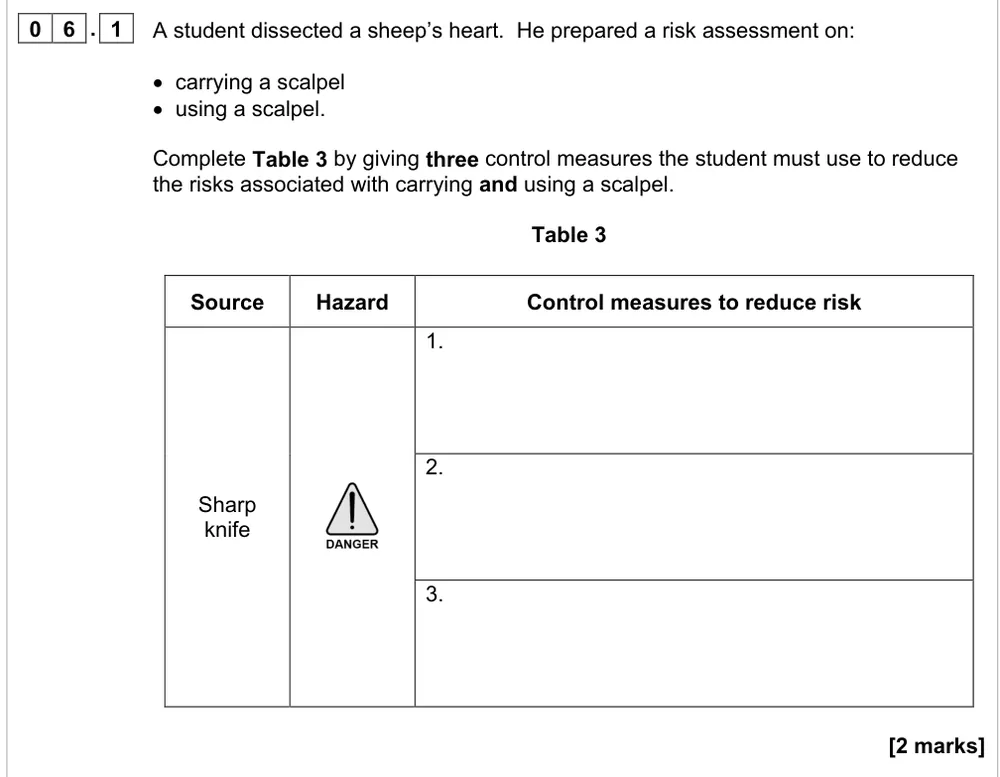
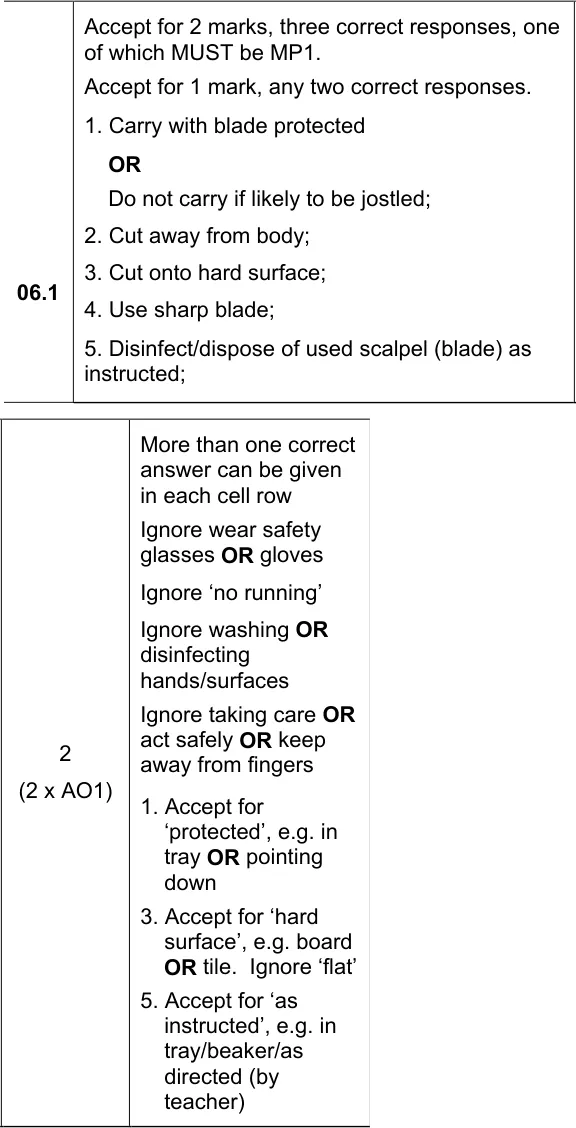
AS Paper 2 · June 2022 · Q06.1 · 2 marks · Hard
Complete a risk assessment with three control measures for carrying and using a scalpel.
Show the mark scheme
Tap an image to open it full size.
From the examiners' report: Only 10% got both marks. Goggles, gloves and hand washing are stock answers. Include how you carry the scalpel, with the blade protected, as well as how you cut.
Question 6
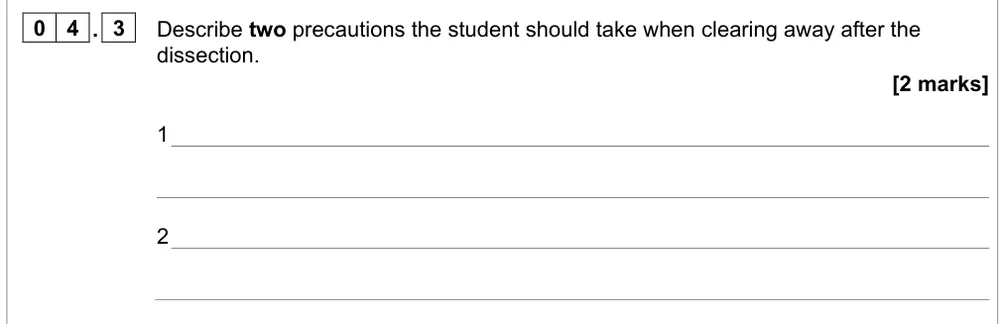
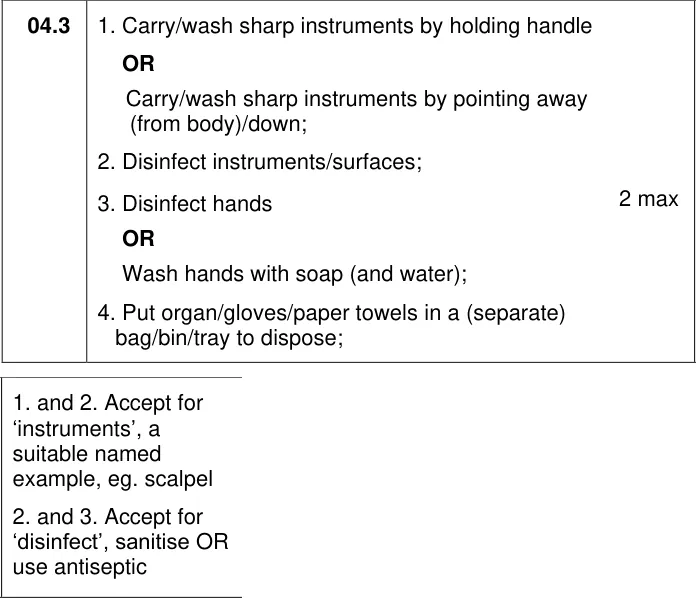
A level Paper 1 · November 2021 · Q04.3 · 2 marks · Hard
Describe two precautions to take when clearing away after a dissection.
Show the mark scheme
Tap an image to open it full size.
From the examiners' report: Few students could describe the precautions for clearing away. Think about each step: washing the scalpel safely, disinfecting the bench and disposing of the organ.
Scientific drawings
Question 7
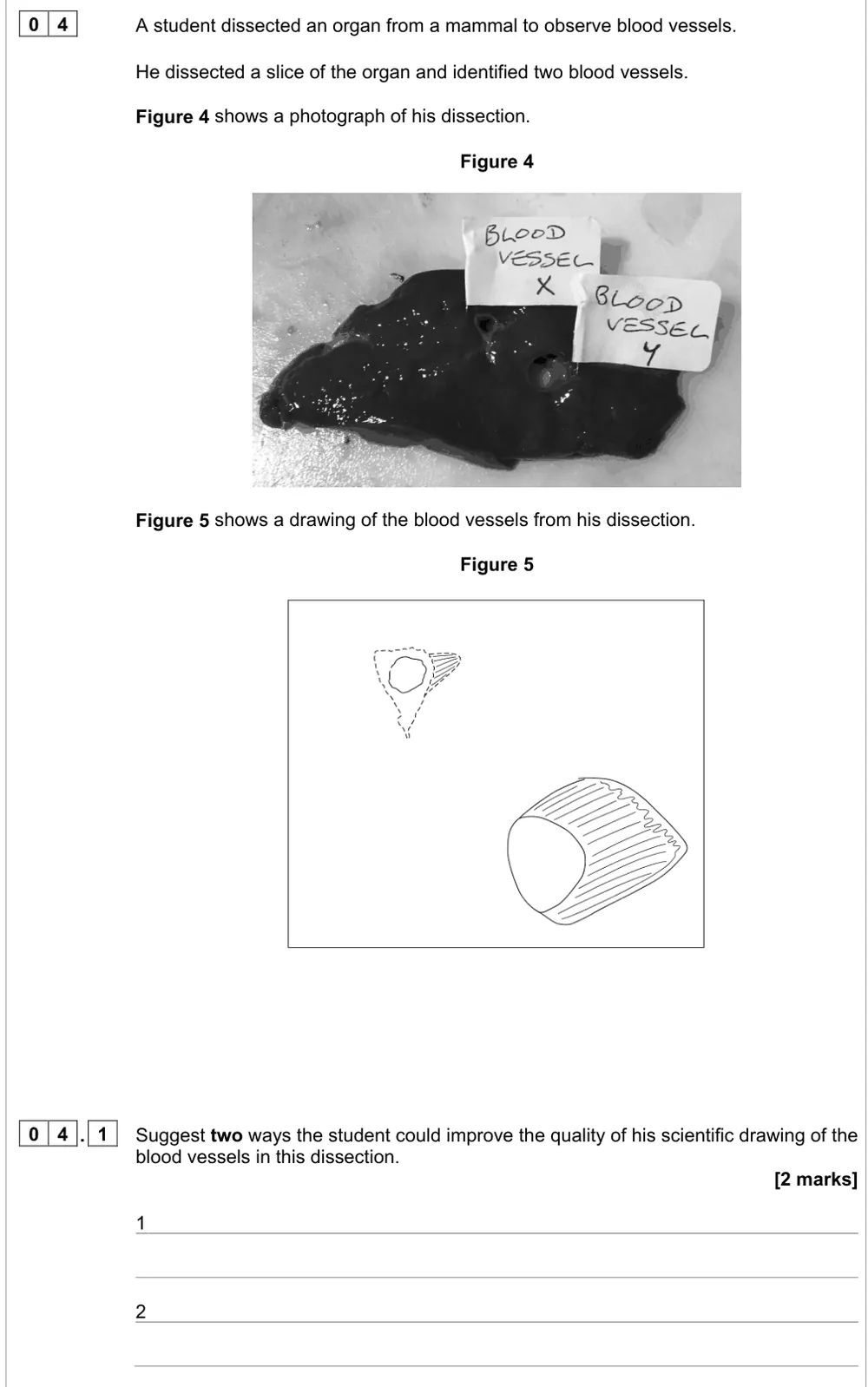
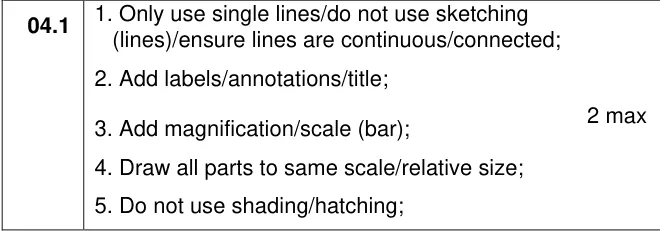
A level Paper 1 · November 2021 · Q04.1 · 2 marks
Suggest two ways to improve a student's scientific drawing of the blood vessels in a dissection.
Show the mark scheme
Tap an image to open it full size.
From the examiners' report: Most students knew the conventions for scientific drawings. Pick two you can see are broken in Figure 5: sketchy lines, hatching, no labels and no scale.
Question 8
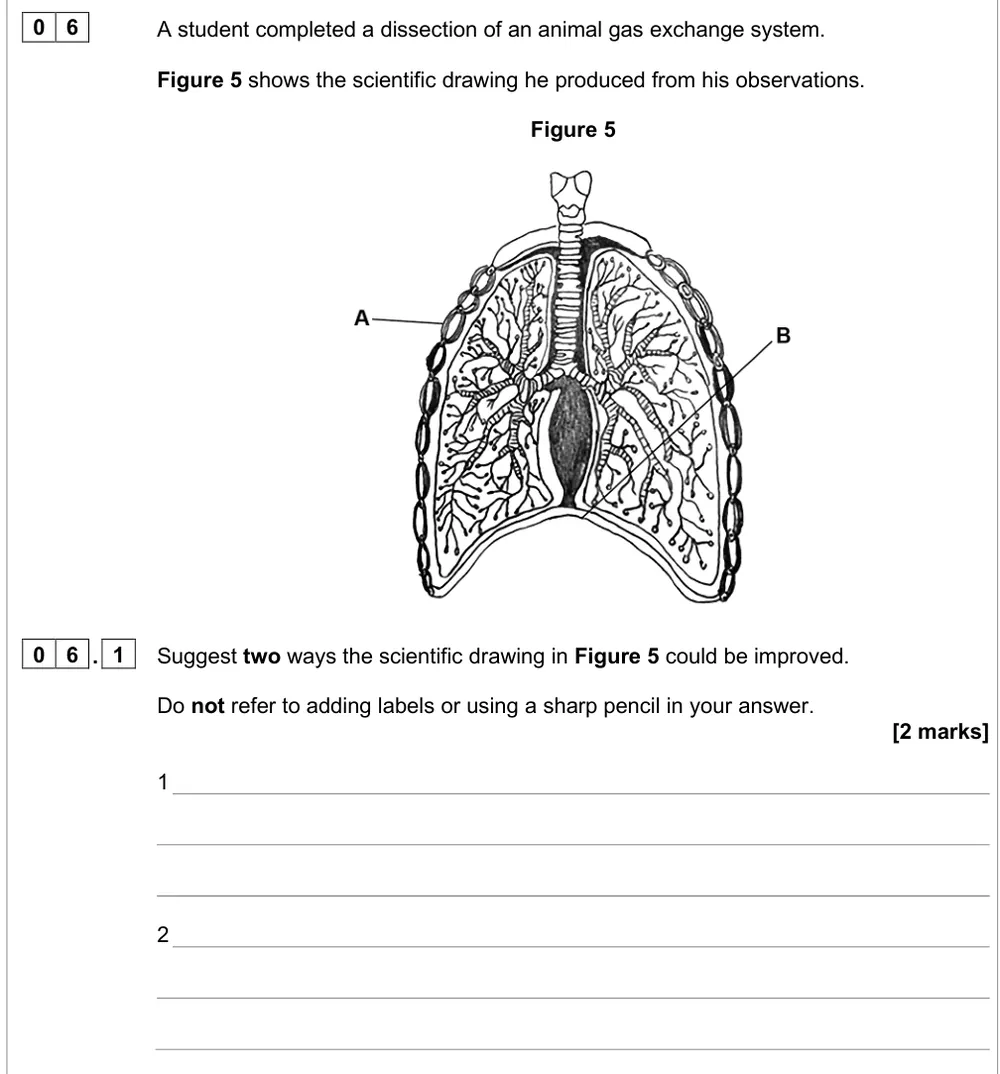
A level Paper 3 · June 2025 · Q06.1 · 2 marks · Easy
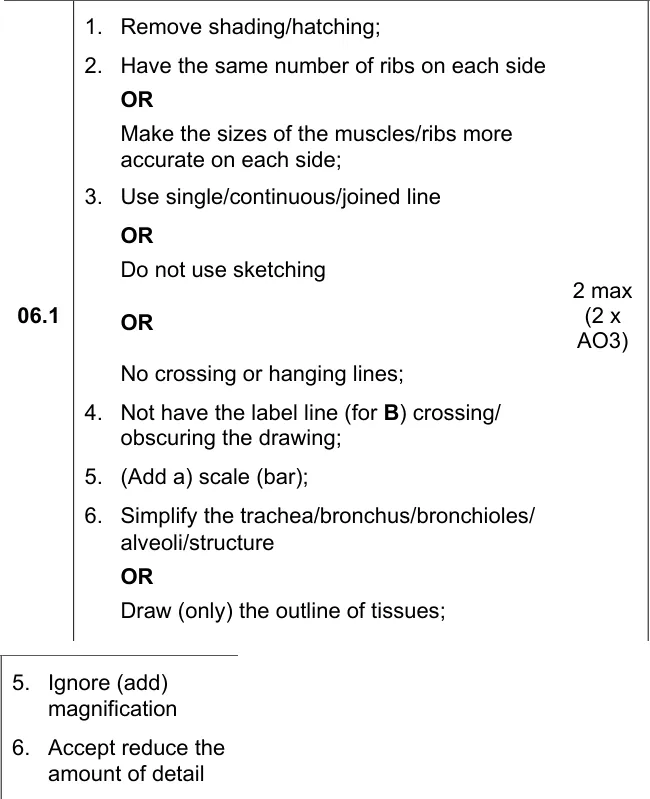
Suggest two ways to improve a scientific drawing of a dissected gas exchange system.
Show the mark scheme
Tap an image to open it full size.
From the examiners' report: About 90% scored at least 1 mark. Colouring in, making it 3D or bigger, adding detail and using a ruler didn't score, nor did labels or a sharp pencil, which the question ruled out.
Collecting reliable data
Question 9
AS Paper 2 · June 2023 · Q09.1 · 2 marks · Hard
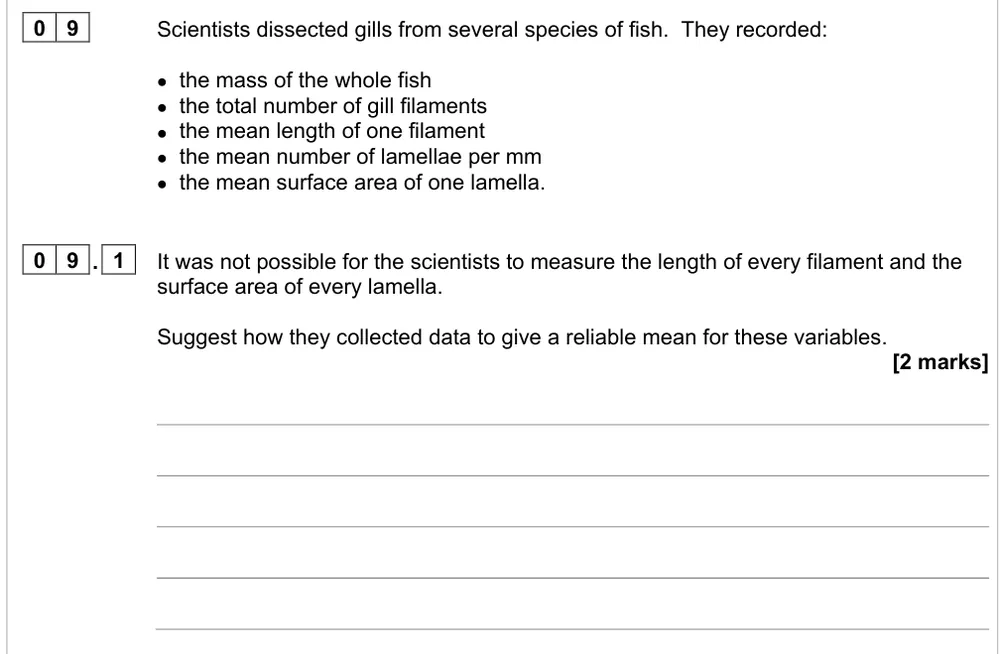
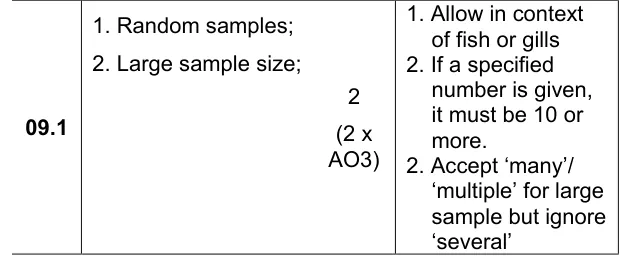
Suggest how scientists collected gill measurements that would give a reliable mean.
Show the mark scheme
Tap an image to open it full size.
From the examiners' report: Only around 10% got both marks. The question is about collecting the data, not calculating a mean: say the filaments and lamellae measured were chosen at random, and that a large sample was used.
Where students lose marks (from AQA examiners' reports and mark schemes)
Each point below is followed by wording that gained marks.
Tendons mean an atrioventricular valve: Roughly 50% scored the mark for naming valve A and chamber B in a dissected heart. Those who didn't mostly thought the valve was a semilunar valve; the tendons in the photo should have helped.
✔ Gains credit: "Valve A (Left) atrioventricular; Chamber B Left ventricle" (mitral or bicuspid accepted; tricuspid rejected).
Precautions for this dissection, not any lab: Only around 40% scored the mark for two safety precautions when dissecting a heart. Many gave general rules such as 'wear goggles/lab coat', or vague answers such as 'be careful' or 'take care'.
✔ Gains credit: "Use a sharp scalpel/scissors; Wash hands/wear gloves; Disinfect bench/equipment; Cover any cuts; Cut away from self/others/on a hard surface; Safe disposal."
Carry the scalpel with its blade protected: Only 10% got 2 marks for the scalpel risk assessment. There were far too many standard references to wearing goggles or gloves or washing hands; a risk assessment has to be specific to the practical.
✔ Gains credit: "Carry with blade protected" (must be one of the three); "Cut away from body; Cut onto hard surface; Use sharp blade."
Name the surface you cut onto: Most students got a mark for cutting celery without injuring themselves, but far fewer named a surface to cut against. Describing how to transport or store the blade, or wearing gloves, scored nothing.
✔ Gains credit: "Cut away from body; Against hard/non-slip/flat surface" (a named surface such as a tile or board accepted).
Clearing away has its own precautions: Few students could adequately describe the safety precautions involved in clearing away after a dissection.
✔ Gains credit: "Carry/wash sharp instruments by holding handle"; "Disinfect instruments/surfaces"; "Put organ/gloves/paper towels in a (separate) bag/bin/tray to dispose."
Simplify a drawing; don't decorate it: About 90% scored at least 1 mark for improving the gas exchange drawing. Wrong answers included make it 3D, colour it in, add more detail, make it bigger and use a ruler, and some still said add labels or use a sharp pencil when told not to.
✔ Gains credit: "Remove shading/hatching"; "Use single/continuous/joined line"; "(Add a) scale (bar)"; "Simplify the ... structure OR Draw (only) the outline of tissues."
Random and large samples give a reliable mean: Only around 10% got both marks for collecting gill measurements. Too many explained how to calculate a mean instead of how to collect the data.
✔ Gains credit: "Random samples; Large sample size" (10 or more if a number is given; 'several' ignored).
Download the questions
Download the PDF pack (9 questions, mark schemes at the end)
Keep practising
- The heart and circulation: AQA A Level Biology exam questions by topic
- Gas exchange: AQA A Level Biology exam questions by topic
- Mass transport in plants: AQA A Level Biology exam questions by topic
- Blood vessels and tissue fluid: AQA A Level Biology exam questions by topic
- Required practical 4, membrane permeability: AQA A Level Biology exam questions
- AQA A Level Biology masterclasses
Questions, mark schemes and examiners' report extracts © AQA.