

Blood vessels and tissue fluid (part of AQA 3.3.4.1) come up on both Year 12 and A-level papers, usually as short explain questions worth two or three marks. You need to relate the structure of arteries, arterioles and veins to their function, explain why capillary beds are good exchange surfaces, and describe how tissue fluid is formed and how it returns to the circulatory system. The same section asks you to analyse data on risk factors for cardiovascular disease, weigh up conflicting evidence and tell a correlation from a causal relationship.
The examiners' reports show where the marks go. Students write that tissue fluid, plasma or blood is forced out of the capillaries when it is water and small molecules that leave, say tissue fluid returns by osmosis instead of water, describe the muscle in the aorta wall as a pump, and forget that arterioles change blood flow because the muscle in their walls contracts or relaxes. On the risk factor data, very few say that treated patients are still at a higher risk than normal.
Start with the blood vessels, then tissue fluid, and finish with the cardiovascular disease data. Answer each question on paper before you open the mark scheme. If you'd like help with this topic, my AQA masterclasses run online on Tuesdays at 5.15pm for Year 12 and on Wednesdays or Thursdays at 6.30pm for Year 13.
What you need from GCSE and Year 12
Each question on this page assumes you're secure on these GCSE and Year 12 ideas. If any of them feels shaky, revise it before you start.
- GCSE: arteries carry blood away from the heart at high pressure and have thick, muscular, elastic walls; veins carry blood back at low pressure, have a wide lumen and valves; capillaries have walls one cell thick.
- GCSE: risk factors for cardiovascular disease include smoking, high blood pressure, a high-fat diet and lack of exercise.
- Year 12 (AQA 3.2.3): water moves by osmosis from a higher (less negative) to a lower (more negative) water potential across a partially permeable membrane.
- Year 12 (AQA 3.3.4.1): contraction of the ventricles produces a high blood pressure that forces blood into the aorta and pulmonary artery.
Key terms
These words come up in the questions and mark schemes. Examiners expect you to use them exactly.
- Artery: a vessel carrying blood away from the heart; its thick wall has muscle and elastic tissue to withstand high pressure, and a smooth endothelium that reduces friction.
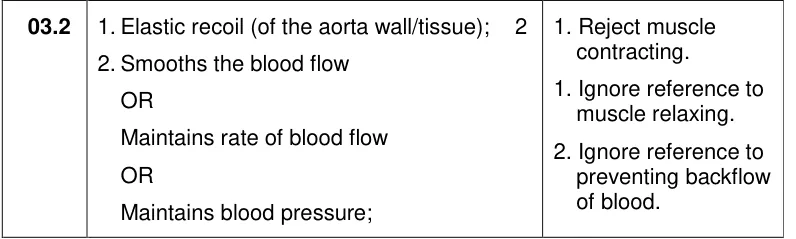
- Elastic recoil: elastic tissue in an artery wall stretches as blood is pumped in, then recoils, which smooths the blood flow and maintains the pressure.
- Arteriole: a small artery whose muscle contracts to narrow the lumen (vasoconstriction) or relaxes to widen it (vasodilation), controlling blood flow into capillaries.
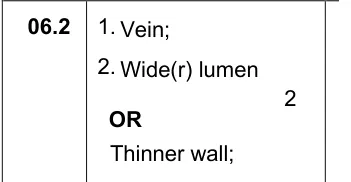
- Vein: a vessel carrying blood back to the heart at low pressure; it has a wider lumen, a thinner wall and valves.
- Capillary bed: a network of capillaries with walls of thin endothelial cells and a large surface area, giving a short diffusion pathway for exchange with the tissues.
- Tissue fluid: the fluid that bathes cells, formed when water and small molecules are forced out of the capillaries at the arteriole end.
- Hydrostatic pressure: the blood pressure inside a capillary; at the arteriole end it is high enough to force water out.
- Plasma proteins: large proteins such as albumin that stay in the capillaries, lowering the water potential of the blood so water returns by osmosis.
- Lymphatic system: the vessels that drain excess tissue fluid and return it to the blood.
- Risk factor: something linked with a higher chance of developing a disease, such as high blood pressure for cardiovascular disease.
- Correlation: a link between two variables; it doesn't on its own show that one causes the other (a causal relationship).
What these questions cover (AQA 3.3.4.1, blood vessels, tissue fluid and cardiovascular disease)
The questions test these statements from the AQA AS and A-level Biology specification (7401/7402):
- Blood vessels: The structure of arteries, arterioles and veins in relation to their function.
- Capillaries and tissue fluid: The structure of capillaries and the importance of capillary beds as exchange surfaces. The formation of tissue fluid and its return to the circulatory system. (the lymphoedema, high blood pressure, salt and dengue questions all ask what makes tissue fluid build up)
- Students should be able to analyse and interpret data associated with specific risk factors and the incidence of cardiovascular disease
- Students should be able to evaluate conflicting evidence associated with risk factors affecting cardiovascular disease (the blood pressure treatment question asks you to weigh two treatments against risk data, and the fibre question asks you to judge a student's claim)
- Students should be able to recognise correlations and causal relationships. (the fibre question tests whether a correlation in a large study shows that eating more fibre would lower one person's risk)
How to use this page
Write your answer on paper before you open the mark scheme. Allow about 1.3 minutes per mark: the 14 questions are worth 35 marks, so about 46 minutes in total. Then mark your answer strictly against the mark scheme and read the examiners' tip underneath it. If you'd rather print the questions, download the PDF pack.
Arteries, arterioles and veins (3.3.4.1)
Question 1
A level Paper 1 · June 2024 · Q08.1 · 2 marks · Hard
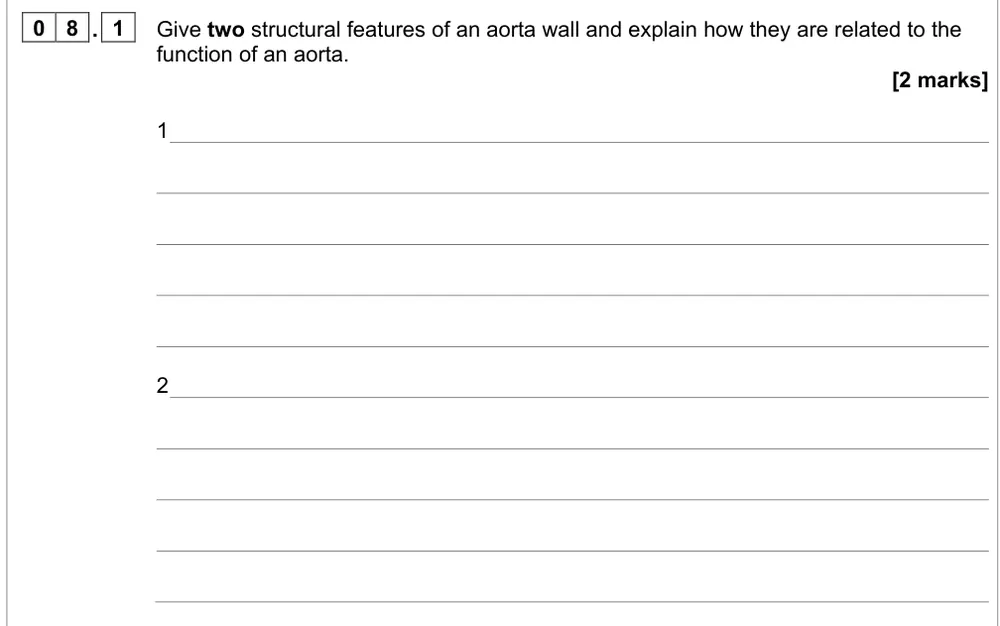
Give two features of the aorta wall and link each one to the aorta's function.
Show the mark scheme
Tap an image to open it full size.
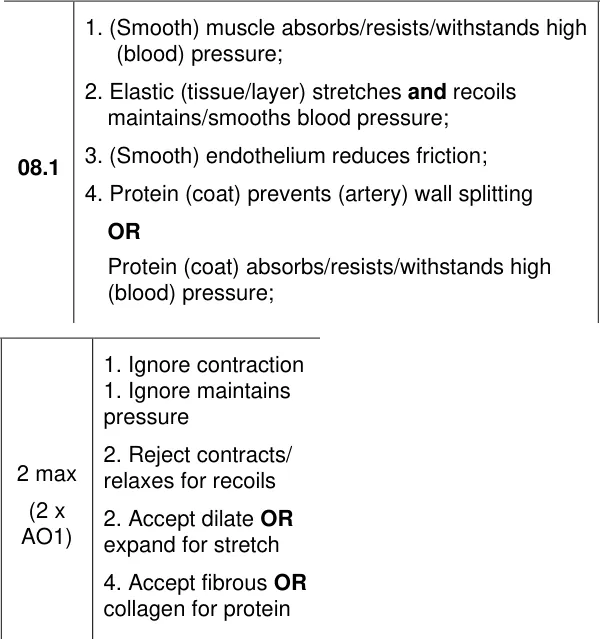
From the examiners' report: Fewer than 40% scored. Name the tissue and say what it does: muscle withstands high pressure, elastic tissue stretches and recoils. The muscle doesn't pump blood, and vasoconstriction belongs to arterioles.
Question 2
AS Paper 2 · November 2020 · Q03.1 · 2 marks · Hard
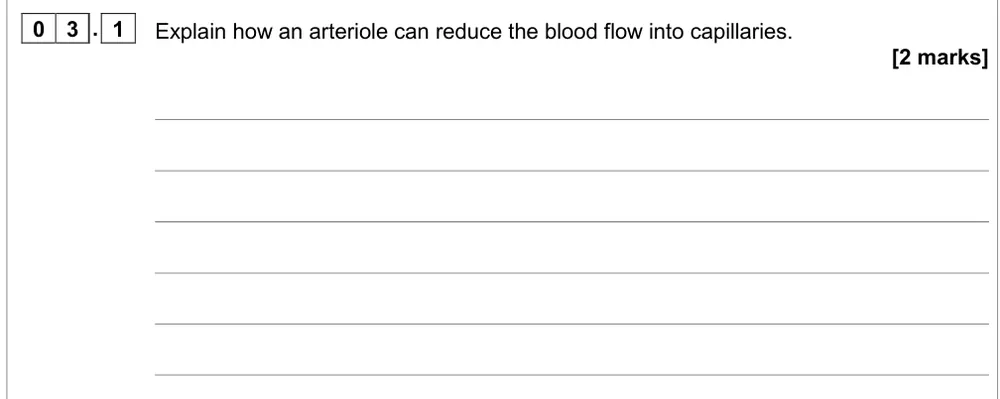
Explain how an arteriole can reduce blood flow into capillaries.
Show the mark scheme
Tap an image to open it full size.
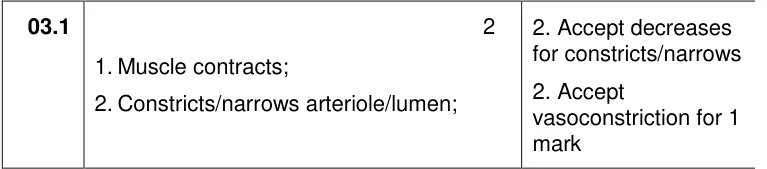
From the examiners' report: Very few knew that the muscle in the arteriole wall contracts. Arterioles have no valves, and dilation increases flow, it doesn't reduce it.
Question 3
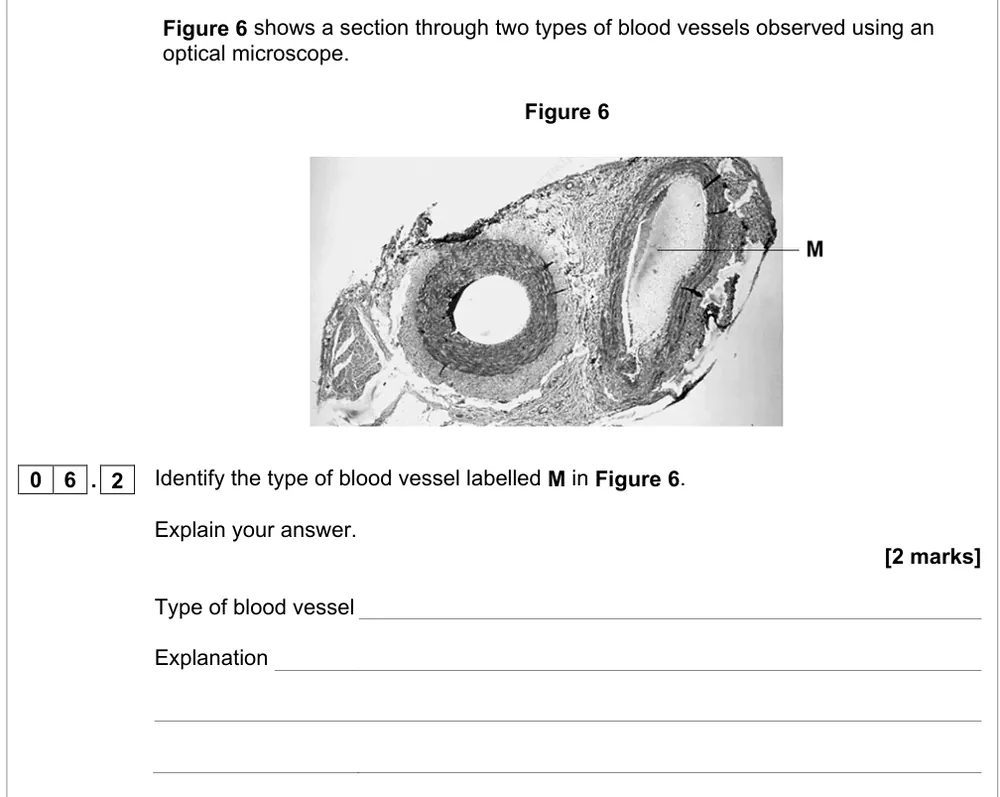
AS Paper 1 · November 2021 · Q06.2 · 2 marks
Identify a blood vessel in a micrograph and explain how you know.
Show the mark scheme
Tap an image to open it full size.
From the examiners' report: No examiners' report for this part. Name the vessel, then give the feature you used, comparing it with the other vessel: a wider lumen or a thinner wall.
Question 4
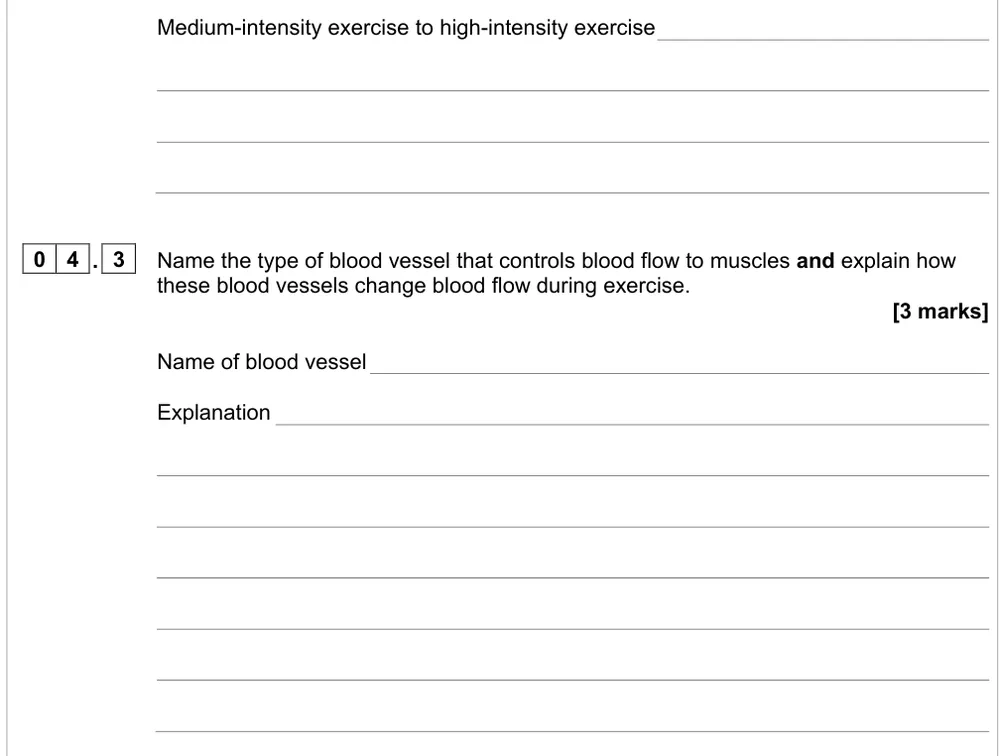
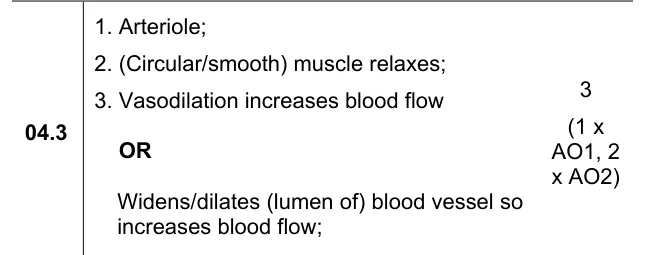
AS Paper 2 · June 2023 · Q04.3 · 3 marks · Medium
Name the vessels that control blood flow to muscles and explain how they increase flow in exercise.
Show the mark scheme
Tap an image to open it full size.
From the examiners' report: Only a minority got all 3. Name arterioles, then say the muscle relaxes and the lumen widens. Constricting to raise pressure, or diverting blood elsewhere, doesn't answer the question.
Question 5
AS Paper 2 · June 2016 · Q09.4 · 2 marks · Easy
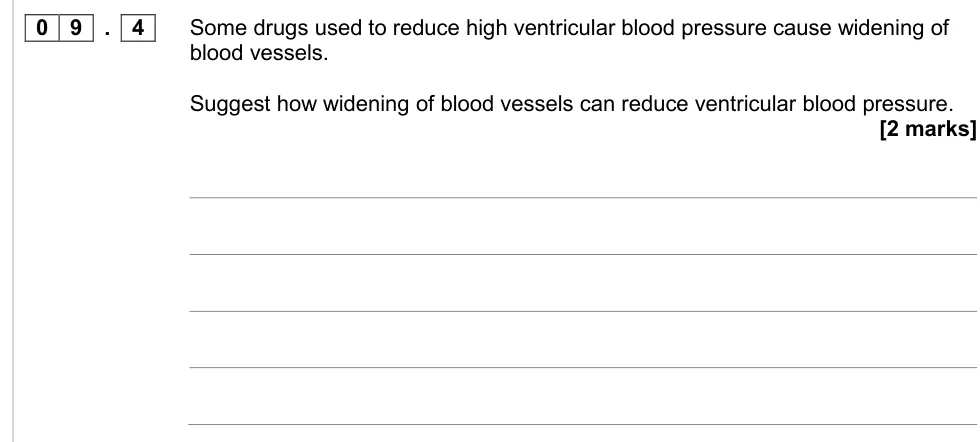
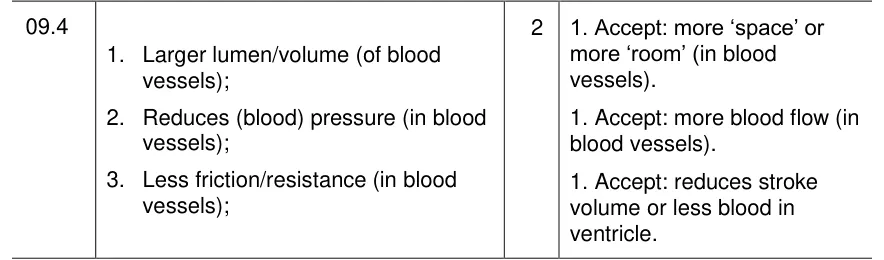
Suggest how widening blood vessels can lower ventricular blood pressure.
Show the mark scheme
Tap an image to open it full size.
From the examiners' report: Almost 90% got at least 1 mark. Link the larger lumen to lower pressure in the vessels; very few mentioned less friction or resistance.
Question 6
A level Paper 1 · November 2020 · Q03.2 · 2 marks · Hard
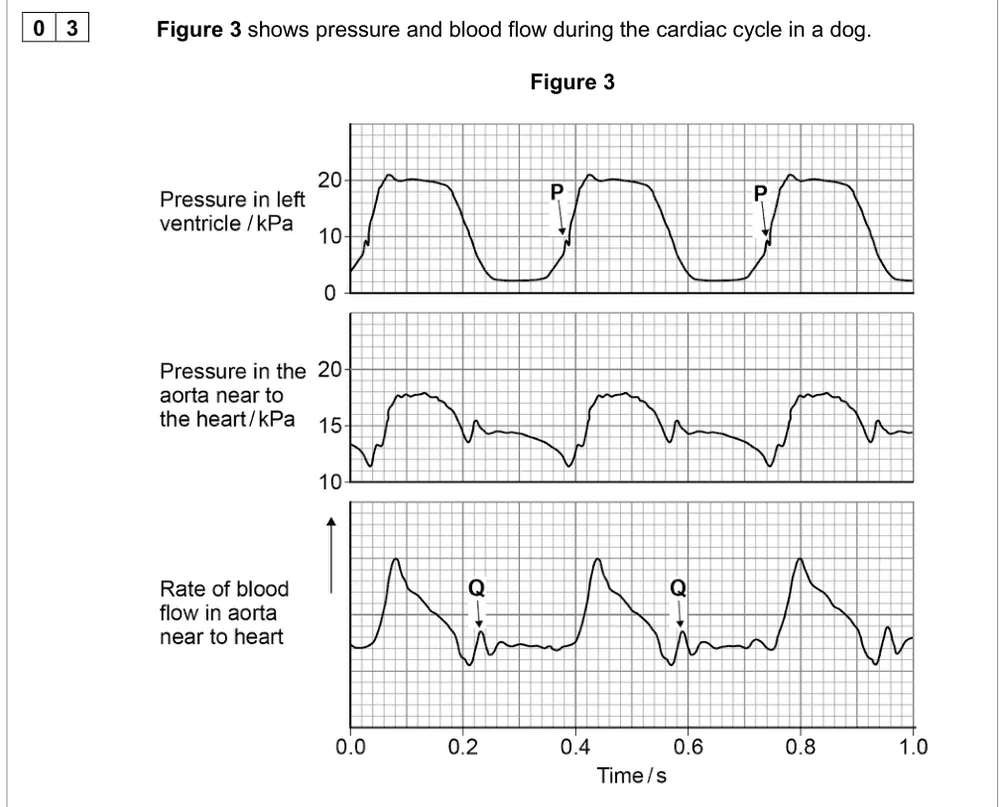
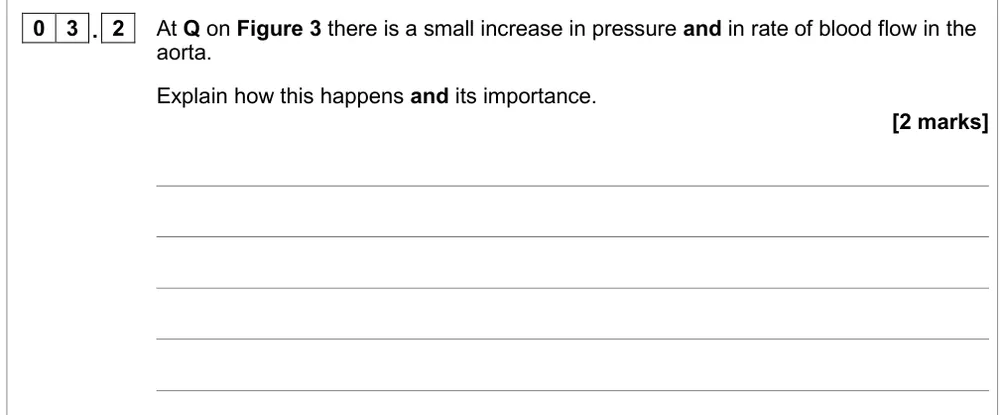
Explain the small rise in aortic pressure and blood flow at Q, and why it matters.
Information from earlier in this question:
Show the mark scheme
Tap an image to open it full size.
From the examiners' report: Only 11% gained any marks. It is elastic recoil of the aorta wall, not muscle contracting, and it smooths the blood flow. The aorta is not a second pump.
Capillaries and tissue fluid (3.3.4.1)
Question 7
AS Paper 2 · June 2025 · Q09.2 · 5 marks · Medium
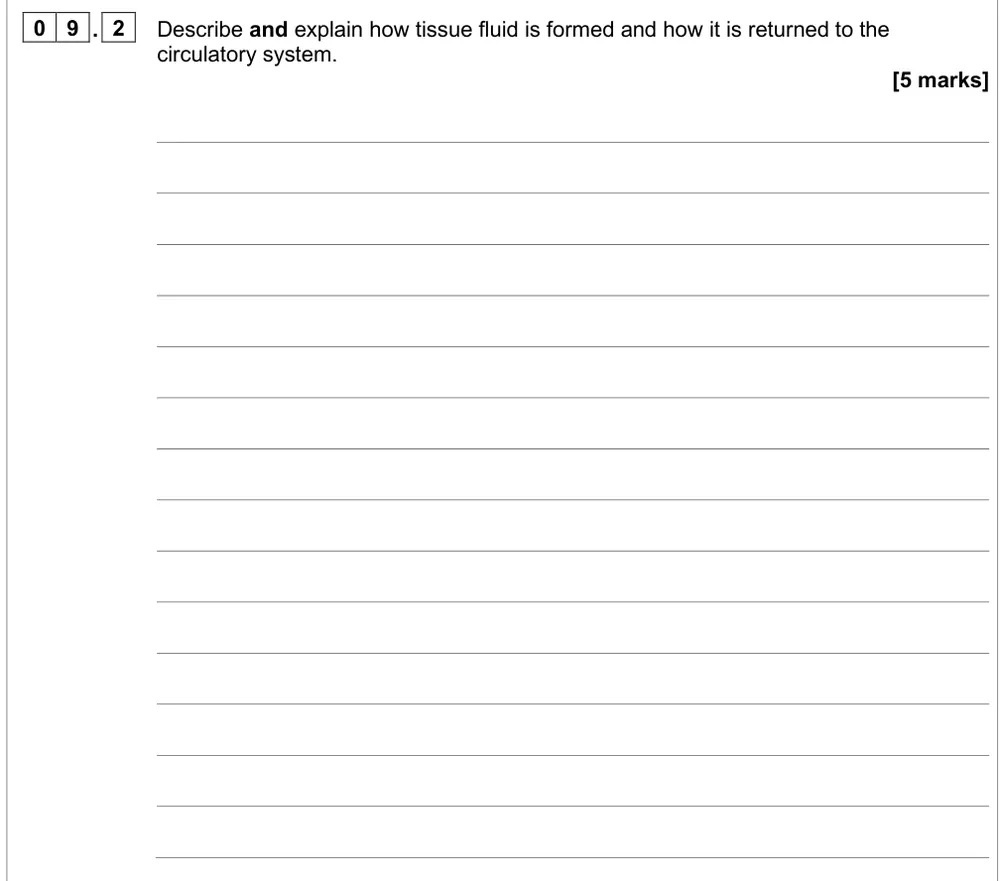
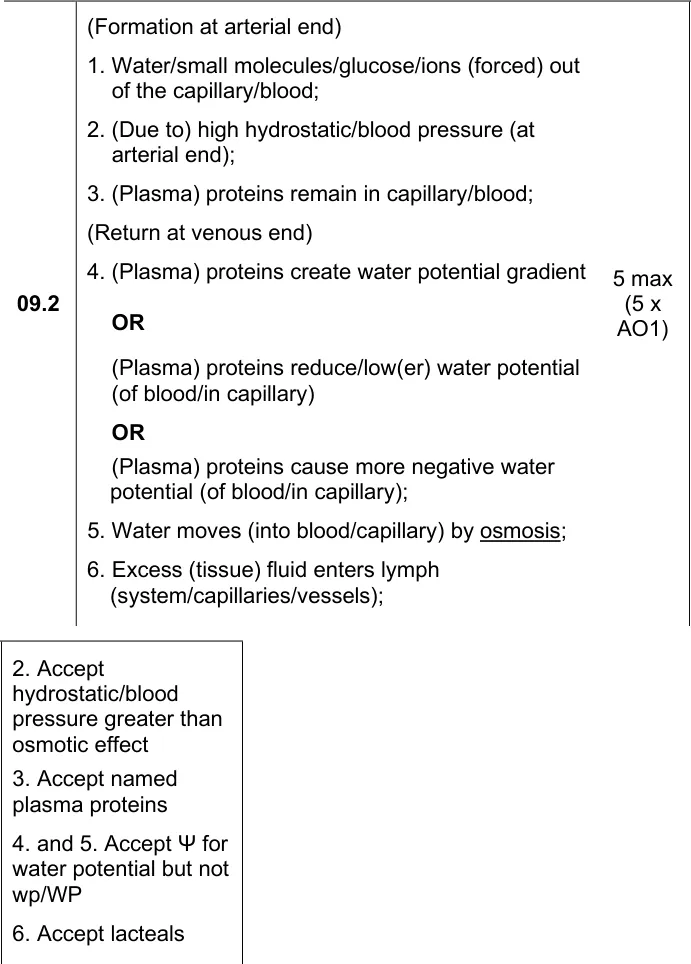
Describe and explain how tissue fluid is formed and returned to the circulatory system.
Show the mark scheme
Tap an image to open it full size.
From the examiners' report: About 20% got all five. Pressure forces water out at the arteriole end; osmosis only comes in at the venule end. The best answers fitted the first four points into one sentence.
Question 8
AS Paper 1 · June 2017 · Q04.3 · 2 marks · Hard
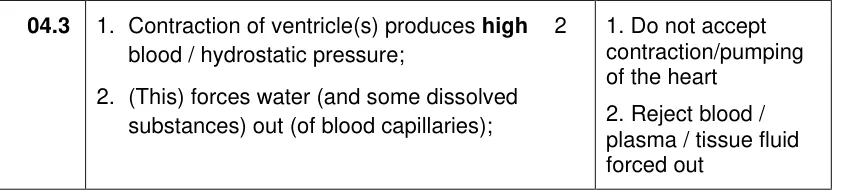
Explain the role of the heart in the formation of tissue fluid.
Show the mark scheme
Tap an image to open it full size.
From the examiners' report: 74% scored zero. Say the ventricles contract (not just 'the heart pumps') and that water is forced out of the capillaries, not tissue fluid, plasma or blood.
Question 9
AS Paper 1 · June 2017 · Q04.4 · 1 mark
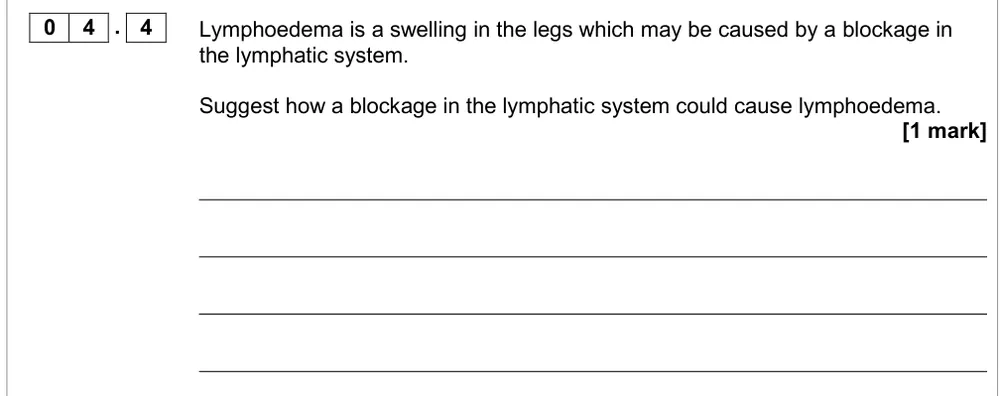
Suggest how a blocked lymphatic system could cause swelling in the legs.
Show the mark scheme

Tap an image to open it full size.
From the examiners' report: 73% scored zero, and many wrote about blood clots. The lymphatic system drains excess tissue fluid; if it is blocked, the excess builds up.
Question 10
AS Paper 2 · June 2016 · Q09.3 · 2 marks · Hard
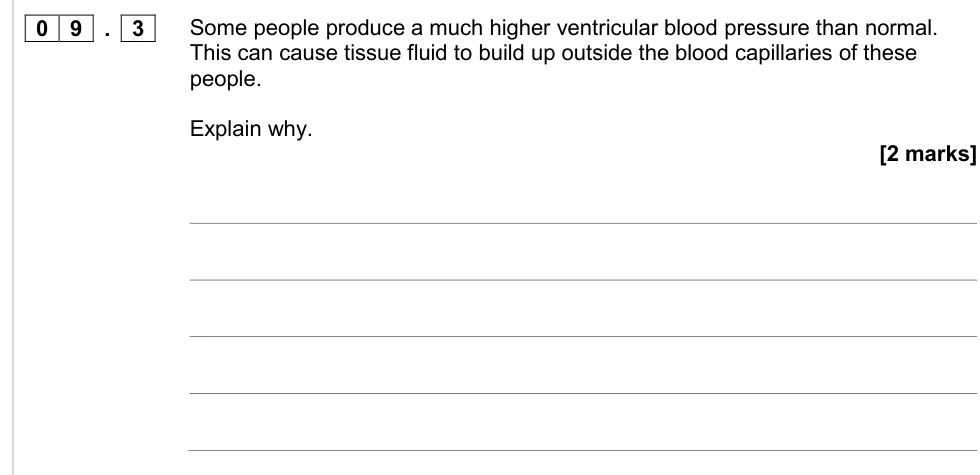
Explain why a high ventricular blood pressure makes tissue fluid build up.
Show the mark scheme
Tap an image to open it full size.
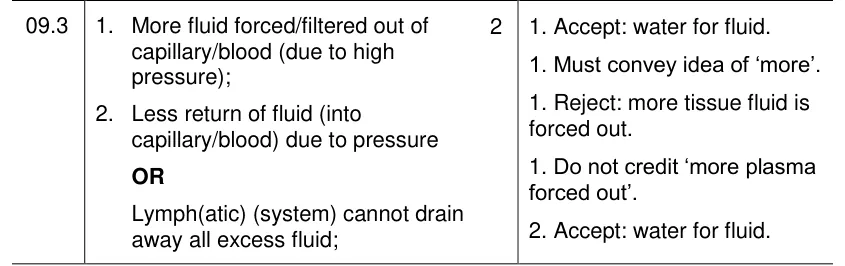
From the examiners' report: Almost two-thirds scored nothing, mostly by describing how tissue fluid forms. Explain the build-up: more fluid out, less back. Write 'more fluid', not 'more tissue fluid'.
Question 11
A level Paper 1 · June 2017 · Q03.3 · 2 marks
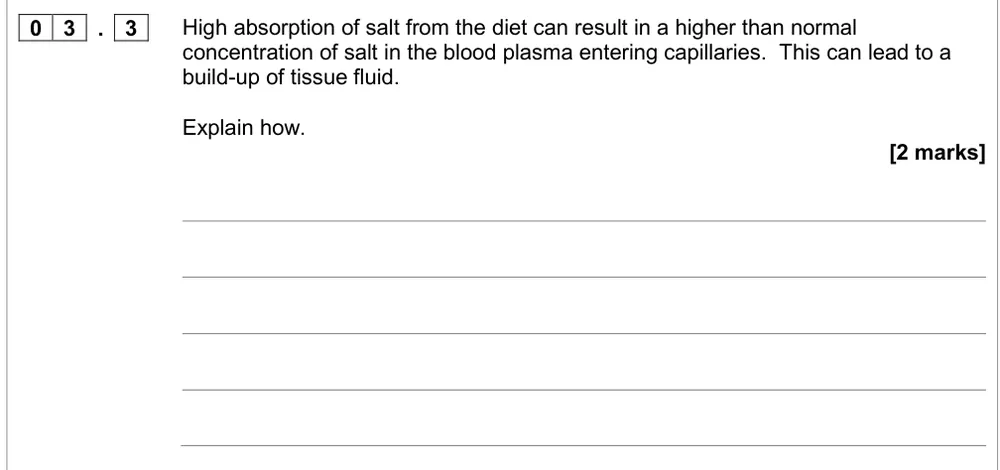
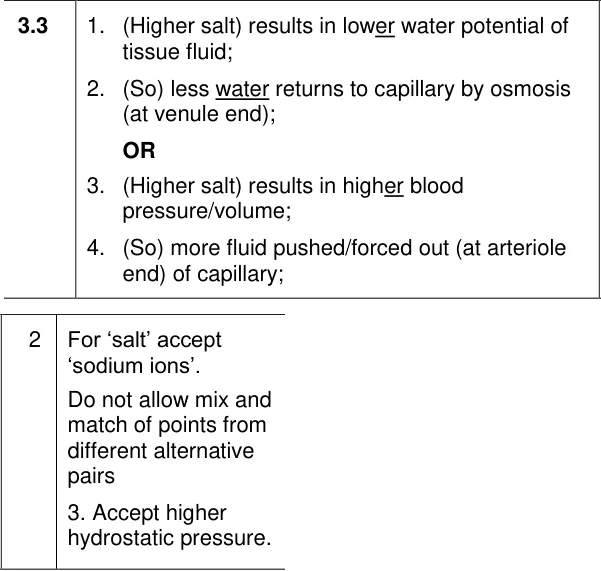
Explain how a high salt concentration in the blood can make tissue fluid build up.
Show the mark scheme
Tap an image to open it full size.
From the examiners' report: No examiners' report for this part. Pick one route and finish it: either water potential and osmosis at the venule end, or blood pressure and more fluid forced out at the arteriole end.
Question 12
A level Paper 1 · June 2023 · Q09.6 · 2 marks · Easy
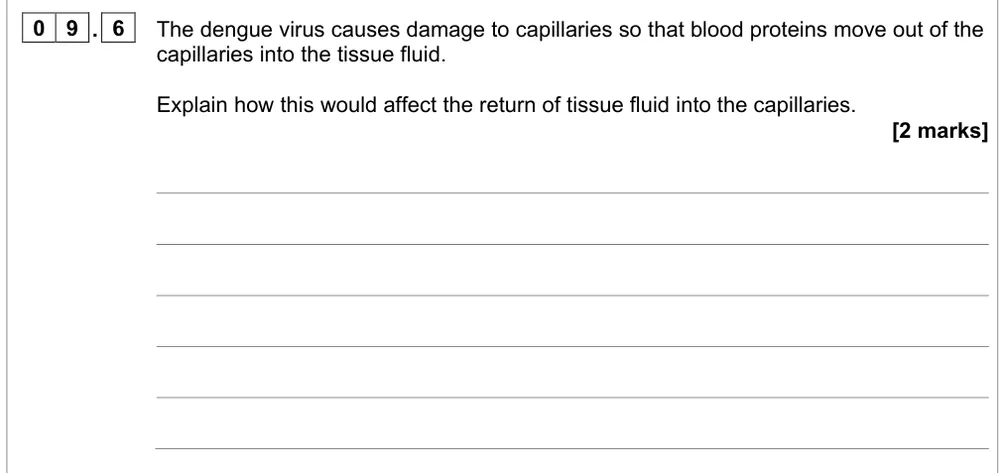
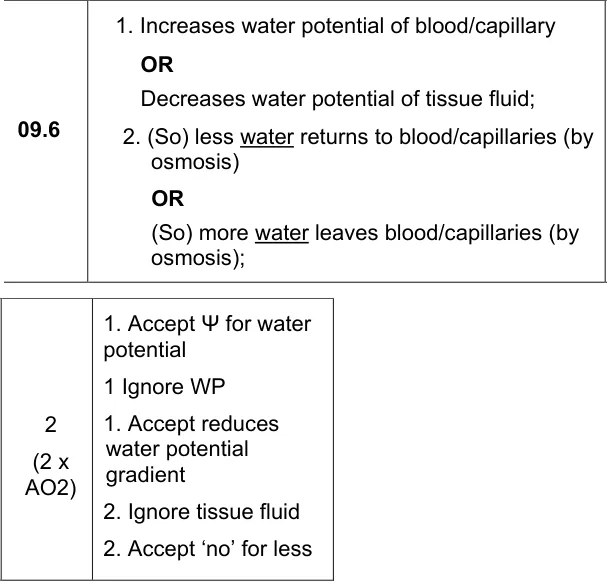
Explain how blood proteins leaking into tissue fluid affect its return to the capillaries.
Show the mark scheme
Tap an image to open it full size.
From the examiners' report: This discriminated well. Say where the water potential changes and which way water moves. It is water that moves by osmosis, not 'tissue fluid'.
Cardiovascular disease risk factors (3.3.4.1)
Question 13
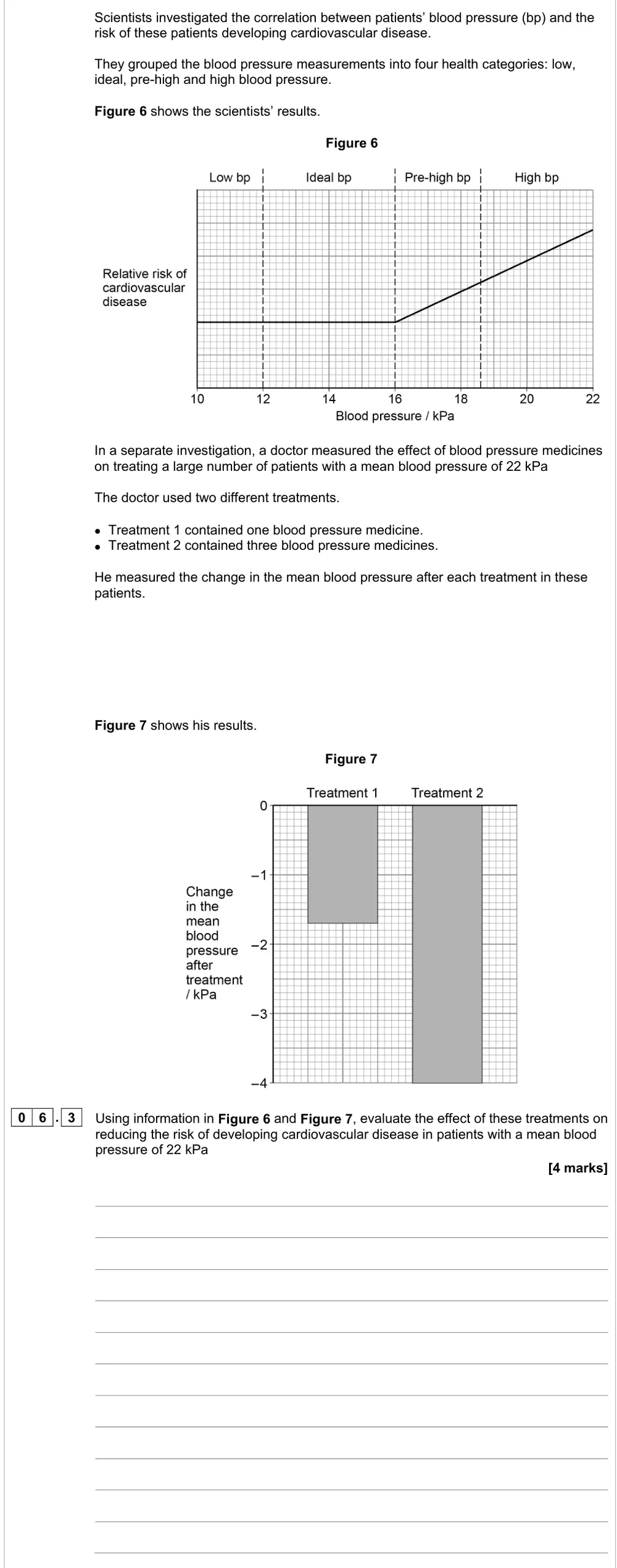
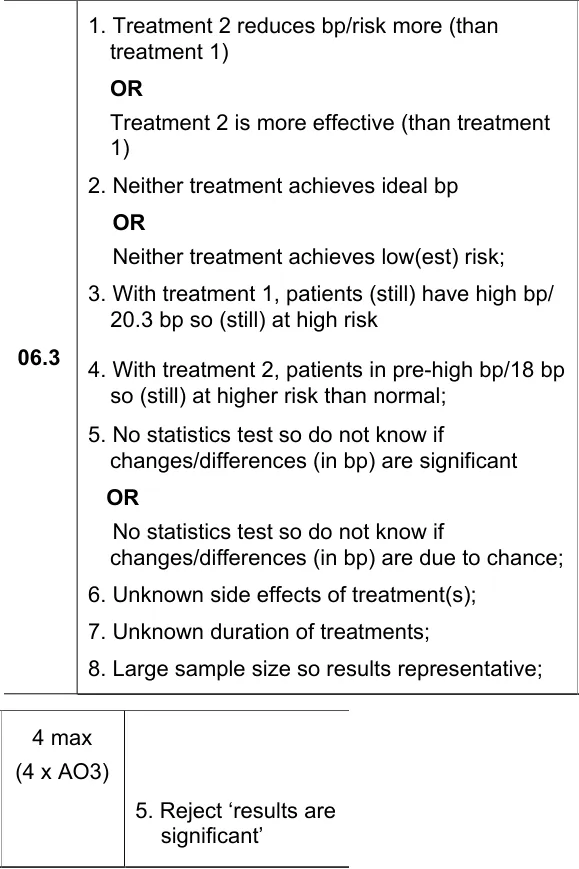
AS Paper 2 · June 2022 · Q06.3 · 4 marks · Hard
Evaluate two blood pressure treatments for reducing the risk of cardiovascular disease.
Show the mark scheme
Tap an image to open it full size.
From the examiners' report: Under 2% got all 4. Read the new blood pressure off each bar, then place it on Figure 6: both groups are still at higher than normal risk. The stem says a large number of patients, so use it.
Question 14
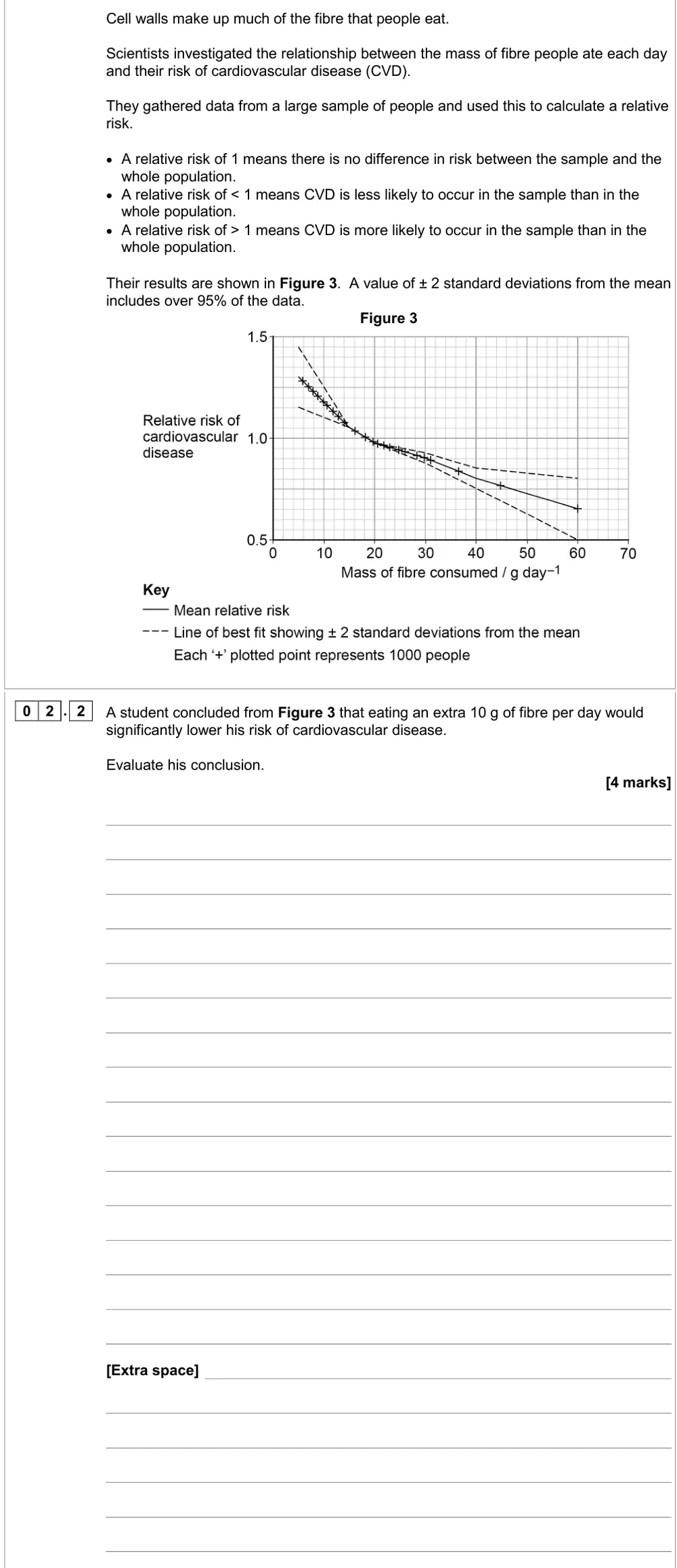
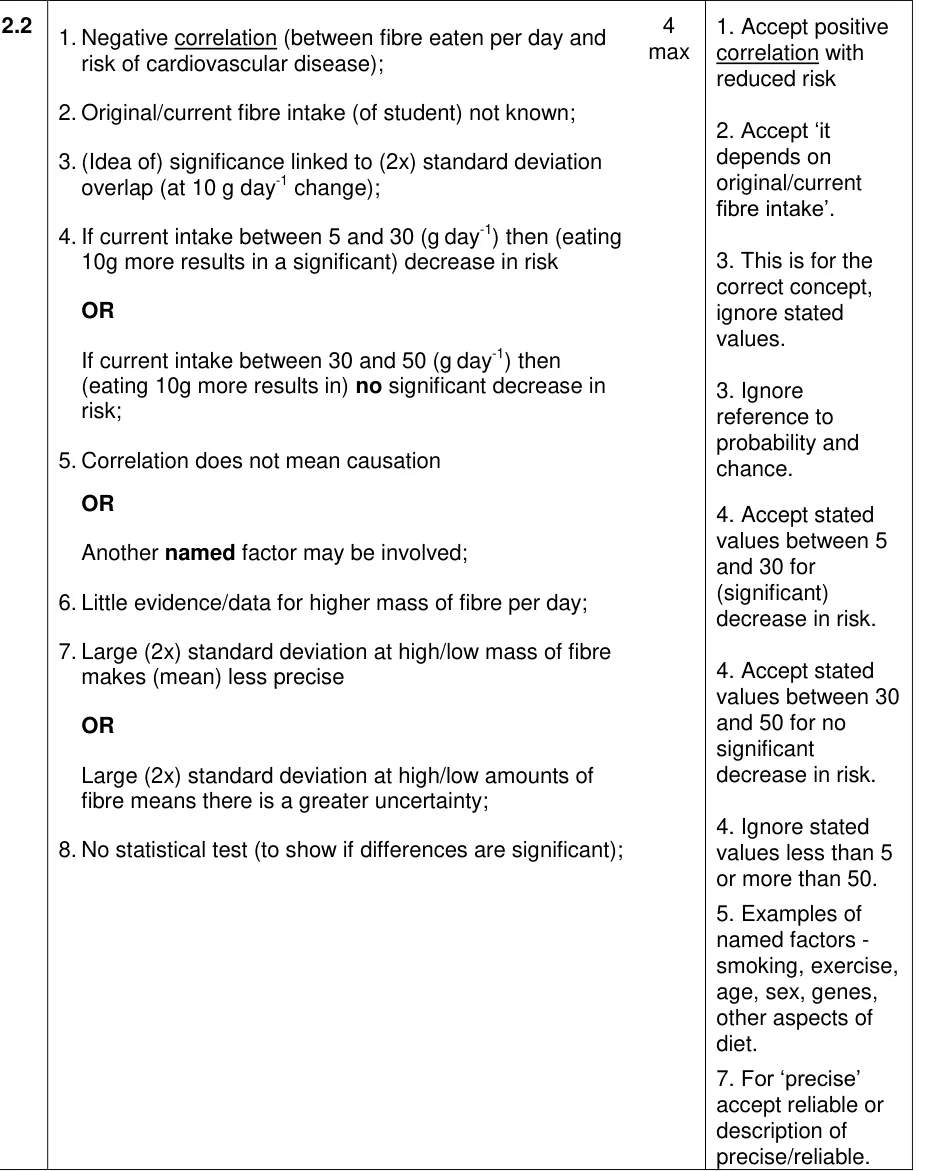
A level Paper 1 · June 2019 · Q02.2 · 4 marks
Evaluate a student's claim that 10 g more fibre a day would significantly lower his risk of CVD.
Show the mark scheme
Tap an image to open it full size.
From the examiners' report: No examiners' report for this part. It depends where the student starts: compare the SD lines 10 g apart, and say that a correlation doesn't show causation.
Where students lose marks (from AQA examiners' reports and mark schemes)
Each point below is followed by wording that gained marks.
Muscle in the aorta resists pressure; it doesn't pump: Fewer than 40% scored on two features of the aorta wall. Many said the muscle pumps blood or 'maintains' blood pressure, or described vasoconstriction, which happens in arterioles, not the aorta.
✔ Gains credit: "(Smooth) muscle absorbs / resists / withstands high (blood) pressure."
Elastic tissue stretches and then recoils: Only 11% scored on the small rise in pressure and flow in the aorta; many thought the aorta acts as a second pump. On the aorta wall question most gave recoil only, or said recoil increases blood pressure.
✔ Gains credit: "Elastic recoil (of the aorta wall)"; "elastic tissue stretches and recoils, maintains / smooths blood pressure".
Arterioles change flow through their muscle: Most students didn't know that muscle in the arteriole wall controls blood flow; some gave arterioles valves. On exercise, many wrote about constricting the lumen to raise pressure instead of widening it.
✔ Gains credit: "Muscle contracts; constricts / narrows the arteriole"; for exercise, "(circular / smooth) muscle relaxes; vasodilation increases blood flow".
Water is forced out, not tissue fluid: 74% scored zero on the role of the heart in forming tissue fluid. Most repeated the stem, or said 'tissue fluid', 'fluid', 'plasma' or even 'blood' left the capillaries.
✔ Gains credit: "Contraction of ventricle(s) produces high blood / hydrostatic pressure; (this) forces water (and some dissolved substances) out (of blood capillaries)."
Explain the build-up, don't describe formation: Almost two-thirds scored nothing on why high blood pressure makes tissue fluid build up. Many described how tissue fluid forms, and wrote that 'more tissue fluid' is forced out.
✔ Gains credit: "More fluid forced / filtered out of capillary (due to high pressure)"; "lymphatic system cannot drain away all excess fluid".
Pressure pushes water out; osmosis brings it back: About 20% got all five marks for tissue fluid formation and return. Errors included water forced out at the arteriole end 'by osmosis' and leaving osmosis out of the return at the venule end.
✔ Gains credit: "High hydrostatic pressure forces water out; (plasma) proteins remain and lower the water potential; water moves (into the blood) by osmosis."
Water moves by osmosis, and say where the water potential changes: In the dengue question, many said 'tissue fluid' returns by osmosis instead of water, and didn't say where the water potential had changed or which way the water moved.
✔ Gains credit: "Decreases water potential of tissue fluid; (so) less water returns to blood / capillaries (by osmosis)."
Lower blood pressure can still mean higher risk: Under 2% got all 4 marks on the blood pressure treatments. Most saw that treatment 2 worked better, but few said patients were still above normal risk, and the 'large number of patients' in the stem was ignored.
✔ Gains credit: "With treatment 2, patients (are) in pre-high bp / 18 bp so (still) at higher risk than normal"; "large sample size so results representative".
Download the questions
Download the PDF pack (14 questions, mark schemes at the end)
Keep practising
- Heart and circulation: AQA A Level Biology exam questions by topic
- Haemoglobin: AQA A Level Biology exam questions by topic
- Transport across cell membranes: AQA A Level Biology exam questions by topic
- Handling data (MS 1): AQA A Level Biology exam questions
- AQA A Level Biology masterclasses
Questions, mark schemes and examiners' report extracts © AQA.