

Required practical 4 asks you to investigate the effect of a named variable on the permeability of cell-surface membranes. In class that is almost always beetroot: cut equal discs or cylinders, put them in water at different temperatures (or in ethanol or acid), then measure how much red pigment leaks out, by eye against colour standards or with a colorimeter. On the AQA papers it comes up as short questions on controlling variables and measuring temperature, plus explaining the results using the structure of the membrane.
The examiners' reports show where students lose marks: writing "amount" or "size" instead of volume, mass or surface area, reading a thermometer without saying what to do if the temperature drifts, not halving the scale division for an uncertainty, writing about cell walls instead of cell-surface membranes, and saying high temperatures denature enzymes when it is the membrane proteins that matter.
Answer each question on paper before you open the mark scheme. If you'd like help with this topic, my AQA masterclasses run online on Tuesdays at 5.15pm for Year 12 and on Wednesdays or Thursdays at 6.30pm for Year 13.
What you need from GCSE and Year 12
Each question on this page assumes you're secure on these GCSE and Year 12 ideas. If any of them feels shaky, revise it before you start.
- GCSE: the cell membrane controls what enters and leaves the cell, and the cell wall of a plant cell is fully permeable.
- GCSE: proteins and enzymes are denatured at high temperatures because their shape changes.
- GCSE: independent, dependent and control variables, and measuring volume and temperature with suitable apparatus.
- Year 12 (AQA 3.2.3): the fluid-mosaic model of the cell-surface membrane, with a phospholipid bilayer and channel and carrier proteins. See the Transport across cell membranes page.
- Year 12 (AQA 3.1.4.1): the tertiary structure of a protein is held by hydrogen bonds, ionic bonds and disulfide bridges. See the Proteins page.
Key terms
These words come up in the questions and mark schemes. Examiners expect you to use them exactly.
- Cell-surface membrane: the partially permeable phospholipid bilayer, with proteins, around the cell; when it is intact, the red pigment can't cross it.
- Permeability: how easily substances can pass through a membrane; damage to the membrane increases permeability and lets pigment or ions leak out.
- Phospholipid bilayer: the two layers of phospholipids that form the membrane; it becomes more fluid as temperature rises and is dissolved by ethanol.
- Membrane proteins: channel and carrier (intrinsic) proteins and extrinsic proteins in the membrane; high temperature or acid denatures them, leaving gaps.
- Denaturation: a change in a protein's tertiary structure when hydrogen and ionic bonds break, for example at high temperature or low pH.
- Colorimeter: an instrument that measures the absorbance (or transmission) of light by a solution; more pigment gives a higher absorbance and less light passing through.
- Colour standards: a dilution series of known pigment concentrations used to estimate the concentration of a sample by eye when there is no colorimeter.
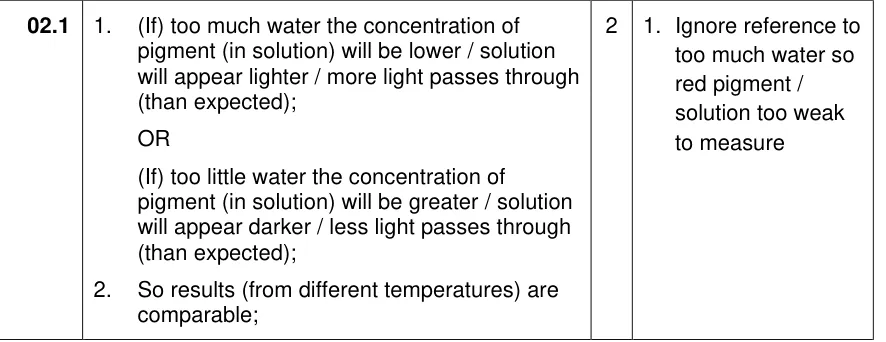
- Control variable: a variable kept the same so results are comparable, such as the volume of water, the mass, thickness or surface area of the discs, and the time in the water.
- Uncertainty: the range either side of a reading within which the true value probably lies; for a scale, half the smallest division.
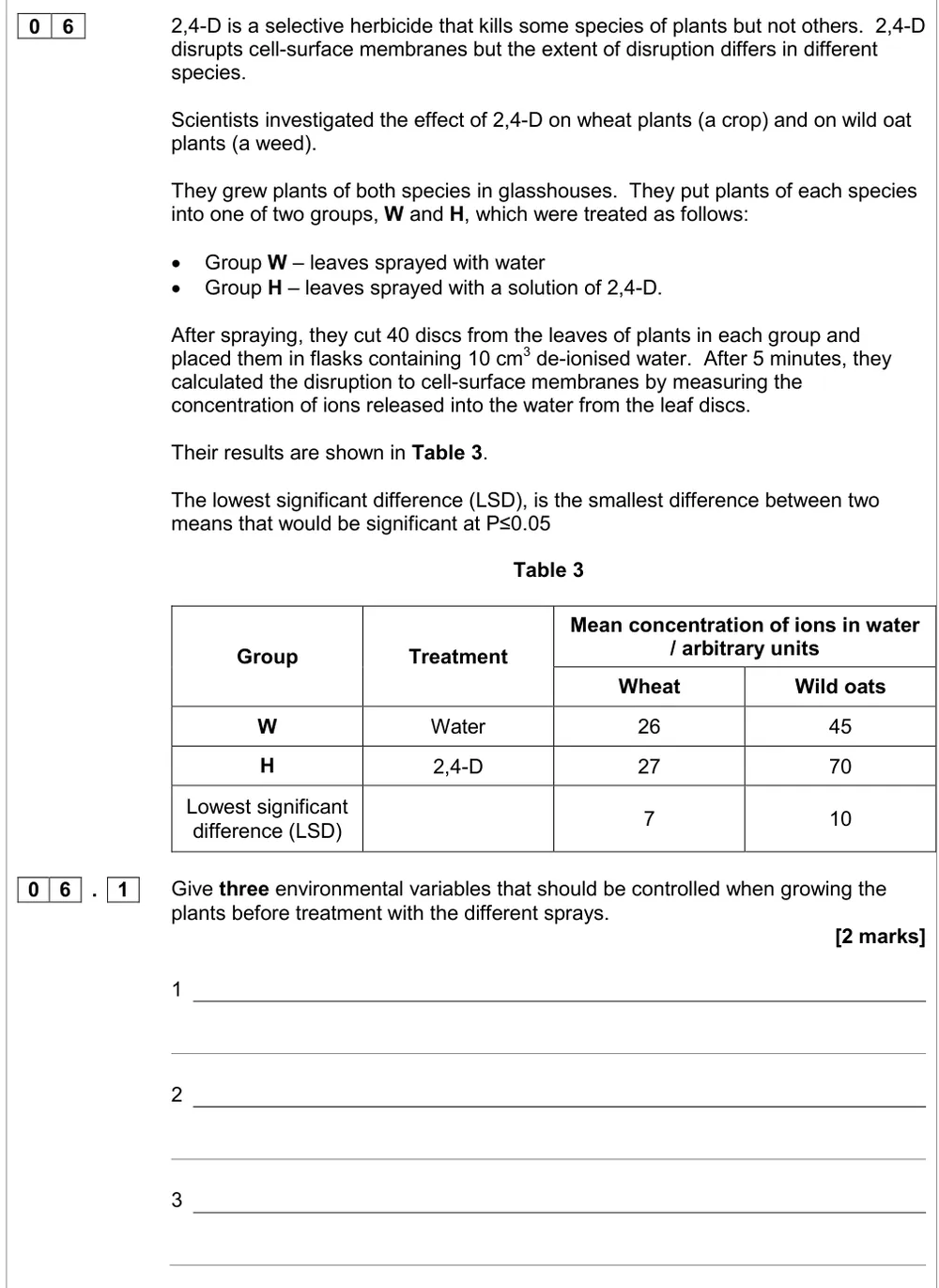
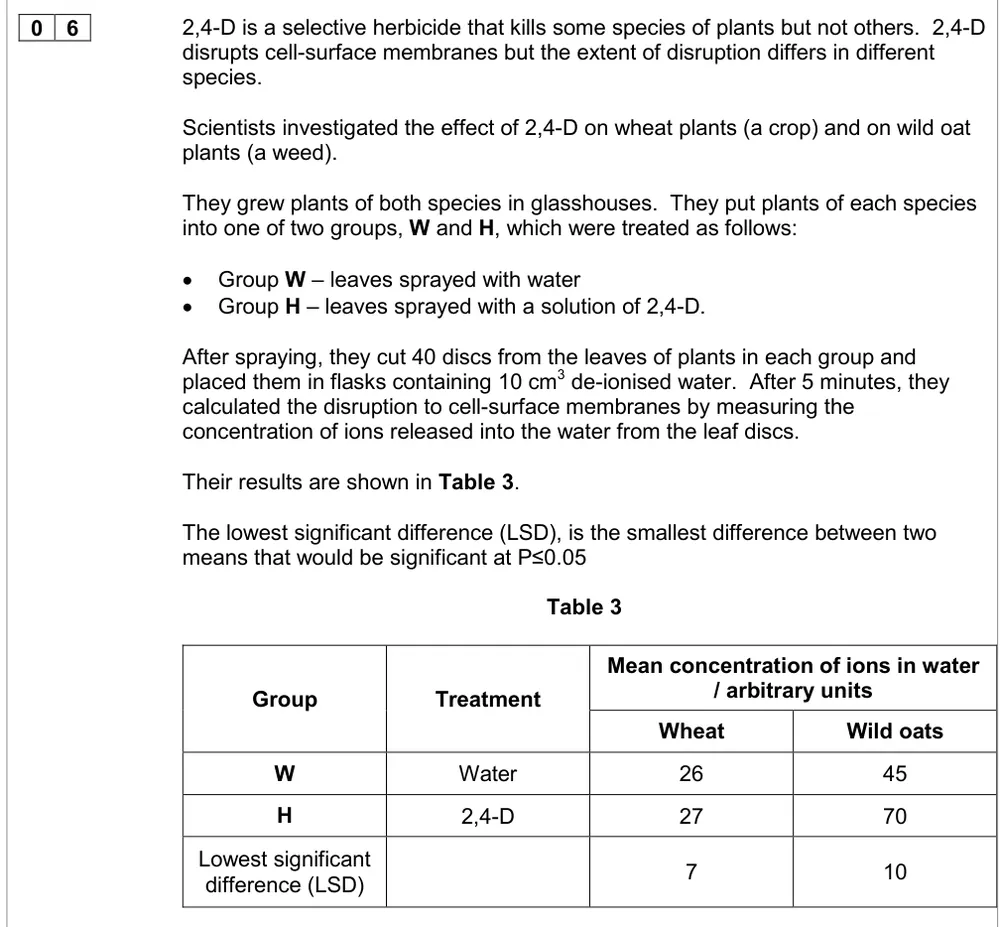
- Lowest significant difference (LSD): the smallest difference between two means that would be significant at P ≤ 0.05; a smaller difference is probably due to chance.
What these questions cover (AQA required practical 4)
The questions come from the fourth required practical in the AQA AS and A-level Biology specification (7401/7402), and test these statements and practical skills:
- Required practical 4: Investigation into the effect of a named variable on the permeability of cell-surface membranes (every question on this page; most use beetroot pigment, one uses ions leaking from leaf discs and one anthocyanin from blueberries)
- AT a use appropriate apparatus to record a range of quantitative measurements (to include mass, time, volume, temperature, length and pH)
- AT b use appropriate instrumentation to record quantitative measurements, such as a colorimeter or potometer (the blueberry question uses a colorimeter; the beetroot questions measure light passing through the water or compare colours by eye)
- PS 2.4 Identify variables including those that must be controlled
- PS 2.1 Comment on experimental design and evaluate scientific methods
- PS 3.1 Plot and interpret graphs
- PS 2.3 Evaluate results and draw conclusions with reference to measurement uncertainties and errors
- MS 1.11 Identify uncertainties in measurements and use simple techniques to determine uncertainty when data are combined
- MS 3.2 Plot two variables from experimental or other data
How to use this page
Write your answer on paper before you open the mark scheme. Allow about 1.3 minutes per mark: the 15 questions are worth 35 marks, so about 46 minutes in total. Then mark your answer strictly against the mark scheme and read the examiners' tip underneath it. If you'd rather print the questions, download the PDF pack.
Why the pigment leaks out
Question 1
AS Paper 2 · June 2017 · Q02.4 · 2 marks
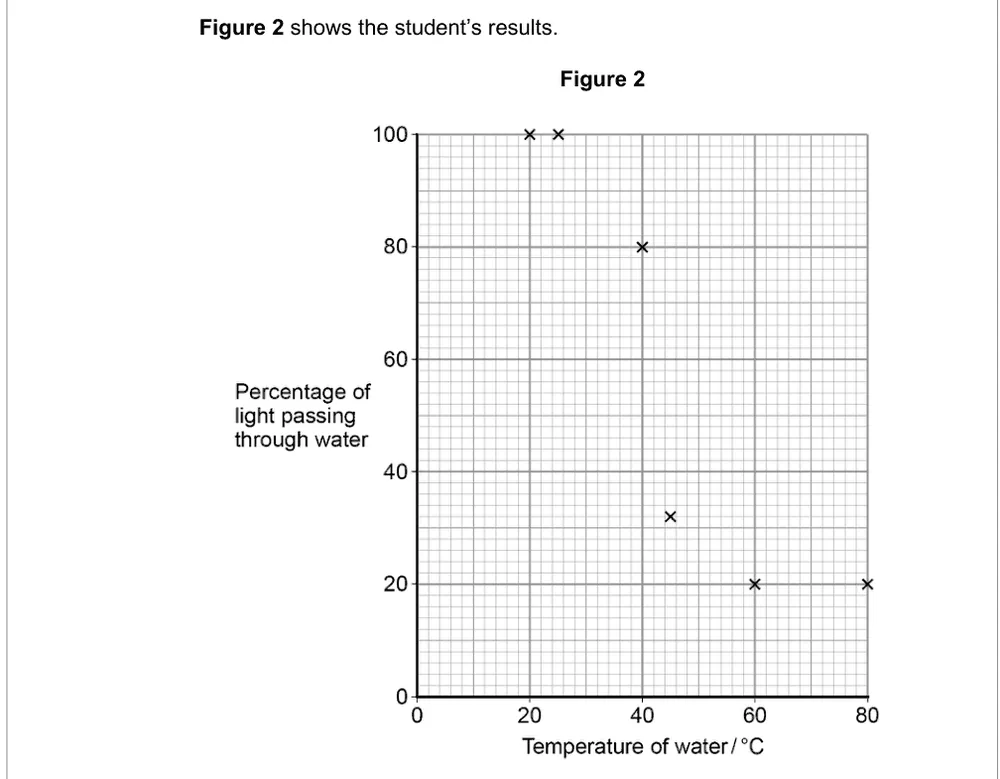
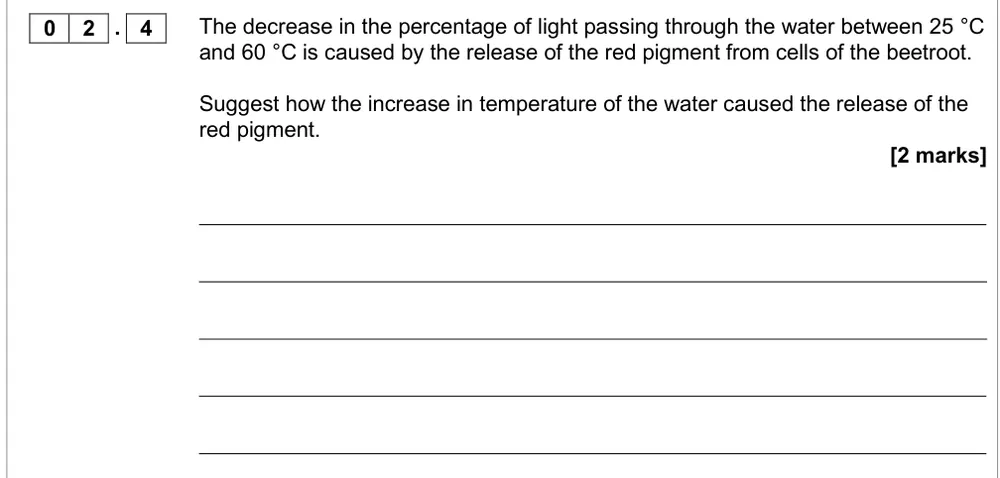
Suggest how a rise in temperature made beetroot cells release red pigment.
Information from earlier in this question:

Show the mark scheme
Tap an image to open it full size.
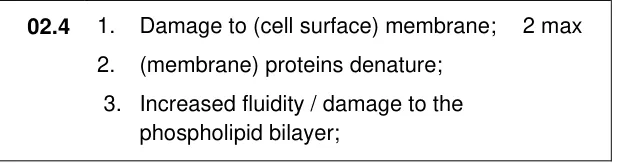
From the examiners' report: There's no examiners' comment on this part, so this tip comes from the mark scheme. Say what happens to the cell-surface membrane: its proteins denature and the phospholipid bilayer becomes more fluid, so pigment leaks out.
Question 2
AS Paper 2 · November 2020 · Q04.4 · 4 marks
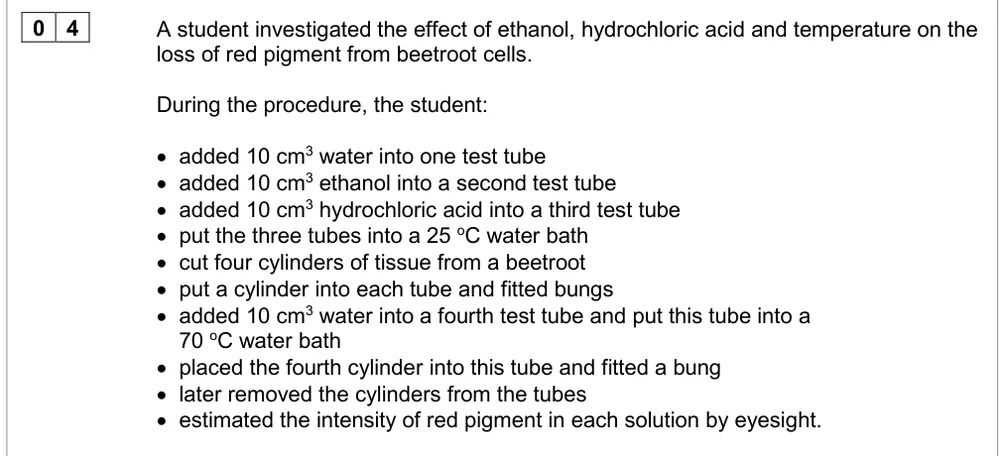
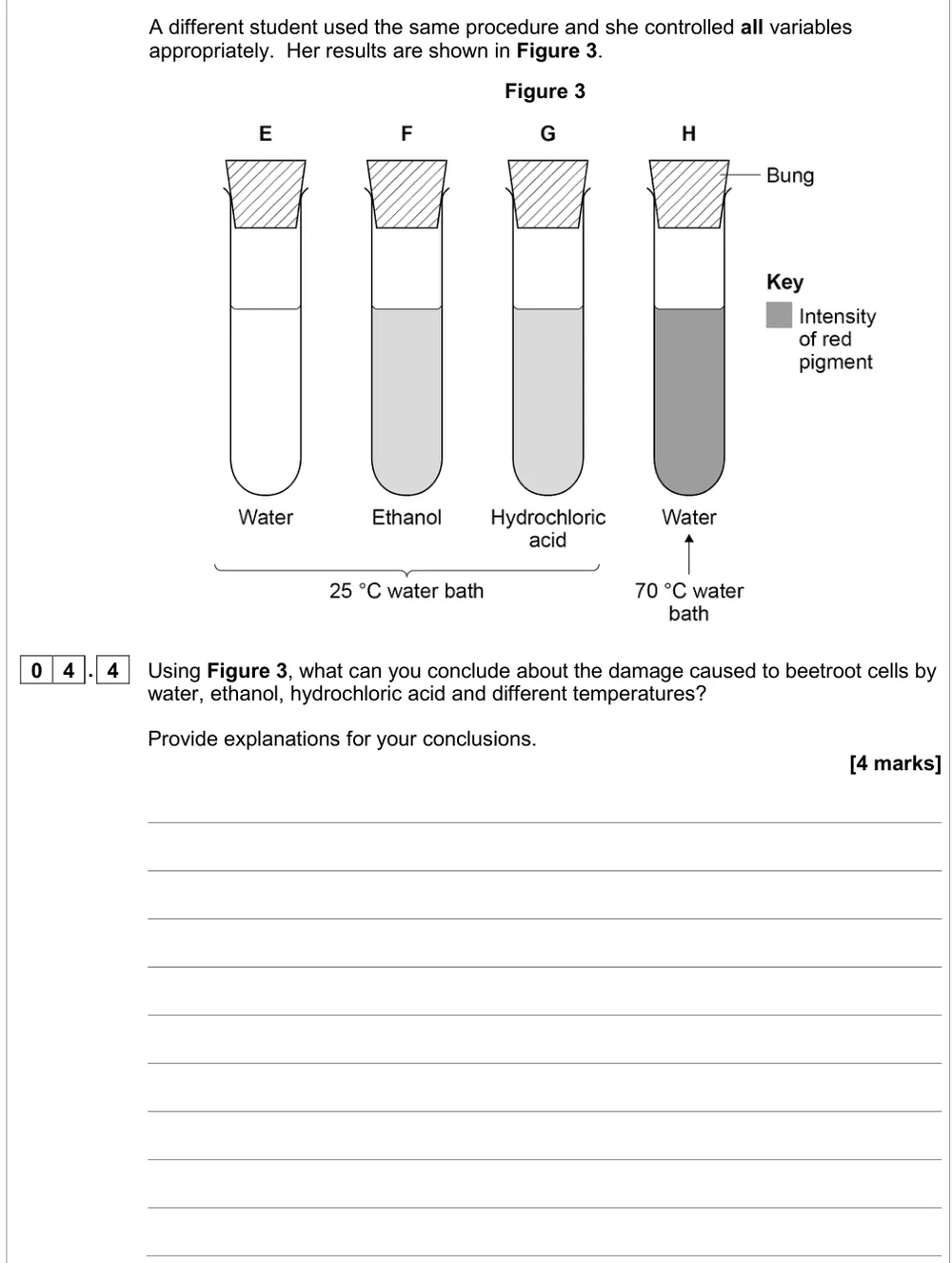
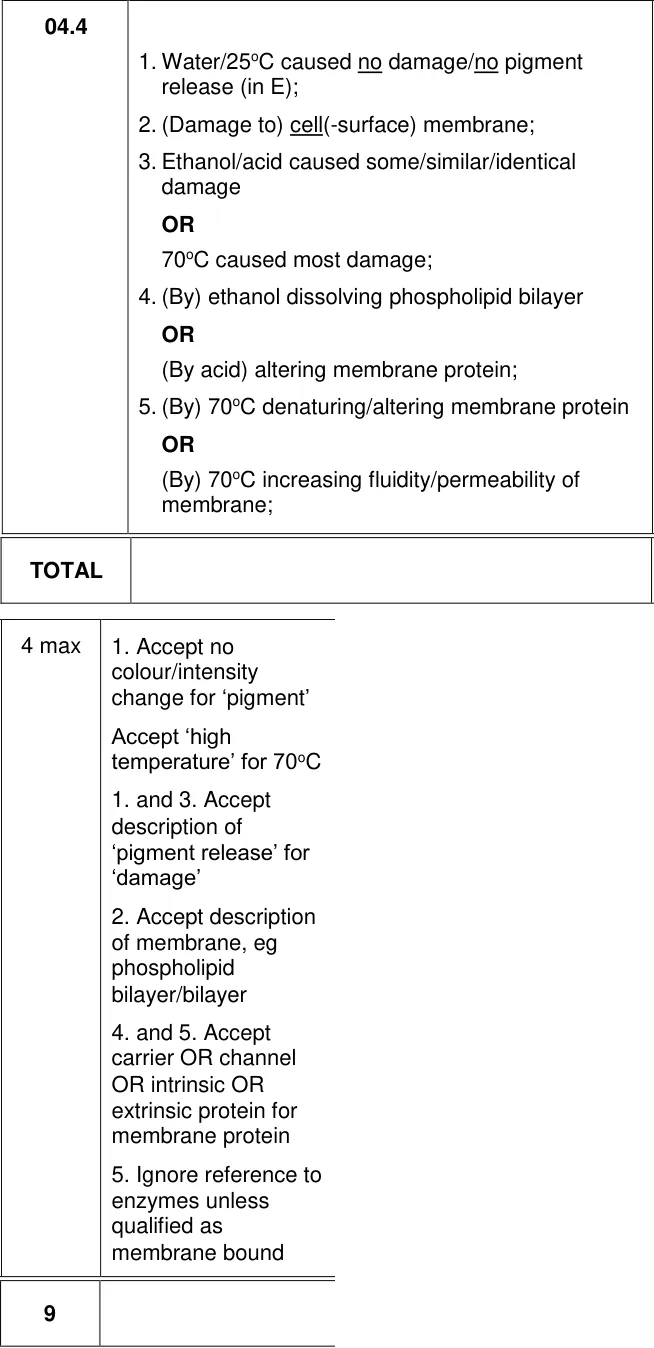
Use the colour of four tubes to explain the damage done to beetroot cells by water, ethanol, acid and 70 °C.
Information from earlier in this question:
Show the mark scheme
Tap an image to open it full size.
From the examiners' report: The mean was 2 marks. Describing the shading was easy; the marks were for explaining damage to the cell-surface membrane. Writing about cell walls, or 'damage to cells' in general, didn't score.
Question 3
A level Paper 1 · November 2020 · Q04.3 · 4 marks · Hard
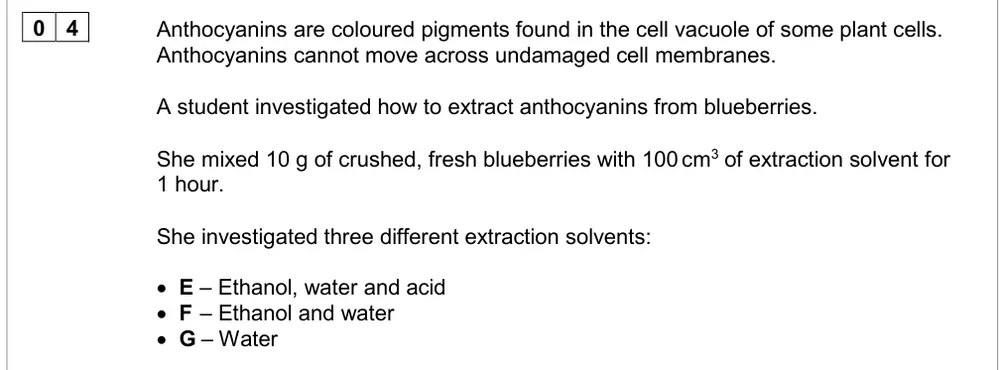
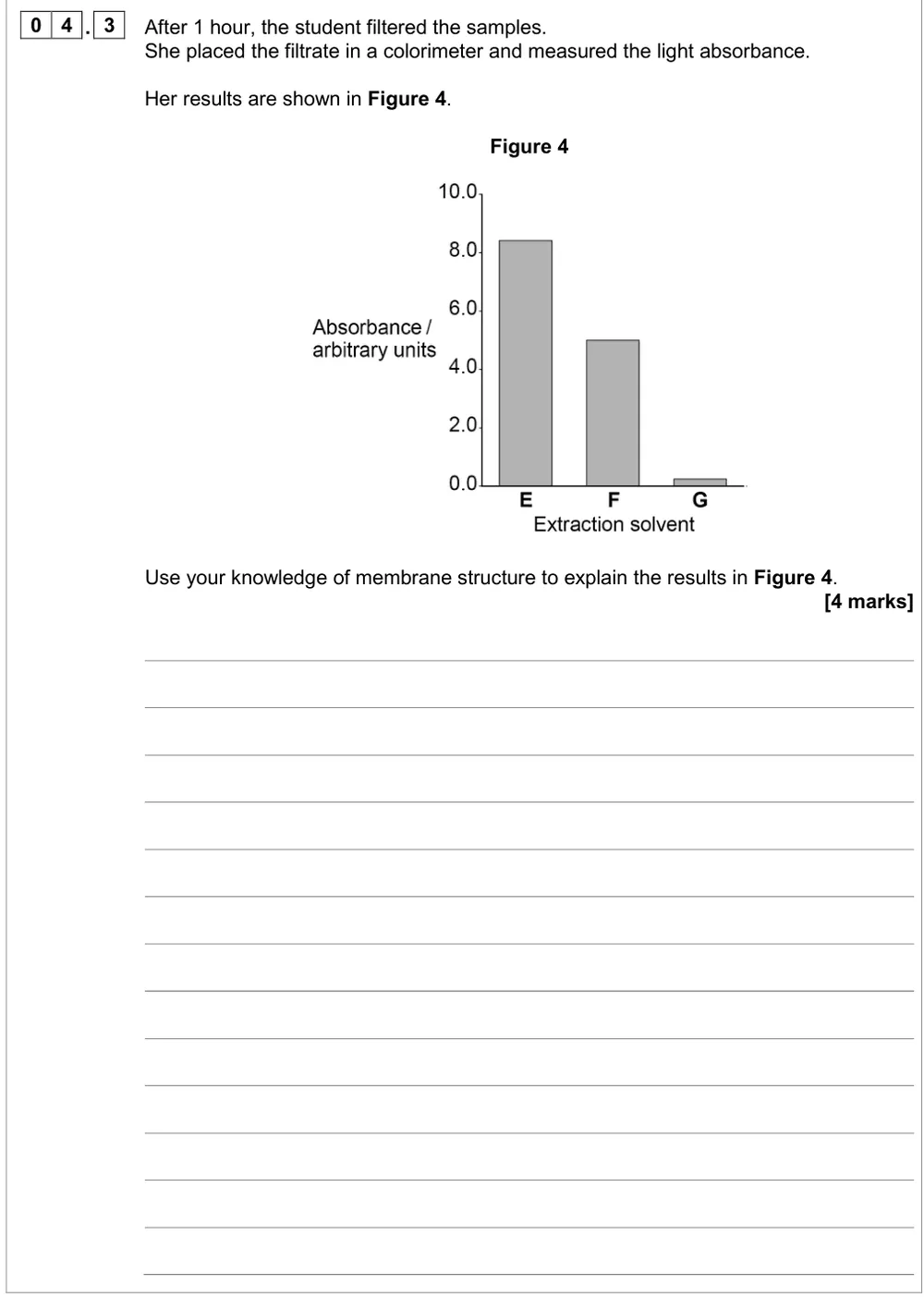
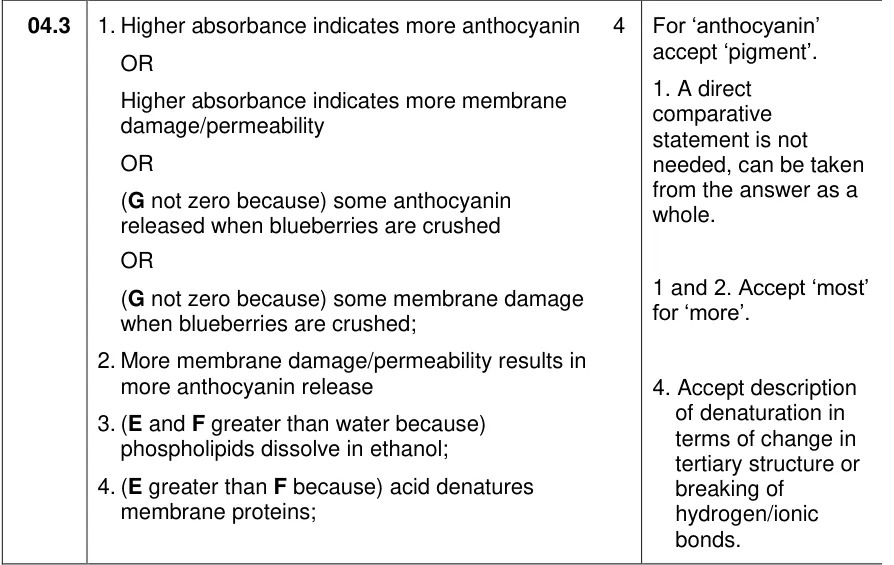
Explain colorimeter results for anthocyanin extracted from blueberries with three different solvents.
Information from earlier in this question:
Show the mark scheme
Tap an image to open it full size.
From the examiners' report: Few students could explain why ethanol disrupts the membrane: it dissolves the phospholipids. Many also couldn't say that acid denatures the membrane proteins. Link the absorbance to the amount of pigment released first.
Question 4
AS Paper 1 · June 2025 · Q08.3 · 4 marks · Medium
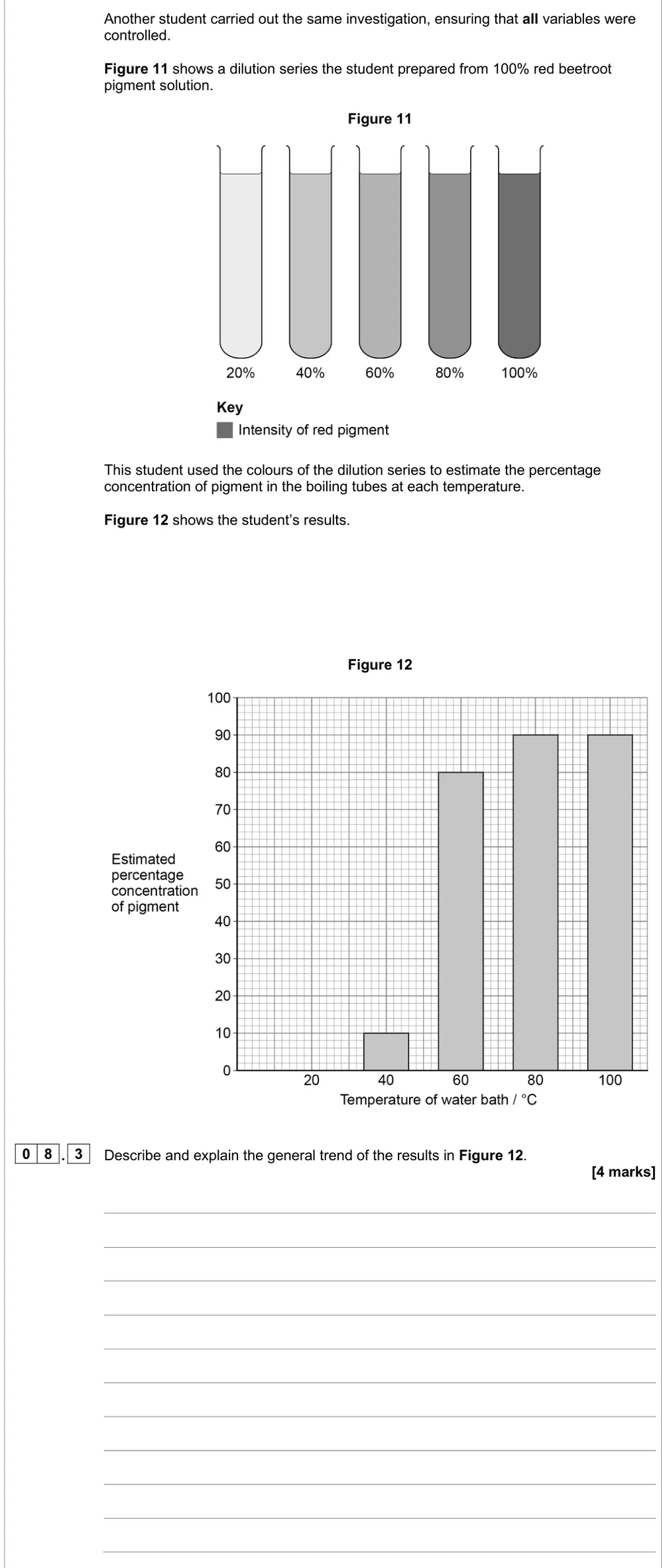
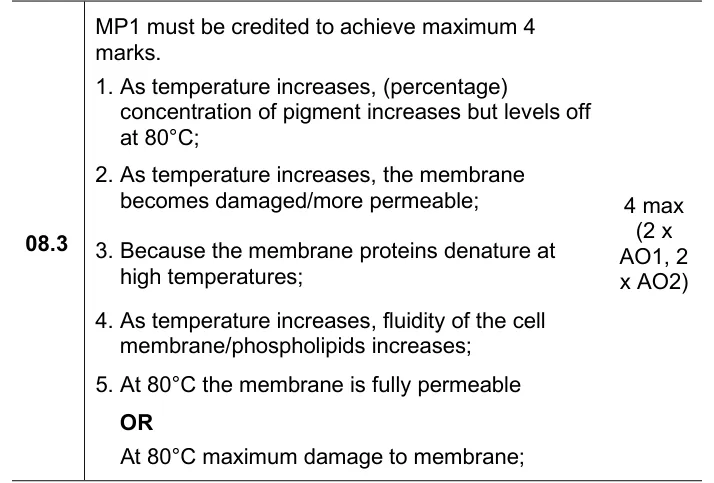
Describe and explain the trend in pigment concentration as water bath temperature rises.
Show the mark scheme
Tap an image to open it full size.
From the examiners' report: About 5% got all four marks. Describe the trend, including the levelling off at 80 °C, then explain it: membrane proteins denature and the bilayer gets more fluid. It isn't enzymes slowing down.
Controlling variables
Question 5
AS Paper 1 · June 2025 · Q08.2 · 2 marks · Medium
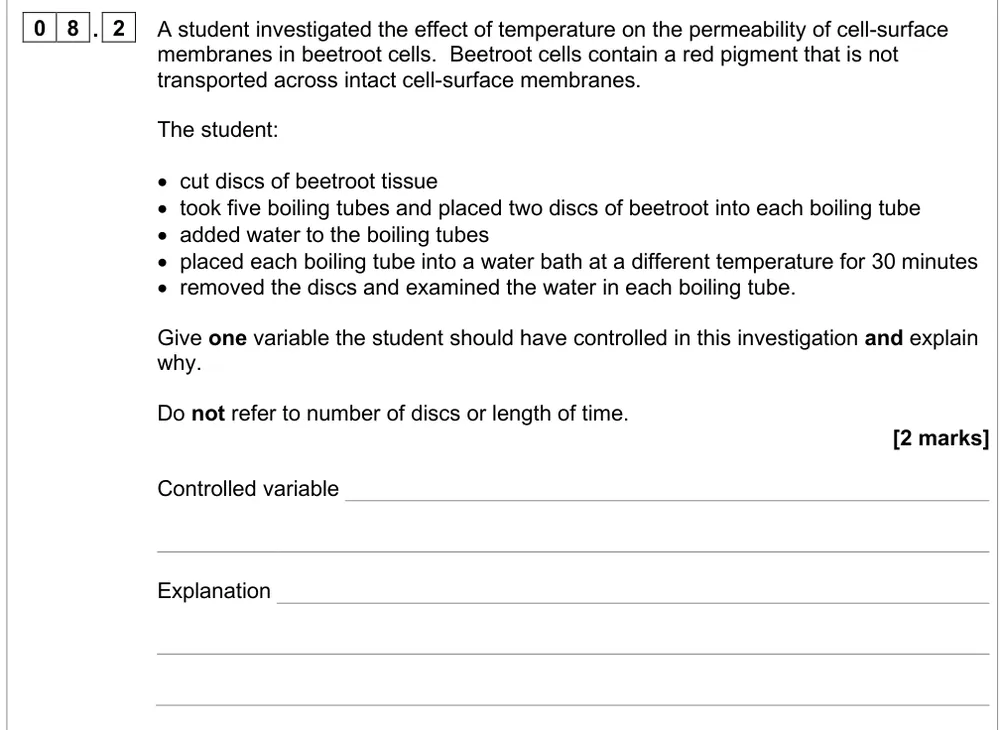
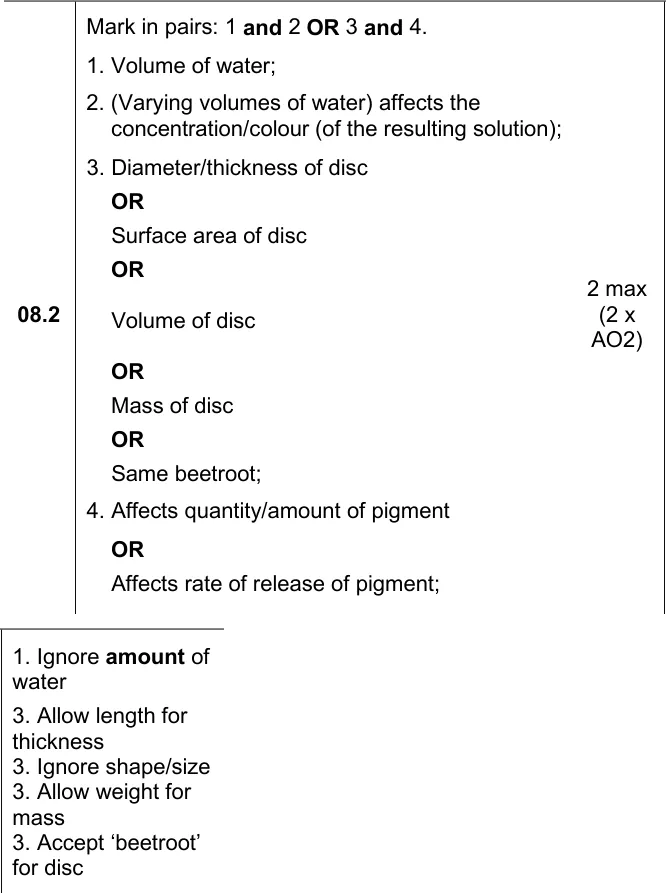
Give one variable to control in a beetroot temperature experiment and explain why.
Show the mark scheme
Tap an image to open it full size.
From the examiners' report: Slightly more than a third got both marks. Be specific: 'volume' not 'amount' of water, and thickness, mass or surface area rather than 'size'. 'To make it a fair test' isn't an AS-level explanation.
Question 6
AS Paper 2 · November 2020 · Q04.2 · 2 marks
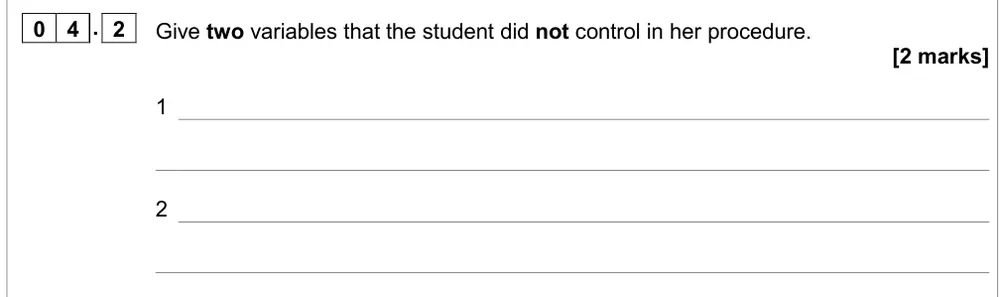
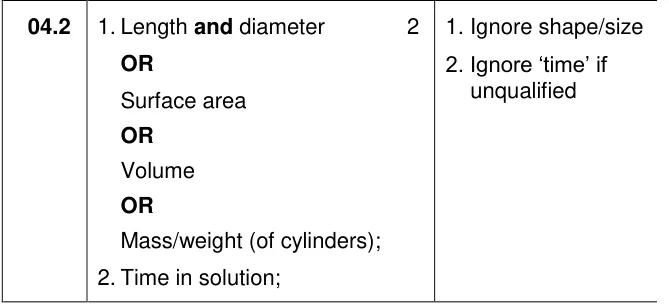
Give two variables the student did not control when testing beetroot cylinders.
Information from earlier in this question:
Show the mark scheme
Tap an image to open it full size.
From the examiners' report: This rewarded students who named an aspect of cylinder size, such as surface area, mass or volume. Don't give the independent or dependent variable as a control variable.
Question 7
AS Paper 2 · June 2017 · Q02.1 · 2 marks
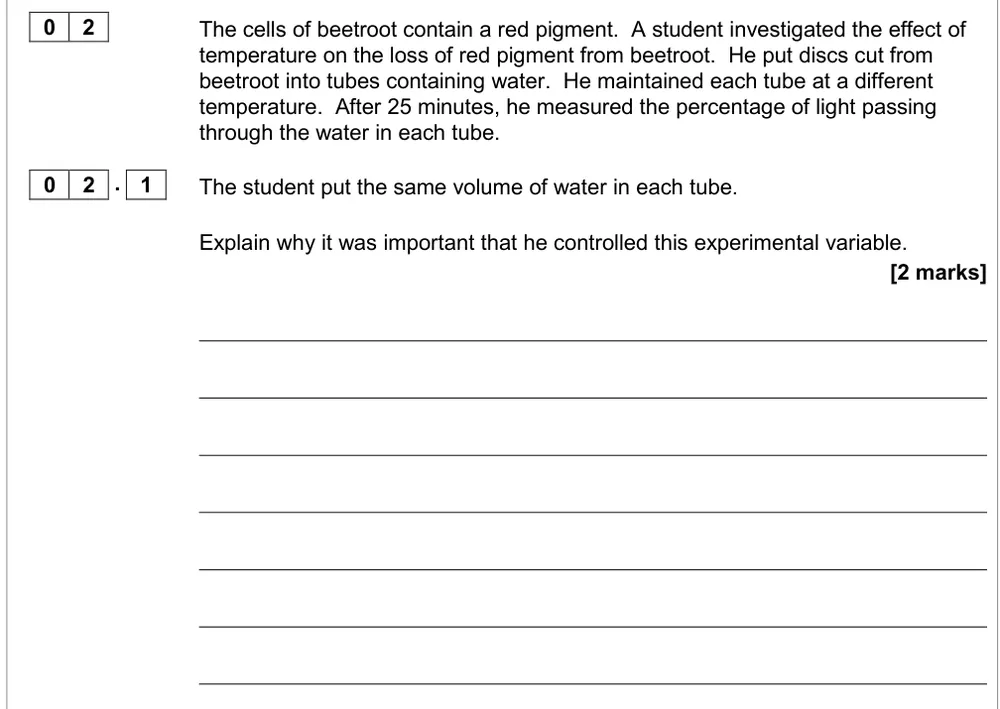
Explain why the volume of water in each tube had to be kept the same.
Show the mark scheme
Tap an image to open it full size.
From the examiners' report: There's no examiners' comment on this part, so this tip comes from the mark scheme. Say what a different volume would do to the reading: the same pigment in more water gives a paler solution and more light passing through.
Question 8
A level Paper 1 · November 2020 · Q04.2 · 2 marks
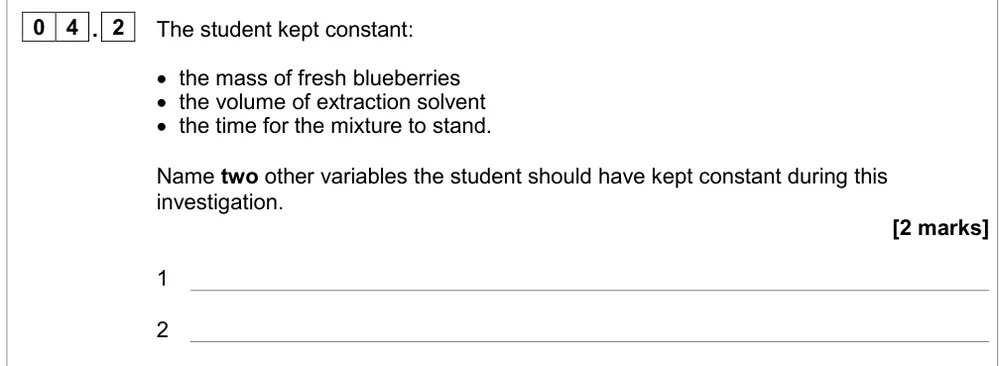
Name two other variables to keep constant when extracting pigment from blueberries.
Information from earlier in this question:
Show the mark scheme
Tap an image to open it full size.
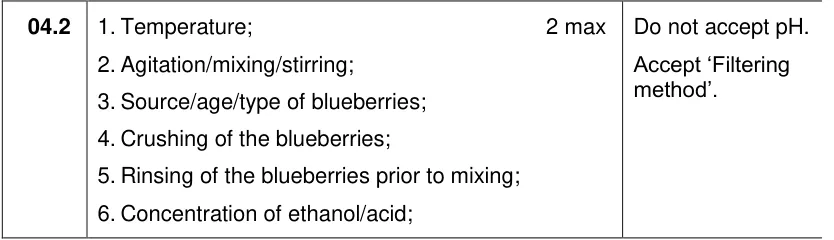
From the examiners' report: Students who kept to this investigation scored well. Stock answers such as pH or 'concentration of solutions' got nothing: think about the berries, the crushing and the stirring.
Question 9
A level Paper 1 · June 2017 · Q06.1 · 2 marks
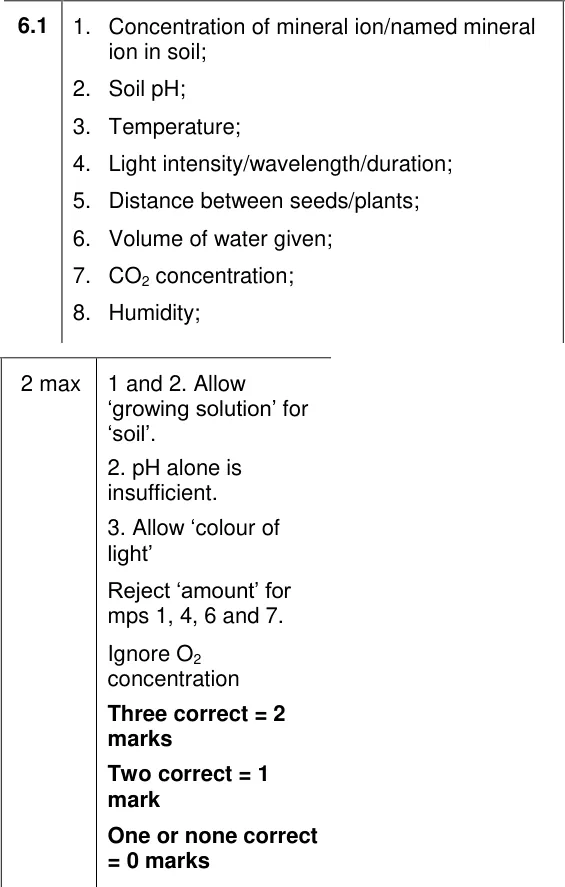
Give three environmental variables to control while growing wheat and wild oats before spraying.
Show the mark scheme
Tap an image to open it full size.
From the examiners' report: There's no examiners' comment on this part, so this tip comes from the mark scheme. These are growing conditions, so think greenhouse: temperature, light intensity, humidity, soil pH and the volume of water given. Write volume or concentration, never 'amount'.
Question 10
A level Paper 1 · June 2017 · Q06.3 · 2 marks
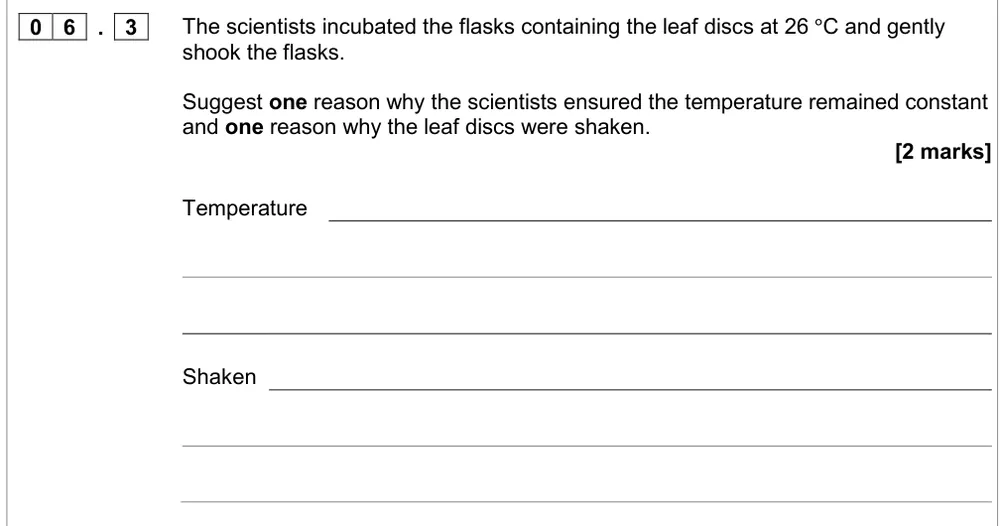
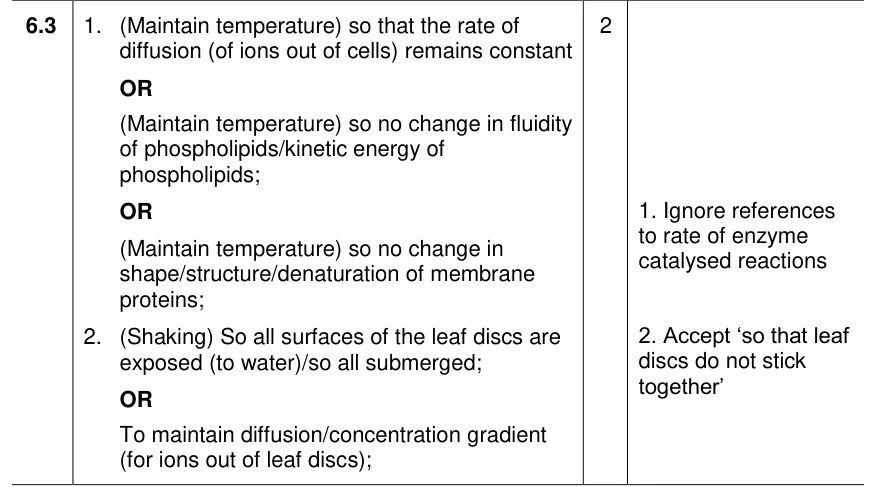
Suggest why the leaf disc flasks were kept at 26 °C and gently shaken.
Show the mark scheme
Tap an image to open it full size.
From the examiners' report: There's no examiners' comment on this part, so this tip comes from the mark scheme. Link temperature to the membrane or to diffusion, not to enzyme-catalysed reactions. Shaking keeps every surface in contact with the water and maintains the diffusion gradient.
Measuring temperature and volume
Question 11
AS Paper 2 · November 2020 · Q04.1 · 1 mark · Easy
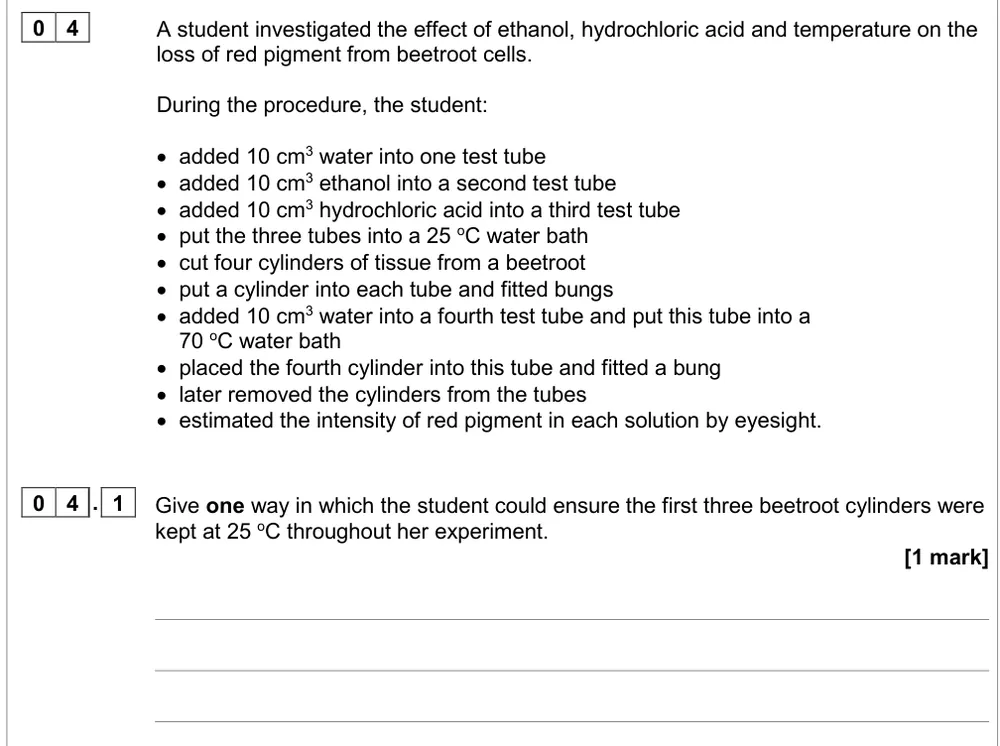
Give one way to make sure the beetroot cylinders stayed at 25 °C throughout.
Show the mark scheme

Tap an image to open it full size.
From the examiners' report: Most said to measure the temperature over time, but almost all assumed the water bath wouldn't change. The mark needs the corrective step too.
Question 12
AS Paper 2 · June 2017 · Q02.2 · 1 mark
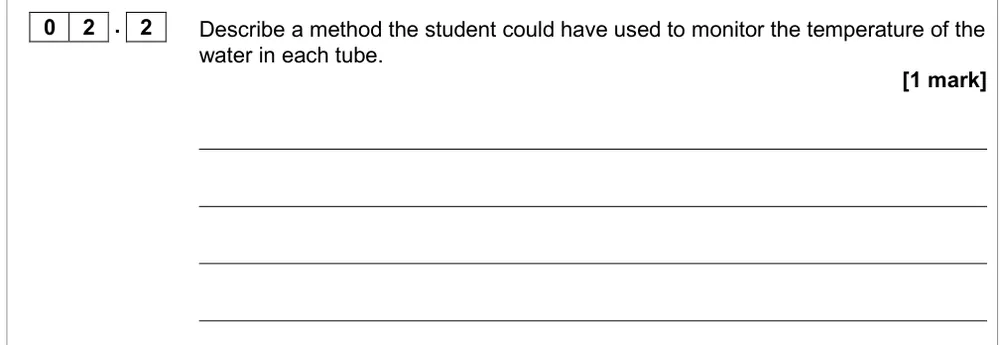
Describe how to monitor the temperature of the water in each tube.
Information from earlier in this question:
Show the mark scheme

Tap an image to open it full size.
From the examiners' report: There's no examiners' comment on this part, so this tip comes from the mark scheme. Monitoring means more than one reading: take readings during the experiment, with a thermometer or temperature sensor in the tube.
Question 13
AS Paper 2 · November 2020 · Q04.3 · 2 marks
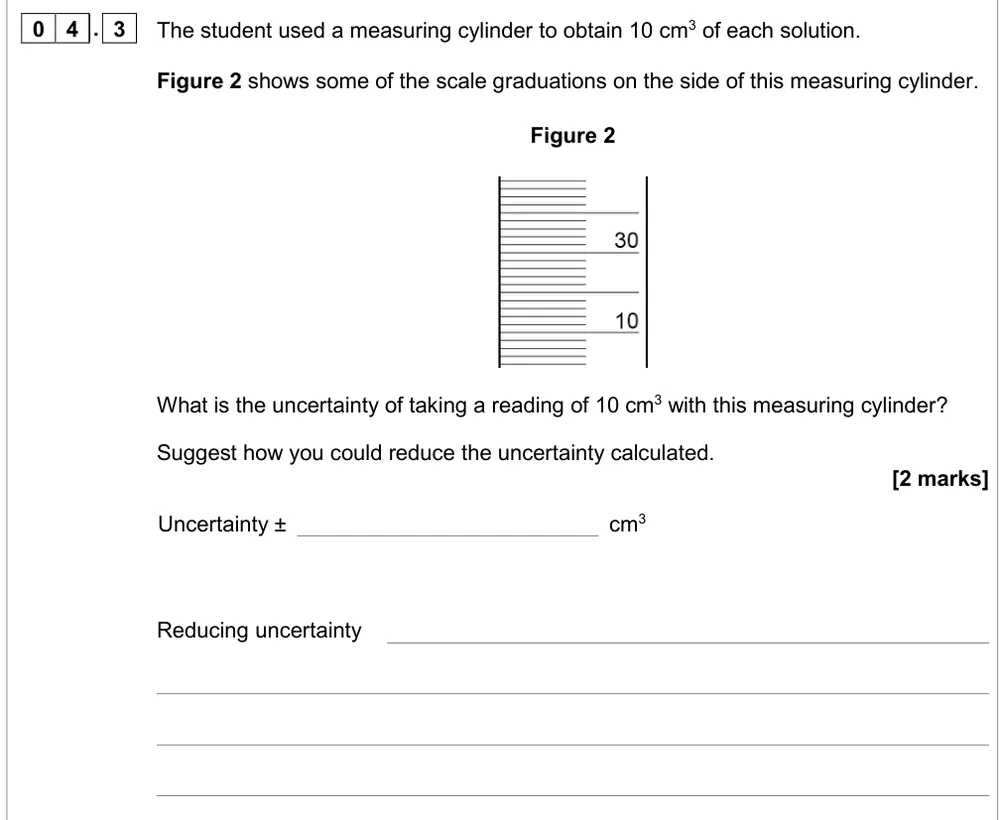
Find the uncertainty of reading 10 cm³ on a measuring cylinder and suggest how to reduce it.
Information from earlier in this question:
Show the mark scheme
Tap an image to open it full size.
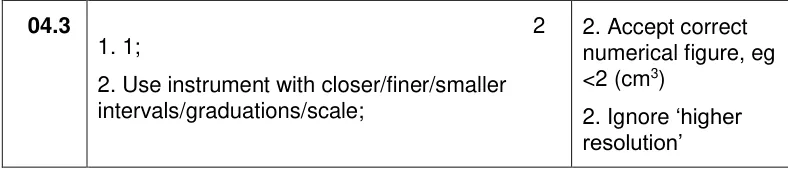
From the examiners' report: About 20% gave ±1. Many gave 2 (the division, not halved) or 0.5. Halve the smallest division, then name a cylinder or pipette with finer graduations.
Processing and evaluating results
Question 14
AS Paper 2 · June 2017 · Q02.3 · 1 mark
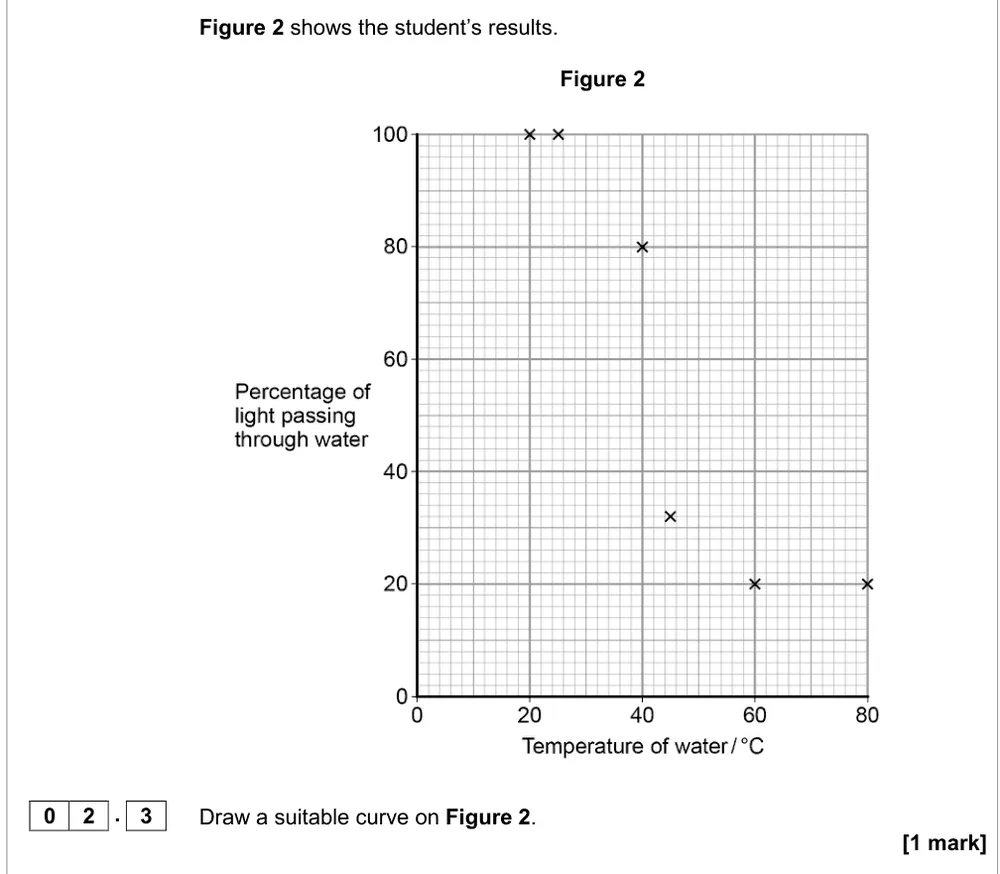
Draw a suitable curve through the beetroot results.
Information from earlier in this question:
Show the mark scheme

Tap an image to open it full size.
From the examiners' report: There's no examiners' comment on this part, so this tip comes from the mark scheme. Either join the points with a ruler or draw one smooth S-shaped curve, and stop at the first and last points.
Question 15
A level Paper 1 · June 2017 · Q06.2 · 4 marks
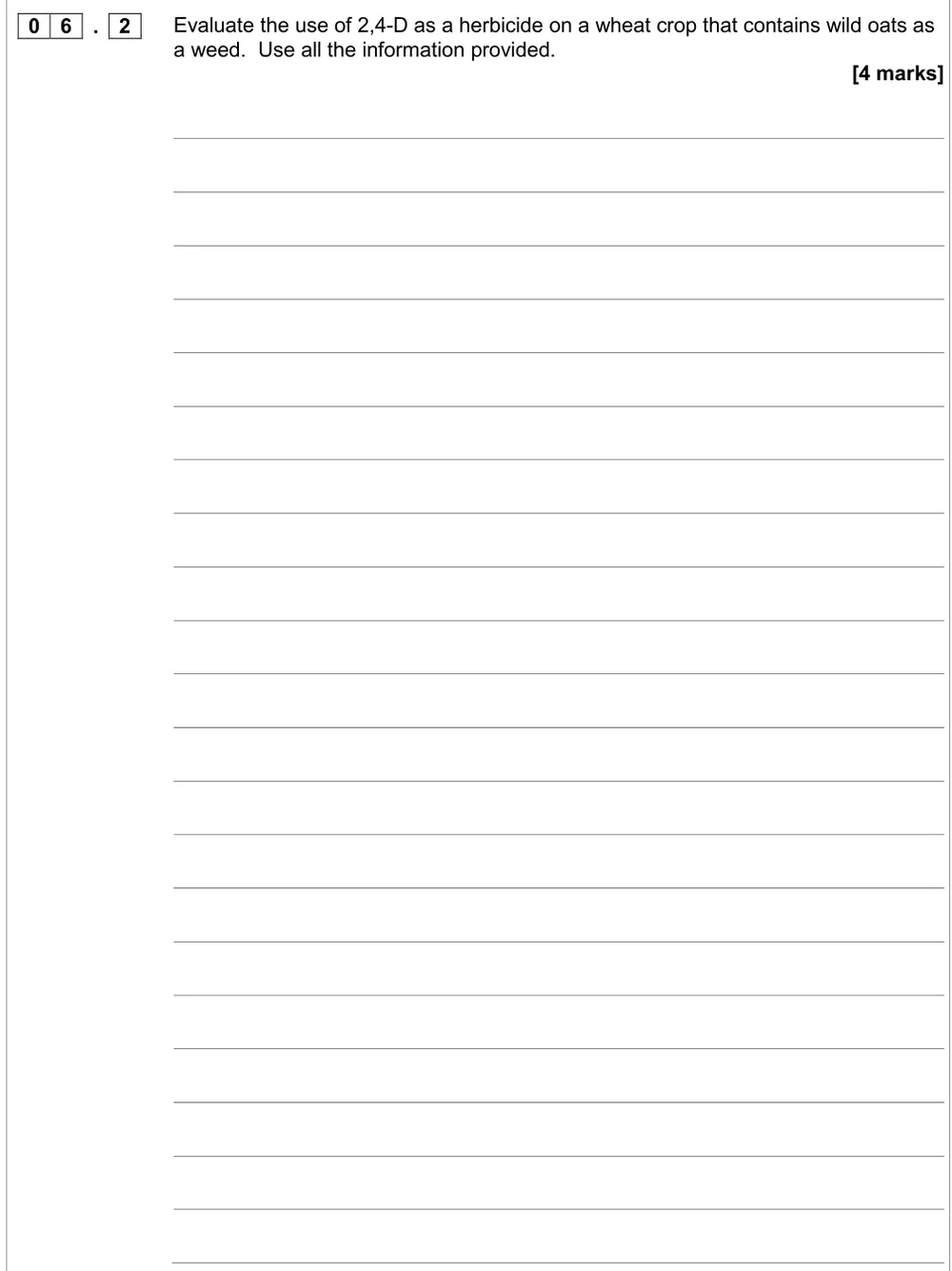
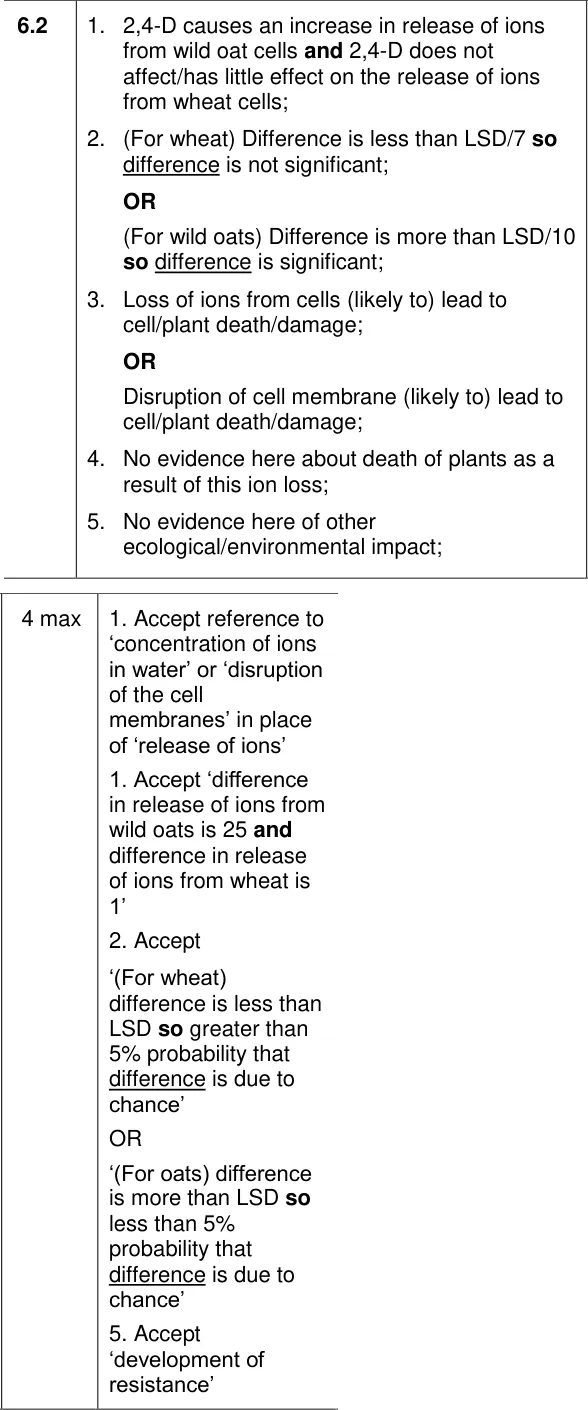
Evaluate using 2,4-D as a herbicide on wheat with wild oats, using the lowest significant difference.
Information from earlier in this question:
Show the mark scheme
Tap an image to open it full size.
From the examiners' report: There's no examiners' comment on this part, so this tip comes from the mark scheme. Compare each difference with its LSD: wheat changes by 1 (under 7), wild oats by 25 (over 10). Then give the limits: the data show ions leaking, not plants dying.
Where students lose marks (from AQA examiners' reports and mark schemes)
Each point below is followed by wording that gained marks.
Membrane proteins denature, not enzymes: About 5% got all four marks for describing and explaining the beetroot temperature results, though about 80% got at least one. A common misconception was that higher temperatures denature enzymes and slow down a reaction.
✔ Gains credit: "Because the membrane proteins denature at high temperatures"; "as temperature increases, fluidity of the cell membrane/phospholipids increases".
Cell-surface membrane, not cell wall: The mean mark for the beetroot water, ethanol, acid and 70 °C question was 2 out of 4. Many wrote about cell walls rather than cell-surface membranes, or made vague references to 'the damage caused to cells'.
✔ Gains credit: "(Damage to) cell(-surface) membrane"; "(by) 70 °C denaturing/altering membrane protein OR increasing fluidity/permeability of membrane".
Ethanol dissolves lipids; acid denatures proteins: On the blueberry question, being able to explain why ethanol disrupted the membrane was uncommon, and examiners were disappointed by how many couldn't describe how acid damages membrane proteins.
✔ Gains credit: "(E and F greater than water because) phospholipids dissolve in ethanol"; "(E greater than F because) acid denatures membrane proteins".
Give the disc's mass, thickness or surface area: Slightly more than a third got both marks for a control variable and its explanation. Many wrote 'size' or 'shape' of the disc, 'amount of water' instead of volume, or 'to make it a fair test', which isn't acceptable at AS level.
✔ Gains credit: "Diameter/thickness of disc OR surface area of disc OR volume of disc OR mass of disc"; "affects quantity/amount of pigment OR rate of release of pigment".
The independent variable isn't a control variable: In the question on two variables the student did not control, a common misconception was giving the dependent or independent variable as a control variable.
✔ Gains credit: "Length and diameter OR surface area OR volume OR mass/weight (of cylinders)"; "time in solution" ('time' on its own was ignored).
Keep your answer to this investigation: For the blueberry extraction, students who kept their answer specific to the investigation scored well, but standard answers about pH or the concentration of 'solutions' weren't creditworthy.
✔ Gains credit: "Temperature; agitation/mixing/stirring; source/age/type of blueberries; crushing of the blueberries; concentration of ethanol/acid."
Monitor the temperature, then correct it: Most answers suggested measuring the temperature of the solutions over time, but almost all assumed the water bath wouldn't change and gave no corrective measure.
✔ Gains credit: "Measure temperature (in tube) at intervals and use appropriate corrective measure (if temperature has fluctuated)."
Half the smallest division, either side: About 20% gave the correct uncertainty of ±1 cm³. Many gave 2 (the scale reading, not halved) or 0.5, and 'higher resolution' or reading the meniscus better gained no mark.
✔ Gains credit: "±1 (cm³)"; "use instrument with closer/finer/smaller intervals/graduations/scale".
Download the questions
Download the PDF pack (15 questions, mark schemes at the end)
Keep practising
- Transport across cell membranes: AQA A Level Biology exam questions by topic
- Required practicals 3 and 11, calibration curves: AQA A Level Biology exam questions
- Required practical 1, enzyme rates: AQA A Level Biology exam questions
- Proteins: AQA A Level Biology exam questions by topic
- Handling data and statistics: AQA A Level Biology exam questions
- AQA A Level Biology masterclasses
Questions, mark schemes and examiners' report extracts © AQA.