

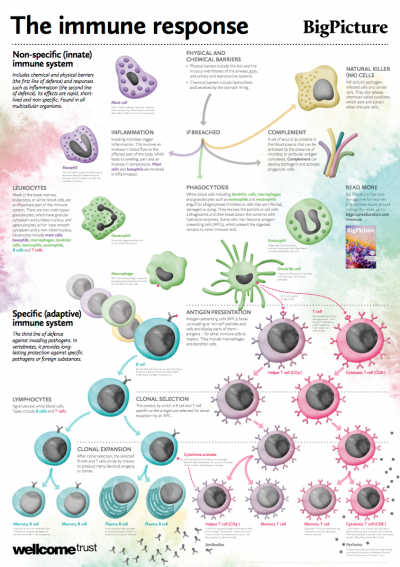
Brief Revision Guide to Immune System and Immune System Questions and Markschemes
Brief guide to understanding the hard bits of the immune system A-level Biology Specification. Lots of questions and markschemes on the immune system.
if you use then please like or share

Simpsons Biodiversity tips ! Questions for A-level Biology
Calculating Simpsons Biodiversity index and some questions and markschemes on Biodiversity and Conservation. A Simpsons biodiversity calculation is almost certain to be on the exam paper. It combines maths with ecology and gives an opportunity for the examiner to ask suggest questions....
if you use then please like and share

Answering Questions with lots of Maths in Biology - Data Analysis Questions in the new OCR Biology A Specification - updated Feb 2018 with the latest handbook
Which maths skills you need to practise for the new specification A-level Biology - excellent resources from OCR - also applies to AQA and Eduqas, lots of great practice questions
The quantity of maths in the 2017 specification is a challenge to many students - so I put together a summary of all of the OCR A new spec questions with some element of data analysis.
if you use then please like and share

Some of the Questions asked last year at UK Medical School admissions Interviews
if you use then like and share

Understanding Photosynthesis - Tips, Videos, PowerPoints and Pack of Exam Questions with Markscheme
Understanding Photosynthesis - Tips, Videos, PowerPoints and Pack of Exam Questions with Markscheme
if you use then like and share

Understanding Aerobic Respiration - Powerpoints, Animations, lots of exam questions and answers
A guide to aerobic and anaerobic respiration for A level Biology with plenty of exam questions on respiration with markschemes, for AQA, OCR, Edexcel
- if you use then please like or share


How to Answer Hardy-Weinberg Questions - A-level Biology - with question pack
How to understand and answer Hardy-Weinberg Questions - A-level Biology. Remember to look out for questions where they give you a dominant phenotype frequency -for instance Huntingdons disease, where the frequency of the sufferers is 1 in 100000 - therefore q squared (recessive allele phenotype) is 99999 in 100000.
if you use - then like and share

Haemoglobin Oxygen Dissociation Curve / Bohr Effect Exam Questions - How to understand the Sigmoid Curve
Lots of Haemoglobin Oxygen Dissociation Curve/ Bohr Shift Questions and Markschemes, suitable for OCR A, AQA - and a brief guide to Understanding them.
The key to understanding dissociation curves is firstly to understand the concept of partial pressure and what would make it change. And to understand cooperative binding.
- if you use then life and share

A-level Biology past paper questions with Graphs
Practising A-level Biology past paper questions with Graphs

How to approach and answer A-level Biology Questions that need you to Analyse Figures, Tables and Images - lots of example past paper questions
How to approach and answer A-level Biology Questions that need you to Analyse Figures, Tables and Images - lots of example past paper questions with the markschemes

Old and difficult Multiple Choice Questions - A-level Biology
Multiple Choice Questions - really good practice for OCR A A-level Biology
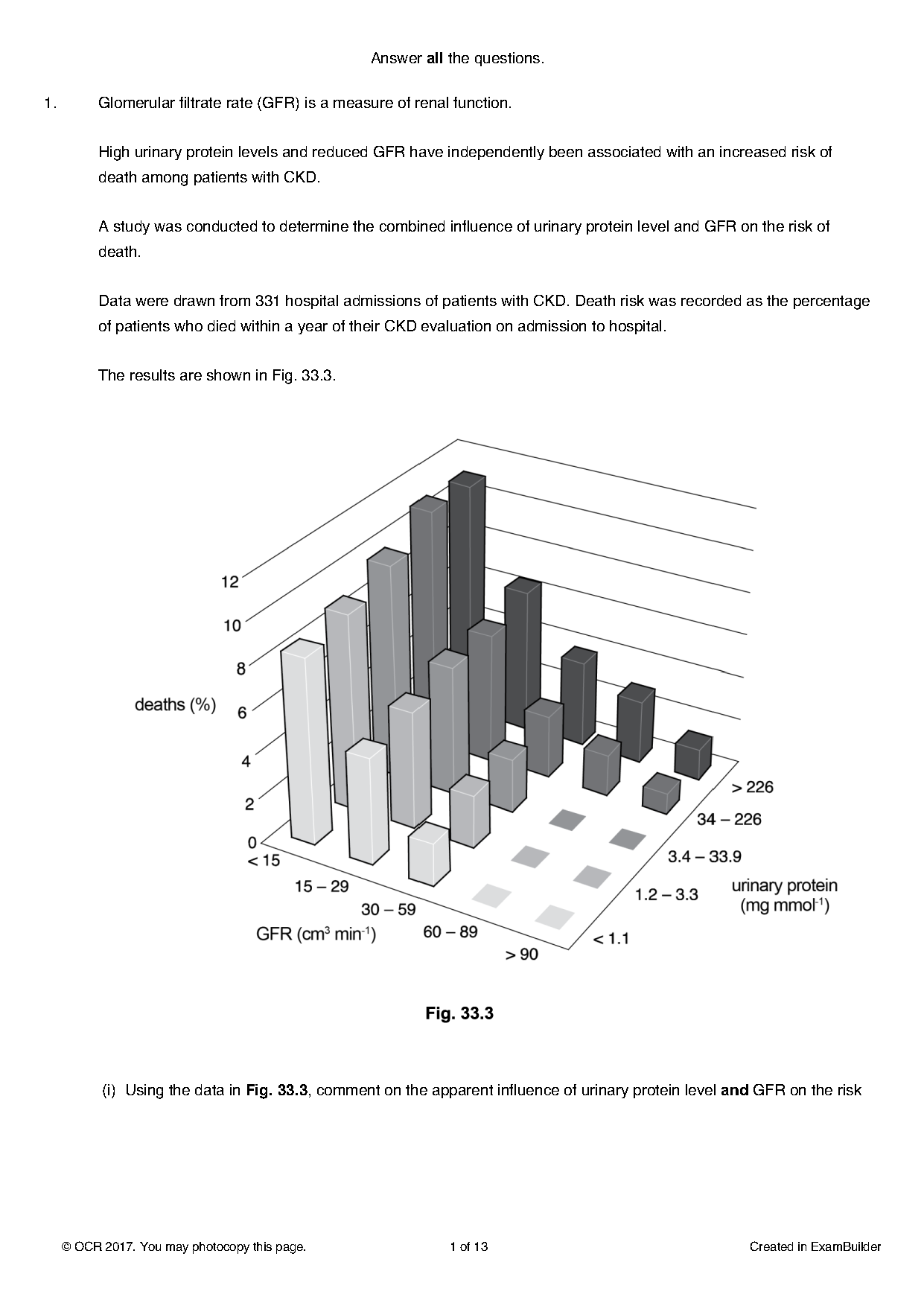
Challenging Questions with lots of Data Analysis and Application - A-level Biology past paper questions
Good practice if you are struggling with data analysis questions
Pack of challenging past paper questions with lots of Data Analysis and application - A-level Biology past paper questions - good for OCR and AQA specifications

Autosomal linkage and Chi-squared - Nail Patella ... Only for the brave ! A-level Biology
Terrific exam question - combining autosomal linkage and Chi-Squared. Give it a go if you have ambition.....

Nitrogen Cycle - a quick guide to understanding the concept, and a pack of questions - for A-level Biology
How to understand the Nitrogen Cycle
Nitrogen Cycle : A few tips
Start with dead plants and animals or faeces.
Remember that decomposers are just heterotrophes respiring dead stuff and producing ammonia from the deamination of amino acids (the keto acid that remains following deamination is respired).
Ammonia then gets oxidised to nitrite and oxidised to nitrate by nitrifying bacteria - Nitrosomonas and Nitrobacter , both aerobic chemoautotrophes.
Nitrates are actively transported into the roots, by a carrier protein which uses ATP from the mitochondria, then via the xylem to the leaves. In the leaves the nitrate is reduced to ammonia and then used to make (with carbon from photosynthesis) amino acids and nucleic acids and hence more plant !.
Growing a crop removes protein and nucleotides from a field (and sells it in Tesco !). To maintain fertility you need to make an input of nitrogen - this can be organic (dead things and faeces), which feed the decomposers. Or inorganic - made by joining nitrogen and hydrogen in the Haber process to make ammonia (applied to fields as ammonium nitrate), lightening also make nitrogen oxides - but is harder to arrange.
Rhizobium, a symbiotic bacteria, living in root nodules of legumes, benefits from an anaerobic environment, the legume makes Leghaemoglobin, a protein with a high affinity for oxygen which therefore prevents oxygen from poisoning the nitrogen reducing enzyme of the bacteria.
Rhizobia use sucrose from the plant for respiration. Rhizobia make ammonia (and hence amino acids) from nitrogen gas, the plants use these amino acids for growth. When legumes die, the nitrogen in the proteins of the dead plant is made available to other non-leguminous plants by decomposers.
Decomposers and nitrifying bacteria are aerobes so ploughing - which increases the availability of oxygen in the soil - will raise the concentration of nitrates and hence the ability of the plants to make more protein.,
Pseudomonas denitrificans is an anaerobe so thrives in waterlogged soil. Denitrification uses nitrate as an electron acceptor, the nitrate is reduced to Nitrogen gas, thus farmers drain fields to maintain fertility of the soil.

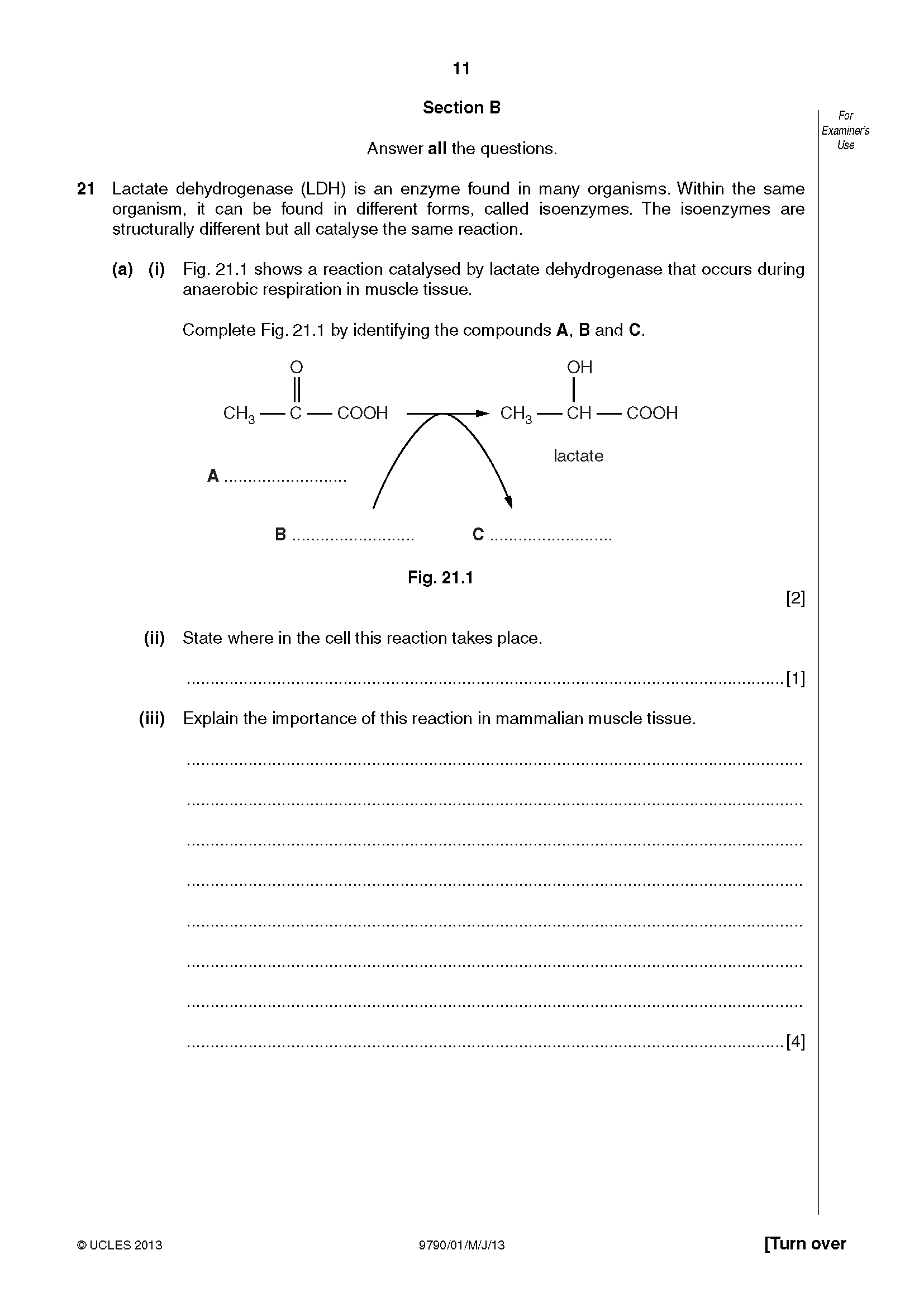
Respiration and Enzymes/Protein structure ... Hard Synoptic A-level Biology Question
This is an outstanding synoptic question from a Pre-U Biology Paper. Covers Protein Synthesis, Enzymes, Heart Disease, Respiration ....


Osmosis A-level Biology Past Paper Exam Questions
Pack of past paper questions on Osmosis and Water potential - I have tried to include one question of each type