“Could you explain this to someone else ? ” Photosynthesis and Respiration - Revision and understanding through self explanation
Recent research shows the effectiveness of self explanation
Try using these cards with a partner to revise respiration and photosynthesis
Print onto card. Cut out, place face down in a pack.
Pick up a card
Explain the concept with a whiteboard or paper.
Use all of the words on each card.
Then look up the concept in a textbook and correct your mistakes.
Work your way through the pack.
Recent research shows the effectiveness of self explanation ie could you explain this to someone else
Try using these cards with a partner to revise respiration and photosynthesis
Print onto card. Cut out, place face down in a pack.
Pick up a card
Explain the concept with a whiteboard or paper.
Use all of the words on each card.
Then look up the concept in a textbook and correct your mistakes.
Work your way through the pack.
Please like and share (and click on a advert to help with the hosting costs !)
Respiration - Test your understanding, tips, resources and a quiz
Oxygen is the final electron acceptor. It oxidises the final carrier in the ETC on the inner mitochondrial membrane and is reduced to water.
Hydrogen ions flow from the inter membrane space into the matrix via ATP synthase, this electrochemical gradient phosphorylates ADP.
Hydrogen ions are pumped from the matrix into the inter membrane space, using the energy from the electrons flowing along the ETC. The electrons come from the oxidation of food, transferred by coenzymes NAD and FAD.
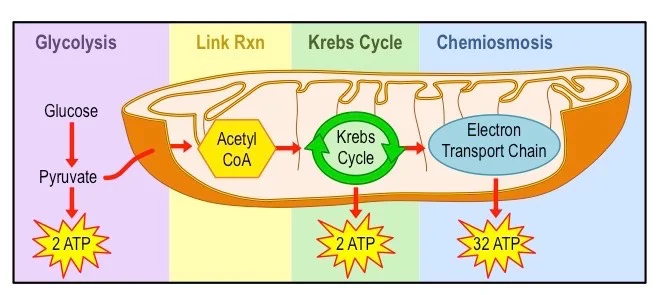
Glycolysis occurs in the cytoplasm. Link and Krebs in the matrix. Link and Krebs produce carbon dioxide by the removal of a carboxyl group.
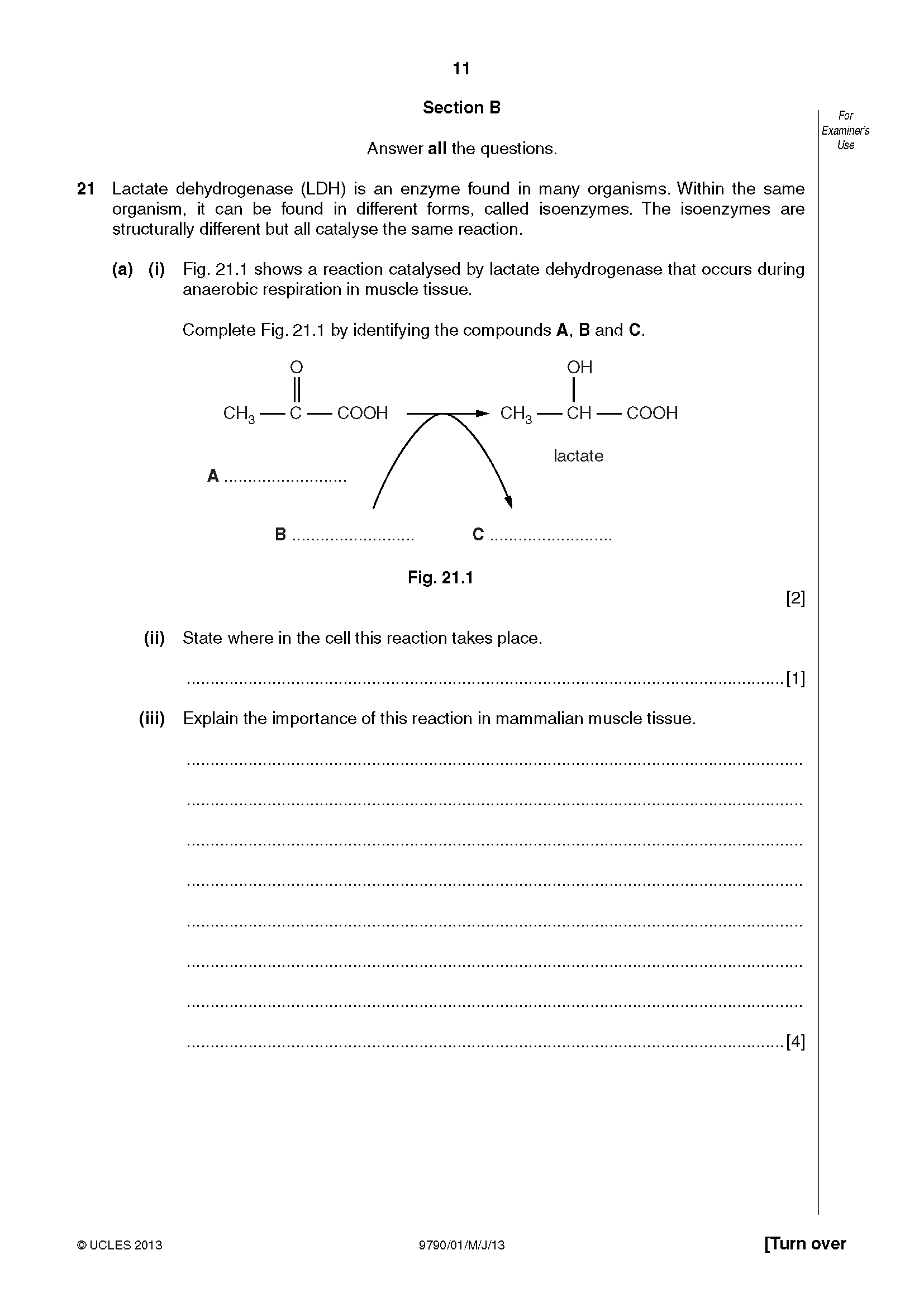
Fermentation is just glycolysis with a different way of regenerating NAD (from NADH) by the reduction of pyruvate (or ethanal).
Substrate level phosphorylation is the direct addition of phosphate to ADP, occurs in glycolysis (4 ATP) and Krebs (once per turn), chemiosmosis is H ions flowing through ATP synthase.
Cristae give a larger surface area for oxidative phosphorylation
Tips
Oxygen is the final electron acceptor. It oxidises the final carrier in the ETC on the inner mitochondrial membrane and is reduced to water.
Hydrogen ions flow from the inter membrane space into the matrix via ATP synthase, this electrochemical gradient phosphorylates ADP.
Hydrogen ions are pumped from the matrix into the inter membrane space, using the energy from the electrons flowing along the ETC. The electrons come from the oxidation of food, transferred by coenzymes NAD and FAD.
Glycolysis occurs in the cytoplasm. Link and Krebs in the matrix. Link and Krebs produce carbon dioxide by the removal of a carboxyl group.
Fermentation is just glycolysis with a different way of regenerating NAD (from NADH) by the reduction of pyruvate (or ethanal).
Substrate level phosphorylation is the direct addition of phosphate to ADP, occurs in glycolysis (4 ATP) and Krebs (once per turn), chemiosmosis is H ions flowing through ATP synthase.
Cristae give a larger surface area for oxidative phosphorylation
Please like and share (and click on a advert to help with the hosting costs !)
Understanding Aerobic Respiration - Powerpoints, Animations, lots of exam questions and answers
A guide to aerobic and anaerobic respiration for A level Biology with plenty of exam questions on respiration with markschemes, for AQA, OCR, Edexcel
- if you use then please like or share
Plenty of you are starting respiration - lots of good resources out there - try some of these
stunning animations - (needs flash - if you use iOS then puffin browser is excellent) Glycolysis, Krebs, ETC
Terrific ATP powerpoint from Biological Science Review Extra
Please like and share (and click on a advert to help with the hosting costs !)
Respiration and Enzymes/Protein structure ... Hard Synoptic A-level Biology Question
This is an outstanding synoptic question from a Pre-U Biology Paper. Covers Protein Synthesis, Enzymes, Heart Disease, Respiration ....
A level Biology Questions by Topic with Markschemes - Aerobic and Anaerobic
A level Biology Questions by Topic with Markschemes - Aerobic respiration and Anaerobic Respiration
Please like and share
Please like and share (and click on a advert to help with the hosting costs !)
Respiration Photosynthesis and AS knowledge - a terrific synoptic A-level Biology question
One from the OCR Unifying concepts paper, combines respiration and photosynthesis.
(a) think photolysis and Oxygen accepting electrons ...
(b) is about phosphorylation and diffusion gradients
(c) is about the nature of passive transport and using proteins
(d) is about endosymbionts and prokaryotes
Please like and share
One from the OCR Unifying concepts paper, combines respiration and photosynthesis.
(a) think photolysis and Oxygen accepting electrons ...
(b) is about phosphorylation and diffusion gradients
(c) is about the nature of passive transport and using proteins
(d) is about endosymbionts and prokaryotes
Linking Photosynthesis and Respiration - a wonderful synoptic exercise for A-level Biology
Try this, a terrific exercise to link Photosynthesis and Respiration. Excellent end of term revision.
Please like and share
Uploaded a set of new Respiration Tutorials to my Youtube Channel - A-level Biology
I have made a series of 9 short (5-7 mins) video tutorials to try to help students understand glycolysis, link reaction, krebs cycle, anaerobic respiration, oxidative phosphorylation, chemiosmosis and the use of other respiratory substrates. I hope you find them of use.
Please like and share
I have made a series of 9 short (5-7 mins) video tutorials to try to help students understand glycolysis, link reaction, krebs cycle, anaerobic respiration, oxidative phosphorylation, chemiosmosis and the use of other respiratory substrates. I hope you find them of use.
Here is the link to the playlist. Please subscribe and like and watch each one all the way through !
A different approach to teaching (aerobic) respiration - A-level Biology
Teaching aerobic respiration is a difficult topic, traditionally, teachers begin with glycolysis, then link reaction and krebs cycle and then the electron transport chain, I would argue that there is a better way to teach this.
Please like and share
Teaching aerobic respiration is a difficult topic, traditionally, teachers begin with glycolysis, then link reaction and krebs cycle and then the electron transport chain, I would argue that there is a better way to teach this.
I begin by teaching the structure of adenosine triphosphate, the need for ATP, and the concept of ATP as a currency that connects the source of the energy (which is the food) to where the energy currency is being consumed, in specific processes such as protein synthesis, DNA synthesis and the movement of ions against a concentration gradient.
I focus on the transient nature of the ATP and the disparity between the 5g in the body compared the 80kg turned over per day.
Then discuss the processes which are used to produce the ATP - substrate level phosphorylation and chemiosmosis.
After an explanation of chemiosmosis, I then lead on to the flow of electrons through the electron transport chain (and therefore the creation of the proton gradient between inter membrane space and matrix) which focuses on the electron on the last carrier and that it has to be accepted by oxygen to produce water.
Then you look at where the electron has come from.
I start with the production of the electron from the breakdown of pyruvate to acetyl and the acceptance of the electron by NAD, (at the same time pyruvate is decarboxylated). I repeatedly emphasize regeneration of NAD when the electron is passed from NADH to the electron transport chain.
Then you move on to the krebs cycle.
When teaching the Krebs cycle initially focus on the number of carbons and the decarboxylation and the dehydrogenation avoid discussions of the names of the intermediates and just keep the students focused on the big picture, which is the production of a reduced carriers (NAD and FAD).
Use the production of ATP/GTP directly in krebs cycle as an opportunity to recap about substrate level phosphorylation (with an eye on teaching glycolysis later)
Always keep emphasizing the fate of the reduced carriers that the electrons end up on the electron transport chain and then ultimately joining with oxygen to produce water (and this regenerates the electron carriers)
After teaching Link reaction and Krebs cycle, discuss other potential respiratory substrates - amino acids and fats - and where they might enter the Krebs cycle and Link reaction.
Finally look at glycolysis, emphasise that only glucose enters glycolysis and that the products do not include carbon dioxide and that oxygen is not consumed.
Emphasize the production of reduced NAD and then use that as a point to discuss as to how the NAD could be regenerated in the absence of oxygen and emphasize that anaerobic respiration is just glycolysis with an alternate way of getting rid of the reduced NAD.
Give it a go and see how you get on !

