

OCR A 5.1.4 · 5 exam questions worked through · about 15 minutes
Studying A-level Biology? I'm Tom, an A-level Biology teacher with 30 years' experience. I offer one-to-one lessons and weekly group classes for AQA and OCR A, with every lesson recorded.
This post covers OCR A specification 5.1.4, hormonal communication: endocrine glands, steroid and non-steroid hormones, the adrenal glands, the histology of the pancreas and diabetes. Work through five real OCR questions and you'll see exactly what the mark schemes credit and where the examiners say marks were lost.
What you need to know first
- Endocrine glands secrete hormones into the blood; exocrine glands secrete into ducts
- Steroid hormones are lipid soluble; non-steroid hormones bind to receptors on the cell surface membrane
- The adrenal cortex and the adrenal medulla secrete different hormones
- The islets of Langerhans in the pancreas contain alpha cells and beta cells
Question 1: What an endocrine gland is (2 marks)
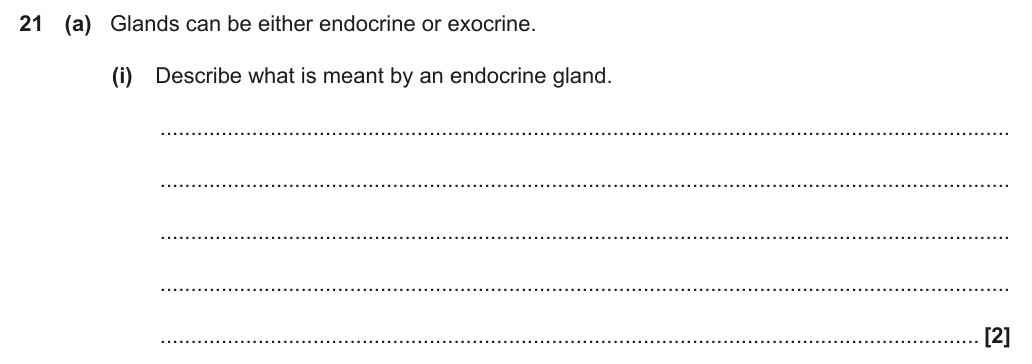
How to approach it. Two marks, two ideas: what the gland does and where the product goes. An endocrine gland is a group of cells that secretes hormones, and it secretes them directly into the blood. You can also say it has no ducts.
Mark scheme

Common mistakes (from OCR's examiners' reports and mark schemes)
- Using the word "excretes". The examiners' report says some less successful responses mentioned excretion, and the mark scheme does not allow it. Gains credit: "secretes hormones" (or releases or produces).
- Stopping at "produces hormones". The report says most candidates gained that one mark; the good responses went on to say where the hormones go. Gains credit: "directly into the blood" or "it has no ducts".
- Saying the hormones are released inside the cell. The report lists this among the less successful responses. Gains credit: "into the bloodstream".
Question 2: Where steroid hormone receptors are found (2 marks)
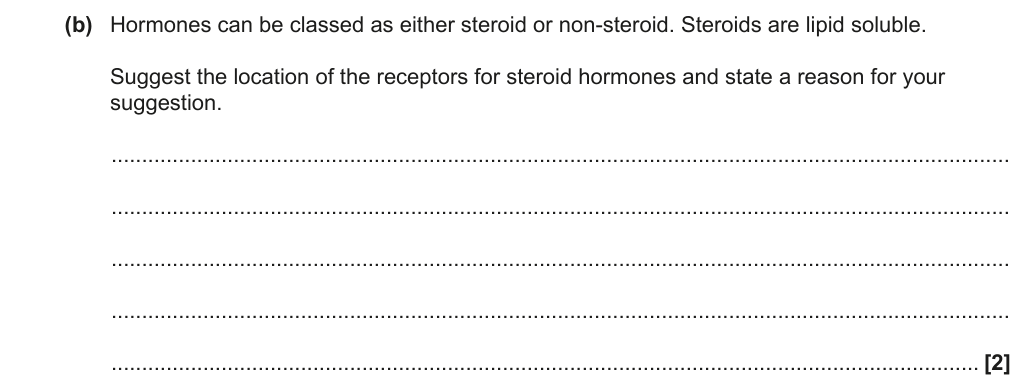
How to approach it. Use the fact you are given. Steroids are lipid soluble, so they can cross the cell surface membrane (the phospholipid bilayer). That means their receptors are inside the cell, in the cytoplasm or the nucleus.
Mark scheme

Common mistakes (from OCR's examiners' reports and mark schemes)
- Placing the receptor on the membrane. The examiners' report says some candidates did this even though they also described steroid hormones passing through the membrane. Gains credit: "inside the cell", "in the cytoplasm" or "in the nucleus".
- Deciding that lipid soluble means the hormone cannot pass through. The report says other candidates concluded this and put the receptors on the surface of the plasma membrane. Gains credit: "steroids can cross the cell surface membrane because they are lipid soluble".
- Writing only "cell membrane" or "bilayer". The report says some candidates used these instead of the terms in the mark scheme. Gains credit: "cell surface membrane", "plasma membrane" or "phospholipid bilayer".
Question 3: The adrenal cortex and the adrenal medulla (3 marks)
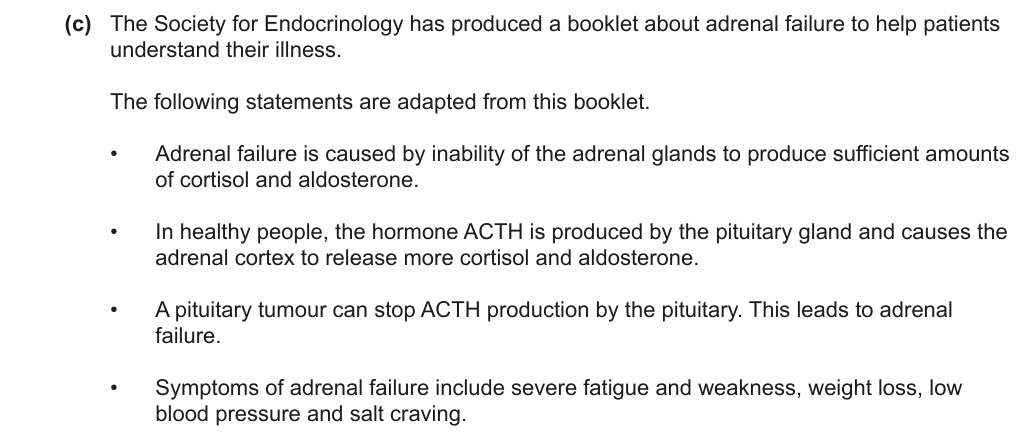
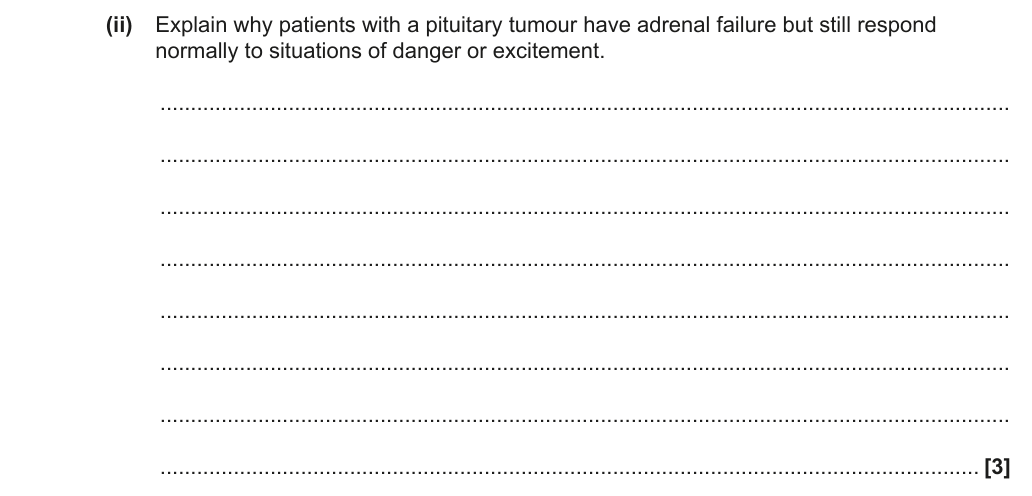
How to approach it. The statements tell you that ACTH acts on the adrenal cortex. So a pituitary tumour that stops ACTH production affects only the cortex. The response to danger depends on adrenaline, which is made by the adrenal medulla, and ACTH does not affect the medulla. The fight or flight response is also brought about by the sympathetic nervous system. Any three of these points gain the marks.
Mark scheme

Common mistakes (from OCR's examiners' reports and mark schemes)
- Naming the sympathetic nervous system but not saying what it does. The examiners' report says several candidates mentioned it without adding that it is also responsible for the fight or flight response. Gains credit: "the fight or flight response is also brought about by the sympathetic nervous system".
- Writing "parasympathetic". The mark scheme does not allow it. Gains credit: "sympathetic" or "autonomic" nervous system.
Question 4: Identifying structures in the pancreas (3 marks)
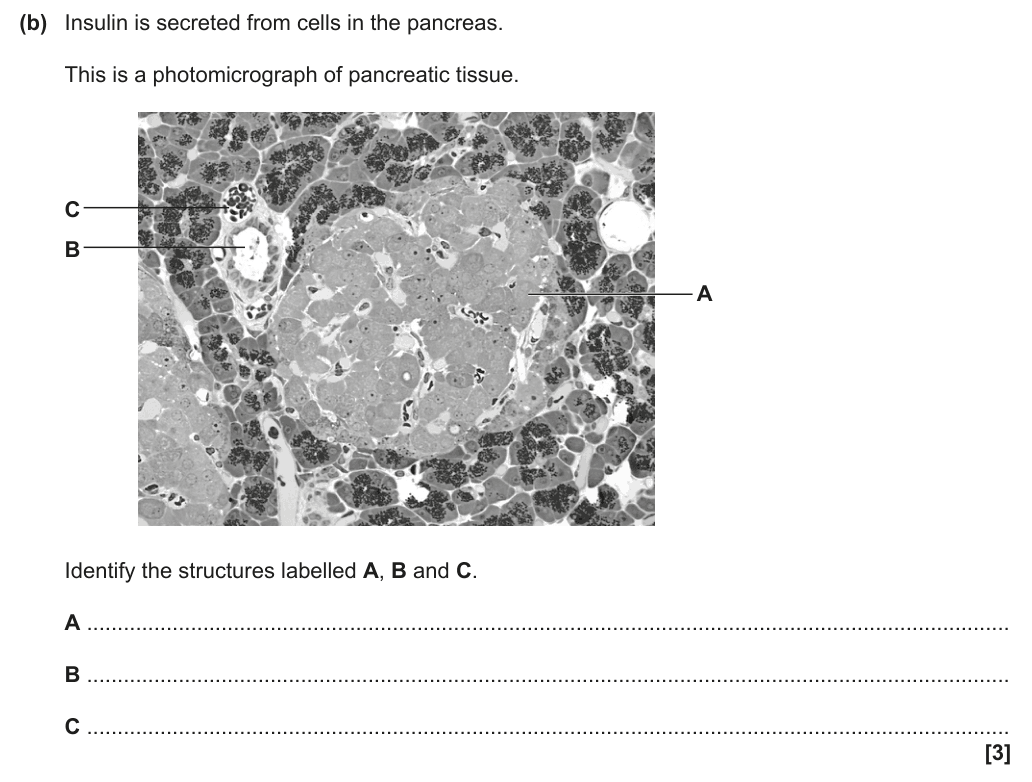
How to approach it. Look for the pale cluster of cells among the darker tissue: that is an islet of Langerhans (A). A tube with a clear lumen lined by cells is a pancreatic duct (B). A space packed with red blood cells is a blood vessel (C).
Mark scheme

Common mistakes (from OCR's examiners' reports and mark schemes)
- Calling the blood vessel hepatic. The examiners' report says marks were lost for naming hepatic rather than pancreatic vessels, and the mark scheme does not allow an incorrectly named vessel. Gains credit: "blood vessel", or "artery", "arteriole", "vein" or "venule" with no organ named.
- Calling C a capillary. The report says this was not allowed because the vessel contains too many red blood cells. Gains credit: "blood vessel", "arteriole" or "venule".
Question 5: Managing gestational diabetes (2 marks)
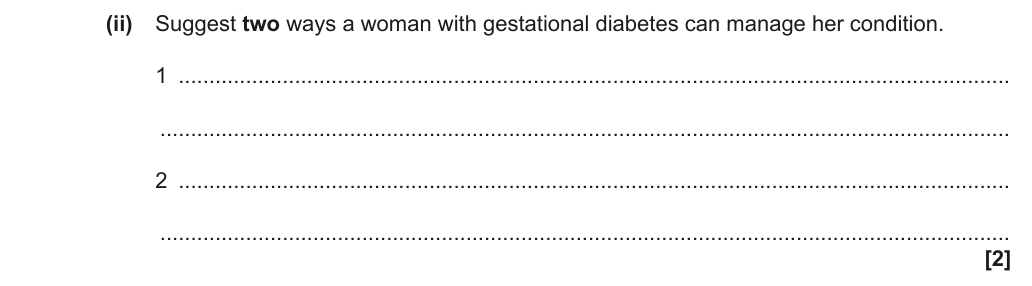
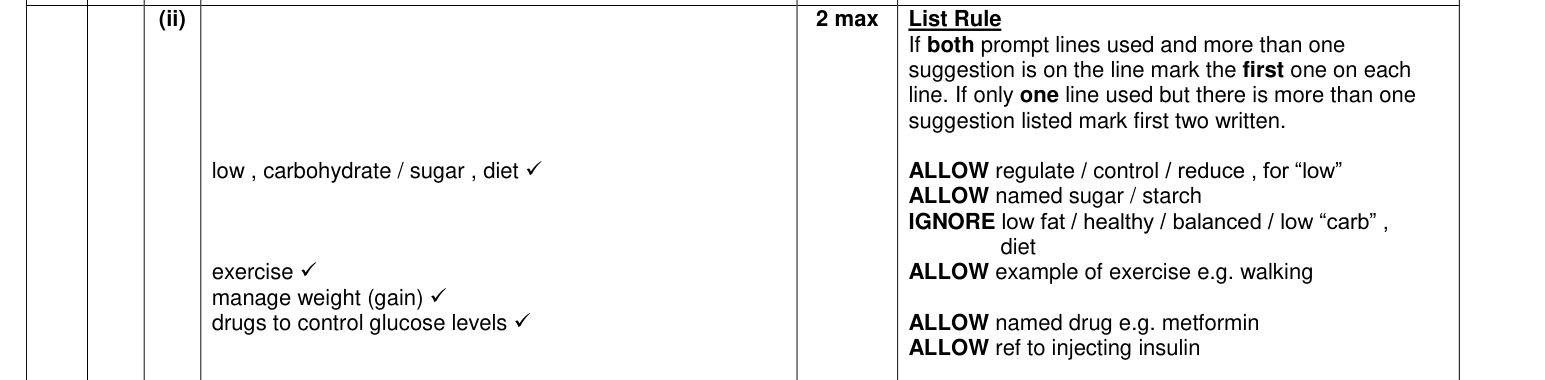
How to approach it. This follows a part about gestational diabetes, which is diabetes that develops during pregnancy. Give two different, specific ways of managing blood glucose: a low-carbohydrate or low-sugar diet, exercise, managing weight gain, or drugs that control glucose levels such as metformin or insulin injections.
Mark scheme
Common mistakes (from OCR's examiners' reports and mark schemes)
- Writing about diet without mentioning carbohydrate or sugar. The examiners' report says answers such as "maintain a healthy diet" were not credited, and the mark scheme ignores healthy, balanced and low-fat diets. Gains credit: "a low-carbohydrate diet" or "reduce sugar intake".
- Putting several suggestions on one line. The mark scheme says only the first suggestion on each line is marked. Gains credit: one clear suggestion on each line, for example "regular exercise" on the second.
Key points to remember
- Glands secrete hormones; they do not excrete them. Endocrine glands secrete directly into the blood.
- Steroid hormones are lipid soluble, so they cross the cell surface membrane and bind to receptors inside the cell.
- The adrenal cortex is controlled by ACTH from the pituitary gland; the adrenal medulla makes adrenaline.
- In pancreas photomicrographs: islets of Langerhans are the paler clusters; ducts have a lumen; do not name a vessel after the wrong organ.
- For diabetes, be specific: carbohydrate or sugar in the diet, exercise, weight, or a named treatment.
Practise next
- OCR A neuronal and hormonal communication exam questions by topic
- Hormonal communication written quiz
- All OCR A Level Biology revision resources
Studying this for OCR A? My weekly OCR A Year 13 masterclass works through topics like this with real exam questions. See the timetable or book a first one-to-one lesson.
Questions, mark schemes and examiners' report comments © OCR.