

Cell membranes and transport is the Core Concept behind almost every exchange question on the Eduqas papers. You need the fluid mosaic model, the factors that change membrane permeability (the beetroot practical), and each way substances cross a membrane: diffusion, facilitated diffusion, osmosis, active transport, co-transport and bulk transport. Questions marked AS are from the AS papers (B400); the rest are from the A level papers (A400), where the same ideas reappear in roots, kidneys, nerves and gut.
The examiners' reports keep returning to water potential and to precise wording. Say where water moves to and by what process, call it a higher concentration gradient when the gradient changes, link oxygen to ATP when explaining active transport, and remember that the cell membrane is a bilayer when you work out areas.
I don't teach the Eduqas specification myself, so for one-to-one help I recommend Sam. He teaches Eduqas A level Biology at a top-rated sixth form college and is very popular with his students. You can ask about lessons with Sam on WhatsApp using the link at the bottom of this page.
What you need from GCSE and Year 12
Each question on this page assumes you're secure on these ideas. If any of them feels shaky, look it up before you start.
- Diffusion is the net movement of particles from a higher to a lower concentration.
- Osmosis is the diffusion of water across a partially permeable membrane.
- Active transport moves substances against a concentration gradient and needs energy from respiration.
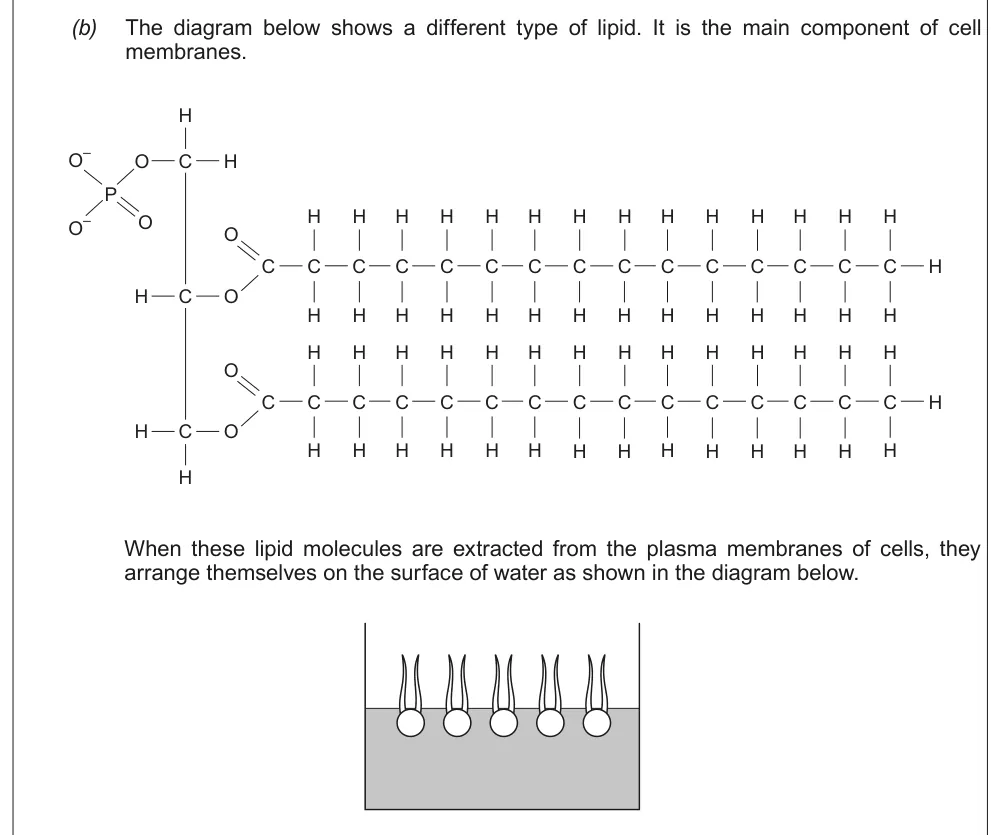
- Phospholipids have a hydrophilic phosphate head and two hydrophobic fatty acid tails.
Key terms
These words come up in the questions and mark schemes. Examiners expect you to use them exactly.
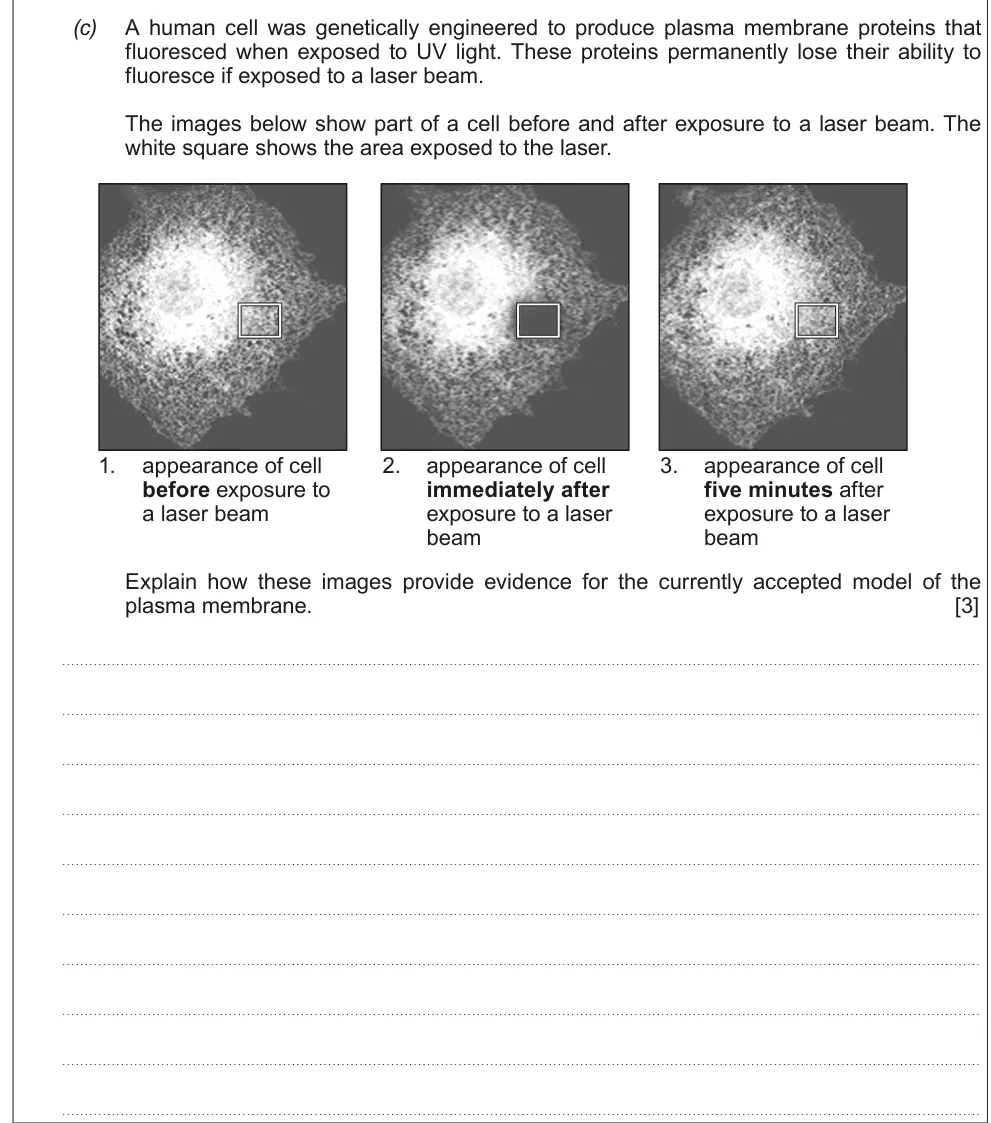
- Fluid mosaic model: a phospholipid bilayer in which proteins and other molecules are scattered and free to move.
- Intrinsic protein: a protein that spans the whole bilayer, such as a channel or carrier protein.
- Water potential (Ψ): the tendency of water to move out of a solution; pure water is 0 kPa and solutions are negative.
- Isotonic: having the same water potential (same solute concentration) as the cell.
- Plasmolysis: the cell membrane pulling away from the cell wall as a plant cell loses water.
- Facilitated diffusion: passive movement through channel or carrier proteins, down a concentration gradient.
- Co-transport: movement of one substance (glucose) coupled to another (Na⁺) through the same carrier protein.
- Endocytosis: taking material into a cell by enclosing it in a vesicle formed from the membrane; it needs ATP.
What these questions cover (Eduqas CC3)
The questions test these statements from Core Concept 3 of the Eduqas A level Biology specification (A400). Core Concepts are taught in Year 12, examined in AS Component 1 and tested again in every A level paper.
- (a) the principal components of the plasma membrane and the fluid-mosaic model
- (b) the factors affecting permeability of the plasma membrane
- (c) the following transport mechanisms
How to use this page
Write your answer on paper before you open the mark scheme. Allow about 1.2 minutes per mark: the 21 questions are worth 49 marks, so about 59 minutes in total. Then mark your answer strictly against the mark scheme and read the examiners' tip underneath it. If you'd rather print the questions, download the PDF pack.
Membrane structure
Question 1
AS Component 1 · June 2017 · Q1(b)(ii) · 1 mark
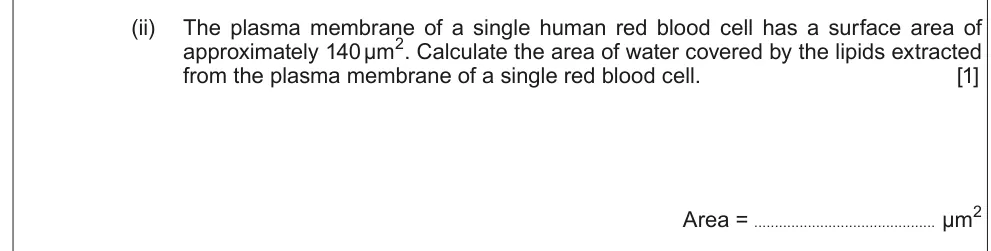
Calculate the area of water covered by the lipids from one red blood cell membrane.
Information from earlier in this question:
Show the mark scheme

Tap an image to open it full size.
From the examiners' report: Many students didn't double the 140 µm² because they forgot the membrane is a bilayer: 280 µm².
Question 2
AS Component 1 · June 2017 · Q1(c) · 3 marks
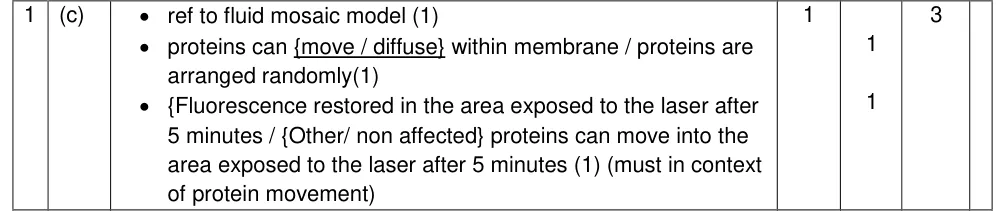
Explain how laser-bleaching images support the fluid mosaic model.
Show the mark scheme
Tap an image to open it full size.
From the examiners' report: The stem says the fluorescent proteins were affected, so write about proteins moving back into the bleached area, not phospholipids.
Question 3
AS Component 1 · June 2023 · Q3(a)(ii) · 3 marks · Easy
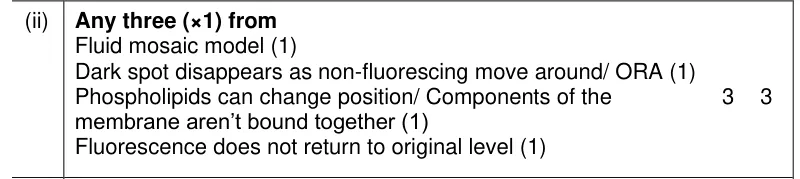
Explain the recovery of fluorescence after part of a membrane is bleached.
Information from earlier in this question:
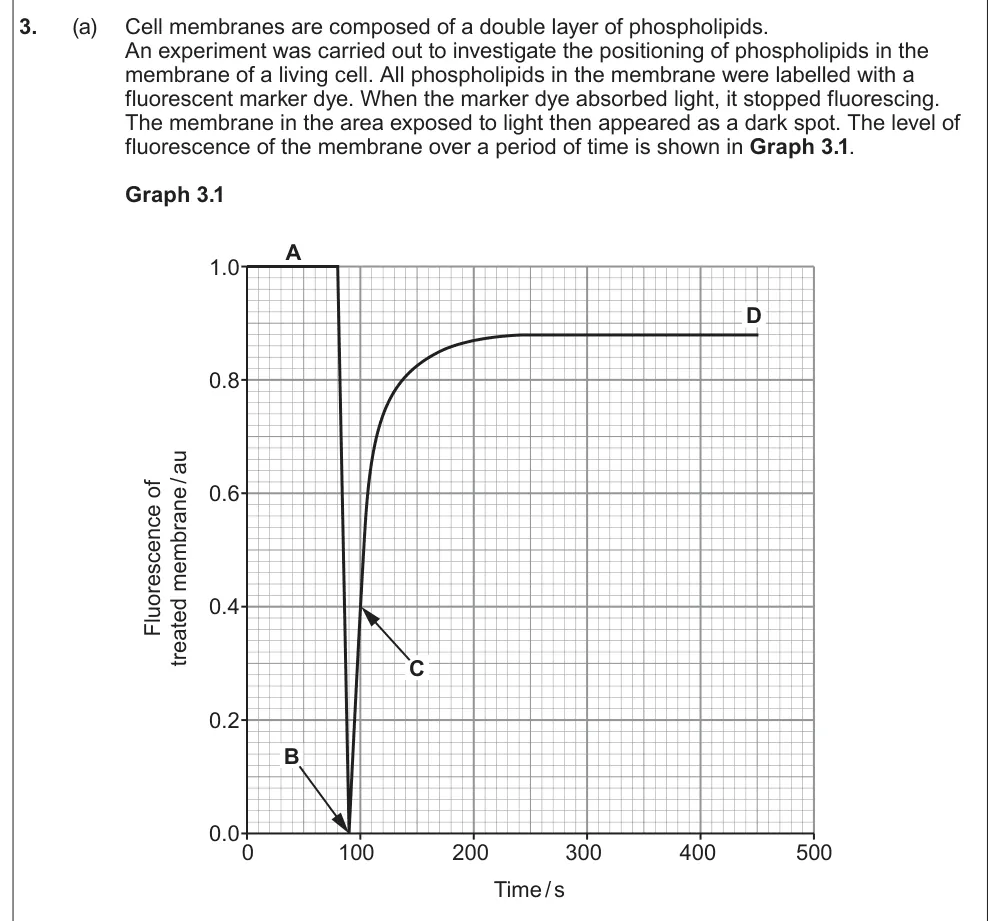
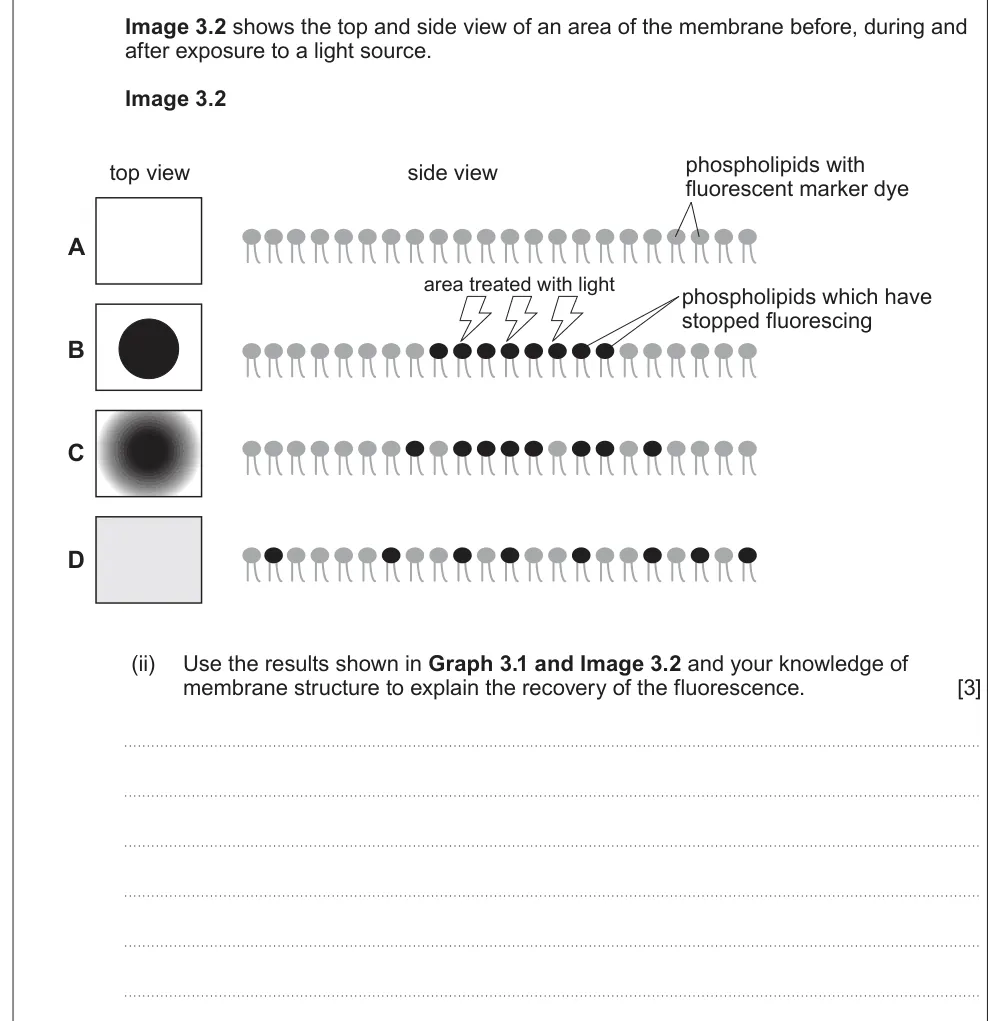
Show the mark scheme
Tap an image to open it full size.
From the examiners' report: This was answered well in many cases, but fewer students noticed that the fluorescence doesn't return to its original level.
Question 4
A level Component 2 · June 2017 · Q1(c)(ii) · 3 marks
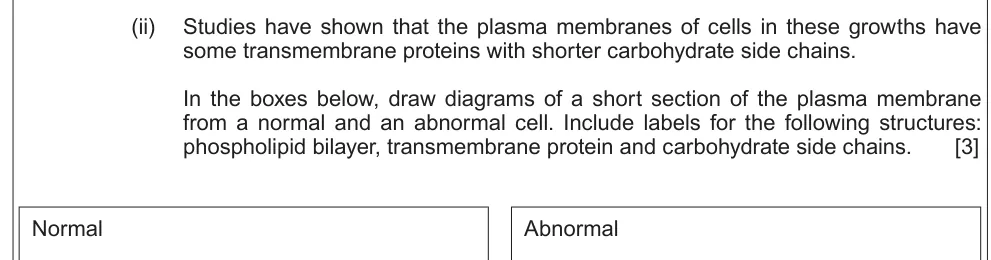
Draw labelled diagrams of normal and abnormal membranes.
Show the mark scheme

Tap an image to open it full size.
From the examiners' report: A transmembrane protein must cross both layers. Many drawings showed one that only went into one layer, and carbohydrate chains must stick out from the membrane surface.
Question 5
A level Component 1 · June 2024 · Q4(a)(iii) · 2 marks
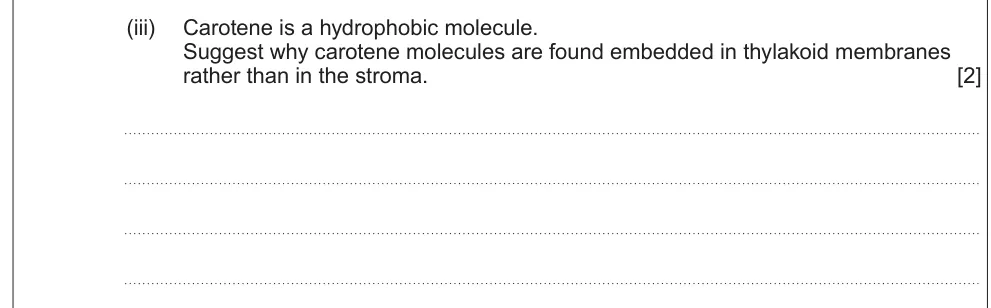
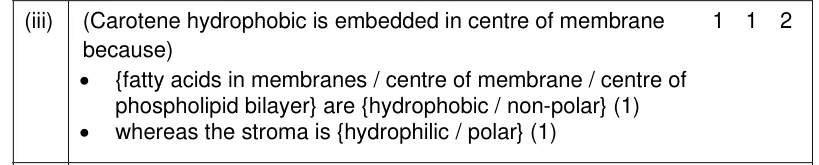
Suggest why carotene is embedded in thylakoid membranes, not in the stroma.
Show the mark scheme
Tap an image to open it full size.
From the examiners' report: Most answers lacked detail. Say the centre of the bilayer (the fatty acid tails) is hydrophobic, while the stroma is watery and polar.
Question 6
A level Component 2 · June 2018 · Q2(c)(i) · 2 marks
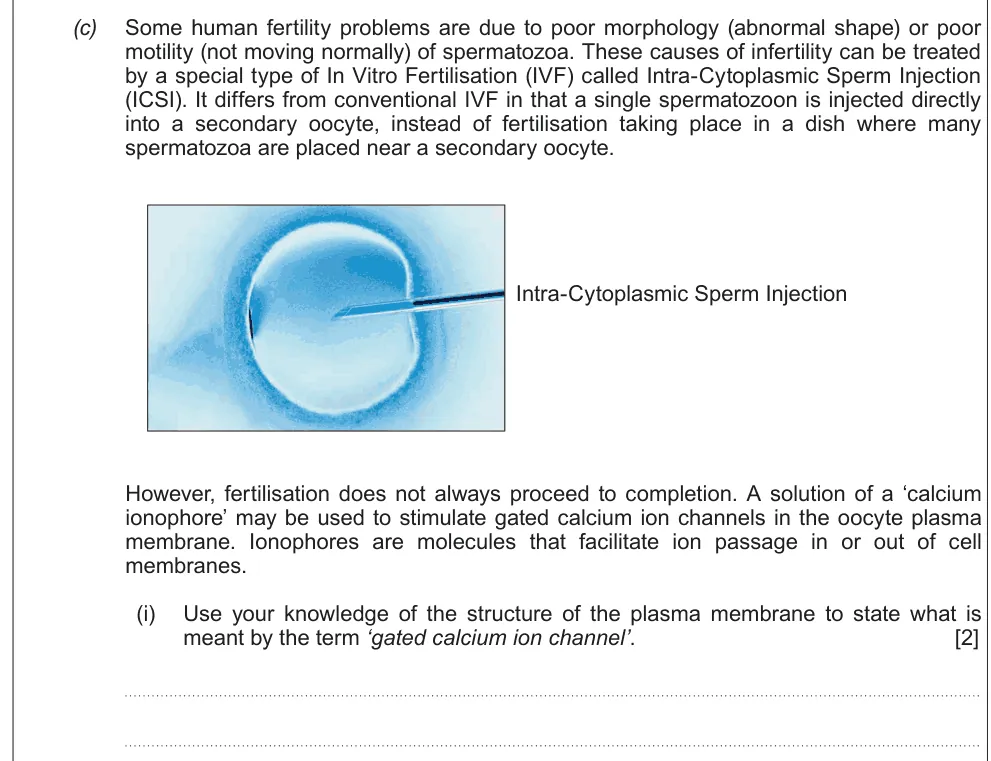
Use your knowledge of membranes to explain the term gated calcium ion channel.
Show the mark scheme

Tap an image to open it full size.
From the examiners' report: This was demanding because you had to apply knowledge: a transmembrane protein with a channel that opens and closes to let Ca²⁺ through.
Question 7
A level Component 3 · Autumn 2020 · Q2(a)(ii) · 1 mark
Explain why sodium ions don't diffuse across the phospholipid bilayer.

Show the mark scheme

Tap an image to open it full size.
From the examiners' report: Credit went to answers about the hydrophobic tails (fatty acids) blocking the ions, or ions not being lipid soluble.
Membrane permeability
Question 8
AS Component 1 · June 2023 · Q3(d)(i) · 2 marks
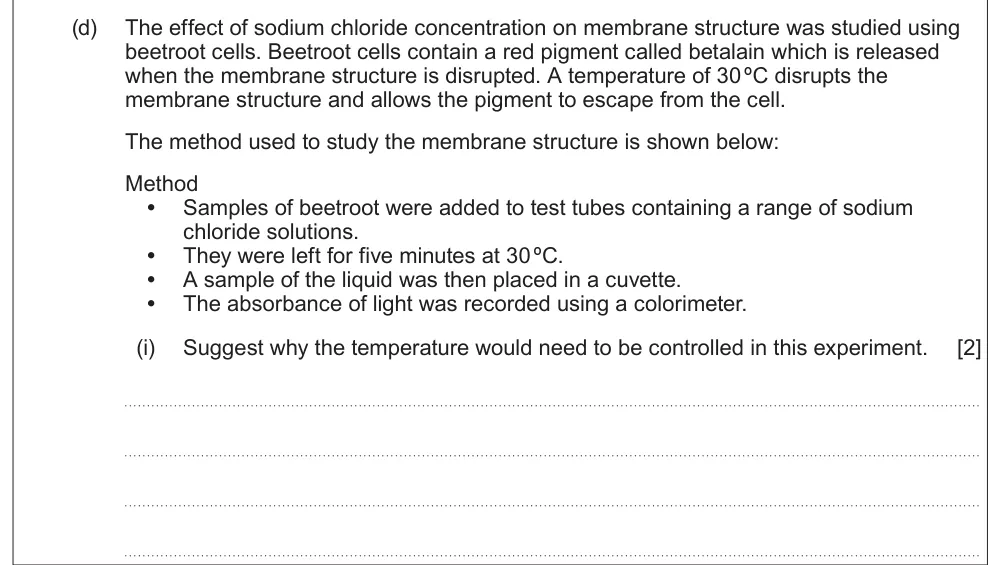
Suggest why temperature must be controlled in the beetroot experiment.
Show the mark scheme

Tap an image to open it full size.
From the examiners' report: Some students called temperature the independent variable. Few said that temperature changes the kinetic energy of the molecules.
Question 9
AS Component 1 · June 2023 · Q3(d)(iii) · 4 marks
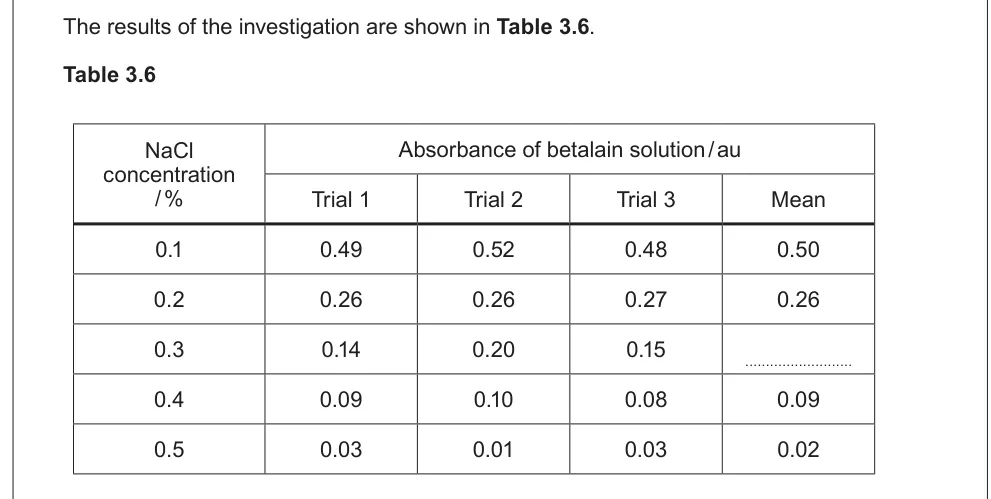
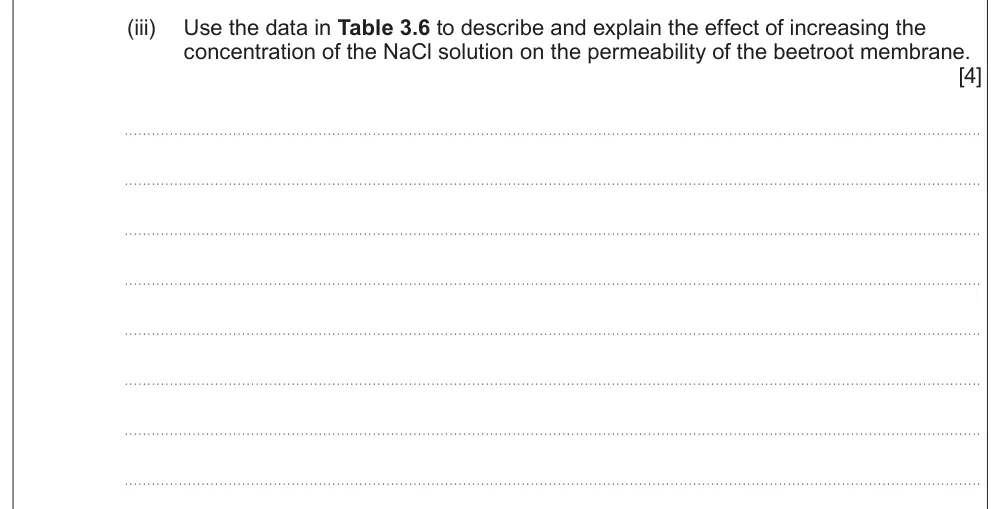
Use colorimeter data to explain how NaCl concentration affects membrane permeability.
Information from earlier in this question:
Show the mark scheme

Tap an image to open it full size.
From the examiners' report: Lower absorbance means less pigment released, so the membrane is less permeable. Answers about water potential and osmosis gained few marks.
Osmosis and water potential
Question 10
A level Component 1 · June 2022 · Q6(c)(ii) · 1 mark
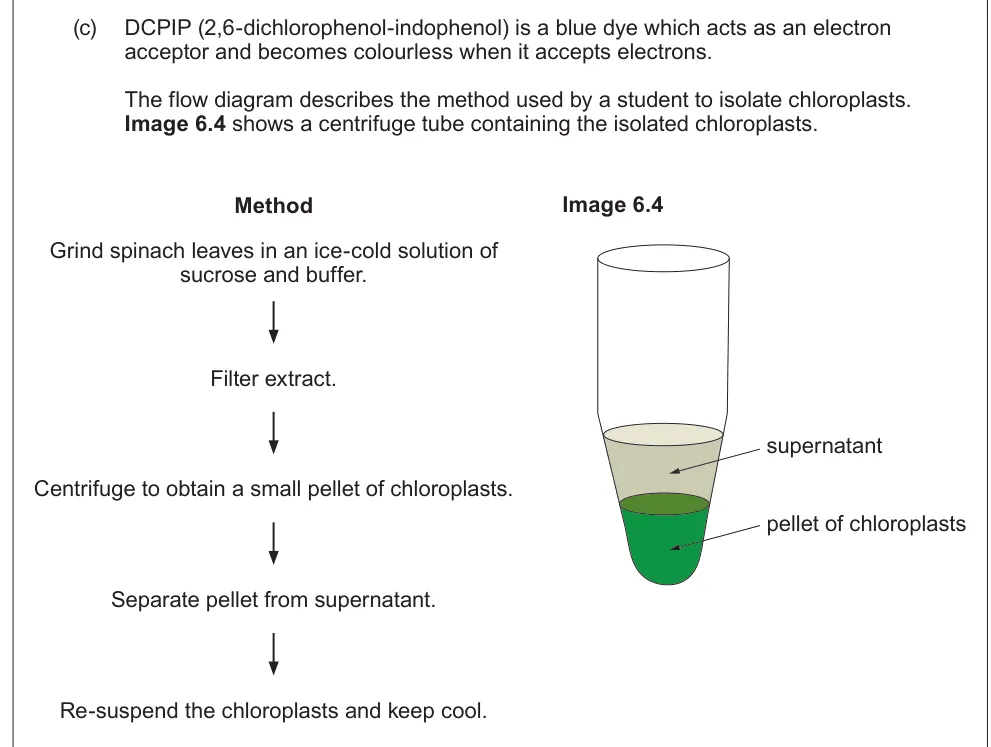
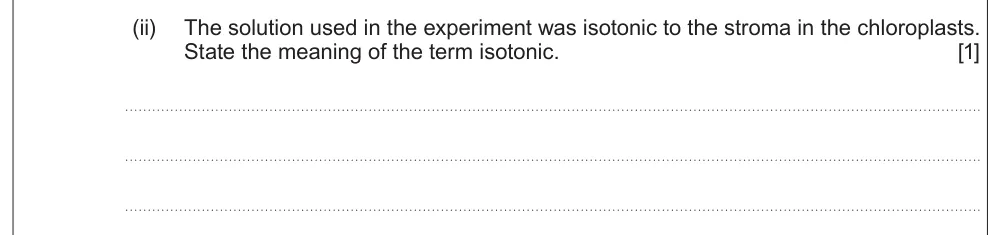
State the meaning of isotonic.
Information from earlier in this question:
Show the mark scheme

Tap an image to open it full size.
From the examiners' report: Students knew this well: the same water potential, or the same concentration of solutes.
Question 11
A level Component 2 · June 2023 · Q2(a) · 2 marks
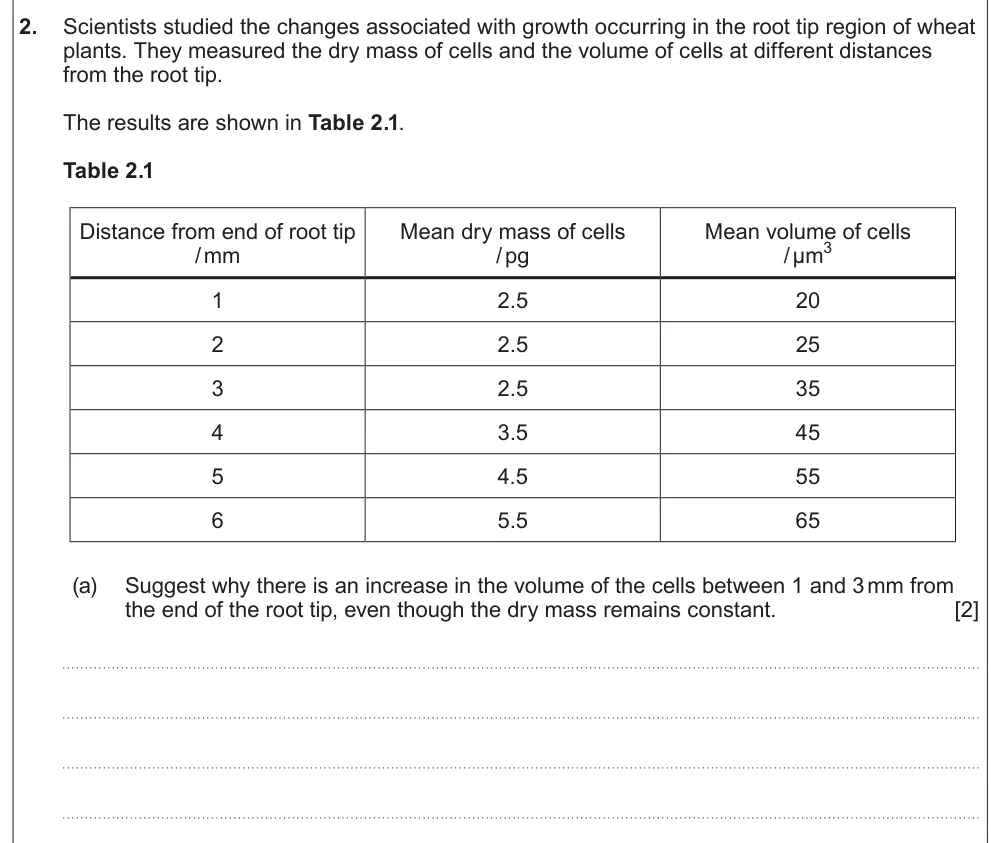
Suggest why root cells get bigger while their dry mass stays the same.
Show the mark scheme

Tap an image to open it full size.
From the examiners' report: The second mark is for saying how the water entered: by osmosis.
Question 12
AS Component 1 · June 2018 · Q5(b)(ii) · 4 marks
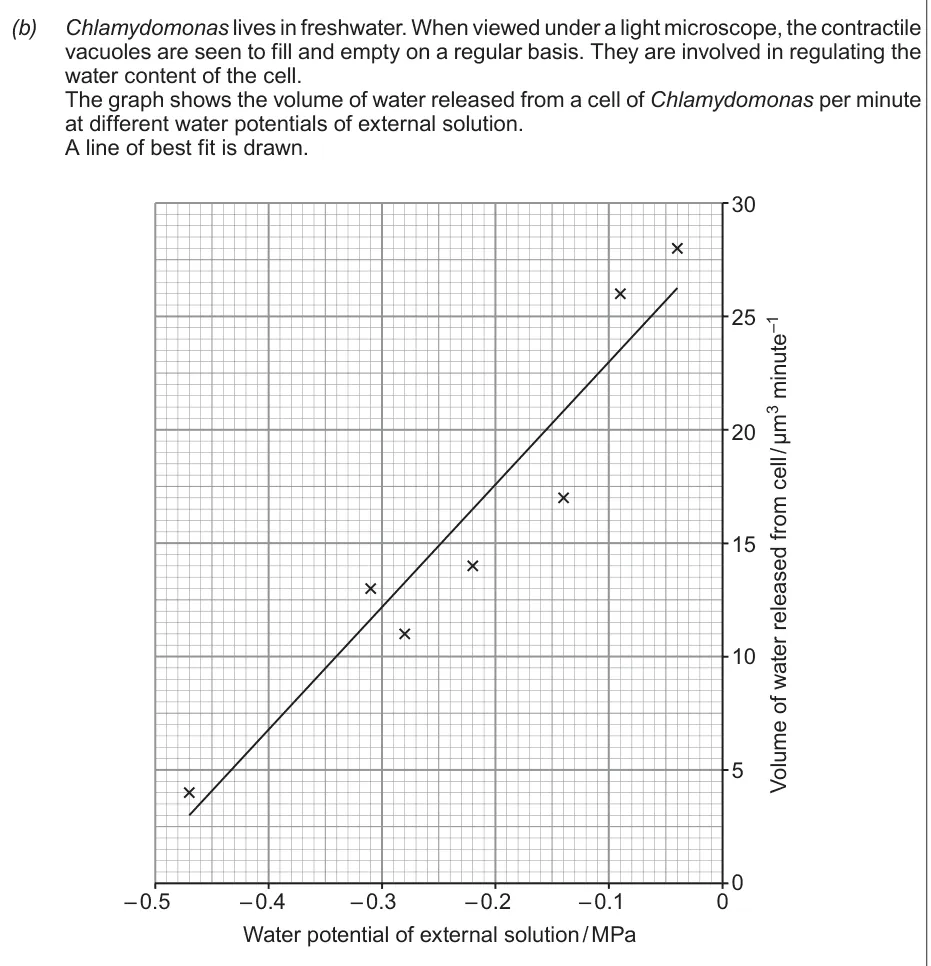
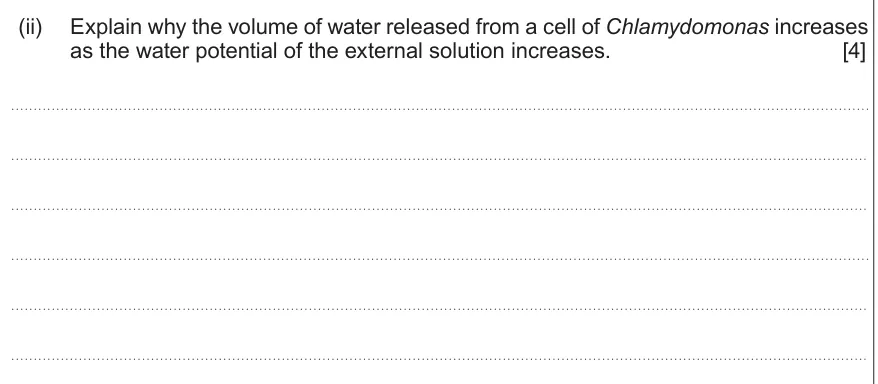
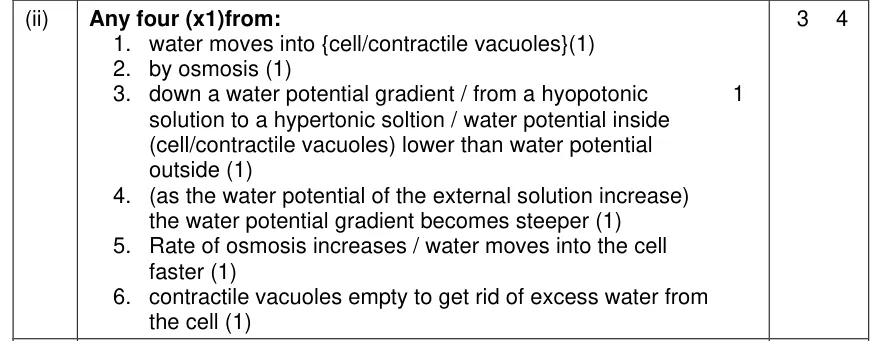
Explain why Chlamydomonas releases more water as the external water potential rises.
Information from earlier in this question:
Show the mark scheme
Tap an image to open it full size.
From the examiners' report: Most students saw this was about osmosis but described water leaving the cell. Water enters by osmosis, faster as the outside water potential rises, so more has to be pumped out.
Question 13
A level Component 3 · June 2018 · Q6(a)(ii) · 2 marks
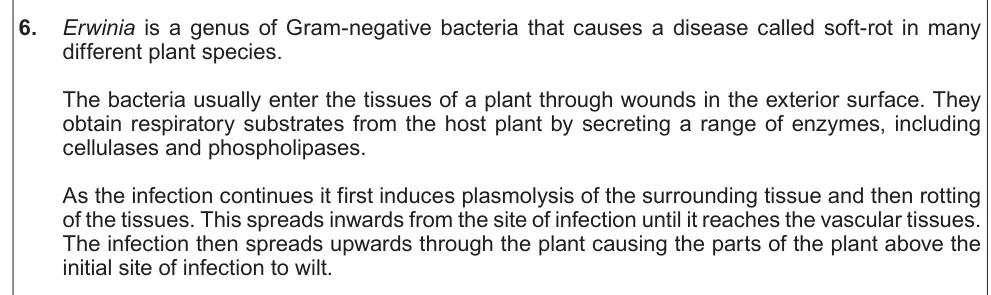
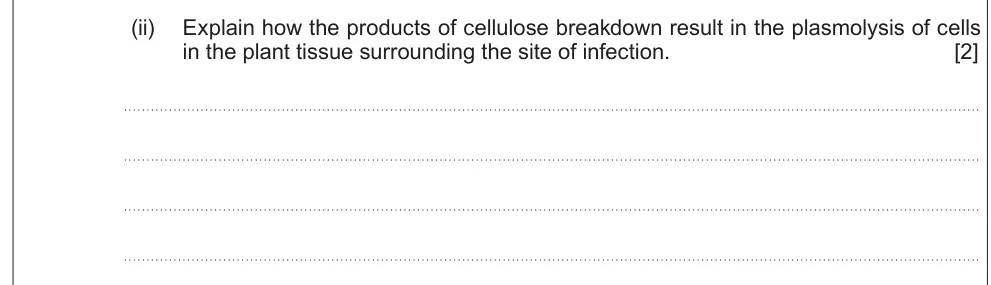
Explain how sugars from cellulose breakdown cause plasmolysis.
Information from earlier in this question:
Show the mark scheme

Tap an image to open it full size.
From the examiners' report: Many students confused plasmolysis with lysis. Sugars lower the water potential outside the cells, so water leaves by osmosis.
Question 14
AS Component 1 · June 2019 · Q6(b)(vi) · 2 marks · Easy
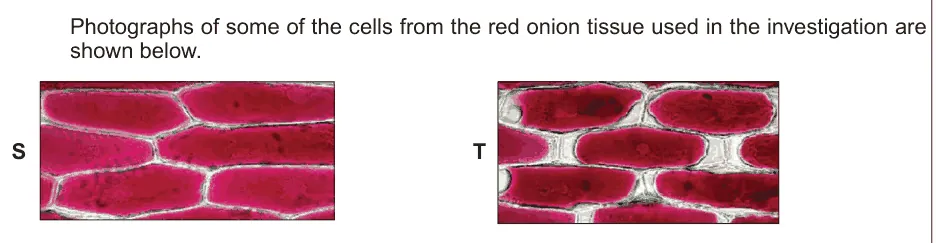
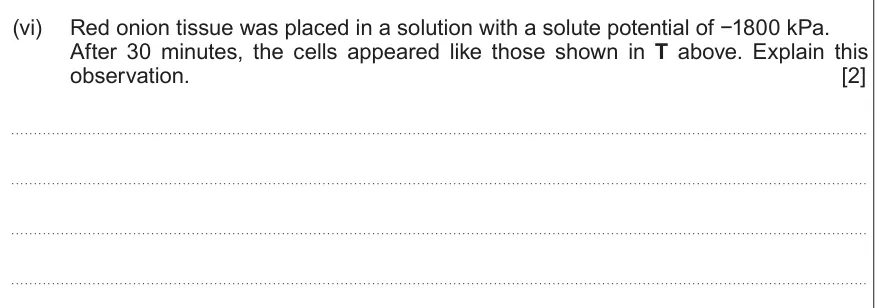
Explain the appearance of onion cells in a solution of −1800 kPa.
Information from earlier in this question:
Show the mark scheme

Tap an image to open it full size.
From the examiners' report: Good answers linked zero pressure potential to the cell membrane pulling away from the cell wall. Then explain it: the solution's water potential is more negative, so water leaves by osmosis.
Question 15
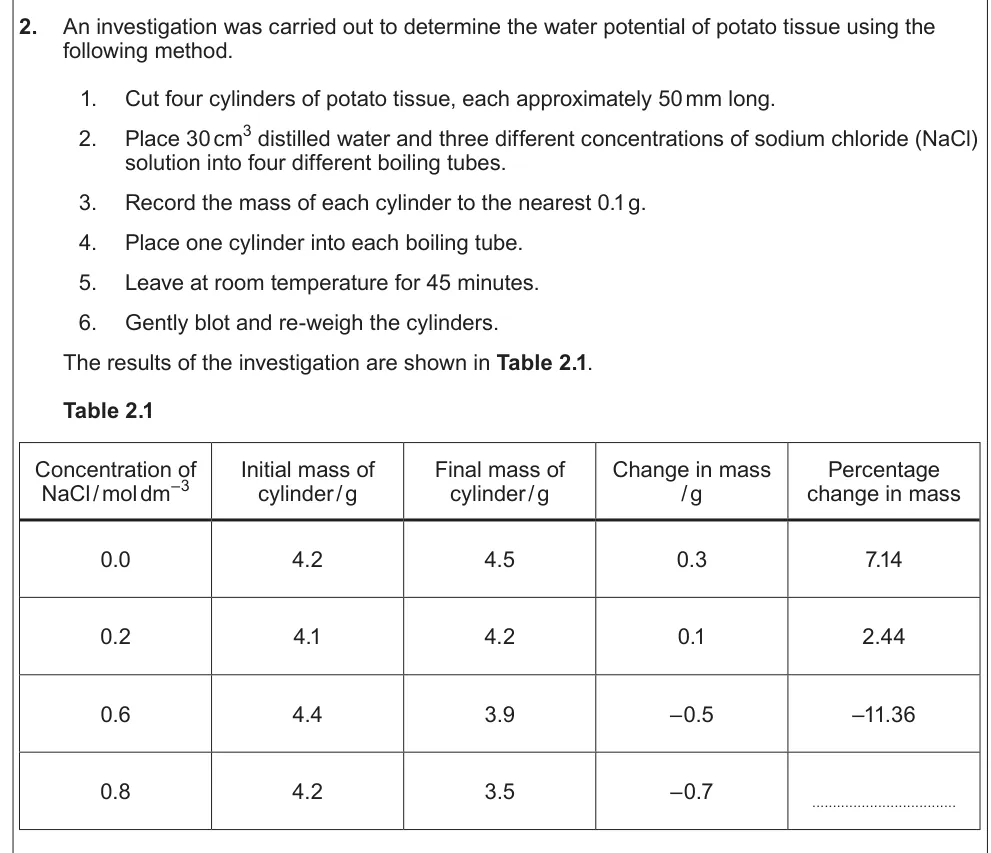
AS Component 1 · June 2022 · Q2(a)(iv) · 4 marks
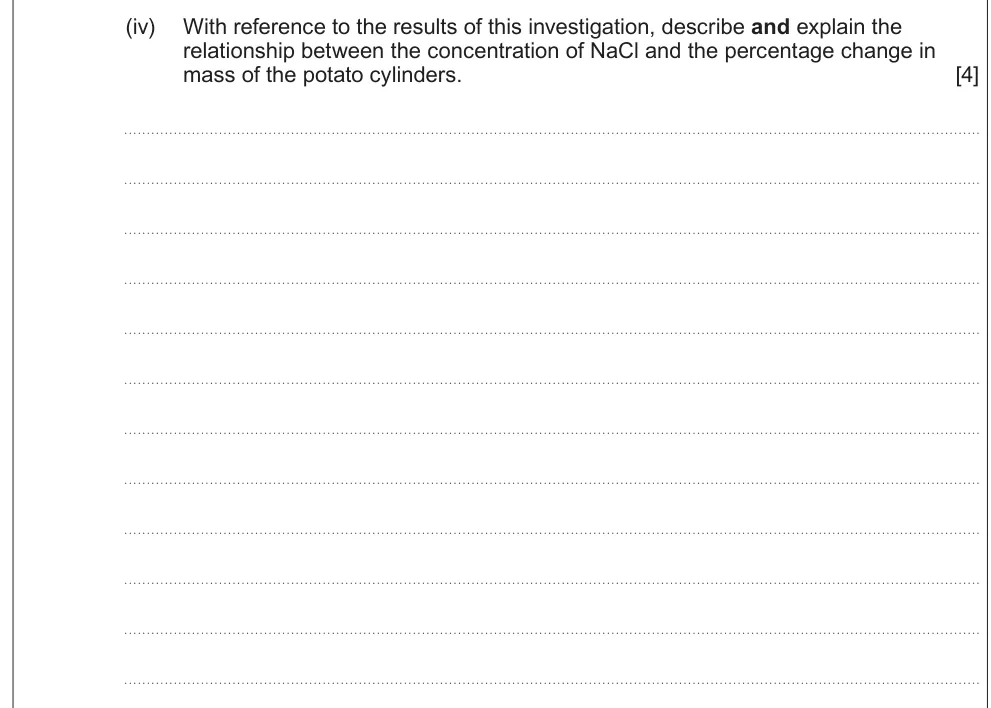
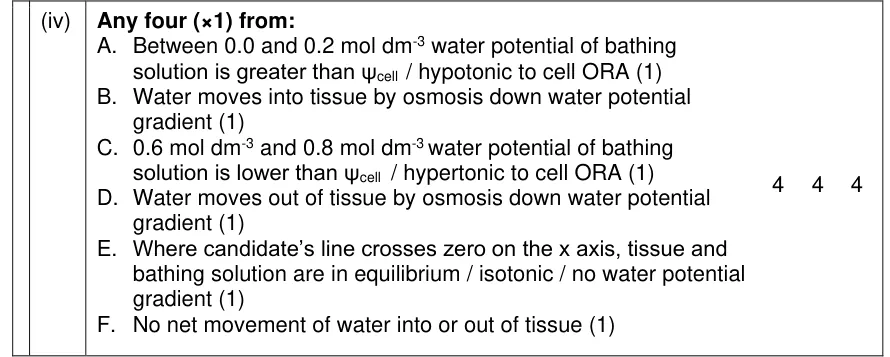
Describe and explain how NaCl concentration affects the change in mass of potato cylinders.
Information from earlier in this question:
Show the mark scheme
Tap an image to open it full size.
From the examiners' report: Many students scored all four marks. Compare the water potential of the solution with the cell's, then say which way water moves by osmosis.
Question 16
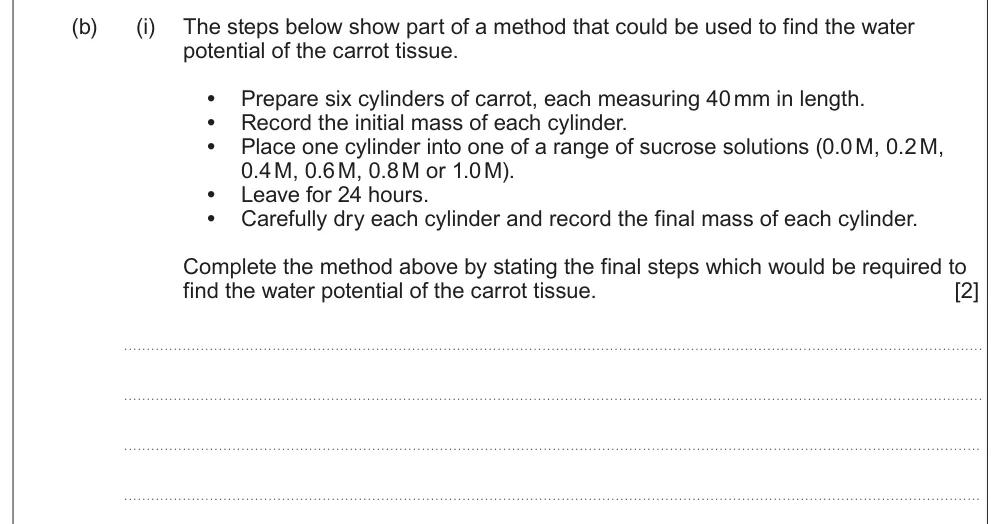
AS Component 1 · June 2024 · Q5(b)(i) · 2 marks
Complete the method for finding the water potential of carrot tissue.
Show the mark scheme

Tap an image to open it full size.
From the examiners' report: Many students left out calculating the percentage change in mass. Fewer explained how to turn the no-change point into a water potential.
Transport across membranes
Question 17
A level Component 3 · June 2023 · Q4(b) · 1 mark
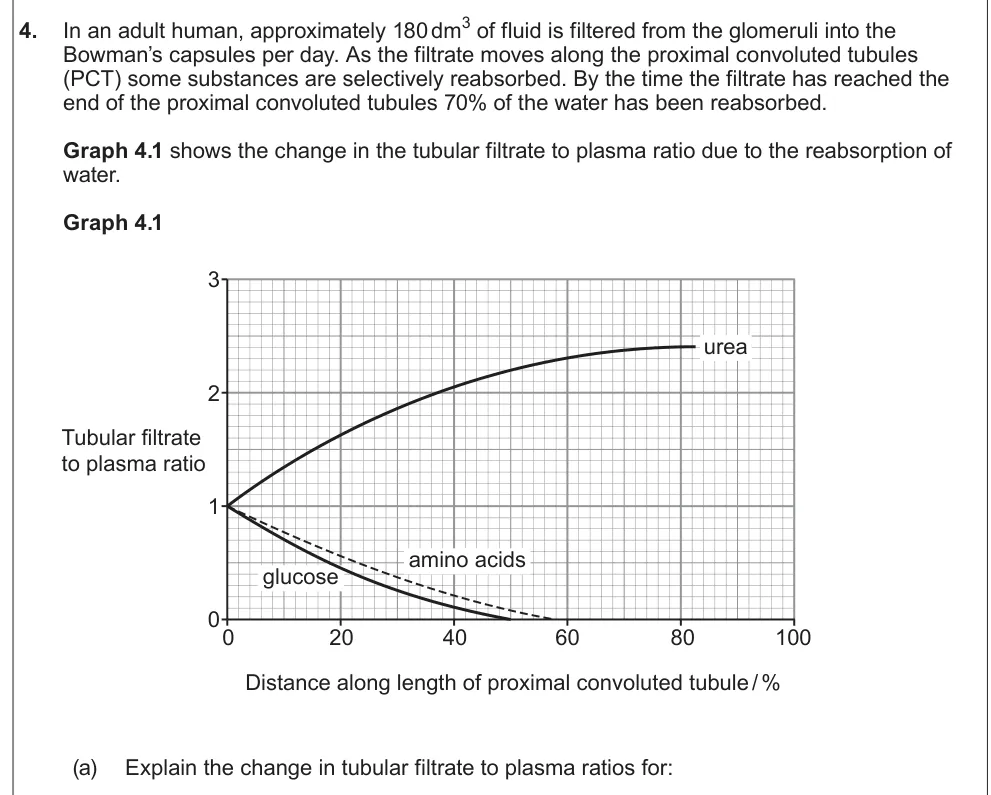
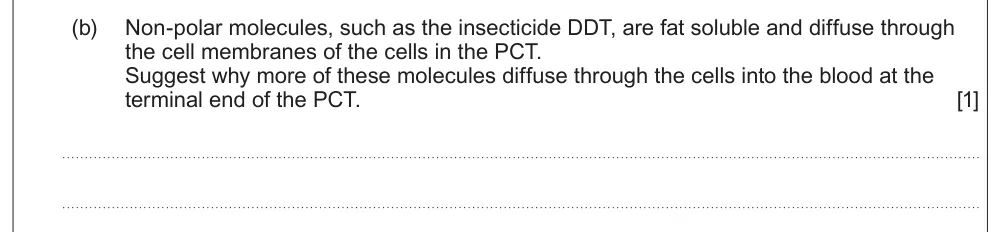
Suggest why more DDT diffuses into the blood at the end of the PCT.
Information from earlier in this question:
Show the mark scheme

Tap an image to open it full size.
From the examiners' report: Better answers said a higher concentration gradient, not simply "a concentration gradient".
Question 18
A level Component 3 · June 2018 · Q3(b) · 2 marks · Hard
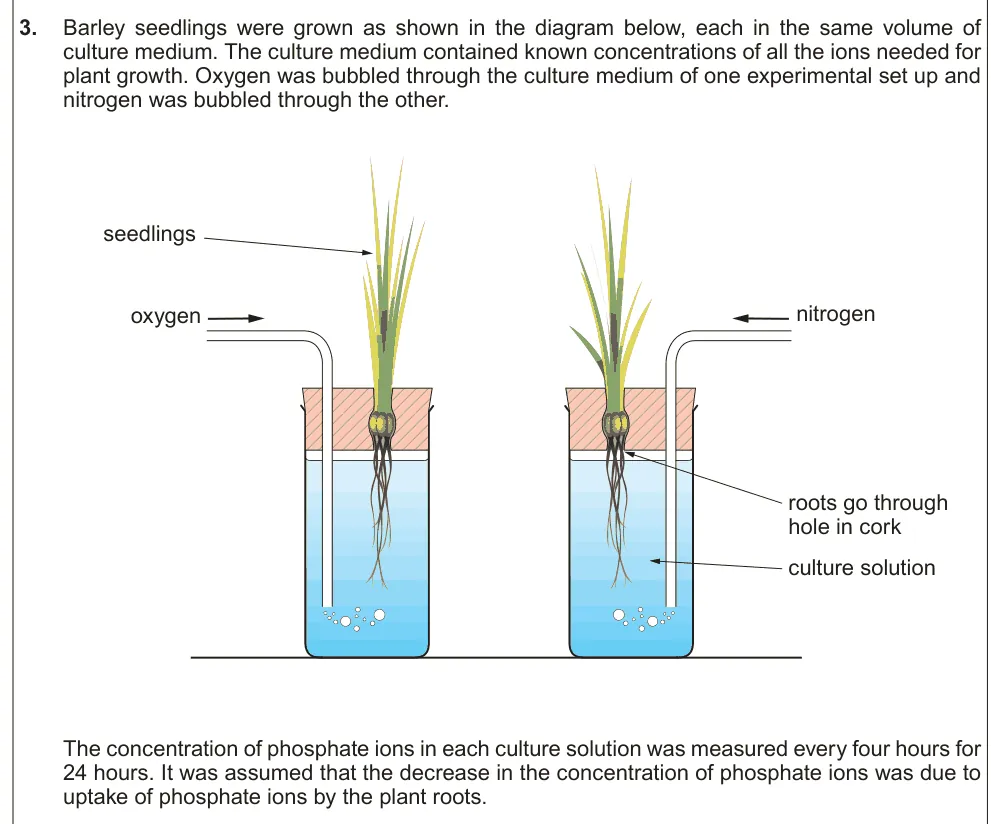
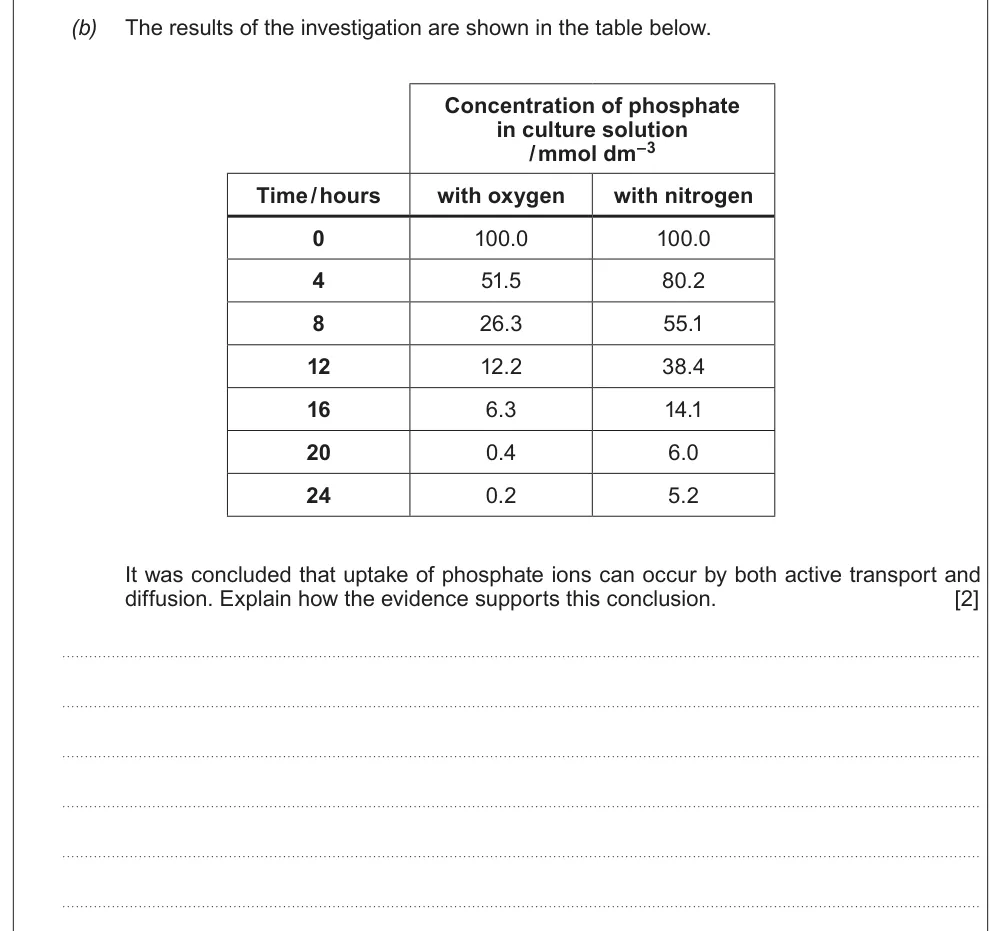
Use uptake data with oxygen and nitrogen to show ions cross by active transport and diffusion.
Information from earlier in this question:
Show the mark scheme

Tap an image to open it full size.
From the examiners' report: Answers were disappointing. Oxygen doesn't carry the ions: link oxygen to respiration and ATP for active transport, and uptake without oxygen to diffusion.
Question 19
AS Component 2 · June 2023 · Q4(b)(ii) · 3 marks
Describe how glucose crosses the epithelial cells of the small intestine.
Information from earlier in this question:
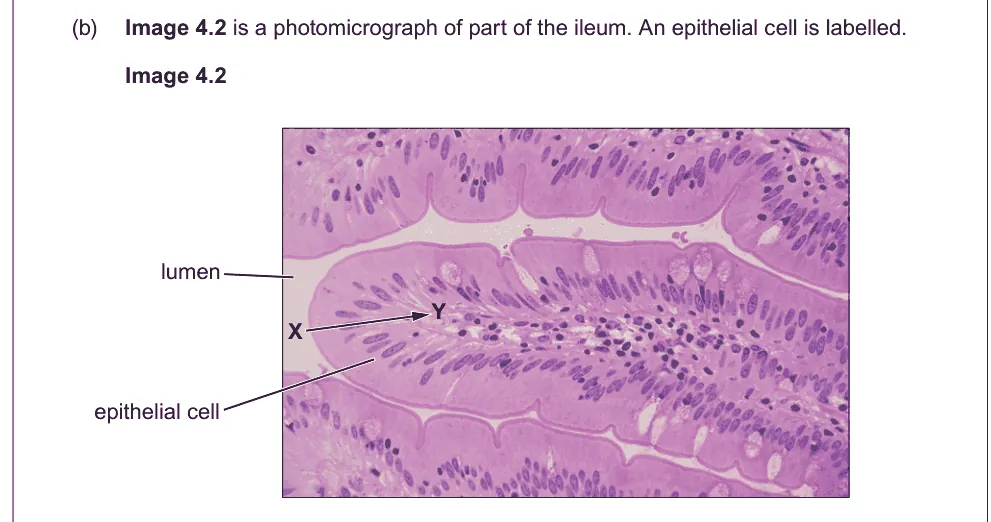
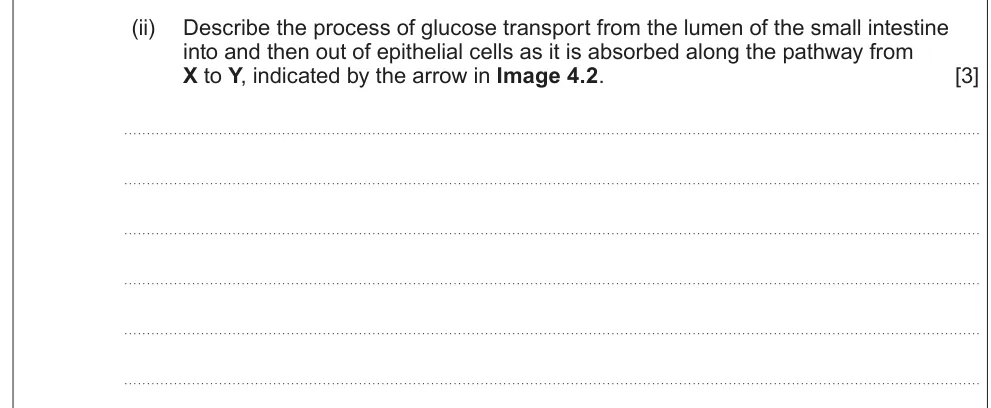
Show the mark scheme

Tap an image to open it full size.
From the examiners' report: Students who had learned the pathway scored all three marks. Errors put active transport or facilitated diffusion in the wrong place.
Question 20
AS Component 2 · June 2023 · Q4(b)(iii) · 2 marks · Easy
Describe how glucose uptake affects water absorption from the gut.
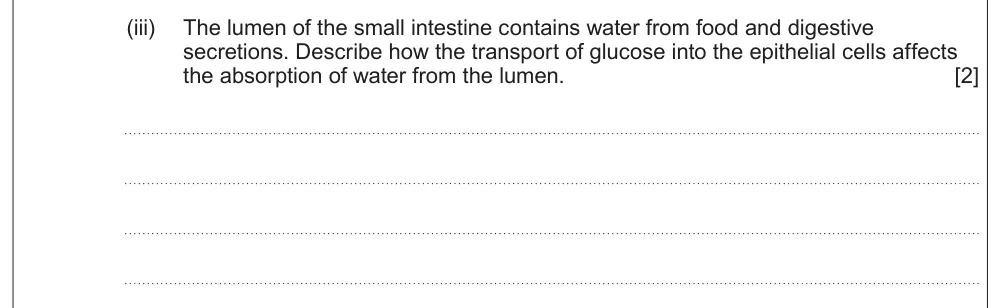
Show the mark scheme

Tap an image to open it full size.
From the examiners' report: Answered well, but say clearly where water moves to: into the epithelial cells by osmosis.
Question 21
AS Component 1 · June 2016 · Q2(c) · 3 marks · Hard
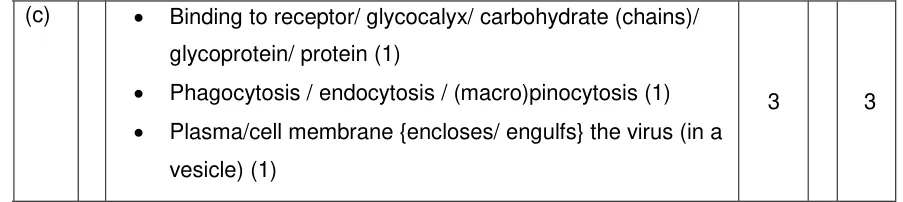
Use diagrams to explain how Ebola virus particles enter a host cell.
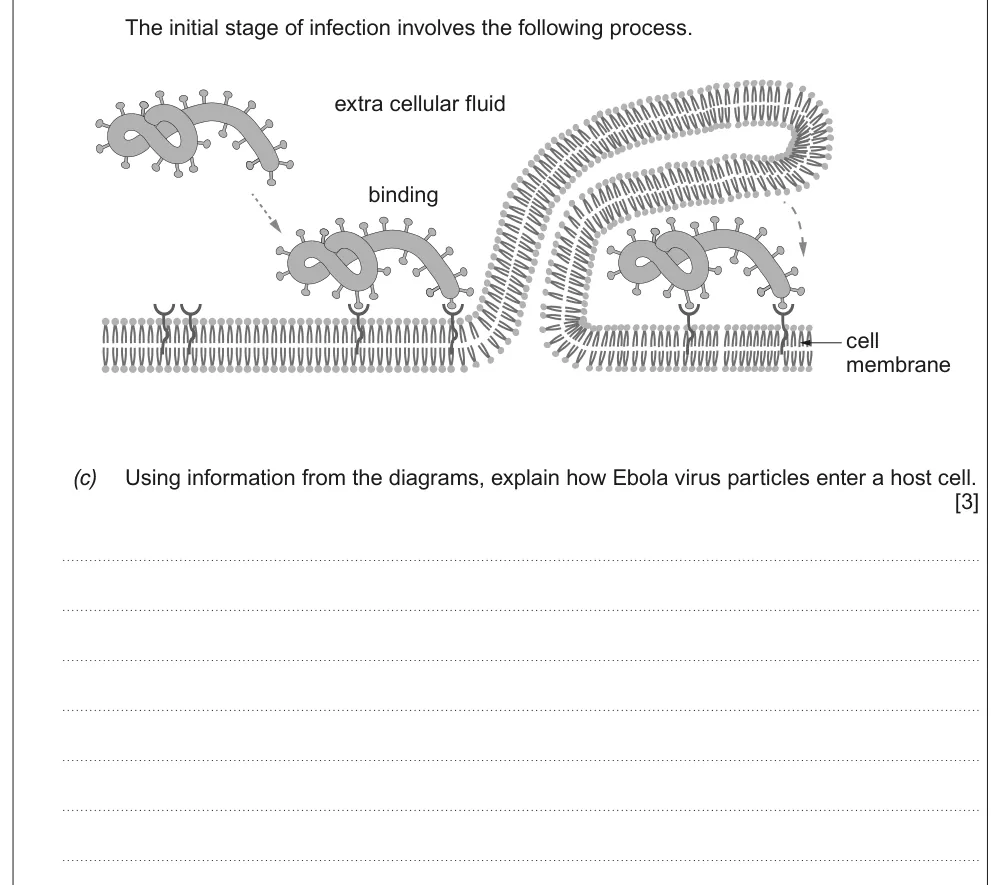
Show the mark scheme
Tap an image to open it full size.
From the examiners' report: This was poorly done. Describe what the diagram shows with the right terms: binding to a receptor, then endocytosis as the membrane encloses the virus in a vesicle.
Where students lose marks (from Eduqas examiners' reports and mark schemes)
Each point below is followed by wording that gained marks.
Remember the bilayer: Students didn't double the membrane area.
✔ Gains credit: "140 x 2 = 280 µm²".
Read which molecule is labelled: Answers had phospholipids moving when the stem said the fluorescent proteins were affected.
✔ Gains credit: "Proteins can move / diffuse within the membrane".
Transmembrane means right through: Many drawings labelled proteins as transmembrane when they only penetrated one layer.
✔ Gains credit: A labelled phospholipid bilayer with a transmembrane protein and a carbohydrate side chain.
Permeability, not osmosis: Weaker answers explained the beetroot results by water potential and osmosis.
✔ Gains credit: "More NaCl the less permeable the membrane".
Plasmolysis isn't lysis: Many students said the cells burst.
✔ Gains credit: "Water moves out of cells by osmosis".
Percentage change first: Many students left out calculating the percentage change in mass.
✔ Gains credit: "Calculate percentage change in mass".
A higher gradient: Answers said only "a concentration gradient".
✔ Gains credit: "Higher concentration gradient".
Oxygen means ATP: Many believed oxygen or nitrogen carried the phosphate ions.
✔ Gains credit: "Absorption is highest with oxygen" and indicates "active transport (as this requires ATP)".
Download the questions
Download the PDF pack (21 questions, mark schemes at the end)
Keep practising
- Biological Compounds (CC1): Eduqas A Level Biology exam questions by topic
- Cell Structure and Organisation (CC2): Eduqas A Level Biology exam questions by topic
- Enzymes (CC4): Eduqas A Level Biology exam questions by topic
- Nucleic Acids and their Functions (CC5): Eduqas A Level Biology exam questions by topic
- Eduqas A level Biology past papers, mark schemes and examiners' reports
- Eduqas A level Biology grade boundaries
- Ask about Eduqas A level Biology lessons with Sam on WhatsApp
Questions, mark schemes and examiners' report extracts © WJEC CBAC Ltd (Eduqas).