

Required practical 9 is the investigation into the effect of a named variable on the rate of respiration of cultures of single-celled organisms. It comes at the end of AQA 3.5.2, so it's A-level only and you'll meet it in Year 13. Most questions use a respirometer: a sealed tube of yeast, seeds or woodlice, a chemical that absorbs carbon dioxide or oxygen, and a drop of coloured liquid that moves along a scale. Others time the carbon dioxide made by yeast in a sugar solution.
The examiners' reports show the same gaps every year. Fewer than 17% knew the apparatus is left for an hour so the oxygen is used up, many say the pressure rises when oxygen is taken in, and only 2% could adapt the respirometer to measure carbon dioxide without bolting on a syringe. Students also ignore 'other than those stated' when naming control variables, and well over half couldn't describe a control experiment.
Start with how the respirometer works, then the method and controls, and finish with the calculations. Answer each question on paper, with a calculator, before you open the mark scheme. If you'd like help with this topic, my AQA masterclasses run online on Tuesdays at 5.15pm for Year 12 and on Wednesdays or Thursdays at 6.30pm for Year 13.
What you need from GCSE and Year 12
Each question on this page assumes you're secure on these GCSE and Year 12 ideas. If any of them feels shaky, revise it before you start.
- GCSE: aerobic respiration uses oxygen and gives out carbon dioxide; anaerobic respiration in yeast makes ethanol and carbon dioxide without using oxygen.
- GCSE: in a fair test you change one independent variable, measure the dependent variable and keep the other variables the same.
- GCSE: a rate is the change you measure divided by the time taken, for example mm of movement per minute.
- Year 12 (AQA 3.1.4.2): temperature affects the rate of enzyme-controlled reactions, so respiration speeds up as temperature rises until the enzymes denature.
- Year 12 (AQA RP 1): measuring the rate of an enzyme-controlled reaction, and why controls and controlled variables matter. See the Required practical 1 page.
Key terms
These words come up in the questions and mark schemes. Examiners expect you to use them exactly.
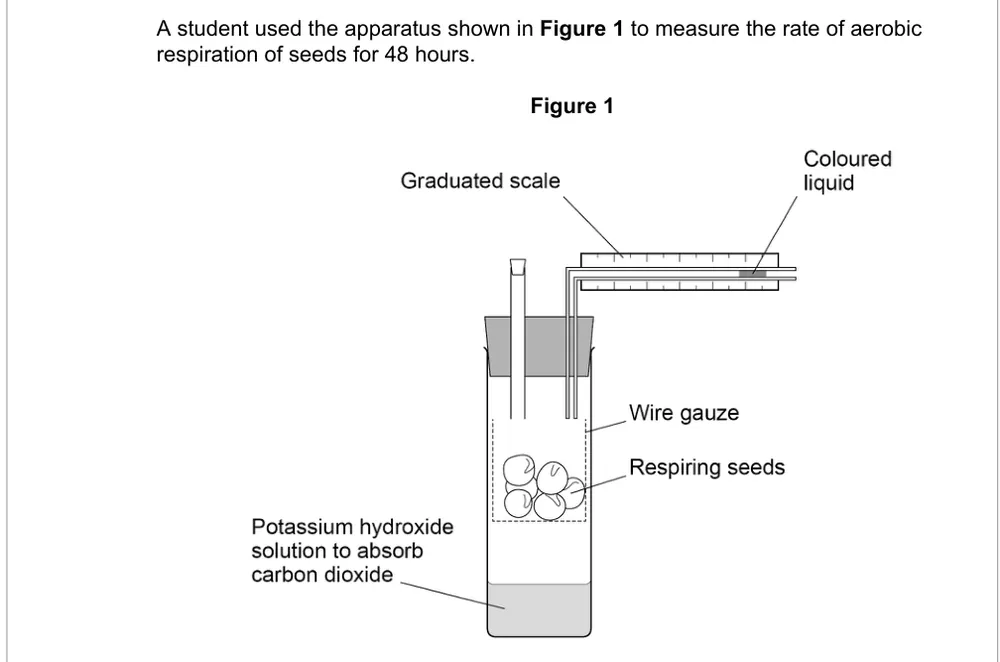
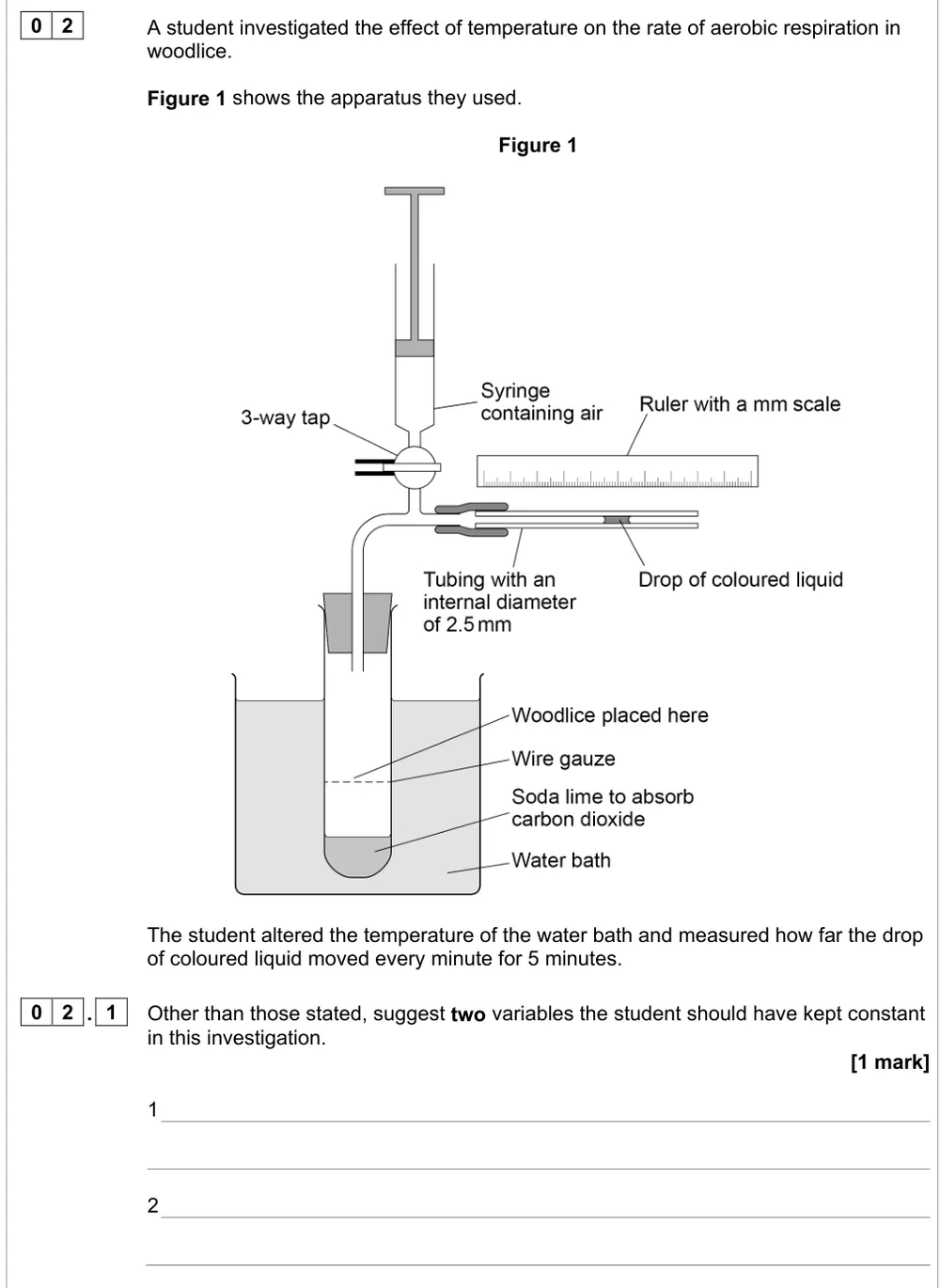
- Respirometer: a sealed apparatus that measures the rate of respiration from the change in volume or pressure of the gas inside it.
- Potassium hydroxide or soda lime: absorbs carbon dioxide, so any change in gas volume is caused by oxygen being taken up.
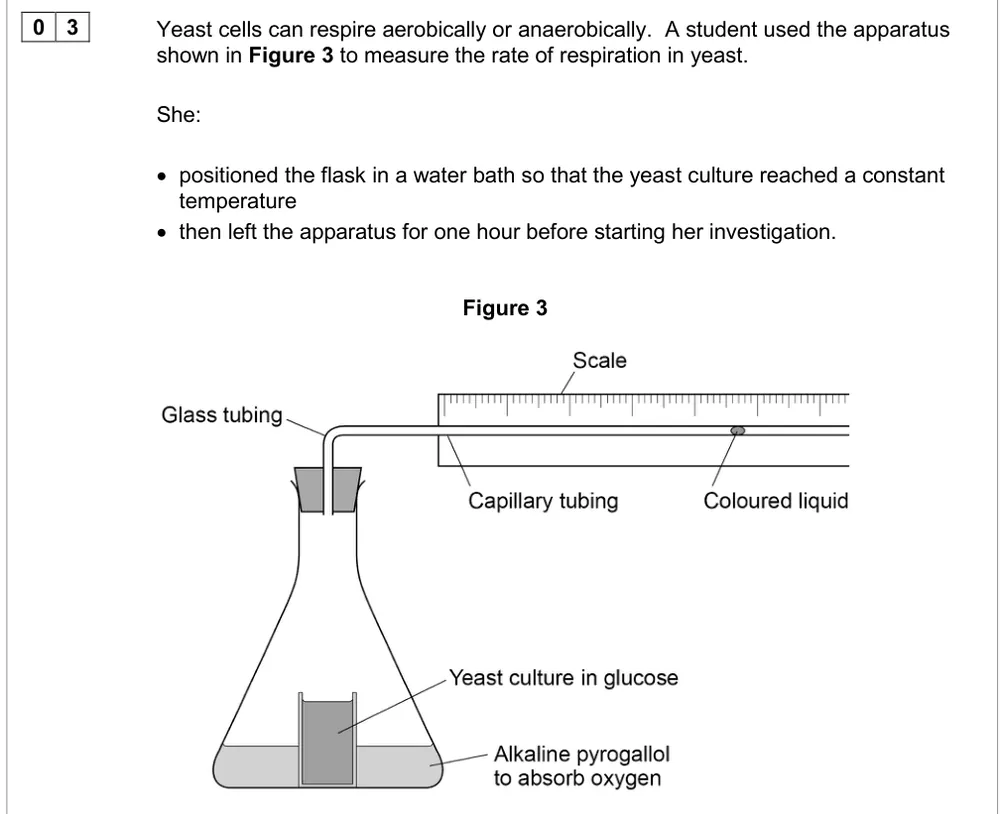
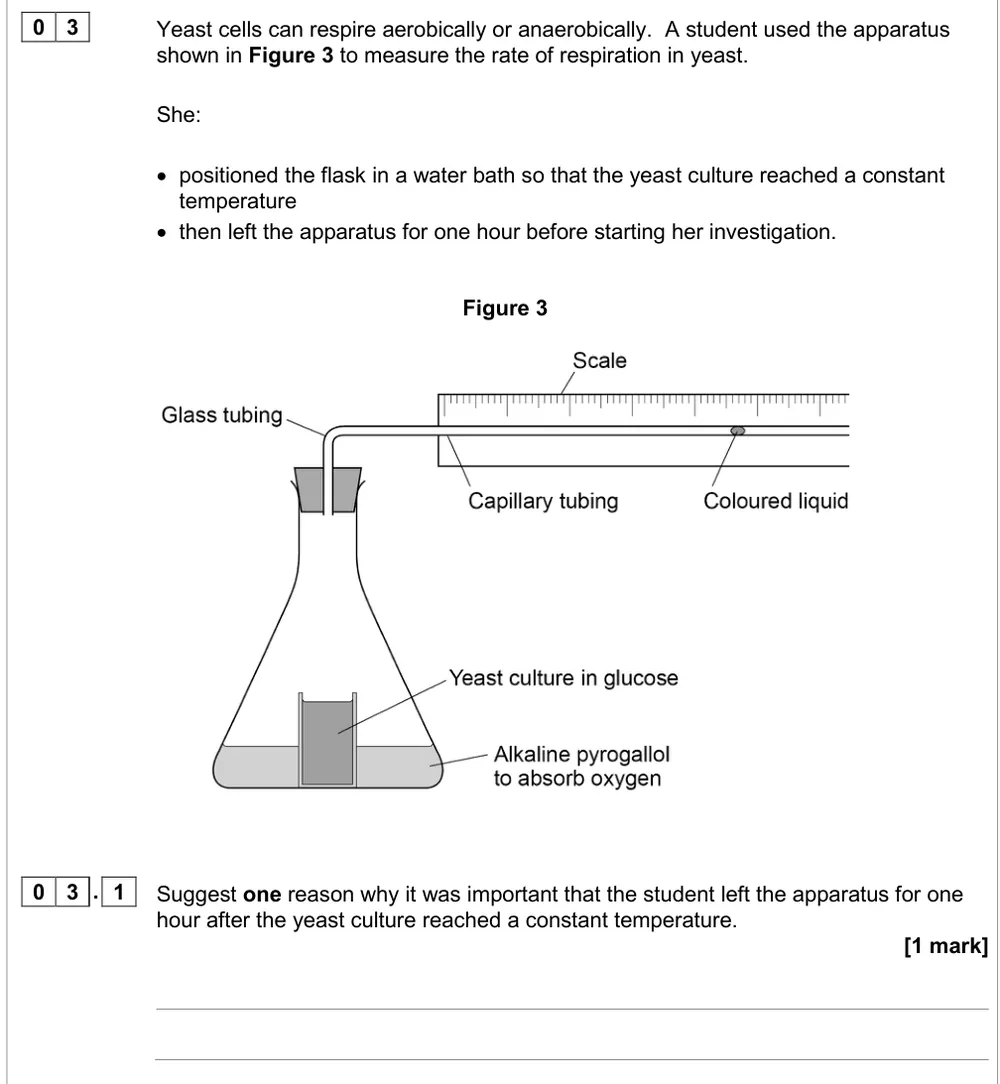
- Alkaline pyrogallol: absorbs oxygen, so organisms in the apparatus have to respire anaerobically.
- Coloured liquid: the drop in the capillary tubing that moves towards the organisms when the pressure or volume of gas inside falls.
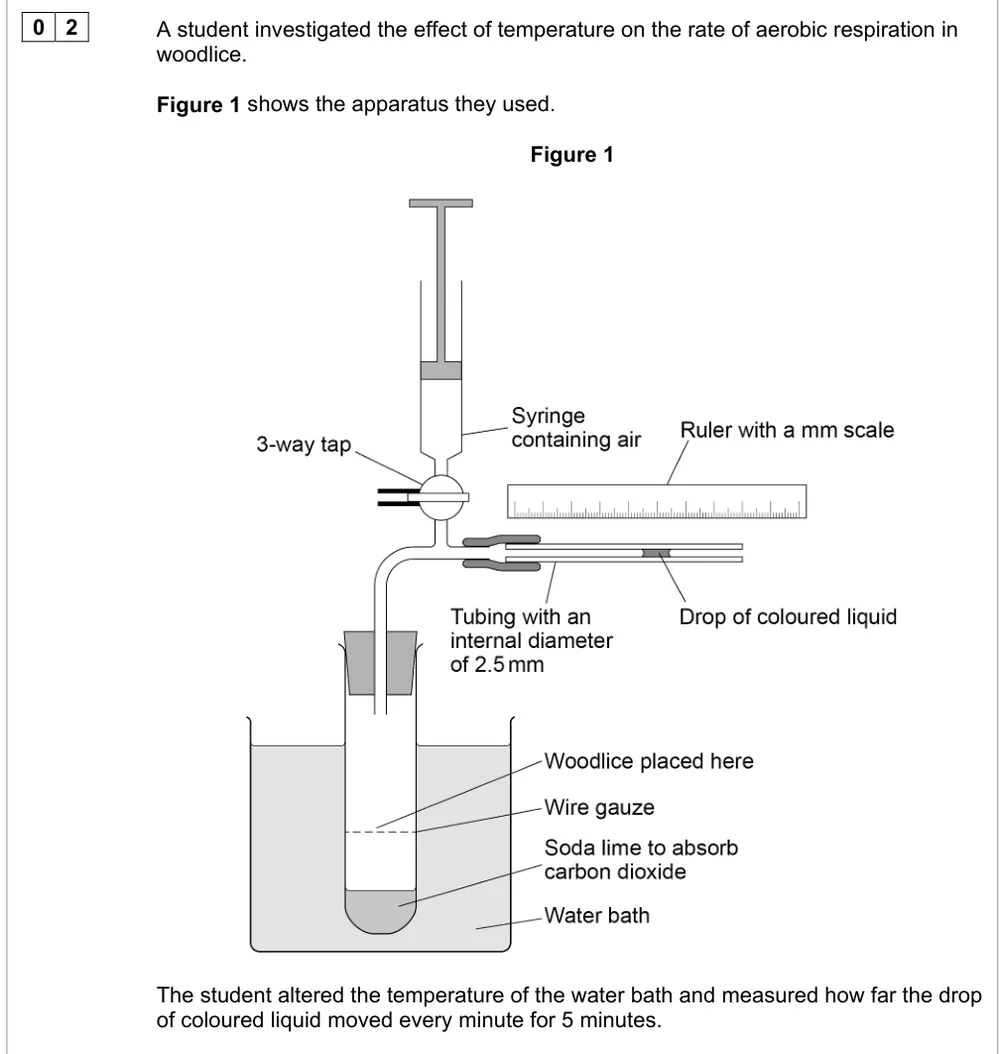
- Capillary tubing: narrow tubing of known internal diameter, so the distance the liquid moves can be turned into a volume of gas (πr² × distance).
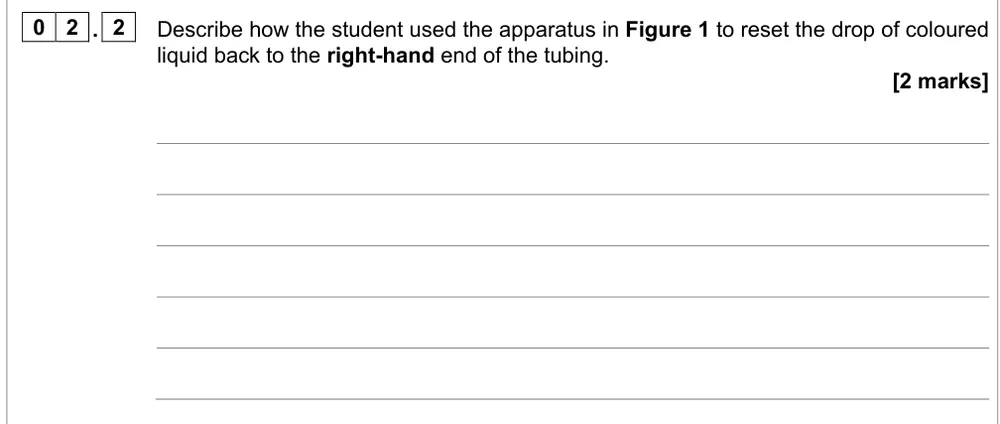
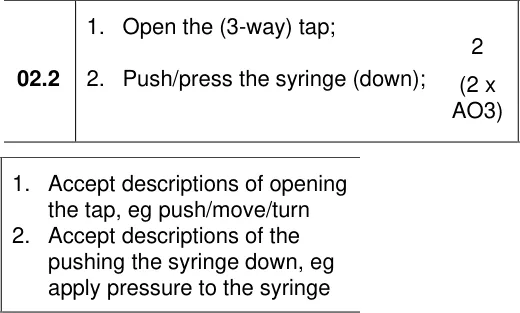
- Three-way tap and syringe: used to reset the coloured liquid to the start of the scale between readings: open the tap and push the syringe down.
- Equilibration time: leaving the apparatus to reach the water bath temperature, and for organisms to acclimatise, before you start timing.
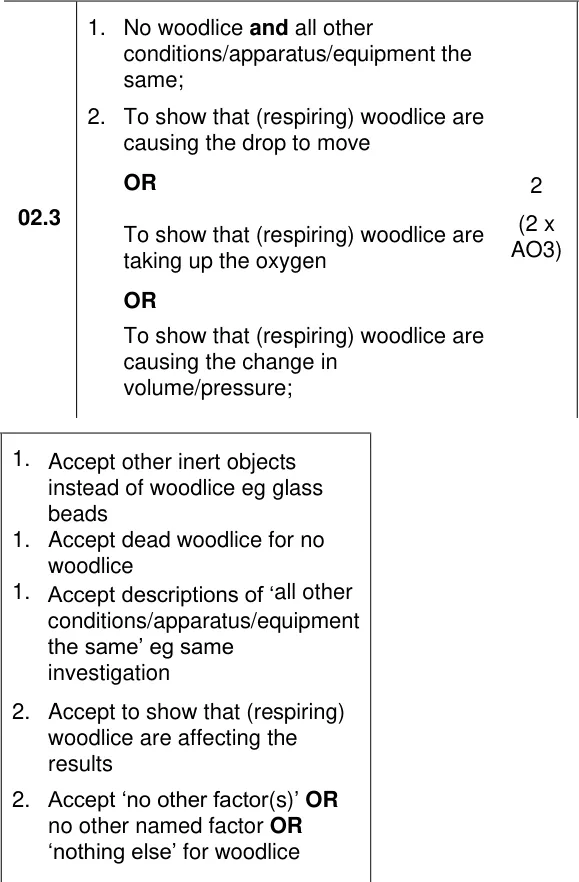
- Control experiment: the same apparatus without the living organisms (or with glass beads or dead organisms), to show the organisms cause the change.
- Bromothymol blue: an indicator that changes from blue to yellow as carbon dioxide is produced.
- Colour standard: a tube of the end-point colour kept as a reference, so the end point is less subjective.
What these questions cover (AQA required practical 9)
The questions come from the ninth required practical in the AQA A-level Biology specification (7402), and test these statements and practical skills:
- Required practical 9: Investigation into the effect of a named variable on the rate of respiration of cultures of single-celled organisms (the yeast questions use single-celled organisms; two investigations use germinating seeds and woodlice, but the respirometer technique is the same. No available part uses a redox indicator such as methylene blue or TTC, though one uses bromothymol blue to show carbon dioxide)
- PS 4.1 Know and understand how to use a wide range of experimental and practical instruments, equipment and techniques appropriate to the knowledge and understanding included in the specification
- PS 2.4 Identify variables including those that must be controlled
- PS 2.1 Comment on experimental design and evaluate scientific methods
- PS 3.3 Consider margins of error, accuracy and precision of data
- MS 0.2 Recognise and use expressions in decimal and standard form
- MS 0.1 Recognise and make use of appropriate units in calculations
How to use this page
Write your answer on paper before you open the mark scheme. Allow about 1.3 minutes per mark: the 11 questions are worth 20 marks, so about 26 minutes in total. Then mark your answer strictly against the mark scheme and read the examiners' tip underneath it. If you'd rather print the questions, download the PDF pack.
How a respirometer works
Question 1
A level Paper 2 · June 2022 · Q04.2 · 3 marks · Easy
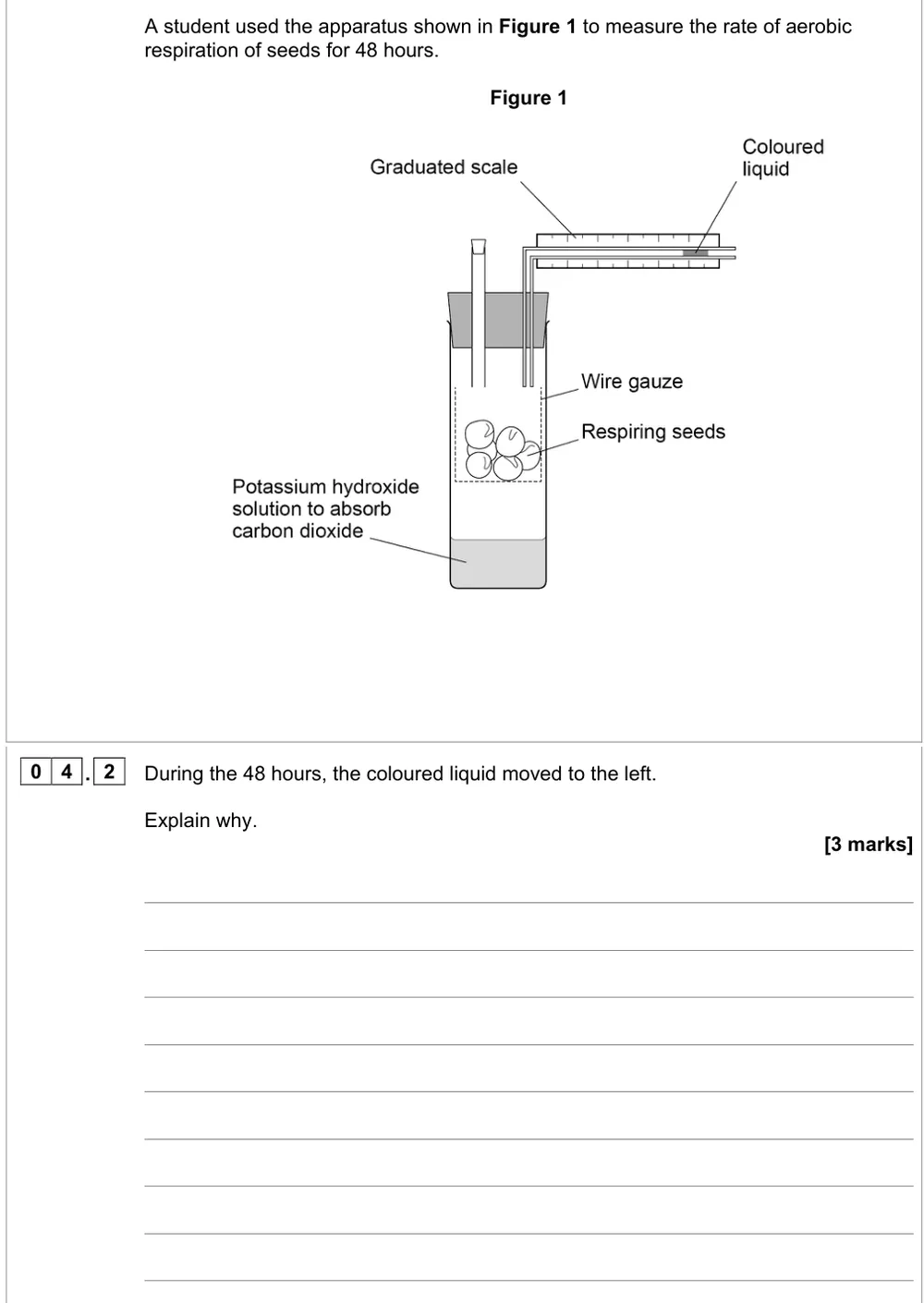
Explain why the coloured liquid moved to the left in a respirometer with respiring seeds and potassium hydroxide.
Show the mark scheme
Tap an image to open it full size.
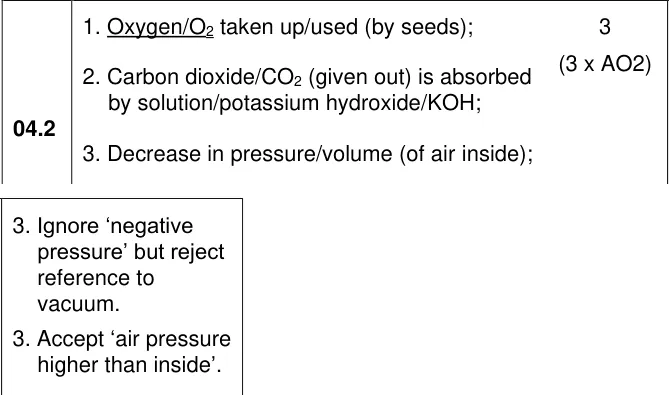
From the examiners' report: Almost 88% got at least one mark but only about 45% all three. Oxygen is used and the carbon dioxide is absorbed, so the pressure inside falls; never say it rises or that a vacuum forms.
Question 2
A level Paper 2 · June 2018 · Q03.2 · 2 marks · Medium
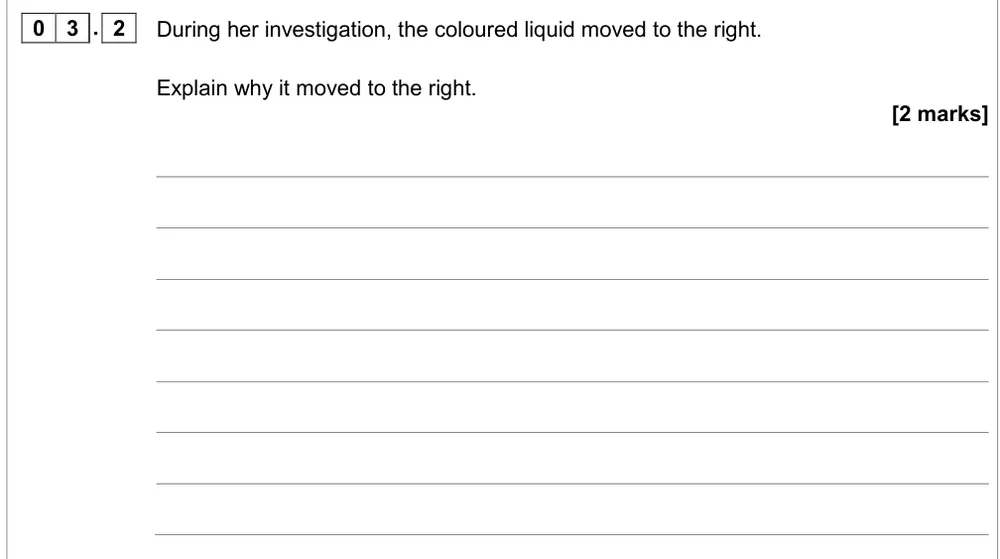
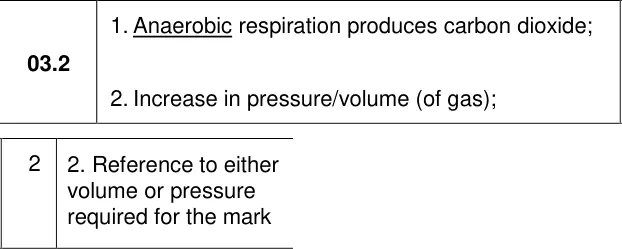
Explain why the coloured liquid moved to the right when yeast respired with the oxygen absorbed.
Information from earlier in this question:
Show the mark scheme
Tap an image to open it full size.
From the examiners' report: About 70% got at least one mark, usually for the rise in gas pressure or volume. The pyrogallol has removed the oxygen, so say anaerobic respiration makes the carbon dioxide; the ethanol doesn't raise the pressure.
Question 3
A level Paper 2 · June 2018 · Q03.1 · 1 mark
Suggest why the yeast apparatus was left for an hour after reaching a constant temperature.
Show the mark scheme

Tap an image to open it full size.
From the examiners' report: Fewer than 17% got this. The pyrogallol and the yeast need time to remove the oxygen so the yeast respires anaerobically; 'to reach equilibrium' or 'to activate enzymes' didn't score.
Using and adapting the apparatus
Question 4
A level Paper 3 · June 2024 · Q02.2 · 2 marks · Easy
Describe how to use the syringe and three-way tap to reset the drop of coloured liquid.
Information from earlier in this question:
Show the mark scheme
Tap an image to open it full size.
From the examiners' report: 80% got at least one mark. Open the tap and push the syringe down; pulling the syringe up, or taking out the soda lime or woodlice, is wrong.
Question 5
A level Paper 2 · June 2022 · Q04.4 · 3 marks · Medium
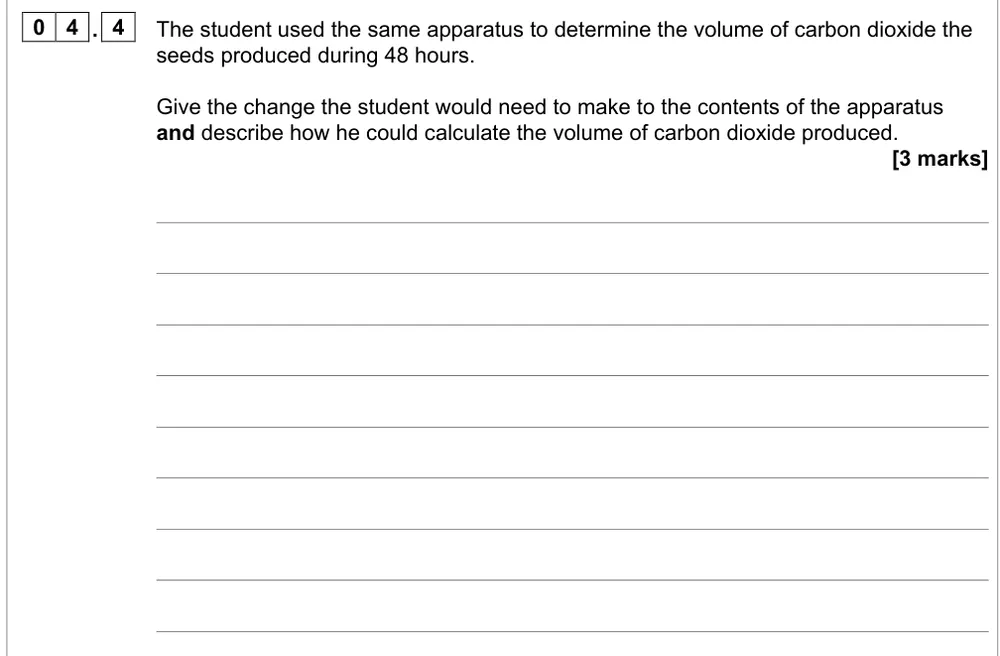
Change the contents of the respirometer to measure the carbon dioxide the seeds produce, and say how to calculate it.
Information from earlier in this question:
Show the mark scheme
Tap an image to open it full size.
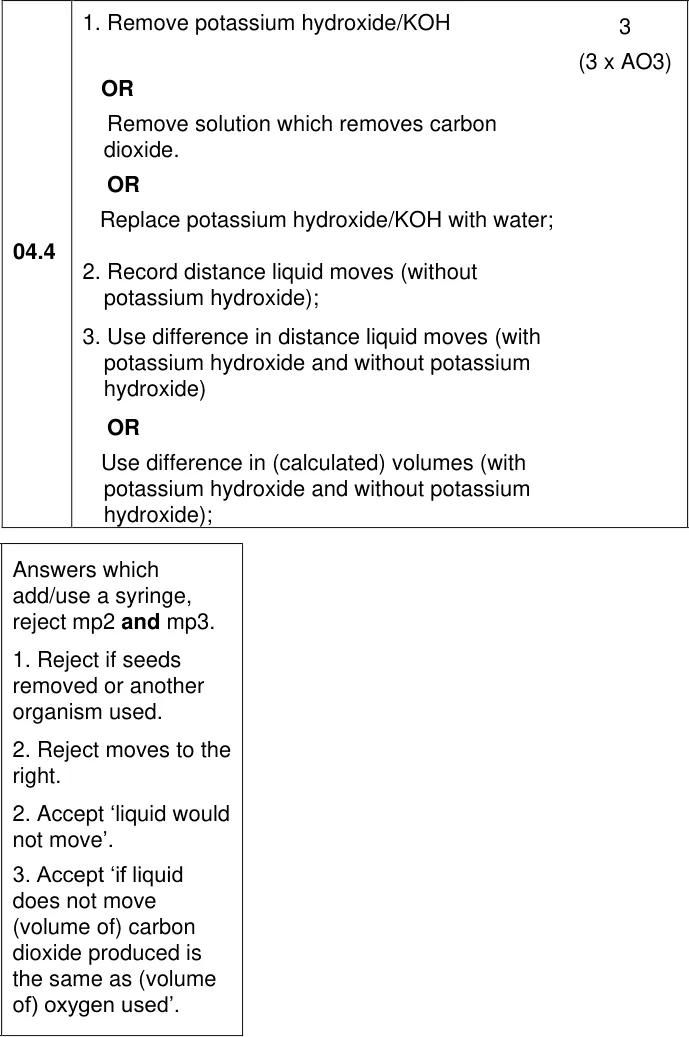
From the examiners' report: Only about 2% got all three, the hardest question on the paper. Keep the same apparatus: swap the KOH for water, then the difference between the two readings gives the carbon dioxide. Don't add a syringe.
Question 6
A level Paper 3 · June 2024 · Q02.3 · 2 marks · Hard
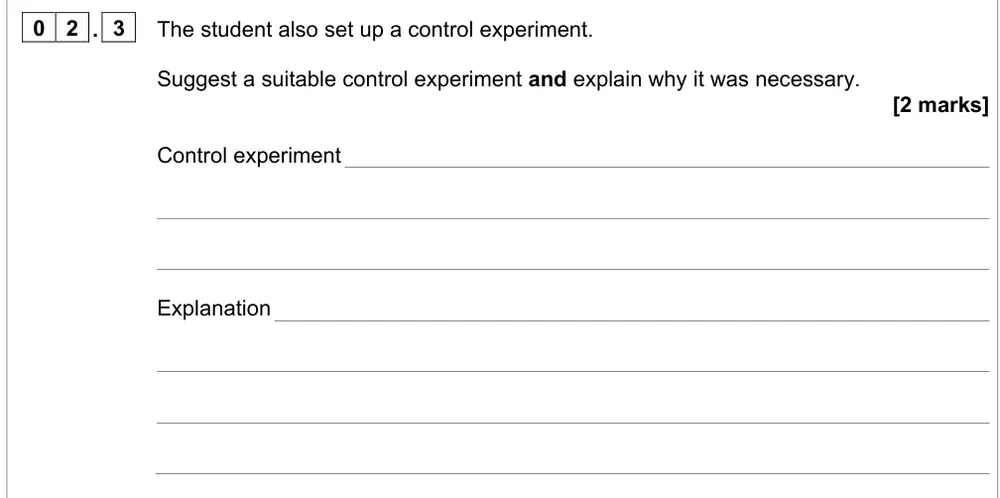
Suggest a control experiment for the woodlice respirometer and explain why it was needed.
Information from earlier in this question:
Show the mark scheme
Tap an image to open it full size.
From the examiners' report: Well over half scored nothing. A control experiment isn't another controlled variable: take the woodlice out, keep everything else the same, and say it shows the woodlice cause the movement.
Variables and accuracy
Question 7
A level Paper 3 · June 2024 · Q02.1 · 1 mark · Medium
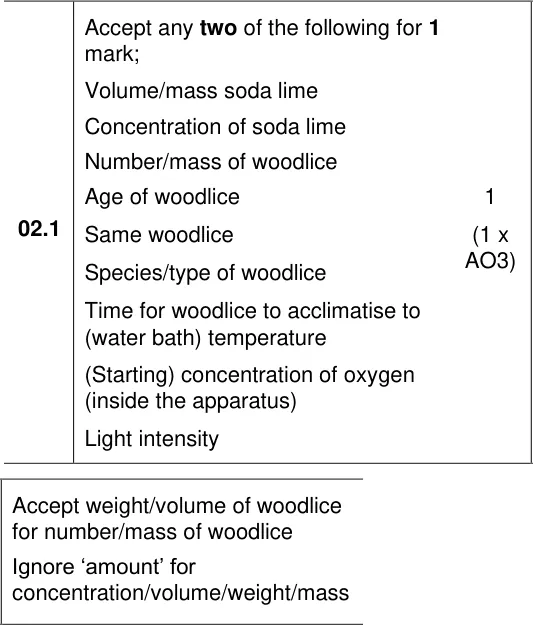
Suggest two more variables to keep constant when investigating temperature and woodlice respiration.
Show the mark scheme
Tap an image to open it full size.
From the examiners' report: Only 45% got it. Many gave variables already stated, such as the tubing diameter, or pH. Think about the organisms and the soda lime, and write volume, mass or concentration, not 'amount'.
Question 8
A level Paper 3 · June 2023 · Q02.1 · 1 mark · Easy
Suggest two more variables to keep constant when measuring the carbon dioxide yeast produces.
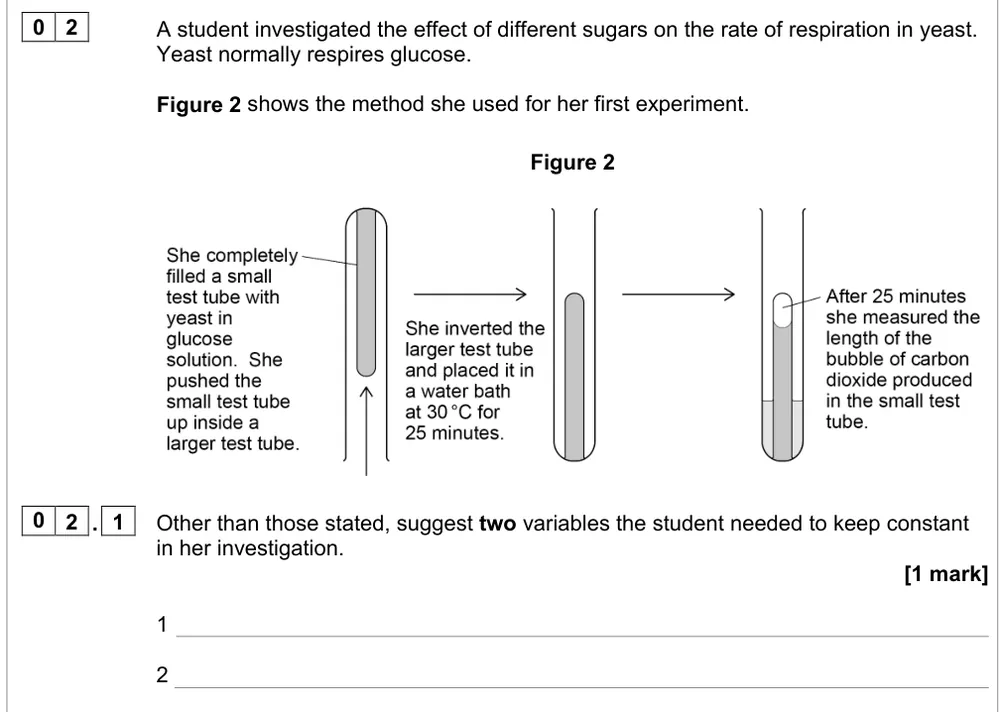
Show the mark scheme
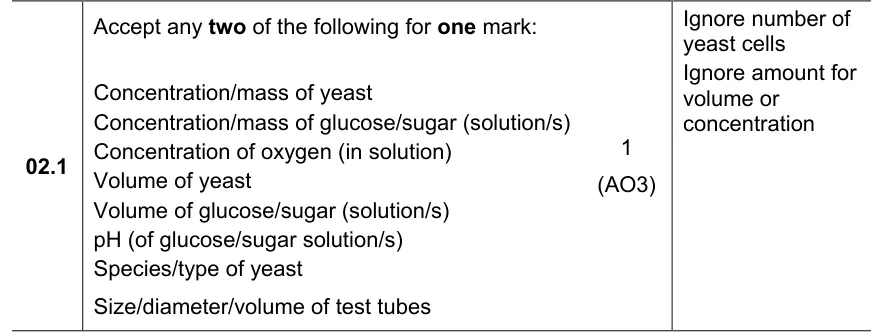
Tap an image to open it full size.
From the examiners' report: Just under 60% got it. Temperature and time were already stated in Figure 2, and yeast doesn't photosynthesise, so light and carbon dioxide don't score. Write volume, mass or concentration, not 'amount'.
Question 9
A level Paper 3 · June 2023 · Q02.4 · 2 marks · Hard
Explain why timing a bromothymol blue colour change is less accurate, and how to improve it.
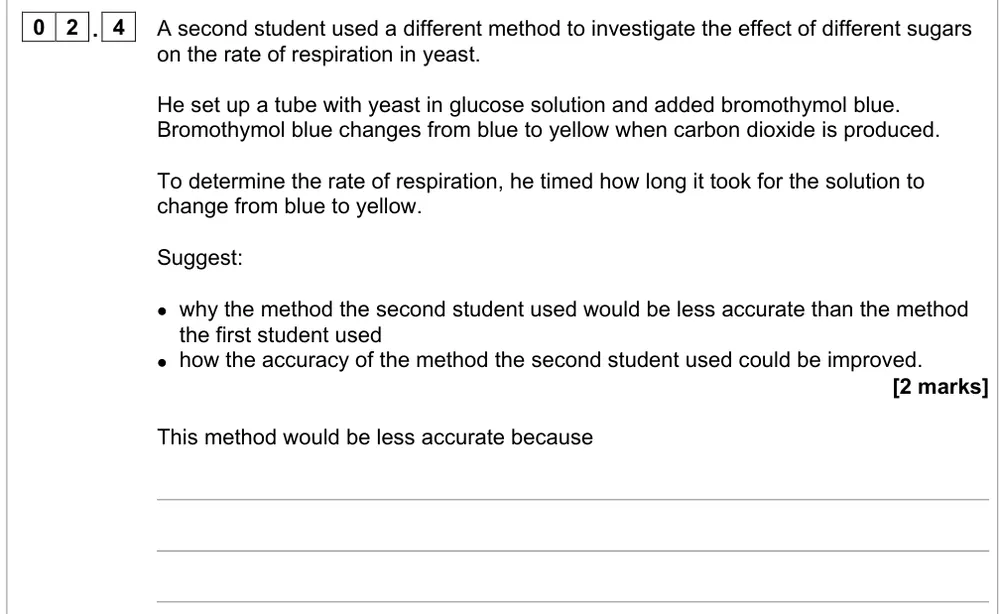
Show the mark scheme
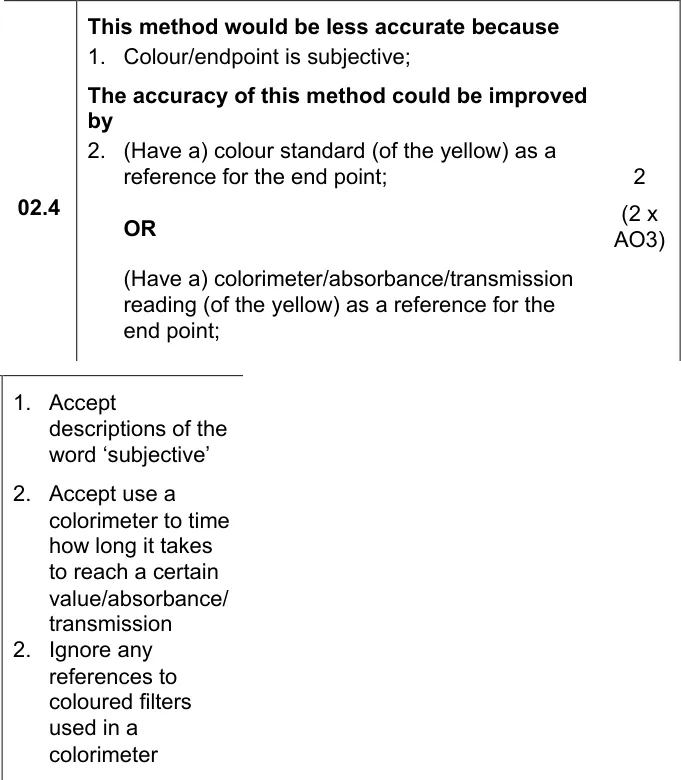
Tap an image to open it full size.
From the examiners' report: Half got the first mark, but only 13% got both. A colorimeter on its own isn't enough: time how long it takes to reach a set absorbance, or use a yellow colour standard as the end point.
Calculating rates
Question 10
A level Paper 3 · June 2023 · Q02.2 · 2 marks
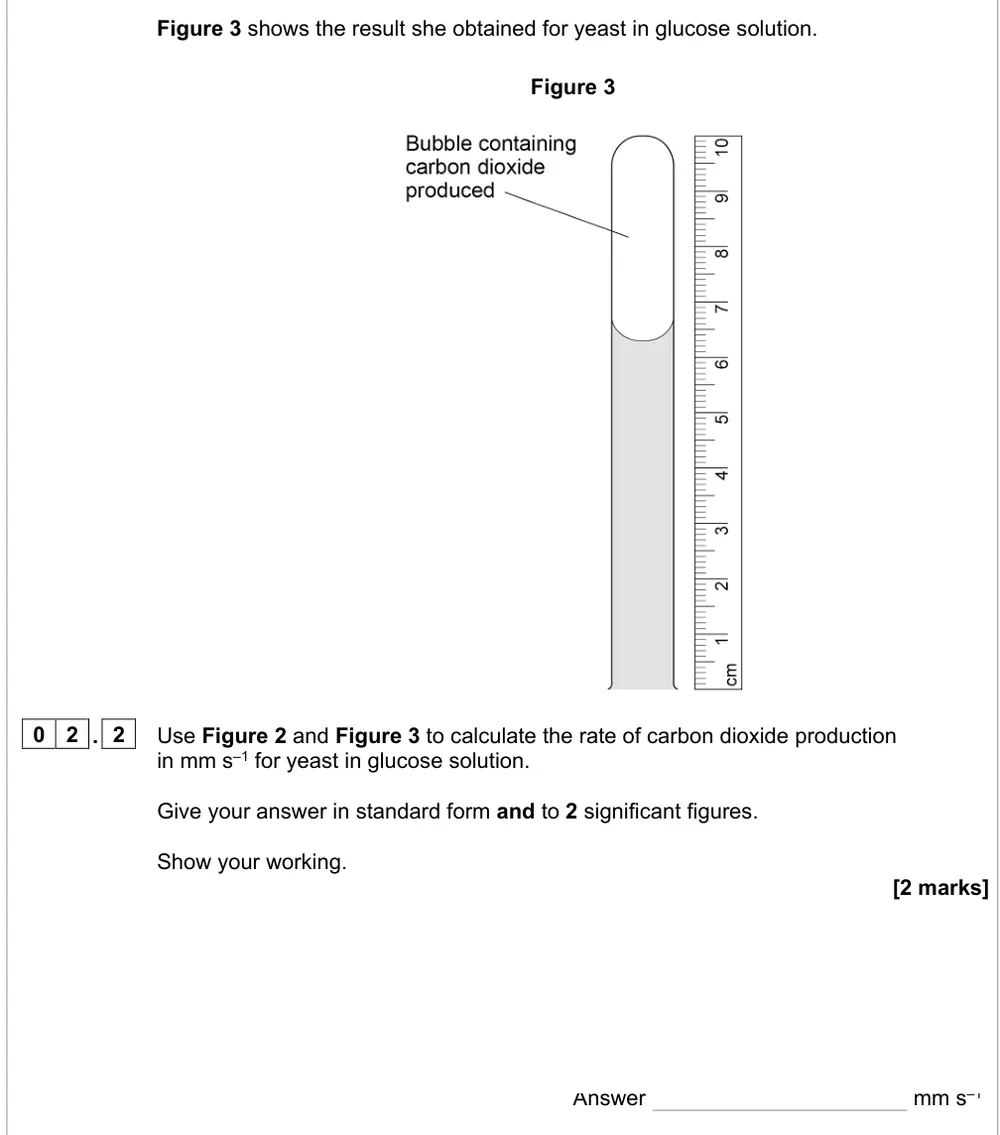
Calculate the rate of carbon dioxide production in mm s⁻¹ from the bubble length, in standard form to 2 significant figures.
Show the mark scheme
Tap an image to open it full size.
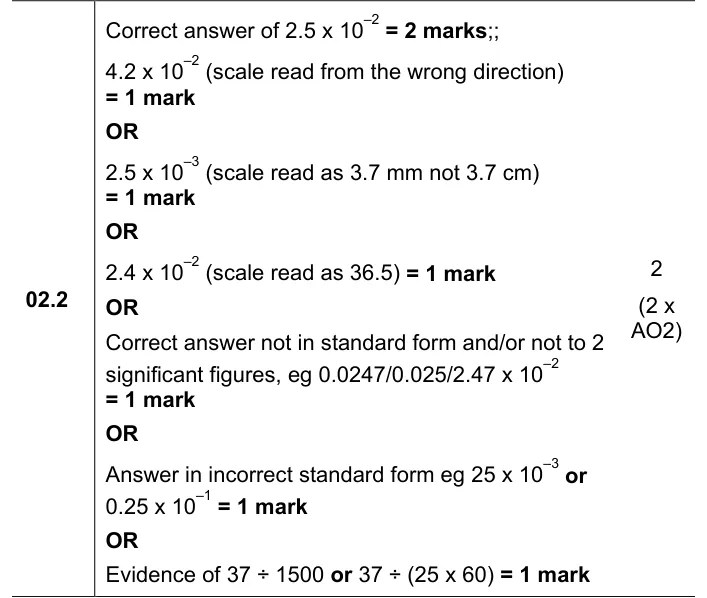
From the examiners' report: Students split evenly between 0, 1 and 2 marks. The bubble is 3.7 cm, so 37 mm, and 25 minutes is 1500 s. Give the answer exactly as asked: standard form and 2 significant figures.
Question 11
A level Paper 2 · June 2022 · Q04.5 · 1 mark · Easy
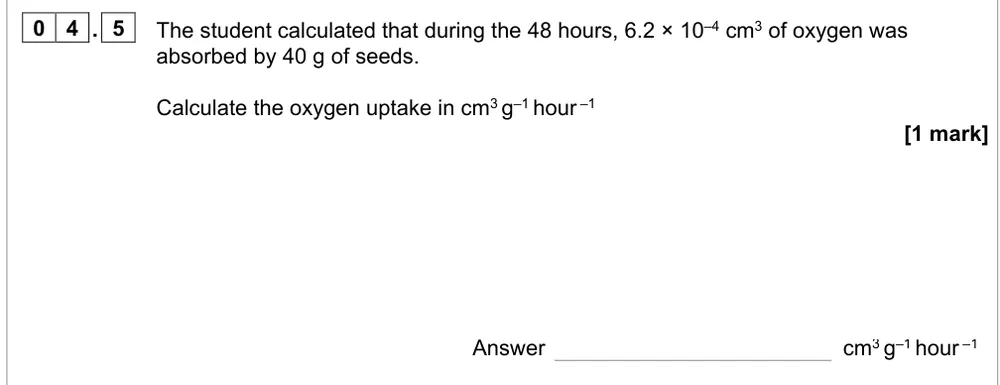
Calculate the oxygen uptake of the seeds in cm³ g⁻¹ hour⁻¹.
Information from earlier in this question:
Show the mark scheme
Tap an image to open it full size.
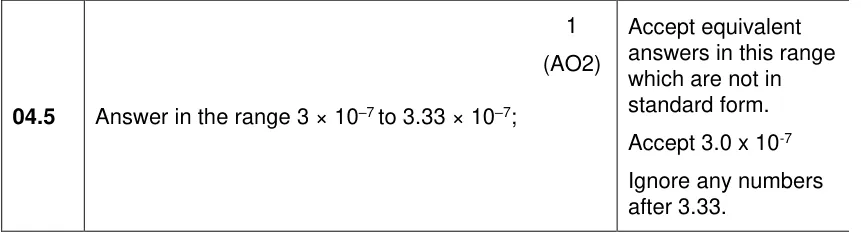
From the examiners' report: About 70% got it. The unit tells you what to do: divide by the mass (40 g) and by the time (48 hours). Dividing by only one of them, or losing the power of ten, scored nothing.
Where students lose marks (from AQA examiners' reports and mark schemes)
Each point below is followed by wording that gained marks.
Wait so the oxygen is used up: Less than 17% of students realised the apparatus was left for an hour so the oxygen was absorbed or respired. 'To reach equilibrium', 'to reach a constant rate of respiration', 'to activate enzymes' and 'to let the pressure stabilise' weren't credited.
✔ Gains credit: "(So the) oxygen is used/absorbed/respired."
Name anaerobic respiration for the carbon dioxide: About 70% scored at least one mark, usually for the rise in gas volume or pressure, but most wrote only 'respiration' rather than anaerobic respiration, and some said the ethanol raised the pressure.
✔ Gains credit: "Anaerobic respiration produces carbon dioxide"; "Increase in pressure/volume (of gas)."
Oxygen in, carbon dioxide absorbed, so the pressure falls: Almost 88% got at least one mark but only about 45% got all three, because many said the volume or pressure increased, or that a vacuum formed.
✔ Gains credit: "Oxygen/O2 taken up/used (by seeds)"; "Carbon dioxide/CO2 (given out) is absorbed by solution/potassium hydroxide/KOH"; "Decrease in pressure/volume (of air inside)."
Take out the KOH; don't add a syringe: Only about 2% got all three marks. The question said the same apparatus with a change to its contents, but many added a syringe, swapped the potassium hydroxide for an oxygen absorber or said the liquid would move right.
✔ Gains credit: "Remove potassium hydroxide/KOH OR Replace potassium hydroxide/KOH with water"; "Record distance liquid moves (without potassium hydroxide)"; "Use difference in distance liquid moves (with potassium hydroxide and without potassium hydroxide)."
Control the organisms and the absorbent, not the water bath: Only 45% scored the woodlice mark and just under 60% the yeast mark, because students gave variables already stated (the water bath temperature or time), light and carbon dioxide for yeast, or 'amount' instead of volume, mass or concentration.
✔ Gains credit: "Volume/mass soda lime"; "Number/mass of woodlice"; "Concentration/mass of yeast"; "Volume of glucose/sugar (solution/s)."
No woodlice, and everything else the same: Well over half scored nothing on the control experiment. Many gave another controlled variable, or 'no water bath' or 'no soda lime', or said 'no woodlice' without keeping all other conditions the same; 'to compare' didn't score.
✔ Gains credit: "No woodlice and all other conditions/apparatus/equipment the same"; "To show that (respiring) woodlice are causing the drop to move."
Time to a set absorbance, not absorbance at a set time: Half got the mark for the colour end point being subjective, but only 13% got both marks. Some just wrote 'use a colorimeter', or measured absorbance after a set time, or described a calibration curve for glucose.
✔ Gains credit: "Colour/endpoint is subjective"; "(Have a) colour standard (of the yellow) as a reference for the end point" or a colorimeter reading of the yellow as the end point.
Divide by both the grams and the hours: About 70% got the oxygen uptake right. Wrong answers divided by 40 g but not 48 hours (1.55 × 10⁻⁵), by 48 hours but not 40 g (1.29 × 10⁻⁵), or dropped the power of ten.
✔ Gains credit: "Answer in the range 3 × 10⁻⁷ to 3.33 × 10⁻⁷."
Download the questions
Download the PDF pack (11 questions, mark schemes at the end)
Keep practising
- Respiration: AQA A Level Biology exam questions by topic
- AQA 3.5.2 respiration: self-marking quiz
- Required Practicals 7 and 8, Photosynthesis: AQA A Level Biology exam questions by topic
- Required Practical 1, Enzymes: AQA A Level Biology exam questions by topic
- Arithmetic and numerical skills (MS 0): AQA A Level Biology exam questions by topic
- AQA A Level Biology masterclasses
Questions, mark schemes and examiners' report extracts © AQA.