

Nutrient cycles (AQA 3.5.4) is an A-level only topic, so you'll meet it in Year 13 on Papers 2 and 3. You need to know how nitrogen and phosphorus are recycled within ecosystems, the role of saprobionts in decomposition, how mycorrhizae help plants take up water and inorganic ions, and what bacteria do in saprobiotic nutrition, ammonification, nitrification, nitrogen fixation and denitrification. You also need to explain why farmers add natural and artificial fertilisers, and how fertilisers cause leaching and eutrophication.
The examiners' reports find the same gaps every year. Students write 'nitrogen-containing compounds' without naming a protein or DNA, convert ammonia into nitrate and then nitrite, mix up nitrifying and nitrogen-fixing bacteria, and give nitrate ions when asked for biological molecules. In eutrophication answers they leave out the saprobionts using up oxygen in respiration, and in evaluations they describe the data without questioning the method.
Start with the nitrogen and phosphorus cycle questions, then mycorrhizae, then fertilisers and eutrophication. Answer each question on paper before you open the mark scheme. If you'd like help with this topic, my AQA masterclasses run online on Tuesdays at 5.15pm for Year 12 and on Wednesdays or Thursdays at 6.30pm for Year 13.
What you need from GCSE and Year 12
Each question on this page assumes you're secure on these GCSE and Year 12 ideas. If any of them feels shaky, revise it before you start.
- GCSE: decomposers such as bacteria and fungi break down dead organisms and waste, returning mineral ions to the soil; decay is faster when it's warm, moist and there's oxygen.
- GCSE: plants absorb nitrate ions from the soil to make amino acids and proteins, and fertilisers replace the mineral ions removed when crops are harvested.
- Year 12 (AQA 3.1.4.1, 3.1.5.1 and 3.1.6): amino acids, proteins, DNA, RNA and ATP all contain nitrogen, and DNA, RNA, ATP and phospholipids contain phosphate. See the Proteins, DNA and RNA structure and ATP pages.
- Year 12 (AQA 3.2.3): root cells take up mineral ions by active transport and water by osmosis. See the Transport across cell membranes page.
- Year 12 (AQA 3.1.4.2): enzymes work fastest at an optimum temperature and pH. See the Enzymes page.
Key terms
These words come up in the questions and mark schemes. Examiners expect you to use them exactly.
- Saprobiont: a microorganism that feeds by secreting enzymes onto dead organic matter and absorbing the products (saprobiotic nutrition); saprophyte and saprotroph are accepted.
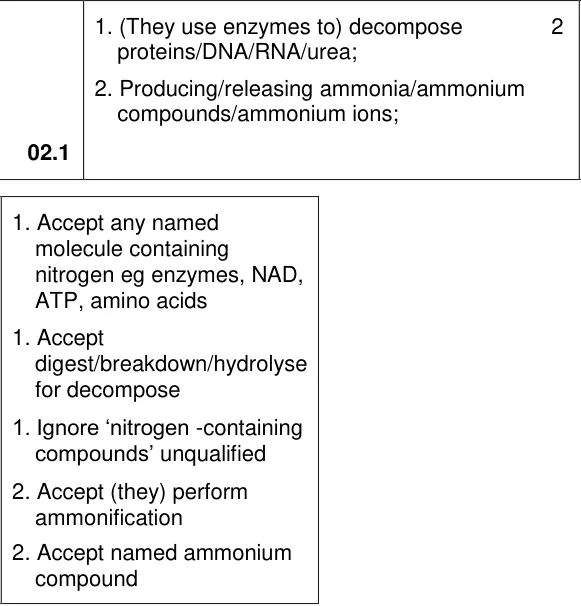
- Ammonification: saprobionts break down nitrogen-containing compounds such as proteins, DNA and urea, releasing ammonia or ammonium ions.
- Nitrification: nitrifying bacteria oxidise ammonium ions to nitrite ions and then nitrite to nitrate ions; it needs oxygen.
- Nitrogen fixation: nitrogen-fixing bacteria convert nitrogen gas into ammonia, using the enzyme nitrogenase.
- Denitrification: denitrifying bacteria convert nitrate ions back to nitrogen gas in anaerobic conditions, such as waterlogged soil.
- Mycorrhizae: associations between fungi and plant roots; the fungal hyphae increase the surface area for uptake of water and inorganic ions, and the fungus gets carbohydrates from the plant.
- Natural fertiliser: organic matter such as manure or compost, broken down by saprobionts to release ions.
- Artificial fertiliser: inorganic chemicals, such as potassium nitrate or ammonium sulfate, containing ions like nitrate and phosphate.
- Leaching: water-soluble ions such as nitrate are washed out of the soil by rain into rivers and lakes.
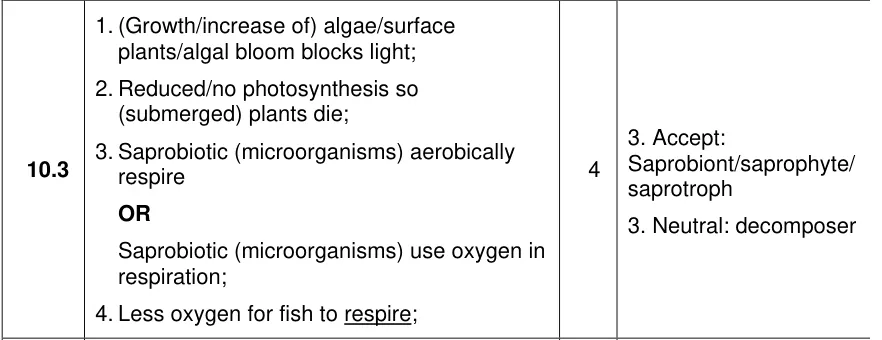
- Eutrophication: extra nutrients cause algae to grow, blocking light so submerged plants die; saprobionts decomposing them use up oxygen in respiration, so fish die.
What these questions cover (AQA 3.5.4)
The questions test these statements from the AQA AS and A-level Biology specification (7401/7402):
- Nutrient recycling: Nutrients are recycled within natural ecosystems, exemplified by the nitrogen cycle and the phosphorus cycle. (the 2023 calculation uses the phosphorus cycle; the other questions use nitrogen)
- Microorganisms: Microorganisms play a vital role in recycling chemical elements such as phosphorus and nitrogen.
- Saprobionts: The role of saprobionts in decomposition.
- Mycorrhizae: The role of mycorrhizae in facilitating the uptake of water and inorganic ions by plants.
- Bacteria in the nitrogen cycle: The role of bacteria in the nitrogen cycle in sufficient detail to illustrate the processes of saprobiotic nutrition, ammonification, nitrification, nitrogen fixation and denitrification.
- Names of bacteria: (The names of individual species of bacteria are not required). (no question tests this; it means you won't be asked to name a species, but you must say which group of bacteria carries out each process)
- Fertilisers: The use of natural and artificial fertilisers to replace the nitrates and phosphates lost by harvesting plants and removing livestock.
- Leaching and eutrophication: The environmental issues arising from the use of fertilisers including leaching and eutrophication. (the questions here are about eutrophication; none asks about leaching on its own)
How to use this page
Write your answer on paper before you open the mark scheme. Allow about 1.3 minutes per mark: the 18 questions are worth 47 marks, so about 61 minutes in total. Then mark your answer strictly against the mark scheme and read the examiners' tip underneath it. If you'd rather print the questions, download the PDF pack.
The nitrogen and phosphorus cycles (3.5.4)
Question 1
A level Paper 3 · June 2019 · Q02.1 · 2 marks · Medium
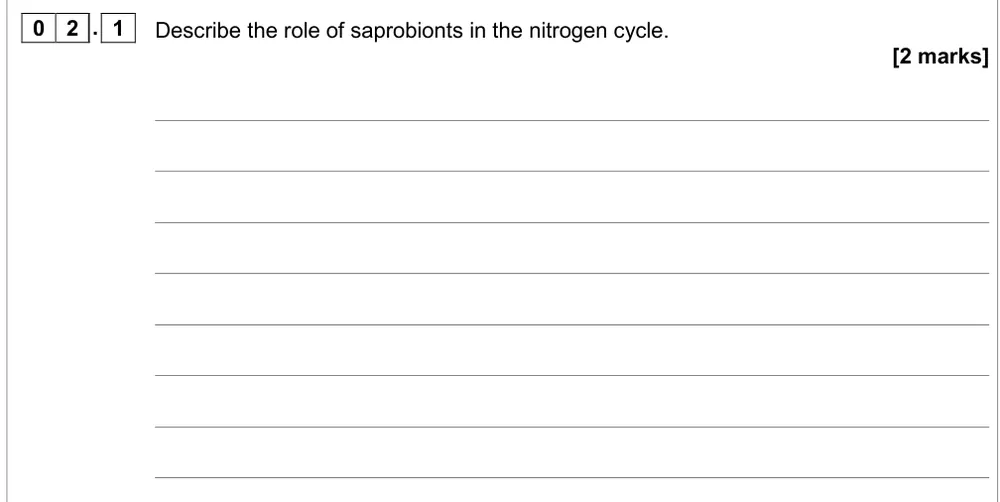
Describe the role of saprobionts in the nitrogen cycle.
Show the mark scheme
Tap an image to open it full size.
From the examiners' report: Two-thirds got at least one mark. Name a compound such as protein or DNA, and only describe the part of the cycle that saprobionts do, not the whole cycle.
Question 2
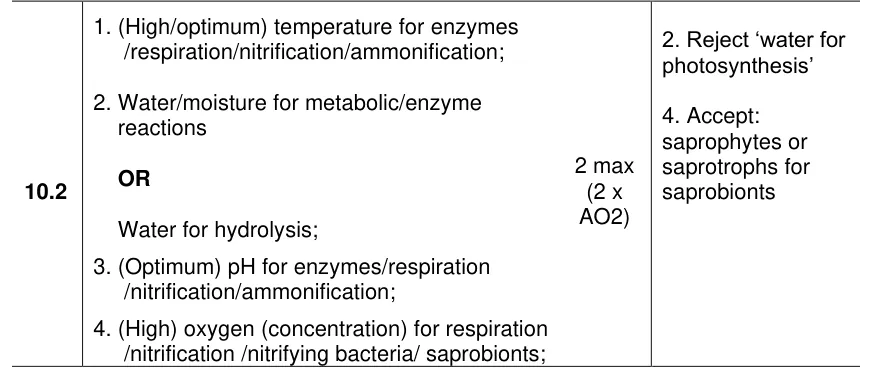
A level Paper 2 · June 2025 · Q10.2 · 2 marks · Hard
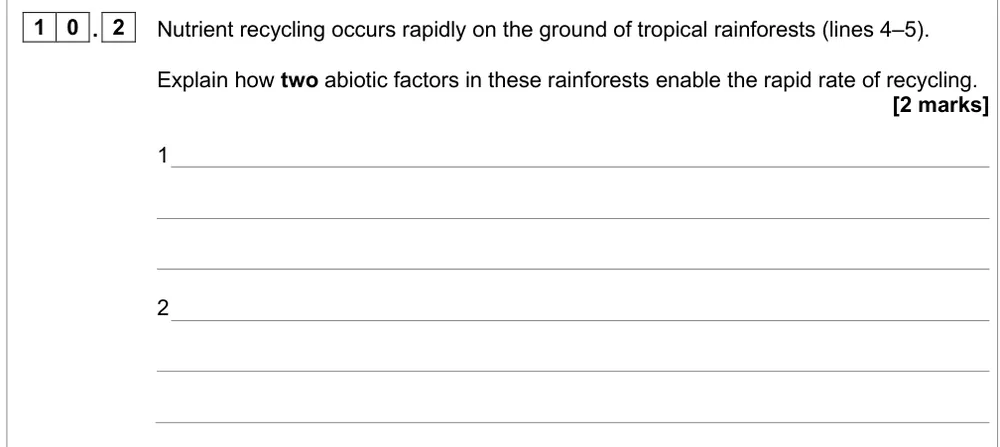
Explain how two abiotic factors in tropical rainforests speed up nutrient recycling.
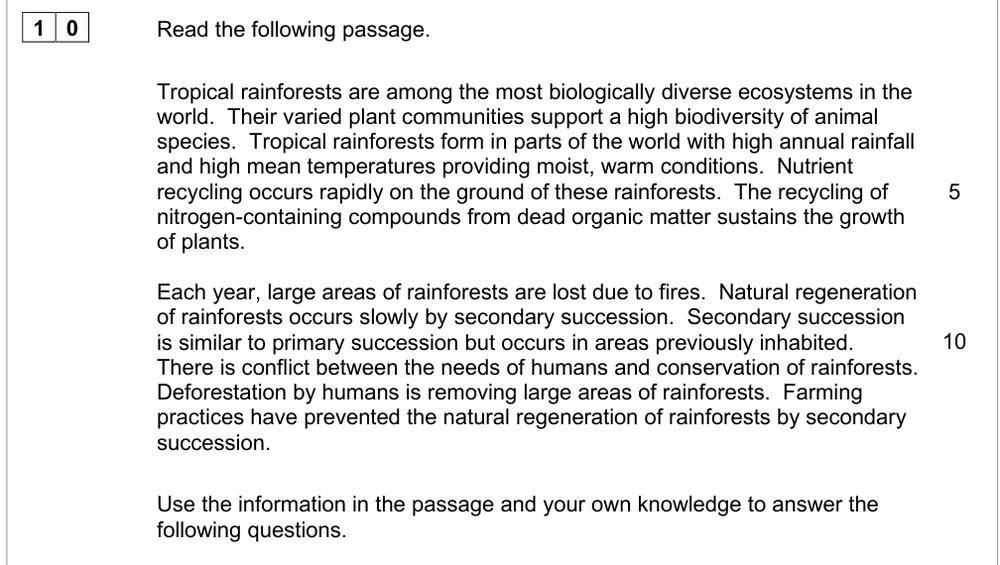
Information from earlier in this question:
Show the mark scheme
Tap an image to open it full size.
From the examiners' report: Less than 10% got both marks. Pick abiotic factors, not organisms, and link each to enzymes, hydrolysis or respiration rather than just 'faster decomposition'.
Question 3
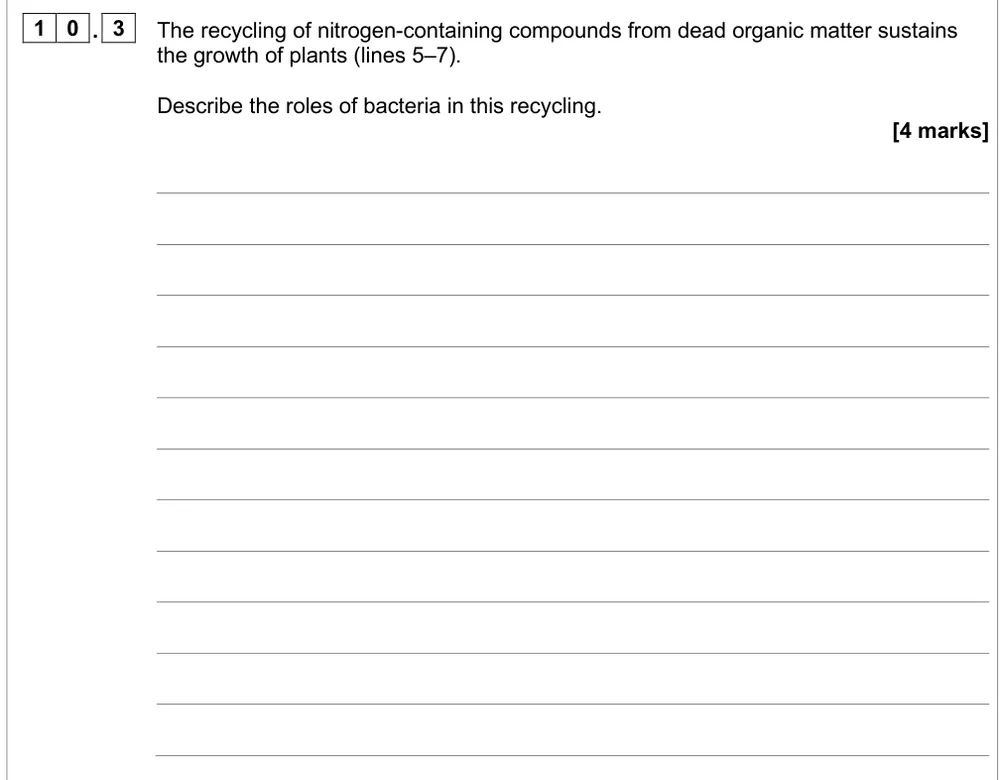
A level Paper 2 · June 2025 · Q10.3 · 4 marks · Medium
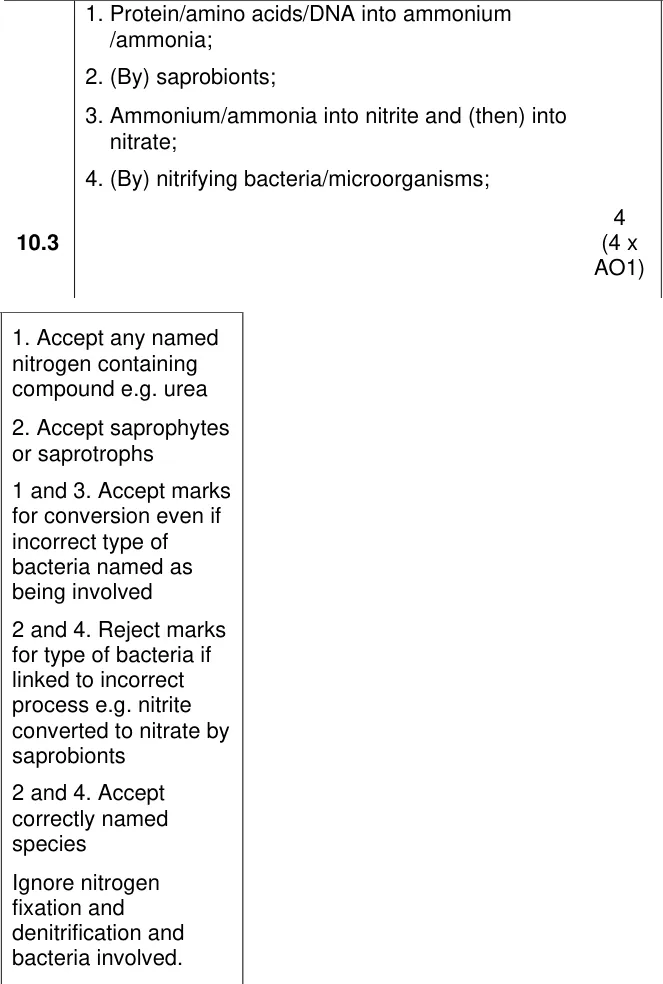
Describe the roles of bacteria in recycling nitrogen from dead organic matter.
Show the mark scheme
Tap an image to open it full size.
From the examiners' report: Less than 20% got all four. Start with a named compound such as protein, get the order right (ammonia, nitrite, nitrate) and don't add nitrogen fixation, which isn't recycling from dead matter.
Question 4
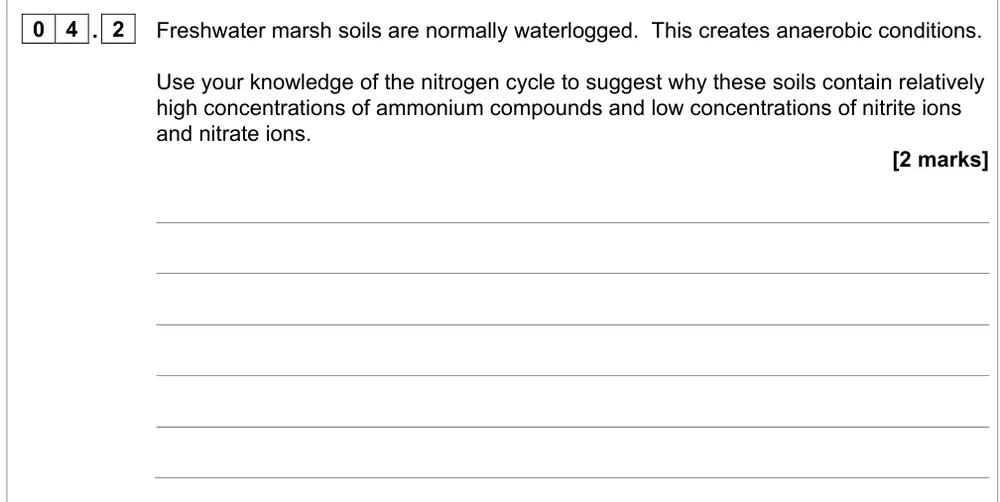
A level Paper 3 · November 2021 · Q04.2 · 2 marks · Medium
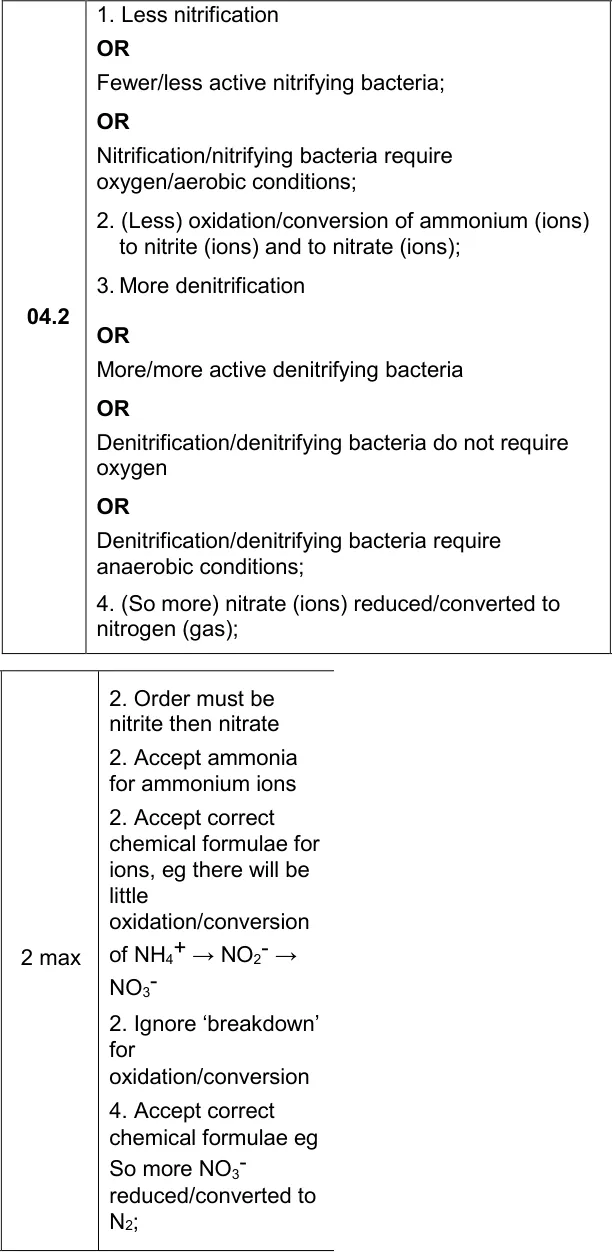
Suggest why waterlogged marsh soils are high in ammonium and low in nitrite and nitrate.
Show the mark scheme
Tap an image to open it full size.
From the examiners' report: 25% got both marks. Use the right part of the cycle: nitrifying bacteria need oxygen, and denitrifying bacteria turn nitrate into nitrogen gas. Saprobionts aren't anaerobic.
Question 5
A level Paper 2 · June 2019 · Q09.2 · 2 marks · Hard
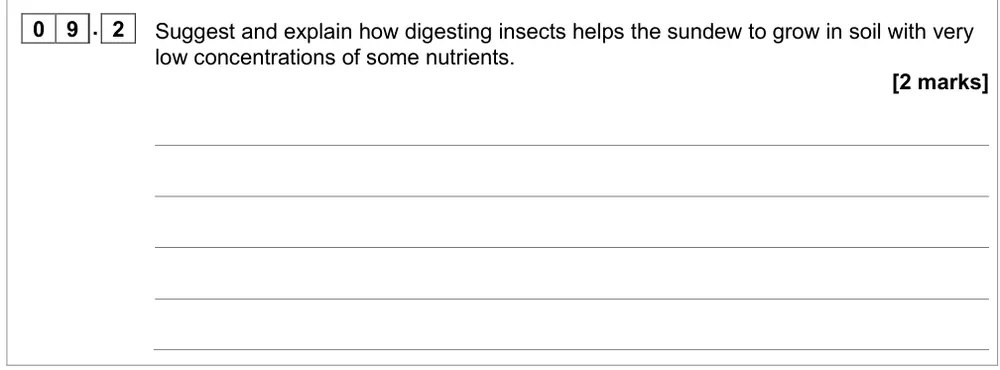
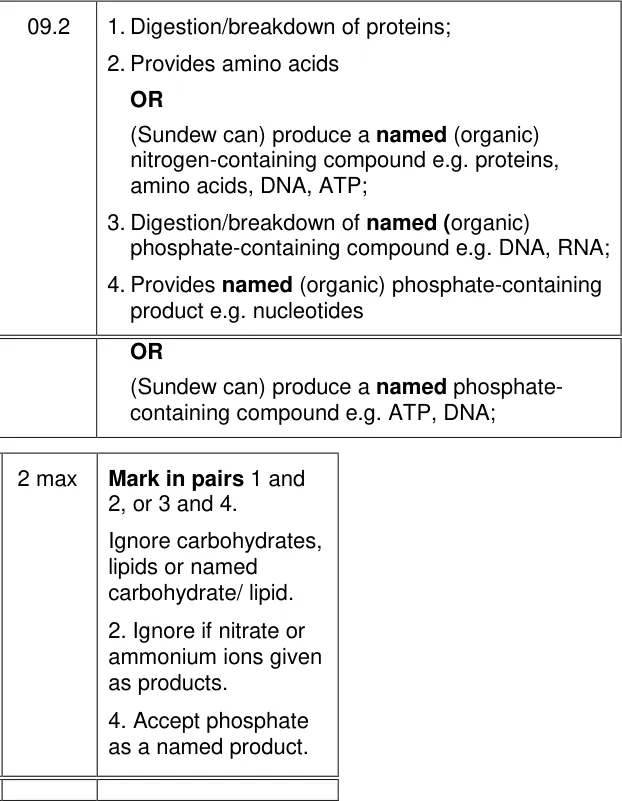
Suggest how digesting insects helps the sundew grow in nutrient-poor soil.
Information from earlier in this question:

Show the mark scheme
Tap an image to open it full size.
From the examiners' report: Almost 70% scored nothing and only 5% got both. 'Nutrients for growth' is too vague: say proteins are digested to amino acids. The sundew digests the insects, not saprobionts.
Question 6
A level Paper 3 · June 2018 · Q06.3 · 3 marks · Hard
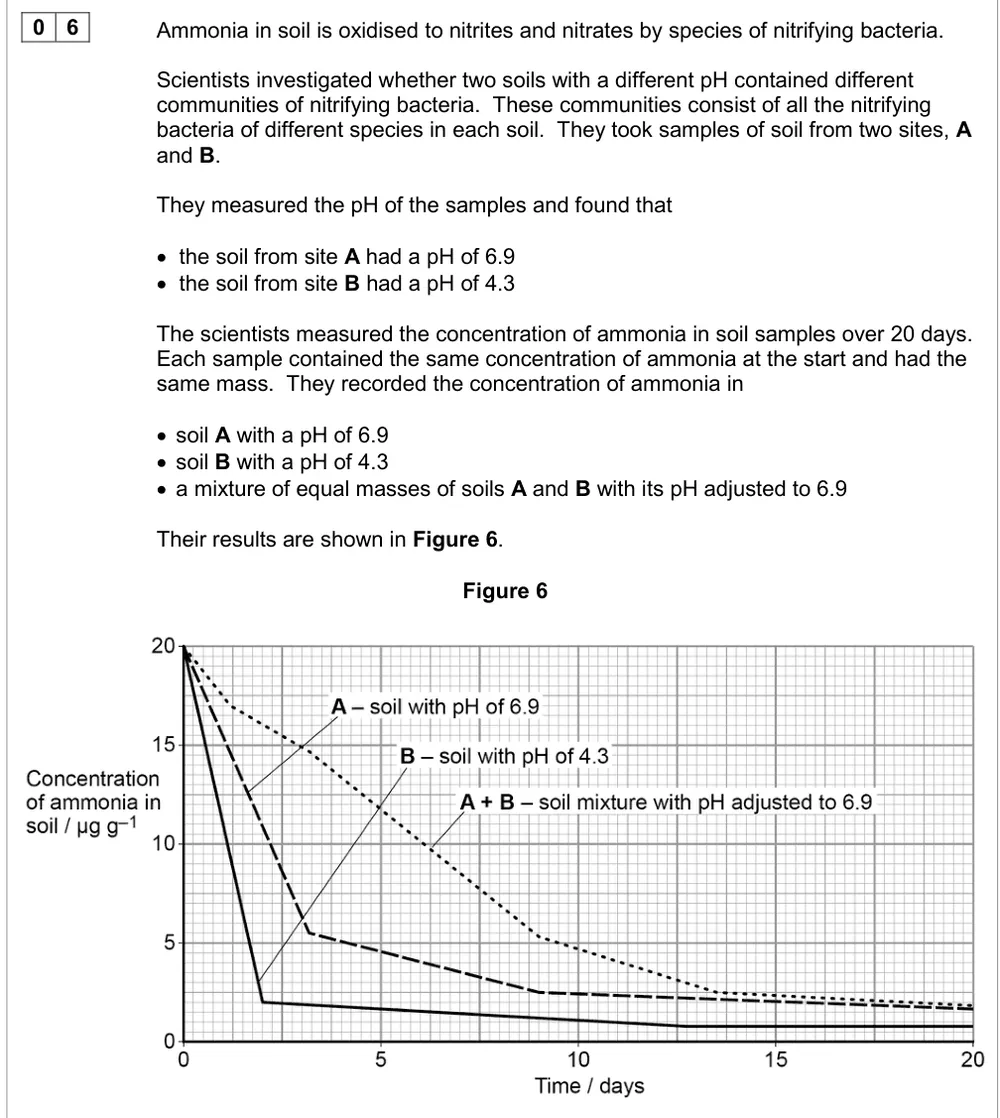
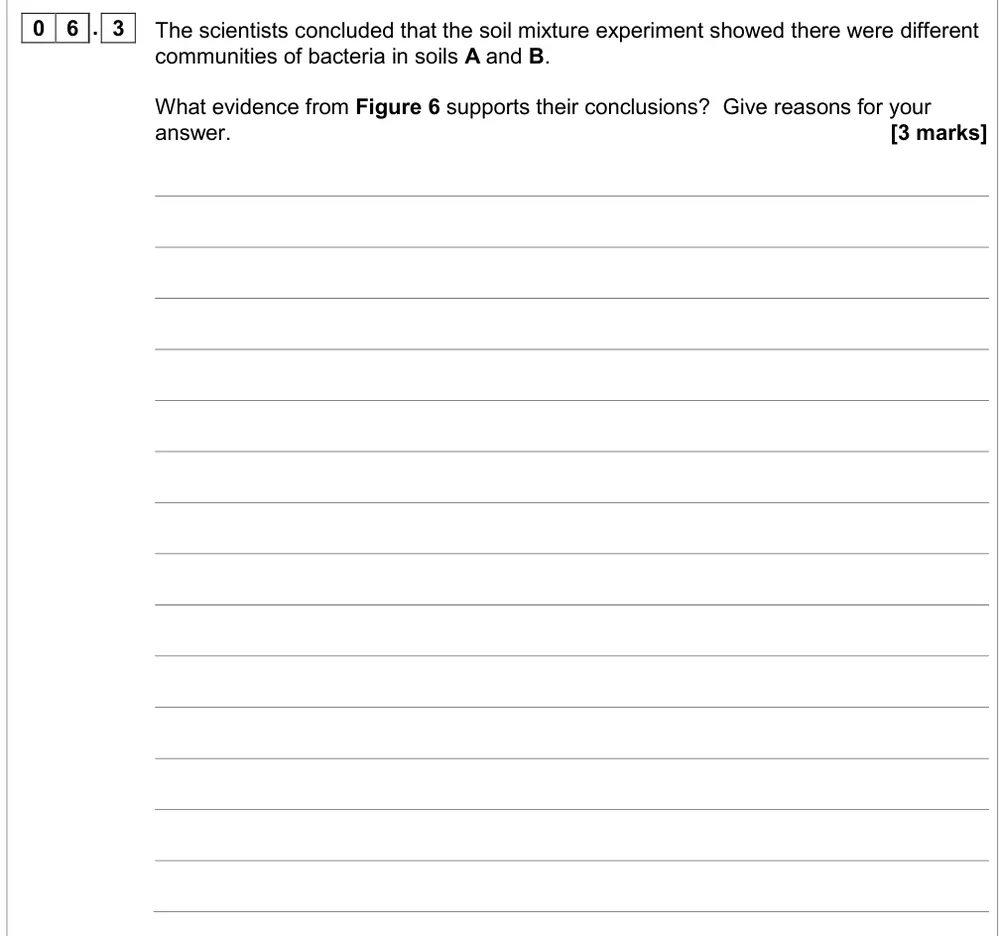
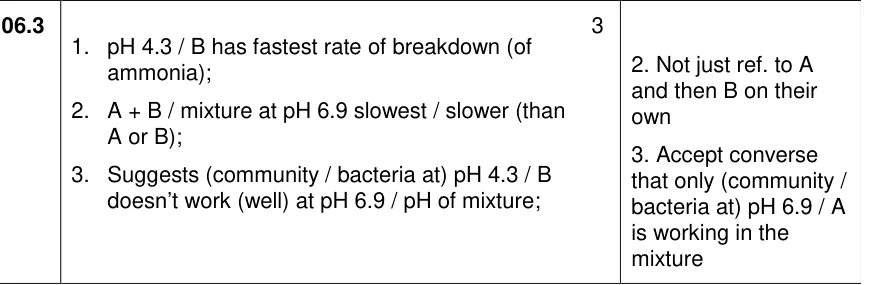
Use the ammonia graph to support the idea that soils A and B contain different communities of nitrifying bacteria.
Information from earlier in this question:
Show the mark scheme
Tap an image to open it full size.
From the examiners' report: Only 3% got all three. Ammonia is being broken down, not made, so the steepest fall is the fastest rate. Then reason that B's bacteria don't work at the mixture's pH.
Question 7
A level Paper 2 · June 2022 · Q03.2 · 3 marks · Medium
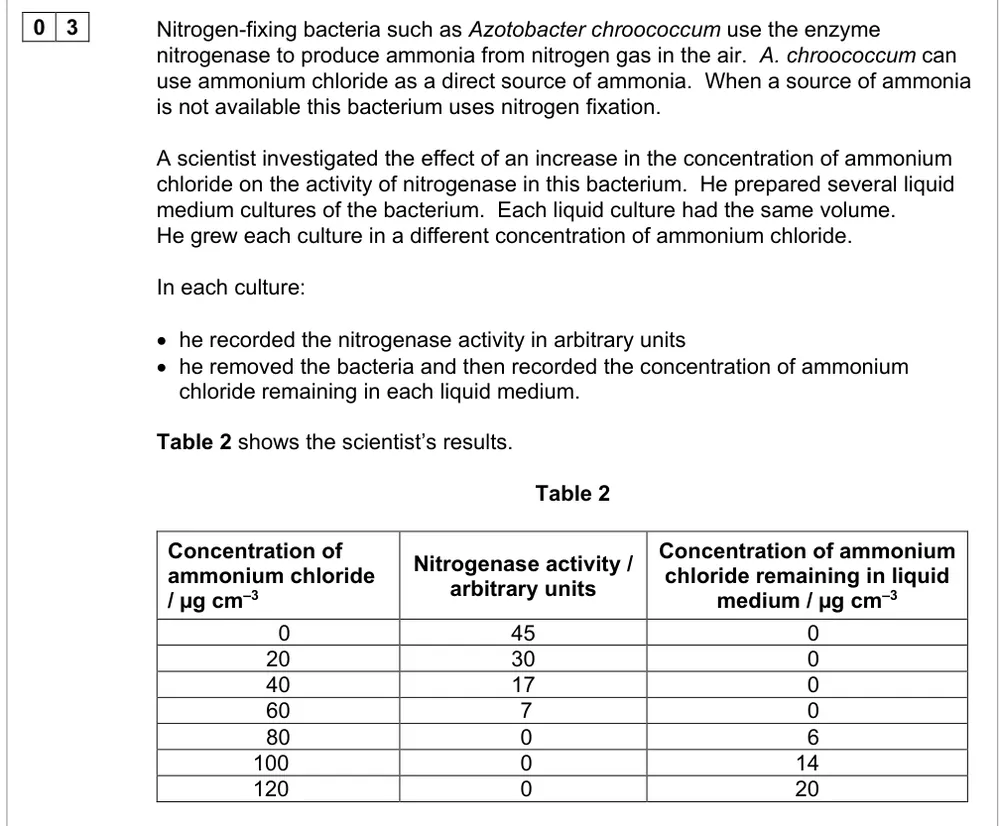
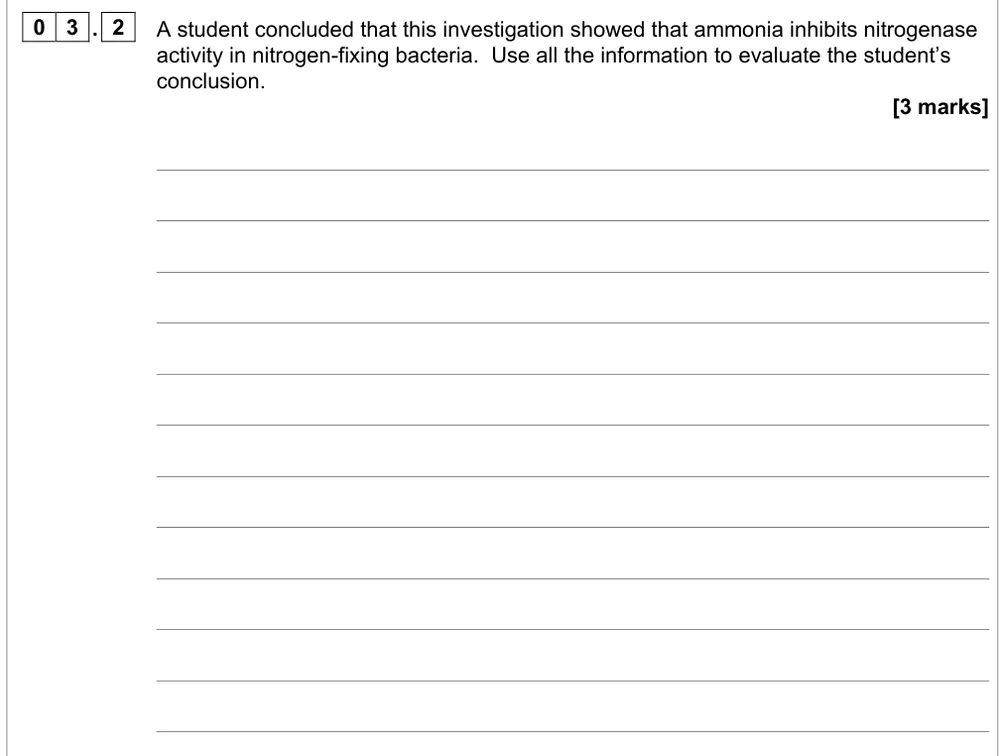
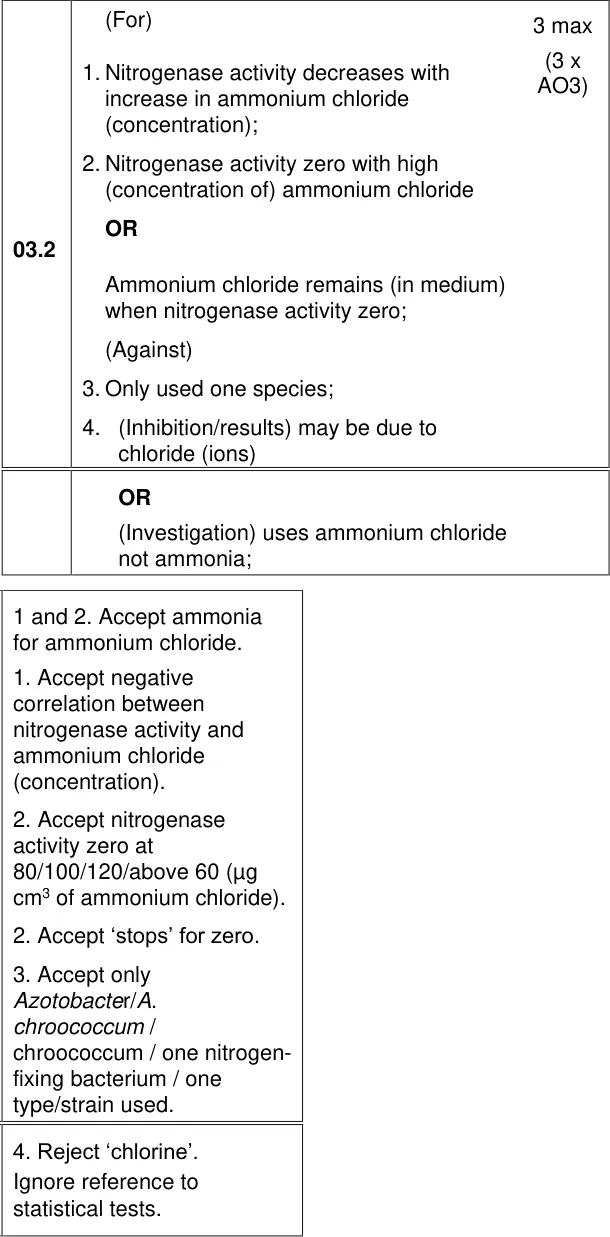
Evaluate the conclusion that ammonia inhibits nitrogenase in nitrogen-fixing bacteria.
Information from earlier in this question:
Show the mark scheme
Tap an image to open it full size.
From the examiners' report: 92% got at least one mark but only 8% got three. After the trend, question the method: one species only, and ammonium chloride isn't ammonia. A statistical test wasn't needed for such large differences.
Question 8
A level Paper 2 · June 2023 · Q03.1 · 2 marks · Medium
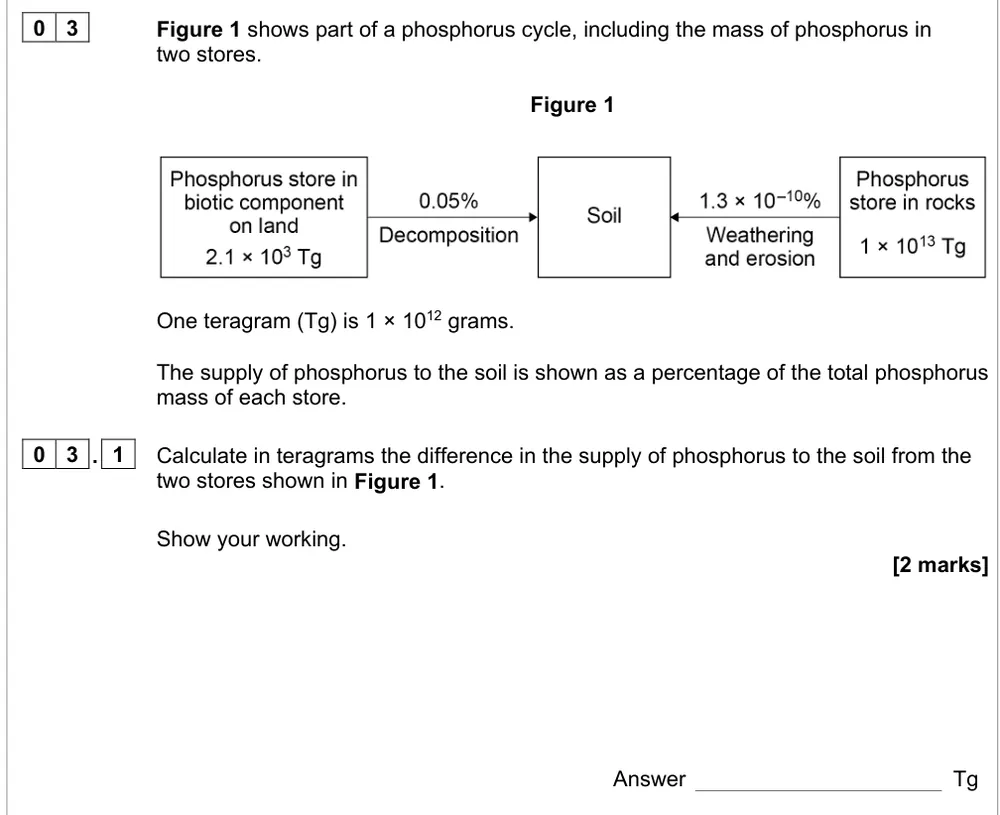
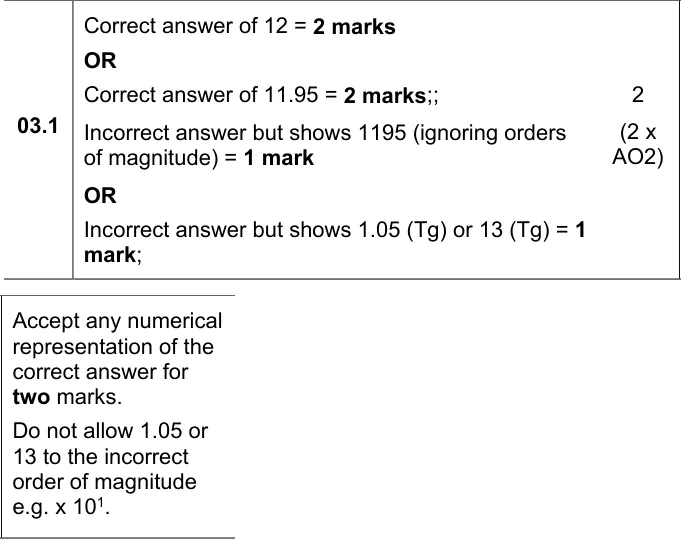
Calculate the difference in phosphorus supplied to the soil by two stores, in teragrams.
Show the mark scheme
Tap an image to open it full size.
From the examiners' report: 40% got both marks. Convert each percentage to a mass first (1.05 and 13 Tg), then subtract. Adding them or dividing them was a common slip.
Mycorrhizae (3.5.4)
Question 9
A level Paper 2 · June 2017 · Q05.1 · 1 mark · Easy
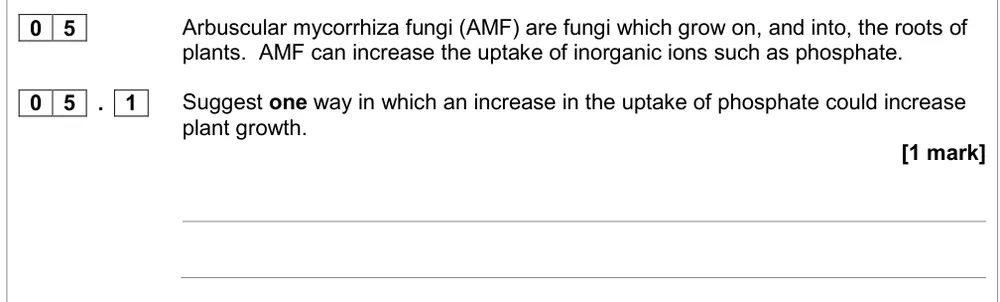
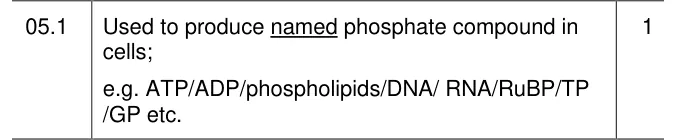
Suggest how taking up more phosphate could increase plant growth.
Show the mark scheme
Tap an image to open it full size.
From the examiners' report: Over 80% got this, often for ATP or DNA. Proteins don't contain phosphate, so they didn't score.
Question 10
A level Paper 2 · June 2017 · Q05.2 · 1 mark · Easy
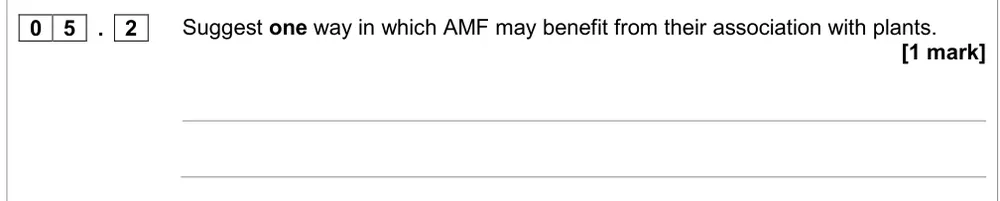
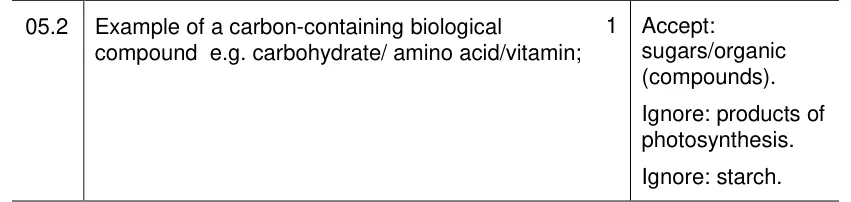
Suggest how the fungi benefit from their association with plants.
Show the mark scheme
Tap an image to open it full size.
From the examiners' report: Almost 60% got this, usually for carbohydrate or sugars. 'Nutrients', water and oxygen didn't score: name the organic compound the fungus gets.
Question 11
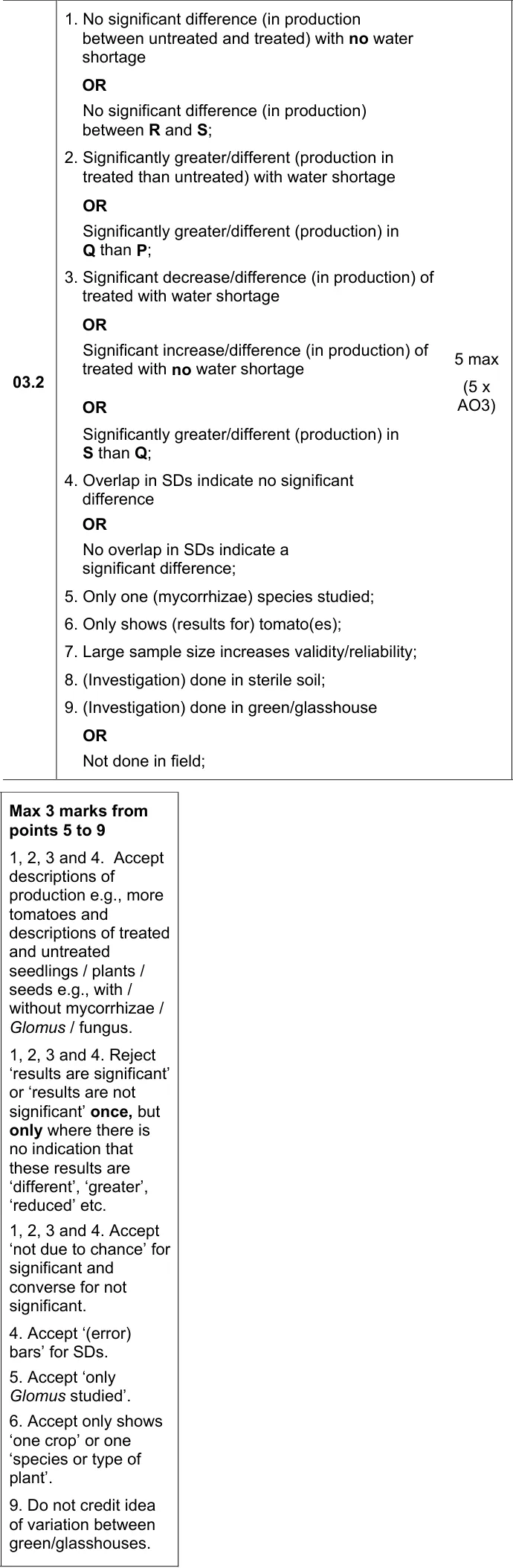
A level Paper 2 · June 2023 · Q03.2 · 5 marks · Medium
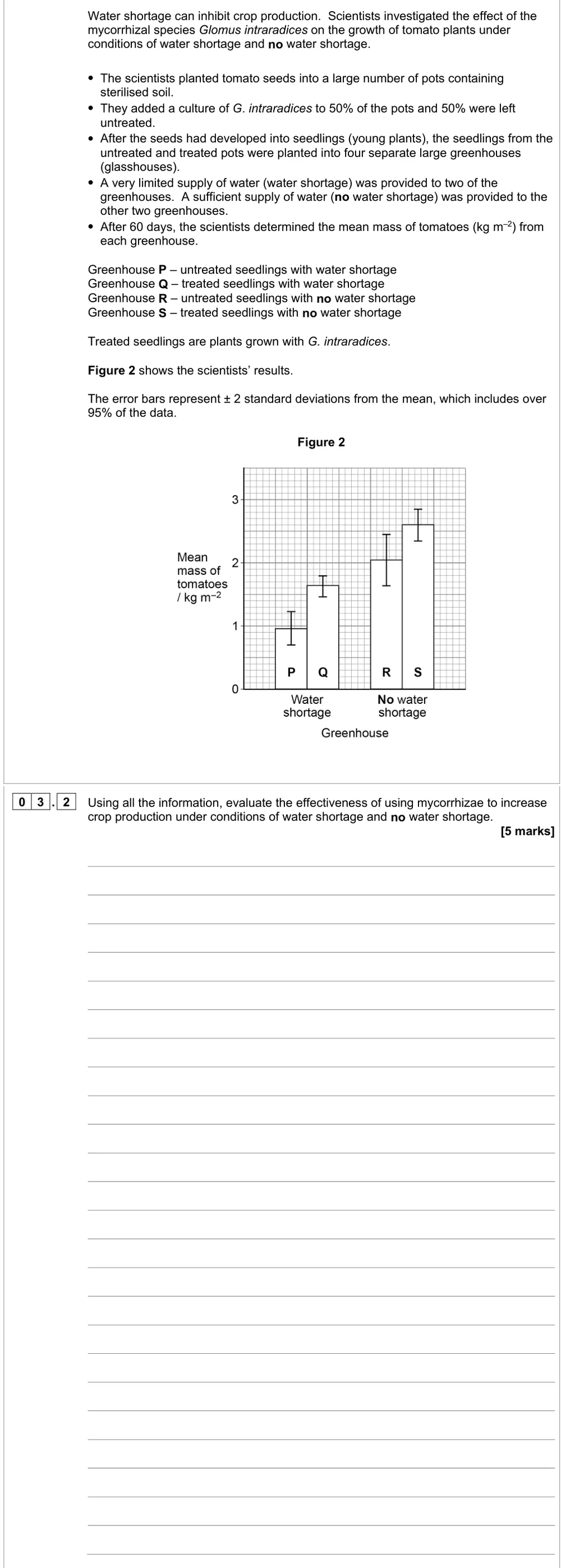
Evaluate using mycorrhizae to increase tomato production with and without a water shortage.
Show the mark scheme
Tap an image to open it full size.
From the examiners' report: About 21% scored nothing, often by describing results without saying whether differences were significant. Say whether the SD bars overlap, then give limits such as one crop and sterile soil.
Question 12
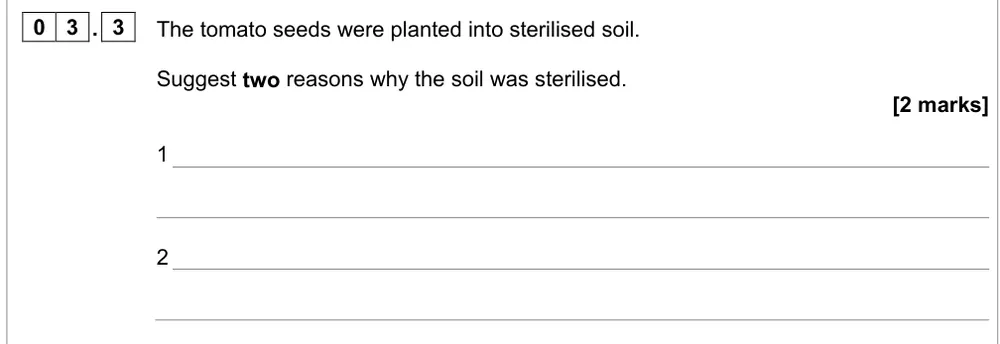
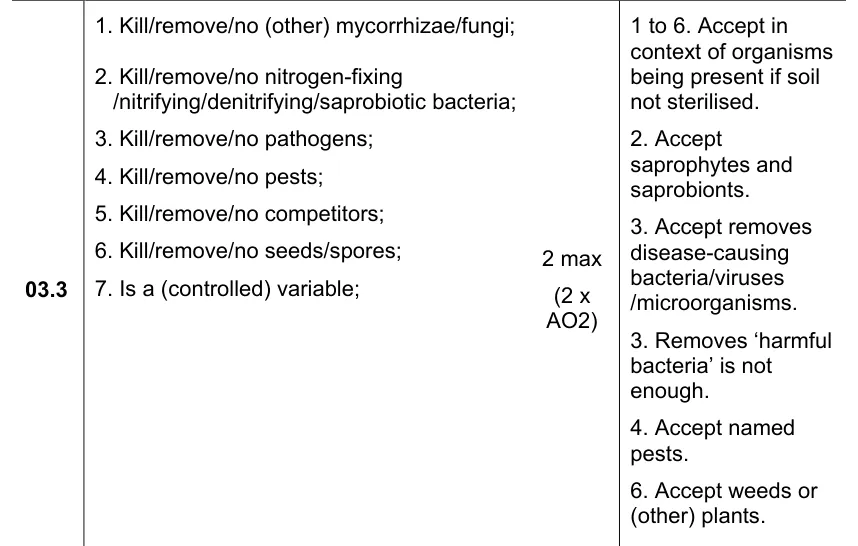
A level Paper 2 · June 2023 · Q03.3 · 2 marks · Hard
Suggest two reasons why the tomato seeds were planted in sterilised soil.
Show the mark scheme
Tap an image to open it full size.
From the examiners' report: Only 12% got both. Sterilising kills organisms, not nutrients or pesticides. Think of the microorganisms in soil that would affect the result, such as other fungi or nitrifying bacteria.
Fertilisers and eutrophication (3.5.4)
Question 13
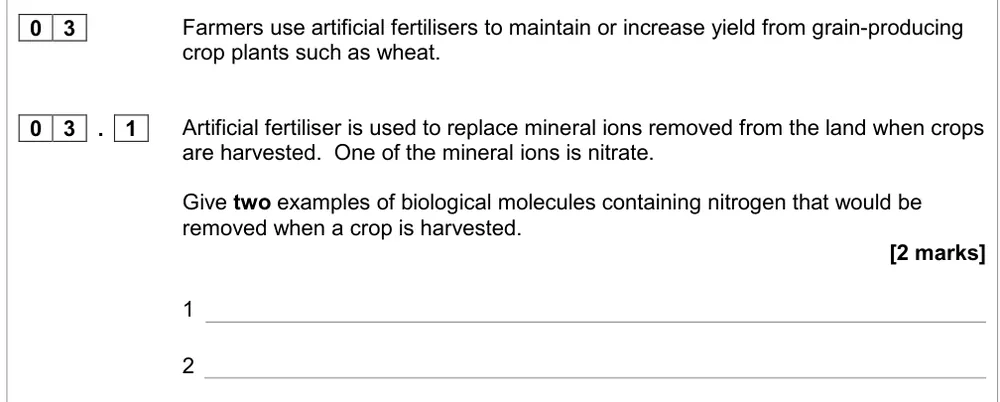
A level Paper 3 · June 2017 · Q03.1 · 2 marks · Easy
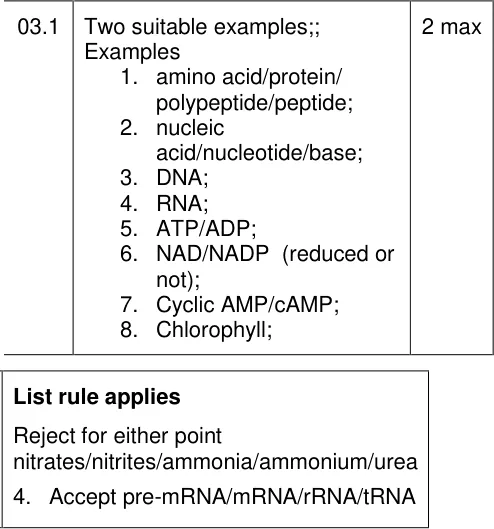
Give two nitrogen-containing biological molecules removed when a crop is harvested.
Show the mark scheme
Tap an image to open it full size.
From the examiners' report: Just over half got both marks. The question asks for biological molecules in the crop, so nitrate and ammonium ions don't count.
Question 14
A level Paper 3 · June 2017 · Q03.2 · 2 marks
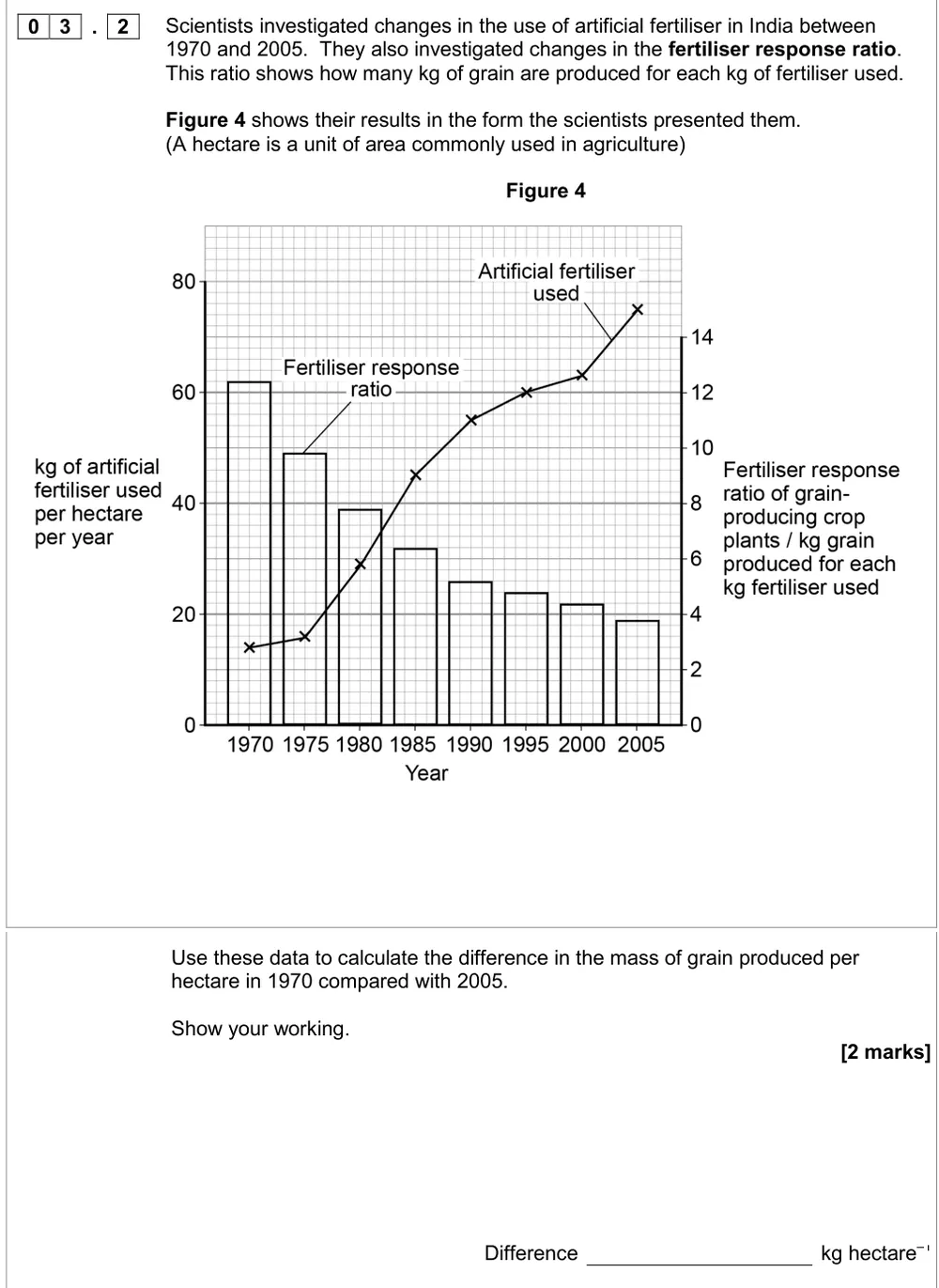
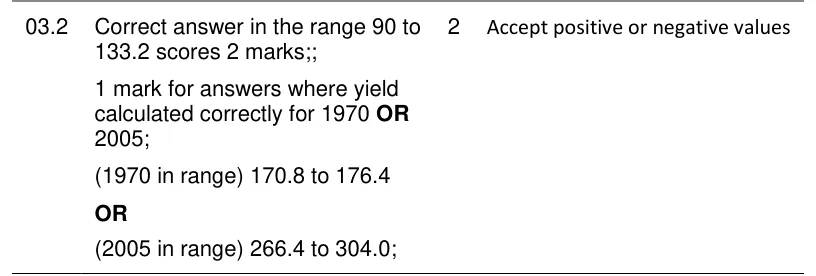
Use a two-axis graph to calculate the change in grain produced per hectare between 1970 and 2005.
Show the mark scheme
Tap an image to open it full size.
From the examiners' report: About 30% got an answer in range. Multiply fertiliser used by the response ratio for each year, reading each from its own axis, then subtract.
Question 15
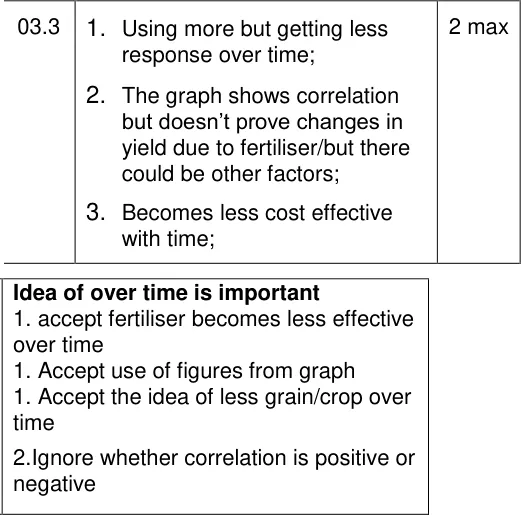
A level Paper 3 · June 2017 · Q03.3 · 2 marks · Hard
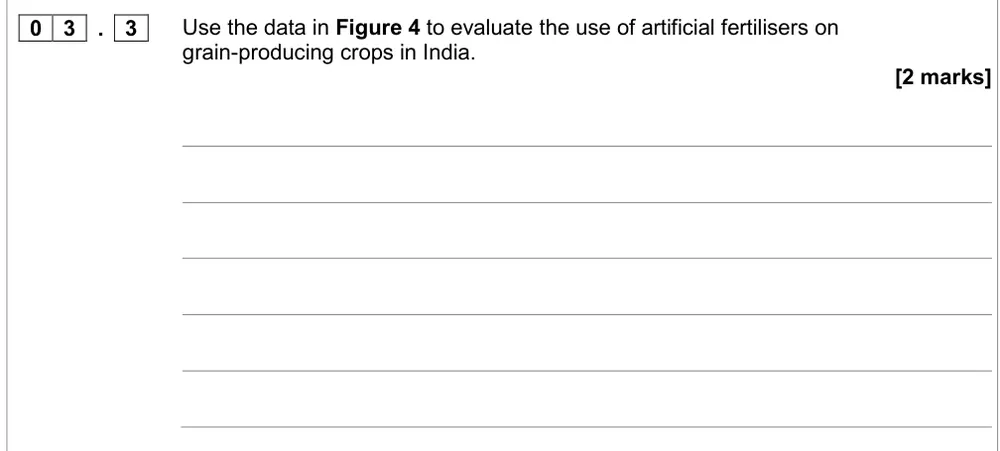
Use the graph to evaluate the use of artificial fertilisers on grain crops in India.
Show the mark scheme
Tap an image to open it full size.
From the examiners' report: Many read the graph as different amounts of fertiliser at the same time and wrote 'more fertiliser produces less crops'. The x-axis is years: describe change over time.
Question 16
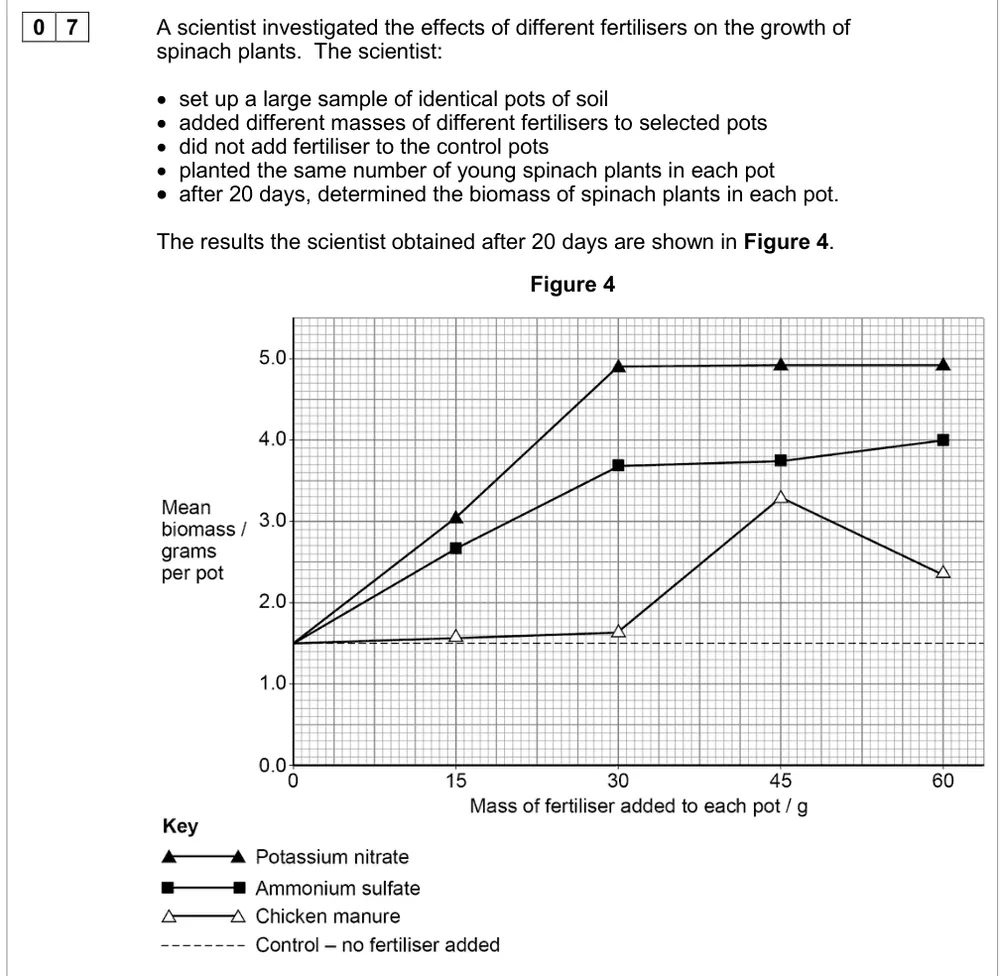
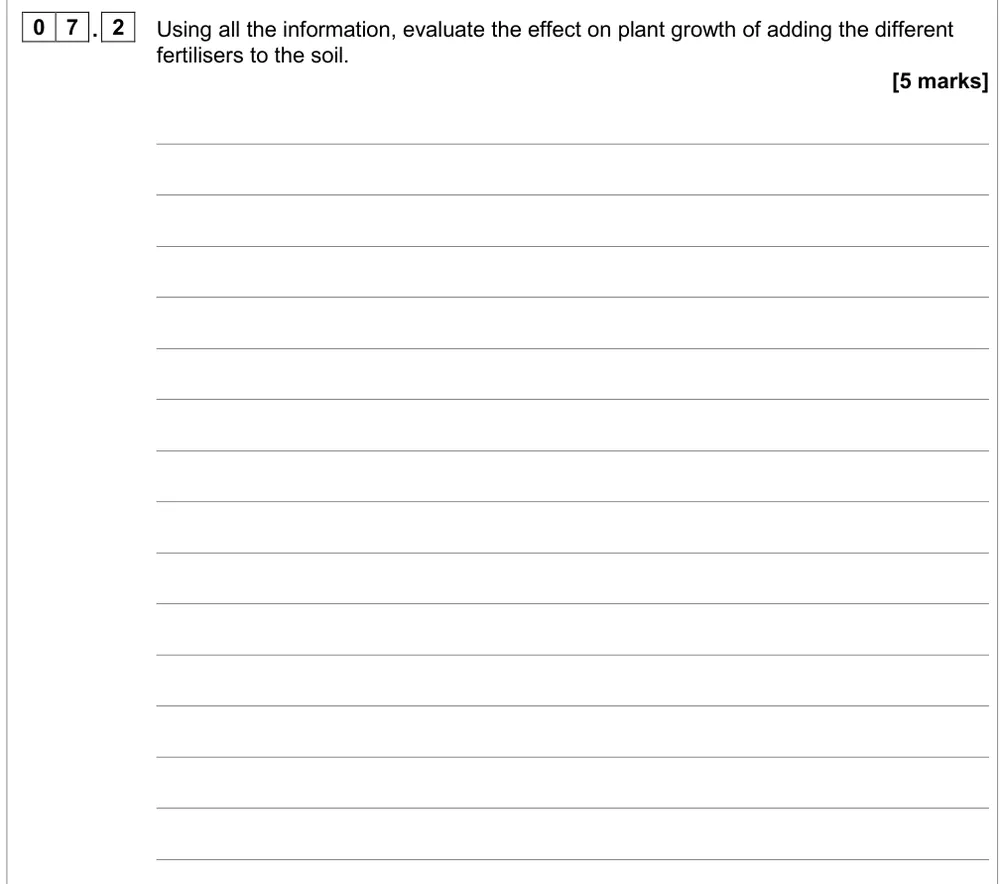
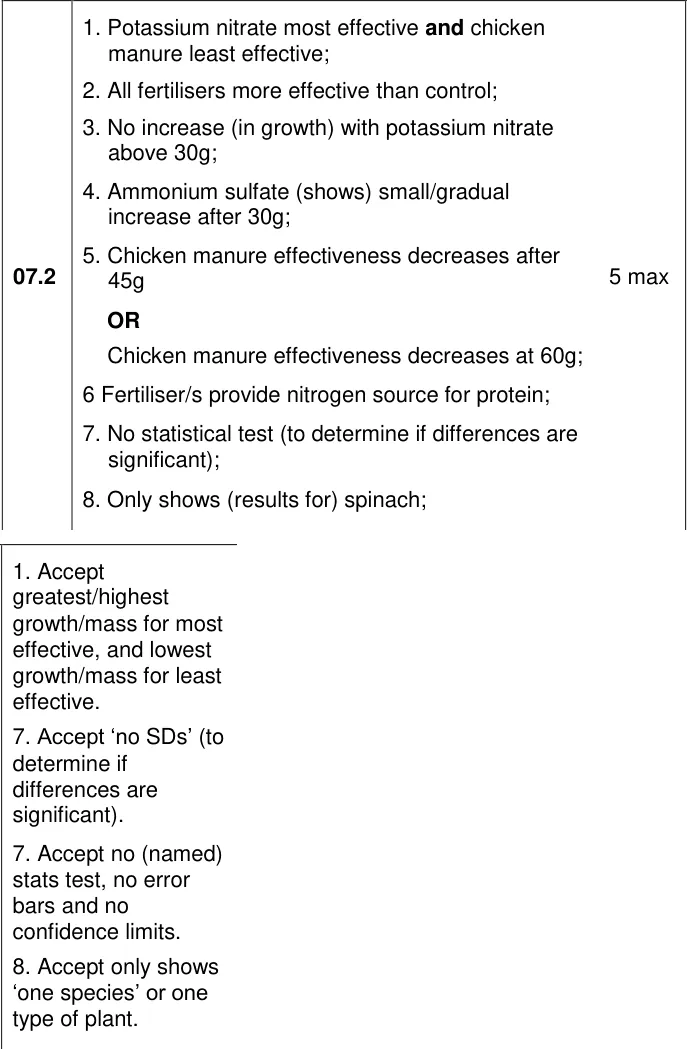
A level Paper 2 · November 2020 · Q07.2 · 5 marks · Medium
Evaluate the effect on spinach growth of adding three fertilisers to the soil.
Information from earlier in this question:
Show the mark scheme
Tap an image to open it full size.
From the examiners' report: 92% got a mark but only 6% got five. Use precise wording, 'no increase above 30 g' rather than 'no effect at 30 g', then add the limits: no statistical test and only spinach.
Question 17
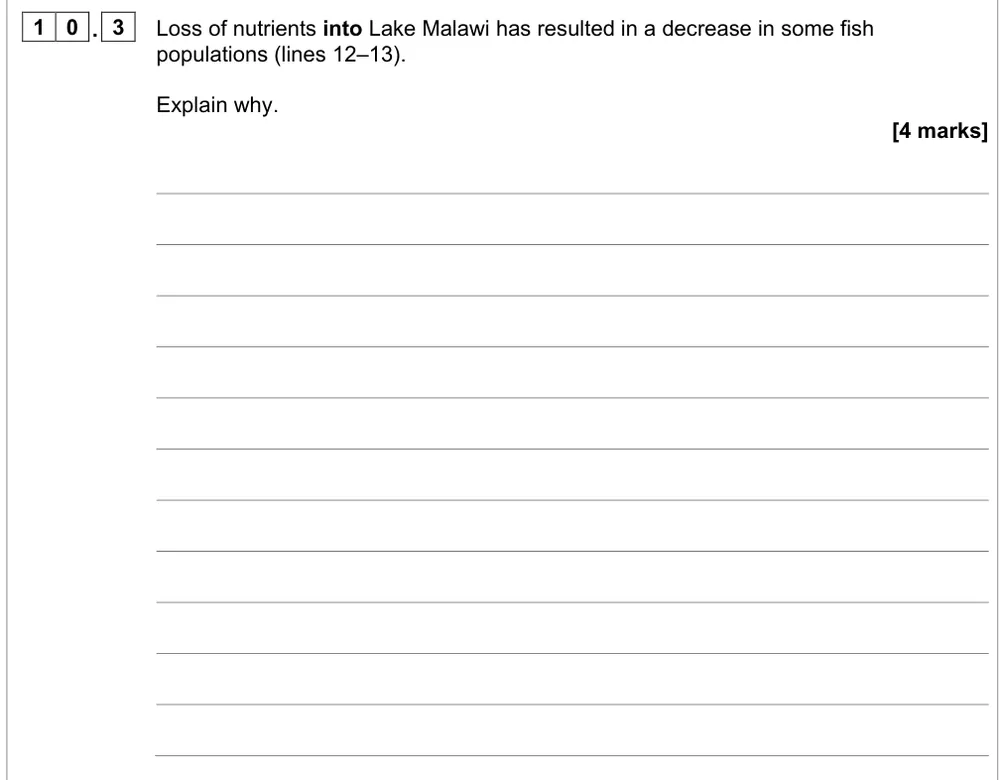
A level Paper 2 · November 2021 · Q10.3 · 4 marks · Hard
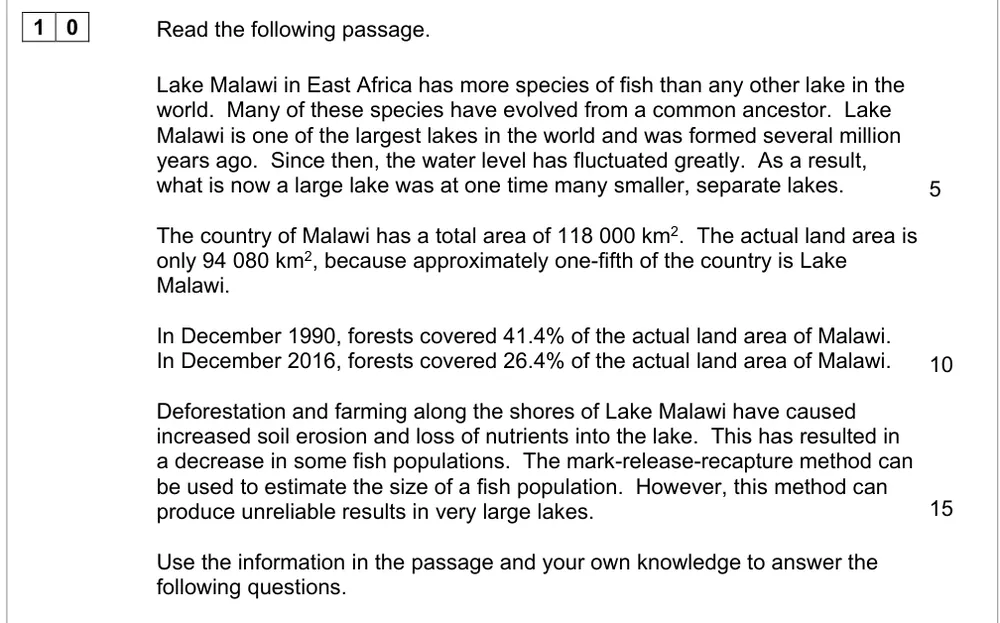
Explain why loss of nutrients into Lake Malawi reduced some fish populations.
Information from earlier in this question:
Show the mark scheme
Tap an image to open it full size.
From the examiners' report: Half misread 'into' and wrote about nutrients lost from the lake. Extra nutrients mean eutrophication: algae block light, plants die, saprobionts respire and use up the oxygen.
Question 18
A level Paper 3 · June 2019 · Q02.2 · 3 marks · Medium
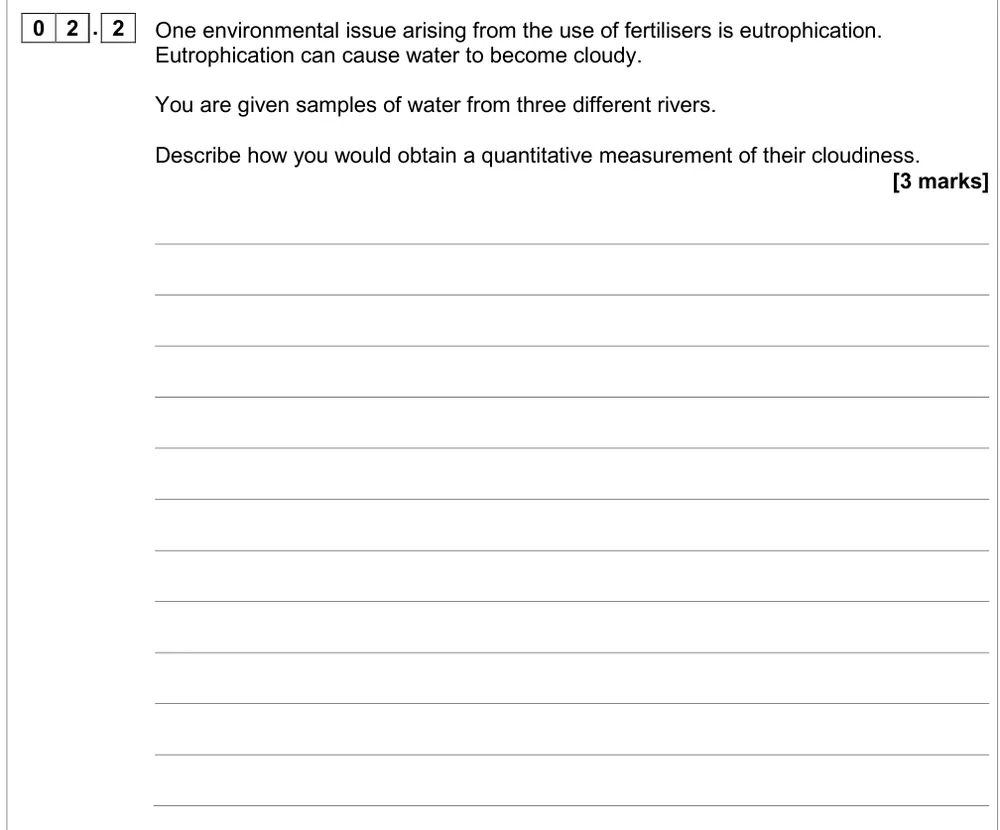
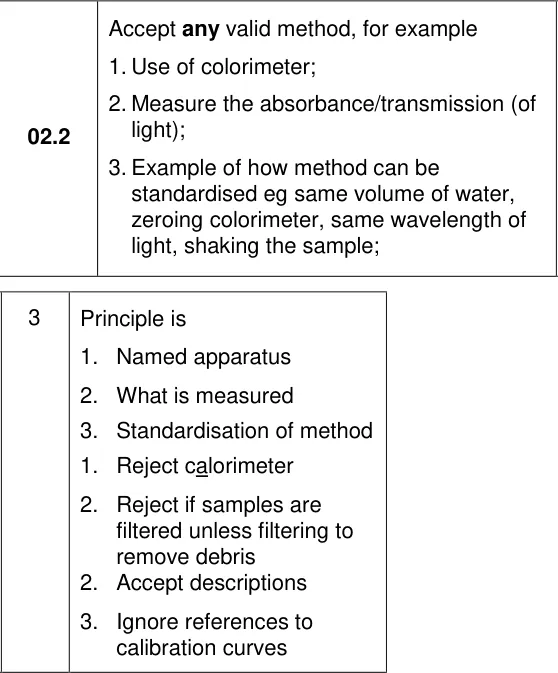
Describe how to measure the cloudiness of water from three rivers quantitatively.
Show the mark scheme
Tap an image to open it full size.
From the examiners' report: Only about 15% scored nothing. Spell colorimeter correctly, say you measure absorbance, and skip calibration curves and Benedict's, which this question doesn't need.
Where students lose marks (from AQA examiners' reports and mark schemes)
Each point below is followed by wording that gained marks.
Name the nitrogen compound that saprobionts decompose: In 'describe the role of saprobionts in the nitrogen cycle', very few named a nitrogen-containing compound, and some confused ammonification with nitrogen fixation. On the rainforest question most responses missed the same mark point.
✔ Gains credit: "(They use enzymes to) decompose proteins/DNA/RNA/urea"; "Producing/releasing ammonia/ammonium compounds/ammonium ions." 'Nitrogen-containing compounds' unqualified is ignored.
Nitrite comes before nitrate: Less than 20% got all four marks on the roles of bacteria in recycling. A significant number said ammonia was converted into nitrates and then nitrites, some described nitrification as reduction, and many confused nitrifying with nitrogen-fixing bacteria.
✔ Gains credit: "Ammonium/ammonia into nitrite and (then) into nitrate"; "(By) nitrifying bacteria/microorganisms."
Link each abiotic factor to enzymes or respiration: Less than 10% got both marks for two abiotic factors that speed up recycling in rainforests. Temperature was often linked to 'faster decomposition' rather than enzymes, and water to waterlogging or photosynthesis.
✔ Gains credit: "(High/optimum) temperature for enzymes/respiration/nitrification/ammonification"; "Water/moisture for metabolic/enzyme reactions OR Water for hydrolysis."
Biological molecules, not nitrate ions: Just over half got both marks for two nitrogen-containing biological molecules removed at harvest. Those who didn't usually gave inorganic ions, and on the sundew question nitrate and ammonium as products of digestion weren't credited.
✔ Gains credit: "amino acid/protein/polypeptide/peptide"; "DNA"; "RNA"; "ATP/ADP"; "Chlorophyll" (nitrates, nitrites, ammonia, ammonium and urea rejected).
The fungus gets carbohydrate from the plant: Almost 60% got this. Incorrect answers often said the fungus gains nutrients, water or oxygen from the plant.
✔ Gains credit: "Example of a carbon-containing biological compound e.g. carbohydrate/amino acid/vitamin" (sugars or organic compounds accepted).
Saprobionts use up the oxygen by respiring: 50% misread 'loss of nutrients into' Lake Malawi and scored nothing. Only 6% got full marks by including saprobionts using oxygen in respiration; some only said 'bacteria' or 'decomposers', and many left out respiration.
✔ Gains credit: "Saprobiotic (microorganisms) use oxygen in respiration"; "Less oxygen for fish to respire" (decomposer is neutral).
Ammonium chloride isn't ammonia: 92% got at least one mark, but only 8% got all three, by noting that only one species was used or that chloride ions might cause the inhibition. 'No statistical test' and 'correlation does not mean causation' weren't credited.
✔ Gains credit: "Only used one species"; "(Inhibition/results) may be due to chloride (ions) OR (Investigation) uses ammonium chloride not ammonia."
The fertiliser data run over time, not dose: Very many students read Figure 4 as crops given different amounts of fertiliser at the same time, giving statements such as 'more fertiliser produces less crops', instead of changes over time.
✔ Gains credit: "Using more but getting less response over time"; "The graph shows correlation but doesn't prove changes in yield due to fertiliser."
Download the questions
Download the PDF pack (18 questions, mark schemes at the end)
Keep practising
- Energy and ecosystems: AQA A Level Biology exam questions by topic
- Structure of DNA and RNA: AQA A Level Biology exam questions by topic
- Required practical 6, aseptic technique: AQA A Level Biology exam questions
- Transport across cell membranes: AQA A Level Biology exam questions by topic
- AQA 3.5.4 nutrient cycles: self-marking quiz
- AQA A Level Biology masterclasses
Questions, mark schemes and examiners' report extracts © AQA.