

Mutations and stem cells (AQA 3.8.1 and 3.8.2.1) are A-level only, so they're Year 13 content. You need the types of gene mutation, why some substitutions don't change the amino acid because the code is degenerate, why additions and deletions cause a frame shift, and how to explain the effect of a mutation on a polypeptide. Then come stem cells: totipotent, pluripotent, multipotent and unipotent cells, induced pluripotent stem cells, and evaluating stem cell treatments.
The examiners' reports show the same slips each year. On a 4-mark question about an inversion only about 20% got full marks, mostly because students wrote 'base sequence' without saying DNA, said amino acids are 'formed', or didn't name the bonds. On stem cells, students say the cells differentiate but forget that they divide: only 3% got both marks for how iPS cells could correct colour blindness. In the evaluations, sample size and 'no statistical test' rarely score; the limits of the actual study do.
Start with the mutation questions, then the stem cell explanations, and finish with the evaluations of real investigations. Write your answer before you open each mark scheme. If you'd like help with this topic, my AQA masterclasses run online on Tuesdays at 5.15pm for Year 12 and on Wednesdays or Thursdays at 6.30pm for Year 13.
Want help with this topic? It comes up in my weekly AQA masterclasses. See the timetable →
What you need from GCSE and Year 12
Each question on this page assumes you're secure on these GCSE and Year 12 ideas. If any of them feels shaky, revise it before you start.
- GCSE: stem cells are unspecialised cells that can divide and develop into other types of cell.
- Year 12 (AQA 3.4.3): a gene mutation is a change in the base sequence of DNA, and it can produce a new allele.
- Year 12 (AQA 3.4.1): the genetic code is a non-overlapping, degenerate code of base triplets, with each triplet coding for one amino acid.
- Year 12 (AQA 3.1.4.1): the primary structure of a protein decides where hydrogen, ionic and disulfide bonds form, and so its tertiary structure.
- Year 12 (AQA 3.2.2): cells divide by mitosis to produce genetically identical daughter cells.
Key terms
These words come up in the questions and mark schemes. Examiners expect you to use them exactly.
- Gene mutation: a change in the base sequence of DNA, such as an addition, deletion, substitution, inversion, duplication or translocation of bases.
- Substitution: one base in the DNA is replaced by a different base; it changes only one triplet.
- Degenerate code: most amino acids are coded for by more than one triplet, so a substitution may not change the amino acid.
- Frame shift: an addition or deletion changes all the base triplets downstream from the mutation.
- Mutagenic agent: a factor, such as a chemical or radiation, that increases the mutation rate.
- Totipotent: able to divide and produce any type of body cell; found only for a limited time in early mammalian embryos.
- Pluripotent: found in embryos; can divide in unlimited numbers and differentiate into almost any type of cell.
- Multipotent and unipotent: found in mature mammals; can divide to form a limited number of different cell types, or only one type, such as cardiomyocytes.
- Induced pluripotent stem cells (iPS cells): pluripotent cells produced from adult somatic cells using appropriate protein transcription factors.
- Differentiation: a stem cell becomes specialised because it translates only part of its DNA.
What these questions cover (AQA 3.8.1 and 3.8.2.1)
The questions test these statements from the AQA AS and A-level Biology specification (7401/7402):
- Types of gene mutation: Gene mutations might arise during DNA replication. They include addition, deletion, substitution, inversion, duplication and translocation of bases.
- Mutation rate and mutagenic agents: Gene mutations occur spontaneously. The mutation rate is increased by mutagenic agents. Mutations can result in a different amino acid sequence in the encoded polypeptide.
- Mutations in one triplet: Some gene mutations change only one triplet code. Due to the degenerate nature of the genetic code, not all such mutations result in a change to the encoded amino acid.
- Frame shifts: Some gene mutations change the nature of all base triplets downstream from the mutation, ie result in a frame shift. (no written question in this set asks about a frame shift directly; the SURF1 question accepts a missing triplet or a premature stop codon, and the examiners note that just writing 'frame shift' didn't explain the shorter polypeptide)
- Mutation and the encoded polypeptide: Students should be able to relate the nature of a gene mutation to its effect on the encoded polypeptide.
- Totipotent cells: Totipotent cells can divide and produce any type of body cell. (no written question on totipotent cells was available for this page, so learn the definition from your notes)
- Cell specialisation: During development, totipotent cells translate only part of their DNA, resulting in cell specialisation.
- Totipotent cells in early embryos: Totipotent cells occur only for a limited time in early mammalian embryos. (no written question tests this point; remember that totipotent cells occur only for a limited time in early mammalian embryos)
- Pluripotent, multipotent and unipotent cells: Pluripotent cells are found in embryos; multipotent and unipotent cells are found in mature mammals and can divide to form a limited number of different cell types.
- Pluripotent stem cells in treatment: Pluripotent stem cells can divide in unlimited numbers and can be used in treating human disorders. (the colour blindness question credits iPS cells dividing and then differentiating, which is the closest practice here)
- Unipotent cells and cardiomyocytes: Unipotent cells, exemplified by the formation of cardiomyocytes.
- iPS cells: Induced pluripotent stem cells (iPS cells) can be produced from adult somatic cells using appropriate protein transcription factors.
- Evaluating stem cell treatments: Students should be able to evaluate the use of stem cells in treating human disorders.
How to use this page
Write your answer on paper before you open the mark scheme. Allow about 1.3 minutes per mark: the 16 questions are worth 43 marks, so about 56 minutes in total. Then mark your answer strictly against the mark scheme and read the examiners' tip underneath it. If you'd rather print the questions, download the PDF pack.
Types and causes of gene mutation (3.8.1)
Question 1
A level Paper 3 · June 2019 · Q04.1 · 1 mark · Easy
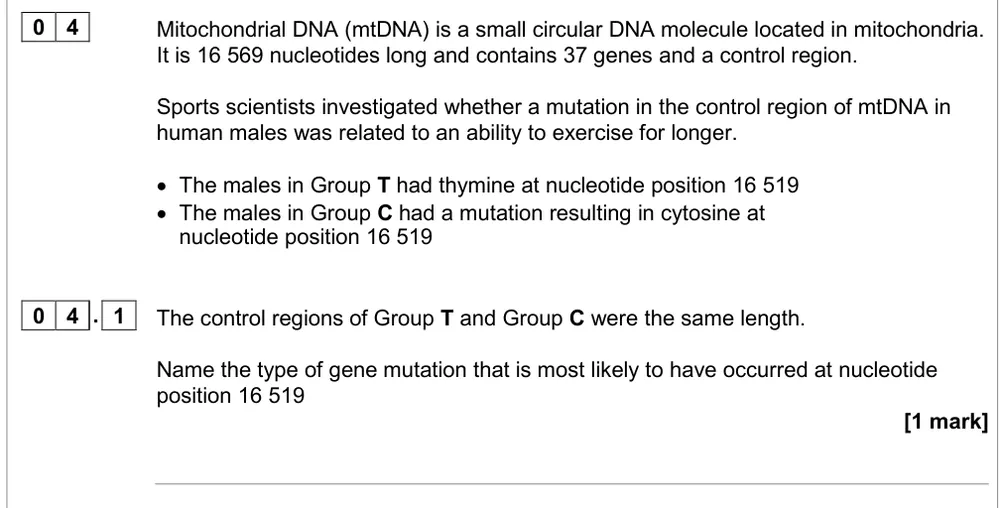
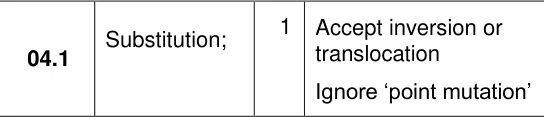
Name the type of mutation that replaced thymine with cytosine at one position in mtDNA.
Show the mark scheme
Tap an image to open it full size.
From the examiners' report: Nearly everyone got this. One base swapped for another with no change in length is a substitution; 'deletion', 'silent mutation' and 'crossing over' were the usual wrong answers.
Question 2
A level Paper 3 · November 2020 · Q03.1 · 2 marks · Medium
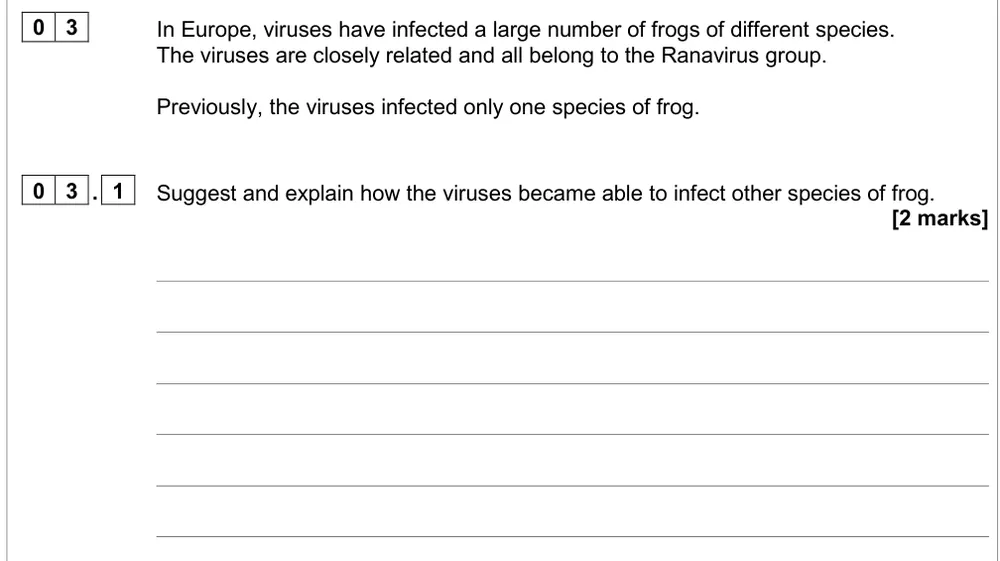
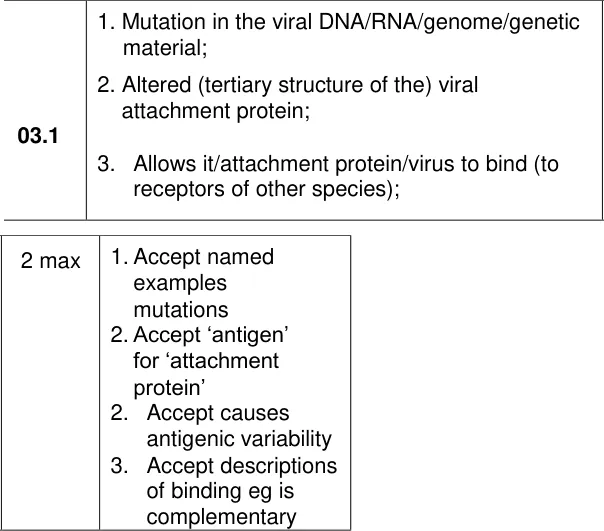
Explain how a frog virus became able to infect other species of frog.
Show the mark scheme
Tap an image to open it full size.
From the examiners' report: About 30% got both marks. 'The virus mutates' isn't enough: say the mutation is in its genetic material, that it changes the attachment protein, and that this lets it bind to receptors on other species' cells.
Question 3
A level Paper 2 · June 2025 · Q08.1 · 2 marks · Easy
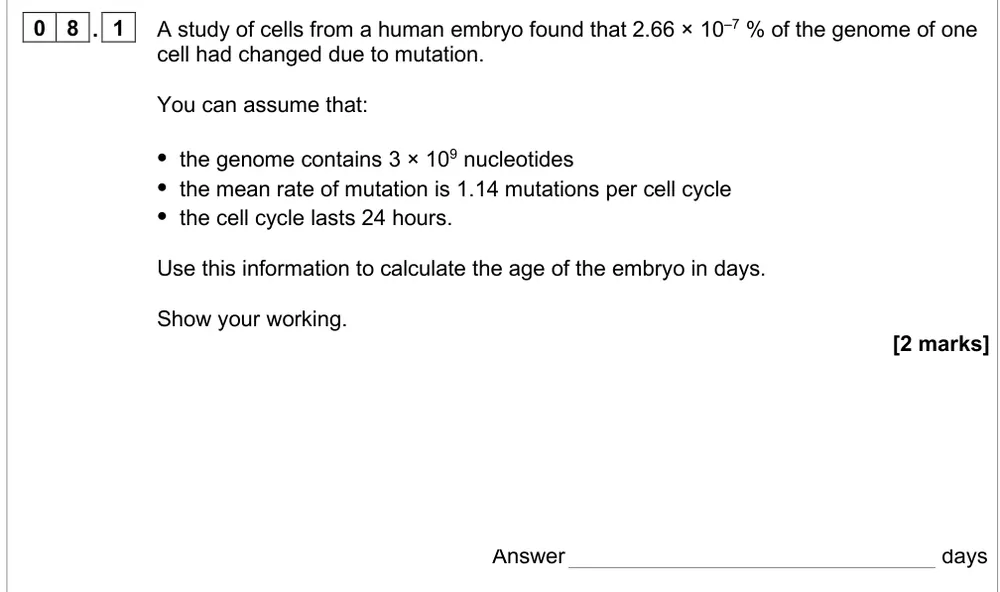
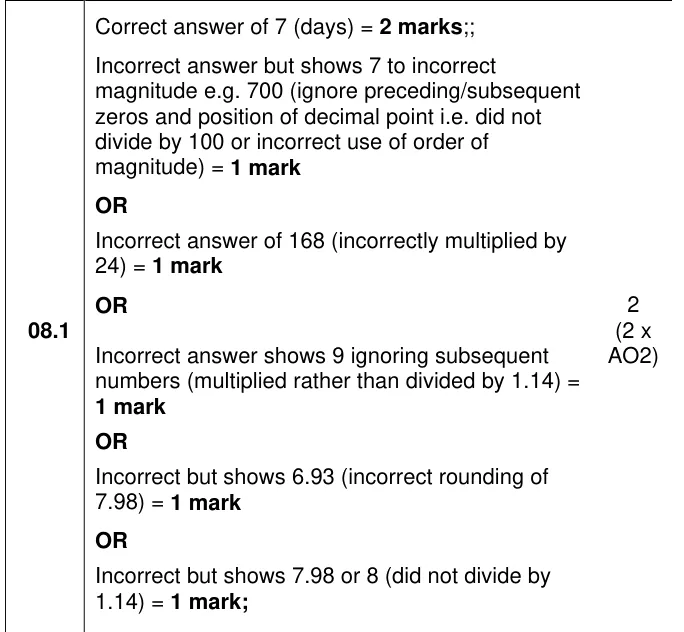
Use a mutation rate per cell cycle to work out the age of an embryo in days.
Show the mark scheme
Tap an image to open it full size.
From the examiners' report: About half got 7 days. Convert the percentage to a fraction (divide by 100) to get about 8 mutations, then divide by 1.14 for the number of cell cycles; 700 and 8 were the usual one-mark answers.
How a mutation changes the polypeptide (3.8.1)
Question 4
A level Paper 2 · June 2019 · Q02.1 · 3 marks · Easy
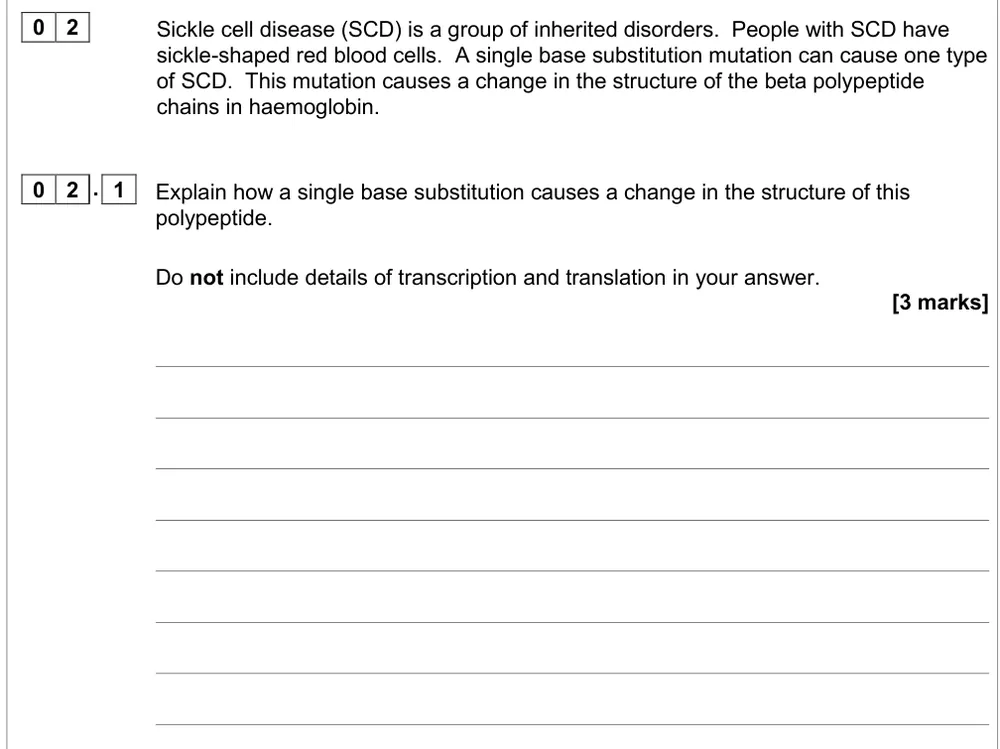
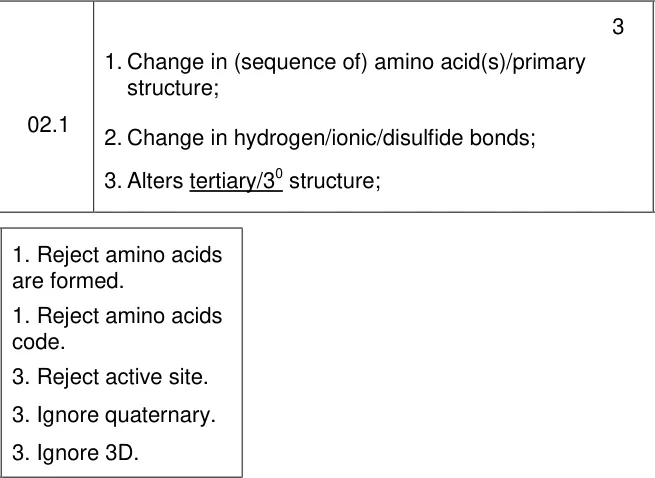
Explain how a single base substitution changes the structure of the beta polypeptide in sickle cell disease.
Show the mark scheme
Tap an image to open it full size.
From the examiners' report: About 30% got all three. Name the bonds that change, and don't write that a new amino acid is 'formed', that the active site changes (haemoglobin isn't an enzyme) or that a substitution causes a frame shift.
Question 5
A level Paper 2 · June 2025 · Q04.1 · 4 marks · Medium
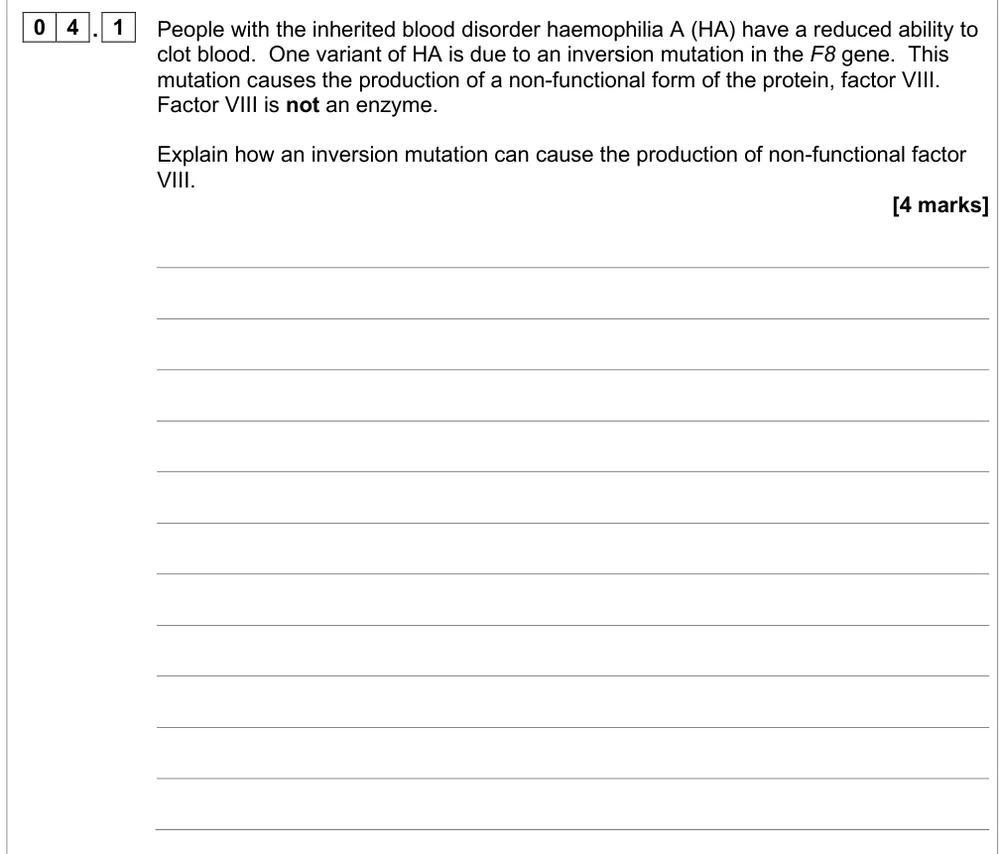
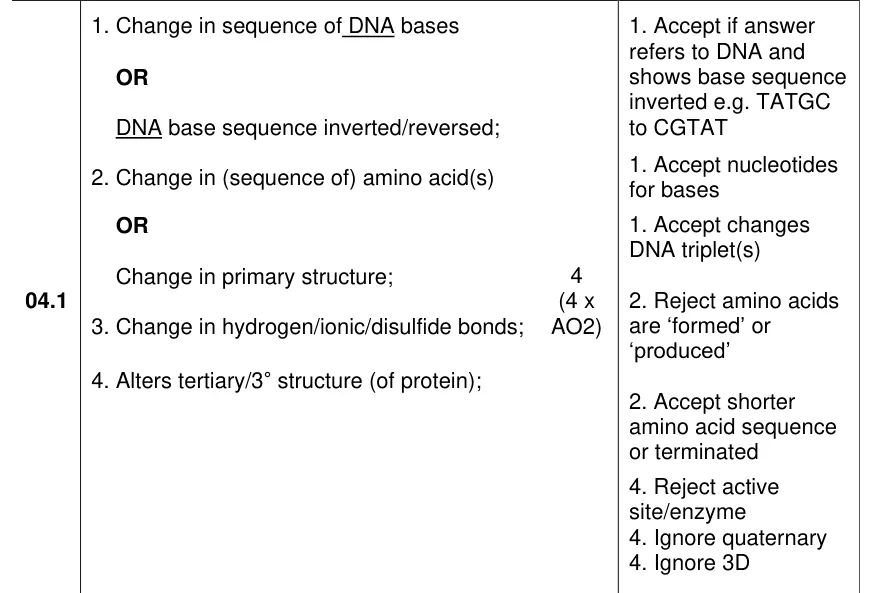
Explain how an inversion mutation in the F8 gene can produce non-functional factor VIII.
Show the mark scheme
Tap an image to open it full size.
From the examiners' report: About 20% got all four. The first mark was the hardest because most left out 'DNA'. Name the bonds, and don't mention an active site: the stem tells you factor VIII isn't an enzyme.
Question 6
A level Paper 3 · June 2024 · Q05.1 · 2 marks · Easy
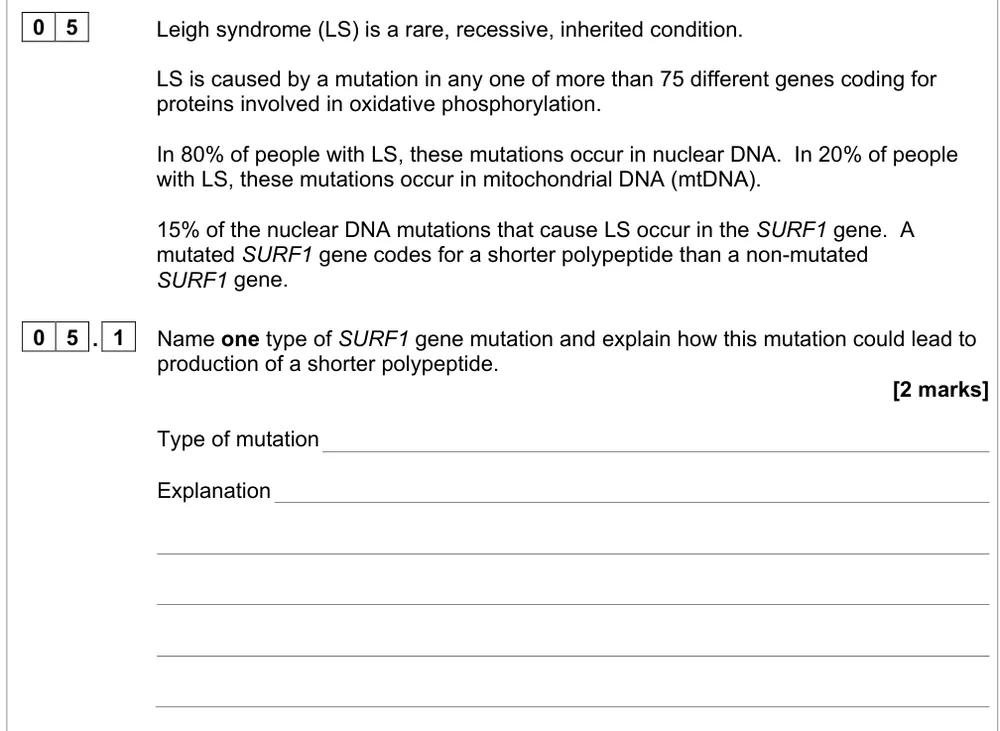
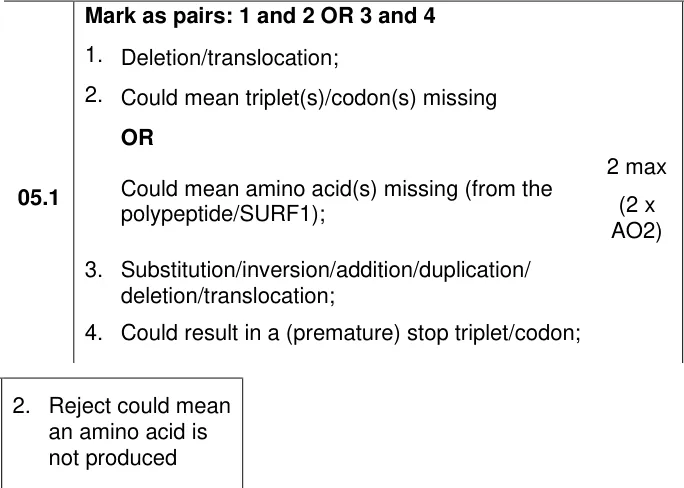
Name a SURF1 mutation and explain how it could give a shorter polypeptide.
Show the mark scheme
Tap an image to open it full size.
From the examiners' report: 55% got both. Name the mutation, then give a real reason the chain is shorter: whole triplets missing or an early stop codon. Just writing 'frame shift' or 'bases are affected' didn't score.
Question 7
A level Paper 3 · November 2021 · Q01.4 · 2 marks · Hard
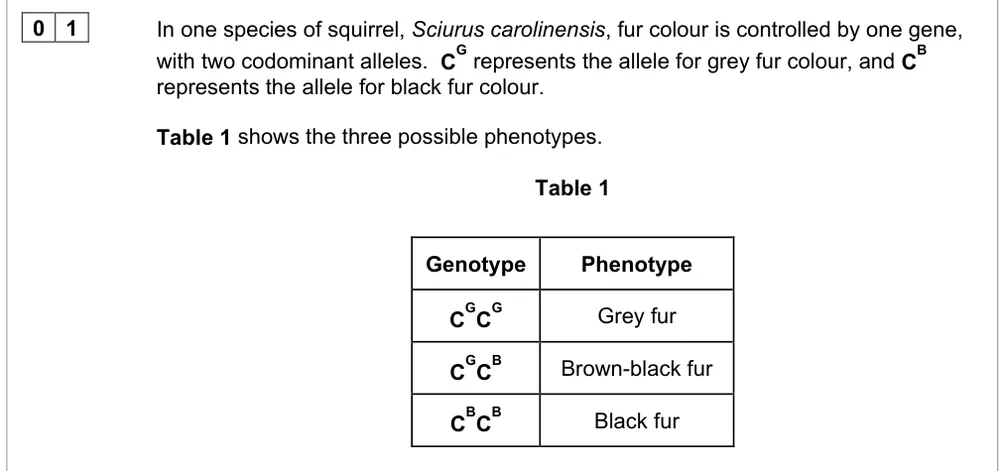
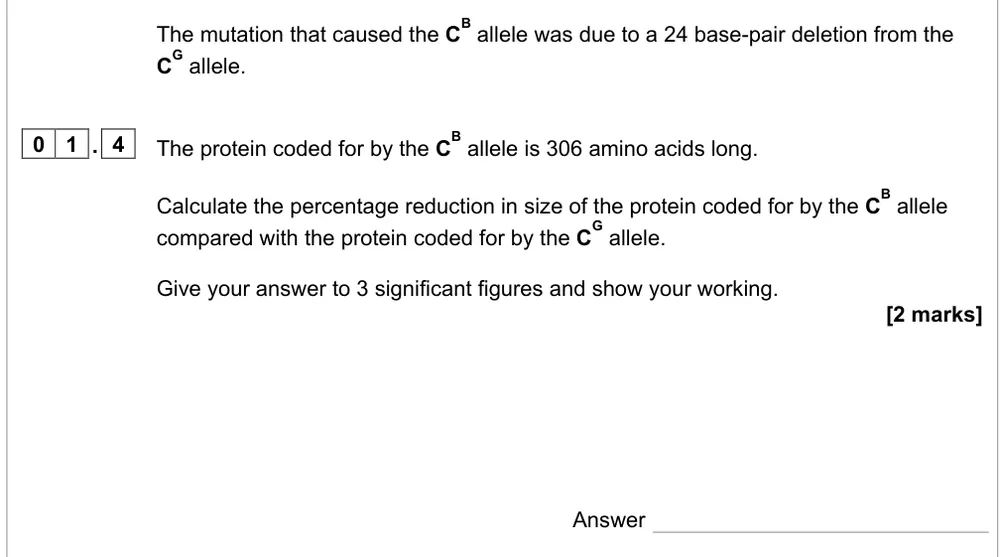
Calculate the percentage reduction in size of a squirrel protein after a 24 base-pair deletion.
Information from earlier in this question:
Show the mark scheme
Tap an image to open it full size.
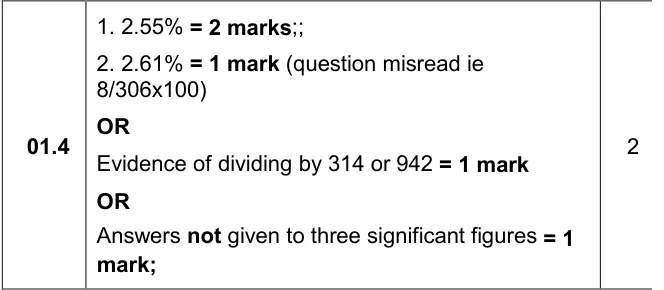
From the examiners' report: 64.09% scored zero, mostly because they didn't know which numbers to use. 24 bases is 8 triplets, so 8 amino acids are missing: the original protein had 314, and 8 ÷ 314 × 100 = 2.55%.
Question 8
A level Paper 3 · November 2021 · Q01.5 · 3 marks · Hard
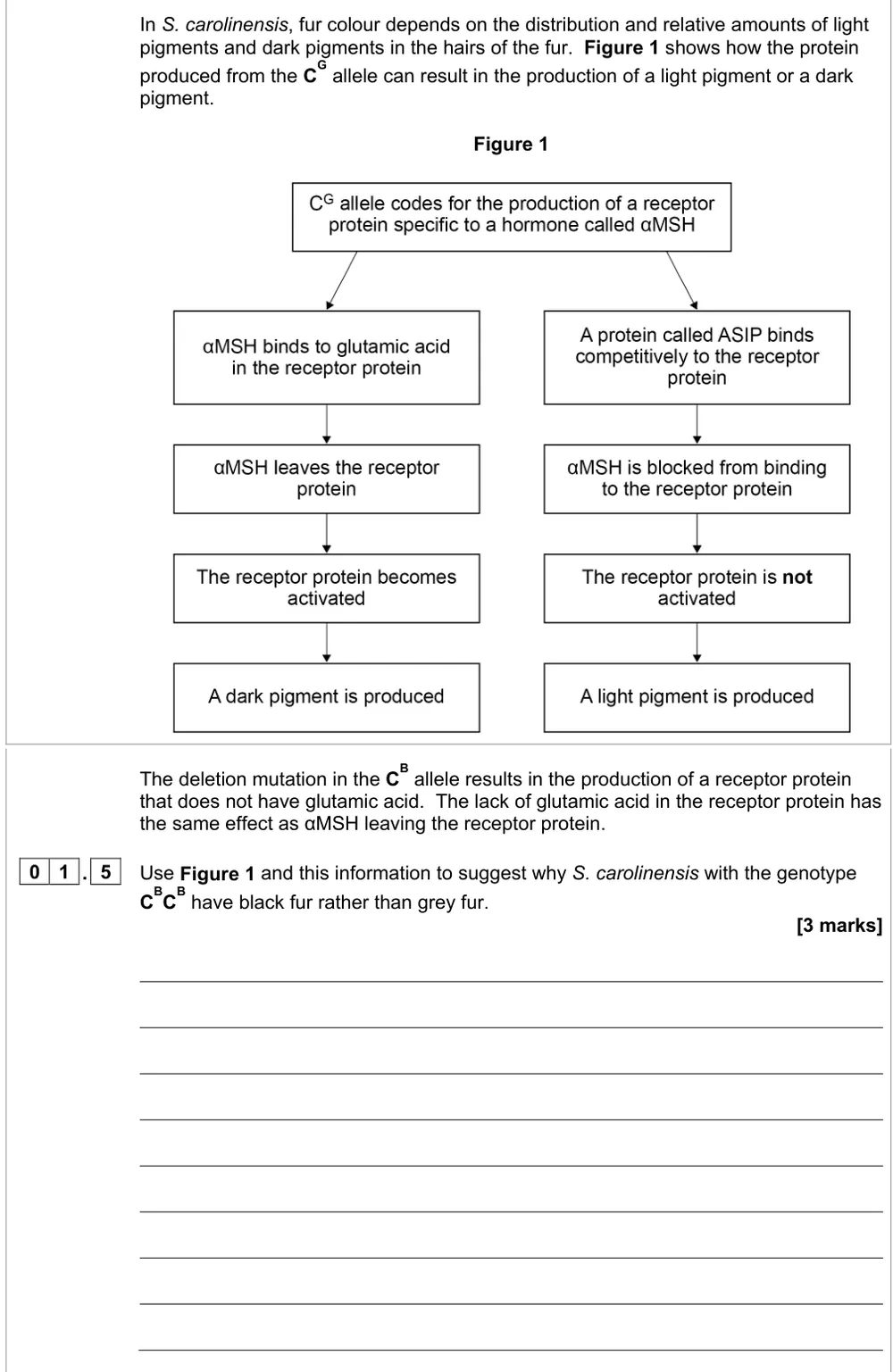
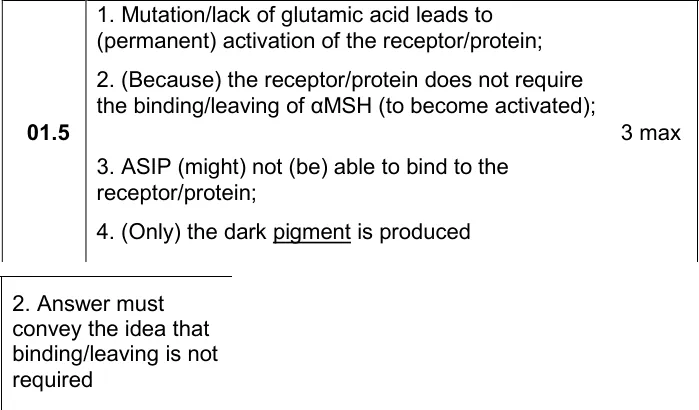
Use a pigment pathway to explain why squirrels with two mutant alleles have black fur.
Show the mark scheme
Tap an image to open it full size.
From the examiners' report: Only 10.48% got full marks. Use both sides of Figure 1: the receptor is permanently activated without αMSH, so ASIP has no effect and only dark pigment is made. Some wrongly read the mutation as making αMSH leave.
Stem cells, differentiation and iPS cells (3.8.2.1)
Question 9
A level Paper 2 · June 2019 · Q02.2 · 3 marks · Medium
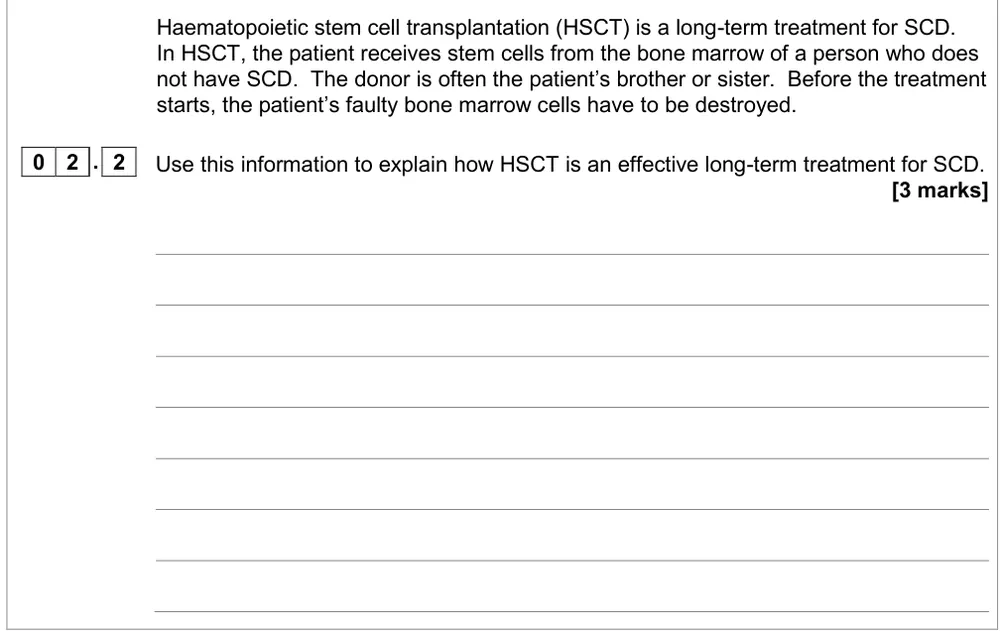
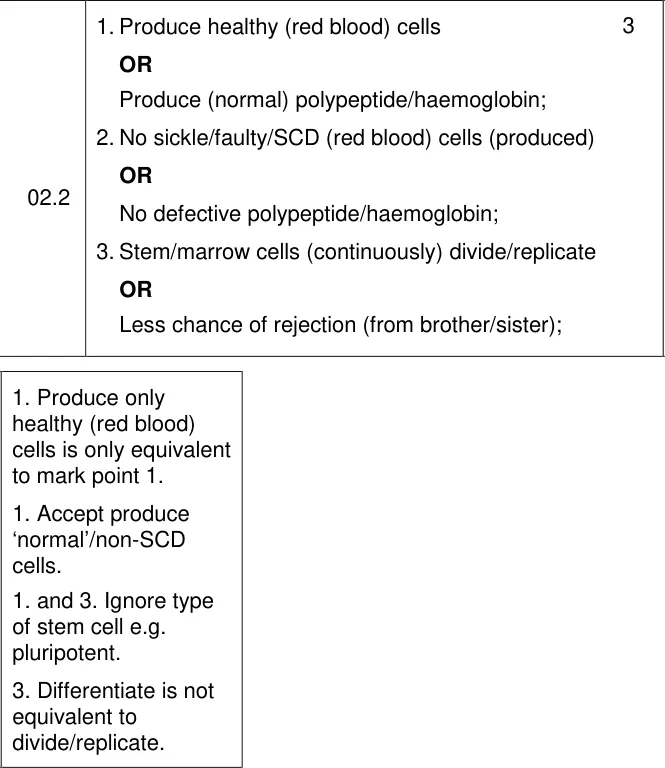
Explain how bone marrow stem cell transplants give long-term treatment for sickle cell disease.
Information from earlier in this question:

Show the mark scheme
Tap an image to open it full size.
From the examiners' report: Only about 12% got full marks. Write about the red blood cells the stem cells make, not just 'healthy bone marrow', and say the stem cells divide continuously; 'renew' or 'differentiate' isn't the same.
Question 10
A level Paper 2 · June 2018 · Q10.5 · 2 marks · Hard
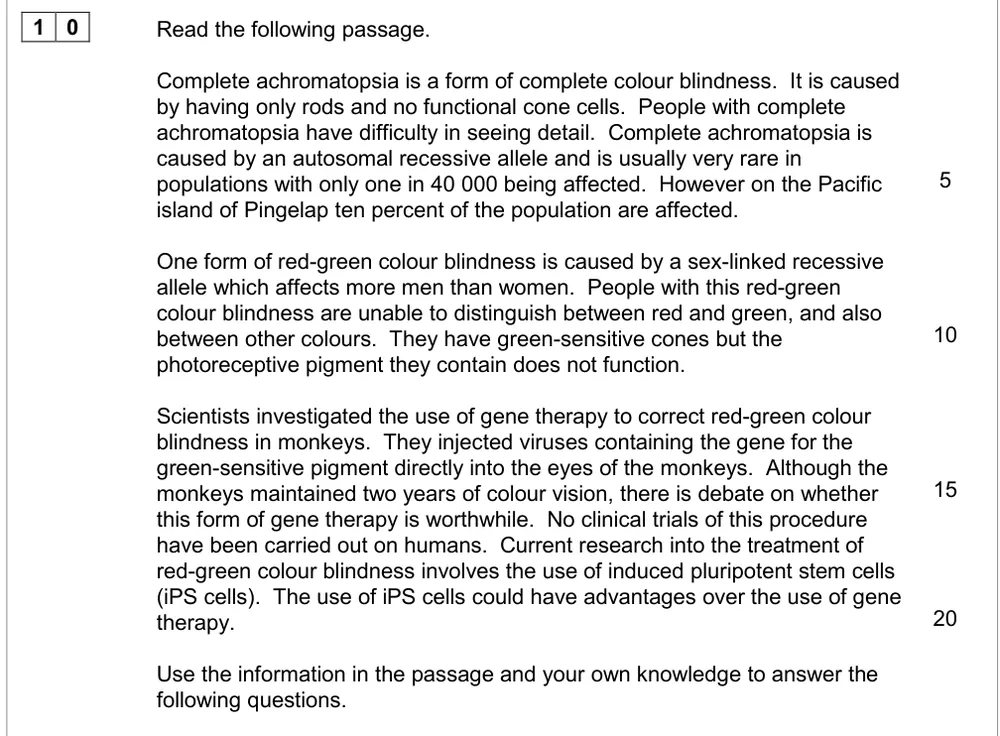
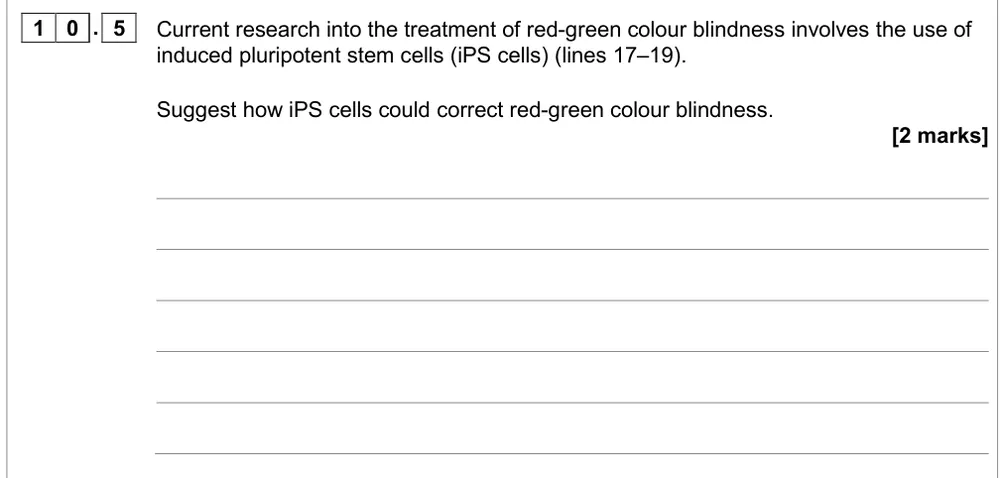
Suggest how iPS cells could correct red-green colour blindness.
Information from earlier in this question:
Show the mark scheme
Tap an image to open it full size.
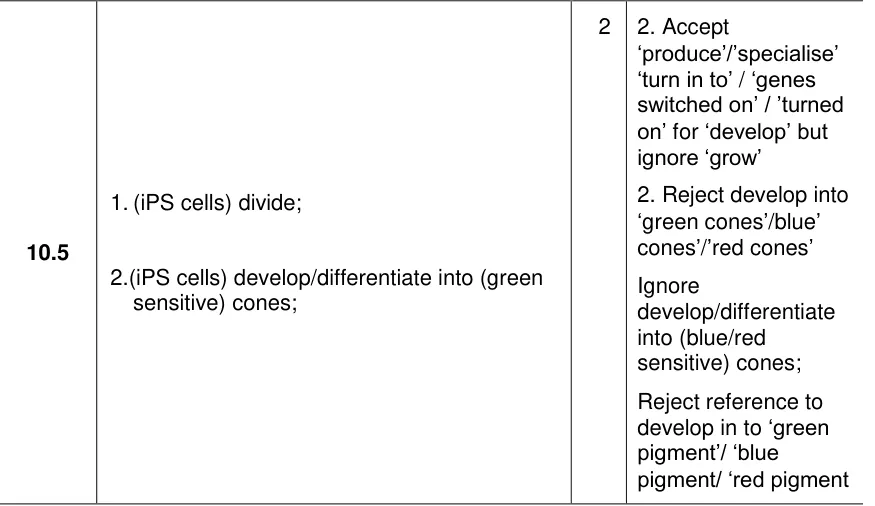
From the examiners' report: Only 3% got both marks and 48% scored zero. Say the iPS cells divide, then differentiate into green-sensitive cone cells. They don't turn into pigment, and 'grow into' doesn't count.
Question 11
A level Paper 2 · June 2018 · Q10.6 · 3 marks · Medium
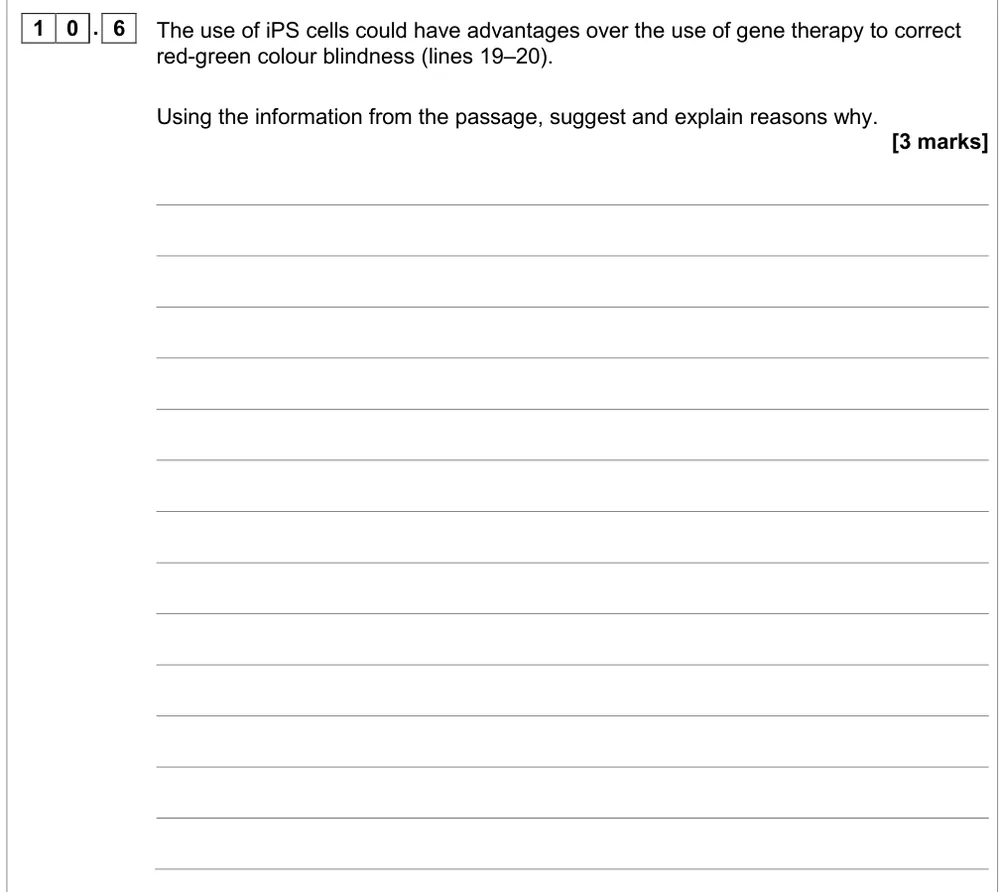
Use the passage to explain advantages of iPS cells over gene therapy for colour blindness.
Show the mark scheme
Tap an image to open it full size.
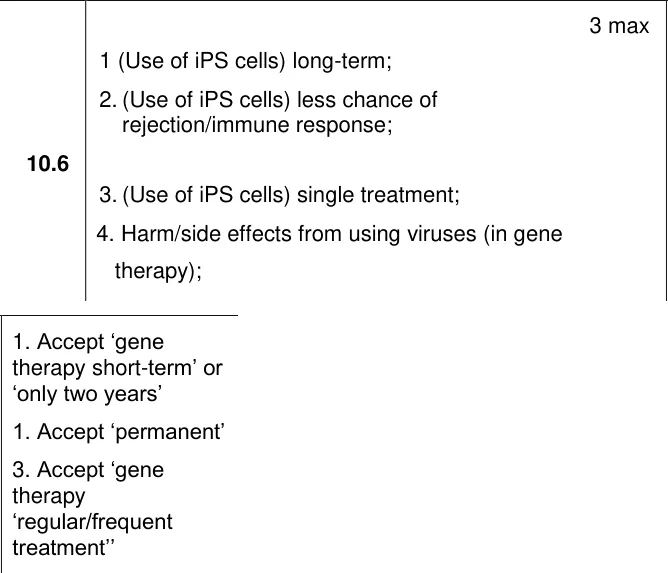
From the examiners' report: Only 8% got all three. Use the passage: two years means gene therapy is short-term and needs repeating, and the viruses could cause harm. Cost, ethics and 'monkeys aren't humans' apply to both methods, so they don't score.
Question 12
A level Paper 3 · June 2023 · Q04.2 · 4 marks · Medium
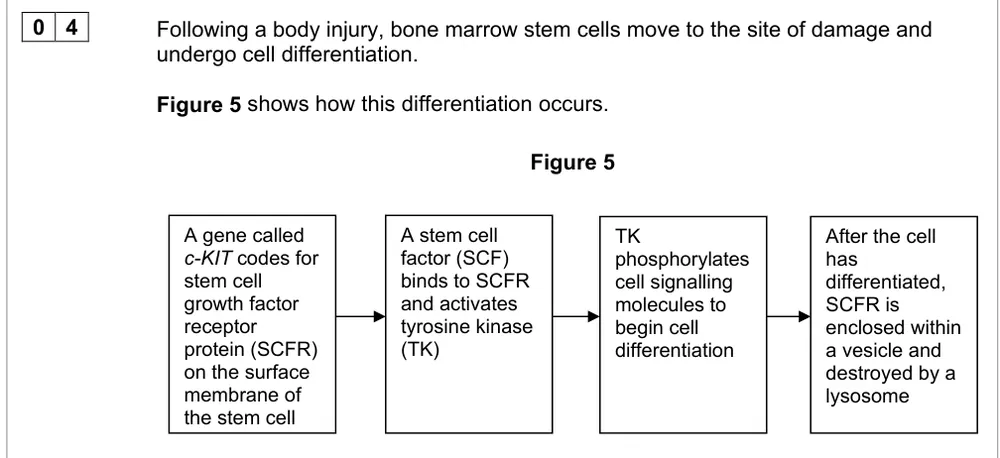
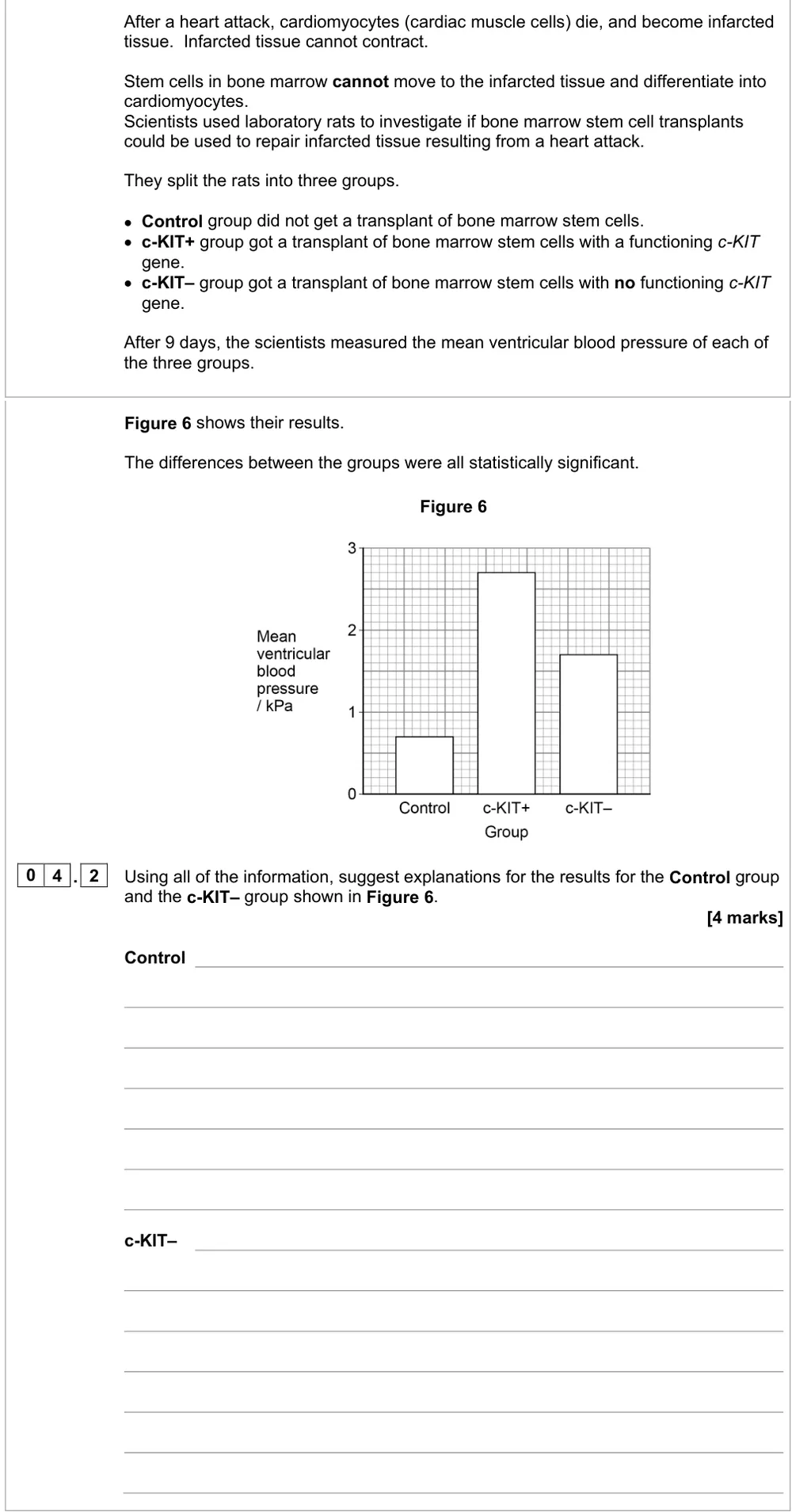
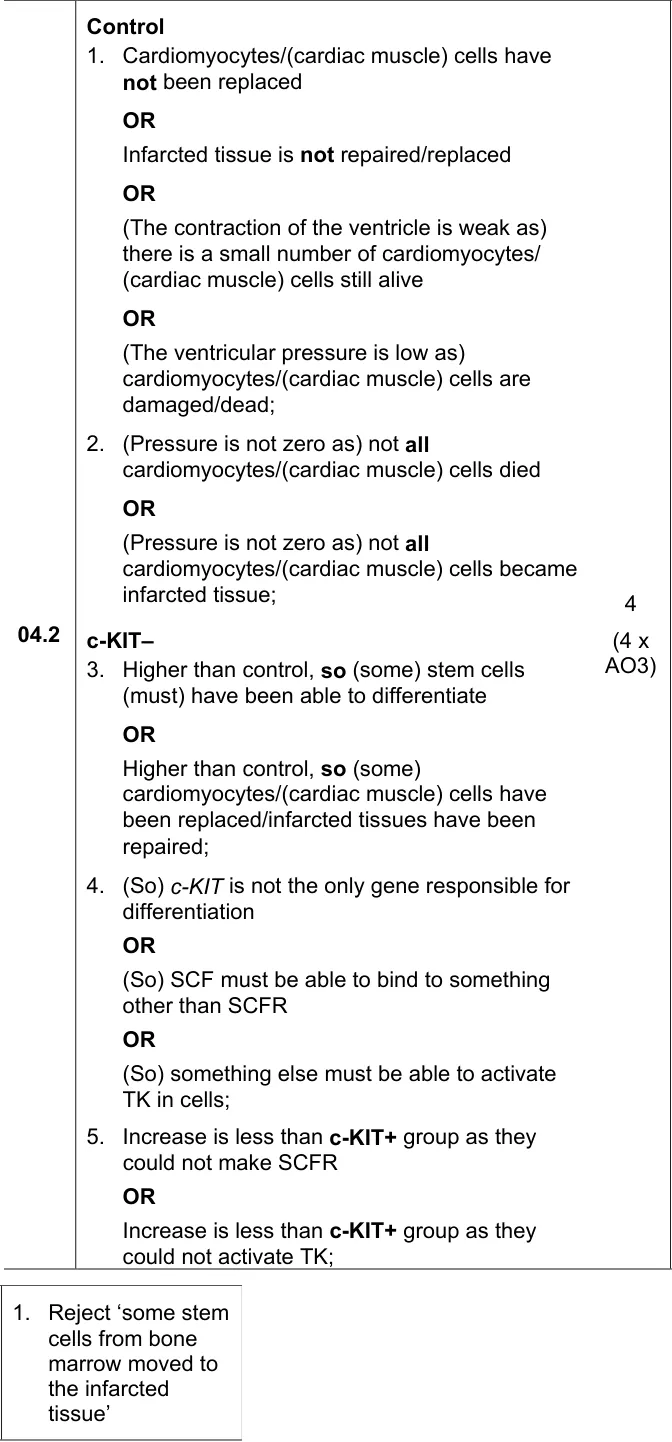
Explain the ventricular pressure results for control rats and rats given stem cells without c-KIT.
Information from earlier in this question:
Show the mark scheme
Tap an image to open it full size.
From the examiners' report: A third scored zero, often by repeating the stem or describing the bars. Explain them: the control pressure isn't zero because some cardiomyocytes survived, and c-KIT– cells still differentiated, so another route to differentiation must exist.
Question 13
A level Paper 3 · June 2023 · Q04.3 · 2 marks · Medium
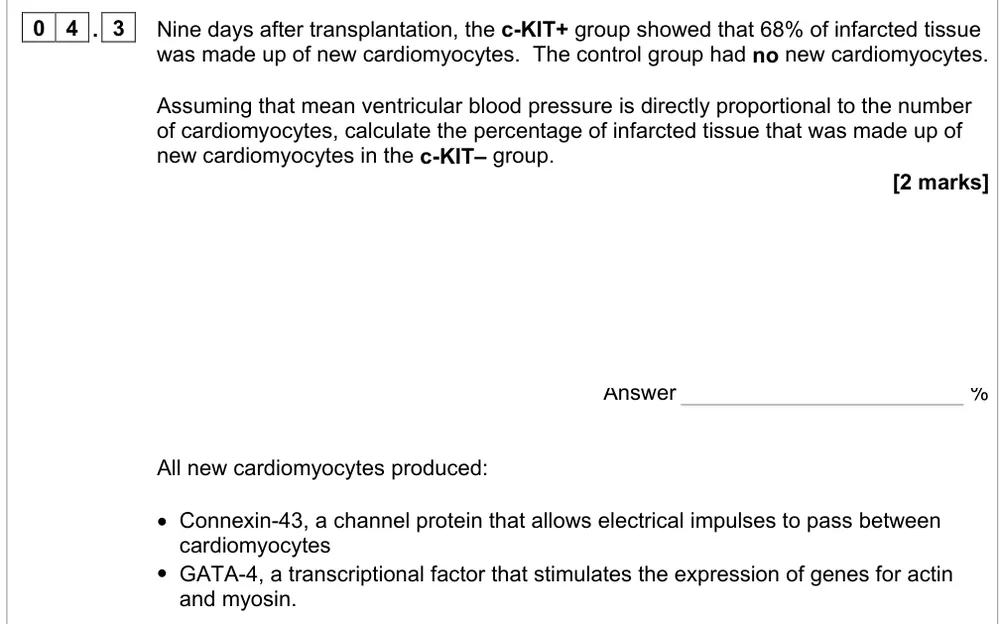
Calculate the percentage of infarcted tissue made of new cardiomyocytes in the c-KIT– rats.
Show the mark scheme
Tap an image to open it full size.
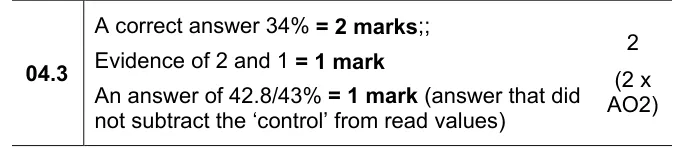
From the examiners' report: Just over half scored at least one mark. Subtract the control pressure first, because those rats made no new cardiomyocytes: (1.7 − 0.7) ÷ (2.7 − 0.7) × 68 = 34%.
Evaluating stem cell treatments (3.8.2.1)
Question 14
A level Paper 2 · June 2017 · Q06.4 · 4 marks · Medium
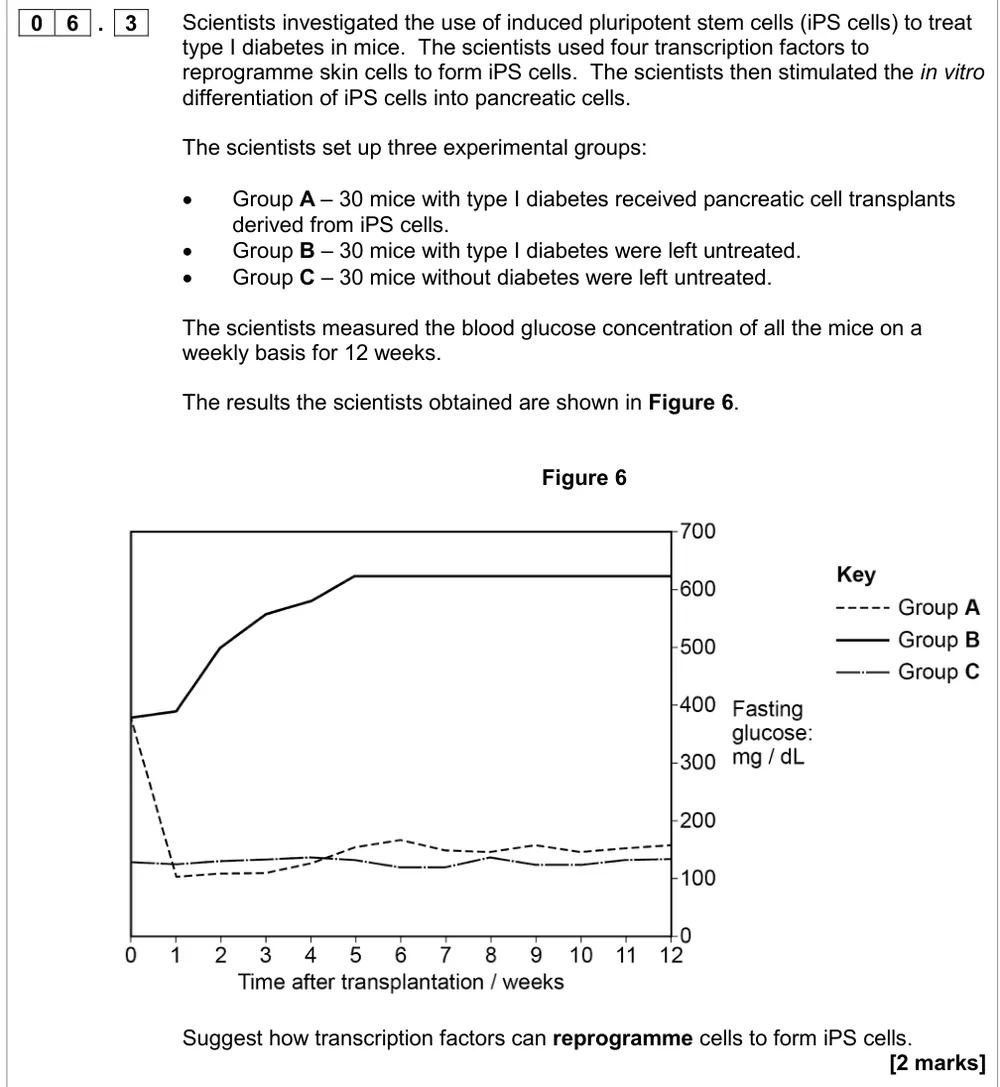
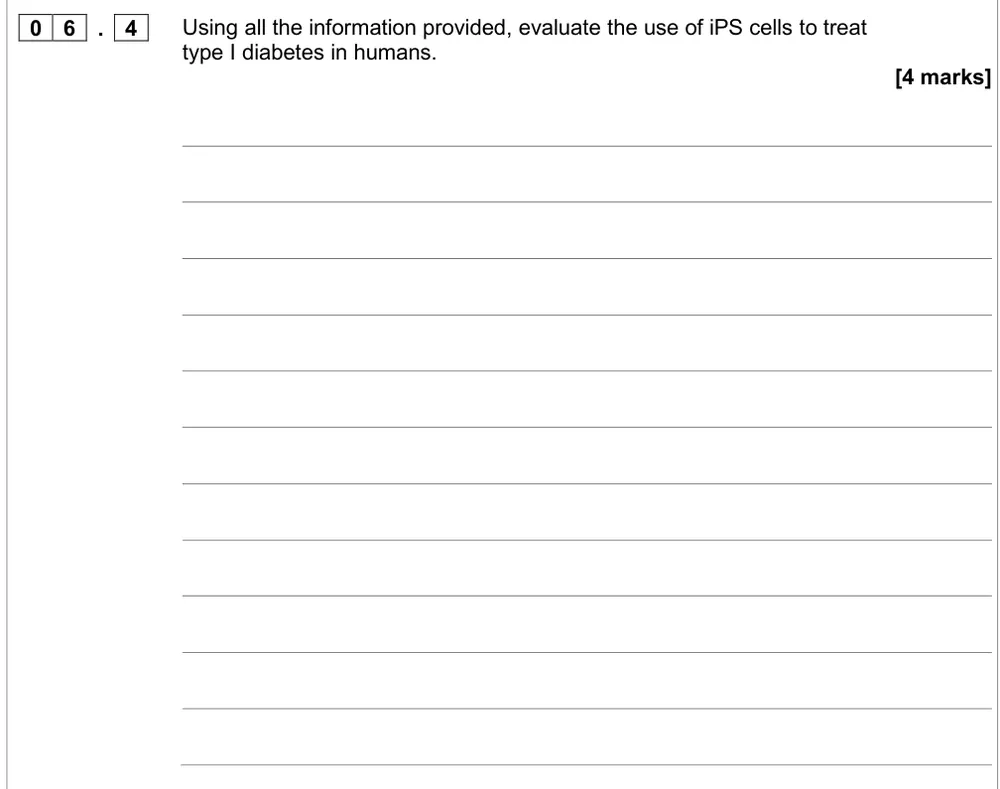
Evaluate using iPS cells to treat type I diabetes from a mouse study.
Information from earlier in this question:
Show the mark scheme
Tap an image to open it full size.
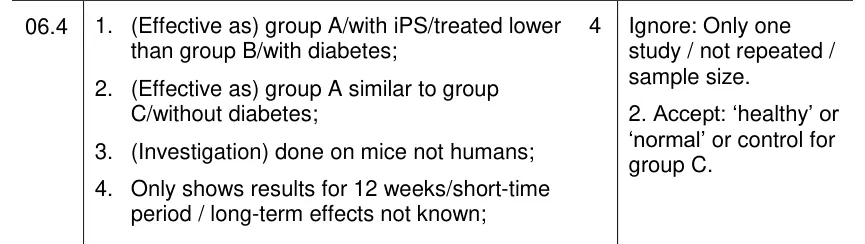
From the examiners' report: Almost a third got three marks. Compare A with both B and C, and read the key carefully: some read B as A and were capped at two. Thirty mice wasn't a small sample, and 'no statistical test' wasn't credited.
Question 15
A level Paper 2 · November 2020 · Q08.3 · 4 marks · Medium
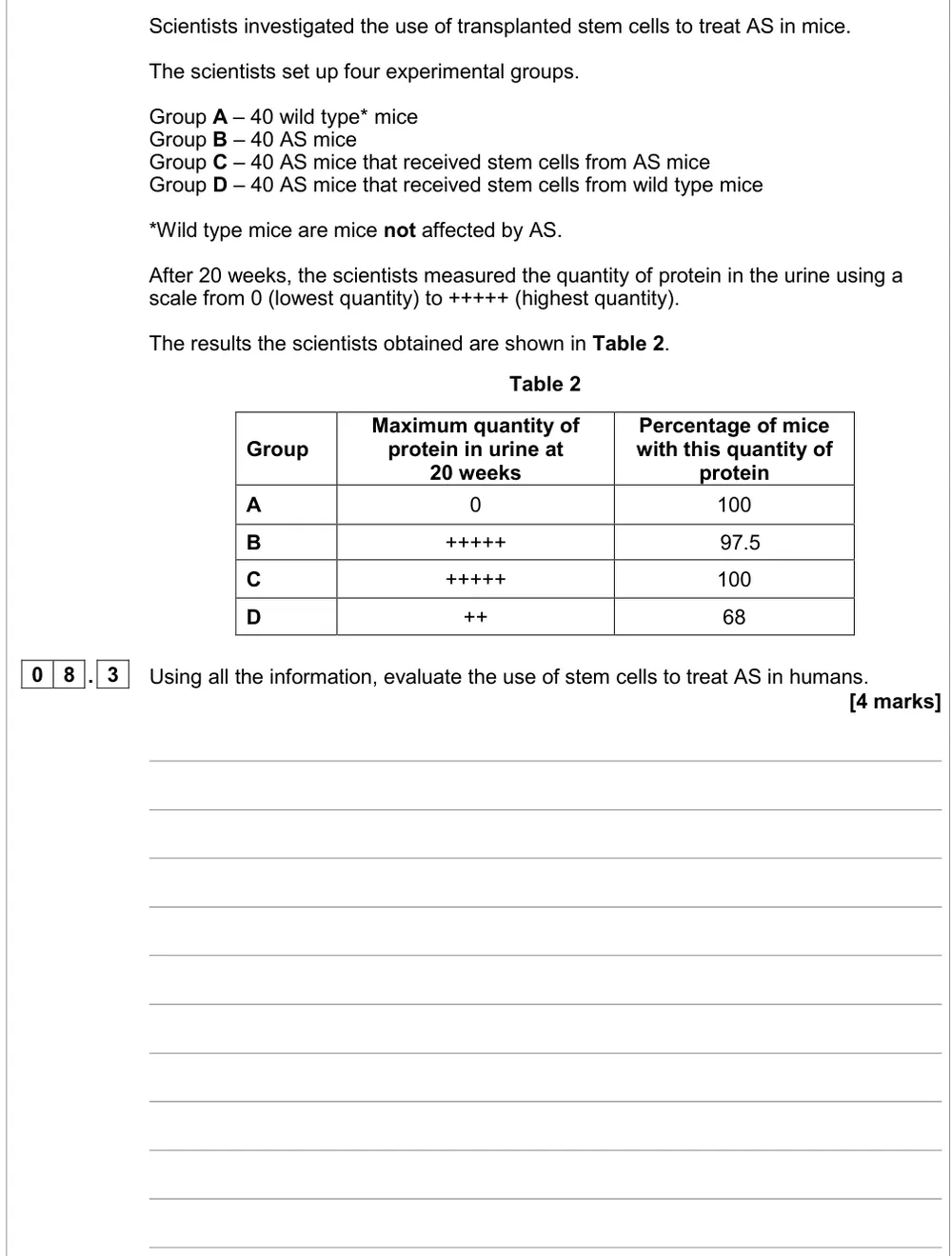
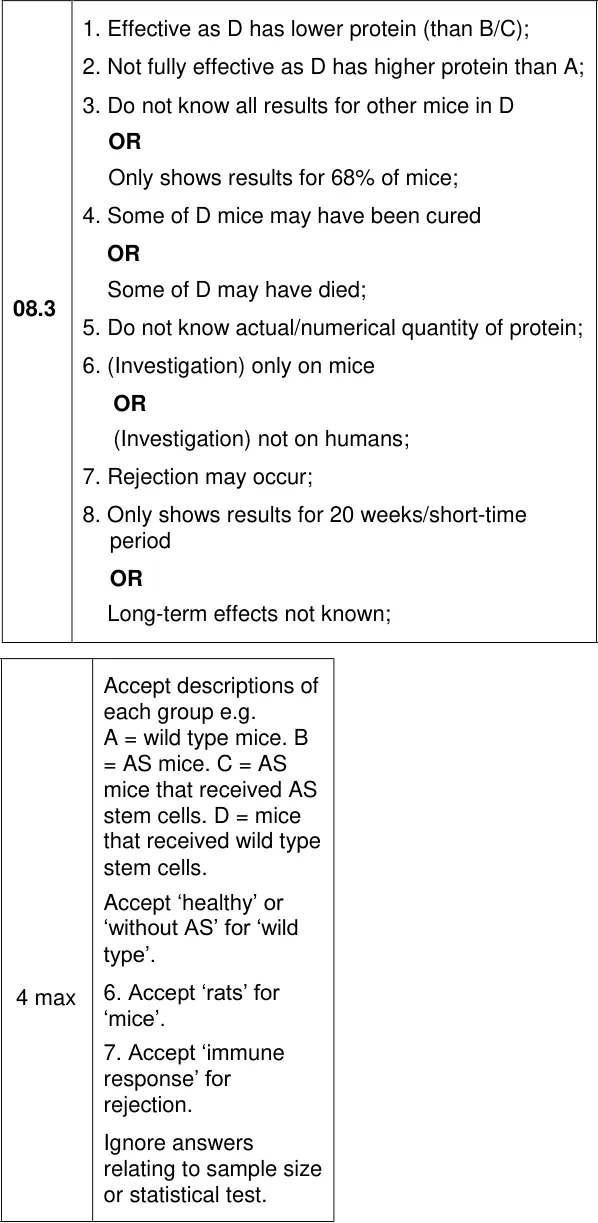
Evaluate stem cell transplants for Alport syndrome using results from four groups of mice.
Information from earlier in this question:

Show the mark scheme
Tap an image to open it full size.
From the examiners' report: 8% got all four. Most got the D versus B and C comparison, mice not humans and the short time. Look for what the table hides, too: only 68% of group D are shown, and rejection is possible.
Question 16
A level Paper 2 · November 2020 · Q08.4 · 2 marks · Hard
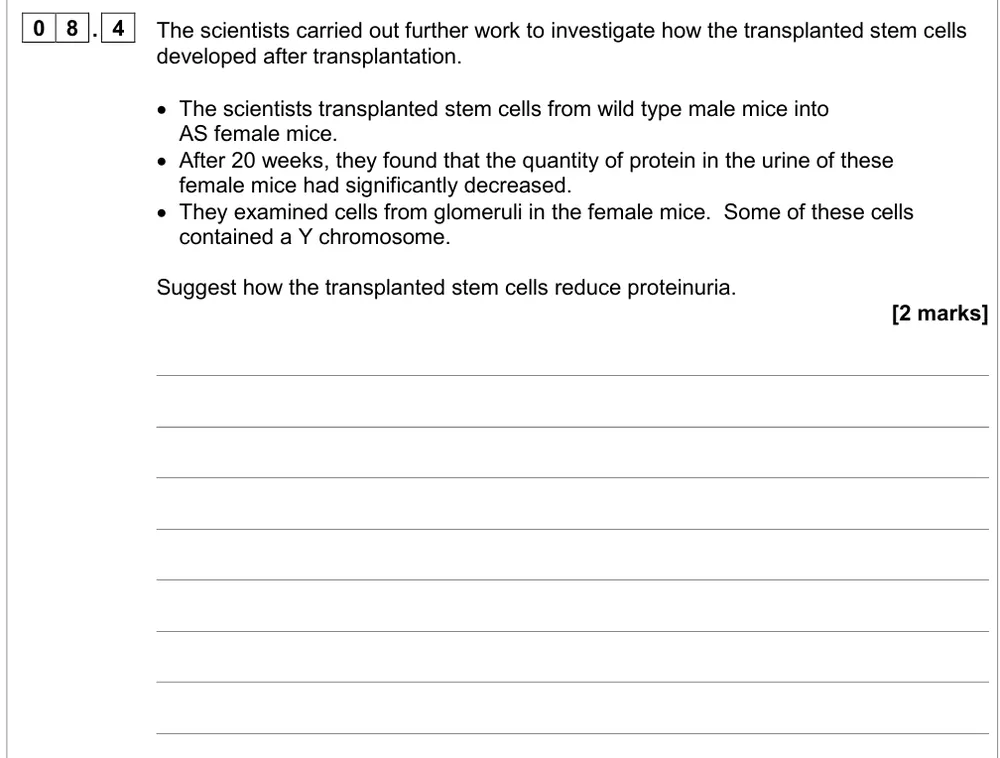
Suggest how transplanted stem cells from male mice reduce proteinuria in female mice.
Show the mark scheme

Tap an image to open it full size.
From the examiners' report: About 60% scored zero and only 10% got both. The Y chromosome just shows the cells came from the male: they differentiated into glomerulus cells, which stop protein entering the filtrate.
Where students lose marks (from AQA examiners' reports and mark schemes)
Each point below is followed by wording that gained marks.
Reversed DNA bases, then a new tertiary structure: About 20% got all four marks for the inversion in the F8 gene. Most left 'DNA' out of the base sequence, some confused bases with amino acids, and some said amino acids were 'formed'.
✔ Gains credit: "Change in sequence of DNA bases OR DNA base sequence inverted"; "change in (sequence of) amino acid(s) OR change in primary structure"; "alters tertiary structure (of protein)".
Hydrogen, ionic or disulfide, not just 'bonds': About 30% got full marks on the sickle cell substitution. Students who did named the bonds; others wrote that a new amino acid is 'formed', that the 'active site' changes, or that a substitution causes a frame shift.
✔ Gains credit: "Change in hydrogen/ionic/disulfide bonds"; "alters tertiary/3° structure".
Shorter polypeptide: missing triplets or an early stop codon: 55% got both marks for SURF1. Those who failed repeated the stem ('this produces a shorter polypeptide'), wrote 'bases are affected', or just wrote 'frame shift'.
✔ Gains credit: "Deletion; could mean triplet(s)/codon(s) missing" or "could result in a (premature) stop triplet/codon".
Stem cells divide and then differentiate: Only 3% got both marks for iPS cells correcting colour blindness and 48% scored zero. Hardly anyone said the cells divide, and many said they formed 'green pigment' or 'green cones'. On sickle cell transplants only about 12% got full marks, again because few said the stem cells divide.
✔ Gains credit: "(iPS cells) divide"; "develop/differentiate into (green sensitive) cones"; "stem/marrow cells (continuously) divide/replicate".
Link the new cells to the organ that's failing: About 60% scored zero on how transplanted stem cells reduce proteinuria, often writing about the Y chromosome turning into something. Only 10% got both marks.
✔ Gains credit: "(Transplanted stem cells) differentiate/specialise"; "reduce loss of protein at the glomerulus OR prevents protein moving into filtrate".
Use the limits of this study, not stock phrases: Only 8% got all four marks evaluating stem cells for Alport syndrome. Few noticed that results were only shown for 68% of group D, or mentioned rejection; answers about sample size or a statistical test were ignored.
✔ Gains credit: "Only shows results for 68% of mice"; "rejection may occur"; "(investigation) only on mice"; "only shows results for 20 weeks".
Check which line is which group: In the iPS cells and diabetes evaluation a significant minority read group B as group A from the key, which capped them at two marks. Thirty mice wasn't accepted as a small sample.
✔ Gains credit: "Group A/with iPS lower than group B/with diabetes"; "group A similar to group C/without diabetes"; "only shows results for 12 weeks".
The control rats still had some working heart muscle: A third scored zero on the c-KIT rats. Many repeated the stem or described the bars instead of explaining them, and some wrote as if the control rats' hearts couldn't contract at all, although their pressure wasn't zero.
✔ Gains credit: "(Pressure is not zero as) not all cardiomyocytes died"; "higher than control, so (some) stem cells have been able to differentiate"; "c-KIT is not the only gene responsible for differentiation".
Download the questions
Download the PDF pack (16 questions, mark schemes at the end)
Keep practising
- Regulation of transcription and translation: AQA A Level Biology exam questions by topic
- Gene expression and cancer: AQA A Level Biology exam questions by topic
- Mutation and meiosis: AQA A Level Biology exam questions by topic
- DNA and protein synthesis: AQA A Level Biology exam questions by topic
- AQA 3.8.1–3.8.2 gene expression: self-marking quiz
- AQA A Level Biology masterclasses
Questions, mark schemes and examiners' report extracts © AQA.