

Genome projects (AQA 3.8.3) and recombinant DNA technology (AQA 3.8.4.1) are A-level only, so they're Year 13 content. You need to know why a bacterial genome tells you its proteome more easily than a human one, how that helps vaccine design, and the whole toolkit for moving a gene: reverse transcriptase and restriction enzymes to make fragments, PCR to copy them, promoters, terminators, vectors, ligase and marker genes, and how all of it leads to gene therapy.
The examiners' reports show the marks go on precision. Only 3% got both marks for explaining why DNA is destroyed before RT-PCR, and only 10% got all four marks for describing PCR, usually because nucleotides or one of the temperatures went missing. Fewer than 5% explained that eukaryotes have more regulatory genes, and many said a restriction enzyme cuts at a 'specific site' without saying it's a specific base sequence.
Start with the genome and proteome questions, then work through the techniques in the order you'd use them in the lab, and finish with the two gene therapy evaluations. Name every enzyme and say exactly what it acts on. If you'd like help with this topic, my AQA masterclasses run online on Tuesdays at 5.15pm for Year 12 and on Wednesdays or Thursdays at 6.30pm for Year 13.
Want help with this topic? It comes up in my weekly AQA masterclasses. See the timetable →
What you need from GCSE and Year 12
Each question on this page assumes you're secure on these GCSE and Year 12 ideas. If any of them feels shaky, revise it before you start.
- GCSE: in genetic engineering a gene is cut out of one organism and inserted into another, often using a plasmid as a vector.
- Year 12 (AQA 3.1.5.2): in semi-conservative replication, DNA polymerase joins free DNA nucleotides that pair with an exposed template strand.
- Year 12 (AQA 3.4.2): eukaryotic genes contain introns that are spliced out of pre-mRNA; prokaryotic DNA has no introns.
- Year 12 (AQA 3.2.4): antigens on pathogens trigger an immune response, and vaccines contain antigens that produce memory cells.
- Year 13 (AQA 3.8.2.2): transcription of a gene starts when RNA polymerase binds at its promoter, helped by transcription factors.
Key terms
These words come up in the questions and mark schemes. Examiners expect you to use them exactly.
- Proteome: the full range of proteins that a cell or organism is able to produce, derived from its genetic code.
- Recombinant DNA technology: the transfer of fragments of DNA from one organism, or species, to another.
- Transgenic organism: an organism that contains and expresses DNA from another species; this works because the genetic code is universal.
- Reverse transcriptase: the enzyme that produces complementary DNA (cDNA) using mRNA as a template.
- Restriction endonuclease: an enzyme that cuts DNA at a specific base sequence (recognition site), often leaving 'sticky ends'.
- Polymerase chain reaction (PCR): an in vitro method that amplifies a DNA fragment by repeated cycles of heating to about 95 °C, cooling so primers bind, and DNA polymerase joining nucleotides at about 72 °C.
- Primer: a short single strand of DNA with a base sequence complementary to the start of the fragment, giving DNA polymerase a starting point.
- Vector: something that carries a DNA fragment into a host cell, such as a plasmid or a virus.
- DNA ligase: the enzyme that joins the gene to the plasmid by forming phosphodiester bonds between the sticky ends.
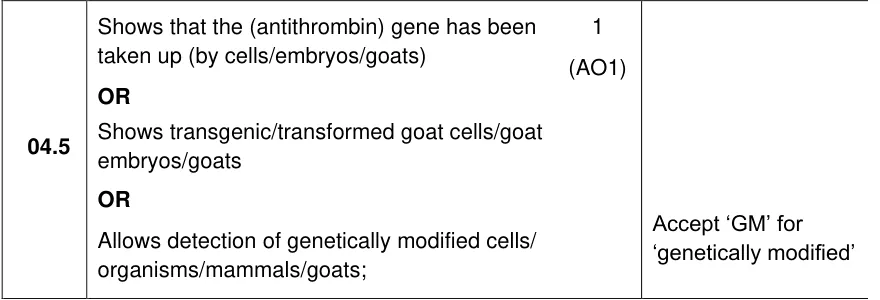
- Marker gene: a gene inserted alongside the desired gene to show which cells or organisms have taken it up (are genetically modified).
- Gene therapy: treating a genetic disorder by using a vector to insert a functional allele into a patient's cells.
What these questions cover (AQA 3.8.3 and 3.8.4.1)
The questions test these statements from the AQA AS and A-level Biology specification (7401/7402):
- Sequencing projects: Sequencing projects have read the genomes of a wide range of organisms, including humans. (no written question tests this point on its own; the RT-PCR question on different respiratory viruses relies on their genomes being known)
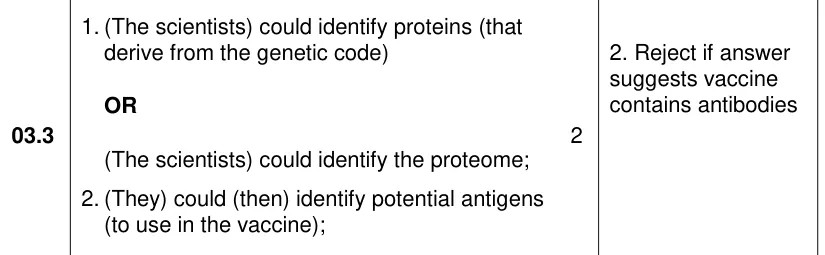
- Genome to proteome in simpler organisms: Determining the genome of simpler organisms allows the sequences of the proteins that derive from the genetic code (the proteome) of the organism to be determined. This may have many applications, including the identification of potential antigens for use in vaccine production.
- Why complex genomes are harder: In more complex organisms, the presence of non-coding DNA and of regulatory genes means that knowledge of the genome cannot easily be translated into the proteome.
- Automated sequencing: Sequencing methods are continuously updated and have become automated.
- Recombinant DNA technology: Recombinant DNA technology involves the transfer of fragments of DNA from one organism, or species, to another. Since the genetic code is universal, as are transcription and translation mechanisms, the transferred DNA can be translated within cells of the recipient (transgenic) organism. (no written question tests this point on its own; every transgenic example on the page (zebrafish, goats) depends on the universal genetic code)
- Making cDNA: conversion of mRNA to complementary DNA (cDNA), using reverse transcriptase
- Cutting with restriction enzymes: using restriction enzymes to cut a fragment containing the desired gene from DNA
- The gene machine: creating the gene in a ‘gene machine’. (no written question on the gene machine was available, so learn it from your notes)
- PCR (in vitro amplification): The principles of the polymerase chain reaction (PCR) as an in vitro method to amplify DNA fragments.
- Culturing transformed host cells (in vivo amplification): The culture of transformed host cells as an in vivo method to amplify DNA fragments. (no written question on culturing transformed host cells was available; the vector and marker gene questions cover the steps before it)
- Promoter and terminator regions: The addition of promoter and terminator regions to the fragments of DNA.
- Inserting DNA into vectors: The use of restriction endonucleases and ligases to insert fragments of DNA into vectors. Transformation of host cells using these vectors.
- Marker genes: The use of marker genes to detect genetically modified (GM) cells or organisms. (Students will not be required to recall specific marker genes in a written paper.)
- Interpreting recombinant DNA information: interpret information relating to the use of recombinant DNA technology
- Ethical, financial and social issues: evaluate the ethical, financial and social issues associated with the use and ownership of recombinant DNA technology in agriculture, in industry and in medicine (no written question on these issues was available; the gene therapy evaluations are the closest practice here)
- Gene therapy: relate recombinant DNA technology to gene therapy.
How to use this page
Write your answer on paper before you open the mark scheme. Allow about 1.3 minutes per mark: the 18 questions are worth 40 marks, so about 52 minutes in total. Then mark your answer strictly against the mark scheme and read the examiners' tip underneath it. If you'd rather print the questions, download the PDF pack.
Genome projects and the proteome (3.8.3)
Question 1
A level Paper 3 · November 2020 · Q03.3 · 2 marks · Hard
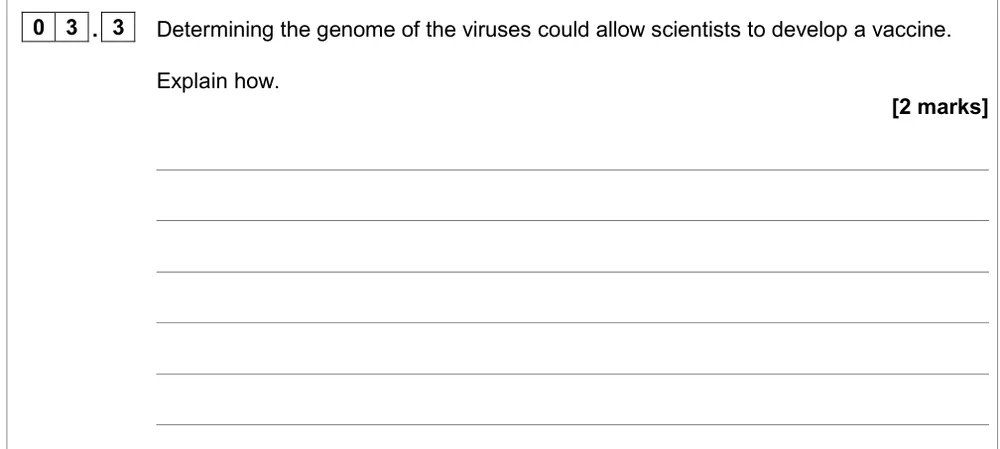
Explain how determining a virus's genome could help scientists develop a vaccine.
Information from earlier in this question:

Show the mark scheme
Tap an image to open it full size.
From the examiners' report: Only 11% got both marks, even though this is straight recall of the spec. Go genome → proteome → potential antigens. A vaccine contains antigens, never antibodies, and antibodies don't bind to DNA or RNA.
Question 2
A level Paper 2 · June 2025 · Q08.2 · 2 marks · Hard
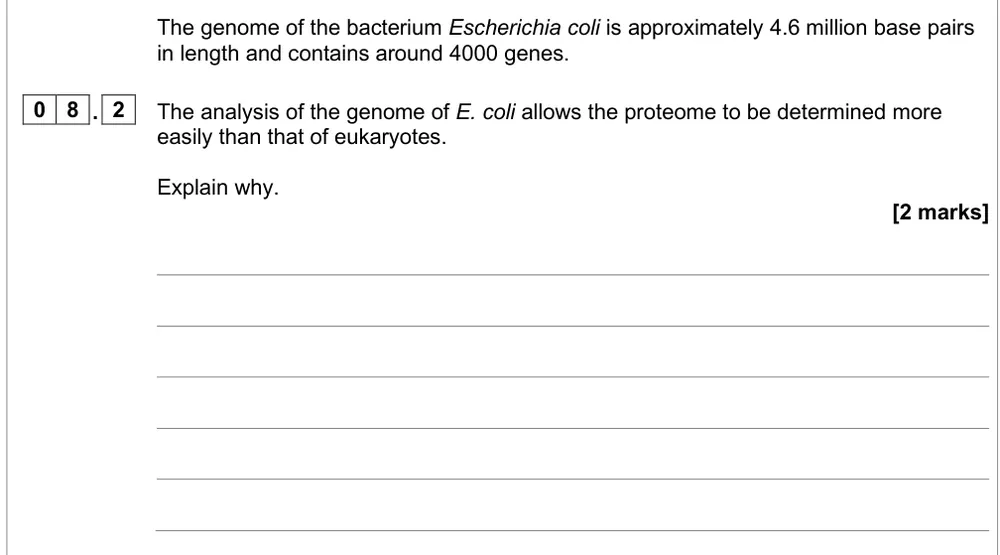
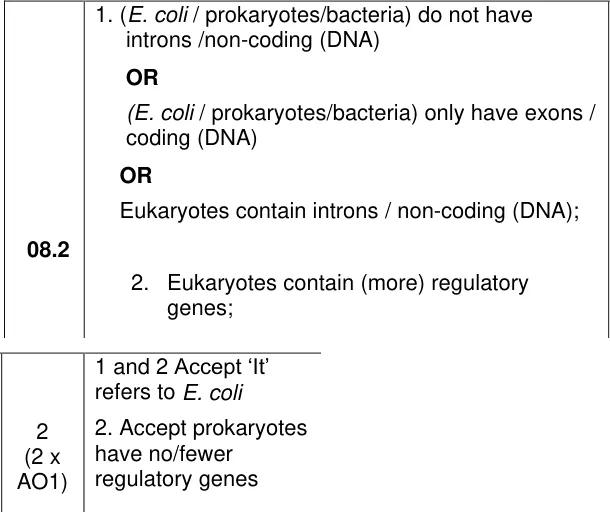
Explain why the proteome of E. coli is easier to determine from its genome than a eukaryote's.
Show the mark scheme
Tap an image to open it full size.
From the examiners' report: Fewer than 5% got both marks. The size of the genome isn't the reason. Give the two spec ideas: eukaryotes have introns (non-coding DNA) and more regulatory genes.
Question 3
A level Paper 3 · November 2020 · Q03.2 · 1 mark · Hard
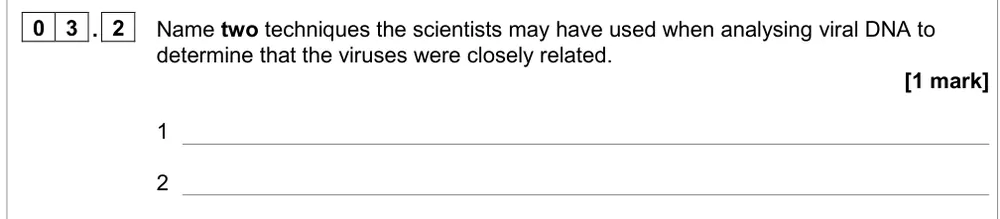
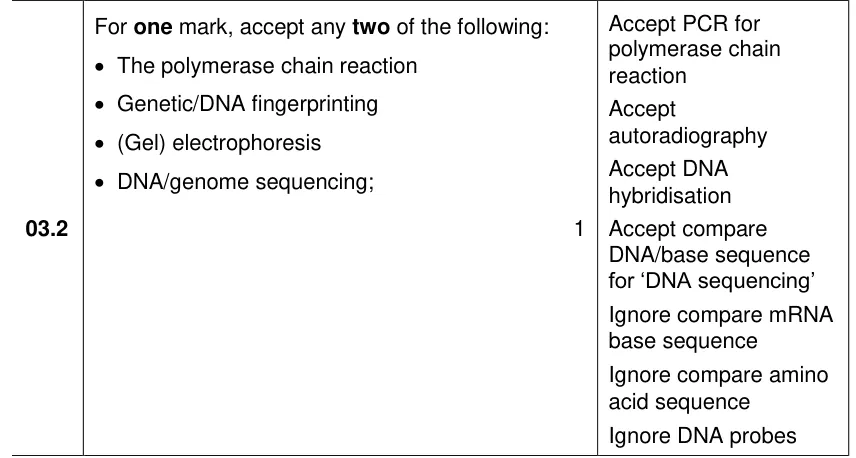
Name two techniques for analysing viral DNA to show that viruses are closely related.
Information from earlier in this question:
Show the mark scheme
Tap an image to open it full size.
From the examiners' report: Only a quarter got this. The question is about analysing viral DNA, so name DNA techniques such as PCR, sequencing or electrophoresis, not comparisons of proteins, mRNA or immune responses.
Question 4
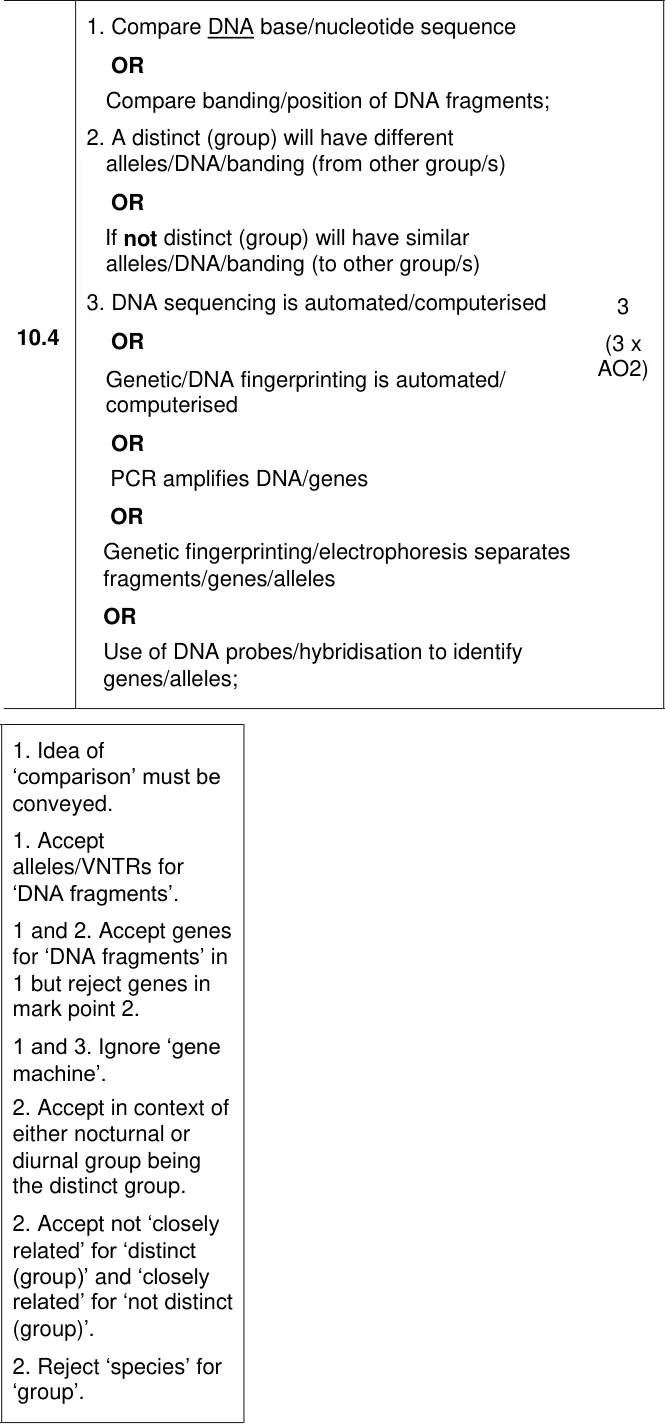
A level Paper 2 · June 2024 · Q10.4 · 3 marks · Hard
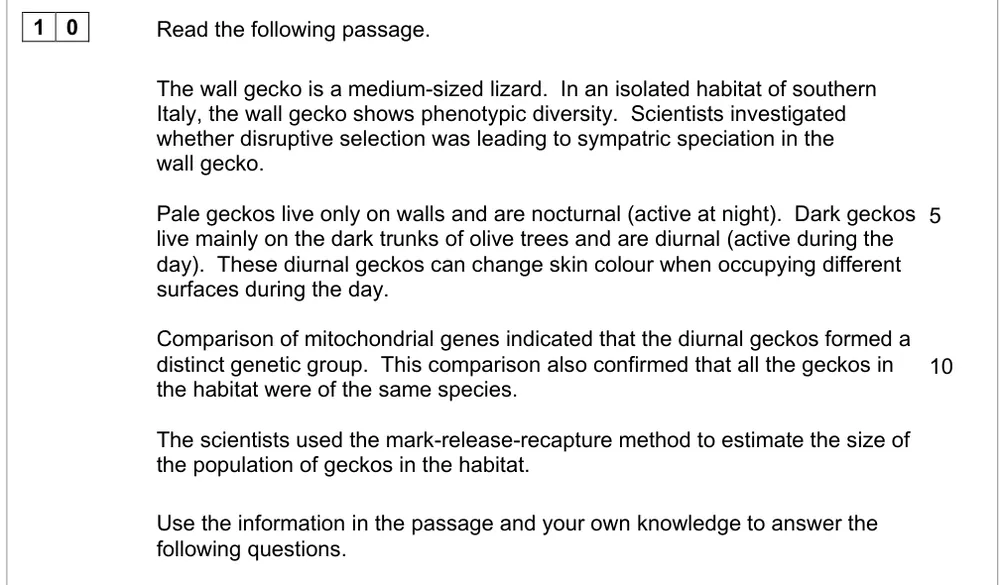
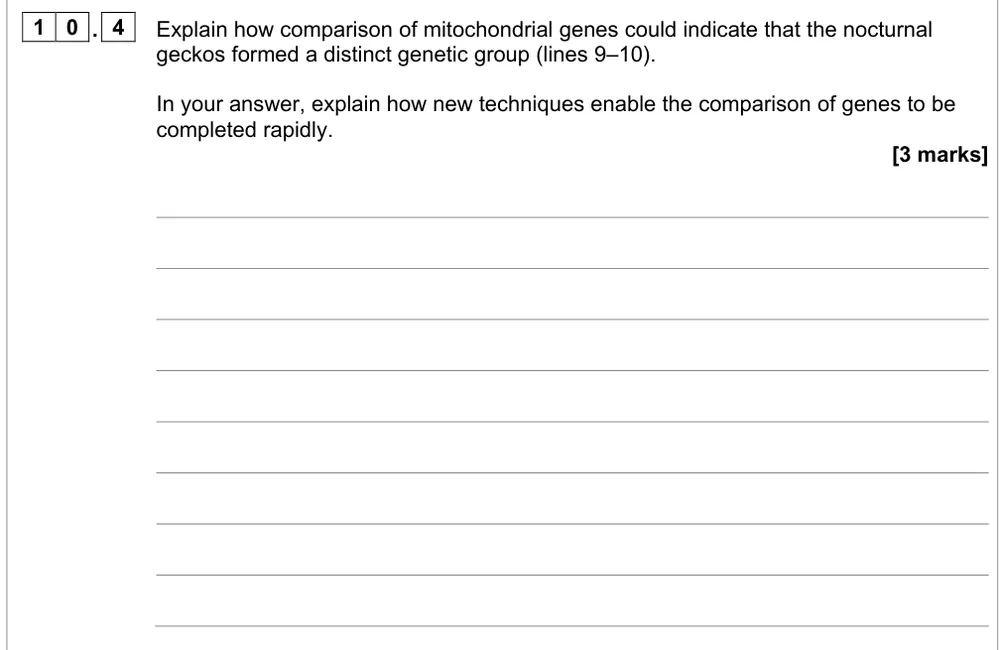
Explain how comparing mitochondrial genes could show geckos form a distinct group, and how new techniques make it rapid.
Information from earlier in this question:
Show the mark scheme
Tap an image to open it full size.
From the examiners' report: Only about 3% got all three. The geckos are one species, so they share genes but differ in alleles: compare DNA base sequences. Then say how a technique speeds this up, for example automated sequencing or PCR amplifying DNA quickly.
Producing DNA fragments (3.8.4.1)
Question 5
A level Paper 2 · June 2017 · Q08.1 · 1 mark · Easy
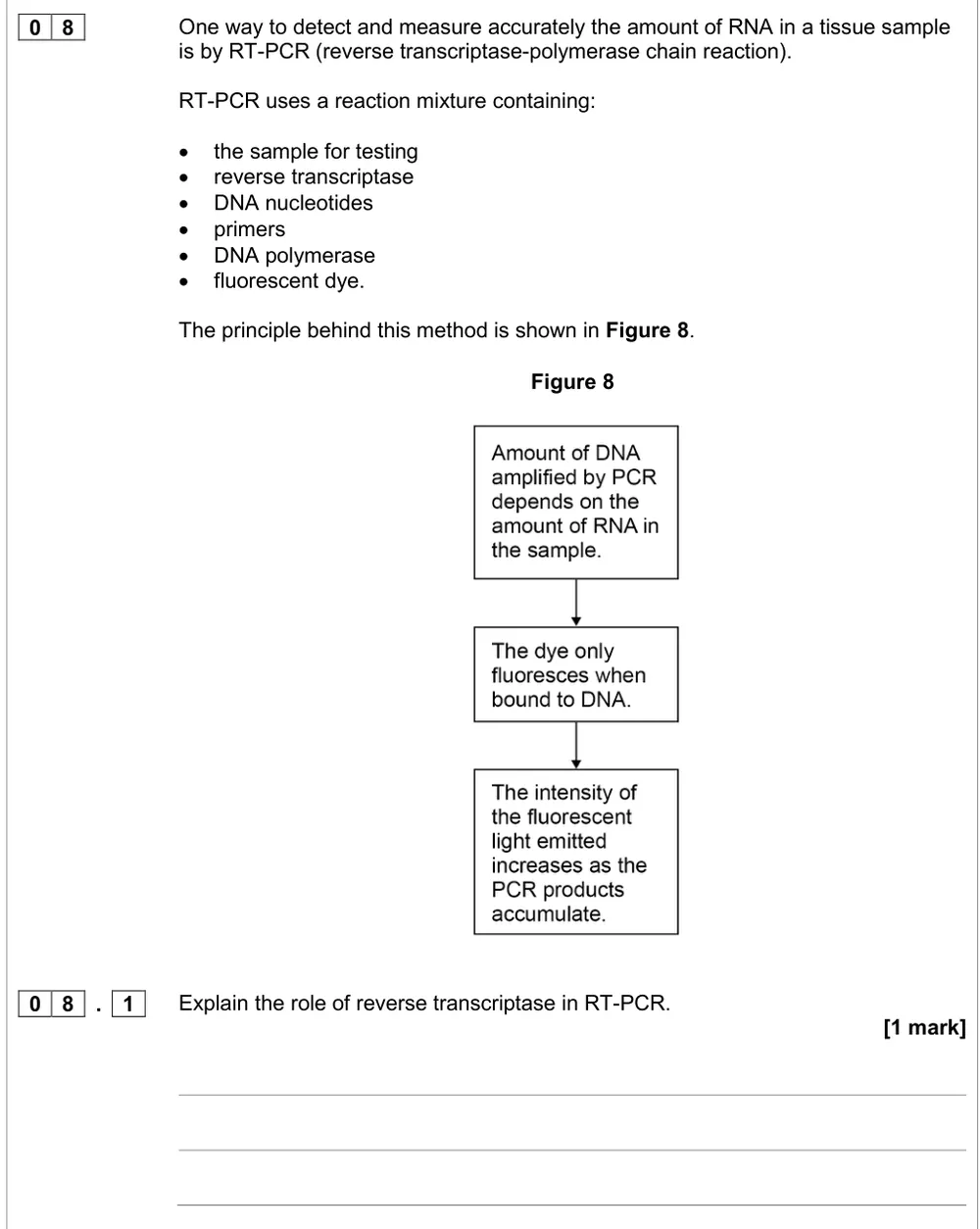
Explain the role of reverse transcriptase in RT-PCR.
Show the mark scheme

Tap an image to open it full size.
From the examiners' report: Almost two-thirds got this. Reverse transcriptase makes cDNA from an mRNA template; it doesn't make RNA from DNA, and it isn't DNA polymerase.
Question 6
A level Paper 2 · June 2023 · Q09.1 · 2 marks · Medium
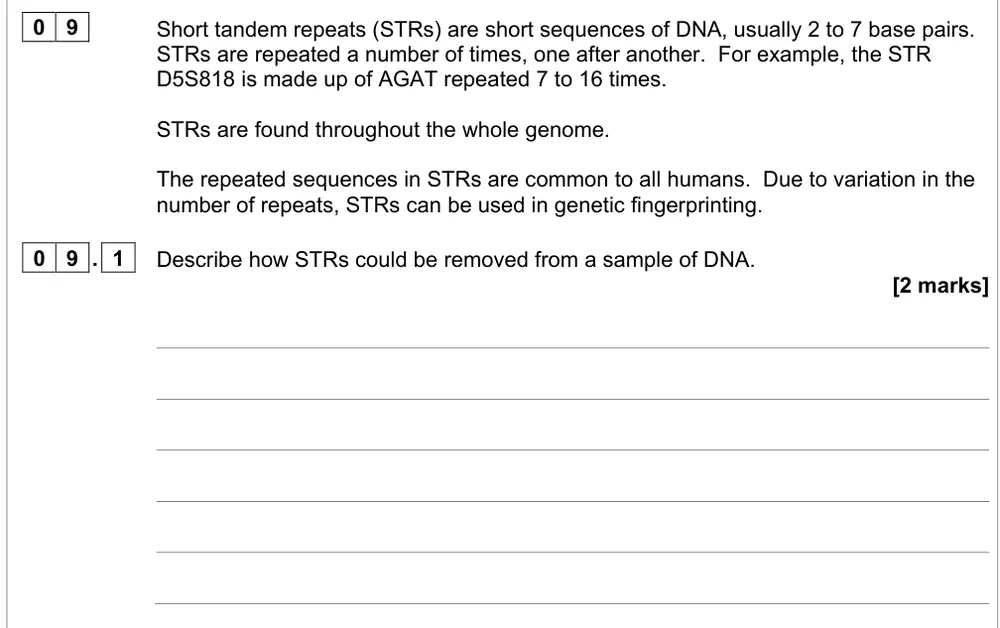
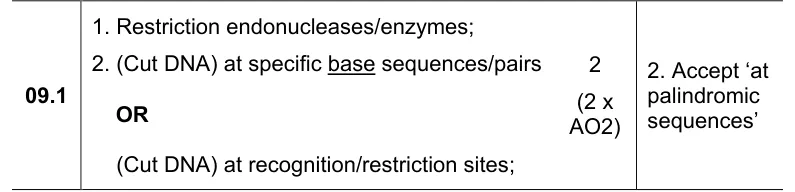
Describe how short tandem repeats could be cut out of a sample of DNA.
Show the mark scheme
Tap an image to open it full size.
From the examiners' report: About 28% got both marks. Name restriction endonucleases, then say they cut at a specific base sequence (recognition site); 'a specific site' alone didn't score.
Amplifying DNA by PCR (3.8.4.1)
Question 7
A level Paper 2 · November 2021 · Q08.1 · 4 marks · Hard
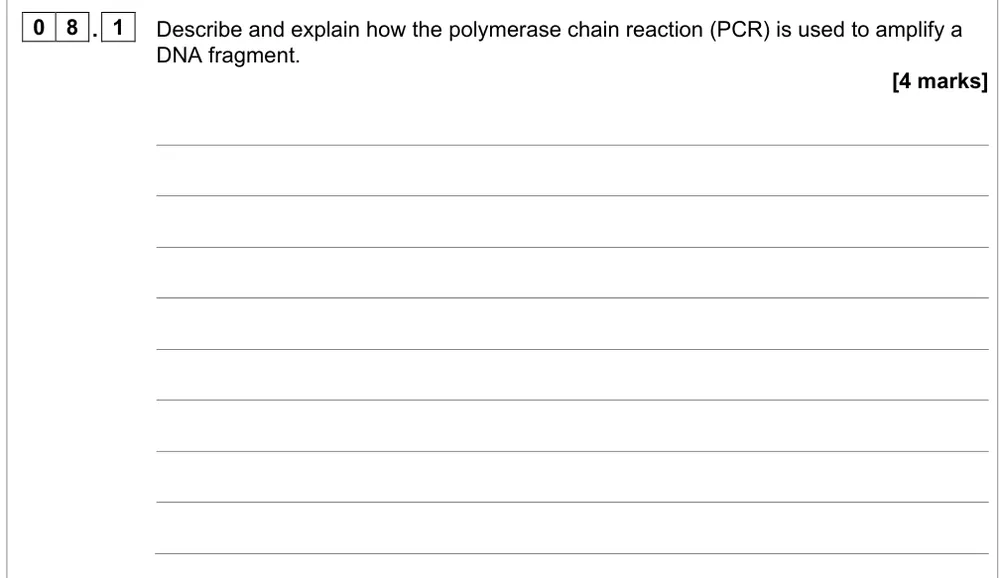
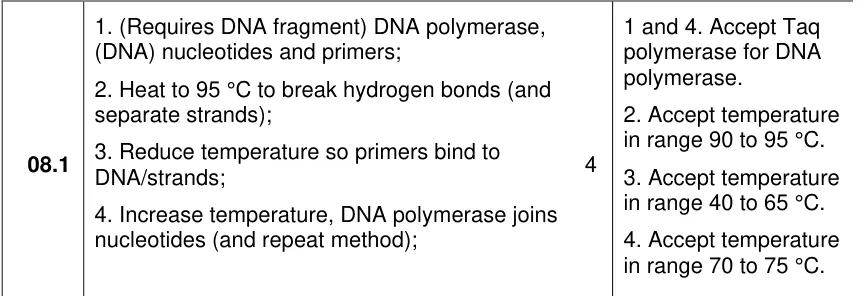
Describe and explain how PCR amplifies a DNA fragment.
Show the mark scheme
Tap an image to open it full size.
From the examiners' report: Only 10% got all four and almost 20% didn't attempt it. List the reagents including nucleotides, then give each temperature with what happens at it. Write DNA polymerase, not just 'polymerase' or RNA polymerase.
Question 8
A level Paper 2 · June 2023 · Q09.2 · 2 marks · Medium
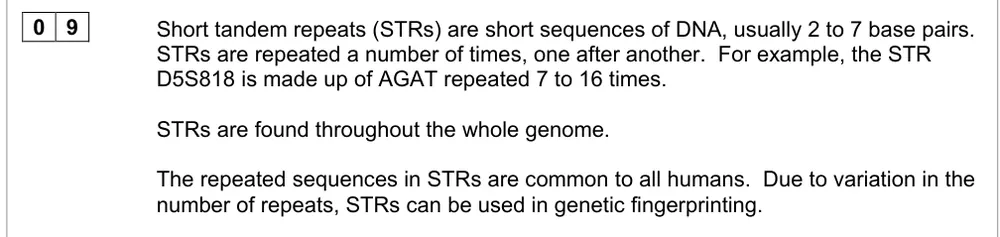
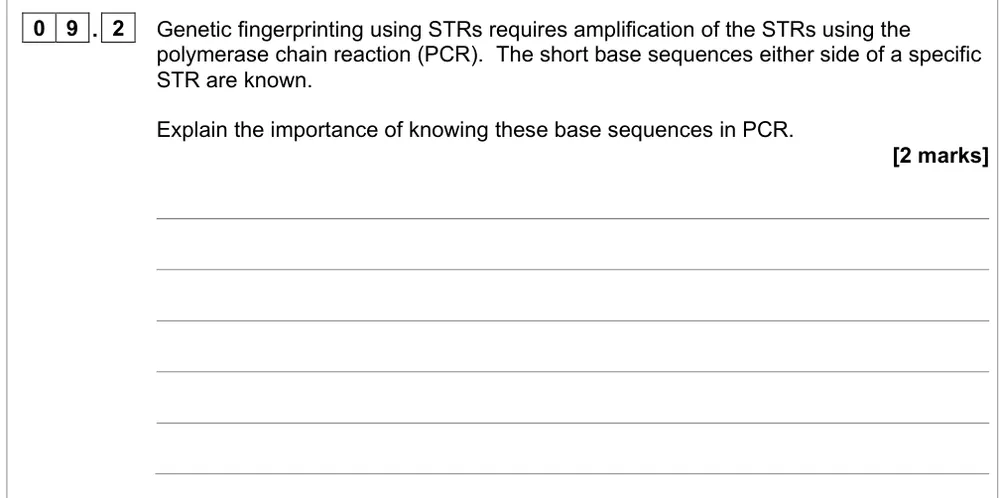
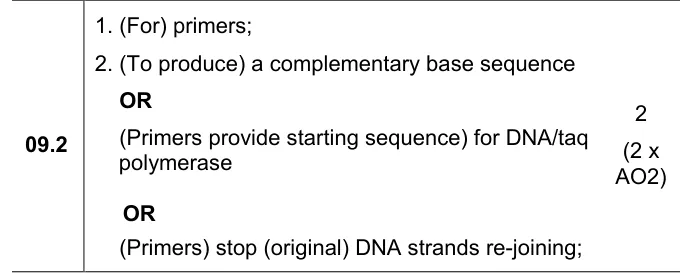
Explain why the base sequences either side of an STR must be known for PCR.
Information from earlier in this question:
Show the mark scheme
Tap an image to open it full size.
From the examiners' report: About a third got both marks. Keep it about PCR: the known sequences let you make primers with a complementary base sequence, which give DNA polymerase a place to start. Restriction enzymes and probes aren't the point here.
Question 9
A level Paper 2 · June 2017 · Q08.3 · 2 marks · Easy
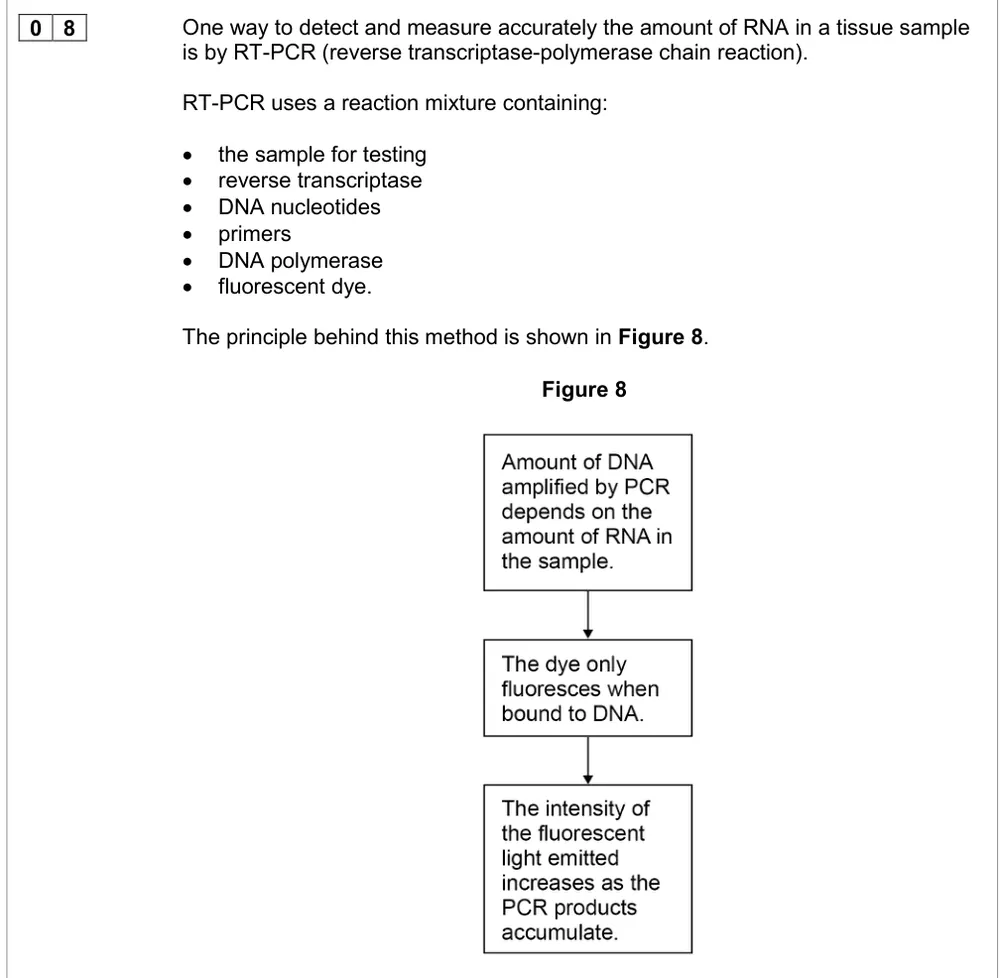
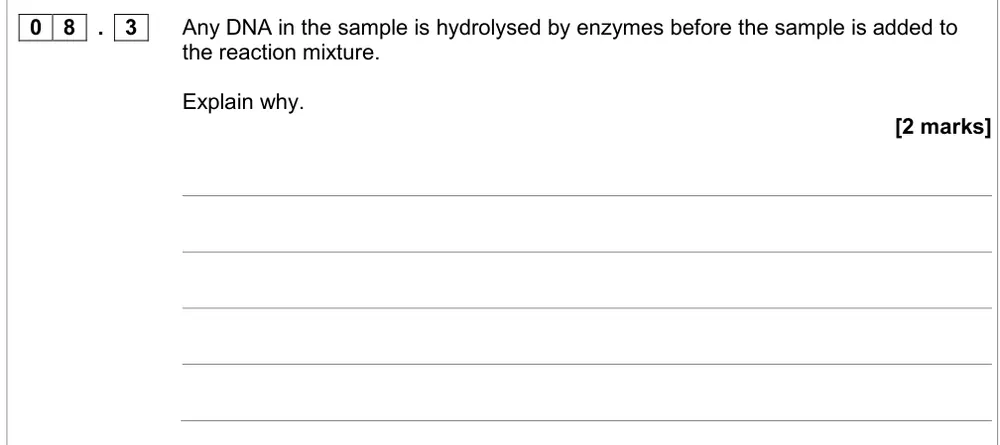
Explain why any DNA in the sample is hydrolysed before RT-PCR.
Information from earlier in this question:
Show the mark scheme

Tap an image to open it full size.
From the examiners' report: Only 3% got both marks and almost 80% scored zero. The method measures RNA, so any DNA already there must be destroyed, otherwise PCR would copy it too. It isn't about separating strands or supplying nucleotides.
Question 10
A level Paper 2 · June 2017 · Q08.6 · 2 marks · Medium
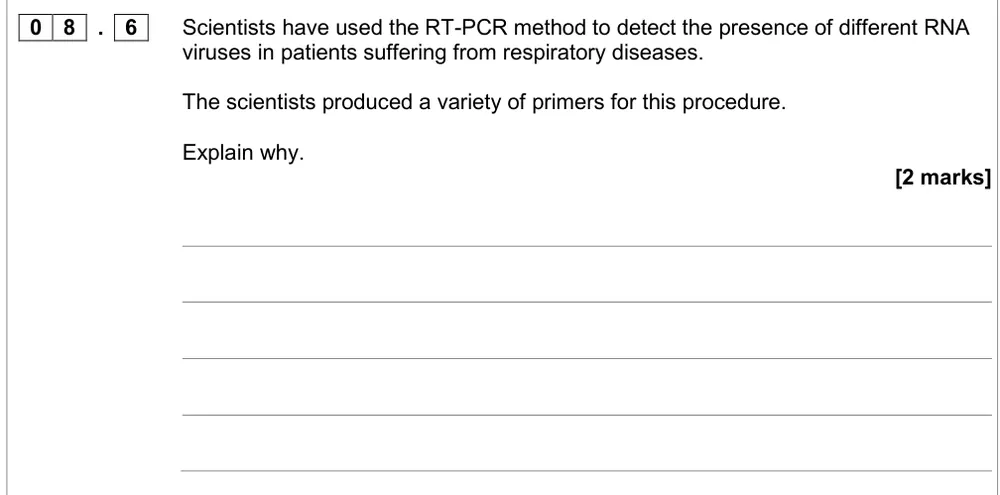
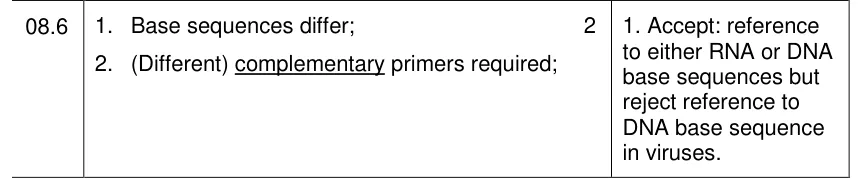
Explain why different primers are needed to detect different RNA viruses by RT-PCR.
Show the mark scheme
Tap an image to open it full size.
From the examiners' report: Only one in five got both marks. Say the viruses' base sequences differ, so each needs a primer with a complementary base sequence. Use the words 'base sequence', and remember these viruses contain RNA, not DNA.
Question 11
A level Paper 2 · November 2021 · Q08.2 · 2 marks · Hard
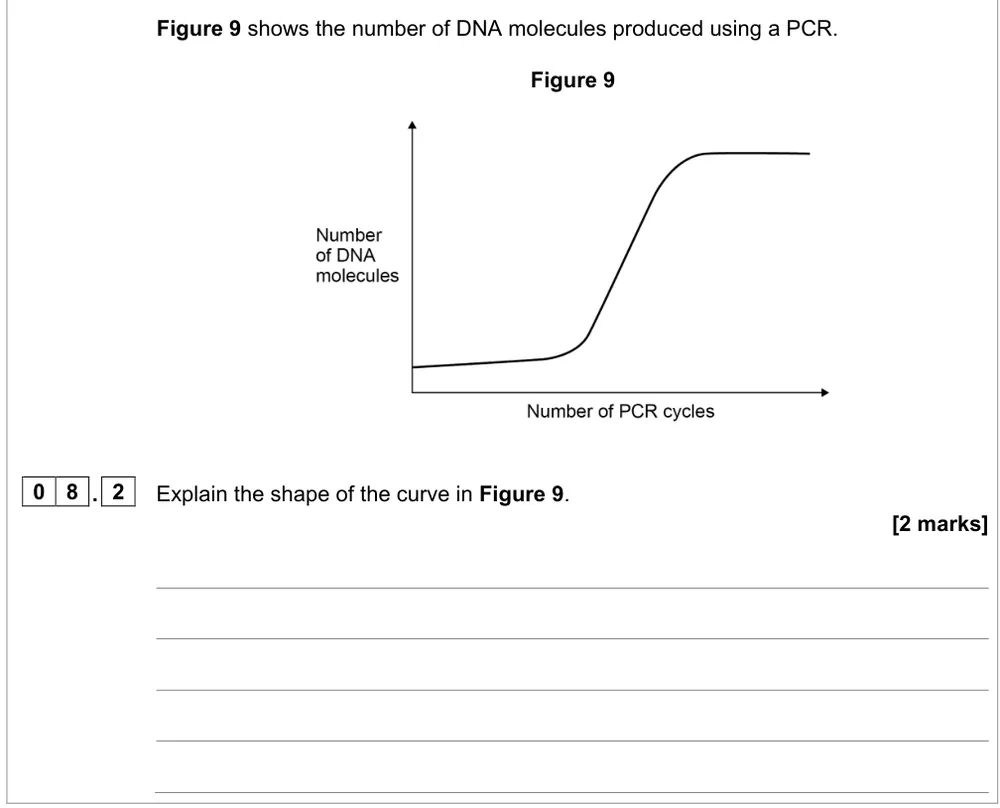
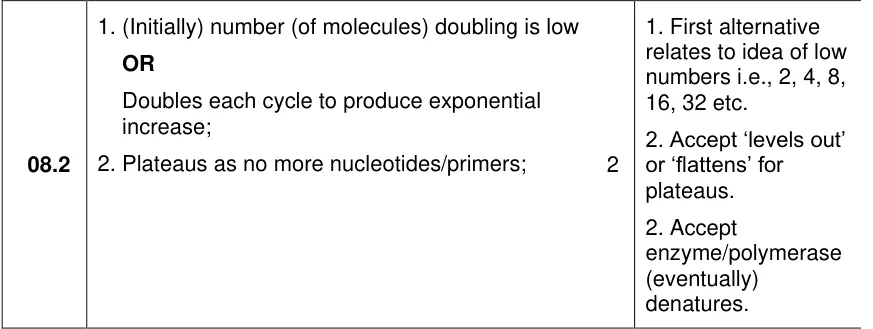
Explain the shape of a curve showing DNA molecules produced over PCR cycles.
Show the mark scheme
Tap an image to open it full size.
From the examiners' report: Only 5% got both marks; most described the curve instead of explaining it. Doubling each cycle explains the steep rise, and running out of primers or nucleotides explains the plateau.
Question 12
A level Paper 2 · June 2023 · Q09.3 · 2 marks · Medium
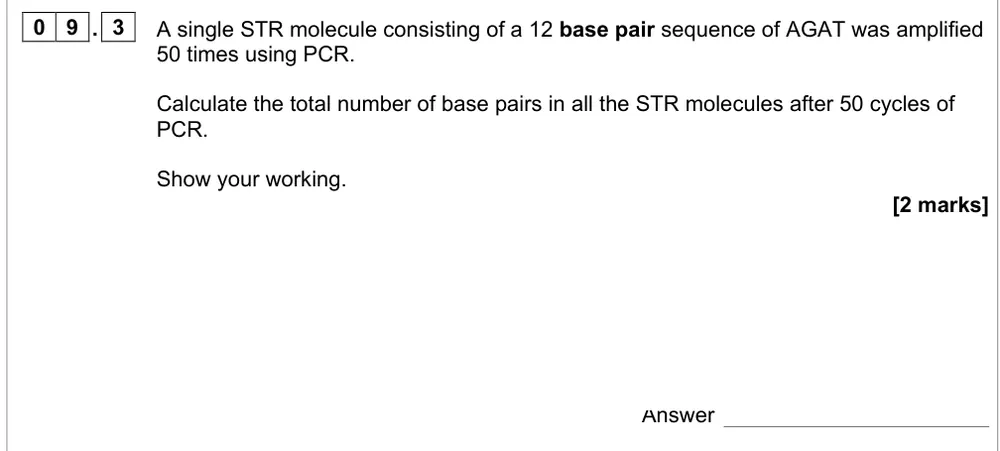
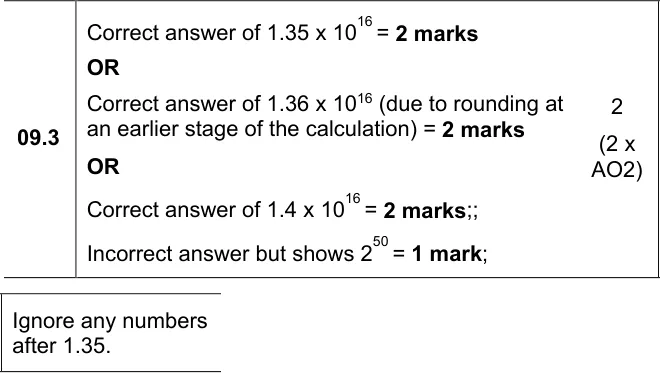
Calculate the total base pairs after a 12 base pair STR is copied through 50 PCR cycles.
Information from earlier in this question:
Show the mark scheme
Tap an image to open it full size.
From the examiners' report: About 34% got both marks. Each cycle doubles the DNA, so one molecule becomes 2⁵⁰ molecules; multiply by 12 base pairs. 12 × 50², 4⁵⁰ and 12 × 50 × 4 were common errors.
Vectors, promoters and marker genes (3.8.4.1)
Question 13
A level Paper 2 · June 2024 · Q07.4 · 2 marks · Easy
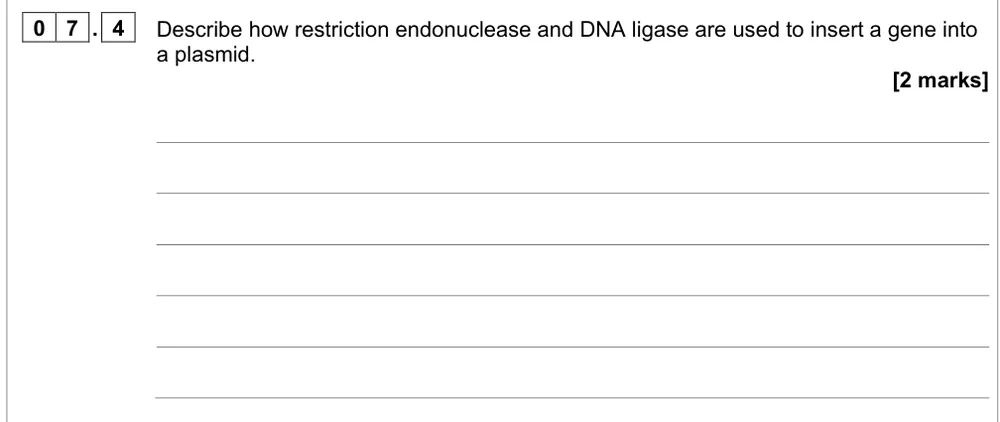
Describe how restriction endonuclease and DNA ligase are used to insert a gene into a plasmid.
Show the mark scheme
Tap an image to open it full size.
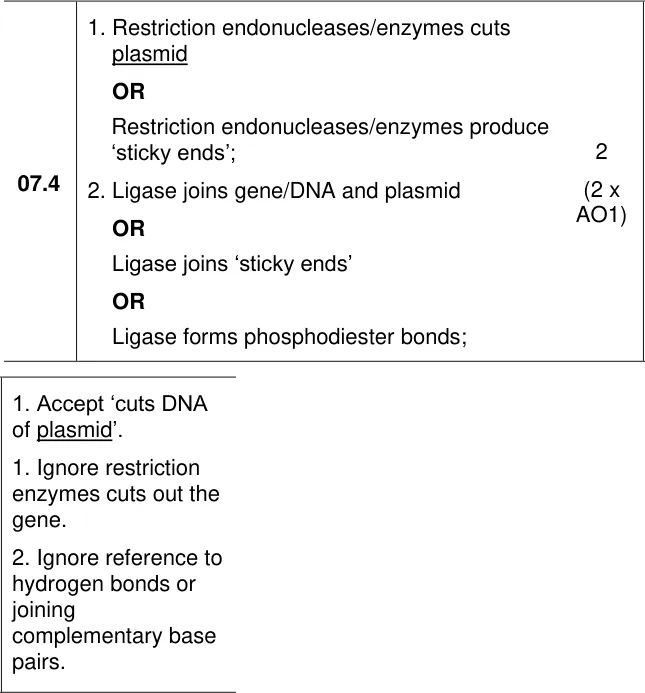
From the examiners' report: About 61% got both marks. Say what each enzyme does to the plasmid: the restriction enzyme cuts it, leaving sticky ends, and ligase joins the gene into it with phosphodiester bonds. Ligase doesn't make sticky ends.
Question 14
A level Paper 3 · June 2022 · Q04.4 · 2 marks · Medium
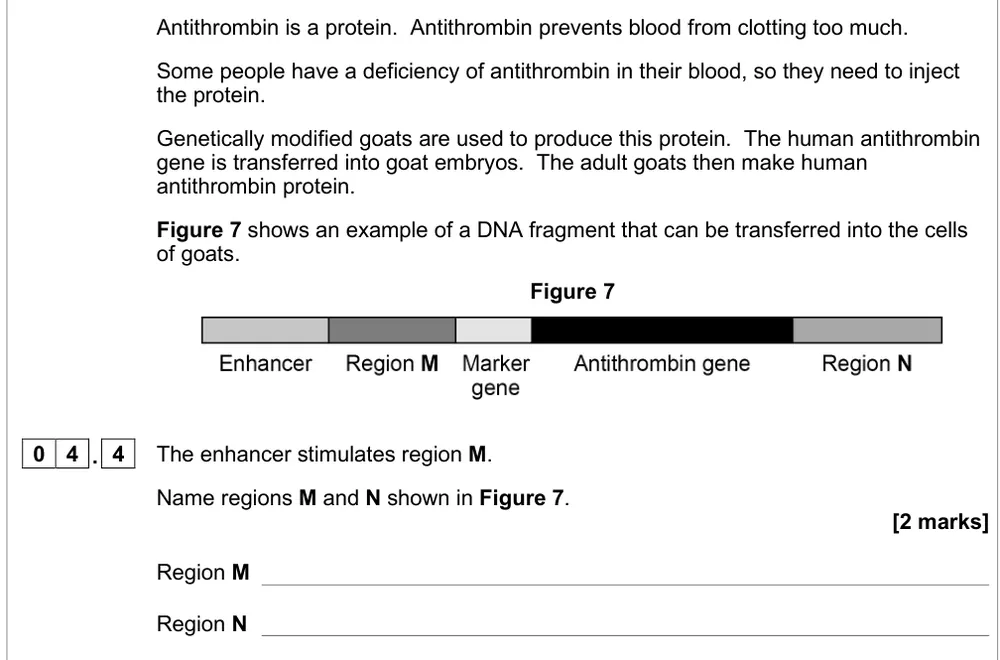
Name the regions either side of a human gene in a DNA fragment for transgenic goats.
Information from earlier in this question:

Show the mark scheme

Tap an image to open it full size.
From the examiners' report: 40% got both marks. A promoter lets transcription start before the gene, and a terminator ends it after the gene; they aren't start and stop codons, introns, exons or VNTRs.
Question 15
A level Paper 3 · June 2022 · Q04.5 · 1 mark
Explain the purpose of the marker gene in the DNA fragment put into goat embryos.

Show the mark scheme
Tap an image to open it full size.
From the examiners' report: 43.5% got this. 'To see the gene' is too vague: the marker gene shows which cells or goats have taken up the gene, so they're genetically modified.
Question 16
A level Paper 2 · November 2020 · Q09.2 · 2 marks · Hard
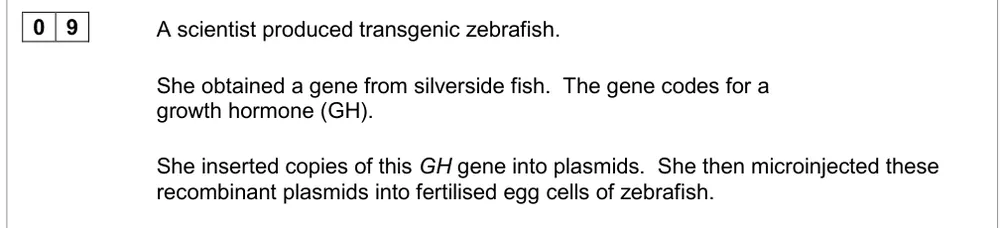
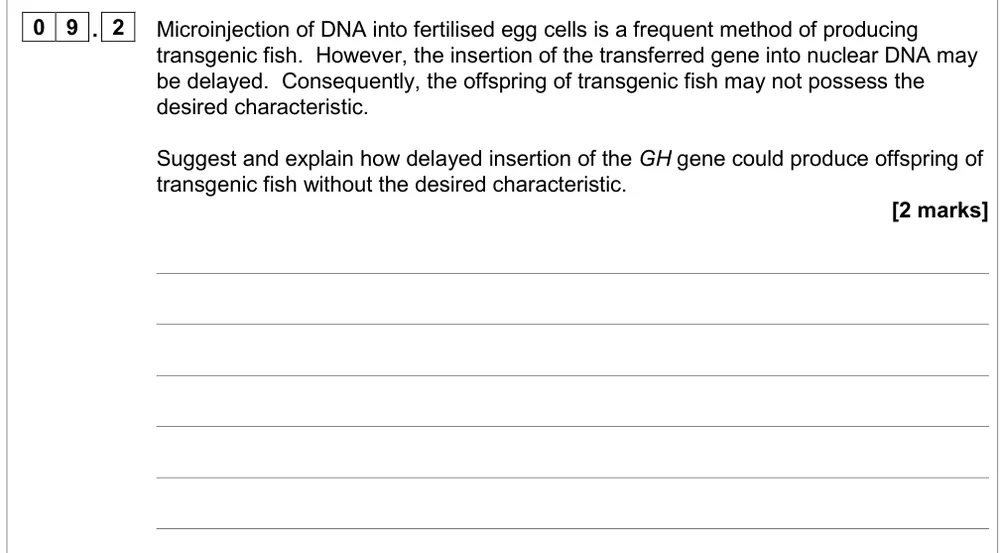
Explain how delayed insertion of a gene into zebrafish embryos could give offspring without the characteristic.
Information from earlier in this question:
Show the mark scheme

Tap an image to open it full size.
From the examiners' report: Only 2% got both marks. Think about the embryo dividing: if mitosis has already happened, only some cells carry the gene, and if the cells that make gametes miss out, the offspring won't have it.
Gene therapy (3.8.4.1)
Question 17
A level Paper 2 · June 2019 · Q02.3 · 3 marks · Medium
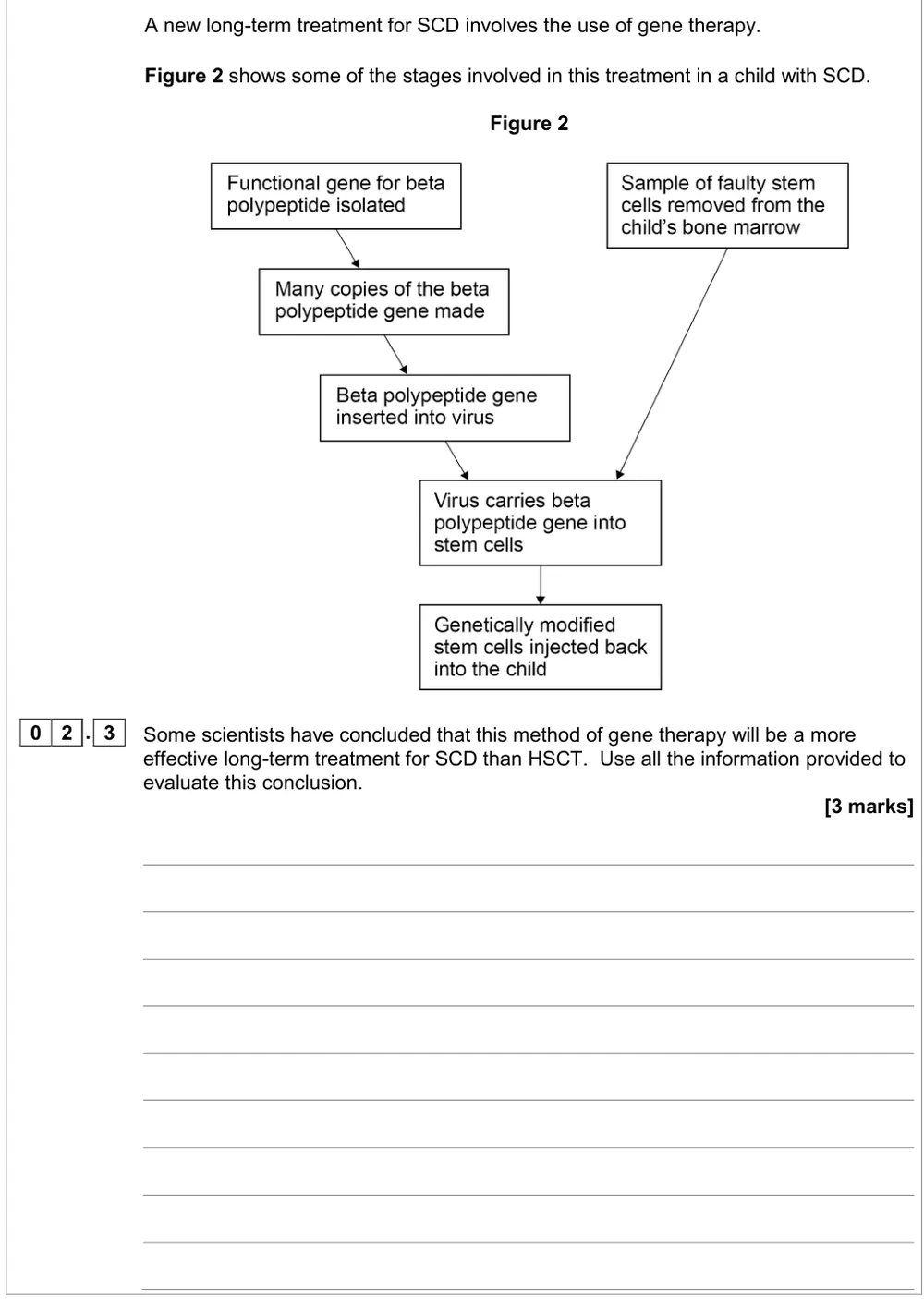
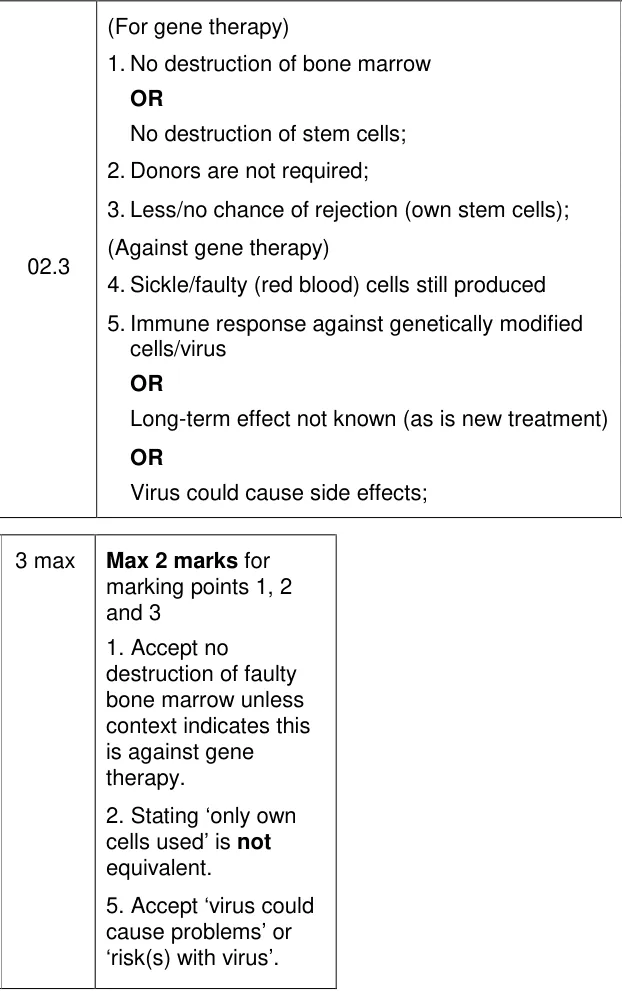
Evaluate whether gene therapy will be a better long-term treatment for sickle cell disease than a stem cell transplant.
Information from earlier in this question:


Show the mark scheme
Tap an image to open it full size.
From the examiners' report: Only 5% got all three. Give points on both sides from Figure 2: no donor and no rejection for gene therapy, but the faulty cells are still made and the virus could trigger an immune response. Don't just describe the method.
Question 18
A level Paper 2 · June 2025 · Q04.2 · 5 marks · Medium
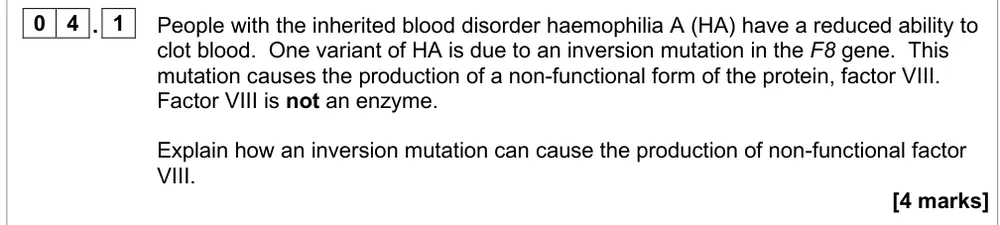
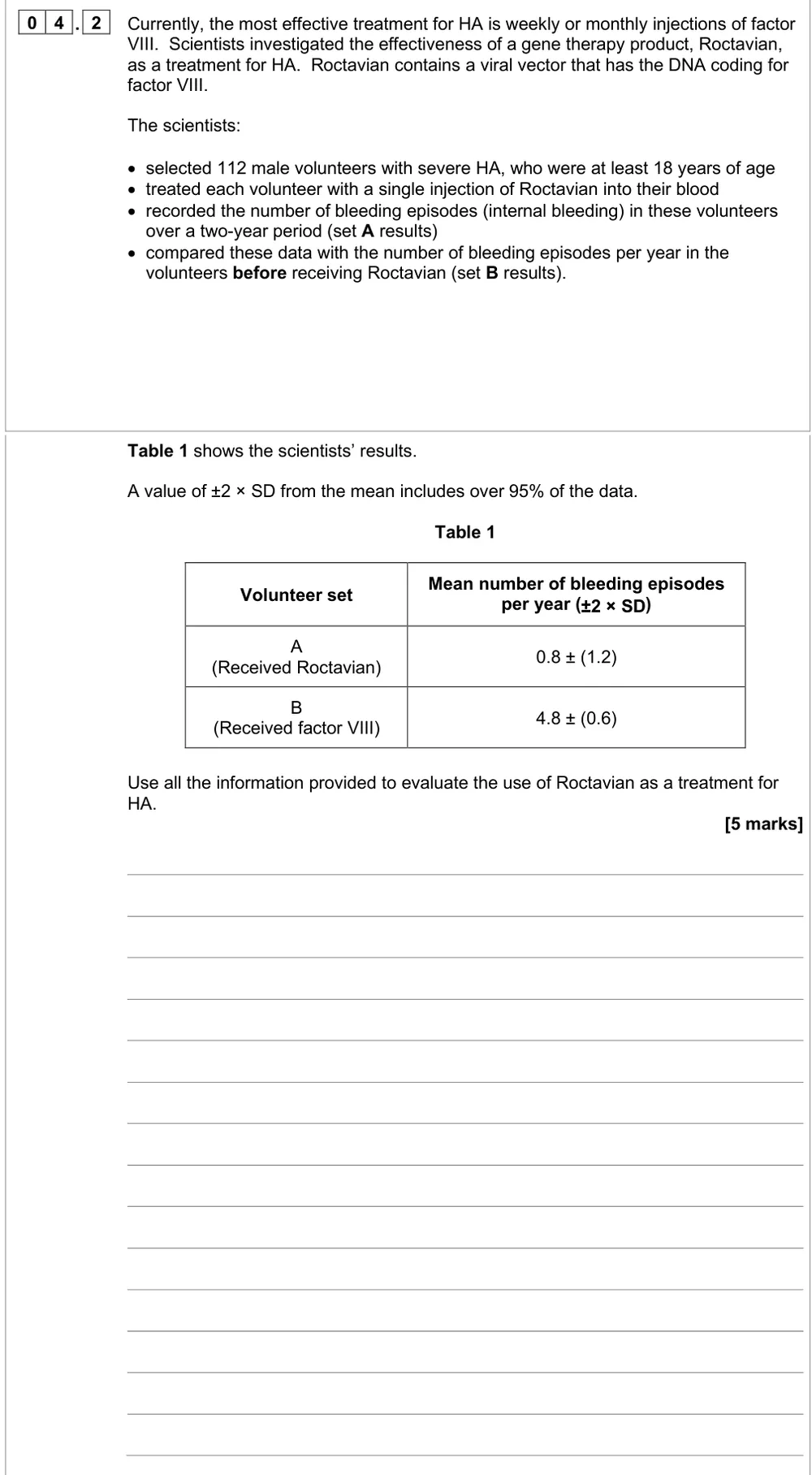
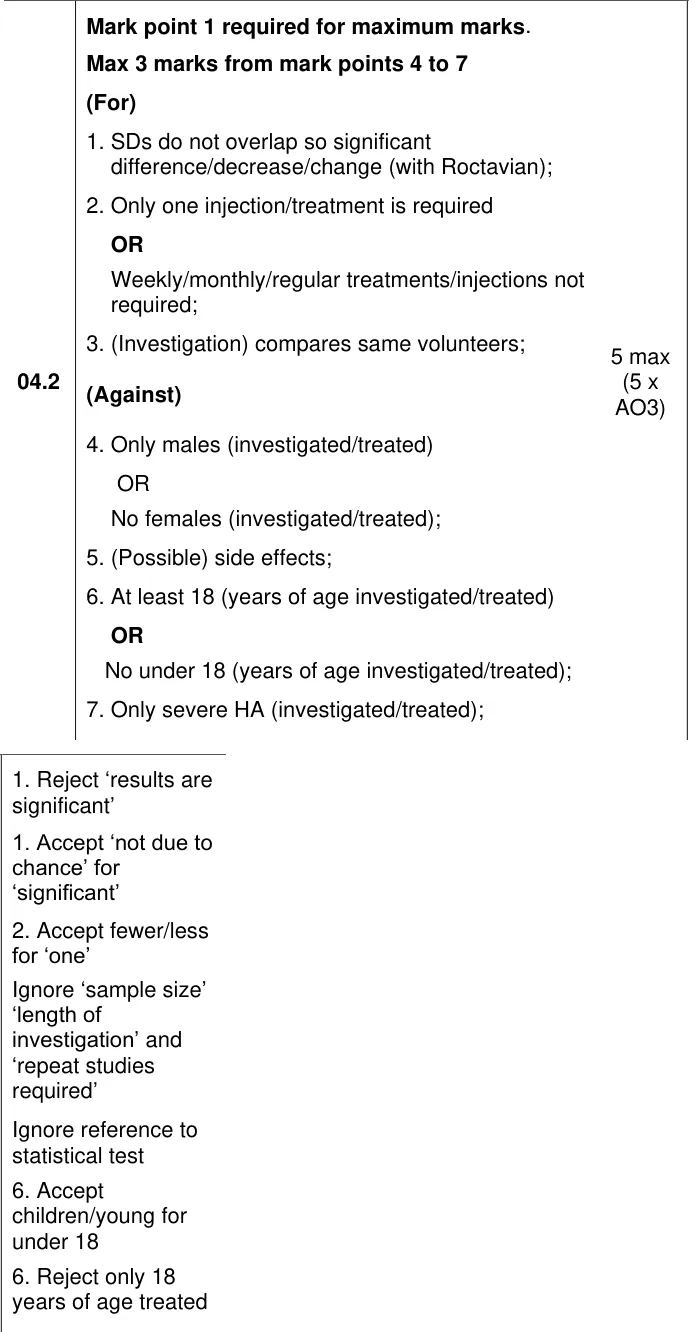
Use bleeding episode data to evaluate the gene therapy Roctavian for haemophilia A.
Information from earlier in this question:
Show the mark scheme
Tap an image to open it full size.
From the examiners' report: About 5% got all five. Start with the data: the ± 2 × SD ranges don't overlap, so the decrease is significant. Then weigh one injection against who was left out: females, under-18s and milder HA. Sample size and study length were ignored.
Where students lose marks (from AQA examiners' reports and mark schemes)
Each point below is followed by wording that gained marks.
A recognition site is a specific base sequence: Only 28% got both marks for removing STRs from DNA. Many named restriction enzymes but then said they cut at a 'specific site', and some suggested heat, electrophoresis or PCR.
✔ Gains credit: "Restriction endonucleases/enzymes"; "(cut DNA) at specific base sequences/pairs OR at recognition/restriction sites".
Reverse transcriptase reads mRNA to make DNA: About a third missed the role of reverse transcriptase. Some had it making RNA from DNA, and others mixed it up with DNA polymerase, RNA polymerase or helicase.
✔ Gains credit: "Produces (c)DNA using (m)RNA"; accept "converts (m)RNA to (c)DNA".
Destroy the DNA so only the RNA gets copied: Only 3% got both marks and almost 80% scored zero. Most thought hydrolysis just separated the strands, or supplied extra nucleotides.
✔ Gains credit: "To remove any DNA present"; "as this DNA would be amplified/replicated".
Give every PCR temperature and its purpose: Almost 20% didn't attempt describing PCR and only 10% got all four marks. Answers left out nucleotides, missed one of the temperature changes, or wrote just 'polymerase' or RNA polymerase.
✔ Gains credit: "Heat to 95 °C to break hydrogen bonds"; "reduce temperature so primers bind"; "increase temperature, DNA polymerase joins nucleotides".
Primers are complementary to a base sequence: Only one in five got both marks for why different primers were needed for different viruses, because answers left out 'base' or 'sequence'. On the STR question some linked the known sequences to restriction enzymes or probes instead of primers.
✔ Gains credit: "Base sequences differ"; "(different) complementary primers required".
Fifty PCR cycles means 2⁵⁰ copies: About 34% got both marks. Common wrong working included 12 × 50², 4⁵⁰ and 12 × 50 × 4 instead of doubling once per cycle.
✔ Gains credit: "Shows 2⁵⁰"; "correct answer of 1.35 × 10¹⁶".
Ligase joins the gene into the cut plasmid: The ligase mark was lost more often than the restriction enzyme mark. Weaker answers said ligase makes sticky ends or cuts the plasmid, or described hydrogen bonds between bases.
✔ Gains credit: "Restriction endonucleases cut plasmid OR produce sticky ends"; "ligase joins gene/DNA and plasmid OR forms phosphodiester bonds".
Eukaryotes have introns and more regulatory genes: Fewer than 5% got both marks. Most just said the bacterial genome is shorter or has fewer genes, and some brought in histones or organelles.
✔ Gains credit: "(E. coli) do not have introns/non-coding DNA"; "eukaryotes contain (more) regulatory genes".
Download the questions
Download the PDF pack (18 questions, mark schemes at the end)
Keep practising
- DNA probes and genetic fingerprinting: AQA A Level Biology exam questions by topic
- DNA and protein synthesis: AQA A Level Biology exam questions by topic
- Required practical 6, aseptic technique: AQA A Level Biology exam questions by topic
- Regulation of transcription and translation: AQA A Level Biology exam questions by topic
- AQA 3.8.3–3.8.4 gene technologies: self-marking quiz
- AQA A Level Biology masterclasses
Questions, mark schemes and examiners' report extracts © AQA.