How to approach and answer AQA A-level Biology Questions that need you to interpret Graphs- lots of AQA past paper questions
How to approach and answer A-level Biology Questions that need you to Analyse Figures, Tables and Images - lots of example past paper questions with the markschemes
Magical top tip: DO NOT LOOK at the question first - LOOK at the data first
This simple trick can transform how easily you will be able to answer graph questions
ALWAYS LOOK AT THE DATA FIRST
Look closely at the graph or table
Graphs - look very carefully at the axes - have they plotted rate or time, mass/volume or concentration ? Often students assume enzyme graphs have rate on the y axis - sometimes they don’t !
Table - is the IV in the first column ? What are the units of the DV ? Has a mean been calculated ? Is the data in each row consistent ?
are there range/SD bars on the graph ? remember this indicates the variation in the data that was used to calculate the mean
do the range bars or standard deviation bars overlap ?,
If the Standard deviations (+or- 2 SD overlap then the DIFFERENCE between the MEANS is due to chance - the differnce between the means is not statistically significant).
In a table what range is in the replicates when you compare to the mean ?
what trends can you observe ?
then think about what principle of biology is being shown by the the trends, for instance - enzymes and substrate concentration or mitosis and distance from the root tip
How would you explain the highest value, the lowest value, the point at which the line crosses the x axis, how would you explain the largest range, how would you change the method to reduce the spread in the data ?
Have a look at these 20 excellent recent graph interpretation AQA Questions
An old collection of OCR maths-heavy questions for extra practice
Y12 and Y13 AQA small group weekly class information
Language Matters ....Command words in Exam questions
Some terrific guidance and definitions here - from AQA but applies to all exam boards
Repeatable or reproducible ? Valid or accurate ? Glossary of vocabulary
A great glossary of vocabulary that applies to Biology questions and answers.
A great glossary of terms that apply to A level Biology questions and answers. Learn them and use them !
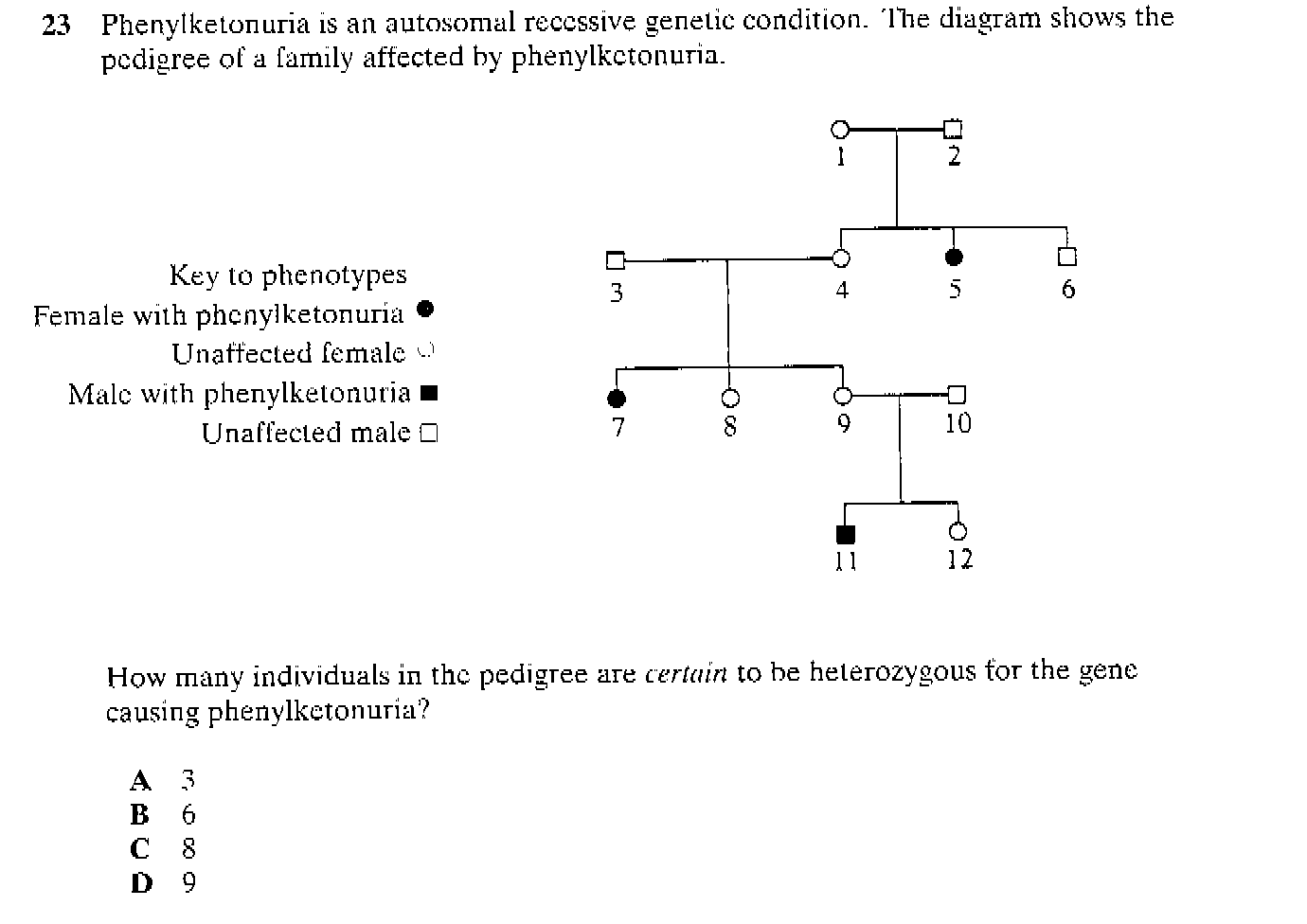
3 Genetics Multiple Choice Questions to make you think - good for OCR Revision
A pedigree analysis, an epistasis, and a Hardy-Weinberg - useful for OCR Revision
If you use then like and share
A pedigree analysis, an epistasis, and a hardy weinberg - useful for OCR Revision
Like and Share if you found them useful
the answers are
23 B
26 D
27 A
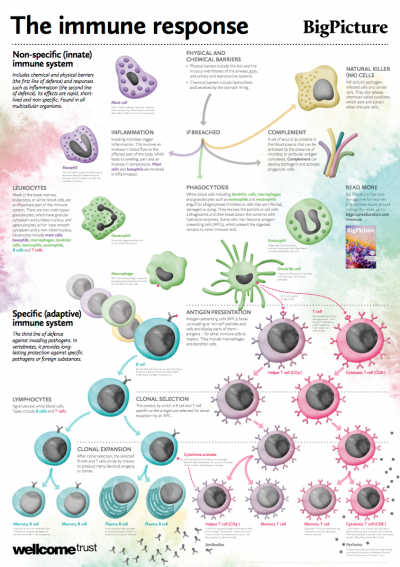
Brief Revision Guide to Immune System and Immune System Questions and Markschemes
Brief guide to understanding the hard bits of the immune system A-level Biology Specification. Lots of questions and markschemes on the immune system.
if you use then please like or share
Immunity and the Immune system is a topic that students do find hard.
Please like and share (and click on a advert to help with the hosting costs !)
Remember that specific immunity requires clonal selection and clonal expansion - and that each B and T lymphocyte has one shape of receptor on the surface which is complementary to only one antigen.
Memory cells are produced in response to experiencing an antigen (either on a pathogen or a vaccine) - hence when you subsequently encounter the same antigen, the production of antibodies (specific only to that antigen) will be quicker and larger. If the pathogen mutates, then you will no longer possess a specific immunity as the antigens (proteins or glycoproteins) will be a different shape and no longer complementary to the receptors on the memory cells.
Learning the inflammatory response and being able to explain each part (rise in temperature, swelling, increased permeability...) will help to reduce the number of pathogens is important.
You must know the structure and function of each part of the antibody.
There seems to be an obsession with opsonins.
You need to know phagocytosis in detail (phagolysosome, hydrolytic enzymes ....)
You must be able to explain the differences between the primary and secondary responses of antibody production.
Here are some questions and the markscheme
Please "like" and share with your friends if you find that this helped your improve your understanding
How to Answer Hardy-Weinberg Questions - A-level Biology - with question pack
How to understand and answer Hardy-Weinberg Questions - A-level Biology. Remember to look out for questions where they give you a dominant phenotype frequency -for instance Huntingdons disease, where the frequency of the sufferers is 1 in 100000 - therefore q squared (recessive allele phenotype) is 99999 in 100000.
if you use - then like and share
Had a request for some Hardy Weinberg Questions.
Please like and share (and click on a advert to help with the hosting costs !)
Remember to look out for questions where they give you a dominant phenotype frequency -for instance Huntingdons disease, where the frequency of the sufferers is 1 in 100000 - therefore q squared (recessive allele phenotype) is 99999 in 100000.
Also if they ask you to calculate allele frequency without HW - then all individuals in a population have 2 alleles of each gene. In a population of 600 rats there are 1200 alleles in total.
If 400 are AA, 100 are Aa, and 100 are aa then the frequency of a is (100+200)/1200 = 0.25.
Remember that the HW depends on some very unlikely assumptions !
Assumption 1: No Genetic Drift
Sexual reproduction recombines genetic information in a random pattern. In a small population, it is possible that few individuals carry an allele and simple chance could make them more or less successful in passing on that allele. This is known as genetic drift, and the Hardy-Weinberg assumes that it does not happen. In practical terms, a population at Hardy-Weinberg equilibrium has to be large enough that the frequency of an allele is not impacted by random events.
Assumption 2: A Closed Population
Emigration and immigration -- that is, transfer of individuals into and out of a population -- can change the frequency of alleles. Emigrating individuals might take more of one allele out of a population, and immigrating individuals might come from a population with a different proportion of alleles. This is known as genetic flow, and it is common for most populations, with notable exceptions such as remote islands, deep caves or mountaintops. A population at Hardy-Weinberg equilibrium is assumed to have no genetic flow, or to be a completely closed population.
Assumption 3: Mutations Don’t Happen
Mutations are errors that happen when DNA is being copied. They can be nonsense or neutral, they can be harmful to the organism or they can change the organism in a way that makes them better able to survive and reproduce. Hardy-Weinberg equilibrium assumes that mutations don’t exist because they represent genetic change that is not due to the recombination of existing alleles.
Assumption 4: Random Mating Patterns
The Hardy-Weinberg principle assumes that every individual in a population has an equal chance of mating with every other individual, totally random mating. In a population at Hardy-Weinberg equilibrium, nobody gets to be picky. Random mating, also known as a panmictic population, almost never happens in real life.
Assumption 5: No Natural Selection
Natural selection is a pressure that favors one allele over another because the resulting trait, or phenotype, gives the individual an advantage. From a genetic standpoint, the only advantage that matters is one that helps the individual survive or reproduce more effectively. In a population at Hardy-Weinberg equilibrium, there are assumed to be no evolutionary pressures.
Please "like" and share with your friends if you find that this helped your improve your understanding
How to approach and answer A-level Biology Questions that need you to Analyse Figures, Tables and Images - lots of example past paper questions
How to approach and answer A-level Biology Questions that need you to Analyse Figures, Tables and Images - lots of example past paper questions with the markschemes
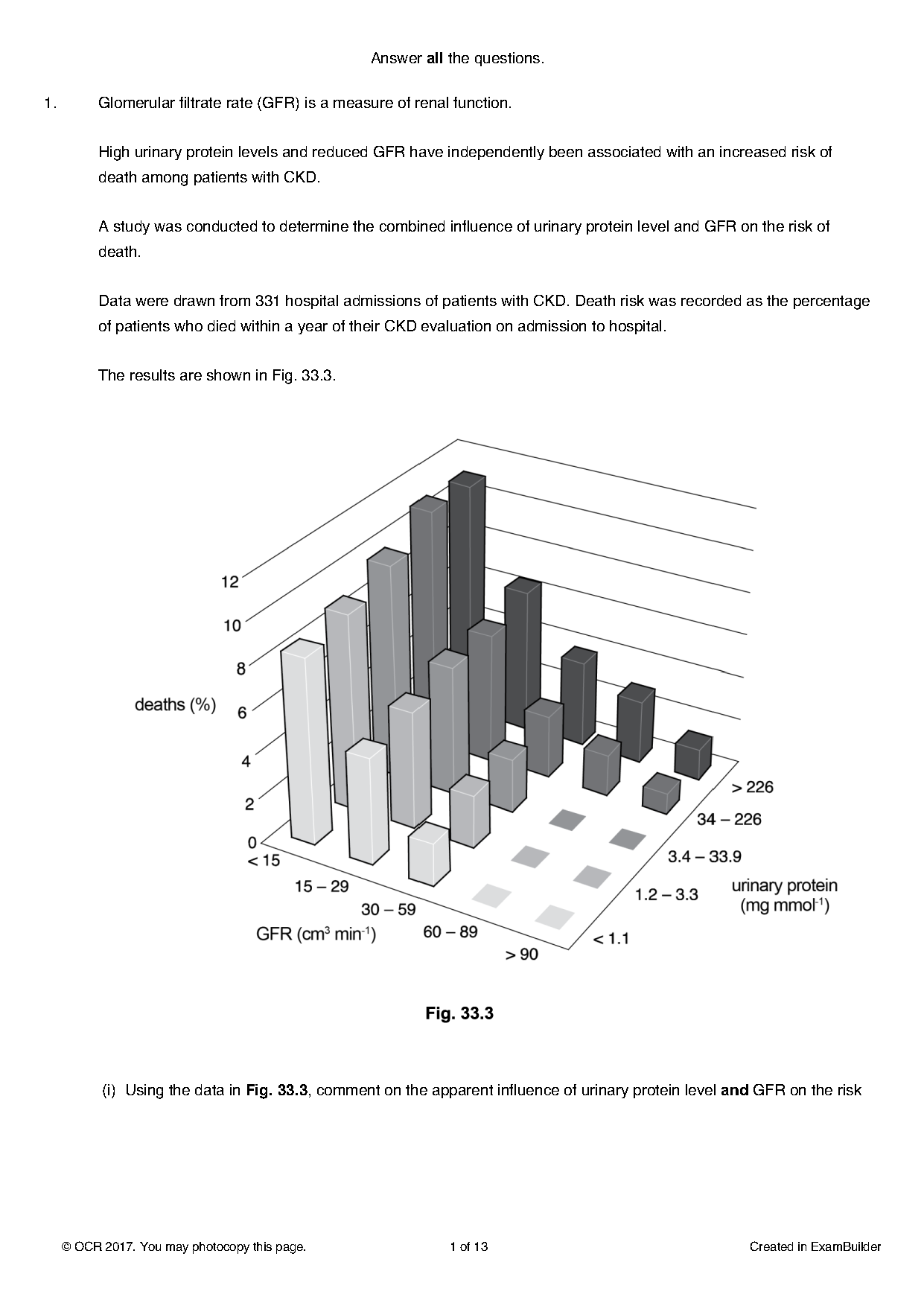
DO NOT LOOK at the question and then look at the data to answer the question.
Look closely at the graph or table
look very carefully at the axes - have they plotted mean or rate or time, mass/volume or concentration ?
can you see range bars ?
In a table what range is in the replicates when you compare to the mean ?
what trends can you observe ? then think about what principle of biology is being shown by the the trends.
How would you explain the highest value, the lowest value, the point at which the line crosses the x axis, how would you explain the largest range, how would you change the experiment to reduce the spread in the data ?
Once you have a coherent understanding of the trends - only then look at the question.
DO NOT LOOK at the question and then look at the data to answer the question.
ALWAYS LOOK AT THE DATA FIRST
Look closely at the graph or table
Graph look very carefully at the axes - have they plotted rate or time, mass/volume or concentration ? Often students assume enzyme graphs have rate on the y axis - sometimes they don’t !
Table - is the IV in the first column ? What are the units of the DV ? Has a mean been calculated ? Is the data in each row consistent ?
are there range/SD bars on the graph ? remember this indicates the variation in the data that was used to calculate the mean
do the range bars or standard deviation bars overlap ?
In a table what range is in the replicates when you compare to the mean ?
what trends can you observe ? then think about what principle of biology is being shown by the the trends.
How would you explain the highest value, the lowest value, the point at which the line crosses the x axis, how would you explain the largest range, how would you change the method to reduce the spread in the data ?
Once you have a coherent understanding of the trends - only then look at the question.
try this - about 20 questions with data and analysis
If you found it useful then please ❤️ (at the bottom of the page) and share, you can follow me on instagram - alevelbiologytutor
Tuesday night group tutoring topics and Y13 & Y12 OCR A and AQA small group weekly class information
Challenging Questions with lots of Data Analysis and Application - A-level Biology past paper questions
Good practice if you are struggling with data analysis questions
Pack of challenging past paper questions with lots of Data Analysis and application - A-level Biology past paper questions - good for OCR and AQA specifications
Have a go at some of these - markschemes at the end
Please "like" and share with your friends if you find that this helped your improve your understanding
Neurones and Action Potentials - A level Biology Questions - by topic - with the markschemes
Neurones and Action Potentials give an opportunity for examiners to get you to explain a graph (in terms of the flow of Sodium and Potassium ions through voltage gated channel) and to link that explanation to first year concepts of facilitated diffusion and active transport.
if you use then like and share
Going through past papers by topic often gives a useful insight into the thoughts of the examiners and how they see a topic and the emphasis they put on different parts of a specification. I have included the comments from the examiners reports,
Neurones and Action Potentials give an opportunity for examiners to get you to explain a graph (in terms of the flow of Sodium and Potassium ions through voltage gated channel) and to link that explaination to first year concepts of facilitated diffusion and active transport.
Here is a link to some questions with the markschemes
Please like and share (and click on a advert to help with the hosting costs !)
Leaf discs in a Syringe - Another Synoptic Question #alevelbiology
Photosynthesis, Enzymes, Pigments, Leaf Buoyancy and more experimental design.
Think about how starch is made and what it is made from ......
Please like and share
Photosynthesis, Enzymes, Pigments, Leaf Buoyancy and more experimental design.
Think about how starch is made and what it is made from .......
Here is the question as a pdf
and here is the markscheme

