

Ecosystems is where biology meets fieldwork. Spec point 6.3.1 asks you to explain why ecosystems are dynamic, follow biomass along a food chain and calculate the efficiency of each transfer, name the bacteria that recycle nitrogen, describe the carbon cycle, take a habitat from bare rock to a climax community (and explain deflected succession), and choose sampling methods to measure the distribution and abundance of organisms.
The examiners' reports show the same slips year after year. Students drop the minus sign on a nitrite ion, write Azotobacter where Nitrosomonas belongs, say plants turn nitrates into ammonia rather than amino acids, and answer a low-oxygen soil question in terms of respiration instead of denitrification. In the calculations, marks go on units: joules not converted to kilojoules, or a productivity unit with no area, volume or time in it.
Work through the nineteen questions below in order. They start with recall, move on to nitrogen, biomass and succession in new contexts, and finish with sampling methods and calculations. If you'd like to go through questions like these with me each week, my OCR A masterclasses run on Wednesdays at 5.15pm for Year 12 and on Tuesdays at 6.30pm or Thursdays at 5.15pm for Year 13.
What you need from GCSE
Each question on this page assumes you're secure on these GCSE ideas. If any of them feels shaky, look it up before you start.
- An ecosystem is the community of organisms in an area interacting with each other and with the non-living (abiotic) parts of their environment.
- Pyramids of biomass get narrower at each trophic level because biomass is lost through respiration, egestion and excretion.
- Decomposers break down dead organisms and waste, returning carbon dioxide and mineral ions such as nitrates to the environment.
- The carbon cycle links photosynthesis, respiration, combustion and decay.
- Quadrats and transects are used to sample organisms, and the mean number per quadrat can be scaled up to estimate a population.
Key terms
These words come up in the questions and mark schemes. Examiners expect you to use them exactly.
- Biotic and abiotic factors: the living (e.g. predation, competition, disease) and non-living (e.g. light, temperature, pH, water) influences on an ecosystem.
- Trophic level: a feeding level in a food chain: producers, primary consumers, secondary consumers and so on. Decomposers feed on dead material from every level.
- Efficiency of biomass transfer: biomass transferred ÷ biomass intake × 100. Biomass is measured as dry mass, or as energy per unit area (or volume) per year.
- Ammonification: decomposers converting nitrogen-containing compounds in dead organisms and waste into ammonium compounds.
- Nitrification: Nitrosomonas oxidises ammonium ions (NH₄⁺) to nitrite (NO₂⁻); Nitrobacter oxidises nitrite to nitrate (NO₃⁻). Both need oxygen.
- Nitrogen fixation: reducing nitrogen gas (N₂) to ammonia, by free-living Azotobacter in the soil or by Rhizobium in the root nodules of legumes.
- Denitrification: anaerobic bacteria reducing nitrate back to nitrogen gas, which is favoured in waterlogged, low-oxygen soils.
- Succession: the change in a community over time, through seral stages from a pioneer community on bare ground to a climax community.
- Deflected succession: succession stopped before the climax community by human activity such as grazing, mowing or burning (heather moorland, for example).
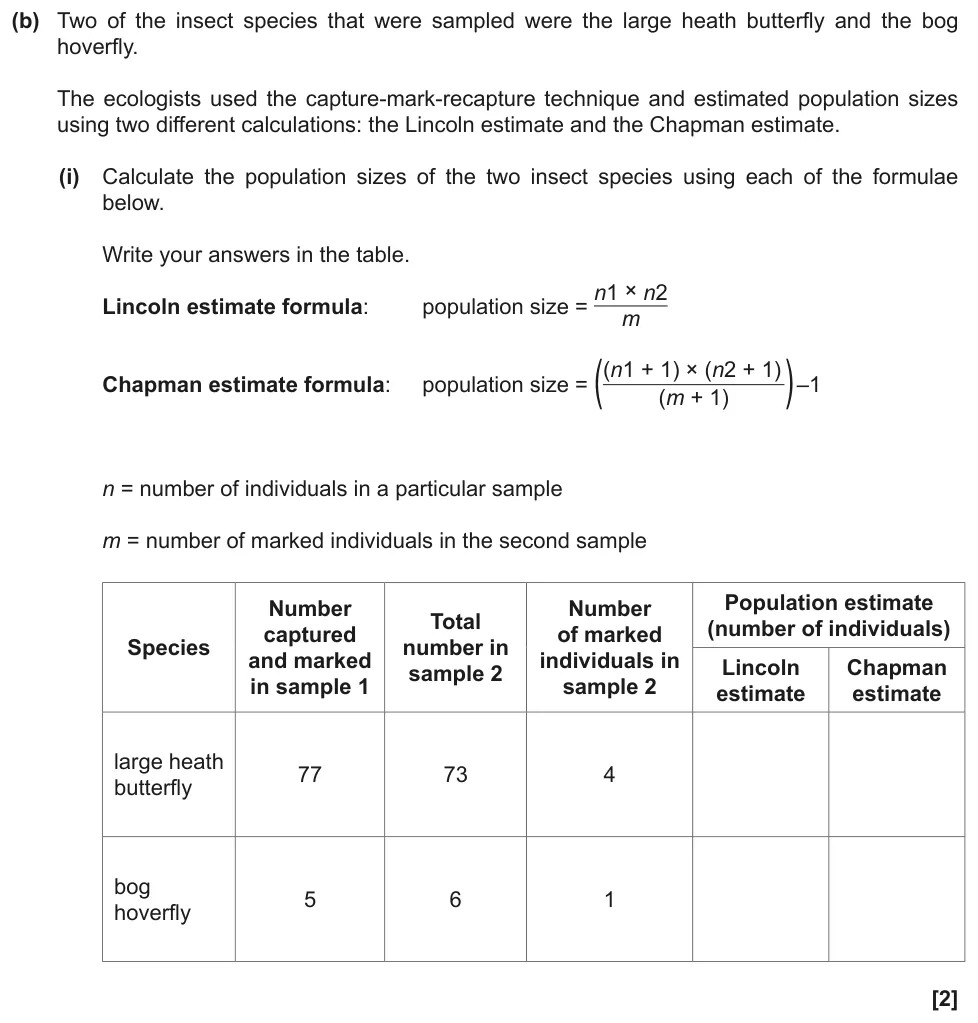
- Capture–mark–recapture: estimating the size of a mobile population: number in first sample × number in second sample ÷ number marked in the second sample.
What these questions cover (OCR 6.3.1)
The questions test these learning outcomes from the OCR A Level Biology A specification (H420):
- (a) ecosystems, which range in size, are dynamic and are influenced by both biotic and abiotic factors
- (b) biomass transfers through ecosystems (including efficiency = biomass transferred ÷ biomass intake × 100)
- (c) recycling within ecosystems (decomposers, Nitrosomonas, Nitrobacter, Azotobacter and Rhizobium, and the carbon cycle)
- (d) the process of primary succession in the development of an ecosystem (from pioneer species to a climax community, and deflected succession)
- (e)(i) how the distribution and abundance of organisms in an ecosystem can be measured
- (e)(ii) the use of sampling and recording methods to determine the distribution and abundance of organisms in a variety of ecosystems (including transects, quadrats and ACFOR (PAG3))
How to use this page
Write your answer on paper before you open the mark scheme. Allow about 1.2 minutes per mark: the 19 questions are worth 42 marks, so about 50 minutes in total. Then mark your answer strictly against the mark scheme and read the examiners' tip underneath it. If you'd rather print the questions, download the PDF pack.
Recall
Question 1
A level Paper 3 · June 2018 · Q5(c)(i) · 1 mark · Medium
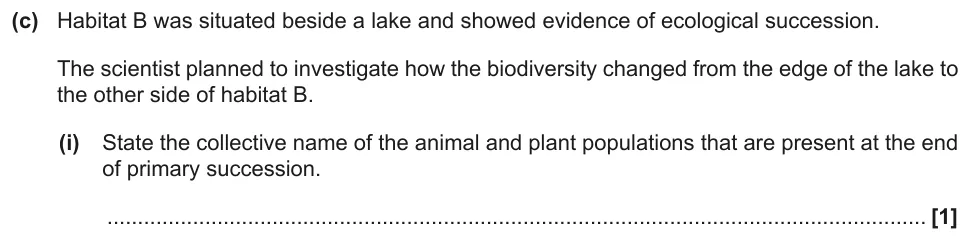
Name the community present at the end of primary succession.
Show the mark scheme

Tap an image to open it full size.
From the examiners' report: Read what the question asks for: the end of succession, not the start. Pioneer species and "climax population" both scored nothing.
Question 2
A level Paper 3 · June 2017 · Q4(a) · 4 marks · Medium
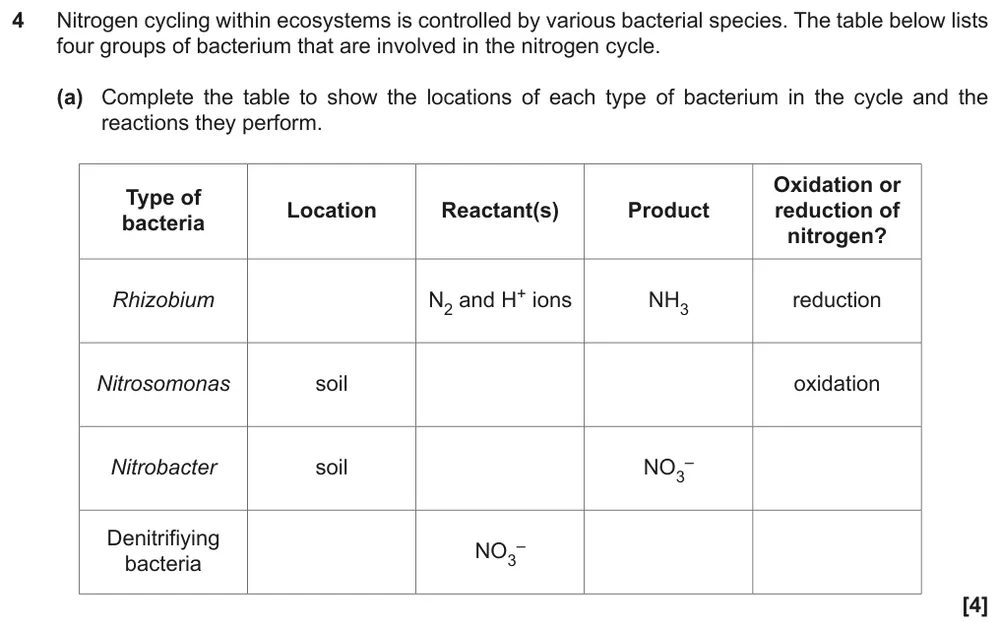
Complete a table of nitrogen cycle bacteria: location, reactant, product, oxidation or reduction.
Show the mark scheme
Tap an image to open it full size.
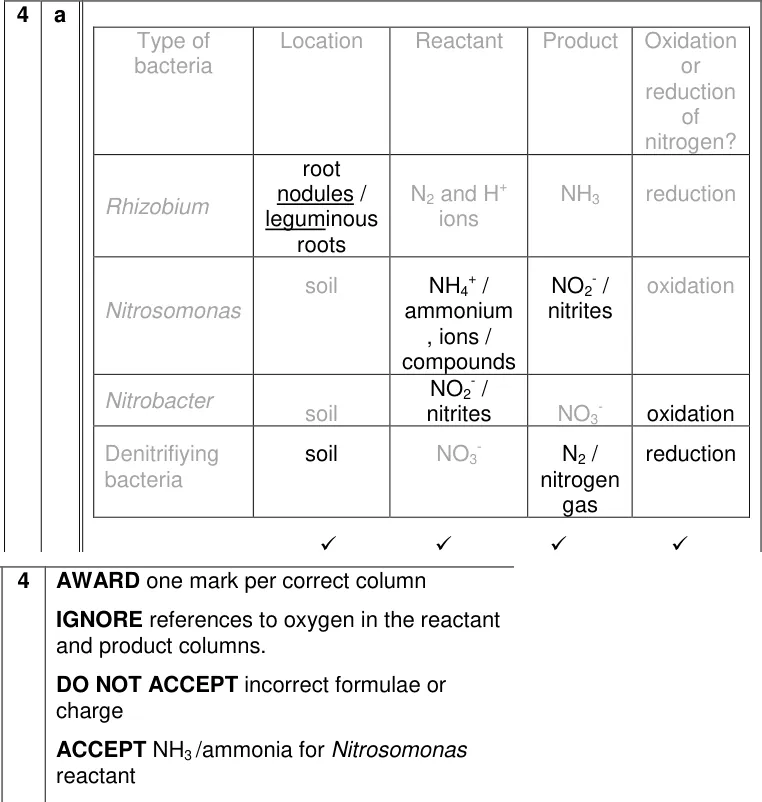
From the examiners' report: Fewer than 1 in 10 scored all four marks. Say Rhizobium lives in root nodules, give NO₂⁻ its negative charge, and remember that nitrification is oxidation and denitrification is reduction.
Question 3
A level Paper 2 · June 2023 · Q21(a) · 6 marks · Hard
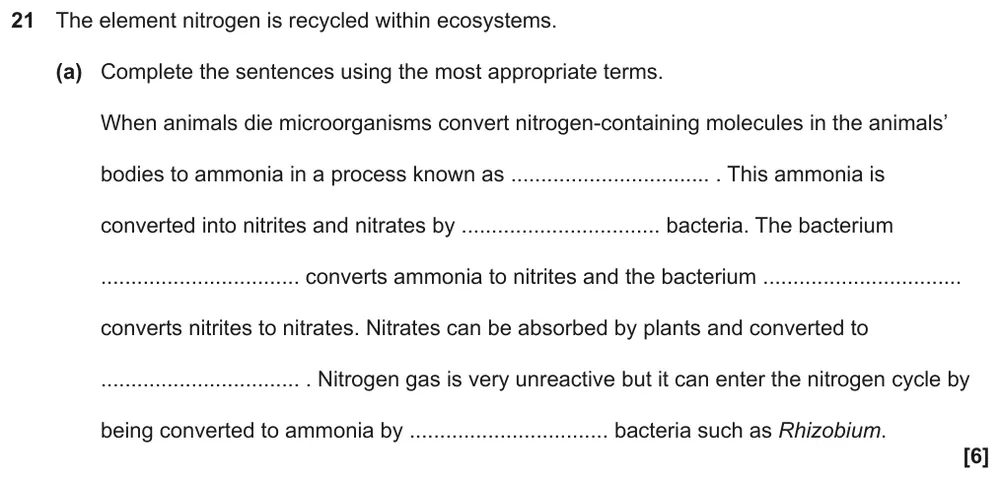
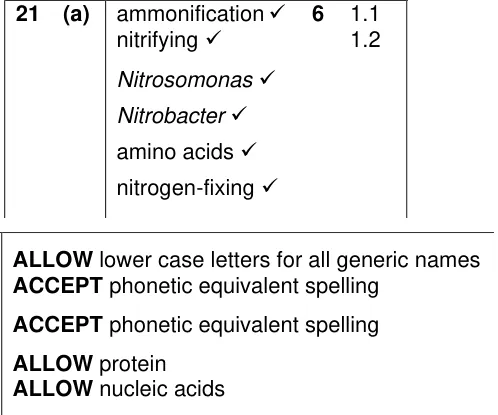
Fill six gaps in a passage about the nitrogen cycle.
Show the mark scheme
Tap an image to open it full size.
From the examiners' report: Learn the genus names exactly: Nitrosomonas makes nitrite and Nitrobacter makes nitrate, while Azotobacter fixes nitrogen. Plants use nitrates to make amino acids and proteins, not ammonia, and "nitrogen-fixating" was not accepted.
Question 4
A level Paper 2 · November 2020 · Q20(a)(i) · 2 marks · Medium
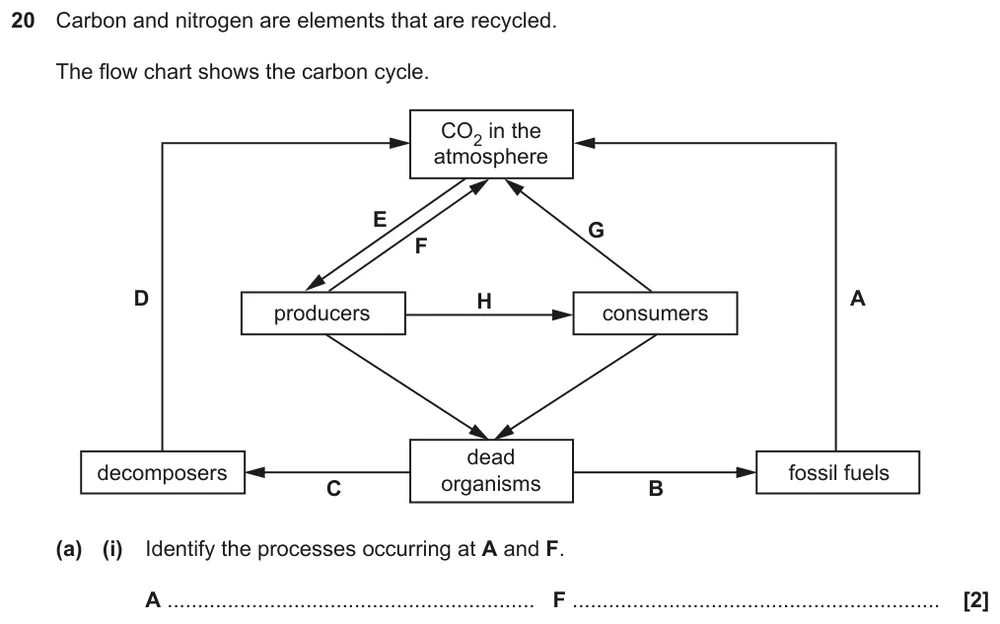
Identify two processes on a carbon cycle flow chart.
Show the mark scheme

Tap an image to open it full size.
Question 5
A level Paper 2 · June 2024 · Q20(b)(iii) · 1 mark · Medium
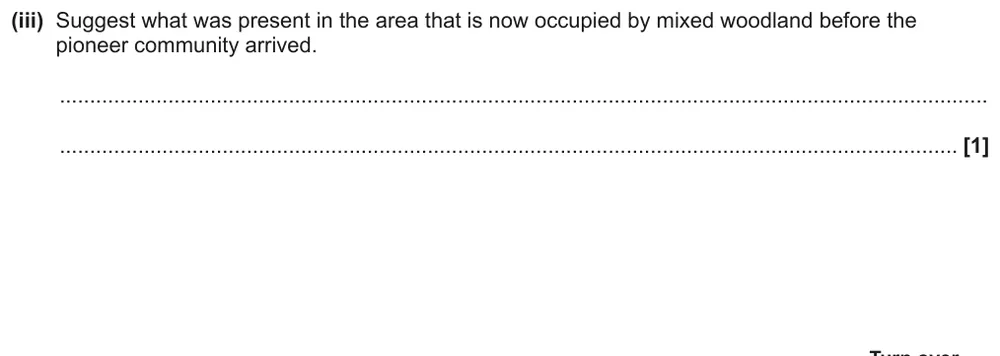
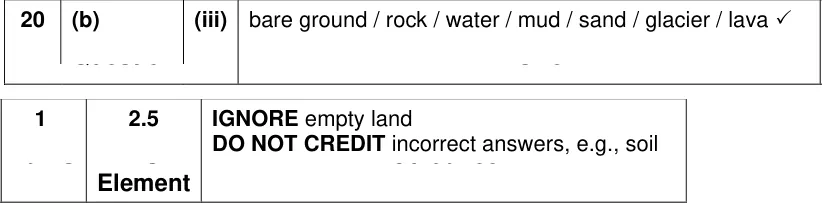
Suggest what was there before the pioneer community arrived.
Show the mark scheme
Tap an image to open it full size.
From the examiners' report: Primary succession starts with no soil at all, so answer bare rock, sand or similar. Soil was marked wrong.
Applying what you know
Question 6
A level Paper 2 · November 2020 · Q21(a)(ii) · 2 marks · Medium
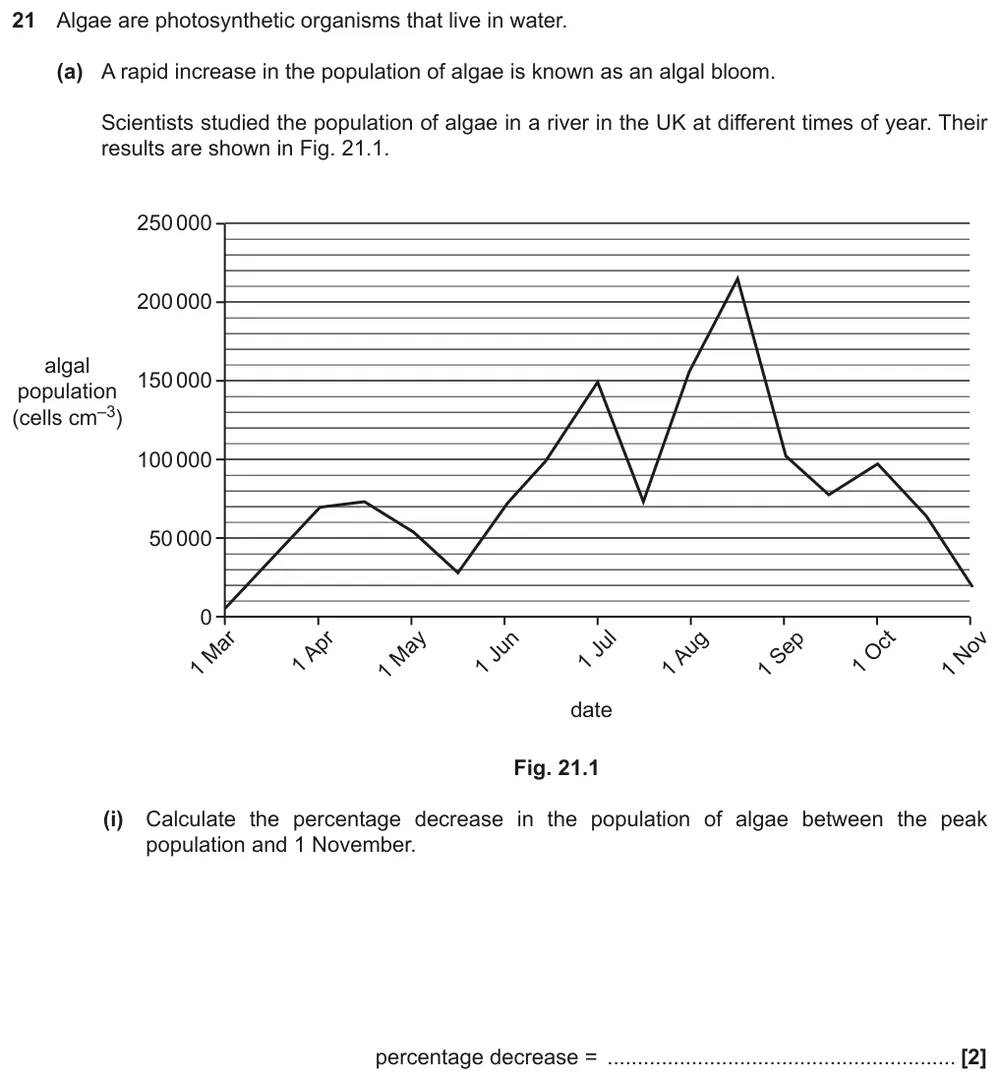
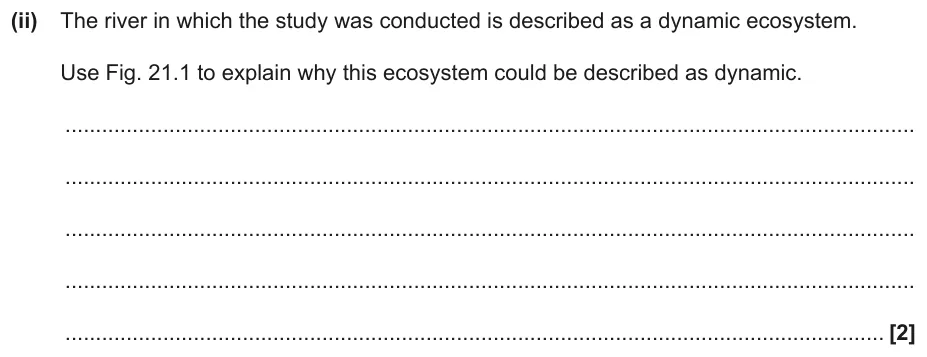
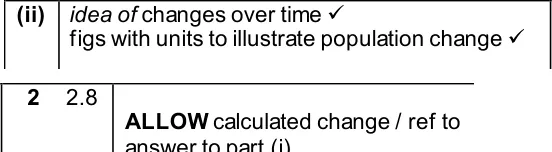
Use a graph of an algal population to explain why a river is a dynamic ecosystem.
Information from earlier in this question:
Show the mark scheme
Tap an image to open it full size.
From the examiners' report: Almost any discussion of change in this context earned a mark. For the second, quote figures with units from the graph.
Question 7
A level Paper 2 · June 2023 · Q21(b) · 2 marks · Medium
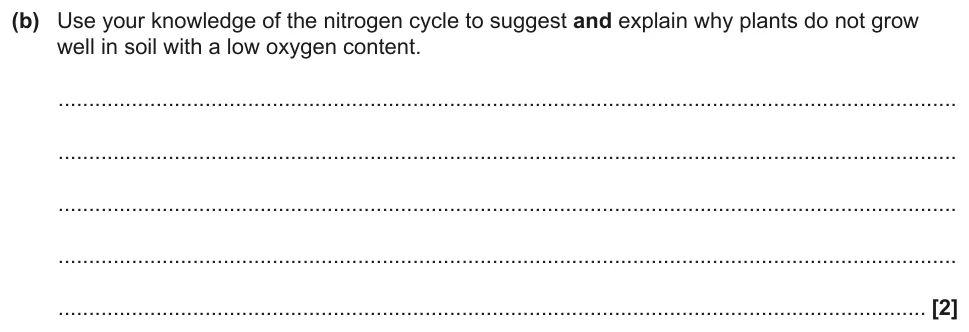
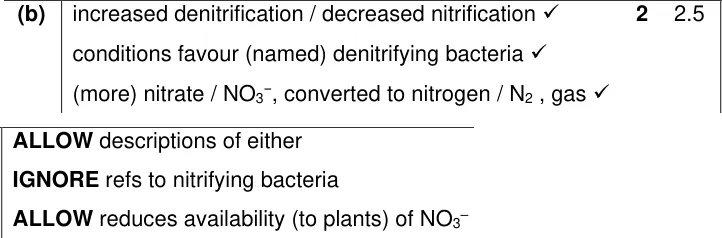
Explain why plants grow poorly in soil with little oxygen.
Show the mark scheme
Tap an image to open it full size.
From the examiners' report: Only about 1 in 10 thought of denitrification, but they usually scored both marks. The question says nitrogen cycle, so don't answer in terms of root respiration or photosynthesis.
Question 8
A level Paper 2 · November 2021 · Q17(a)(i) · 2 marks · Medium
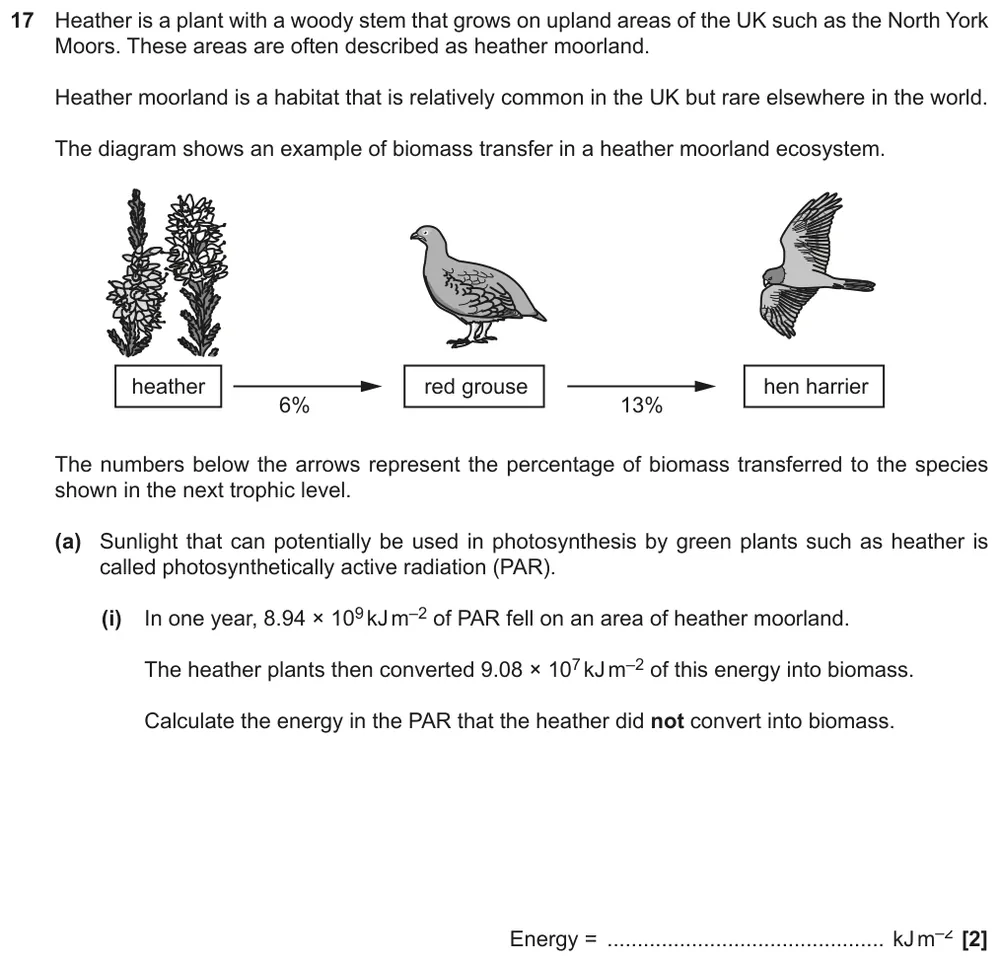
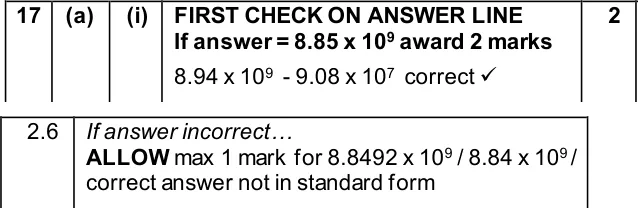
Calculate how much of the light energy falling on heather was not converted into biomass.
Show the mark scheme
Tap an image to open it full size.
From the examiners' report: Most students scored both marks. Subtract with both numbers in the same power of ten and give the answer in standard form.
Question 9
A level Paper 2 · November 2021 · Q17(a)(ii) · 1 mark · Medium
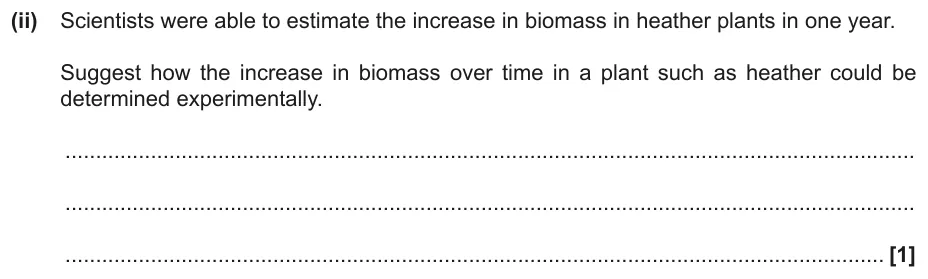
Suggest how to measure the increase in biomass of heather over a year.
Show the mark scheme

Tap an image to open it full size.
Question 10
A level Paper 2 · November 2021 · Q17(a)(iv) · 2 marks · Medium
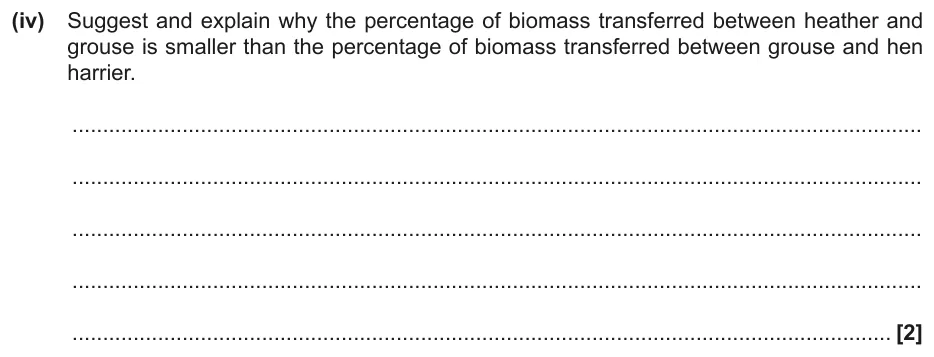
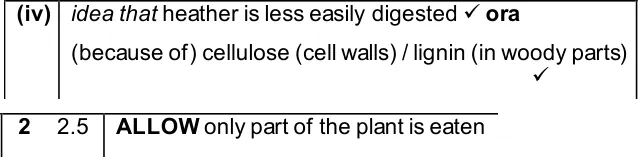
Explain why less biomass passes from heather to grouse than from grouse to hen harrier.
Show the mark scheme
Tap an image to open it full size.
Question 11
A level Paper 2 · November 2021 · Q17(d) · 6 marks · Medium
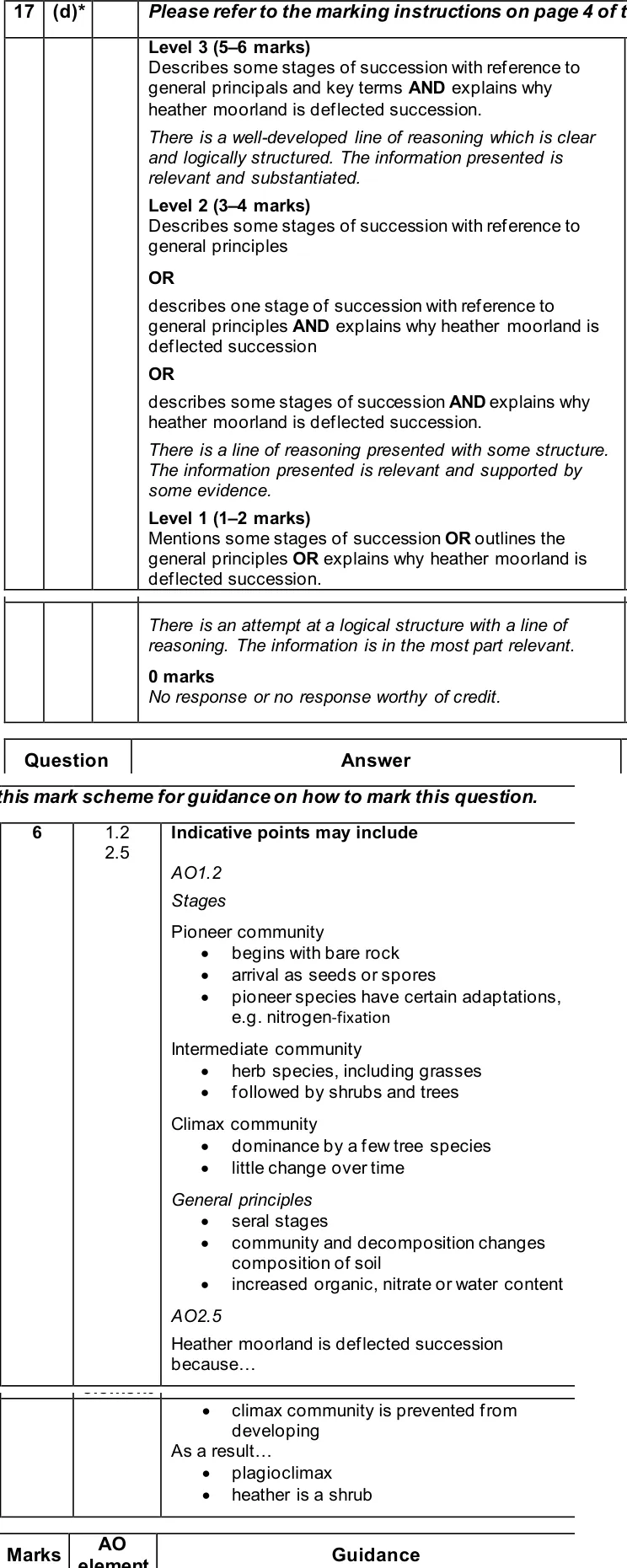
Outline primary succession and explain why heather moorland is deflected succession (6 marks).

Show the mark scheme
Tap an image to open it full size.
From the examiners' report: This was the easier of the paper's two six-mark questions, but Level 3 needs the seral stages in between, not just the pioneer community. Finish by saying what stops the climax community forming on moorland.
Question 12
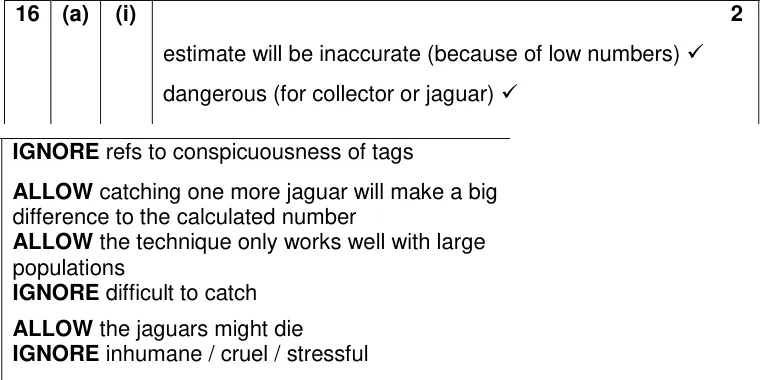
A level Paper 2 · June 2017 · Q16(a)(i) · 2 marks · Medium
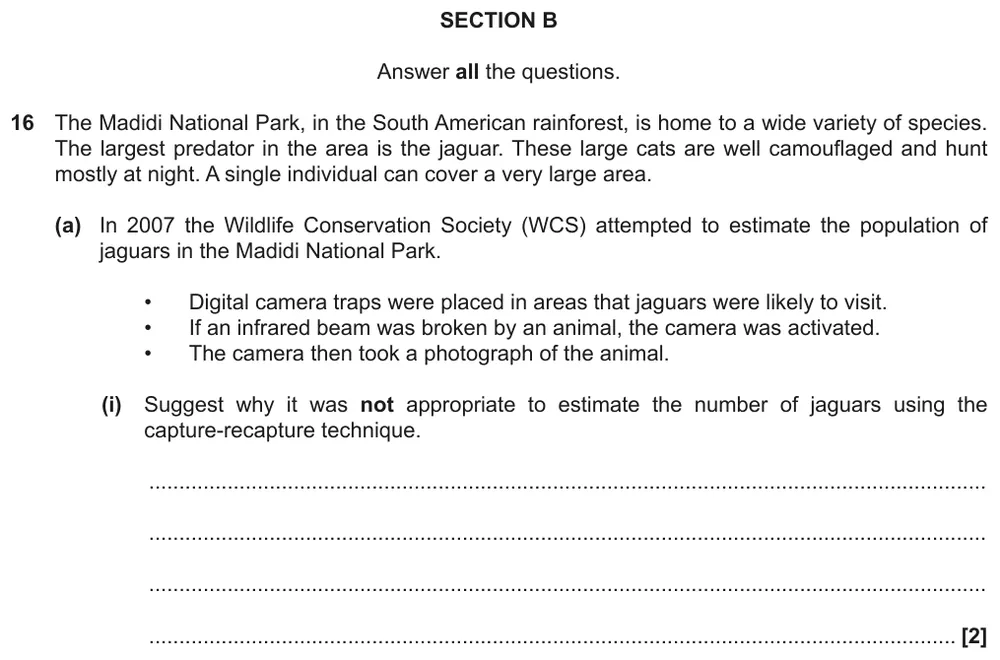
Suggest why capture–mark–recapture is not suitable for counting jaguars.
Show the mark scheme
Tap an image to open it full size.
Question 13
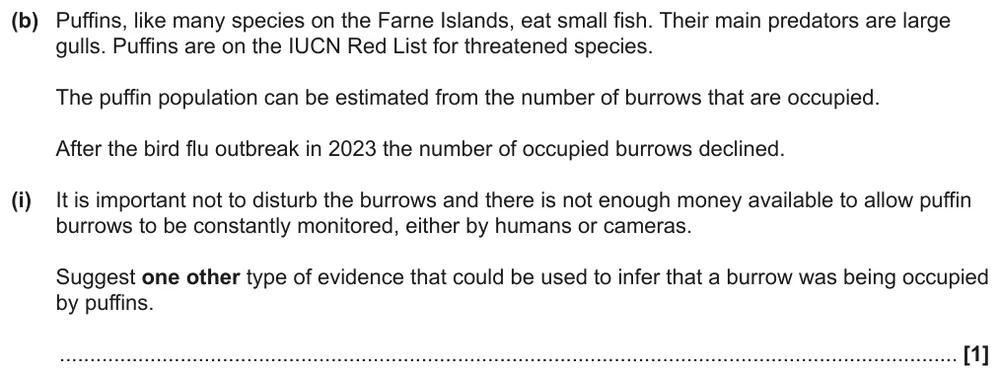
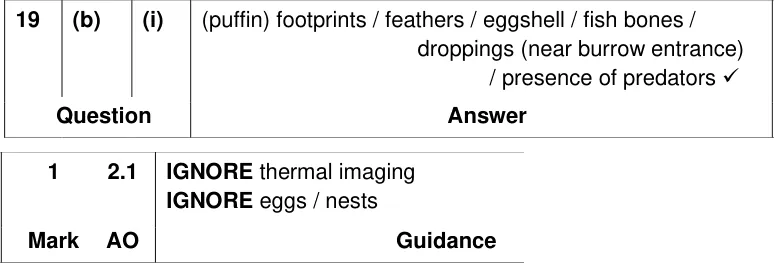
A level Paper 2 · June 2025 · Q19(b)(i) · 1 mark · Medium
Suggest evidence that a puffin burrow is occupied without disturbing it.
Show the mark scheme
Tap an image to open it full size.
From the examiners' report: Use the limits in the stem: you can't look inside the burrow and there's no money for cameras, so give evidence found outside the entrance.
Practical and maths
Question 14
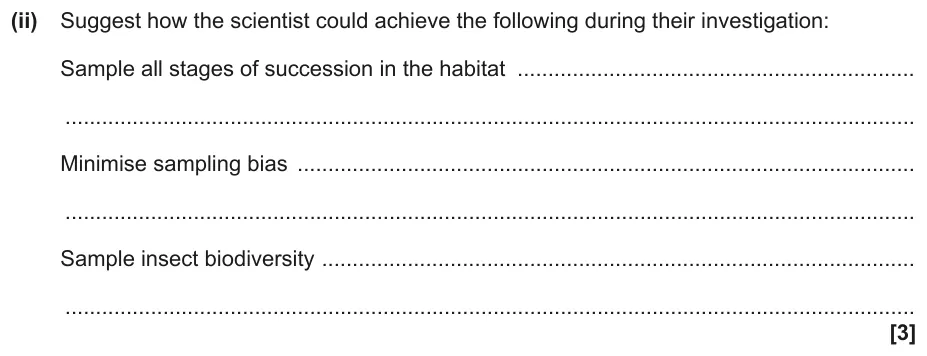
A level Paper 3 · June 2018 · Q5(c)(ii) · 3 marks · Medium
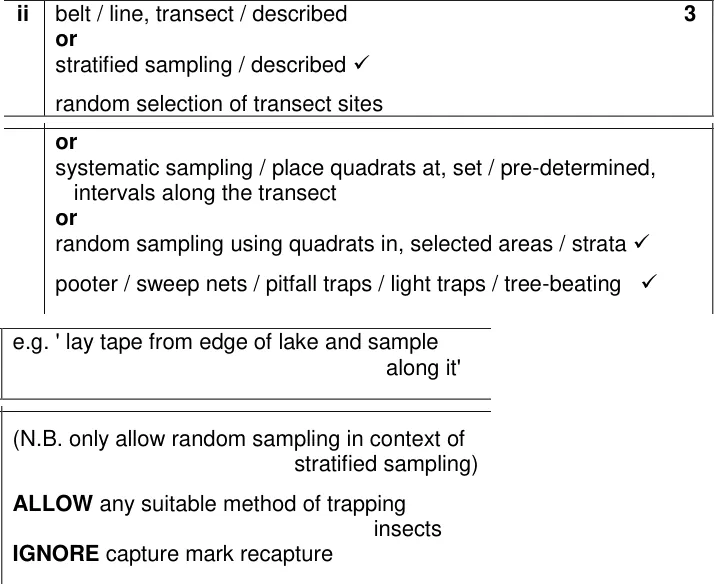
Suggest how to sample every stage of succession, avoid bias and sample insects.
Show the mark scheme
Tap an image to open it full size.
From the examiners' report: Use a transect to cross the stages of succession. If you mention random sampling, say exactly what is chosen at random, such as where the transect starts; random quadrats along a transect contradicts itself.
Question 15
A level Paper 3 · June 2018 · Q5(c)(iii) · 1 mark · Hard
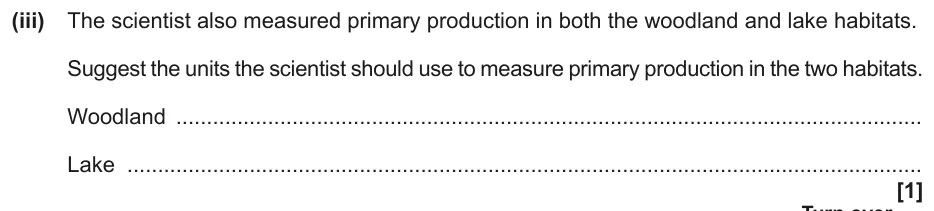
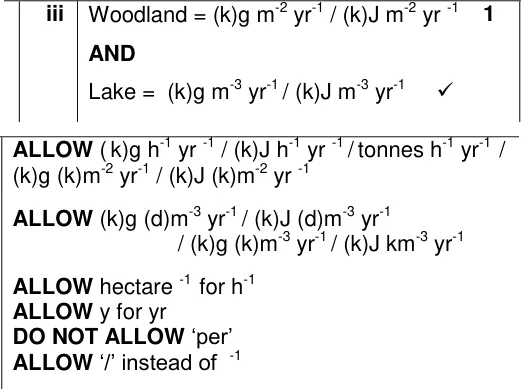
Suggest units for primary production in a woodland and in a lake.
Show the mark scheme
Tap an image to open it full size.
From the examiners' report: Only the strongest students scored this. A productivity unit needs mass or energy, an area for land or a volume for water, and a time.
Question 16
A level Paper 2 · June 2022 · Q20(a)(i) · 1 mark · Medium
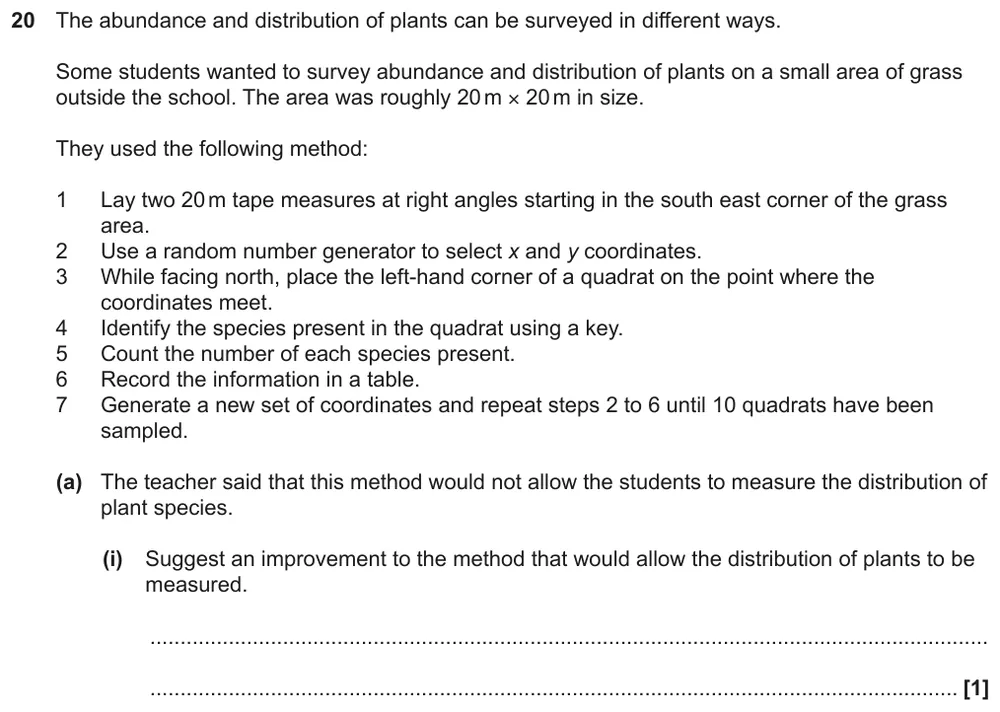
Name a sampling method for studying the distribution of plants.
Show the mark scheme

Tap an image to open it full size.
From the examiners' report: Distribution means how organisms change across an area, so the answer is a transect or systematic sampling. More quadrats or percentage cover don't answer it.
Question 17
A level Paper 3 · June 2017 · Q4(c)(i) · 2 marks · Medium
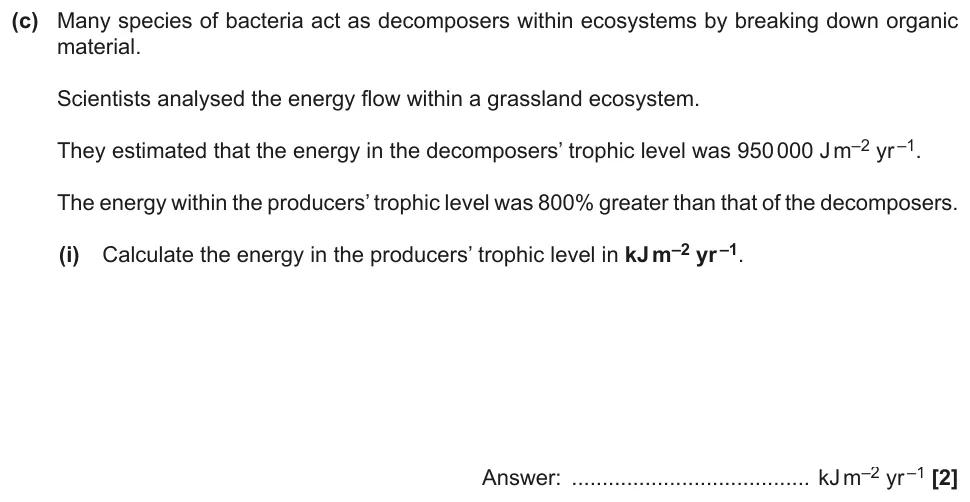
Calculate the energy in the producers' trophic level in kJ.
Show the mark scheme

Tap an image to open it full size.
From the examiners' report: 800% greater means nine times the original, not eight. Then divide by 1000 to give kilojoules, as the answer line asks.
Question 18
A level Paper 3 · June 2017 · Q4(c)(ii) · 1 mark · Medium
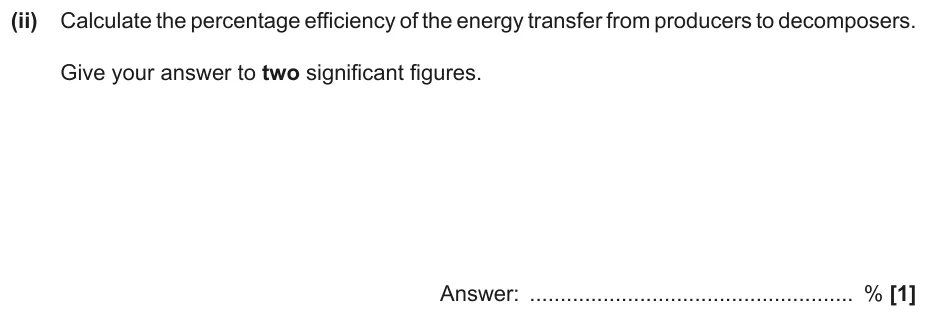
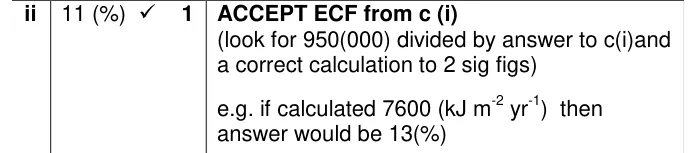
Calculate the percentage efficiency of transfer from producers to decomposers.
Show the mark scheme
Tap an image to open it full size.
From the examiners' report: Most scored this. Those who didn't usually ignored the two significant figures the question asked for.
Question 19
A level Paper 3 · November 2020 · Q5(b)(i) · 2 marks · Hard
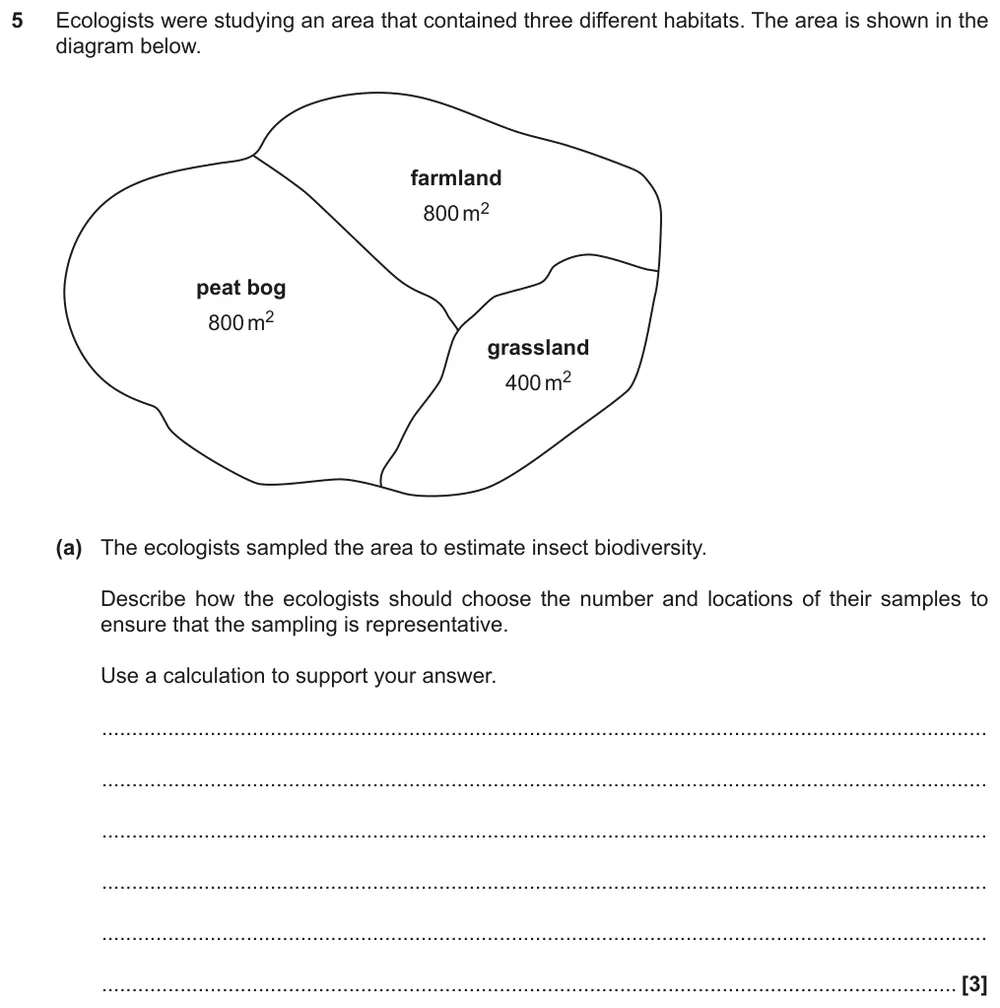
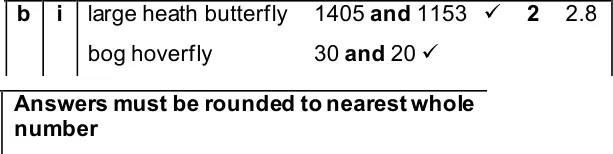
Use the Lincoln and Chapman formulae to estimate two insect populations.
Information from earlier in this question:
Show the mark scheme
Tap an image to open it full size.
From the examiners' report: The calculations were well done. The usual slip was not rounding to whole insects.
Where students lose marks (from OCR examiners' reports and mark schemes)
Each point below is followed by wording that gained marks.
Nitrite carries a minus sign: Many students wrote NO₂⁺ or NH₃⁺, or left the charge off nitrite altogether, and lost the reactant and product marks.
✔ Gains credit: "NH₄⁺ / ammonium ions" → "NO₂⁻ / nitrites" → "NO₃⁻".
Plants build amino acids from nitrate: Some students said plants convert the nitrate they absorb into ammonia or nitrogen.
✔ Gains credit: "amino acids" (protein or nucleic acids also allowed).
Waterlogged soil favours denitrifiers: Asked why plants grow poorly in low-oxygen soil, most students wrote about root respiration or photosynthesis.
✔ Gains credit: "conditions favour denitrifying bacteria; (more) nitrate converted to nitrogen gas".
Producers' energy ends in kilojoules: Some students left the answer as 7 600 000 or 8 550 000 J, when the answer line asked for kJ.
✔ Gains credit: "8550 (kJ m⁻² yr⁻¹)".
Land per square metre, water per cubic metre: Very few students built a productivity unit from mass or energy, area or volume, and time.
✔ Gains credit: "Woodland = kg m⁻² yr⁻¹ AND Lake = kg m⁻³ yr⁻¹".
The end of succession is a climax community: Students answered about the start of succession (pioneer species) or wrote "climax population".
✔ Gains credit: "climax community".
Seral stages earn Level 3: Many six-mark answers described only the pioneer community and jumped straight to the climax.
✔ Gains credit: "Intermediate community: herb species, including grasses, followed by shrubs and trees … climax community is prevented from developing".
Look outside the burrow: Students suggested looking for eggs in the burrow or thermal imaging, ignoring that burrows mustn't be disturbed and money is short.
✔ Gains credit: "(puffin) footprints / feathers / eggshell / fish bones / droppings (near burrow entrance)".
Download the questions
Download the PDF pack (19 questions, mark schemes at the end)
Keep practising
- Ecosystems and Populations quiz
- Ecosystems: interactive written questions (20)
- Populations and Sustainability (6.3.2): OCR A Level Biology exam questions by topic
- PAG 3 Sampling Techniques: OCR A Level Biology exam questions by topic
- Biodiversity (4.2.1): OCR A Level Biology exam questions by topic
- OCR A Level Biology masterclasses
Questions, mark schemes and examiners' report extracts © OCR.