

OCR A PAG 3 · 16 questions · mark schemes and examiners’ tips included
PAG 3 is sampling in the field: quadrats placed at random coordinates, transects across a change in habitat, sweep nets, pitfall traps and pooters for animals, and quick abundance scales like ACFOR. You need to know which method suits which question, and how to make it fair.
The examiners say the same thing in almost every report: students who haven't done much fieldwork struggle. The marks go on precise words. Random sampling needs two tape measures and random coordinates; a transect is systematic, not random; distribution needs a transect; and valid results come from controlling variables such as the number of sweeps or the time of day, not from repeating everything. Field questions also want field variables, like the size of the tree or the slope of the ground, rather than the temperature of a water bath.
Work through the sixteen questions below in order. They start with random and stratified sampling, then transects, sampling animals, abundance scales, controlling variables, and finish with a Simpson's Index calculation. If you'd like to go through questions like these with me each week, my OCR A masterclasses run on Wednesdays at 5.15pm for Year 12 and on Tuesdays at 6.30pm or Thursdays at 5.15pm for Year 13.
Want help with this topic? It comes up in my weekly OCR A masterclasses. See the timetable →
What you need from GCSE
Each question on this page assumes you're secure on these GCSE ideas. If any of them feels shaky, look it up before you start.
- Use a quadrat to count organisms or estimate percentage cover.
- Place quadrats at random using coordinates from a random number generator, to avoid bias.
- Use a transect to see how the distribution of organisms changes across a habitat.
- Estimated population = mean number per quadrat × (total area ÷ quadrat area).
- Take enough samples to give a representative mean.
Key terms
These words come up in the questions and mark schemes. Examiners expect you to use them exactly.
- Random sampling: choosing sample positions so that every position has an equal chance of being picked, which avoids bias.
- Systematic sampling: taking samples at regular intervals, for example every 2 m along a transect.
- Stratified sampling: dividing a habitat into areas and sampling each area in proportion to its size.
- Opportunistic sampling: sampling where it's easiest; quick, but likely to be biased.
- Belt transect and line transect: quadrats placed at intervals along a line; or recording only what touches the line.
- Pitfall trap: a container sunk into the ground, level with the surface, to catch ground-living invertebrates.
- Sweep net and kick sampling: a net swept through vegetation; or disturbing a river bed so that animals wash into a net held downstream.
- ACFOR scale: a quick estimate of abundance on the scale Abundant, Common, Frequent, Occasional, Rare. It is subjective.
- Abundance and distribution: how many individuals there are; and where they are found in the habitat.
- Valid: the method measures what it is meant to measure, with other variables controlled.
What these questions cover (OCR PAG 3: sampling techniques)
PAG 3 is one of the twelve practical activity groups in the OCR A Level Biology A specification (H420). The questions test these parts of the specification:
- 1.2.2(k) use of sampling techniques in fieldwork
- 4.2.1(b)(i) how sampling is used in measuring the biodiversity of a habitat and the importance of sampling (random and non-random (opportunistic, stratified and systematic) sampling, with quadrats, sweep nets, pitfall traps and pooters)
- 4.2.1(b)(ii) practical investigations collecting random and non-random samples in the field
- 6.3.1(e)(ii) the use of sampling and recording methods to determine the distribution and abundance of organisms in a variety of ecosystems
- 1.1.1(b) identification of variables that must be controlled, where appropriate
- 4.2.1(d) the use and interpretation of Simpson’s Index of Diversity
How to use this page
Write your answer on paper before you open the mark scheme. Allow about 1.2 minutes per mark: the 16 questions are worth 34 marks, so about 41 minutes in total. Then mark your answer strictly against the mark scheme and read the examiners' tip underneath it. If you'd rather print the questions, download the PDF pack.
Random and stratified sampling with quadrats
Question 1
AS Paper 2 · June 2018 · Q6(a)(ii) · 1 mark · Medium
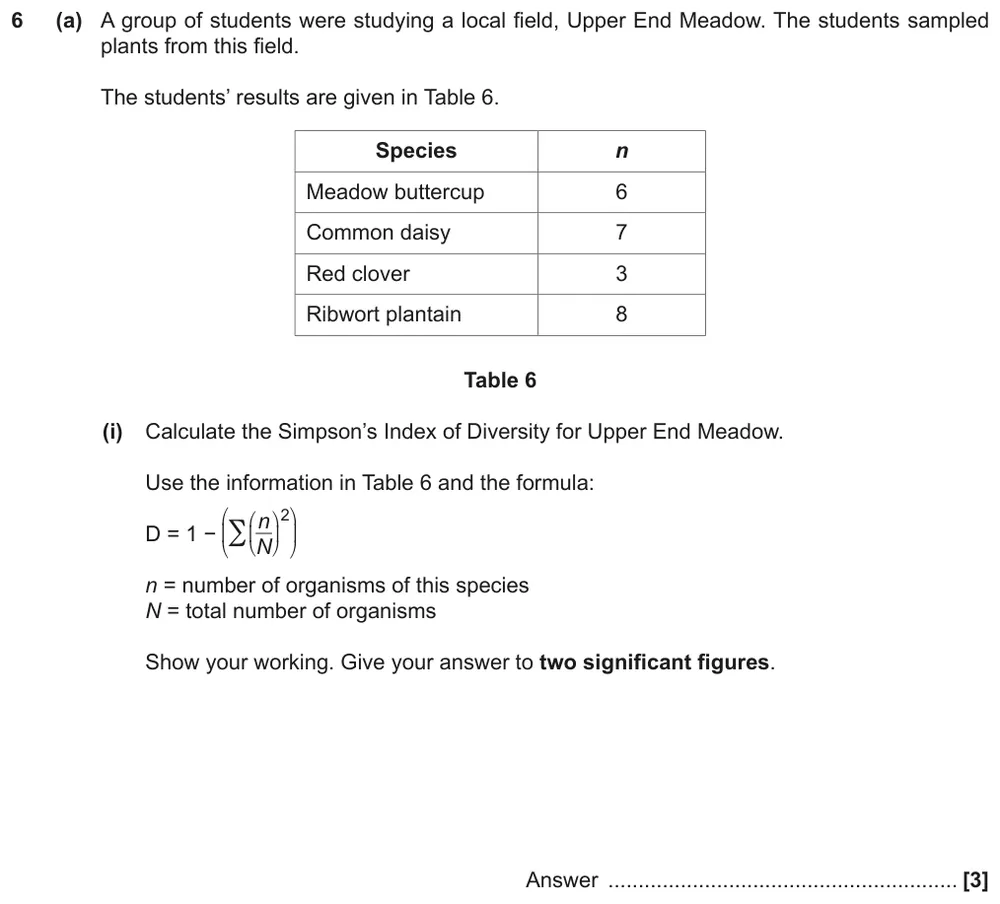
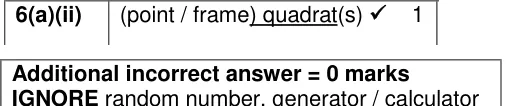
Name a piece of equipment for randomly sampling the plants in a meadow.
Information from earlier in this question:

Show the mark scheme
Tap an image to open it full size.
From the examiners' report: Most students named a quadrat. Spell it correctly: 'quadrant' was not accepted, and a random number generator doesn't count as the equipment.
Question 2
A level Paper 3 · June 2024 · Q2(a) · 4 marks · Medium
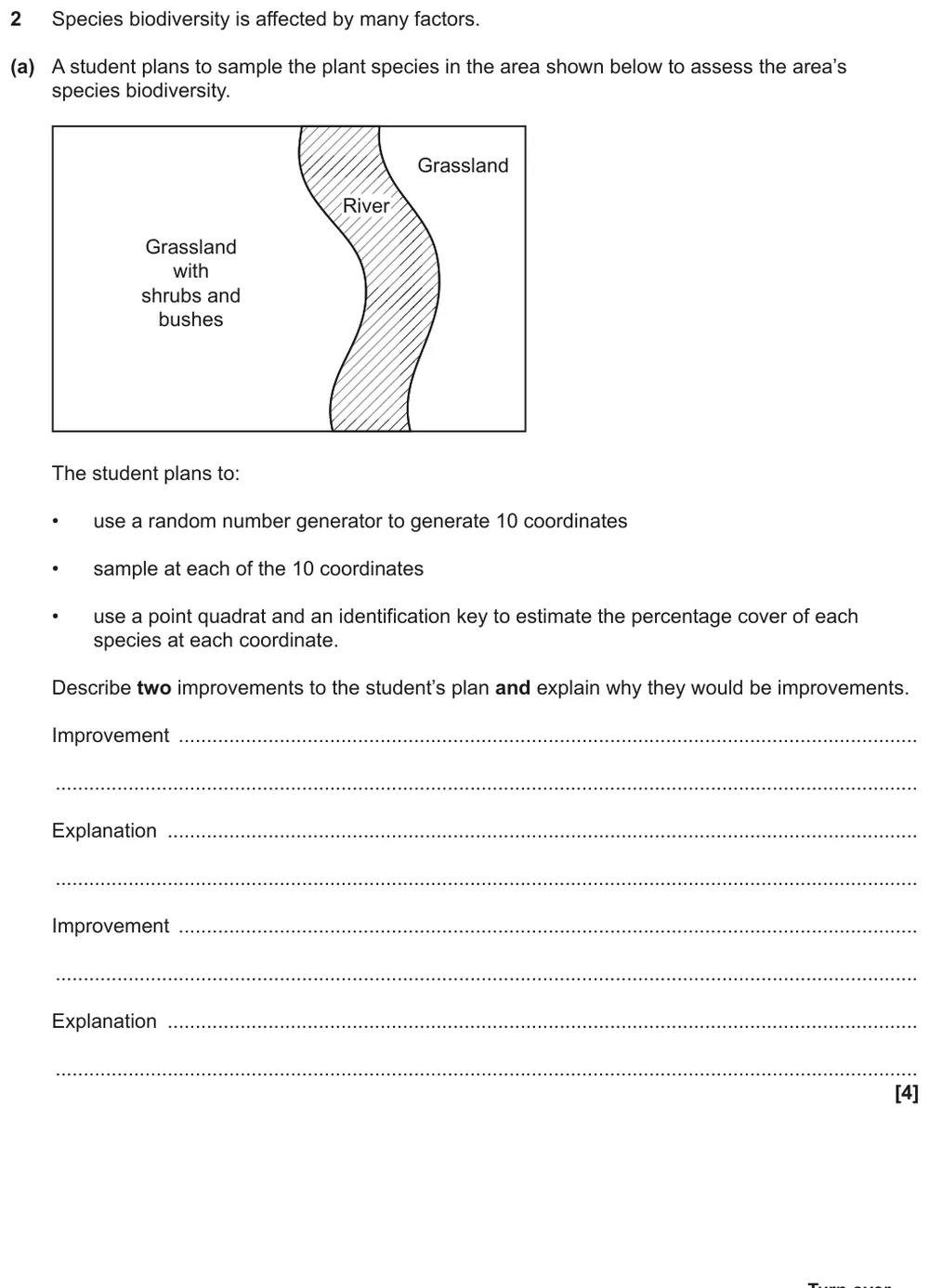
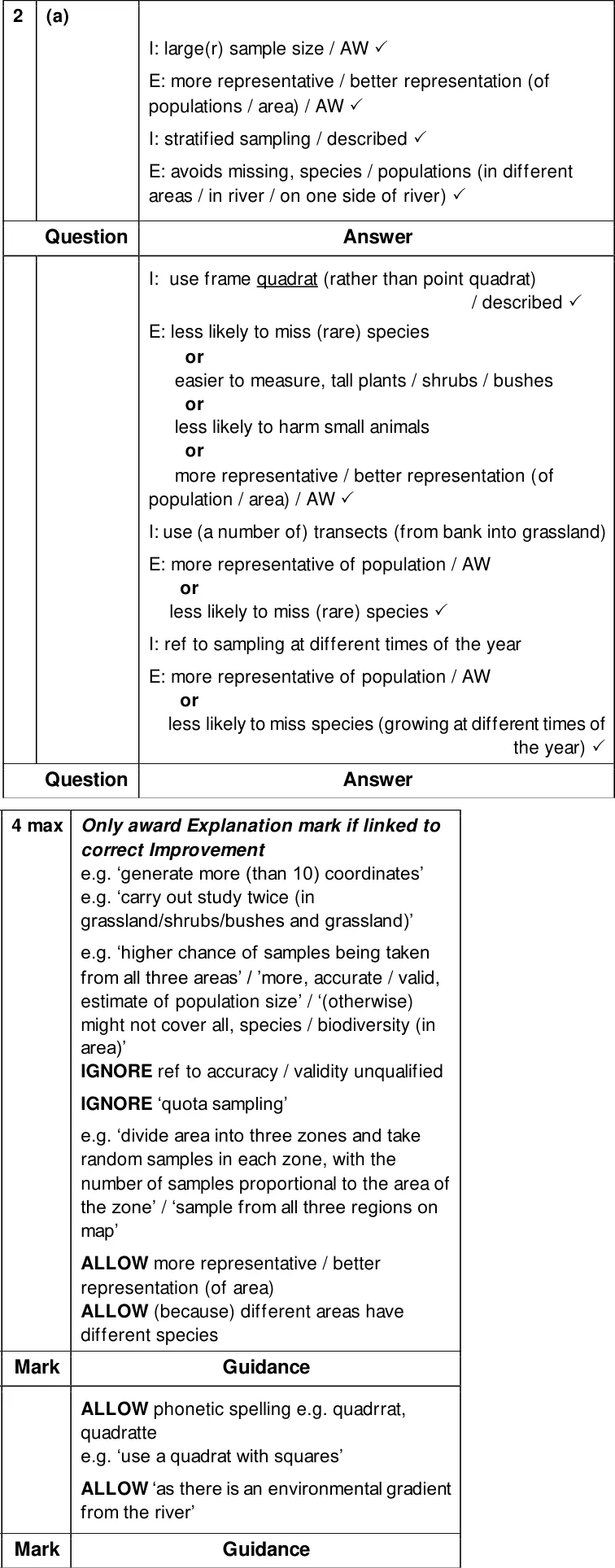
Describe and explain two improvements to a plan to sample plants either side of a river.
Show the mark scheme
Tap an image to open it full size.
From the examiners' report: Larger samples and stratified sampling both scored. Explain each in terms of representing the area or not missing species: 'more accurate' or 'more data' was too vague, and one transect was less representative.
Question 3
A level Paper 2 · June 2022 · Q20(a)(i) · 1 mark · Medium
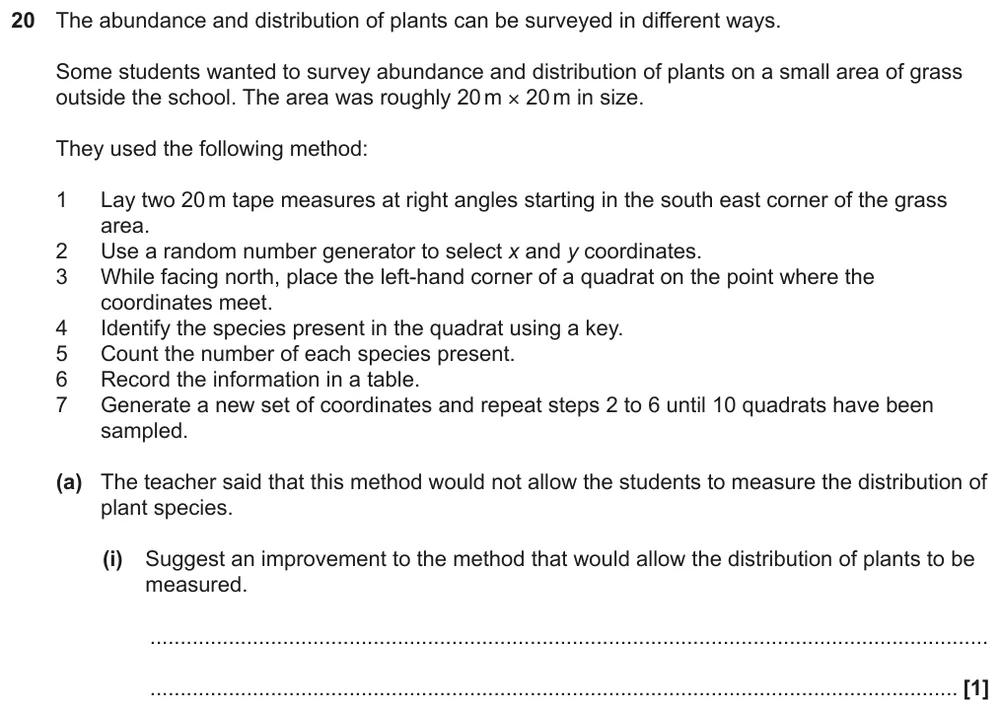
Suggest how to change a random quadrat method so it measures the distribution of plants.
Show the mark scheme

Tap an image to open it full size.
From the examiners' report: Around half spotted that distribution needs a transect or systematic sampling. More quadrats, point quadrats or percentage cover didn't answer the question.
Question 4
A level Paper 2 · June 2022 · Q20(a)(ii) · 2 marks · Hard
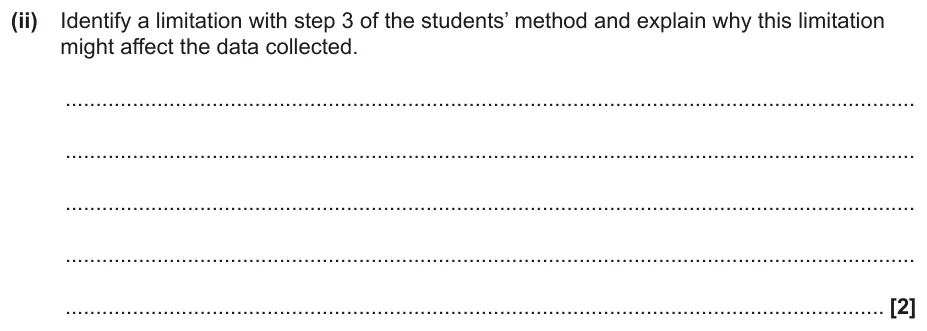
Identify a limitation with placing a quadrat at random coordinates and explain its effect.
Show the mark scheme

Tap an image to open it full size.
From the examiners' report: Many spotted that the method doesn't say which corner goes on the point. Fewer gave the usual limitation: it is hard to judge where the coordinates meet when you are standing away from the tape measures.
Transects and systematic sampling
Question 5
AS Paper 2 · June 2024 · Q1(a)(i) · 1 mark · Medium
Name the type of sampling used along a transect line.

Show the mark scheme

Tap an image to open it full size.
From the examiners' report: Random was the most common wrong answer, and stratified was also wrong. Name the method, not the equipment such as quadrats.
Question 6
A level Paper 3 · June 2018 · Q5(c)(ii) · 3 marks · Medium
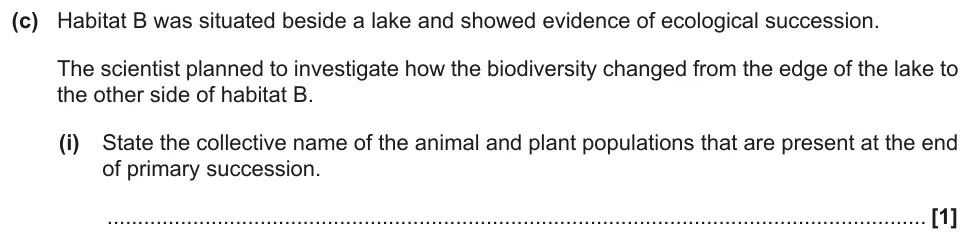
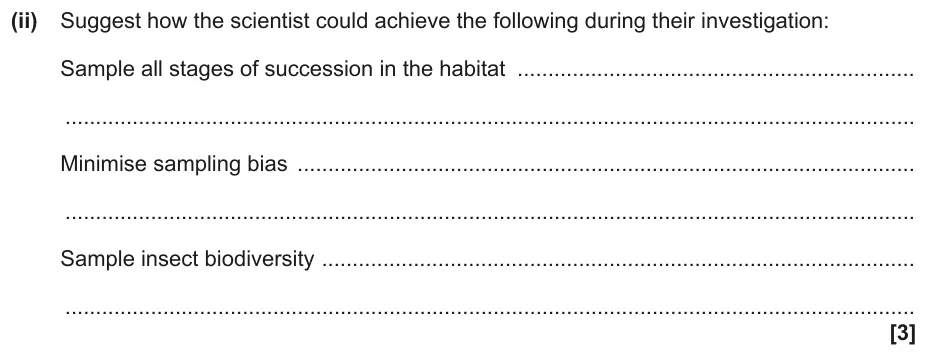
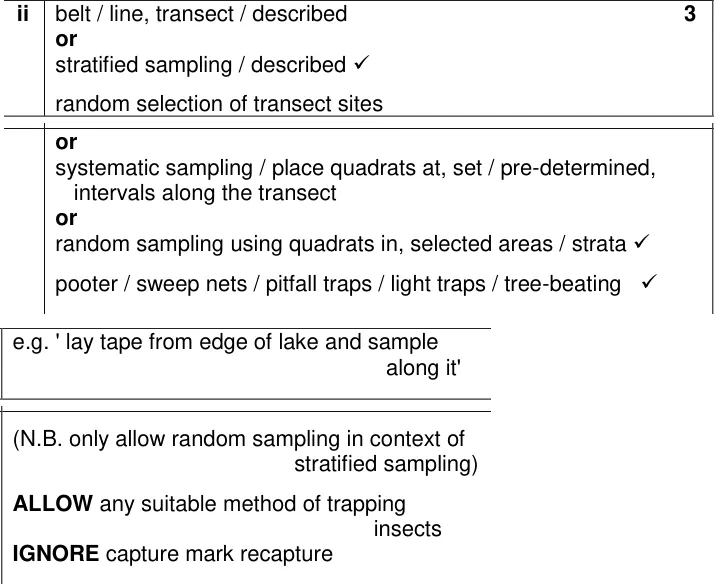
Suggest how to sample every stage of succession, minimise bias and sample insects beside a lake.
Information from earlier in this question:
Show the mark scheme
Tap an image to open it full size.
From the examiners' report: Most knew a transect and insect traps. The bias mark was often lost by saying 'random sampling' without saying where; random sampling along a transect contradicts itself.
Sampling animals
Question 7
AS Paper 2 · November 2021 · Q5(a)(i) · 3 marks · Medium
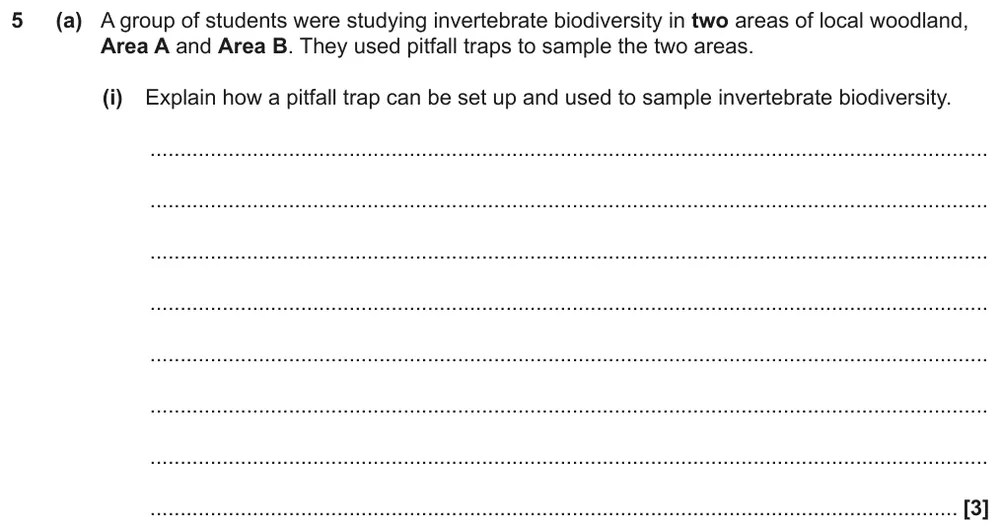
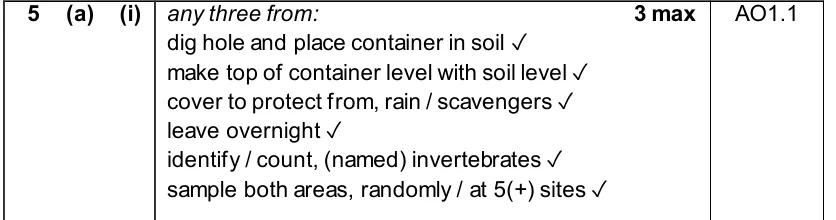
Explain how to set up and use a pitfall trap to sample invertebrates in woodland.
Show the mark scheme
Tap an image to open it full size.
From the examiners' report: There is no examiners' comment for this part. Give practical detail: the rim level with the soil, a cover against rain and predators, left overnight, then identify and count.
Question 8
AS Paper 2 · June 2024 · Q1(b) · 1 mark · Medium
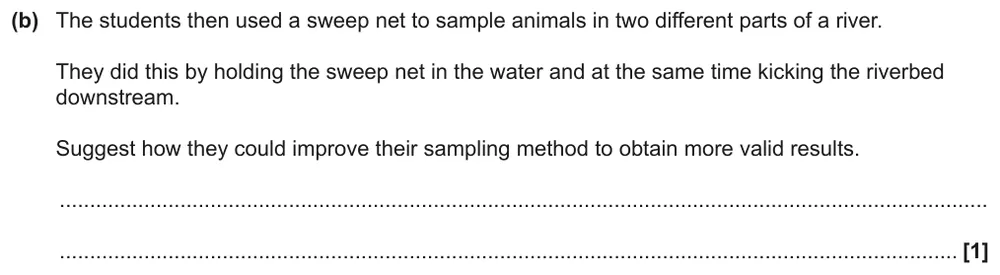
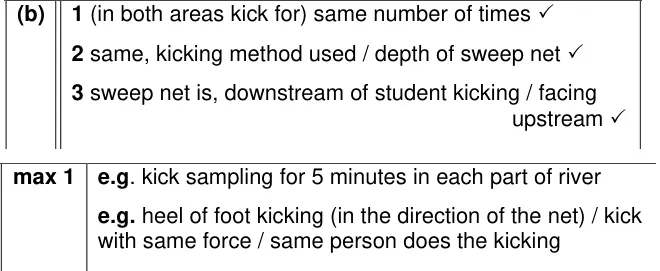
Suggest how to make kick sampling with a sweep net in a river more valid.
Show the mark scheme
Tap an image to open it full size.
From the examiners' report: Many suggested repeats, which is about reliability, or a different method. Validity means controlling variables, such as kicking for the same time in each part of the river.
Question 9
A level Paper 2 · June 2025 · Q18(c)(iii) · 2 marks · Medium
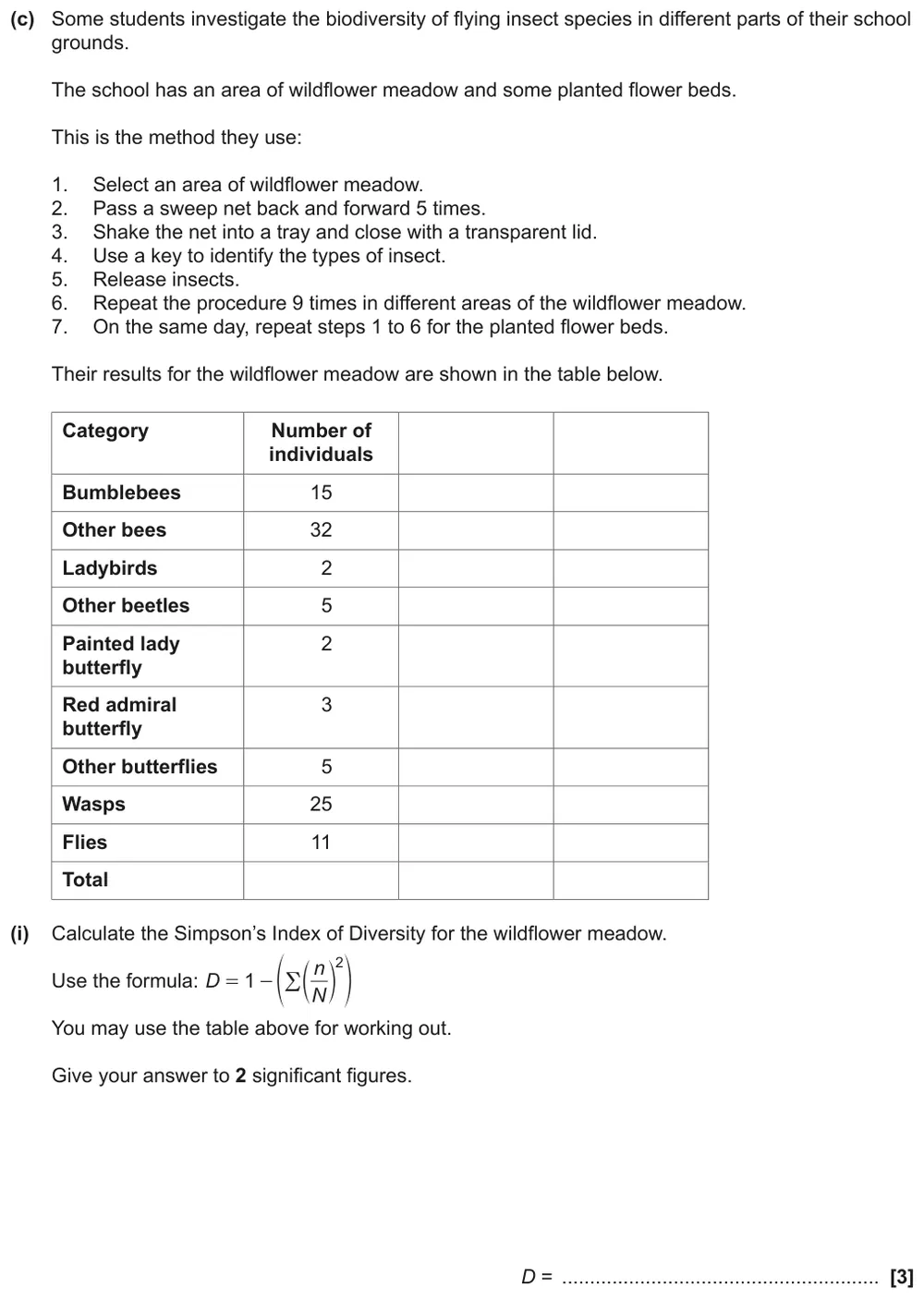
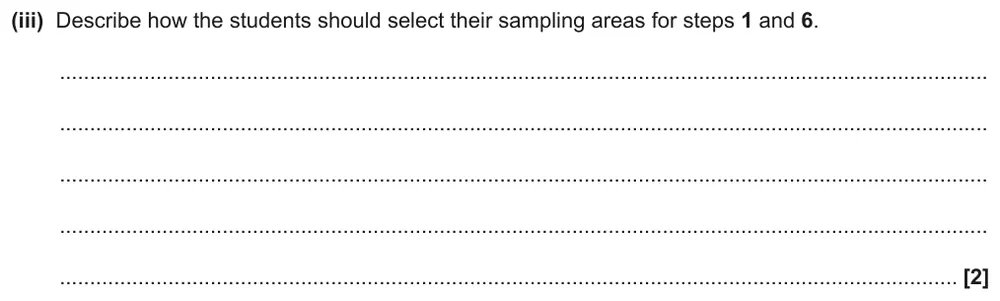
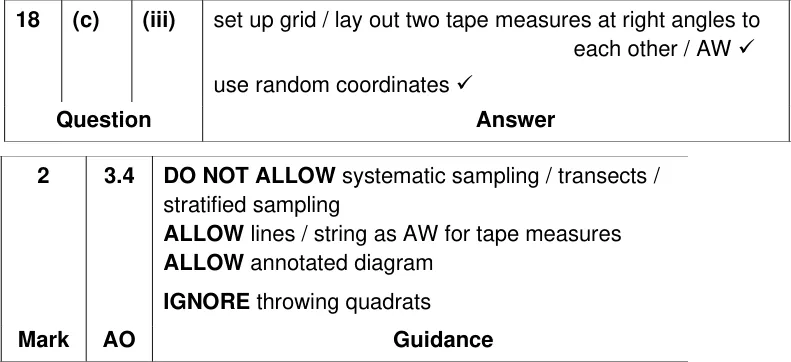
Describe how students should select sampling areas in a meadow at random.
Information from earlier in this question:
Show the mark scheme
Tap an image to open it full size.
From the examiners' report: Most students got at least one mark. The stem already says random sampling, so any mention of systematic or stratified sampling lost the grid mark.
Question 10
A level Paper 2 · June 2025 · Q18(c)(iv) · 4 marks · Medium
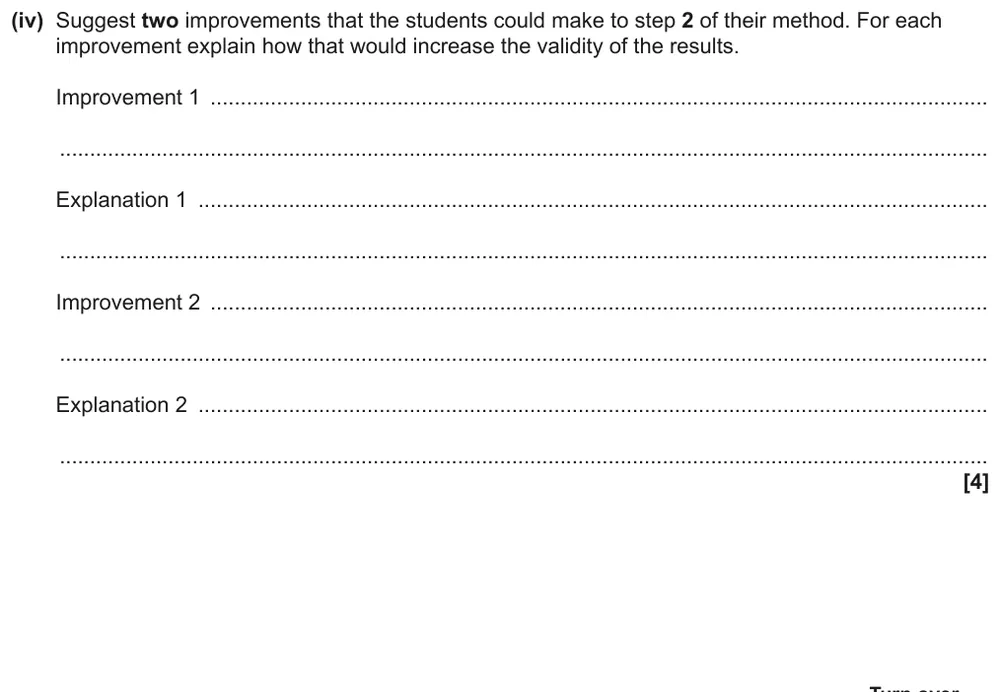
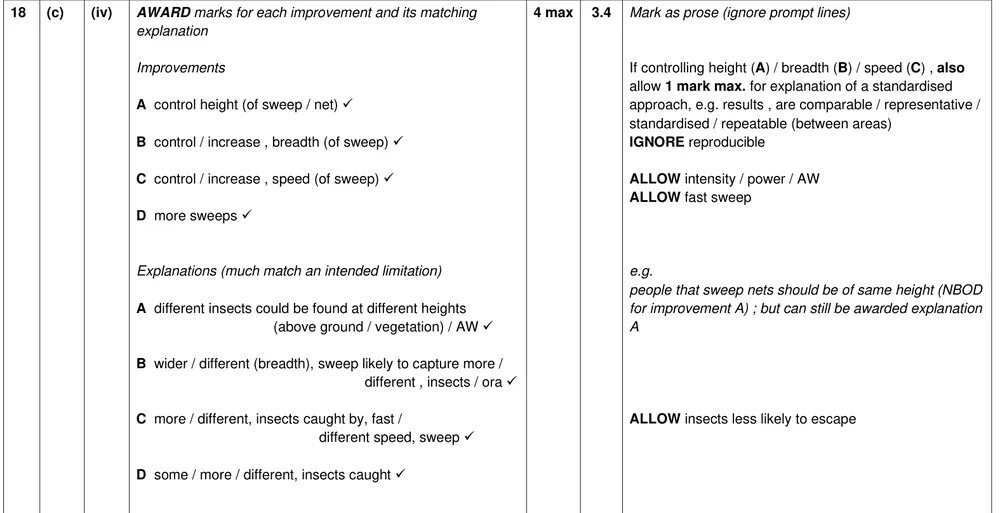
Suggest two improvements to a sweep-net step and explain how each makes the results more valid.
Show the mark scheme
Tap an image to open it full size.
From the examiners' report: Many students scored nothing. Standardise the sweep itself (its height, width and speed, or the number of sweeps) and explain how each changes which insects are caught.
Question 11
A level Paper 2 · June 2025 · Q18(c)(v) · 2 marks · Easy
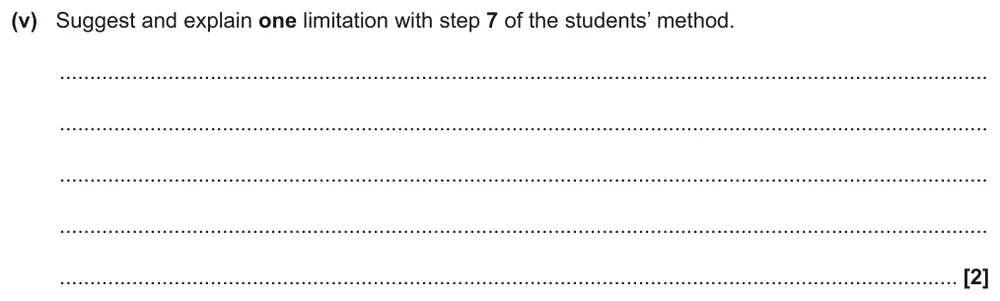
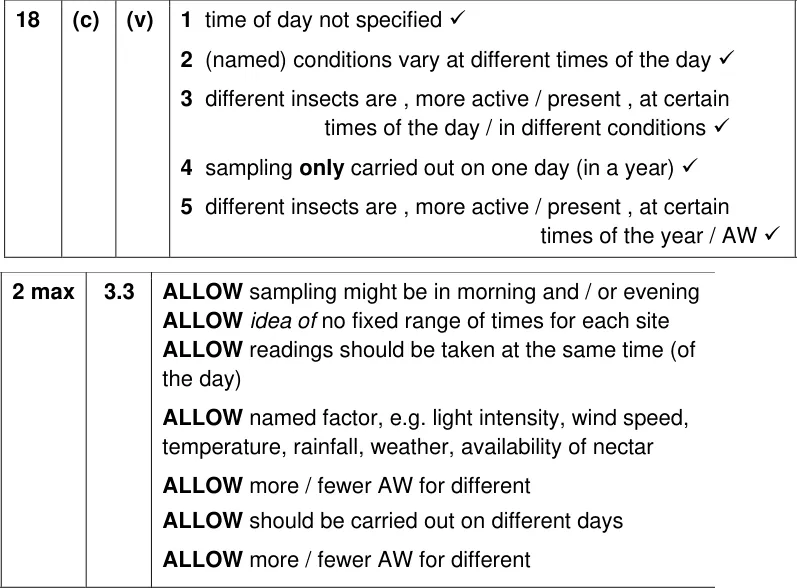
Suggest and explain one limitation of sampling the flower beds on the same day.
Show the mark scheme
Tap an image to open it full size.
From the examiners' report: Generally well answered. Two marks came easily for naming the time of day or season and explaining that different insects are active at different times.
Abundance scales: ACFOR
Question 12
A level Paper 2 · June 2022 · Q20(c)(i) · 1 mark · Medium
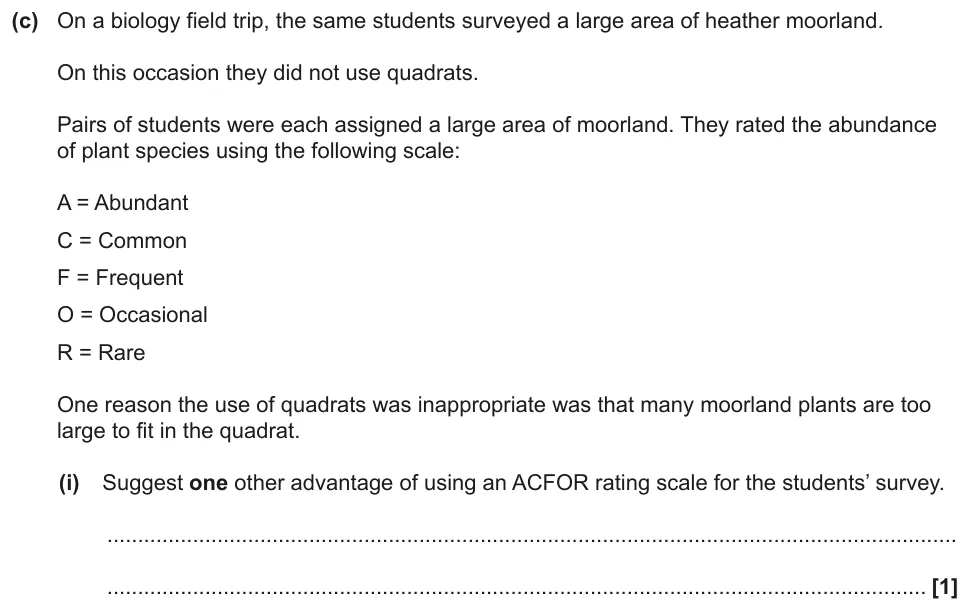
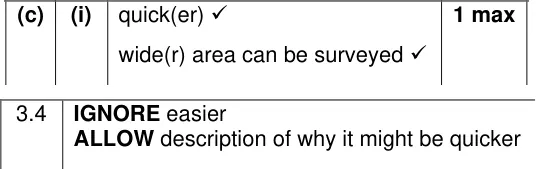
Suggest one advantage of an ACFOR scale for surveying a large area of moorland.
Show the mark scheme
Tap an image to open it full size.
From the examiners' report: About half said ACFOR is quicker. Fewer said it lets you survey a wider area. 'Easier' doesn't score.
Question 13
A level Paper 2 · June 2022 · Q20(c)(ii) · 1 mark · Hard
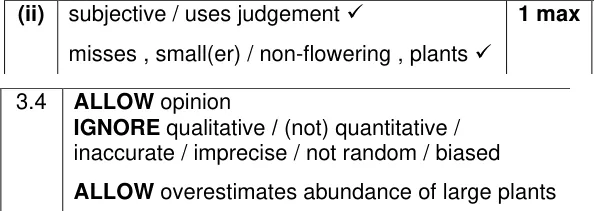
Suggest one limitation of using an ACFOR scale instead of quadrats.

Show the mark scheme
Tap an image to open it full size.
From the examiners' report: About half said ACFOR is subjective. Not being able to calculate Simpson's Index or do a statistical test wasn't credited. Small or non-flowering plants are easily missed.
Controlling variables in the field
Question 14
AS Paper 1 · June 2018 · Q25(d)(ii) · 3 marks · Hard
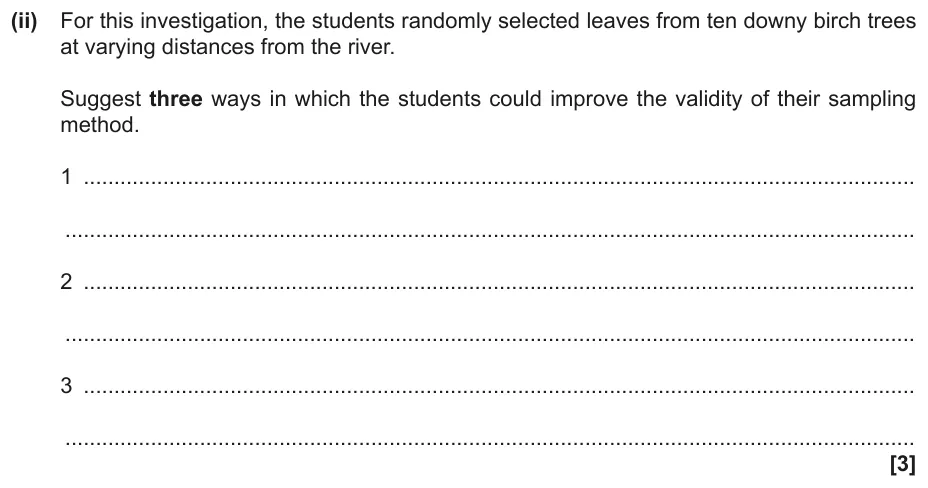
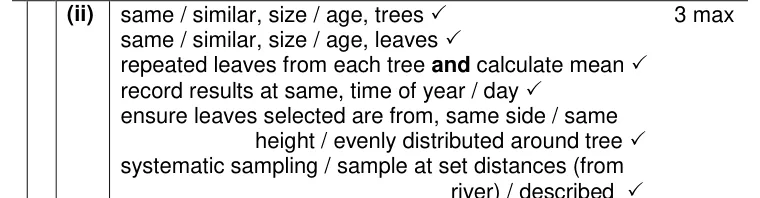
Suggest three ways to make sampling leaves from birch trees at different distances from a river more valid.
Show the mark scheme
Tap an image to open it full size.
From the examiners' report: Many students didn't know what validity means and suggested repeats. Validity means controlling variables, so list things to keep the same: tree age, leaf size, height on the tree.
Question 15
A level Paper 2 · June 2024 · Q20(a)(iii) · 2 marks · Hard
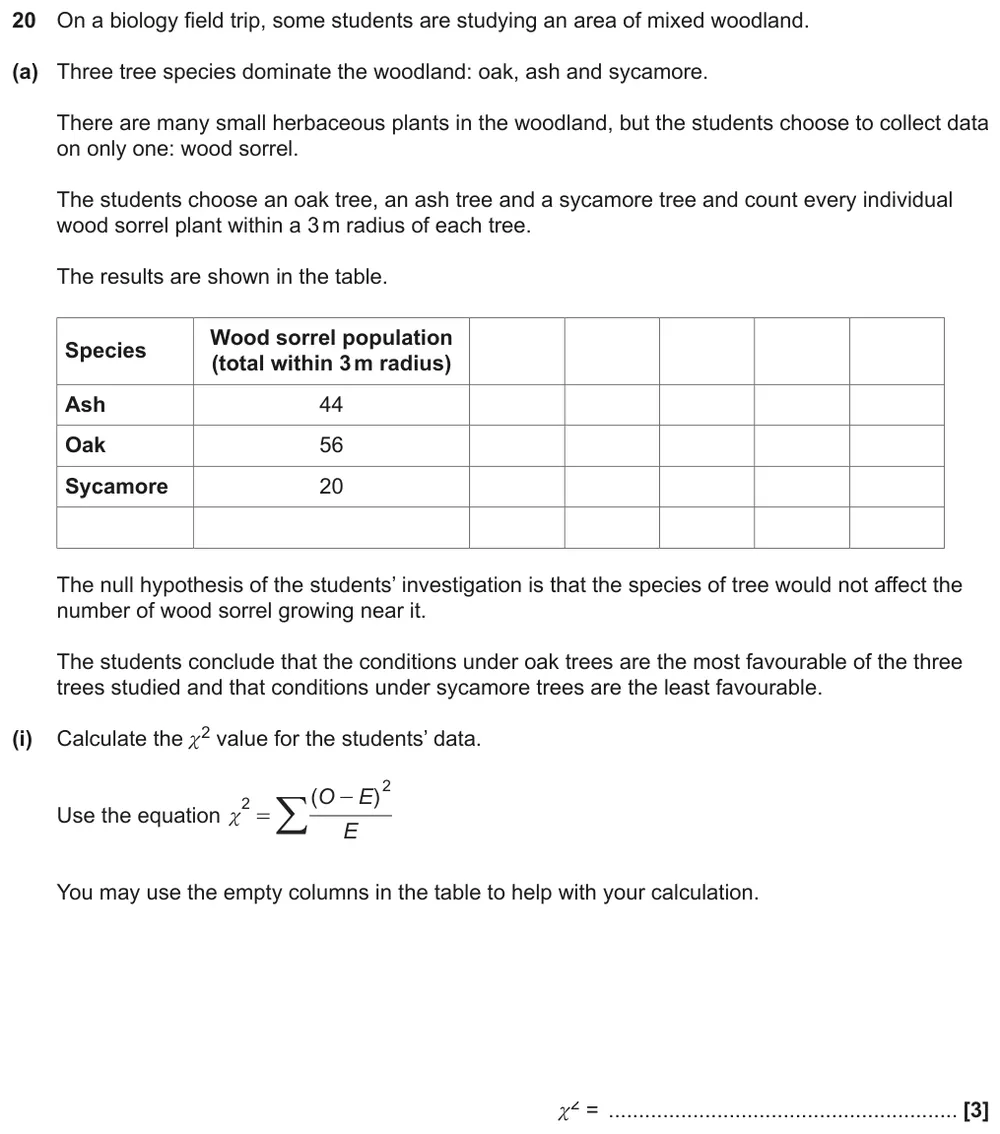
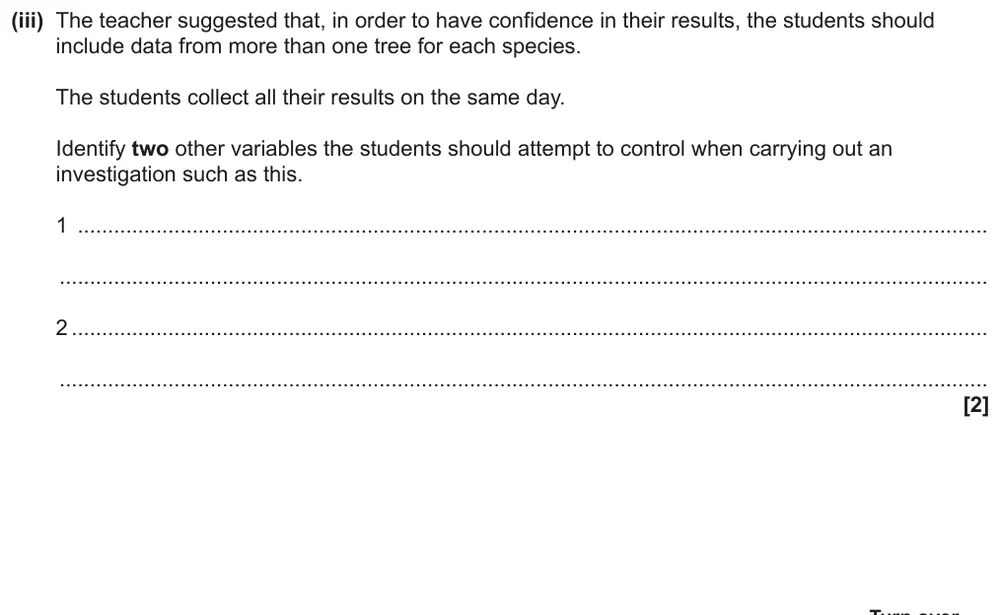
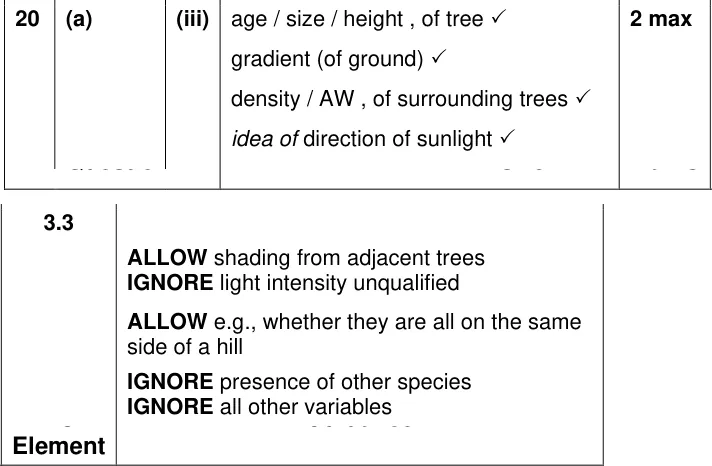
Identify two variables to control when counting wood sorrel under different tree species.
Information from earlier in this question:
Show the mark scheme
Tap an image to open it full size.
From the examiners' report: Very few got both marks because lab-style variables don't fit here. Think about the site: tree size or age, the slope of the ground, and shading from nearby trees. Time of day wouldn't change the number of plants.
From samples to diversity
Question 16
A level Paper 2 · June 2019 · Q18(c)(i) · 3 marks · Easy
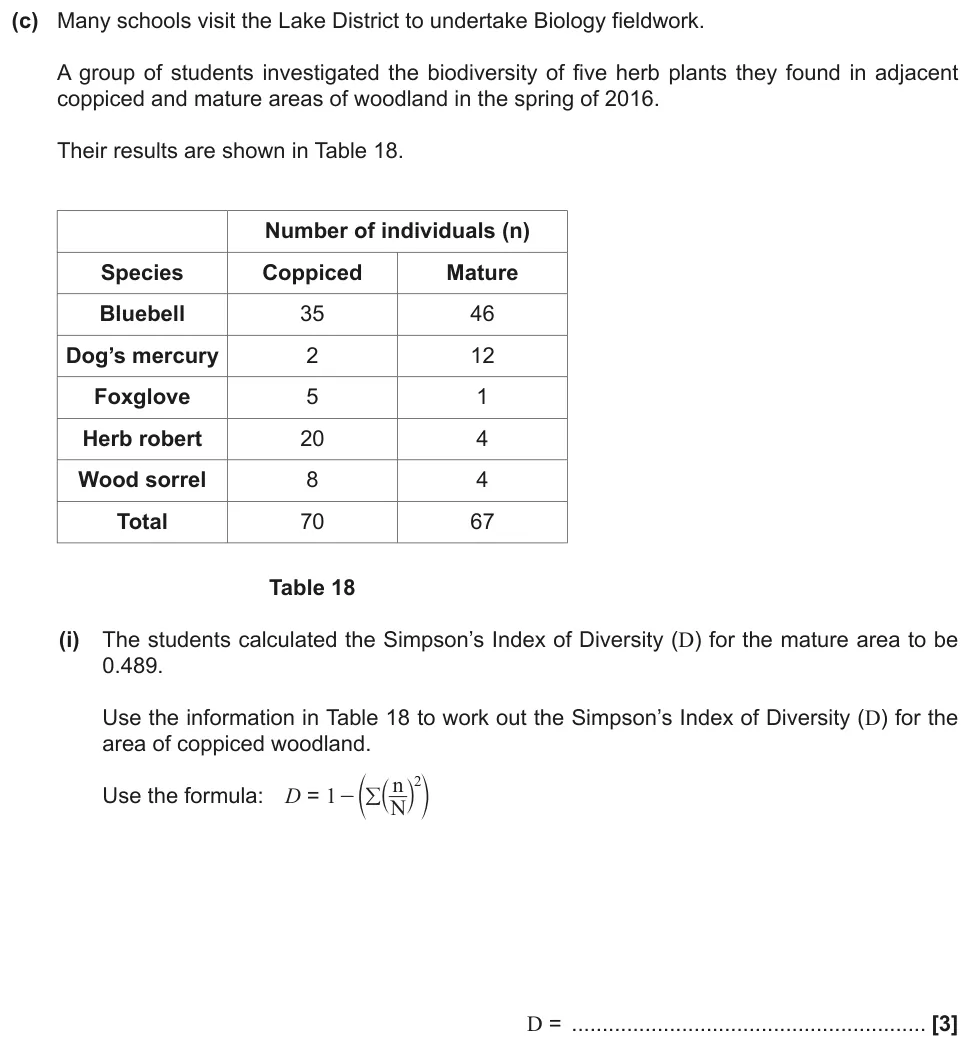
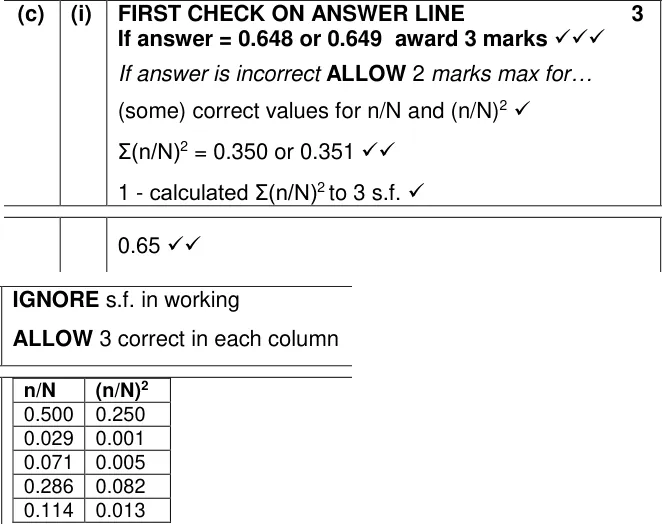
Calculate Simpson's Index of Diversity for a coppiced woodland from a table of counts.
Show the mark scheme
Tap an image to open it full size.
From the examiners' report: Most students got all three marks. Marks were lost for rounding and significant figures, and for not showing working, which costs you the method marks if the answer is wrong.
Where students lose marks (from OCR examiners' reports and mark schemes)
Each point below is followed by wording that gained marks.
A transect is systematic: Students called transect sampling random or stratified, or named the quadrat instead of the method.
✔ Gains credit: "Non-random / systematic".
Distribution needs a transect: Asked how to measure distribution, many suggested more quadrats, point quadrats or percentage cover.
✔ Gains credit: "(Description of) systematic sampling / transect".
Two tapes and random coordinates: When the stem says random sampling, describing systematic or stratified sampling lost the mark, and throwing quadrats is ignored.
✔ Gains credit: "Lay out two tape measures at right angles to each other" and "use random coordinates".
Say where the random sampling goes: Students wrote 'random sampling' with no context, or random sampling along a transect, which contradicts itself.
✔ Gains credit: "Random selection of transect sites", or "random sampling using quadrats in selected areas / strata" (stratified sampling).
Explain why it is more representative: Improvements to a sampling plan were explained as 'to improve accuracy' or 'to collect more data', which got no credit.
✔ Gains credit: "Larger sample size": "more representative (of populations / area)"; "stratified sampling": "avoids missing species / populations".
Validity means controlled variables: Asked to improve validity, many suggested repeats, which is about reliability, or a different method altogether.
✔ Gains credit: "(In both areas kick for) same number of times"; "same / similar size / age trees"; "control height / breadth / speed (of sweep)".
Field variables, not lab variables: Students gave lab-style control variables, unqualified light intensity, or time of day, which wouldn't change how many plants grow under a tree.
✔ Gains credit: "Age / size / height of tree", "gradient (of ground)", "density of surrounding trees", "direction of sunlight".
ACFOR is subjective: Limitations of ACFOR such as 'qualitative', 'inaccurate' or 'can't calculate Simpson's Index' were not credited.
✔ Gains credit: "Subjective / uses judgement", or "misses small(er) / non-flowering plants".
Download the questions
Download the PDF pack (16 questions, mark schemes at the end)
Keep practising
- OCR A biodiversity quiz
- OCR A Level Biology ecosystems and populations quiz
- PAG 1 Microscopy: OCR A Level Biology exam questions by topic
- OCR A Level Biology practical skills quiz
- Biodiversity (4.2.1): OCR A Level Biology exam questions by topic
- Ecosystems (6.3.1): OCR A Level Biology exam questions by topic
- OCR A Level Biology masterclasses
Questions, mark schemes and examiners' report extracts © OCR.