

Populations and sustainability brings the ecology unit round to people. Spec point 6.3.2 asks you about the limiting factors that set a population's size and carrying capacity, predator–prey relationships, competition within and between species, the difference between conservation and preservation and the reasons for each, how woodland and fisheries can be managed sustainably, and how places such as national parks balance conservation with human needs.
The examiners' reports keep coming back to reading the question. Students describe every small rise and fall on a population graph instead of the overall trend, invent unlikely reasons when the stem has already said what the wolves eat, write "maintain biodiversity" for a reintroduction that increases it, and call a ban on visitors conservation when it is preservation. In the fishing questions, "net size" loses the mark that "mesh size" gains.
Work through the eighteen questions below in order. They start with recall of the key ideas, then apply them to penguins, wolves, beavers, puffins, the Lake District and commercial fishing. If you'd like to go through questions like these with me each week, my OCR A masterclasses run on Wednesdays at 5.15pm for Year 12 and on Tuesdays at 6.30pm or Thursdays at 5.15pm for Year 13.
What you need from GCSE
Each question on this page assumes you're secure on these GCSE ideas. If any of them feels shaky, look it up before you start.
- A population is all the organisms of one species living in a habitat at the same time.
- Animals compete for food, mates and territory; plants compete for light, space, water and mineral ions.
- In a stable community, predator and prey numbers rise and fall in cycles, with the predator peak following the prey peak.
- Human activities such as deforestation, overfishing and pollution reduce biodiversity.
- Breeding programmes, protected habitats, seed banks and fishing quotas are ways of protecting species and resources.
Key terms
These words come up in the questions and mark schemes. Examiners expect you to use them exactly.
- Limiting factor: a biotic or abiotic factor, such as food, space, predation or disease, that stops a population growing any further.
- Carrying capacity: the maximum population size that an environment can support over a long period.
- Intraspecific competition: competition between members of the same species for the same resources.
- Interspecific competition: competition between different species for a shared resource; if their niches overlap closely, one may outcompete the other (competitive exclusion).
- Predator–prey relationship: a fall in prey means less food for predators, so predator numbers fall after a delay; fewer predators then lets the prey recover.
- Conservation: active management of an ecosystem, often with people using it sustainably, to maintain or increase biodiversity.
- Preservation: protecting an area by keeping it untouched, with human use and interference kept out.
- Sustainable management: using a resource so that it can be replaced as fast as it is used, leaving enough for future generations.
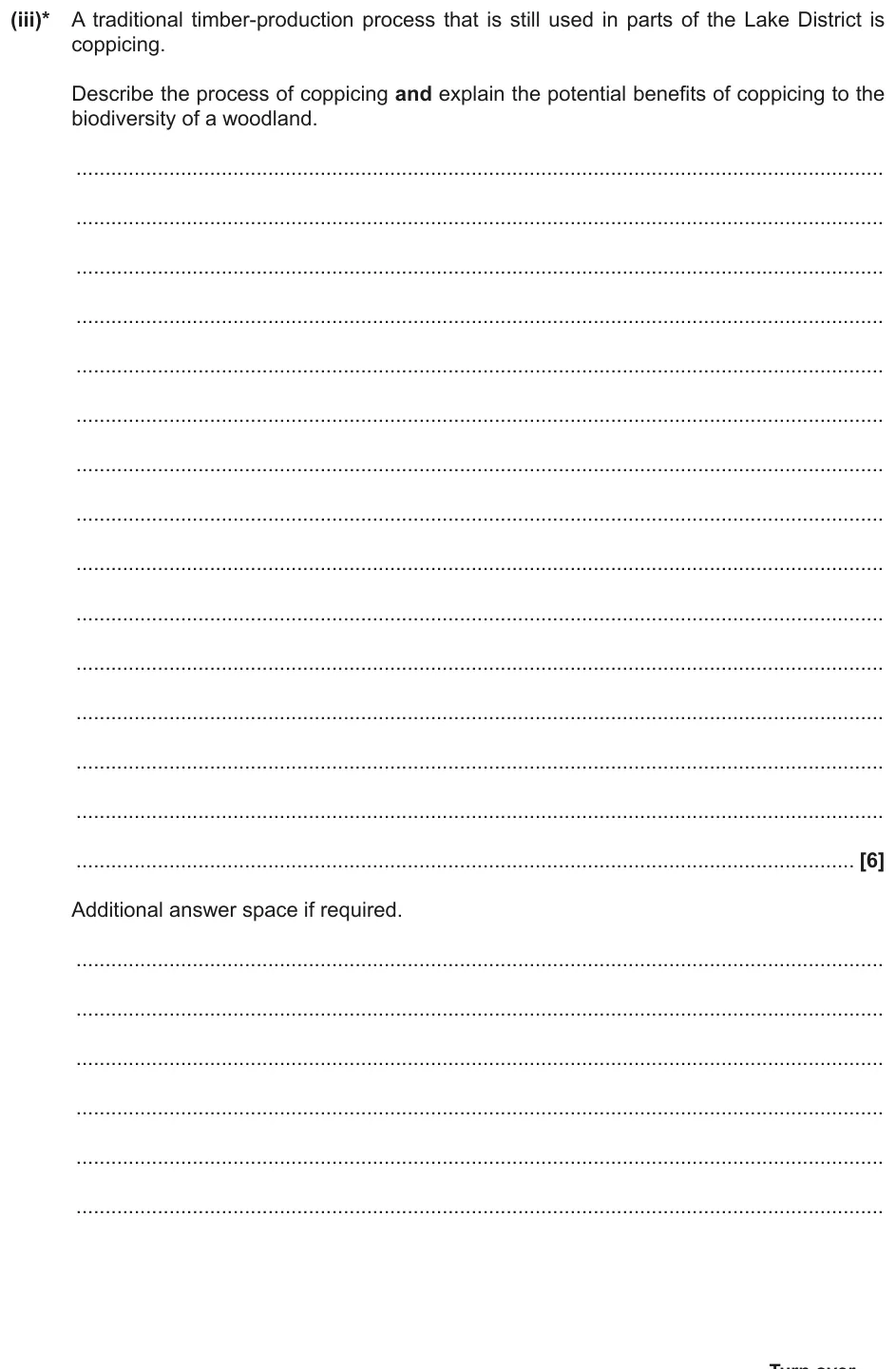
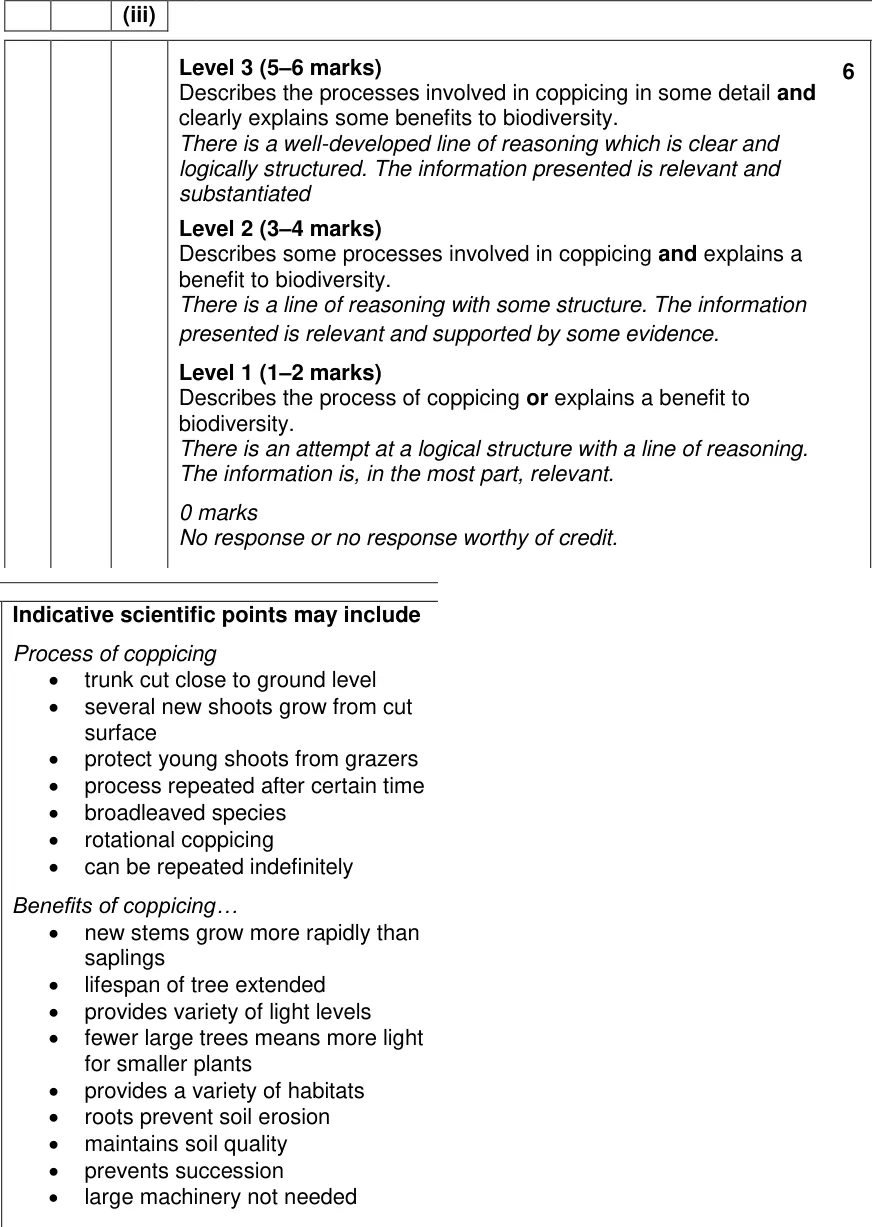
- Coppicing: cutting a broadleaved tree near the ground so several new shoots grow from the stump; done in rotation it keeps a mix of light levels and habitats.
- Ecotourism: tourism to natural areas where the money raised helps to pay for conservation.
What these questions cover (OCR 6.3.2)
The questions test these learning outcomes from the OCR A Level Biology A specification (H420):
- (a) the factors that determine size of a population (including limiting factors and carrying capacity)
- (b) interactions between populations (predator–prey relationships, and interspecific and intraspecific competition)
- (c) the reasons for, and differences between, conservation and preservation
- (d) how the management of an ecosystem can provide resources in a sustainable way (limited to timber production and fishing)
- (e) the management of environmental resources and the effects of human activities
How to use this page
Write your answer on paper before you open the mark scheme. Allow about 1.2 minutes per mark: the 18 questions are worth 40 marks, so about 48 minutes in total. Then mark your answer strictly against the mark scheme and read the examiners' tip underneath it. If you'd rather print the questions, download the PDF pack.
Recall
Question 1
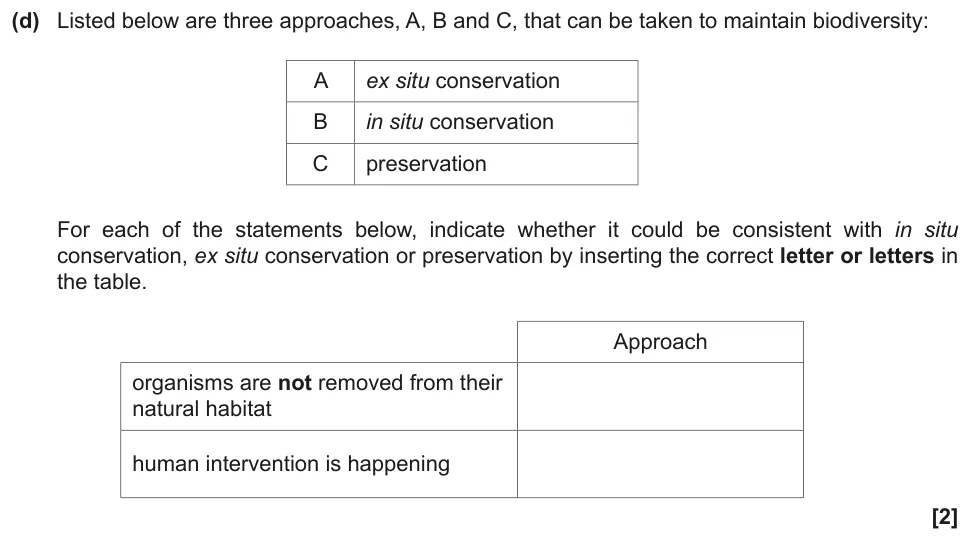
A level Paper 2 · June 2018 · Q22(d) · 2 marks · Easy
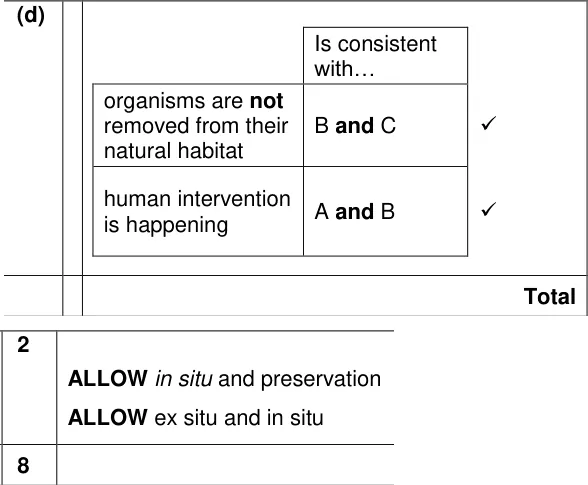
Match statements to in situ conservation, ex situ conservation or preservation.
Show the mark scheme
Tap an image to open it full size.
From the examiners' report: Put more than one letter in a box when more than one fits, as the bold instruction says. Preservation never involves human intervention, so C doesn't belong in the second box.
Question 2
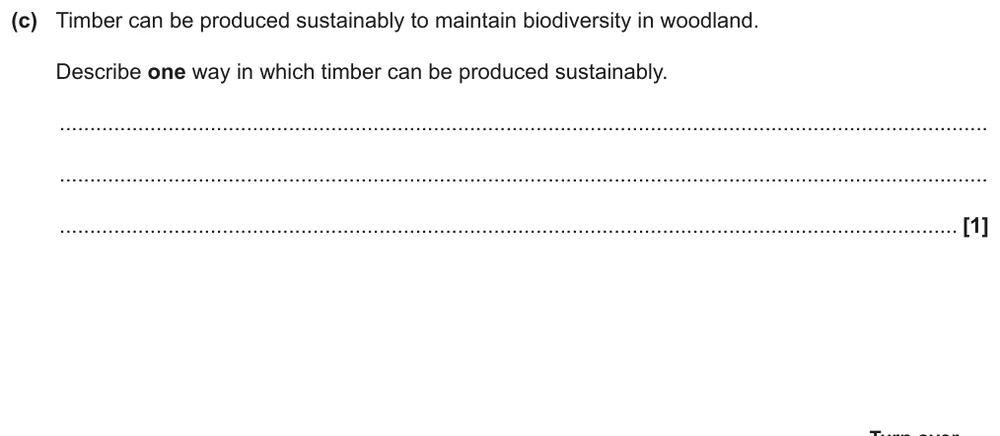
A level Paper 3 · June 2024 · Q2(c) · 1 mark · Easy
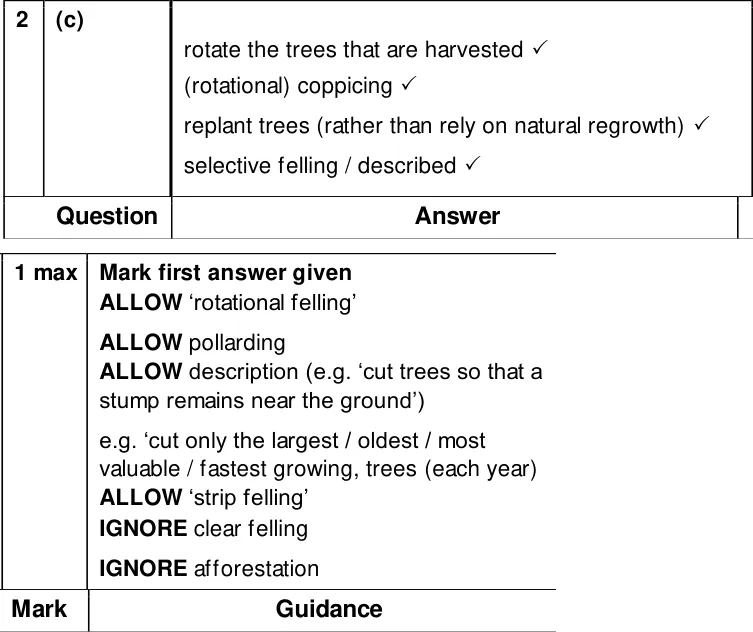
Describe one way of producing timber sustainably.
Show the mark scheme
Tap an image to open it full size.
From the examiners' report: Nearly everyone scored. The command word is describe, so say what is done (for example, cut the tree near the ground so new shoots grow) as well as naming the method.
Question 3
A level Paper 2 · June 2022 · Q19(b)(i) · 3 marks · Hard
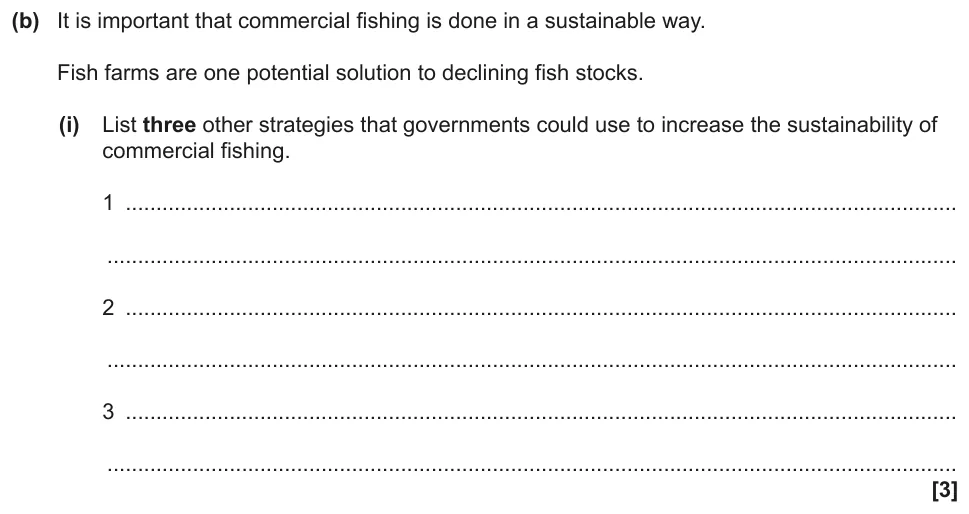
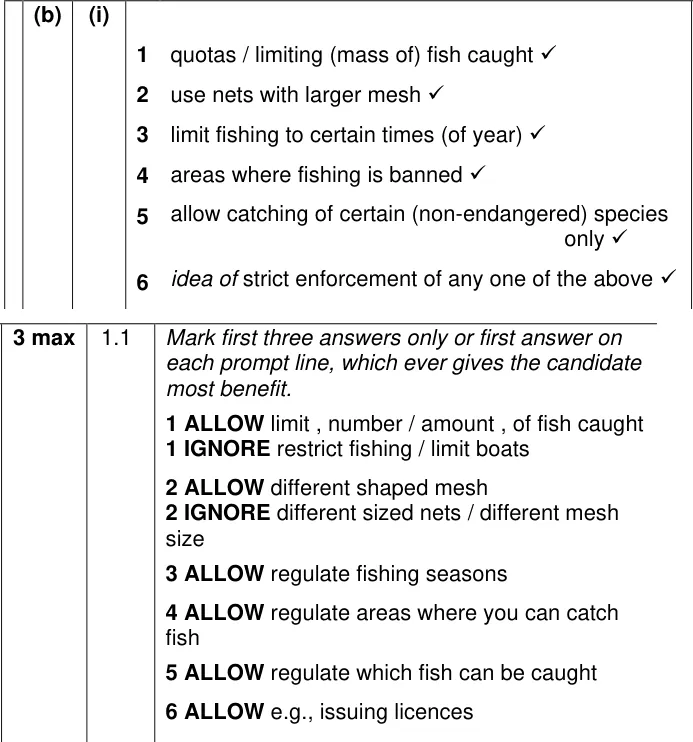
List three strategies governments could use to make commercial fishing sustainable.
Show the mark scheme
Tap an image to open it full size.
From the examiners' report: Most scored well. Write "mesh size" rather than "net size", and don't use fish farms, which the question has already given you.
Question 4
A level Paper 2 · June 2022 · Q19(b)(ii) · 1 mark · Medium
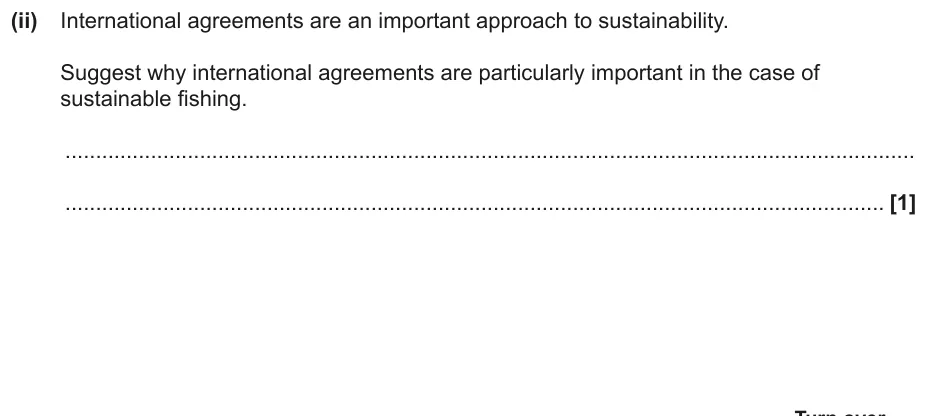
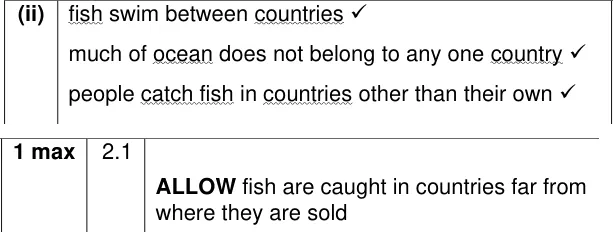
Suggest why international agreements matter for sustainable fishing.
Show the mark scheme
Tap an image to open it full size.
From the examiners' report: Answer about fishing, not about extinction or biodiversity in general: fish move between countries' waters and much of the sea belongs to nobody.
Applying what you know
Question 5
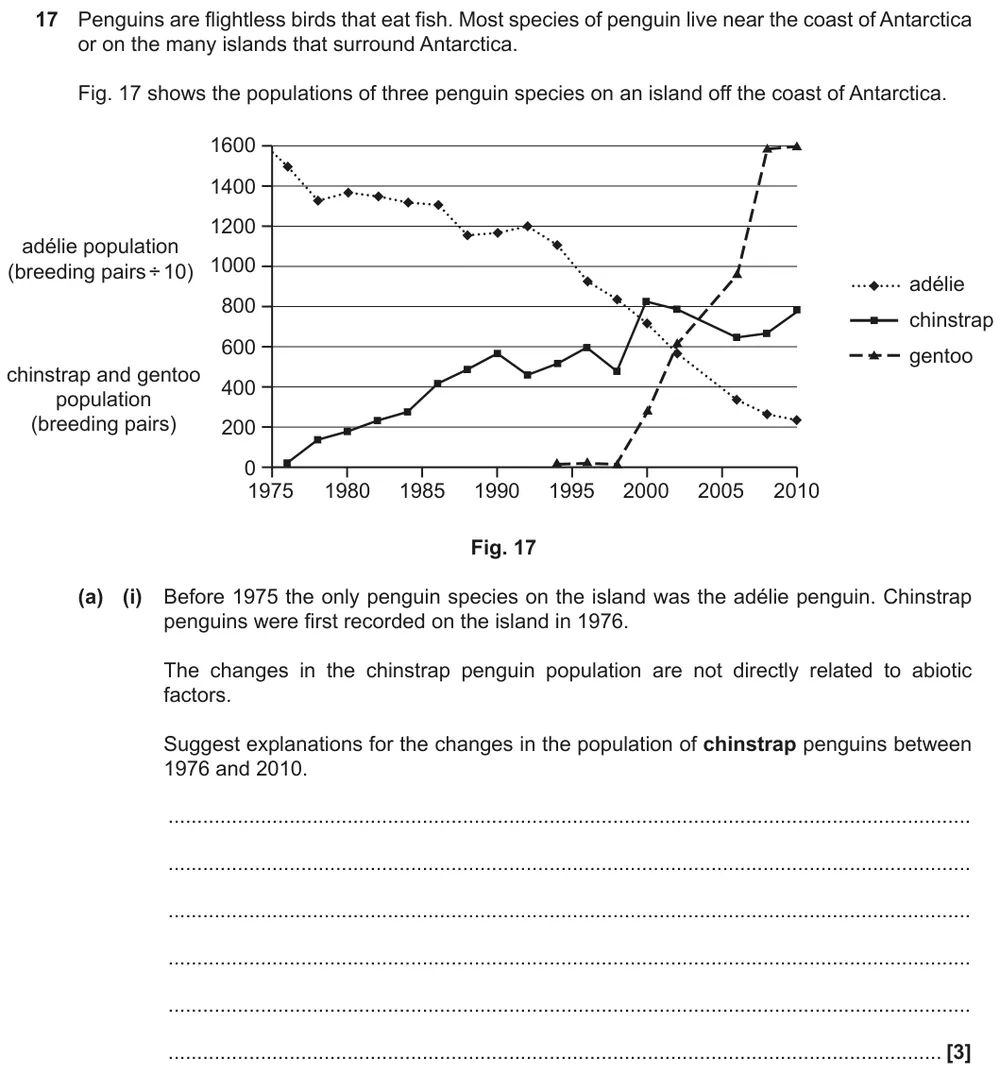
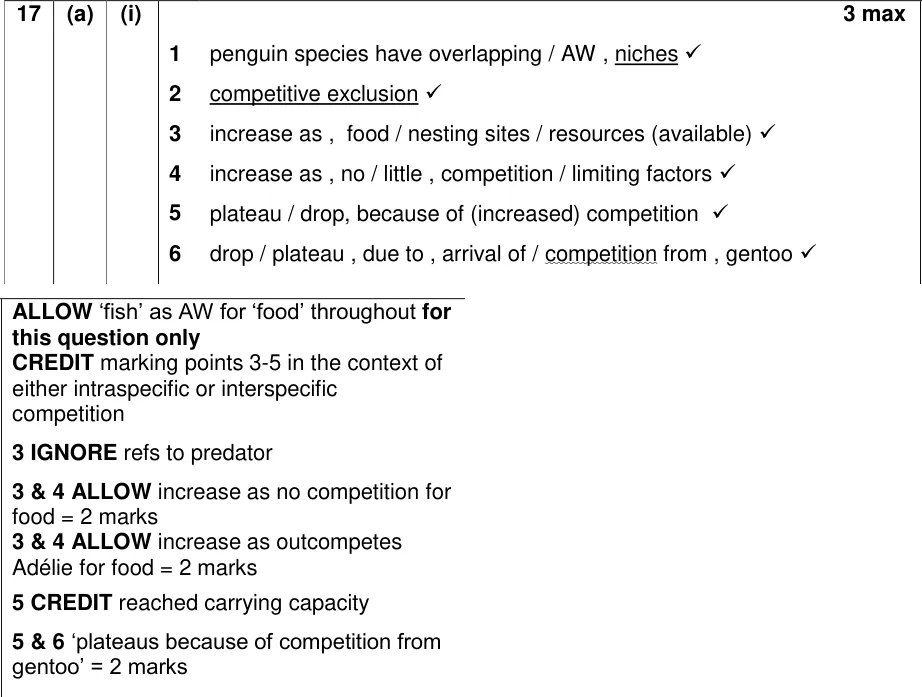
A level Paper 2 · June 2018 · Q17(a)(i) · 3 marks · Medium
Explain the rise and fall of a chinstrap penguin population after it arrived on an island.
Show the mark scheme
Tap an image to open it full size.
From the examiners' report: Link each explanation to the part of the graph it explains. Many students only explained the increase, so they missed the marks for the plateau and fall caused by competition.
Question 6
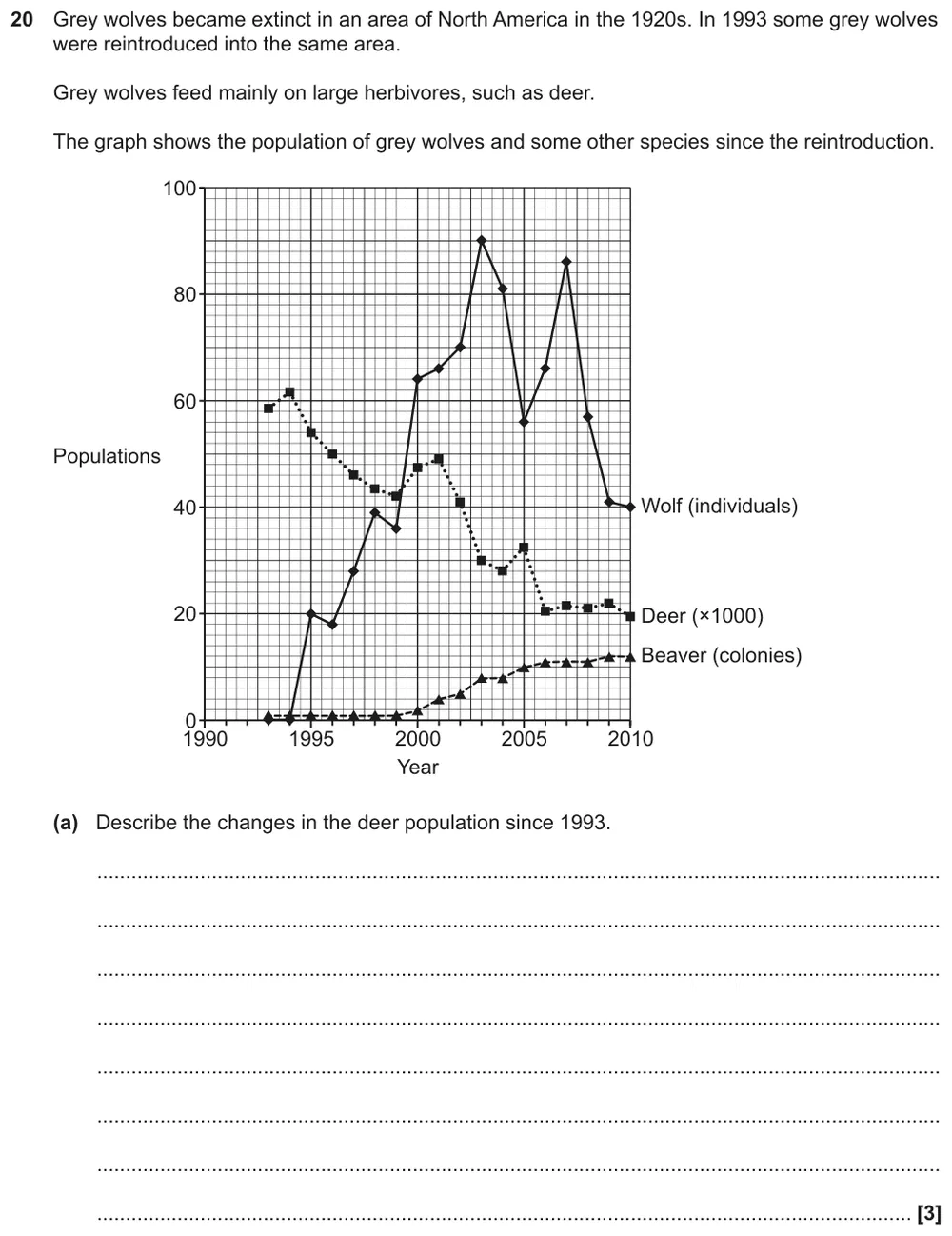
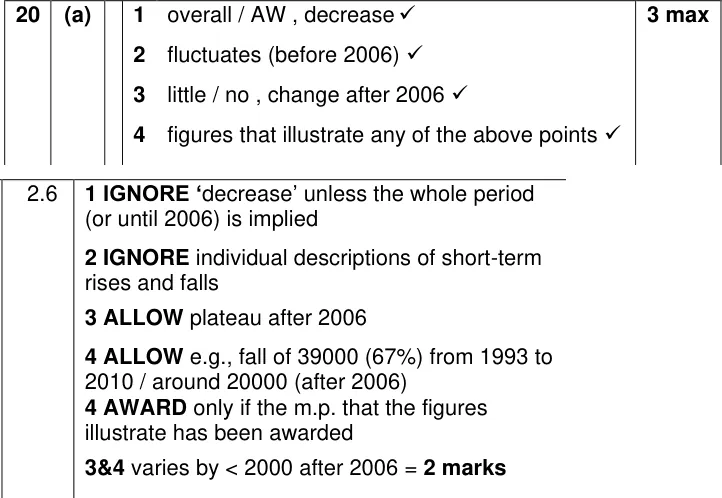
A level Paper 2 · June 2023 · Q20(a) · 3 marks · Medium
Describe the changes in a deer population after wolves were reintroduced.
Show the mark scheme
Tap an image to open it full size.
From the examiners' report: Give the big picture, not every year-to-year wiggle, and describe rather than explain. Read the axis: 20 on the deer line means 20 000 deer.
Question 7
A level Paper 2 · June 2023 · Q20(b)(ii) · 2 marks · Hard
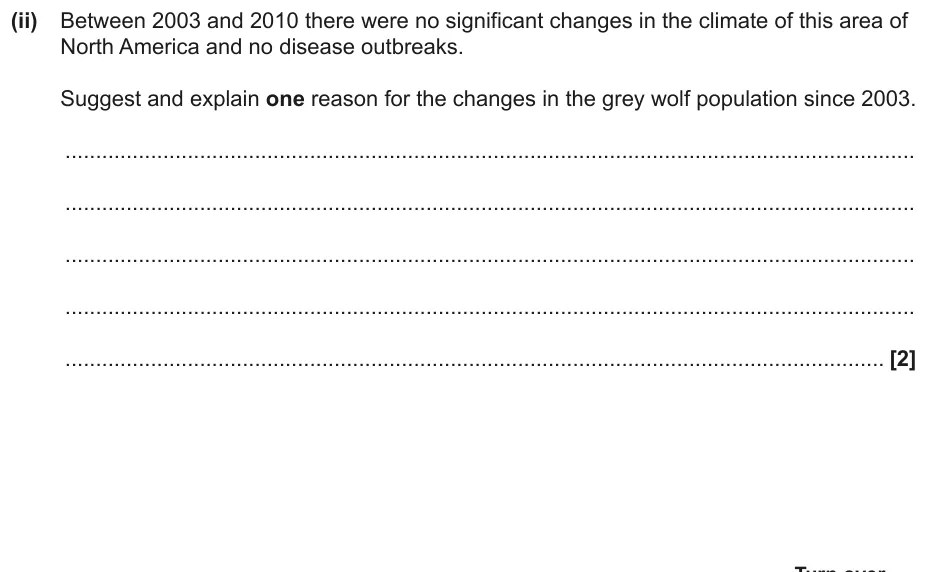
Suggest and explain one reason for the changes in the wolf population since 2003.
Show the mark scheme

Tap an image to open it full size.
From the examiners' report: Use what the stem tells you: wolves eat deer, so fewer deer means less food for the wolves. Keep it to one reason, and don't invent new predators or say wolves compete with herbivores.
Question 8
A level Paper 2 · June 2023 · Q20(d)(i) · 2 marks · Medium
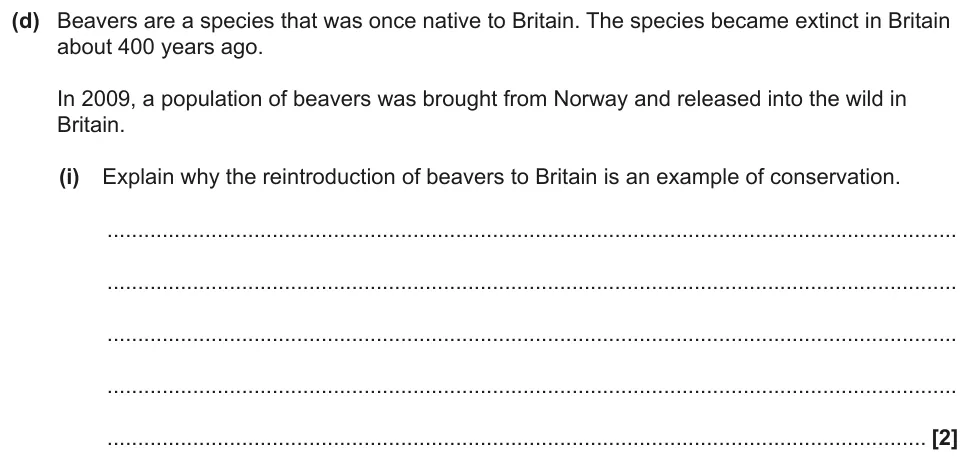
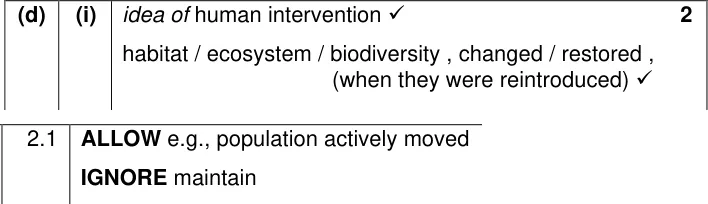
Explain why reintroducing beavers to Britain is an example of conservation.
Show the mark scheme
Tap an image to open it full size.
From the examiners' report: Most knew what conservation is. Here biodiversity is being increased, so say it is restored, not maintained.
Question 9
A level Paper 2 · June 2023 · Q20(d)(ii) · 1 mark · Hard
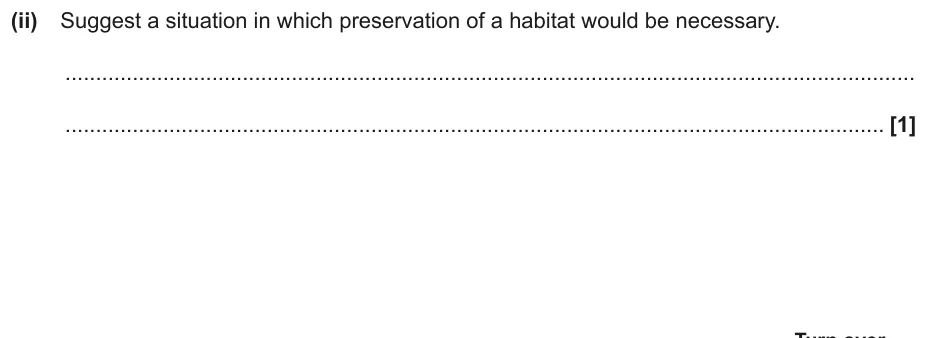
Suggest a situation where preserving a habitat would be necessary.
Show the mark scheme

Tap an image to open it full size.
From the examiners' report: Naming a place such as the Galápagos isn't enough. Say why it needs to be left untouched: it is easily damaged or home to an endangered species.
Question 10
A level Paper 2 · June 2017 · Q16(b) · 3 marks · Medium
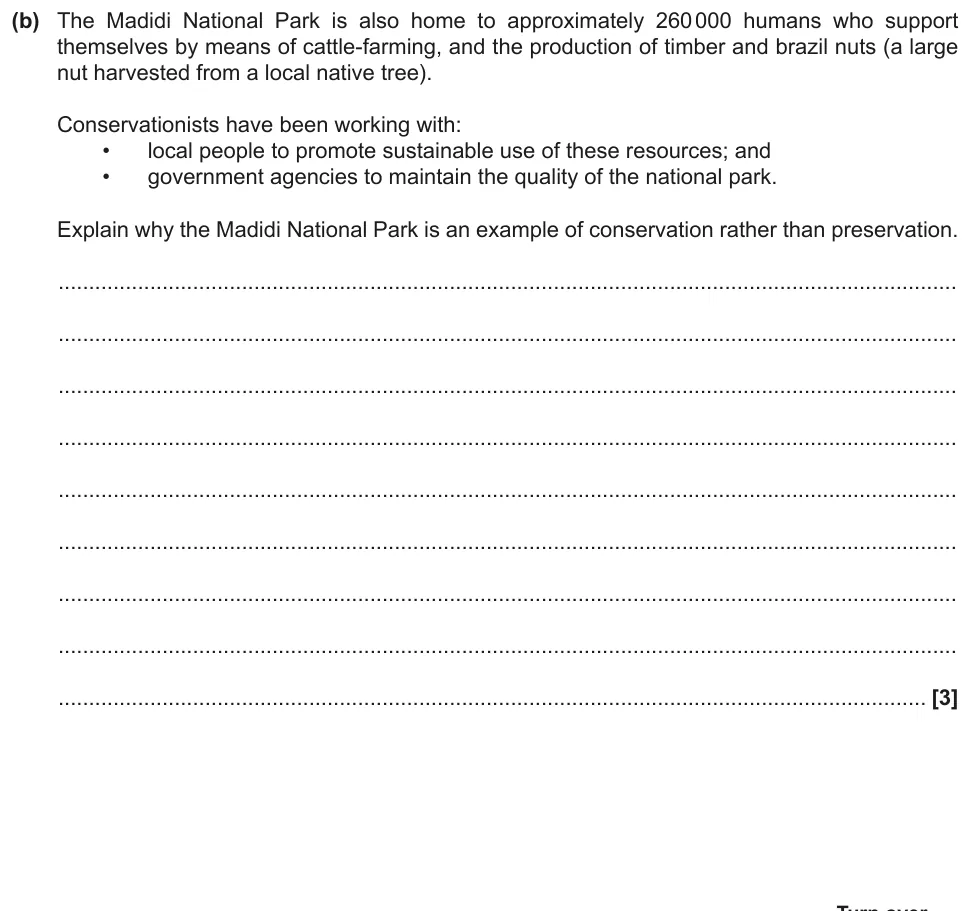
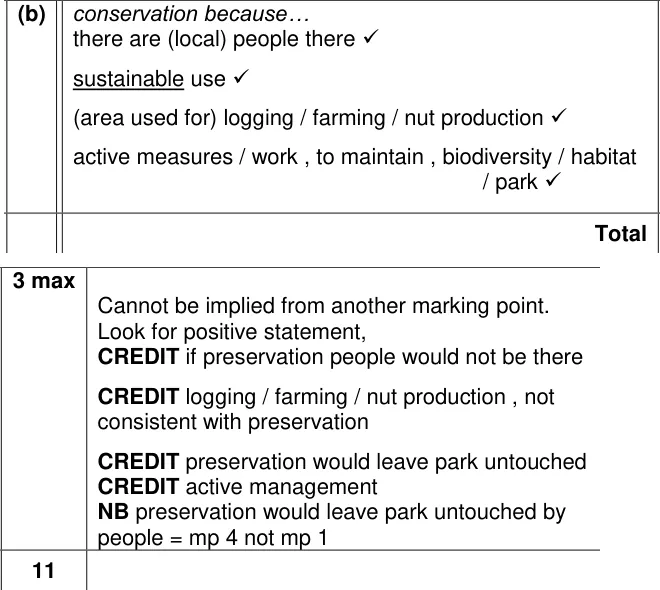
Explain why a national park with local farmers and loggers is conservation, not preservation.
Show the mark scheme
Tap an image to open it full size.
Question 11
A level Paper 3 · November 2020 · Q5(c) · 2 marks · Hard
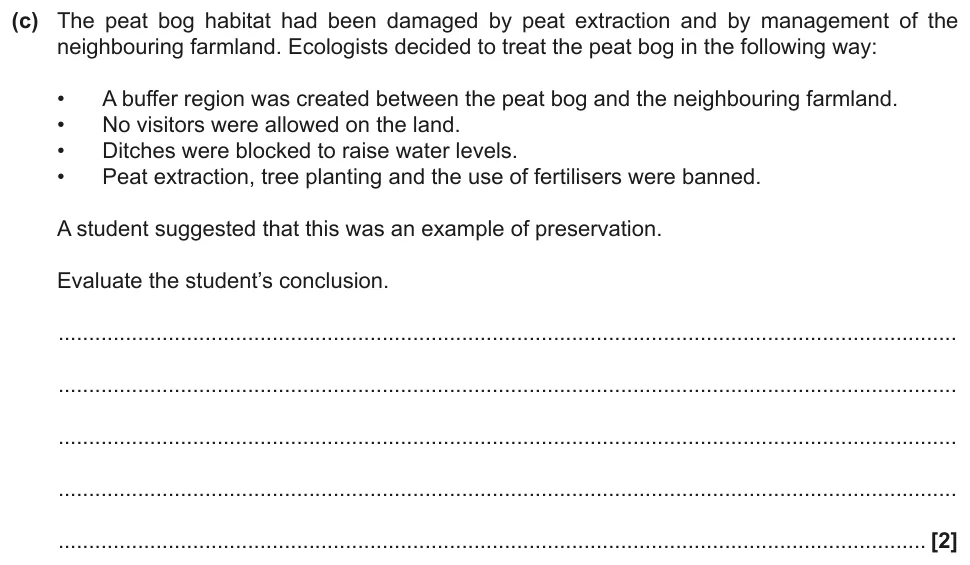
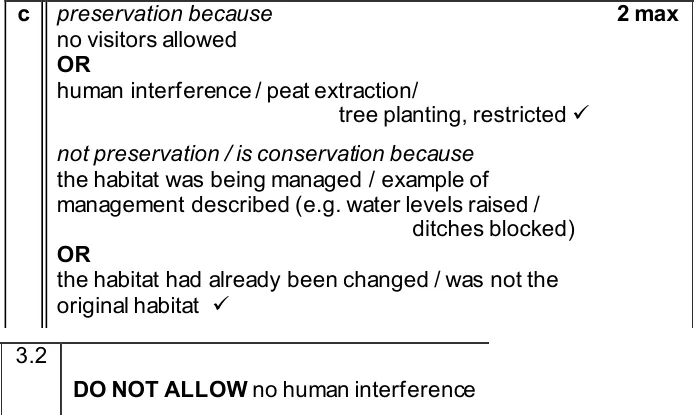
Evaluate a student's claim that managing a damaged peat bog is preservation.
Show the mark scheme
Tap an image to open it full size.
From the examiners' report: Evaluate means give both sides. Most saw one; the second mark came from spotting the management in the list, such as blocking ditches.
Question 12
A level Paper 2 · June 2019 · Q18(a) · 2 marks · Hard
Explain one way in which tourists can increase the biodiversity of an area.
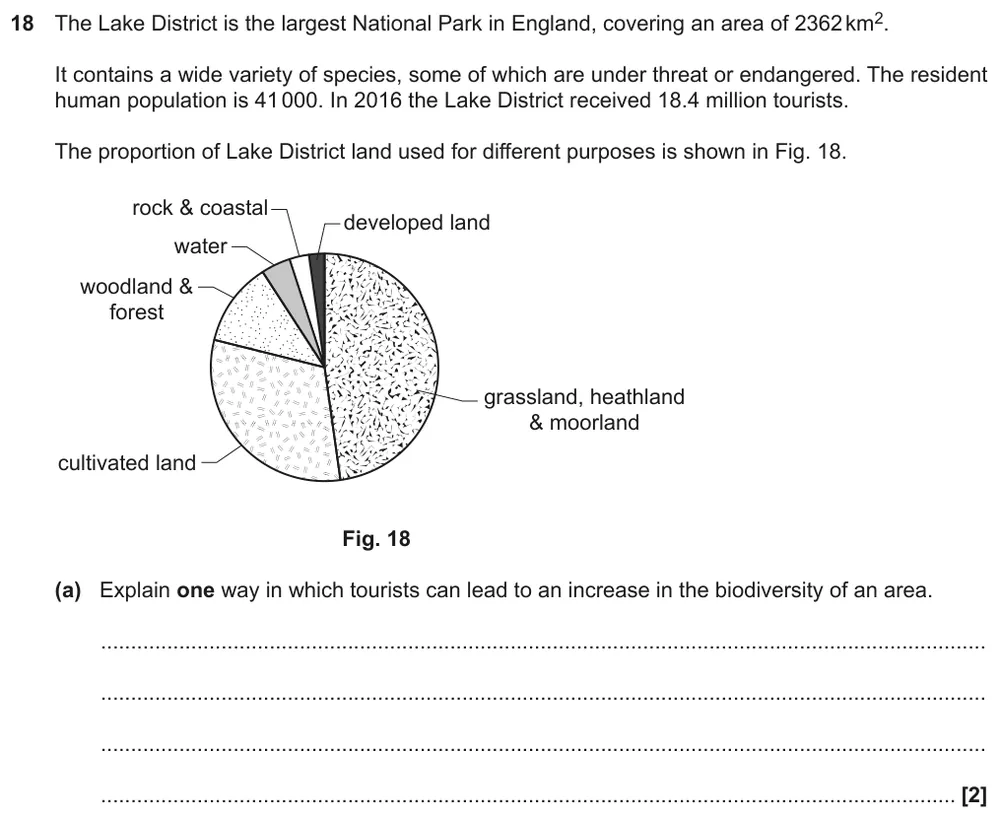
Show the mark scheme
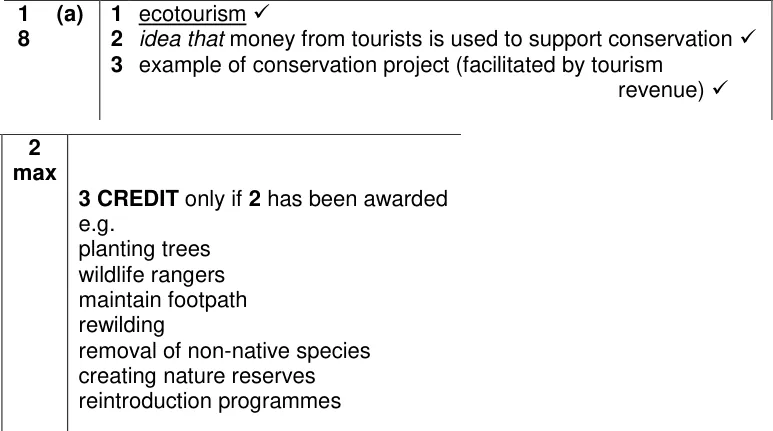
Tap an image to open it full size.
From the examiners' report: Use the word ecotourism and say the money pays for conservation, then name a project it pays for. Building more houses or roads does not increase biodiversity.
Question 13
A level Paper 2 · June 2019 · Q18(b)(ii) · 2 marks · Easy
Explain how timber can be produced sustainably using clear felling.
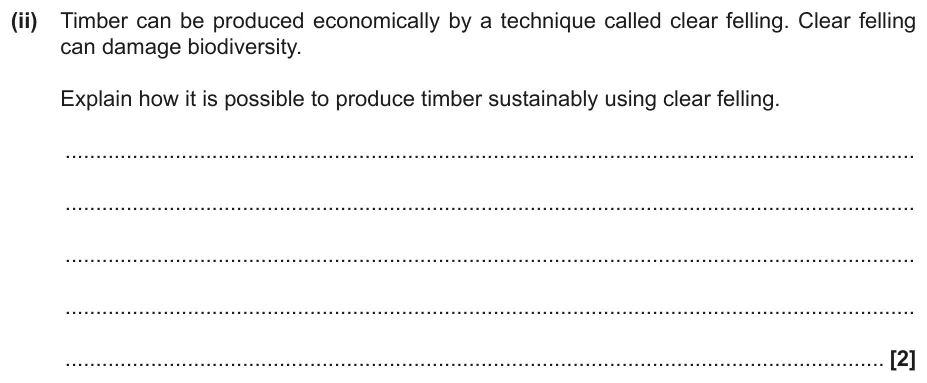
Show the mark scheme
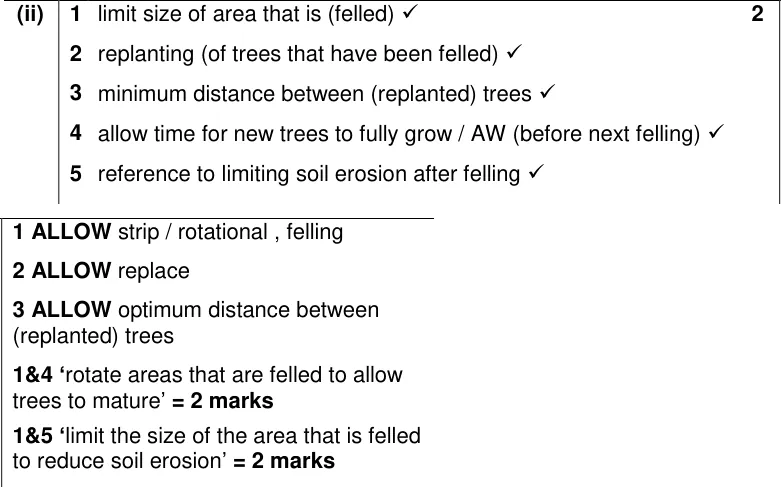
Tap an image to open it full size.
From the examiners' report: Replanting and felling small areas are the easy marks. If you say let the trees grow, add that they must be fully grown before they are felled again.
Question 14
A level Paper 2 · June 2019 · Q18(b)(iii) · 6 marks · Medium
Describe coppicing and explain its benefits to woodland biodiversity (6 marks).
Show the mark scheme
Tap an image to open it full size.
From the examiners' report: Level 2 and above needs both halves: a clear description of the process and at least one explained benefit, usually more light reaching the woodland floor. Don't confuse coppicing with pollarding.
Question 15
A level Paper 2 · November 2021 · Q17(b)(ii) · 1 mark · Medium
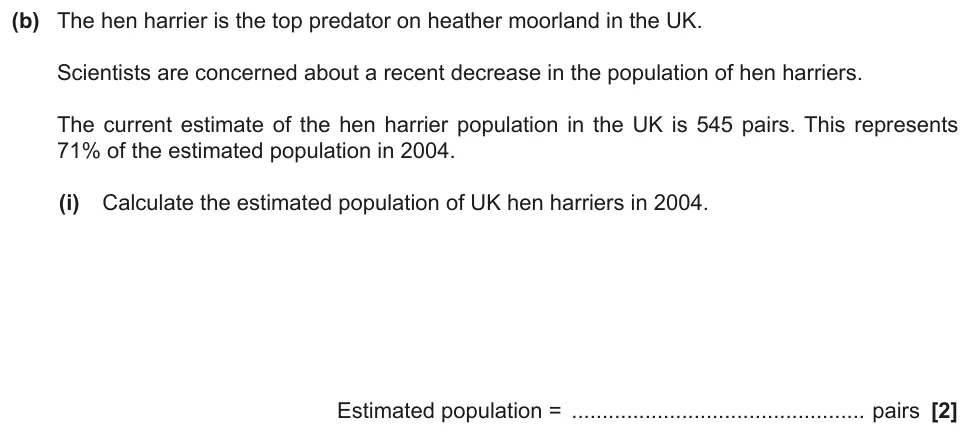
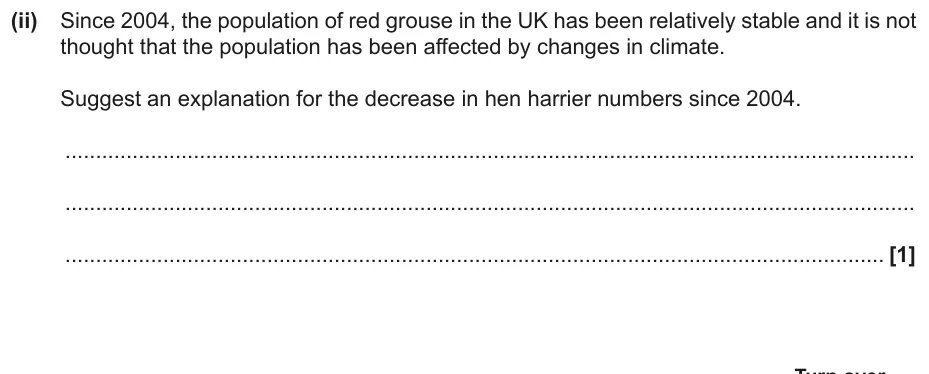
Suggest why the number of hen harriers has fallen since 2004.
Information from earlier in this question:
Show the mark scheme

Tap an image to open it full size.
From the examiners' report: The stem says the hen harrier is the top predator, so being eaten by a larger predator can't be the answer. Think about human activity, such as illegal killing on grouse moors.
Question 16
A level Paper 2 · June 2025 · Q19(a)(ii) · 1 mark · Hard
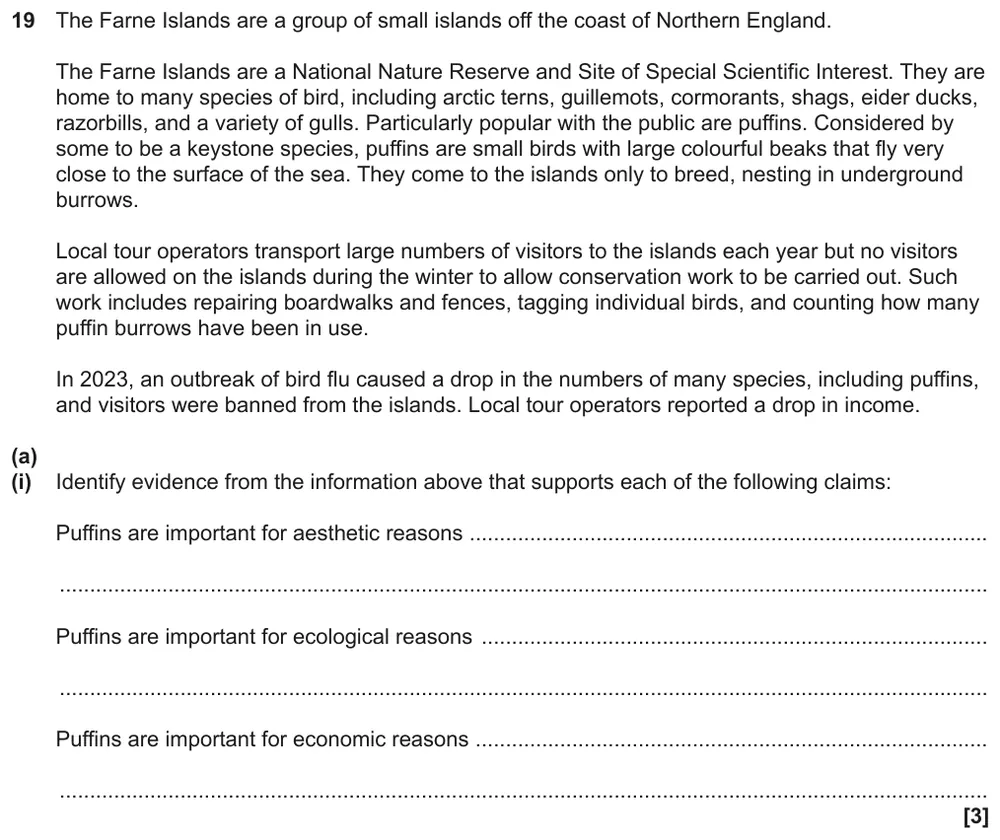
Identify one conservation measure on the Farne Islands needed because of human activity.
Information from earlier in this question:

Show the mark scheme

Tap an image to open it full size.
From the examiners' report: Take the example from the passage, which mentions repairing boardwalks and fences. Banning visitors is preservation, not conservation.
Question 17
A level Paper 2 · June 2025 · Q19(a)(iii) · 1 mark · Medium
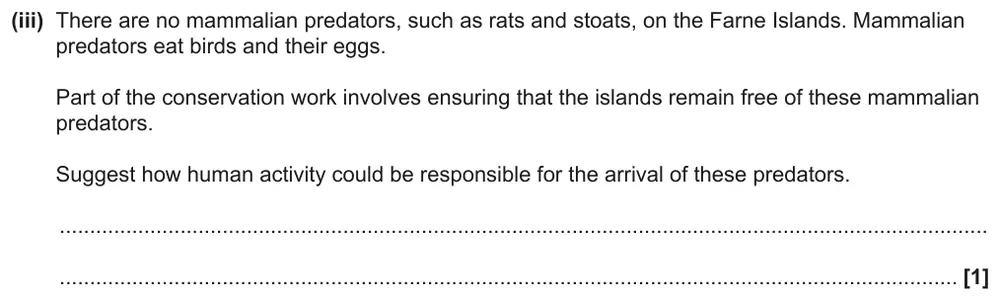
Suggest how human activity could bring mammal predators to the islands.
Show the mark scheme

Tap an image to open it full size.
From the examiners' report: The stem says there are no rats on the islands, so litter attracting rats doesn't work. They would have to come over on boats.
Question 18
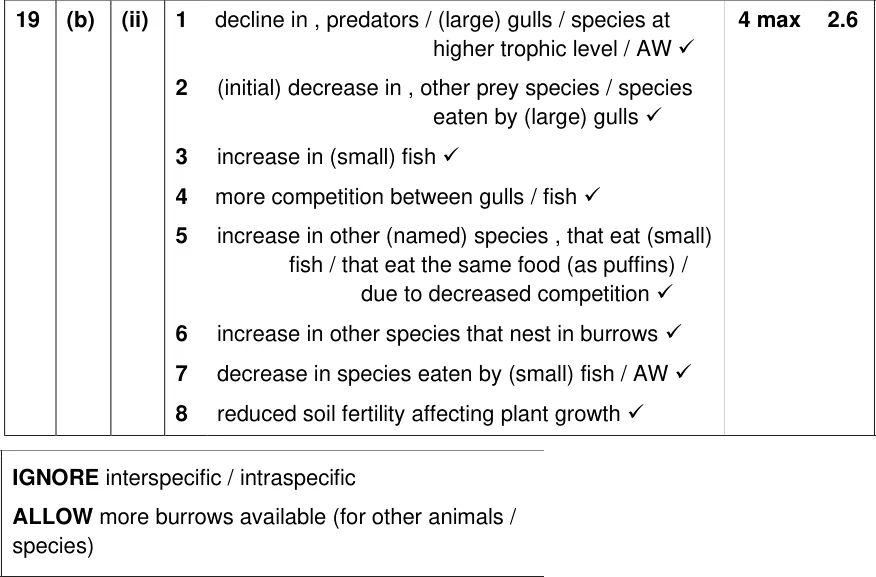
A level Paper 2 · June 2025 · Q19(b)(ii) · 4 marks · Hard
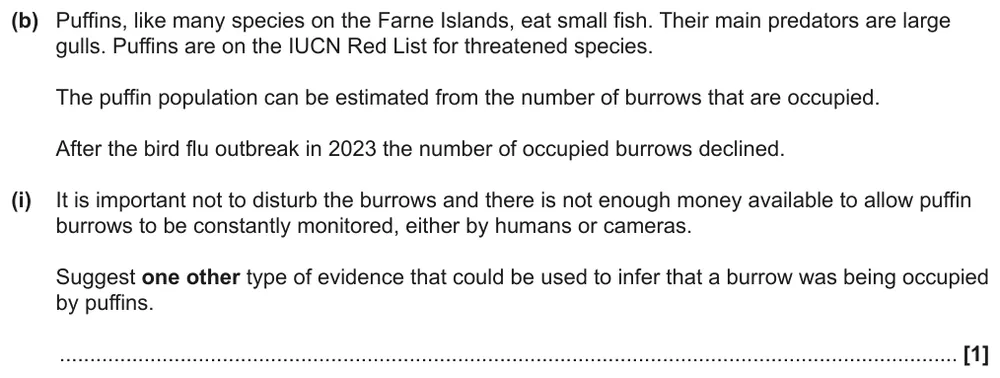
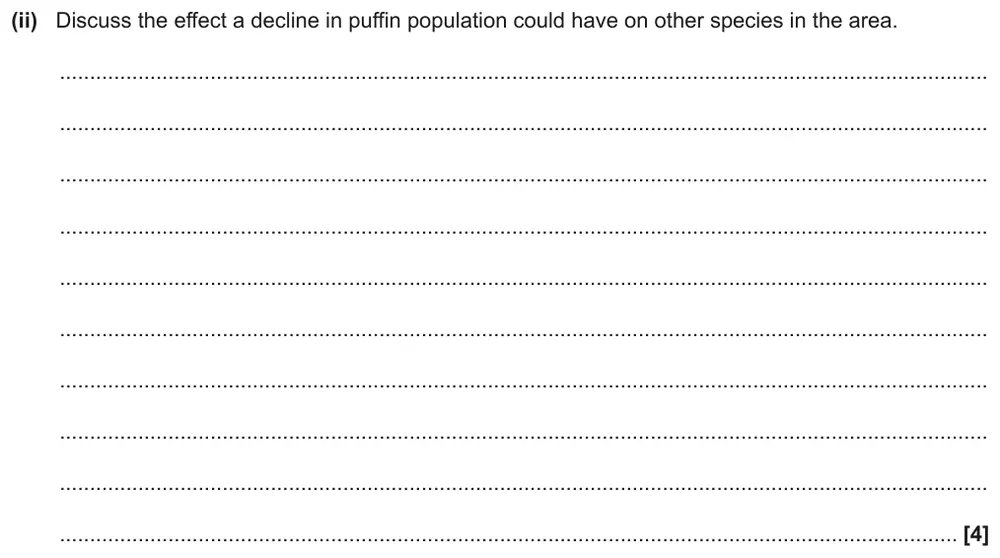
Discuss how a fall in puffin numbers could affect other species.
Information from earlier in this question:
Show the mark scheme
Tap an image to open it full size.
From the examiners' report: Most found the gull fall and the fish rise. For full marks, follow the chain into competition: more competition among gulls, but less for other fish-eating birds. General talk of predator–prey relationships scored nothing.
Where students lose marks (from OCR examiners' reports and mark schemes)
Each point below is followed by wording that gained marks.
Trend first, then figures: Many students described every small rise and fall year by year, used "populations" as a unit, or read the deer line as 20 instead of 20 000.
✔ Gains credit: "overall decrease; fluctuates (before 2006); little / no change after 2006" with figures such as "fall of 39000 (67%) from 1993 to 2010".
The stem says wolves eat deer: Students reached for unlikely reasons, such as a new predator, emigration or wolves competing with deer, when the question had ruled them out.
✔ Gains credit: "fall in deer (population) means less food / prey (for wolves)".
Reintroduction restores biodiversity: Many wrote that the beavers would "maintain biodiversity", but bringing back a lost species increases it.
✔ Gains credit: "idea of human intervention; habitat / ecosystem / biodiversity, changed / restored".
Explain the plateau, not just the rise: A large number of students explained only why chinstrap numbers increased and gave no reason for the later levelling off.
✔ Gains credit: "plateau / drop because of (increased) competition … due to arrival of / competition from gentoo" ("reached carrying capacity" credited).
Mesh size, not net size: Some students wrote "net size" and lost the mark for larger mesh; others answered with fish farms, which the question had already given.
✔ Gains credit: "quotas / limiting (mass of) fish caught; use nets with larger mesh; areas where fishing is banned".
Fish cross borders: The most common wrong answer talked about preventing extinction or protecting food supply in general, not about fishing.
✔ Gains credit: "fish swim between countries; much of ocean does not belong to any one country".
Fully regrown before the next cut: Many wrote "allow trees to grow" without saying they must reach full size before felling again.
✔ Gains credit: "allow time for new trees to fully grow (before next felling)".
A visitor ban is preservation: Students gave unrelated examples or the ban on visitors, which the mark scheme counts as preservation.
✔ Gains credit: "repairing, boardwalks / fences".
Download the questions
Download the PDF pack (18 questions, mark schemes at the end)
Keep practising
- Ecosystems and Populations quiz
- Populations and sustainability: interactive written questions (14)
- Ecosystems (6.3.1): OCR A Level Biology exam questions by topic
- Biodiversity (4.2.1): OCR A Level Biology exam questions by topic
- PAG 3 Sampling Techniques: OCR A Level Biology exam questions by topic
- OCR A Level Biology masterclasses
Questions, mark schemes and examiners' report extracts © OCR.