

This page covers the animal half of topic 3.2: open and closed, single and double circulatory systems, the structure of the heart and blood vessels, the cardiac cycle and its electrical control, haemoglobin and dissociation curves (fetal, llama, lugworm and other low-oxygen animals), the Bohr effect and chloride shift, and the formation of tissue fluid. It mixes A level and AS questions. Transport in plants has its own page.
Naming the SAN and AVN and the features of capillaries is usually done well. Marks are lost when you read graphs carelessly (one cardiac cycle graph plotted pressure against volume, not time), when you say the animal rather than its haemoglobin has a higher affinity for oxygen, and on tissue fluid, where many students don't explain how plasma proteins lower the water potential of the blood. Use the data and diagrams you're given.
I don't teach the Eduqas specification myself, so for one-to-one help I recommend Sam. He teaches Eduqas A level Biology at a top-rated sixth form college and is very popular with his students. You can ask about lessons with Sam on WhatsApp using the link at the bottom of this page.
What you need from GCSE and Year 12
Each question on this page assumes you're secure on these ideas. If any of them feels shaky, look it up before you start.
- The heart pumps blood through arteries, capillaries and veins.
- Red blood cells carry oxygen bound to haemoglobin.
- Mammals have a double circulation: to the lungs and to the body.
- Valves stop blood flowing backwards.
Key terms
These words come up in the questions and mark schemes. Examiners expect you to use them exactly.
- Double circulation: blood passes through the heart twice per circuit, so blood to the body is at high pressure.
- Open circulatory system: blood (haemolymph) isn't kept in vessels and bathes the tissues directly, as in insects.
- Sino-atrial node (SAN): the pacemaker in the right atrium wall that starts each wave of excitation.
- Atrio-ventricular node (AVN): passes the impulse to the bundle of His after a short delay.
- Chordae tendineae: tendons that stop the atrio-ventricular valves turning inside out.
- Dissociation curve: % saturation of haemoglobin plotted against partial pressure of oxygen.
- Bohr effect: more CO₂ lowers haemoglobin's affinity for oxygen, shifting the curve to the right.
- Chloride shift: chloride ions move into red blood cells as hydrogencarbonate ions move out.
- Tissue fluid: fluid forced out of capillaries at the arterial end by hydrostatic pressure.
What these questions cover (Eduqas 3.2(a)–(h))
The questions test these statements from Component 3 (Requirements for Life) of the Eduqas A level Biology specification (A400). Transport is in the AS course too, so AS questions (B400) are included and marked AS. Transport in plants (3.2(i)–(r)) has its own page.
- (a) the similarities and differences in the vascular systems of animal groups
- (b) the mammalian circulatory system including the structure and function of heart and blood vessels and the names of the main blood vessels associated with the human heart
- (c) the cardiac cycle and the maintenance of circulation to include graphical analysis of pressure changes, the role of sino-atrial node and Purkyne/ Purkinje fibres and the
- (d) the function of red blood cells and plasma in relation to transport of respiratory gases, dissociation curves of haemoglobin of mammal (adult and foetus), including exami
- (e) the dissociation curves of some animals adapted to low oxygen level habitats e.g. llama, lugworm
- (f) the Bohr effect and chloride shift
- (h) the formation of tissue fluid and its importance as a link between blood and cells
How to use this page
Write your answer on paper before you open the mark scheme. Allow about 1.2 minutes per mark: the 26 questions are worth 68 marks, so about 82 minutes in total. Then mark your answer strictly against the mark scheme and read the examiners' tip underneath it. If you'd rather print the questions, download the PDF pack.
Circulatory systems
Question 1
AS Component 2 · June 2016 · Q5(b) · 2 marks
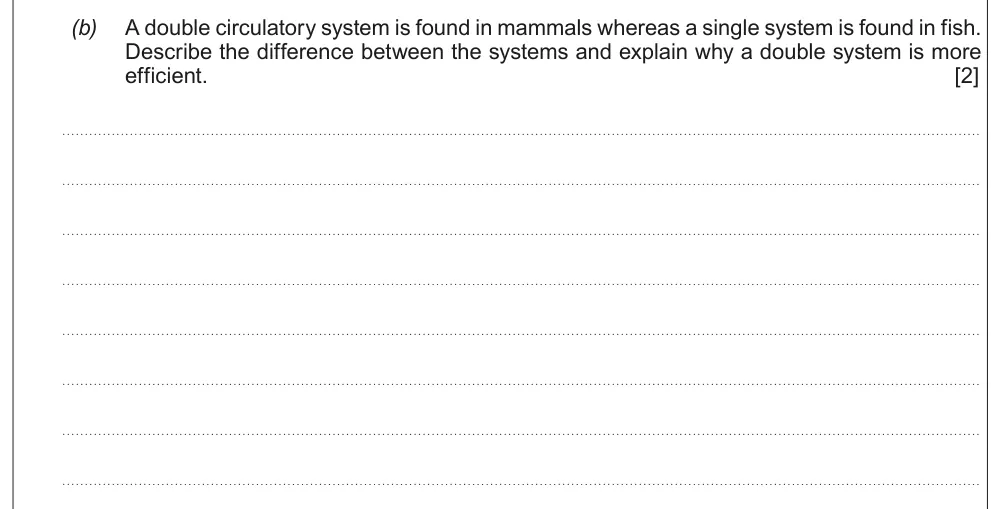
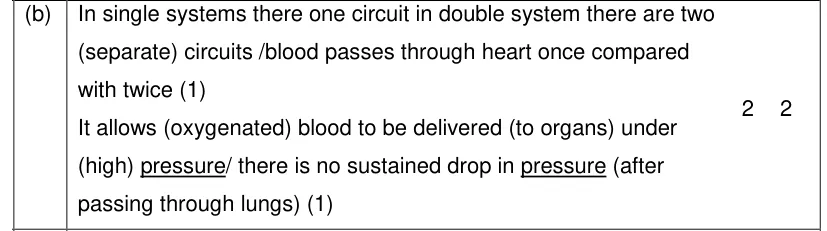
Describe the difference between single and double circulation and why double is more efficient.
Show the mark scheme
Tap an image to open it full size.
From the examiners' report: Some just repeated that double systems are more efficient. Explain why: blood reaches the organs under high pressure.
Question 2
AS Component 2 · June 2024 · Q5(a)(i) · 2 marks
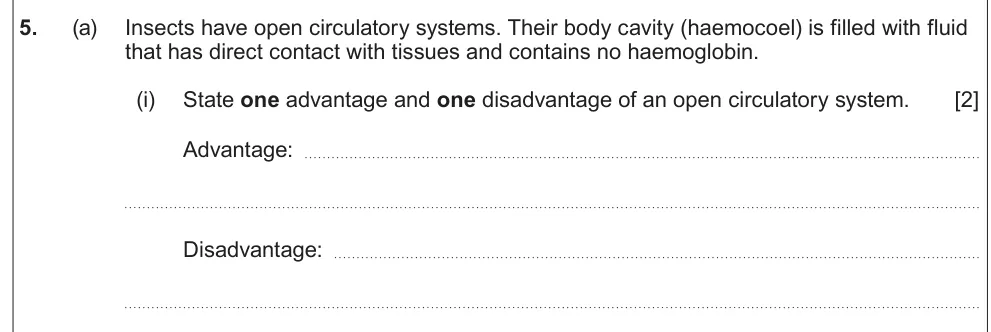
State one advantage and one disadvantage of an open circulatory system.
Show the mark scheme

Tap an image to open it full size.
From the examiners' report: Few understood open systems: the short diffusion distance to cells is the advantage, and slow flow is the disadvantage.
Question 3
AS Component 2 · June 2019 · Q5(b)(i) · 2 marks
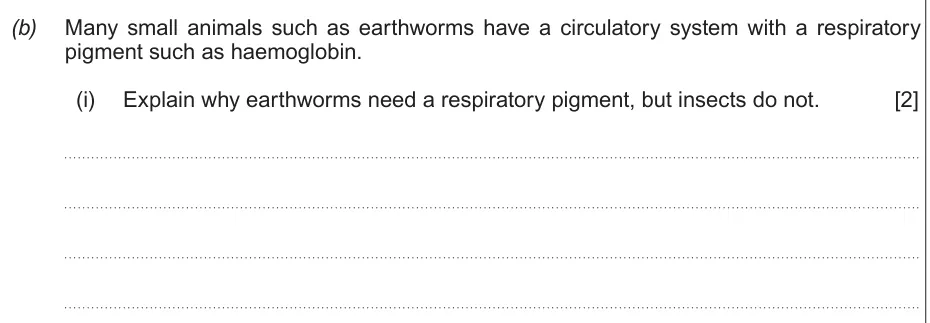
Explain why earthworms need a respiratory pigment but insects do not.
Show the mark scheme

Tap an image to open it full size.
Question 4
A level Component 3 · June 2019 · Q6(c)(ii) · 2 marks
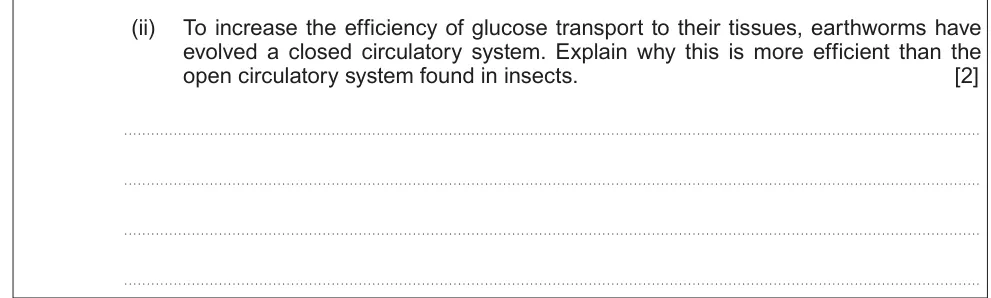
Explain why a closed circulatory system is more efficient than an open one.
Show the mark scheme

Tap an image to open it full size.
From the examiners' report: Many couldn't give the advantages: higher pressure and faster flow.
The heart and blood vessels
Question 5
A level Component 3 · June 2018 · Q2(a) · 3 marks
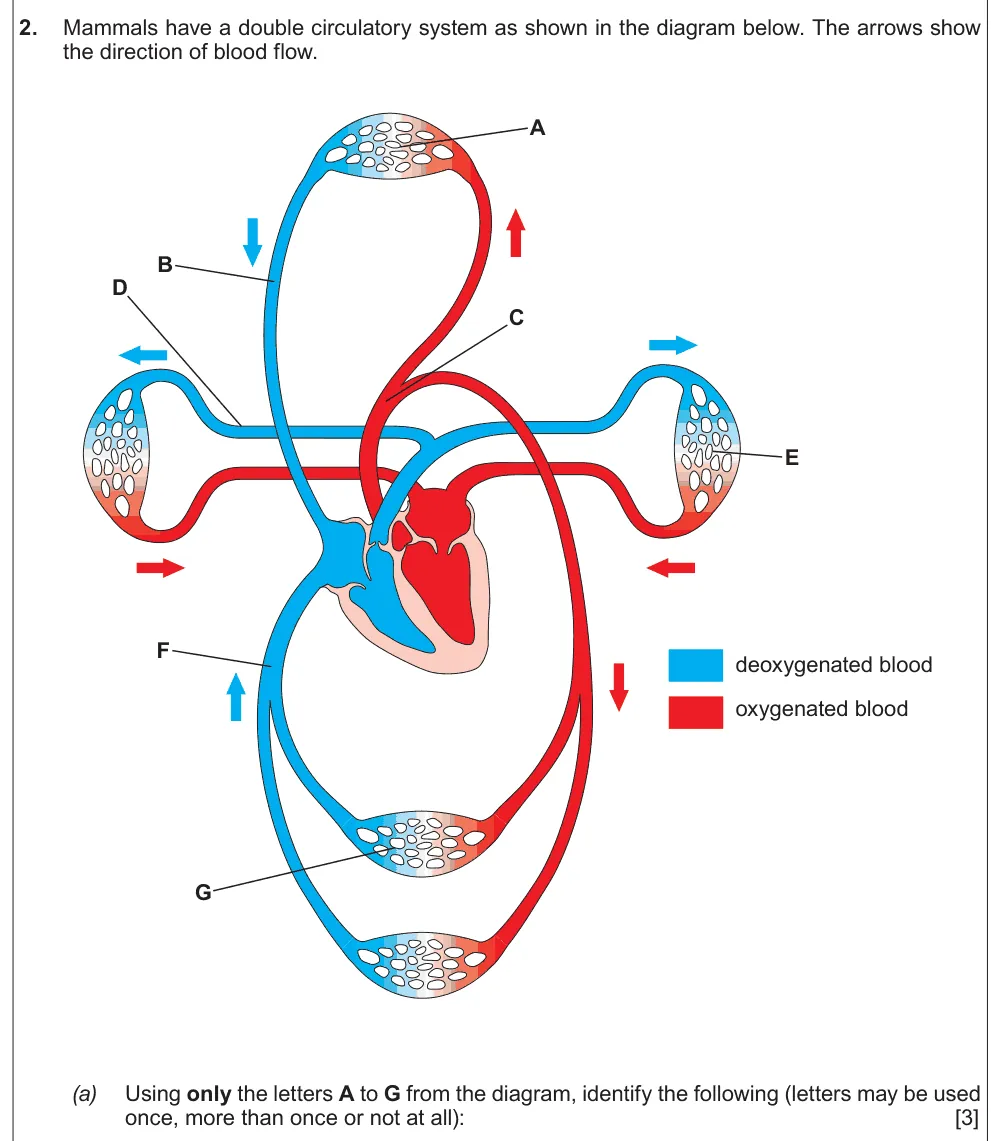
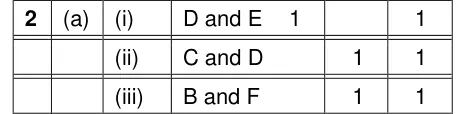
Identify blood vessels in a diagram of the double circulation.
Show the mark scheme
Tap an image to open it full size.
From the examiners' report: Most couldn't answer all three parts. Elastic recoil and skeletal muscle maintaining blood flow caused the most difficulty.
Question 6
AS Component 2 · June 2019 · Q1(c)(i) · 1 mark
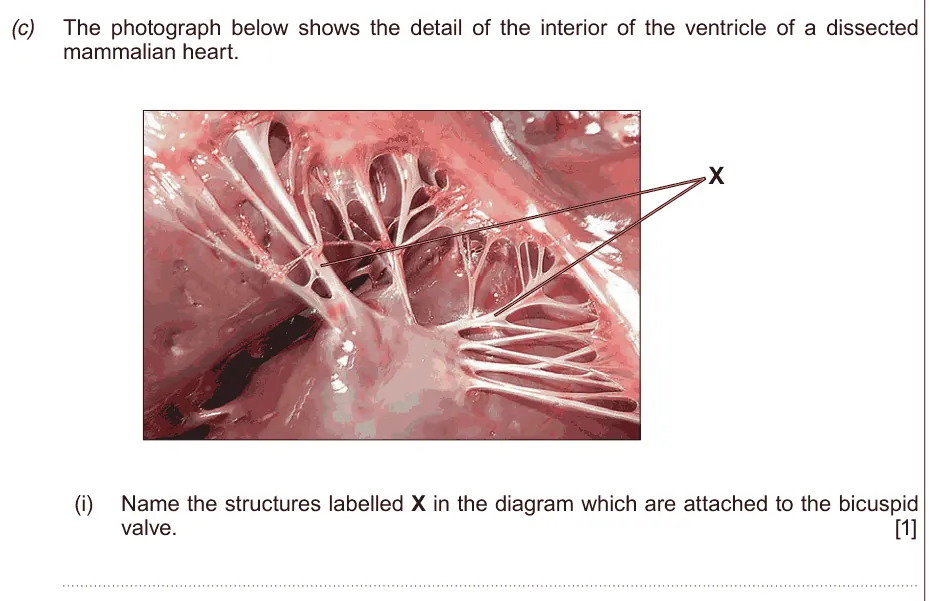
Name the structures attached to the bicuspid valve in a dissected heart.
Show the mark scheme

Tap an image to open it full size.
From the examiners' report: Surprisingly many couldn't identify the chordae tendineae. Heart dissection is a specified practical.
Question 7
AS Component 2 · June 2019 · Q1(c)(ii) · 2 marks
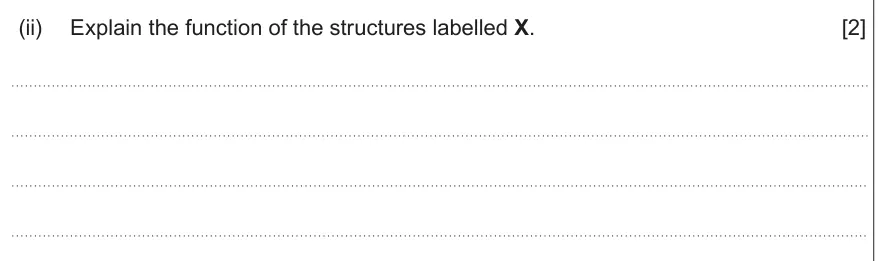
Explain the function of the chordae tendineae.
Show the mark scheme

Tap an image to open it full size.
Question 8
A level Component 3 · June 2023 · Q3(a)(i) · 3 marks
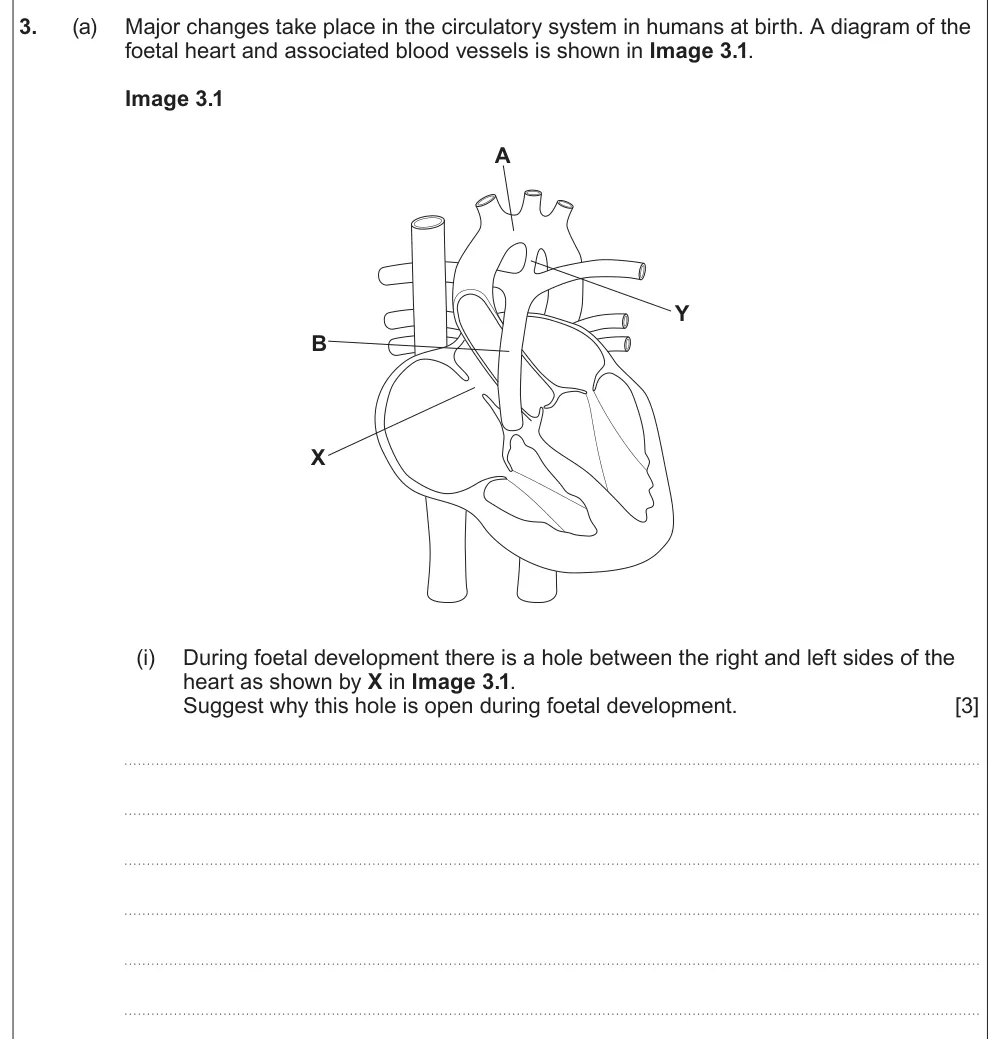
Suggest why there is a hole between the two sides of the heart during fetal development.
Show the mark scheme

Tap an image to open it full size.
From the examiners' report: Fewer answers said that the hole lets blood go from the right atrium to the left atrium, missing out the lungs.
Question 9
A level Component 3 · June 2023 · Q3(a)(ii) · 2 marks
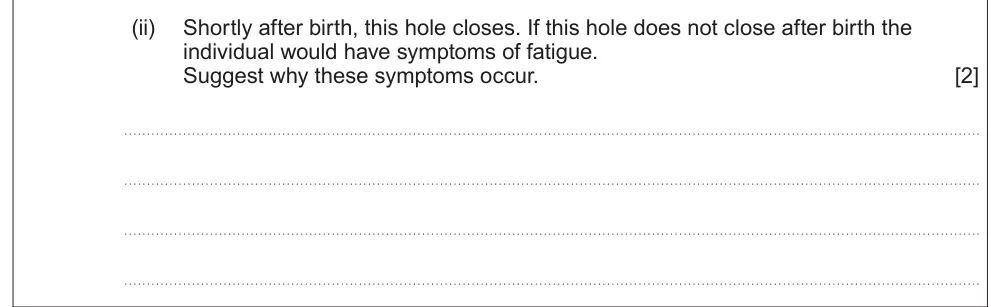
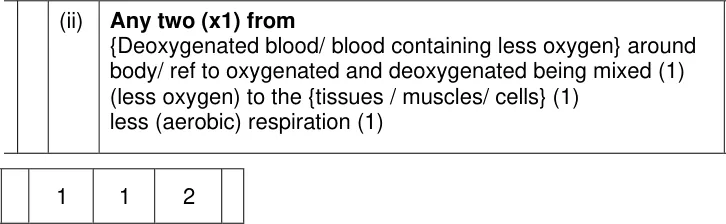
Suggest why fatigue results if the hole doesn't close after birth.
Show the mark scheme
Tap an image to open it full size.
Question 10
A level Component 3 · Autumn 2021 · Q3(d)(ii) · 2 marks
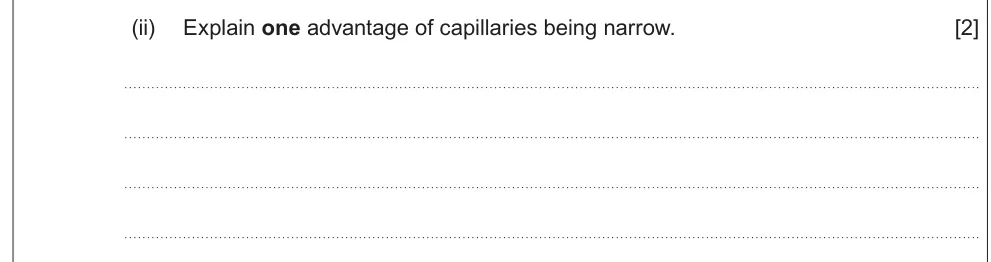
Explain one advantage of capillaries being narrow.
Show the mark scheme

Tap an image to open it full size.
The cardiac cycle
Question 11
AS Component 2 · June 2017 · Q1(b)(ii)I · 2 marks · Easy
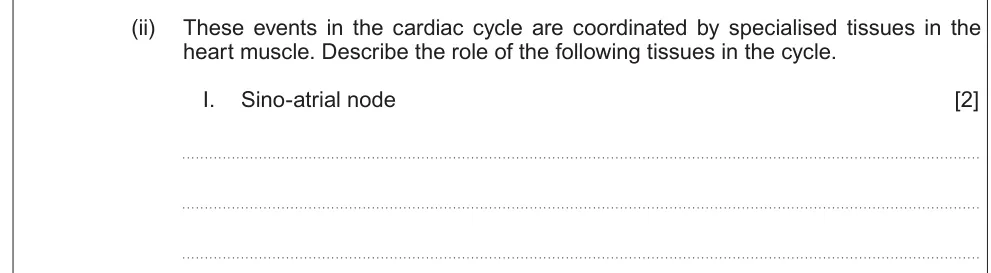
Describe the role of the sino-atrial node in the cardiac cycle.
Show the mark scheme

Tap an image to open it full size.
From the examiners' report: Most knew this. Say impulse or wave of excitation, not "message".
Question 12
AS Component 2 · June 2017 · Q1(b)(ii)II · 2 marks · Easy
Describe the role of the atrio-ventricular node in the cardiac cycle.

Show the mark scheme

Tap an image to open it full size.
Question 13
AS Component 2 · Autumn 2020 · Q3(a)(i) · 4 marks
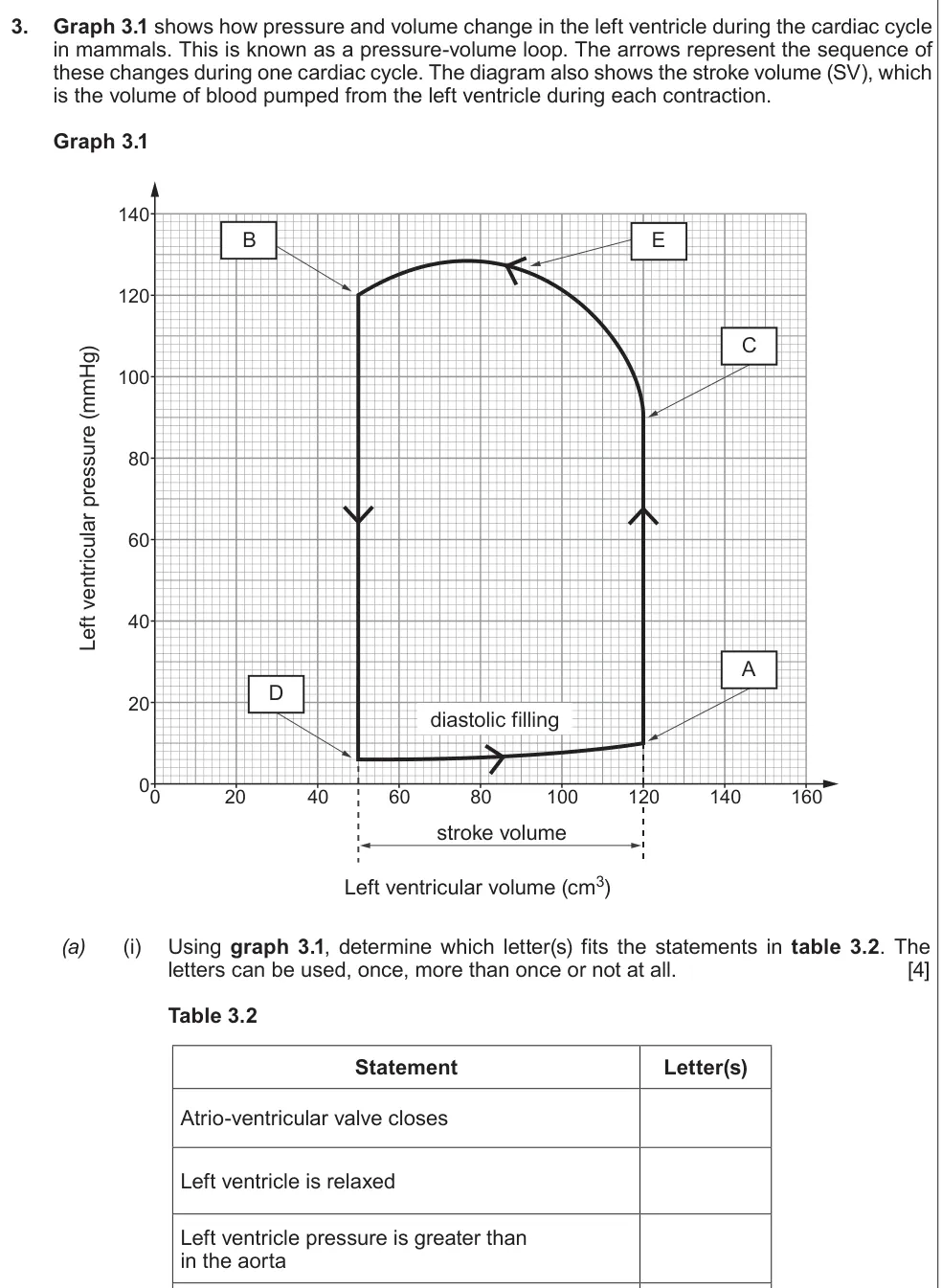
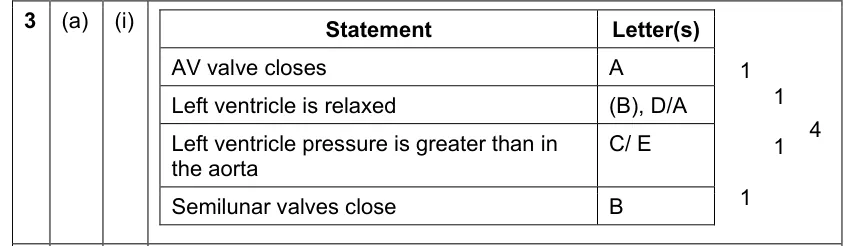
Use a pressure–volume graph to identify points in the left ventricle's cycle.
Show the mark scheme
Tap an image to open it full size.
From the examiners' report: Very few scored all four marks. The x-axis is volume, not time: falling volume means contraction.
Question 14
AS Component 2 · Autumn 2020 · Q3(b)(ii) · 3 marks
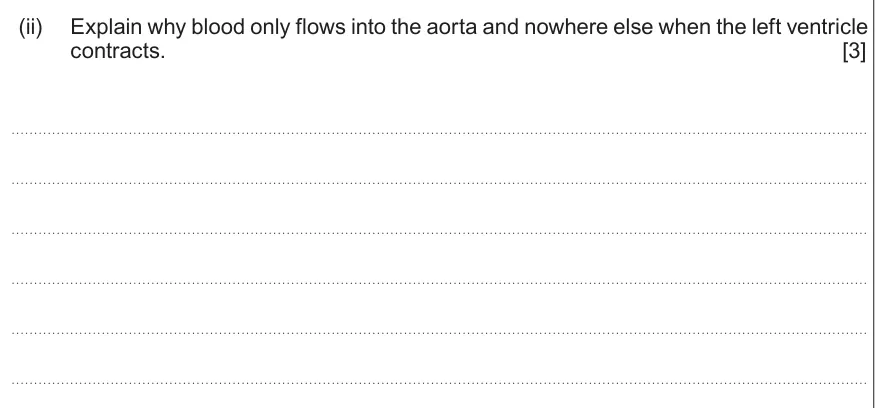
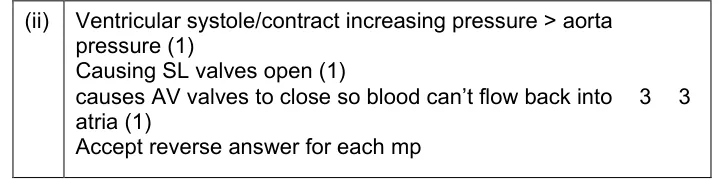
Explain why blood only flows into the aorta when the left ventricle contracts.
Show the mark scheme
Tap an image to open it full size.
From the examiners' report: Better answers described the pressure changes that open and close each valve.
Question 15
A level Component 3 · June 2017 · Q3(b)(i) · 1 mark
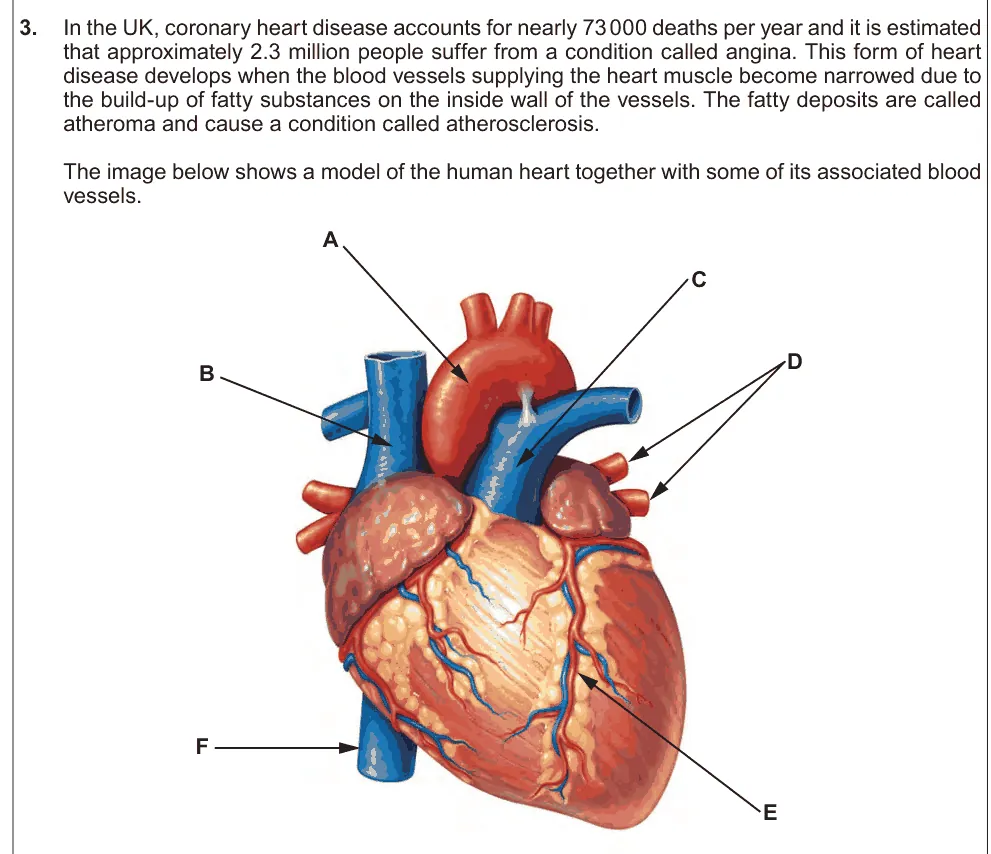
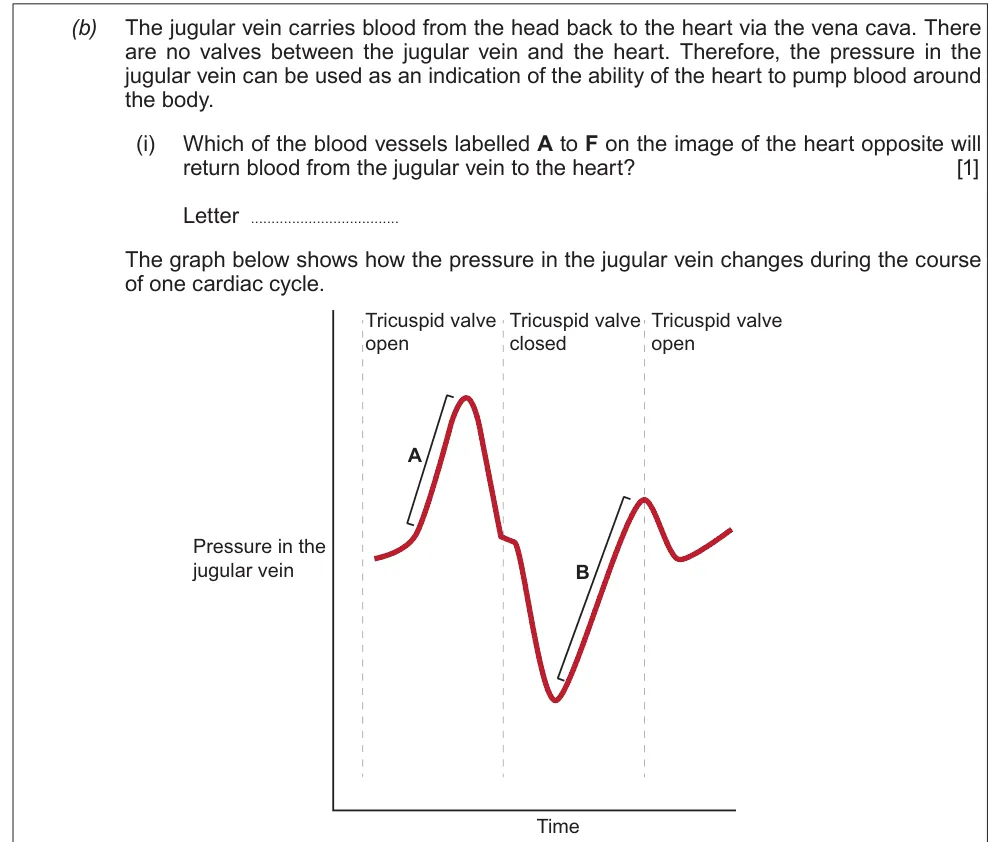
Identify the vessel that returns blood from the jugular vein to the heart.
Information from earlier in this question:
Show the mark scheme

Tap an image to open it full size.
Question 16
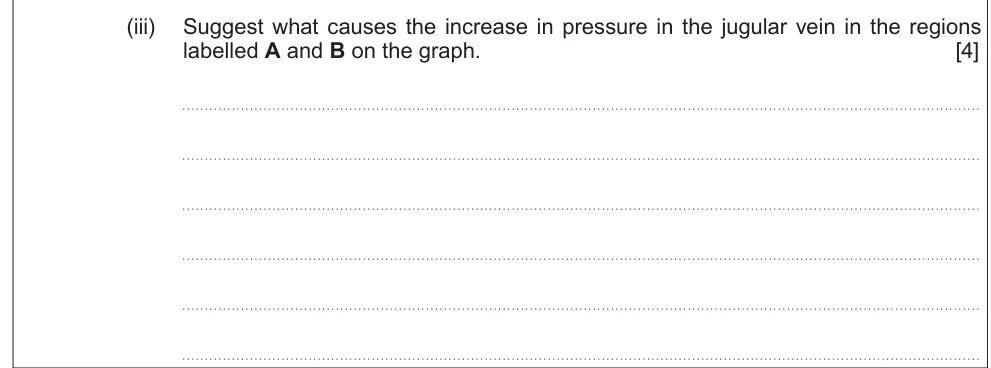
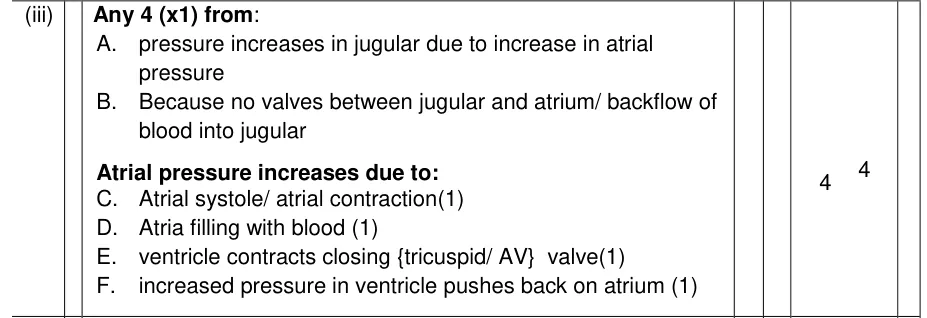
A level Component 3 · June 2017 · Q3(b)(iii) · 4 marks
Suggest what causes the increases in pressure in the jugular vein.
Show the mark scheme
Tap an image to open it full size.
From the examiners' report: Many ignored the information given and wrote about the left side. It is the right atrium, with no valves to the jugular vein.
Haemoglobin and dissociation curves
Question 17
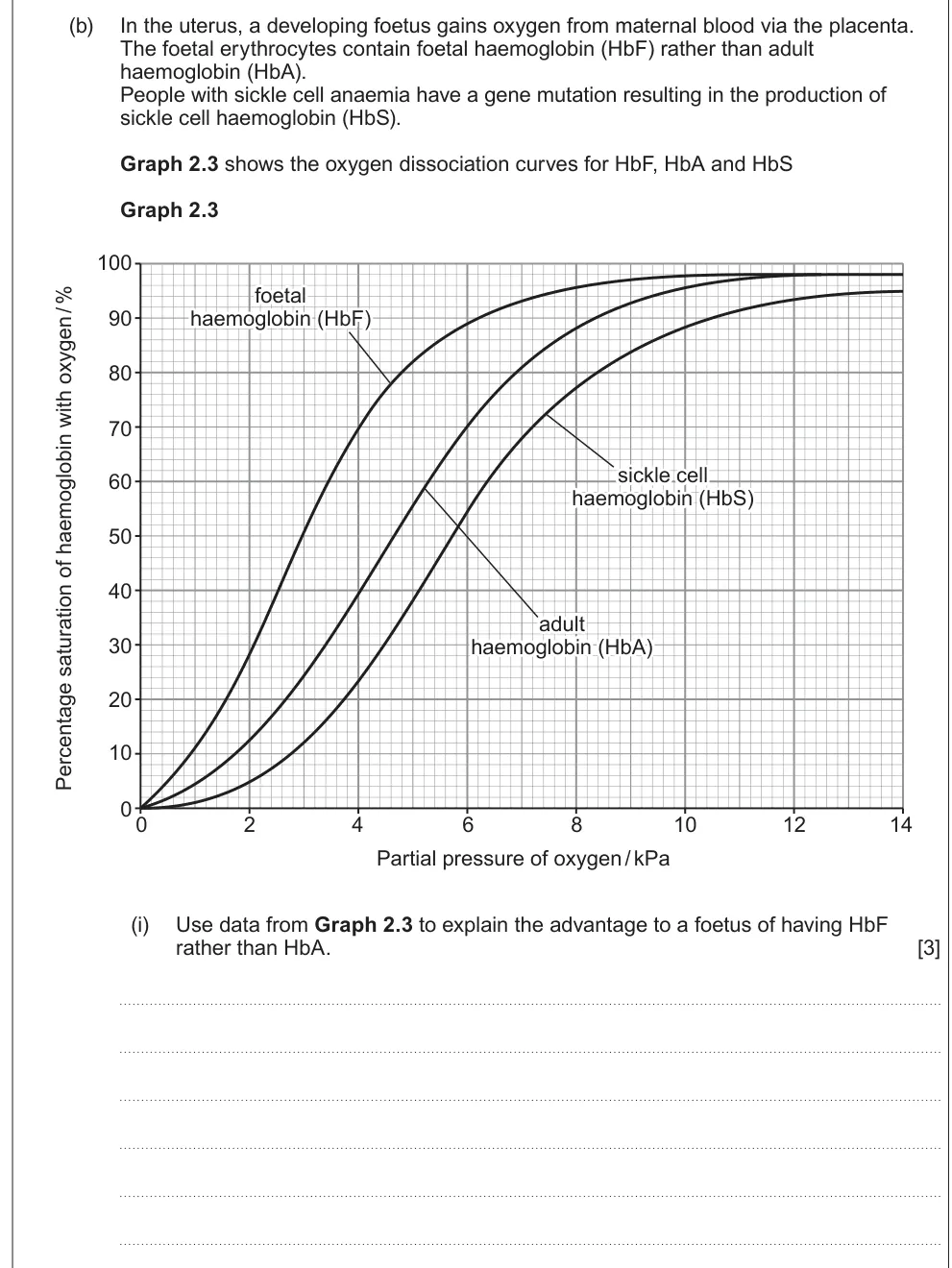
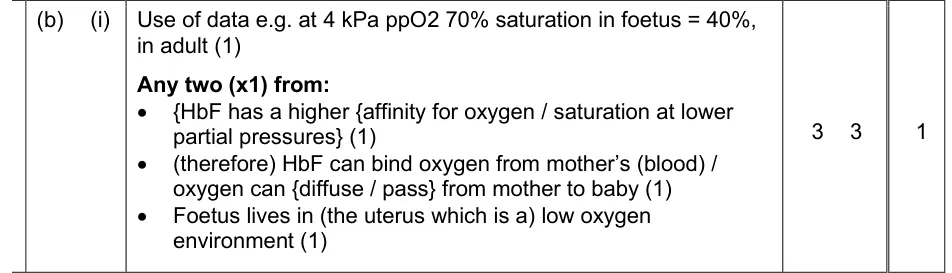
A level Component 3 · June 2025 · Q2(b)(i) · 3 marks
Use a graph to explain the advantage to a fetus of having HbF rather than HbA.
Show the mark scheme
Tap an image to open it full size.
From the examiners' report: Few used data from the graph. Quote a saturation for each at the same partial pressure.
Question 18
A level Component 3 · June 2023 · Q3(e)(i) · 2 marks · Hard
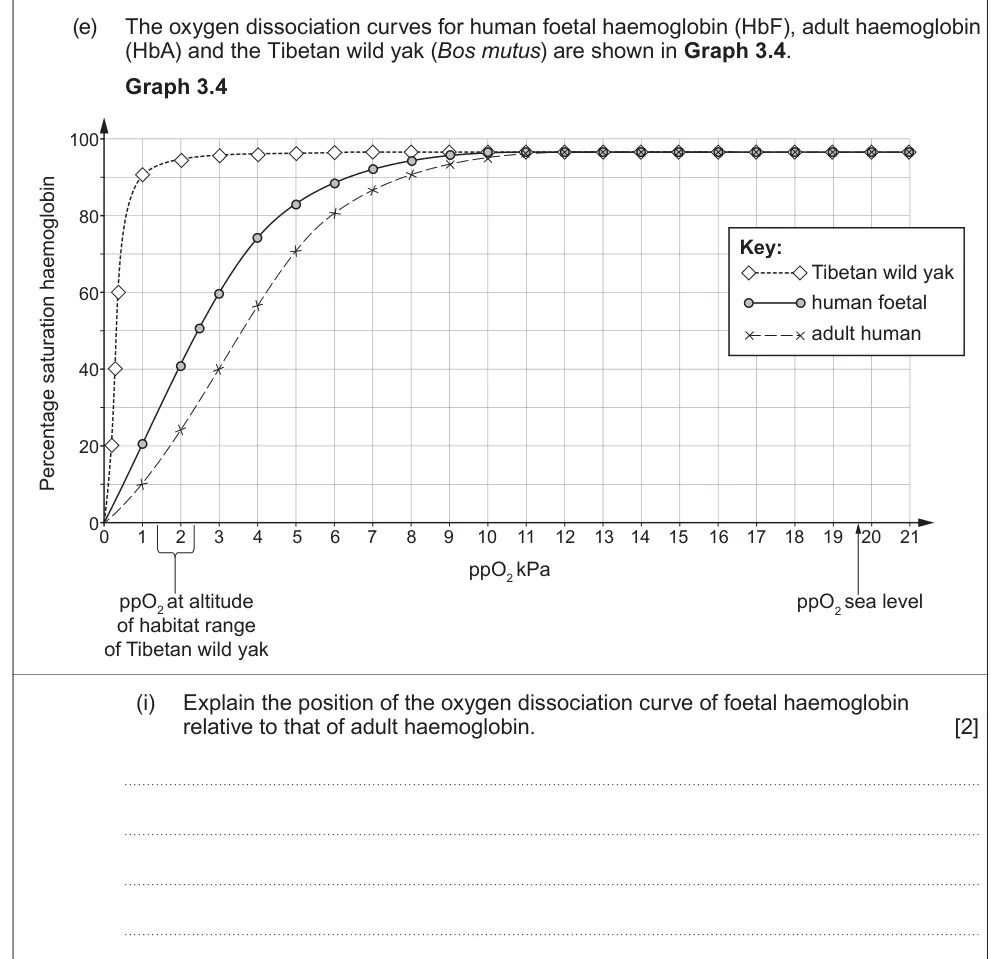
Explain the position of the fetal haemoglobin dissociation curve relative to adult haemoglobin.
Show the mark scheme

Tap an image to open it full size.
From the examiners' report: Fewer used the graph to say fetal haemoglobin is more saturated at lower partial pressures.
Question 19
A level Component 3 · Autumn 2020 · Q1(a) · 3 marks
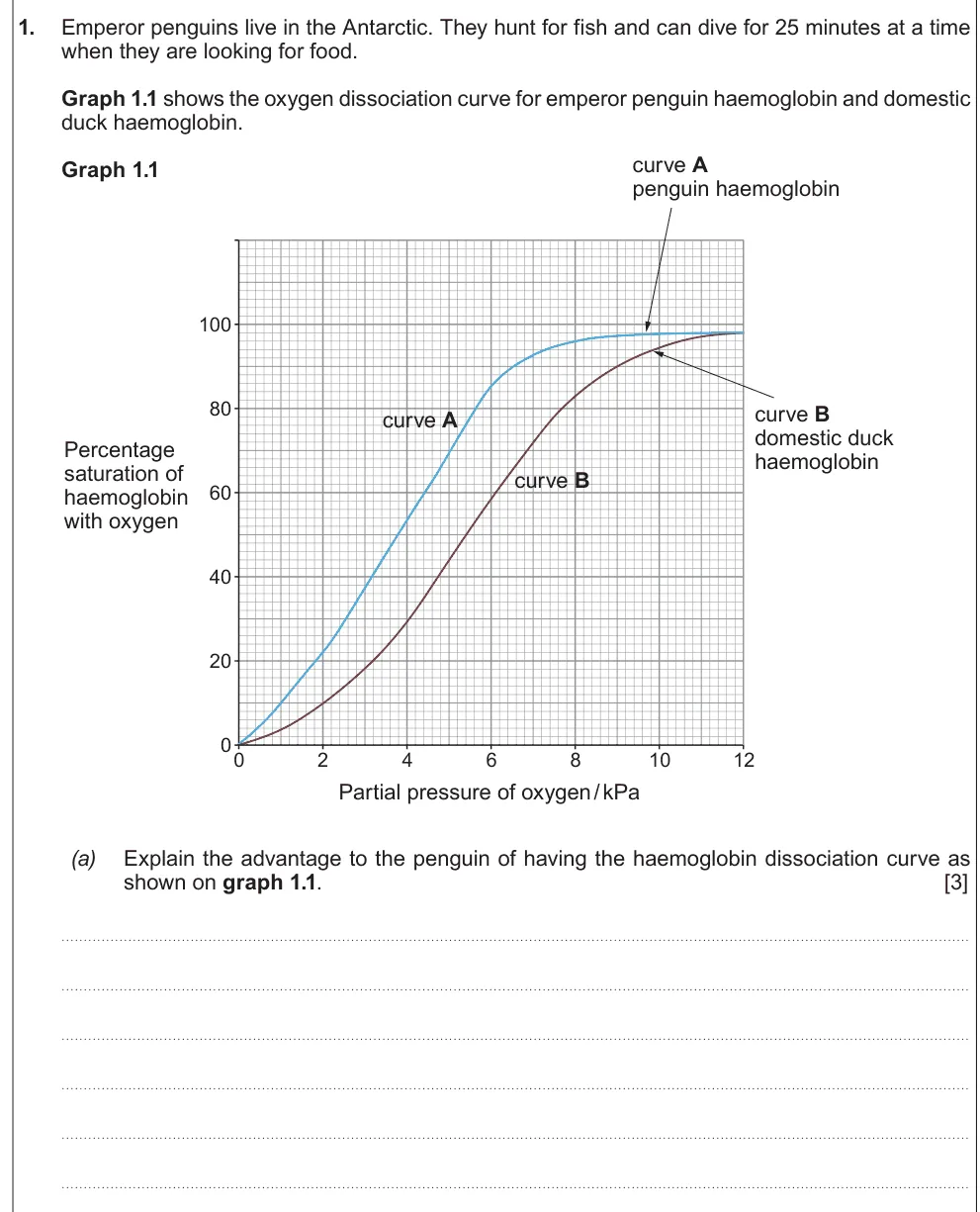
Explain the advantage to a penguin of its haemoglobin dissociation curve.
Show the mark scheme

Tap an image to open it full size.
From the examiners' report: Say the haemoglobin, not the penguin, has the higher affinity. Many missed that it acts as an oxygen store.
Question 20
AS Component 2 · June 2017 · Q4(b) · 4 marks · Hard
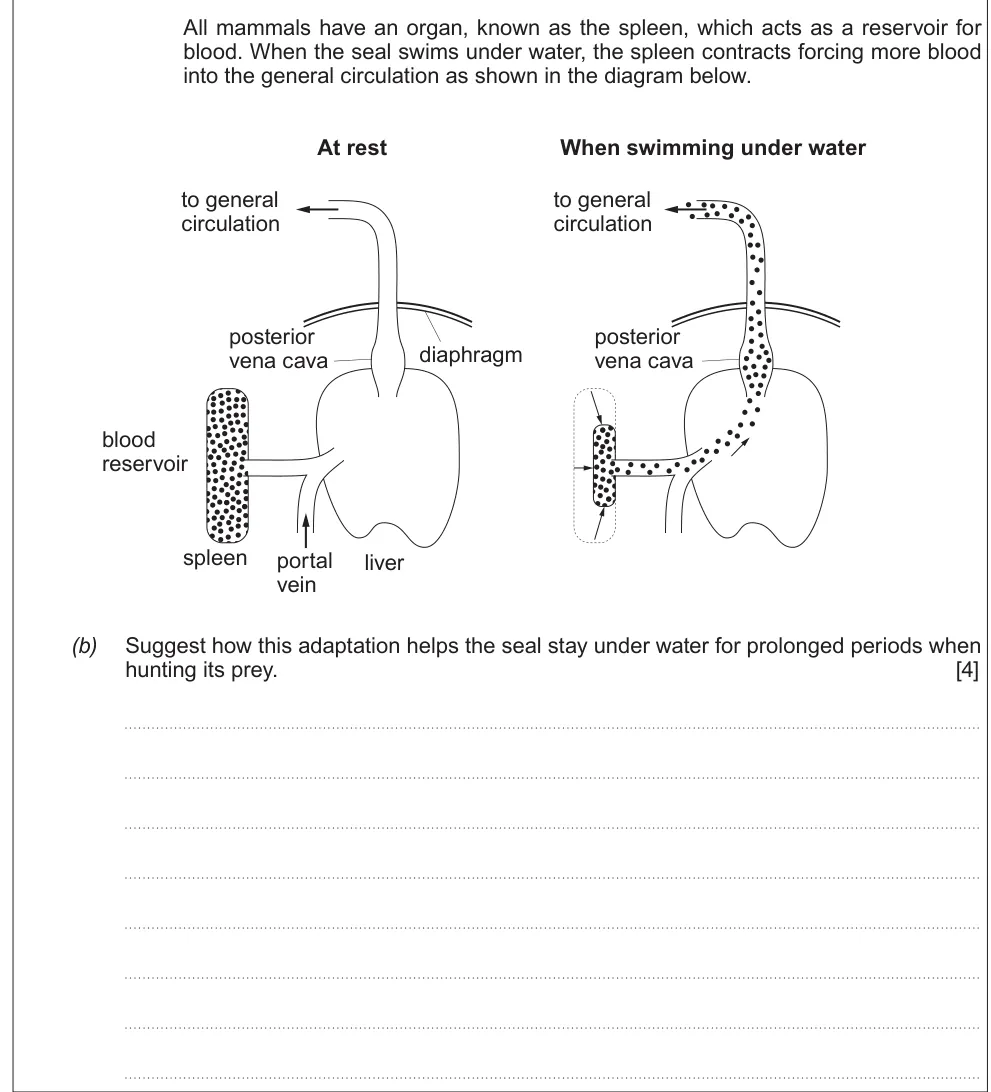
Suggest how releasing stored blood from the spleen helps a seal stay under water.
Show the mark scheme

Tap an image to open it full size.
From the examiners' report: Very few gained 4 marks. Many missed that it releases more red blood cells and haemoglobin into the circulation.
The Bohr effect and chloride shift
Question 21
AS Component 2 · June 2016 · Q1(b)(i) · 3 marks
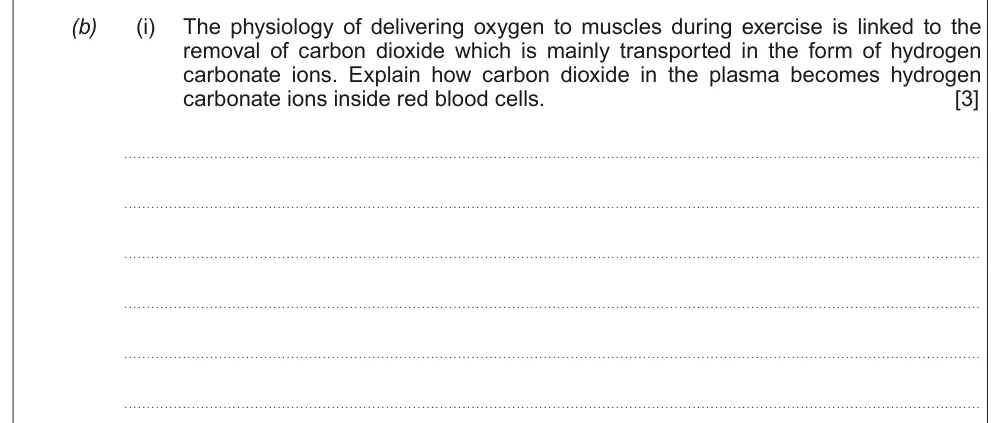
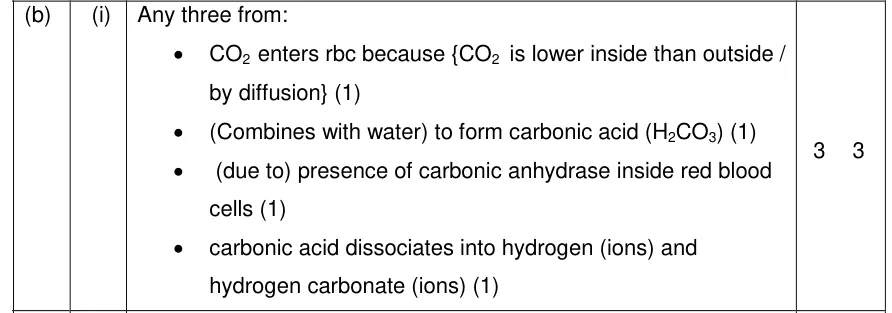
Explain how carbon dioxide in the plasma becomes hydrogencarbonate ions in red blood cells.
Show the mark scheme
Tap an image to open it full size.
From the examiners' report: Only a small minority made three distinct points. Name carbonic anhydrase and carbonic acid.
Question 22
AS Component 2 · June 2016 · Q1(b)(ii) · 2 marks · Hard
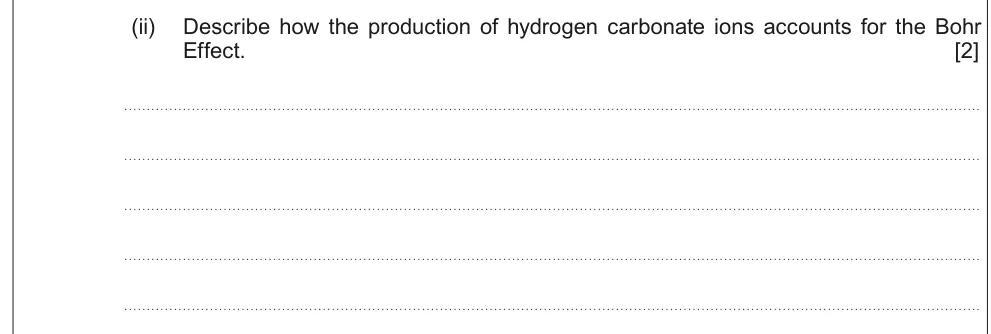
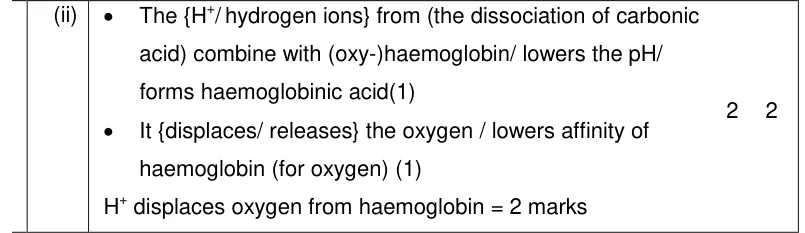
Describe how producing hydrogencarbonate ions accounts for the Bohr effect.
Show the mark scheme
Tap an image to open it full size.
Question 23
AS Component 2 · June 2019 · Q3(b)(iii) · 4 marks · Easy
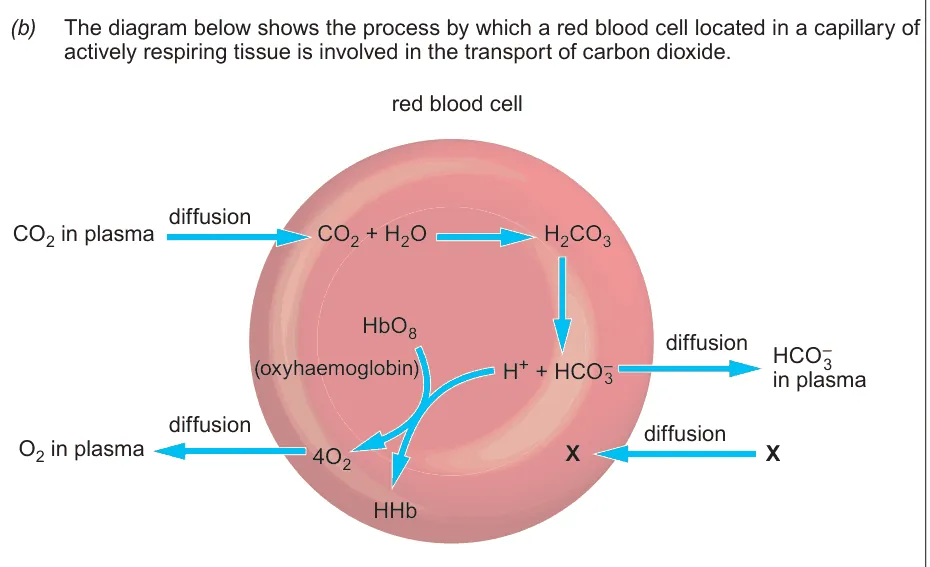
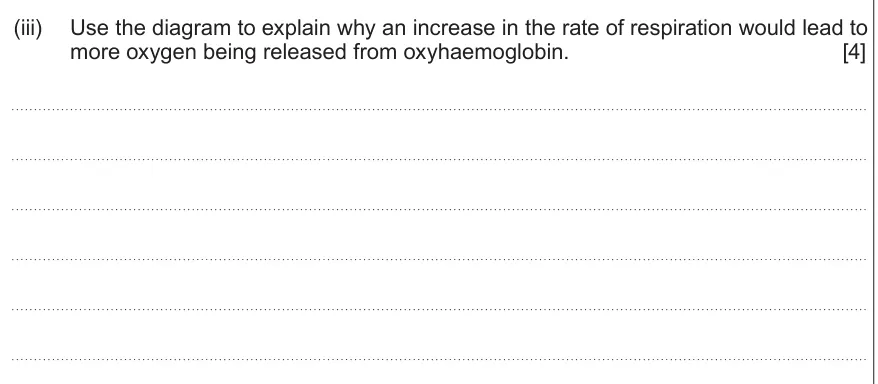
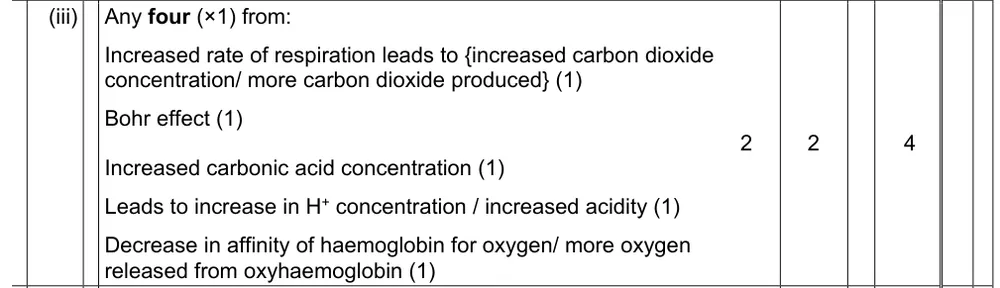
Use a diagram to explain why faster respiration releases more oxygen from oxyhaemoglobin.
Information from earlier in this question:
Show the mark scheme
Tap an image to open it full size.
Tissue fluid
Question 24
AS Component 2 · June 2018 · Q4(d) · 3 marks
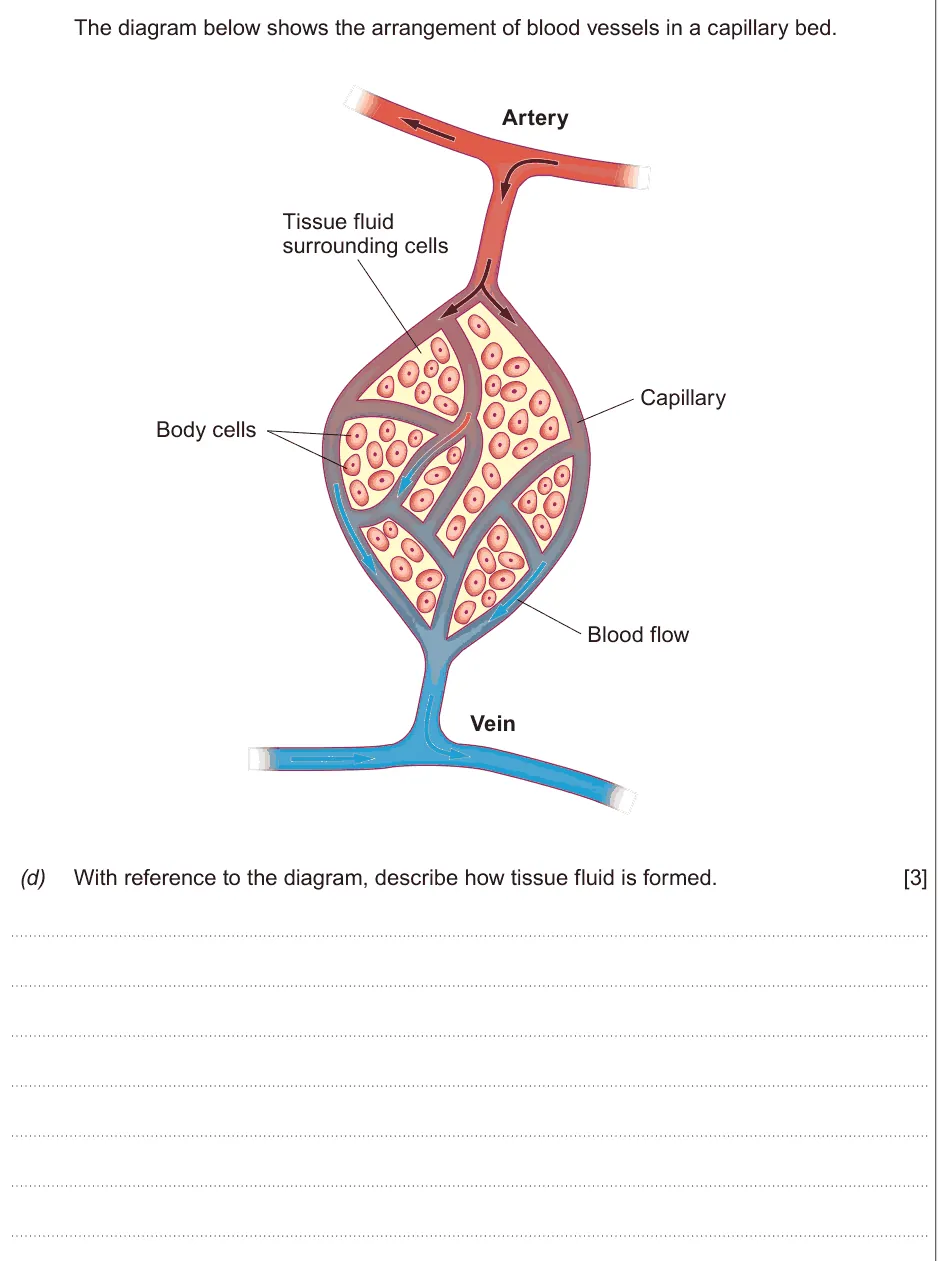
Describe how tissue fluid is formed, with reference to a diagram of a capillary bed.
Show the mark scheme

Tap an image to open it full size.
Question 25
A level Component 3 · June 2018 · Q2(b)(ii) · 4 marks
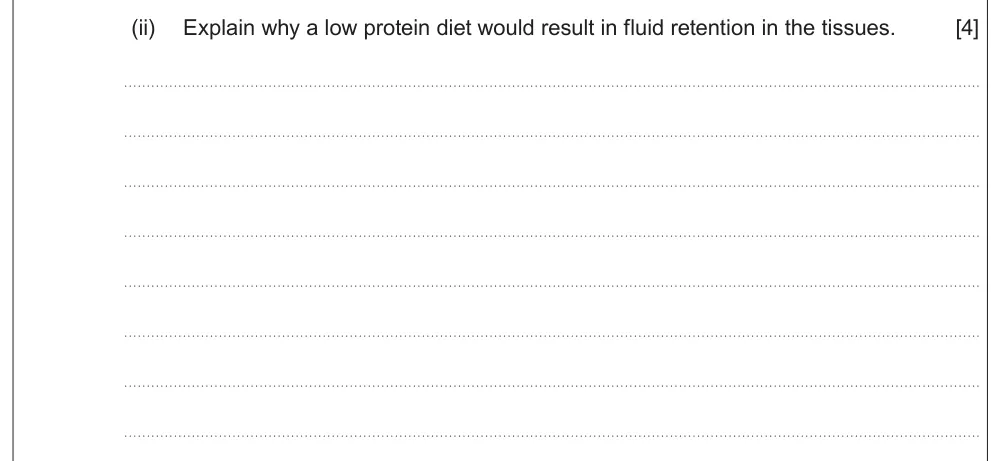
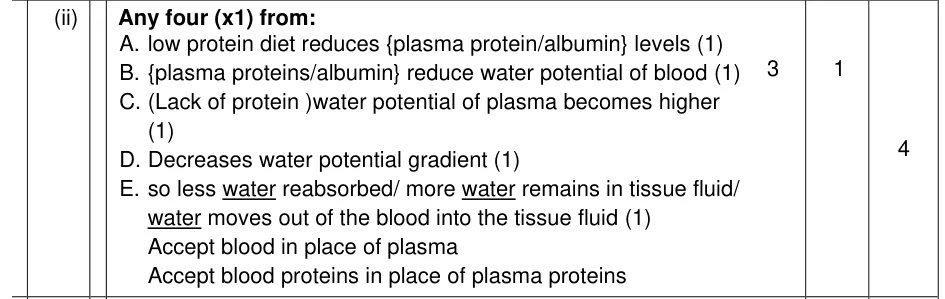
Explain why a low protein diet results in fluid retention in the tissues.
Show the mark scheme
Tap an image to open it full size.
From the examiners' report: Tissue fluid questions continue to be answered poorly. Explain how plasma proteins lower the water potential of the blood.
Question 26
A level Component 3 · June 2022 · Q4(b)(ii) · 3 marks
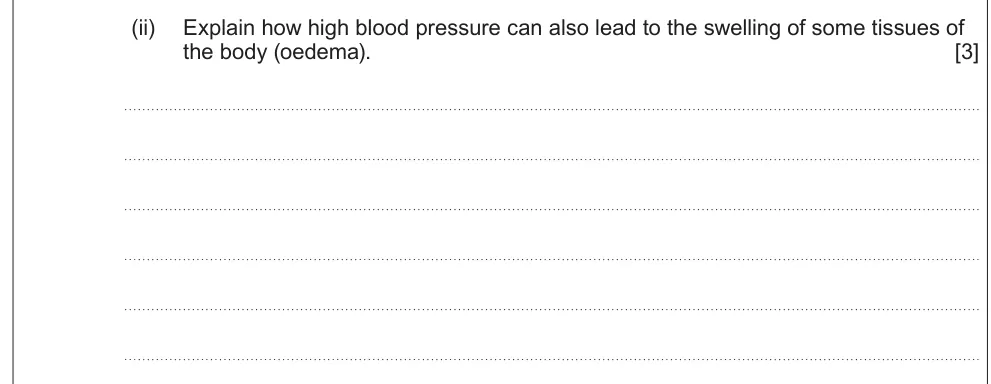
Explain how high blood pressure can lead to oedema.
Show the mark scheme

Tap an image to open it full size.
From the examiners' report: Some wrote about the kidney. This is a tissue fluid question: more fluid forms than can be reabsorbed.
Where students lose marks (from Eduqas examiners' reports and mark schemes)
Each point below is followed by wording that gained marks.
Read the axes: Very few gained all four marks; many assumed the x-axis was time.
✔ Gains credit: Reductions in volume are contractions: "AV valve closes A".
Haemoglobin, not the animal: Some said the penguin had a higher affinity for oxygen.
✔ Gains credit: "Haemoglobin has a higher affinity for oxygen", "acts as an oxygen store".
Plasma proteins matter: There was a lack of understanding of the role of plasma proteins in reabsorbing water.
✔ Gains credit: "Plasma proteins reduce water potential of blood".
Use the information given: Many ignored that there are no valves between the jugular vein and the heart.
✔ Gains credit: "No valves between jugular and atrium / backflow of blood into jugular".
Quote the graph: Candidates did not often use the data from the graph.
✔ Gains credit: e.g. "at 4 kPa 70% saturation in foetus, 40% in adult".
Explain the efficiency: Some just restated that double systems are more efficient.
✔ Gains credit: Blood "delivered (to organs) under (high) pressure".
Download the questions
Download the PDF pack (26 questions, mark schemes at the end)
Keep practising
- Adaptations for Gas Exchange (3.1): Eduqas A Level Biology exam questions by topic
- Transport in Plants (3.2): Eduqas A Level Biology exam questions by topic
- Adaptations for Nutrition (3.3): Eduqas A Level Biology exam questions by topic
- Homeostasis and the Kidney (3.4): Eduqas A Level Biology exam questions by topic
- The Nervous System (3.5): Eduqas A Level Biology exam questions by topic
- Eduqas A level Biology past papers, mark schemes and examiners' reports
- Eduqas A level Biology grade boundaries
- Ask about Eduqas A level Biology lessons with Sam on WhatsApp
Questions, mark schemes and examiners' report extracts © WJEC CBAC Ltd (Eduqas).