

Adaptations for nutrition covers autotrophic and heterotrophic nutrition, saprotrophic, holozoic and parasitic feeding, intracellular digestion in Amoeba, the structure of the human gut (with the duodenum and ileum slides), the enzymes and conditions of digestion, the guts and teeth of herbivores (especially ruminants) and carnivores, and the parasites Taenia and Pediculus. This page mixes A level and AS questions.
Definitions and the human gut are usually well known, but marks are lost on precision: name the enzyme (amylase, not carbohydrase), say endopeptidases make shorter polypeptides, not amino acids, and remember that saprotrophs absorb the products of external digestion. In comparison questions, link the gut to the diet: milk is high in protein, so a calf's abomasum is large. Use what you can see in the image when describing teeth or guts.
I don't teach the Eduqas specification myself, so for one-to-one help I recommend Sam. He teaches Eduqas A level Biology at a top-rated sixth form college and is very popular with his students. You can ask about lessons with Sam on WhatsApp using the link at the bottom of this page.
What you need from GCSE and Year 12
Each question on this page assumes you're secure on these ideas. If any of them feels shaky, look it up before you start.
- Digestion breaks large insoluble molecules into small soluble ones that can be absorbed.
- Amylase digests starch, proteases digest protein and lipases digest lipids.
- Villi in the small intestine give a large surface area for absorption.
- Plants make their own food; animals and fungi must take in organic food.
Key terms
These words come up in the questions and mark schemes. Examiners expect you to use them exactly.
- Autotroph: an organism that makes organic molecules from inorganic ones, using light or chemical energy.
- Holozoic: ingesting food and digesting it internally, then absorbing and egesting.
- Saprotrophic: secreting enzymes onto dead material and absorbing the products of digestion.
- Endopeptidase: an enzyme that hydrolyses peptide bonds within a polypeptide, making shorter chains.
- Exopeptidase: an enzyme that removes amino acids from the ends of a polypeptide.
- Rumen: the chamber of a ruminant's stomach where microorganisms digest cellulose.
- Abomasum: the true stomach of a ruminant, where proteins are digested.
- Endoparasite: a parasite that lives inside its host, such as Taenia.
What these questions cover (Eduqas 3.3)
The questions test these statements from Component 3 (Requirements for Life) of the Eduqas A level Biology specification (A400). Nutrition is in the AS course too, so AS questions (B400) are included and marked AS.
- (a) the terms autotrophic and heterotrophic and that autotrophic organisms can be photoautotrophic or chemoautotrophic
- (b) the terms saprotrophic/ saprobiotic, holozoic, parasitic in relation to heterotrophic organisms
- (c) saprotrophic nutrition involving the secretion of enzymes, external digestion of food substances followed by absorption of the products of digestion into the organism, e.
- (e) nutrition in unicellular organisms, e.g. Amoeba, food particles are absorbed and digestion is carried out intracellularly
- (g) the adaptations of the human gut to a mixed, omnivorous diet that includes both plant and animal material, including examination of microscope slides of duodenum and ileu
- (h) the efficient digestion of different food substances requiring different enzymes and different conditions
- (i) the adaptations of herbivore guts and dentition, in particular ruminants to a high cellulose diet and the adaptations of carnivore guts and dentition to a high protein di
- (j) parasites
How to use this page
Write your answer on paper before you open the mark scheme. Allow about 1.2 minutes per mark: the 24 questions are worth 56 marks, so about 67 minutes in total. Then mark your answer strictly against the mark scheme and read the examiners' tip underneath it. If you'd rather print the questions, download the PDF pack.
Modes of nutrition
Question 1
A level Component 3 · June 2022 · Q3(a)(i) · 1 mark
Define the term holozoic.
Show the mark scheme

Tap an image to open it full size.
Question 2
AS Component 2 · June 2018 · Q1(a) · 1 mark
Define the term saprotrophic.
Show the mark scheme

Tap an image to open it full size.
From the examiners' report: The most common error was leaving out that the products of digestion are absorbed.
Question 3
AS Component 2 · June 2024 · Q2(b)(iv) · 2 marks
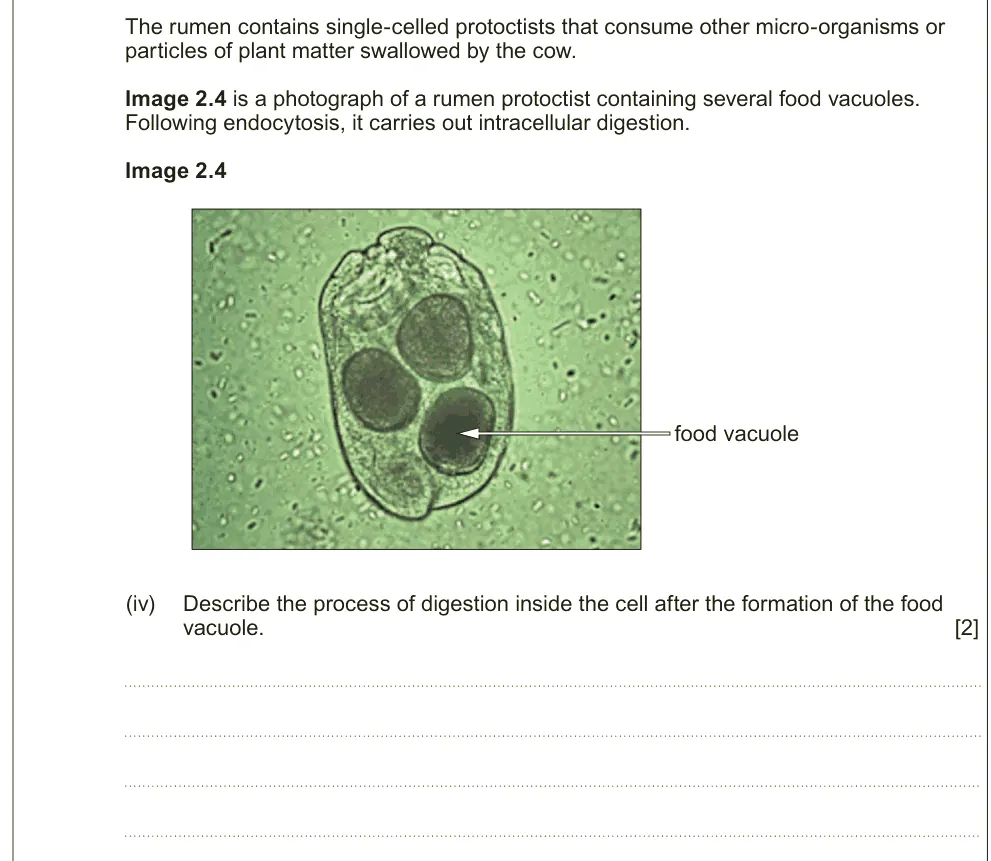
Describe digestion inside a protoctist cell after a food vacuole forms.
Show the mark scheme

Tap an image to open it full size.
From the examiners' report: Some wrote "lysozyme" when they meant lysosome.
The human gut
Question 4
A level Component 3 · Autumn 2021 · Q1(a) · 2 marks
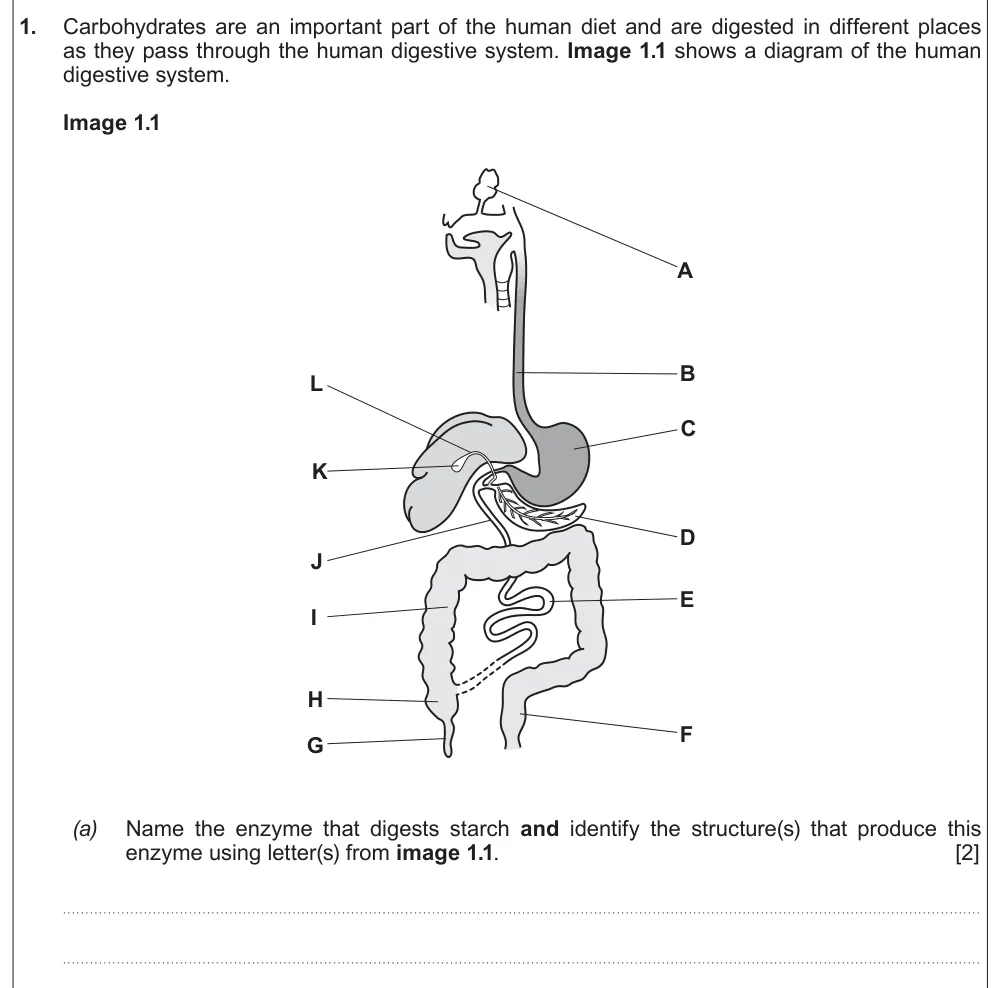
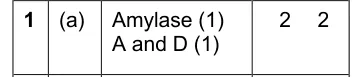
Name the enzyme that digests starch and identify the structures that make it.
Show the mark scheme
Tap an image to open it full size.
From the examiners' report: Carbohydrase wasn't precise enough, and many gave one structure or too many.
Question 5
A level Component 3 · June 2024 · Q2(a)(i)I · 3 marks
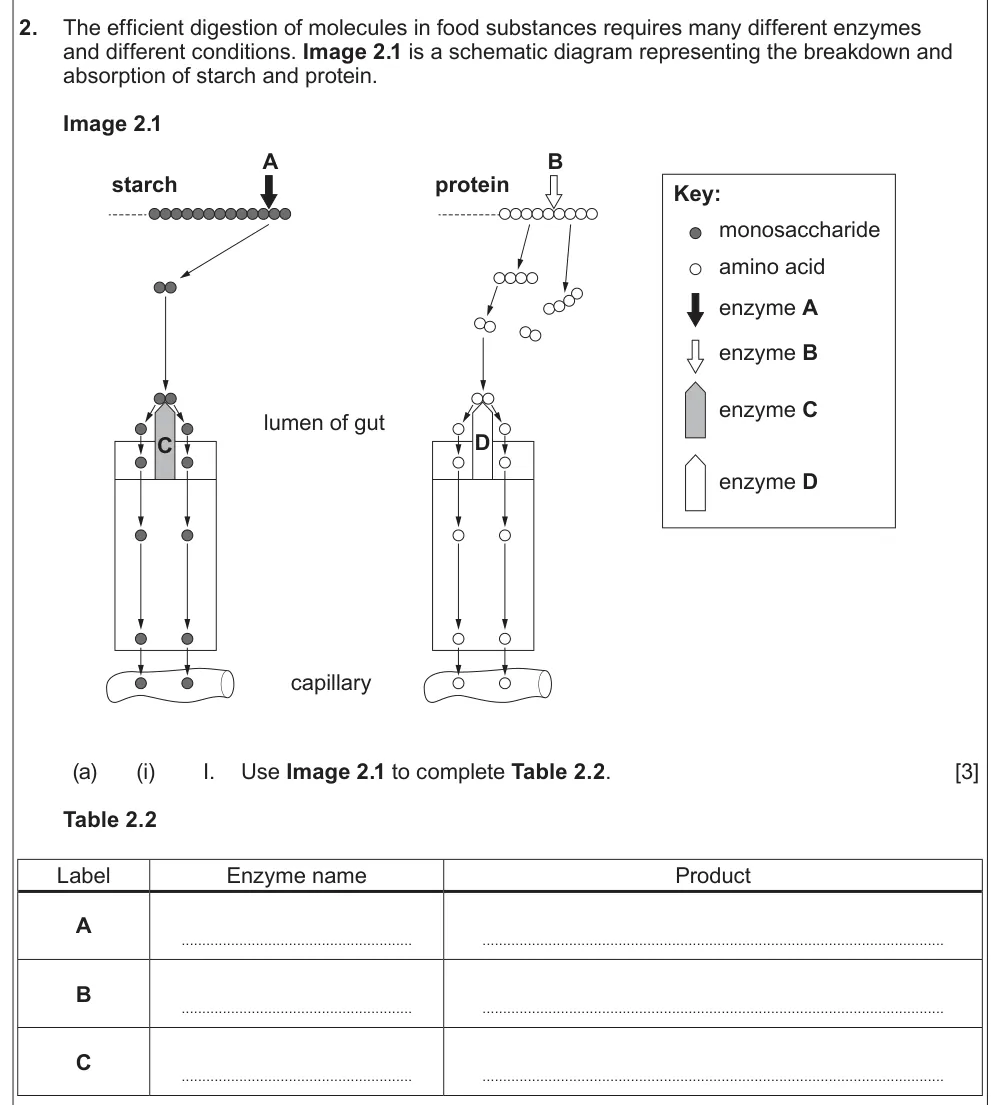
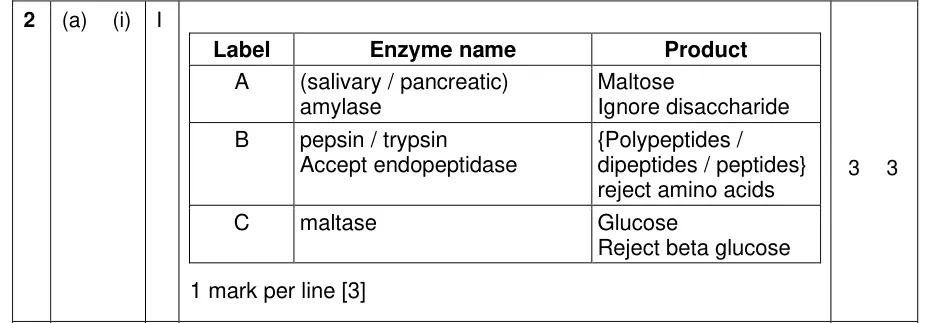
Name the enzymes and products at three stages of digestion.
Show the mark scheme
Tap an image to open it full size.
From the examiners' report: Many didn't name the actual enzyme, or said endopeptidases produce amino acids instead of shorter polypeptides.
Question 6
A level Component 3 · June 2018 · Q4(b) · 3 marks
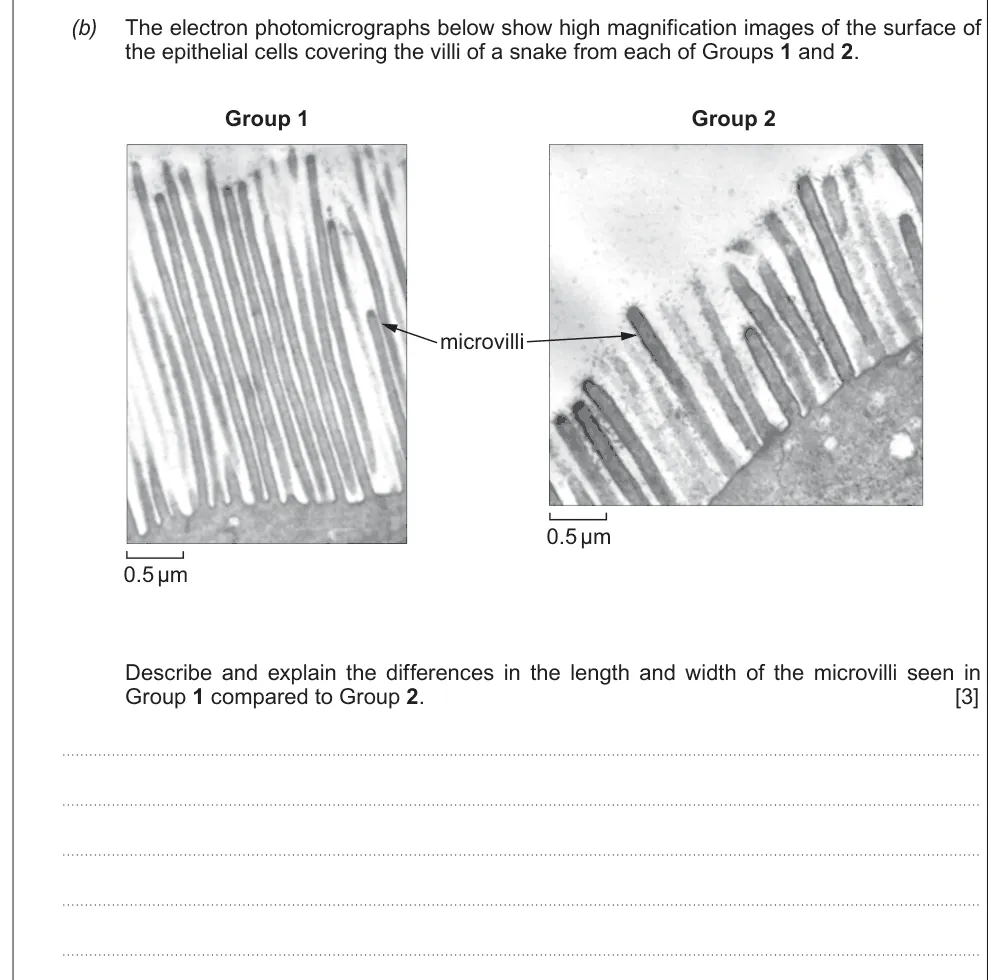
Describe and explain differences in the microvilli of fed and unfed snakes.
Show the mark scheme

Tap an image to open it full size.
From the examiners' report: Most linked longer microvilli to surface area, but not thinner to a shorter diffusion distance.
Question 7
A level Component 3 · June 2018 · Q4(c) · 2 marks
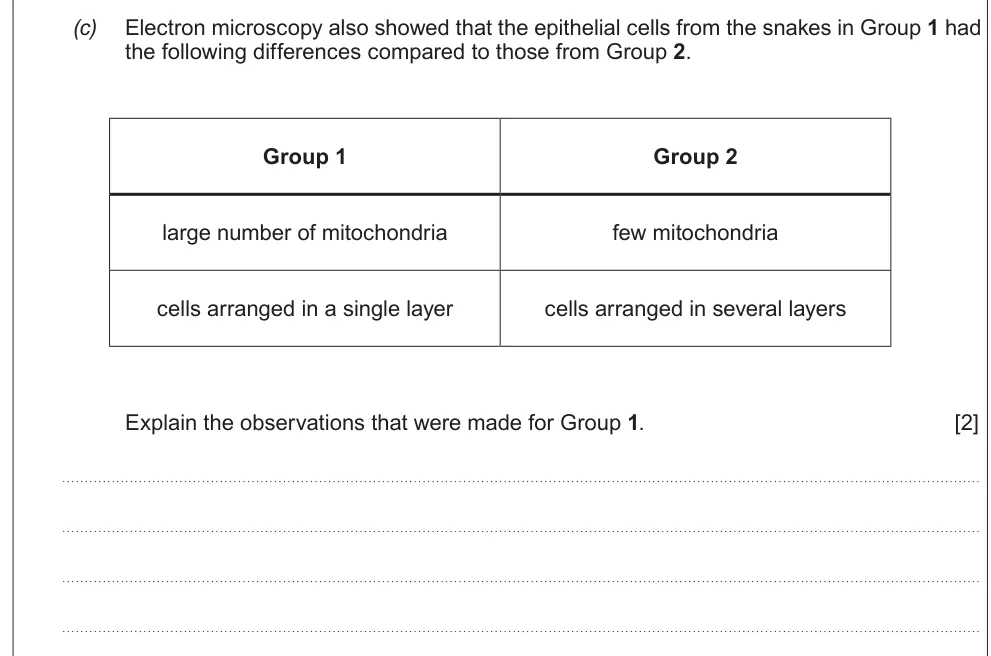
Explain why gut epithelial cells of fed snakes have many mitochondria and a single layer.
Show the mark scheme

Tap an image to open it full size.
From the examiners' report: Link mitochondria to ATP for active transport or enzyme synthesis, and a single layer to a short diffusion distance.
Question 8
AS Component 2 · June 2024 · Q2(c)(i) · 1 mark
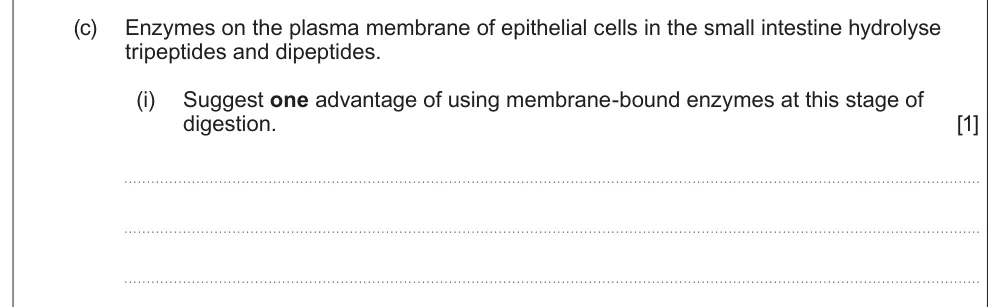
Suggest one advantage of membrane-bound enzymes in the small intestine.
Show the mark scheme

Tap an image to open it full size.
From the examiners' report: Many knew where these enzymes are but couldn't suggest why: they aren't lost in the faeces.
Question 9
AS Component 2 · June 2024 · Q2(c)(ii) · 2 marks · Easy
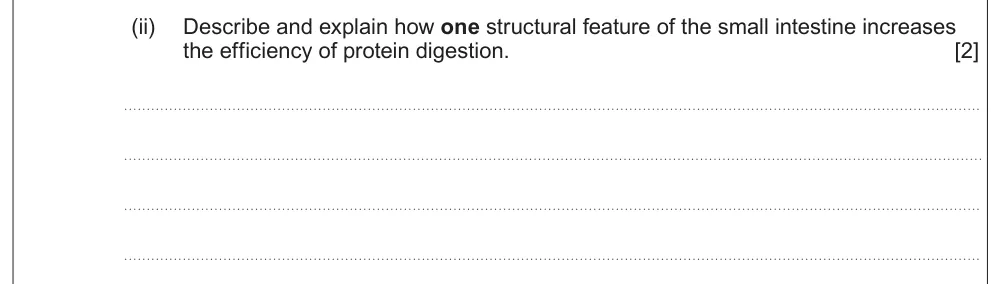
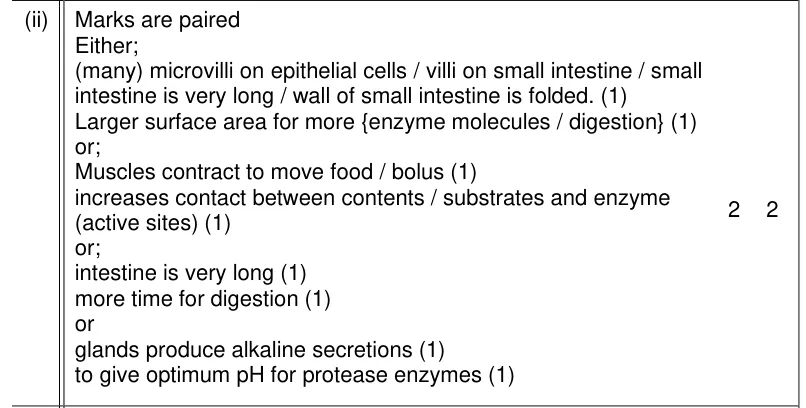
Describe and explain a feature of the small intestine that makes protein digestion efficient.
Show the mark scheme
Tap an image to open it full size.
From the examiners' report: Some answered about absorption, but the question asked about digestion.
Question 10
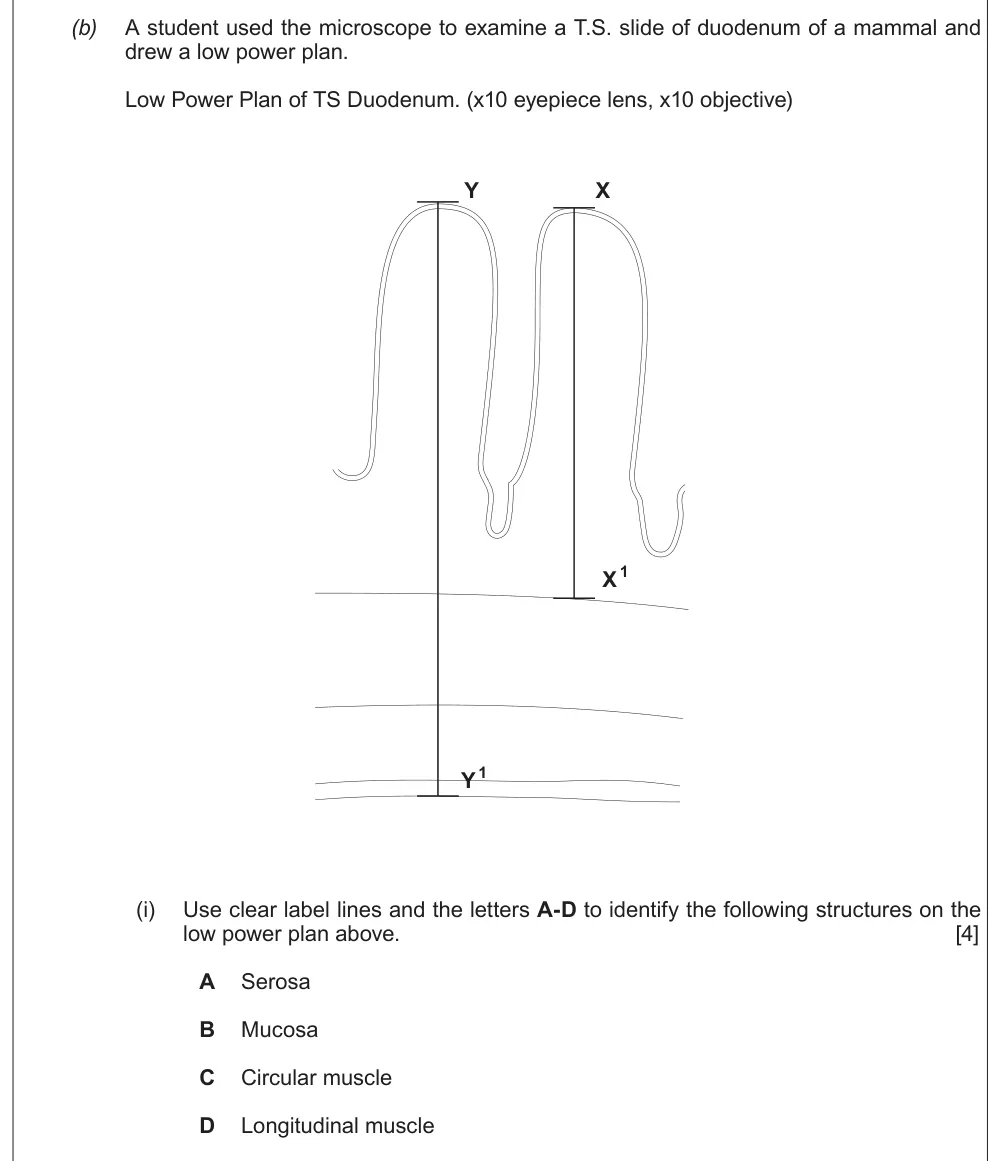
AS Component 2 · June 2017 · Q3(b)(i) · 4 marks · Easy
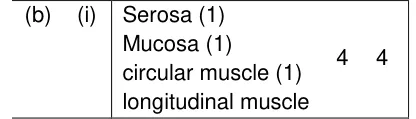
Label the serosa, mucosa and muscle layers on a low power plan of the duodenum.
Show the mark scheme
Tap an image to open it full size.
Digestive enzymes
Question 11
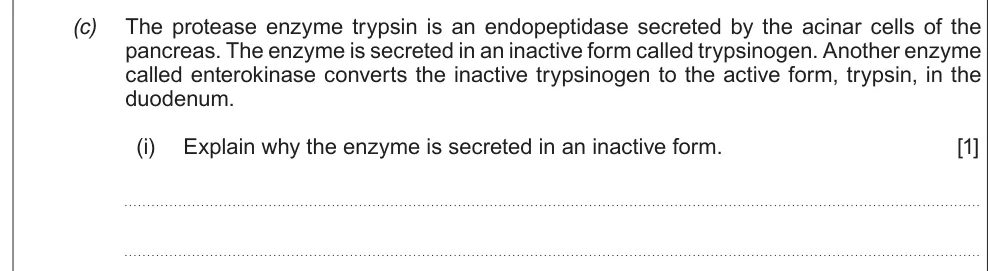
AS Component 2 · June 2017 · Q3(c)(i) · 1 mark · Easy
Explain why trypsin is secreted in an inactive form.
Show the mark scheme

Tap an image to open it full size.
From the examiners' report: Be clear: the active enzyme would digest the cells that make it.
Question 12
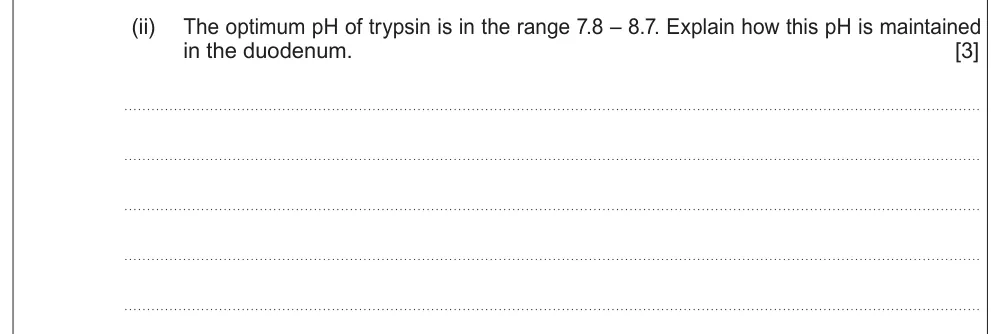
AS Component 2 · June 2017 · Q3(c)(ii) · 3 marks · Easy
Explain how the pH of the duodenum is kept between 7.8 and 8.7.
Show the mark scheme

Tap an image to open it full size.
Question 13
A level Component 3 · June 2022 · Q3(a)(ii) · 2 marks
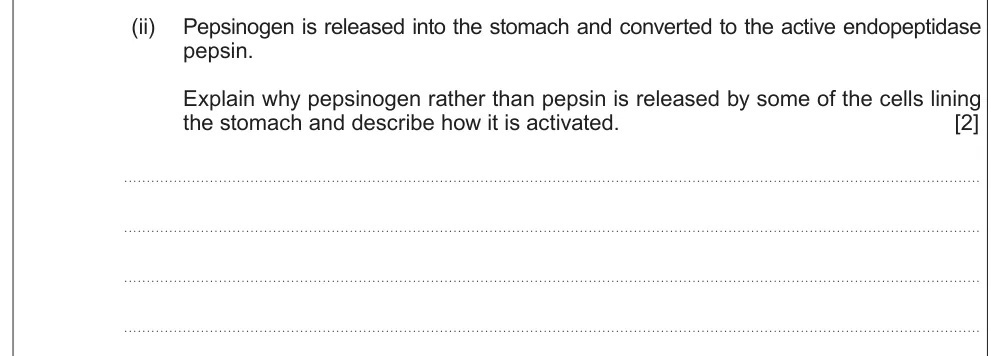
Explain why stomach cells release pepsinogen, not pepsin, and how it is activated.
Show the mark scheme

Tap an image to open it full size.
Question 14
A level Component 3 · June 2022 · Q3(c)(i) · 3 marks
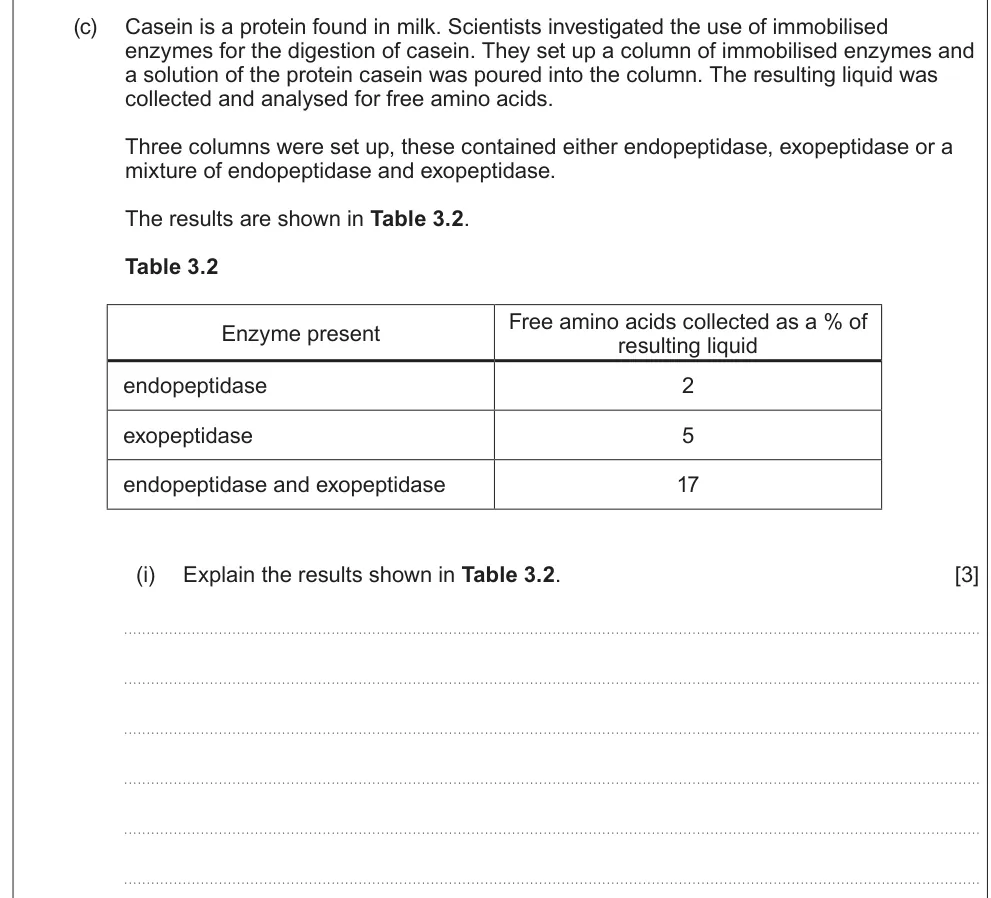
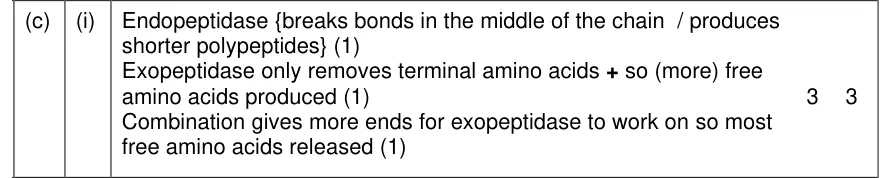
Explain why endopeptidase and exopeptidase together release the most free amino acids.
Show the mark scheme
Tap an image to open it full size.
From the examiners' report: Rewriting the data gains nothing. Endopeptidases make more ends for exopeptidases to work on.
Question 15
A level Component 3 · June 2017 · Q5(a) · 3 marks
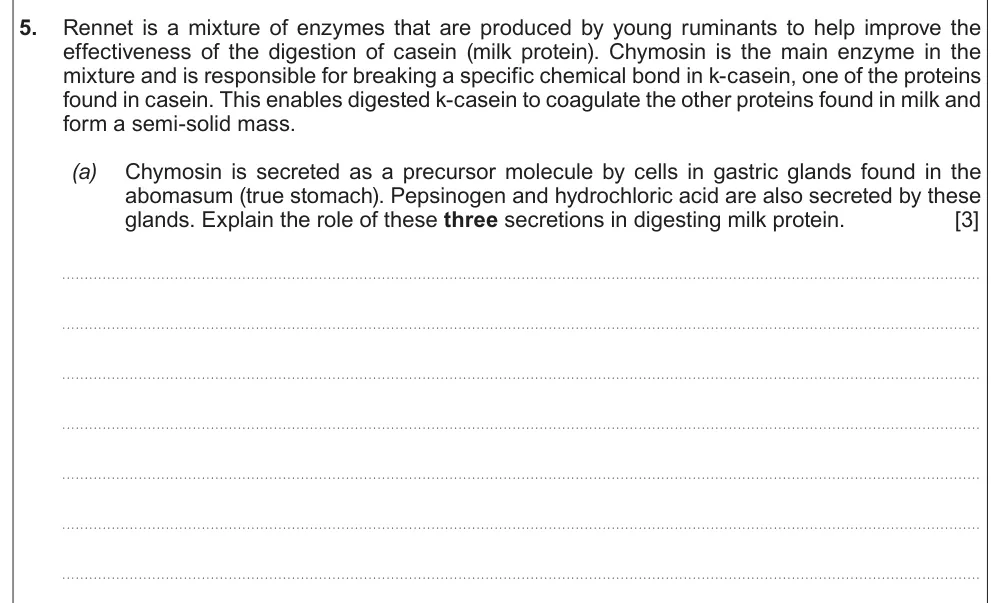
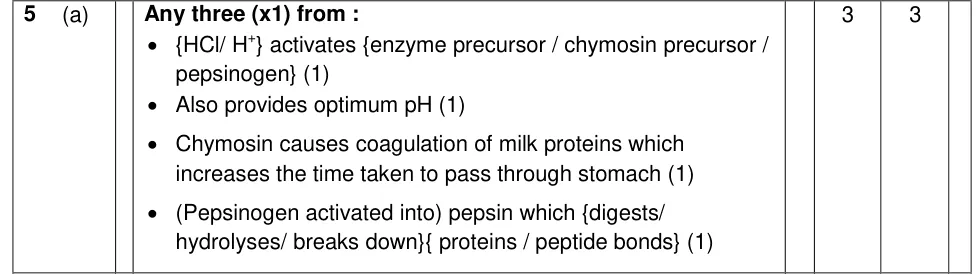
Explain the roles of chymosin, pepsinogen and HCl in digesting milk protein.
Show the mark scheme
Tap an image to open it full size.
From the examiners' report: Very few knew that chymosin coagulates milk proteins to increase the time they spend in the stomach.
Herbivores and carnivores
Question 16
A level Component 3 · June 2017 · Q5(b) · 5 marks
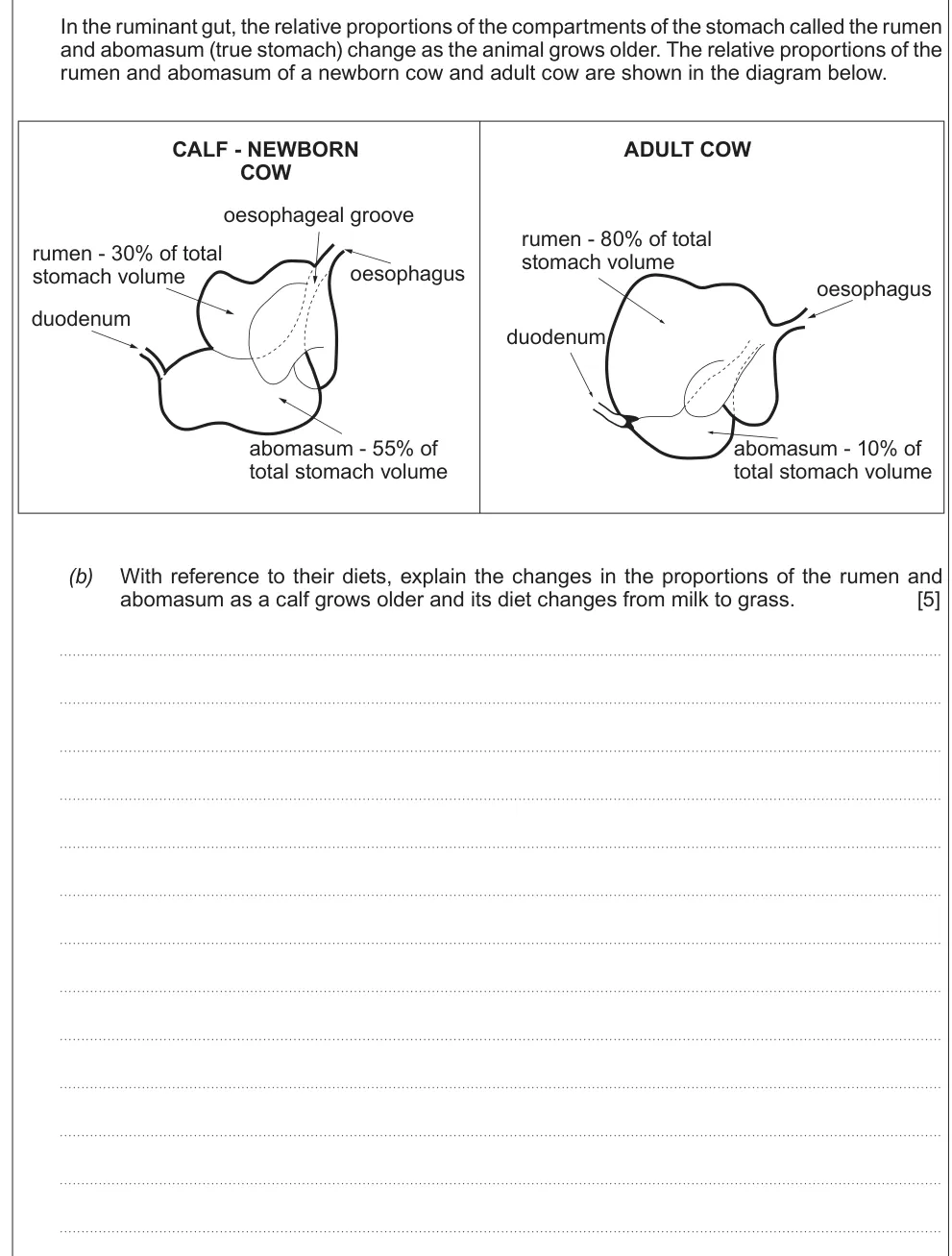
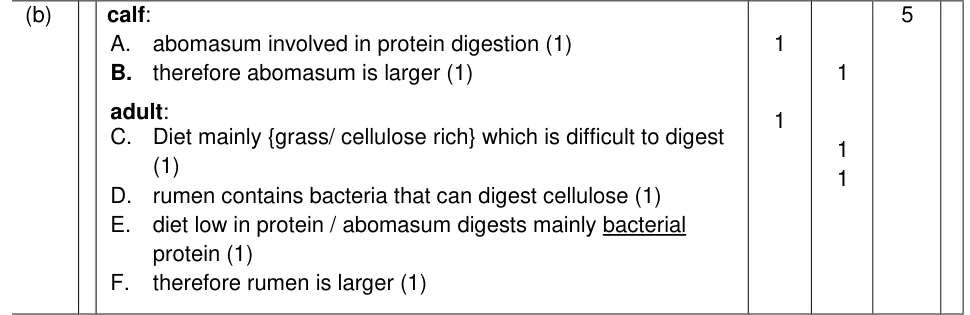
Explain why the rumen and abomasum change in size as a calf moves from milk to grass.
Show the mark scheme
Tap an image to open it full size.
From the examiners' report: Marks were lost for lack of detail: digestion of milk protein, not just milk.
Question 17
A level Component 3 · June 2024 · Q2(c)(ii) · 2 marks
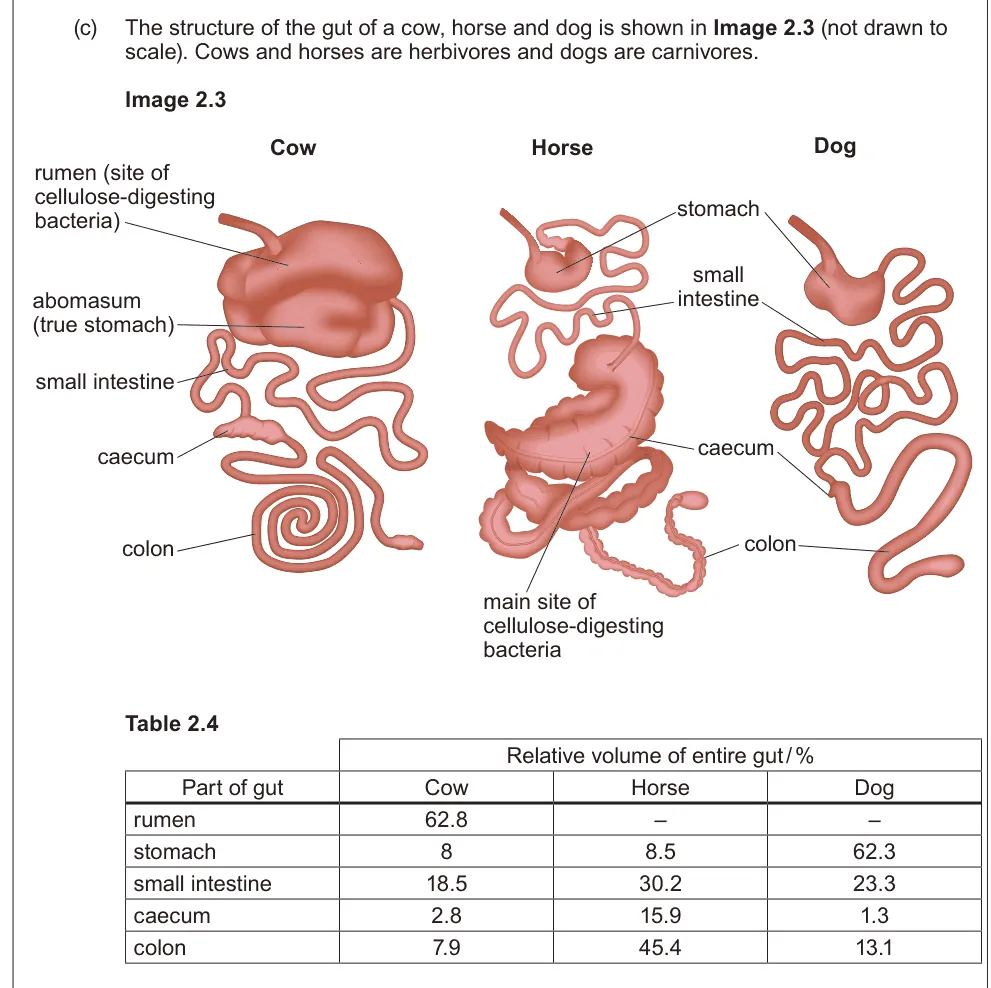
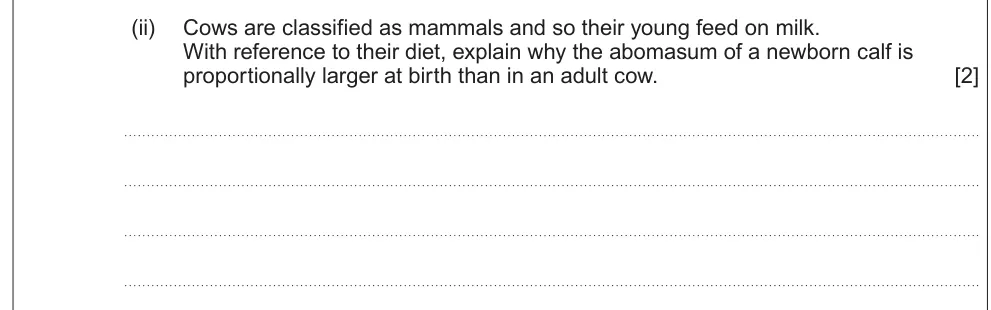
Explain why a newborn calf's abomasum is proportionally larger than an adult cow's.
Information from earlier in this question:
Show the mark scheme

Tap an image to open it full size.
From the examiners' report: Some wrote about lactose and lactase. The key is the high protein content of milk.
Question 18
AS Component 2 · June 2023 · Q4(a)(i) · 2 marks · Easy
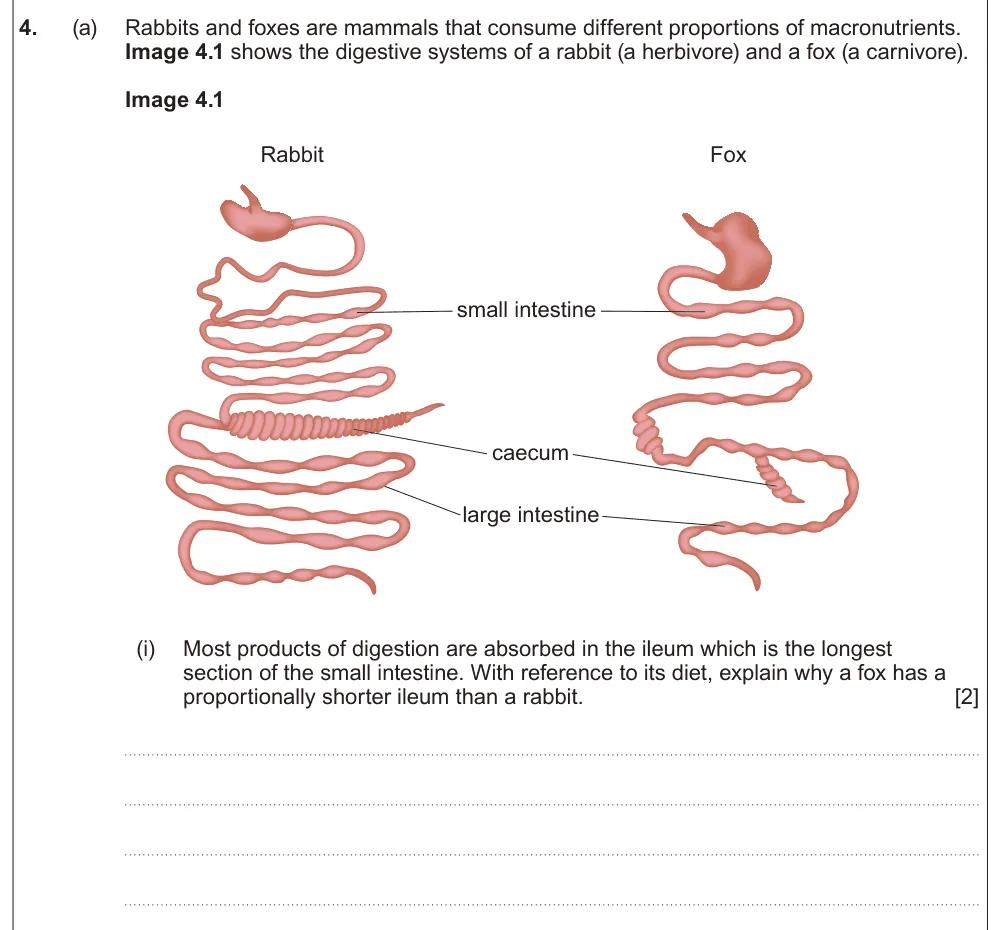
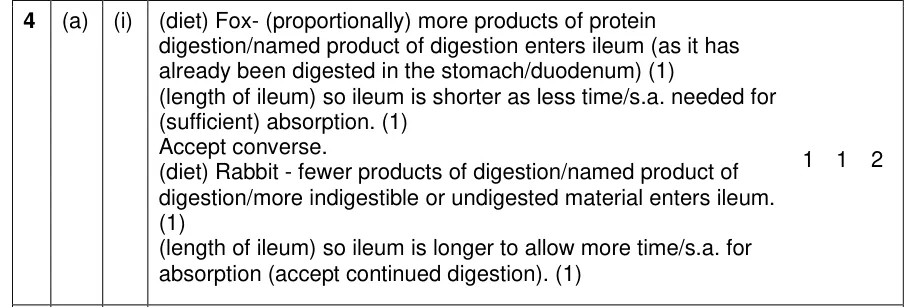
Explain why a fox has a proportionally shorter ileum than a rabbit.
Show the mark scheme
Tap an image to open it full size.
From the examiners' report: Few linked the fox's protein diet to faster digestion and less need for absorption surface.
Question 19
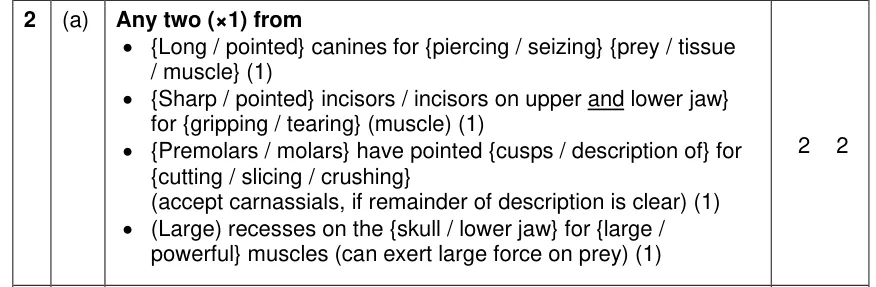
AS Component 2 · June 2024 · Q2(a) · 2 marks
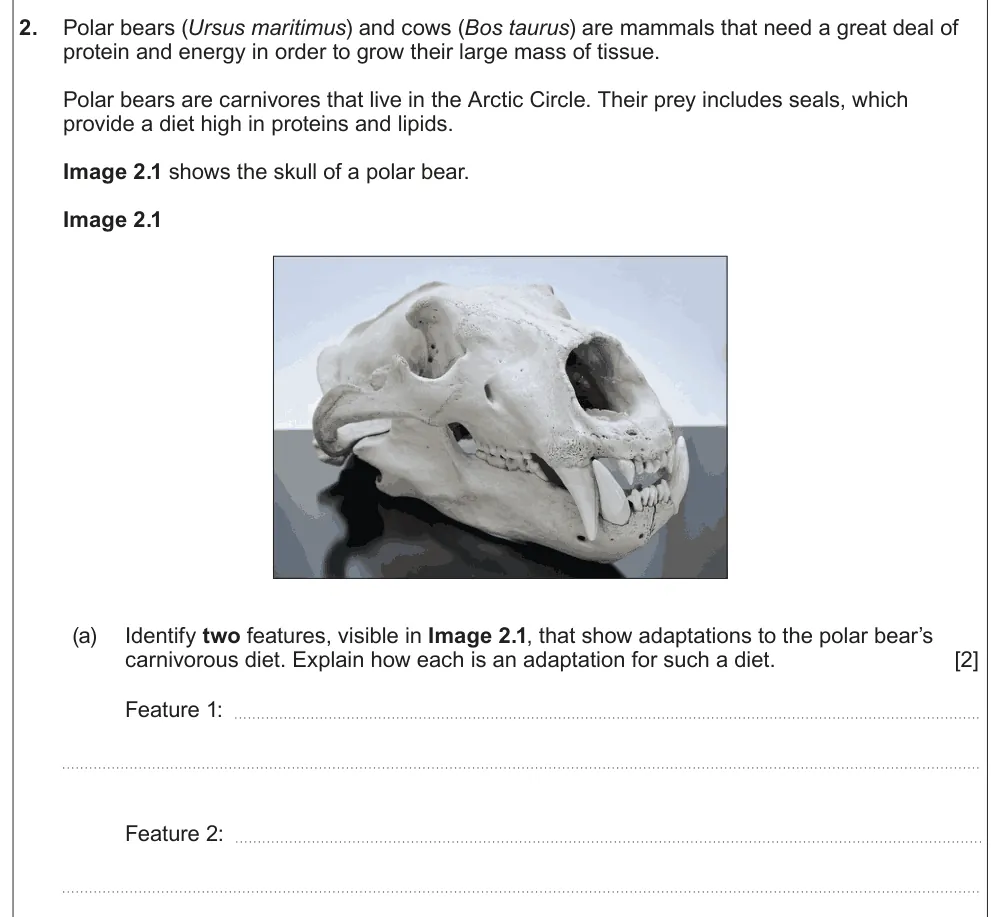
Identify two features of a polar bear skull that are adaptations to a carnivorous diet.
Show the mark scheme
Tap an image to open it full size.
From the examiners' report: Describe the shape and use of features visible in the photograph. Vague references to "killing" weren't accepted.
Question 20
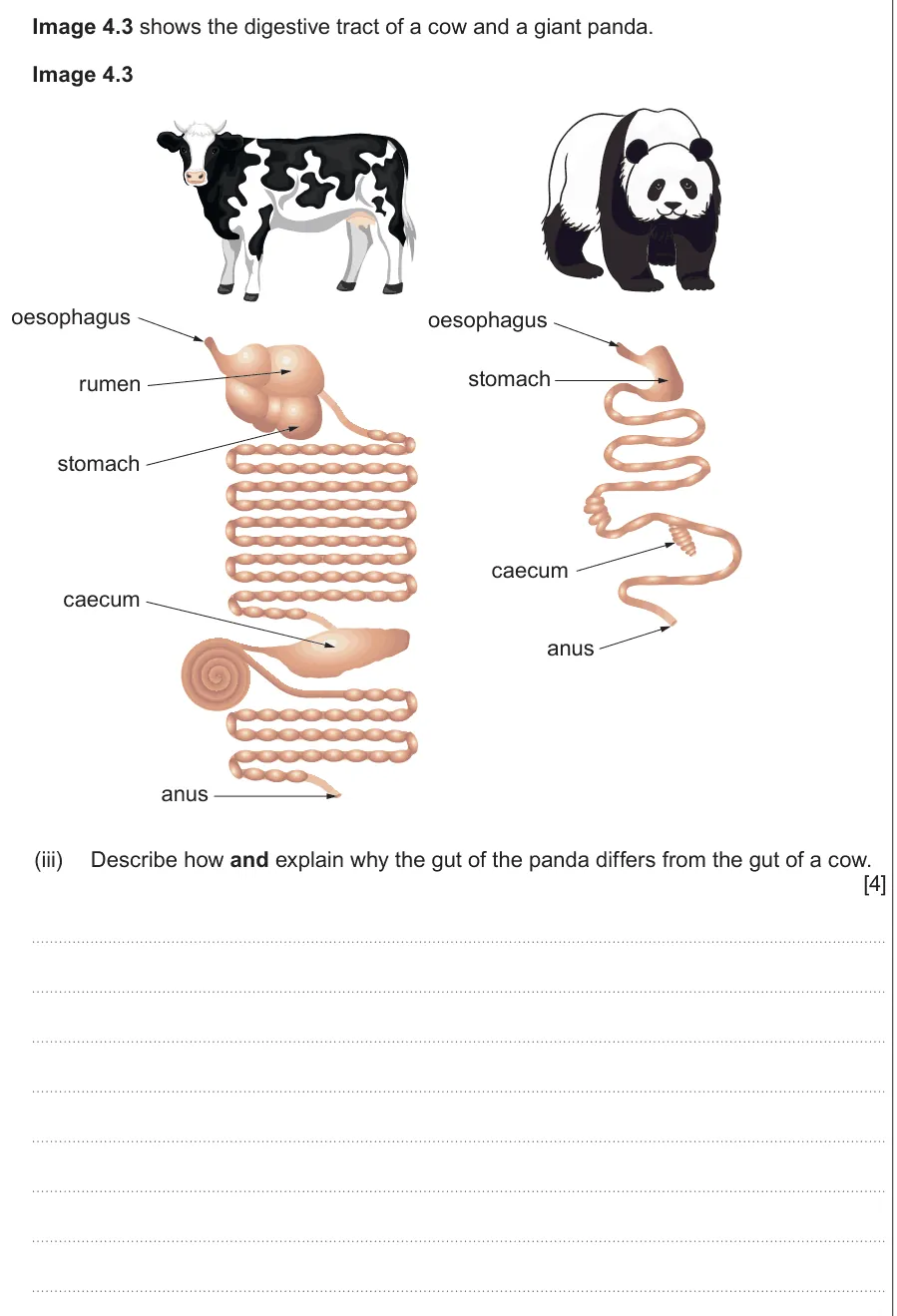
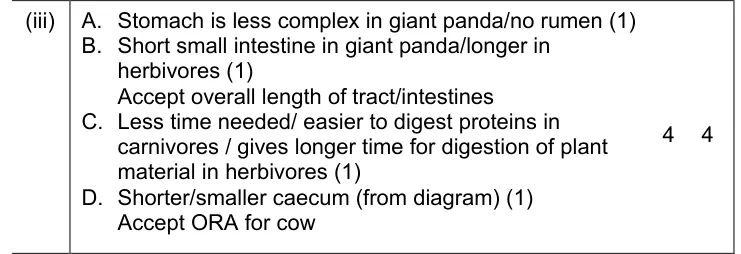
AS Component 2 · Autumn 2020 · Q4(b)(iii) · 4 marks
Describe and explain how the gut of a giant panda differs from that of a cow.
Show the mark scheme
Tap an image to open it full size.
Parasites
Question 21
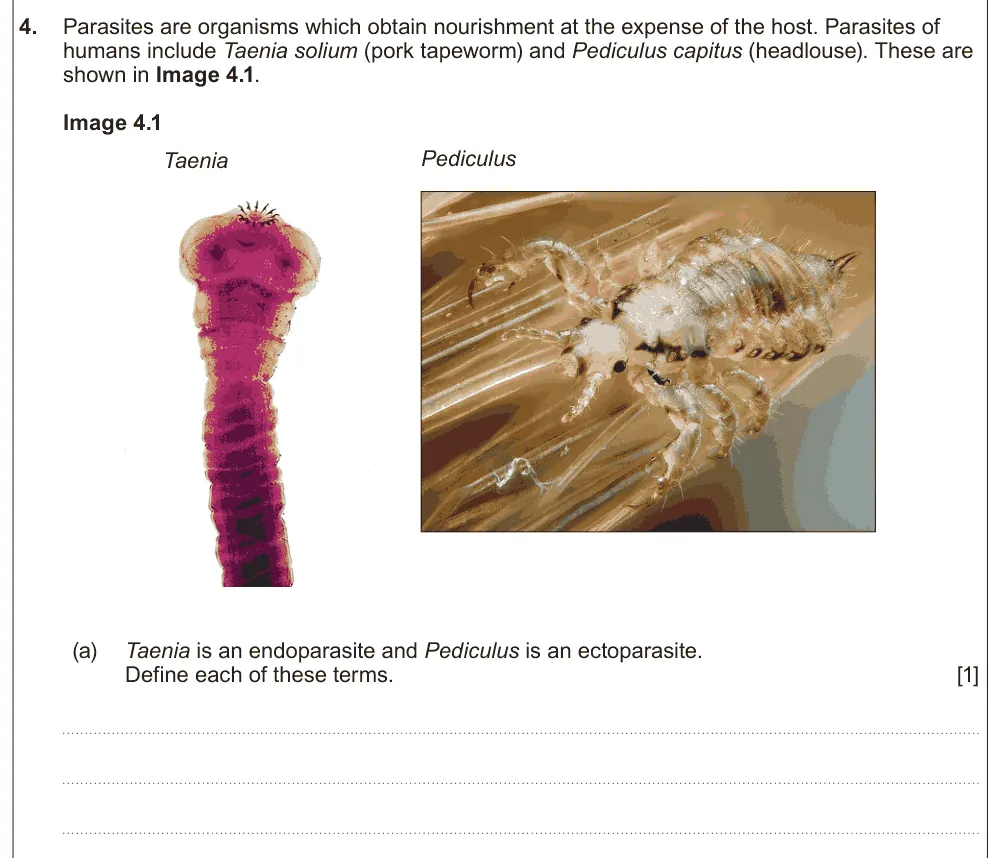
A level Component 3 · June 2025 · Q4(a) · 1 mark
Define endoparasite and ectoparasite.
Show the mark scheme

Tap an image to open it full size.
From the examiners' report: Ectoparasite answers were weaker: say it lives on the surface of the host.
Question 22
A level Component 3 · June 2025 · Q4(b) · 4 marks
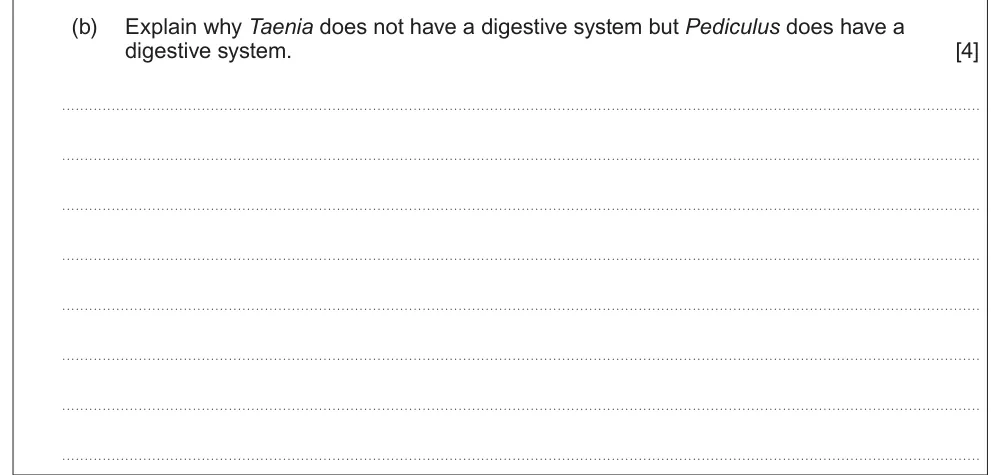
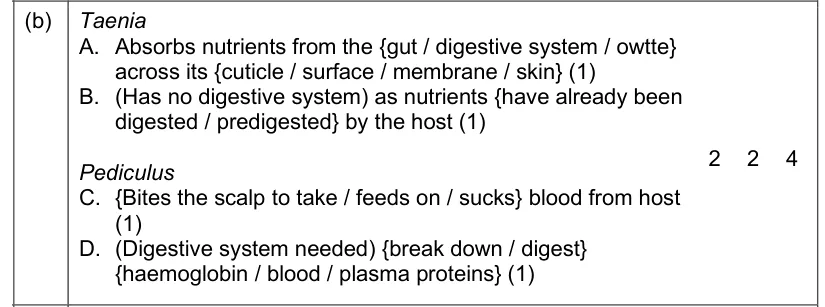
Explain why Taenia has no digestive system but Pediculus does.
Show the mark scheme
Tap an image to open it full size.
From the examiners' report: Many forgot that Pediculus takes a blood meal from the host that must then be digested.
Question 23
AS Component 2 · June 2018 · Q1(b)(i) · 1 mark
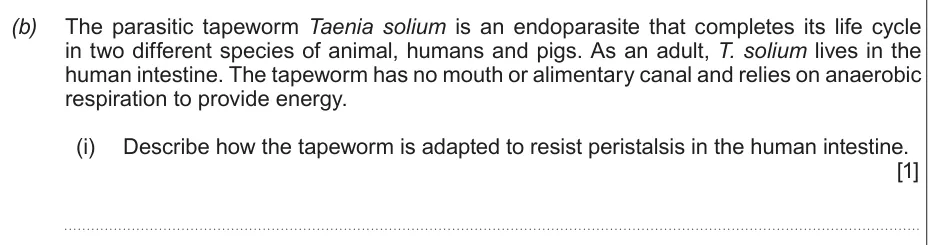
Describe how a tapeworm resists peristalsis in the human intestine.
Show the mark scheme

Tap an image to open it full size.
Question 24
AS Component 2 · June 2018 · Q1(b)(ii) · 2 marks
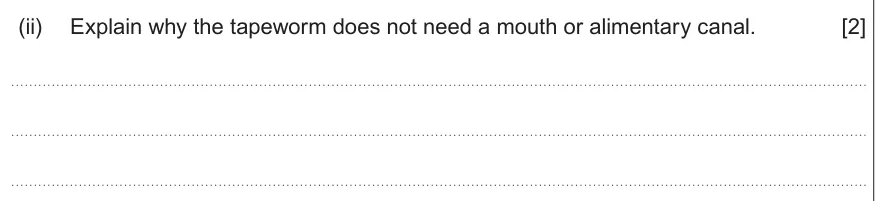
Explain why a tapeworm doesn't need a mouth or alimentary canal.
Show the mark scheme

Tap an image to open it full size.
From the examiners' report: Many wrote vaguely, and some even said the worm ingests food, despite it having no mouth.
Where students lose marks (from Eduqas examiners' reports and mark schemes)
Each point below is followed by wording that gained marks.
Name the enzyme: Many used carbohydrase or proteases.
✔ Gains credit: "(salivary / pancreatic) amylase", "maltase", "pepsin / trypsin".
Absorbed, not just digested: The commonest error was leaving out that the products are absorbed.
✔ Gains credit: "Extracellular digestion and the products of digestion are absorbed".
Explain, don't rewrite the data: Rewriting the data gained no credit.
✔ Gains credit: "Combination gives more ends for exopeptidase" so "most free amino acids released".
Thinner means shorter distance: Single layers and thin microvilli were linked to surface area, not diffusion distance.
✔ Gains credit: "Thinner to decrease diffusion distance".
Milk means protein: Some answers were about lactose and lactase.
✔ Gains credit: Milk "has high protein content", "digested in abomasum".
Describe what you see: Vague references to killing prey, or teeth not visible in the photo.
✔ Gains credit: "Long / pointed canines for piercing".
Download the questions
Download the PDF pack (24 questions, mark schemes at the end)
Keep practising
- Adaptations for Gas Exchange (3.1): Eduqas A Level Biology exam questions by topic
- Transport in Animals (3.2): Eduqas A Level Biology exam questions by topic
- Transport in Plants (3.2): Eduqas A Level Biology exam questions by topic
- Homeostasis and the Kidney (3.4): Eduqas A Level Biology exam questions by topic
- The Nervous System (3.5): Eduqas A Level Biology exam questions by topic
- Eduqas A level Biology past papers, mark schemes and examiners' reports
- Eduqas A level Biology grade boundaries
- Ask about Eduqas A level Biology lessons with Sam on WhatsApp
Questions, mark schemes and examiners' report extracts © WJEC CBAC Ltd (Eduqas).