

ATP (AQA 3.1.6) is a short section of the specification, but it turns up on almost every paper, because ATP links respiration, photosynthesis, muscle contraction, active transport and protein synthesis. You need to describe its structure (ribose, adenine and three phosphate groups), explain how ATP hydrolase hydrolyses it to ADP and Pi and how ATP synthase resynthesises it by condensation, and explain how its hydrolysis is coupled to energy-requiring reactions and phosphorylates other compounds to make them more reactive.
The examiners' reports show the marks go on small slips. Students write adenine diphosphate instead of adenosine diphosphate, call ribose a 'pentose', say ATP 'produces' or 'makes' energy, mix up ATP hydrolase and ATP synthase, and say phosphorylation makes 'cells' more reactive rather than the substances inside them. In the muscle investigation only 7% gave two properly qualified control variables, and fewer than 4% got the energy calculation fully right.
Start with the structure of ATP, then how it is broken down and remade, then how cells use it, and finish with the muscle-contraction investigation and its calculation. Answer each on paper before you open the mark scheme. If you'd like help with this topic, my AQA masterclasses run online on Tuesdays at 5.15pm for Year 12 and on Wednesdays or Thursdays at 6.30pm for Year 13.
What you need from GCSE and Year 12
Each question on this page assumes you're secure on these GCSE and Year 12 ideas. If any of them feels shaky, revise it before you start.
- GCSE: respiration releases energy from glucose in every living cell; cells use that energy for muscle contraction, active transport and building large molecules.
- GCSE: enzymes are biological catalysts with an active site that fits a specific substrate.
- Year 12 (AQA 3.1.1): condensation reactions release a molecule of water and hydrolysis reactions use one. See the Monomers, Water and Inorganic Ions page.
- Year 12 (AQA 3.1.5.1): a nucleotide is a pentose sugar, a nitrogen-containing base and a phosphate group; ATP is a nucleotide derivative. See the DNA and RNA Structure page.
- Year 12 (AQA 3.1.4.2): enzymes lower activation energy by forming enzyme-substrate complexes. See the Enzymes page.
Key terms
These words come up in the questions and mark schemes. Examiners expect you to use them exactly.
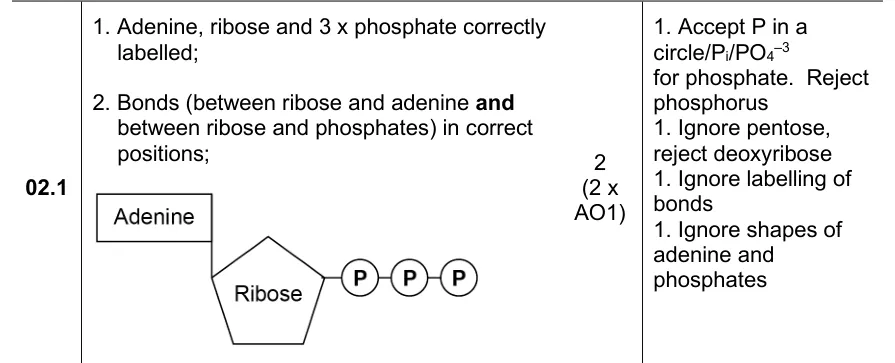
- ATP (adenosine triphosphate): a nucleotide derivative made of ribose, adenine and three phosphate groups; the immediate source of energy in cells.
- ADP (adenosine diphosphate): what is left when one phosphate is removed from ATP. It is adenosine, not 'adenine', diphosphate.
- Inorganic phosphate (Pi): the phosphate group released when ATP is hydrolysed. Write phosphate or Pi, never 'phosphorus'.
- Adenine: the nitrogen-containing base in ATP.
- Ribose: the pentose sugar in ATP. Examiners want 'ribose', not just 'pentose'.
- Hydrolysis: a reaction that breaks a chemical bond using a molecule of water, as when ATP becomes ADP + Pi.
- Condensation: a reaction that joins two molecules and releases a molecule of water, as when ADP + Pi becomes ATP.
- ATP hydrolase: the enzyme that catalyses the hydrolysis of ATP to ADP and Pi.
- ATP synthase: the enzyme that catalyses the condensation of ADP and Pi to make ATP, during respiration and photosynthesis.
- Coupled reaction: an energy-requiring reaction that happens alongside ATP hydrolysis, using the energy it releases.
- Phosphorylation: adding a phosphate group to another compound, often making it more reactive or changing its shape.
What these questions cover (AQA 3.1.6)
The questions test these statements from the AQA AS and A-level Biology specification (7401/7402):
- Structure: A single molecule of adenosine triphosphate (ATP) is a nucleotide derivative and is formed from a molecule of ribose, a molecule of adenine and three phosphate groups.
- Hydrolysis: Hydrolysis of ATP to adenosine diphosphate (ADP) and an inorganic phosphate group (Pi) is catalysed by the enzyme ATP hydrolase.
- Coupled reactions: The hydrolysis of ATP can be coupled to energy-requiring reactions within cells.
- Phosphorylation: The inorganic phosphate released during the hydrolysis of ATP can be used to phosphorylate other compounds, often making them more reactive.
- Resynthesis: ATP is resynthesised by the condensation of ADP and Pi. This reaction is catalysed by the enzyme ATP synthase during photosynthesis, or during respiration.
How to use this page
Write your answer on paper before you open the mark scheme. Allow about 1.3 minutes per mark: the 16 questions are worth 36 marks, so about 47 minutes in total. Then mark your answer strictly against the mark scheme and read the examiners' tip underneath it. If you'd rather print the questions, download the PDF pack.
Structure of ATP (3.1.6)
Question 1
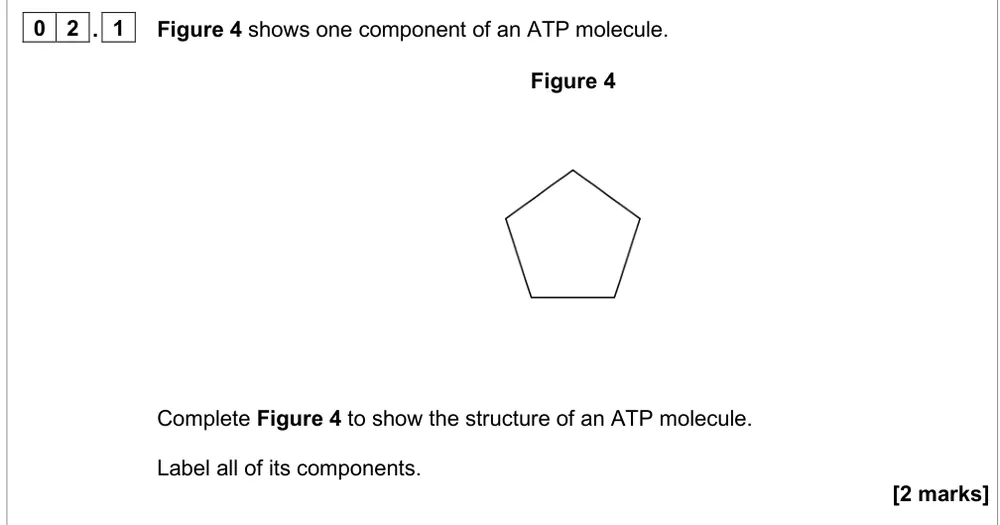
AS Paper 1 · June 2025 · Q02.1 · 2 marks · Medium
Complete a diagram to show the structure of an ATP molecule, and label it.
Show the mark scheme
Tap an image to open it full size.
From the examiners' report: Only a third got both marks, even though the diagram is in the specification. Label the sugar ribose (not pentose) and the base adenine (not adenosine), with the bonds coming off different sides of the pentagon.
Question 2
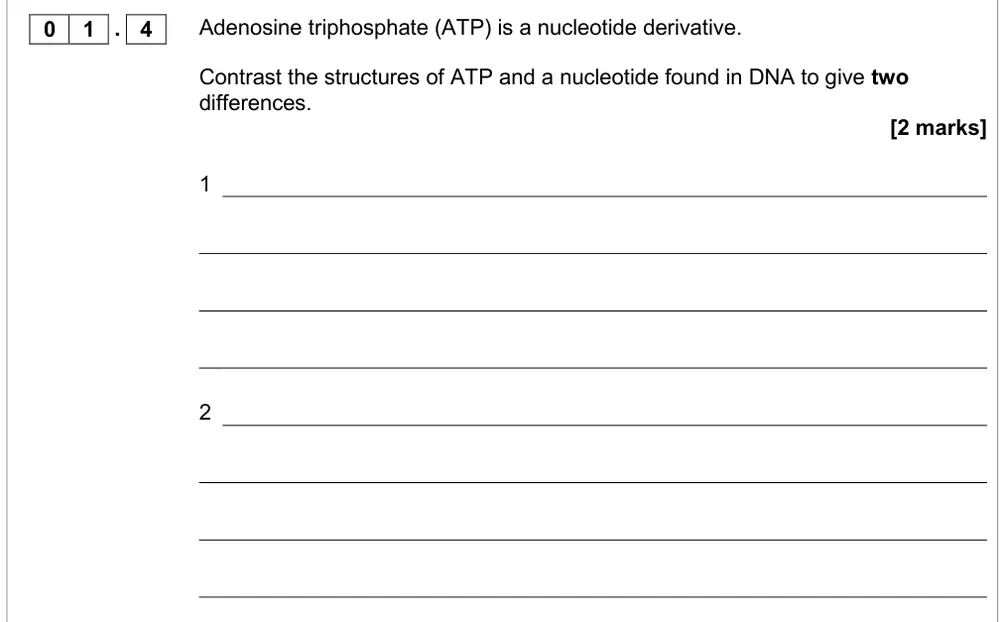
AS Paper 1 · June 2017 · Q01.4 · 2 marks · Medium
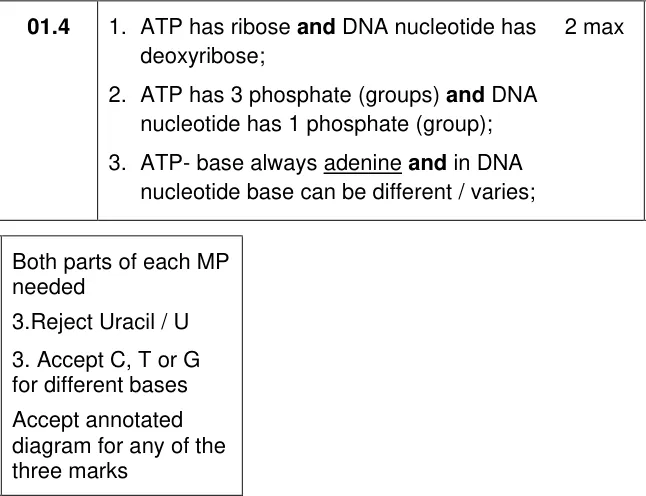
Give two differences between the structure of ATP and a DNA nucleotide.
Show the mark scheme
Tap an image to open it full size.
From the examiners' report: 25% scored nothing, often because they didn't write a contrast. Give both halves of each difference in one sentence. Many thought adenosine is a base.
Question 3
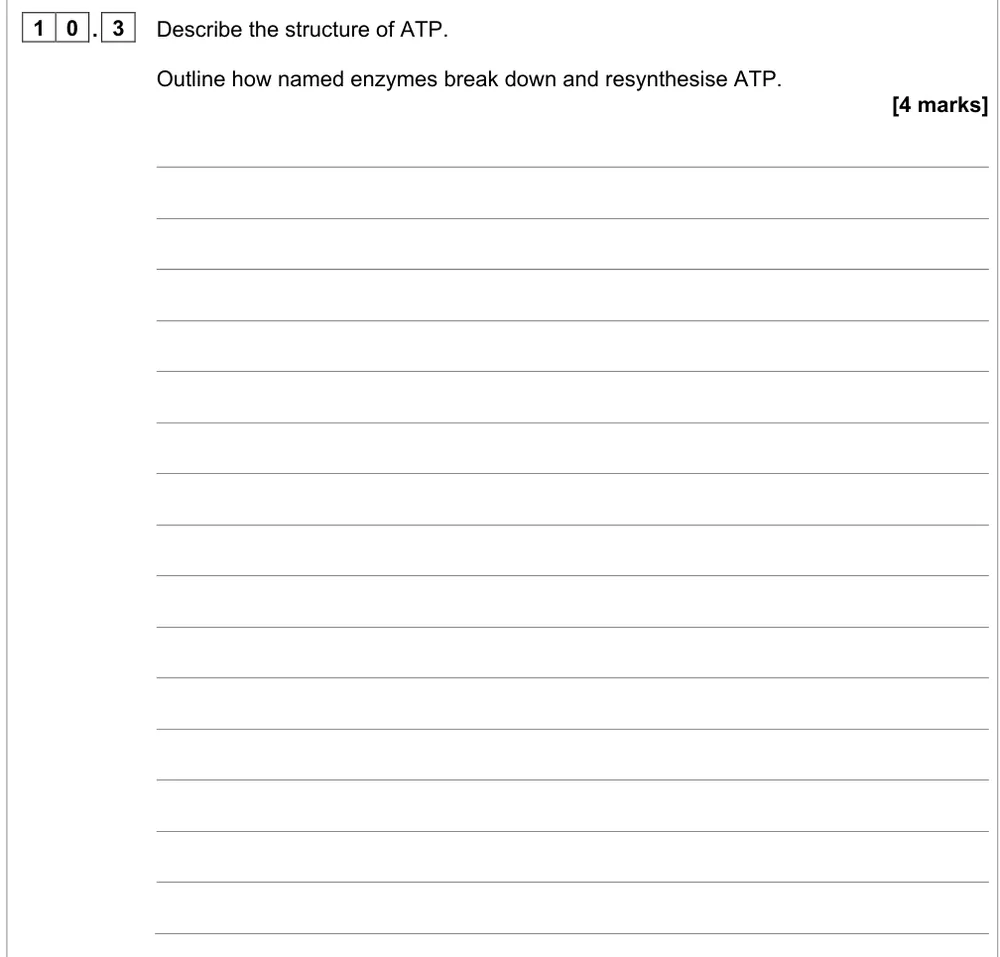
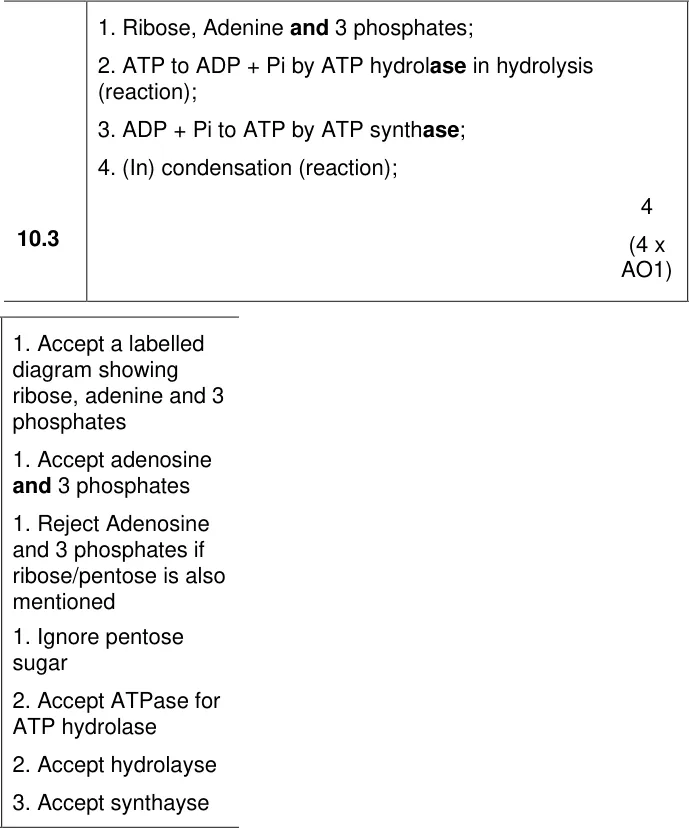
A level Paper 1 · June 2024 · Q10.3 · 4 marks · Easy
Describe the structure of ATP and outline how named enzymes break it down and remake it.
Show the mark scheme
Tap an image to open it full size.
From the examiners' report: Generally well answered, but 'pentose' wasn't credited for ribose, and many didn't say 'hydrolysis' alongside ATP hydrolase or mixed up hydrolysis and condensation.
Breaking down and remaking ATP (3.1.6)
Question 4
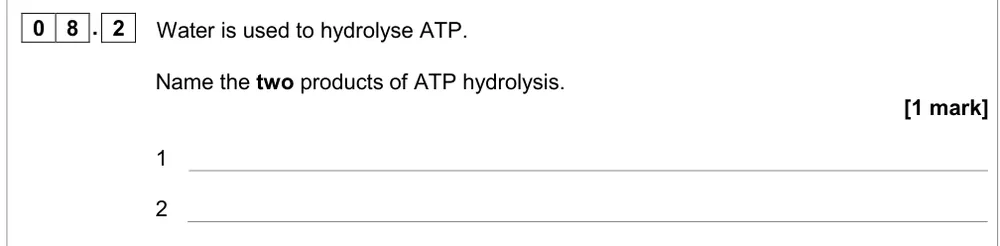
AS Paper 1 · June 2018 · Q08.2 · 1 mark · Easy
Name the two products of ATP hydrolysis.
Show the mark scheme
Tap an image to open it full size.
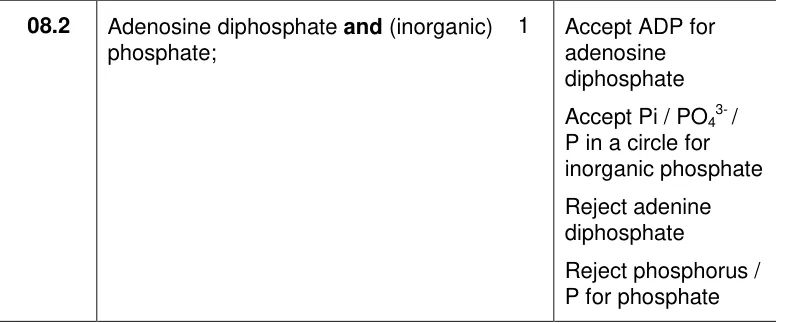
From the examiners' report: Well answered. The most common mistake was 'adenine diphosphate' instead of adenosine diphosphate.
Question 5
AS Paper 1 · June 2025 · Q02.2 · 3 marks · Medium
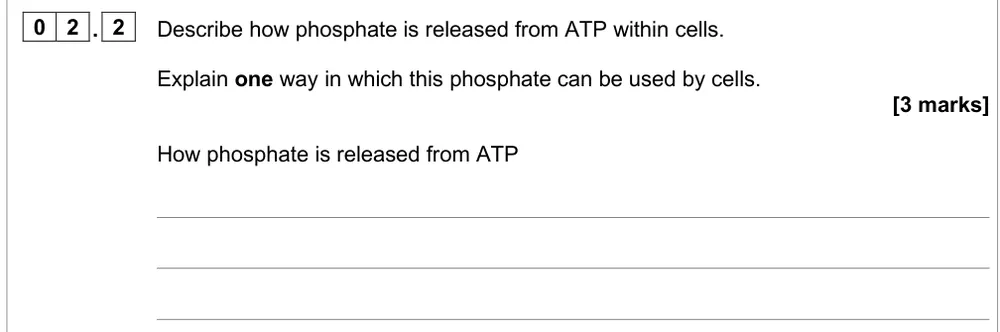
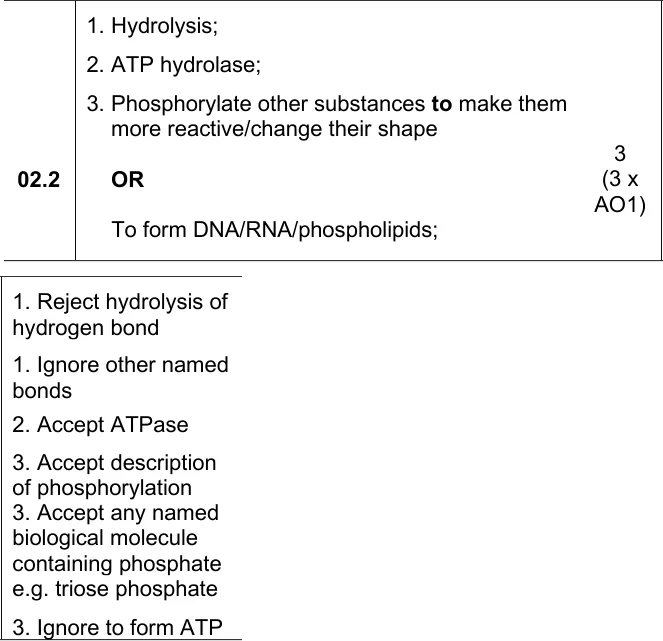
Describe how phosphate is released from ATP and explain one way cells use it.
Show the mark scheme
Tap an image to open it full size.
From the examiners' report: About 22% got all three. Some wrote about ATP synthase instead of hydrolysis. Say phosphorylation makes the substance more reactive, not the cell.
Question 6
AS Paper 1 · June 2016 · Q03.1 · 2 marks
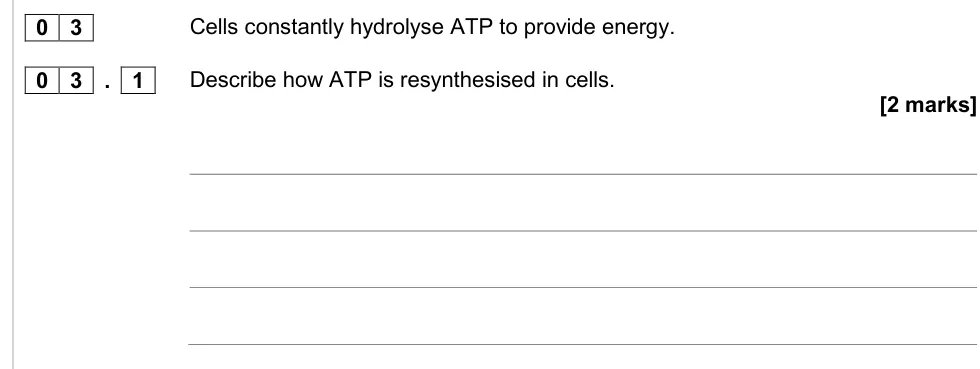
Describe how ATP is resynthesised in cells.
Show the mark scheme

Tap an image to open it full size.
From the examiners' report: There's no examiners' report for this paper, so this tip comes from the mark scheme. Name ADP and phosphate, the enzyme ATP synthase and where it happens. Water is released in this reaction, not used.
Question 7
AS Paper 2 · November 2021 · Q07.1 · 4 marks
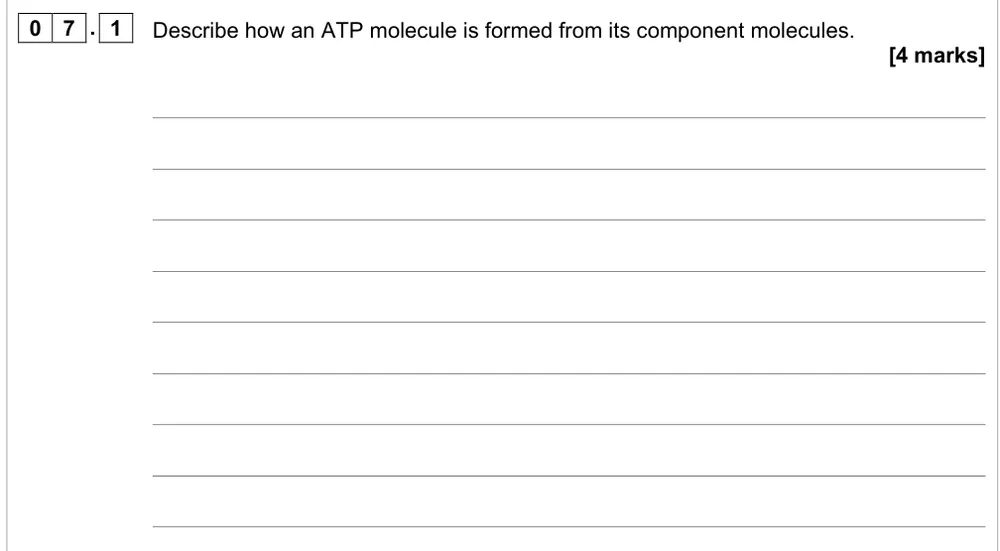
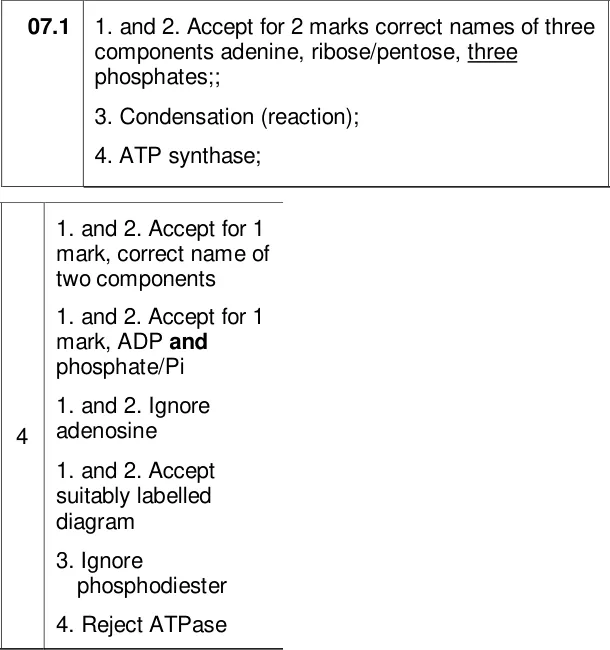
Describe how an ATP molecule is formed from its component molecules.
Show the mark scheme
Tap an image to open it full size.
From the examiners' report: There's no examiners' report for this paper, so this tip comes from the mark scheme. Name all three components, then say the reaction is condensation and the enzyme is ATP synthase. 'ATPase' isn't accepted here.
How cells use ATP (3.1.6)
Question 8
AS Paper 1 · June 2016 · Q03.2 · 2 marks
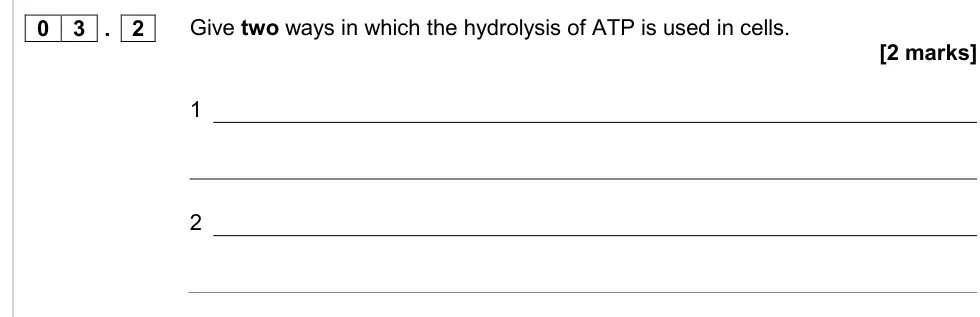
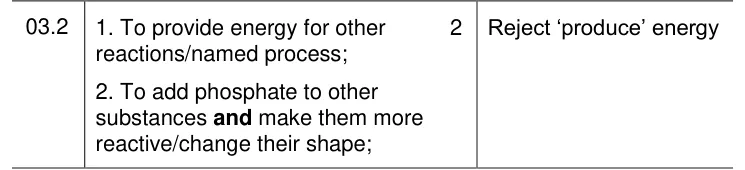
Give two ways in which the hydrolysis of ATP is used in cells.
Show the mark scheme
Tap an image to open it full size.
From the examiners' report: There's no examiners' report for this paper, so this tip comes from the mark scheme. One way is energy for a named process; the other is phosphorylation. Never say ATP 'produces' energy.
Question 9
AS Paper 2 · June 2022 · Q01.4 · 2 marks · Medium
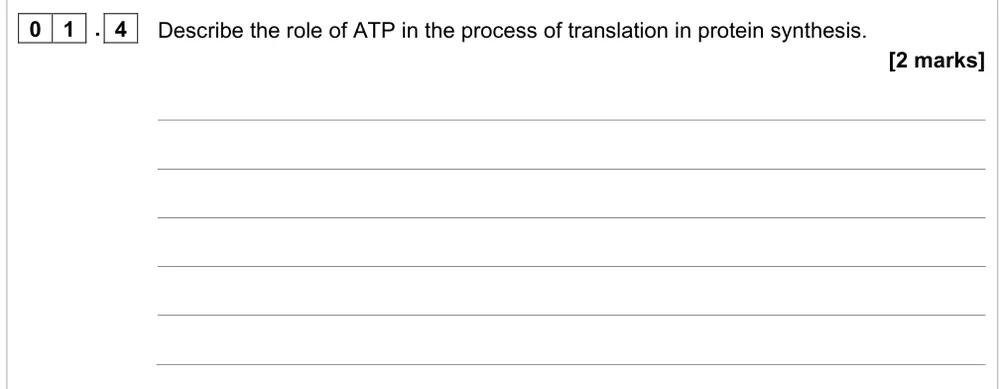
Describe the role of ATP in translation.
Show the mark scheme

Tap an image to open it full size.
From the examiners' report: Over 65% scored at least one mark. Energy is released, not 'made' or 'produced'.
Question 10
A level Paper 2 · June 2022 · Q03.3 · 2 marks · Medium
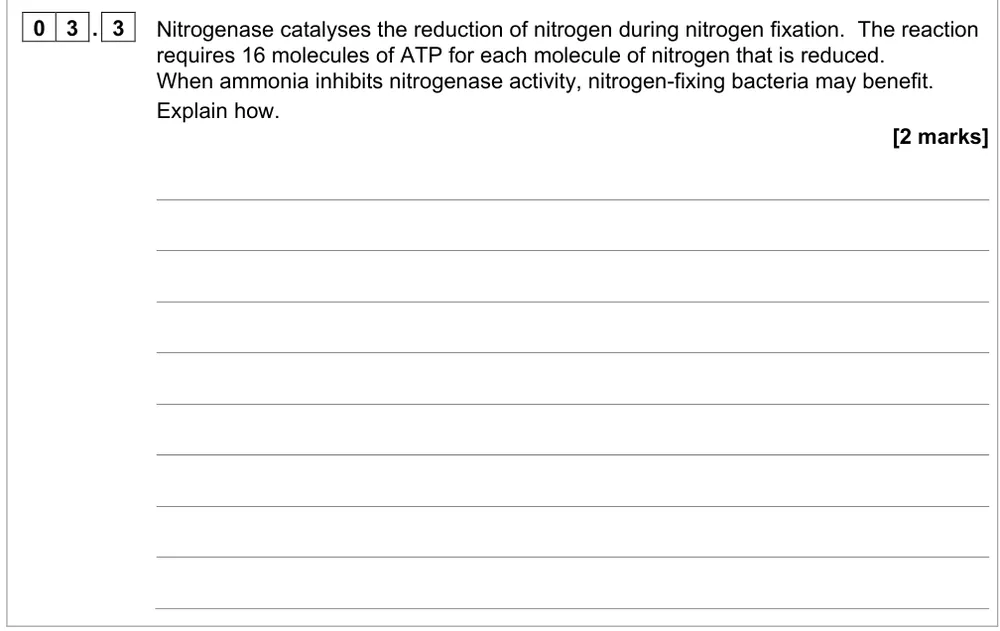
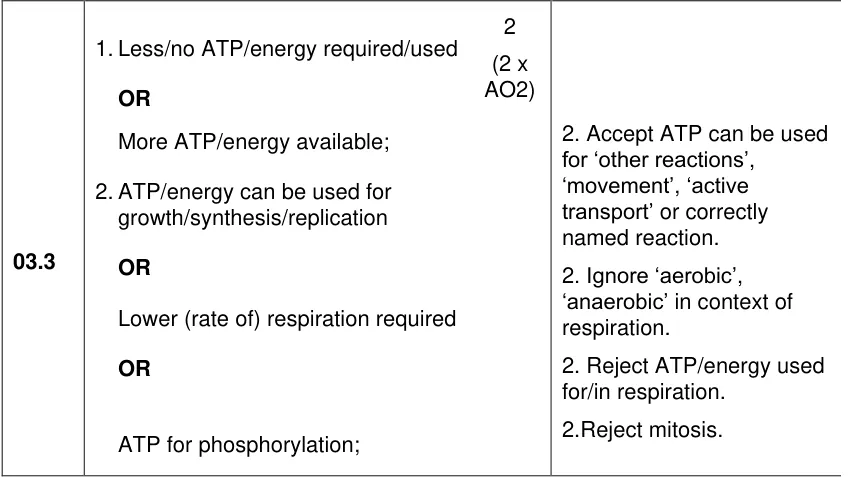
Explain how nitrogen-fixing bacteria may benefit when ammonia inhibits nitrogenase.
Show the mark scheme
Tap an image to open it full size.
From the examiners' report: 32% scored zero and only 28% said what the spare ATP could be used for. Name a use such as growth, protein synthesis or active transport; ATP isn't 'used in respiration'.
Question 11
A level Paper 3 · June 2018 · Q03.5 · 2 marks · Hard
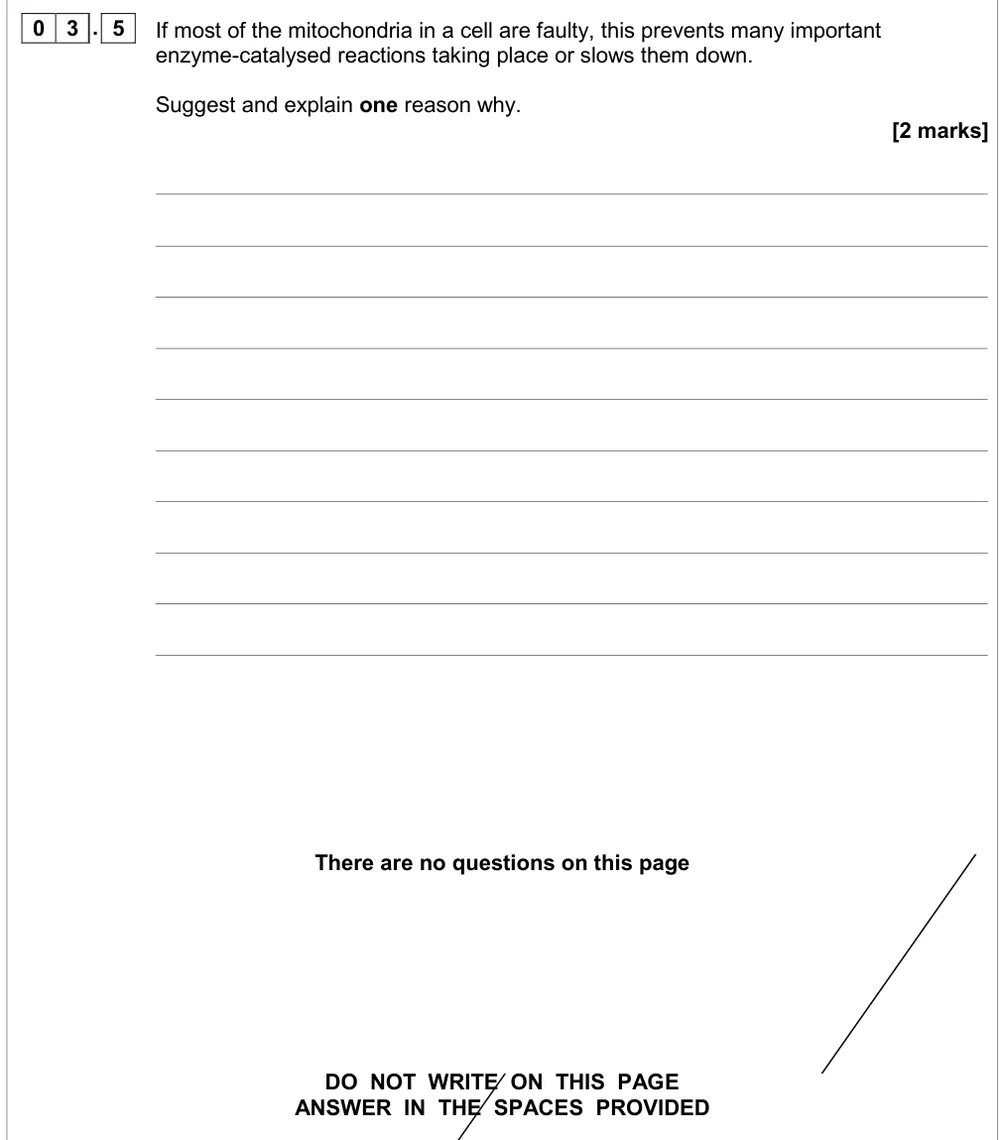
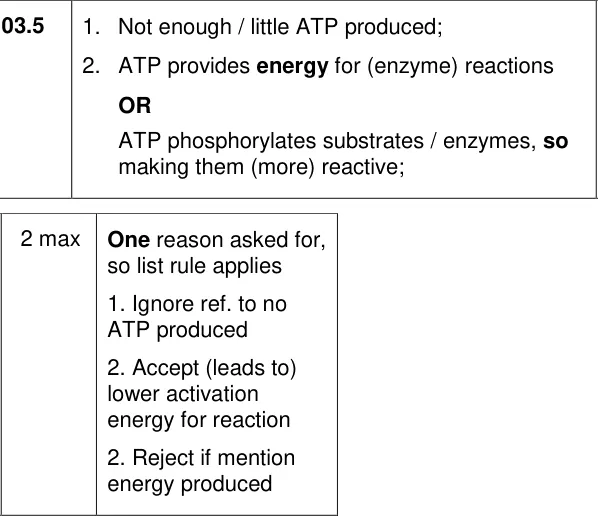
Suggest why faulty mitochondria slow enzyme-catalysed reactions.
Show the mark scheme
Tap an image to open it full size.
From the examiners' report: About 40% said less ATP is made, but only 29% linked ATP to the energy needed for the reactions. Don't drift into how mitochondria make ATP.
Question 12
A level Paper 3 · June 2017 · Q05.3 · 1 mark · Medium
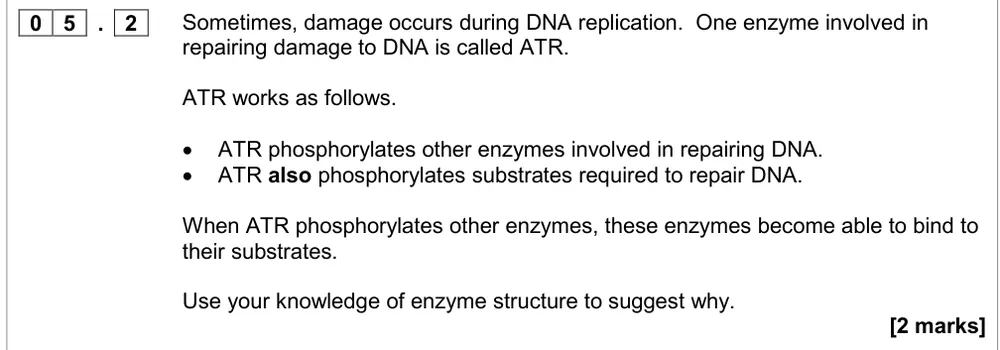
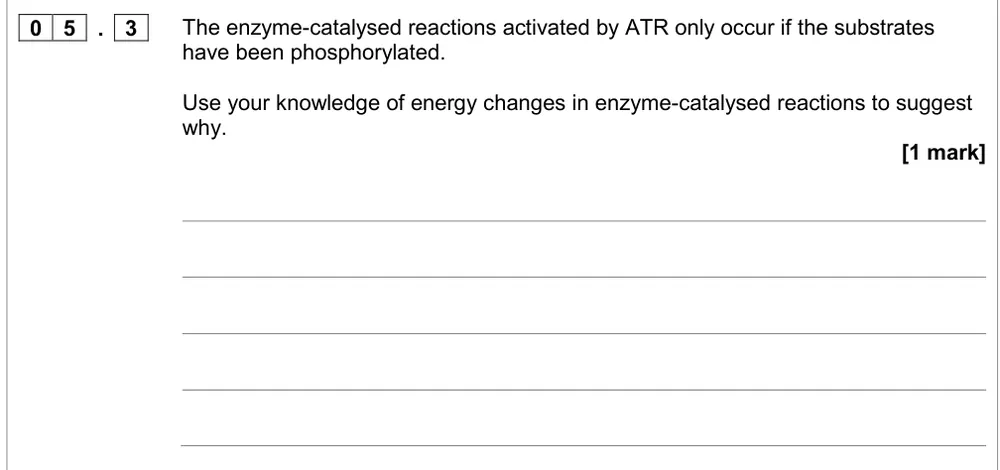
Suggest why ATR-activated reactions only happen if the substrates are phosphorylated.
Information from earlier in this question:
Show the mark scheme

Tap an image to open it full size.
From the examiners' report: About 50% got this. Say the substrate becomes more reactive; vague answers about kinetic energy, or about phosphorylating the enzyme, didn't score.
Question 13
A level Paper 1 · November 2020 · Q05.3 · 2 marks
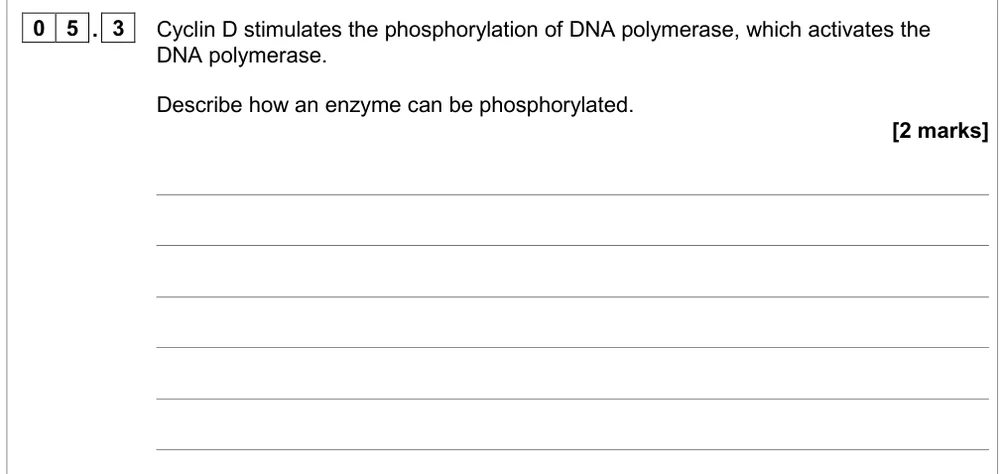
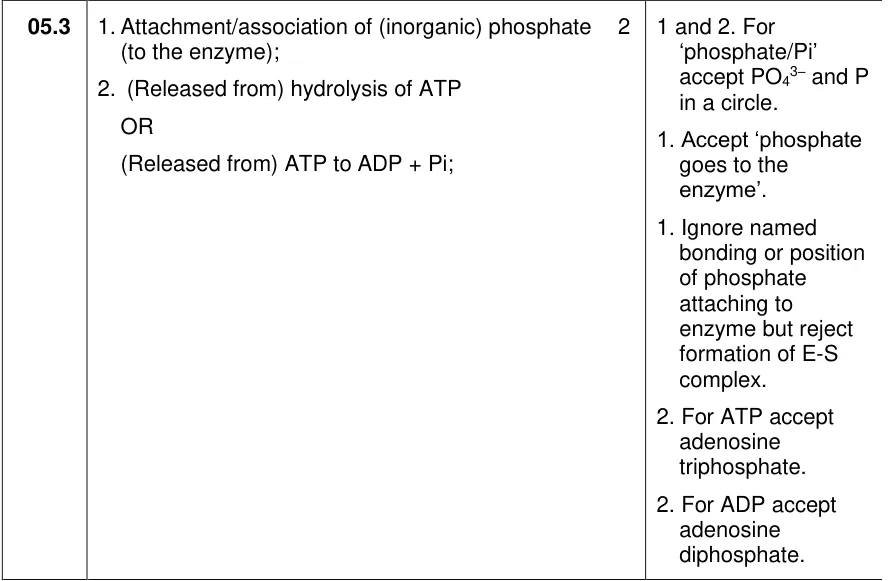
Describe how an enzyme can be phosphorylated.
Show the mark scheme
Tap an image to open it full size.
From the examiners' report: Don't just repeat the stem: 'phosphate is used to phosphorylate the enzyme' didn't score. Say the phosphate attaches to the enzyme and comes from ATP hydrolysis.
ATP and muscle contraction: practical and calculation (3.1.6)
Question 14
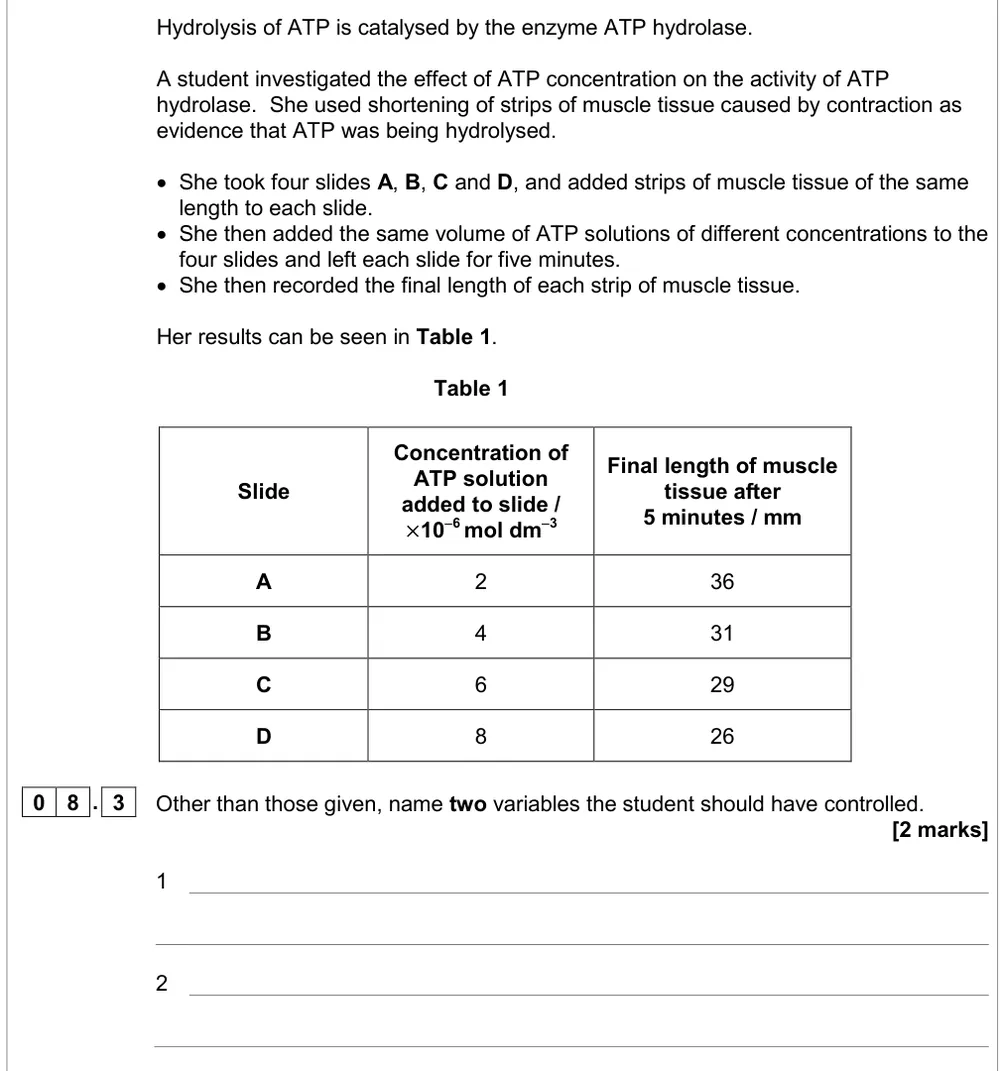
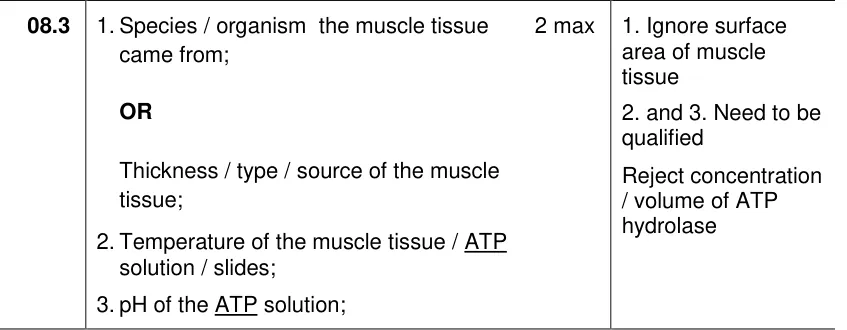
AS Paper 1 · June 2018 · Q08.3 · 2 marks · Hard
Name two more variables to control in an investigation of ATP and muscle contraction.
Show the mark scheme
Tap an image to open it full size.
From the examiners' report: Only 7% got both. Don't repeat variables already given, qualify temperature and pH, and remember the muscle supplies its own ATP hydrolase.
Question 15
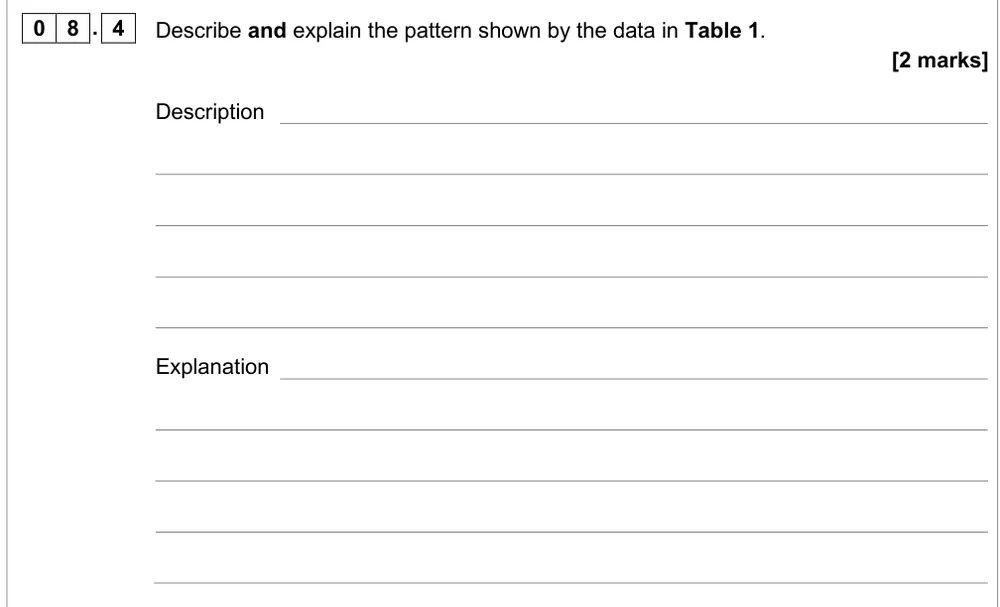
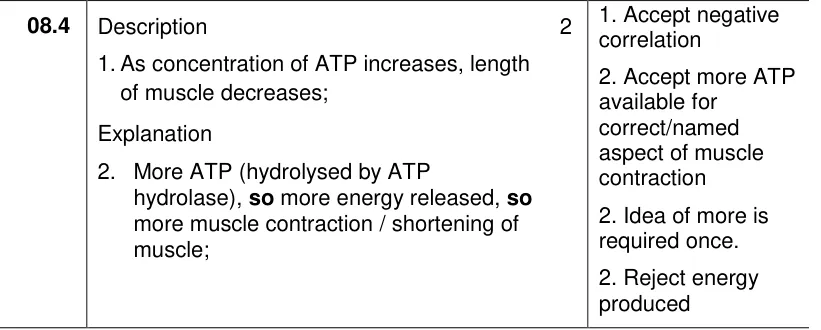
AS Paper 1 · June 2018 · Q08.4 · 2 marks · Easy
Describe and explain the pattern in the muscle-length results.
Show the mark scheme
Tap an image to open it full size.
From the examiners' report: The description was well answered. Some thought the muscle was being hydrolysed, and saying energy is 'produced' cancelled good answers.
Question 16
AS Paper 1 · June 2018 · Q08.5 · 3 marks · Medium
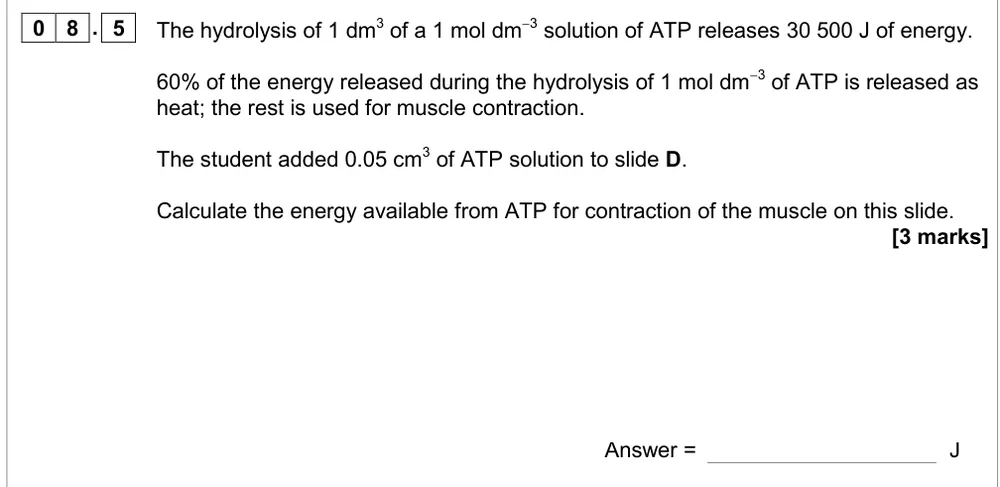
Calculate the energy from ATP available for contraction of the muscle on slide D.
Show the mark scheme
Tap an image to open it full size.
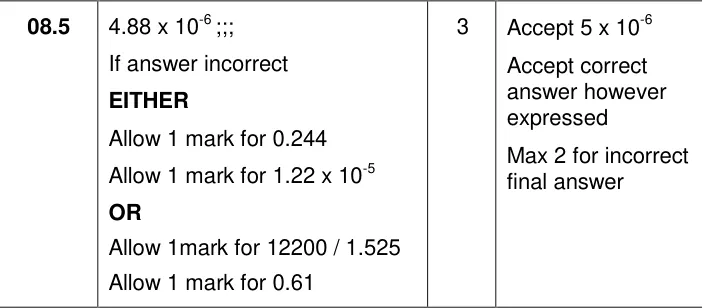
From the examiners' report: Only 3.7% got all three. Use the ×10⁻⁶ mol dm⁻³ from the Table 1 heading and convert cm³ to dm³. Show your working: 12 200 and 0.61 earned marks.
Where students lose marks (from AQA examiners' reports and mark schemes)
Each point below is followed by wording that gained marks.
Adenosine diphosphate, not adenine diphosphate: The most common mistake when naming the products of ATP hydrolysis was 'adenine diphosphate'. Adenine is only the base; adenosine is adenine plus ribose.
✔ Gains credit: "Adenosine diphosphate and (inorganic) phosphate."
Name ribose, not just a pentose: In the 2024 structure question examiners didn't credit 'pentose sugar', because the specification names ribose. Many also wrote only 'ATP is made of ADP and Pi', and some mentioned glycosidic or hydrogen bonds.
✔ Gains credit: "Ribose, adenine and 3 phosphates."
ATP releases energy; it doesn't make it: Answers that said ATP 'produces', 'makes' or 'creates' energy lost marks that were otherwise earned, in the translation question and the muscle-contraction question.
✔ Gains credit: "Releases/provides energy; so peptide bonds form between amino acids."
Hydrolase breaks it, synthase makes it: Asked how phosphate is released from ATP, some described ATP synthase and making ATP. Others named ATP hydrolase but never said 'hydrolysis', or said water is produced in hydrolysis and used in condensation.
✔ Gains credit: "ATP to ADP + Pi by ATP hydrolase in hydrolysis; ADP + Pi to ATP by ATP synthase in condensation."
The substance becomes more reactive, not the cell: About 22% got all three marks on how cells use released phosphate. Many wrote 'phosphorylation' without saying what it does, and some said phosphate makes cells more reactive.
✔ Gains credit: "Phosphorylate other substances to make them more reactive/change their shape."
Qualify temperature and pH: Only 7% named two control variables. Many repeated variables already given, wrote just 'temperature' and 'pH', or chose ATP hydrolase concentration, which the muscle makes itself.
✔ Gains credit: "Temperature of the muscle tissue/ATP solution; pH of the ATP solution."
Spot the ×10⁻⁶ in the table heading: Only 3.7% got all three marks for the energy calculation, and 7.5% didn't try. Most missed that the ATP concentrations in Table 1 are ×10⁻⁶ mol dm⁻³.
✔ Gains credit: "4.88 × 10⁻⁶ J" (working that included 12 200 and 0.61 still earned marks).
Download the questions
Download the PDF pack (16 questions, mark schemes at the end)
Keep practising
- DNA and RNA structure: AQA A Level Biology exam questions by topic
- Monomers, water and inorganic ions: AQA A Level Biology exam questions by topic
- Enzymes: AQA A Level Biology exam questions by topic
- Calculations and mathematical content in A level Biology, from AQA papers
- AQA A Level Biology masterclasses
Questions, mark schemes and examiners' report extracts © AQA.