

AQA 3.1.6 · 5 exam questions worked through · about 15 minutes
Studying A-level Biology? I'm Tom, an A-level Biology teacher with 30 years' experience. I offer one-to-one lessons and weekly group classes for AQA and OCR A, with every lesson recorded.
This post covers AQA specification 3.1.6, ATP: its structure, how it is hydrolysed and resynthesised, and how the phosphate it releases is used. Work through five real AQA questions and you'll see exactly what the mark schemes credit and where the examiners say marks were lost.
What you need to know first
- ATP is made of ribose, adenine and three phosphate groups
- Hydrolysis uses water to break a molecule down; condensation joins molecules and releases water
- ATP hydrolase and ATP synthase are the two enzymes you need to name
- Phosphorylation means adding a phosphate group to another molecule
Question 1: Structure, breakdown and resynthesis of ATP (4 marks)
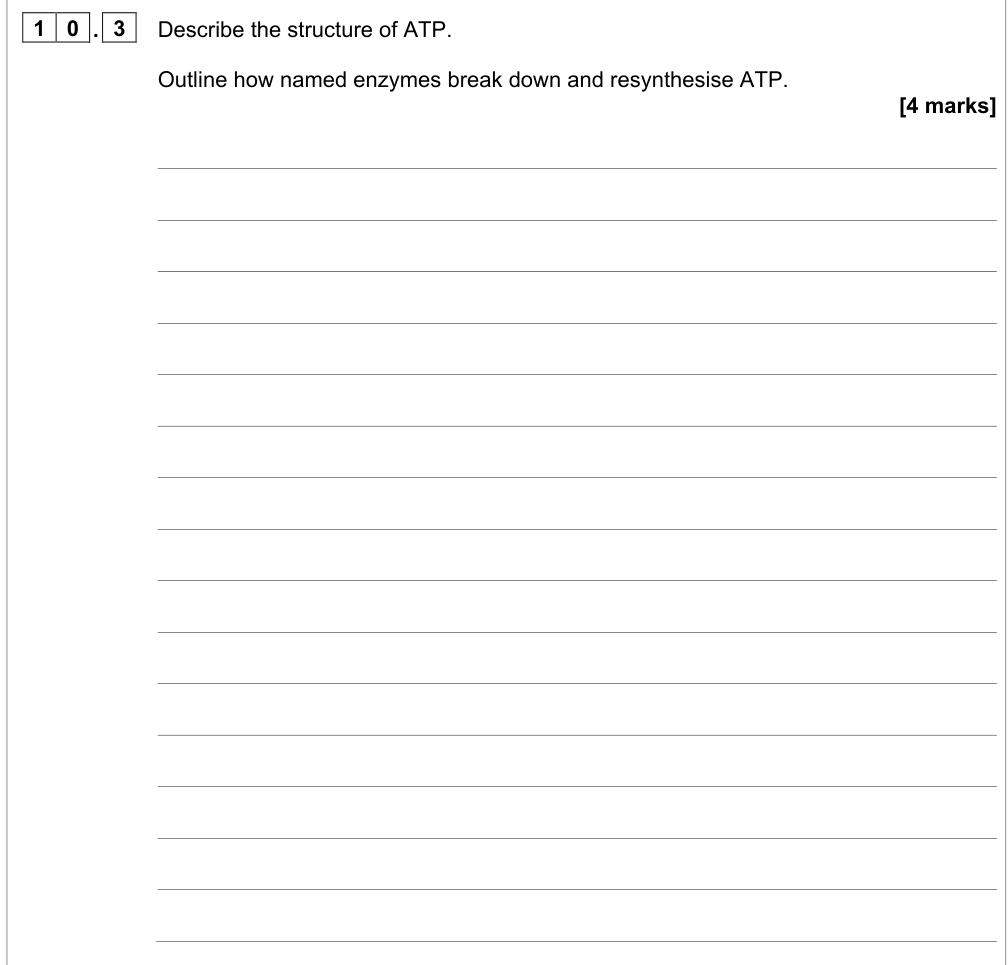
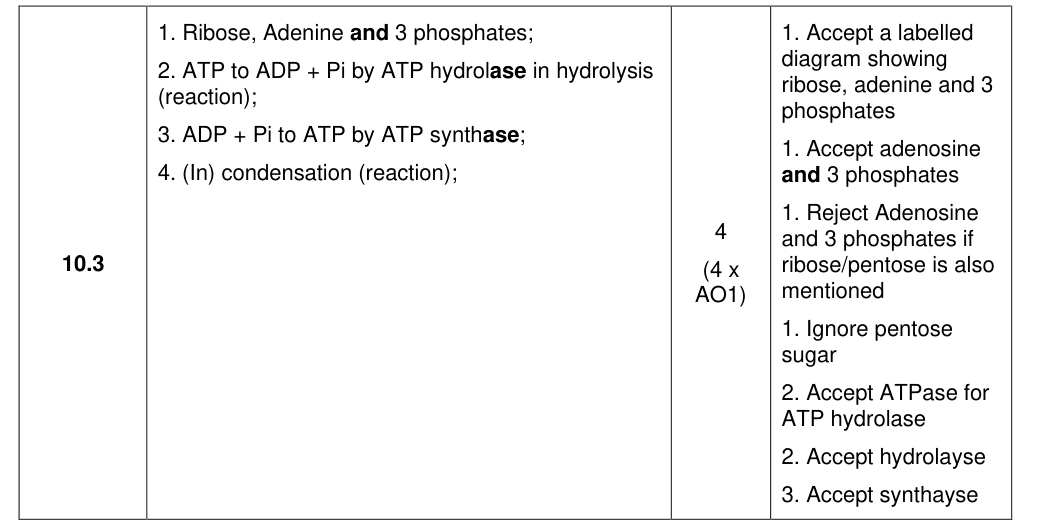
How to approach it. There are three jobs here. Structure: ATP is made of ribose, adenine and three phosphate groups. Breakdown: ATP is hydrolysed to ADP and Pi by ATP hydrolase. Resynthesis: ADP and Pi are joined to form ATP by ATP synthase, in a condensation reaction.
Mark scheme
Common mistakes (from AQA's examiners' reports and mark schemes)
- Describing the structure as "ADP and Pi". The examiners' report says many answers gave only a simple statement like this. Gains credit: "ribose, adenine and three phosphate groups".
- Writing "pentose sugar". The report says examiners did not credit this because the specification names ribose. Gains credit: "ribose".
- Naming ATP hydrolase without the word hydrolysis. The report says many students failed to refer to hydrolysis here. Gains credit: "ATP is hydrolysed to ADP and Pi by ATP hydrolase".
- Mixing up hydrolysis and condensation. The report says some students wrote that water is produced in hydrolysis and used in condensation. Gains credit: "hydrolysis" for the breakdown of ATP and "condensation" for its resynthesis.
Question 2: ATP and a DNA nucleotide: two differences (2 marks)
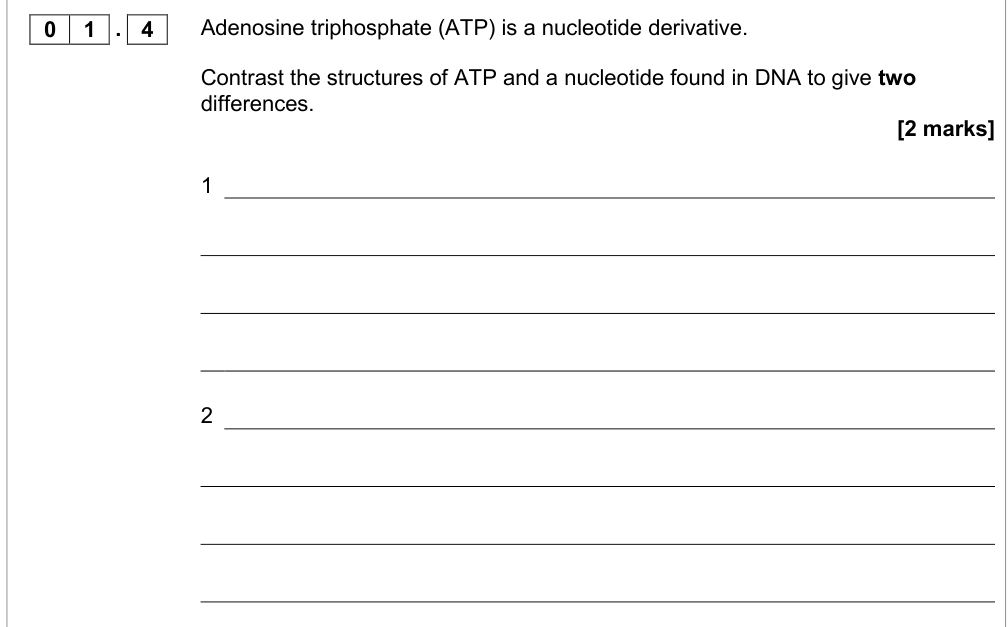
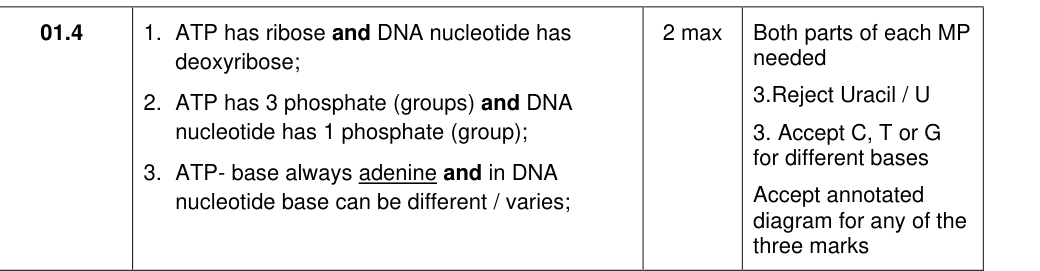
How to approach it. "Contrast" means each answer must say something about both molecules. ATP has ribose and a DNA nucleotide has deoxyribose. ATP has three phosphate groups and a DNA nucleotide has one. The base in ATP is always adenine, and in a DNA nucleotide the base can vary.
Mark scheme
Common mistakes (from AQA's examiners' reports and mark schemes)
- Describing only one molecule. The examiners' report says a quarter of students scored no marks, usually because they did not give contrasting statements, and the mark scheme needs both parts of each point. Gains credit: "ATP has ribose and a DNA nucleotide has deoxyribose".
- Treating adenosine as a base. The report says many students thought it is one. Gains credit: "the base in ATP is always adenine, but in a DNA nucleotide it can be adenine, thymine, cytosine or guanine".
Question 3: Releasing and using phosphate from ATP (3 marks)
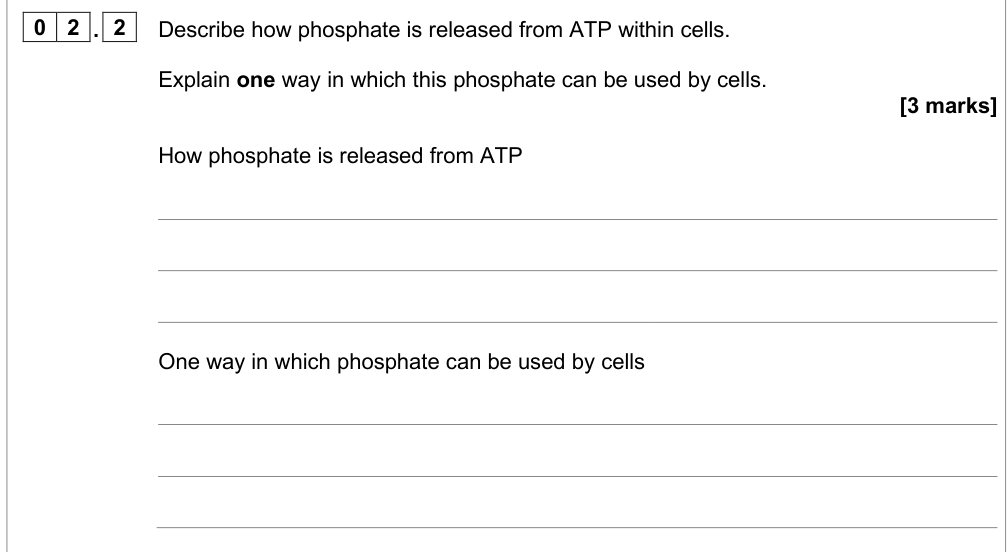
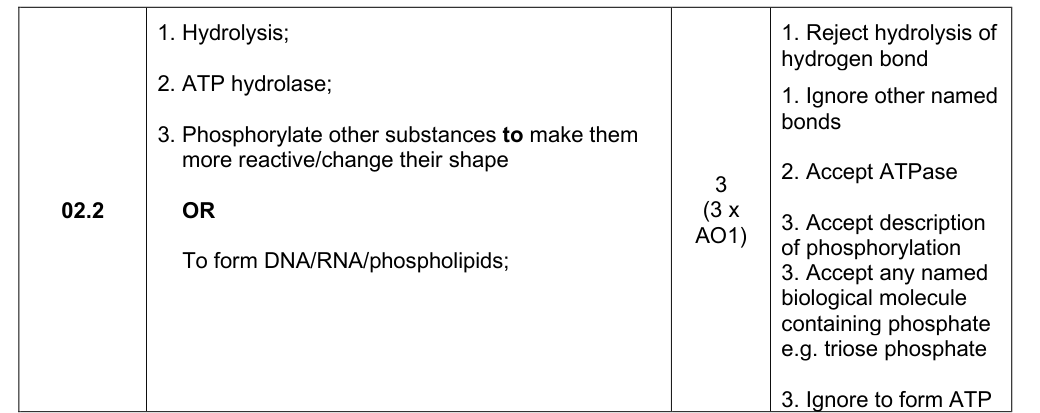
How to approach it. The first part wants the reaction and the enzyme: hydrolysis, catalysed by ATP hydrolase. The second part wants a use for the phosphate: it can be added to other substances (phosphorylation), which makes them more reactive. It can also be used to form molecules that contain phosphate, such as DNA, RNA or phospholipids.
Mark scheme
Common mistakes (from AQA's examiners' reports and mark schemes)
- Writing about ATP synthase and the formation of ATP. The examiners' report says some students did this instead of describing hydrolysis. Gains credit: "hydrolysis of ATP by ATP hydrolase".
- Mentioning phosphorylation without saying what it does. The report says far fewer students explained that it makes substances more reactive. Gains credit: "phosphate is added to other substances, making them more reactive".
- Saying phosphate makes cells more reactive, or just that "ATP is used in respiration". The report describes both. Gains credit: a specific role, for example "phosphorylating glucose makes it more reactive".
Question 4: How an enzyme is phosphorylated (2 marks)
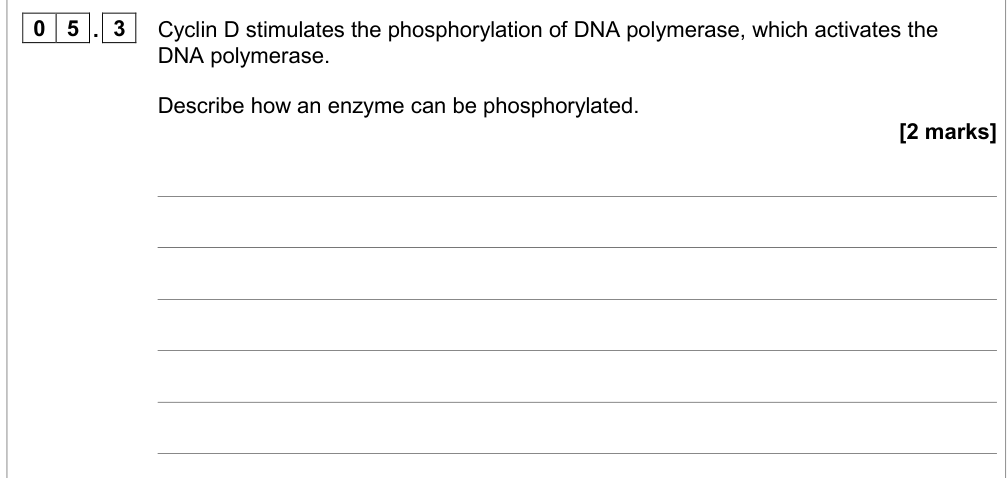
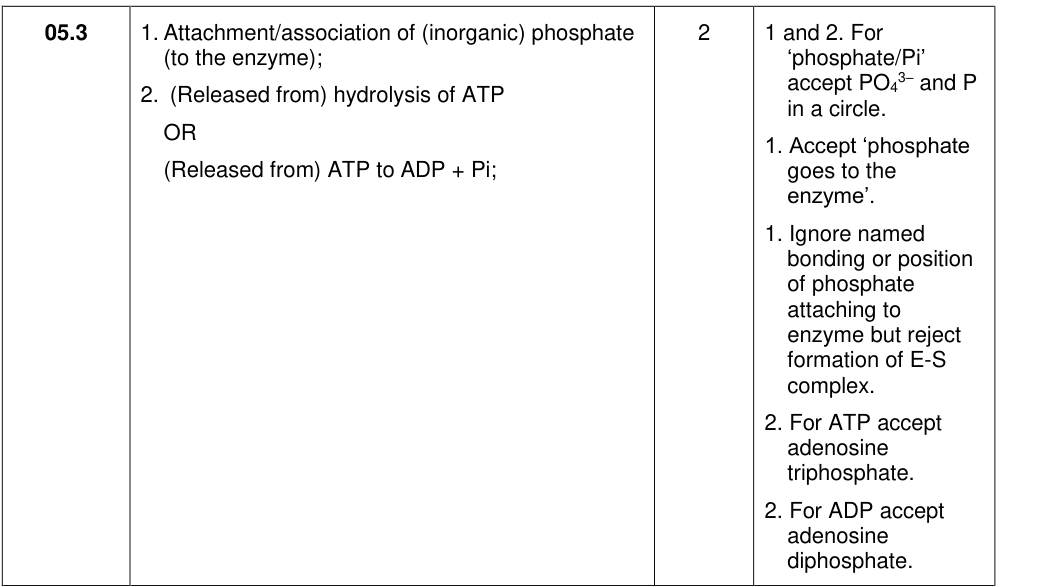
How to approach it. Say where the phosphate comes from and what happens to it. ATP is hydrolysed to ADP and Pi, and the phosphate attaches to the enzyme.
Mark scheme
Common mistakes (from AQA's examiners' reports and mark schemes)
- Repeating the question. The examiners' report says answers such as "phosphate is used to phosphorylate the enzyme" did not describe clearly enough that the phosphate attaches to the enzyme. Gains credit: "a phosphate group attaches to the enzyme".
- Describing an enzyme-substrate complex. The mark scheme rejects this. Gains credit: "the phosphate comes from the hydrolysis of ATP to ADP and Pi".
Question 5: Why using less ATP is a benefit (2 marks)
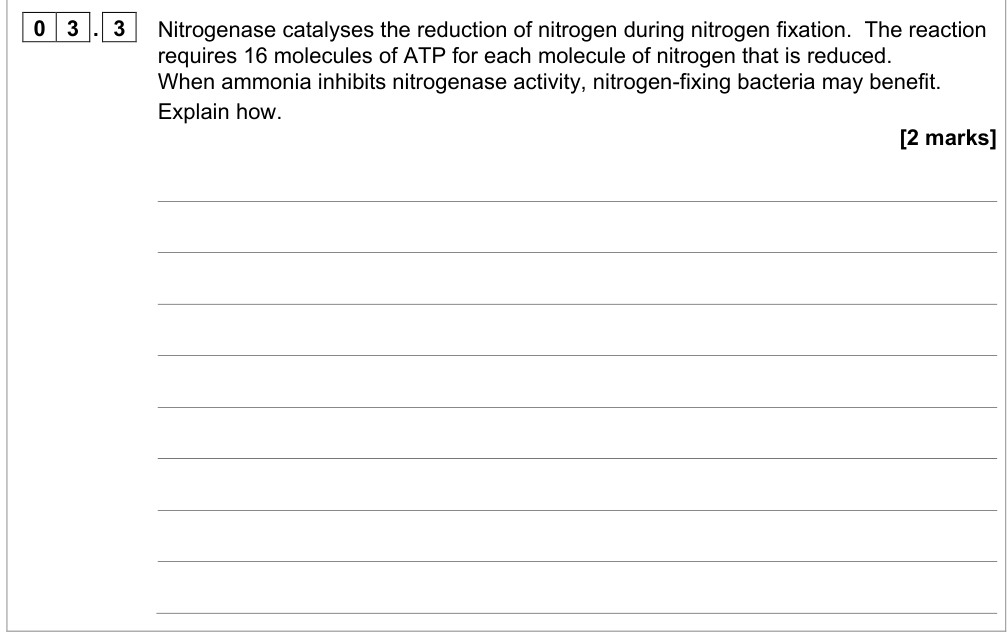
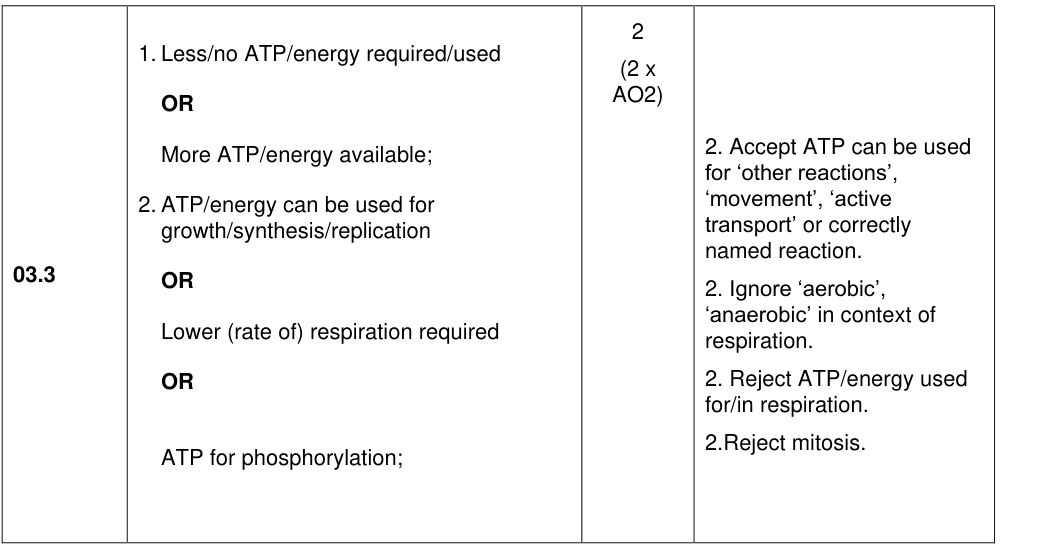
How to approach it. Follow the information in the question. Nitrogen fixation needs a lot of ATP, so when nitrogenase is inhibited less ATP is used. That leaves more ATP for other processes, such as growth, protein synthesis or active transport, or it means a lower rate of respiration is needed.
Mark scheme
Common mistakes (from AQA's examiners' reports and mark schemes)
- Stopping at "more ATP is available". The examiners' report says most students gained that mark, but only 28% also said what the ATP could be used for or that respiration could be lower. Gains credit: "the ATP can be used for growth" or "for active transport".
- Saying the ATP or energy is used in respiration. The report says this misconception was penalised, and the mark scheme rejects it. Gains credit: a process that uses ATP, such as "protein synthesis".
- Giving mitosis as the use. The mark scheme rejects it. Gains credit: "growth" or "replication".
Key points to remember
- ATP = ribose, adenine and three phosphate groups. Say "ribose", not "pentose".
- ATP hydrolase catalyses hydrolysis of ATP to ADP and Pi; ATP synthase catalyses the condensation of ADP and Pi.
- Phosphorylation adds phosphate to a substance and makes it more reactive.
- ATP is produced in respiration and used in other processes. Do not write that ATP or energy is used in respiration.
- "Contrast" and "differences" need both molecules in each statement.
Practise next
- AQA ATP exam questions by topic
- ATP, water and ions self-marking quiz
- All AQA A-level Biology revision resources
Studying this for AQA? My weekly AQA Year 12 masterclass works through topics like this with real exam questions. See the timetable or book a first one-to-one lesson.
Questions, mark schemes and examiners' report comments © AQA.