

Communicable diseases and the immune system make up one of the biggest spec points in the OCR A course, and it is examined on every paper. Spec point 4.1.1 asks you to know the four types of pathogen and how they spread, how plants and animals defend themselves, how phagocytes and lymphocytes work, and the primary and secondary immune responses. You also need antibody structure, opsonins, agglutinins and anti-toxins, the types of immunity, autoimmune disease, vaccination programmes, sources of medicines and antibiotic resistance.
Students usually know the story of an immune response, but they lose marks on precise words. The examiners' reports keep flagging the same slips: saying the phagosome engulfs the pathogen, saying memory cells make antibodies, writing "active" without "artificial", saying "the body attacks itself" for autoimmune disease, and explaining natural selection when the question asks why resistance has become common.
Work through the eighteen questions below in order. They start with pathogens and the first lines of defence, move through the specific immune response and antibodies, and finish with vaccination, autoimmunity and medicines. If you'd like to go through questions like these with me each week, my OCR A masterclasses run on Wednesdays at 5.15pm for Year 12 and on Tuesdays at 6.30pm or Thursdays at 5.15pm for Year 13.
What you need from GCSE
Each question on this page assumes you're secure on these GCSE ideas. If any of them feels shaky, look it up before you start.
- Pathogens are microorganisms that cause disease: bacteria, viruses, protists and fungi. They spread by direct contact, by water, through the air or by vectors.
- The skin, mucus and cilia in the airways, and stomach acid stop many pathogens getting into the body.
- White blood cells defend the body by phagocytosis, by producing antibodies and by producing antitoxins.
- A vaccine contains a dead or inactive form of a pathogen. It makes white blood cells produce antibodies, so a later infection is destroyed quickly.
- Antibiotics kill bacteria but not viruses, and bacteria can become resistant to them by natural selection.
Key terms
These words come up in the questions and mark schemes. Examiners expect you to use them exactly.
- Antigen: a molecule, usually a protein on a cell surface, that the immune system recognises as self or non-self.
- Antibody: a Y-shaped protein made by plasma cells, with two heavy and two light chains and a variable region that binds one specific antigen.
- Phagosome and lysosome: the vesicle a phagocyte forms around an engulfed pathogen, and the organelle that fuses with it to release digestive enzymes.
- Clonal selection and clonal expansion: activation of the lymphocyte with the matching receptor, then its rapid division by mitosis to make many identical cells.
- Plasma cell: a B lymphocyte that has differentiated to make and release large amounts of one antibody.
- Memory cell: a long-lived B or T lymphocyte that allows a faster, larger secondary response to the same antigen.
- Opsonin, agglutinin, anti-toxin: antibodies that mark a pathogen for phagocytosis, clump pathogens together, or neutralise toxins.
- Active and passive immunity: making your own antibodies and memory cells, or being given antibodies made by another organism.
- Autoimmune disease: a disease in which the immune system attacks the body's own cells because it recognises them as non-self.
- Herd immunity: protection of unvaccinated people because so many others are immune that the pathogen can't spread.
What these questions cover (OCR 4.1.1)
The questions test these learning outcomes from the OCR A Level Biology A specification (H420):
- (a) the different types of pathogen that can cause communicable diseases in plants and animals (bacteria, viruses, protoctists and fungi)
- (b) the means of transmission of animal and plant communicable pathogens (vectors, spores and living conditions)
- (c) plant defences against pathogens (chemicals and callose)
- (d) the primary non-specific defences against pathogens in animals (skin, clotting, inflammation, mucous membranes)
- (e)(i) the structure and mode of action of phagocytes (neutrophils, APCs, phagosomes and lysosomes)
- (e)(ii) examination and drawing of cells observed in blood smears (PAG1)
- (f) the structure, different roles and modes of action of B and T lymphocytes in the specific immune response (clonal selection and expansion, T helper and T killer cells)
- (g) the primary and secondary immune responses (memory cells)
- (h) the structure and general functions of antibodies
- (i) an outline of the action of opsonins, agglutinins and anti-toxins
- (j) the differences between active and passive immunity, and between natural and artificial immunity
- (k) autoimmune diseases (arthritis as an example)
- (l) the principles of vaccination and the role of vaccination programmes in the prevention of epidemics
- (m) possible sources of medicines (including personalised medicines)
- (n) the benefits and risks of using antibiotics to manage bacterial infection
How to use this page
Write your answer on paper before you open the mark scheme. Allow about 1.2 minutes per mark: the 18 questions are worth 43 marks, so about 52 minutes in total. Then mark your answer strictly against the mark scheme and read the examiners' tip underneath it. If you'd rather print the questions, download the PDF pack.
Pathogens, transmission and plant defences
Question 1
AS Paper 2 · June 2024 · Q2(b) · 3 marks · Easy
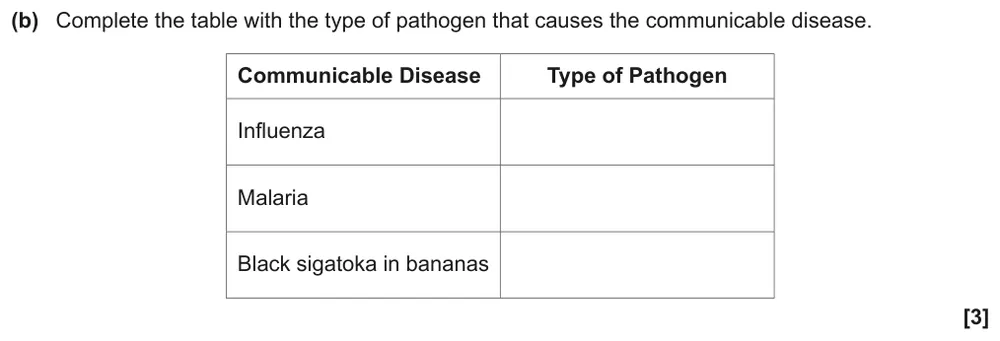
Name the type of pathogen that causes influenza, malaria and black sigatoka.
Show the mark scheme
Tap an image to open it full size.
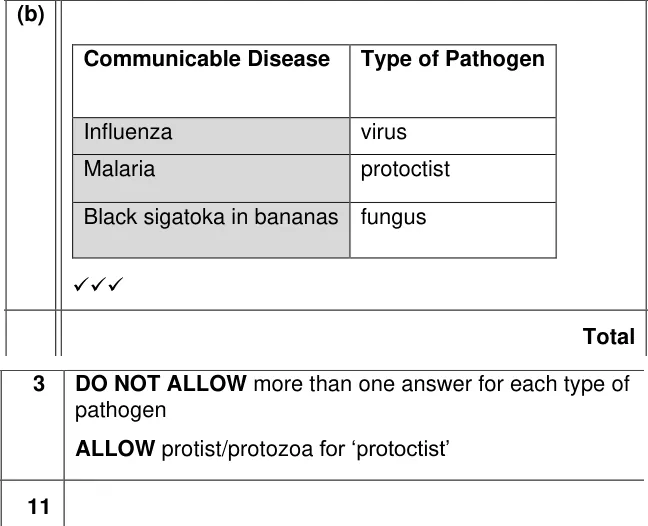
From the examiners' report: Learn the four pathogen types against the named diseases: black sigatoka is a fungus, but many wrote protoctist. Phonetic spellings of protoctist were accepted.
Question 2
A level Paper 3 · June 2019 · Q6(c) · 2 marks · Easy
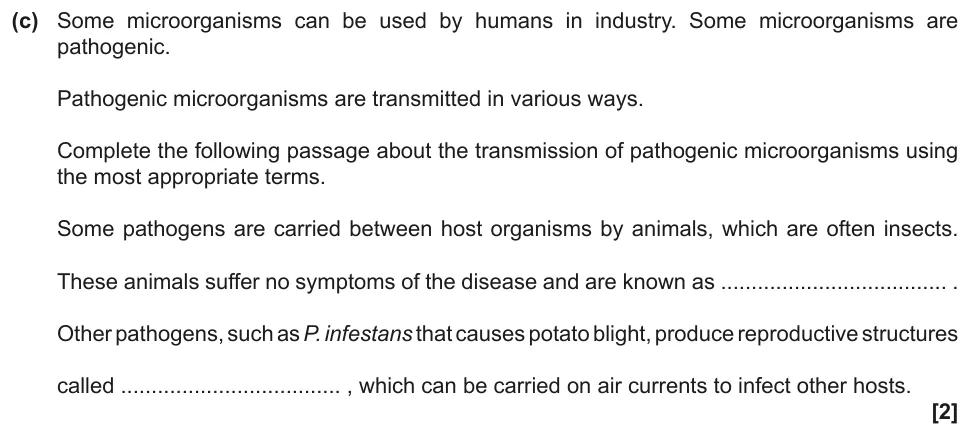
Complete a passage on transmission by vectors and spores.
Show the mark scheme
Tap an image to open it full size.
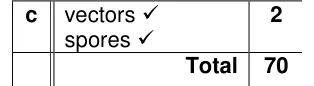
From the examiners' report: Animals that carry a pathogen between hosts are vectors, and the potato blight pathogen spreads by spores on air currents. Most students got this; the slip was not recognising spores.
Question 3
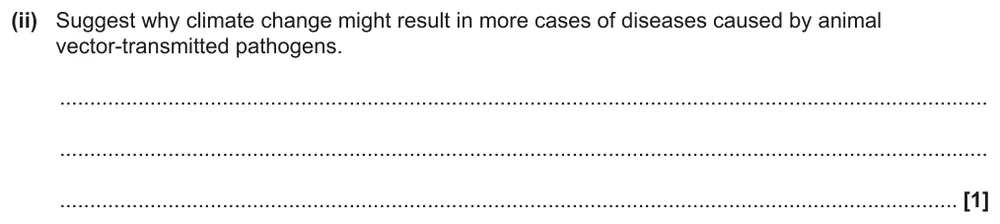
A level Paper 3 · June 2025 · Q7(a)(ii) · 1 mark · Medium
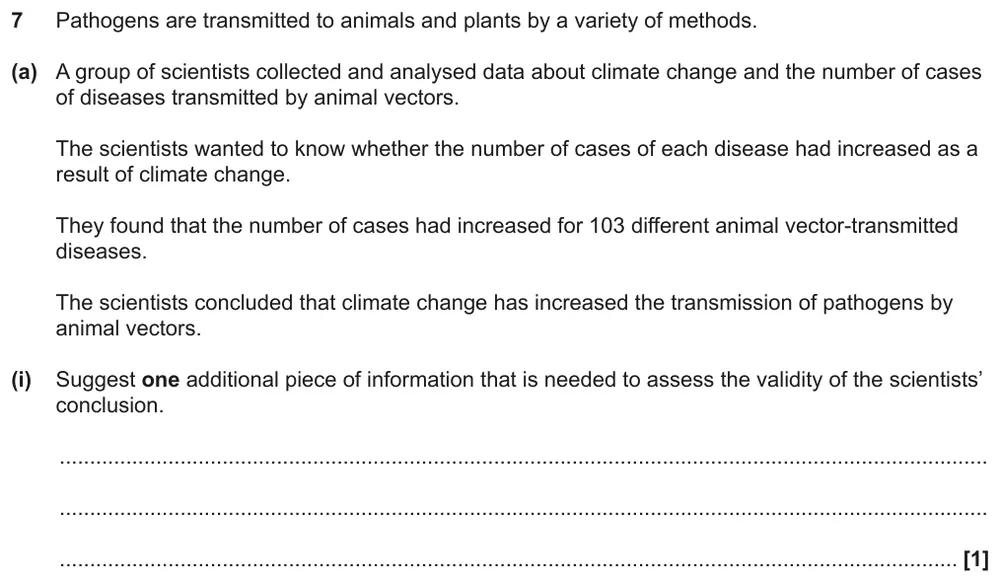
Suggest why climate change might increase vector-borne disease.
Information from earlier in this question:
Show the mark scheme

Tap an image to open it full size.
From the examiners' report: Talk about the vector or pathogen: warmer conditions let vectors spread to new areas or breed for longer, so their numbers rise.
Question 4
A level Paper 3 · June 2025 · Q7(c) · 3 marks · Medium
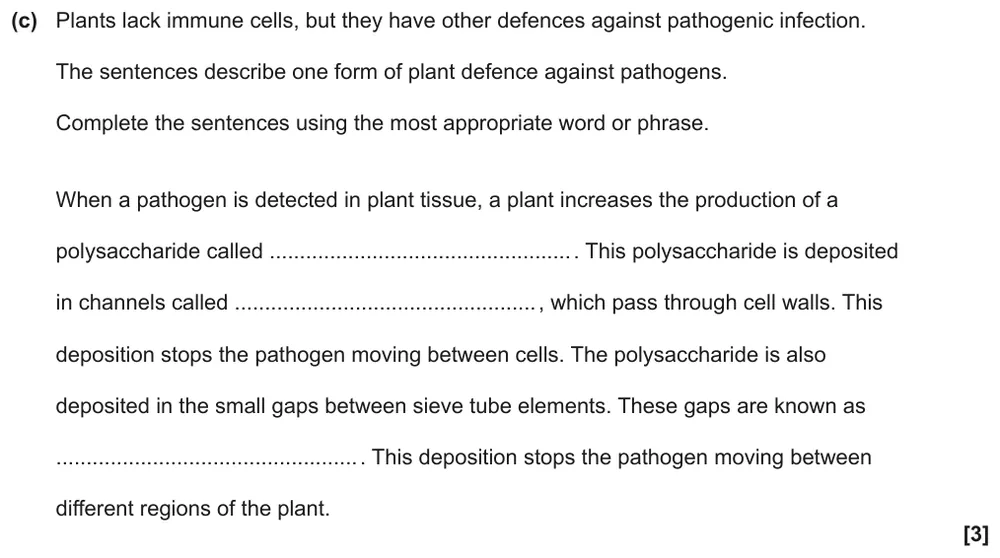
Complete sentences about callose deposition in plants.
Show the mark scheme

Tap an image to open it full size.
From the examiners' report: Callose blocks the plasmodesmata and the sieve pores. The gaps between sieve tube elements are sieve pores; 'sieve plates' was the common wrong answer.
Non-specific defences and phagocytes
Question 5
A level Paper 2 · June 2023 · Q19(a) · 2 marks · Easy
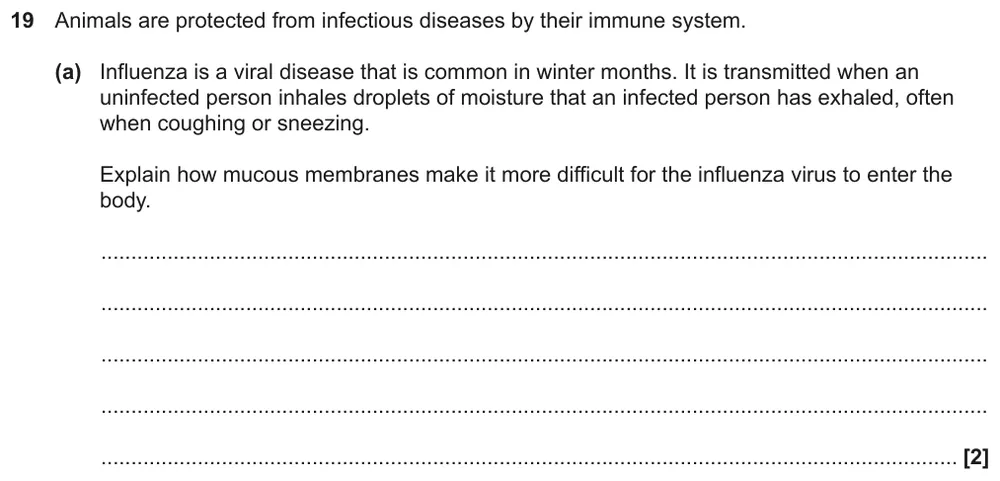
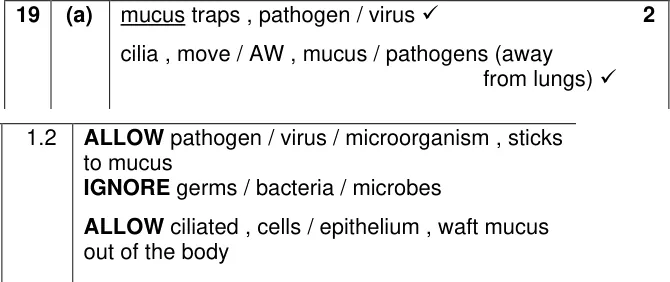
Explain how mucous membranes make it harder for influenza virus to enter the body.
Show the mark scheme
Tap an image to open it full size.
From the examiners' report: Say that the mucus traps the virus, not just 'the membrane traps it', then say the cilia move the mucus away. Cilia aren't microvilli.
Question 6
A level Paper 3 · June 2022 · Q2(a)(i) · 2 marks · Hard
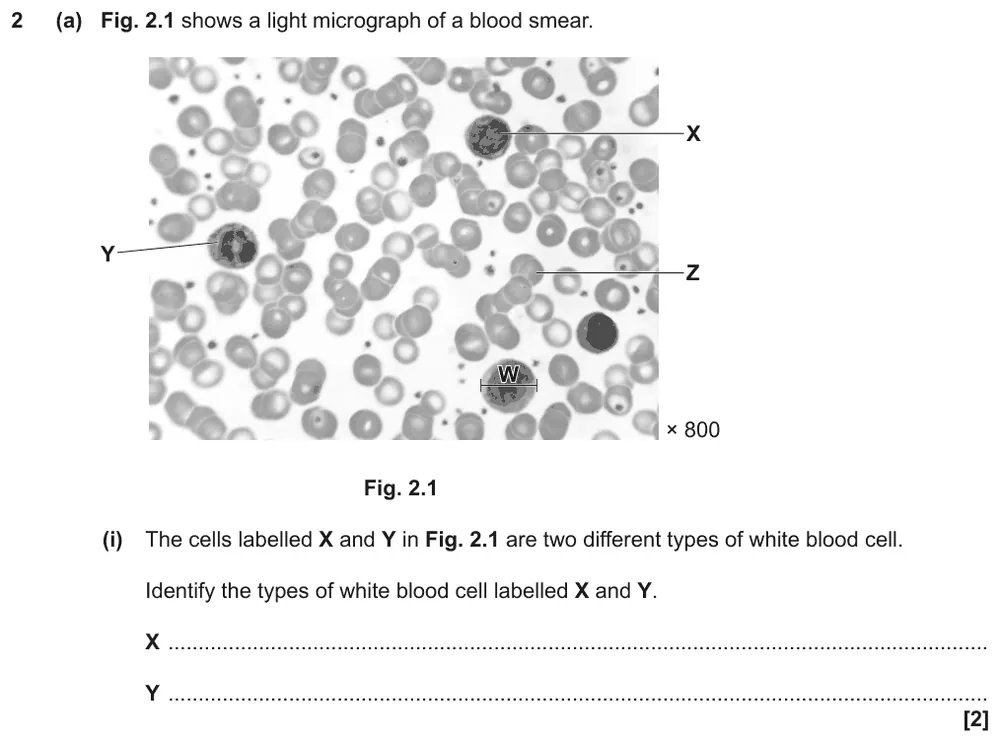
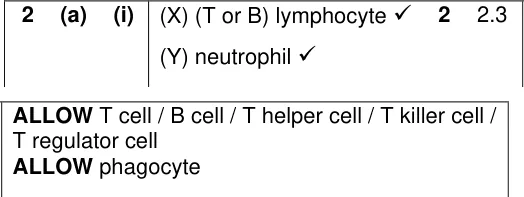
Identify the white blood cells X and Y in a blood smear.
Show the mark scheme
Tap an image to open it full size.
From the examiners' report: A lymphocyte has a large round nucleus that almost fills the cell; a neutrophil has a lobed nucleus. Many students called X a macrophage or monocyte.
The specific immune response and antibodies
Question 7
AS Paper 1 · June 2019 · Q26(a) · 5 marks · Easy
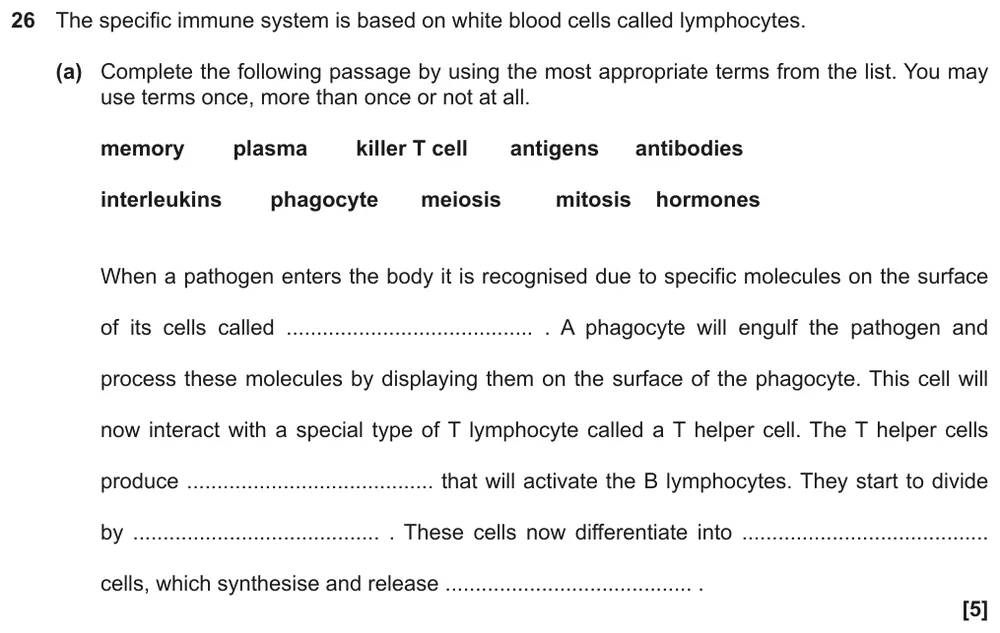
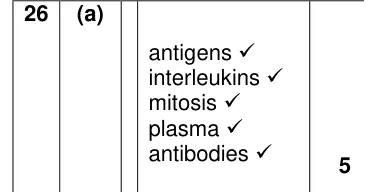
Complete a passage on antigen presentation, T helper cells and B lymphocyte activation.
Show the mark scheme
Tap an image to open it full size.
From the examiners' report: T helper cells release interleukins, not hormones, and it is plasma cells, not memory or killer T cells, that make antibodies. Keep antigens and antibodies apart.
Question 8
AS Paper 2 · June 2022 · Q4(b)(i) · 1 mark · Medium
Identify the type of immunity given by a flu vaccine.

Show the mark scheme

Tap an image to open it full size.
From the examiners' report: Give both words: artificial and active. Herd immunity is not a type of immunity in this sense.
Question 9
AS Paper 2 · June 2022 · Q4(b)(iii) · 2 marks · Hard
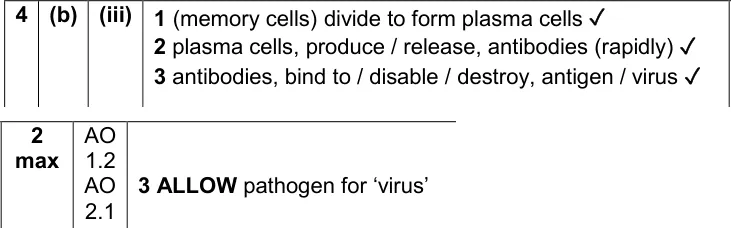
Outline the role of B memory cells in the secondary immune response.
Show the mark scheme
Tap an image to open it full size.
From the examiners' report: Memory cells don't make antibodies themselves. Say they divide quickly and become plasma cells, and the plasma cells release the antibodies.
Question 10
AS Paper 2 · June 2022 · Q4(c) · 3 marks · Medium
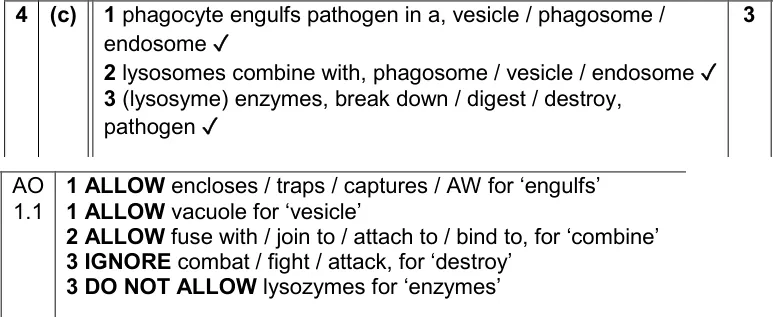
Outline the roles of phagosomes and lysosomes in phagocytosis.
Show the mark scheme
Tap an image to open it full size.
From the examiners' report: The phagocyte engulfs the pathogen; the phagosome is the vesicle it ends up in. Lysosomes contain enzymes; don't call them 'lysozymes'.
Question 11
AS Paper 2 · June 2018 · Q3(c)(ii) · 1 mark · Medium
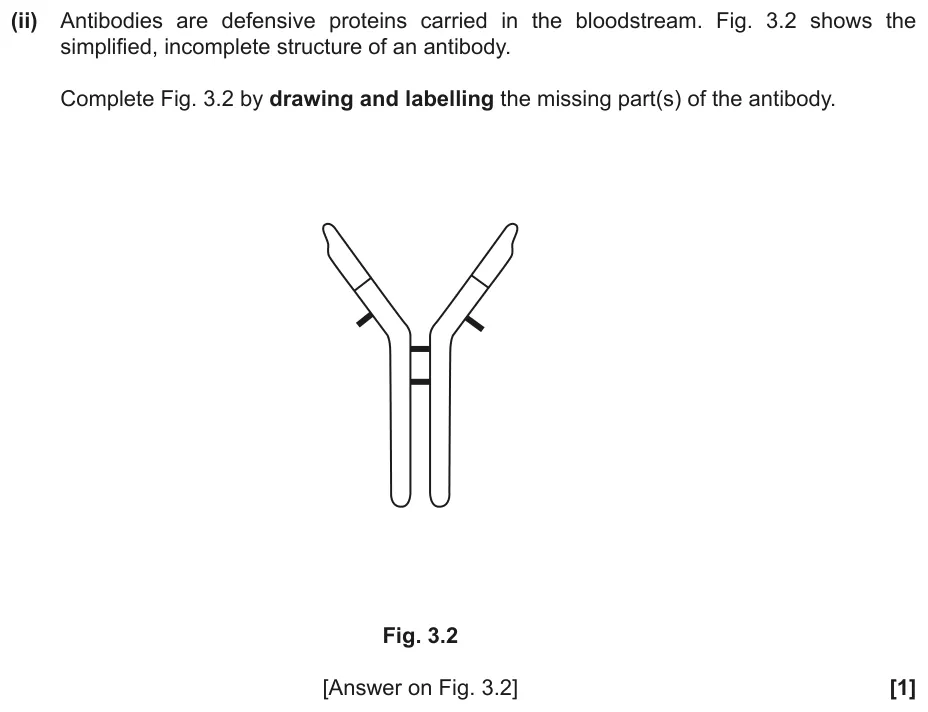
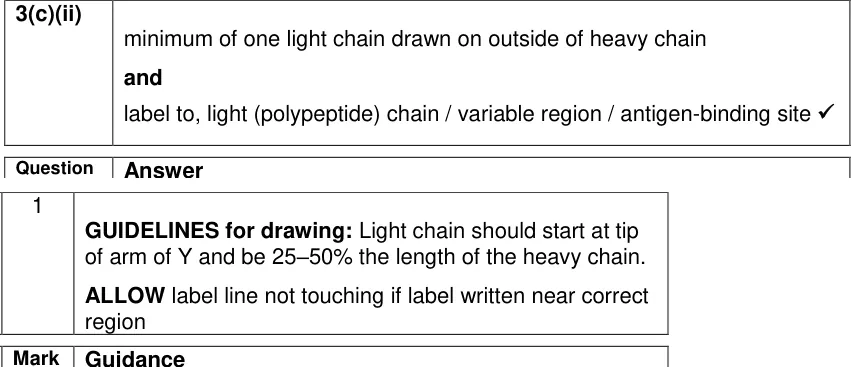
Complete a diagram of an antibody by drawing and labelling the missing part.
Show the mark scheme
Tap an image to open it full size.
From the examiners' report: Many students left this out. Draw a short light chain along the outside of each arm, starting at the tip, and label it light chain or variable region.
Question 12
A level Paper 3 · June 2022 · Q1(a) · 3 marks · Hard
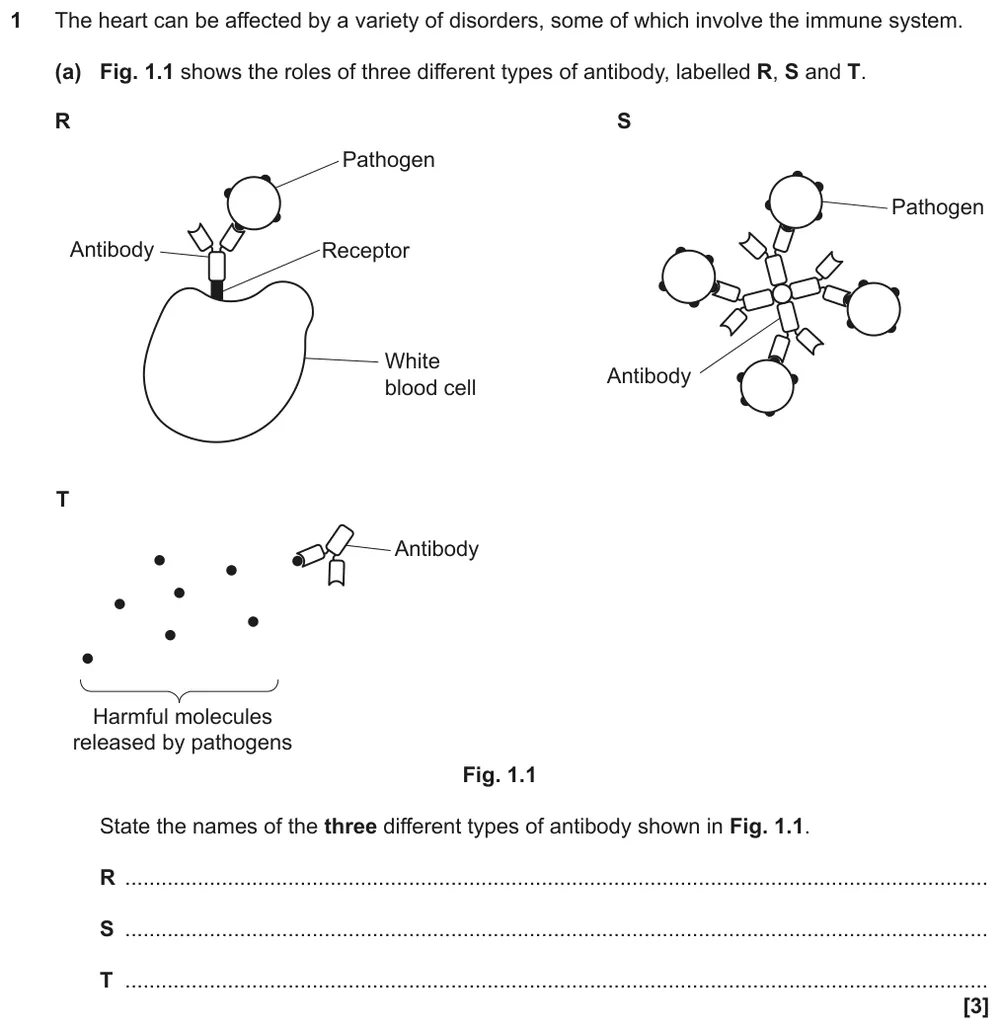
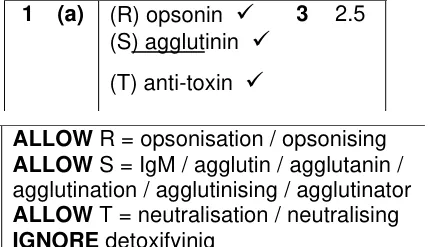
Name the opsonin, agglutinin and anti-toxin shown in a diagram.
Show the mark scheme
Tap an image to open it full size.
From the examiners' report: All three are antibodies, so name them as antibodies, not white blood cells. R, the one linking the pathogen to a phagocyte, is an opsonin and was the one most often missed.
Question 13
A level Paper 2 · June 2023 · Q19(b) · 5 marks · Medium
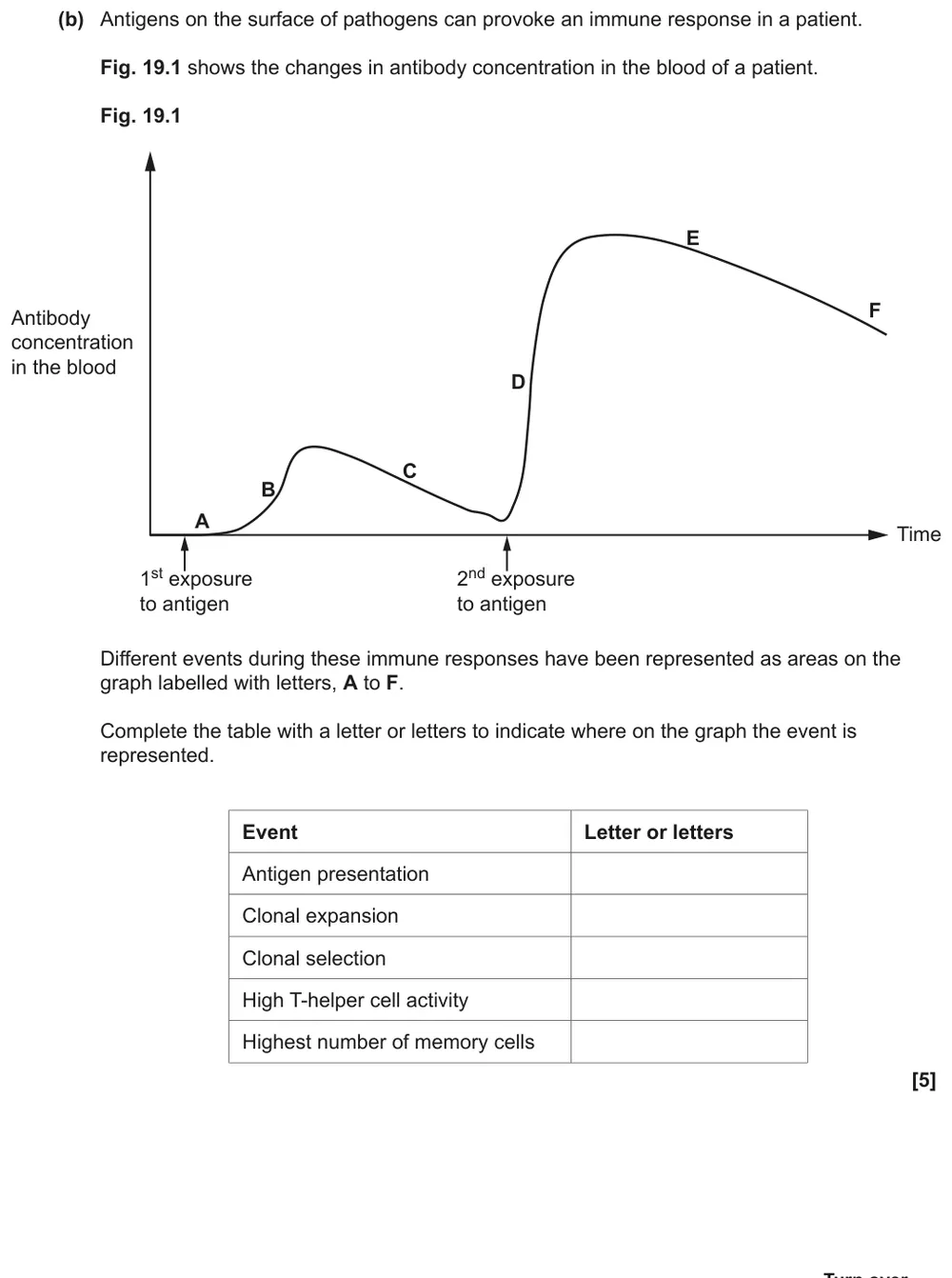
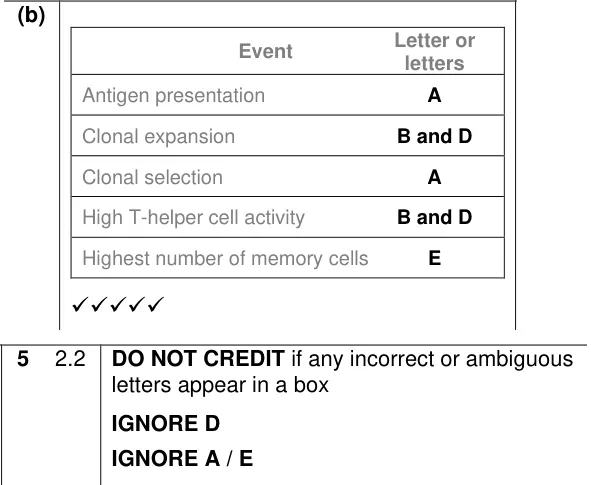
Match antigen presentation, clonal selection, clonal expansion and memory cells to parts of an antibody graph.
Show the mark scheme
Tap an image to open it full size.
From the examiners' report: Some events happen after both exposures, so they need two letters. Memory cells don't keep increasing to the end of the graph; their number falls over time.
Vaccination, autoimmunity and medicines
Question 14
AS Paper 2 · June 2023 · Q5(a)(iii) · 3 marks · Medium
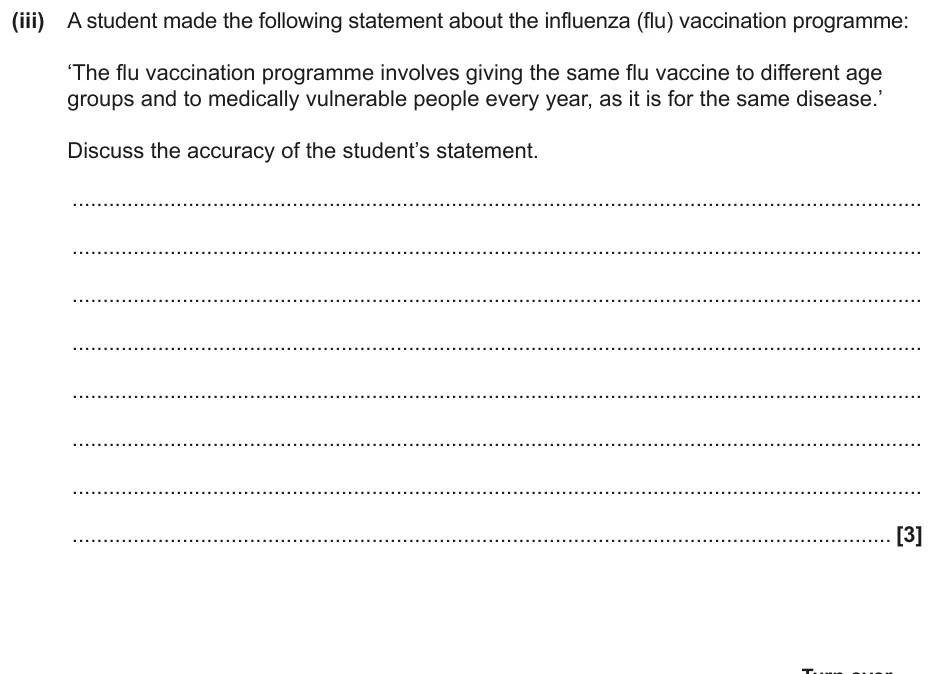
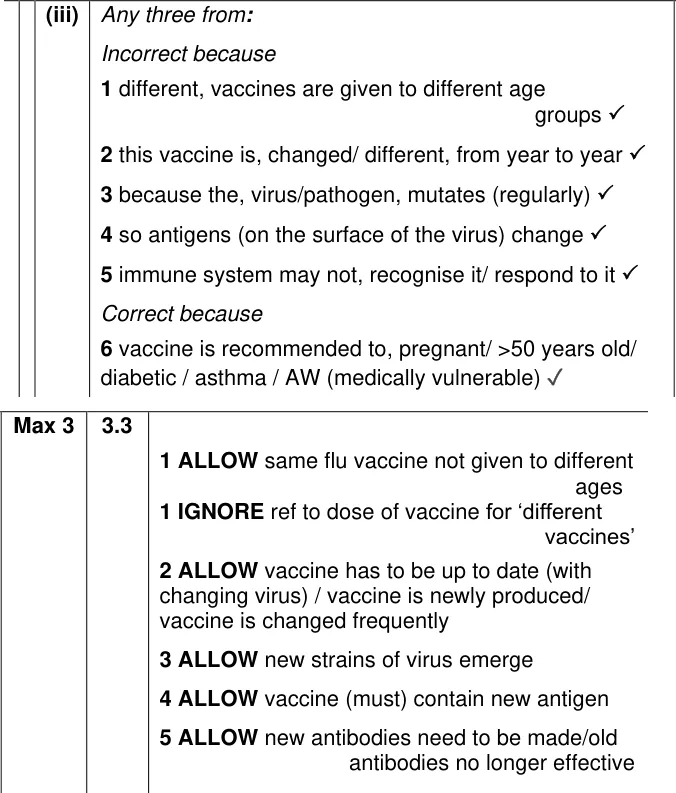
Discuss a student's claim that the same flu vaccine is given every year.
Show the mark scheme
Tap an image to open it full size.
From the examiners' report: Say it is the virus that mutates, so its antigens change and a new vaccine is needed. 'Medically vulnerable' means more at risk from the disease, not in need of a weaker vaccine.
Question 15
AS Paper 2 · June 2023 · Q5(a)(iv) · 2 marks · Medium
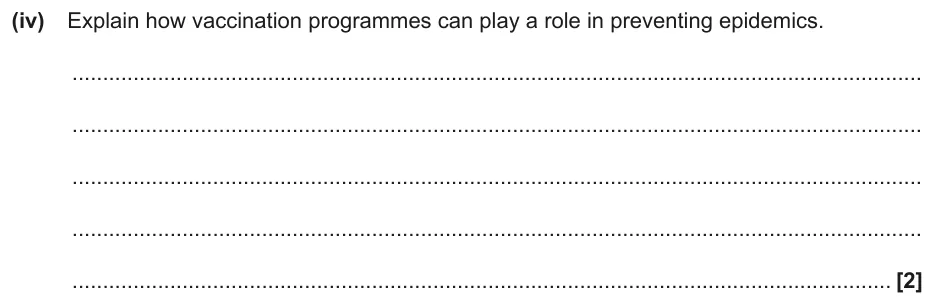
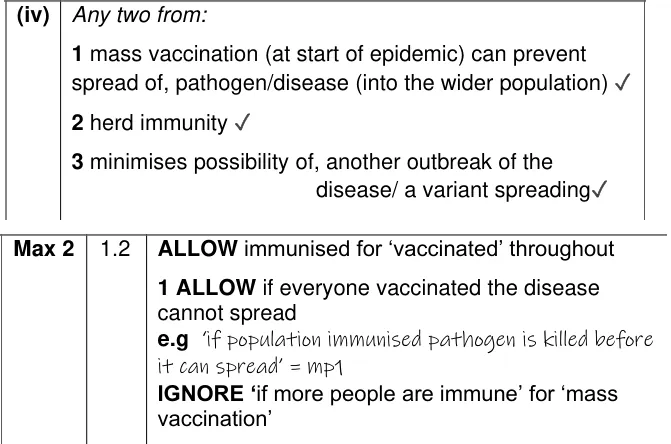
Explain how vaccination programmes help prevent epidemics.
Show the mark scheme
Tap an image to open it full size.
From the examiners' report: Answer about the population, not one person: mass vaccination stops the pathogen spreading, as well as giving herd immunity.
Question 16
AS Paper 2 · June 2023 · Q5(b)(i) · 1 mark · Hard
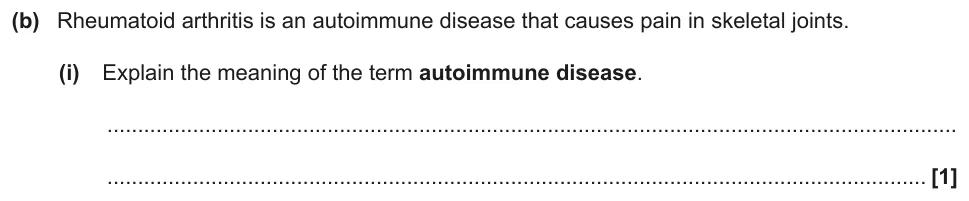
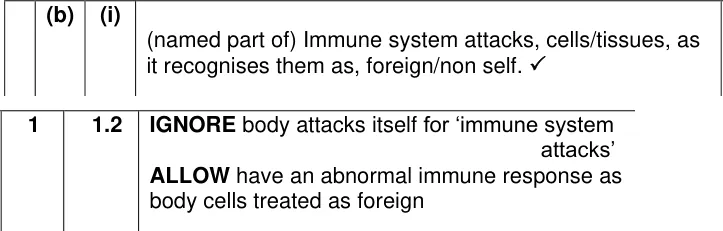
Explain the meaning of autoimmune disease.
Show the mark scheme
Tap an image to open it full size.
From the examiners' report: Name the immune system and say why it attacks: it recognises the body's own cells as non-self. An autoimmune disease is not a disease that attacks the immune system.
Question 17
A level Paper 2 · June 2023 · Q19(d) · 3 marks · Medium
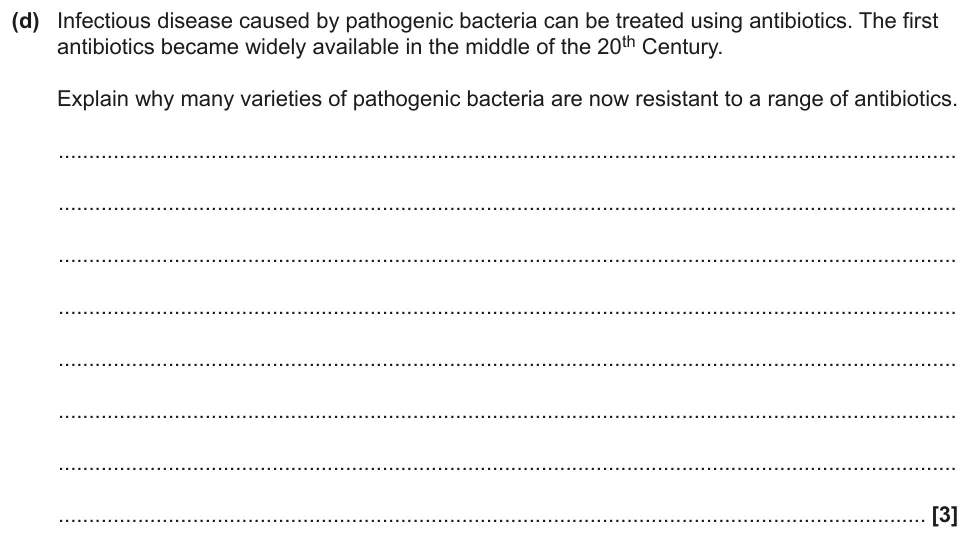
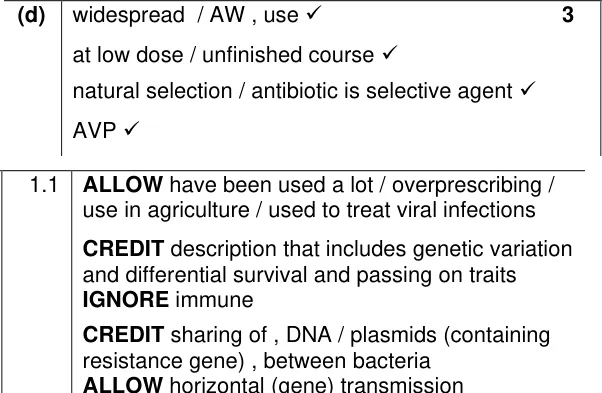
Explain why many pathogenic bacteria are now resistant to antibiotics.
Show the mark scheme
Tap an image to open it full size.
From the examiners' report: The question asks why resistance is now common, so start with overuse, low doses and unfinished courses before natural selection. Antibiotics don't cause the mutations.
Question 18
AS Paper 1 · June 2024 · Q24(d) · 1 mark · Medium
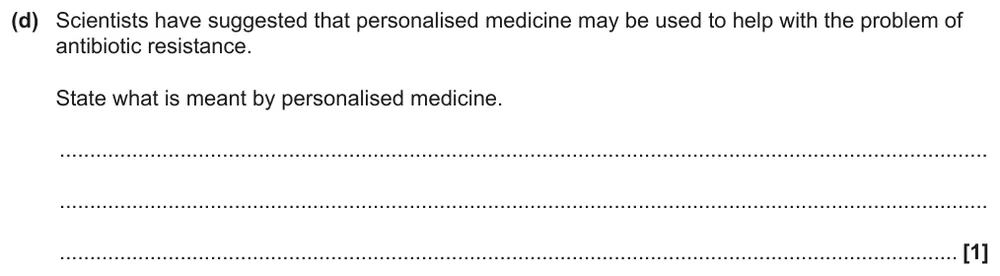
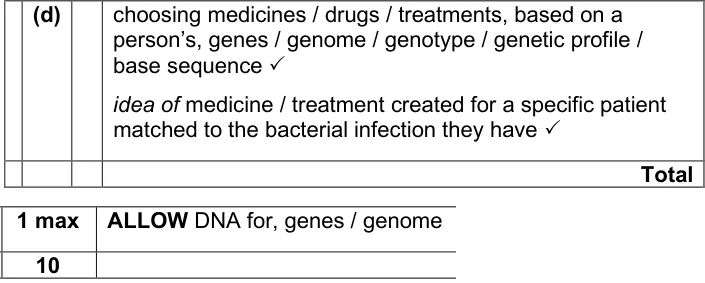
State what is meant by personalised medicine.
Show the mark scheme
Tap an image to open it full size.
From the examiners' report: Link the treatment to the person's genome or genotype. 'A drug specific to the individual' or 'based on their immune system' was too vague.
Where students lose marks (from OCR examiners' reports and mark schemes)
Each point below is followed by wording that gained marks.
Black sigatoka is a fungus: The most common slip in the pathogen table was writing protoctist for black sigatoka.
✔ Gains credit: "Influenza – virus", "malaria – protoctist", "black sigatoka – fungus".
It's the mucus that traps the virus: Many wrote that 'mucous membranes trap the pathogen' without mentioning mucus, so the first mark wasn't given.
✔ Gains credit: "Mucus traps pathogen / virus" and "cilia move mucus (away from lungs)".
Callose fills sieve pores, not sieve plates: Very few students named the gaps between sieve tube elements; 'sieve plates' was the usual wrong answer.
✔ Gains credit: "Callose", "plasmodesmata", "sieve pores".
Phagocytes engulf; phagosomes are the vesicle: Weaker answers said 'the phagosome engulfs the pathogen' and called the lysosome enzymes 'lysozymes', which wasn't allowed.
✔ Gains credit: "Phagocyte engulfs pathogen in a phagosome", "lysosomes combine with phagosome", "enzymes break down pathogen".
Plasma cells release the antibodies, not memory cells: Students wrote that 'memory cells remember the pathogen and produce antibodies'.
✔ Gains credit: Memory cells divide and differentiate into plasma cells; "plasma cells produce / release antibodies (rapidly)".
Two words for a flu jab: artificial active: Many gave only one of the two words, and the most common wrong answer was 'herd immunity'.
✔ Gains credit: "Artificial active (immunity)".
Autoimmune: the immune system sees self as non-self: 'The body attacks itself' was ignored, and some thought an autoimmune disease attacks the immune system.
✔ Gains credit: "Immune system attacks cells / tissues as it recognises them as foreign / non-self".
Resistance spread through overuse: Many spent the whole answer on natural selection and scored 1 mark, and some said antibiotics cause mutations.
✔ Gains credit: "Widespread use / overprescribing", "at low dose / unfinished course", "antibiotic is selective agent".
Download the questions
Download the PDF pack (18 questions, mark schemes at the end)
Keep practising
- Defence from Infection (disease and immunity) quiz
- PAG 7 Microbiological Techniques: OCR A Level Biology exam questions by topic
- Biodiversity (4.2.1): OCR A Level Biology exam questions by topic
- Communicable diseases, pathogens and plant defences: interactive written questions (15)
- The immune system, vaccines and antibiotics: interactive written questions (21)
- OCR A Level Biology masterclasses
Questions, mark schemes and examiners' report extracts © OCR.