

The Seventh Sense, from Scientific American, argues that the brain and the immune system are not kept apart, as textbooks once taught. It describes evidence that immune cells, many of them in the membranes around the brain, release cytokines that change how neurones behave, and that mice lacking adaptive immunity learn and socialise less well, so the immune system may act like a sense that tells the brain about microorganisms. This was the scientific article for the October 2020 A level Paper 3 (9BN0/03); Pearson had prepared it for the cancelled June 2020 sitting. Question 7 on it was worth 37 marks, and its parts test biology from across the specification: vision and synapses, inflammation and the immune response, genetic modification and stem cells. Read the article, linked just below, before you try the questions.
The examiners' report shows where marks went. Use 'impulses' or 'action potentials', not 'signals', and keep the steps from rod cell to brain in order. In the inflammation part, name capillaries and arterioles rather than 'blood vessels', and describe white blood cells leaving the blood, not just plasma leaking out. Antigen presentation starts with phagocytes engulfing antigens, not pathogens. 'Humans have more rights than animals' gained no credit as an ethical argument. In the later parts, few mentioned the nucleus in a neurone's cell body, and very few realised that replacement bone marrow must come from a donor.
Studying Edexcel SNAB and want more help? If you'd like to arrange one-to-one Edexcel tutoring, or to register your interest in an Edexcel group class, message Tom on WhatsApp using the link at the bottom of this page.
Read the article first: The Seventh Sense (October 2020). It is Pearson's copy of the article (PDF; Pearson dates it June 2020, the cancelled sitting, and the same article was used in October 2020).
What you need first
Each question on this page assumes you're secure on these ideas. If any of them feels shaky, look it up before you start.
- How rod cells, bipolar neurones and the optic nerve carry visual information to the brain.
- Synapses: neurotransmitters, receptors, ion channels, depolarisation and action potentials.
- Inflammation and the specific immune response, including antigen-presenting cells and lymphocytes.
- Genetic modification of bacteria using restriction enzymes, ligase and plasmids.
Key terms
These words come up in the article, the questions and the mark schemes. Examiners expect you to use them exactly.
- Blood–brain barrier: tightly packed endothelial cells of the brain's capillaries that restrict which substances and cells pass into the brain.
- Neuroimmunology: the study of how the nervous system and the immune system interact.
- Cytokine: a signalling protein released by immune cells that affects other cells.
- Inflammation: a non-specific response in which vessels dilate and become more permeable and white blood cells collect at the site.
- Antigen-presenting cell: a cell, such as a macrophage, that displays a foreign antigen on its surface to lymphocytes.
- Meninges: the membranes that surround the brain and spinal cord.
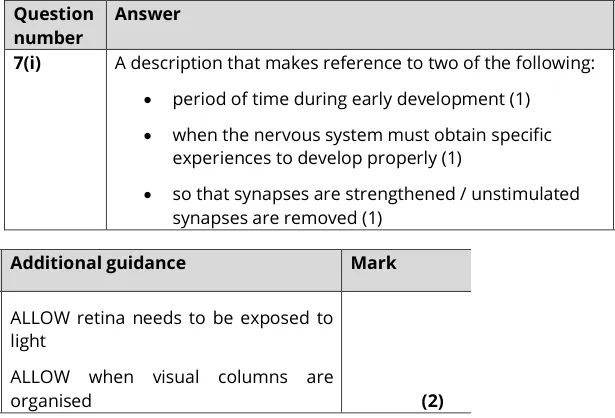
- Critical period: a period early in development when the nervous system needs specific stimulation to develop properly.
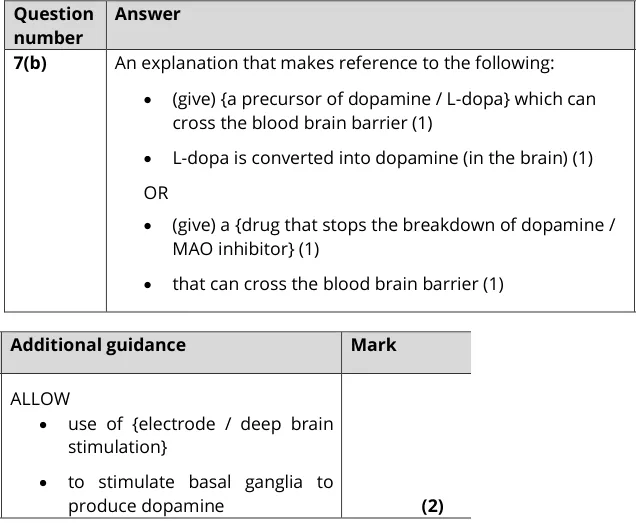
- L-dopa: a precursor of dopamine that can cross the blood–brain barrier and is converted into dopamine in the brain.
What these questions cover
The article questions draw on biology from across the specification. These are the statements of the Pearson Edexcel A level Biology A (Salters-Nuffield) specification (9BN0) that they test.
- 2.2i Know the structure and properties of cell membranes.
- 3.11i Understand what is meant by the terms ‘stem cell, pluripotency and totipotency’.
- 6.7 Understand the non-specific responses of the body to infection, including inflammation, lysozyme action, interferon, and phagocytosis.
- 6.8 Understand the roles of antigens and antibodies in the body’s immune response including the involvement of plasma cells, macrophages and antigen-presenting cells.
- 8.1 Know the structure and function of sensory, relay and motor neurones including the role of Schwann cells and myelination.
- 8.4 Know the structure and function of synapses in nerve impulse transmission, including the role of neurotransmitters, including acetylcholine.
- 8.5 Understand how the nervous systems of organisms can detect stimuli with reference to rods in the retina of mammals, the roles of rhodopsin, opsin, retinal, sodium ions, c
- 8.10 Understand what happens during the critical period so that mammals can develop their visual capacities to the full.
- 8.11 Understand the role animal models have played in the research into human brain development and function, including Hubel and Wiesel’s experiments with monkeys and kittens
- 8.12 Be able to discuss moral and ethical issues relating to the use of animals in medical research from two ethical standpoints.
- 8.15 Understand the effects of drugs on synaptic transmissions, including the use of L-Dopa in the treatment of Parkinson’s disease and the action of MDMA in Ecstasy.
- 8.17 Know how drugs can be produced using genetically modified organisms (plants, animals and microorganisms).
How to use this page
Write your answer on paper before you open the mark scheme. Allow about 1.2 minutes per mark: the 12 questions are worth 37 marks, so about 44 minutes in total. Then mark your answer strictly against the mark scheme and read the examiners' tip underneath it. If you'd rather print the questions, download the PDF pack.
Vision and drugs in the brain (article paragraphs 2–3)
Question 1
A level Paper 3 · October 2020 · Q7(a) · 5 marks
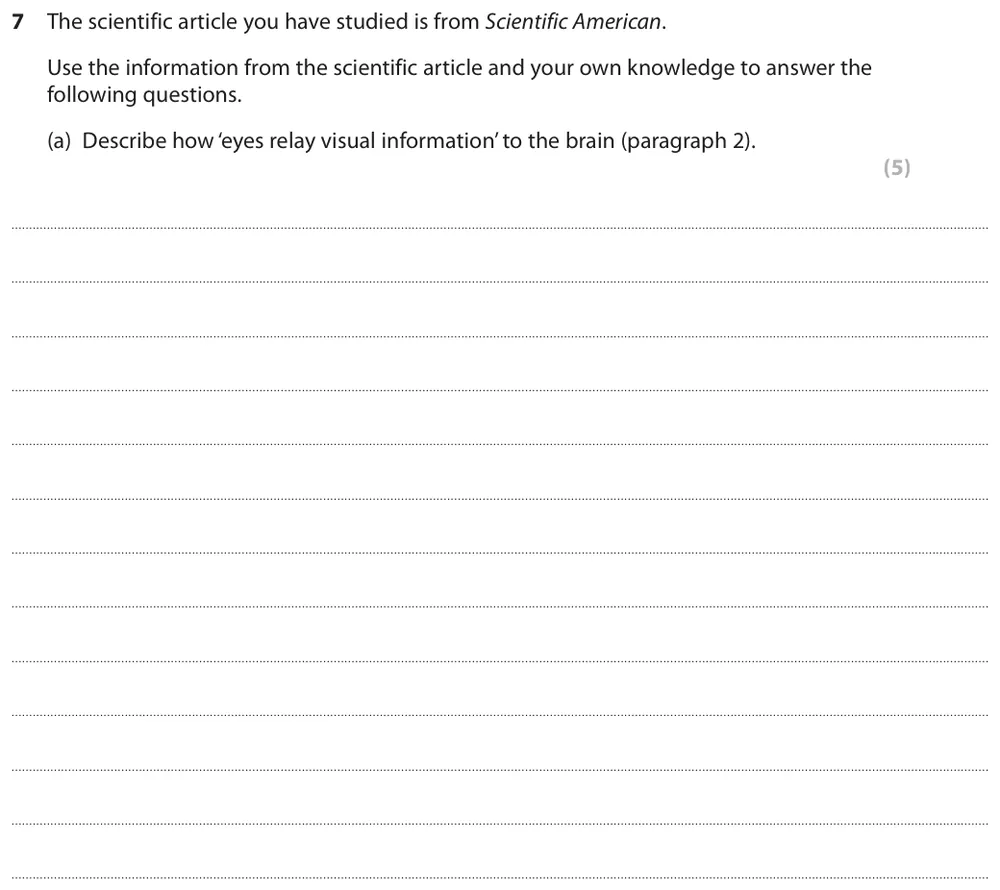
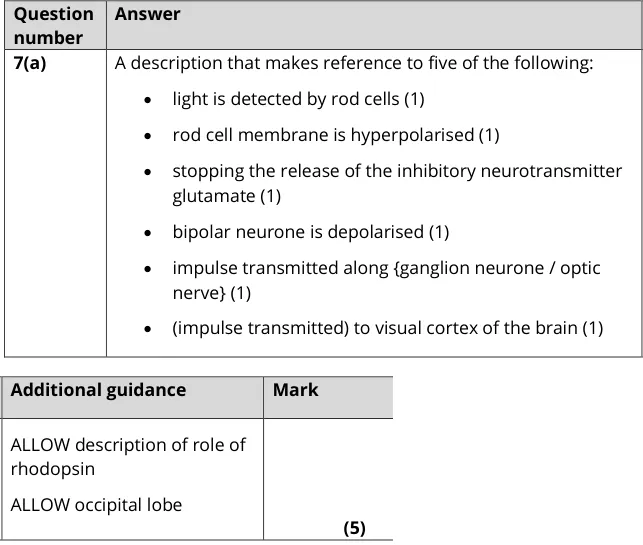
Describe how the eyes relay visual information to the brain.
Show the mark scheme
Tap an image to open it full size.
From the examiners' report: Many gained 4 or 5 marks. Marks were lost by confusing the sequence of events, or by calling the impulses or action potentials in the optic nerve 'signals'.
Question 2
A level Paper 3 · October 2020 · Q7(b) · 2 marks
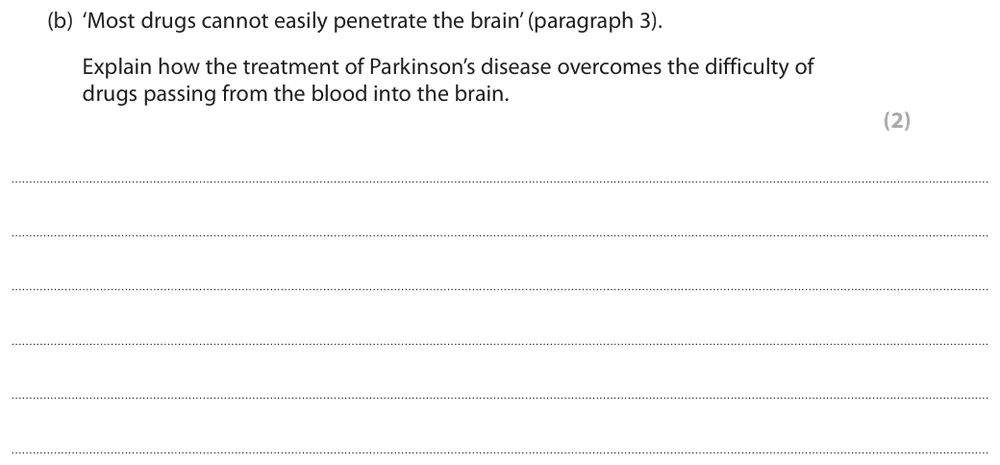
Explain how the treatment of Parkinson's disease overcomes the difficulty of drugs passing from the blood into the brain.
Show the mark scheme
Tap an image to open it full size.
From the examiners' report: Many gained both marks. Some said L-dopa acts in place of dopamine; it crosses the blood–brain barrier and is converted into dopamine in the brain.
Inflammation and the blood–brain barrier (article paragraphs 5–8)
Question 3
A level Paper 3 · October 2020 · Q7(c) · 4 marks · Hard
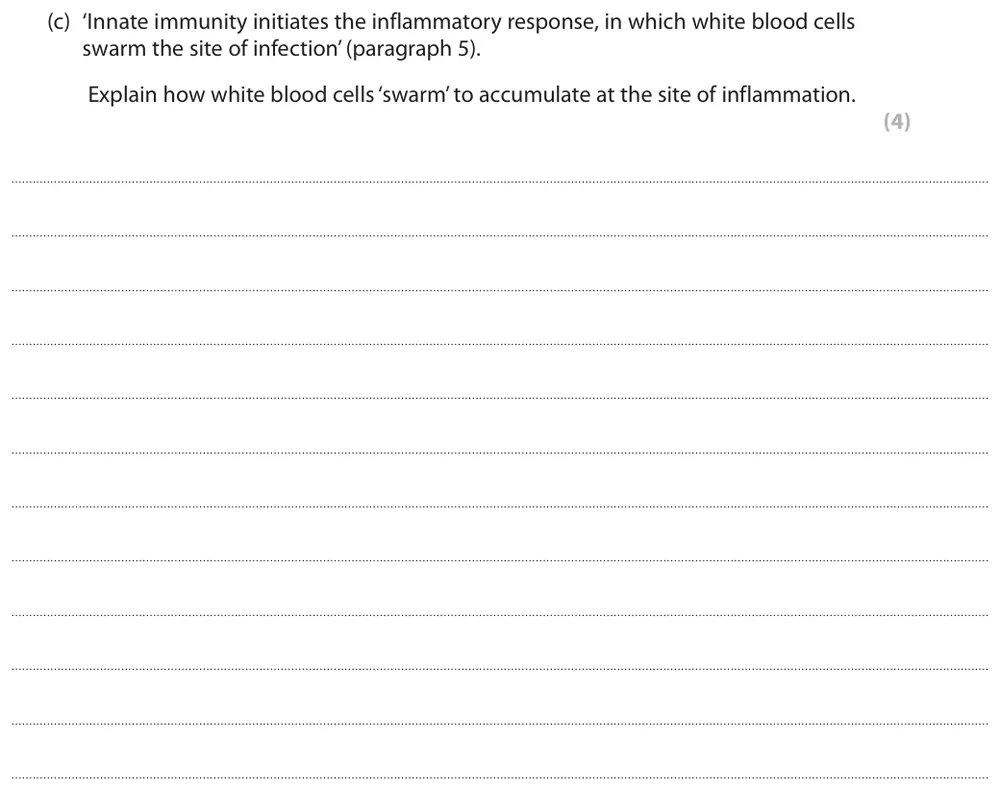
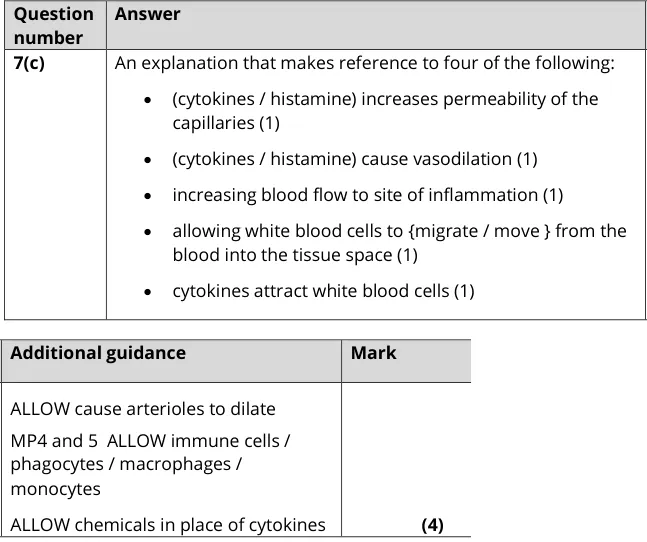
Explain how white blood cells swarm to accumulate at the site of inflammation.
Show the mark scheme
Tap an image to open it full size.
From the examiners' report: Students struggled. Name the vessels: capillaries become more permeable and arterioles dilate, not just 'blood vessels'. Describe white blood cells moving from the blood into the tissue space, not just plasma leaking; few said cytokines attract the white blood cells.
Question 4
A level Paper 3 · October 2020 · Q7(d) · 2 marks · Hard
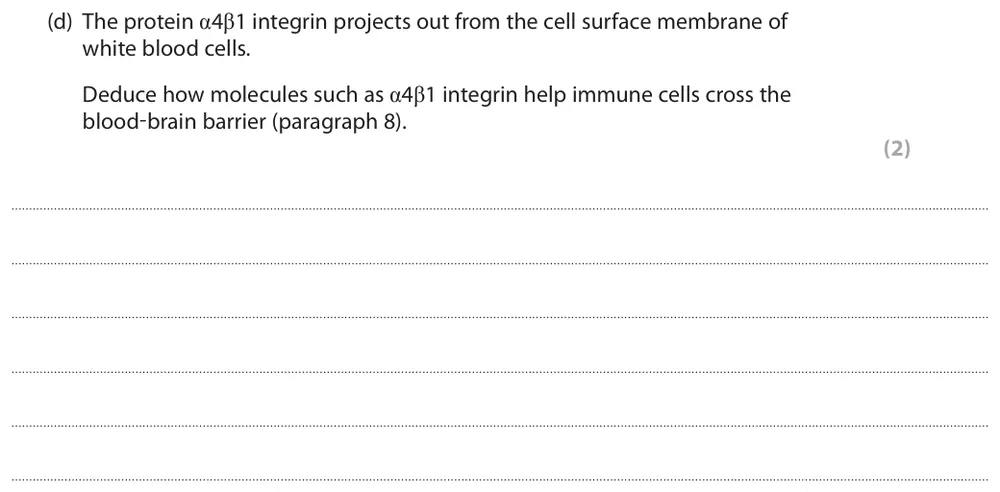
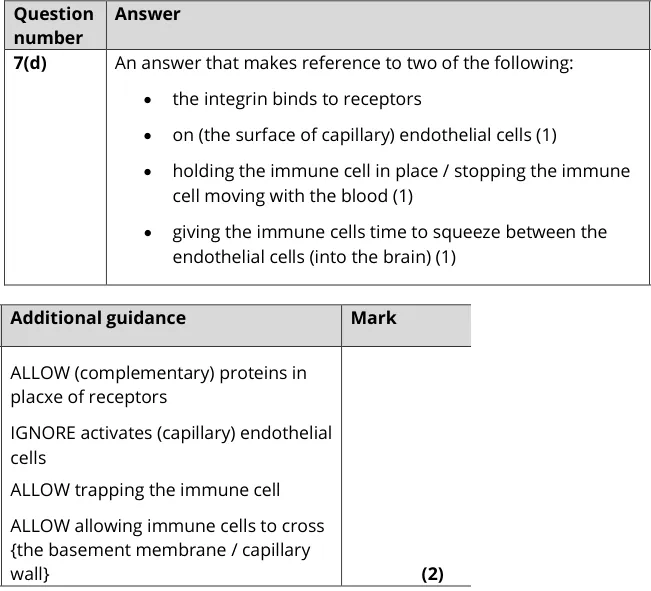
Deduce how molecules such as α4β1 integrin help immune cells cross the blood–brain barrier.
Show the mark scheme
Tap an image to open it full size.
From the examiners' report: Most marks were for the integrin binding to receptors on endothelial cells and holding the immune cell in place. Very few suggested why attaching lets the cell cross, such as giving it time to squeeze between endothelial cells.
Animal research and antigen presentation (article paragraphs 10–15)
Question 5
A level Paper 3 · October 2020 · Q7(e) · 2 marks · Hard
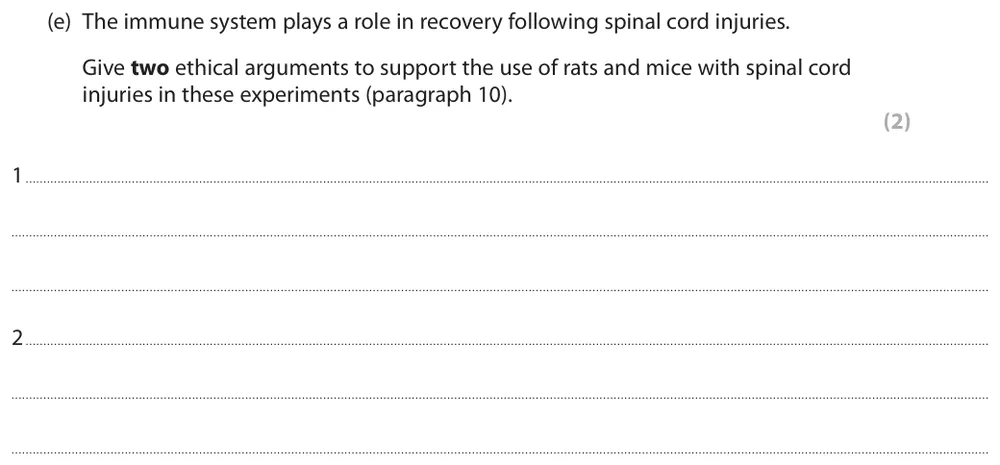
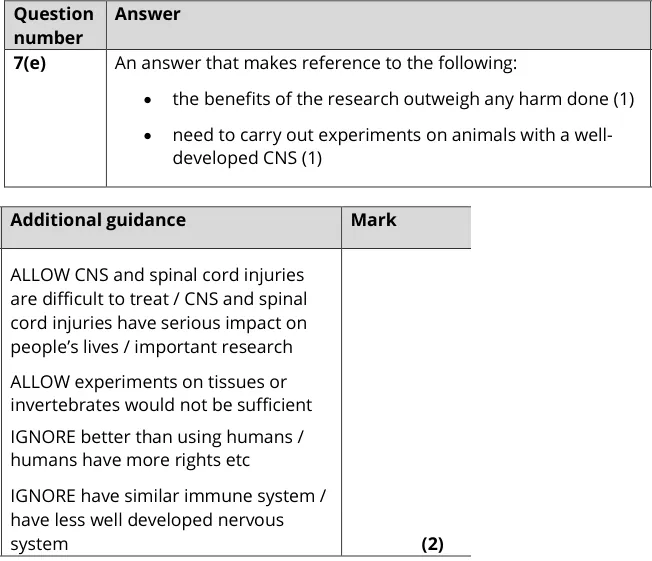
Give two ethical arguments to support using rats and mice with spinal cord injuries in these experiments.
Show the mark scheme
Tap an image to open it full size.
From the examiners' report: 'Humans have more rights than animals' gained no mark. Credit went to the benefits outweighing any harm, and to the need for animals with a well-developed CNS similar to humans.
Question 6
A level Paper 3 · October 2020 · Q7(f) · 3 marks
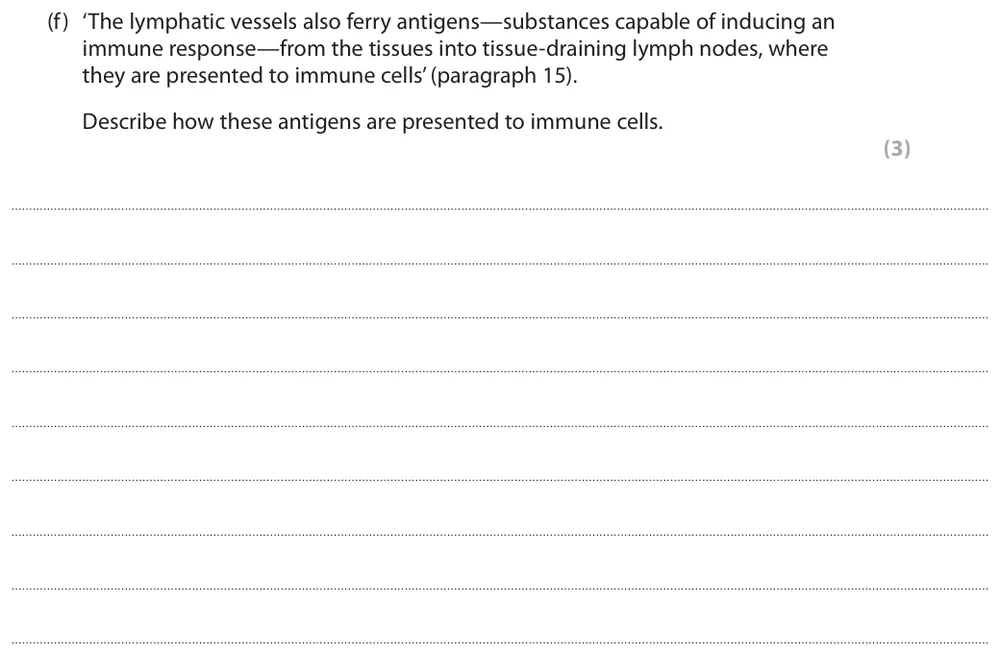
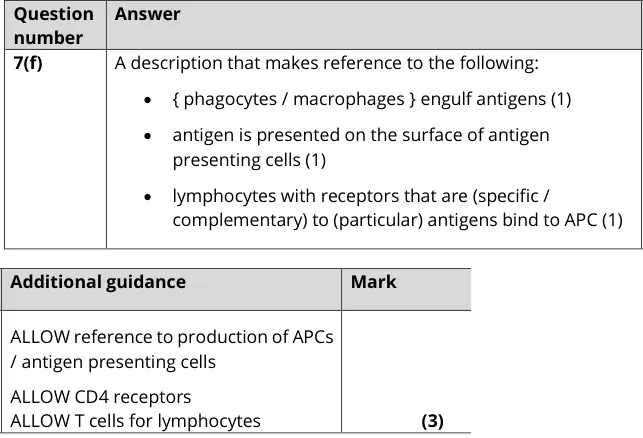
Describe how antigens are presented to immune cells in lymph nodes.
Show the mark scheme
Tap an image to open it full size.
From the examiners' report: Many lost the first mark by writing about phagocytes engulfing pathogens, bacteria or viruses. The mark was for phagocytosis of the antigen.
Neurones and synapses (article paragraphs 20–21)
Question 7
A level Paper 3 · October 2020 · Q7(g) · 4 marks
Explain how a cytokine could modify the activity of a neural circuit.
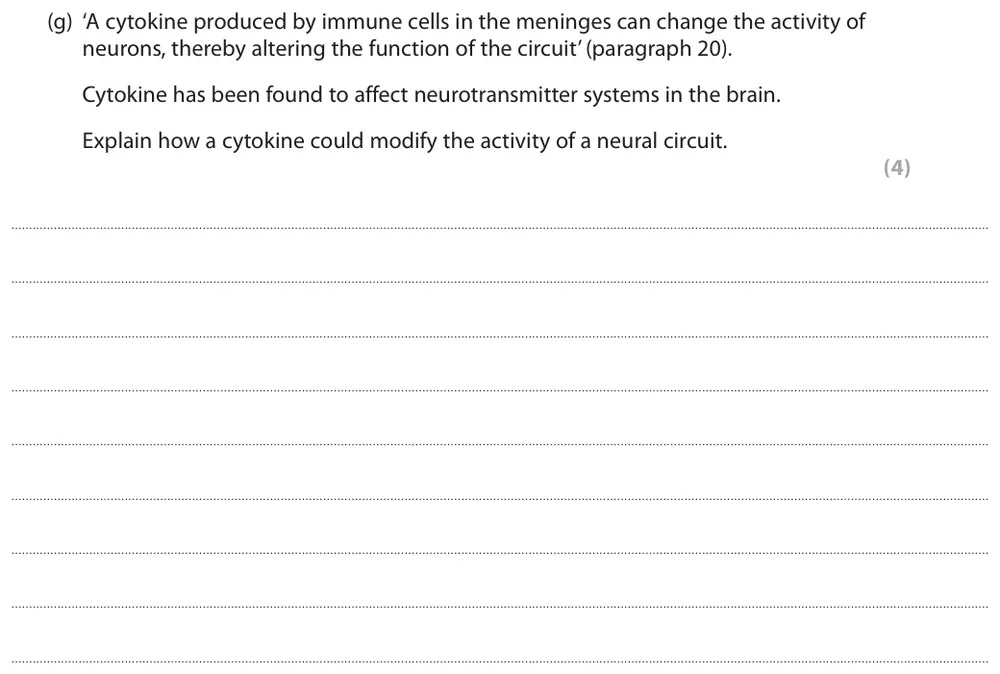
Show the mark scheme
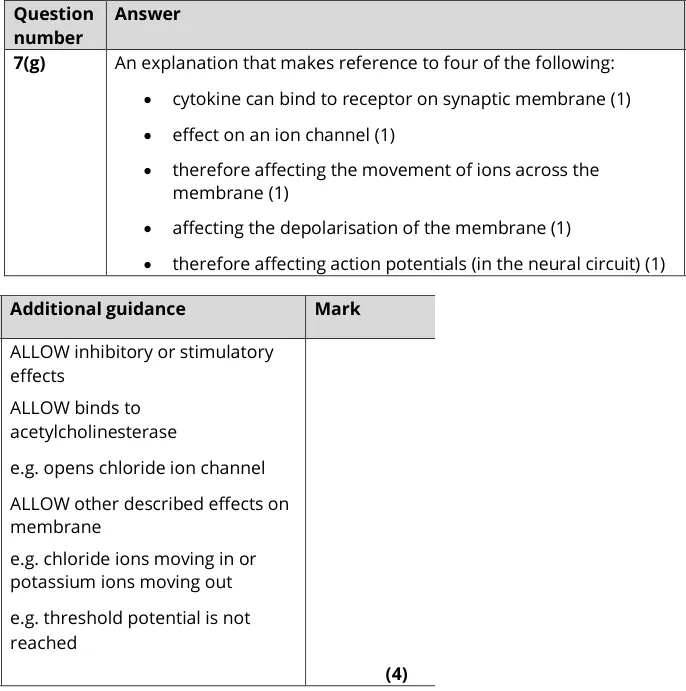
Tap an image to open it full size.
From the examiners' report: Many good answers. Some said cytokines prevent neurotransmitter release rather than acting like a neurotransmitter. The best described a sequence of events affecting action potentials in the post-synaptic neurone; either an increased or decreased likelihood was accepted.
Question 8
A level Paper 3 · October 2020 · Q7(h) · 4 marks · Hard
Compare and contrast the structure of a sensory neurone and a motor neurone.
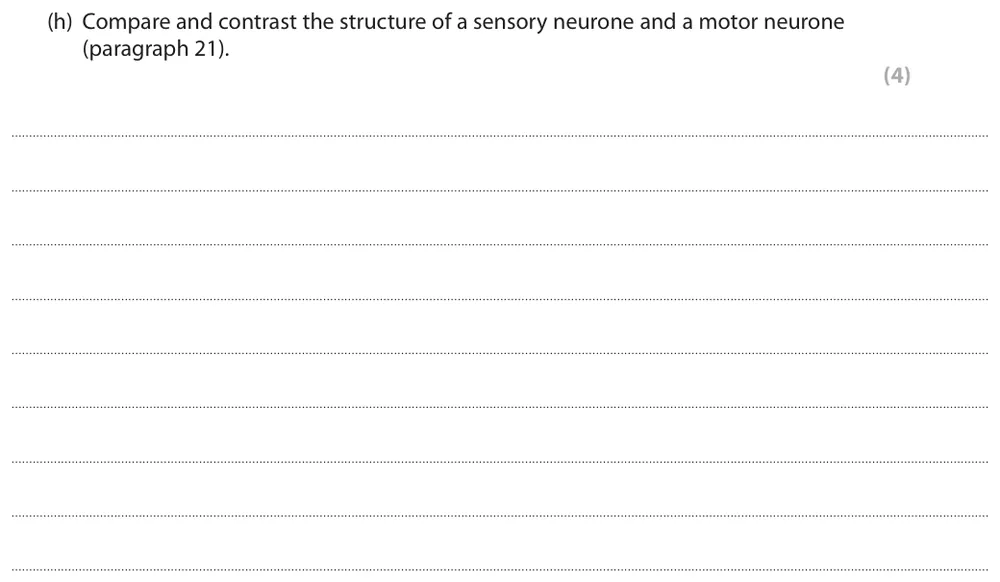
Show the mark scheme
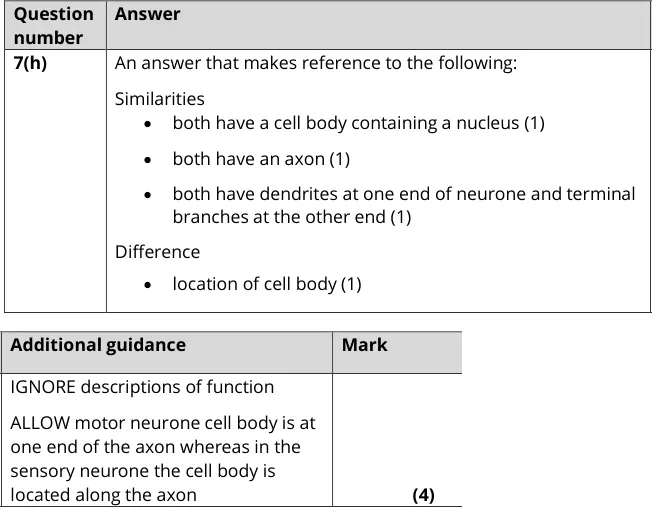
Tap an image to open it full size.
From the examiners' report: Most made no reference to a nucleus: say both neurones have a cell body containing a nucleus. Very few referred to dendrites and terminal branches. Do not describe function.
Critical periods (article paragraphs 22–23)
Question 9
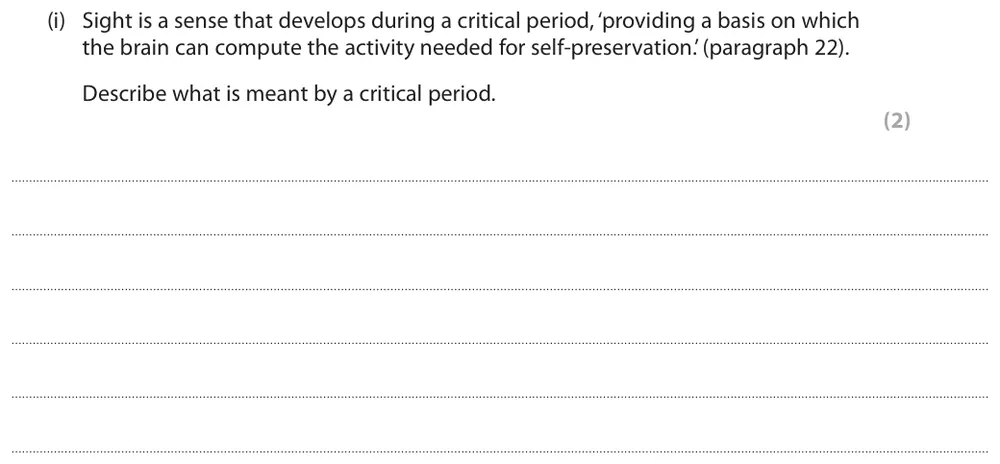
A level Paper 3 · October 2020 · Q7(i) · 2 marks
Describe what is meant by a critical period.
Show the mark scheme
Tap an image to open it full size.
From the examiners' report: Answers often lacked detail. Make clear it is a period of time in development or early in life, and refer to strengthening synapses, not neurones.
Question 10
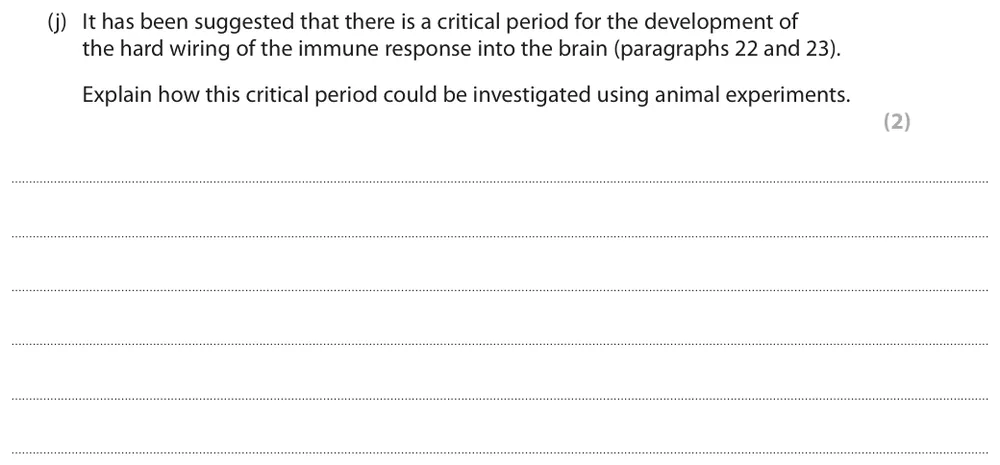
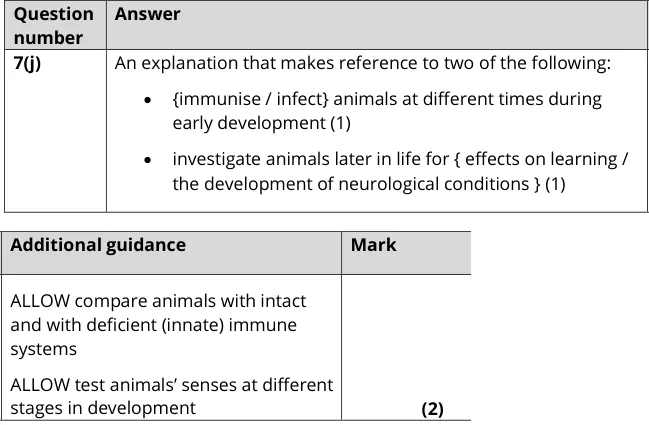
A level Paper 3 · October 2020 · Q7(j) · 2 marks
Explain how a critical period for the immune system's effect on the brain could be investigated using animal experiments.
Show the mark scheme
Tap an image to open it full size.
From the examiners' report: Few appreciated that the article is about the immune system's role in development of the CNS. Answers focused on development of the immune system, so the mark for testing the animals later in life for effects on learning or neurological conditions was rarely awarded.
Treating a flawed immune system (article paragraph 24)
Question 11
A level Paper 3 · October 2020 · Q7(k) · 4 marks
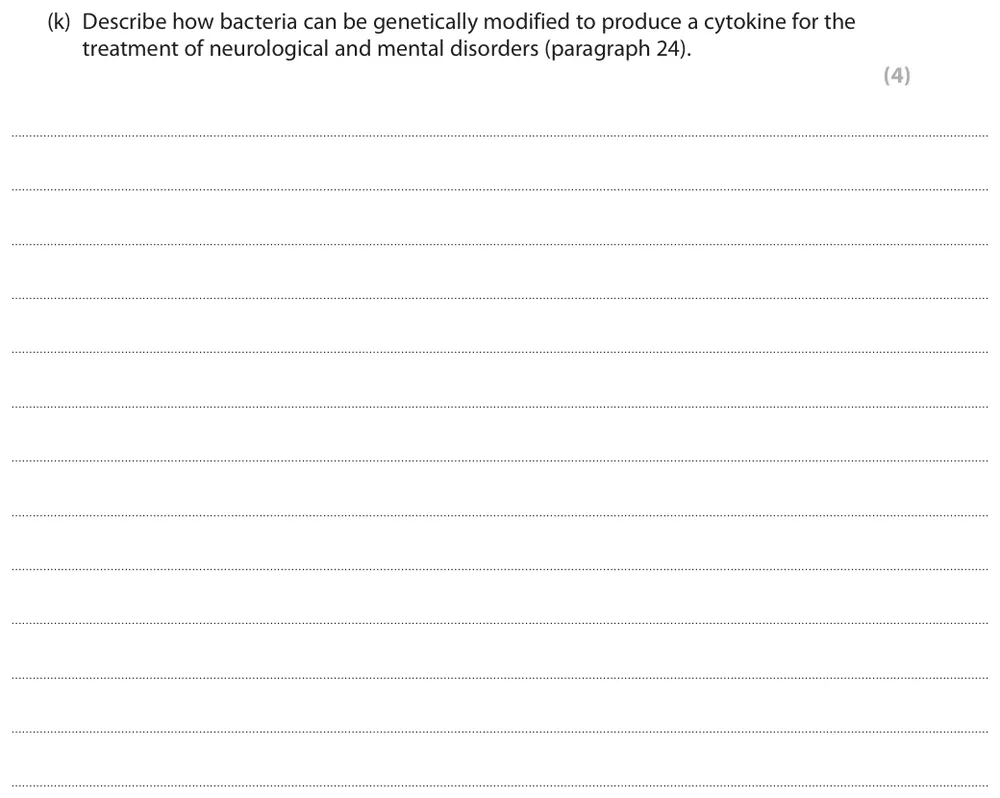
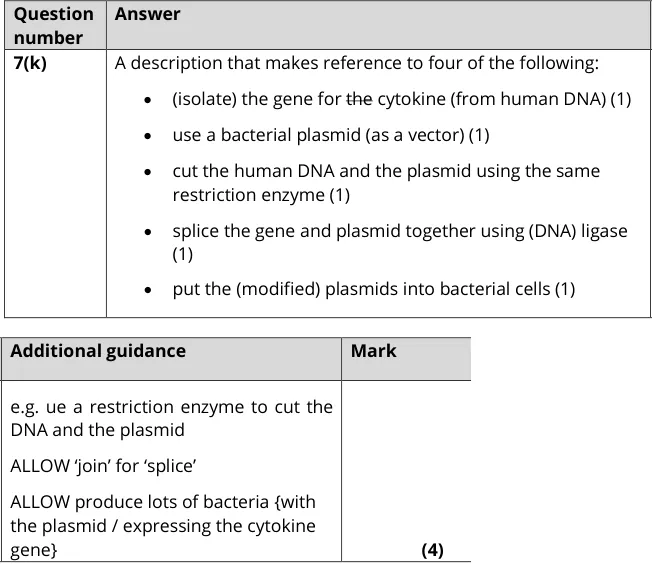
Describe how bacteria can be genetically modified to produce a cytokine.
Show the mark scheme
Tap an image to open it full size.
From the examiners' report: Many gained all four marks. Refer to the cytokine gene, and cut both the DNA containing that gene and the plasmid with the same restriction enzyme.
Question 12
A level Paper 3 · October 2020 · Q7(l) · 3 marks · Hard
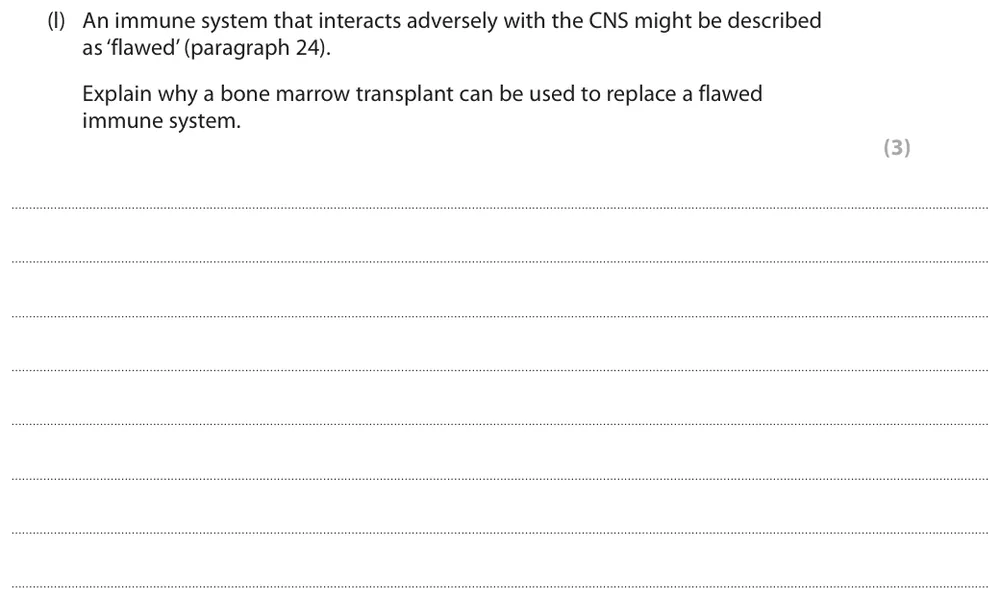
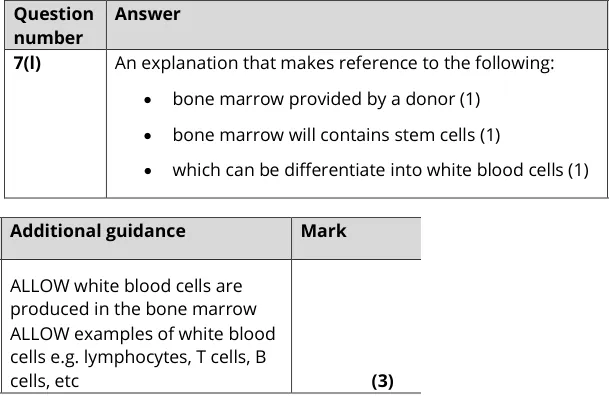
Explain why a bone marrow transplant can be used to replace a flawed immune system.
Show the mark scheme
Tap an image to open it full size.
From the examiners' report: Many said bone marrow contains stem cells that differentiate into white blood cells. Very few realised the transplant must come from a donor, not the affected person.
Where students lose marks (from Pearson examiners' reports and mark schemes)
Each point below comes from the examiners' report and mark scheme, and is followed by wording that gained marks.
Impulses, not signals. Marks were lost by using the term signals for the impulses in the optic nerve.
✔ Gains credit: 'Impulse transmitted along the optic nerve to the visual cortex of the brain.'
L-dopa is converted, not substituted. Some suggested that L-dopa acts in place of dopamine.
✔ Gains credit: 'L-dopa is converted into dopamine in the brain.'
Name capillaries and arterioles. Answers often referred to blood vessels rather than arterioles or capillaries.
✔ Gains credit: 'Increases permeability of the capillaries' and 'cause arterioles to dilate'.
White blood cells must leave the blood. Many described increased permeability and plasma leaking without mentioning white blood cells.
✔ Gains credit: 'Allowing white blood cells to migrate from the blood into the tissue space.'
Human rights is not an ethical argument. A disappointing number said humans have more rights than animals.
✔ Gains credit: 'The benefits of the research outweigh any harm done.'
Phagocytes engulf the antigen. Many framed their answer in terms of engulfing pathogens, bacteria or viruses.
✔ Gains credit: 'Phagocytes / macrophages engulf antigens.'
Put a nucleus in the cell body. Most students made no reference to a nucleus.
✔ Gains credit: 'Both have a cell body containing a nucleus.'
The bone marrow comes from a donor. Very few appreciated that the transplant needs to come from a donor, not the affected individual.
✔ Gains credit: 'Bone marrow provided by a donor', which 'contains stem cells'.
Download the questions
Download the PDF pack (12 questions, mark schemes at the end)
Keep practising
- Read the October 2020 scientific article: The Seventh Sense
- How the Edexcel SNAB Paper 3 scientific article works, and what examiners want
- Edexcel SNAB A level Biology revision resources by topic
- From Organoids to Gastruloids (June 2019 Paper 3 Scientific Article): Edexcel SNAB A Level Biology Exam Questions
- How the DNA Revolution is Changing Us (November 2021 Paper 3 Scientific Article): Edexcel SNAB A Level Biology Exam Questions
- All Edexcel SNAB exam questions by topic
- Edexcel SNAB A level Biology past papers, mark schemes and examiners' reports
- Edexcel SNAB A level Biology grade boundaries
- Message Tom on WhatsApp about one-to-one Edexcel SNAB tutoring or an Edexcel group class
Questions, mark schemes and examiners' report extracts © Pearson Education Ltd.