

Darwin's Cancer Fix argues that cancer cells evolve by natural selection, much like Darwin's finches. Whether a mutated cell takes over depends on its surroundings, such as tissue damaged by inflammation or ageing, and blasting a tumour with the highest possible dose of chemotherapy can select for resistant cells. The authors describe trials in which lower, adaptive doses kept prostate tumours under control for longer. This was the scientific article for the June 2022 A level Paper 3 (9BN0/03), and the article question was worth about 30 marks. Its parts test biology from across the specification, including natural selection, the immune response, mutations and the cell cycle, stem cells and the ethics of animal research. Read the article (linked just below) before you try the questions.
The examiners' main warning is not to repeat the question back. Answers such as 'smoking causes mutations' or 'mutations can increase the rate of cell division' gained no credit; explain how, for example by damage to DNA changing the base sequence, or a mutation in a gene that controls the cell cycle. Read each question carefully: many wrote only about inflammation when the question also asked about the immune response. Marks were also lost for missing a step, such as saying cancer cells divide but not that they need oxygen or glucose for respiration, or for not repeating scans.
Studying Edexcel SNAB and want more help? If you'd like to arrange one-to-one Edexcel tutoring, or to register your interest in an Edexcel group class, message Tom on WhatsApp using the link at the bottom of this page.
Read the article first: Darwin's Cancer Fix (June 2022). It is Pearson's copy of the article (PDF).
What you need first
Each question on this page assumes you're secure on these ideas. If any of them feels shaky, look it up before you start.
- Natural selection: variation, a selection pressure, and individuals with advantageous alleles surviving to reproduce.
- The cell cycle and mitosis, and the idea that cell division is controlled by genes.
- Inflammation and the specific immune response, including phagocytes and lymphocytes.
- The ethical standpoints used to discuss animal research, such as rights, utilitarianism and welfare.
Key terms
These words come up in the article, the questions and the mark schemes. Examiners expect you to use them exactly.
- Natural selection: individuals with advantageous alleles survive and reproduce, so those alleles increase in frequency.
- Selection pressure: a feature of the environment, such as the food available or a drug, that favours some individuals over others.
- Competitive release: when most sensitive individuals are killed, the resistant ones are freed from competition and spread.
- Metastasis: the spread of cancer from where it started to other parts of the body.
- Oncogene: a mutated gene that promotes cell division; tumour suppressor genes normally inhibit it.
- Stem cell: an undifferentiated cell that can divide an unlimited number of times and give rise to specialised cells.
- Differential gene expression: different genes are switched on in different cells, so cells become specialised.
- Maximum tolerated dose: the largest dose of a drug that can be given without unacceptable side effects.
What these questions cover
The article questions draw on biology from across the specification. These are the statements of the Pearson Edexcel A level Biology A (Salters-Nuffield) specification (9BN0) that they test.
- 2.12i Understand how errors in DNA replication can give rise to mutations.
- 3.10 Understand the role of mitosis and the cell cycle in producing identical daughter cells for growth and asexual reproduction.
- 3.11i Understand what is meant by the terms ‘stem cell, pluripotency and totipotency’.
- 4.4 Understand how natural selection can lead to adaptation and evolution.
- 5.17 Understand how evolution (a change in the allele frequency) can come about through gene mutation and natural selection.
- 6.7 Understand the non-specific responses of the body to infection, including inflammation, lysozyme action, interferon, and phagocytosis.
- 6.13 Understand how the theory of an ‘evolutionary race’ between pathogens and their hosts is supported by the evasion mechanisms shown by pathogens.
- 8.9 Understand how magnetic resonance imaging (MRI), functional magnetic resonance imaging (fMRI), positron emission tomography (PET) and computed tomography (CT) scans are u
- 8.12 Be able to discuss moral and ethical issues relating to the use of animals in medical research from two ethical standpoints.
How to use this page
Write your answer on paper before you open the mark scheme. Allow about 1.2 minutes per mark: the 10 questions are worth 30 marks, so about 36 minutes in total. Then mark your answer strictly against the mark scheme and read the examiners' tip underneath it. If you'd rather print the questions, download the PDF pack.
Evolution and cancer's surroundings (article paragraphs 3–6)
Question 1
A level Paper 3 · June 2022 · Q8(a) · 3 marks
Explain why natural selection took place in Darwin's Galapagos finches.
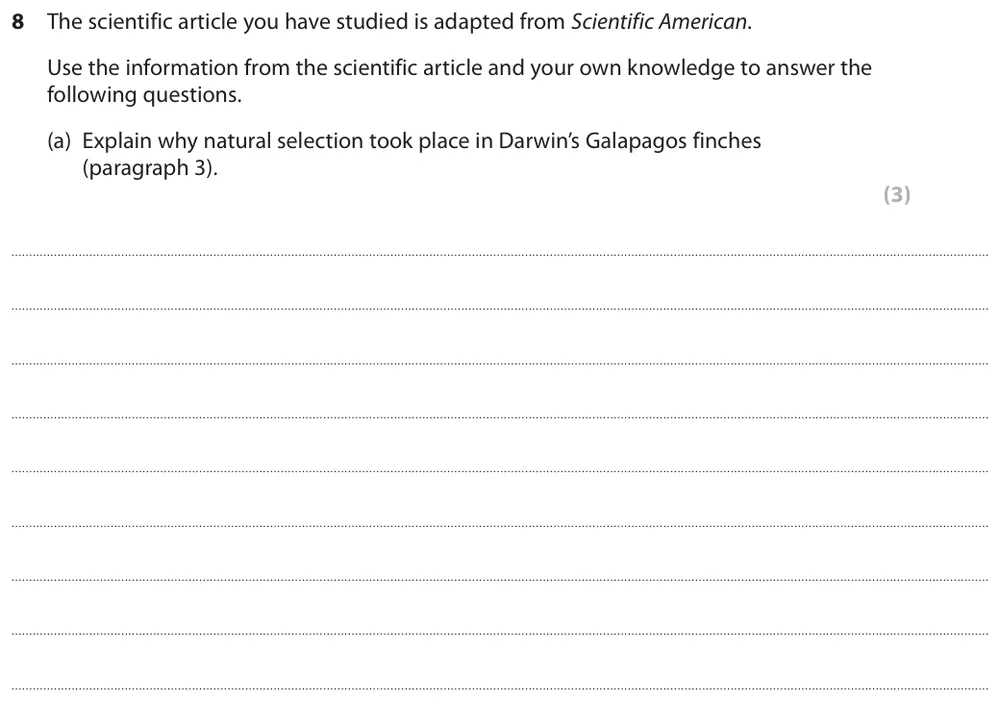
Show the mark scheme
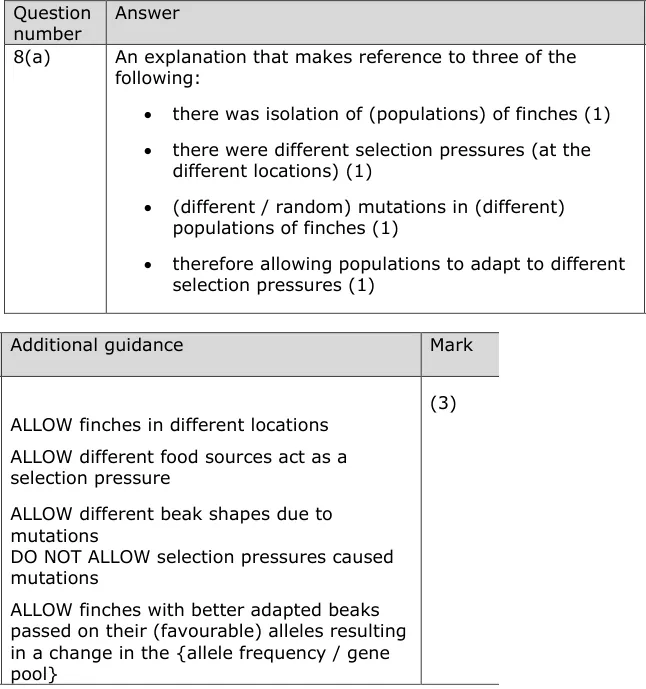
Tap an image to open it full size.
From the examiners' report: Answer why natural selection took place. A typical weaker answer gained only the mark for finches adapting and passing on their alleles; it needed isolation of populations, different selection pressures in different places and different mutations in the populations.
Question 2
A level Paper 3 · June 2022 · Q8(b) · 3 marks
Explain how inflammation and the immune response can cause damage to tissues.
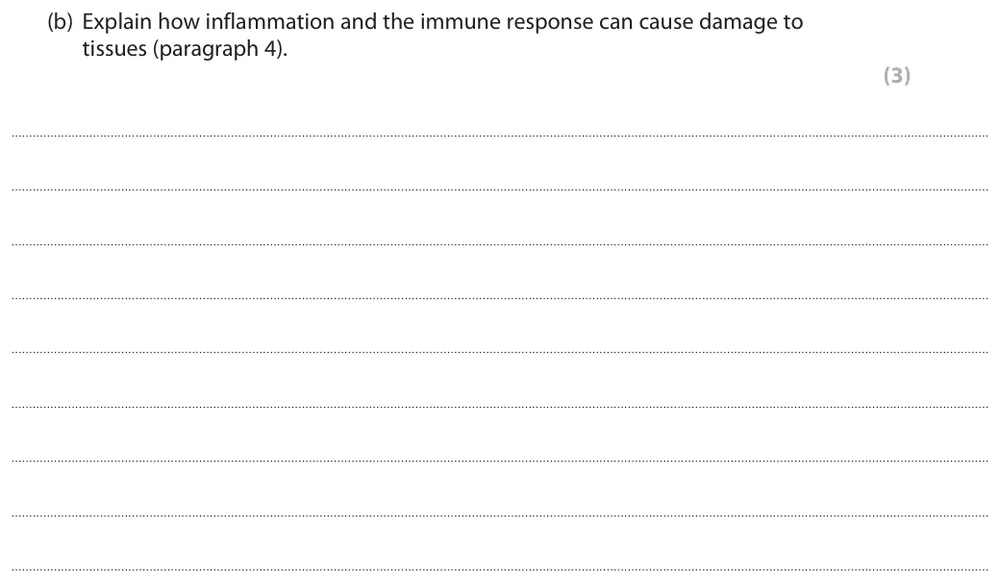
Show the mark scheme
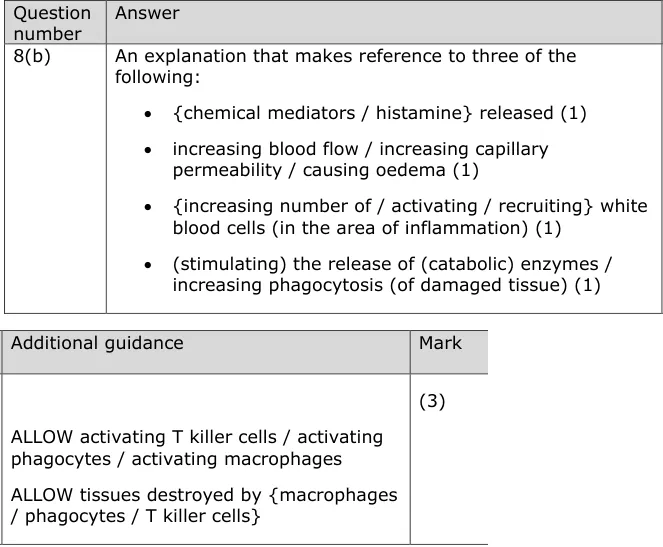
Tap an image to open it full size.
From the examiners' report: Many found this accessible but wrote only about inflammation and ignored the immune response. Read the question carefully and cover both.
Question 3
A level Paper 3 · June 2022 · Q8(c) · 2 marks
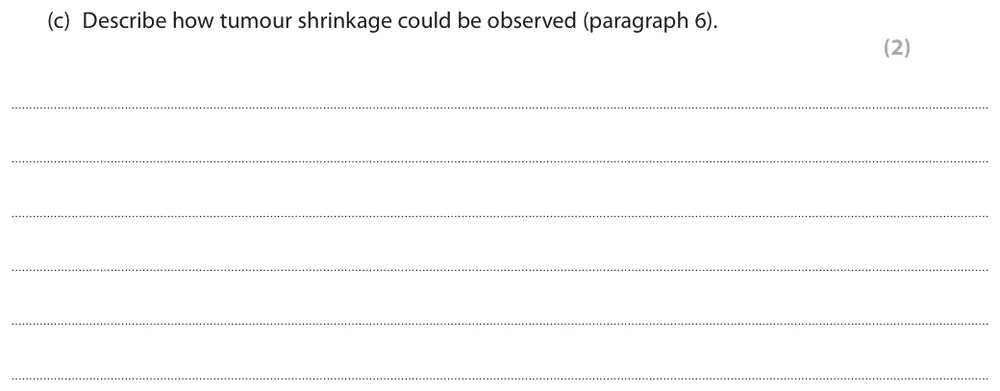
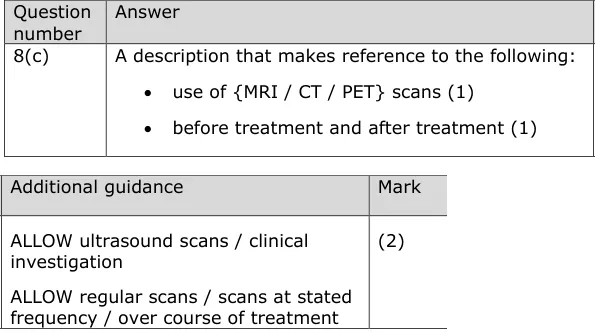
Describe how tumour shrinkage could be observed.
Show the mark scheme
Tap an image to open it full size.
From the examiners' report: Most named a suitable scan, such as MRI, CT or PET. Several then lost the second mark by not saying the scans are repeated, for example before and after treatment.
Mutations and cancer cells (article paragraphs 8–12)
Question 4
A level Paper 3 · June 2022 · Q8(d) · 3 marks
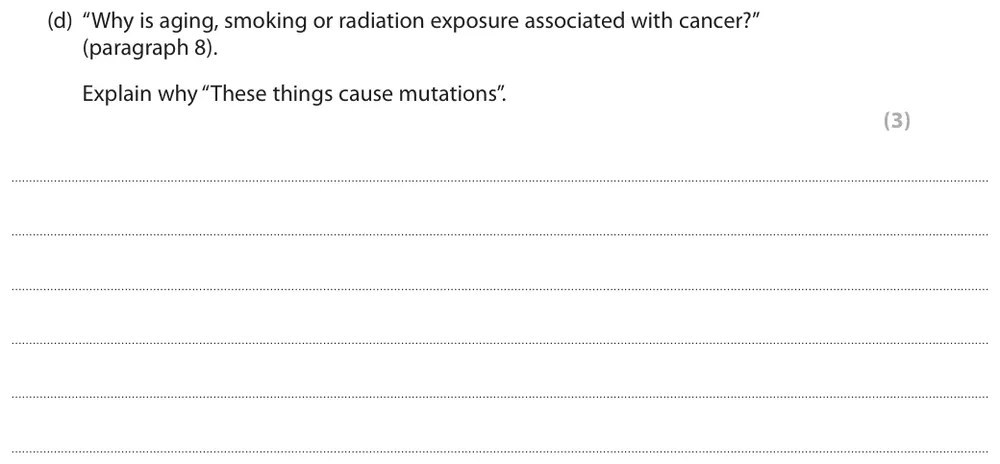
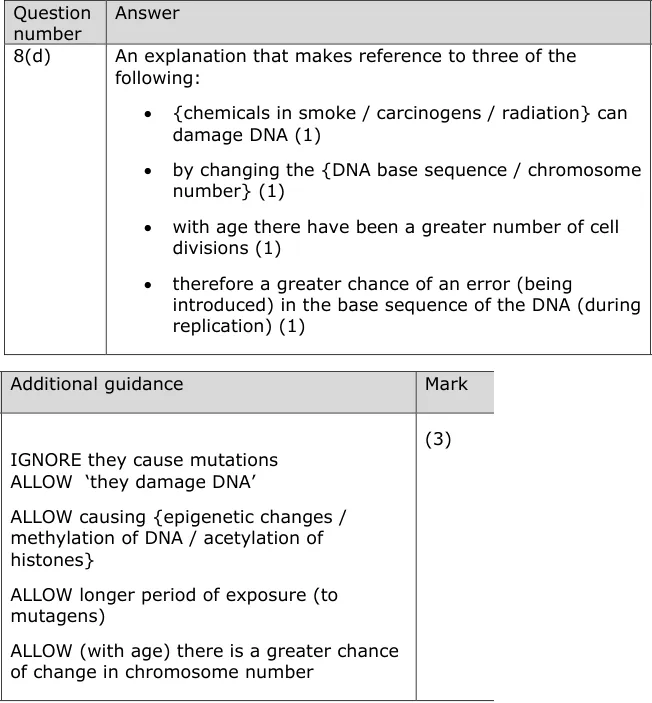
Explain why ageing, smoking and radiation cause mutations.
Show the mark scheme
Tap an image to open it full size.
From the examiners' report: Repeating the question, such as 'smoking causes mutations', gained no credit. Explain that carcinogens and radiation damage DNA, changing the base sequence; relatively few dealt with ageing, for example a longer period of exposure to mutagens.
Question 5
A level Paper 3 · June 2022 · Q8(e) · 2 marks
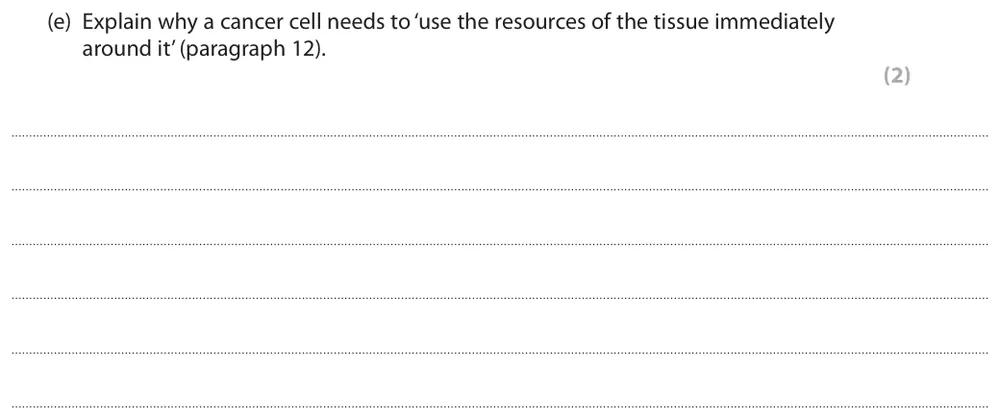
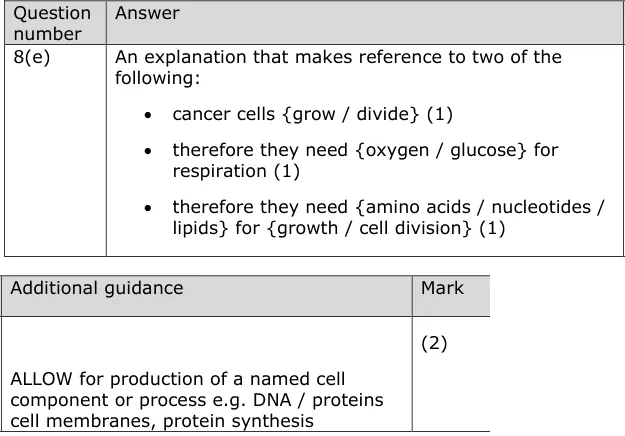
Explain why a cancer cell needs the resources of the tissue around it.
Show the mark scheme
Tap an image to open it full size.
From the examiners' report: Many said that cancer cells grow or divide, but relatively few went on to say they therefore need oxygen or glucose for respiration, or another resource. 'So they can outcompete the surrounding tissue' gained no marks.
Stem cells and the cell cycle (article paragraph 14)
Question 6
A level Paper 3 · June 2022 · Q8(f) · 3 marks · Hard
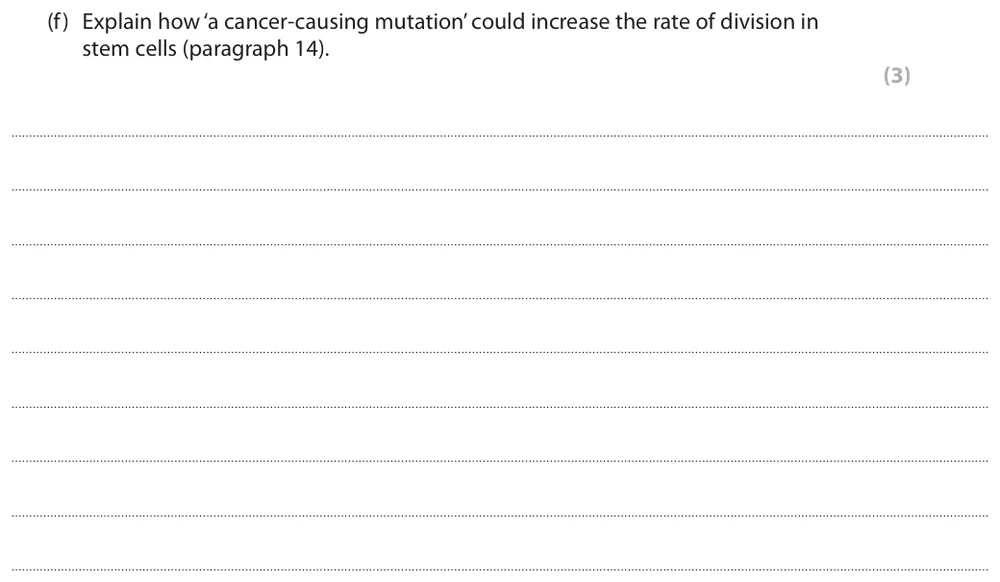
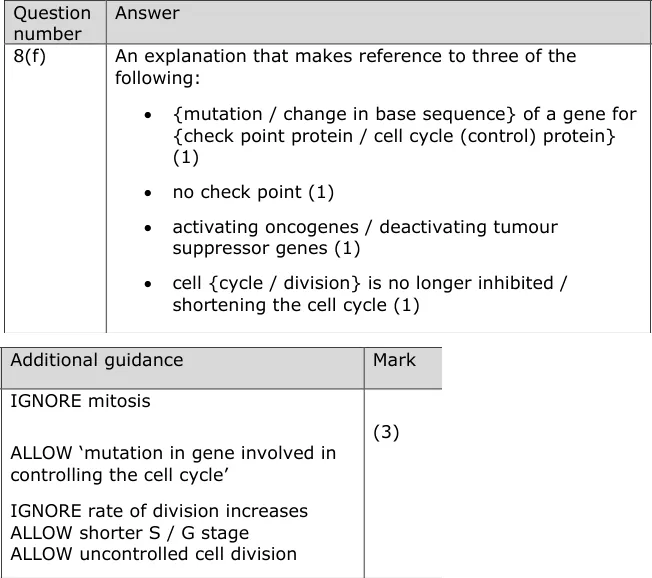
Explain how a cancer-causing mutation could increase the rate of division in stem cells.
Show the mark scheme
Tap an image to open it full size.
From the examiners' report: Many found this challenging. Rewriting the question, such as 'mutations can cause an increase in the rate of cell division', gained no credit; full answers named a mutation in a gene controlling the cell cycle, activating oncogenes or deactivating tumour suppressor genes, and uncontrolled cell division.
Question 7
A level Paper 3 · June 2022 · Q8(g) · 4 marks
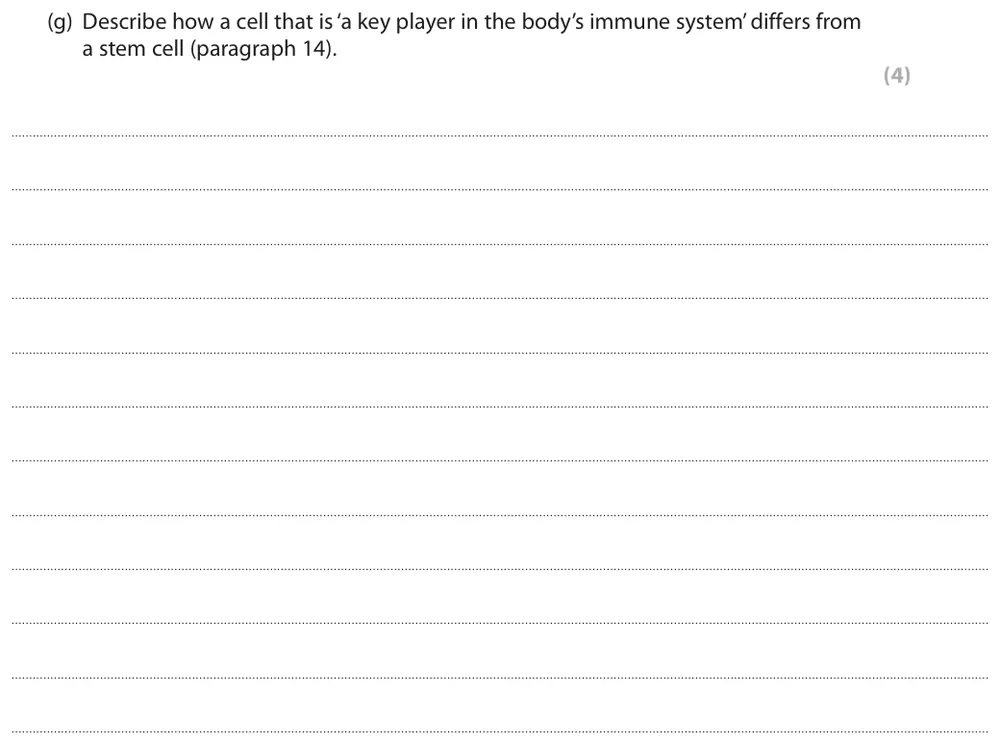
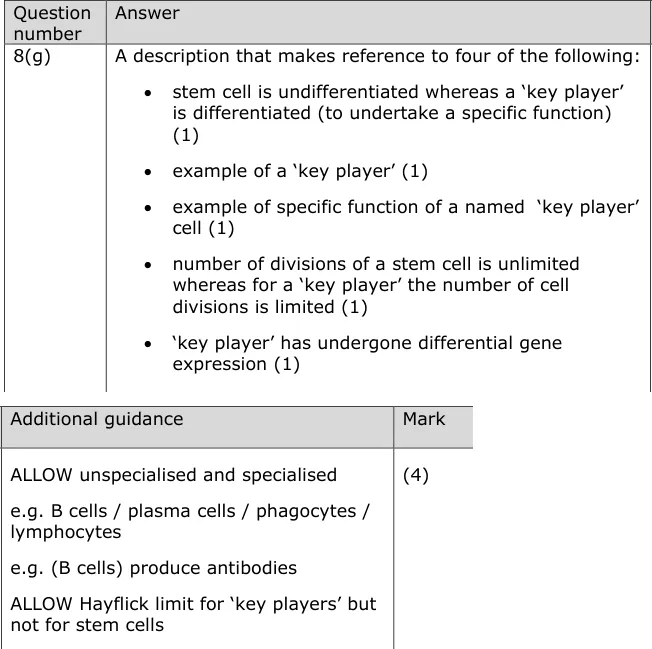
Describe how an immune 'key player' cell differs from a stem cell.
Show the mark scheme
Tap an image to open it full size.
From the examiners' report: Many found this straightforward: stem cells are undifferentiated, key players are differentiated, and the number of divisions differs. Give a named example and its function. Relatively few mentioned that key players have undergone differential gene expression.
Competitive release and drug resistance (article paragraphs 18–20)
Question 8
A level Paper 3 · June 2022 · Q8(h) · 4 marks
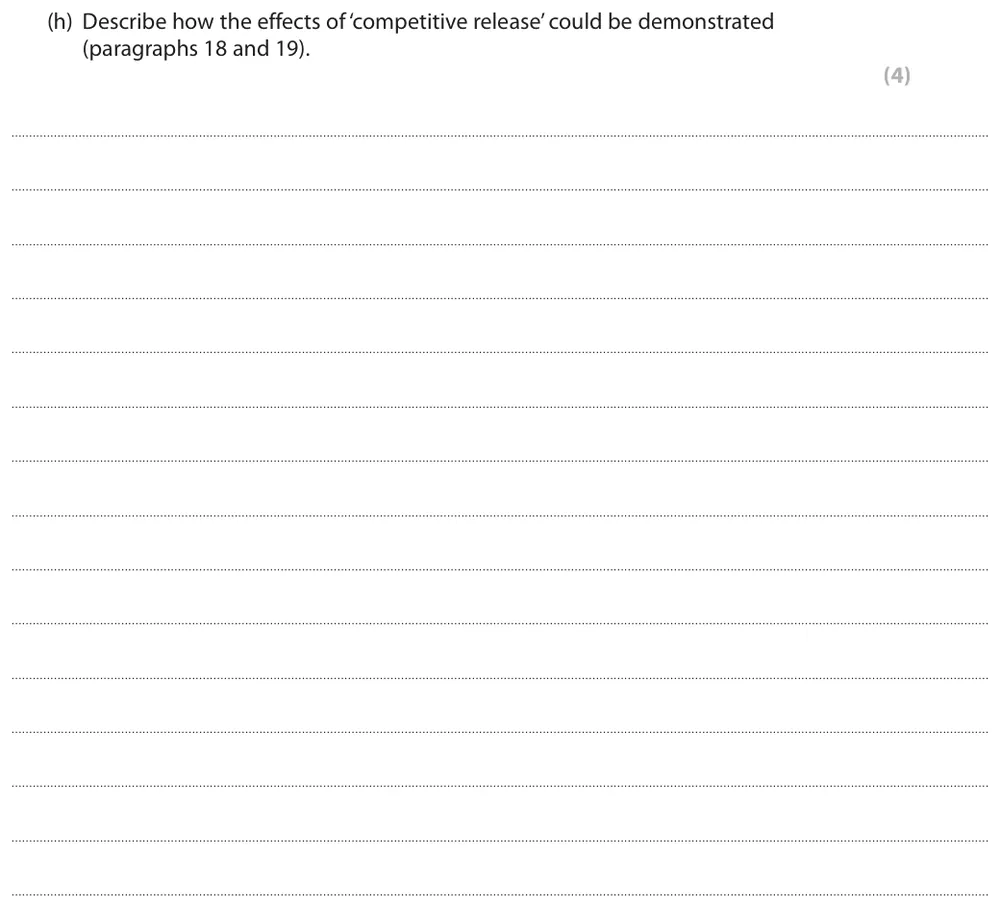
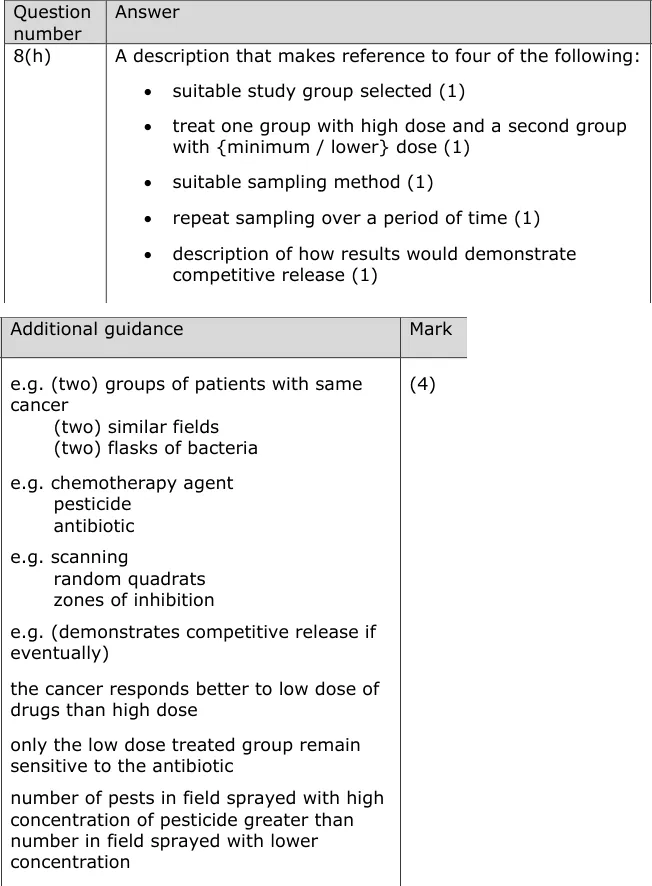
Describe how the effects of competitive release could be demonstrated.
Show the mark scheme
Tap an image to open it full size.
From the examiners' report: Any sensible model was credited, such as pesticides, antibiotics or tumour treatment. Using 'different doses' was not enough: give a high dose to one group and a minimum dose to another, with a sampling method, repeat sampling over time and what result would show competitive release.
Question 9
A level Paper 3 · June 2022 · Q8(i) · 2 marks
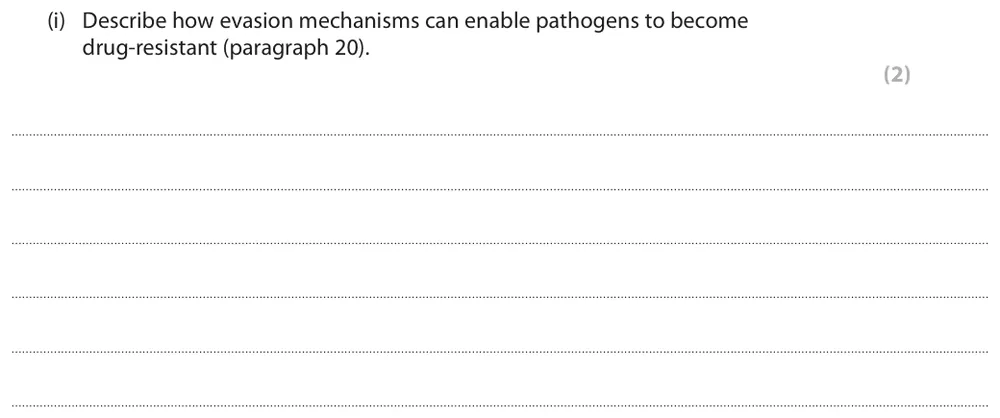
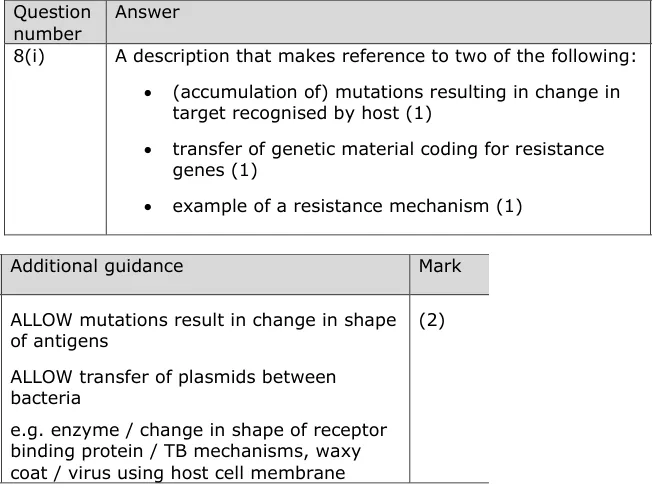
Describe how evasion mechanisms can enable pathogens to become drug-resistant.
Show the mark scheme
Tap an image to open it full size.
From the examiners' report: Marks were mostly lost through lack of detail. Link mutations to a change in the target recognised by the host, and give a specific resistance mechanism; general descriptions of antibiotic resistance were often not relevant.
Using mice in research (article paragraph 25)
Question 10
A level Paper 3 · June 2022 · Q8(j) · 4 marks · Easy
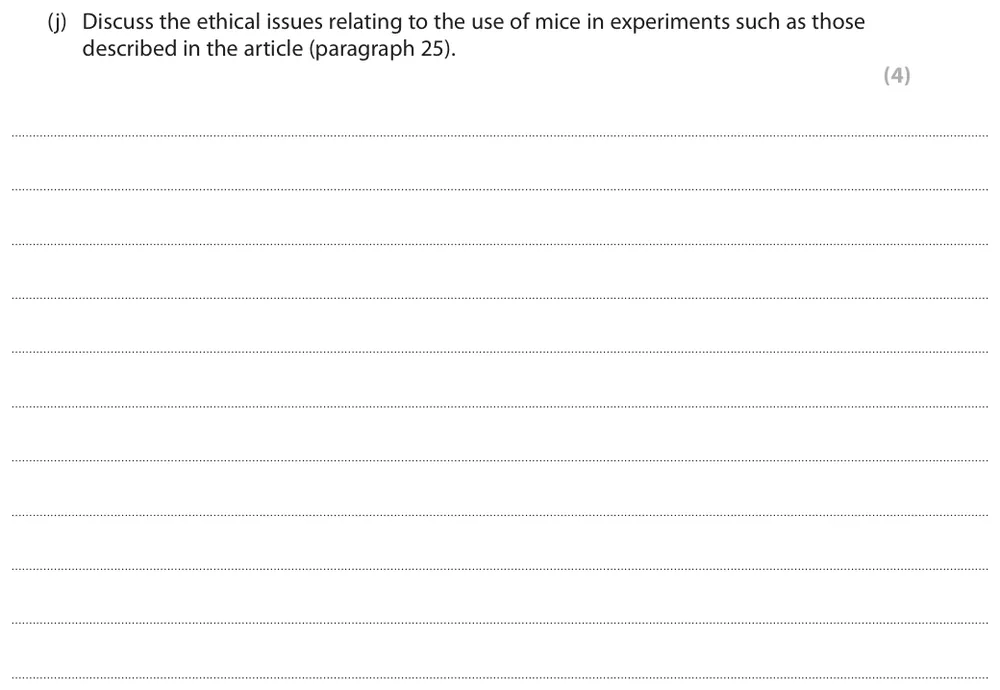
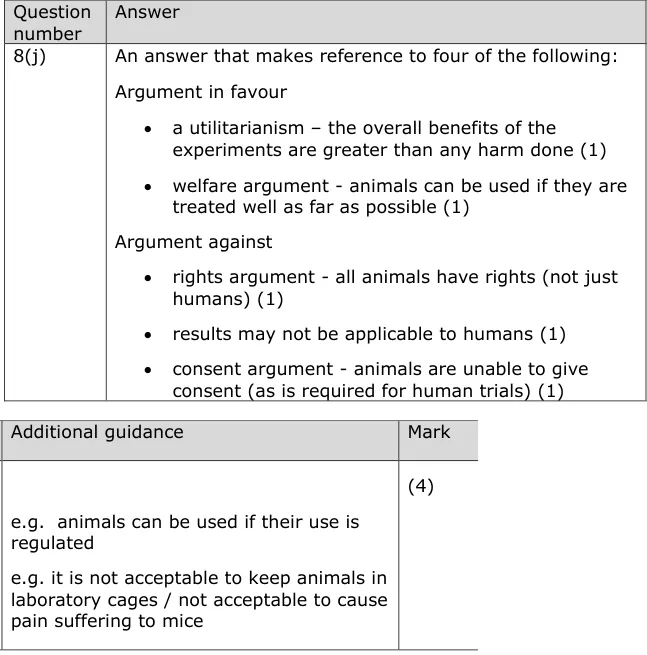
Discuss the ethical issues of using mice in experiments like those in the article.
Show the mark scheme
Tap an image to open it full size.
From the examiners' report: Answered well by many. A full-mark answer used several arguments, such as the rights argument, that animals cannot give consent, that the benefits outweigh the harm, and that results may not apply to humans.
Where students lose marks (from Pearson examiners' reports and mark schemes)
Each point below comes from the examiners' report and mark scheme, and is followed by wording that gained marks.
Explain why selection took place. A typical weaker response did not address the question and made no mention of isolation, different selection pressures or different mutations.
✔ Gains credit: 'There was isolation of populations of finches, with different selection pressures at the different locations.'
Include the immune response too. Candidates frequently answered in terms of inflammation and ignored the role of the immune response.
✔ Gains credit: 'Activating white blood cells in the area of inflammation, stimulating the release of catabolic enzymes.'
Don't just say 'they cause mutations'. Many repeated the question back, such as 'smoking or chemicals in smoke cause mutations', which gained no credit.
✔ Gains credit: 'Carcinogens or radiation can damage DNA by changing the DNA base sequence.'
Say what the resources are for. Relatively few explained why dividing cancer cells need resources; 'so they can outcompete the surrounding tissue' gained no marks.
✔ Gains credit: 'Cancer cells divide, therefore they need oxygen or glucose for respiration.'
Name the gene that controls the cycle. Statements rewriting the question, such as 'mutations can cause an increase in the rate of cell division', gained no credit.
✔ Gains credit: 'Mutation of a gene for a cell cycle protein, activating oncogenes or deactivating tumour suppressor genes, so cell division is no longer inhibited.'
Mention differential gene expression. Relatively few candidates said that differential gene expression had taken place in the 'key players'.
✔ Gains credit: 'The key player is differentiated and has undergone differential gene expression.'
Give a high and a low dose. Using 'different doses' was not enough for the mark about treatment.
✔ Gains credit: 'Treat one group with a high dose and a second group with a minimum dose.'
Link mutations to the host's target. Many referred to mutations but did not link them to a change in the target recognised by the host.
✔ Gains credit: 'Mutations resulting in a change in the target recognised by the host.'
Download the questions
Download the PDF pack (10 questions, mark schemes at the end)
Keep practising
- Read the June 2022 scientific article: Darwin's Cancer Fix
- How the Edexcel SNAB Paper 3 scientific article works, and what examiners want
- Edexcel SNAB A level Biology revision resources by topic
- How the DNA Revolution is Changing Us (November 2021 Paper 3 Scientific Article): Edexcel SNAB A Level Biology Exam Questions
- Green Planet: Radiation and the Evolution of Photosynthesis (June 2023 Paper 3 Scientific Article): Edexcel SNAB A Level Biology Exam Questions
- All Edexcel SNAB exam questions by topic
- Edexcel SNAB A level Biology past papers, mark schemes and examiners' reports
- Edexcel SNAB A level Biology grade boundaries
- Message Tom on WhatsApp about one-to-one Edexcel SNAB tutoring or an Edexcel group class
Questions, mark schemes and examiners' report extracts © Pearson Education Ltd.