

The Energy of Life asks what really makes a microbe an extremophile. Instead of judging by heat, acid or pressure alone, the authors compare how much energy an environment offers with how much a microbe must spend to survive, using examples from deep-sea methane seeps, Yellowstone's hot springs, ordinary garden soil and spore-forming bacteria. This was the scientific article for the June 2017 A level Paper 3 (9BN0/03), and the article question was worth about 30 marks. Its parts test biology from across the specification, including climate change and the greenhouse effect, prokaryotic cell structure, respiration and photosynthesis, enzymes and natural selection, and antibiotics and TB. Read the article (linked just below) before you try the questions, because each part points you to a paragraph and expects you to connect it to what you already know.
The examiners said that candidates who had studied the article in advance applied their knowledge well, but many simply copied or paraphrased it without showing they understood the science. Answer the exact question: explain the role of oxygen rather than what happens without it, describe the structure of the ribosome when asked about structure, and give both similarities and differences when told to compare and contrast. Precise terms matter: a genome is all the DNA, not all the genes, and antibiotics are not antibodies. In the evolution question, mutations arise first and the selection pressure acts on them.
Studying Edexcel SNAB and want more help? If you'd like to arrange one-to-one Edexcel tutoring, or to register your interest in an Edexcel group class, message Tom on WhatsApp using the link at the bottom of this page.
Read the article first: The Energy of Life (June 2017). It is Pearson's copy of the article (PDF).
What you need first
Each question on this page assumes you're secure on these ideas. If any of them feels shaky, look it up before you start.
- ATP is made in respiration; in aerobic respiration the electron transport chain in the mitochondria produces most of it.
- Enzymes are proteins whose tertiary structure gives the active site its shape.
- Prokaryotic cells have no nucleus and no membrane-bound organelles, and have 70S ribosomes.
- Evolution happens when natural selection acts on variation produced by mutation, changing allele frequencies.
Key terms
These words come up in the article, the questions and the mark schemes. Examiners expect you to use them exactly.
- Extremophile: an organism that survives conditions most life cannot; the article judges this by the balance of energy available and energy needed.
- Greenhouse gas: a gas such as methane or carbon dioxide that absorbs infrared (heat) energy in the atmosphere.
- Carbon fixation: converting inorganic carbon (carbon dioxide) into organic compounds that become part of an organism's biomass.
- Final electron acceptor: the role of oxygen at the end of the electron transport chain, allowing oxidative phosphorylation to continue.
- Thermophile: a microorganism that lives at high temperatures, such as the cyanobacteria of hot springs.
- Disulfide bridge: a bond between two cysteine amino acids that helps a protein resist unfolding.
- Interspecific competition: competition between individuals of different species for the same limited resources.
- Dormancy: a state of very low metabolic activity that lets bacteria survive unfavourable conditions; Bacillus subtilis does this by forming spores.
What these questions cover
The article questions draw on biology from across the specification. These are the statements of the Pearson Edexcel A level Biology A (Salters-Nuffield) specification (9BN0) that they test.
- 2.10i Understand the mechanism of action and the specificity of enzymes in terms of their three-dimensional structure.
- 3.4 Know the ultrastructure of prokaryotic cells, including cell wall, capsule, plasmid, flagellum, pili, ribosomes, mesosomes and circular DNA.
- 5.8i Understand the light-independent reactions as reduction of carbon dioxide using the products of the light-dependent reactions (carbon fixation in the Calvin cycle, the ro
- 5.13 Understand the causes of anthropogenic climate change, including the role of greenhouse gases (carbon dioxide and methane) in the greenhouse effect.
- 5.17 Understand how evolution (a change in the allele frequency) can come about through gene mutation and natural selection.
- 6.6 Understand how Mycobacterium tuberculosis (TB) and Human Immunodeficiency Virus (HIV) infect human cells, causing a sequence of symptoms that may result in death.
- 6.14 Understand the difference between bacteriostatic and bactericidal antibiotics.
- 7.5 Understand the role of the link reaction and the Krebs cycle in the complete oxidation of glucose and formation of carbon dioxide (CO2), ATP, reduced NAD and reduced FAD
- 7.6 Understand how ATP is synthesised by oxidative phosphorylation associated with the electron transport chain in mitochondria, including the role of chemiosmosis and ATP sy
- 8.16 Understand how the outcomes of genome sequencing projects are being used in the development of personalised medicine and the social, moral and ethical issues this raises.
How to use this page
Write your answer on paper before you open the mark scheme. Allow about 1.2 minutes per mark: the 11 questions are worth 30 marks, so about 36 minutes in total. Then mark your answer strictly against the mark scheme and read the examiners' tip underneath it. If you'd rather print the questions, download the PDF pack.
Methane and climate (paragraph 2)
Question 1
A level Paper 3 · June 2017 · Q7(a) · 3 marks
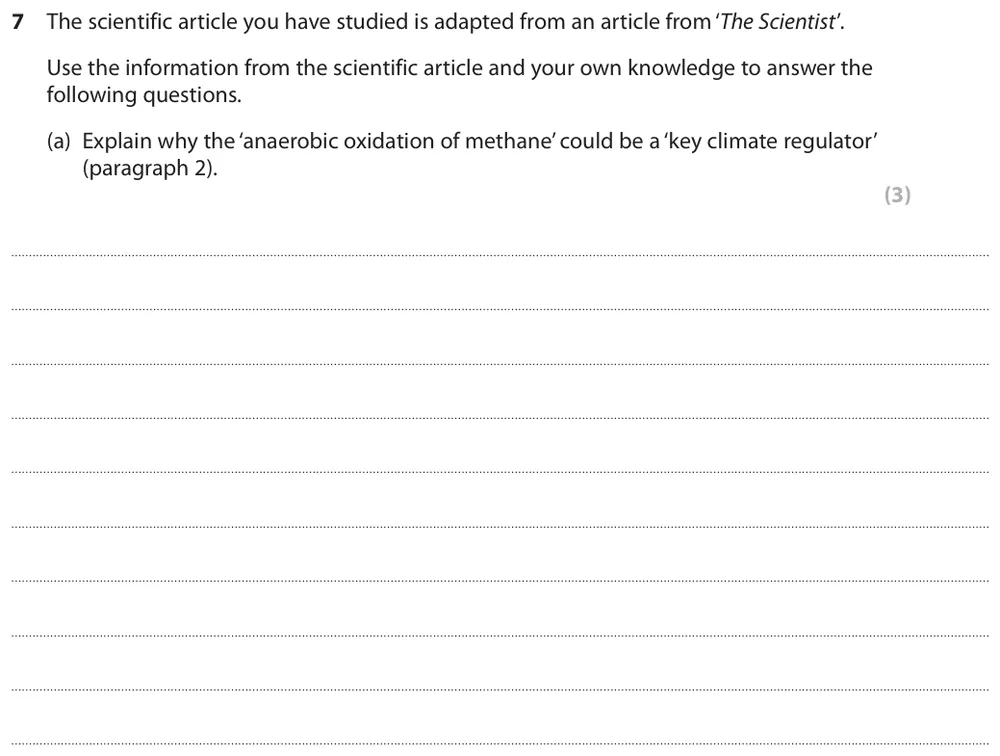
Explain why the anaerobic oxidation of methane could be a key climate regulator.
Show the mark scheme
Tap an image to open it full size.
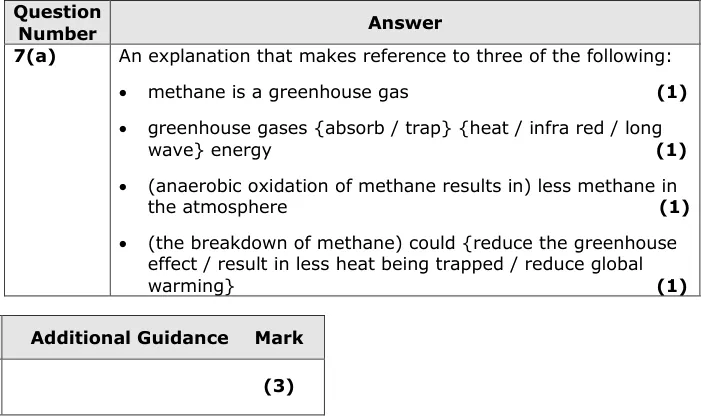
From the examiners' report: Many were confused by 'anaerobic oxidation' and wrote about respiration or carbon dioxide release. Most gained two marks for methane being a greenhouse gas that traps heat; fewer said that the process removes methane from the atmosphere, reducing global warming.
Microbes and carbon fixation (paragraph 4)
Question 2
A level Paper 3 · June 2017 · Q7(b) · 2 marks
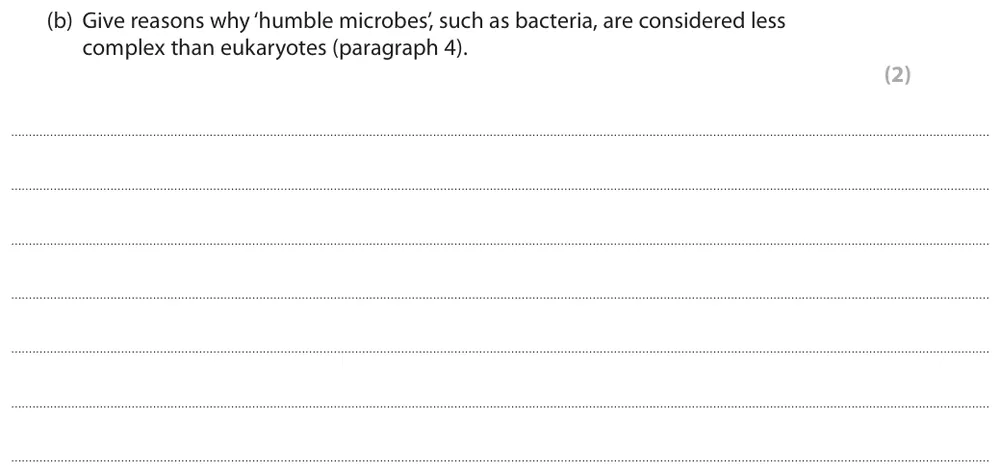
Give reasons why bacteria are considered less complex than eukaryotes.
Show the mark scheme
Tap an image to open it full size.
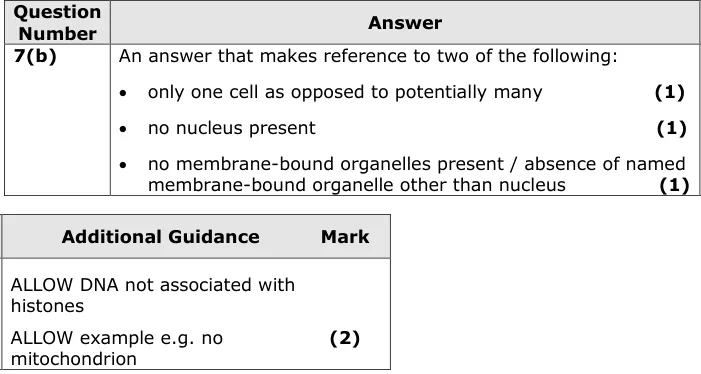
From the examiners' report: Make comparative statements: bacteria are single-celled whereas eukaryotes can be multicellular, and bacteria have no nucleus or membrane-bound organelles. 'Fewer organelles' and smaller ribosomes did not explain the difference in complexity.
Question 3
A level Paper 3 · June 2017 · Q7(c) · 2 marks
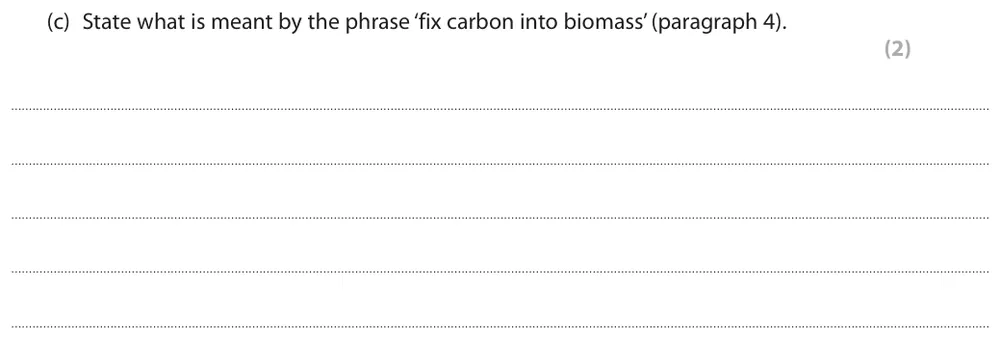
State what is meant by the phrase 'fix carbon into biomass'.
Show the mark scheme
Tap an image to open it full size.
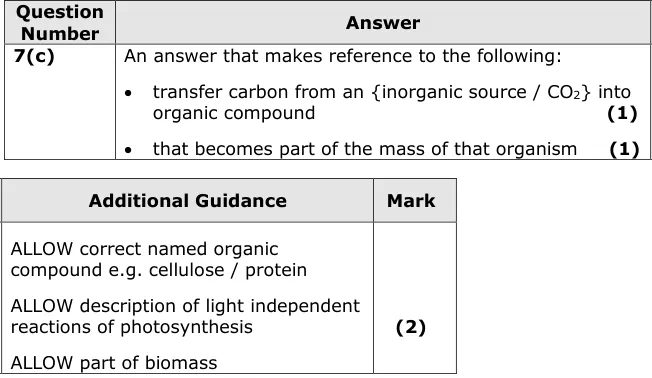
From the examiners' report: Many just repeated the phrase. Refer to inorganic carbon or carbon dioxide being converted into organic compounds, for example in the light-independent reactions, and then say these become part of the organism's biomass.
Oxygen, respiration and enzymes (paragraphs 5–12)
Question 4
A level Paper 3 · June 2017 · Q7(d) · 4 marks
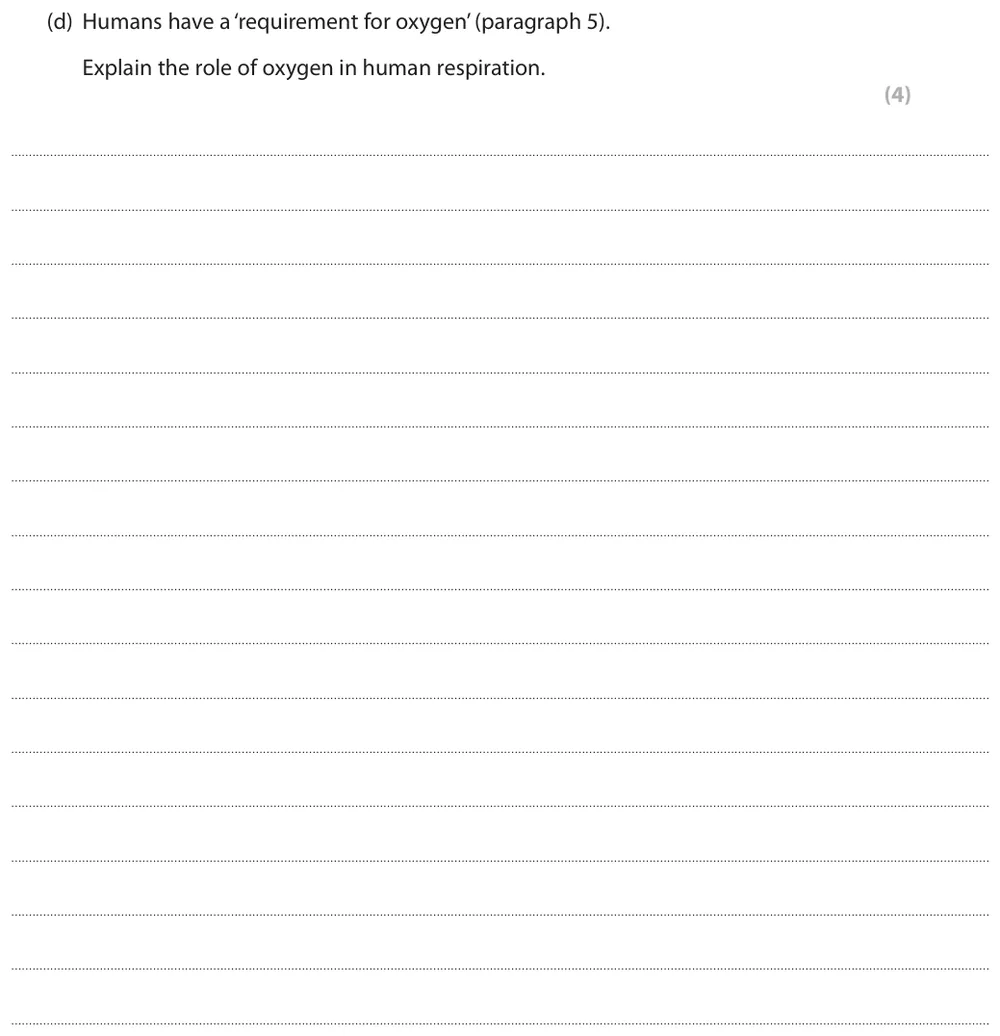
Explain the role of oxygen in human respiration.
Show the mark scheme
Tap an image to open it full size.
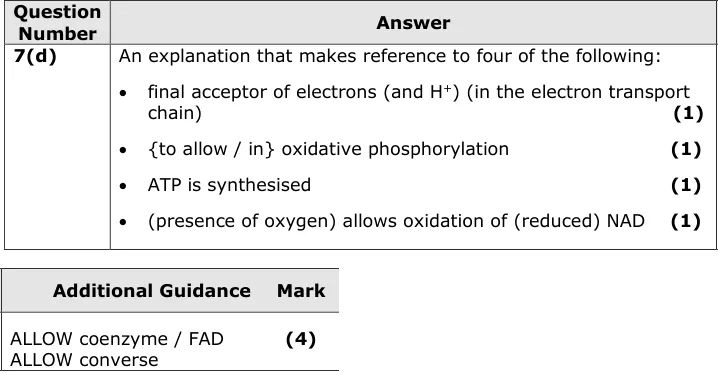
From the examiners' report: Saying that anaerobic respiration happens without oxygen does not explain its role, and neither does describing ventilation or circulation. Oxygen is the final acceptor of electrons (not just protons) in the electron transport chain, allowing oxidative phosphorylation and the oxidation of reduced NAD and FAD.
Question 5
A level Paper 3 · June 2017 · Q7(e) · 3 marks
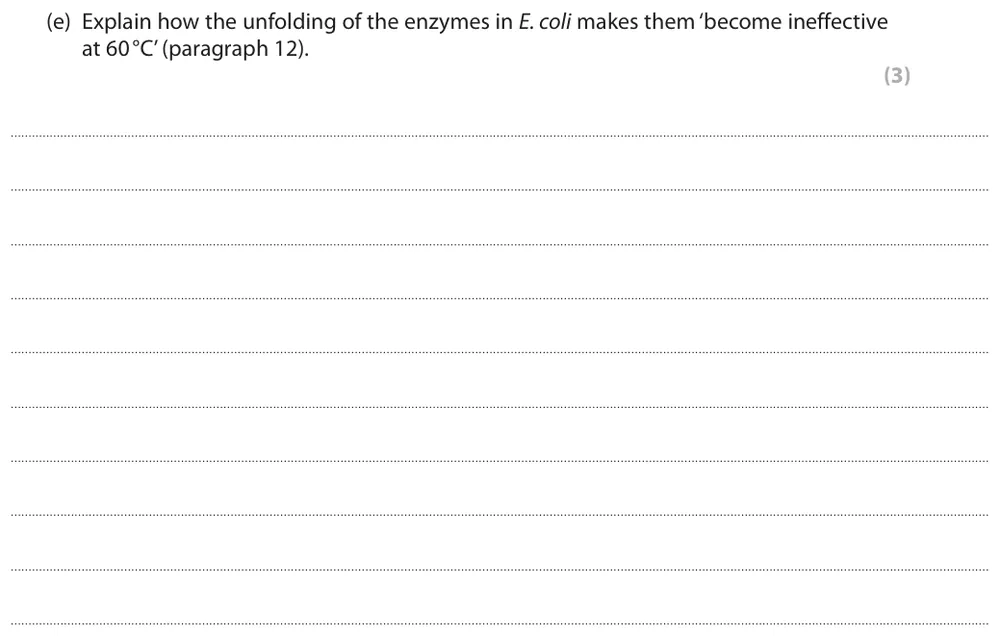
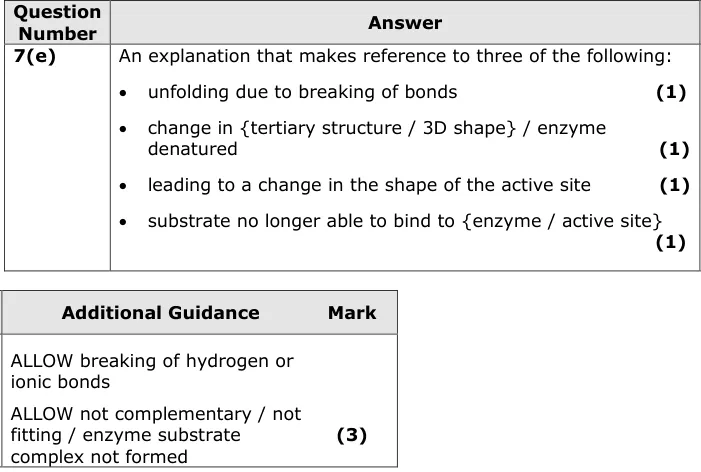
Explain how unfolding makes the enzymes of E. coli ineffective at 60 °C.
Show the mark scheme
Tap an image to open it full size.
From the examiners' report: Well answered. Hydrogen bonds break, not peptide bonds, changing the tertiary structure; say the shape of the active site changes rather than that the active site is denatured.
Thermophile genomes and evolution (paragraphs 14–15)
Question 6
A level Paper 3 · June 2017 · Q7(f) · 1 mark
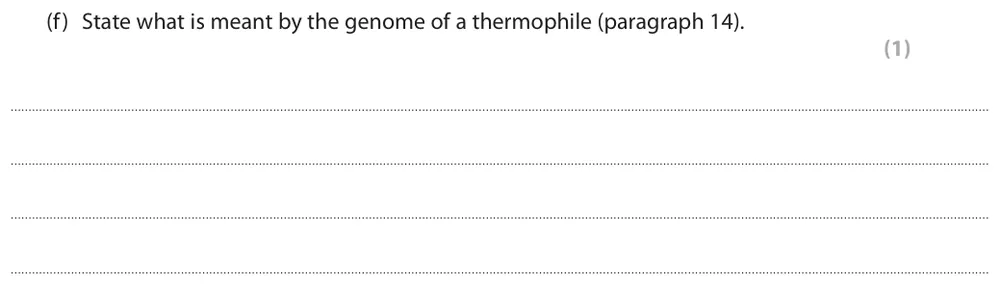
State what is meant by the genome of a thermophile.
Show the mark scheme

Tap an image to open it full size.
From the examiners' report: 'All the genes in the DNA' was not accepted. The genome is all the DNA of the organism, both coding and non-coding (exons and introns).
Question 7
A level Paper 3 · June 2017 · Q7(g) · 5 marks
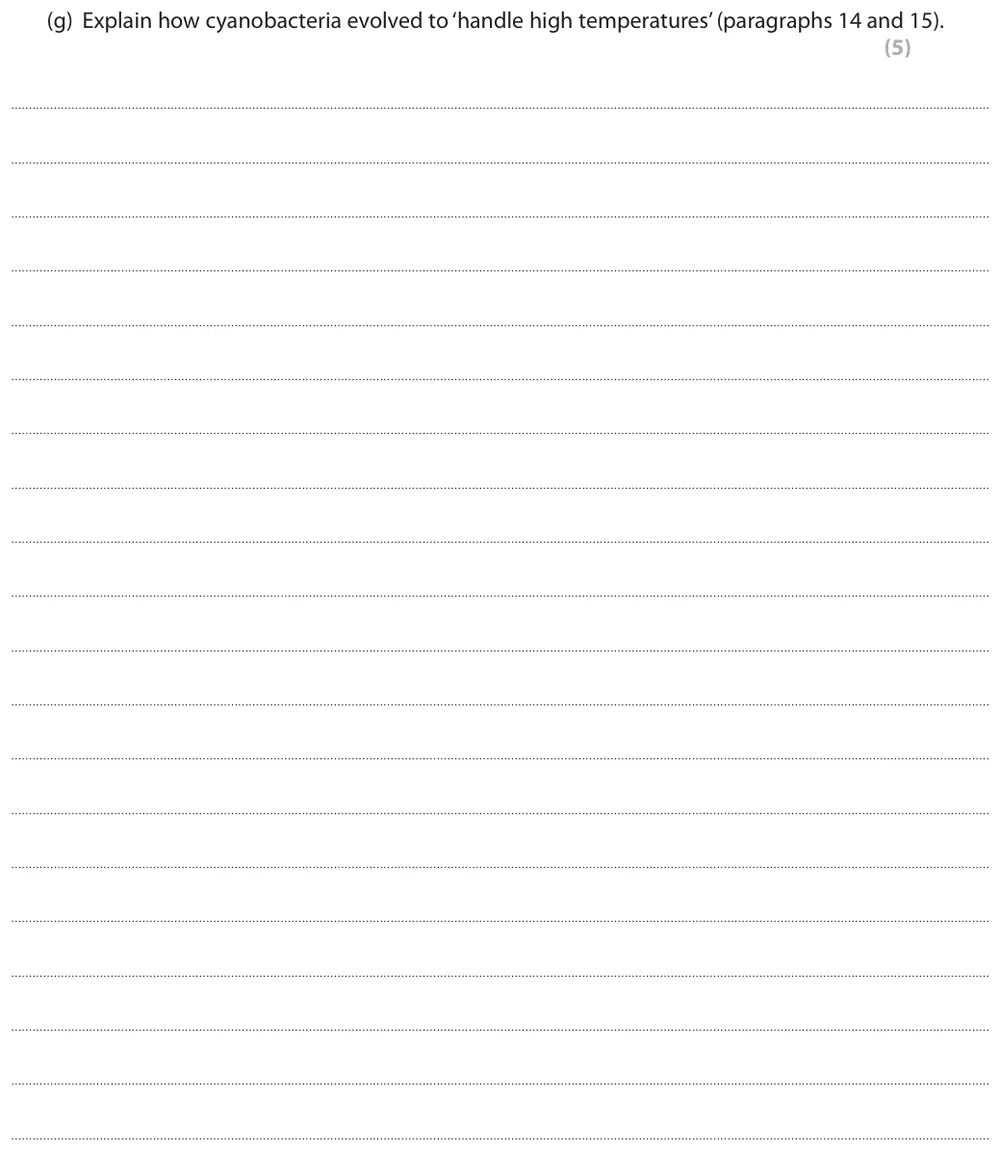
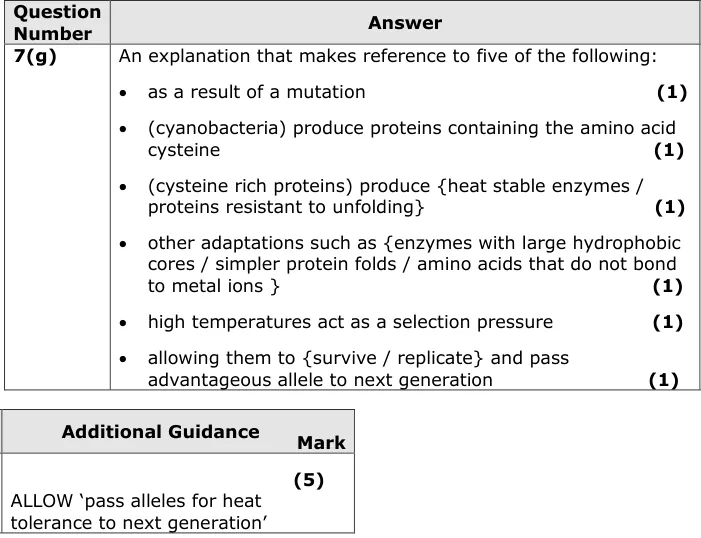
Explain how cyanobacteria evolved to handle high temperatures.
Show the mark scheme
Tap an image to open it full size.
From the examiners' report: Few scored full marks because they wrote either about natural selection or about the adaptations, rarely both. Mutations arise first and high temperature then acts as the selection pressure; link cysteine to the disulfide bridges that make enzymes heat stable.
Streptomyces: ribosomes, antibiotics and pyruvate (paragraph 20)
Question 8
A level Paper 3 · June 2017 · Q7(h) · 2 marks · Hard
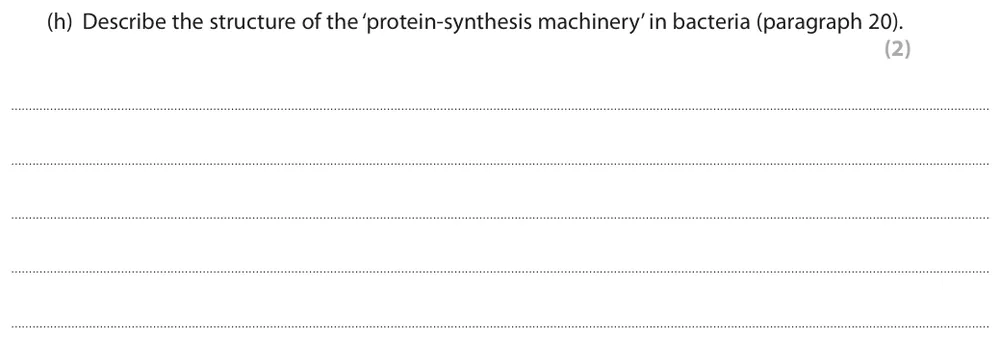
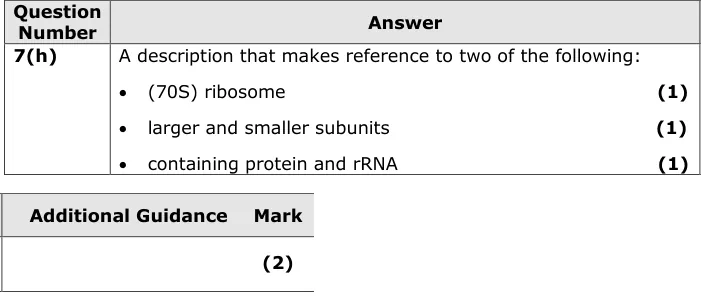
Describe the structure of the protein-synthesis machinery in bacteria.
Show the mark scheme
Tap an image to open it full size.
From the examiners' report: Most recognised the ribosome but did not describe its structure. Credit was for a 70S ribosome with a large and a small subunit, made of protein and rRNA; mRNA and eukaryotic organelles were wrong.
Question 9
A level Paper 3 · June 2017 · Q7(i) · 3 marks · Easy
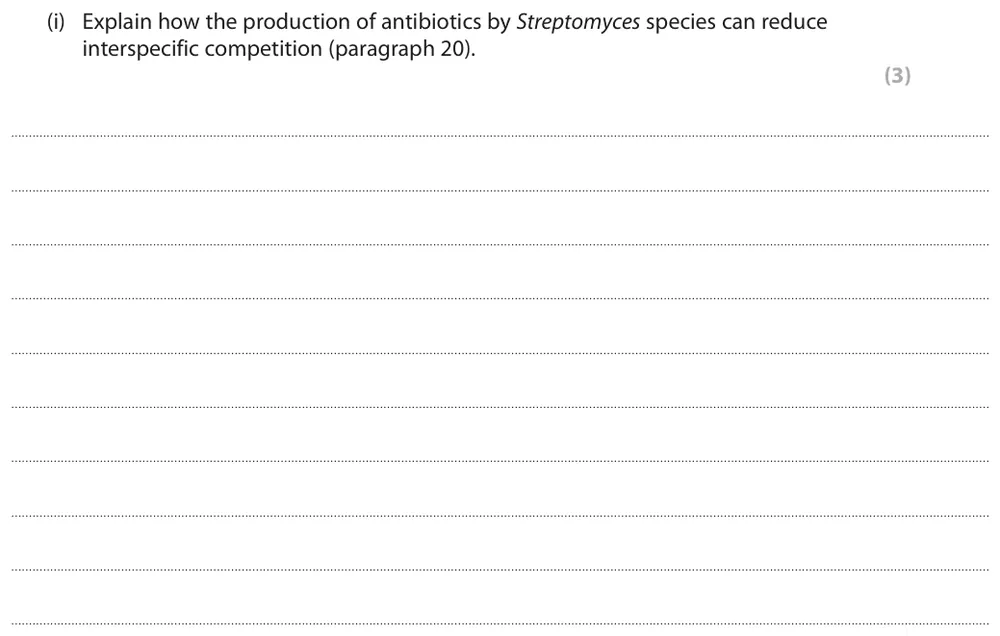
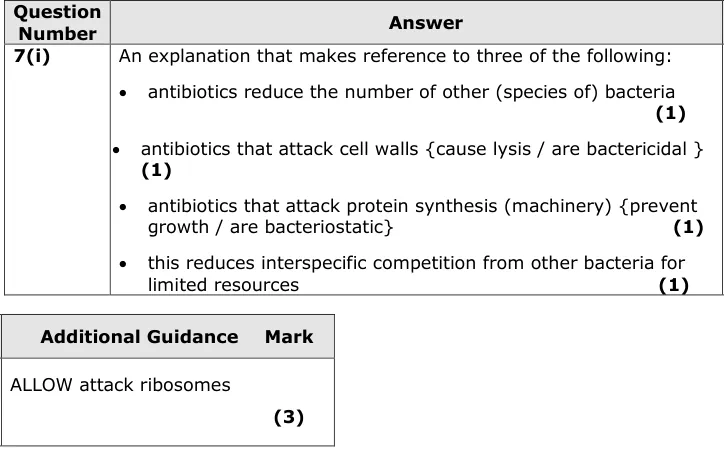
Explain how producing antibiotics can reduce interspecific competition for Streptomyces.
Show the mark scheme
Tap an image to open it full size.
From the examiners' report: Some wrote about antibodies, or confused interspecific with intraspecific competition. Say that antibiotics reduce the numbers of other species of bacteria, link cell wall damage to lysis or protein synthesis to bacteriostatic effects, and name the competition for limited resources.
Question 10
A level Paper 3 · June 2017 · Q7(j) · 1 mark
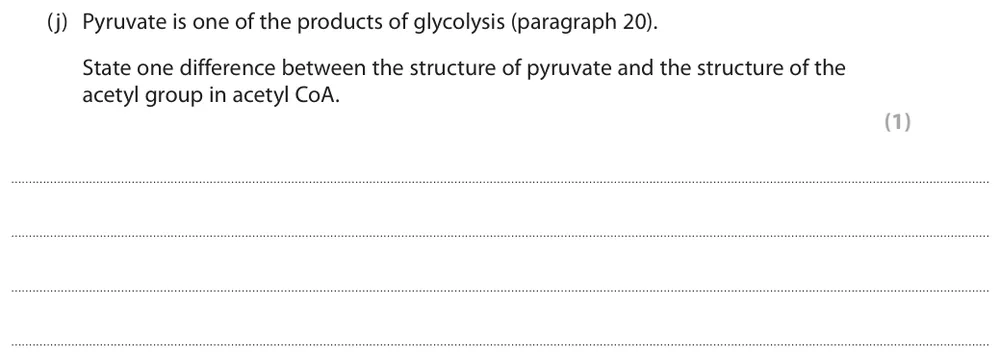
State one difference between the structure of pyruvate and the acetyl group in acetyl CoA.
Show the mark scheme

Tap an image to open it full size.
From the examiners' report: Give the numbers: pyruvate has 3 carbons and the acetyl group has 2. 'One more carbon' without the numbers did not gain the mark.
Dormancy in bacteria (paragraph 25)
Question 11
A level Paper 3 · June 2017 · Q7(k) · 4 marks
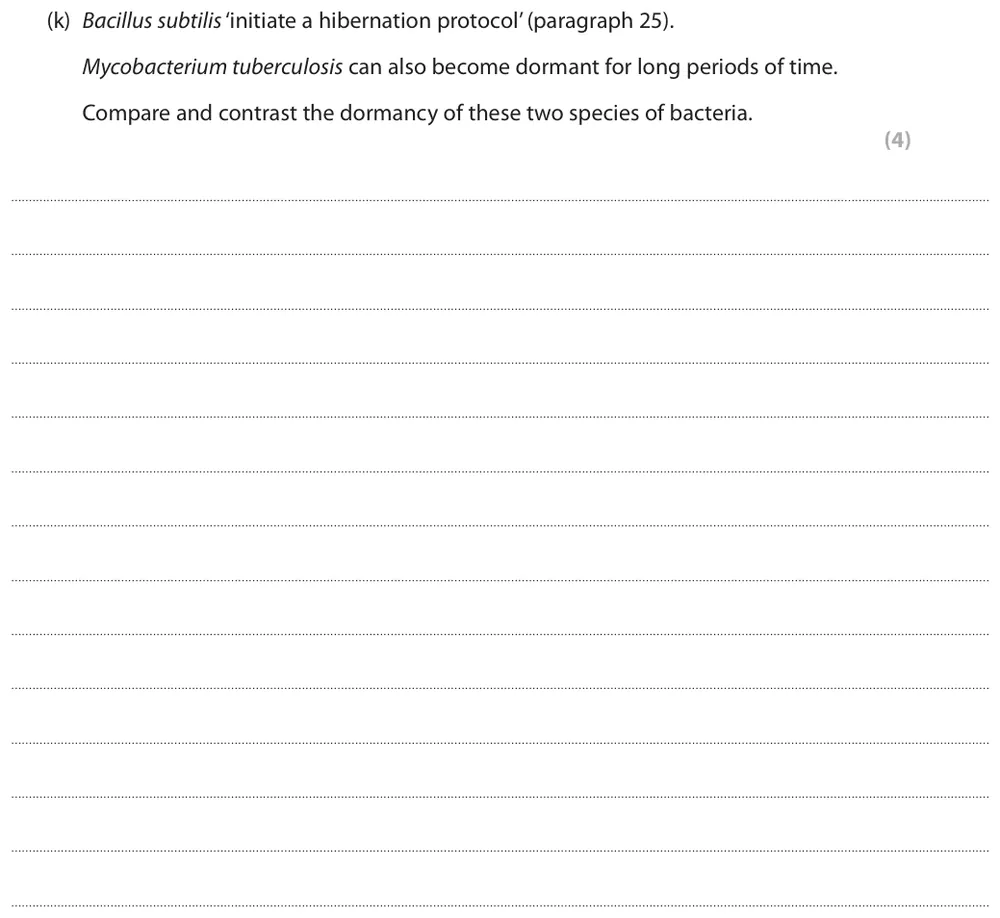
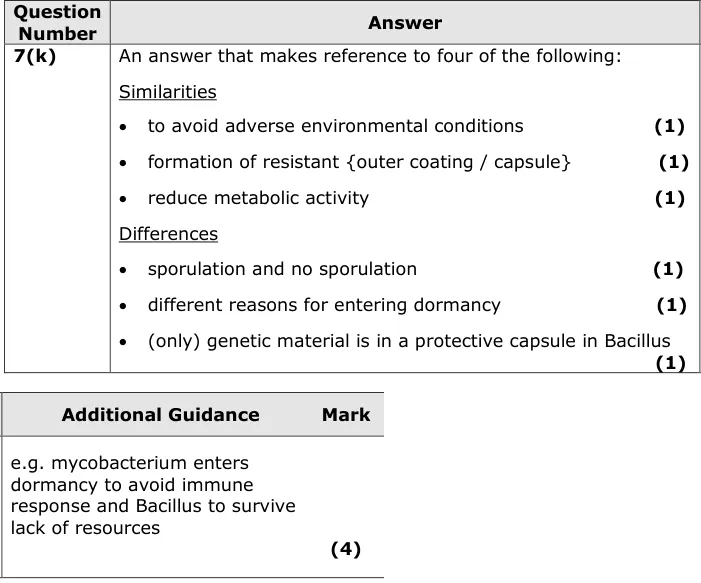
Compare and contrast the dormancy of Bacillus subtilis and Mycobacterium tuberculosis.
Show the mark scheme
Tap an image to open it full size.
From the examiners' report: Many wrote about the stages before or after dormancy, or about each species separately. Give similarities (a protective capsule, reduced metabolic activity) and differences (sporulation, and different reasons for entering dormancy).
Where students lose marks (from Pearson examiners' reports and mark schemes)
Each point below comes from the examiners' report and mark scheme, and is followed by wording that gained marks.
Removing methane is what cools the climate. Many stated that methane traps heat but did not say that its breakdown leaves less methane in the atmosphere.
✔ Gains credit: 'Anaerobic oxidation of methane results in less methane in the atmosphere, so it could reduce the greenhouse effect.'
Single-celled compared with what. Many said bacteria are single-celled without contrasting this with multicellular eukaryotes, or said they have 'fewer organelles'.
✔ Gains credit: 'Only one cell as opposed to potentially many; no nucleus present; no membrane-bound organelles.'
Fixed carbon becomes biomass. Answers missed that carbon must come from an inorganic source and that it becomes part of the organism.
✔ Gains credit: 'Transfer carbon from carbon dioxide into an organic compound that becomes part of the mass of that organism.'
Oxygen accepts electrons, not only protons. Some referred only to protons, and others said oxygen is needed in the link reaction and Krebs cycle.
✔ Gains credit: 'Final acceptor of electrons in the electron transport chain, allowing oxidative phosphorylation, so ATP is synthesised.'
Genes are not the whole genome. Many defined the genome as 'all the genes in the DNA'.
✔ Gains credit: 'All the DNA', or 'all the exons and introns'.
Selection does not cause the mutation. Some believed the selection pressure brings about the mutations.
✔ Gains credit: 'As a result of a mutation, high temperatures act as a selection pressure, allowing them to survive and pass the advantageous allele to the next generation.'
Ribosomes contain rRNA, not mRNA. Many said the machinery consisted of mRNA or just RNA, and listed eukaryotic organelles.
✔ Gains credit: '70S ribosome with larger and smaller subunits, containing protein and rRNA.'
Antibiotics, not antibodies. Quite a few wrote about antibodies or gave Streptomyces an immune system.
✔ Gains credit: 'Antibiotics reduce the number of other species of bacteria, reducing interspecific competition for limited resources.'
Download the questions
Download the PDF pack (11 questions, mark schemes at the end)
Keep practising
- Read the June 2017 scientific article: The Energy of Life
- How the Edexcel SNAB Paper 3 scientific article works, and what examiners want
- Edexcel SNAB A level Biology revision resources by topic
- Craving Control: How Food Messes with Your Mind (June 2018 Paper 3 Scientific Article): Edexcel SNAB A Level Biology Exam Questions
- All Edexcel SNAB exam questions by topic
- Edexcel SNAB A level Biology past papers, mark schemes and examiners' reports
- Edexcel SNAB A level Biology grade boundaries
- Message Tom on WhatsApp about one-to-one Edexcel SNAB tutoring or an Edexcel group class
Questions, mark schemes and examiners' report extracts © Pearson Education Ltd.