

Proteins (AQA 3.1.4.1) is one of the most important sections of Year 12, because the same ideas come back in enzymes, membranes, the immune system, haemoglobin, hormones and receptors, and gene mutations. You need to draw the general structure of an amino acid, explain how a condensation reaction forms a peptide bond, describe the four levels of protein structure and the hydrogen bonds, ionic bonds and disulfide bridges that hold them, and do the biuret test.
The examiners' reports show where students lose marks: writing 'a chain of amino acids' instead of the sequence of amino acids, describing DNA bases when asked about primary structure, thinking quaternary means four polypeptides, giving every protein an 'active site' when only enzymes have one, saying 'specific' instead of 'complementary tertiary structure', and heating the biuret test.
Start with amino acids and peptide bonds, then the levels of structure, then questions that link a protein's shape to what it does. Answer each on paper before you open the mark scheme. If you'd like help with this topic, my AQA masterclasses run online on Tuesdays at 5.15pm for Year 12 and on Wednesdays or Thursdays at 6.30pm for Year 13.
What you need from GCSE and Year 12
Each question on this page assumes you're secure on these GCSE and Year 12 ideas. If any of them feels shaky, revise it before you start.
- GCSE: proteins are long chains of amino acids, and proteases break them down into amino acids.
- GCSE: enzymes, antibodies, many hormones and structural molecules such as collagen are proteins; their shape lets them do their job.
- GCSE: the order of bases in DNA codes for the order of amino acids in a protein.
- GCSE: the biuret test turns from blue to purple (lilac) with protein.
- Year 12 (AQA 3.1.2): condensation and hydrolysis reactions. See the Carbohydrates page.
Key terms
These words come up in the questions and mark schemes. Examiners expect you to use them exactly.
- Amino acid: the monomer of proteins, with an amine group (NH₂), a carboxyl group (COOH), a hydrogen atom and an R group on one carbon.
- R group: the side chain; the 20 amino acids differ only in their R group.
- Peptide bond: the bond formed between the amine group of one amino acid and the carboxyl group of another by a condensation reaction.
- Dipeptide and polypeptide: two amino acids joined together; many amino acids joined together.
- Primary structure: the sequence (order) of amino acids in a polypeptide.
- Secondary structure: the α-helix or β-pleated sheet, held by hydrogen bonds between amino acids.
- Tertiary structure: the overall 3D folding of a polypeptide, held by hydrogen bonds, ionic bonds and disulfide bridges between R groups.
- Quaternary structure: a protein made of more than one polypeptide (not necessarily four).
- Disulfide bridge: a strong covalent bond between the sulfur atoms of two cysteine R groups.
- Complementary: having a shape that fits another molecule, such as a hormone and its receptor.
What these questions cover (AQA 3.1.4.1)
The questions test these statements from the AQA AS and A-level Biology specification (7401/7402):
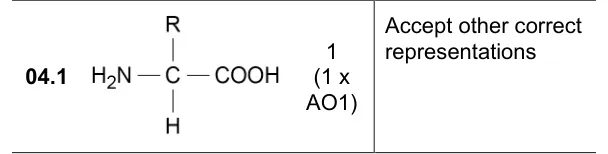
- Amino acids: Amino acids are the monomers from which proteins are made. (the general structure (H2N–CHR–COOH) is drawn in the specification)
- R groups: where NH2 represents an amine group, COOH represents a carboxyl group and R represents a side chain. The twenty amino acids that are common in all organisms differ only in their side group.
- Peptide bonds: A condensation reaction between two amino acids forms a peptide bond.
- Dipeptides: Dipeptides are formed by the condensation of two amino acids.
- Polypeptides: Polypeptides are formed by the condensation of many amino acids.
- Functional proteins: A functional protein may contain one or more polypeptides.
- Bonds: The role of hydrogen bonds, ionic bonds and disulfide bridges in the structure of proteins.
- Structure and function: Proteins have a variety of functions within all living organisms. The relationship between primary, secondary, tertiary and quaternary structure, and protein function.
- Biuret test: The biuret test for proteins.
- Students should be able to relate the structure of proteins to properties of proteins named throughout the specification.
How to use this page
Write your answer on paper before you open the mark scheme. Allow about 1.3 minutes per mark: the 18 questions are worth 35 marks, so about 46 minutes in total. Then mark your answer strictly against the mark scheme and read the examiners' tip underneath it. If you'd rather print the questions, download the PDF pack.
Amino acids and peptide bonds (3.1.4.1)
Question 1
A level Paper 3 · June 2025 · Q04.1 · 1 mark · Easy
Draw the general structure of an amino acid.

Show the mark scheme
Tap an image to open it full size.
From the examiners' report: Two-thirds got this. Common errors were bonding the amine's H or the carboxyl's H to the central carbon; some drew glucose or ATP.
Question 2
AS Paper 1 · June 2017 · Q05.2 · 1 mark · Medium
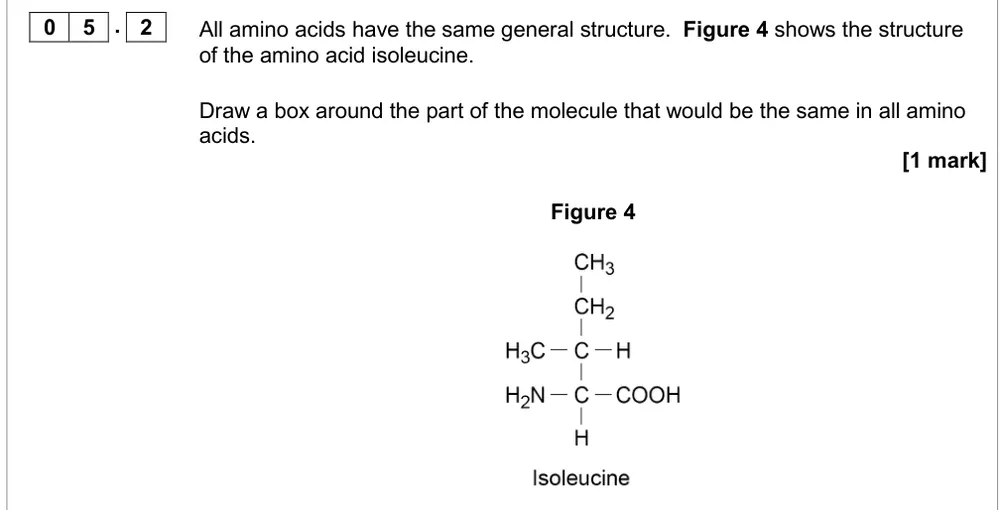
Box the part of isoleucine that is the same in every amino acid.
Show the mark scheme

Tap an image to open it full size.
From the examiners' report: Only 55% got this simple recall mark. Everything except the R group is the same in every amino acid.
Question 3
AS Paper 1 · June 2025 · Q01.1 · 1 mark · Easy
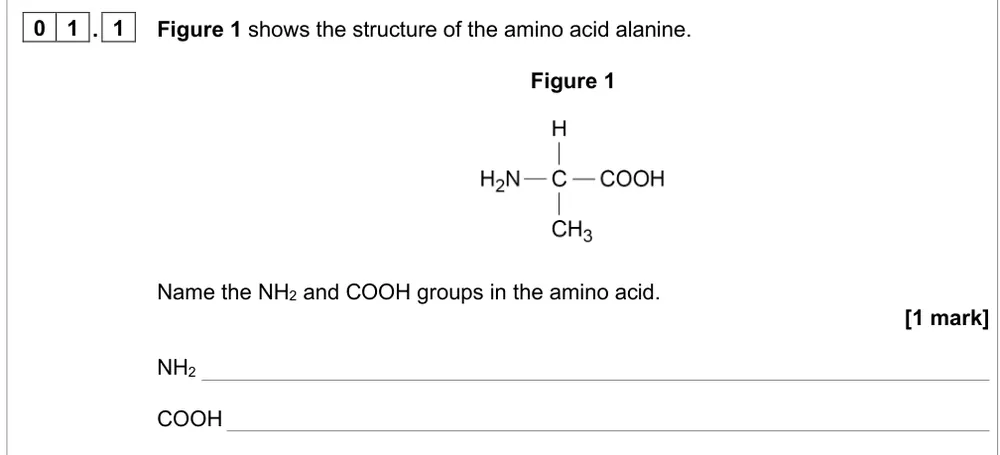
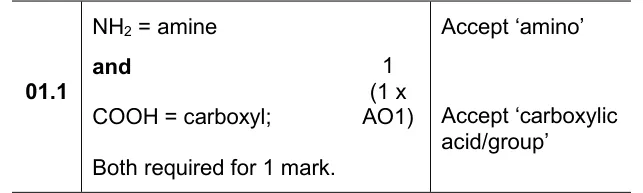
Name the NH2 and COOH groups of an amino acid.
Show the mark scheme
Tap an image to open it full size.
From the examiners' report: Over 75% got both. Amine (or amino) and carboxyl.
Question 4
AS Paper 1 · June 2025 · Q01.2 · 2 marks · Easy
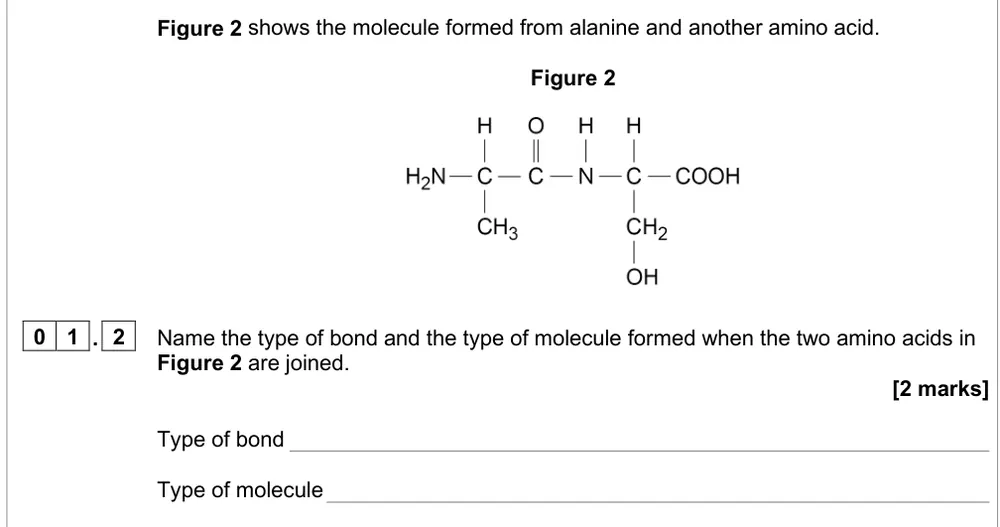
Name the bond and the molecule formed when two amino acids join.
Show the mark scheme

Tap an image to open it full size.
From the examiners' report: Most named the peptide bond, but fewer said the molecule is a dipeptide.
Question 5
AS Paper 1 · June 2025 · Q01.3 · 1 mark · Easy
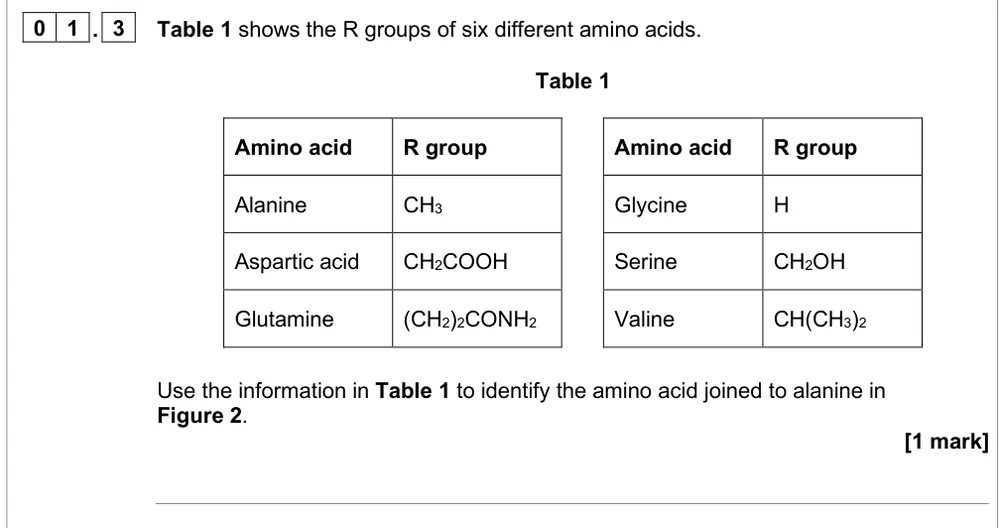
Use a table of R groups to identify the second amino acid in a dipeptide.
Show the mark scheme
Tap an image to open it full size.
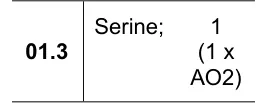
From the examiners' report: About 70% identified serine. Find the R group on the second amino acid (CH2OH) and match it to the table.
Question 6
AS Paper 2 · June 2018 · Q02.1 · 2 marks · Easy
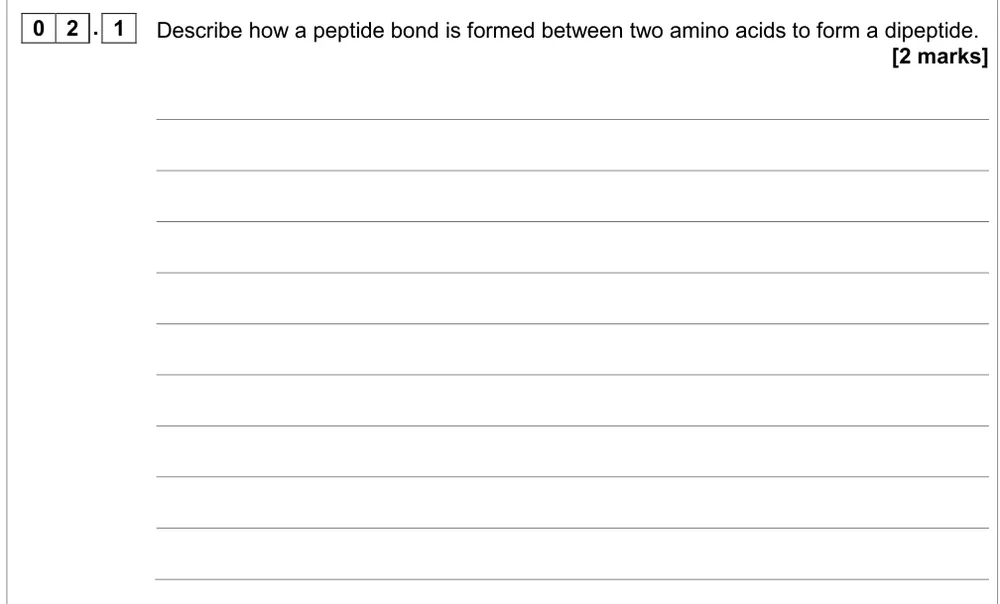
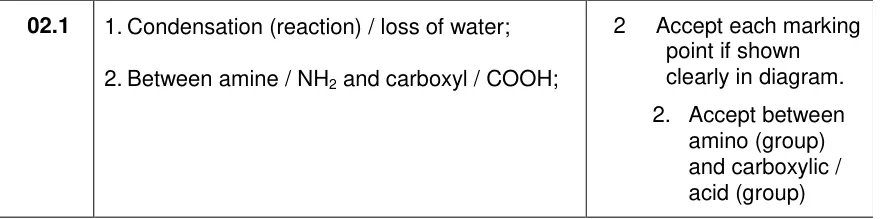
Describe how a peptide bond forms between two amino acids.
Show the mark scheme
Tap an image to open it full size.
From the examiners' report: Most named condensation. The 17% who scored nothing called it hydrolysis, described translation, or confused amine with nitrate.
Levels of protein structure (3.1.4.1)
Question 7
AS Paper 1 · June 2022 · Q05.1 · 3 marks · Medium
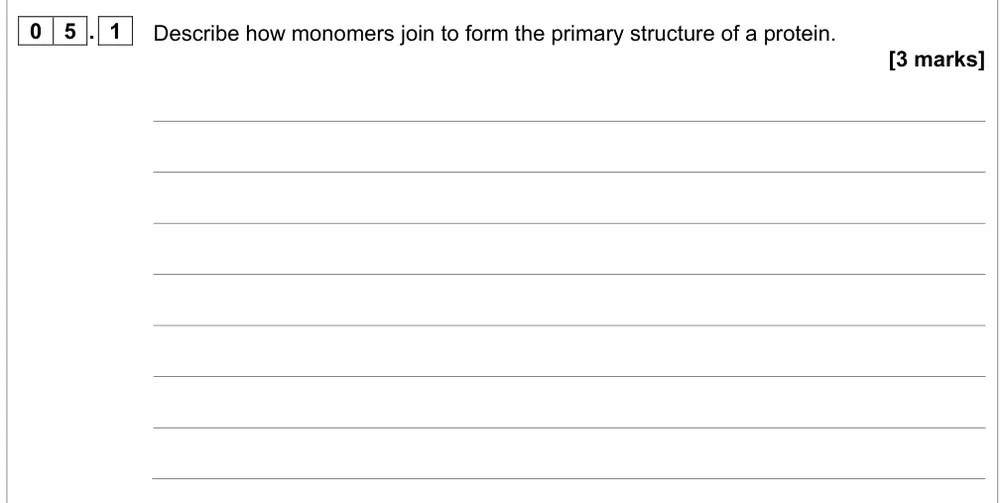
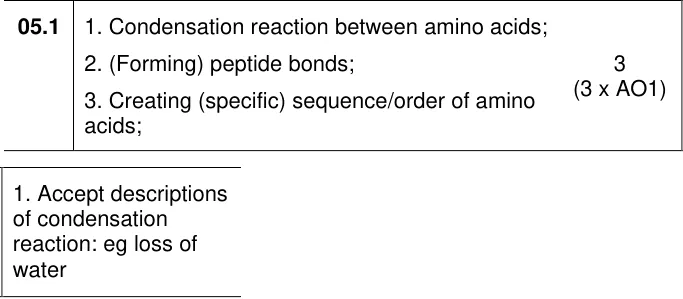
Describe how monomers join to form the primary structure of a protein.
Show the mark scheme
Tap an image to open it full size.
From the examiners' report: Only 24% got full marks. Name the monomers as amino acids, the bond as peptide, and say the order of amino acids is the primary structure.
Question 8
AS Paper 2 · June 2018 · Q02.2 · 2 marks · Medium
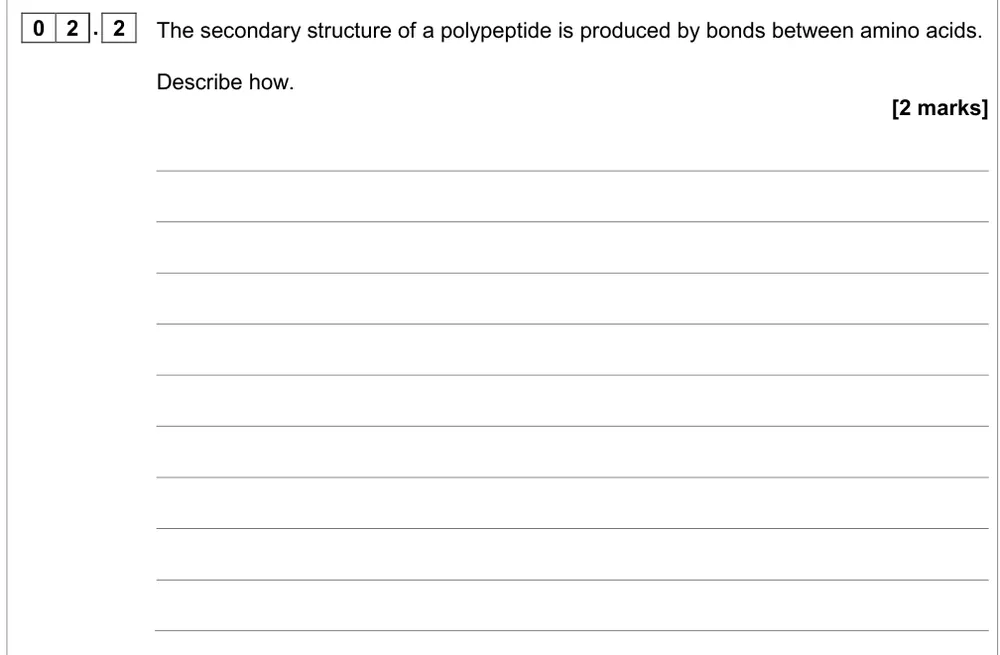
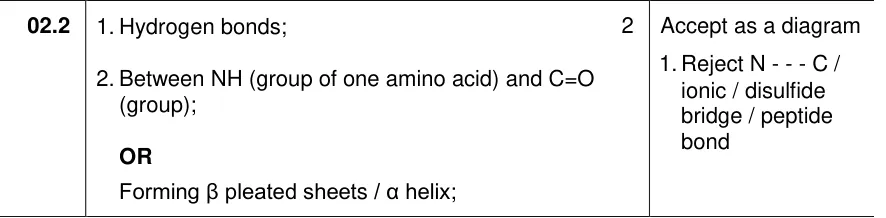
Describe how bonds between amino acids produce secondary structure.
Show the mark scheme
Tap an image to open it full size.
From the examiners' report: 35% got both marks. Students were often muddled about what bonds to what, and some confused protein and DNA structure.
Question 9
AS Paper 2 · June 2018 · Q02.3 · 2 marks
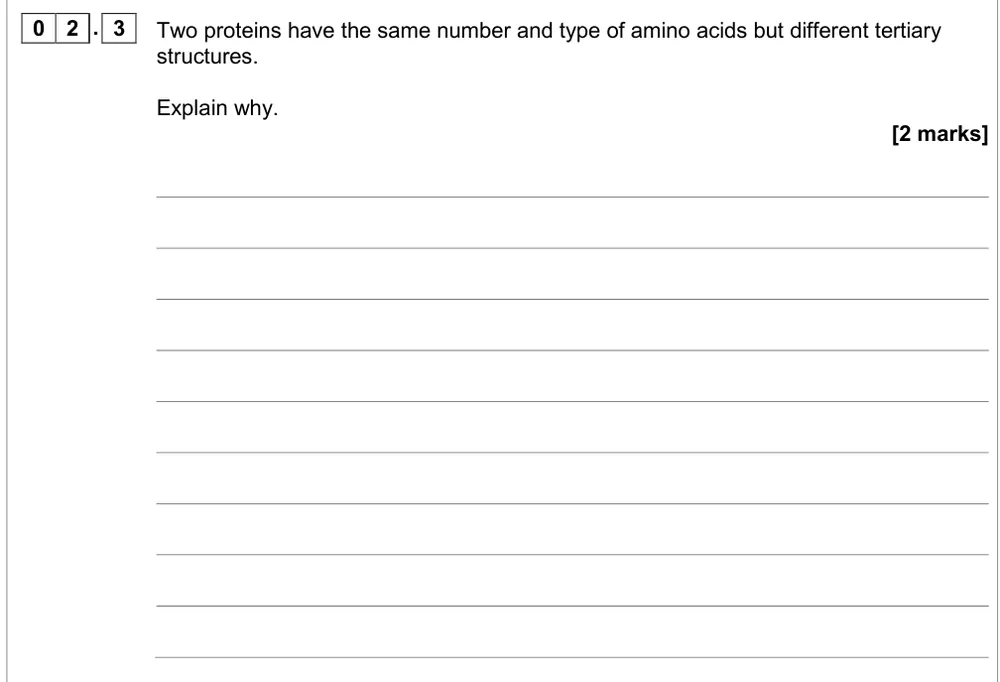
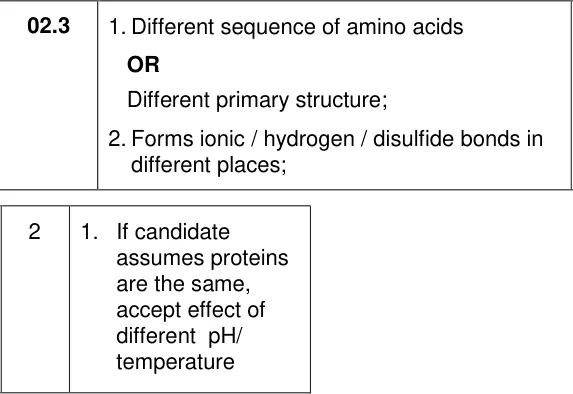
Explain why two proteins with the same amino acids can have different tertiary structures.
Show the mark scheme
Tap an image to open it full size.
From the examiners' report: One-mark answers usually didn't name the bonds or say they were in different places. Don't bring in the degenerate DNA code.
Question 10
A level Paper 1 · June 2022 · Q05.1 · 1 mark · Easy
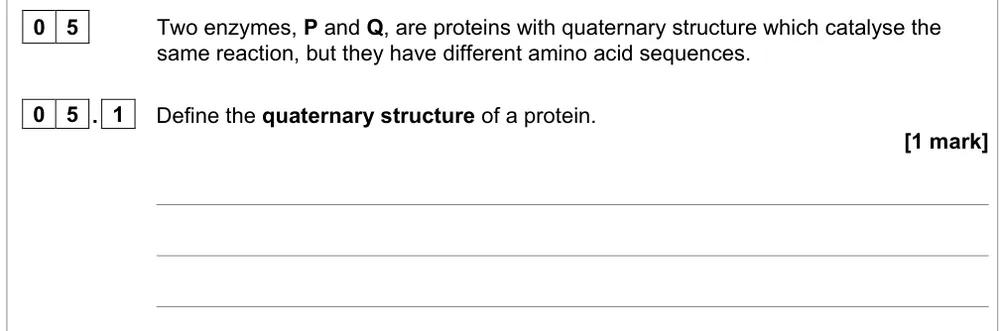
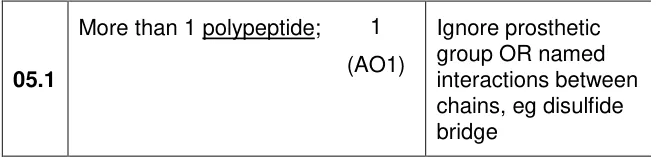
Define the quaternary structure of a protein.
Show the mark scheme
Tap an image to open it full size.
From the examiners' report: Three-quarters got this. Quaternary means more than one polypeptide, not four.
Question 11
A level Paper 1 · June 2023 · Q10.1 · 5 marks · Medium
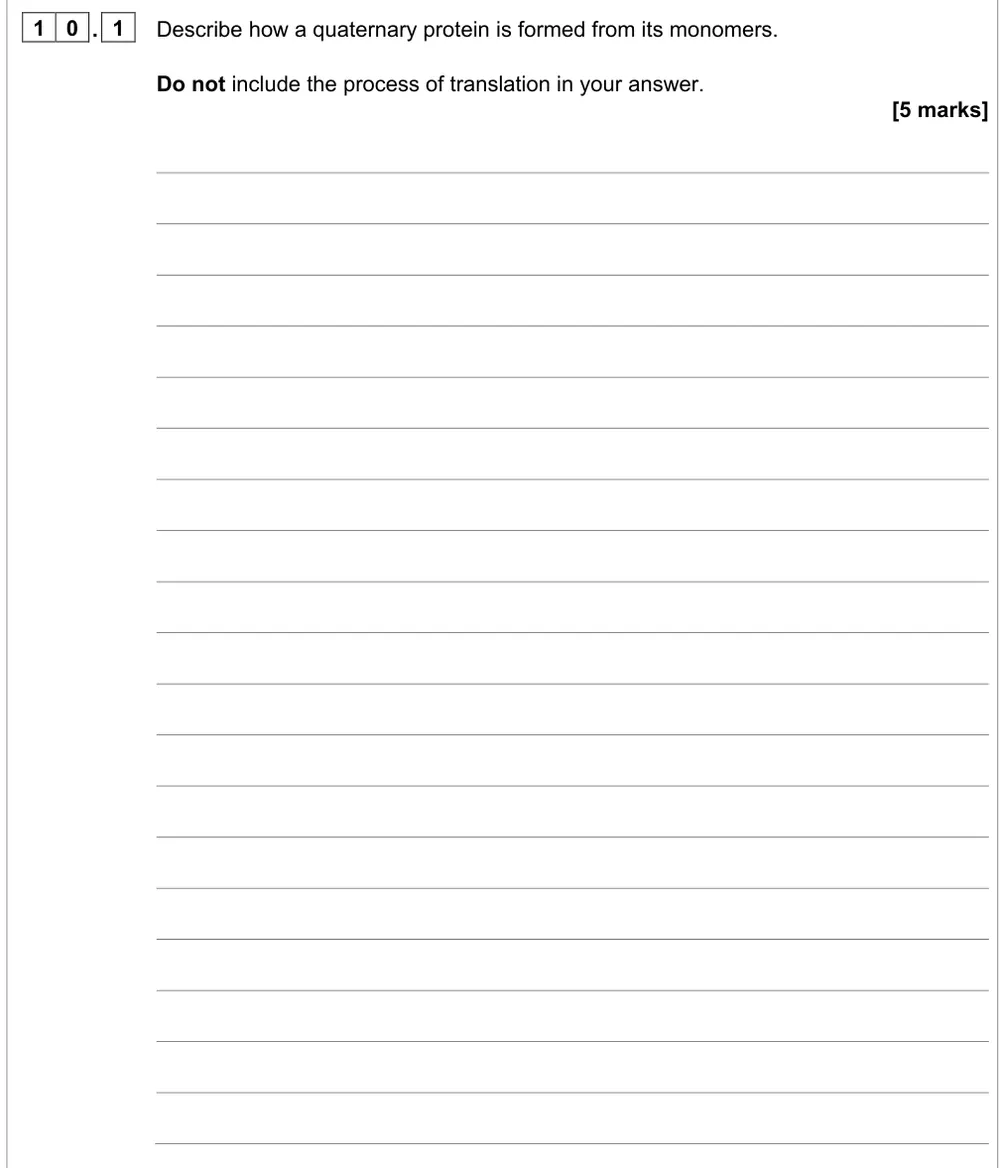
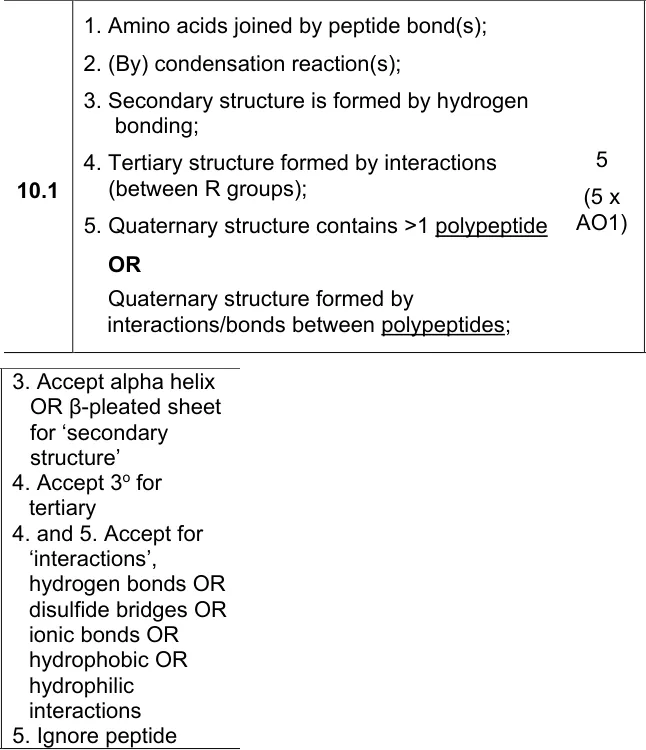
Describe how a quaternary protein is formed from its monomers (5 marks).
Show the mark scheme
Tap an image to open it full size.
From the examiners' report: A quarter got full marks. Many missed peptide bonds 'between amino acids' or 'condensation', thought quaternary meant four polypeptides, or wrote about protein synthesis.
Question 12
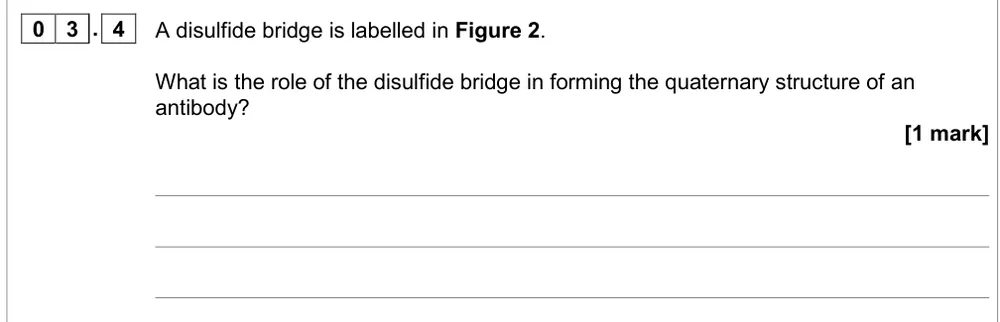
AS Paper 1 · November 2020 · Q03.4 · 1 mark
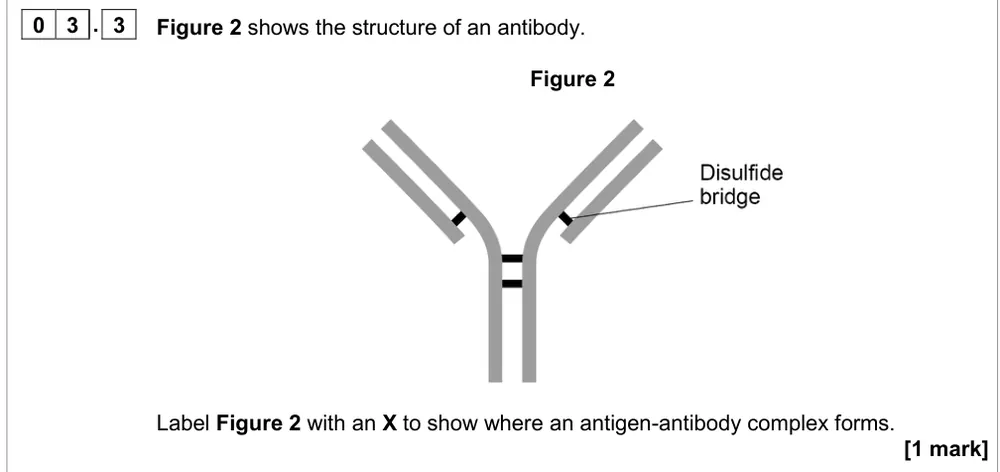
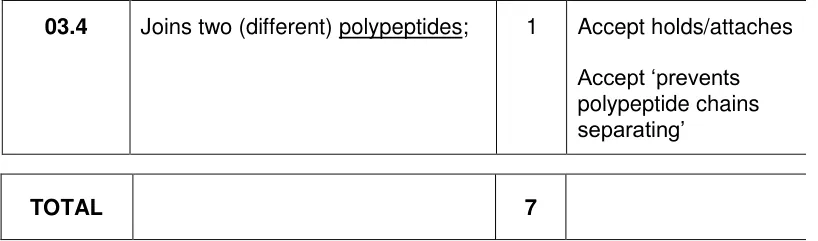
State the role of the disulfide bridges in the quaternary structure of an antibody.
Information from earlier in this question:
Show the mark scheme
Tap an image to open it full size.
From the examiners' report: Many students didn't refer to the polypeptide chains held together in the quaternary structure.
Structure, shape and function (3.1.4.1)
Question 13
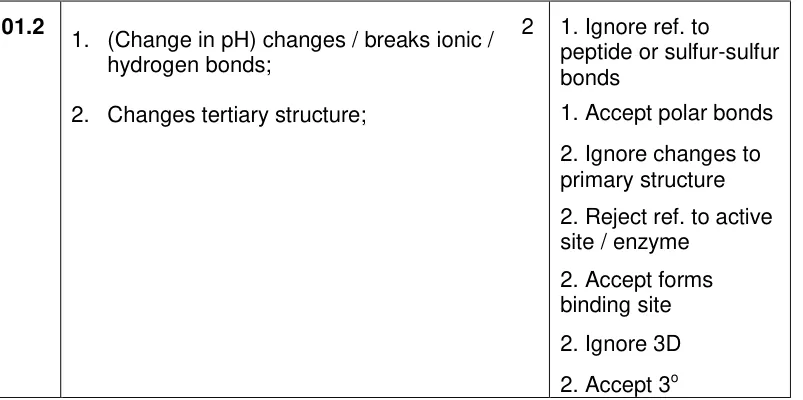
A level Paper 3 · June 2018 · Q01.2 · 2 marks · Medium
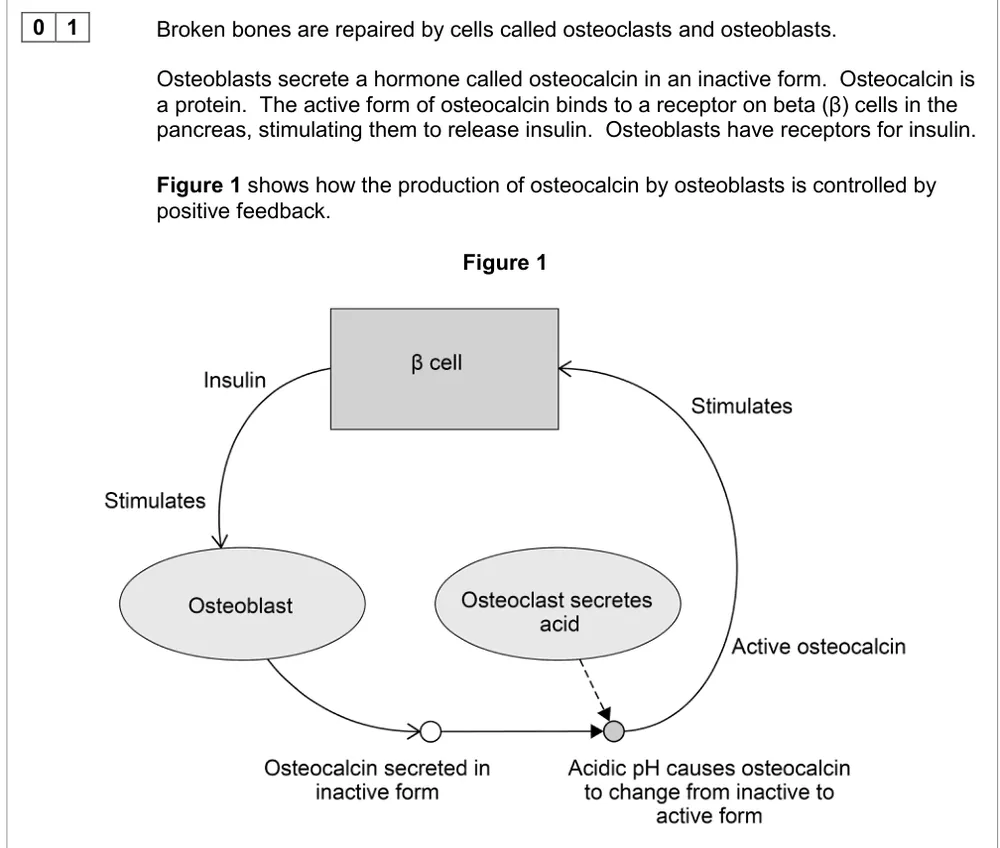
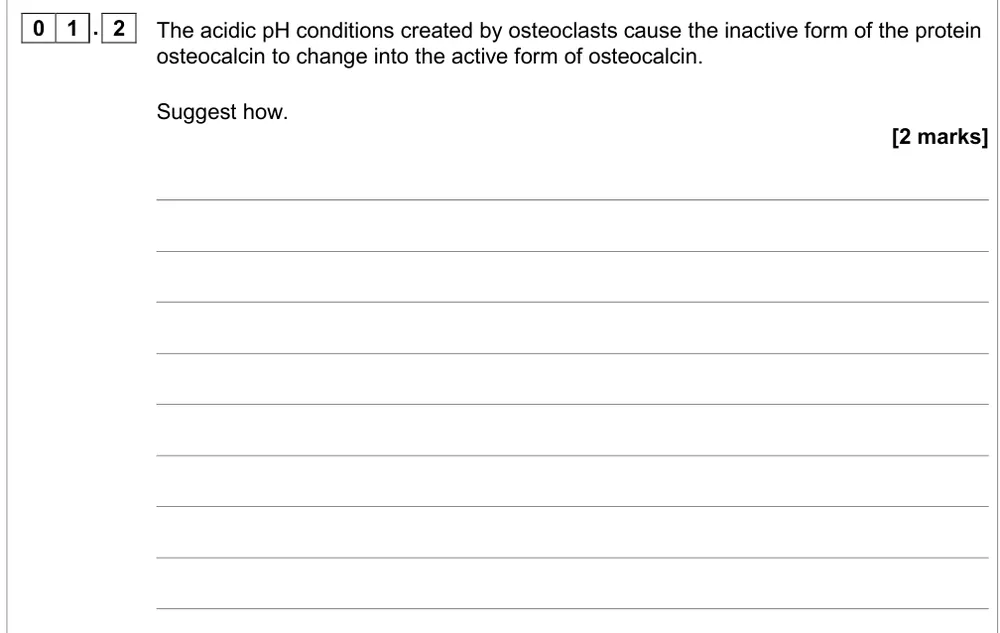
Suggest how an acidic pH turns inactive osteocalcin into its active form.
Information from earlier in this question:
Show the mark scheme
Tap an image to open it full size.
From the examiners' report: 28% got both marks. Osteocalcin is a hormone: it has a binding site, not an active site. Name the bonds that break.
Question 14
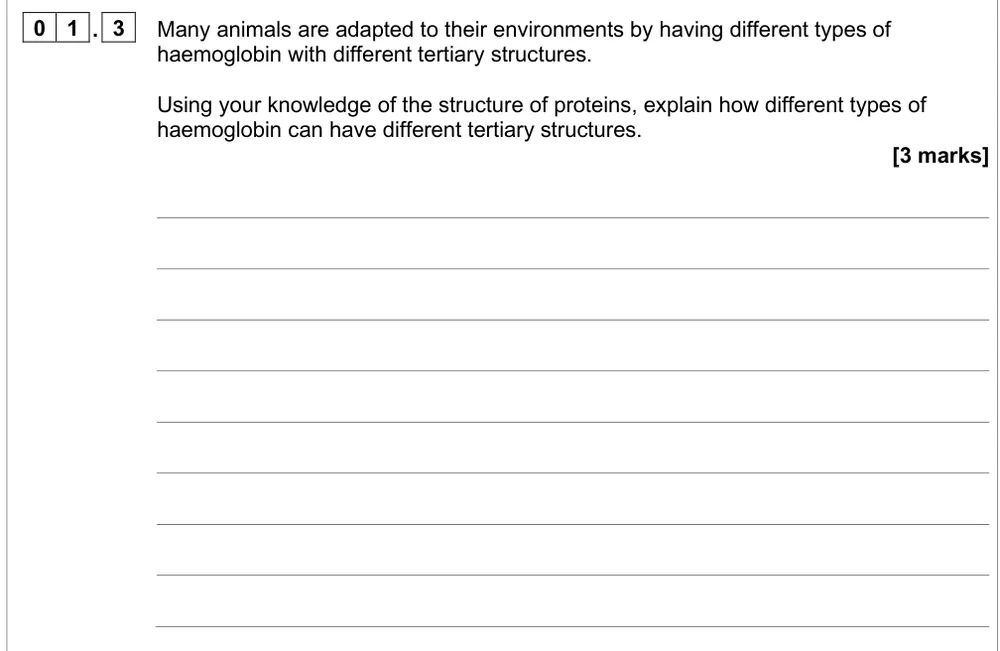
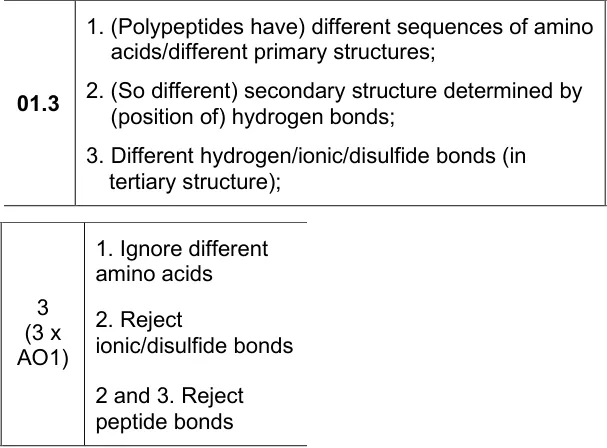
AS Paper 2 · June 2025 · Q01.3 · 3 marks · Medium
Explain how different types of haemoglobin can have different tertiary structures.
Show the mark scheme
Tap an image to open it full size.
From the examiners' report: About 10% got all three. Many couldn't separate secondary (hydrogen bonds) from tertiary bonding.
Question 15
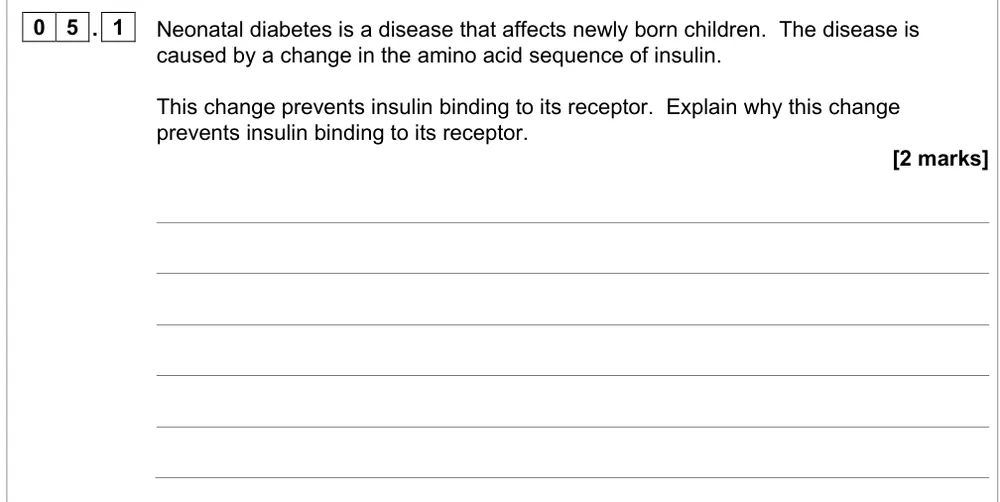
A level Paper 2 · November 2021 · Q05.1 · 2 marks · Easy
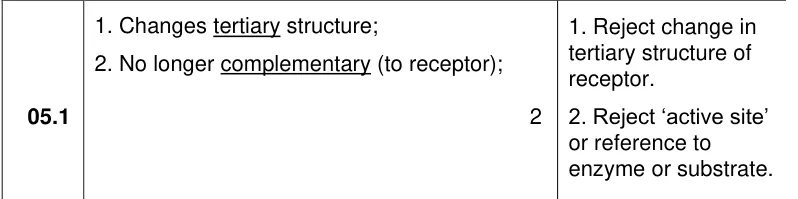
Explain why a change in insulin's amino acid sequence stops it binding to its receptor.
Show the mark scheme
Tap an image to open it full size.
From the examiners' report: 52% got both marks. 'Active site' or 'substrate' lost the mark, and 'did not fit' isn't the same as 'not complementary'.
Question 16
AS Paper 2 · June 2025 · Q07.2 · 2 marks · Medium
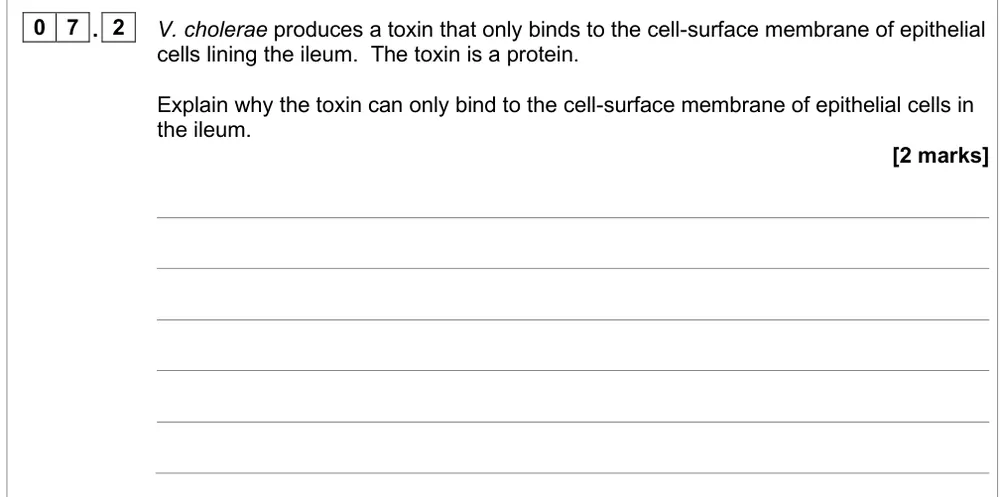
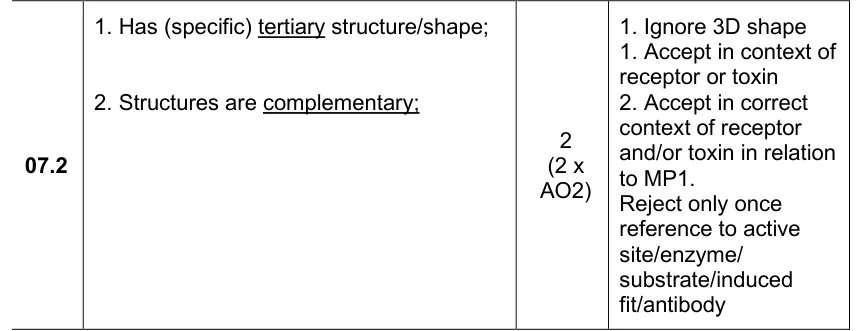
Explain why a cholera toxin binds only to epithelial cells in the ileum.
Show the mark scheme
Tap an image to open it full size.
From the examiners' report: About 25% got both marks. Vague answers said the toxin was 'specific'; there were also references to active sites.
Question 17
A level Paper 1 · November 2021 · Q03.2 · 2 marks
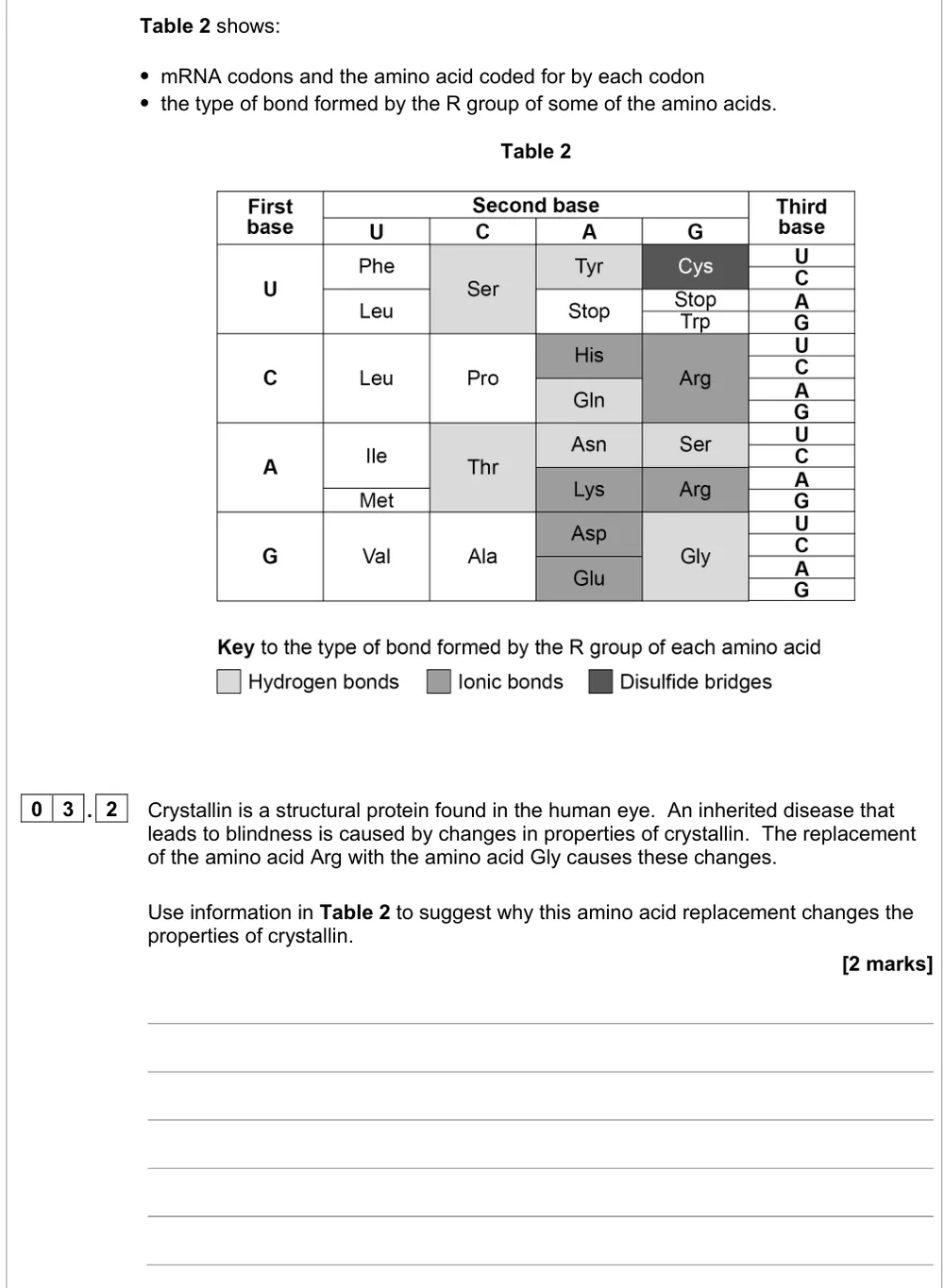
Use a codon table to explain how changing Arg to Gly alters crystallin.
Show the mark scheme

Tap an image to open it full size.
From the examiners' report: Most achieved at least some credit. Use the key: Arg forms ionic bonds and Gly forms hydrogen bonds, so the tertiary structure changes.
The biuret test (3.1.4.1)
Question 18
AS Paper 1 · June 2024 · Q02.2 · 2 marks
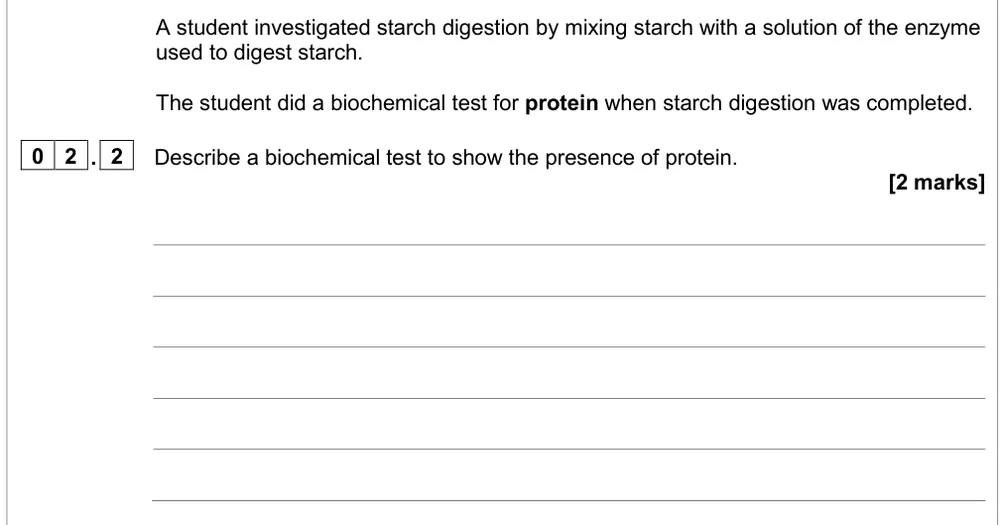
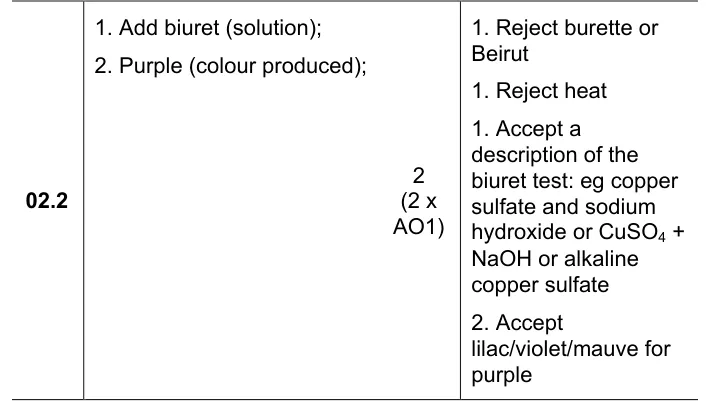
Describe the biochemical test for protein.
Show the mark scheme
Tap an image to open it full size.
From the examiners' report: Mentioning heating the biuret solution lost the mark. Only Benedict's is heated.
Where students lose marks (from AQA examiners' reports and mark schemes)
Each point below is followed by wording that gained marks.
Sequence, not just a chain: Describing primary structure, students wrote 'a chain of amino acids' or described DNA base sequences, or left out the monomers' name and the peptide bonds.
✔ Gains credit: "The sequence (order) of amino acids, joined by peptide bonds formed in condensation reactions."
Condensation, not hydrolysis: 17% scored nothing on forming a peptide bond: they called the reaction hydrolysis, described translation, or confused the amine group with nitrate.
✔ Gains credit: "A condensation reaction, losing water, between the amine (NH2) group of one amino acid and the carboxyl (COOH) group of another."
Hydrogen bonds hold the helix: Many were muddled about what bonds to what in secondary structure, and some confused protein structure with DNA structure. Ionic bonds, disulfide bridges and peptide bonds are rejected here.
✔ Gains credit: "Hydrogen bonds between the NH of one amino acid and the C=O of another, forming an α-helix or β-pleated sheet."
Quaternary means more than one: A sizeable number thought quaternary structure means four polypeptides, and many wrote 'tertiary structures' instead of polypeptides.
✔ Gains credit: "Quaternary structure: more than one polypeptide, held together by bonds between the polypeptides."
Different positions of bonds: Explaining why proteins with the same amino acids differ, students didn't name the bonds, didn't say they form in different places, or blamed the degenerate DNA code.
✔ Gains credit: "A different sequence of amino acids, so ionic, hydrogen and disulfide bonds form in different places, giving a different tertiary structure."
Not every protein has an active site: Many students wrote about the active site of a hormone, receptor or toxin. Only enzymes have active sites; references to active site, enzyme or substrate were rejected.
✔ Gains credit: "The hormone has a specific tertiary structure that is complementary to the receptor."
Complementary, not 'specific': Many answers said the molecules were 'specific' or 'fit', without saying tertiary structure and complementary shape.
✔ Gains credit: "Has a specific tertiary structure/shape; the structures are complementary."
Don't heat the biuret test: References to heating the biuret solution lost the mark. Only Benedict's needs heating.
✔ Gains credit: "Add biuret reagent; a purple (lilac) colour shows protein."
Download the questions
Download the PDF pack (18 questions, mark schemes at the end)
Keep practising
- Enzymes: AQA A Level Biology exam questions by topic
- Lipids: AQA A Level Biology exam questions by topic
- Carbohydrates: AQA A Level Biology exam questions by topic
- AQA A Level Biology masterclasses
Questions, mark schemes and examiners' report extracts © AQA.