

Respiration (12.2): Cambridge (CIE) A Level Biology 9700 Exam Questions by Topic
Respiration is sub-topic 12.2 of Topic 12, Energy and respiration, in the Cambridge International AS & A Level Biology syllabus (9700). You need to know where each of the four stages of aerobic respiration takes place and to outline glycolysis, the link reaction, the Krebs cycle and oxidative phosphorylation, including the roles of coenzyme A, NAD and FAD. You also need to relate the structure of a mitochondrion to its function, outline lactate and ethanol fermentation, explain why the energy yield is much greater in aerobic conditions, explain how rice is adapted to grow with its roots submerged in water, and describe investigations that use redox indicators and simple respirometers. This is A level content, examined on Paper 4.
The examiners' reports return to the same points. NAD and FAD carry hydrogen atoms, not protons or hydrogen ions, and it is reduced NAD that releases hydrogen at the inner mitochondrial membrane. Energy is released, not produced, as electrons pass along the electron transport chain. Protons are pumped into the intermembrane space and diffuse back through ATP synthase. Give precise locations: the link reaction and the Krebs cycle take place in the mitochondrial matrix, not just 'in the mitochondria'. In fermentation, reduced NAD is re-oxidised so that glycolysis can continue. When a question gives you two sets of results, compare them.
Studying Cambridge International A level Biology and want more help? Tom teaches CIE students one-to-one online, including students in the UAE, Saudi Arabia, Hong Kong, India and Indonesia, and every lesson is recorded. You can book a one-to-one lesson or a free 15-minute discovery chat, or register your interest in a CIE group class starting in September 2027, using the links at the bottom of this page.
What you need from AS Level
Each question on this page assumes you're secure on these ideas. If any of them feels shaky, look it up before you start.
- A mitochondrion has two membranes; the inner membrane is folded into cristae and surrounds the matrix.
- Active transport moves substances against a concentration gradient through carrier proteins, using energy from ATP; facilitated diffusion is passive.
- Enzymes are globular proteins with an active site, and high temperatures denature them.
- ATP is the universal energy currency of cells; energy is released when it is hydrolysed to ADP and inorganic phosphate.
Key terms
These words come up in the questions and mark schemes. Examiners expect you to use them exactly.
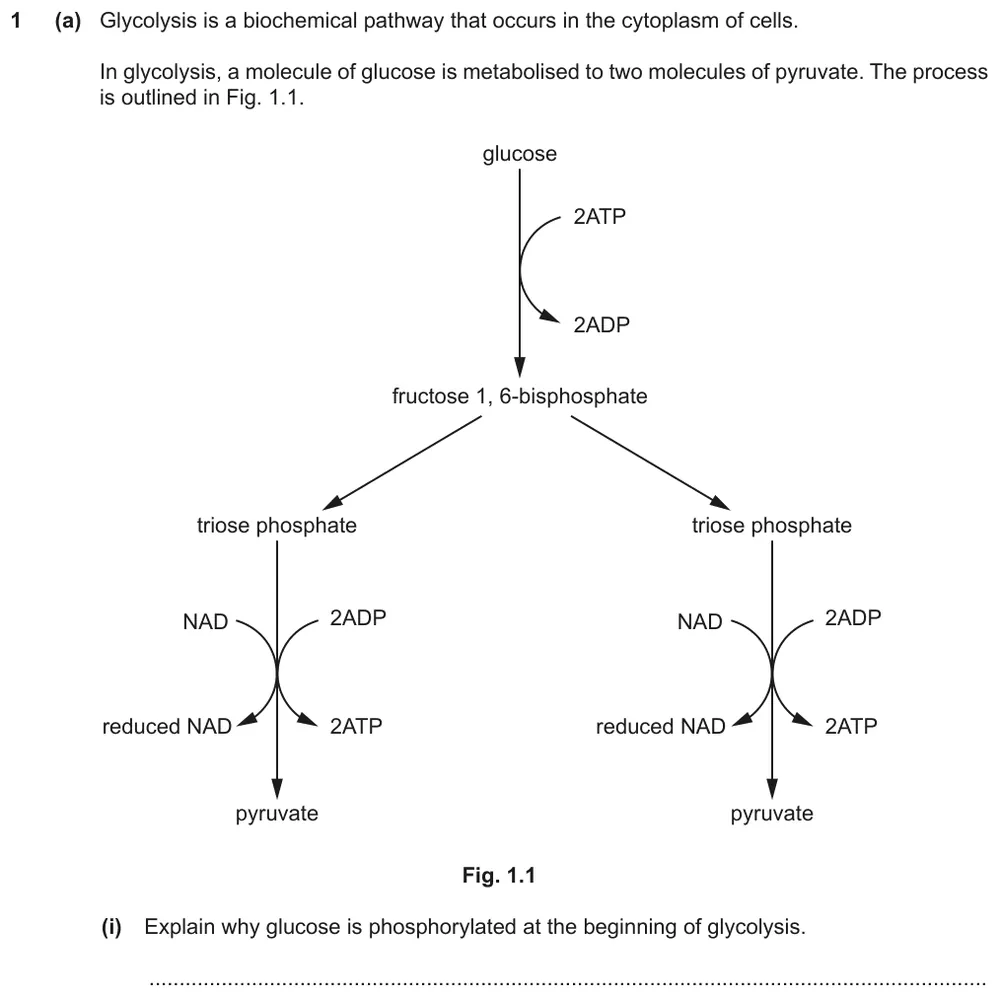
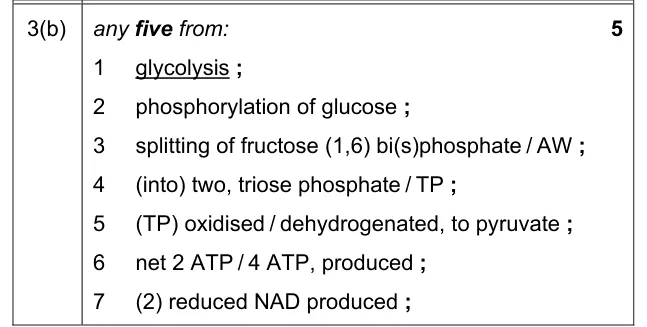
- Glycolysis: the first stage of respiration, in the cytoplasm: glucose is phosphorylated, fructose 1,6-bisphosphate is split into two triose phosphate molecules, and these are oxidised to pyruvate, with a net gain of 2 ATP and 2 reduced NAD.
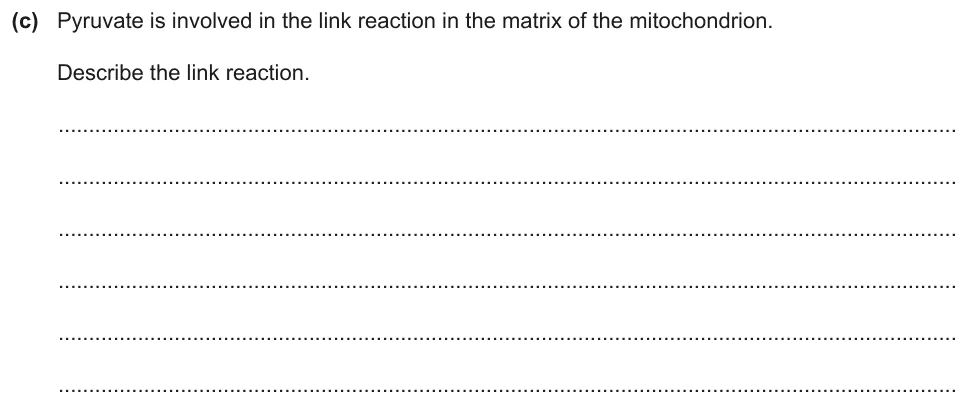
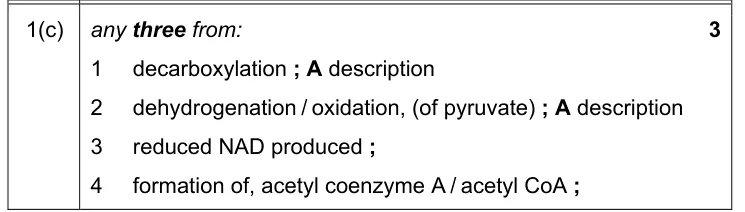
- Link reaction: in the mitochondrial matrix, pyruvate is decarboxylated and dehydrogenated to form an acetyl (2C) group, which combines with coenzyme A to form acetyl coenzyme A; reduced NAD is produced.
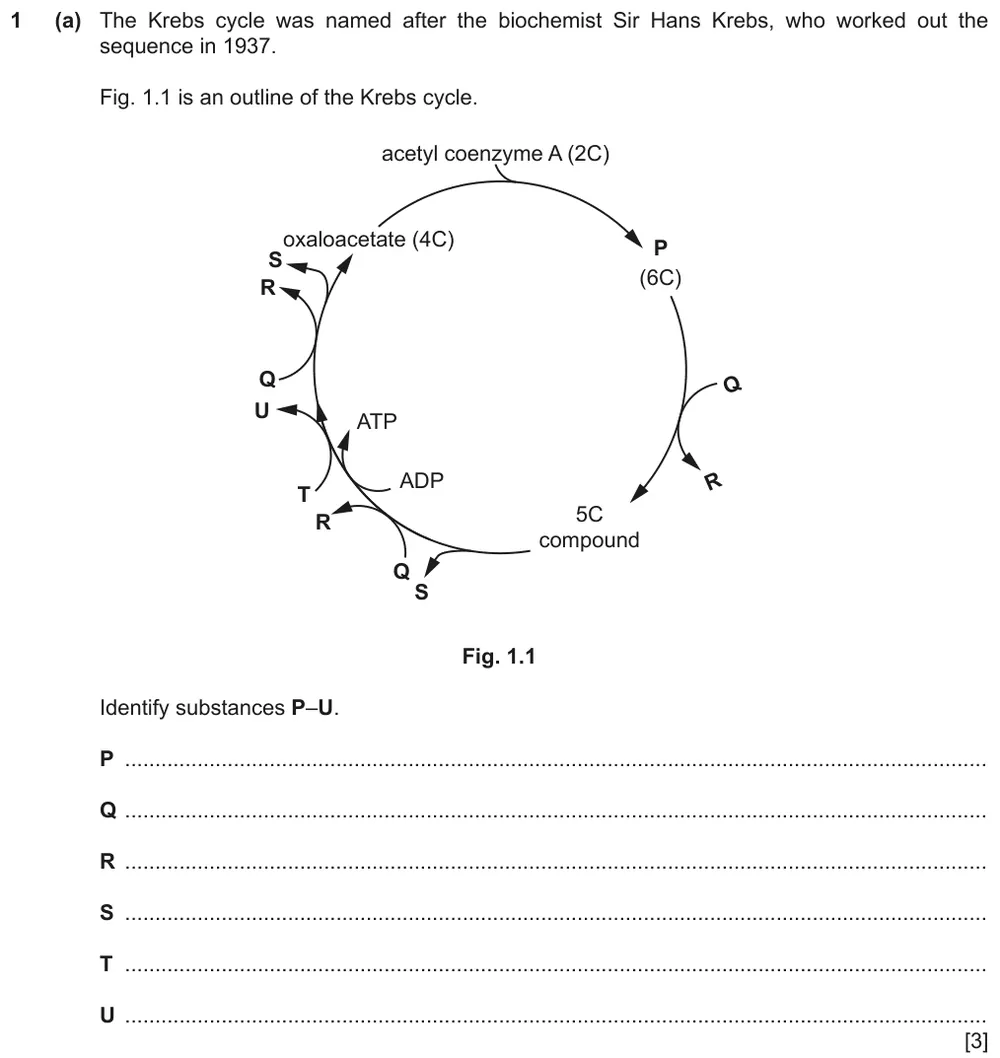
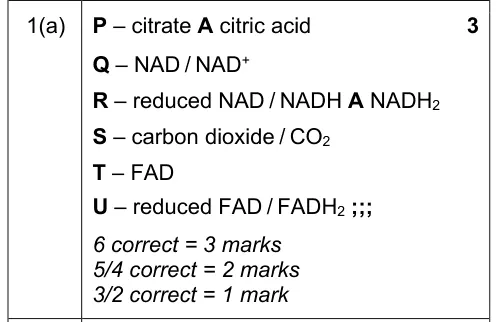
- Krebs cycle: in the mitochondrial matrix, oxaloacetate (4C) accepts the acetyl group to form citrate (6C), which is converted back to oxaloacetate in steps that involve decarboxylation and dehydrogenation.
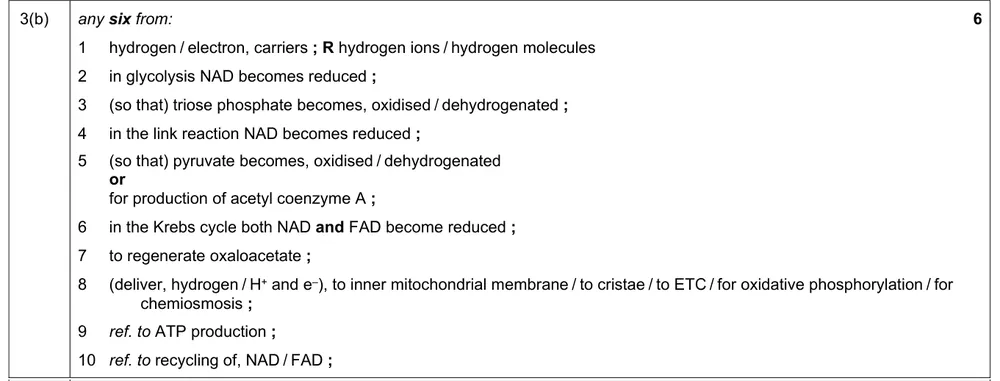
- Dehydrogenation: the removal of hydrogen from a substrate; the hydrogen is accepted by NAD or FAD, which becomes reduced.
- Reduced NAD: NAD that has accepted hydrogen. It carries hydrogen atoms to the inner mitochondrial membrane, where it is oxidised and so recycled.
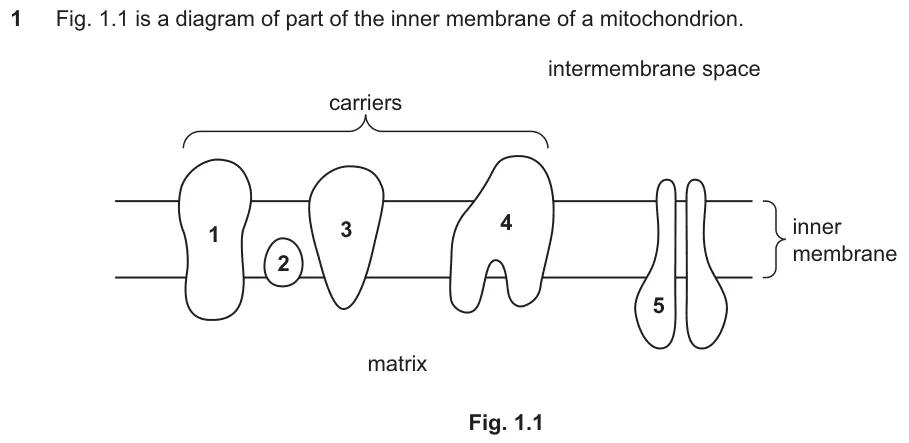
- Oxidative phosphorylation: the last stage of aerobic respiration, on the inner mitochondrial membrane: electrons pass along the electron transport chain, the energy released is used to pump protons into the intermembrane space, and protons diffuse back through ATP synthase so that ATP is made from ADP and Pi. Oxygen is the final electron acceptor.
- Aerenchyma: plant tissue with many large air spaces. In rice it lets oxygen diffuse down to the submerged roots for aerobic respiration.
- Redox indicator: a substance, such as DCPIP or methylene blue, that changes from blue to colourless when it is reduced.
What these questions cover (Cambridge 9700 Topic 12: Energy and respiration)
The questions test these learning outcomes from sub-topic 12.2 of the Cambridge International AS & A Level Biology syllabus (9700) for 2025 to 2027.
- 12.2.1 State where each of the four stages in aerobic respiration occurs in eukaryotic cells
- 12.2.2 outline glycolysis as phosphorylation of glucose and the subsequent splitting of fructose 1,6-bisphosphate
- 12.2.3 explain that, when oxygen is available, pyruvate enters mitochondria to take part in the link reaction
- 12.2.4 describe the link reaction, including the role of coenzyme A in the transfer of acetyl (2C) groups
- 12.2.5 outline the Krebs cycle, explaining that oxaloacetate (4C) acts as an acceptor of the 2C fragment from acetyl coenzyme A to form citrate (6C)
- 12.2.6 explain that reactions in the Krebs cycle involve decarboxylation and dehydrogenation and the reduction of the coenzymes NAD and FAD
- 12.2.7 describe the role of NAD and FAD in transferring hydrogen to carriers in the inner mitochondrial membrane
- 12.2.8 explain that during oxidative phosphorylation: • hydrogen atoms split into protons and energetic electrons
- 12.2.9 describe the relationship between the structure and function of mitochondria using diagrams and electron micrographs
- 12.2.10 outline respiration in anaerobic conditions in mammals (lactate fermentation) and in yeast cells (ethanol fermentation)
- 12.2.11 explain why the energy yield from respiration in aerobic conditions is much greater than the energy yield from respiration in anaerobic conditions
- 12.2.12 explain how rice is adapted to grow with its roots submerged in water, limited to the development of aerenchyma in roots, ethanol fermentation in roots and faster growth of stems
- 12.2.13 describe and carry out investigations using redox indicators, including DCPIP and methylene blue, to determine the effects of temperature and substrate concentration on the rate of respiration of yeast
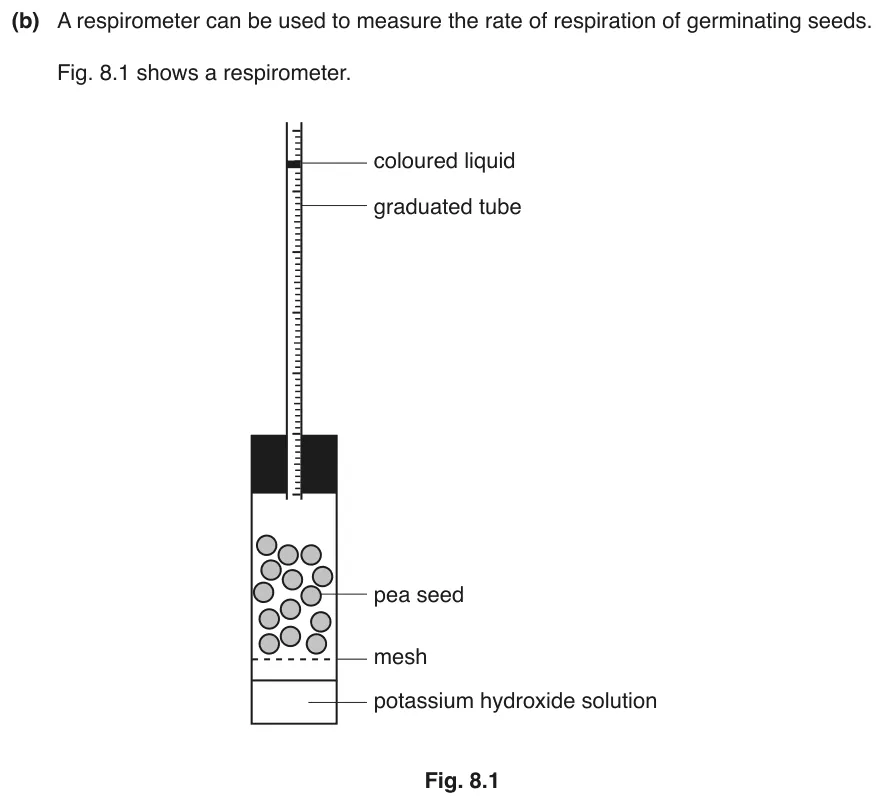
- 12.2.14 describe and carry out investigations using simple respirometers to determine the effect of temperature on the rate of respiration
How to use this page
Write your answer on paper before you open the mark scheme. Allow about 1.2 minutes per mark: the 22 questions are worth 67 marks, so about 80 minutes in total. Then mark your answer strictly against the mark scheme and read the examiners' tip underneath it. If you'd rather print the questions, download the PDF pack.
Where the stages of respiration take place (12.2.1)
Question 1
Paper 4 · February/March 2023 (42) · Q6(b) · 3 marks · Easy
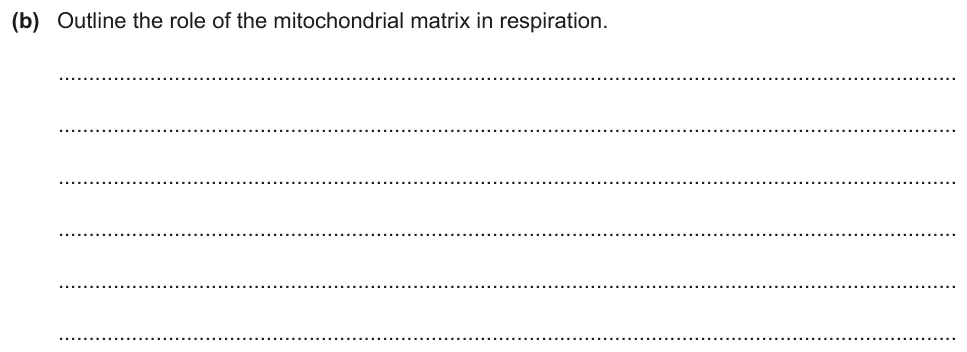
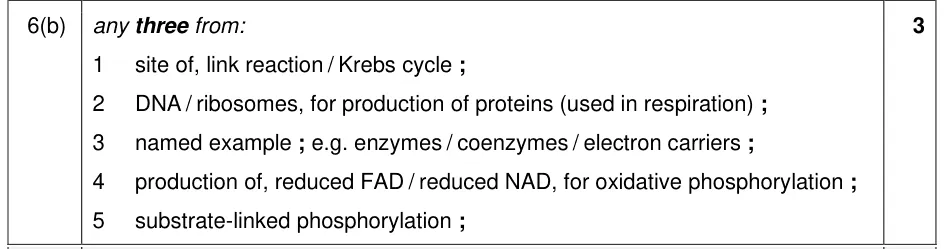
Outline the role of the mitochondrial matrix in respiration.
Show the mark scheme
Tap an image to open it full size.
From the examiners' report: Some wrongly gave the matrix as the site of oxidative phosphorylation and of glycolysis. Stronger answers included the formation of reduced NAD and reduced FAD in the matrix. If you mention DNA and ribosomes, link them to respiration through the proteins they make.
Glycolysis (12.2.2)
Question 2
Paper 4 · May/June 2023 (42) · Q1(a)(i) · 1 mark · Easy
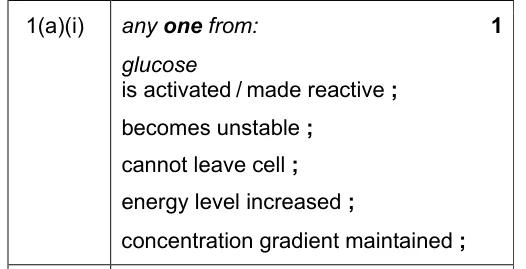
Explain why glucose is phosphorylated at the beginning of glycolysis.
Show the mark scheme
Tap an image to open it full size.
From the examiners' report: Some simply described the figure, saying that glucose is phosphorylated so that it can be converted to fructose 1,6-bisphosphate. An explanation was needed: phosphorylation raises the energy level of glucose and makes it more reactive, or stops it diffusing out of the cell.
Question 3
Paper 4 · May/June 2022 (42) · Q3(b) · 5 marks · Easy
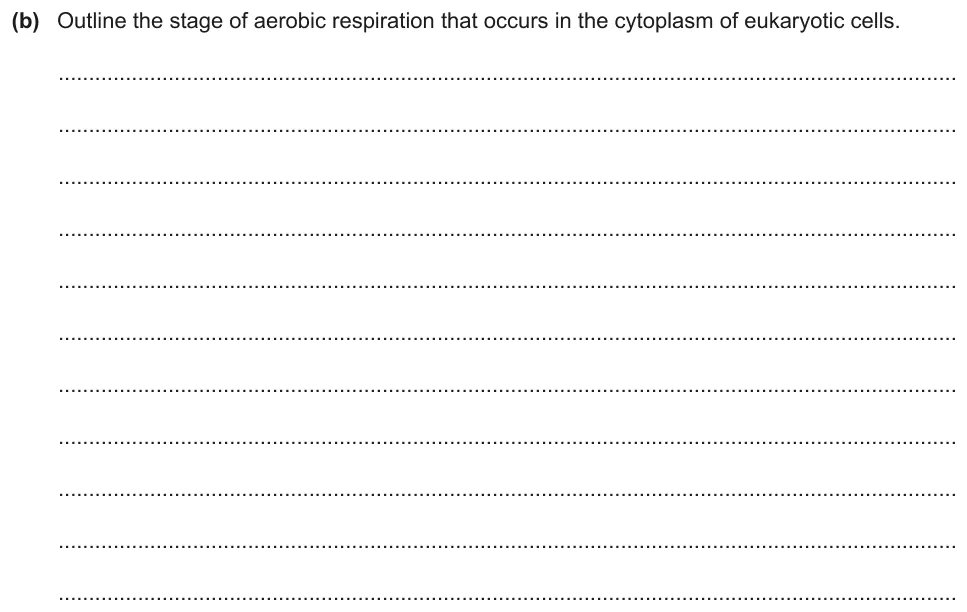
Outline the stage of aerobic respiration that occurs in the cytoplasm.
Show the mark scheme
Tap an image to open it full size.
From the examiners' report: A significant minority lost marks by not giving the numbers of molecules produced: net 2 ATP and 2 reduced NAD. The usual omissions were the phosphorylation of glucose and the oxidation of triose phosphate to pyruvate. The main error was not naming the correct intermediate.
Pyruvate and the link reaction (12.2.3 and 12.2.4)
Question 4
Paper 4 · May/June 2023 (42) · Q1(b) · 3 marks · Easy
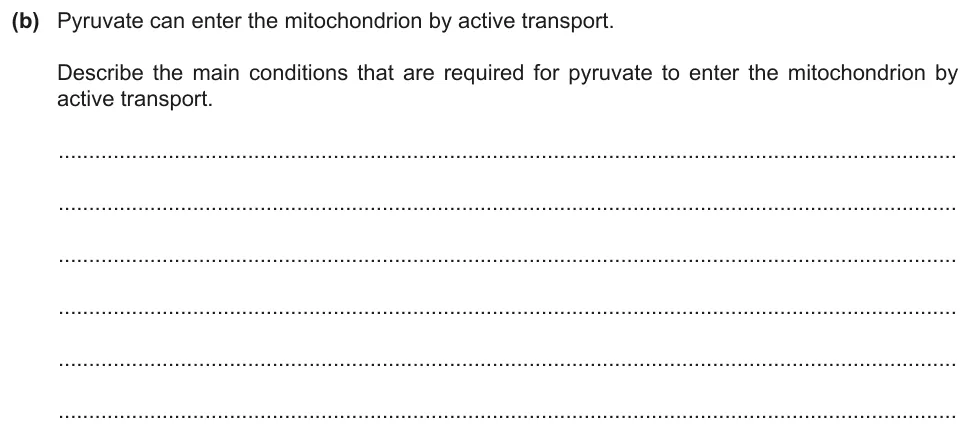
Describe the conditions needed for pyruvate to enter the mitochondrion by active transport.
Show the mark scheme
Tap an image to open it full size.
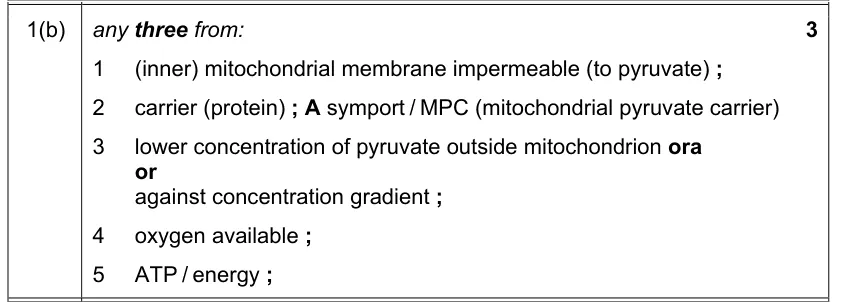
From the examiners' report: The carrier protein and the impermeability of the inner mitochondrial membrane were rarely mentioned. Some called the carrier protein a channel, or said that active transport is down a concentration gradient.
Question 5
Paper 4 · May/June 2023 (42) · Q1(c) · 3 marks · Easy
Describe the link reaction.
Show the mark scheme
Tap an image to open it full size.
From the examiners' report: This was answered well. The few errors included a reference to the reduction of NADP; the coenzyme in respiration is NAD.
The Krebs cycle (12.2.5)
Question 6
Paper 4 · May/June 2023 (43) · Q1(a) · 3 marks
Identify substances P to U in an outline of the Krebs cycle.
Show the mark scheme
Tap an image to open it full size.
From the examiners' report: The main errors were in naming the coenzymes Q, R, T and U: many showed the reduced coenzyme being oxidised. A variety of answers were given for citrate, the first intermediate.
Movement across the mitochondrial membranes (12.2.6 and 12.2.8)
Question 7
Paper 4 · February/March 2023 (42) · Q6(a)(i) · 1 mark · Easy
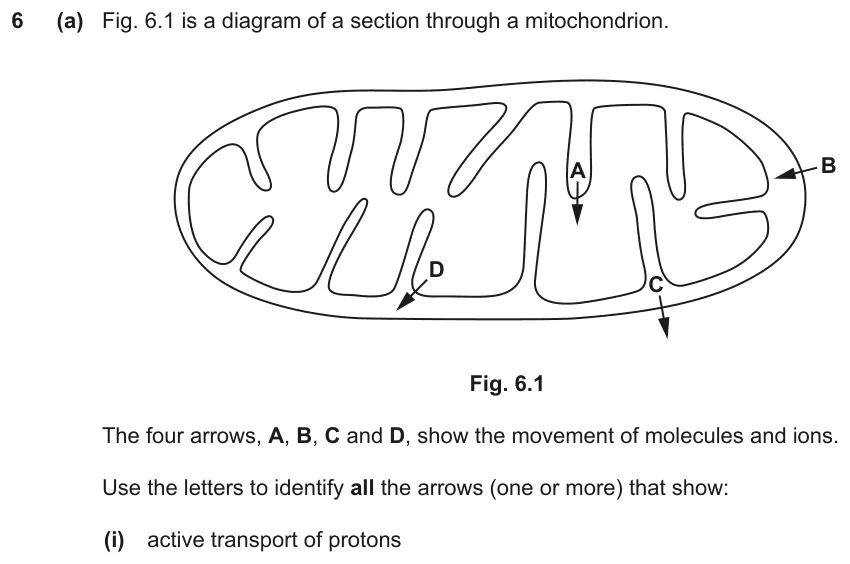
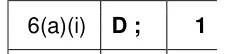
Identify the arrow that shows active transport of protons in a mitochondrion.
Show the mark scheme
Tap an image to open it full size.
From the examiners' report: Most knew that protons are actively transported across the inner mitochondrial membrane, but many were unsure of the direction and chose A.
Question 8
Paper 4 · February/March 2023 (42) · Q6(a)(ii) · 1 mark
Identify the arrows that show diffusion of carbon dioxide.

Show the mark scheme

Tap an image to open it full size.
From the examiners' report: A significant number gave only arrow C. Decarboxylation happens in the mitochondrial matrix, so carbon dioxide has to diffuse across both the inner and the outer mitochondrial membrane.
The roles of NAD and FAD (12.2.7)
Question 9
Paper 4 · February/March 2025 (42) · Q8(c) · 4 marks
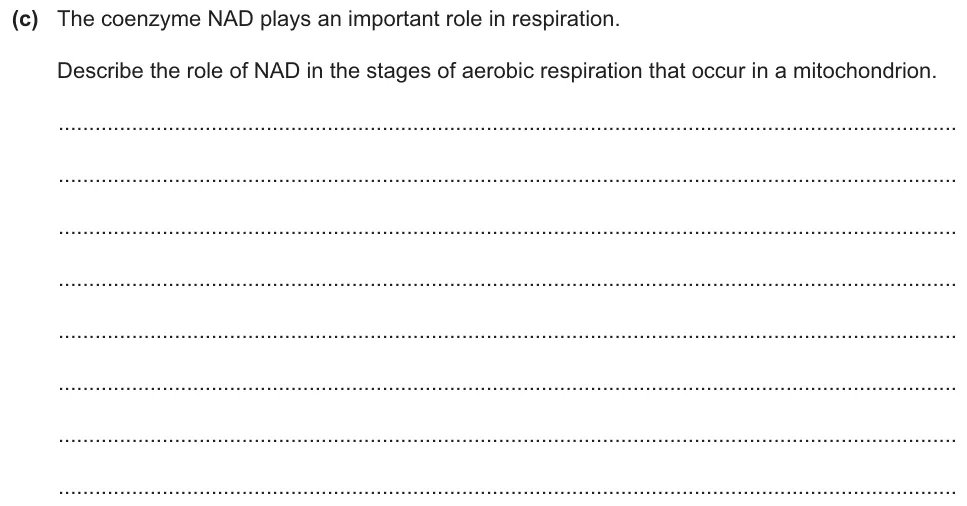
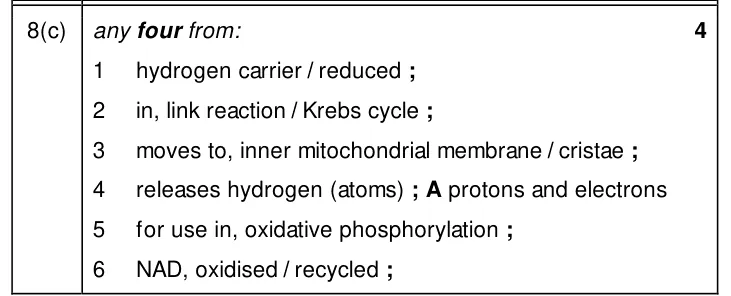
Describe the role of NAD in the stages of aerobic respiration that occur in a mitochondrion.
Show the mark scheme
Tap an image to open it full size.
From the examiners' report: Treat NAD as a carrier of hydrogen atoms rather than of electrons or protons. The question was limited to the mitochondrion, so glycolysis was not relevant. Few explained that NAD moves hydrogen to the inner mitochondrial membrane, and a significant number forgot that reduced NAD is oxidised at the end.
Question 10
Paper 4 · May/June 2022 (43) · Q3(b) · 6 marks · Hard
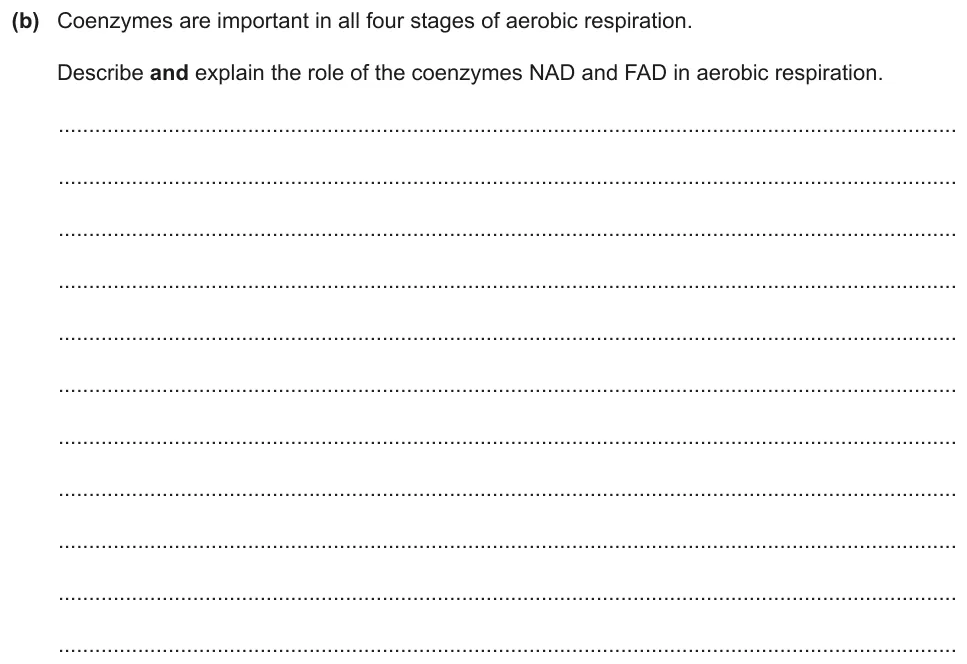
Describe and explain the role of the coenzymes NAD and FAD in aerobic respiration.
Show the mark scheme
Tap an image to open it full size.
From the examiners' report: NAD and FAD are carriers of hydrogen or of electrons; they do not carry a proton, a hydrogen ion or a hydrogen molecule. Some wrongly said that both NAD and FAD are reduced in glycolysis and the link reaction. Only a minority explained that the substrate is oxidised at each stage.
Oxidative phosphorylation (12.2.8)
Question 11
Paper 4 · May/June 2025 (42) · Q1(a)(iii) · 3 marks
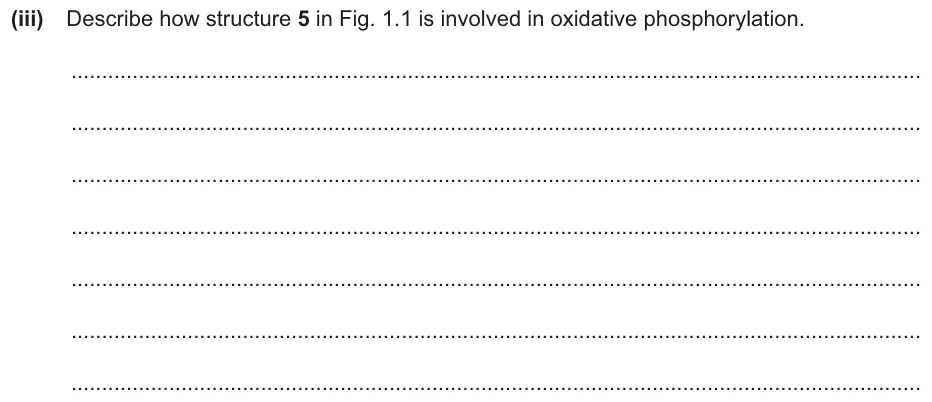
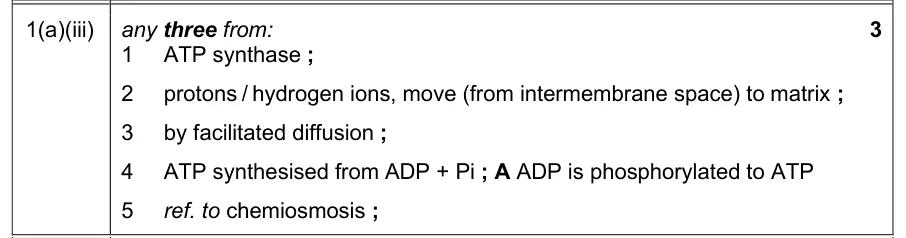
Describe how structure 5 in the diagram of the inner mitochondrial membrane is involved in oxidative phosphorylation.
Information from earlier in this question:
Show the mark scheme
Tap an image to open it full size.
Question 12
Paper 4 · May/June 2025 (42) · Q1(b) · 4 marks
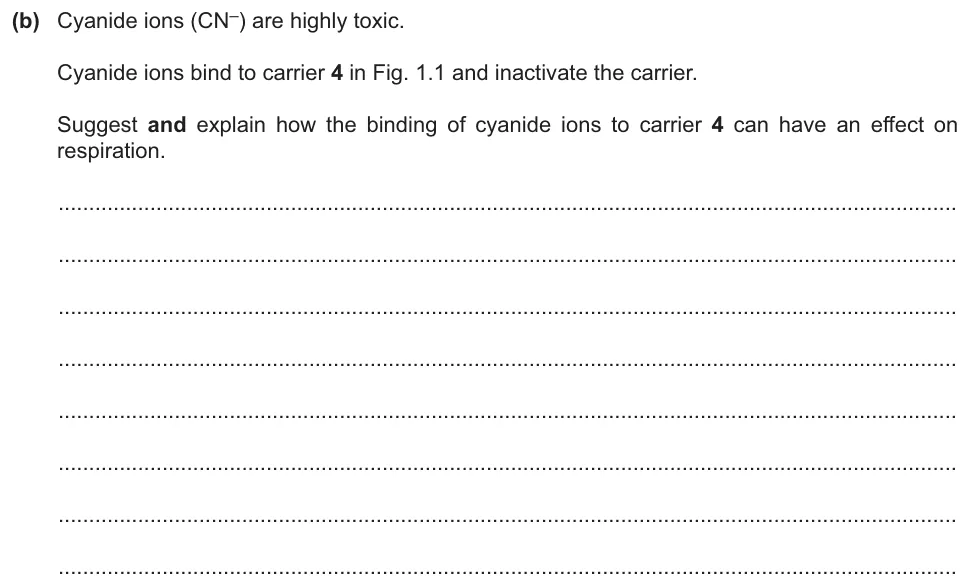
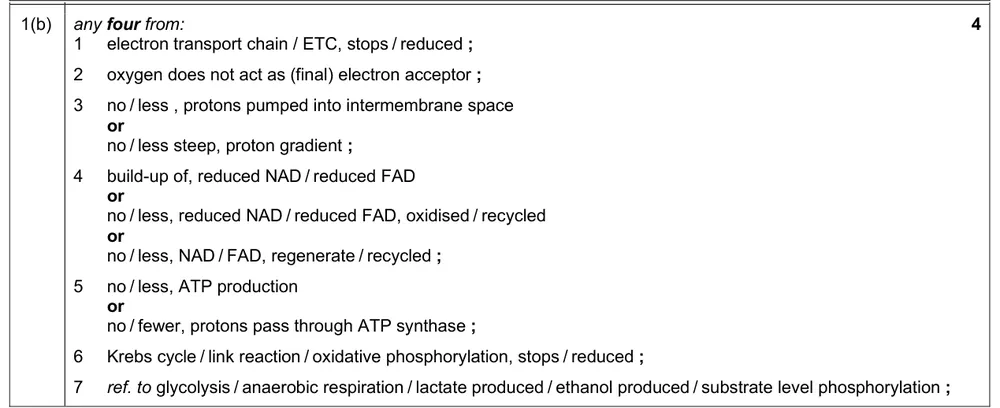
Suggest and explain how cyanide ions binding to a carrier in the electron transport chain affect respiration.
Show the mark scheme
Tap an image to open it full size.
Question 13
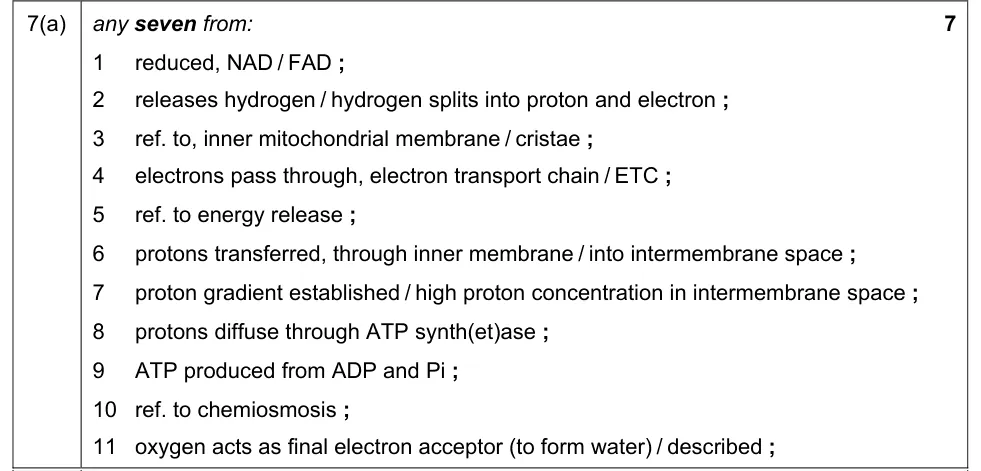
Paper 4 · February/March 2022 (42) · Q7(a) · 7 marks
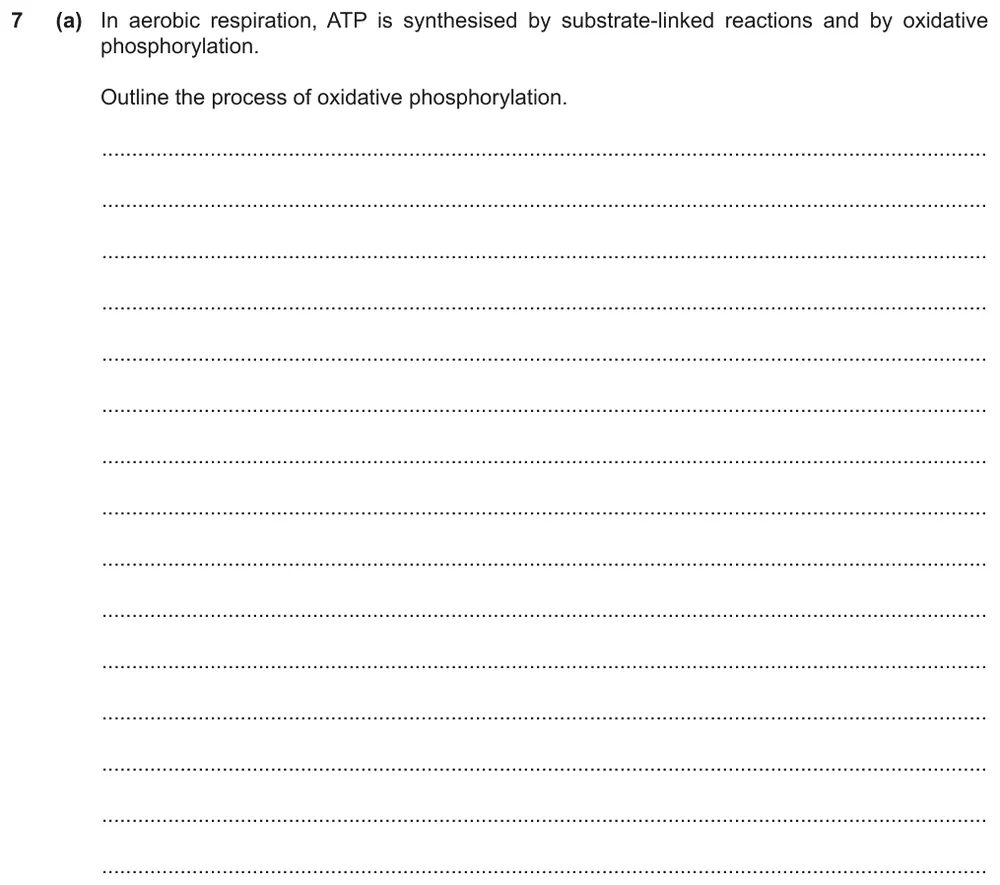
Outline the process of oxidative phosphorylation.
Show the mark scheme
Tap an image to open it full size.
From the examiners' report: Write 'reduced NAD', not NAD, and say that it releases hydrogen atoms, not H+ ions. Energy is released, not produced, as electrons move along the electron transport chain. ATP synthase does not pump protons into the intermembrane space, and the space is not called the 'inner membrane space'.
Structure and function of mitochondria (12.2.9)
Question 14
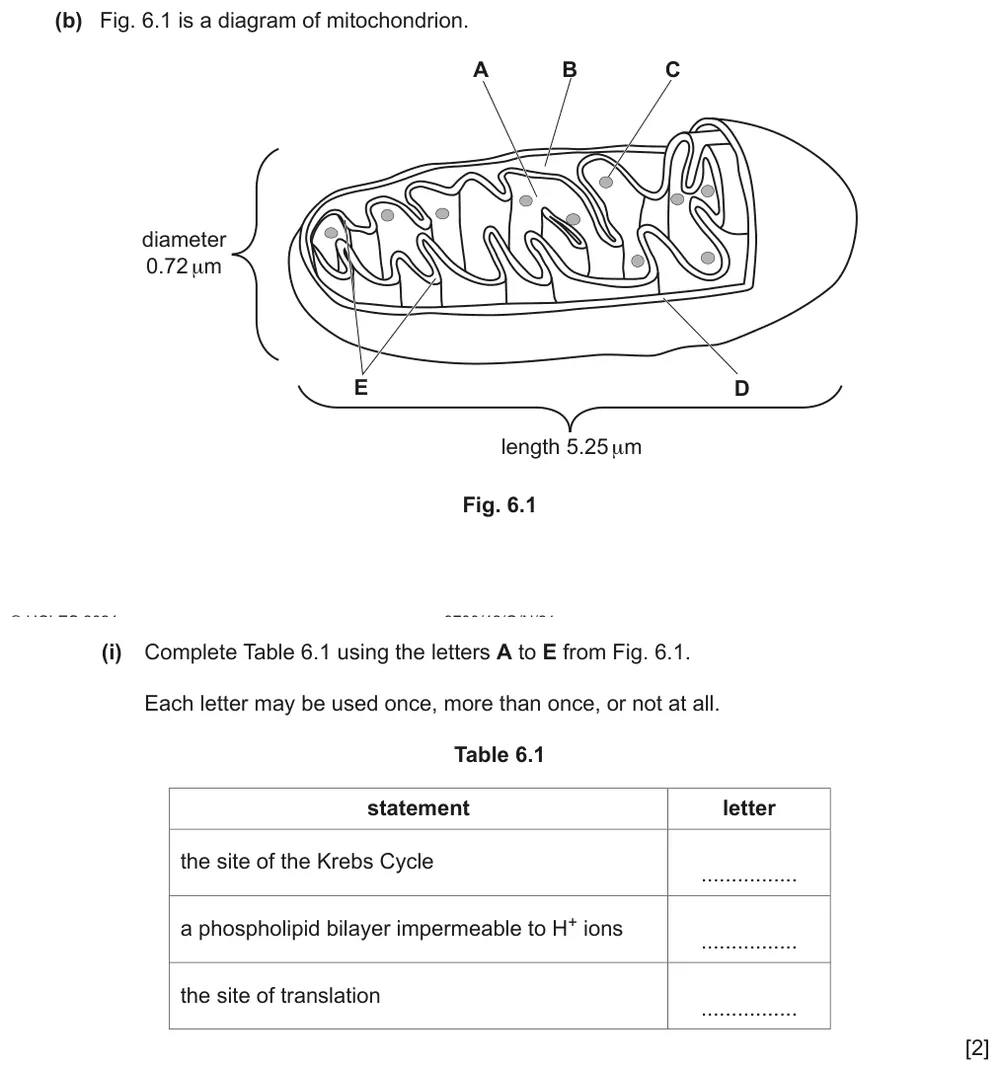
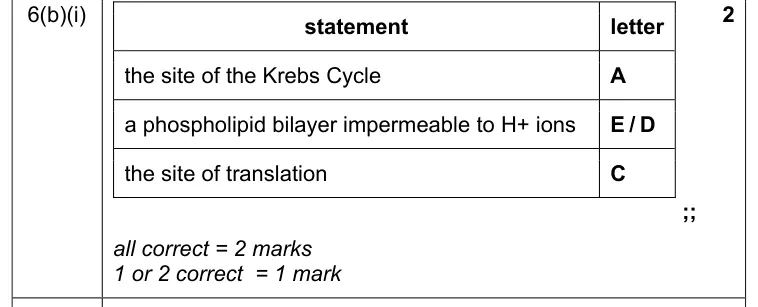
Paper 4 · October/November 2021 (42) · Q6(b)(i) · 2 marks · Hard
Use the letters on a diagram of a mitochondrion to complete the table.
Show the mark scheme
Tap an image to open it full size.
From the examiners' report: A significant minority could not identify all three letters. The site of the Krebs cycle was often wrongly given as the inner mitochondrial membrane.
Respiration in anaerobic conditions (12.2.10)
Question 15
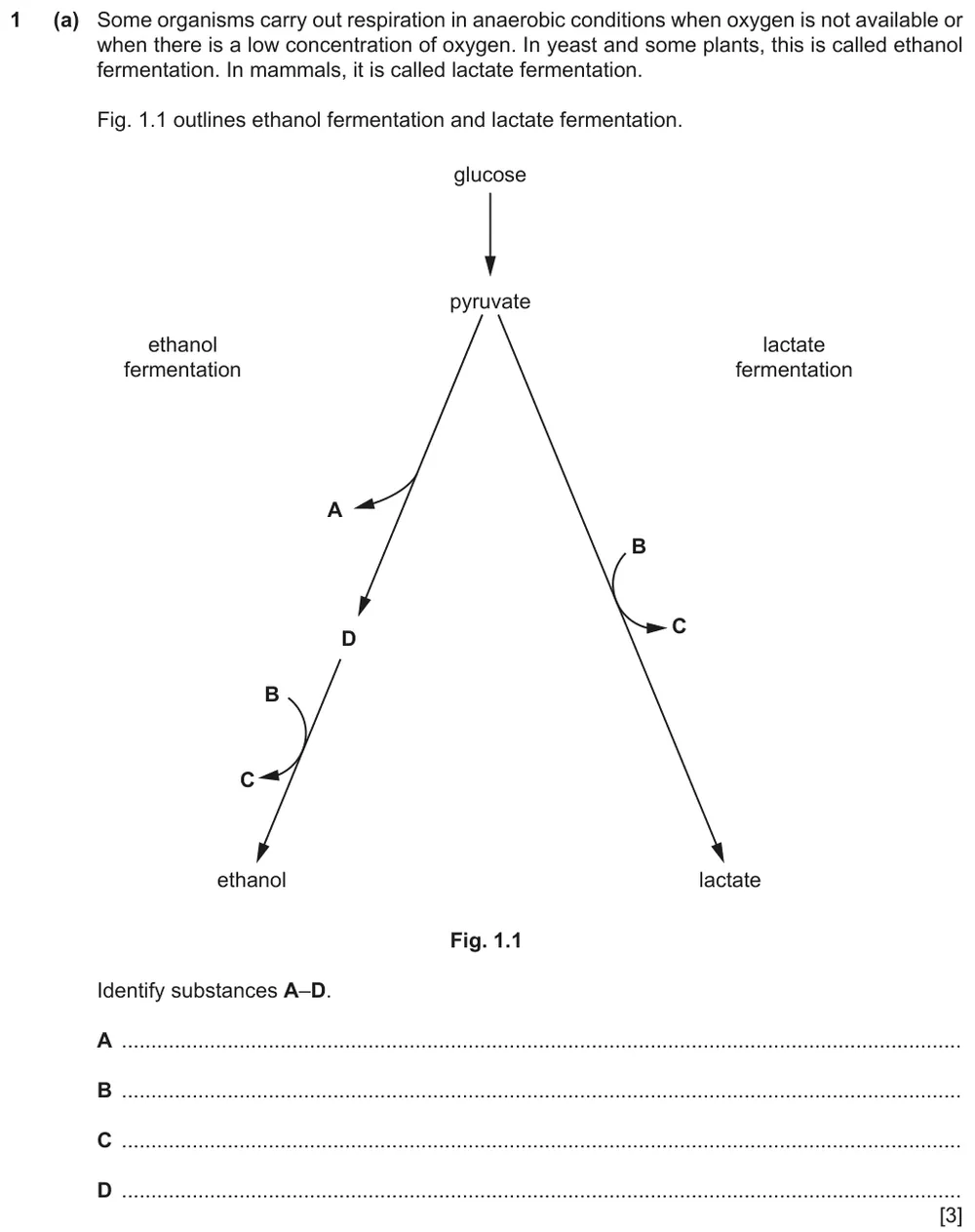
Paper 4 · October/November 2023 (42) · Q1(a) · 3 marks · Easy
Identify substances A to D in an outline of ethanol fermentation and lactate fermentation.
Show the mark scheme

Tap an image to open it full size.
From the examiners' report: Most recognised that A was carbon dioxide and D was ethanal. A common mistake was to mix up reduced NAD and NAD for substances B and C, or to refer to ATP and ADP.
Question 16
Paper 4 · October/November 2023 (42) · Q1(b) · 3 marks · Hard
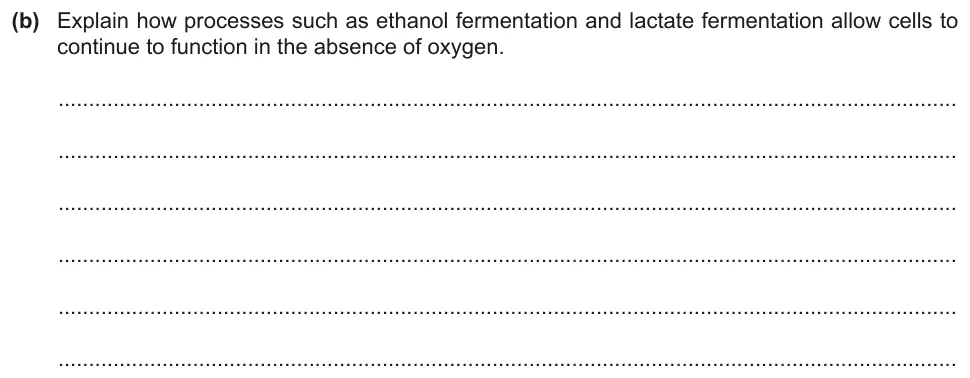
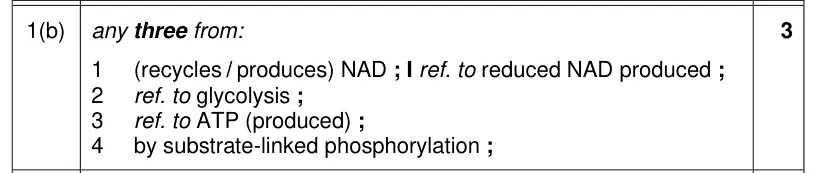
Explain how fermentation allows cells to continue to function in the absence of oxygen.
Show the mark scheme
Tap an image to open it full size.
From the examiners' report: You needed to say that reduced NAD is re-oxidised: this regenerates NAD, so glycolysis can continue and still produce ATP. The production of ATP was sometimes wrongly linked to the metabolism of pyruvate.
Energy yield in aerobic and anaerobic conditions (12.2.11)
Question 17
Paper 4 · February/March 2022 (42) · Q7(b) · 4 marks
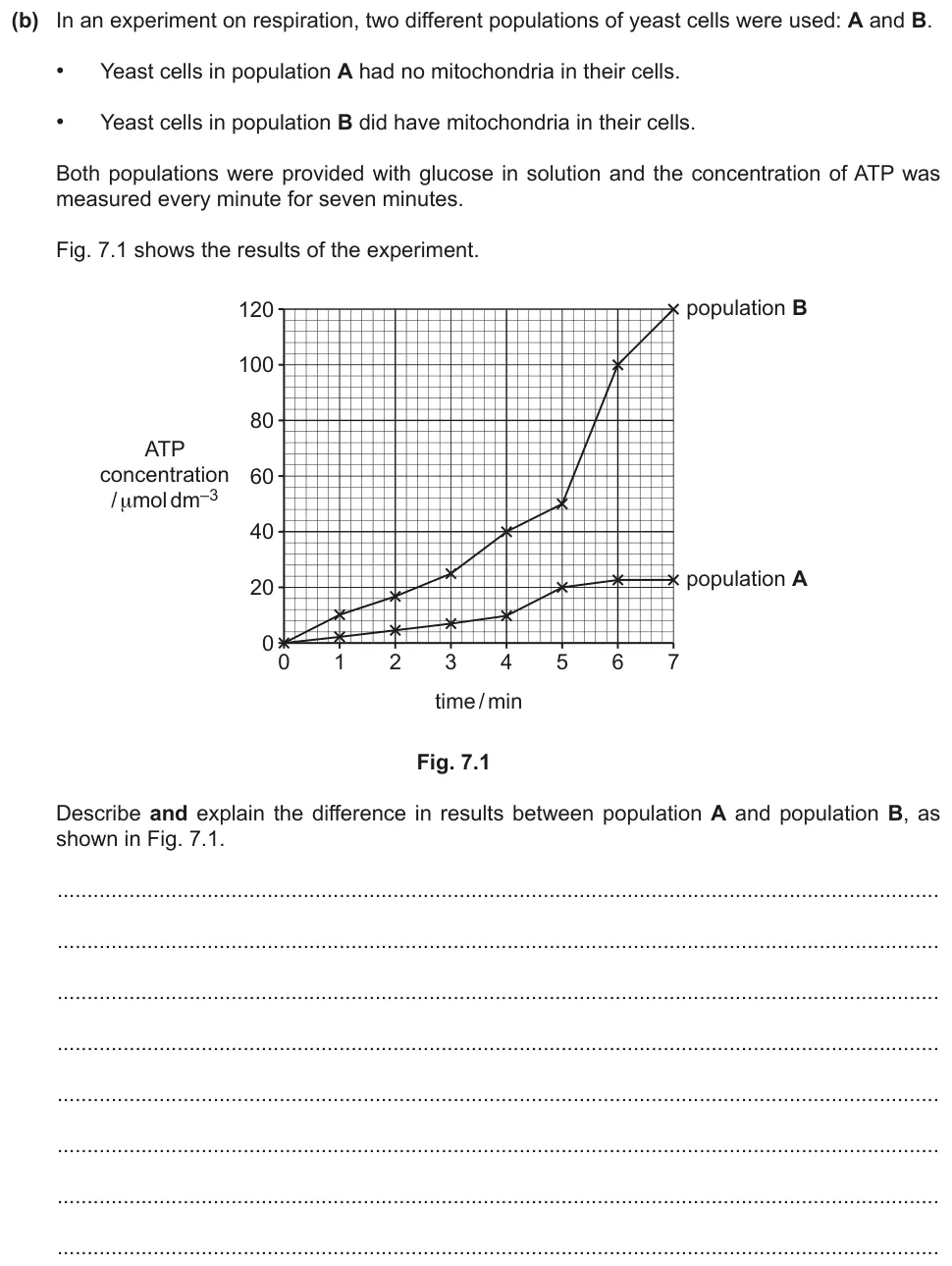
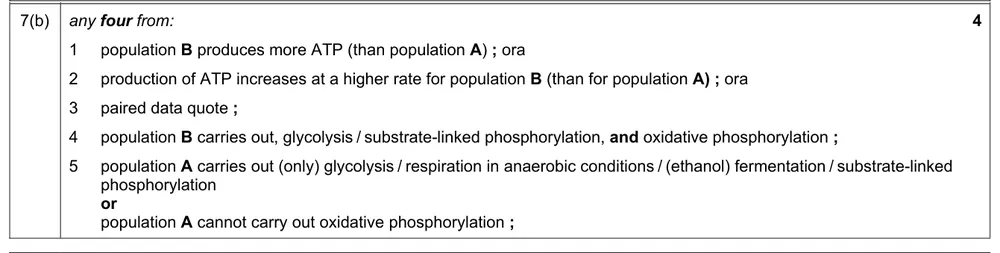
Describe and explain the difference in ATP concentration between yeast cells with and without mitochondria.
Show the mark scheme
Tap an image to open it full size.
From the examiners' report: Compare the two populations: many weaker answers described the data for each one separately. Data quotes were sometimes inaccurate, or were not chosen to show a difference between the populations.
Adaptations of rice (12.2.12)
Question 18
Paper 4 · October/November 2023 (42) · Q1(c) · 3 marks · Easy
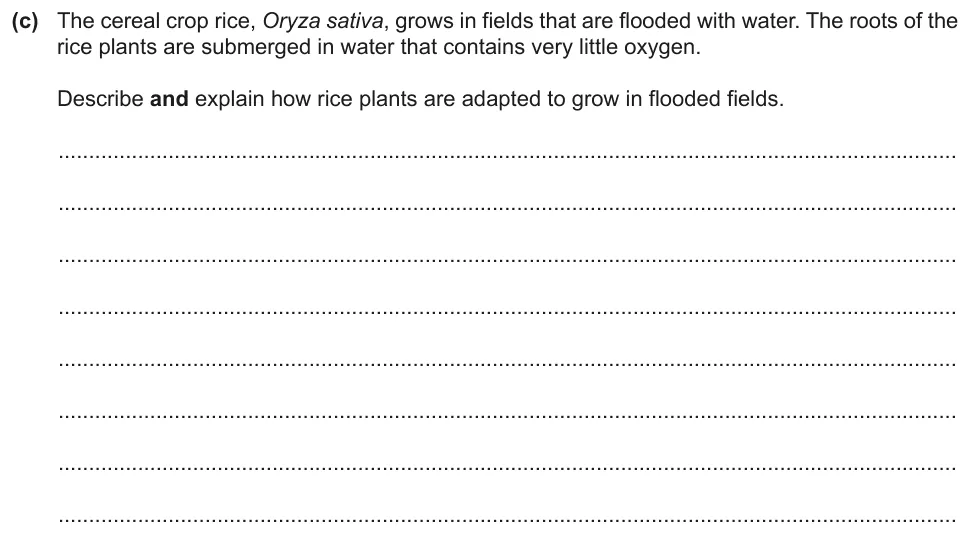
Describe and explain how rice plants are adapted to grow in flooded fields.
Show the mark scheme

Tap an image to open it full size.
From the examiners' report: Aerenchyma was not always linked to aerobic respiration. If you say that rice plants grow tall quickly, go on to say that this puts the leaves above the surface of the water and exposes them to air.
Redox indicators and the rate of respiration (12.2.13)
Question 19
Paper 4 · October/November 2024 (42) · Q6(b)(i) · 2 marks
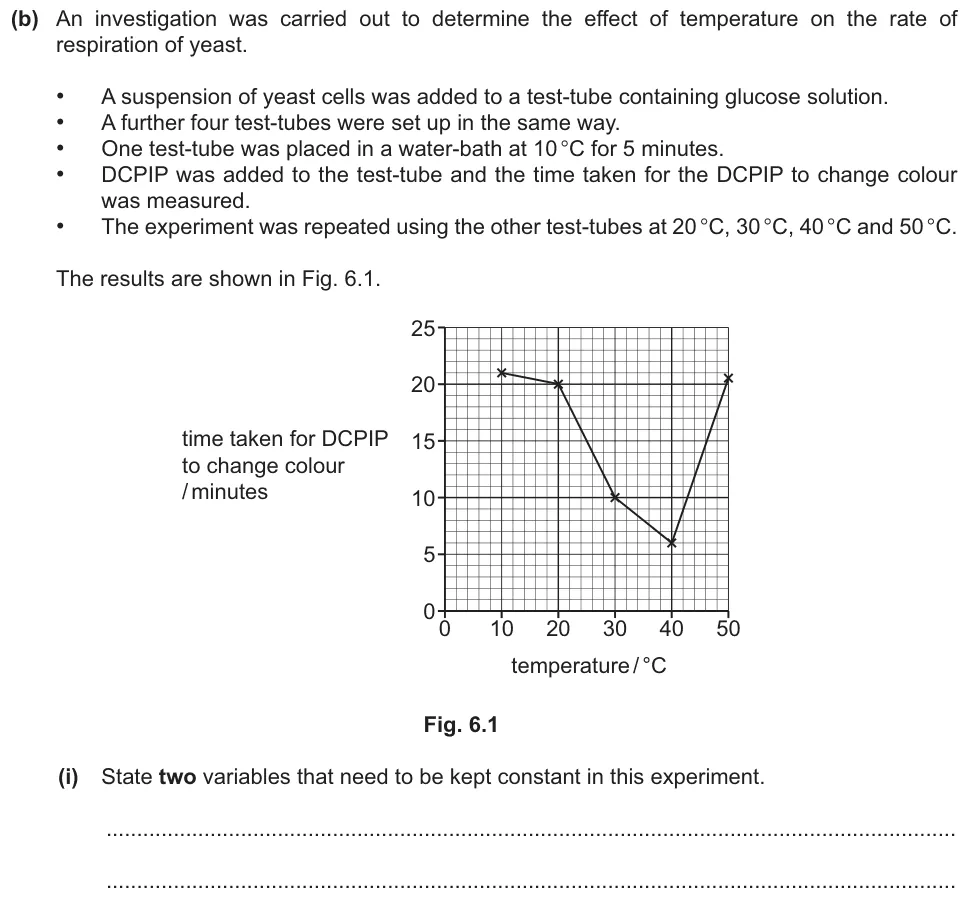
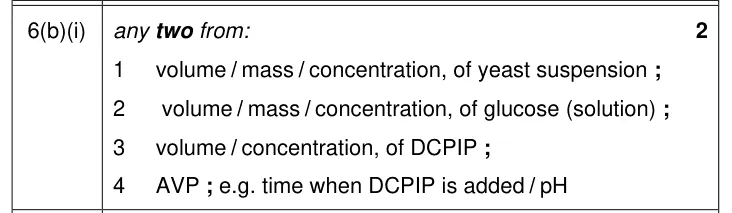
State two variables to keep constant when DCPIP is used to investigate the effect of temperature on respiration in yeast.
Show the mark scheme
Tap an image to open it full size.
Question 20
Paper 4 · October/November 2024 (42) · Q6(b)(ii) · 3 marks
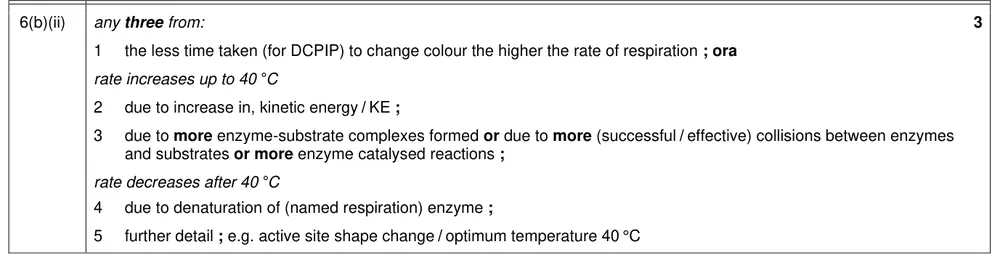
Explain the effect of temperature on the time taken for DCPIP to change colour.
Show the mark scheme
Tap an image to open it full size.
Respirometers and temperature (12.2.14)
Question 21
Paper 4 · October/November 2016 (42) · Q8(c)(i) · 1 mark · Hard
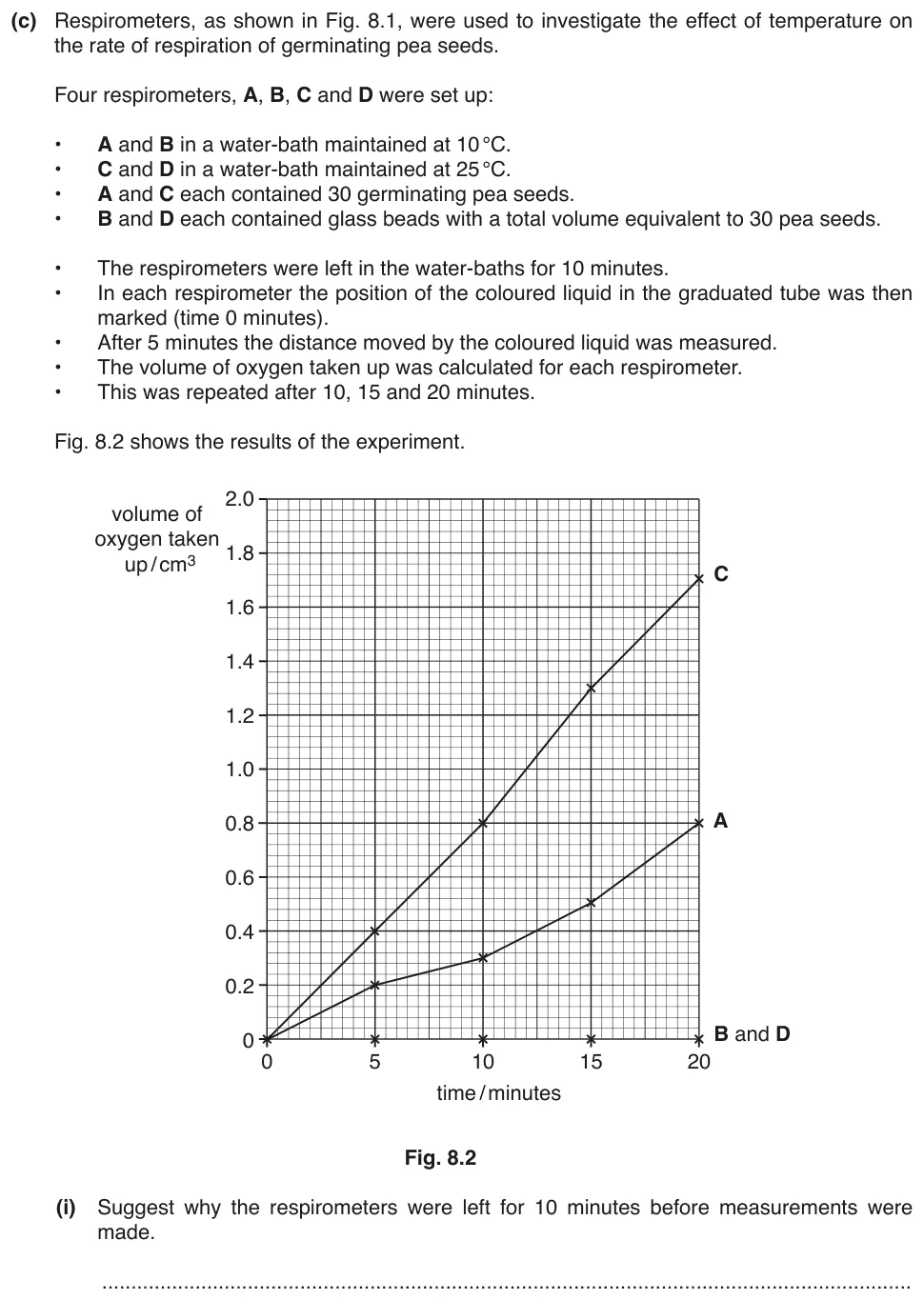
Explain why the respirometers were left in the water-baths for 10 minutes before readings were taken.
Information from earlier in this question:
Show the mark scheme

Tap an image to open it full size.
From the examiners' report: Only a few understood that the respirometers were left for 10 minutes for equilibration.
Question 22
Paper 4 · October/November 2016 (42) · Q8(c)(ii) · 2 marks · Easy
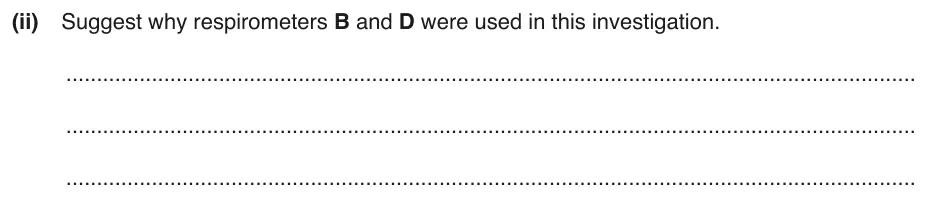
Suggest why respirometers containing glass beads were used in the investigation.
Show the mark scheme

Tap an image to open it full size.
From the examiners' report: Almost everyone realised that the respirometers with glass beads were controls, but few seemed to understand how they worked. Good answers said that they remove the effects of variables other than the independent variable.
Where students lose marks (from Cambridge examiners' reports and mark schemes)
Each point below comes from the examiners' reports and mark schemes, and is followed by wording that gained marks.
The matrix is not the site of every stage. Students gave the mitochondrial matrix as the site of oxidative phosphorylation and of glycolysis.
✔ Gains credit: the matrix is the 'site of' the 'link reaction' and 'Krebs cycle', with 'production of' 'reduced NAD' and 'reduced FAD' 'for oxidative phosphorylation', and 'substrate-linked phosphorylation'.
Give the numbers for glycolysis. Students left out the phosphorylation of glucose or the oxidation of triose phosphate, or did not give the number of molecules produced.
✔ Gains credit: 'phosphorylation of glucose', 'splitting of fructose (1,6) bi(s)phosphate' into 'two' 'triose phosphate', which is 'oxidised' 'to pyruvate', with 'net 2 ATP' and '(2) reduced NAD produced'.
A carrier protein is not a channel. Students called the pyruvate carrier a channel, or said that active transport is down a concentration gradient.
✔ Gains credit: a 'carrier (protein)', movement 'against concentration gradient', 'oxygen available' and 'ATP'; the 'mitochondrial membrane' is 'impermeable'.
Carbon dioxide crosses both mitochondrial membranes. Students identified only the arrow crossing the outer membrane.
✔ Gains credit: 'D and C': both arrows are needed, because decarboxylation happens in the matrix.
NAD and FAD carry hydrogen atoms. Students wrote that NAD and FAD carry a proton, a hydrogen ion or a hydrogen molecule, and forgot that reduced NAD is oxidised again.
✔ Gains credit: NAD is a 'hydrogen carrier', reduced 'in' the 'link reaction' and 'Krebs cycle'; it 'moves to' the 'inner mitochondrial membrane', 'releases hydrogen (atoms)' 'for use in' 'oxidative phosphorylation' and is 'oxidised' or 'recycled'.
ATP synthase does not pump protons. Students linked ATP synthase to pumping H+ into the intermembrane space, wrote NAD for reduced NAD, and said that energy is produced.
✔ Gains credit: 'protons transferred' 'into intermembrane space', 'proton gradient established', 'protons diffuse through ATP synth(et)ase', 'ATP produced from ADP and Pi', with a 'ref. to energy release'.
Fermentation regenerates NAD. Students did not say that reduced NAD is re-oxidised, or linked the ATP to the metabolism of pyruvate.
✔ Gains credit: fermentation 'recycles' or 'produces' 'NAD', with a 'ref. to glycolysis' and 'ATP (produced)' 'by substrate-linked phosphorylation'.
Say why growing tall helps rice. Students named aerenchyma and fast growth without explaining what each adaptation achieves.
✔ Gains credit: 'aerenchyma provides oxygen for aerobic respiration'; 'fast growth' or 'grow tall', 'so leaves' are 'out of water' or 'exposed to air'.
Download the questions
Download the PDF pack (22 questions, mark schemes at the end)
Keep practising
- Energy (12.1): Cambridge (CIE) exam questions by topic
- Cambridge (CIE) A level Biology 9700 past papers, mark schemes and examiners' reports
- Cambridge (CIE) A level Biology grade thresholds
- Book a one-to-one CIE lesson or a free 15-minute discovery chat with Tom
- Register your interest in a CIE A level Biology group class
Questions, mark schemes and examiners' report extracts © Cambridge University Press & Assessment.